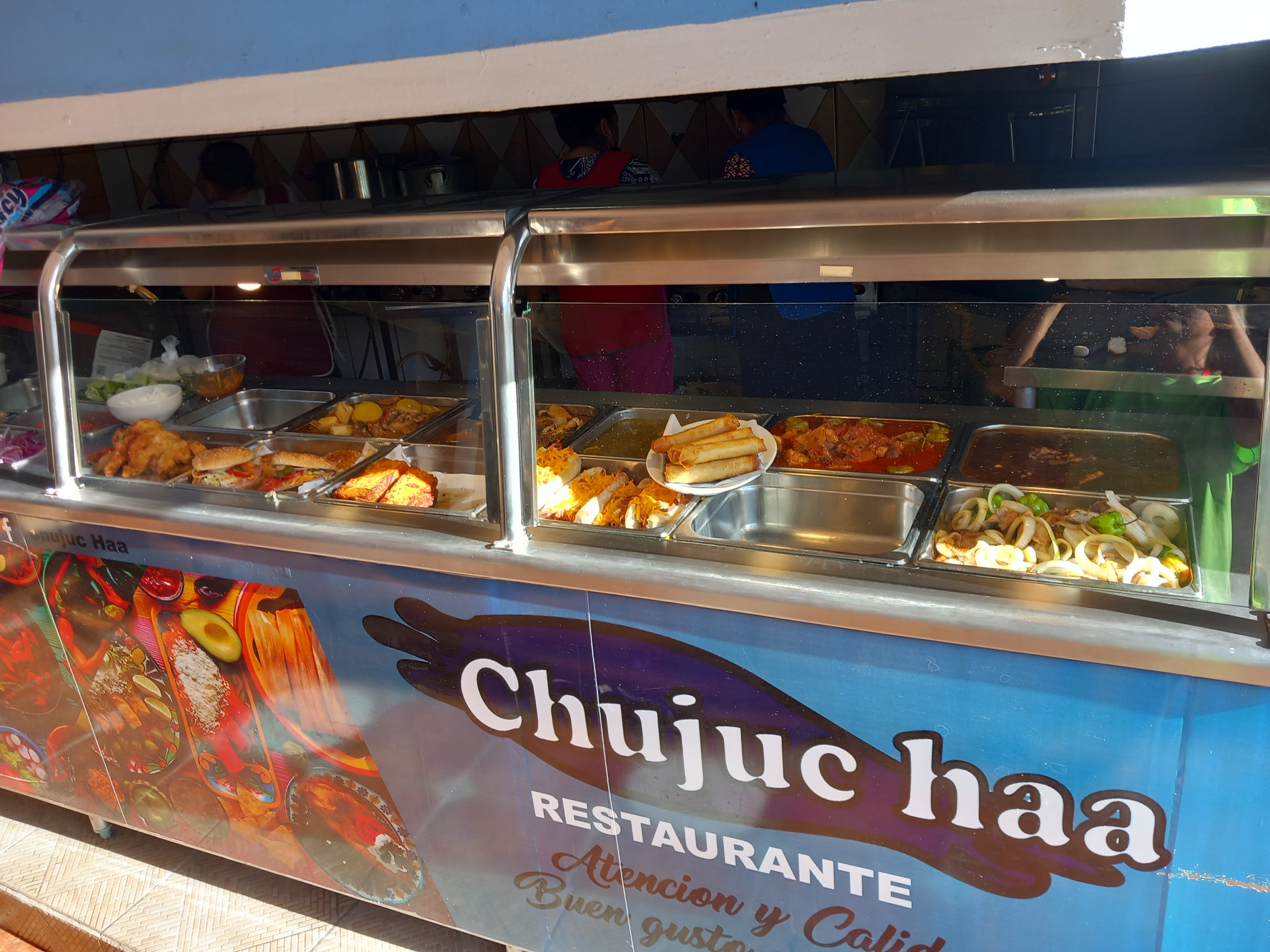
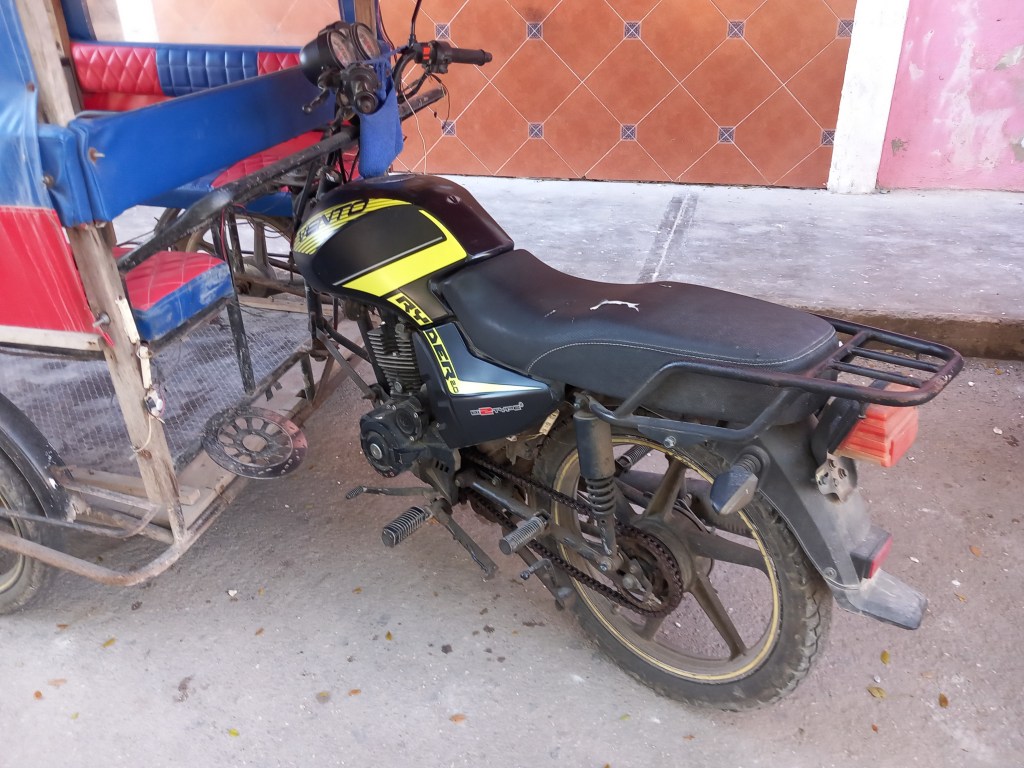
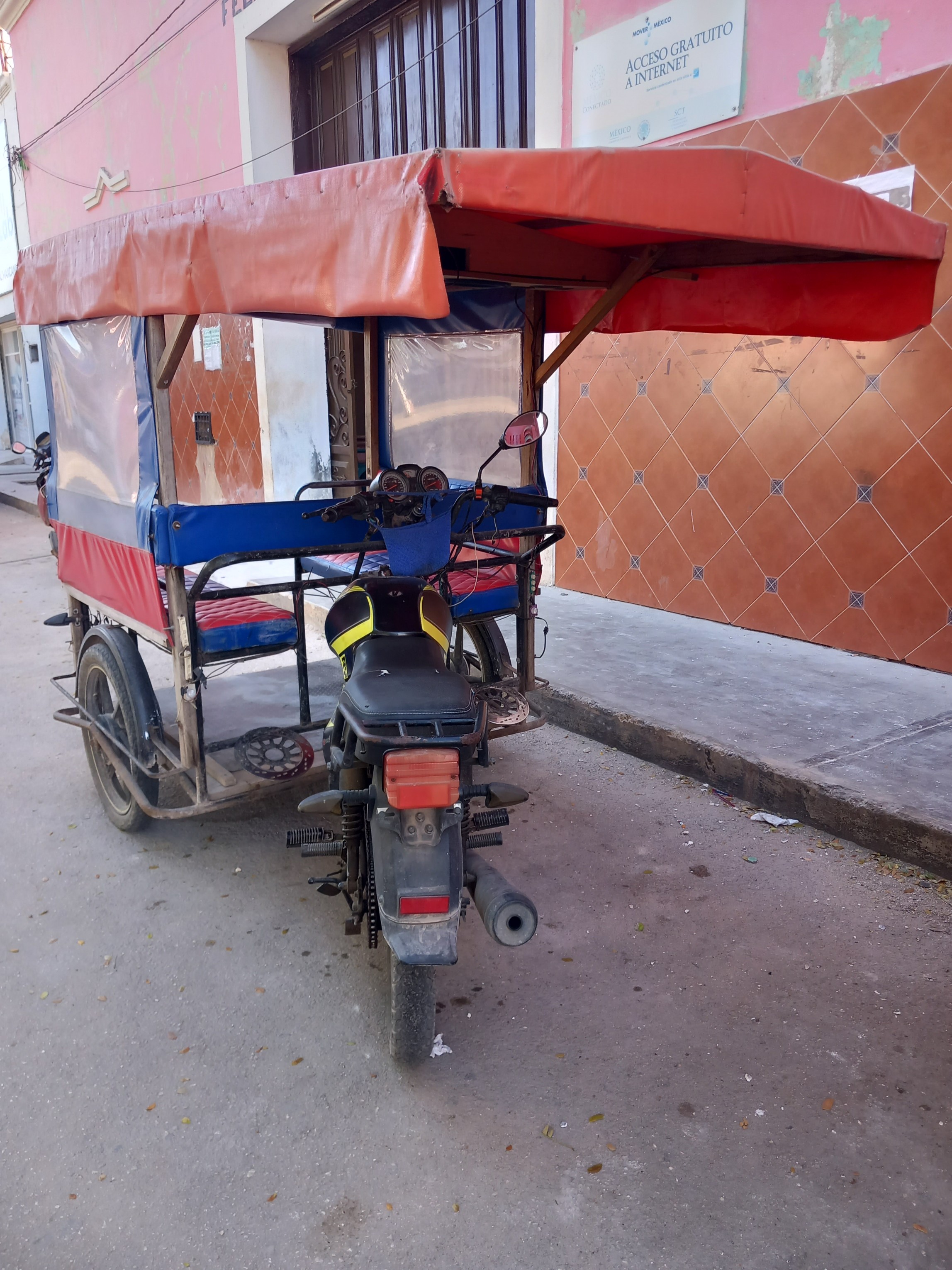
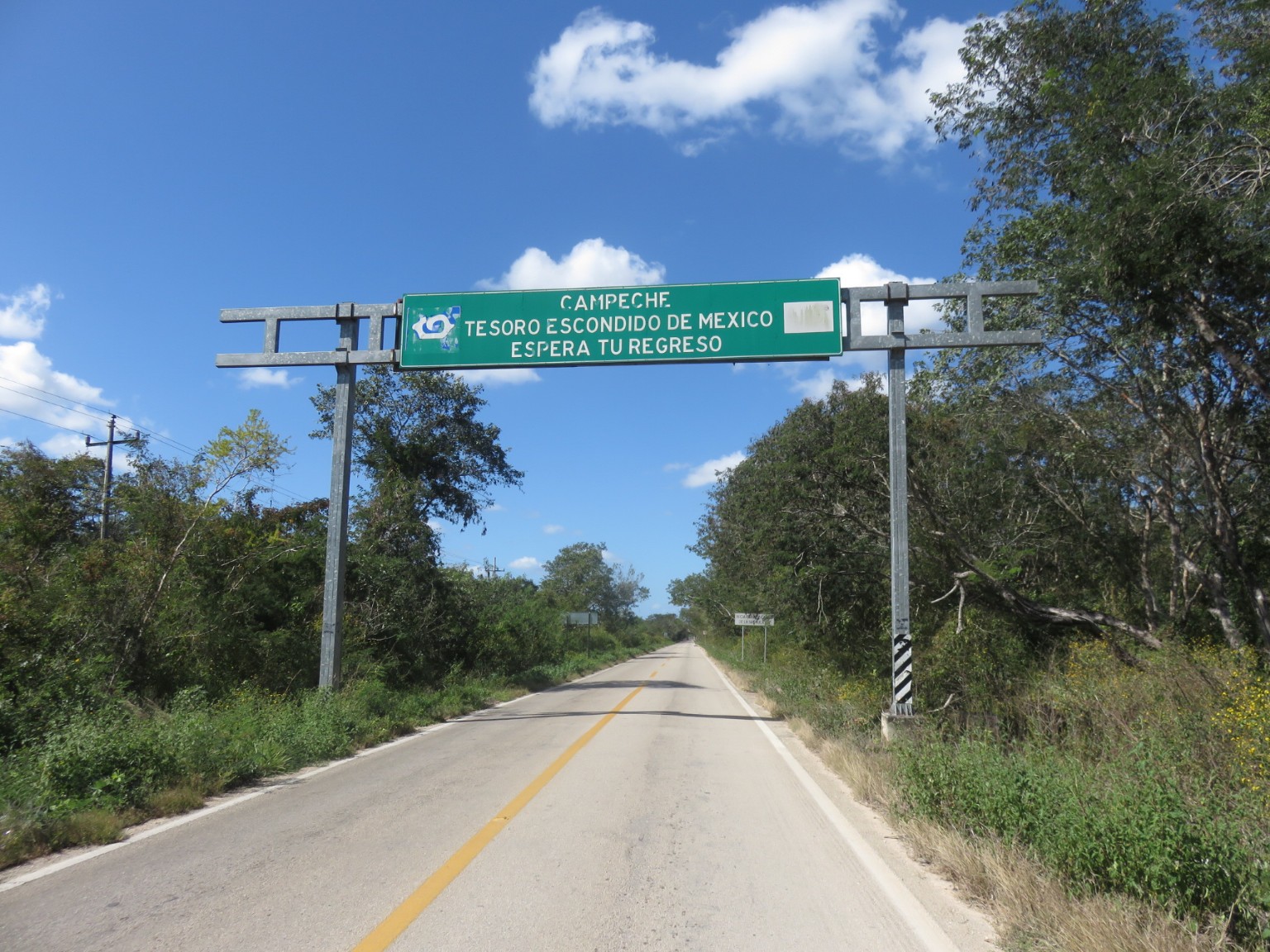
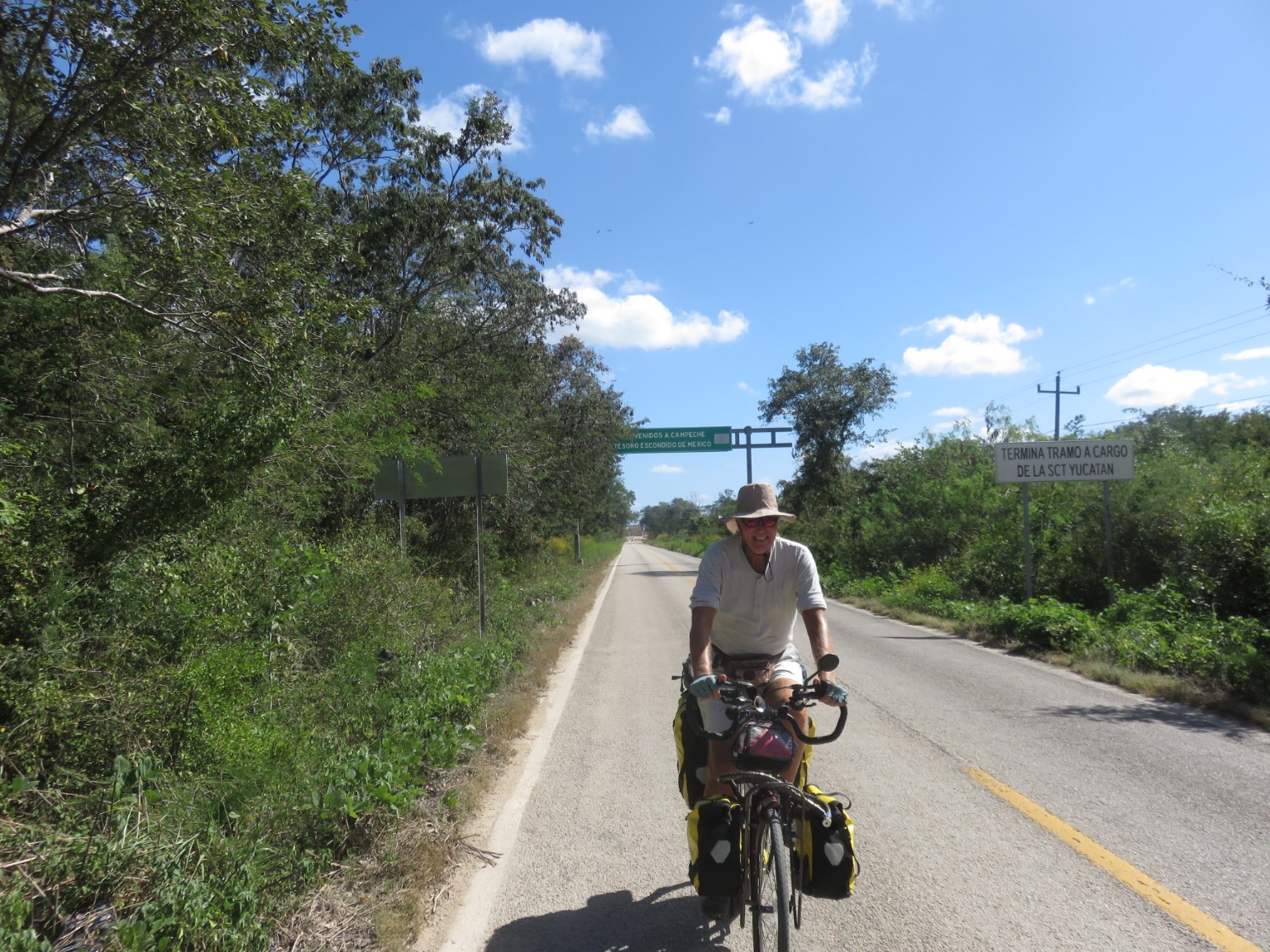
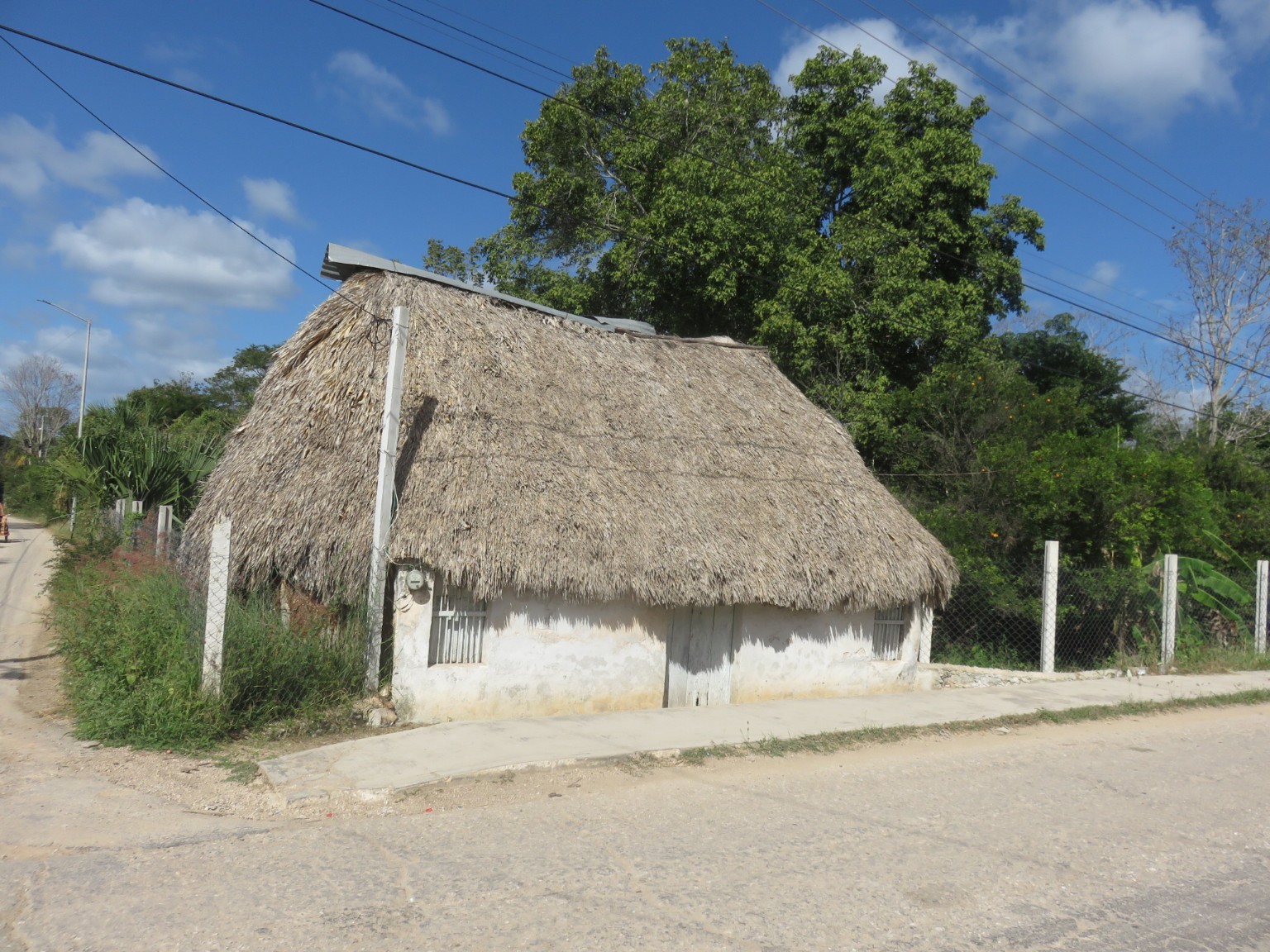
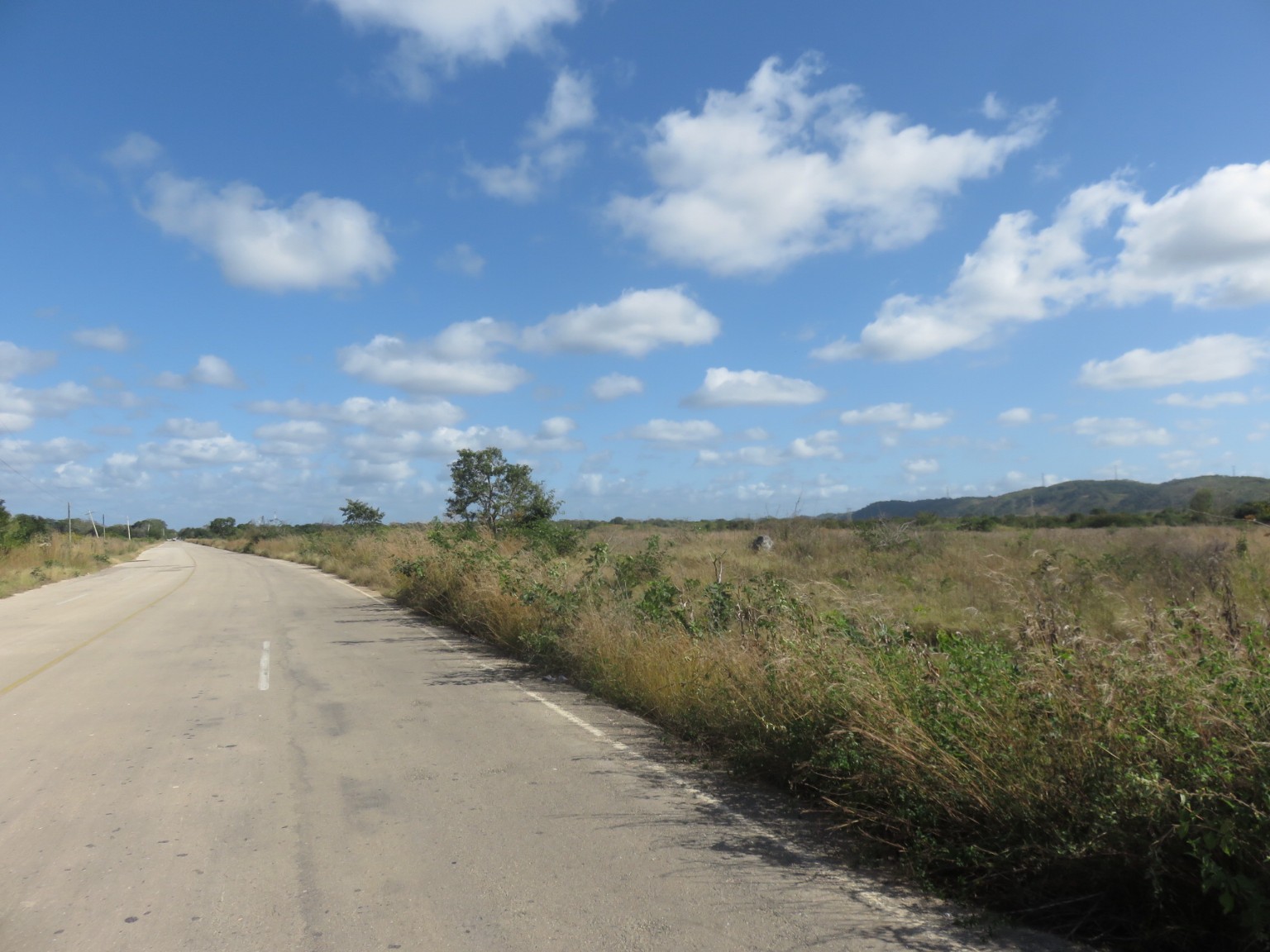
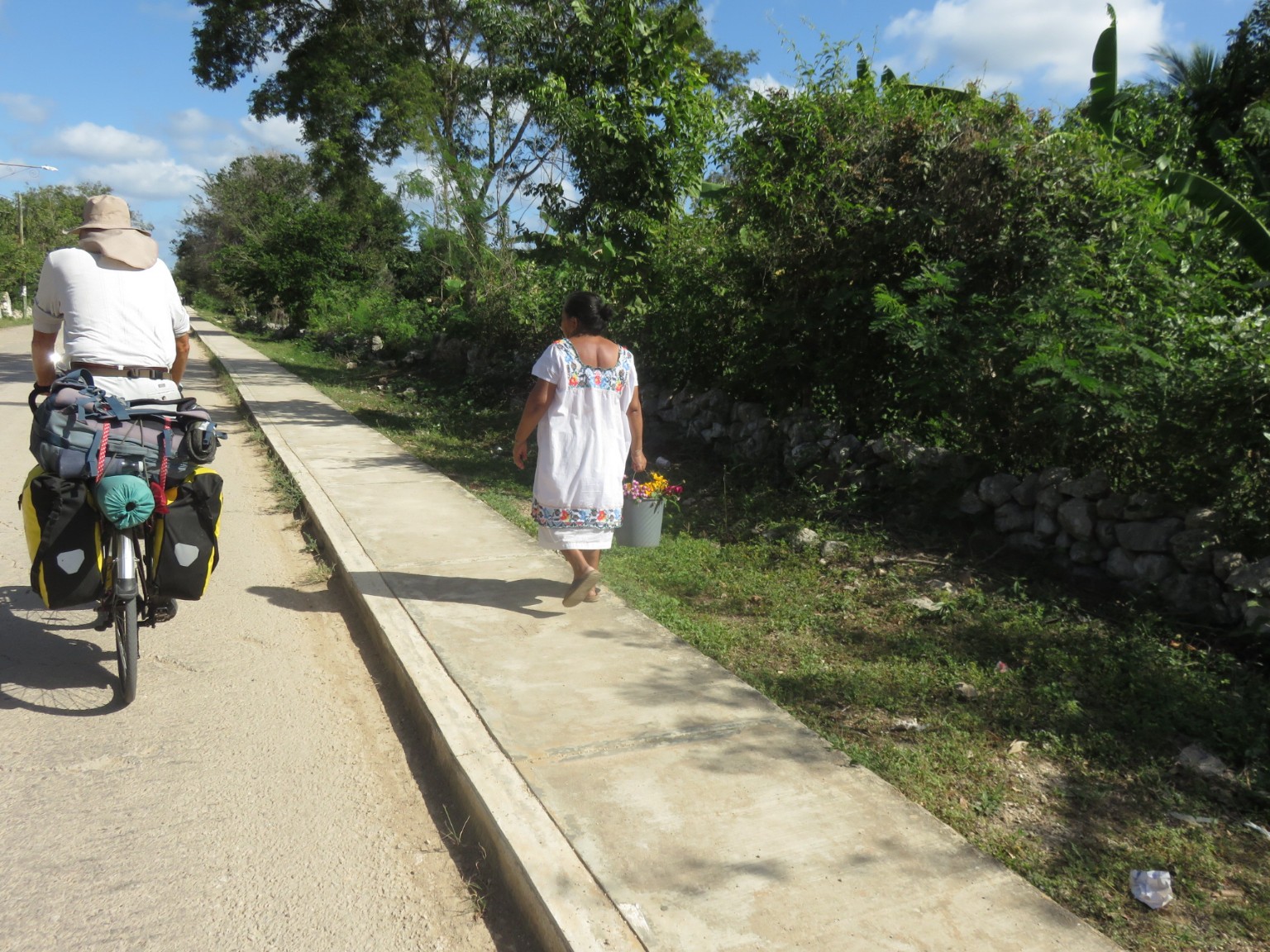
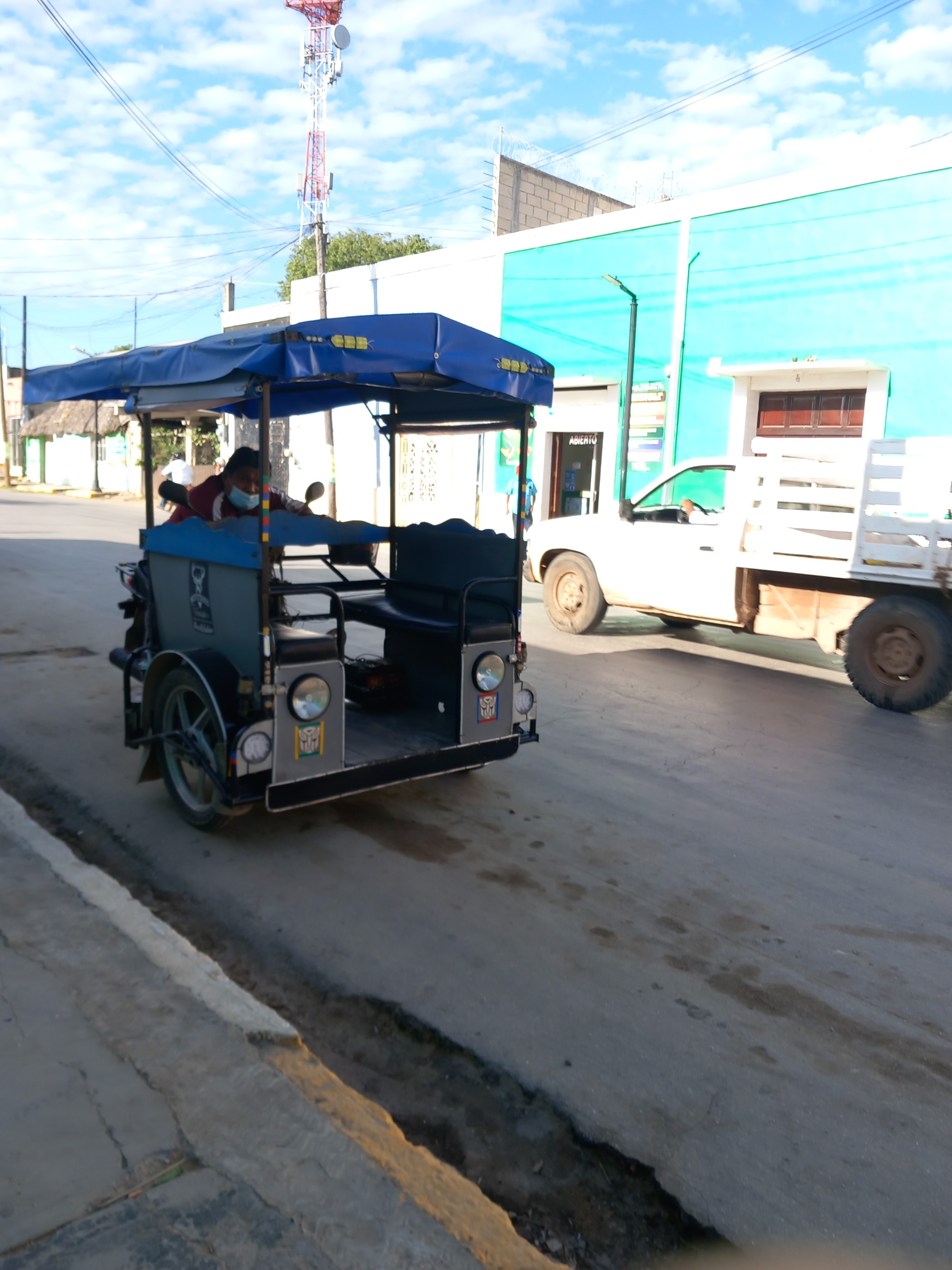
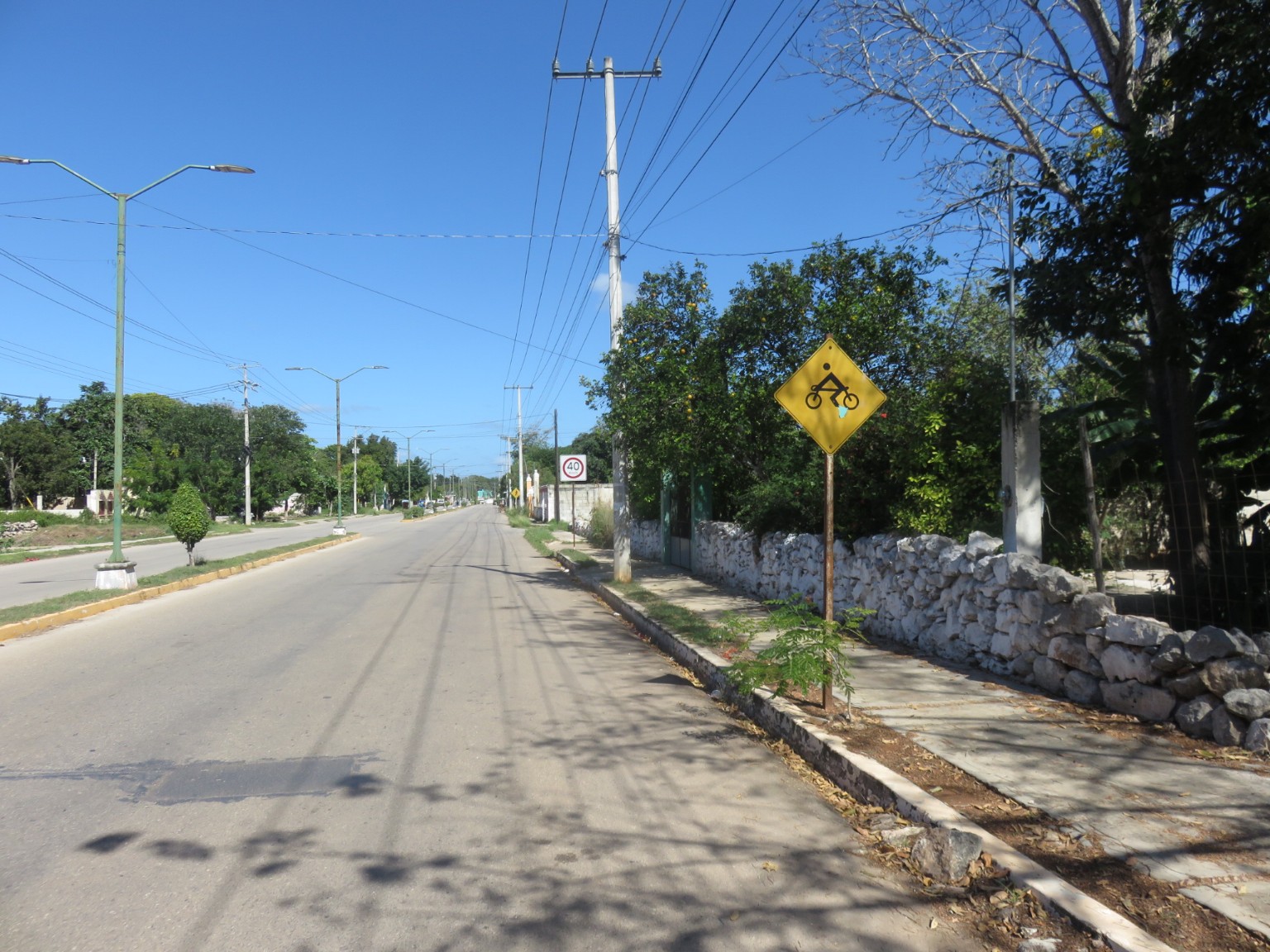
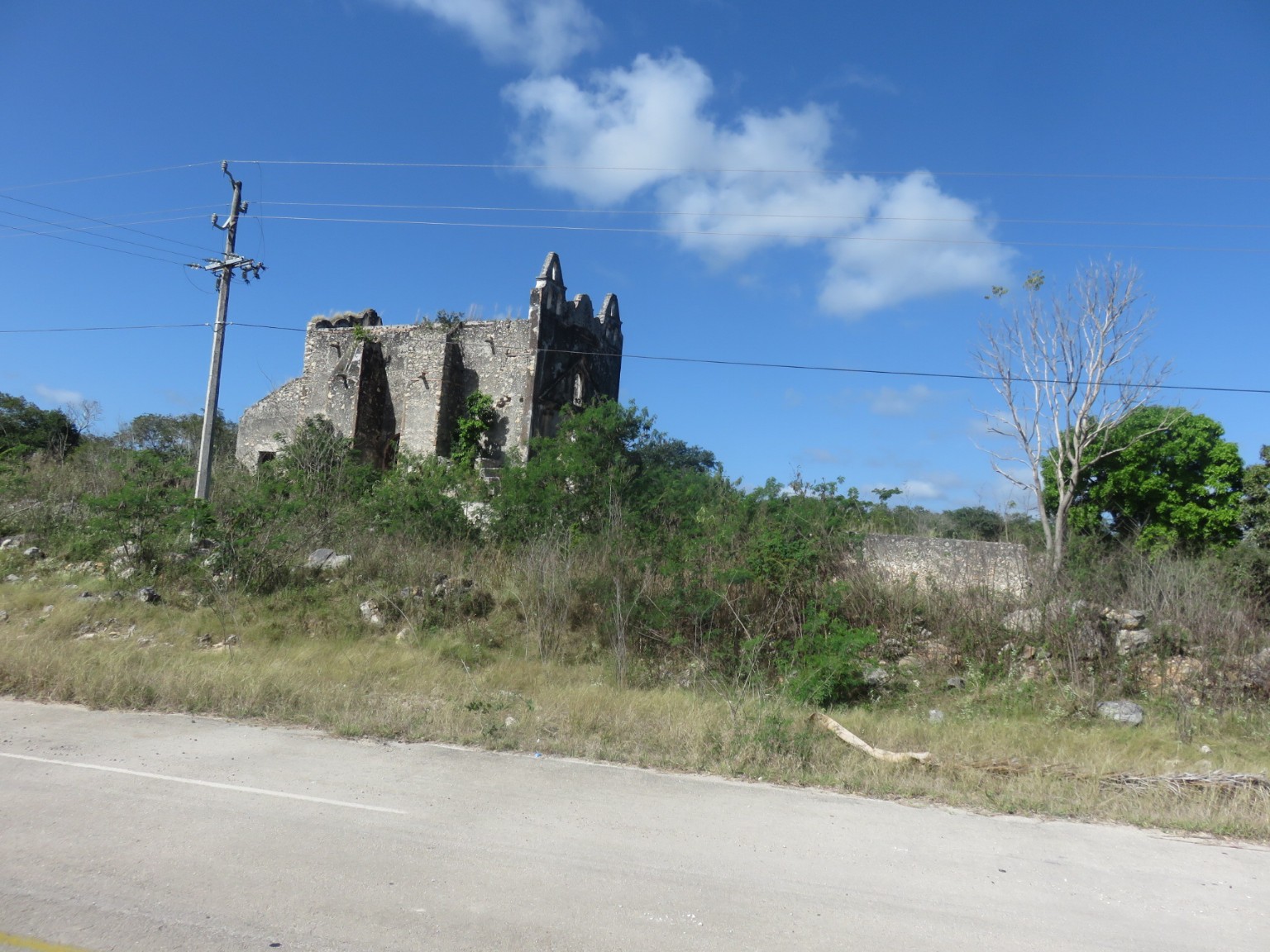
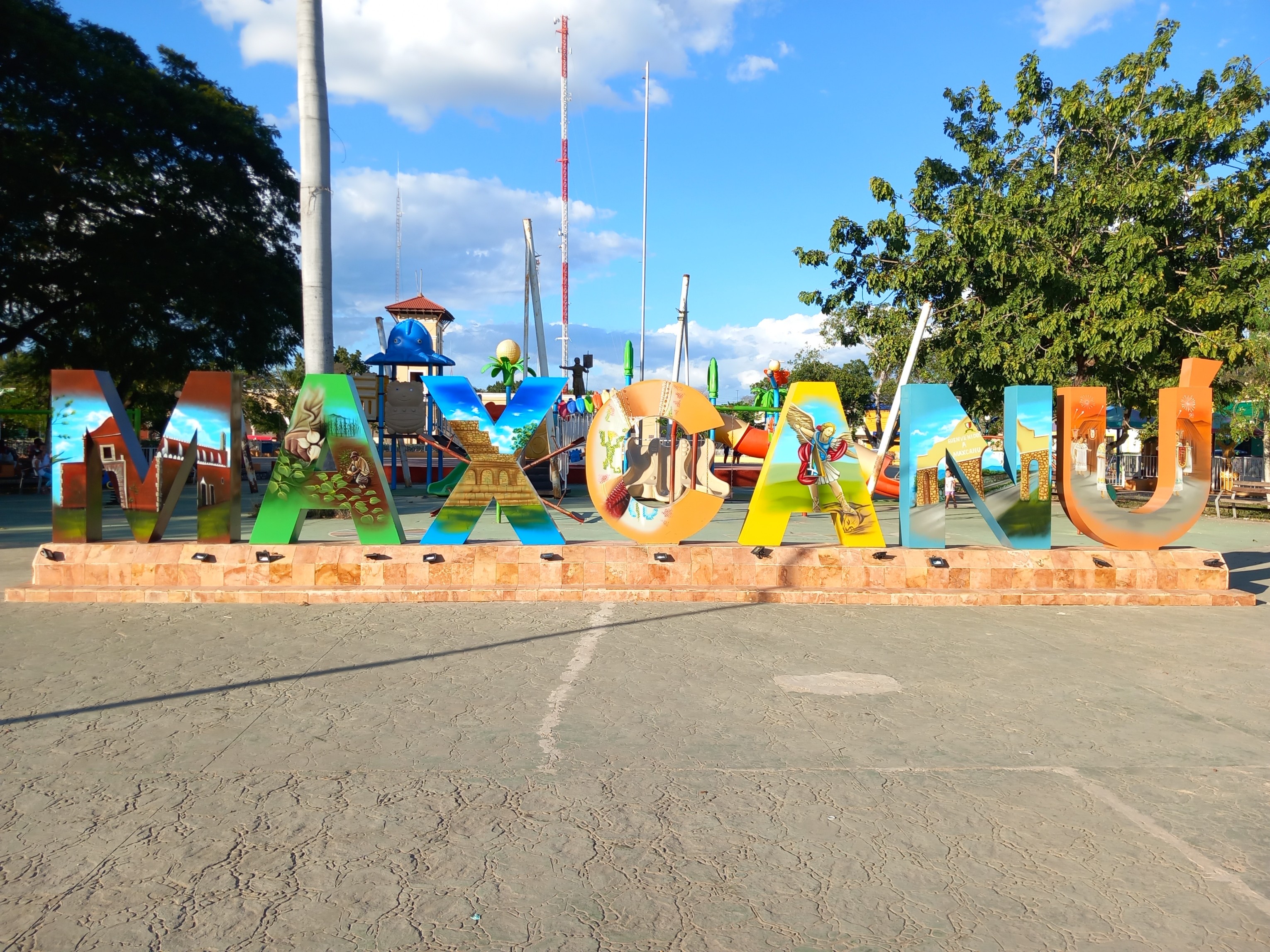
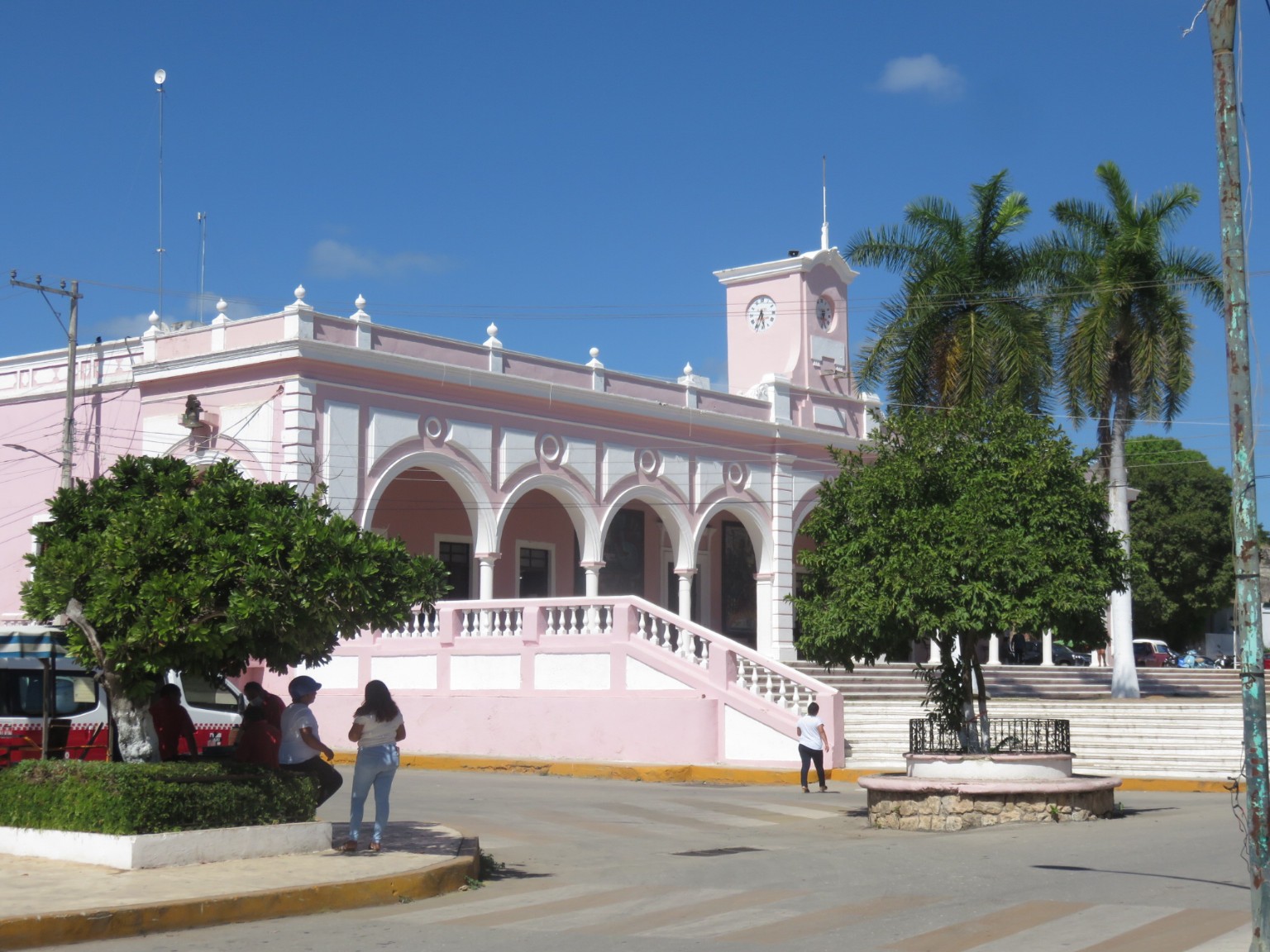
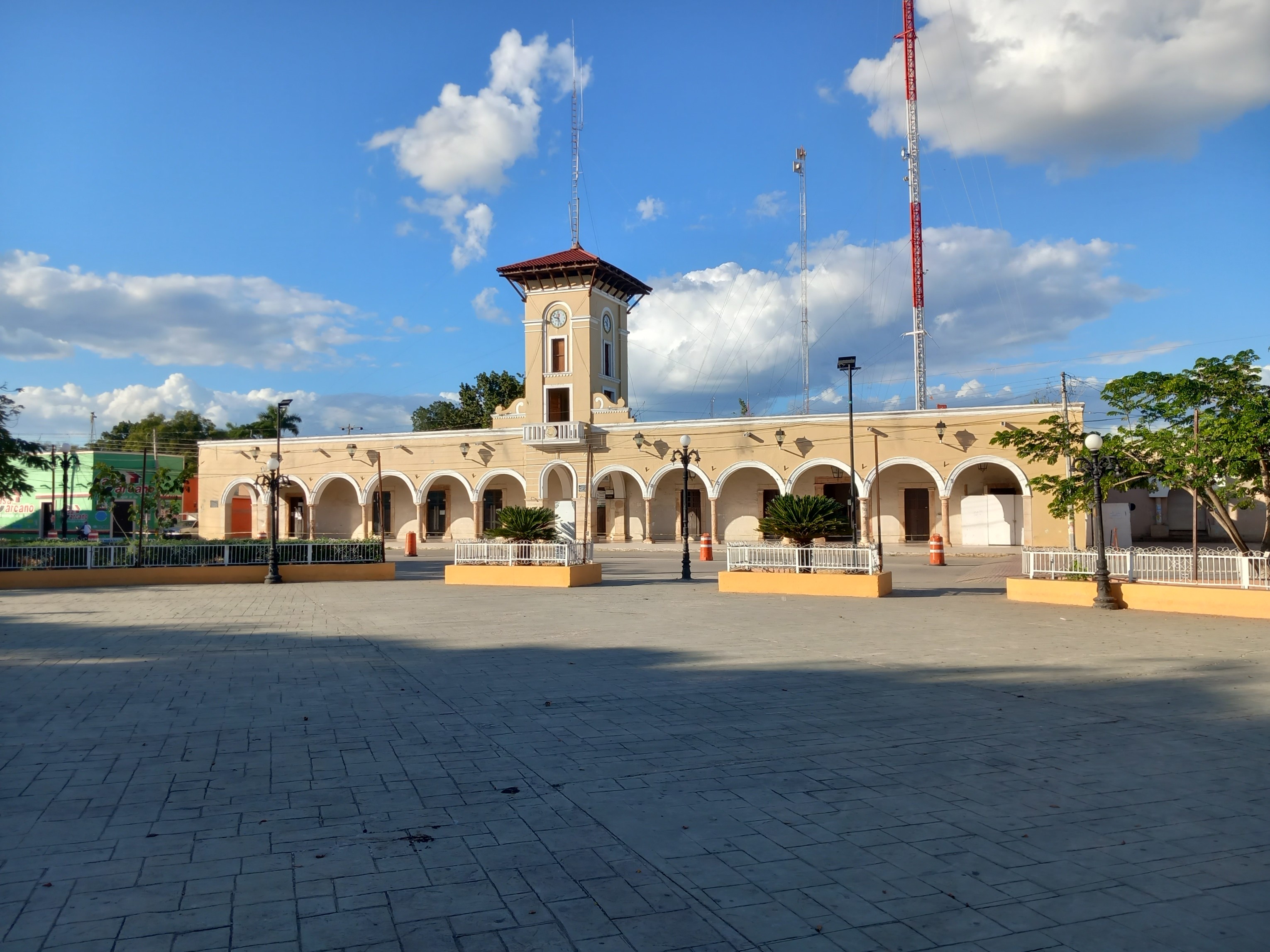
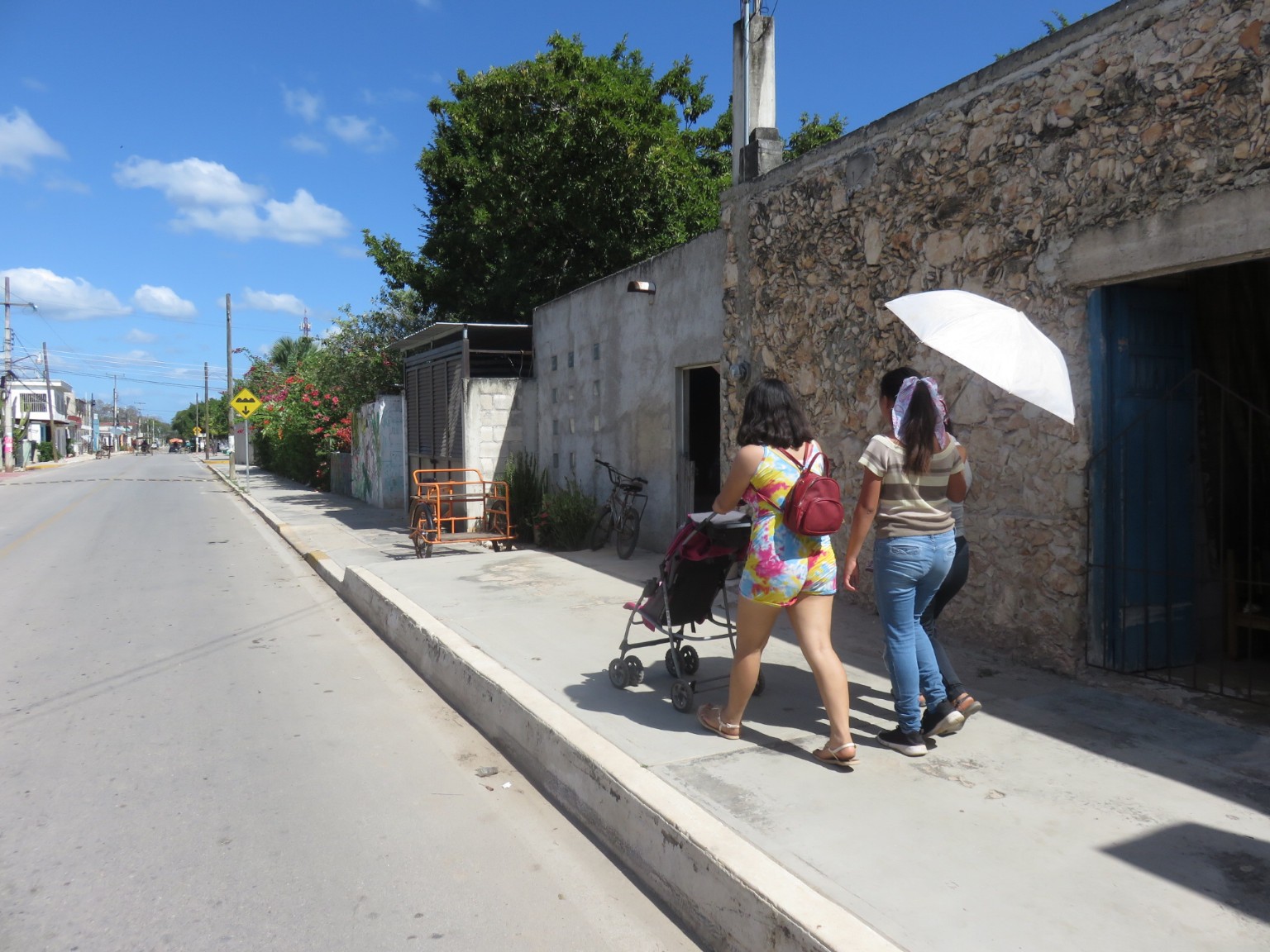
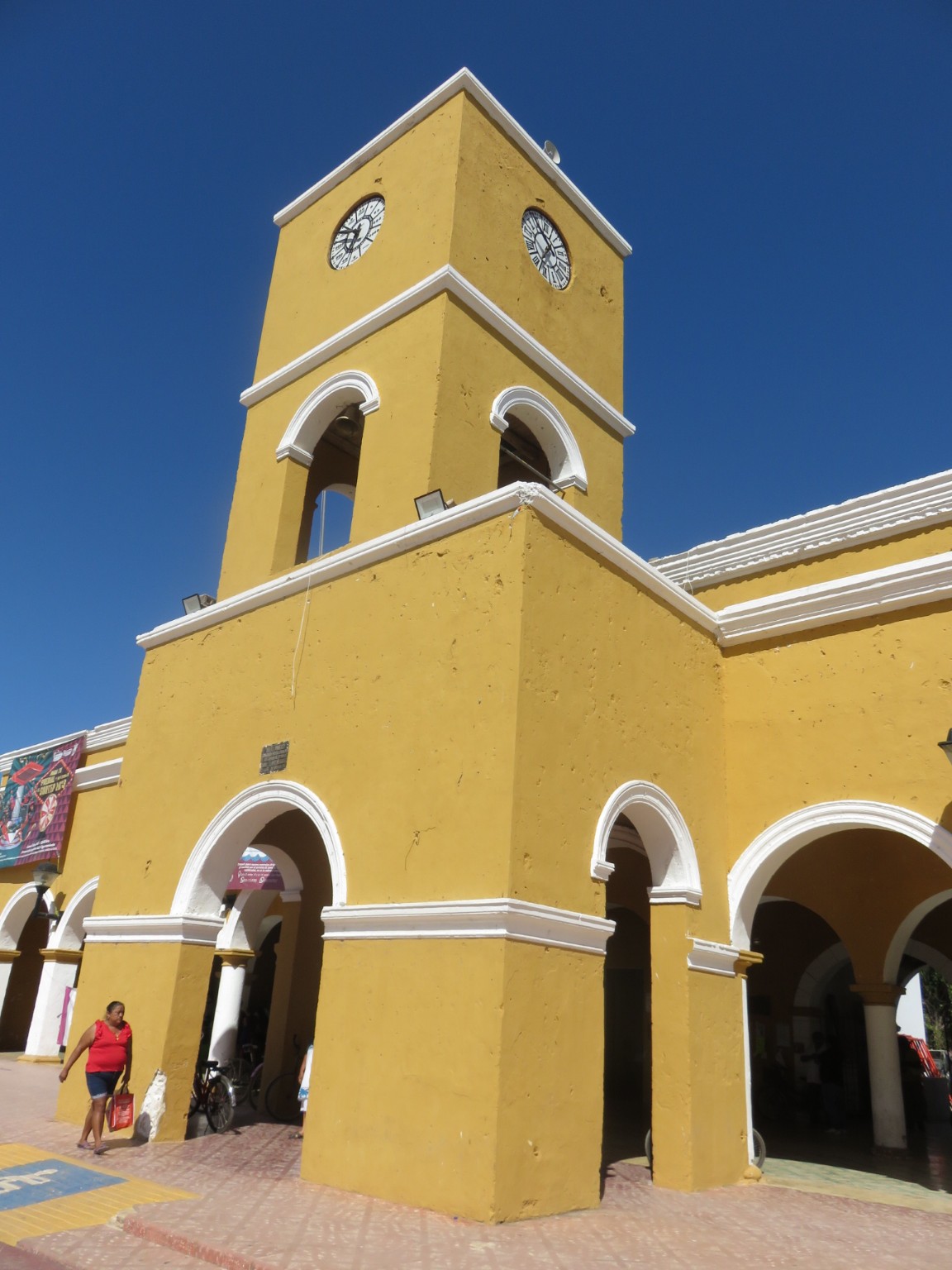
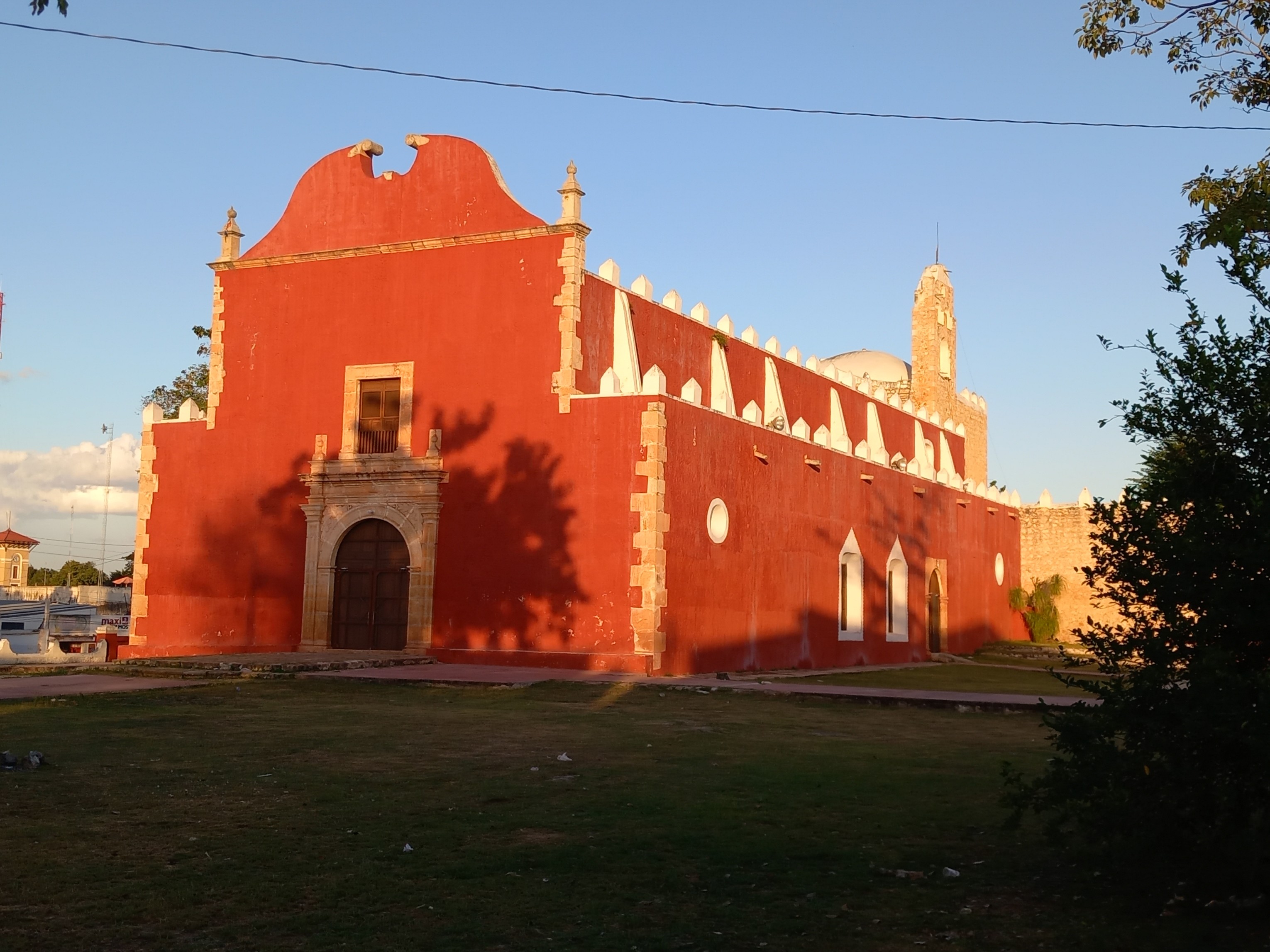
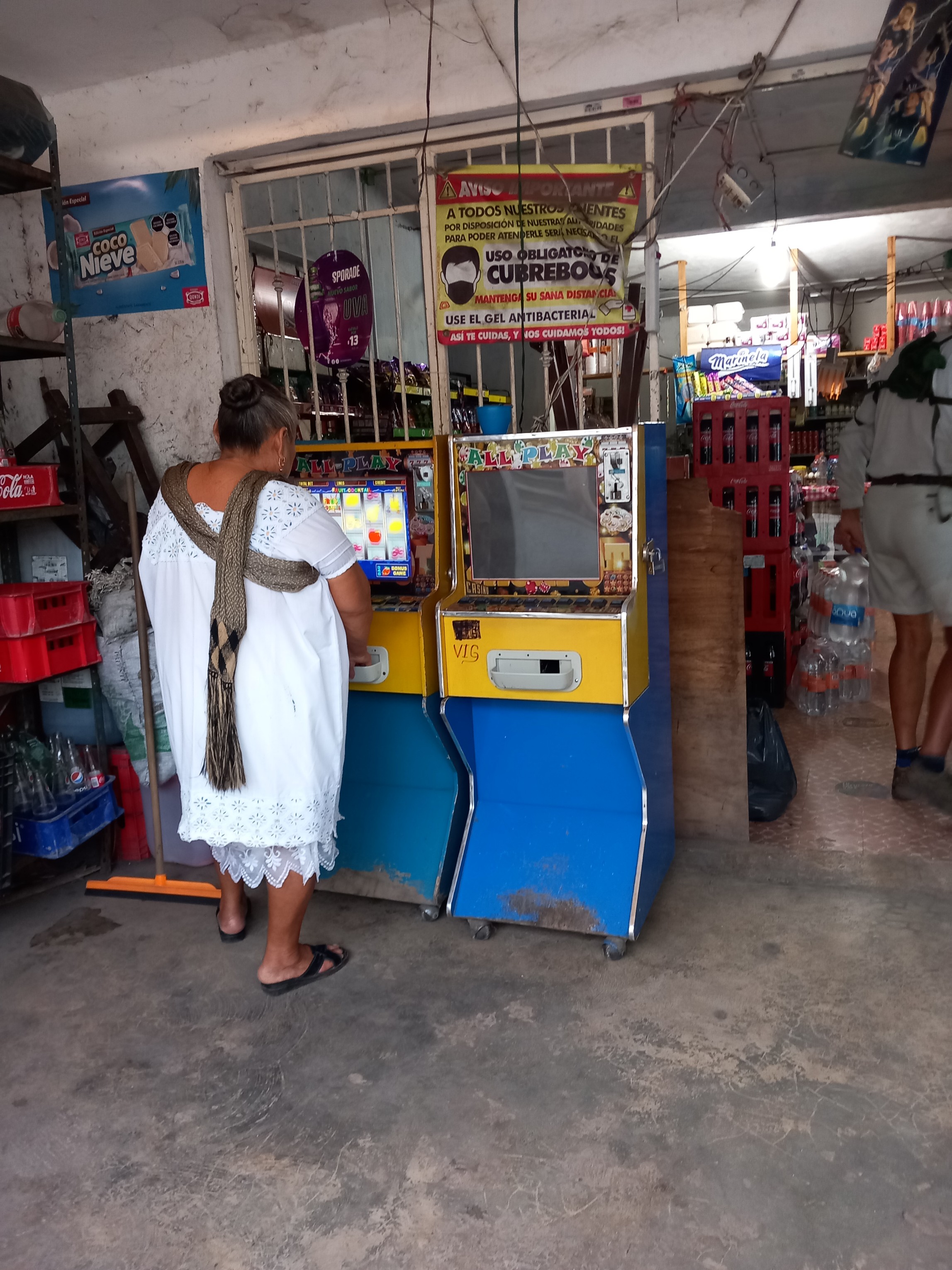
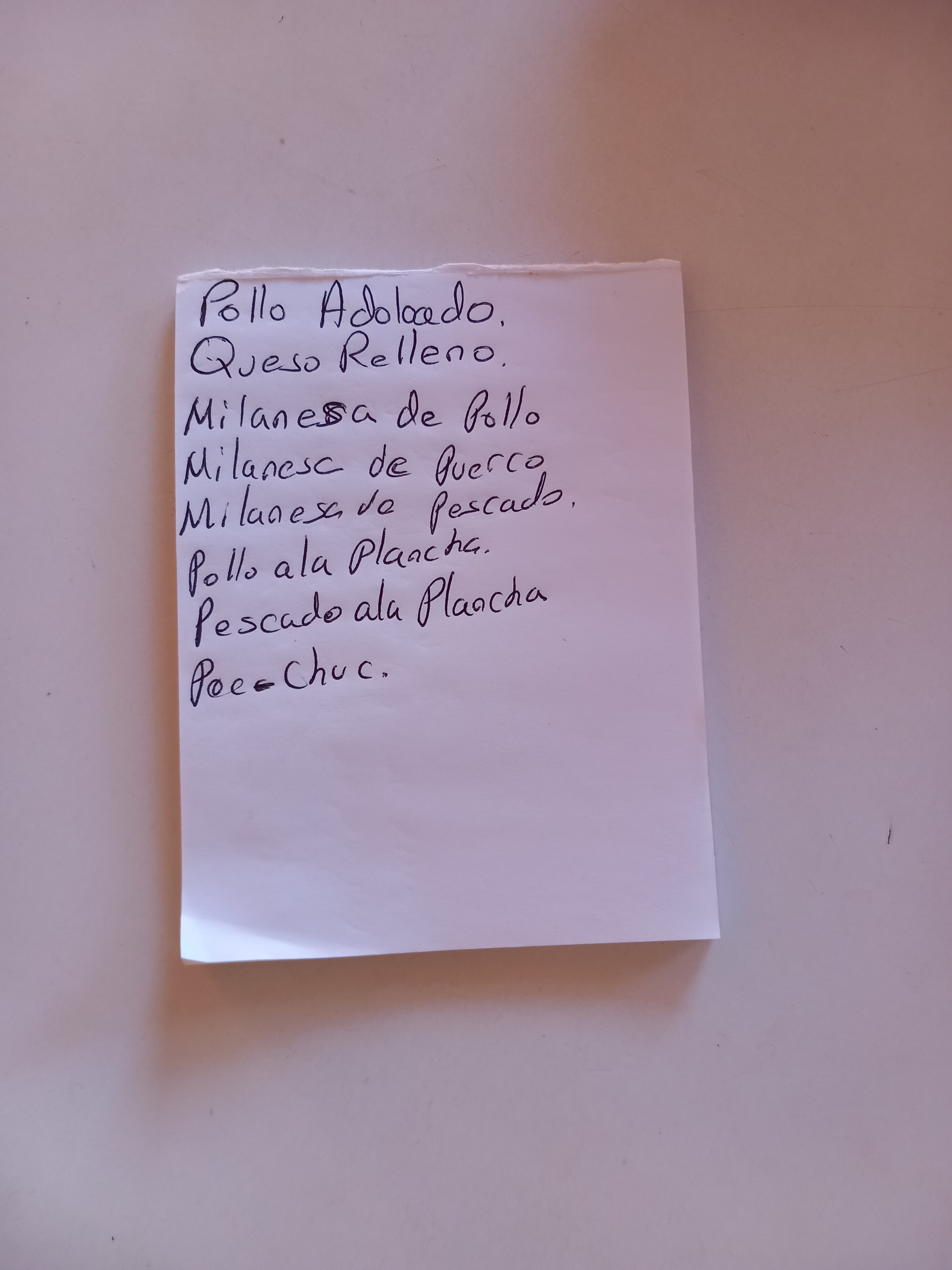
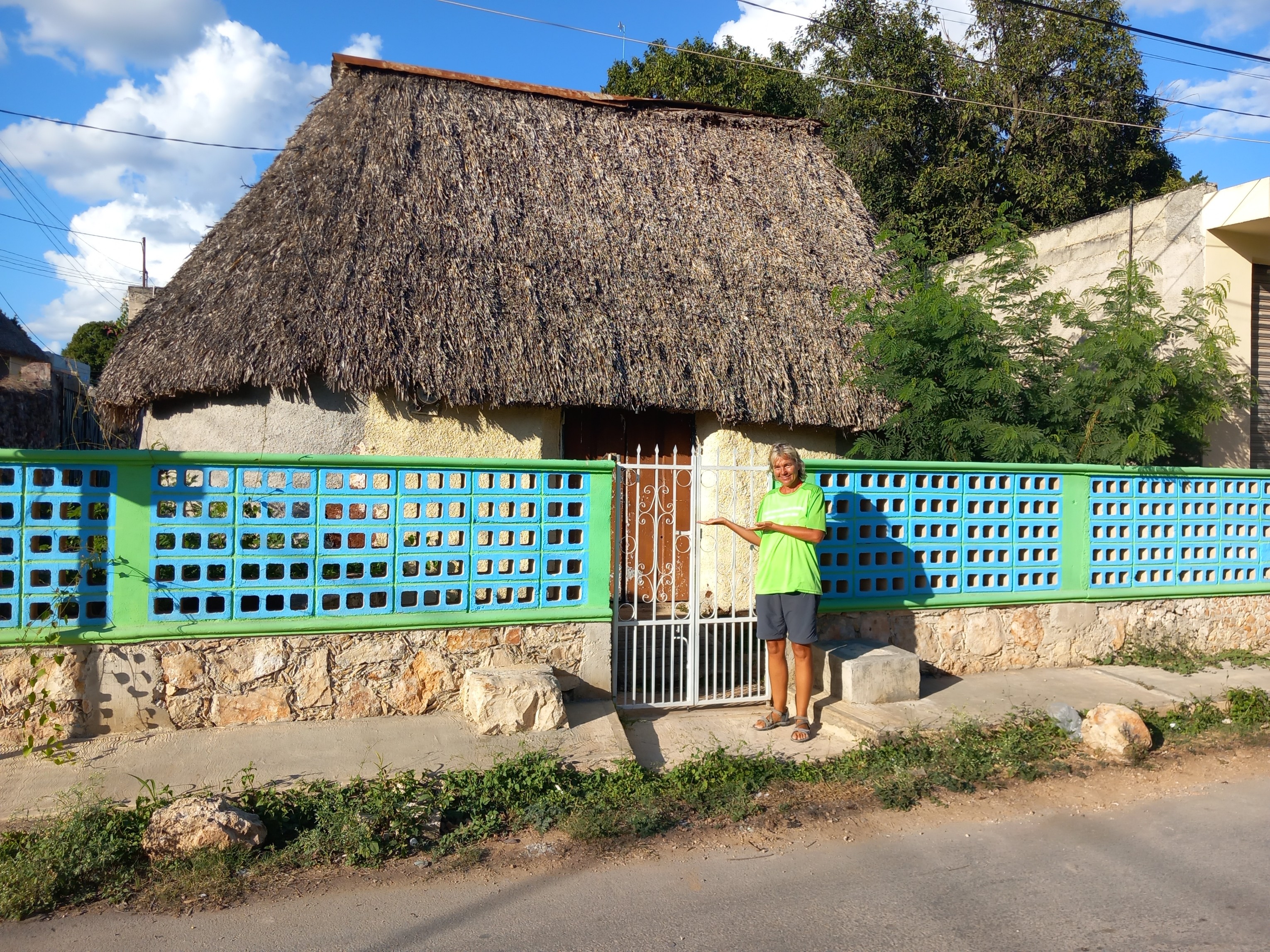
This was a little gem of a place we came across providing hot buffet food (what we would call a Carvery in England) where you order by pointing at what you would like an the waitress brings it to your table. We returned for breakfast and the food was as delicious as the night before. These three wheeled taxis are everywhere and very popular in towns and villages where there are not any buses for obvious reasons.Days and days of flat roads, however, not many signs like this one: “Campeche, hidden treasure of Mexico, awaits your return”.Olivia likes these type of Mayan houses so there may be a few for you to see in the coming posts. The thatch is waterproof and resilient to withstand many storms.Lady in a traditional Mayan dress.Headlights are a rare optional extra for these taxis which also operate at night.An infrequent warning sign for vehicles to look out for cyclists.We don’t think these are Mayan ruins but there are many of them.A village we passed through en route to Maxcanu.This is a one of the better preserved examples of Spanish Colonial architecture and the style is a regular feature in most towns and cities.We are always amused when we see the ladies using umbrellas against the blazing sun because we never see them being used in the rain – they always go indoors.We’re not aware of gambling being a part of Mayan culture traditionally although it seems to feature nowadays.We are used to waiters/waitresses reciting their options from memory although on this occasion they appeared embarrassed not to have a menu and hastily wrote one down.

 Mexico and Belize