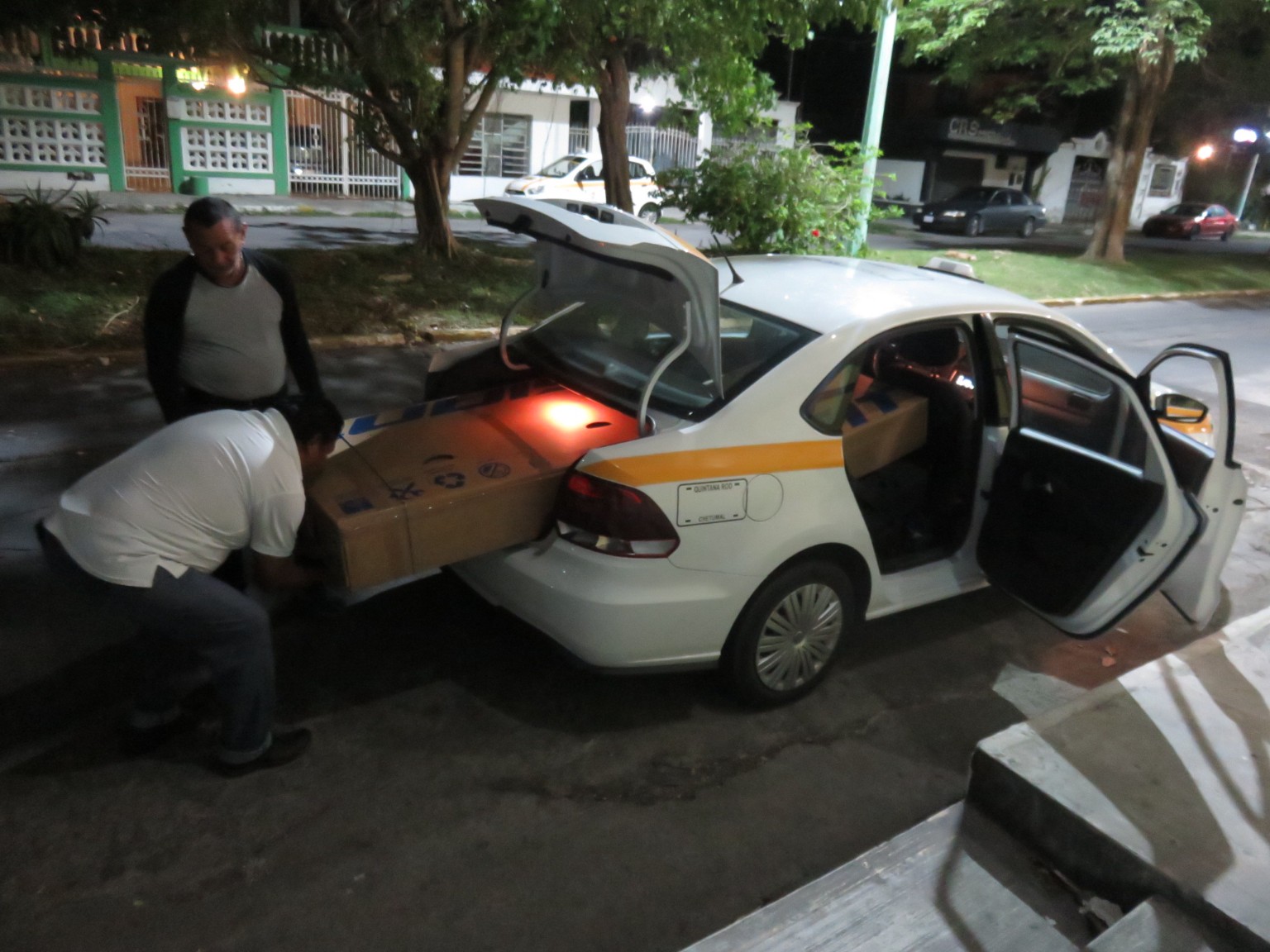
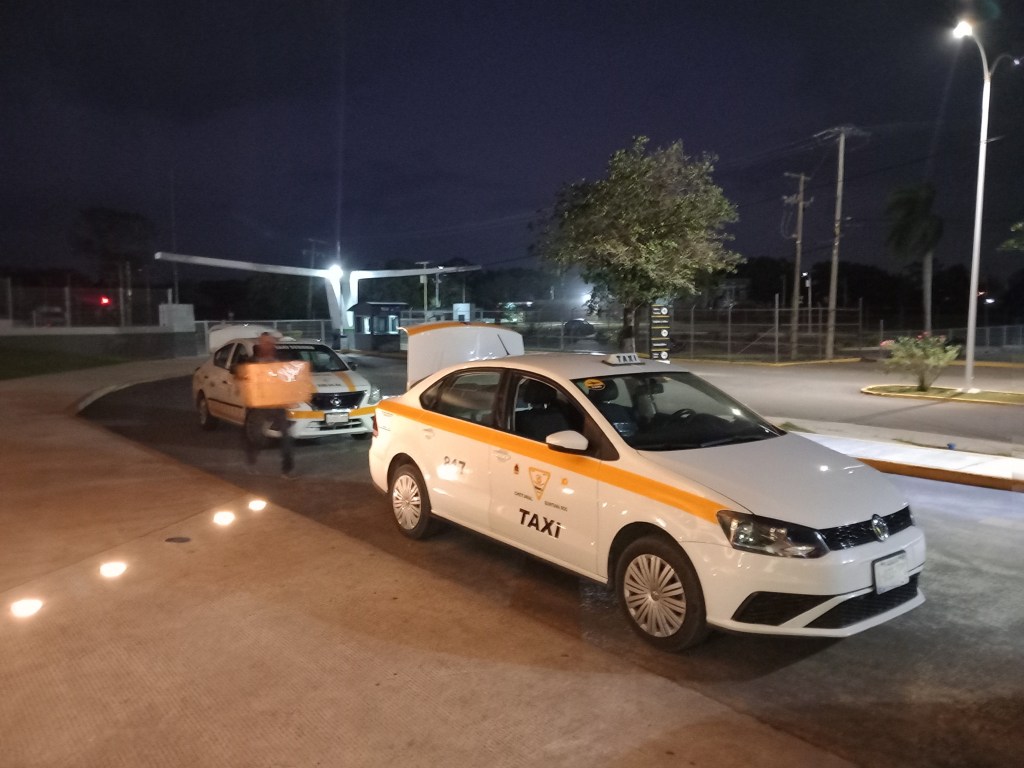
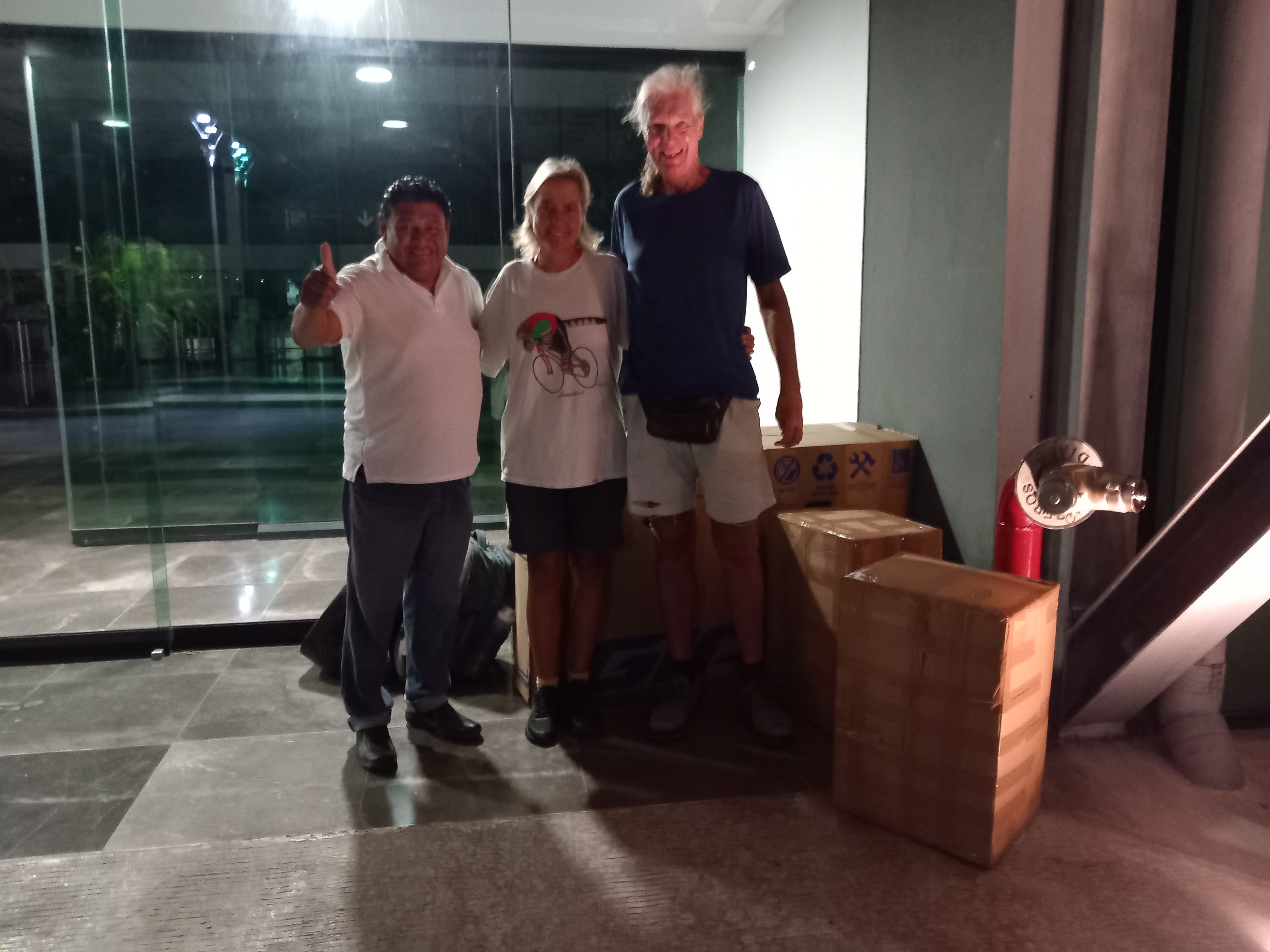
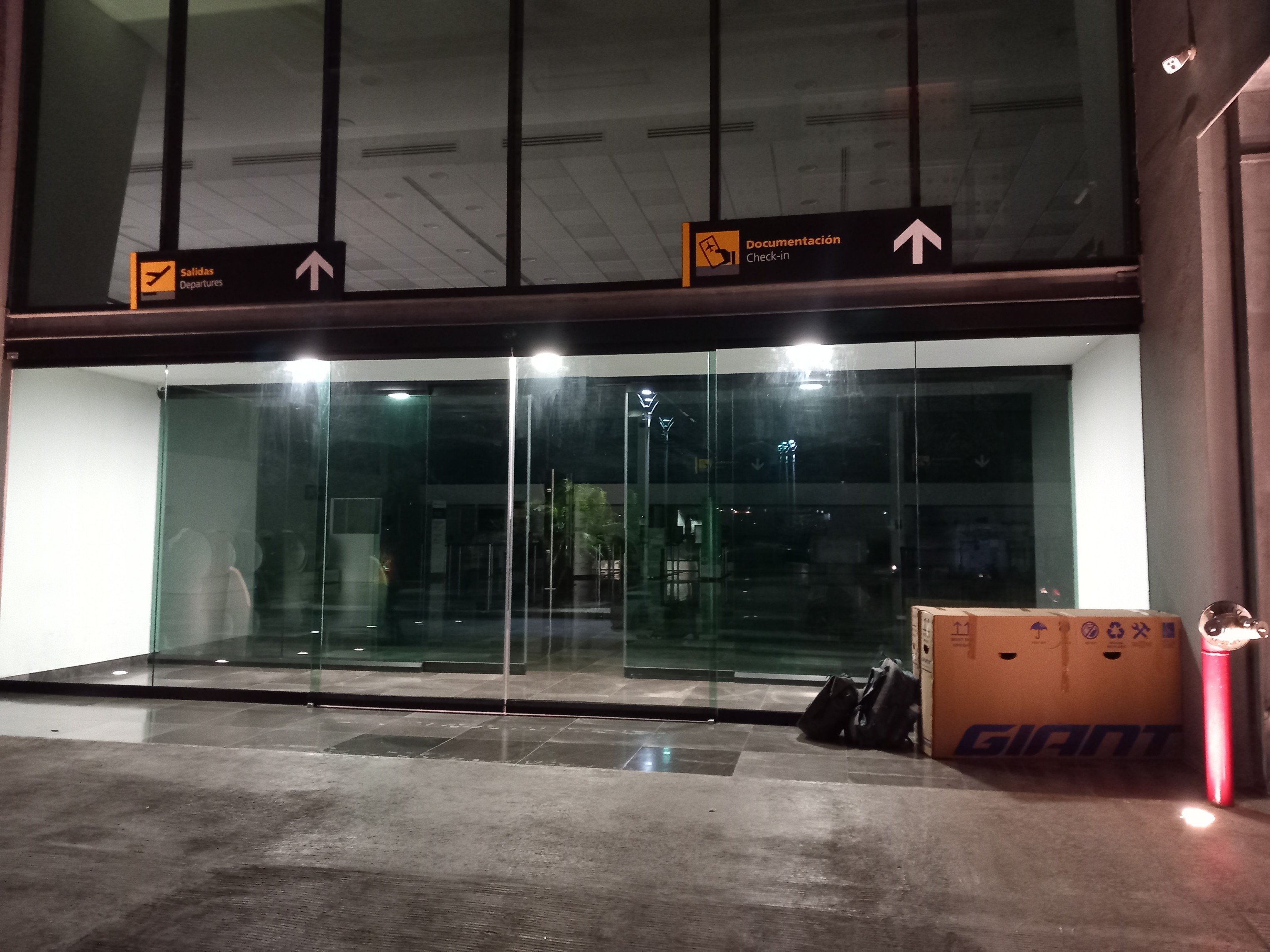
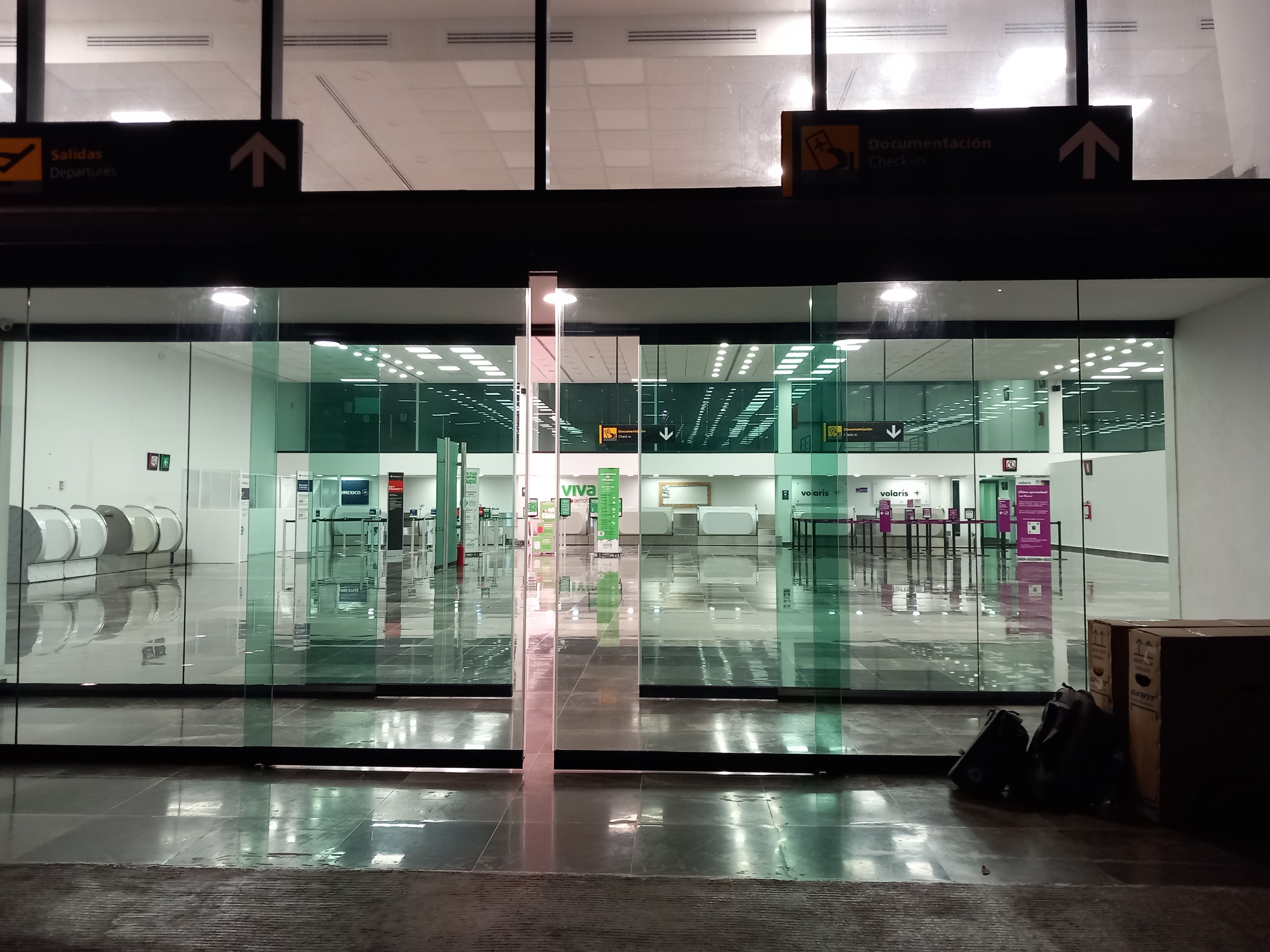
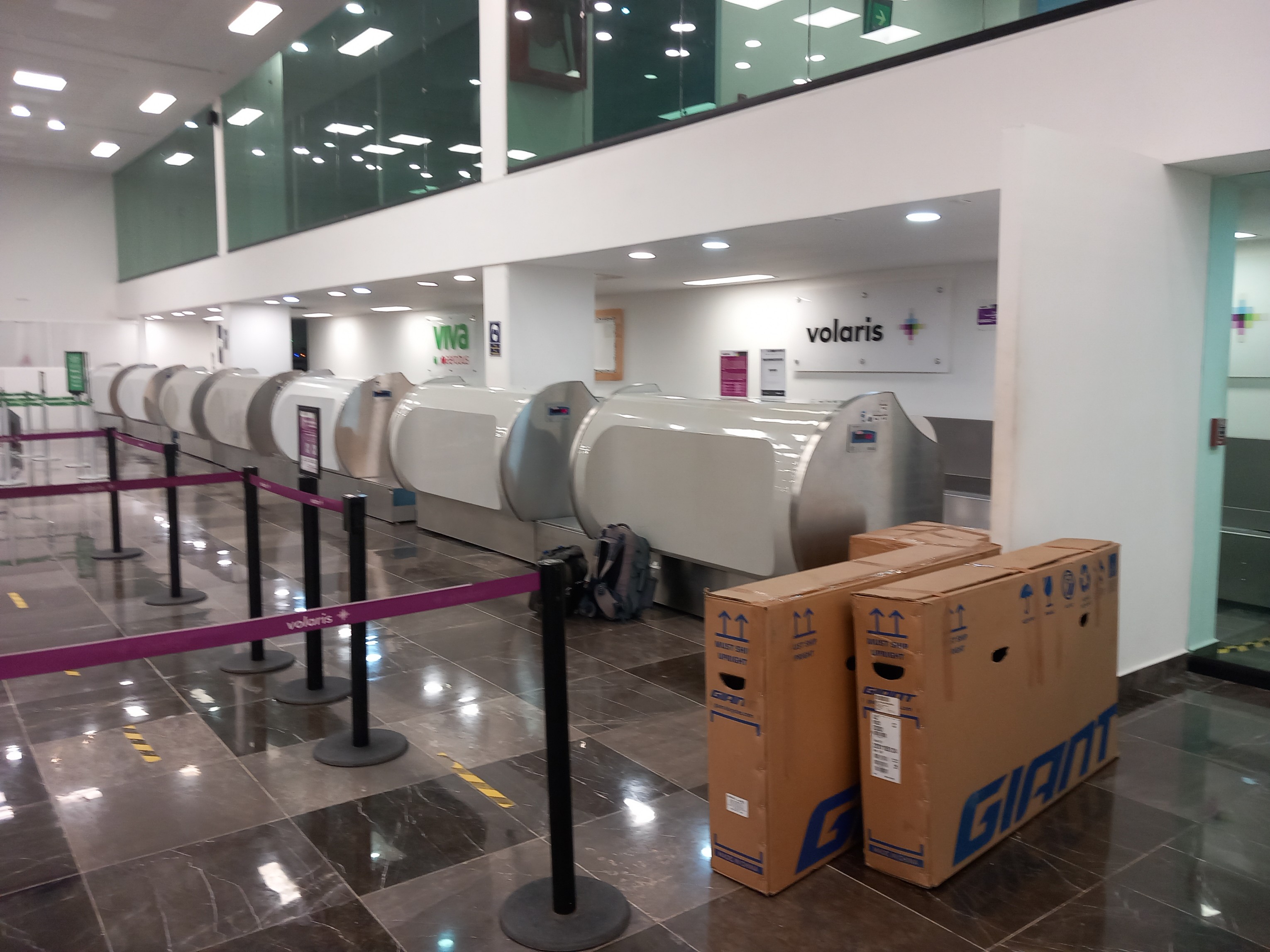
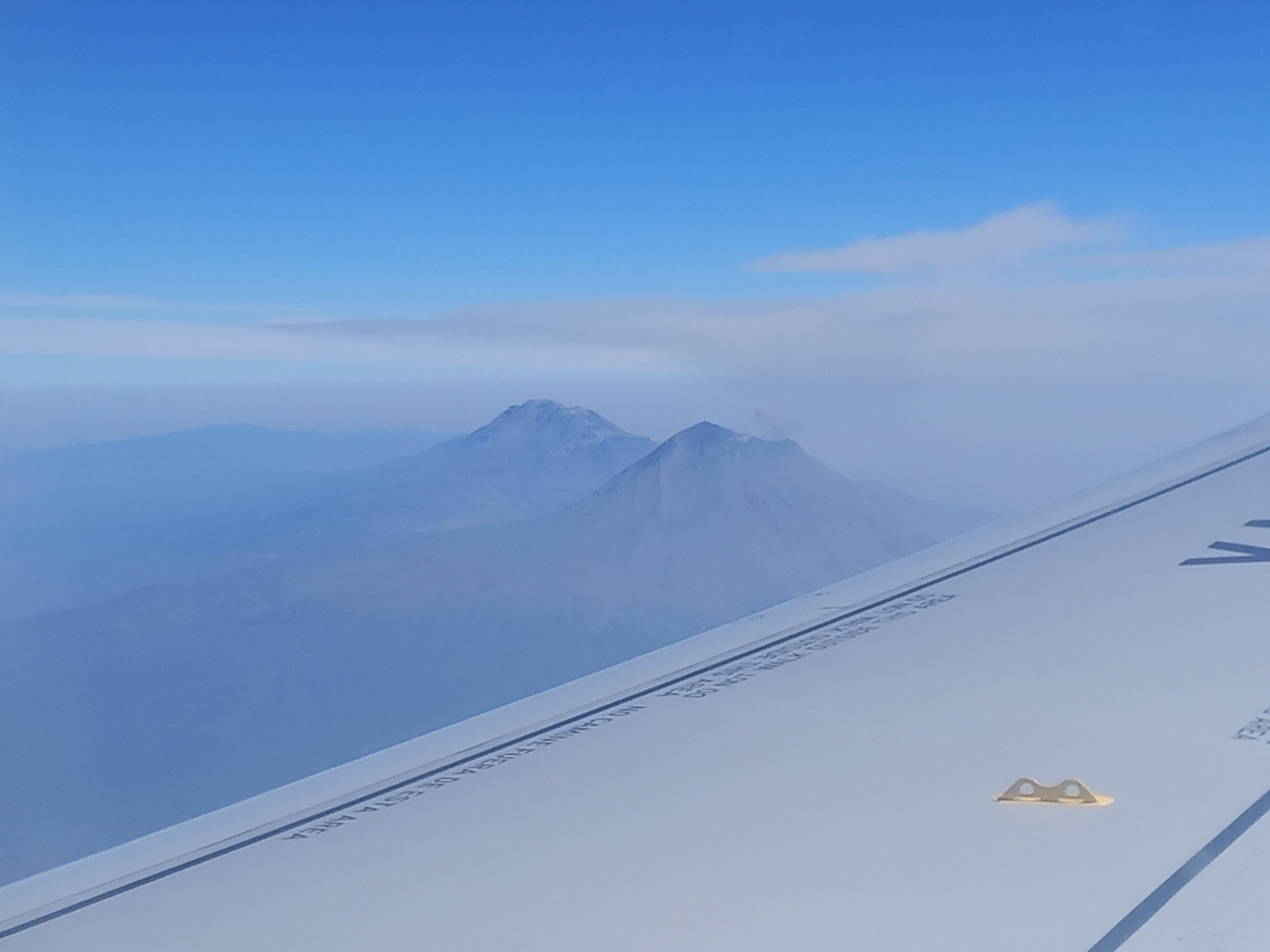
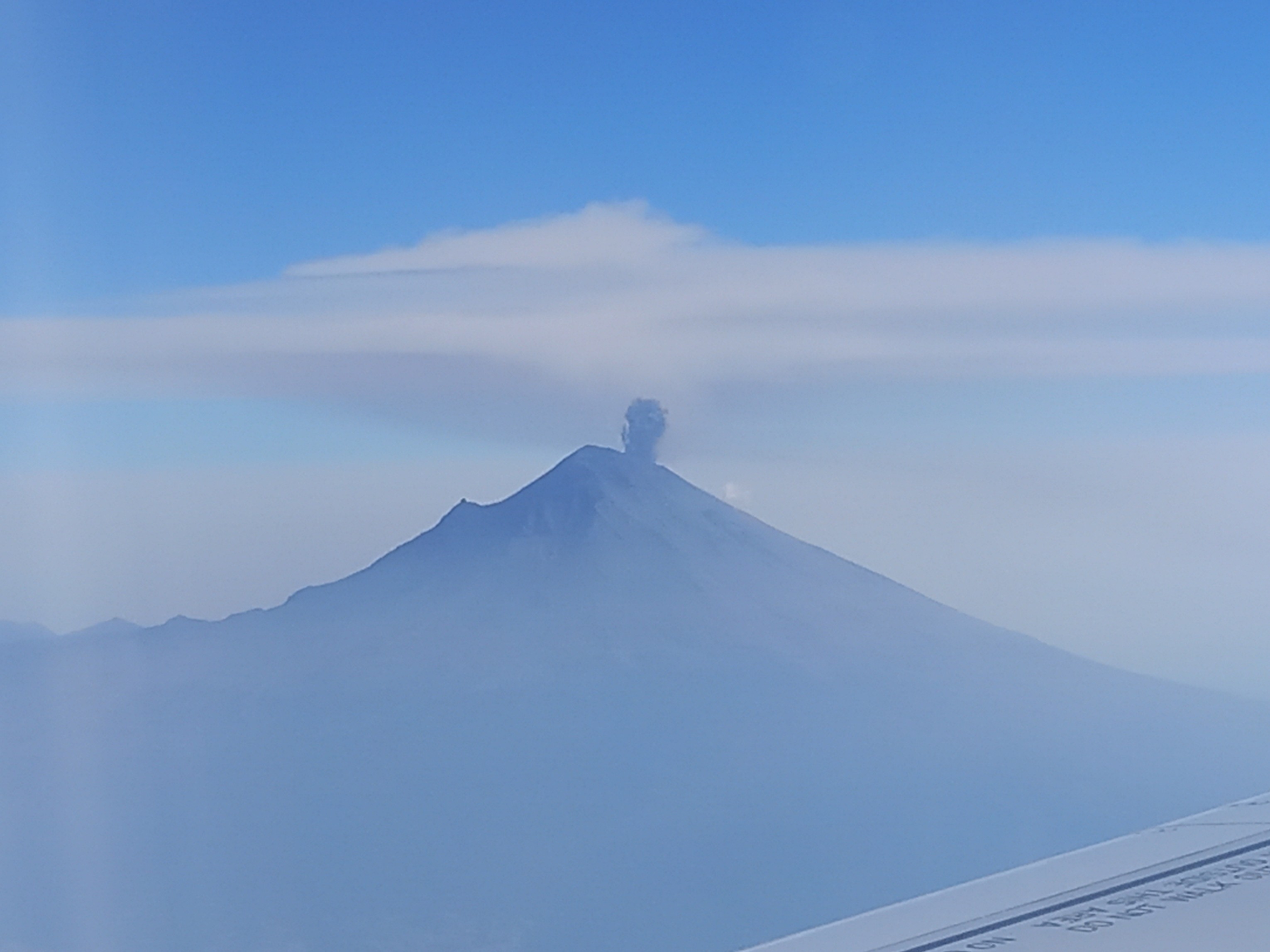
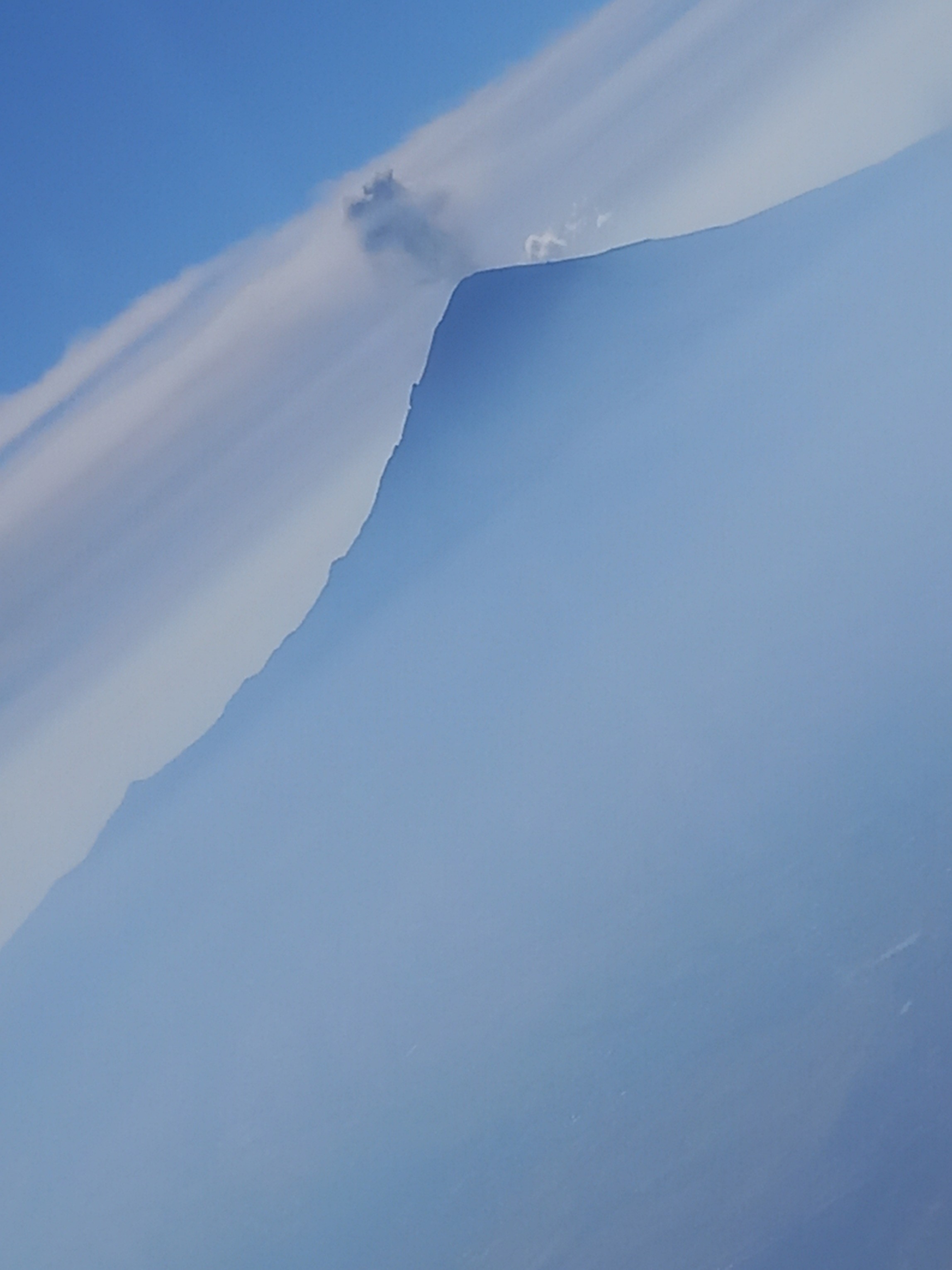
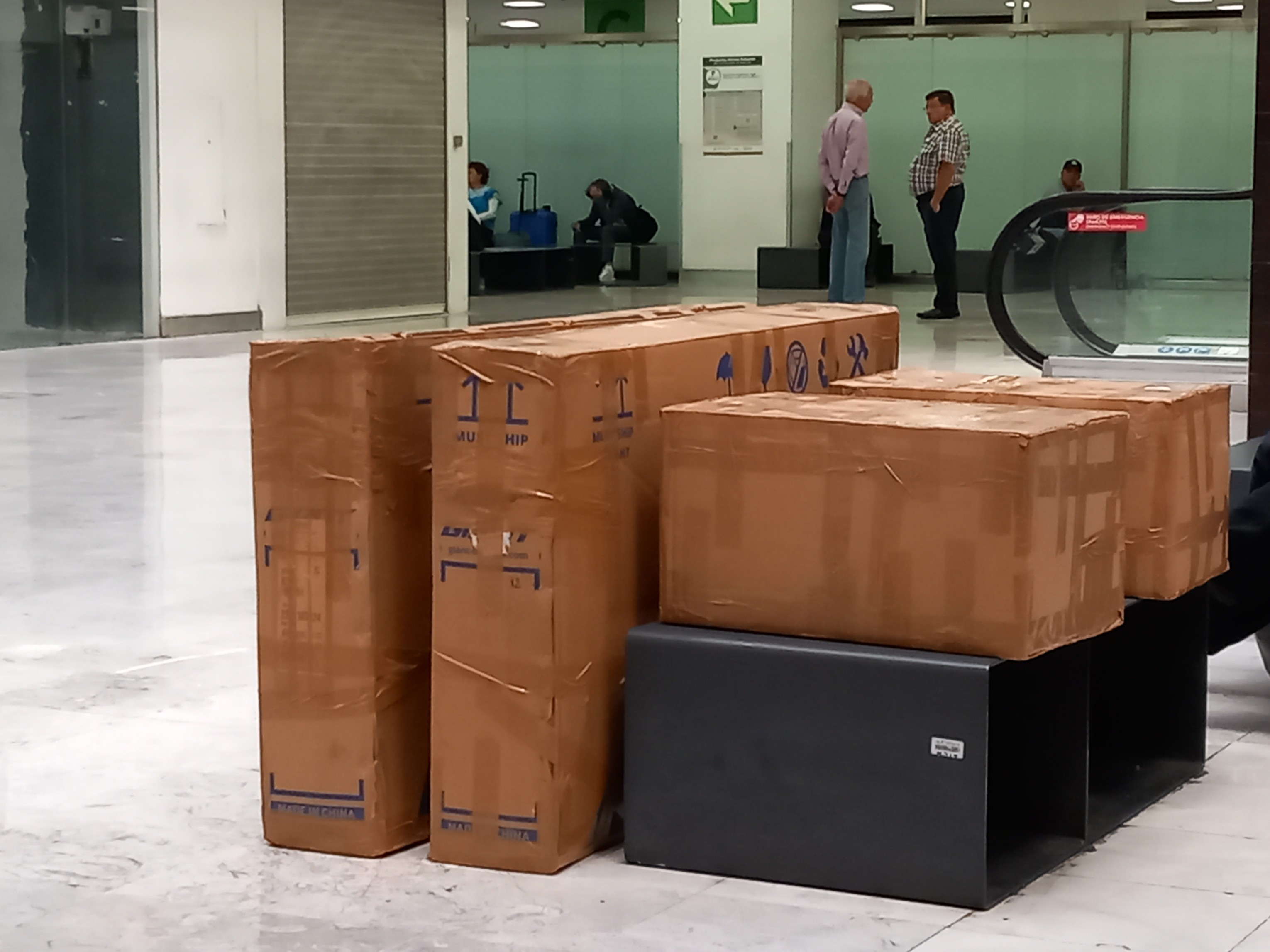
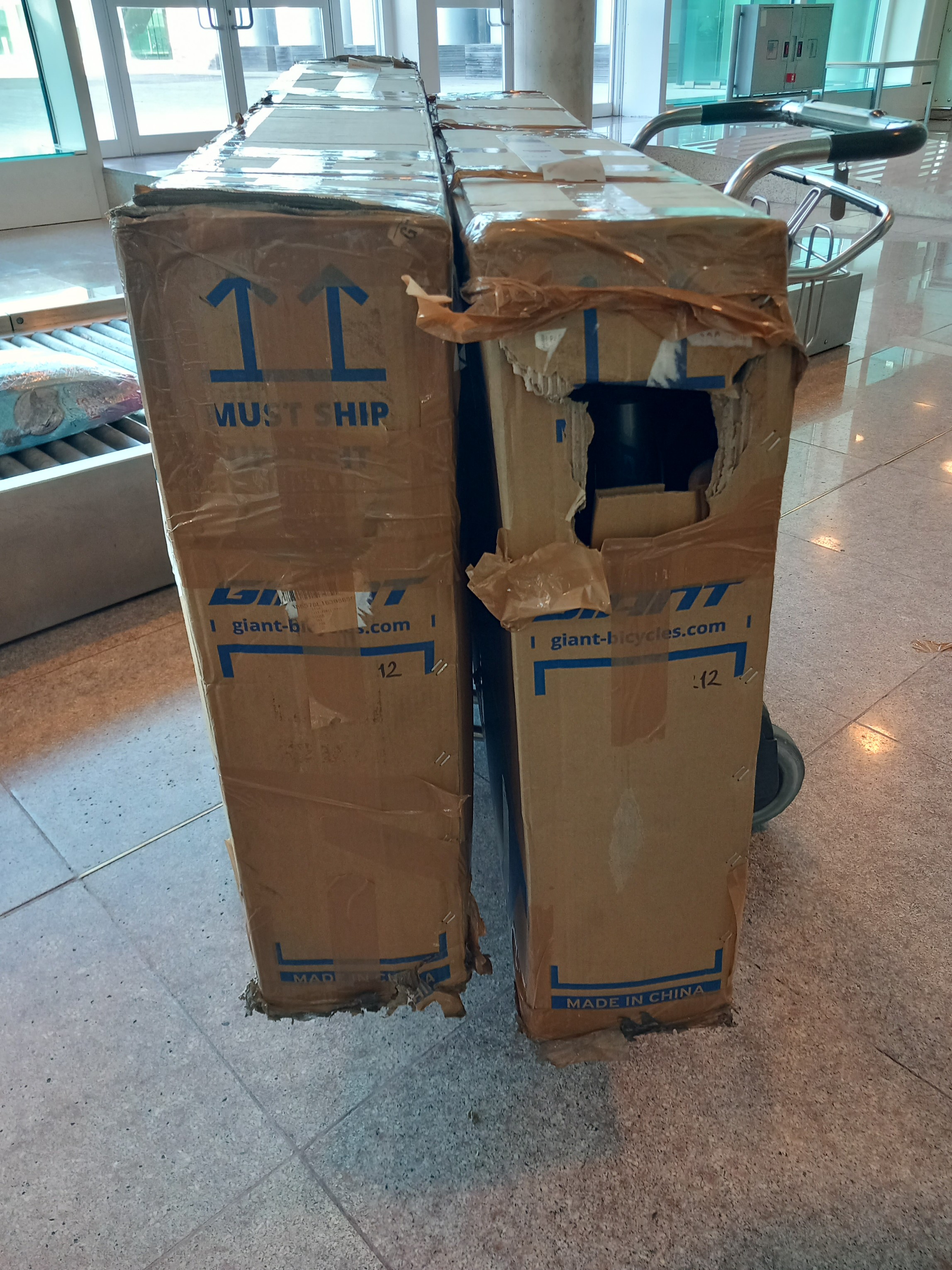
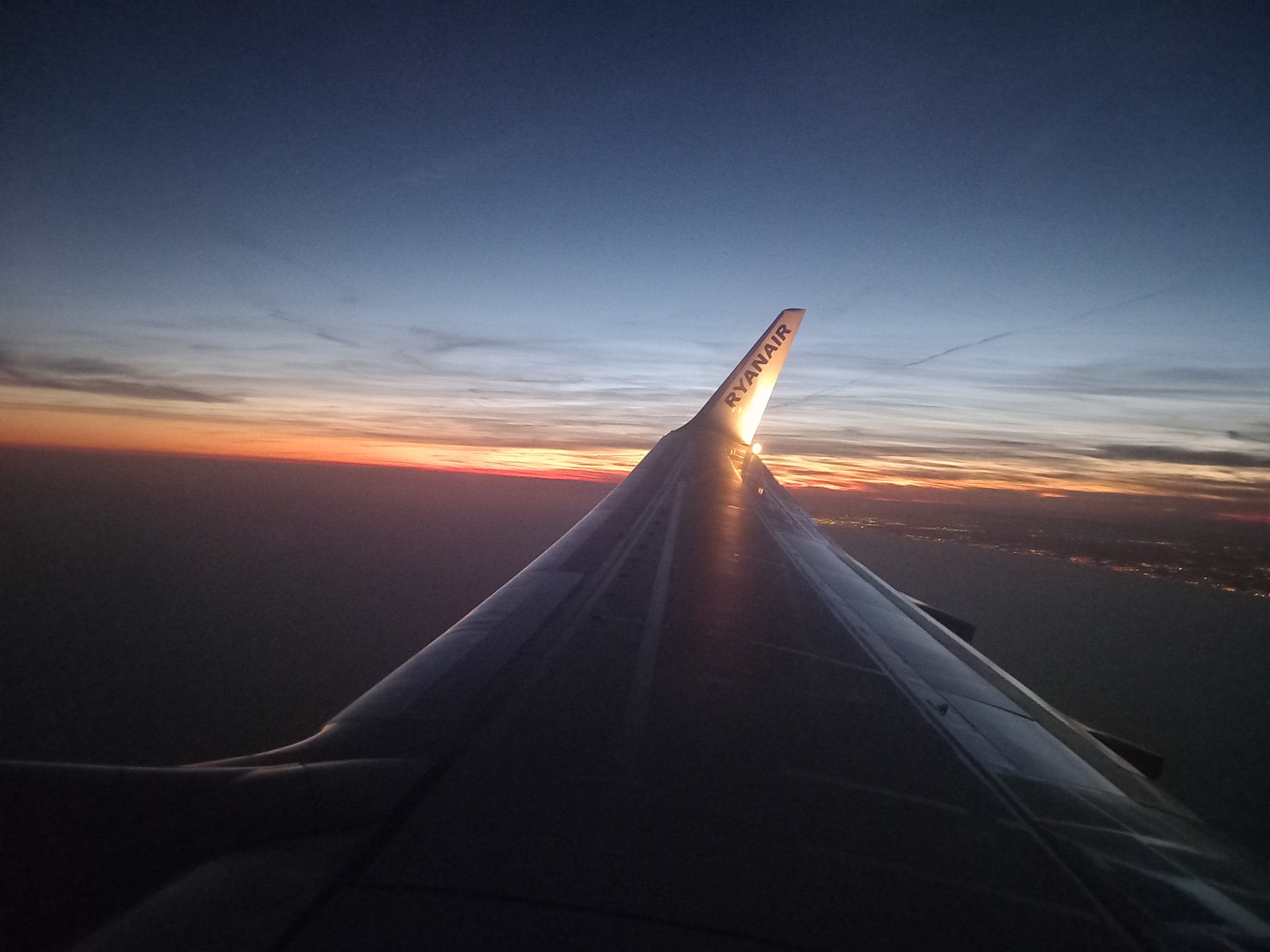
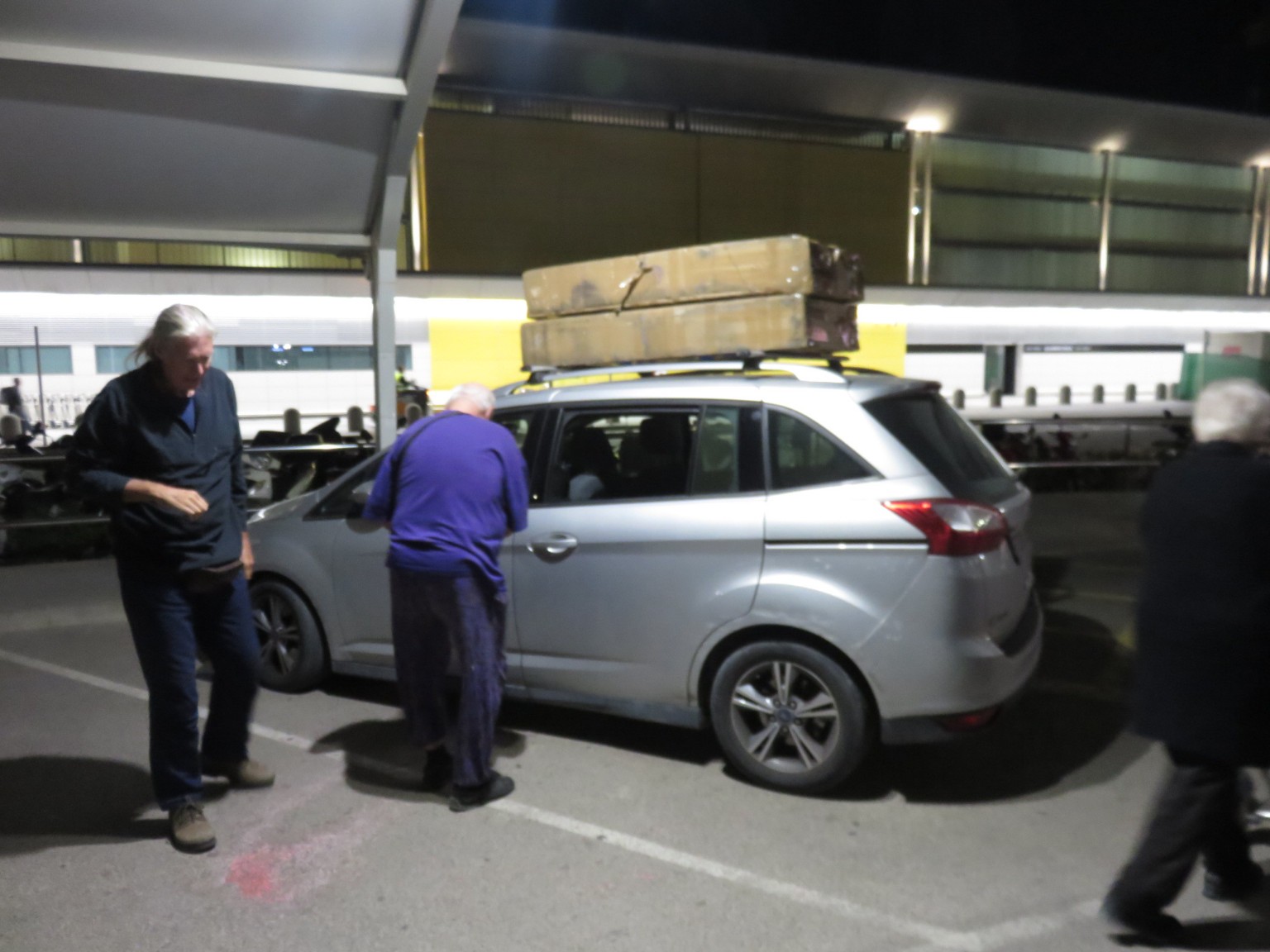
A 6am start for these chaps loading our bikes into one taxi and us into the other taxi.Although Chetumal is a town of 250,000 people the airport is not too far out from the centre.Of all the airports in all the world that we have travelled through this is the first time either of us have arrived at one that is closed at 6.30am.The lights are on and no one is in – we eventually see the staff arrive that will serve us in due course – and not a trolley to be found.It is also the first airport we have used that did not have baggage trolleys or Porters to assist with carrying luggage. Do not be too impressed with our position at the head of the queue; it took them as long to check us in as it did the remainder of the passengers. They had clearly not seen bike boxes before let alone knew what or how to charge for them and having two separate boxes for ‘suitcases’ completely confused them. Little did we realise that this was going to be the first of several challenges over the next 37 hours as we travelled back to Europe. Security was our next hurdle; we always carry parcel tape in case they damage the bike boxes in transit or require them to be opened and we have to reseal them. Today we encountered the most awkward security man who insisted that we would not be able to take the tape as hand luggage because it could be used to mask someone’s face/mouth or bind them at the wrist -the first time either of us had heard this one. What made this hilarious was that whilst he focused on this roll of tape from David’s bag he completely missed half a packet of unused cable ties – much more effective at tying people up by their wrists – in the same bag. It didn’t end there; when boarding they decided that David’s understanding of Spanish was not good enough for him to occupy the Emergency Exit seats (extra legroom) in case of an emergency landing and they moved us into ordinary seats. This provincial airport only has three flights a day and now we understand why! The flight approaching Mexico City proved very scenic…….. ………….one of the local volcanoes decided to put on a display for us.Mexico City – we are allowed to take the luggage on the trolleys as far as the exit from Customs then the Porters are the only ones allowed to transport excess baggage throughout the airport. Naturally we were at the opposite end of the terminal to where we needed to be for the Check In for our international flight and we had an eight hour layover before take off. Agreement was reached that the Porters (at one point we were surrounded by 5 Porters and their head/supervisor who wanted to take one box each to maximise their income until we insisted that only two would be paid and that they had to carry one bike box and one ‘suitcase’ box each). They took us from Arrivals to Departures, however, we were left at a restaurant for our layover as shown above. This was fine except we had to push or drag these boxes (there were no Porters on the upper level where Departures is located) for over 100 metres to the Check In. Check In was straightforward although the Security staff insisted on opening one of the bike boxes This they did and resealed the box with their own security tape.Barcelona Airport – this was the state of the boxes with one flight to go and is the reason we carry parcel tape in our hand baggage. Fortunately the chap in Chetumal didn’t discover the extra roll of parcel tape that Olivia was carrying and we were able to patch up these damaged boxes. The way our airport experiences had gone we were concerned that Security would open at least one box, however, they had another surprise in store for us. The Customs man pulled us over at ‘Nothing To Declare’ and we were charged 200 euros each because the bikes had been bought outside the EU and we were importing them, therefore, we had to pay the Customs Tax. The fact that we were able to show them the Police documentation from when the previous bikes were stolen which necessitated the purchase of these bikes did not make a difference.
Ibiza Airport Car Park – no issues on our arrival here and it was a simple loading of the bike boxes as shown with our pre-arranged family pickup transport. What a trip!!!!!!!!!!!!!!!!!
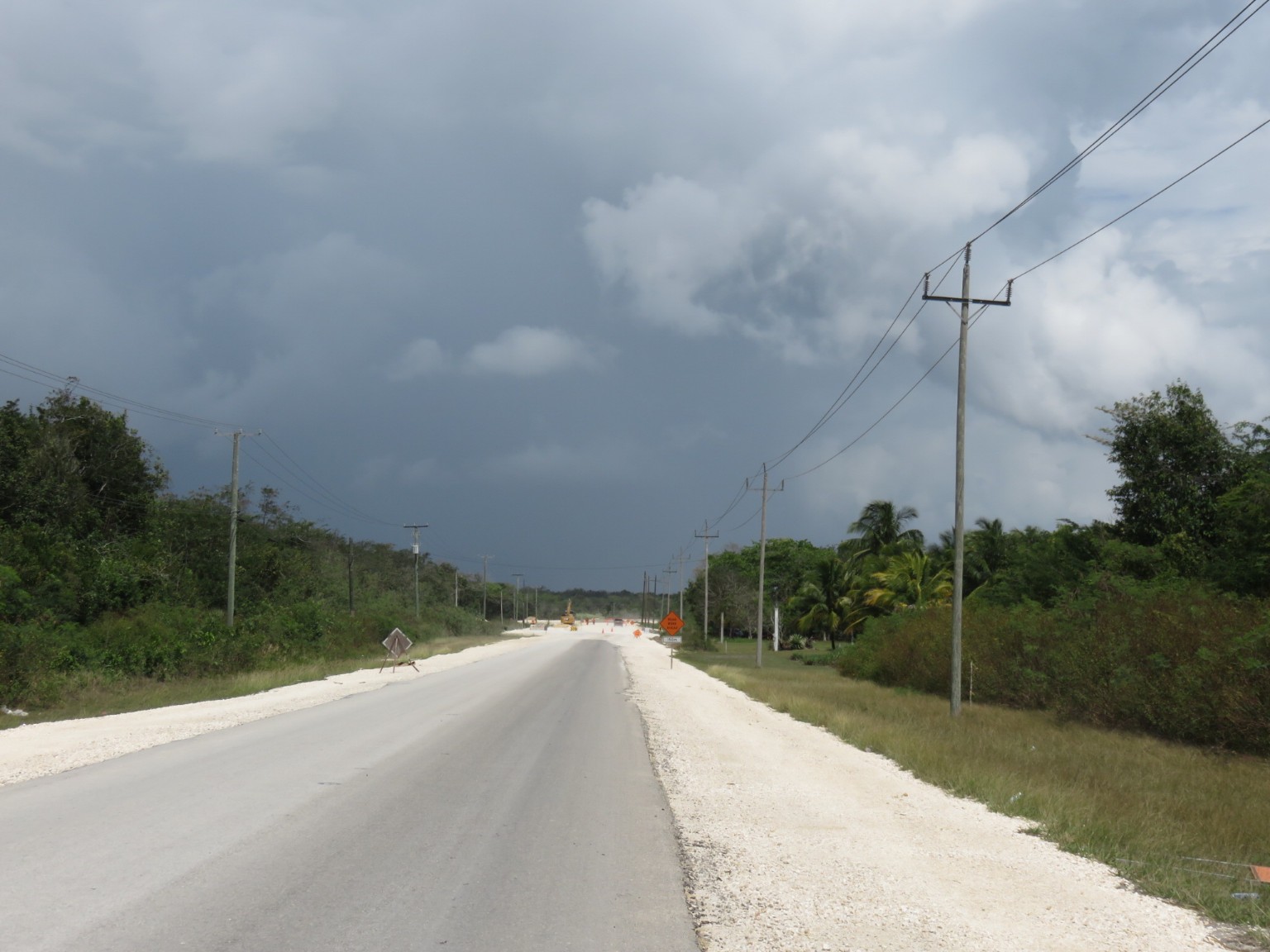
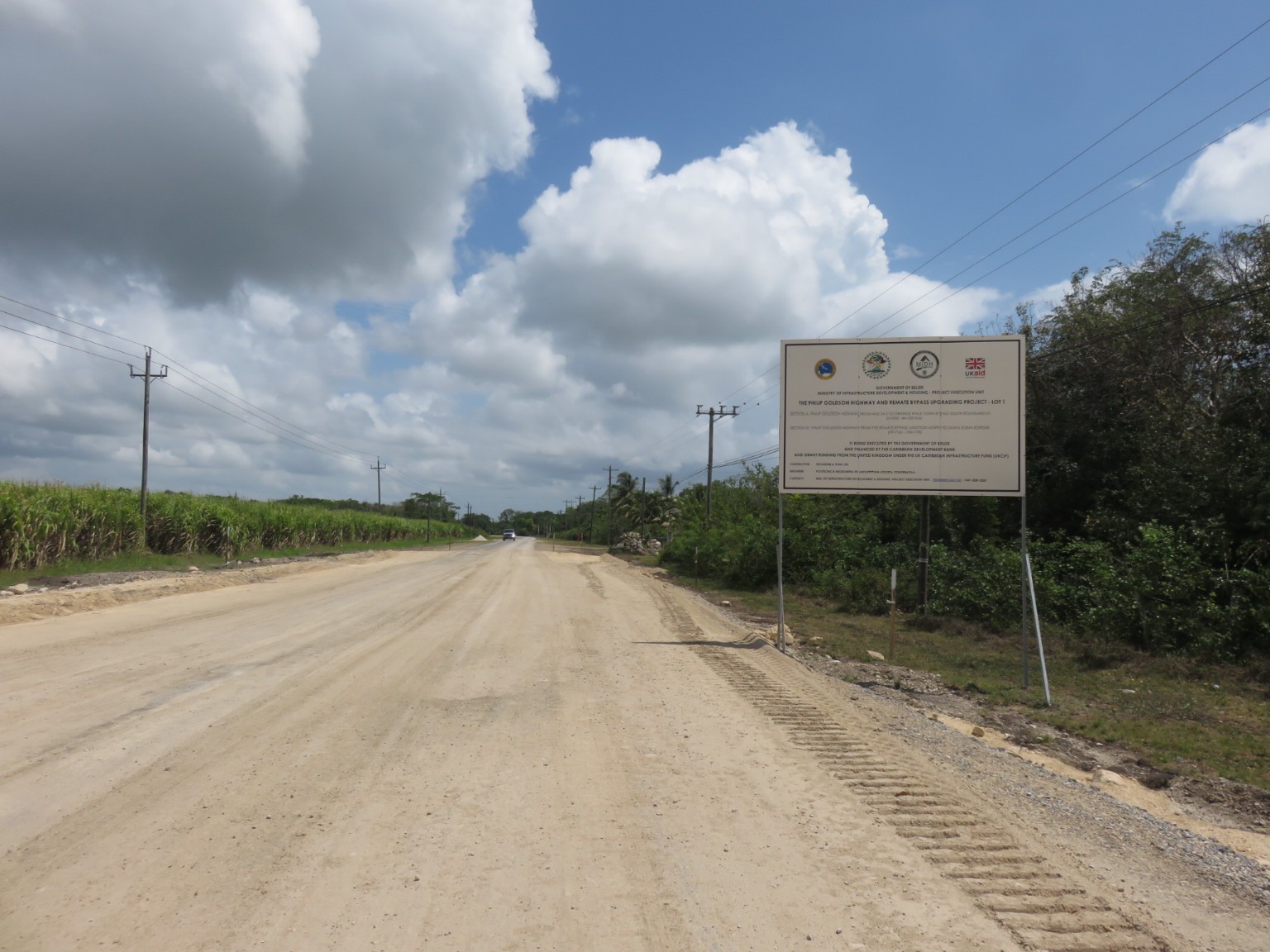
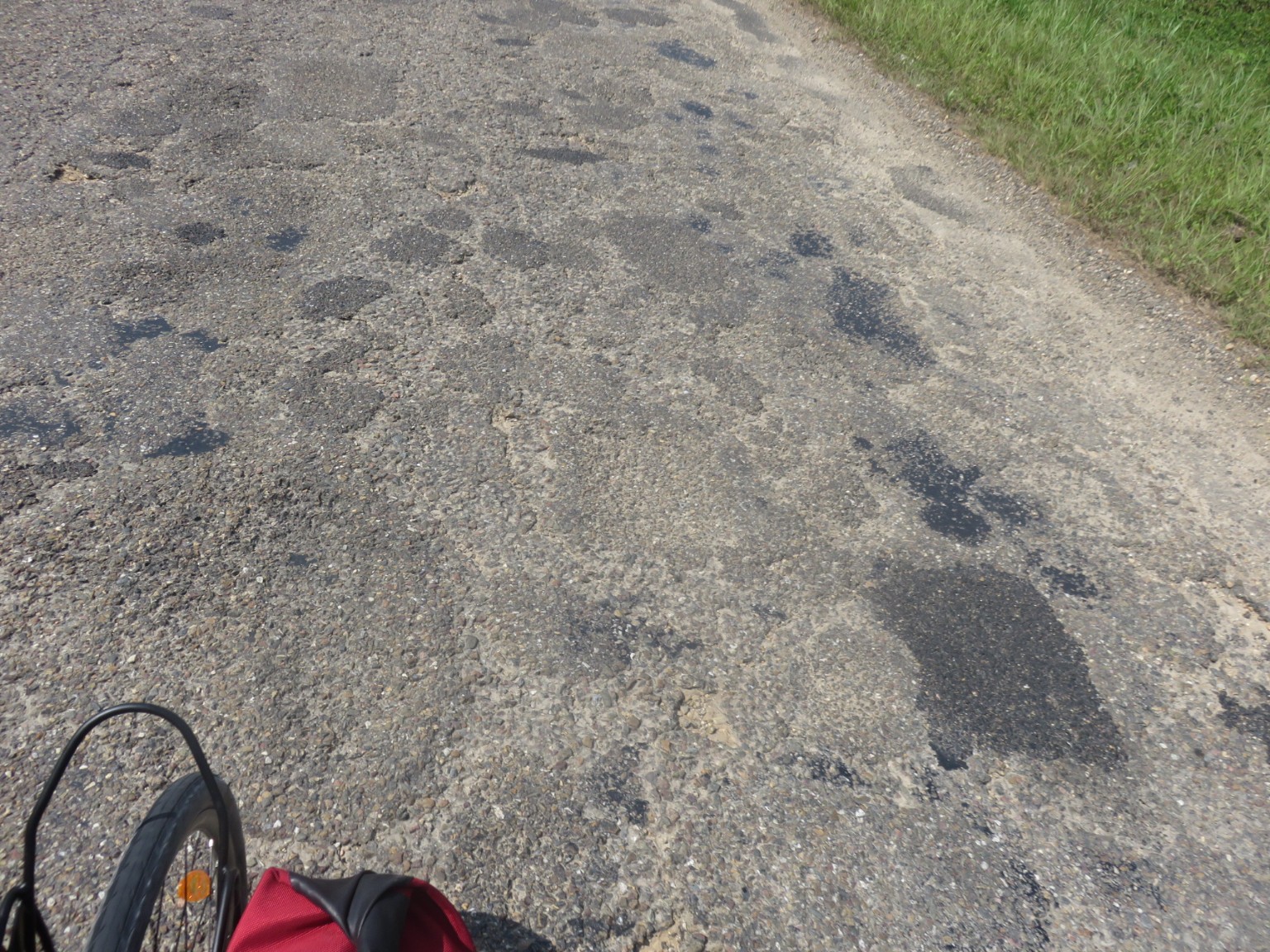
The last/first seven miles to/from the border on the Belize side are not easy riding because of the road surface and works in progress. Fortunately the traffic is light and we can weave our way around any obstacles.
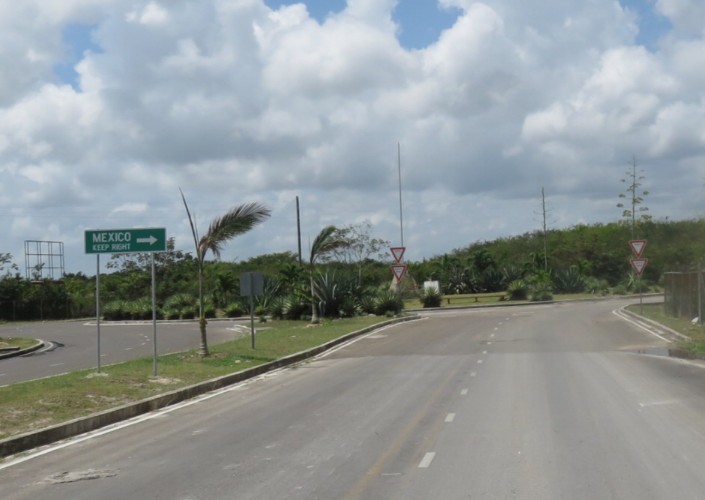
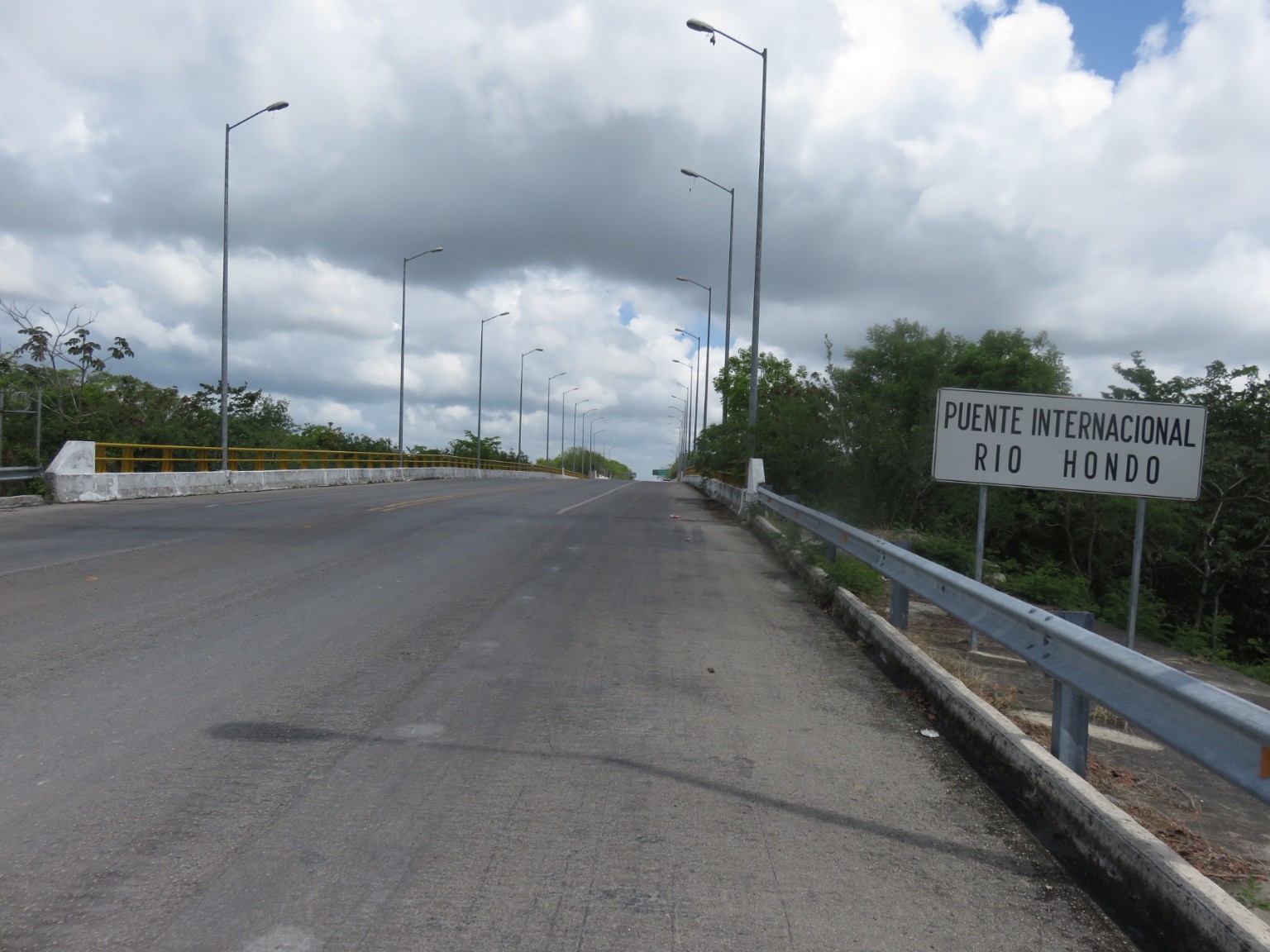
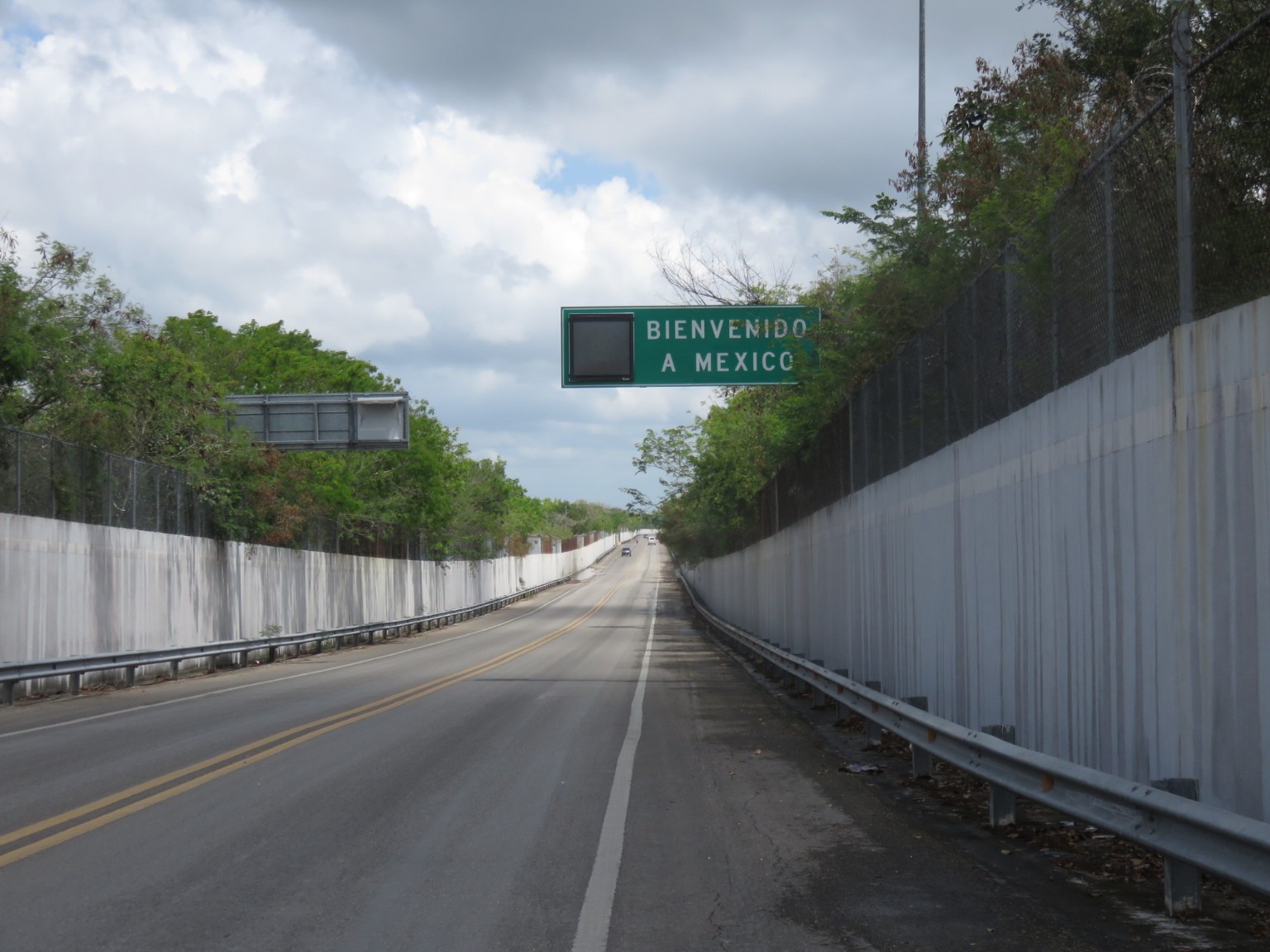
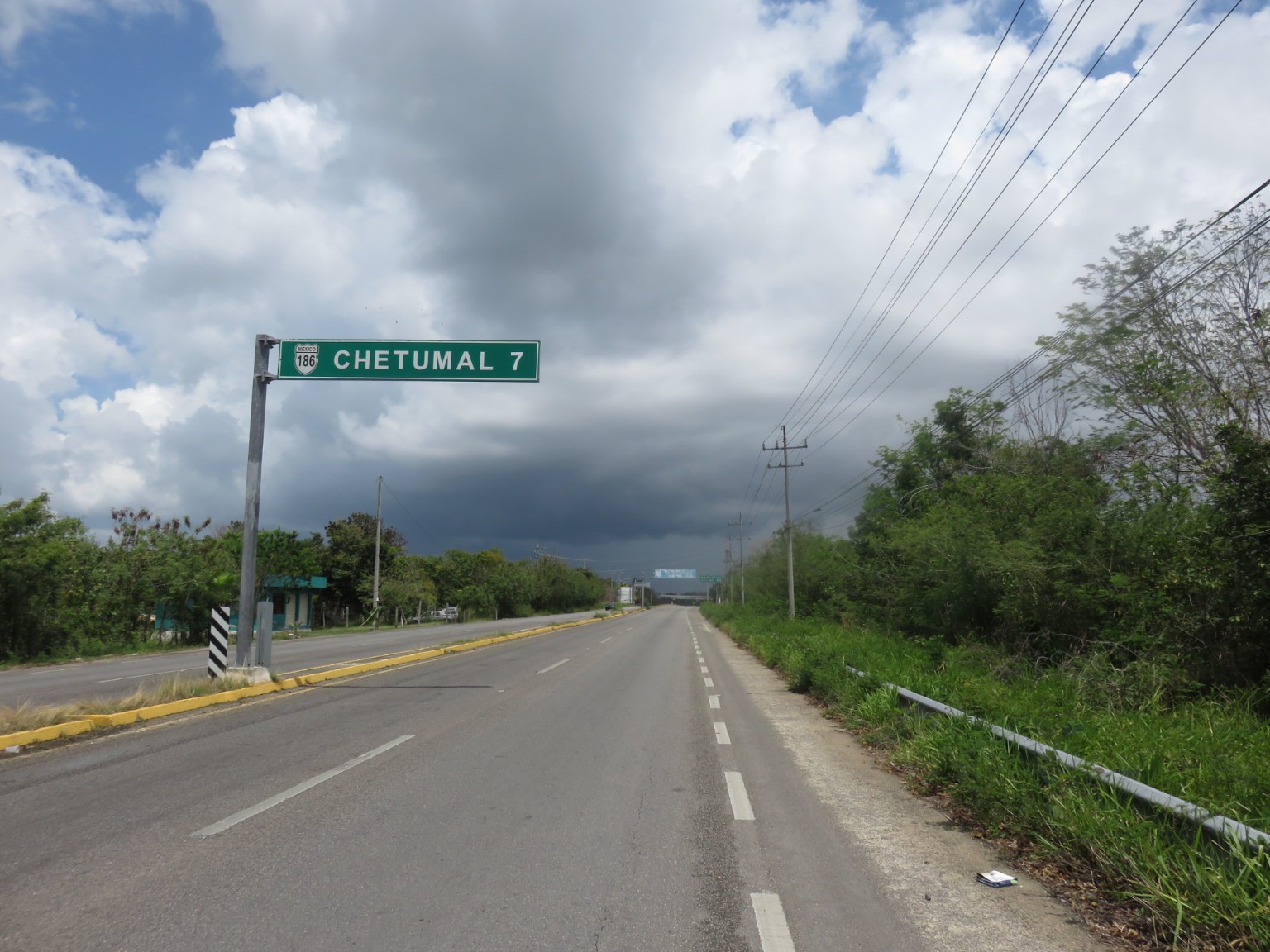
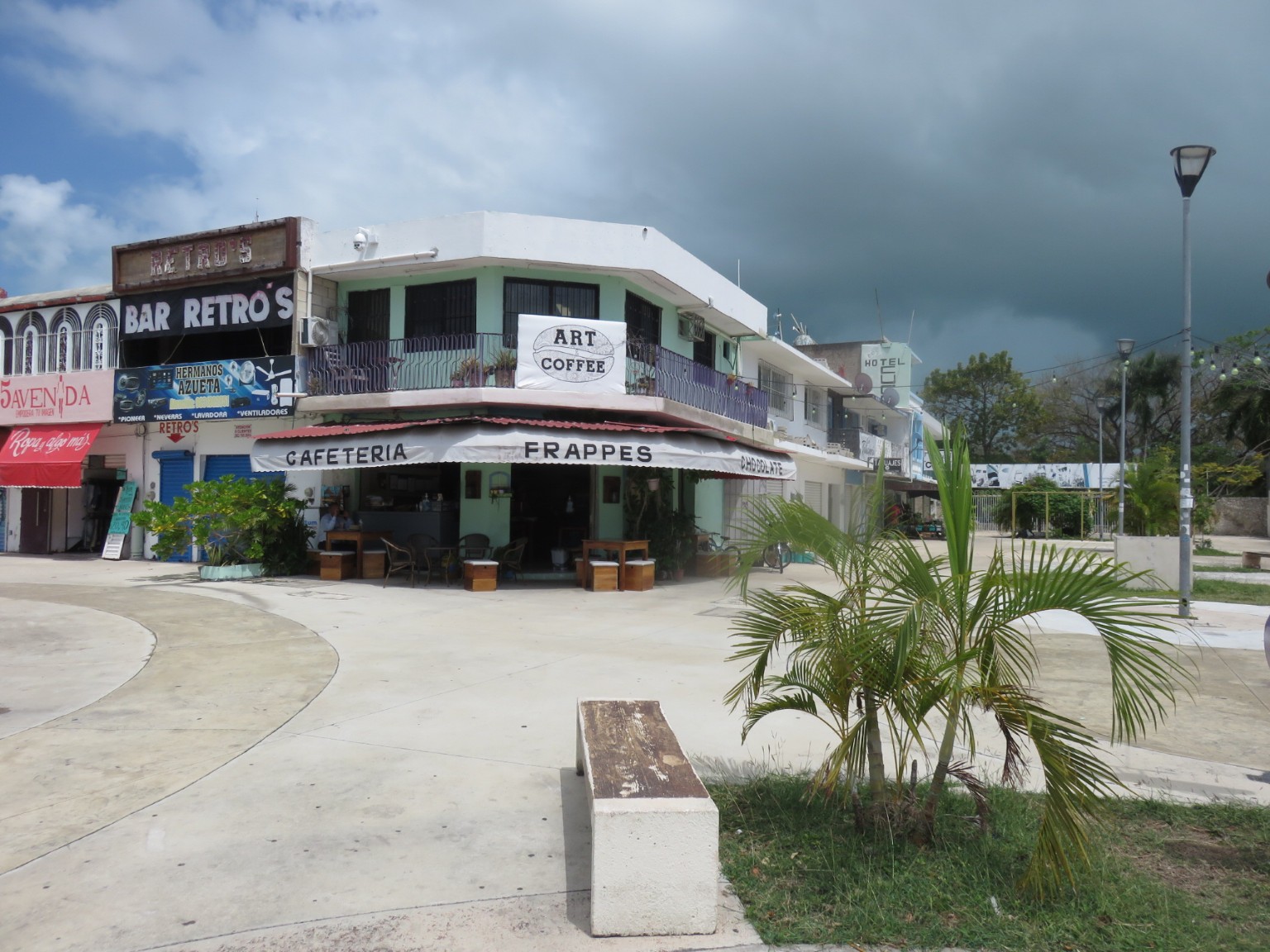
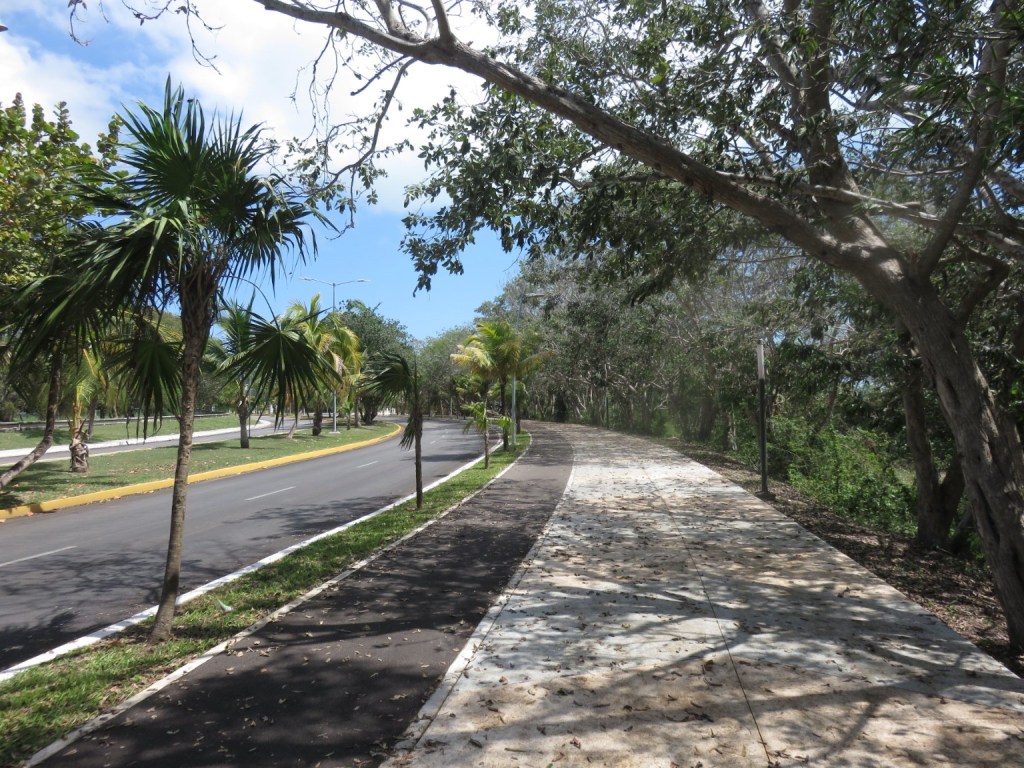
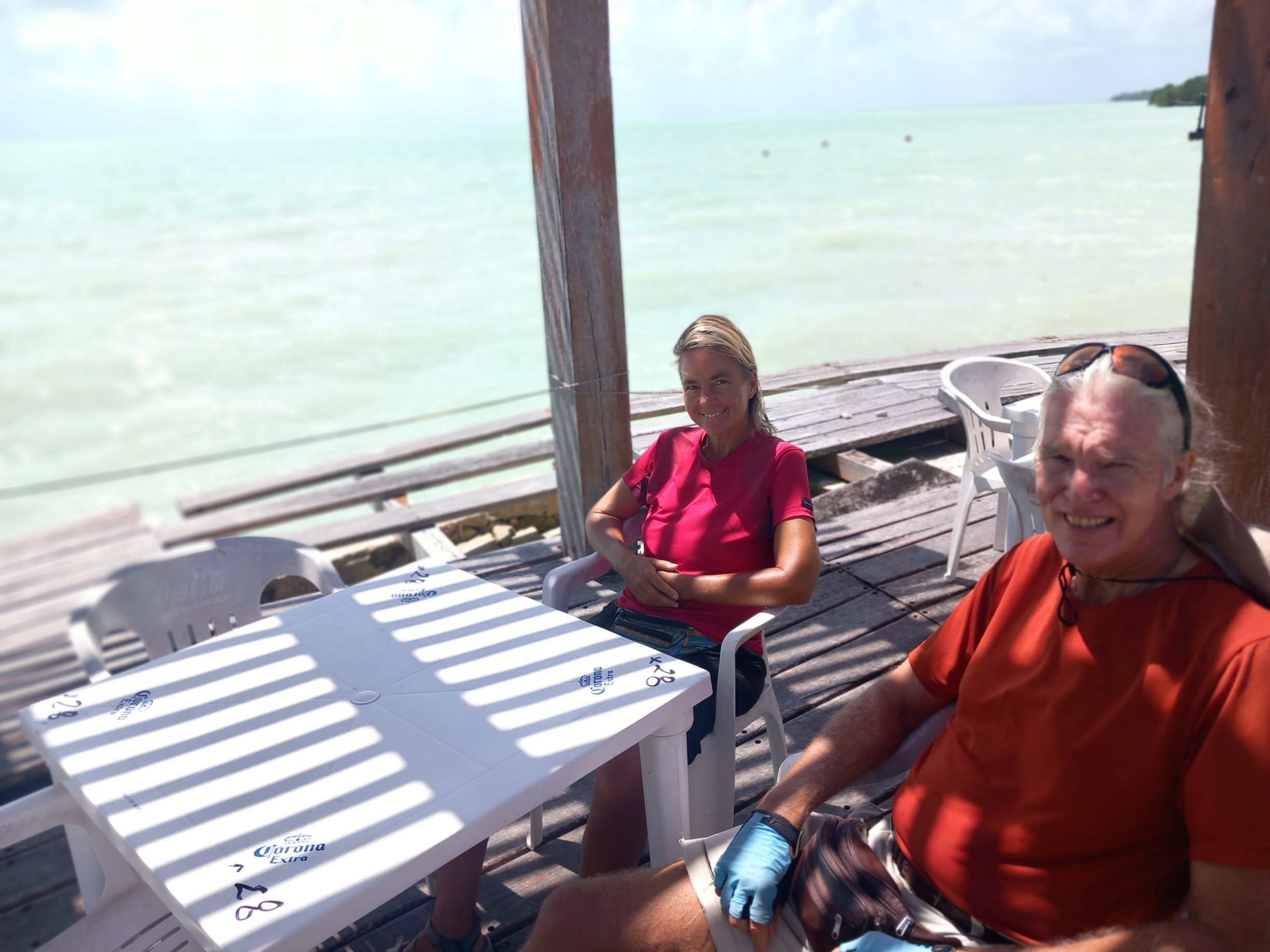
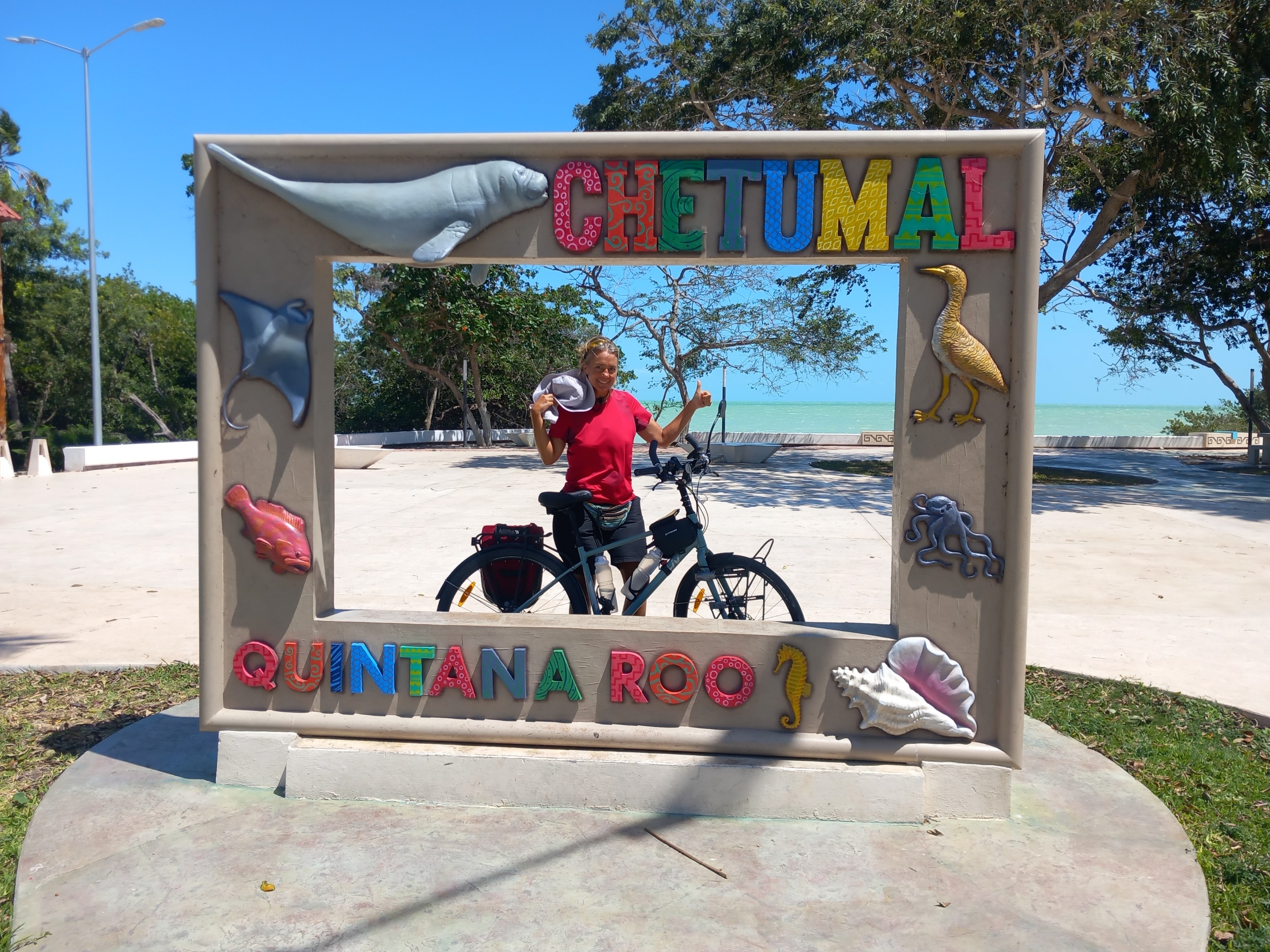
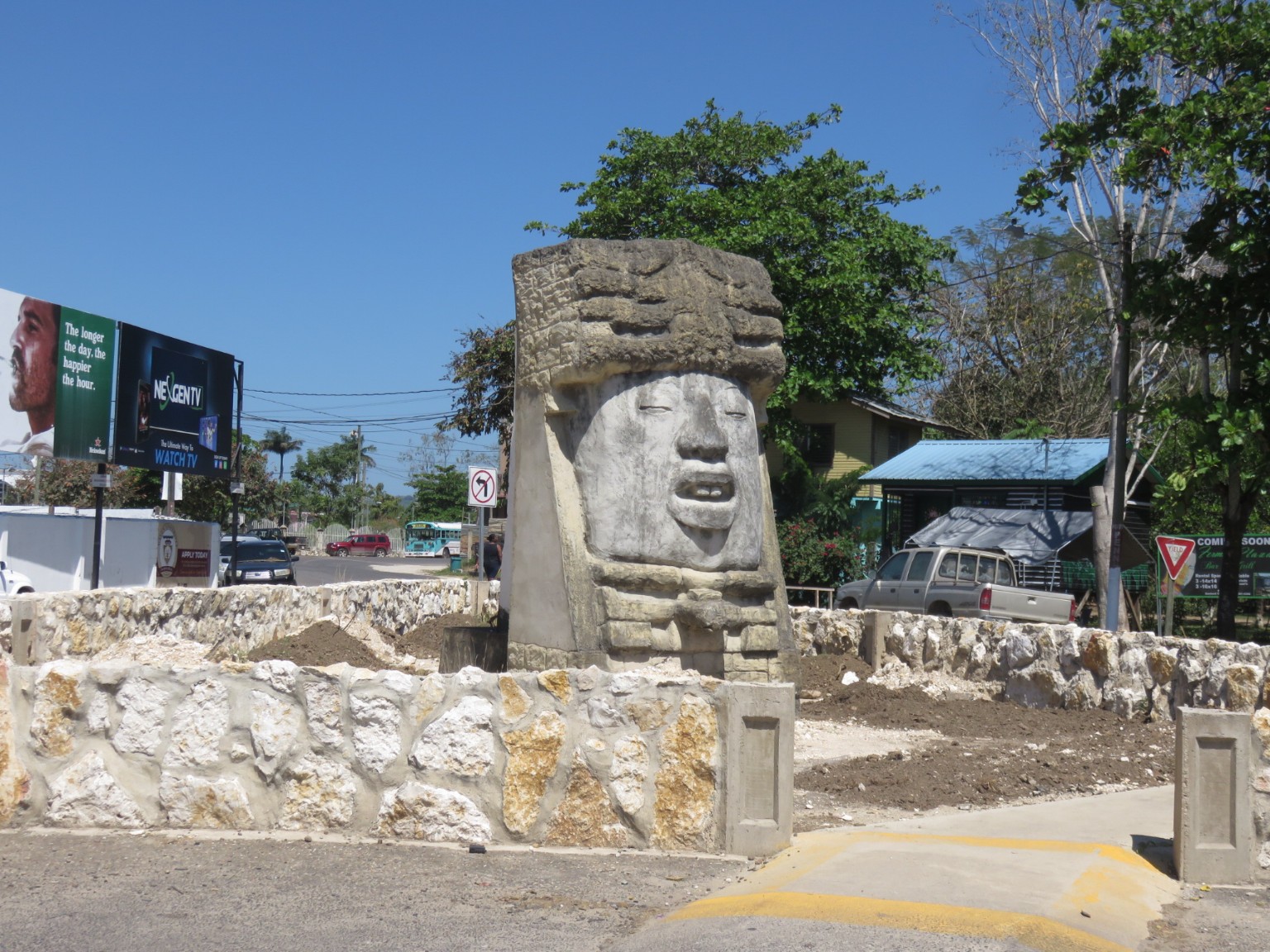
There is a designated land border between the two countries which is defined by the River Hondo. For reasons we could not establish there is a two kilometre ride from the Belizean Emigration side to the river and a further two kilometre ride to the Mexican Immigration offices. Neither of us have experienced such a wide land border between two countries. We had been told of all the scams they try and use on either side of the border and we were able to proceed without any delays although it took 1.5 hours from start to finish.After 3 weeks of uneven roads and few shoulders we welcome the sight of the Mexican road networkWe rode directly to our favourite coffee shop from our previous time here to relax after the challenging morning’s ride and dealings with border bureaucracy. It was immediately apparent there is a lighter mood in Mexico than we had been accustomed to in Belize. This is not a tourist town and the few foreigners that are here are only passing through like we are. We also enjoy the lower prices both for the accommodation and food.We have a spare day to ride the coastal promenade of about 14 kilometres.Not being a tourist town we are not charged tourist prices for our coffee stop at the water’s edge.
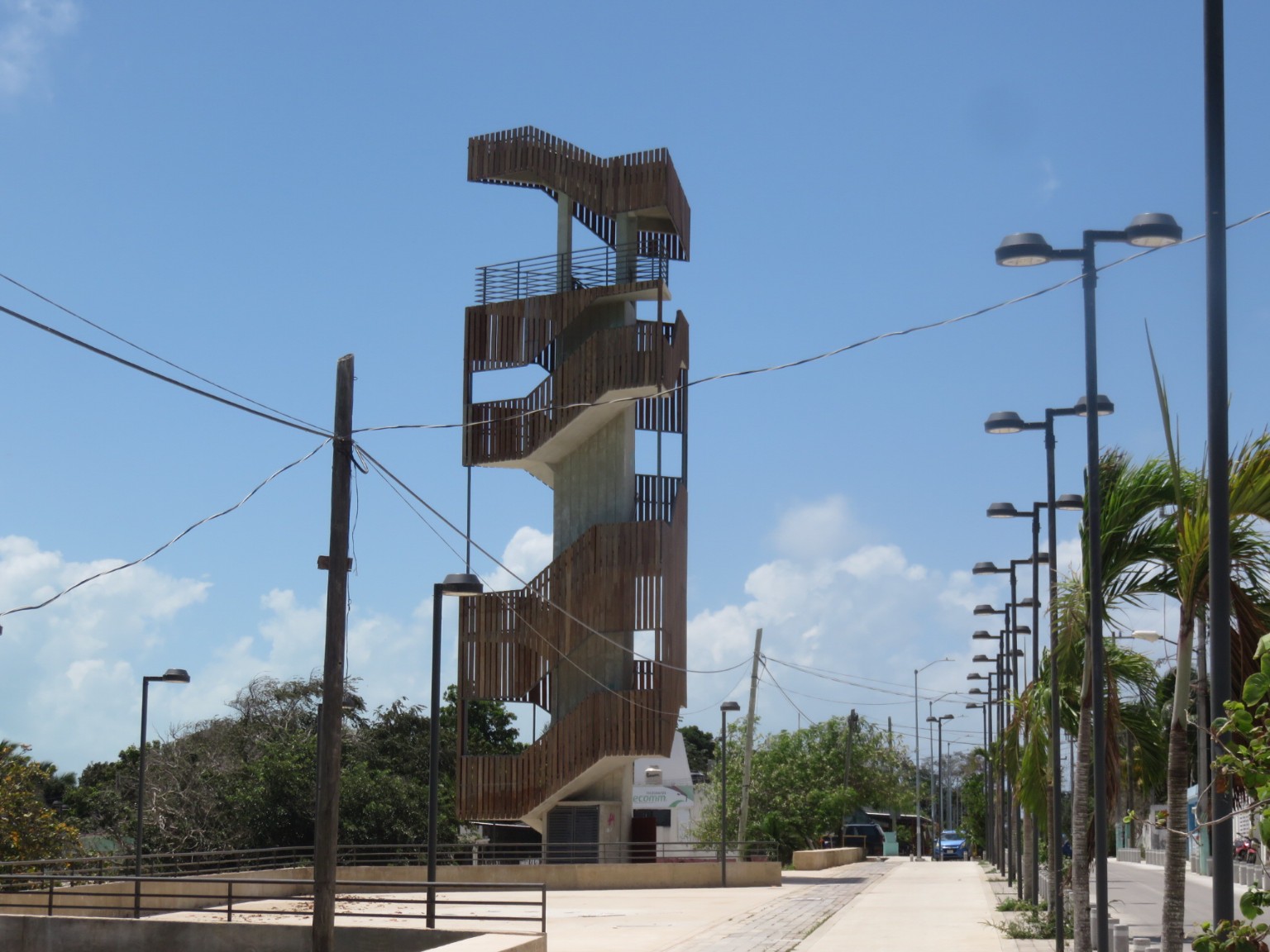
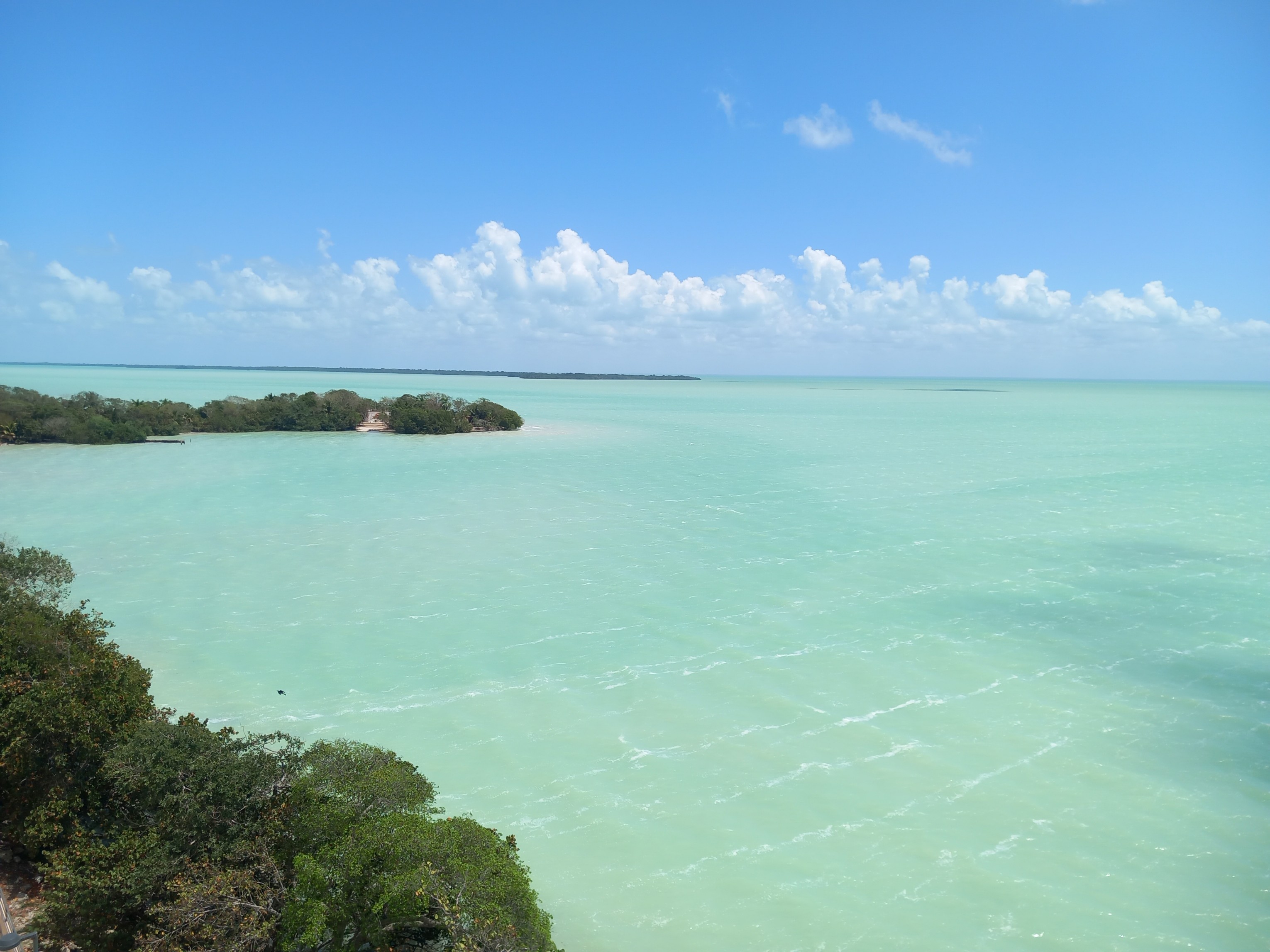
A lookout tower to enjoy the panoramic views which is located towards the northern end of the 14 kilometre (9 mile) promenade.Someone has to stay down below to guard the bikes.
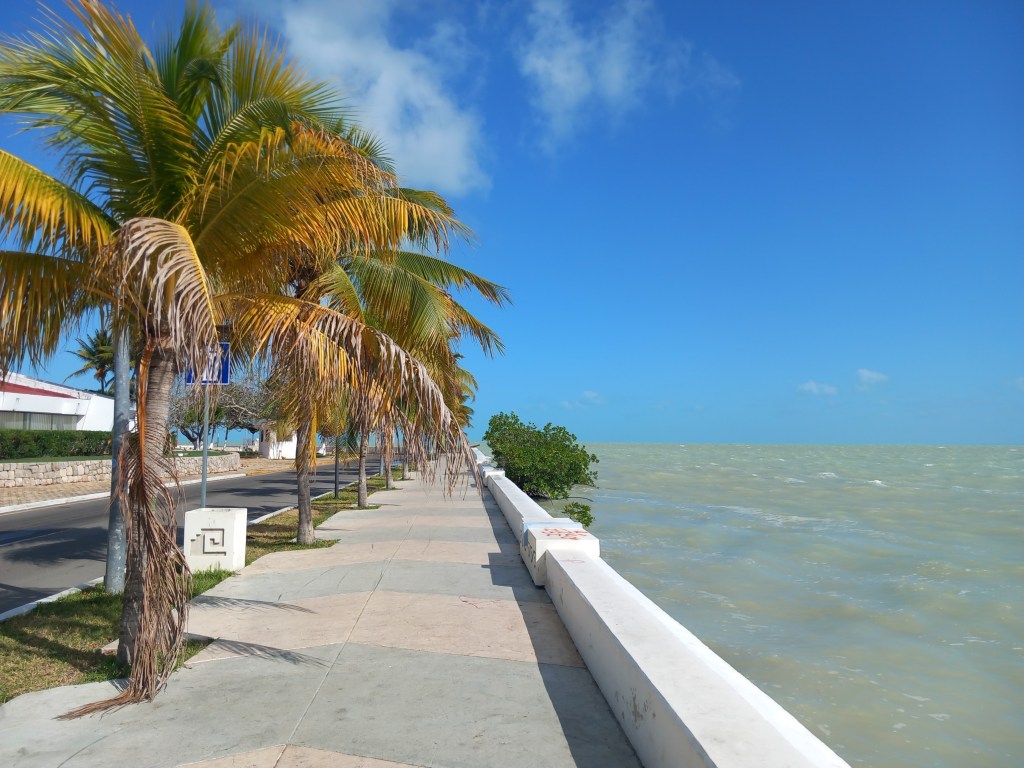
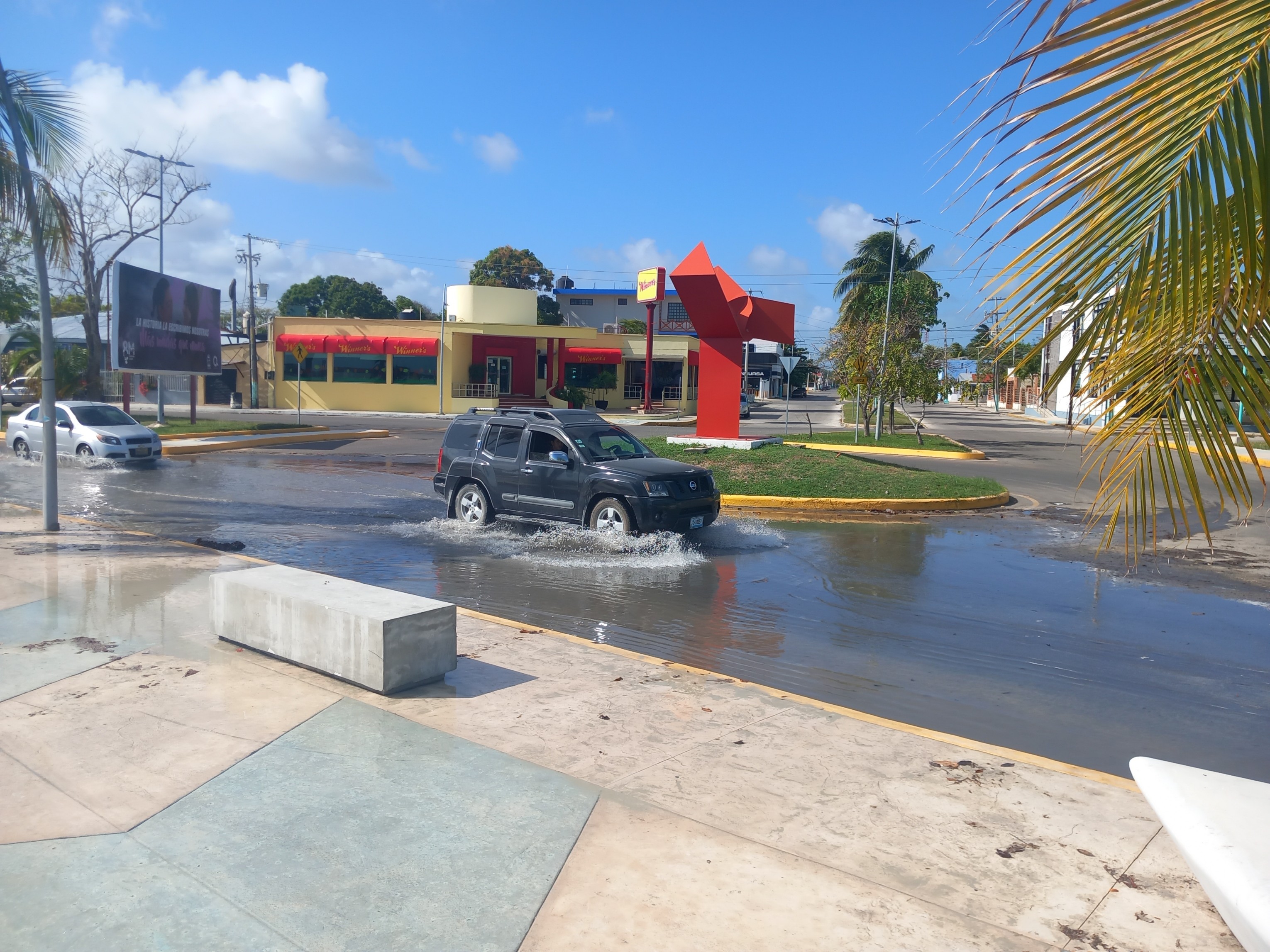
This is water from the lagoon which is 70% clearwater and 30% saltwater washing in over the promenade onto the road.
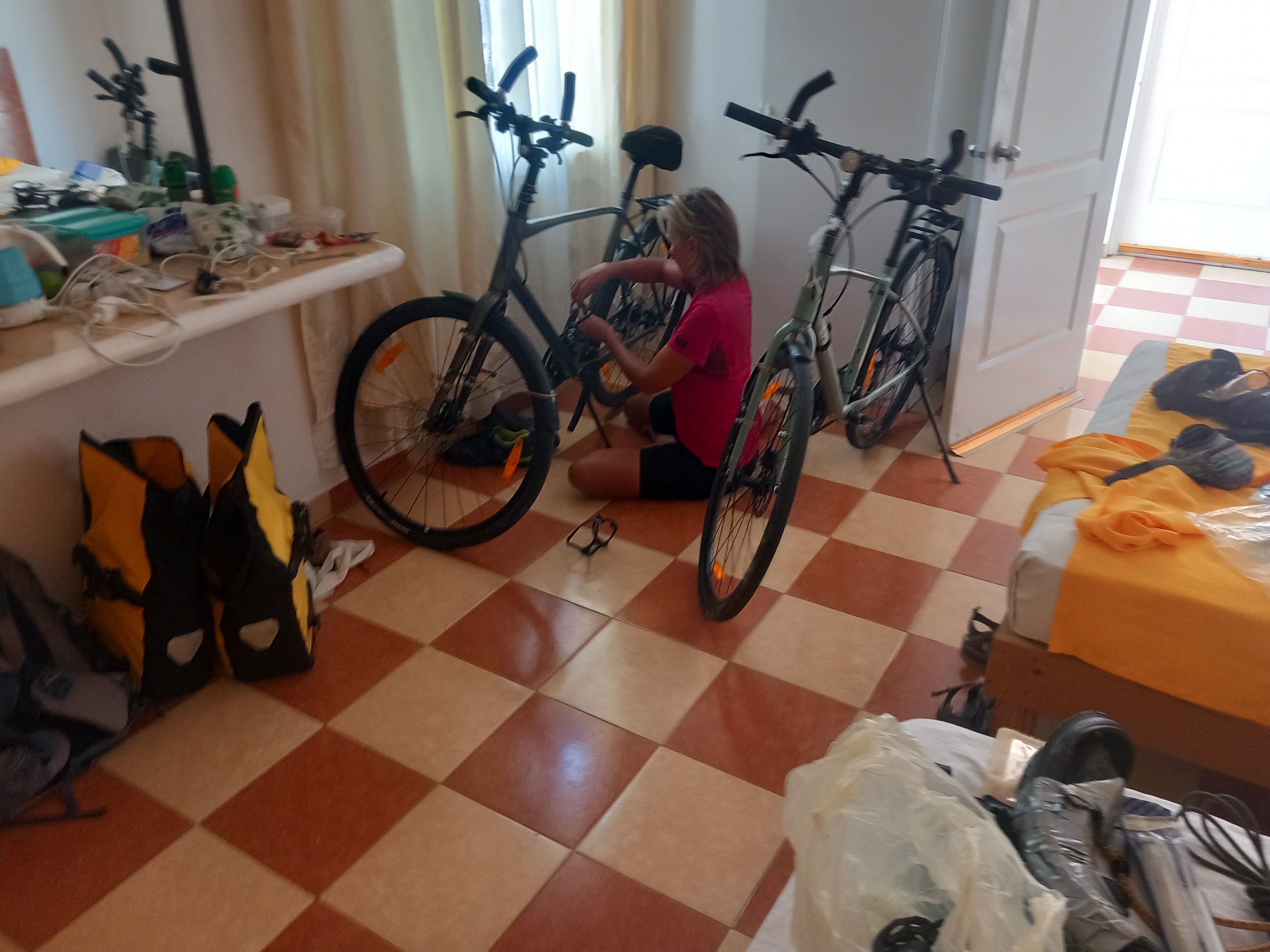
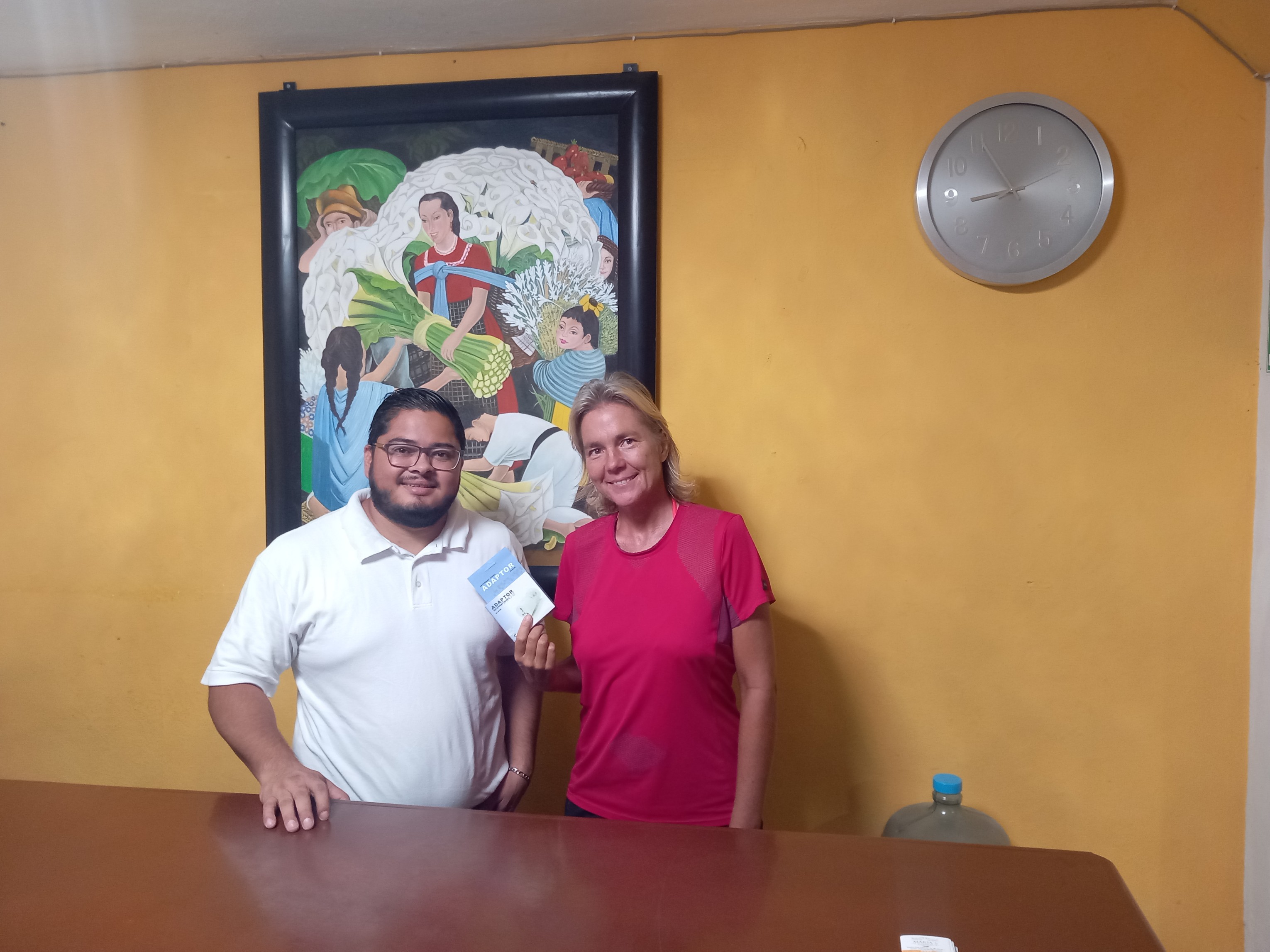
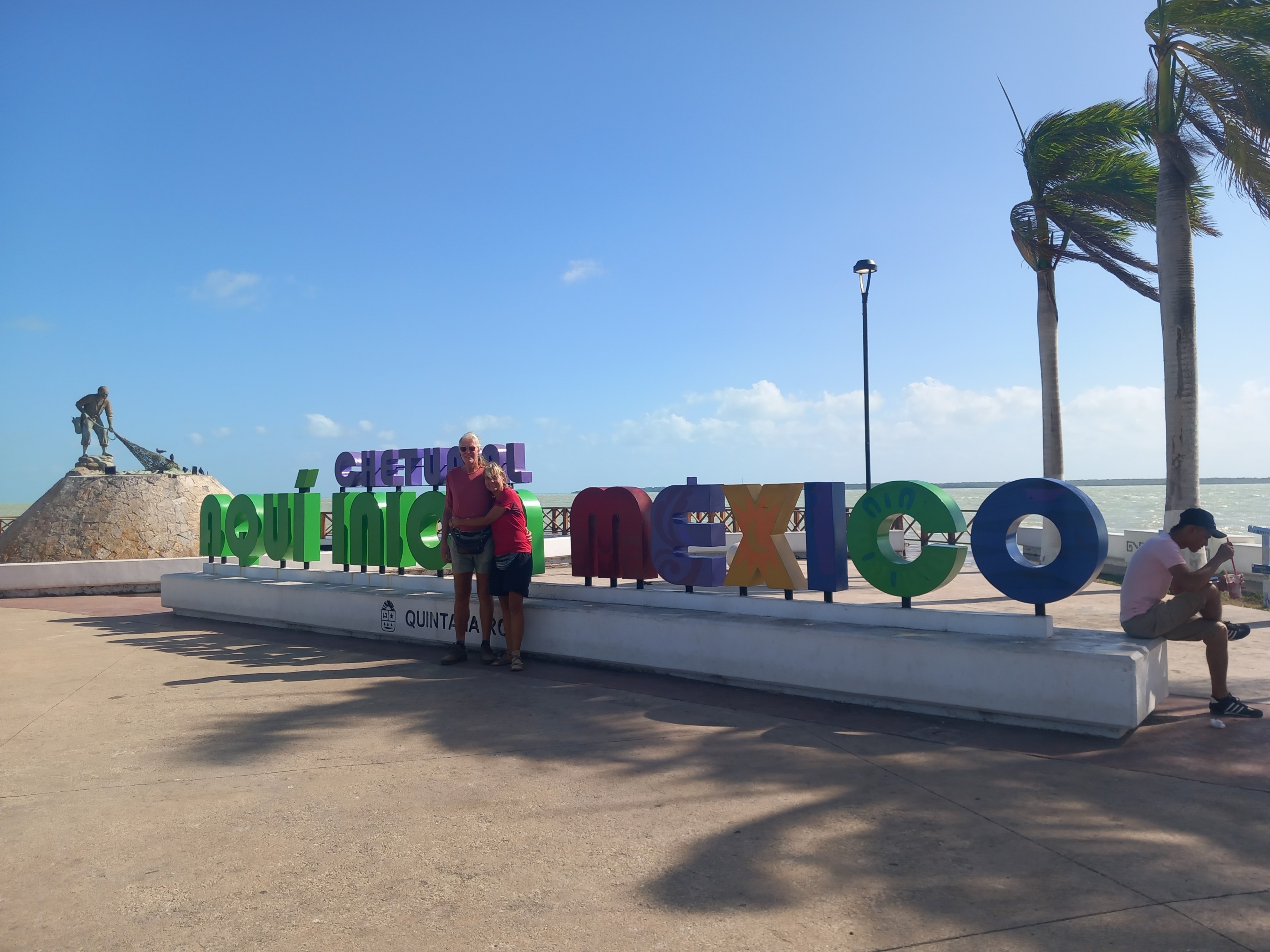
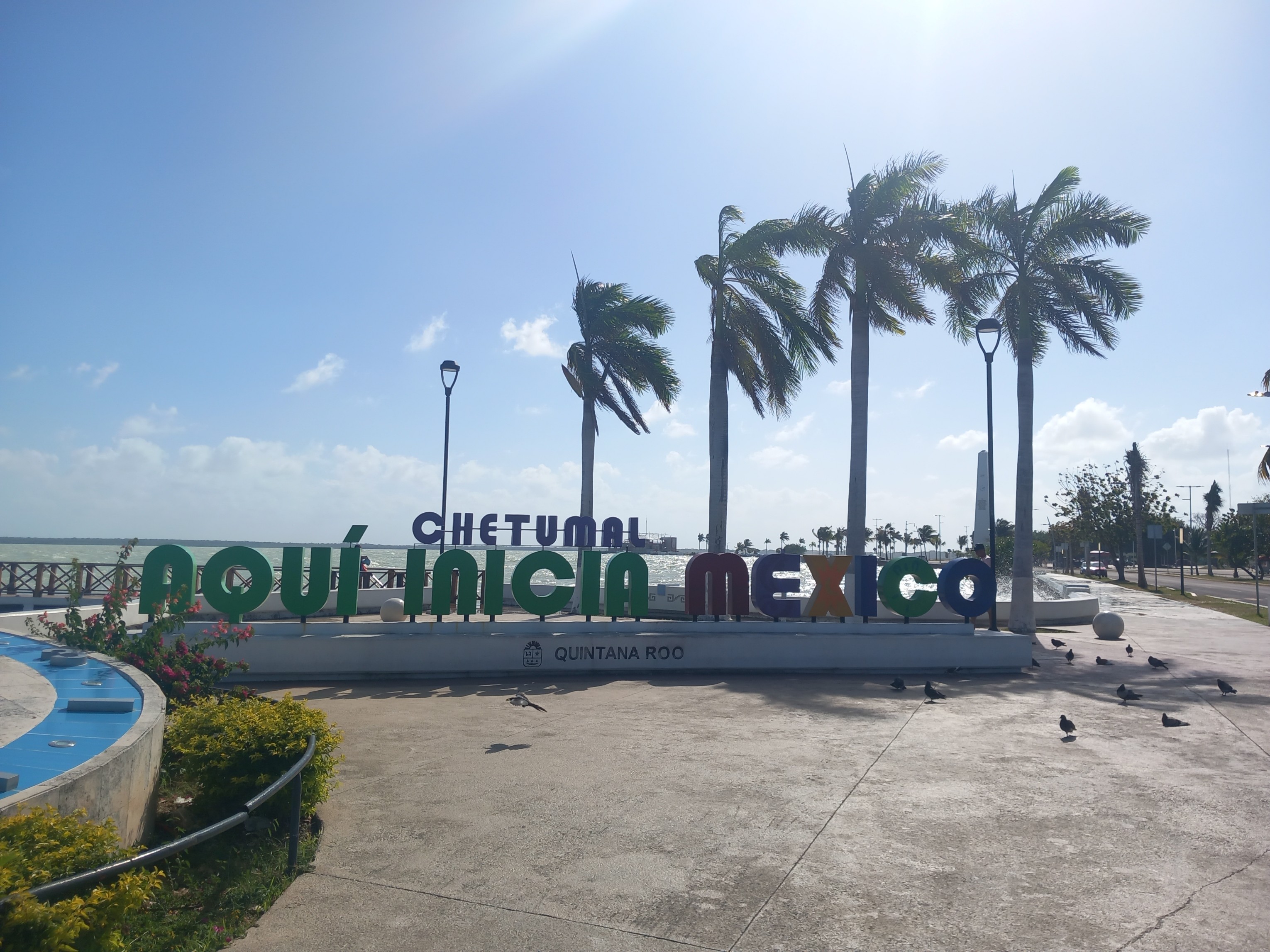
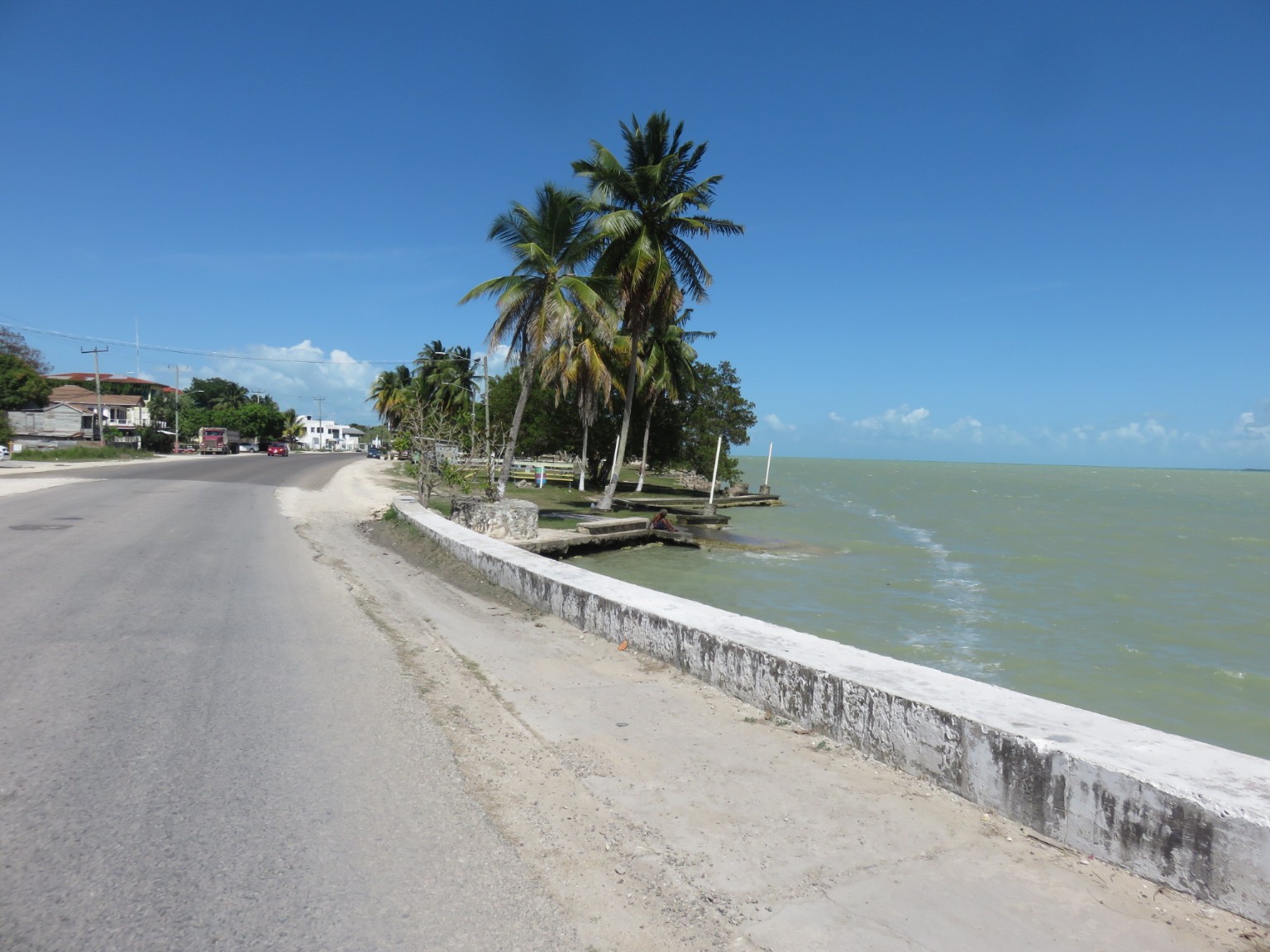
Beginning the job of dismantling and packing the bikes ready for transportation. The super helpful and efficient Receptionist who went out of his way to replace our electric power adaptor that had short circuited two days before we were due to leave.‘Aqui Inicia Mexico’ translates to, ‘Here Starts Mexico’ – we cannot disagree with that statement.We hope the residents of Chetumal appreciate their town, we certainly do, and should consider themselves fortunate. There is plenty of space, wide roads and footpaths and a relaxed atmosphere. It is unlikely to be over developed because it does not have a beach and, currently, no hotels and apartments along its entire length.The people of Chetumal are very lucky and know how to enjoy the waterfront in their leisure time.
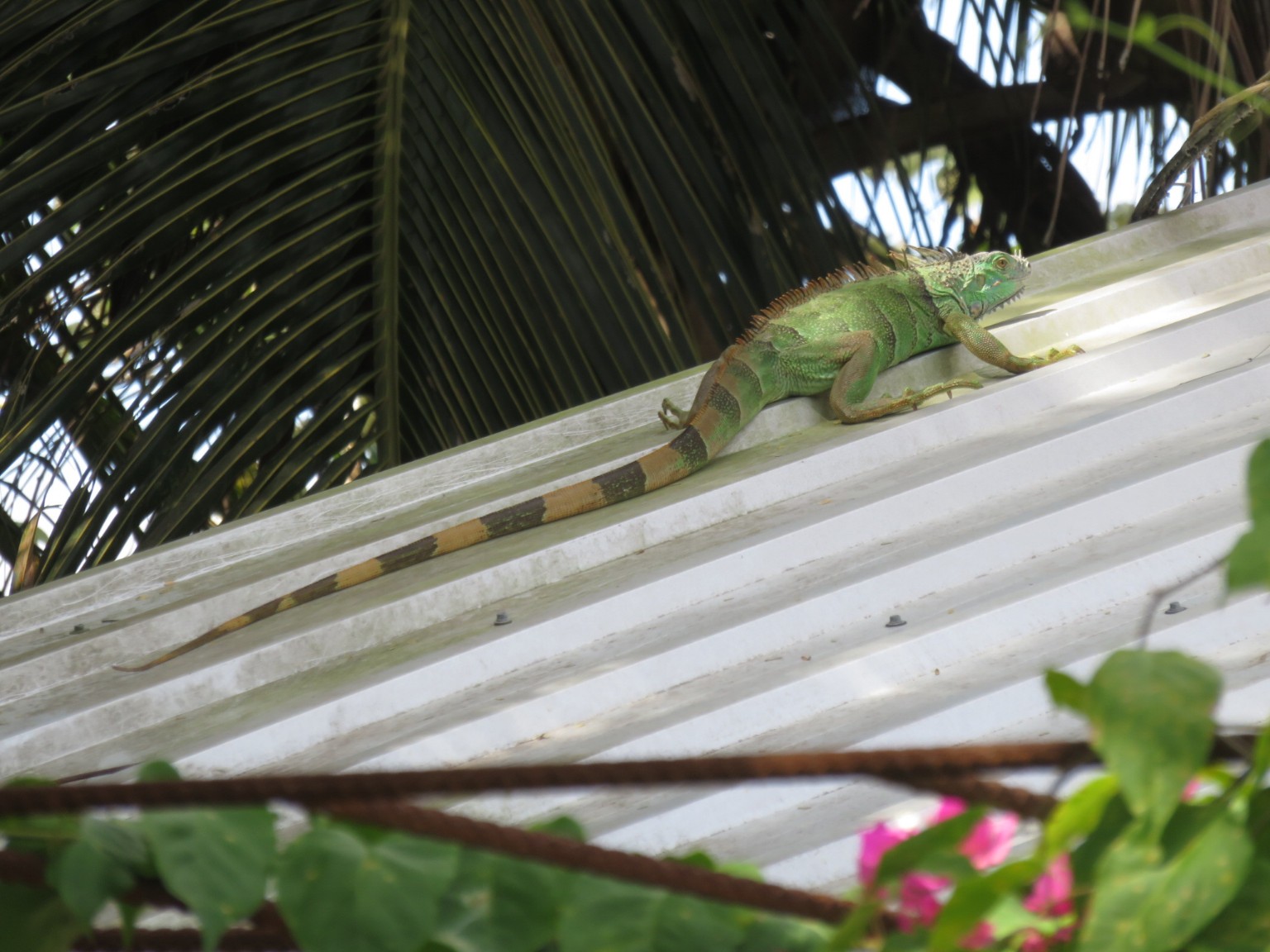
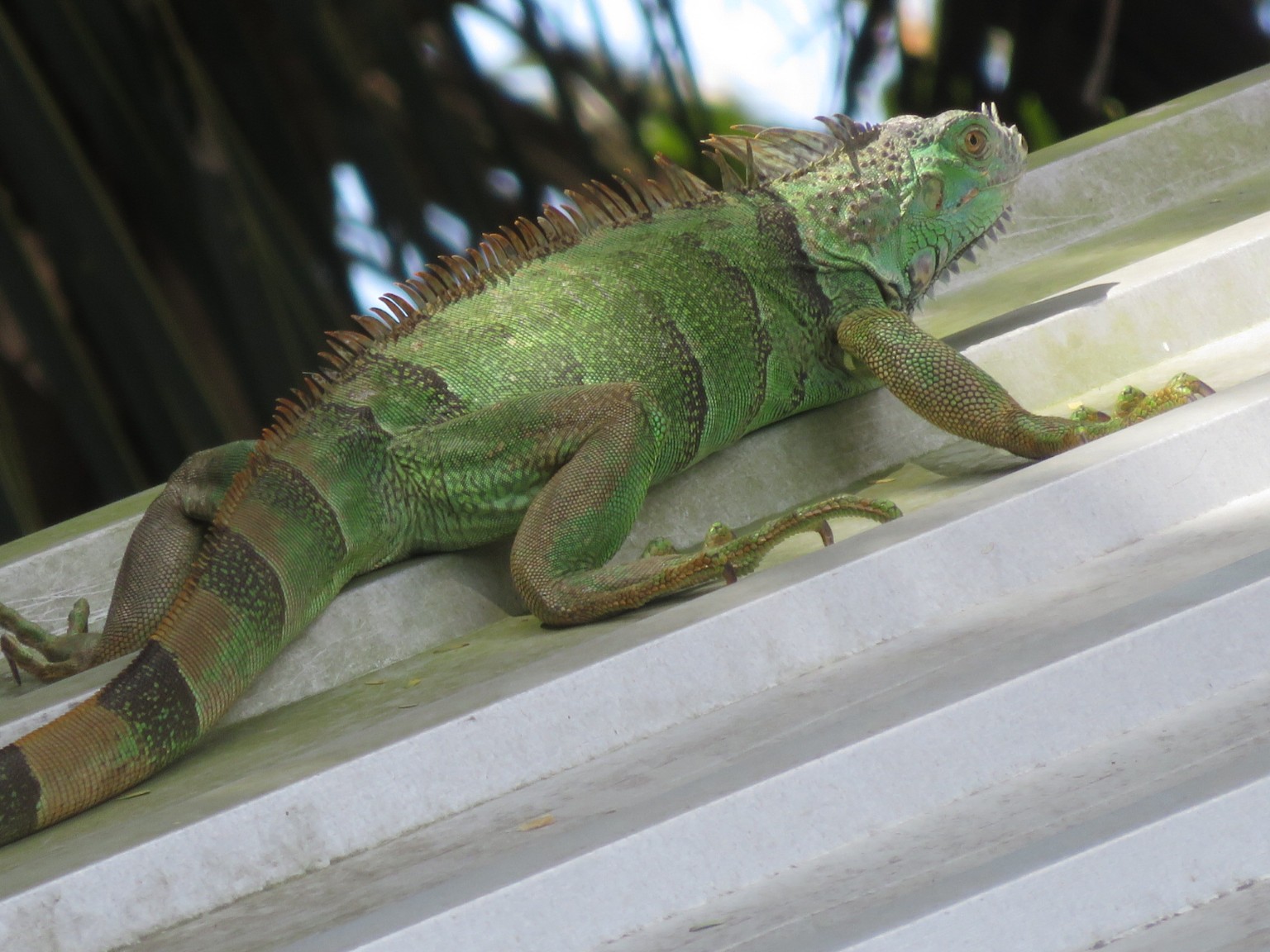
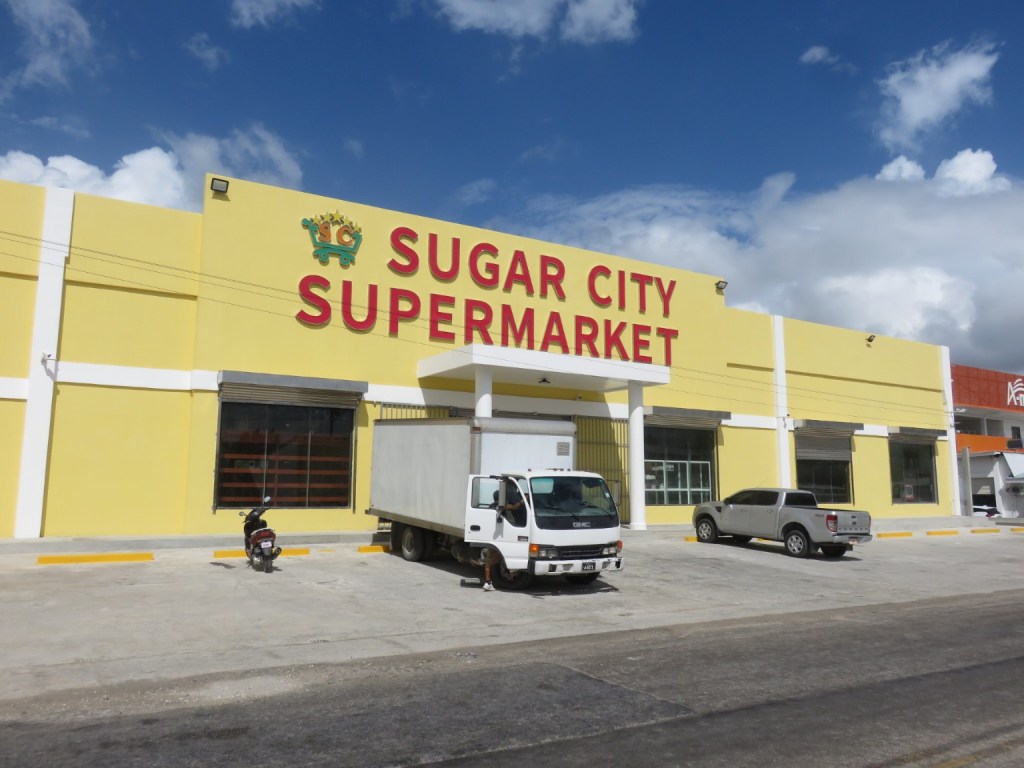
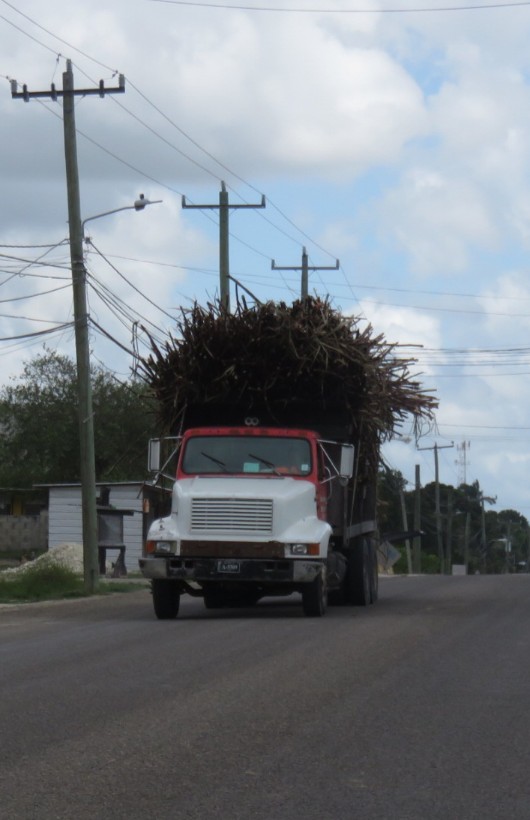
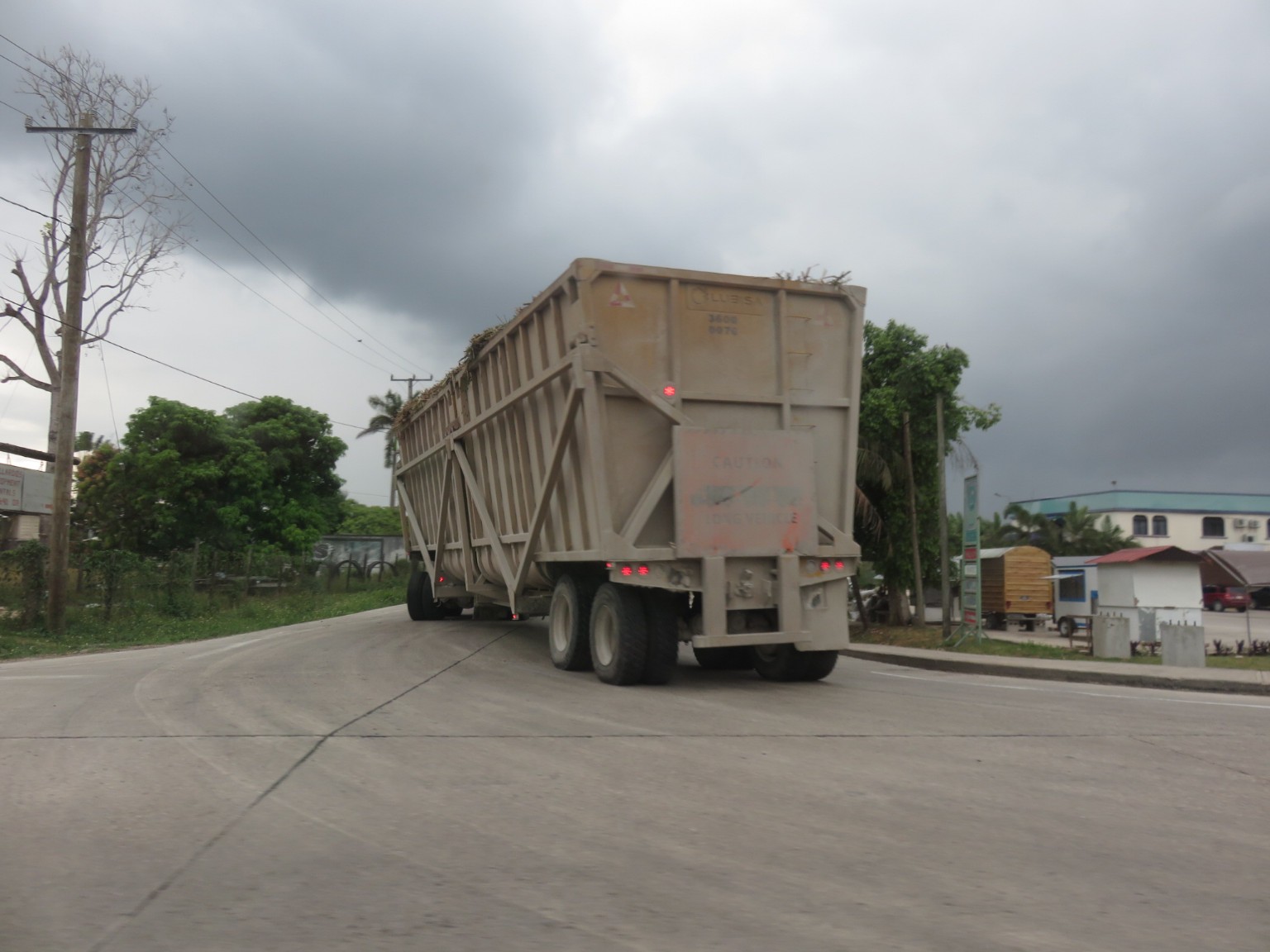
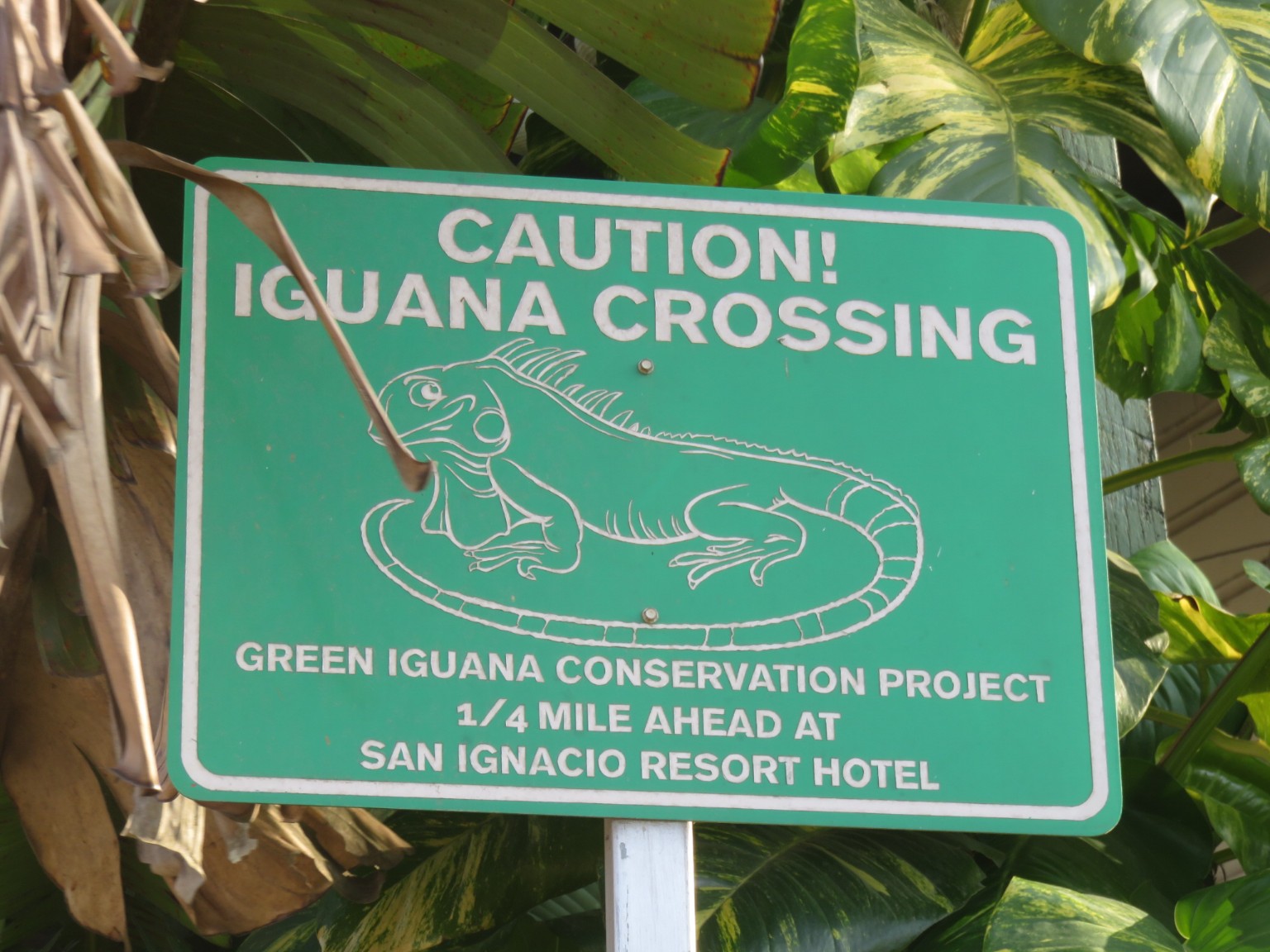
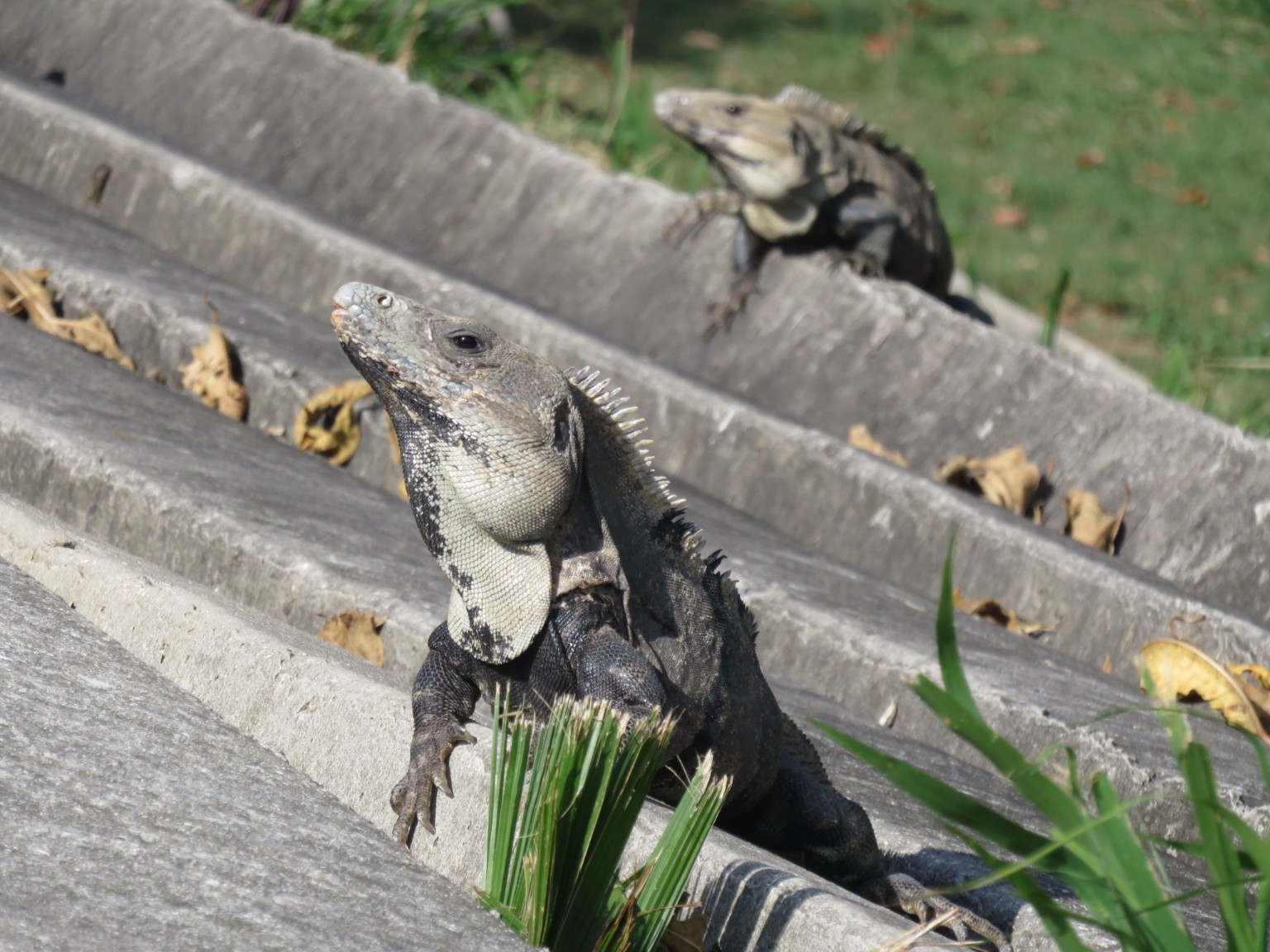
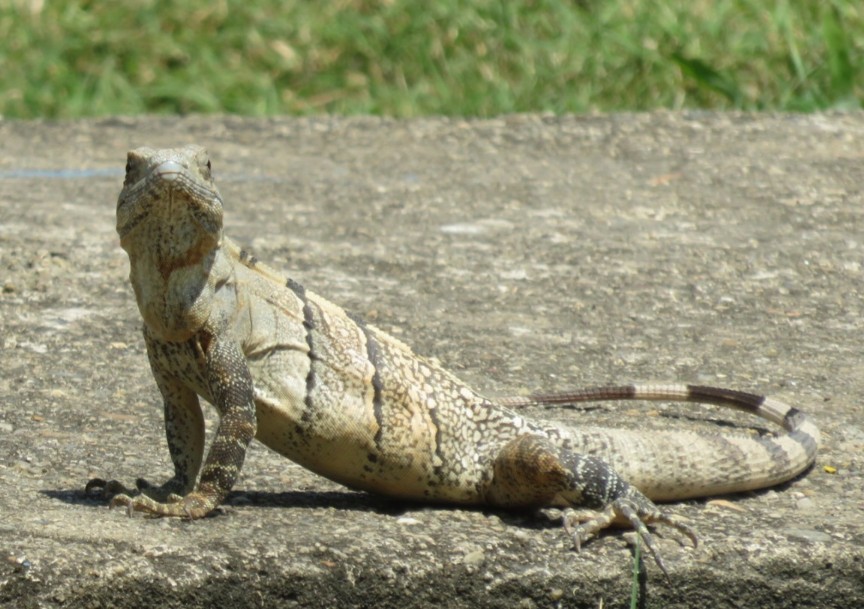
One last goodbye from the hotel’s resident Iguana.He is a bit more colourful than the plain grey ones we have mostly seen.Sugar City may be a slightly exaggerated description for Orange Walk; ‘Sugar’ is accurate enough because it is surrounded by sugar plantations, however, ‘city’ for a population of 14000?We have dozens of these lorries pass us and again when empty as they return to the harvesting area for their next load. Interestingly we notice the harvesting is down by machines as opposed to those we passed in Mexico where it was all done by men with machetes.
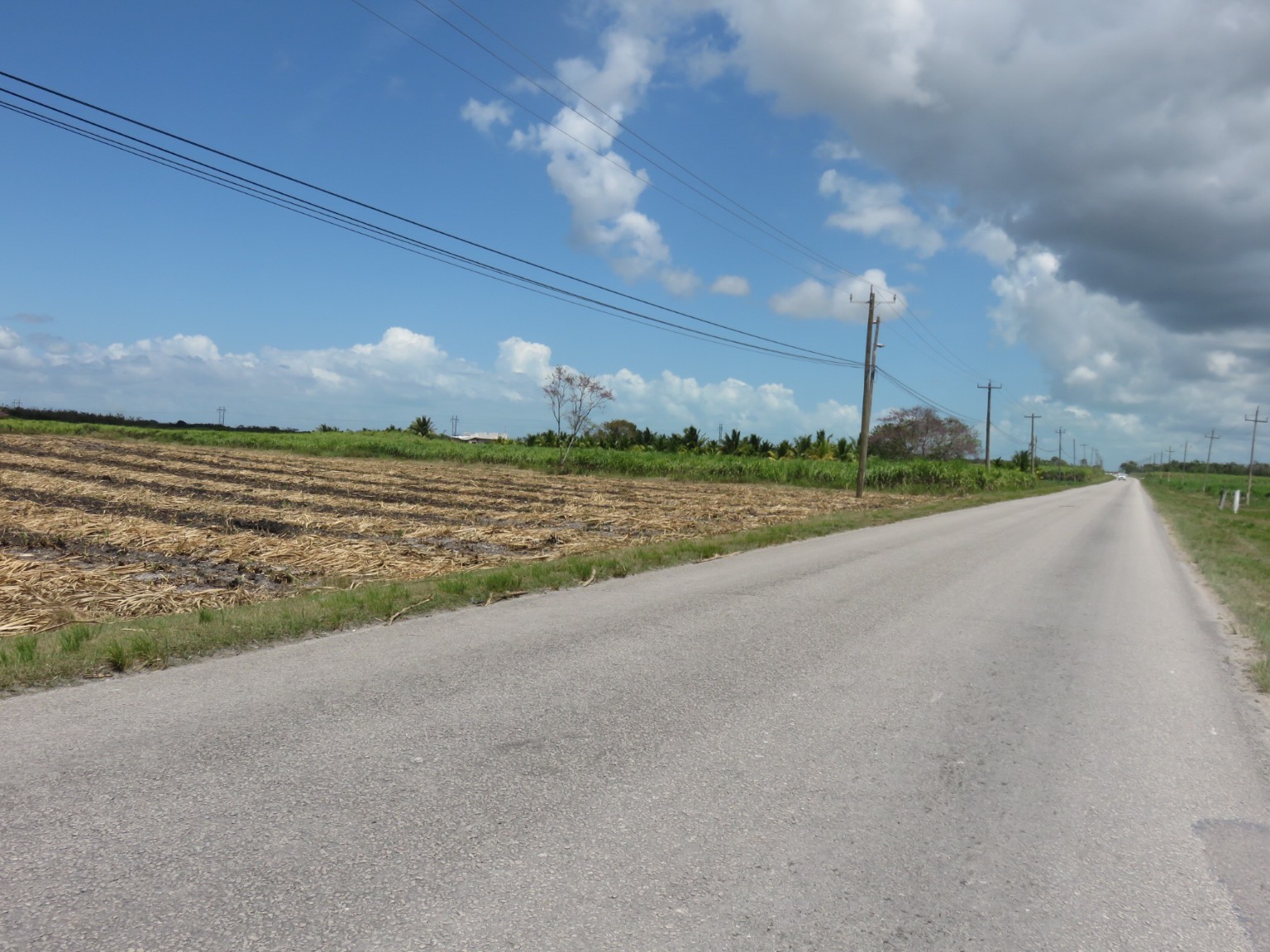
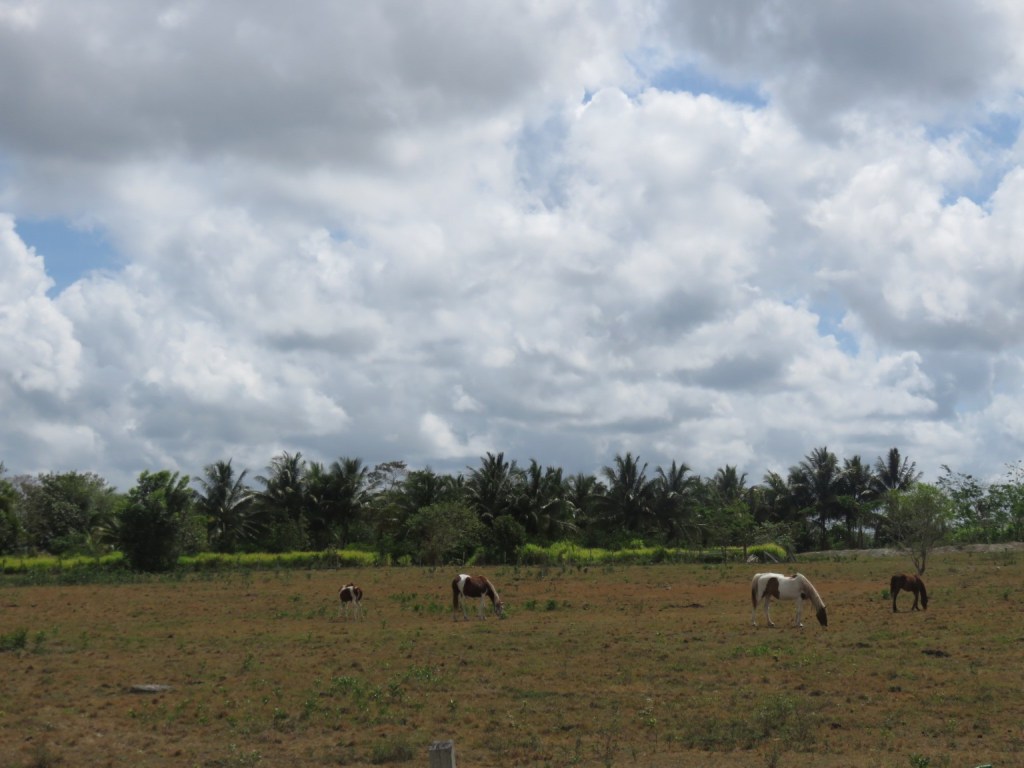
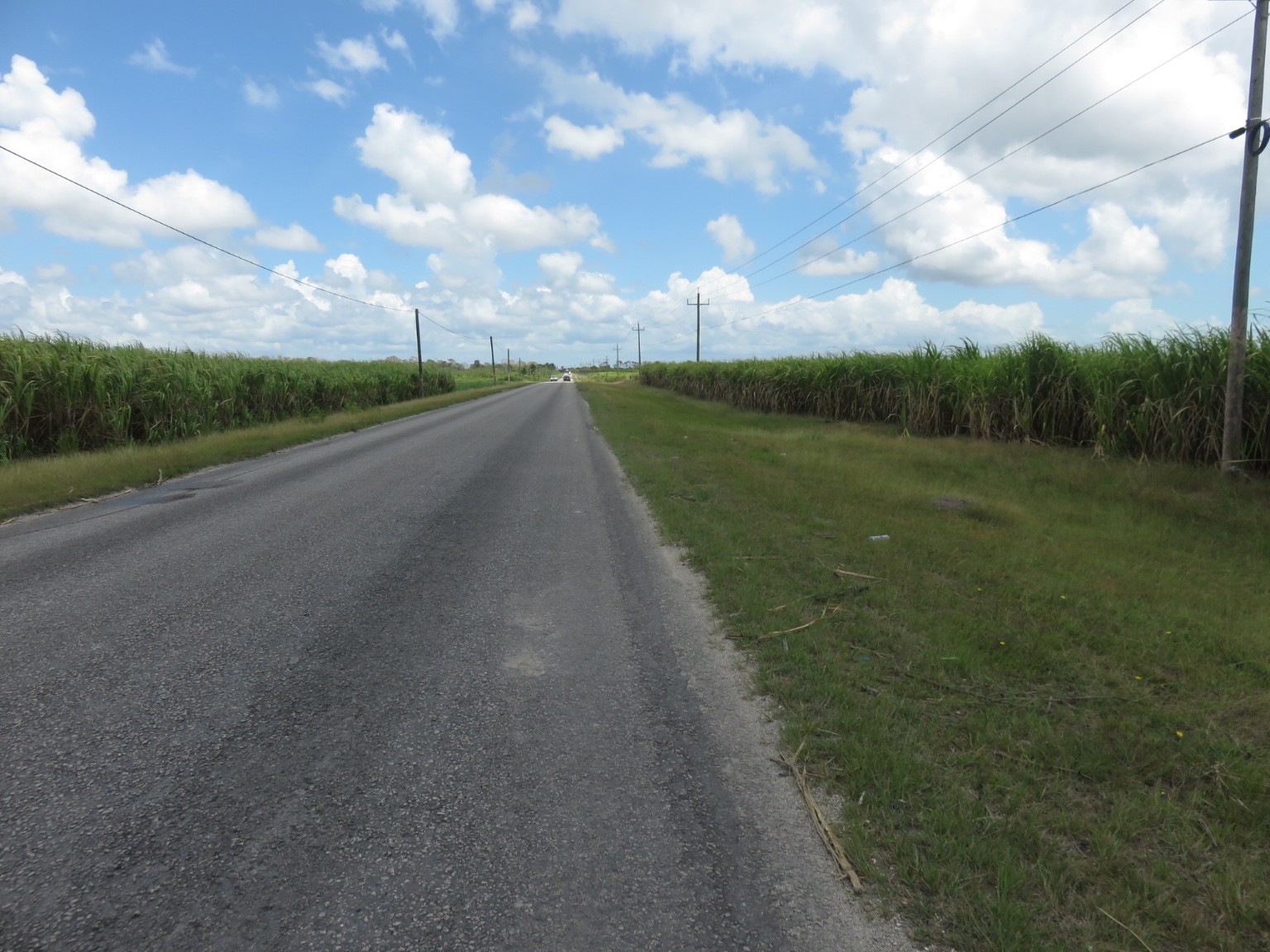
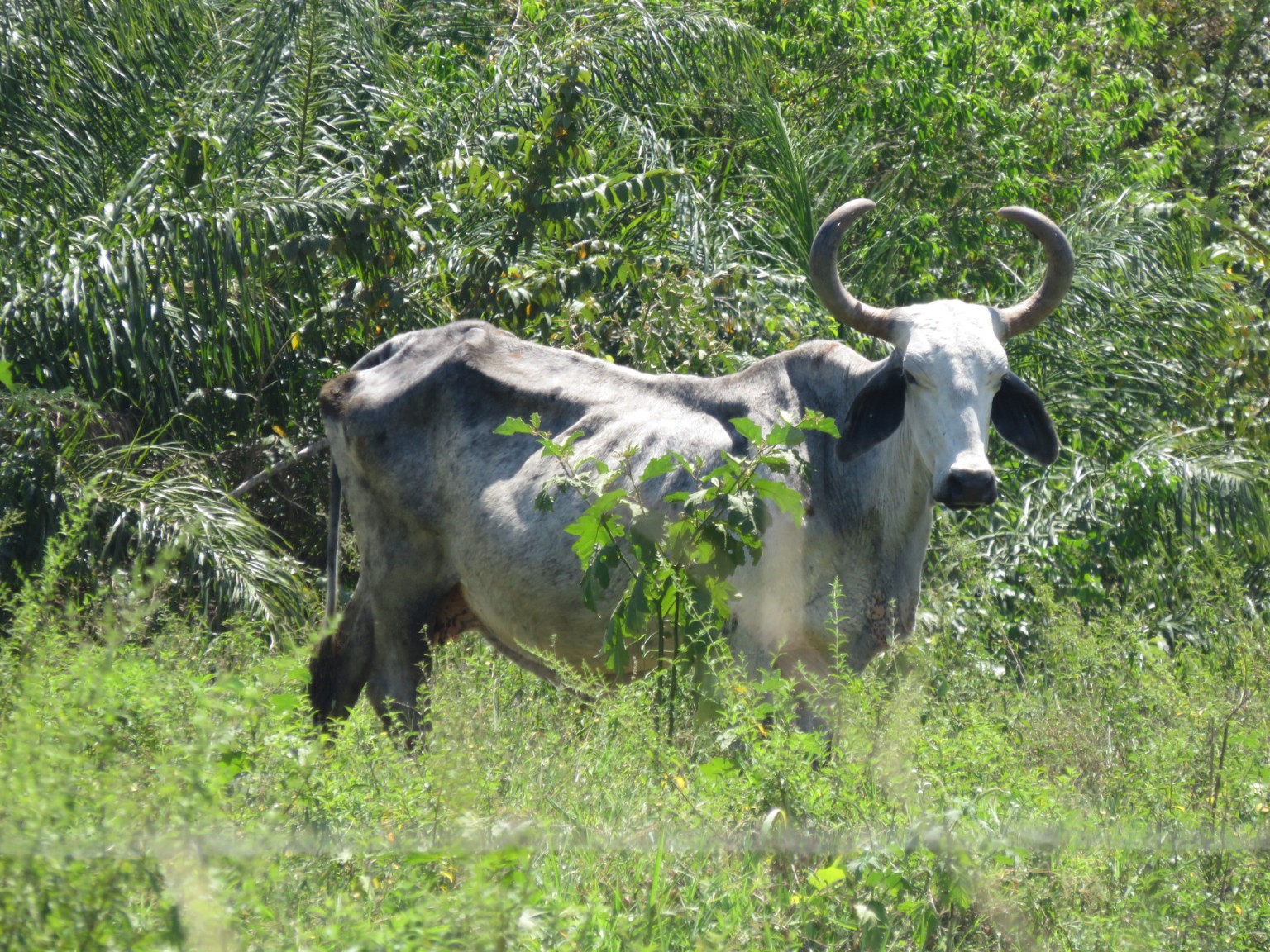
Amongst the sugar cane areas are large herds of dairy and beef cattle with many working horses to complete the rural scene.This is the main road which runs all the way to the border and we hesitate to call ‘highway’ because there are not any road markings, no shoulder, and only a temporary surface.
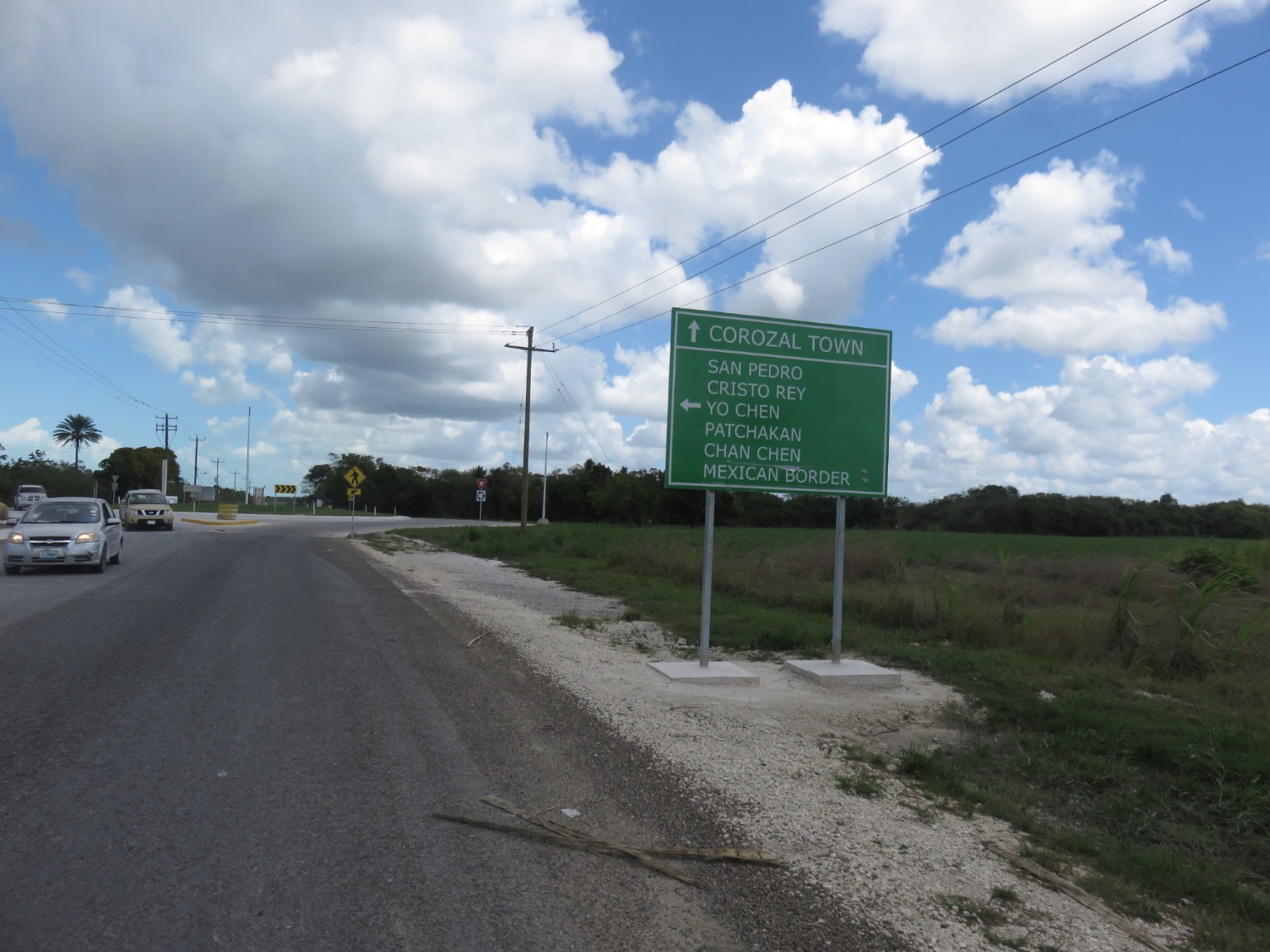
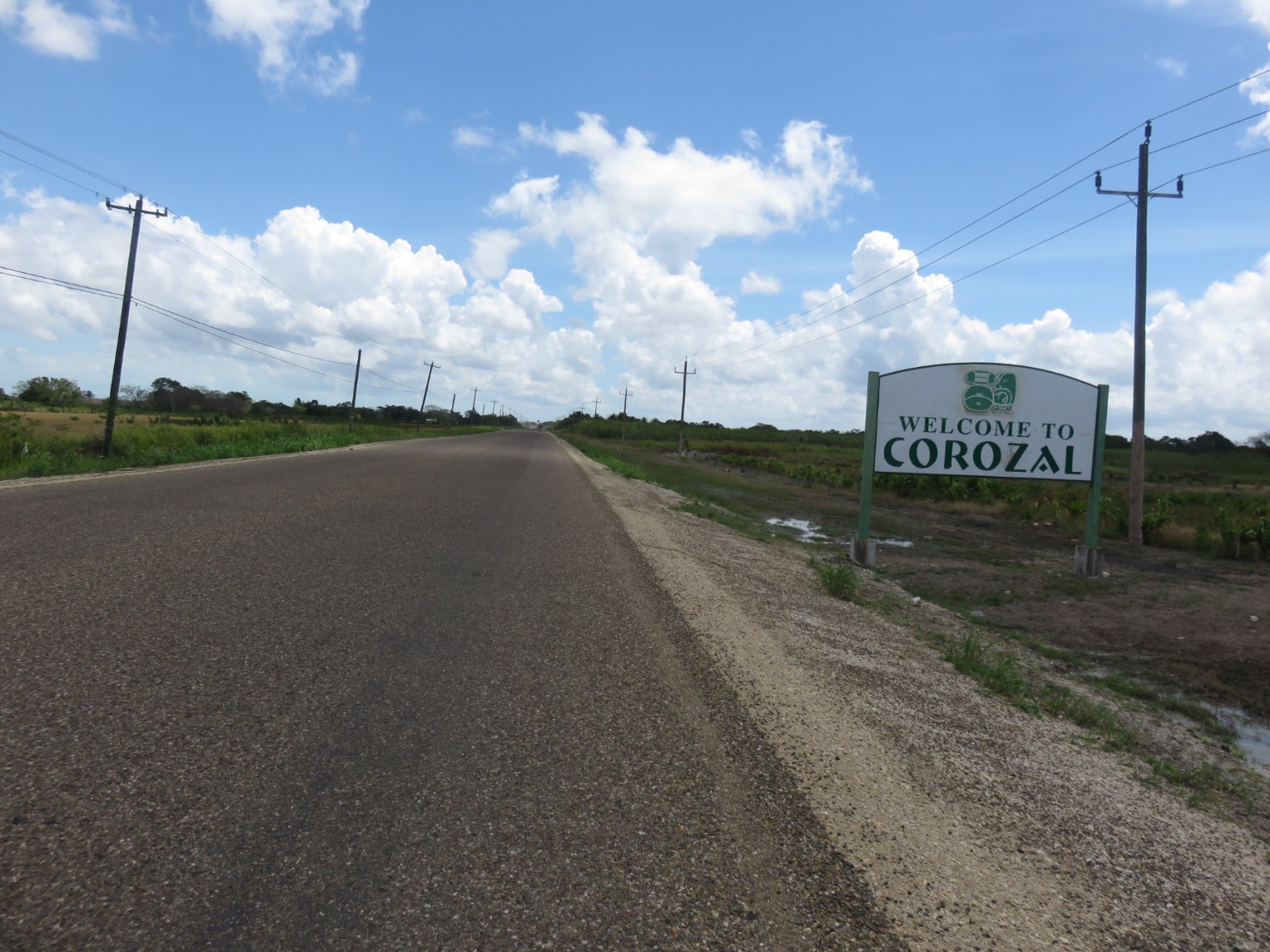
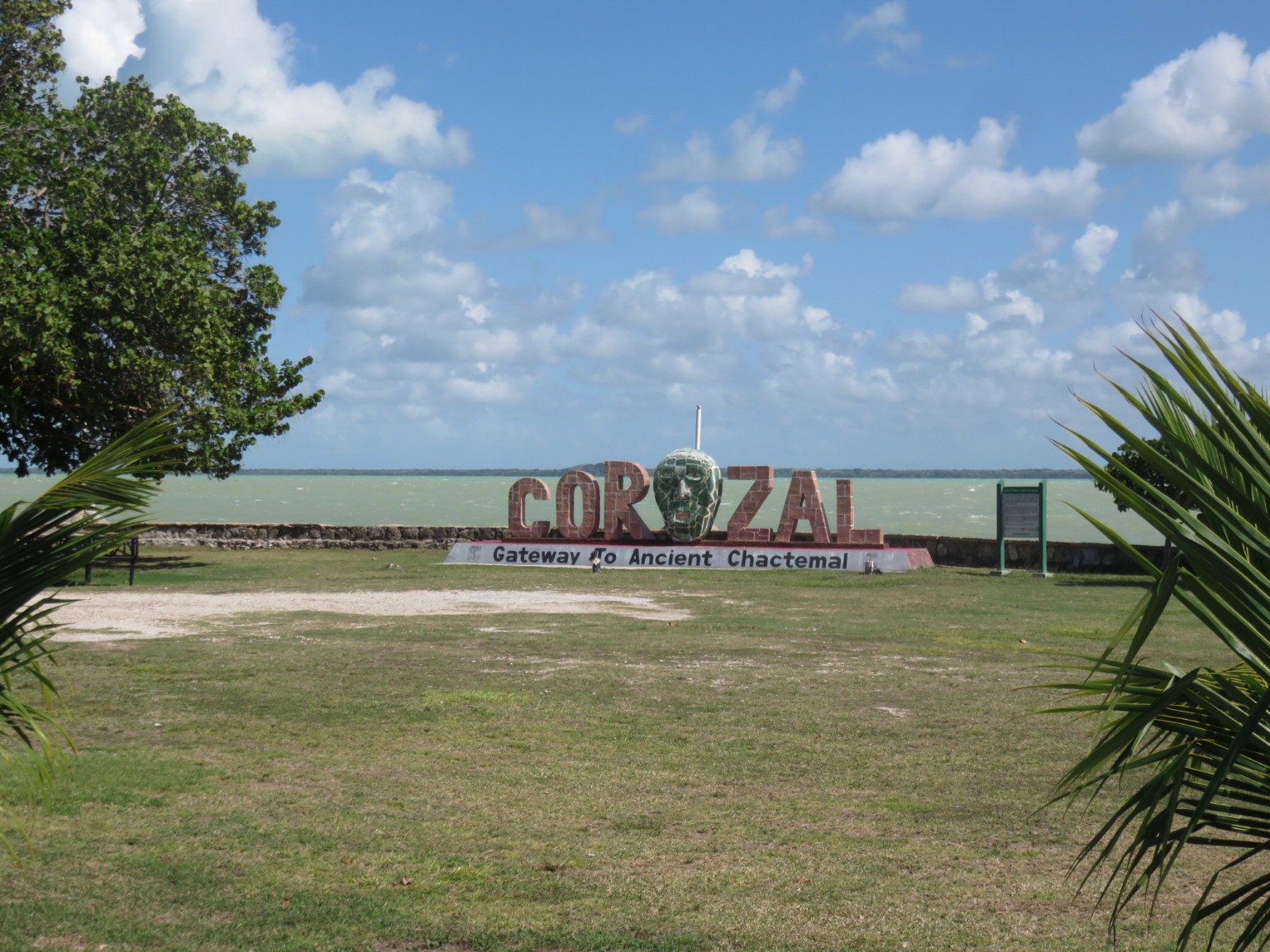
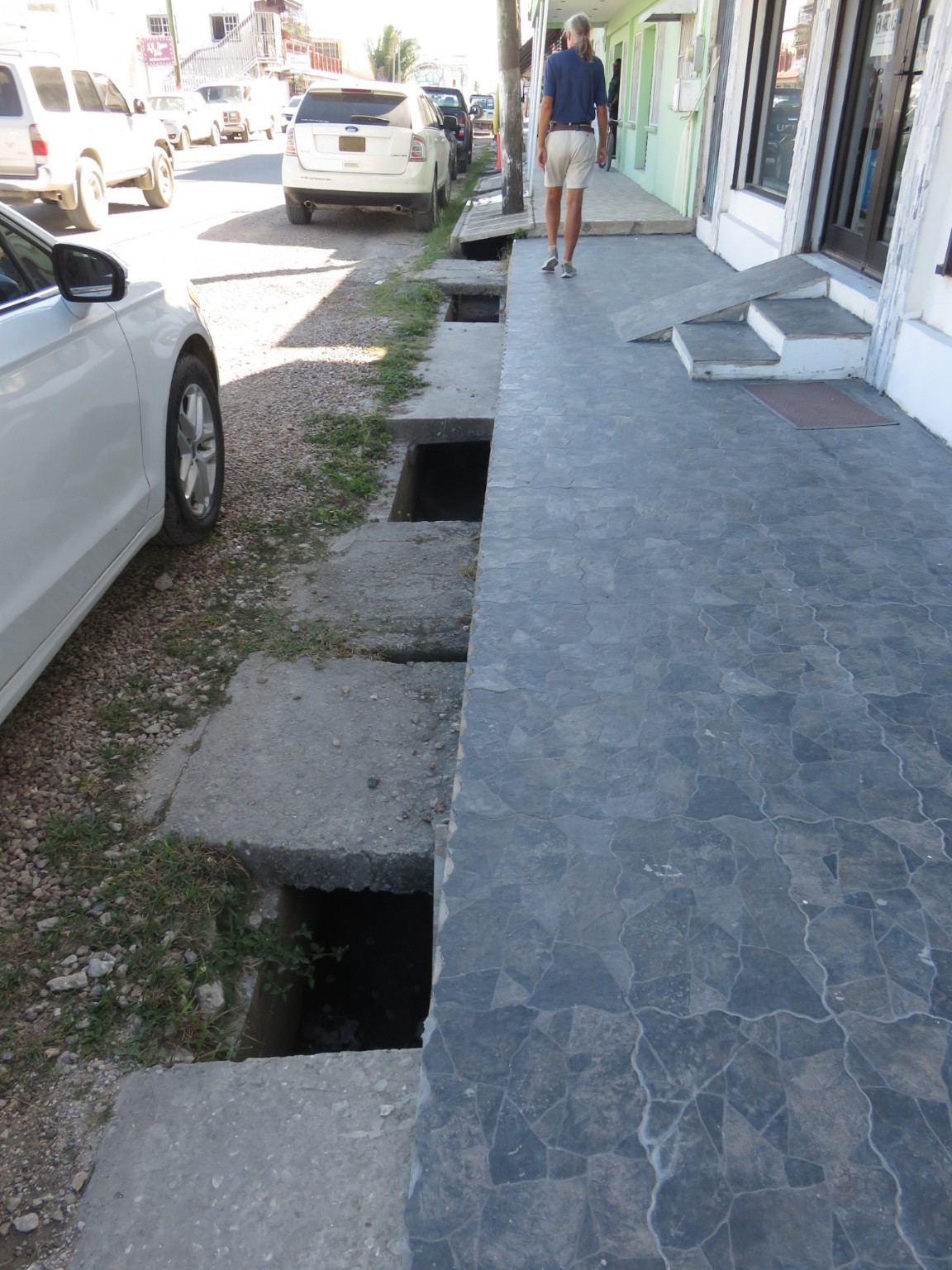
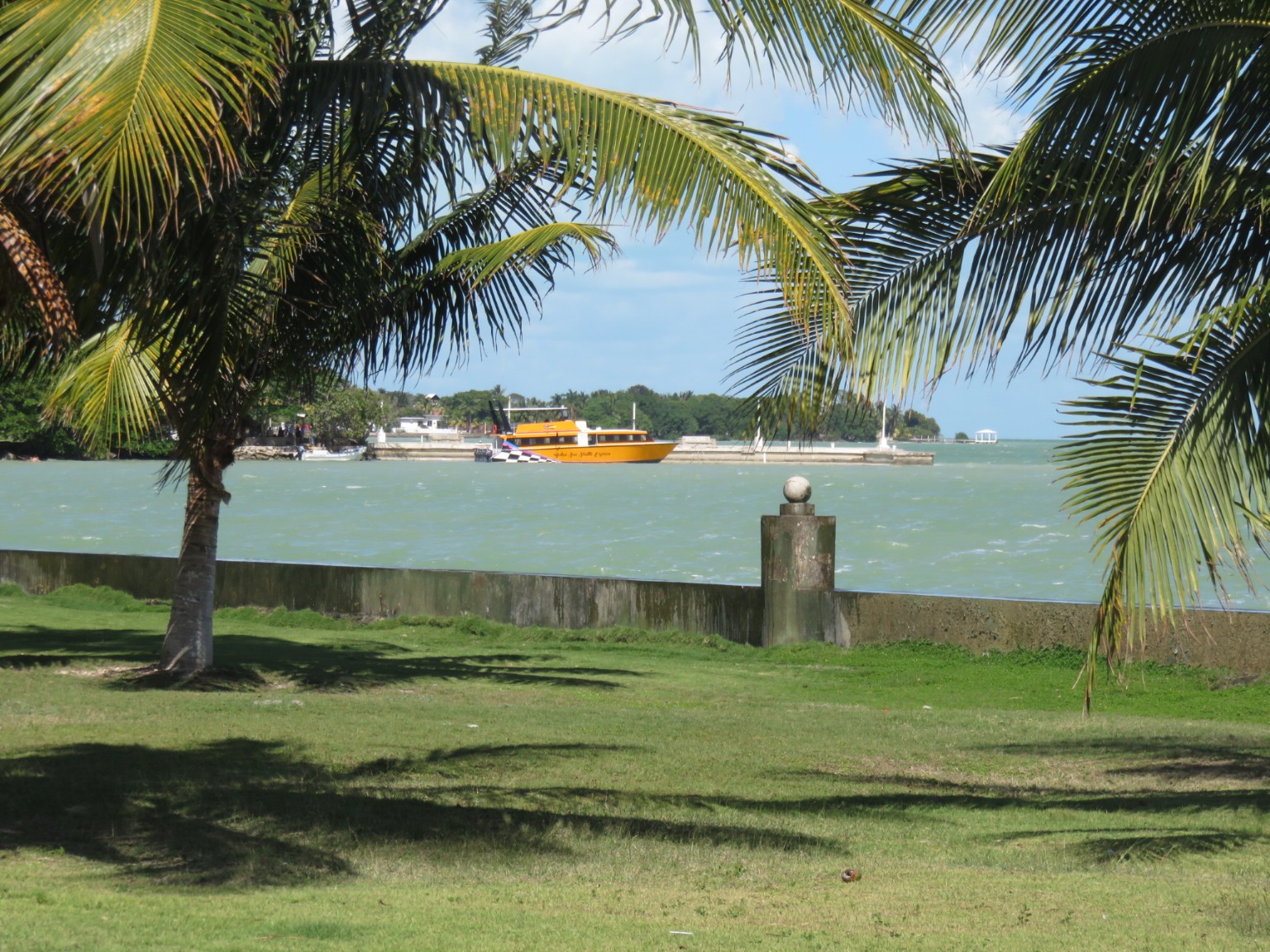
Finally back at the coast and we approach the town of Corozal from the opposite end to the way we entered three weeks earlier.Those of us that live at a certain altitude have to be mindful of both overhanging obstructions as well as open drains without guards that everyone has to watch out for.The boat we took to Ambergris Caye will soon be leaving with this day’s passengers.
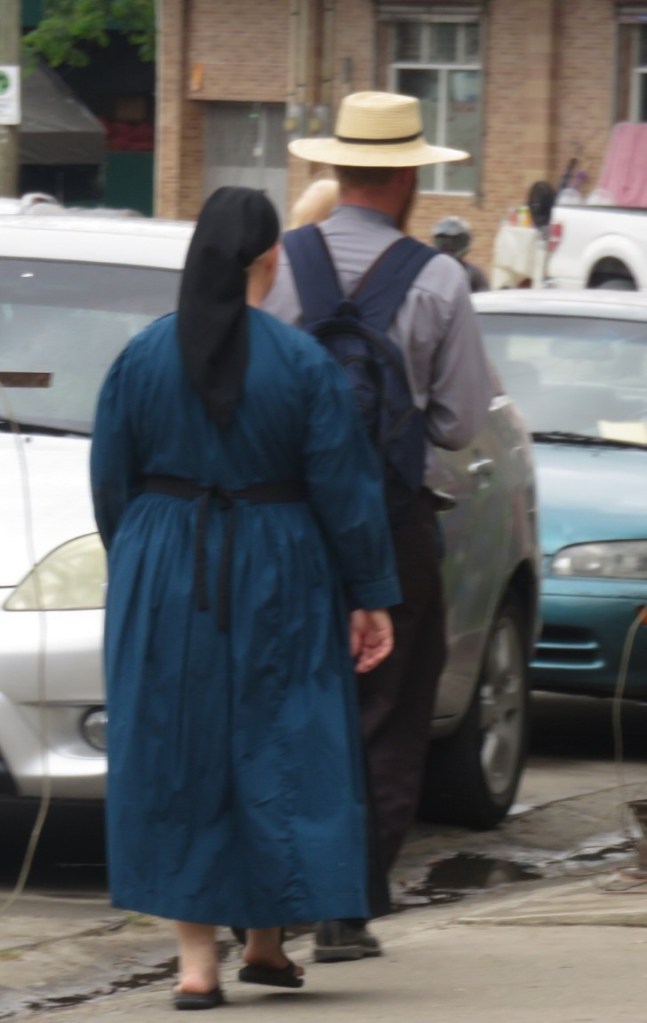
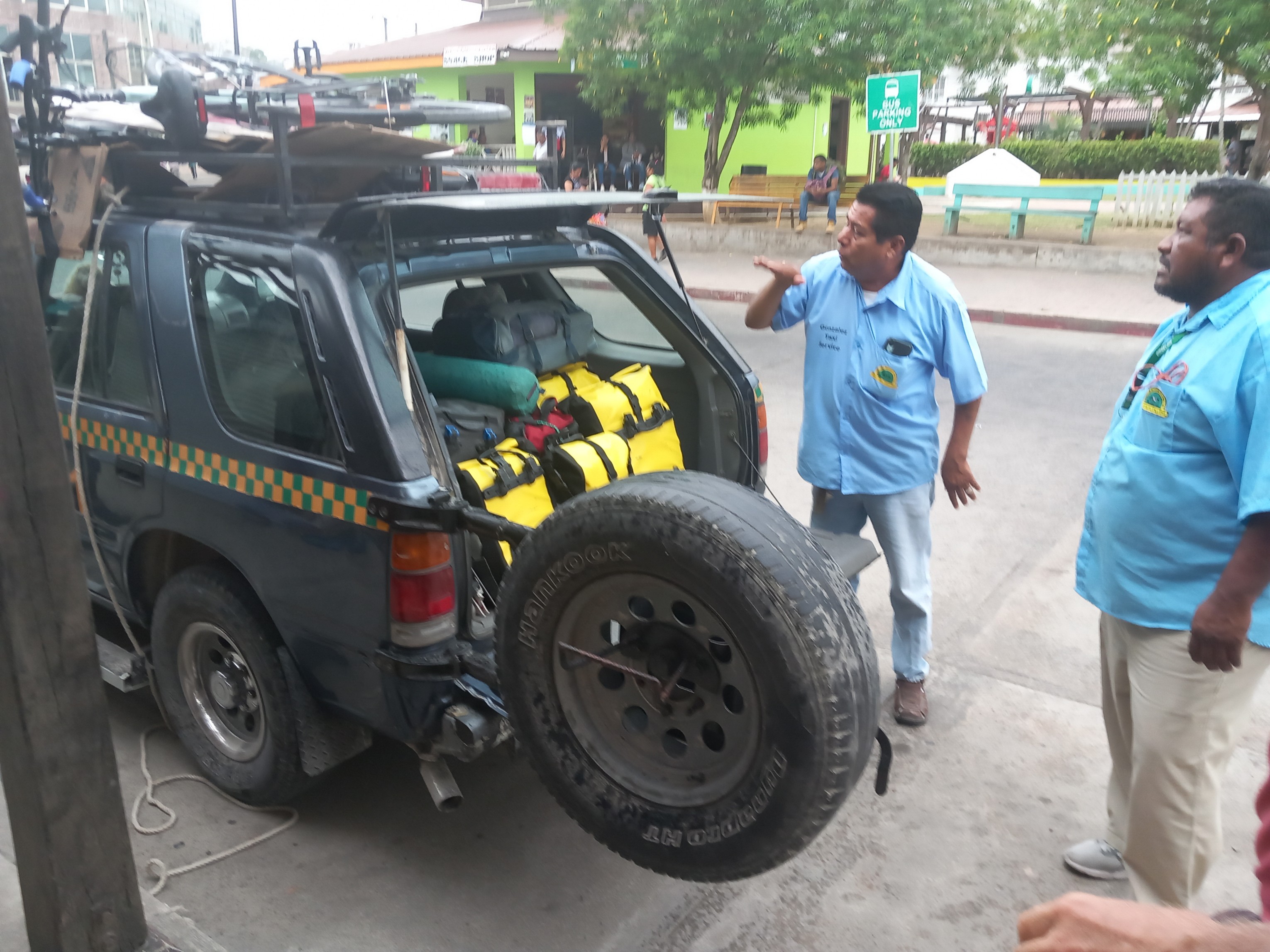
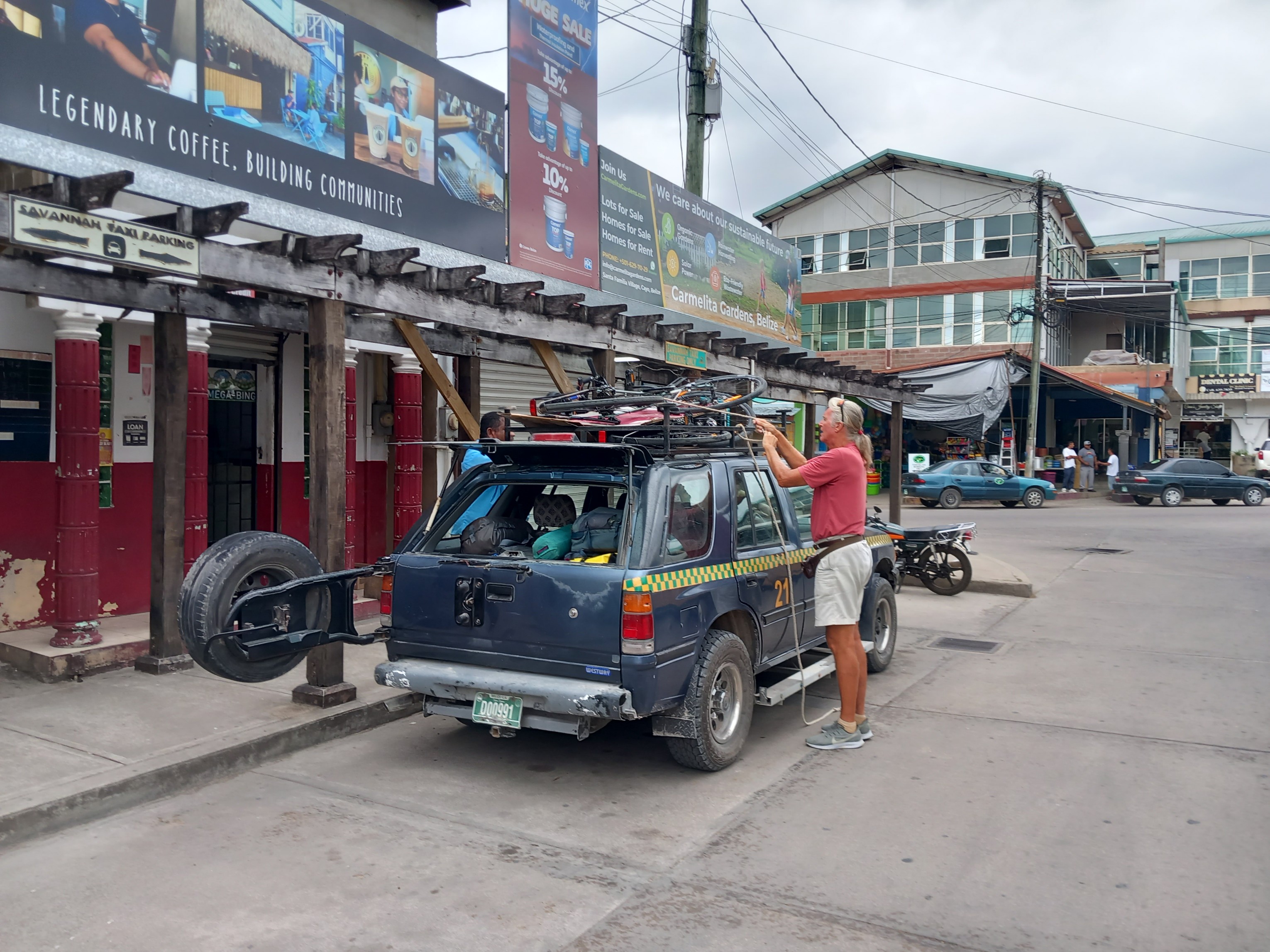
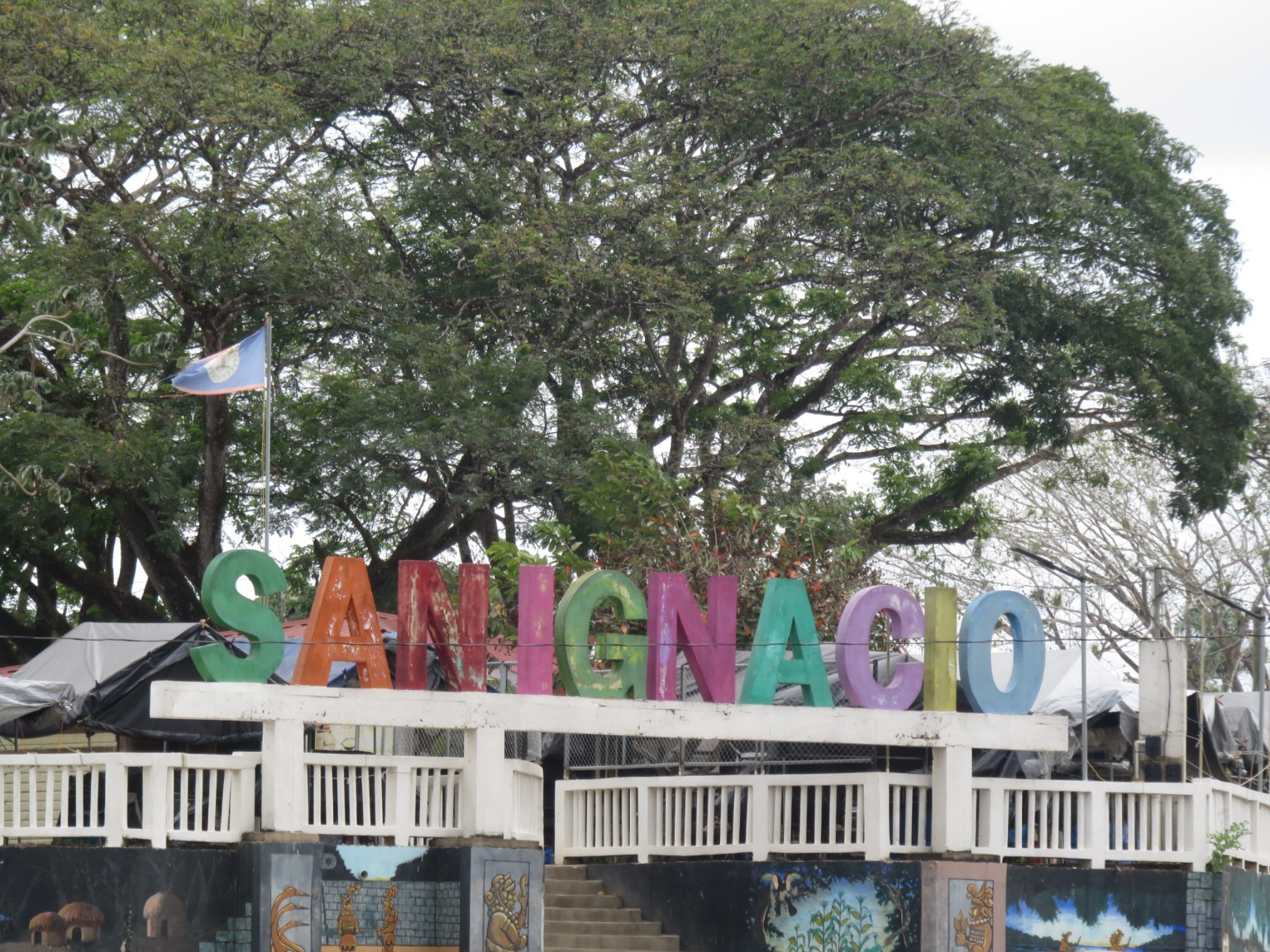
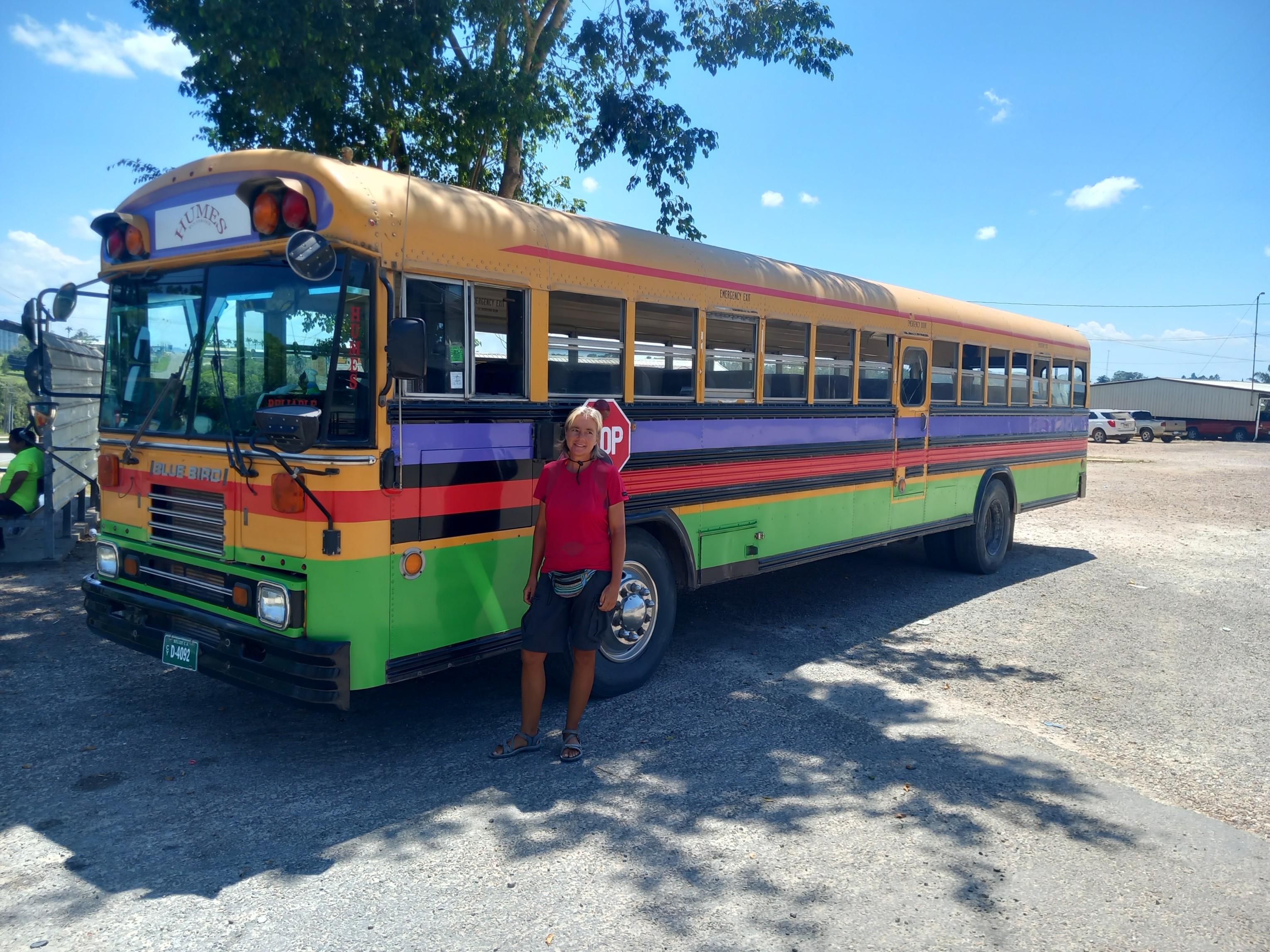
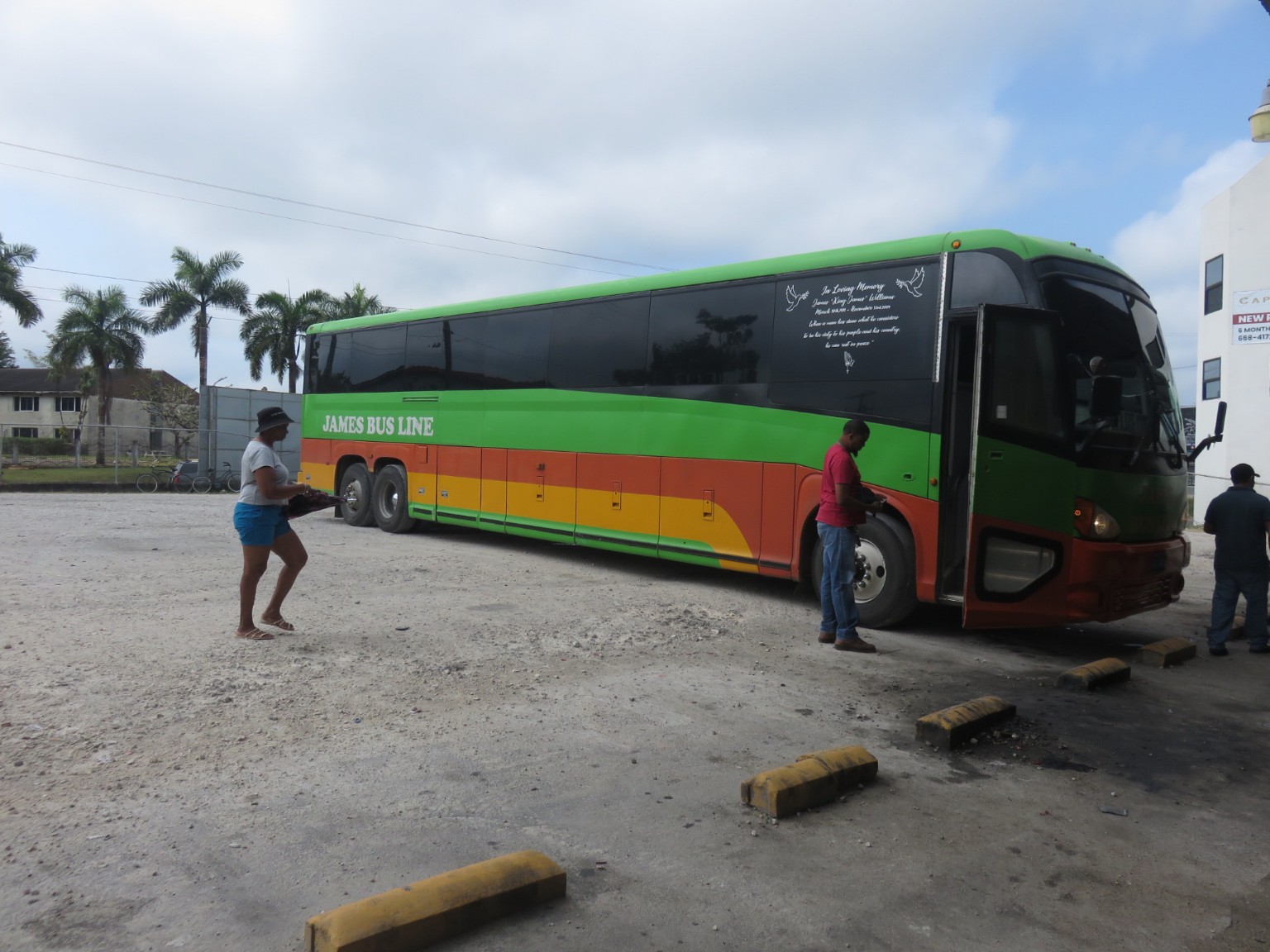
A reminder before we leave San Ignacio of our uplifting experience with the Mennonites; this couple were from another community than the one we spent time with and were randomly walking by at the Bus Stop.Setting off once again and being wished a safe journey from the manager of the hostel we had stayed at for 5 nights – a record for us on this trip.They try very hard to encourage people to use the rubbish bins, however, sometimes it is not Olivia is putting a braver face on our latest predicament than David. The larger bus we had been assured would take us with the bikes stored in the hold has not arrived and will not be coming today. Another smaller bus came in its place and the Conductor refused to take the bikes.We are discussing with a taxi driver the best way to load the bikes and secure them to both prevent damage to the bikes, our main concern, and damage to his roof, his main concern. We are embarking on a 120 mile trip (180 kilometres) on a less than reliable road – a reason for choosing the bus initially than riding our bicycles.Others offer their advice…….…………..eventually David and the driver are left to resolve things the way they want them done.Finally we’re off and retracing our tyre marks on the road back to Belmopan and on to Orange Walk.The stretch of road we had been warned about lived up to its description so we were pleased with our decision not to ride it, especially when we had several heavy downpours of rain during the 3.5 hour journey.As we approached Orange Walk (also known as Sugar City) we saw many lorries carrying sugar cane to be processed at nearby factories. When it was dark you could still notice the sweet smell of sugar in the air although it wasn’t possible to see the plantations we were passing.Another hostel welcomes us and again we are on the first floor, however, there is space for the bikes in the room. Belize does not seem to embrace the roadhouse approach to accommodation where you can roll in and roll out, often staying on the ground floor.We assess this country as being the most expensive third world country we have visited between us; huge amounts are being received through tourism and in this town, sugar, however, it does not seem to be invested in either roads or public transport.
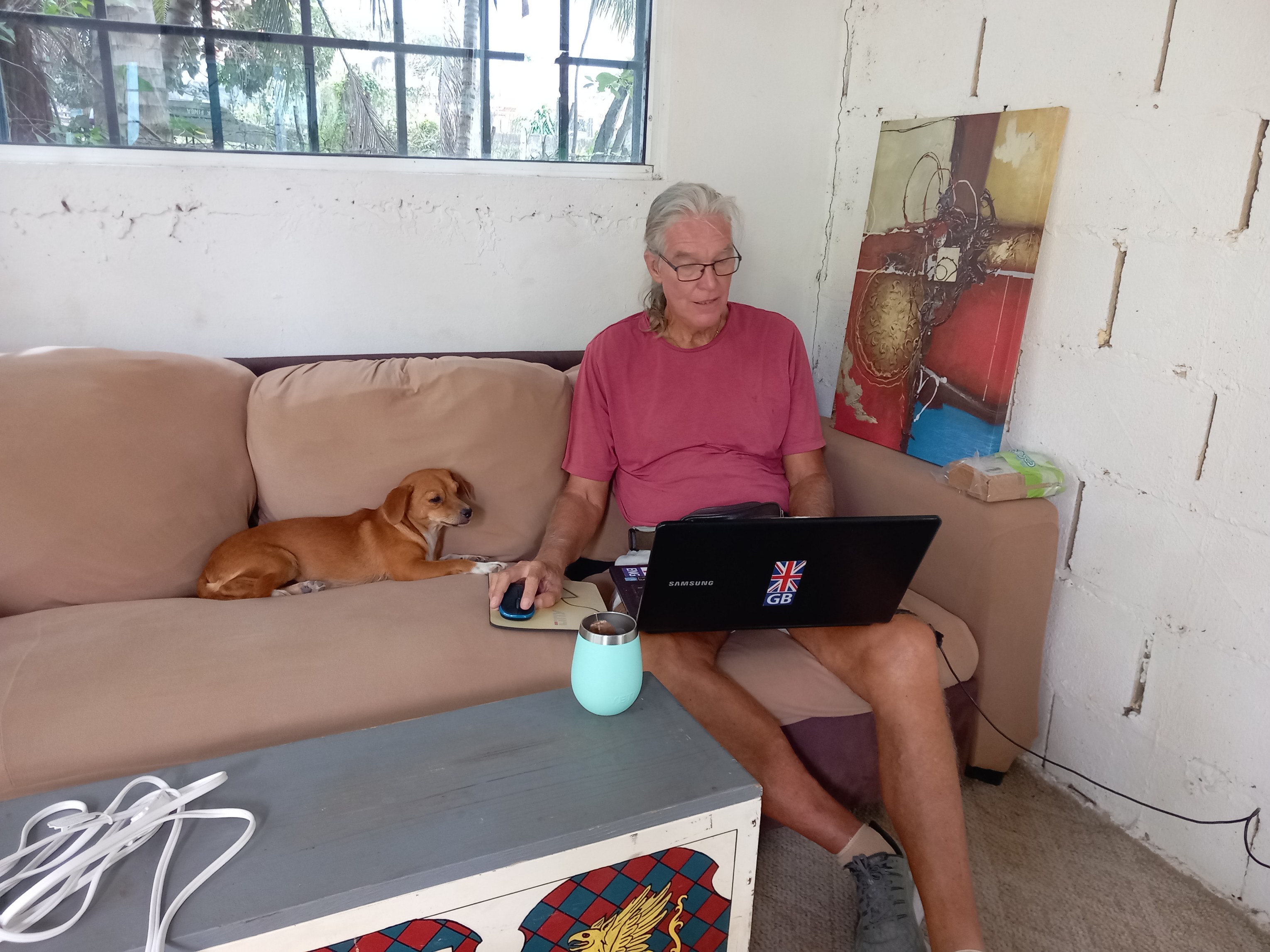
One thing we do have here is a good internet connection so it is the ideal opportunity to catch up with the blog whilst receiving help from the owner’s dog.
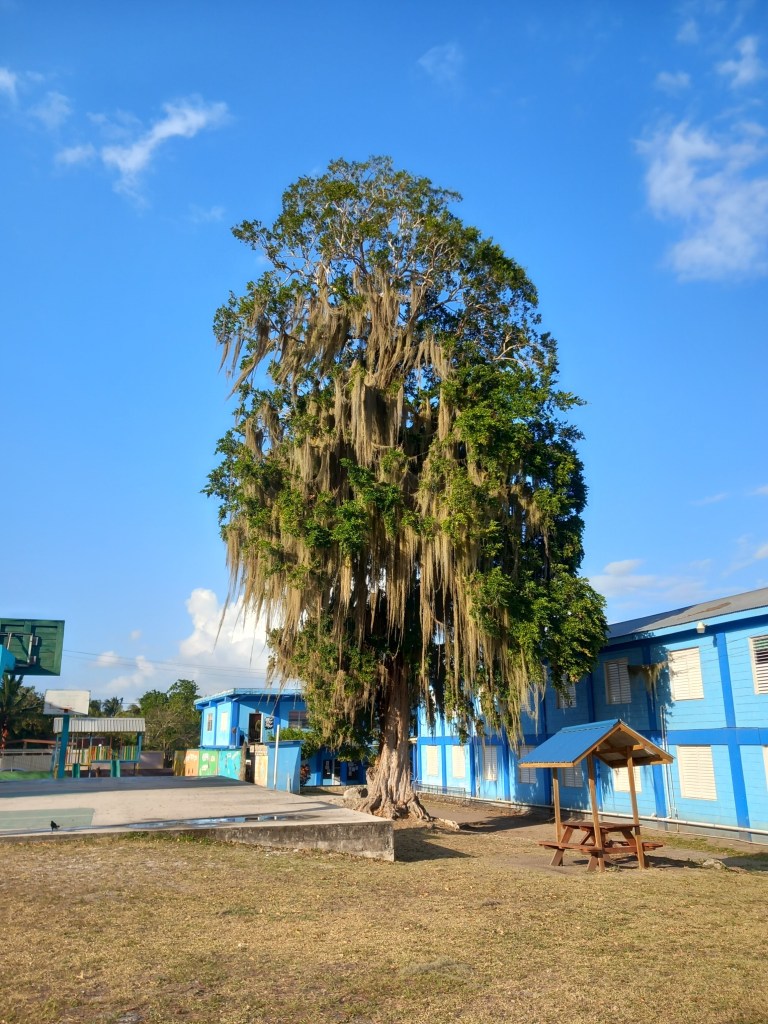
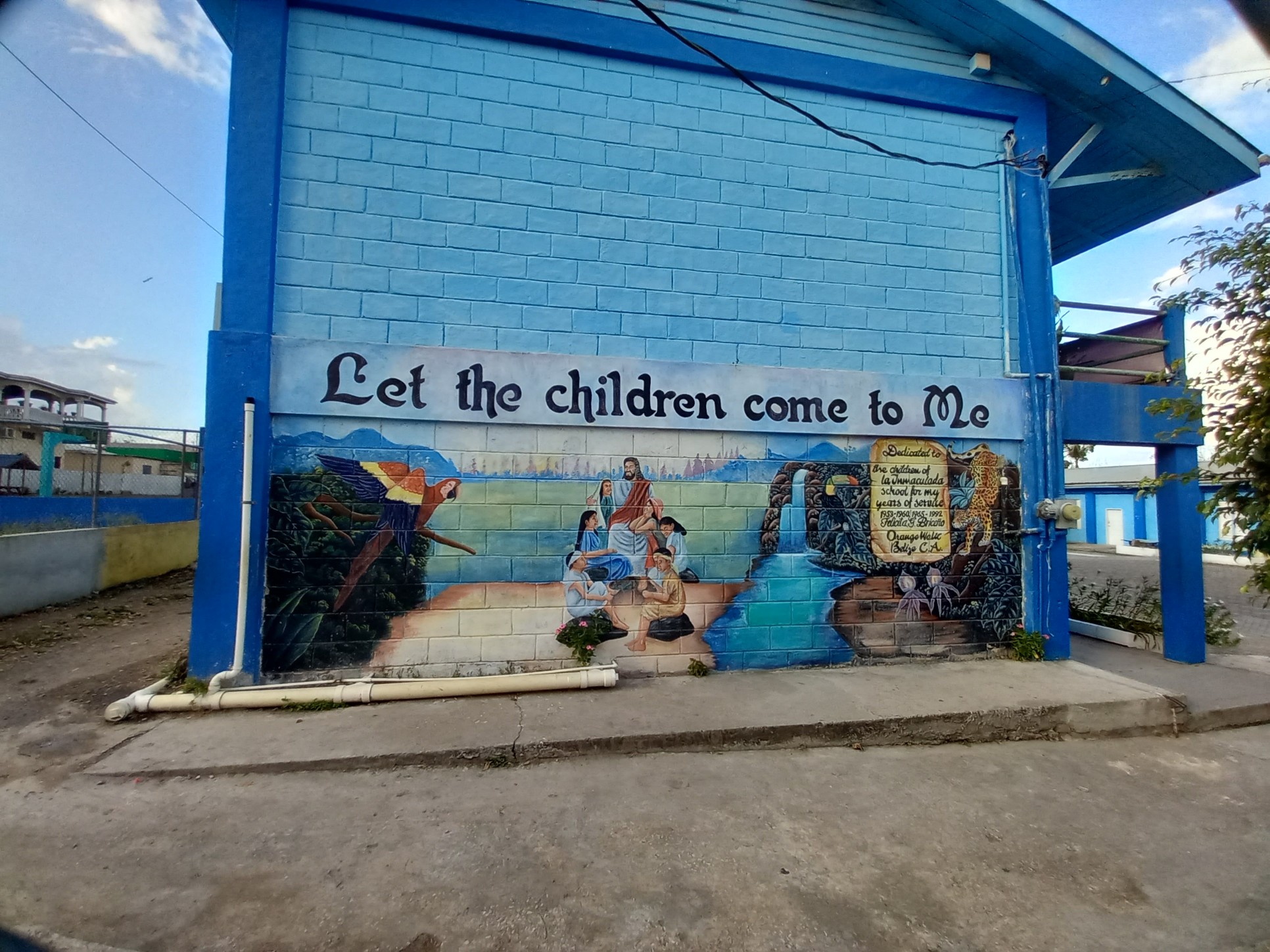
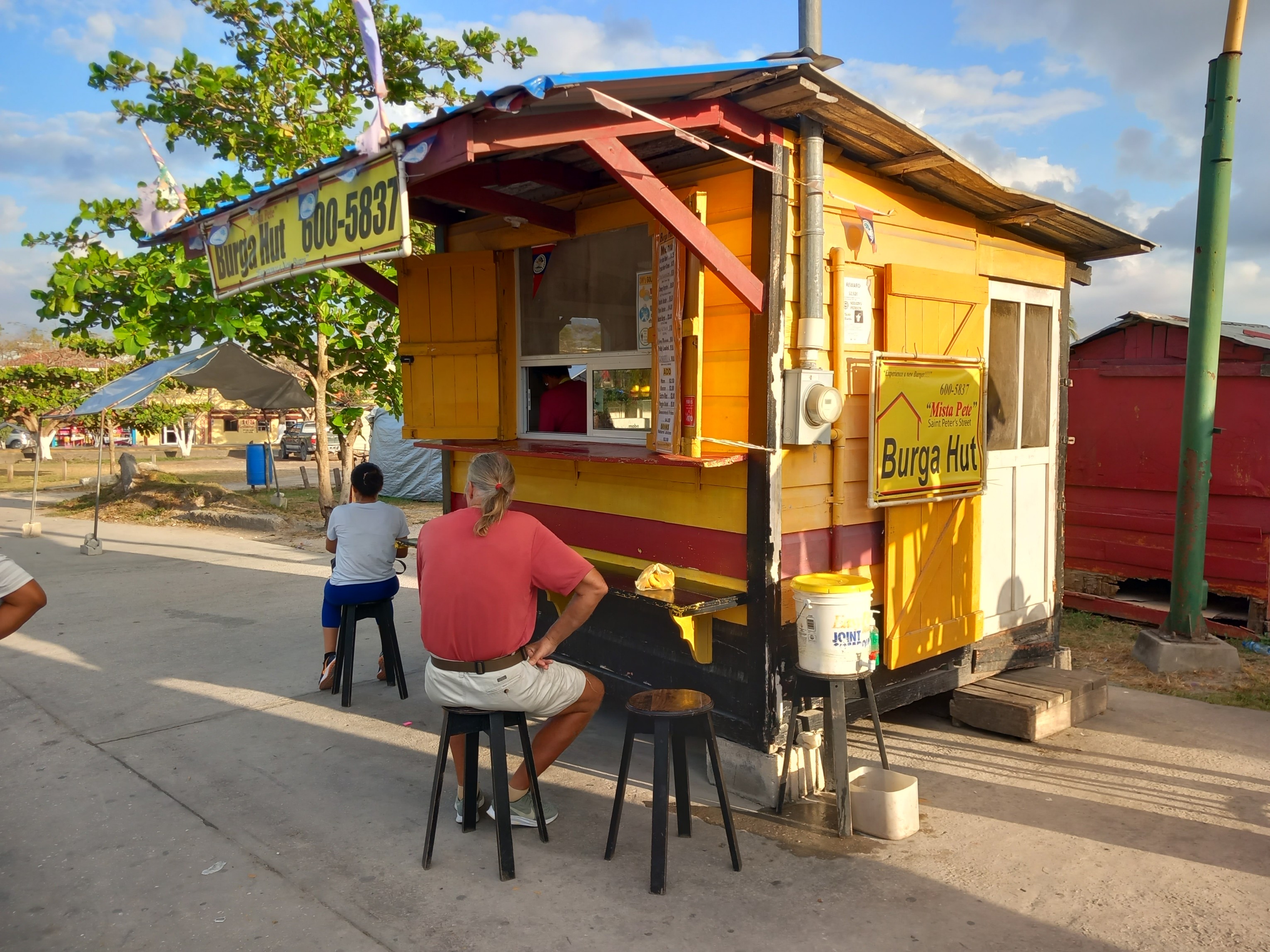
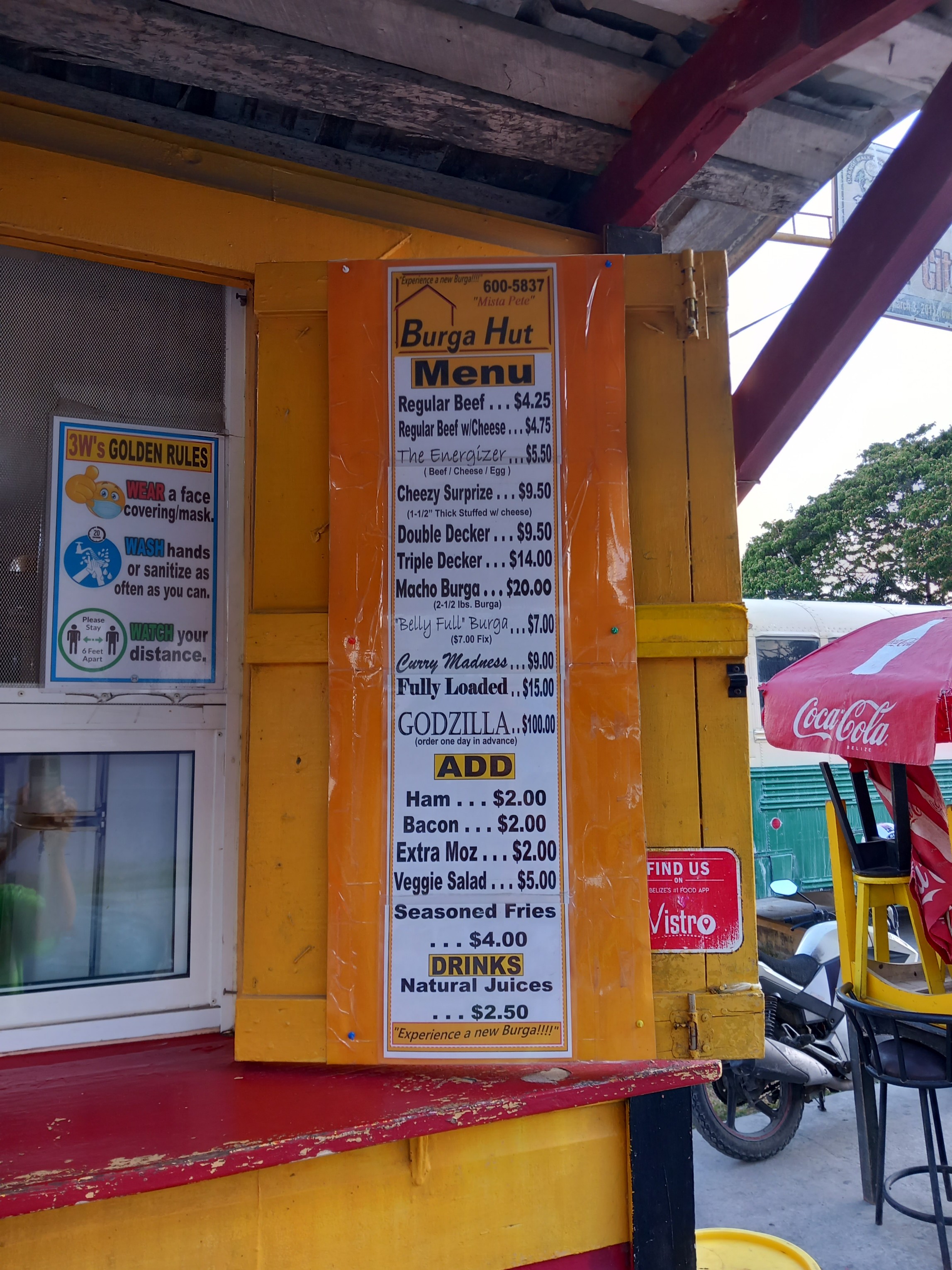
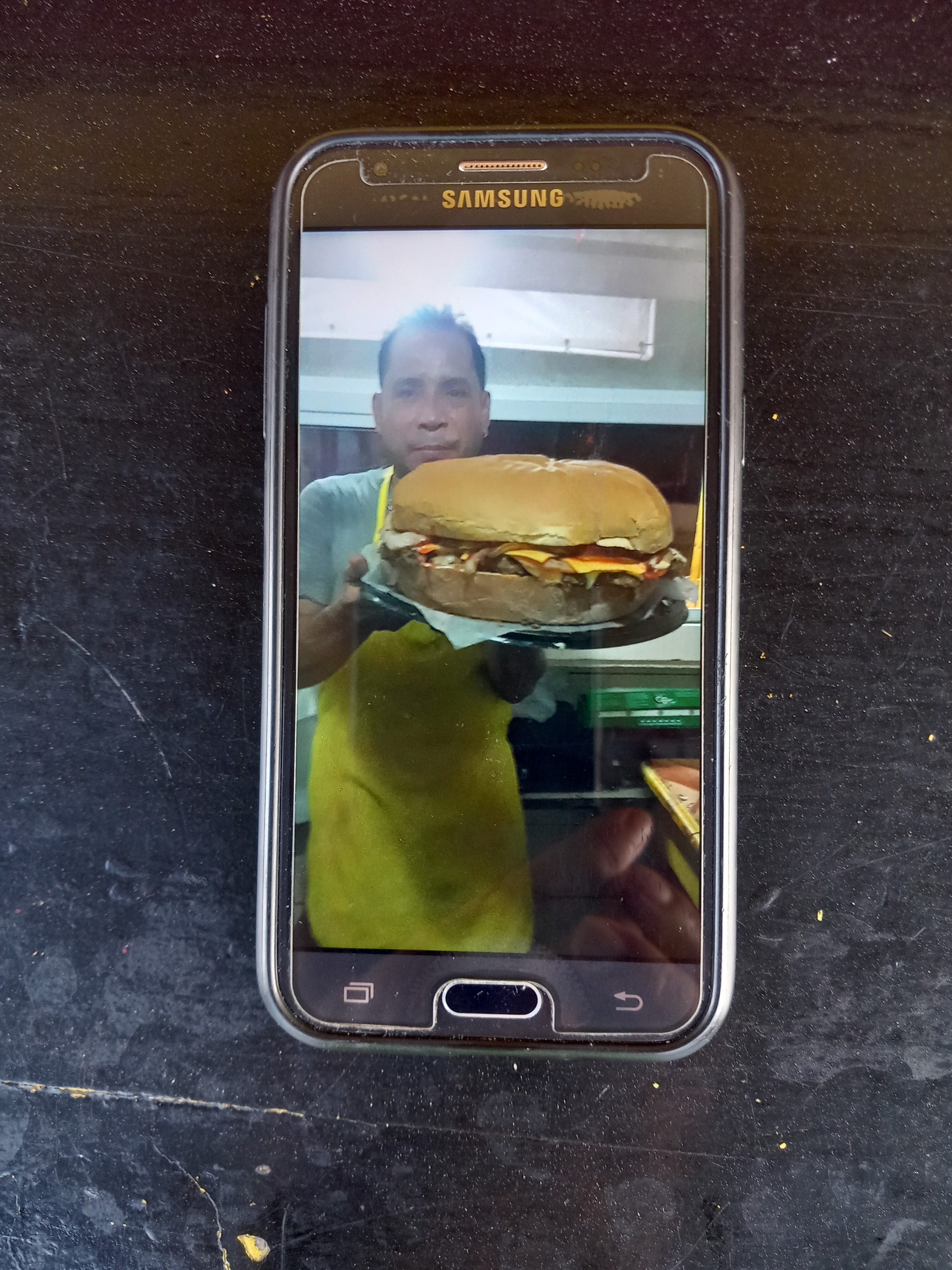
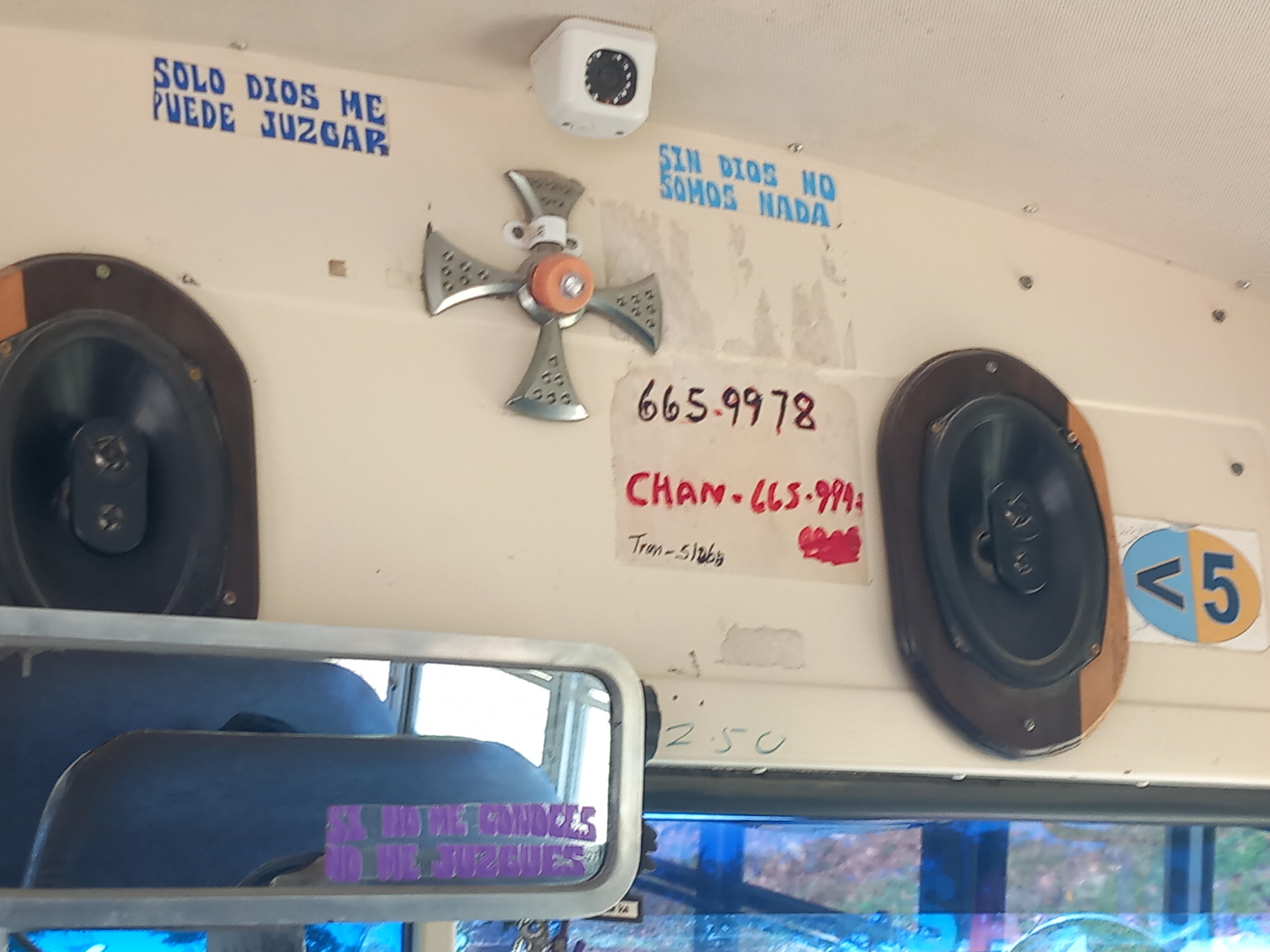
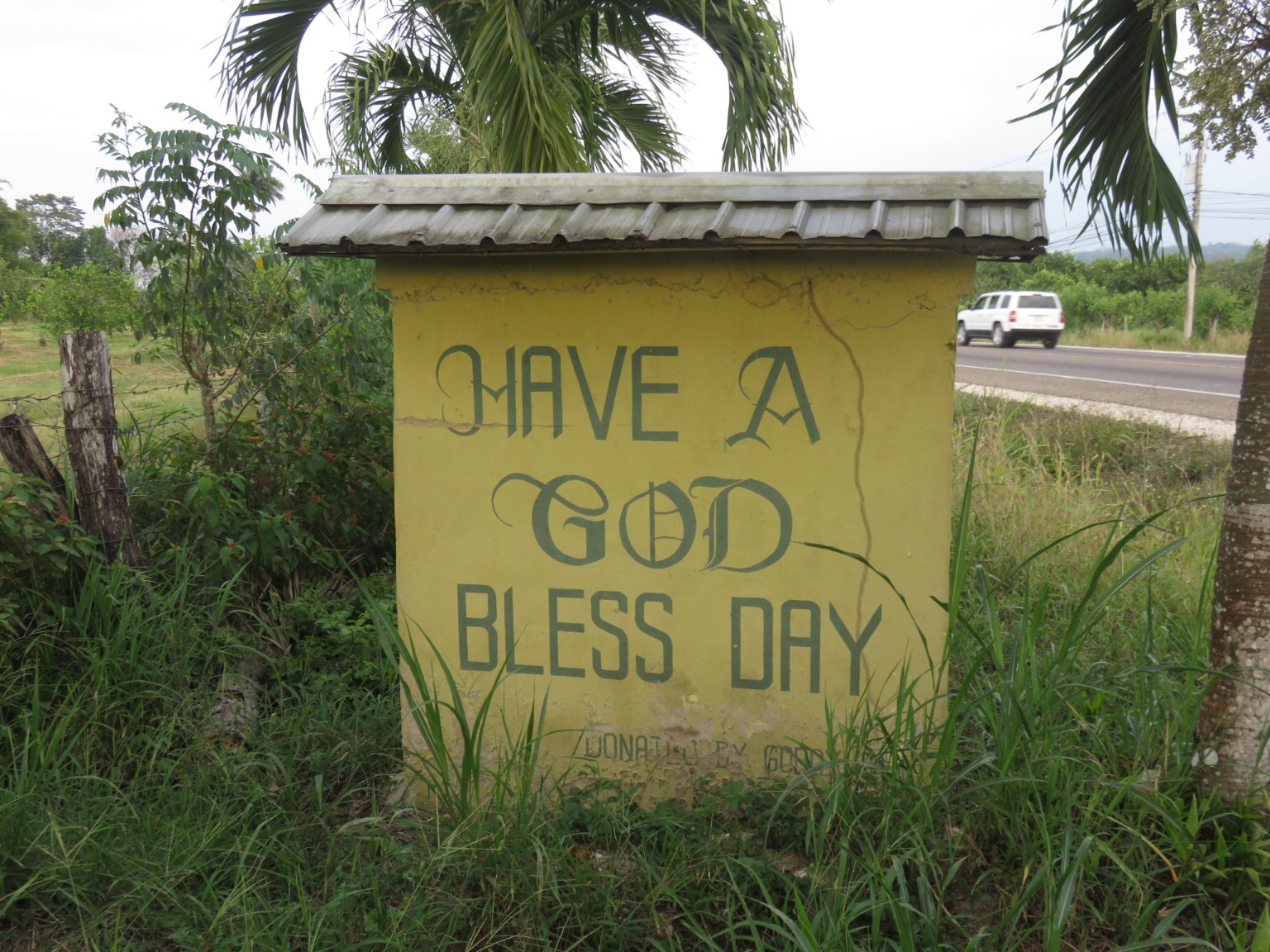
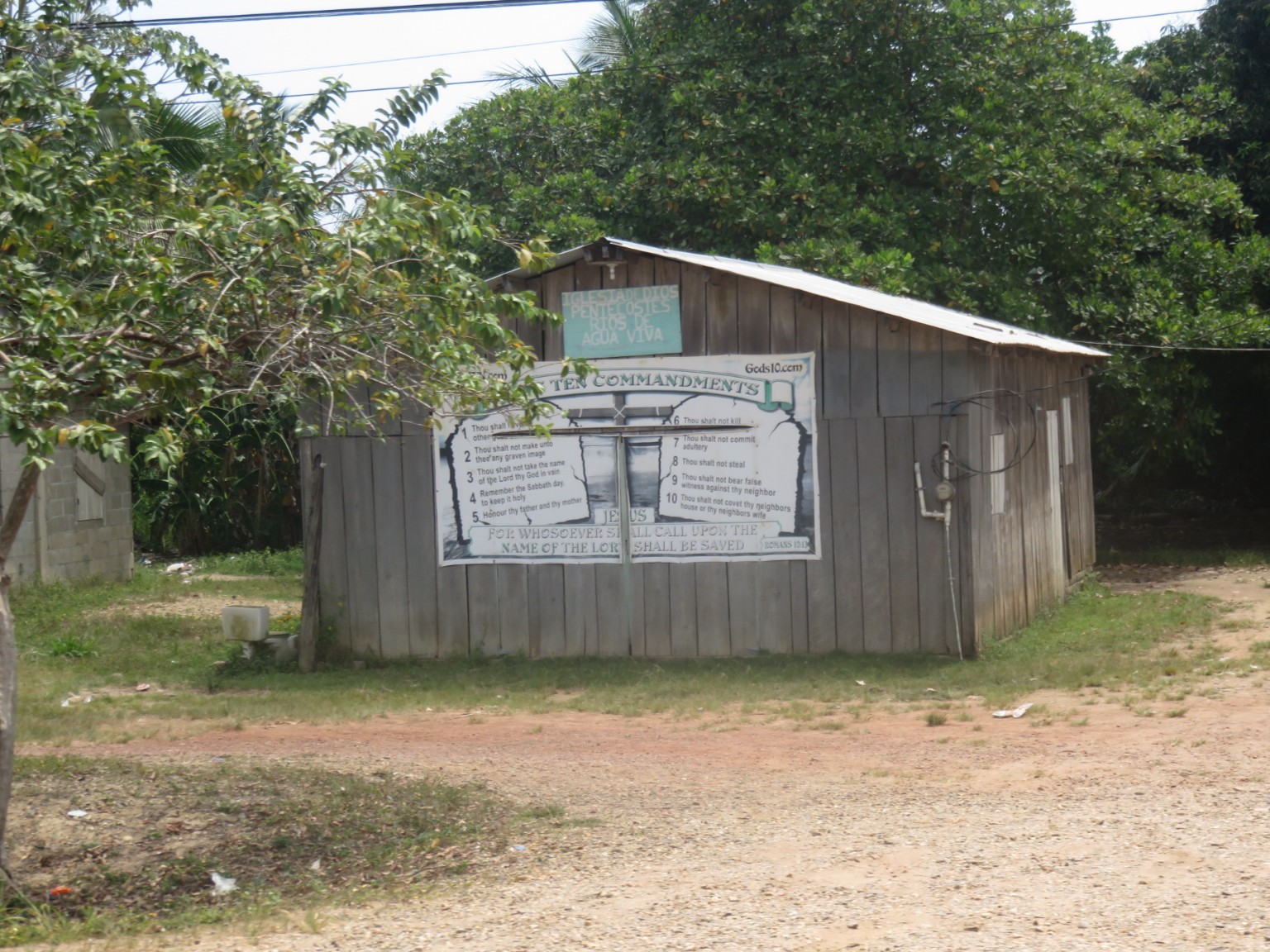
A local school with an uncovered basketball court and play area.Belize is 80% Christian and we see these religious messages and quotations regularly.The owner of this Burger Hut claims to have the smallest burger hut in the country whilst selling the largest burger.We chose a double decker each and were pleased with both the quality and the quantity. Belize is expensive compared to Mexico and roughly you pay approximately 2 – 3 times more for a third to half the quantity. We were often hungry here, but not tonight, and 2 meals a day had to be supplemented with snacks and/or a third meal. This is the Godzilla Burger – 12.5 pounds of beef – and sufficient to serve 16 normal size burgers. He was an engineer until he was 40 years old and decided he wanted to work for himself and, 14 years later, he seems very content.
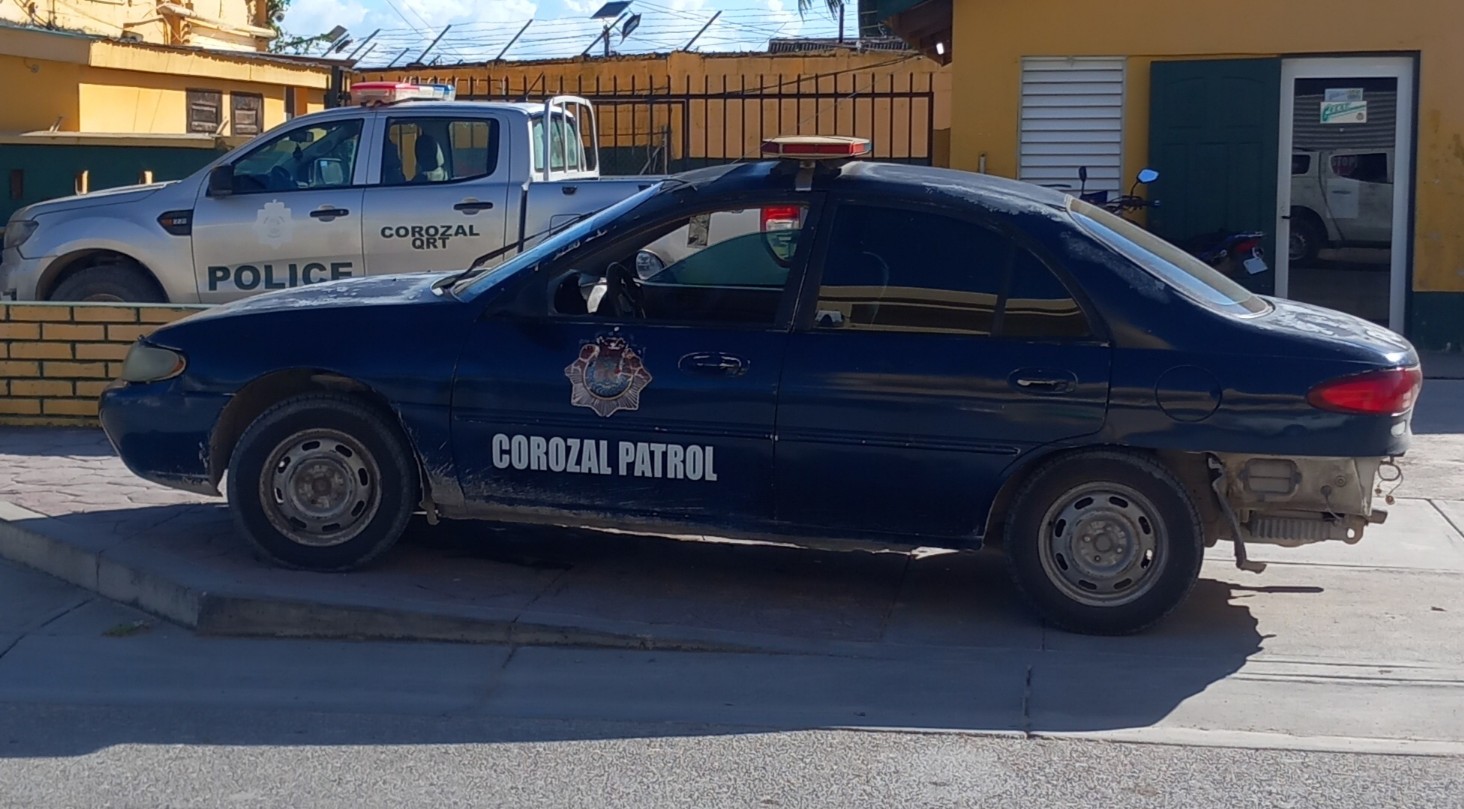
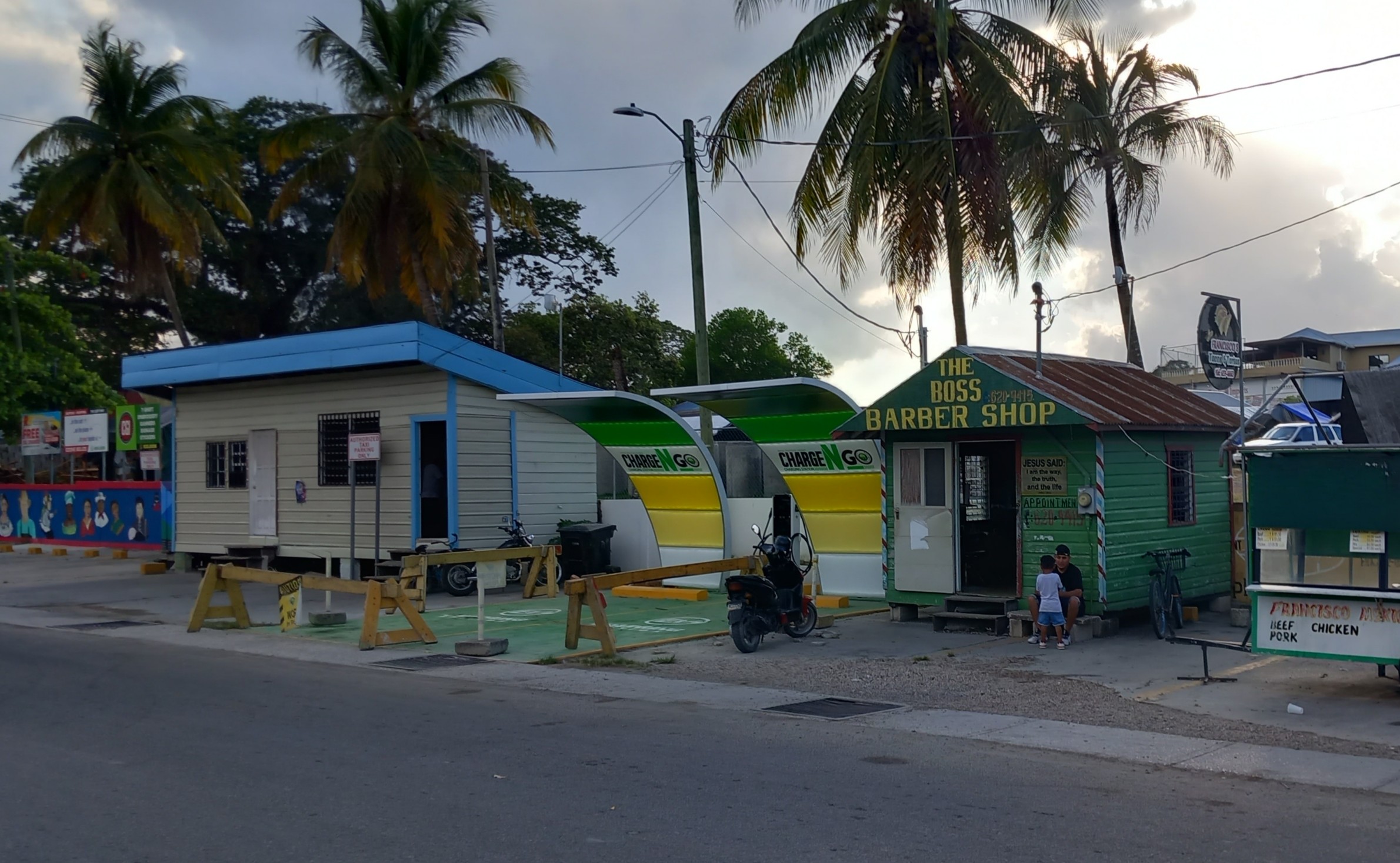
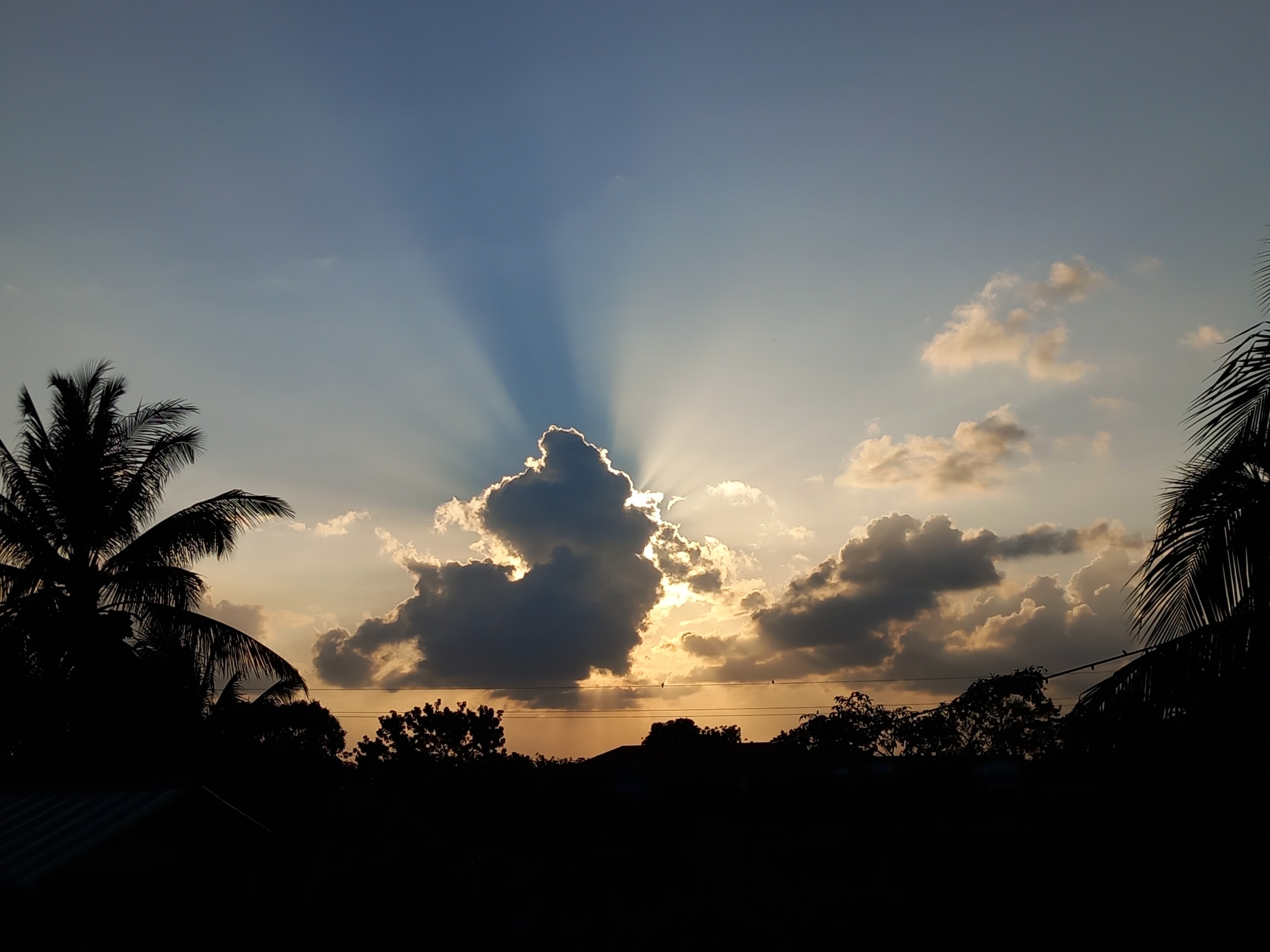
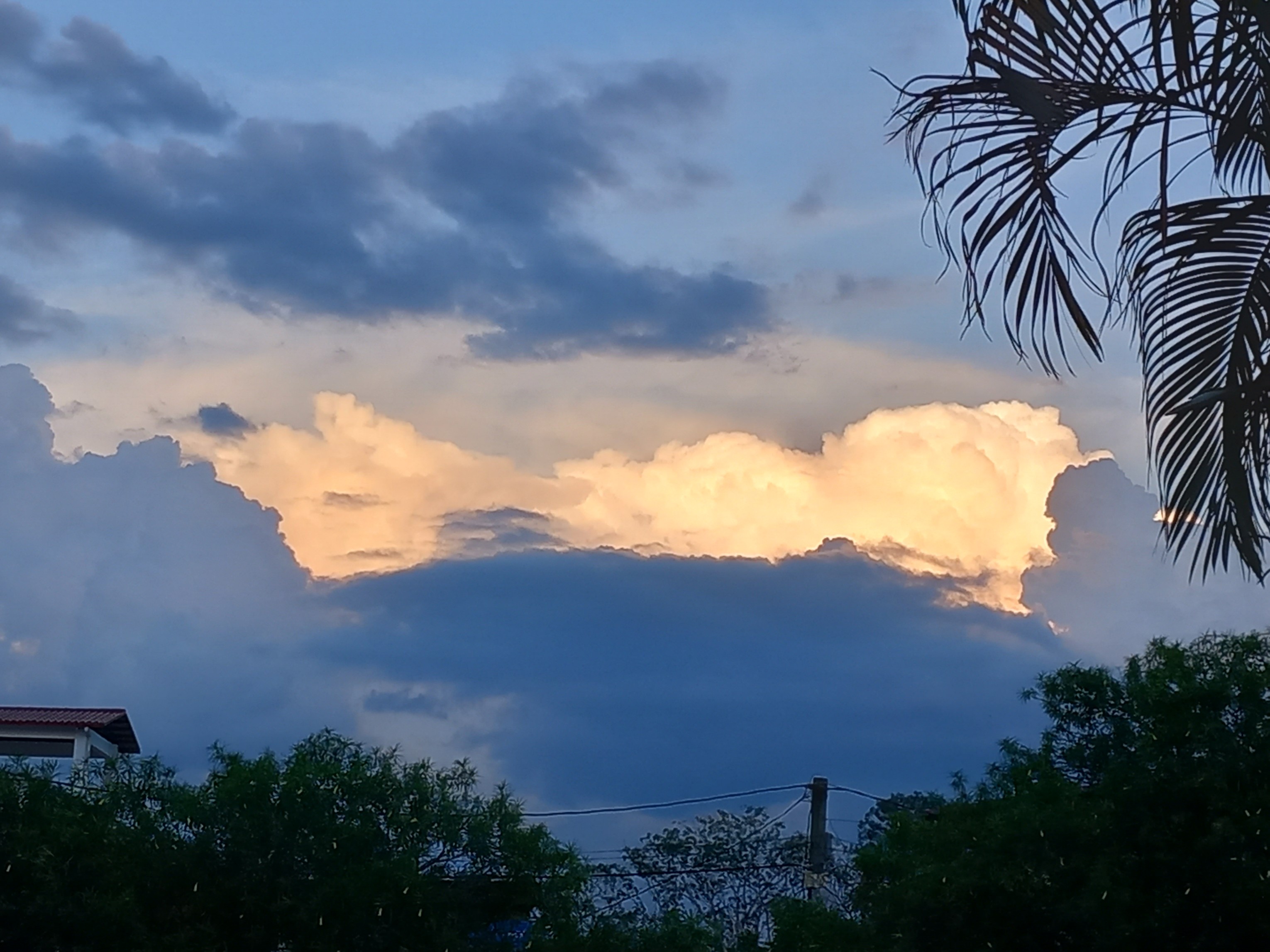
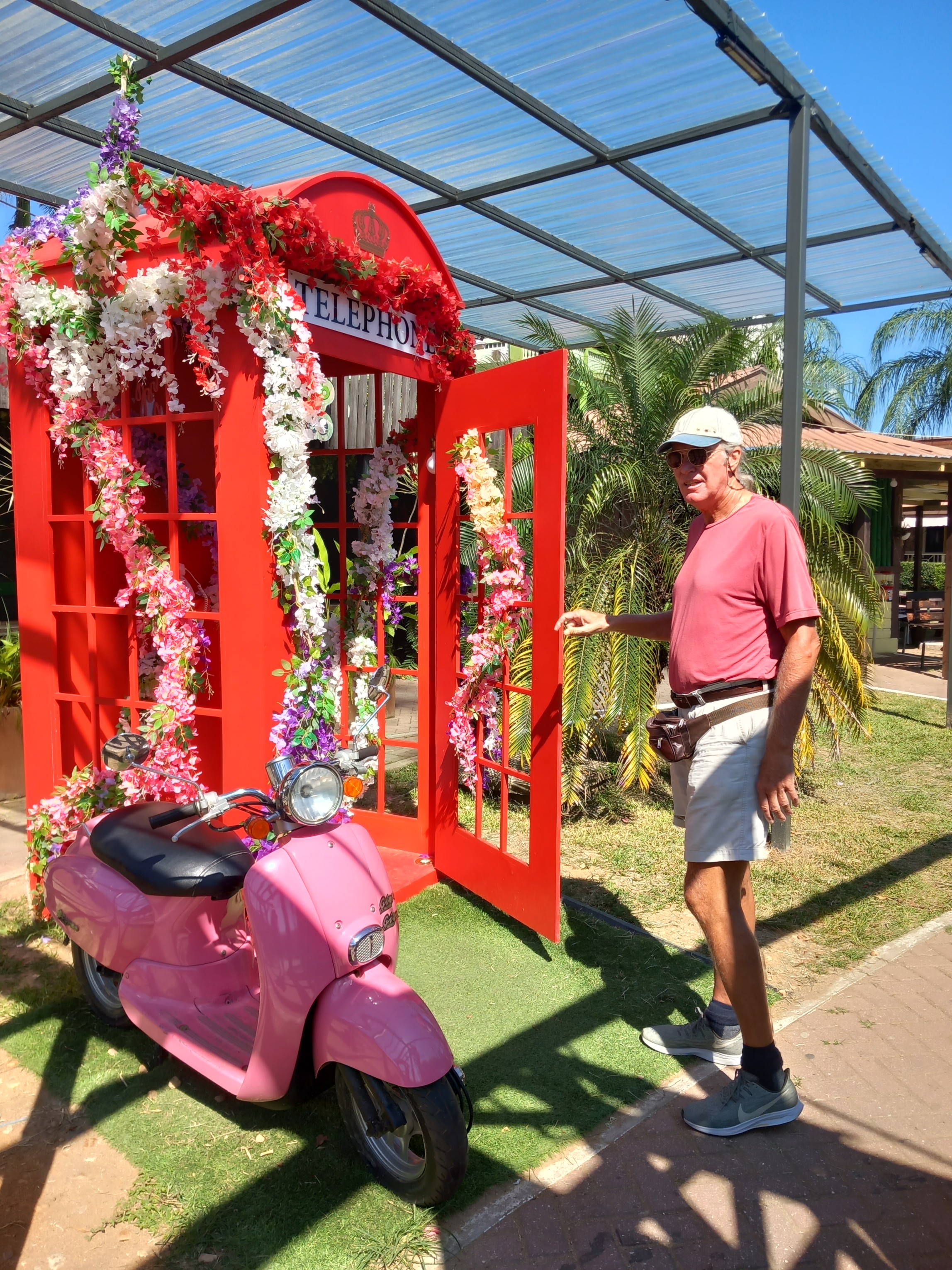
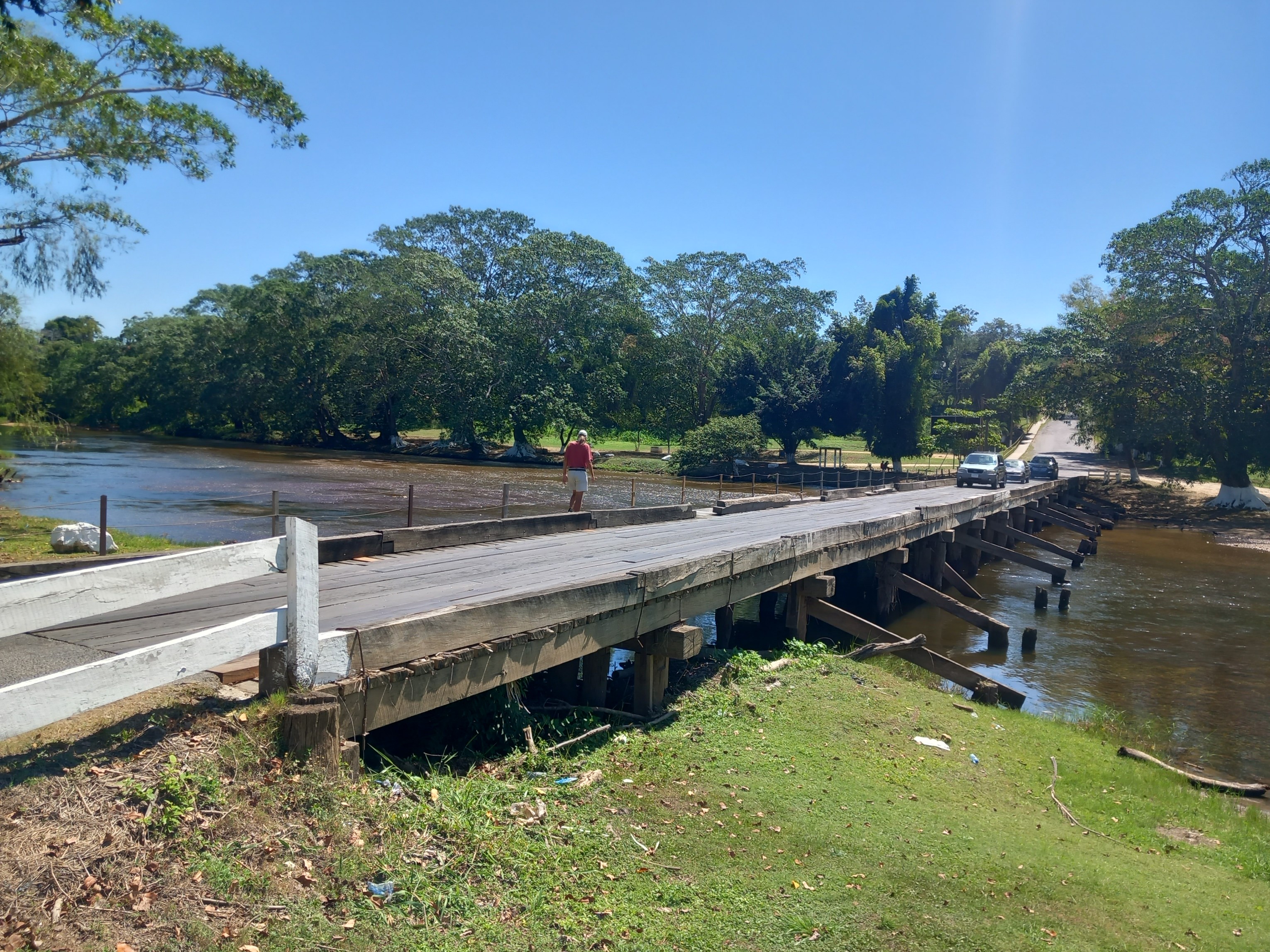
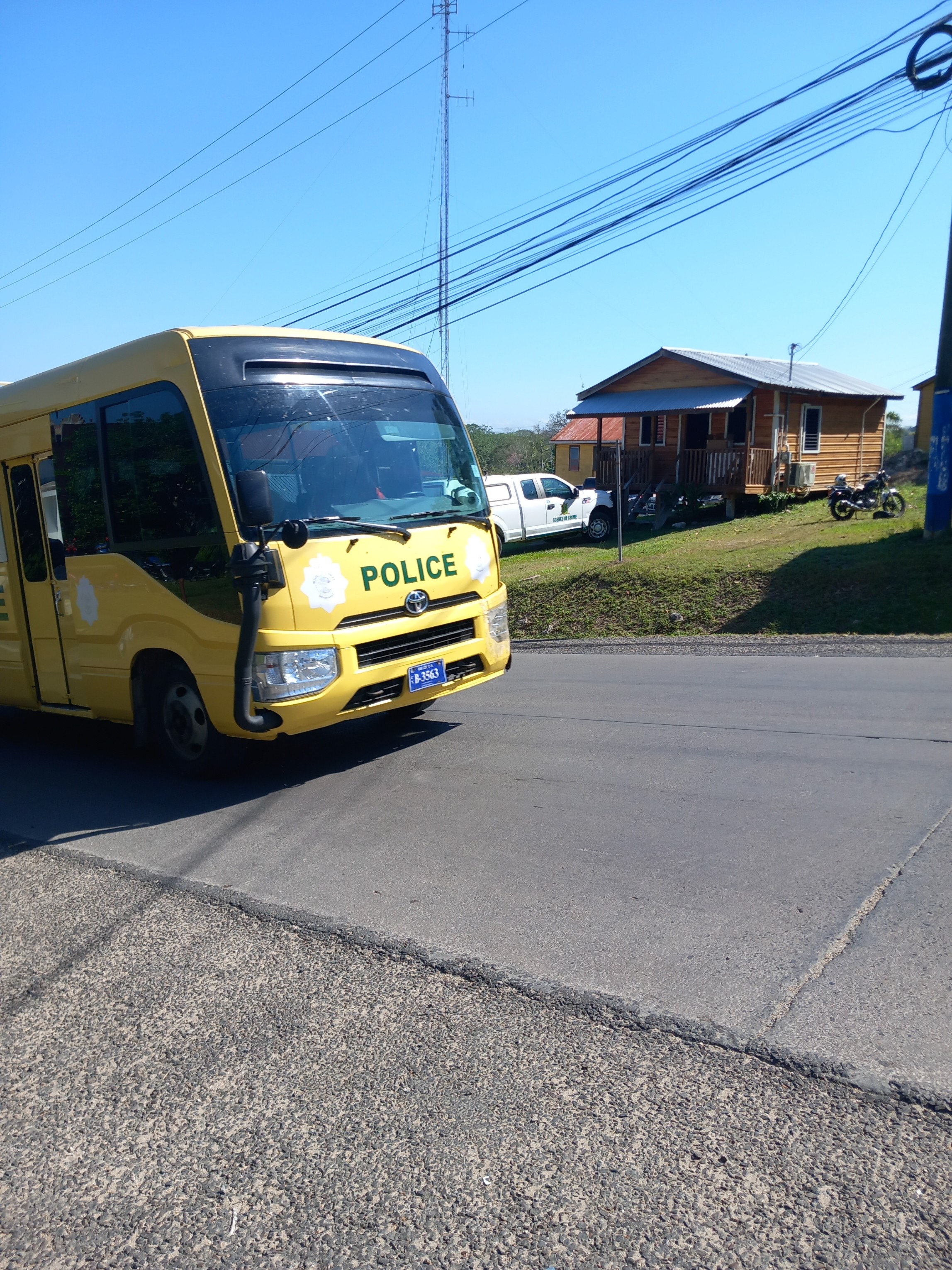
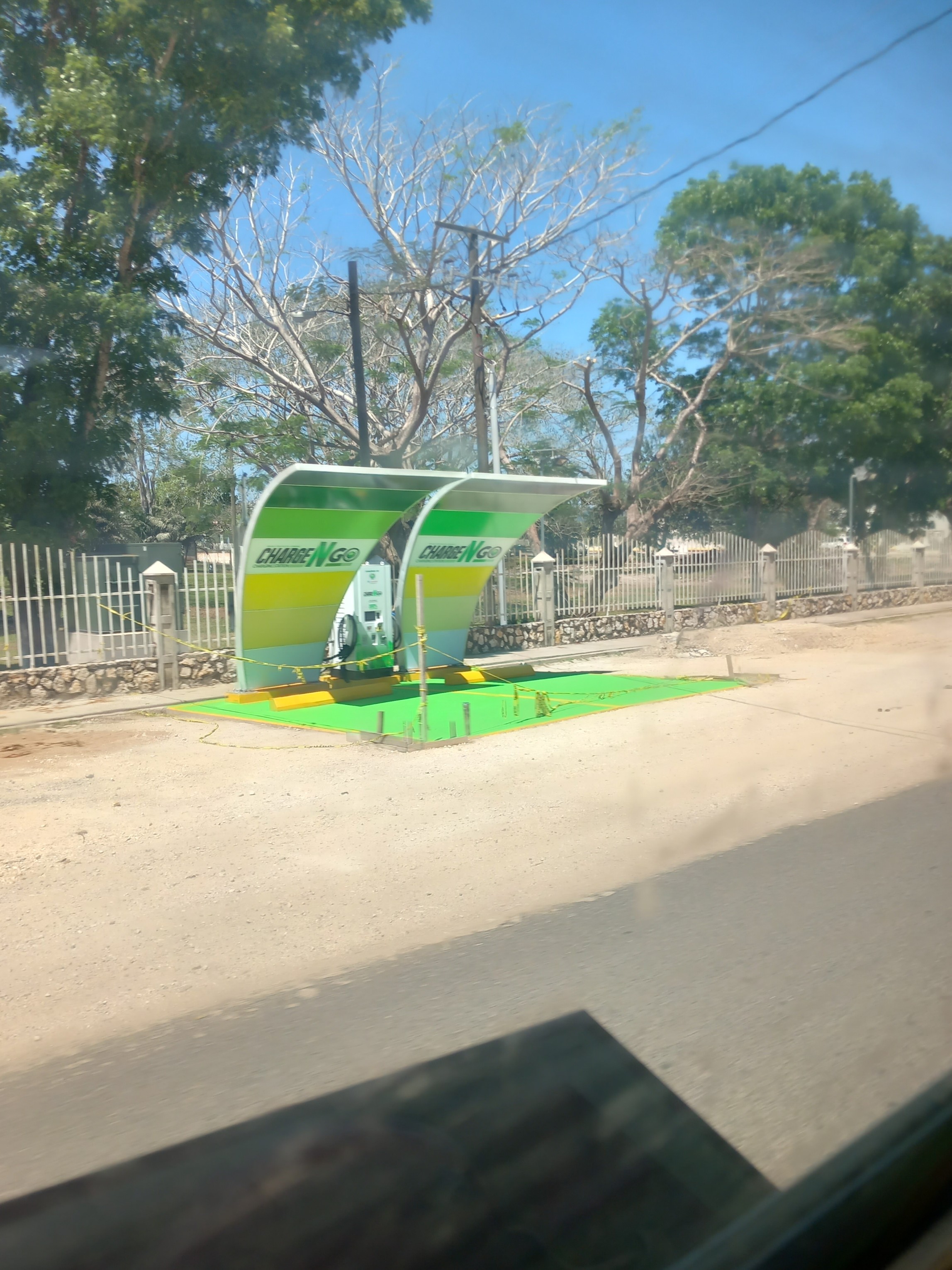
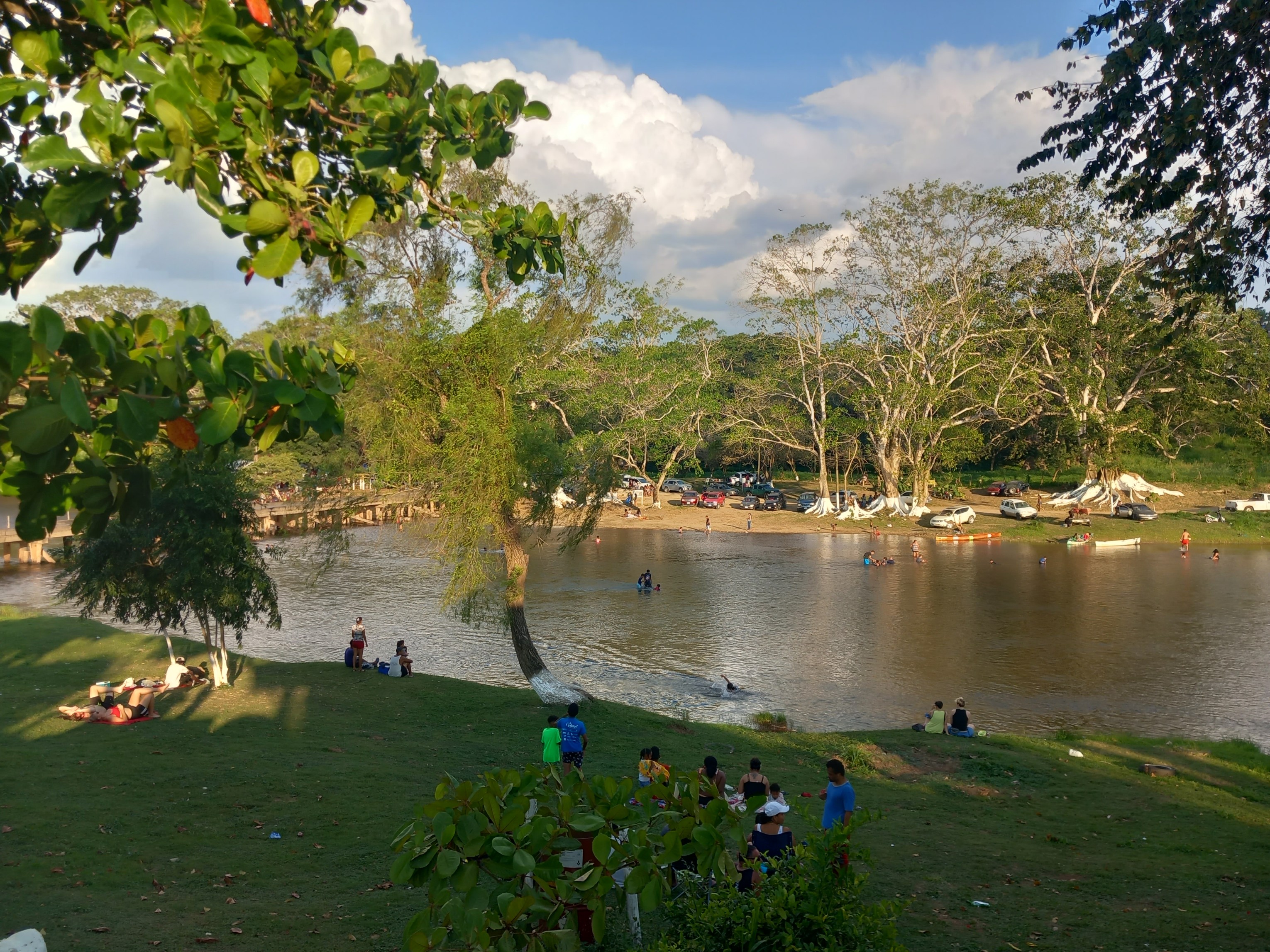
An unusual cloud formation around sunset.Another remnant from the colonial era – the phone box, that is!This wooden bridge is lower down the river from the metal bridge and enables the traffic coming into town as opposed to the higher bridge carrying traffic out of town.A new Police Van provides an unusual sight.We spent 5 days in this town and passed this charging point several times and did not see a single car being charged or in use around town.When you live miles from the coast and want to cool off at the weekend the local river is the place to go.A reminder of the Mayan predecessors in this area – we are close to the Guatemalan border.We are looking for the local Mennonite community and take a bus ride to Spanish Lookout.The local bus took us along a very bumpy track through all these villages and some very pretty country scenery.
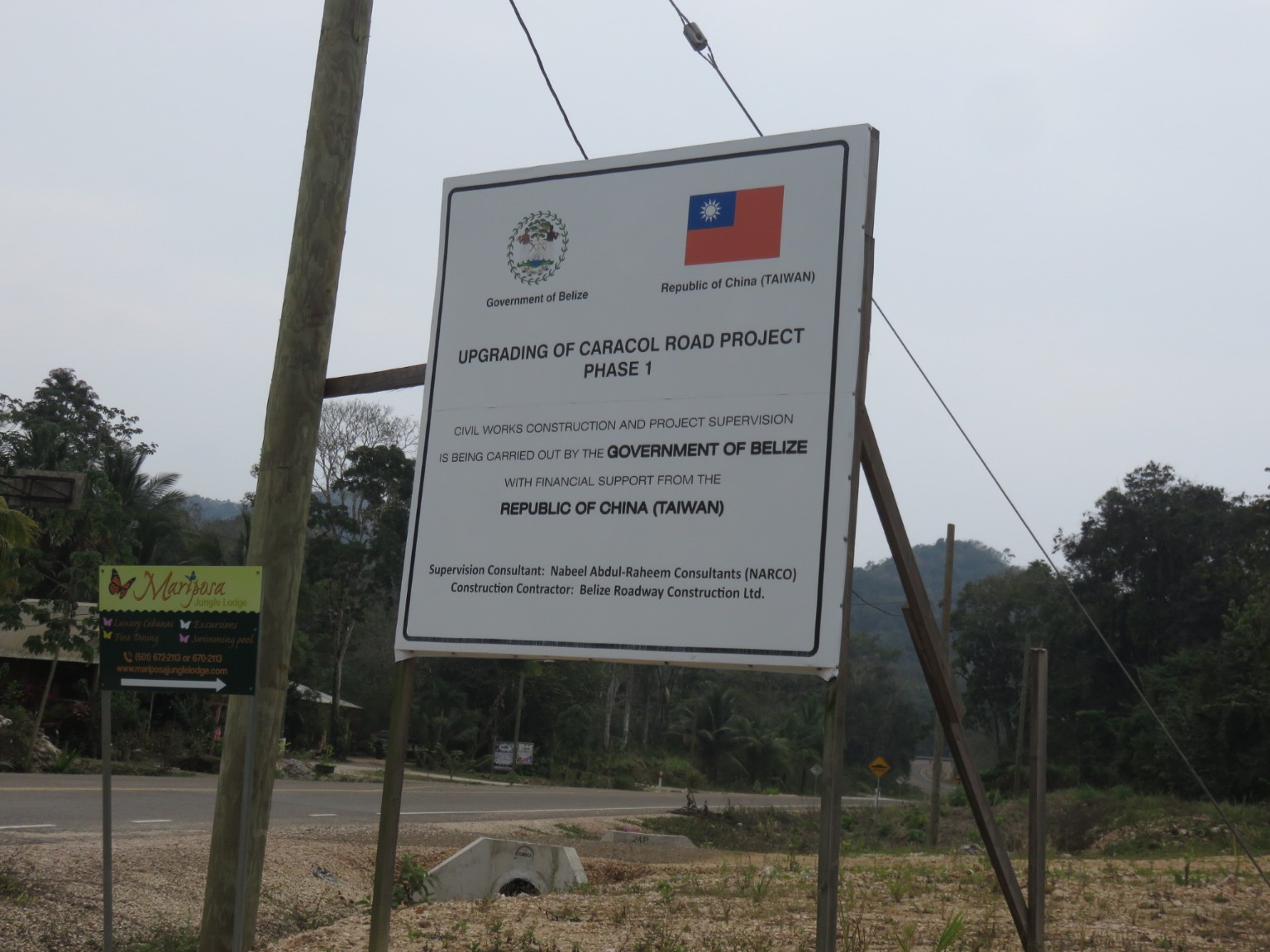
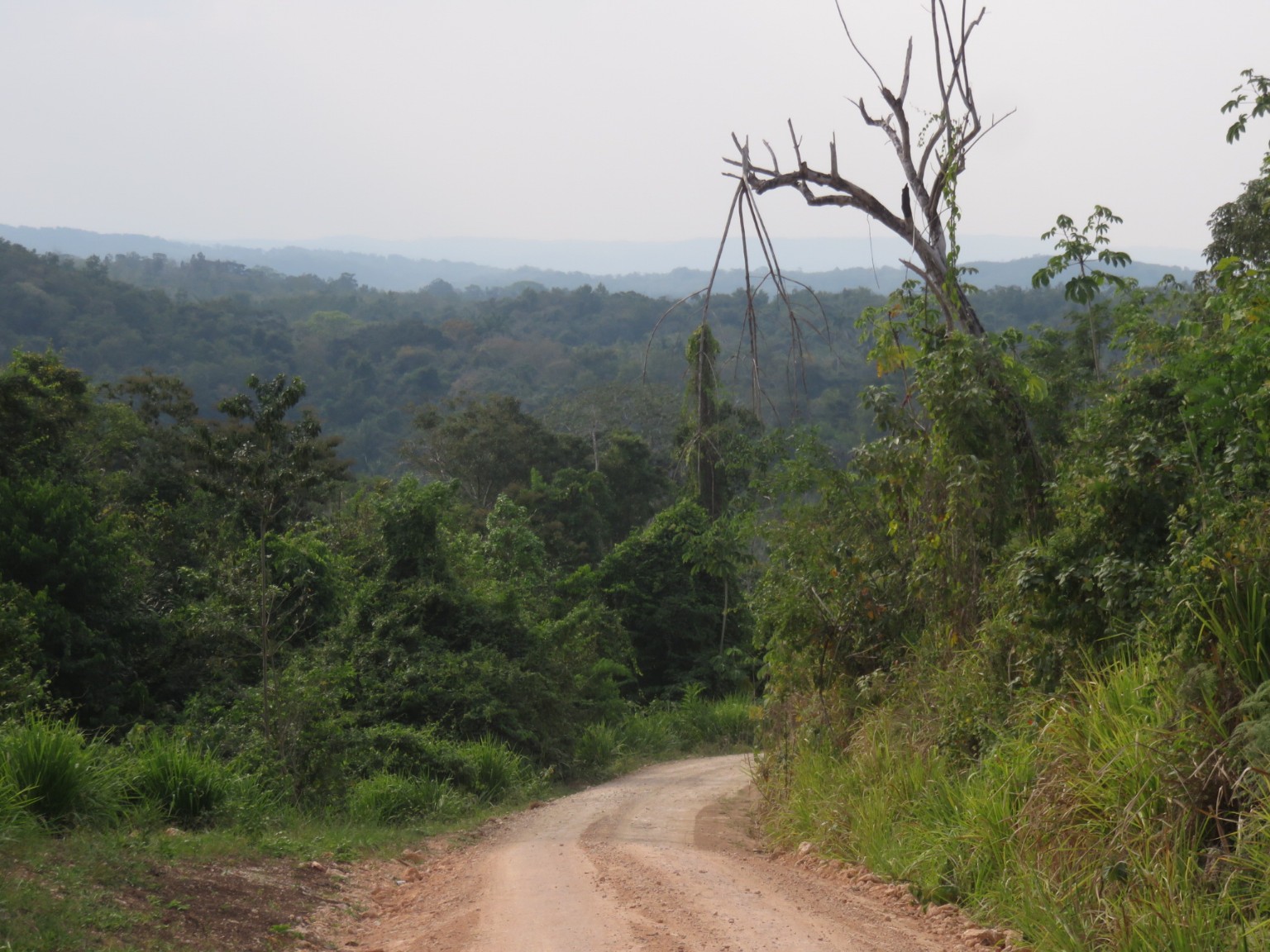
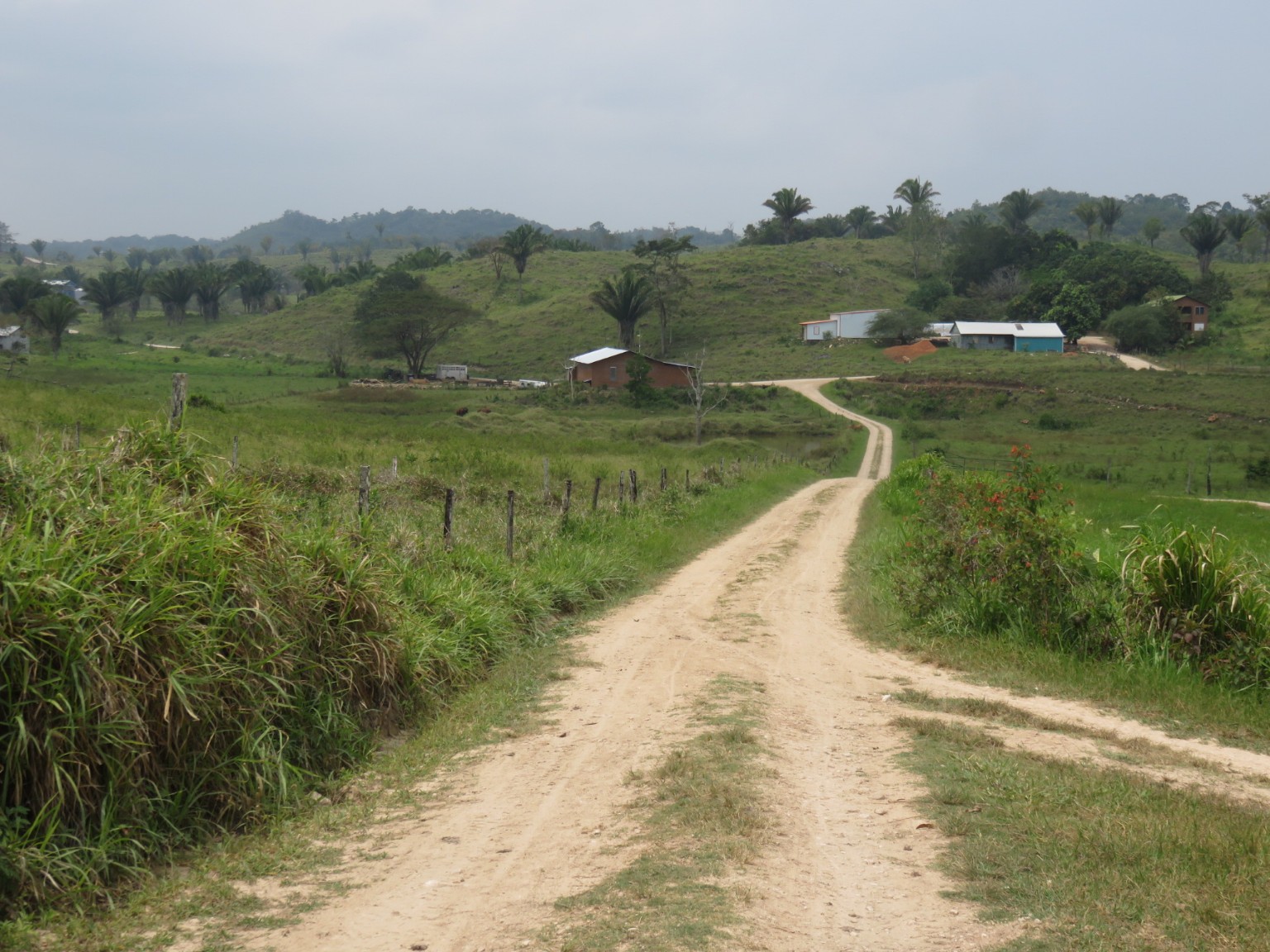
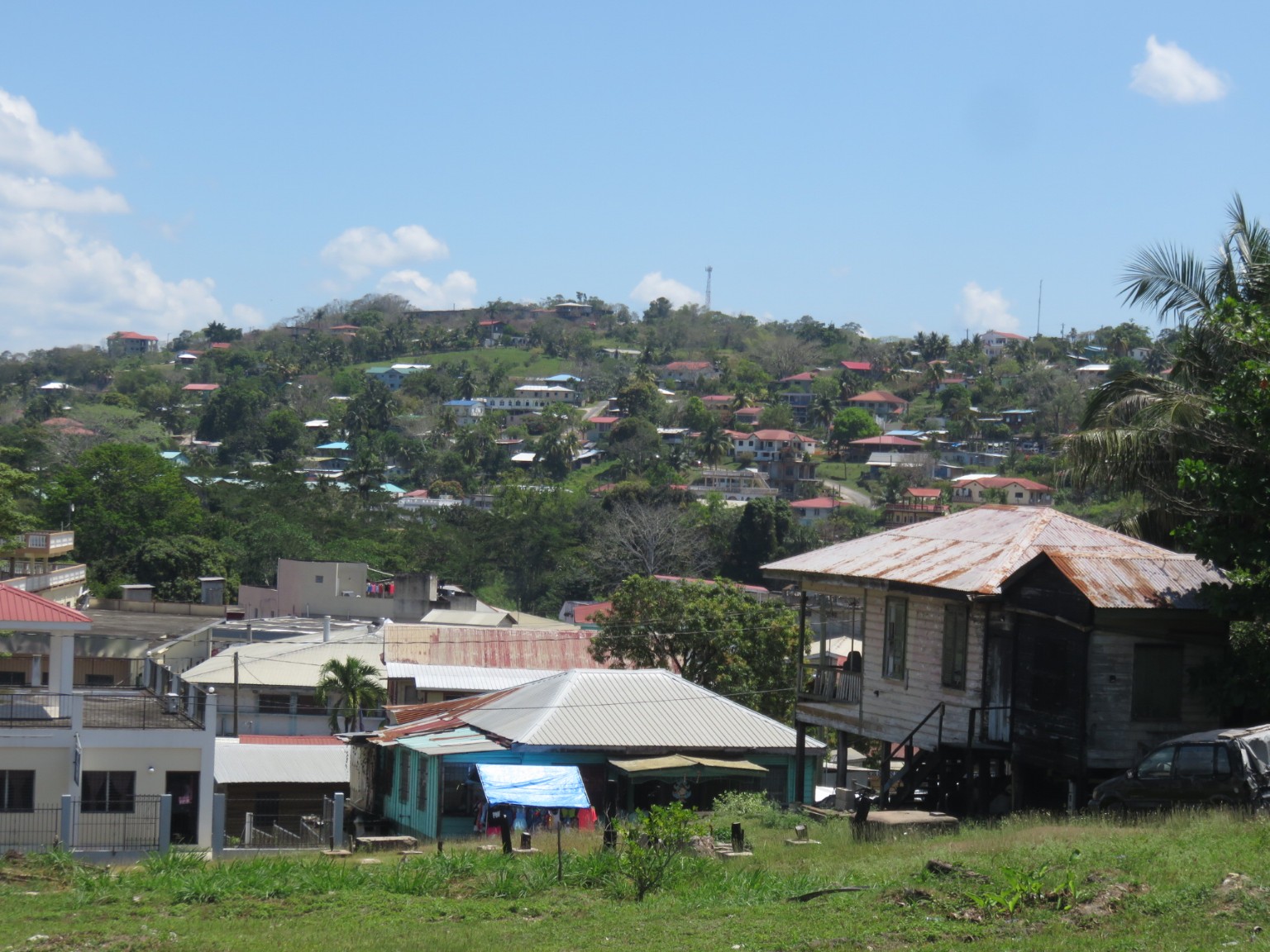
Spanish Lookout. This was the opposite of what we expected. We discover there are several Mennonite communities, however, this one is progressive and embraces most aspects of western capitalism and this is why their town looks like a thriving town in the mid west of America with the best road surface in the country. Here they have the dairies, silos for all the grain production and also a Volkswagen dealer. They are clearly very hard working and quite prosperous compared to other parts of the country. There is not much for visitors to see here including the traditional style of dress they are well known for because they have adopted western dress styles.We did find one couple with traditional dress. His wife was indoors at the supermarket checkout packing the groceries.We were disappointed not to find a proper Mennonite community living by traditional means so we set off on another day with our bikes to explore further although it did require a 30+ mile (50 kilometres) round trip to do so. There were not any buses on this route or signs to point the way.The Chinese have been here with the road surface improvements and our route is through a very picturesque rural area which is, in our view more pretty than the Hummingbird Highway which compensated for our earlier disappointment.
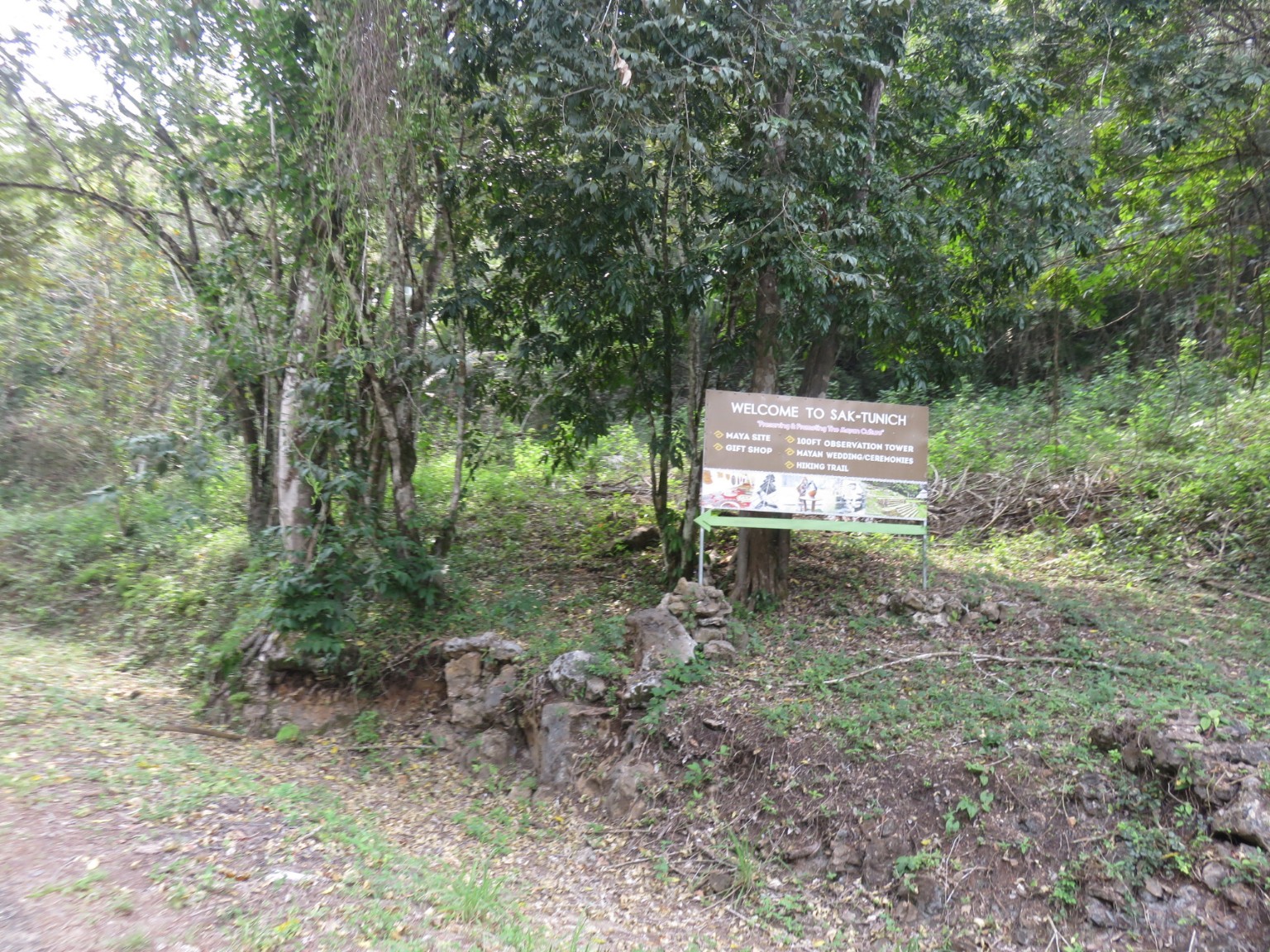
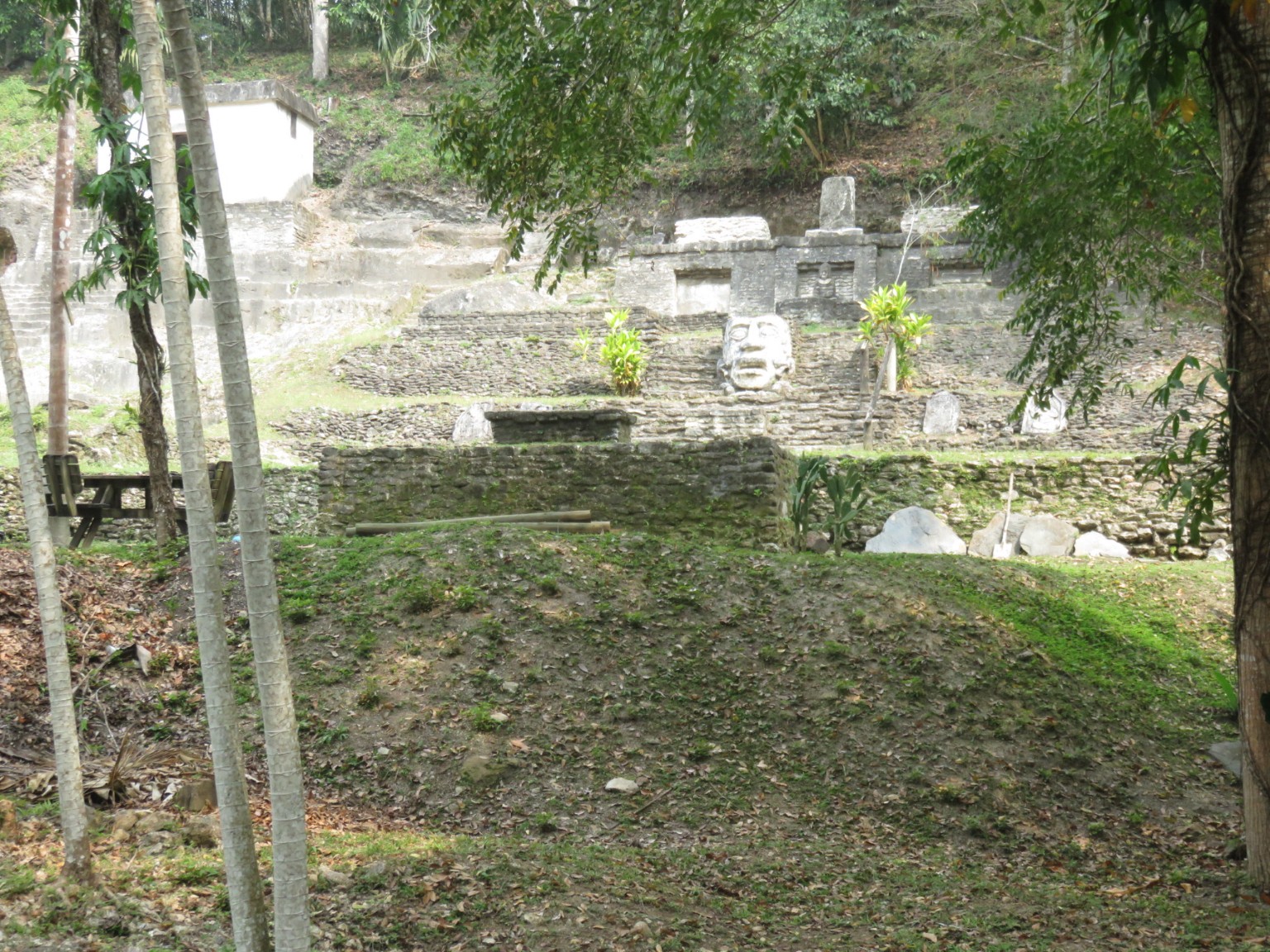
Mayan ruins as seen from the roadside.
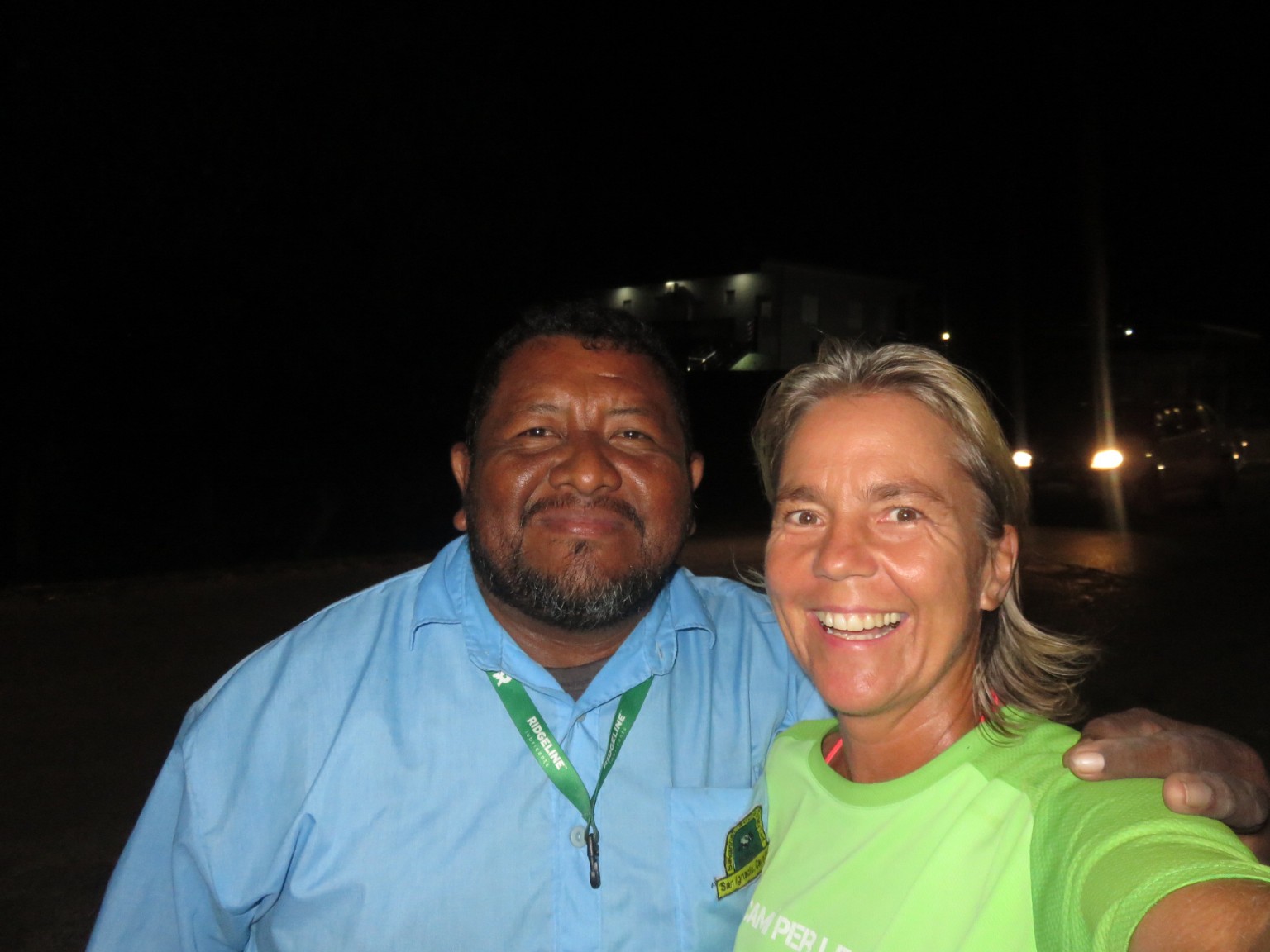
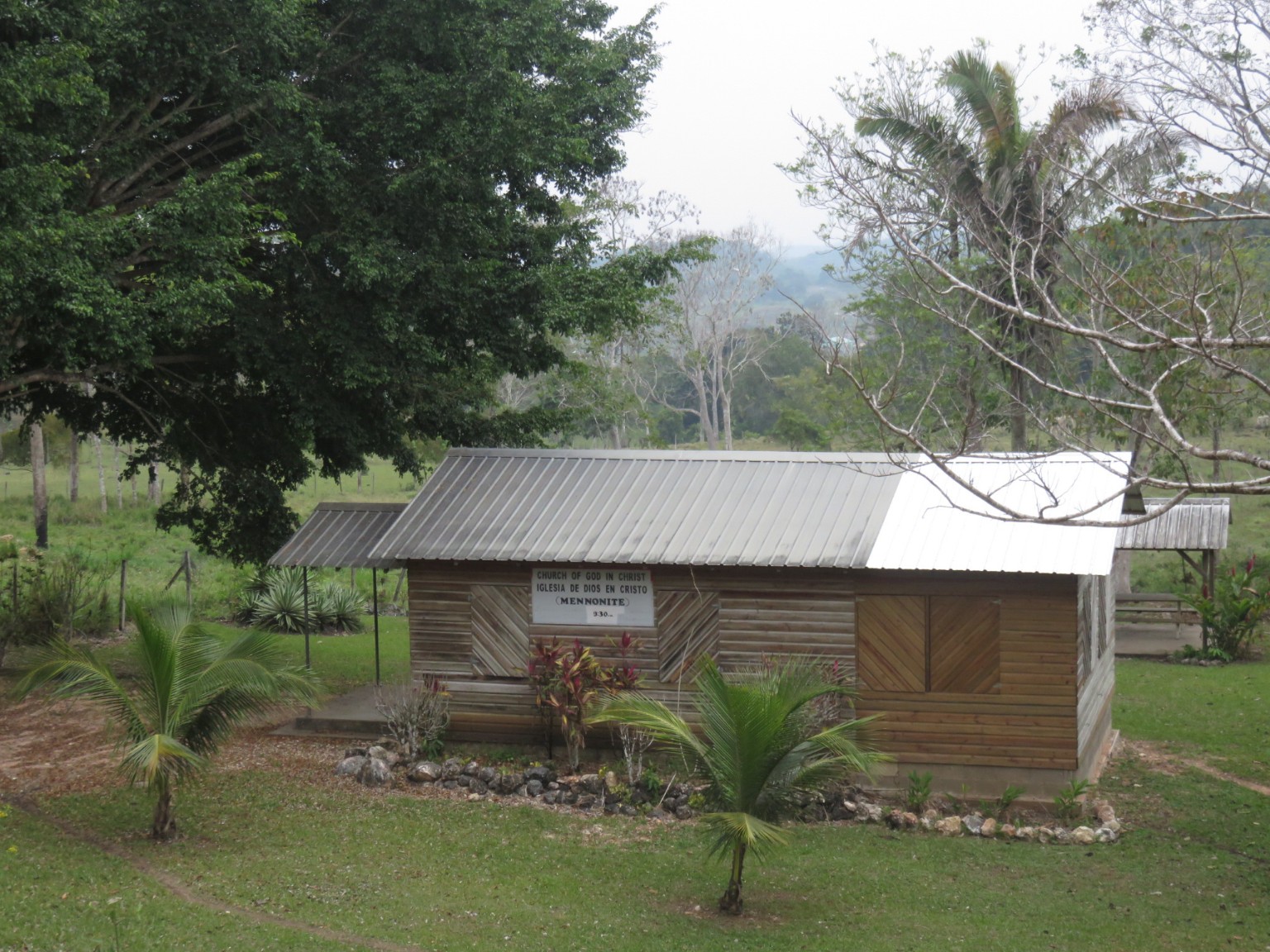
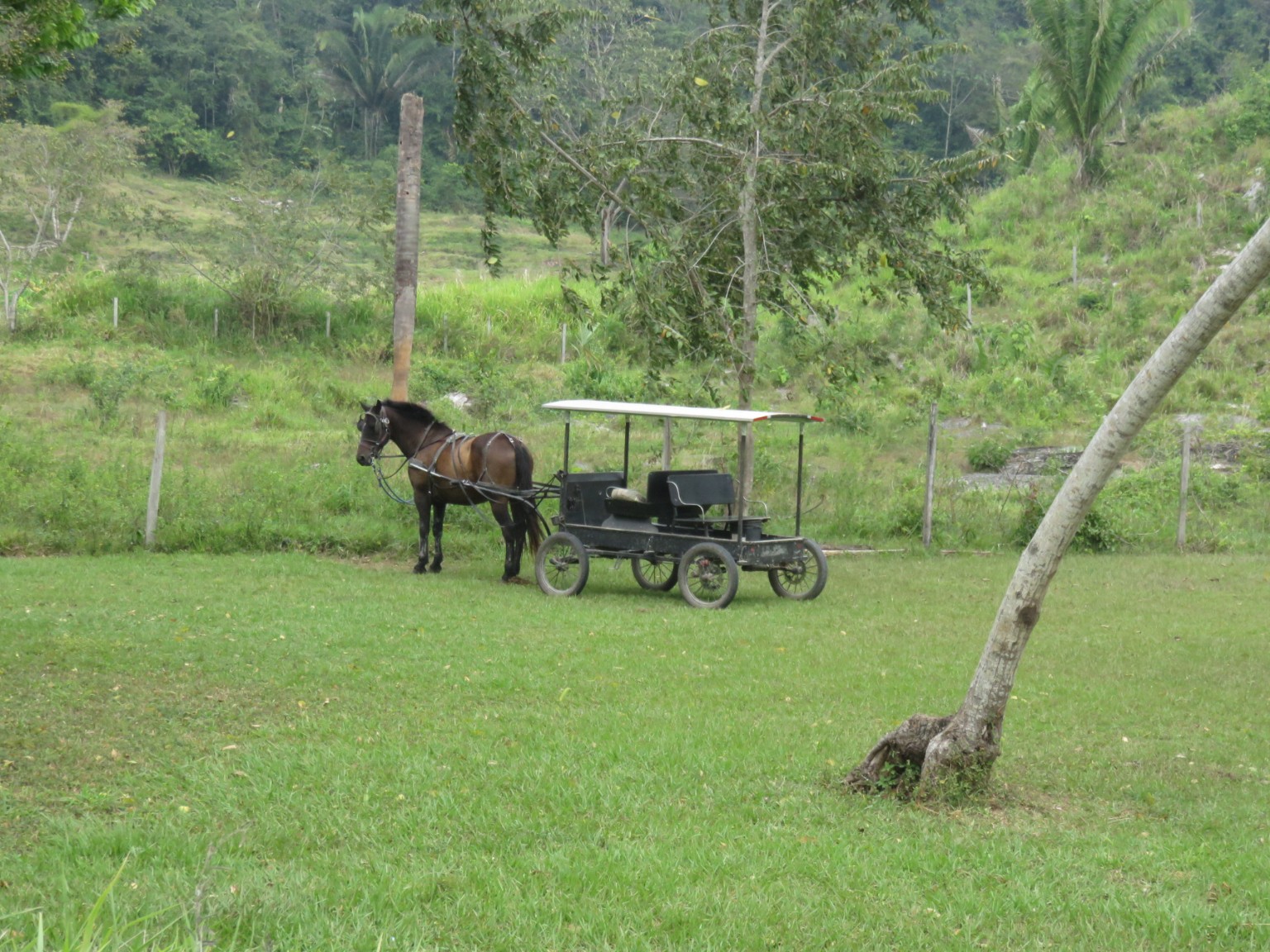
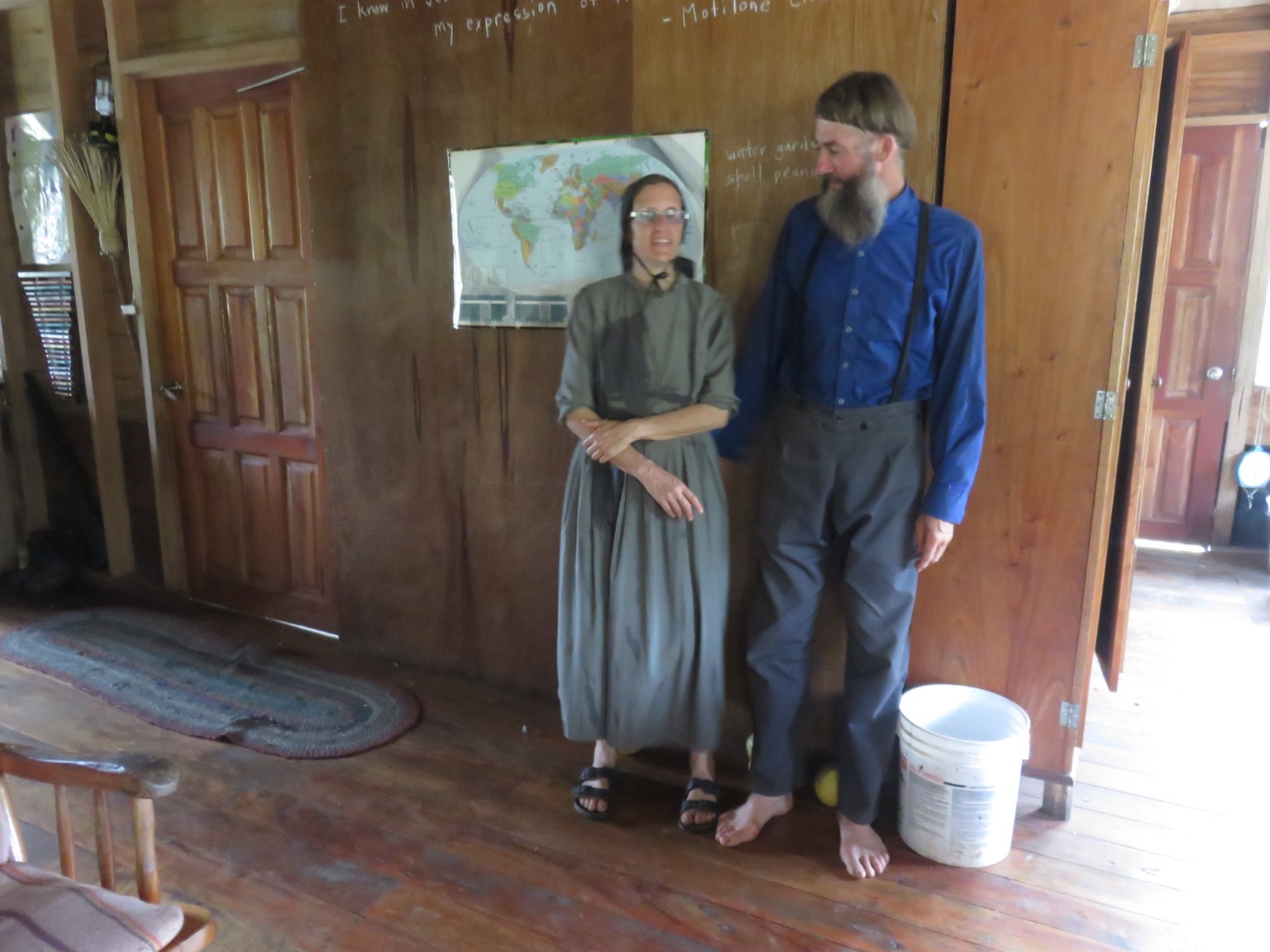
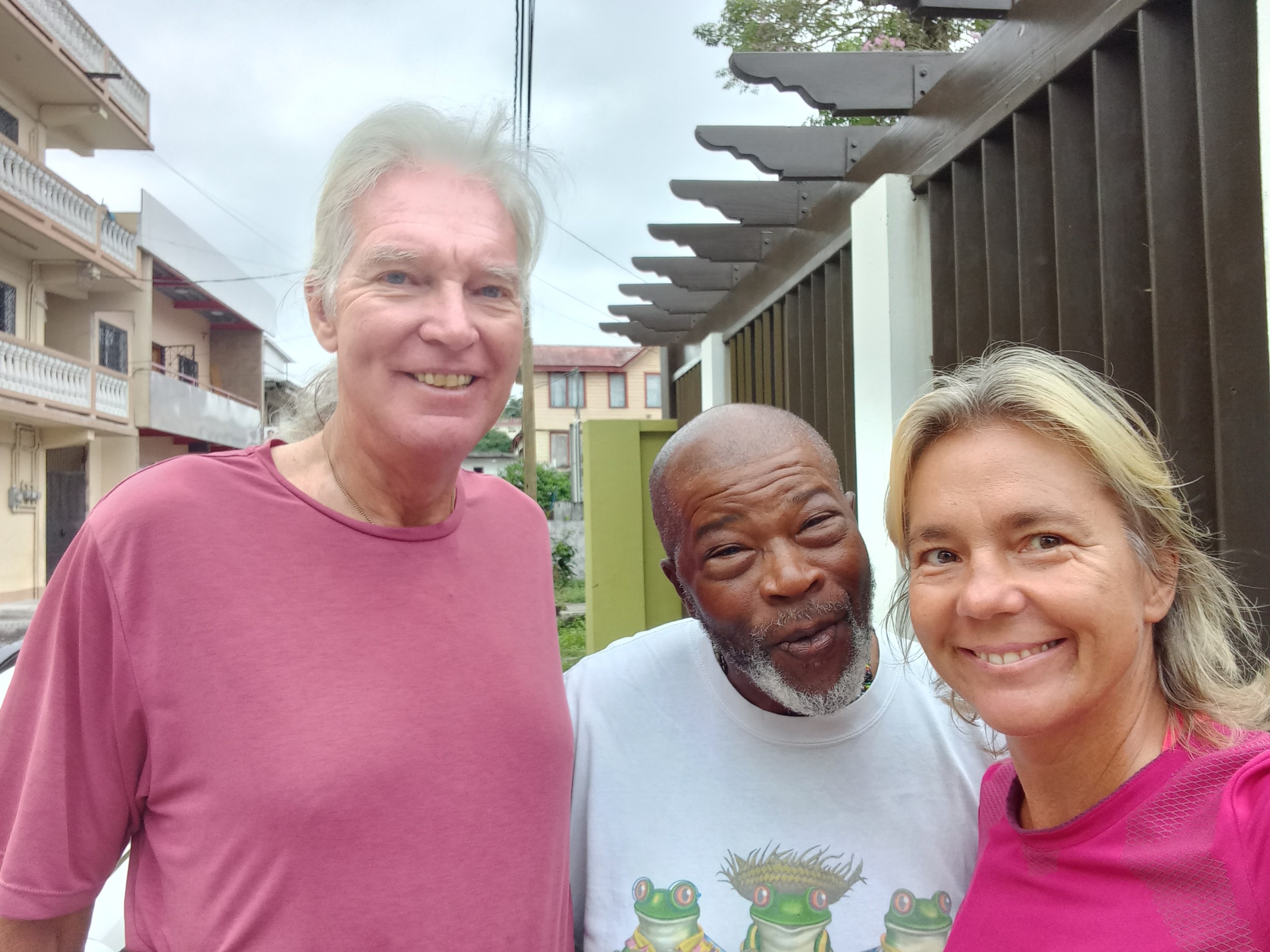
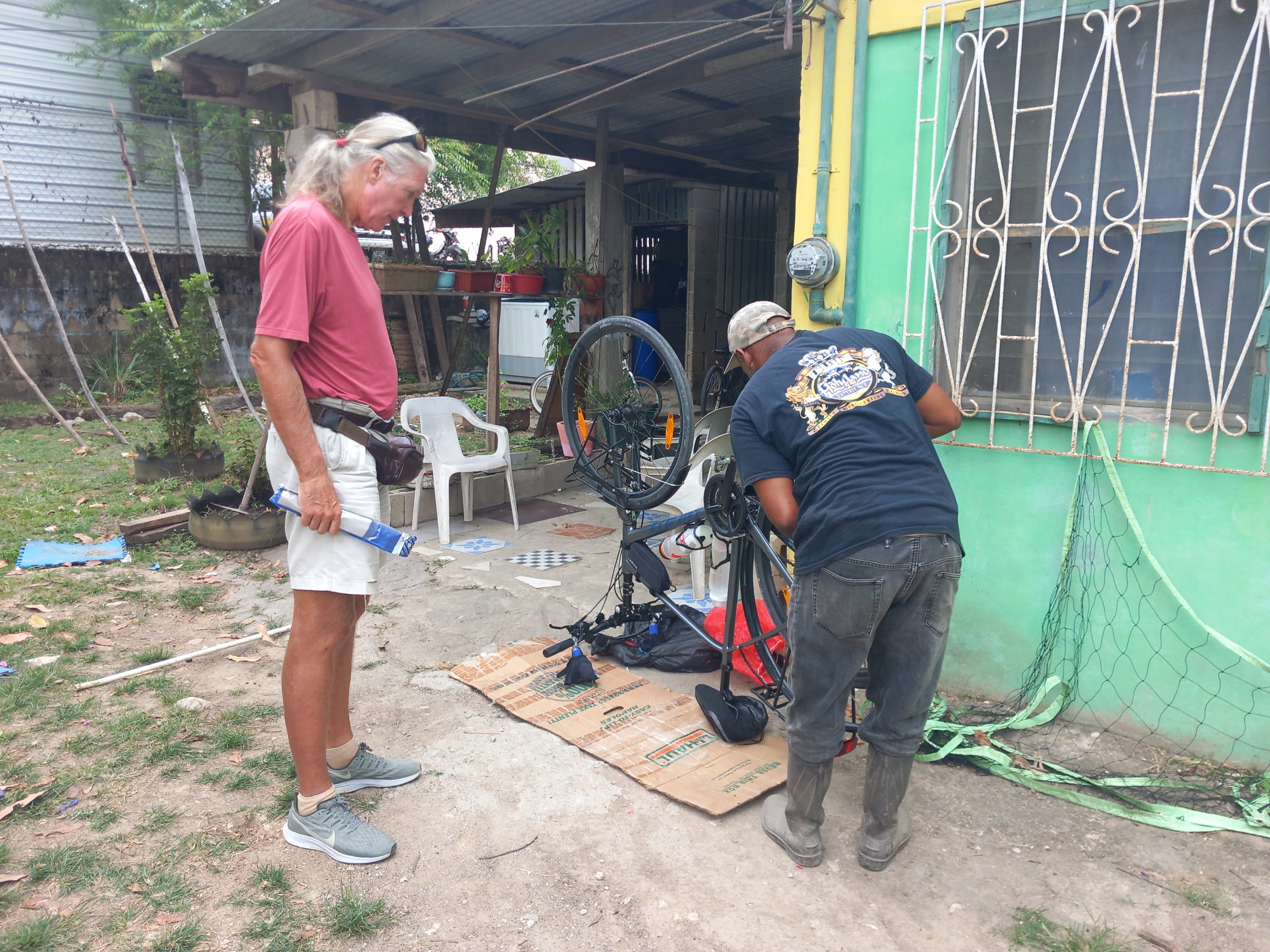
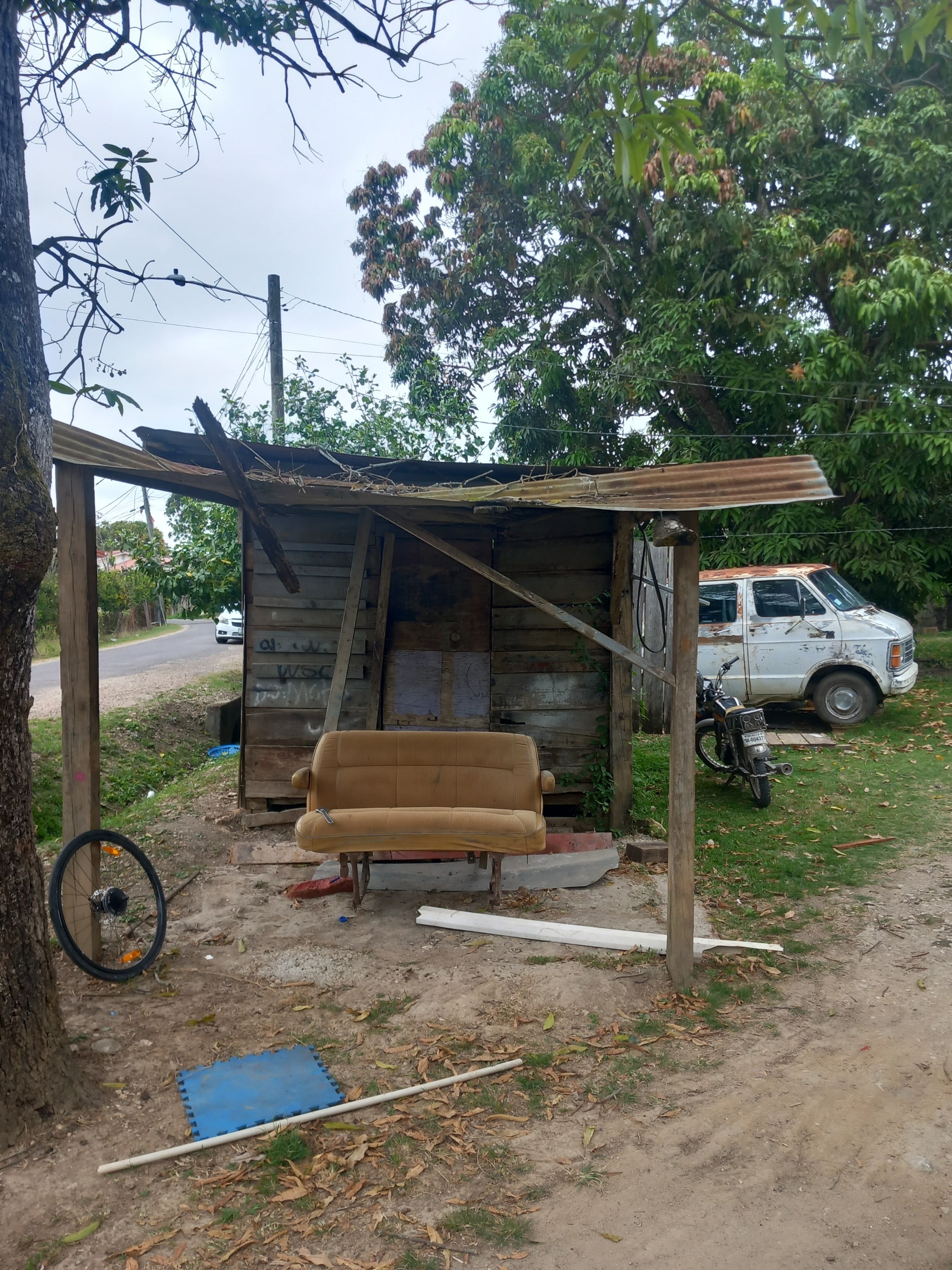
At this point we are lost and our only Mennonite sighting has been a horse and cart hitched to a fence where there is a Sunday service in progress. Not wanting to intrude to ask directions we see a car at this junction with a couple of traditionally dressed Mennonites and their 8 children who invited us to join them at the meeting house where the whole community of 40 – 50 people of all ages spanning 8 families were having lunch. This is their meeting house.This is the only photo we took of the community meeting because we thought it would be too intrusive bearing in mind they have rejected modern ways and that includes cameras. When we arrived the children of all ages were playing a game outside on this grass area in their bare feet. The moment we arrived with the couple who we followed in their car, they were visiting family and had driven from Canada, the couple below came and introduced themselves and became our hosts for the next 3 hours. We could write a book about the various discussions we had with many people there because they were as intrigued with us as we were with them; in short it was a one off experience that could not be bought through a tour operator. When the lunch gathering dispersed this couple invited us back to their home and we learned more about their lifestyle and promised to keep in touch; hopefully we can remember how to write letters and post them overseas because they don’t do text, emails or Whatsapp. Our spirits were lifted enormously having had this experience, however, we were soon brought down to earth because on the return trip we discovered that David’s bike had 3 broken spokes in the rear wheel – something we had been concerned about since we had bought these bikes as we are expecting them to do something for which they are not designed. This character is a local Traffic Warden who we had met the first day we arrived and kept on bumping into. His picture is included because he recommended his cousin who lived the other side of the river and was the only one in town who does bicycle repairs.Another bicycle mechanic who has saved our trip from an early finish worked for an hour to replace the broken spokes – thankfully we had taken the precaution of buying spares when the previous bike had a similar malfunction because he didn’t have any to supply (we interrupted him working as a gardener for someone because cycling is not so popular here given the hilly terrain).Not the traditional layout of a bicycle man’s repair shop – all his tools were in the shed behind the couch.We are still processing the events of the past 24 hours as we wait for the next leg of our journey to begin; it should be a bus out of here to avoid another stretch of dangerous road and drivers.
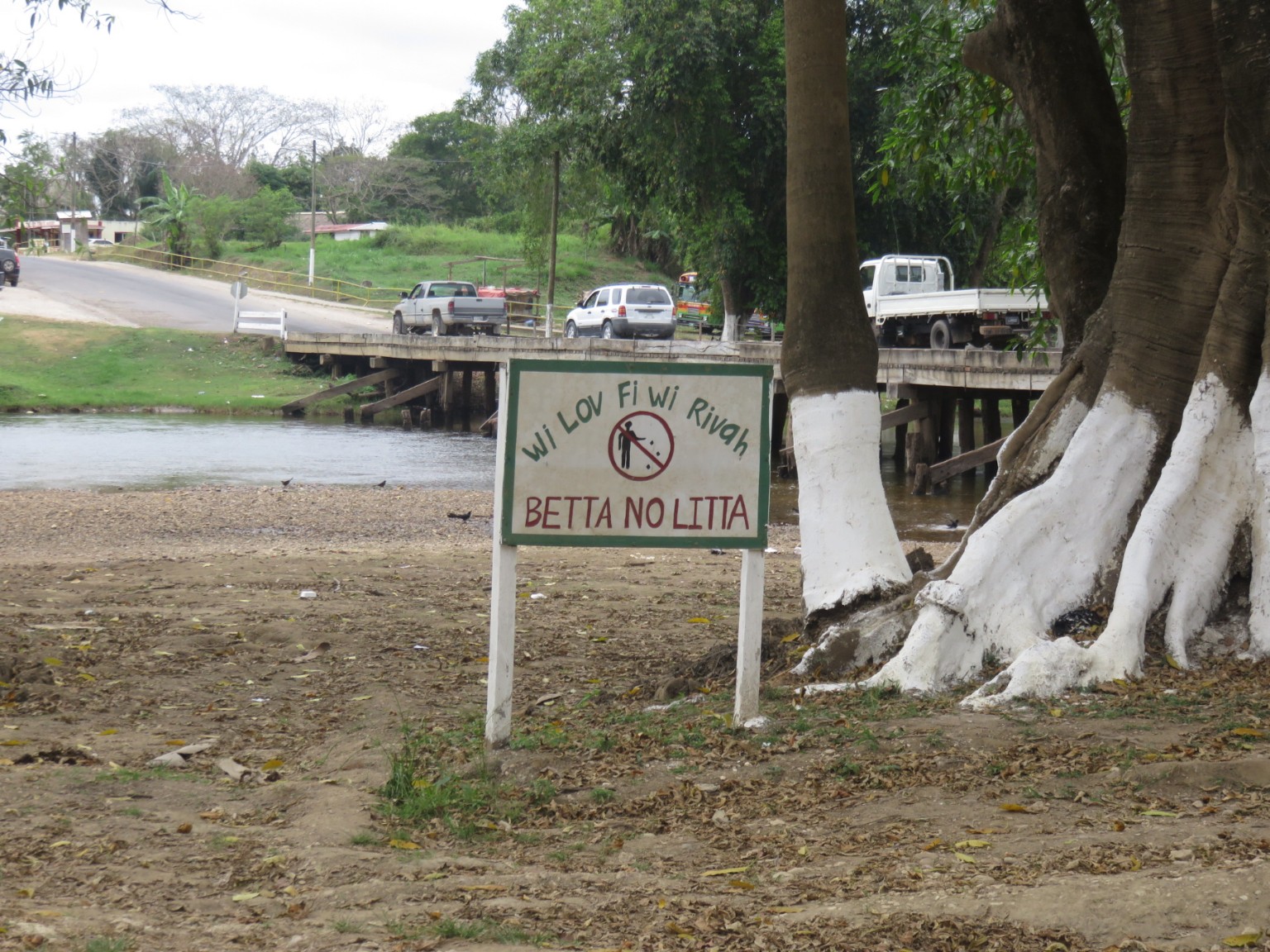
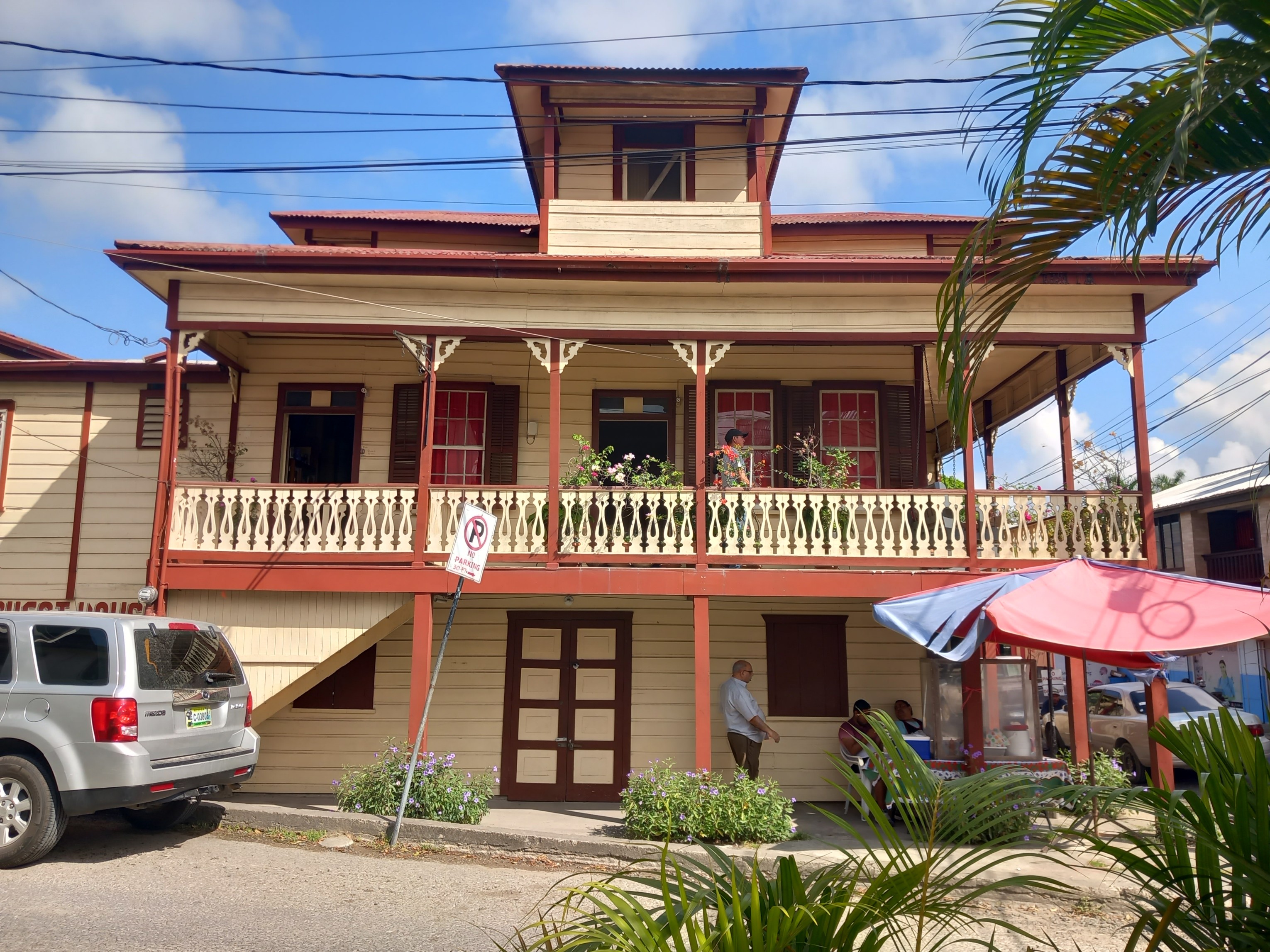
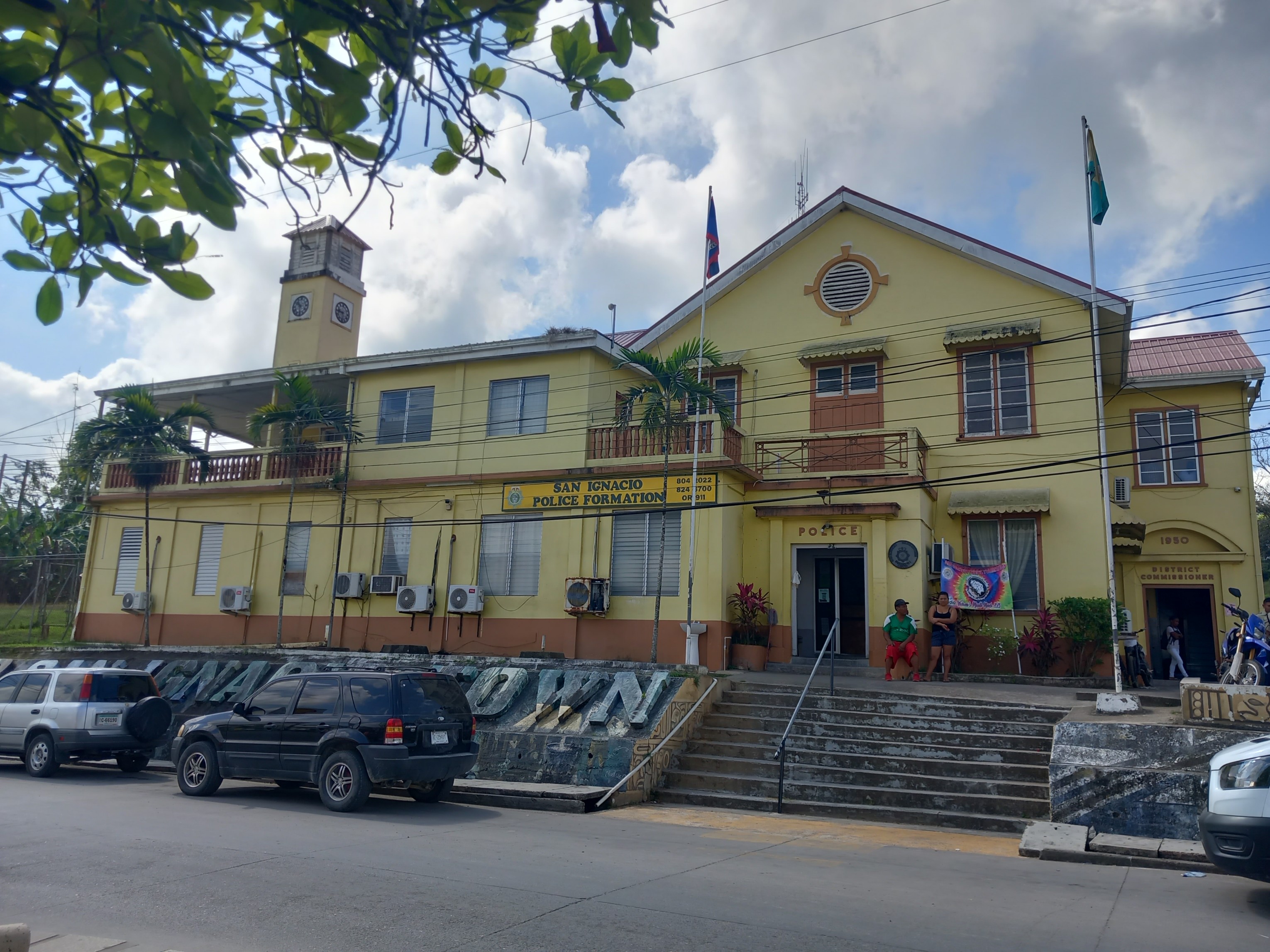
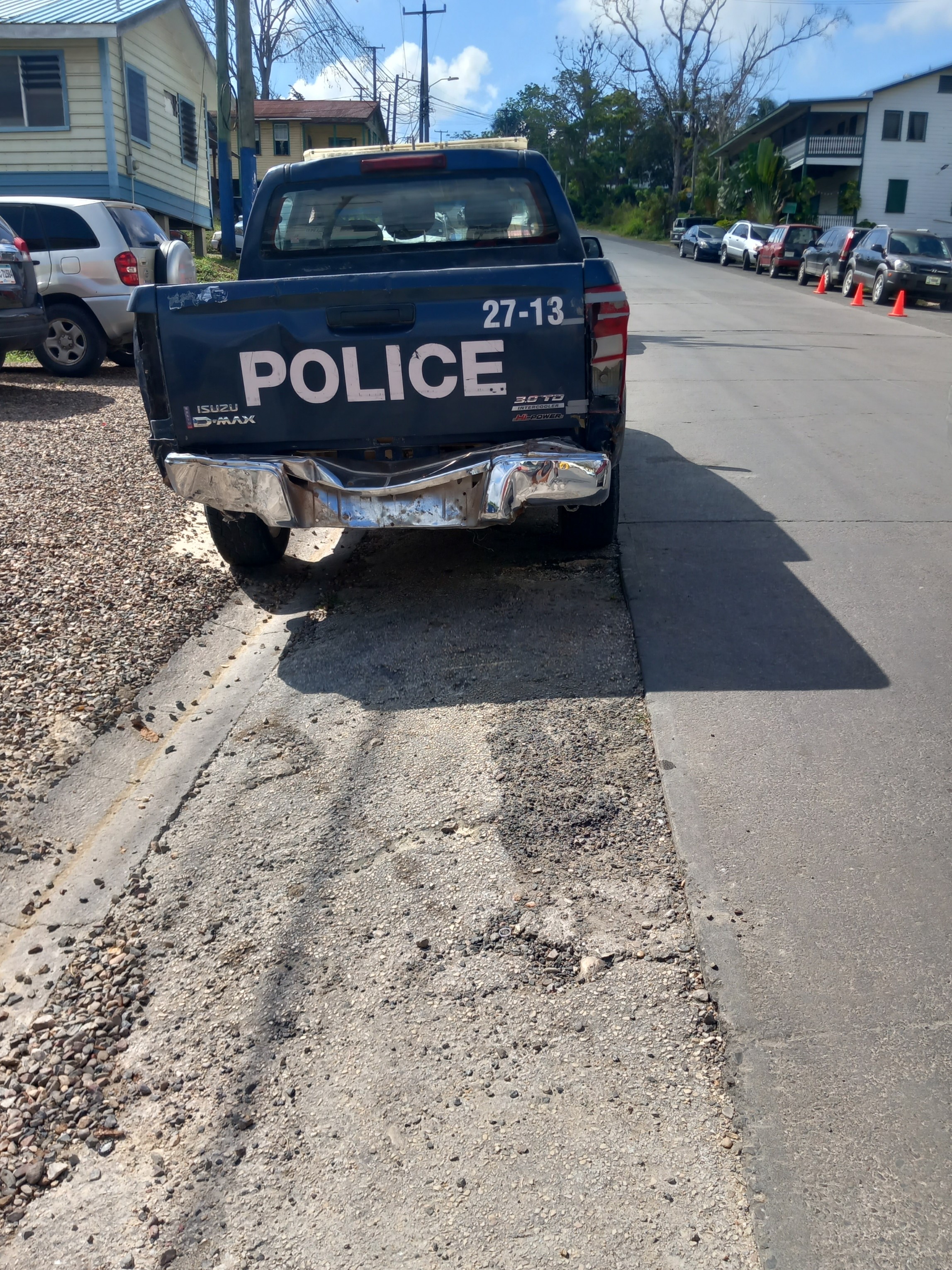
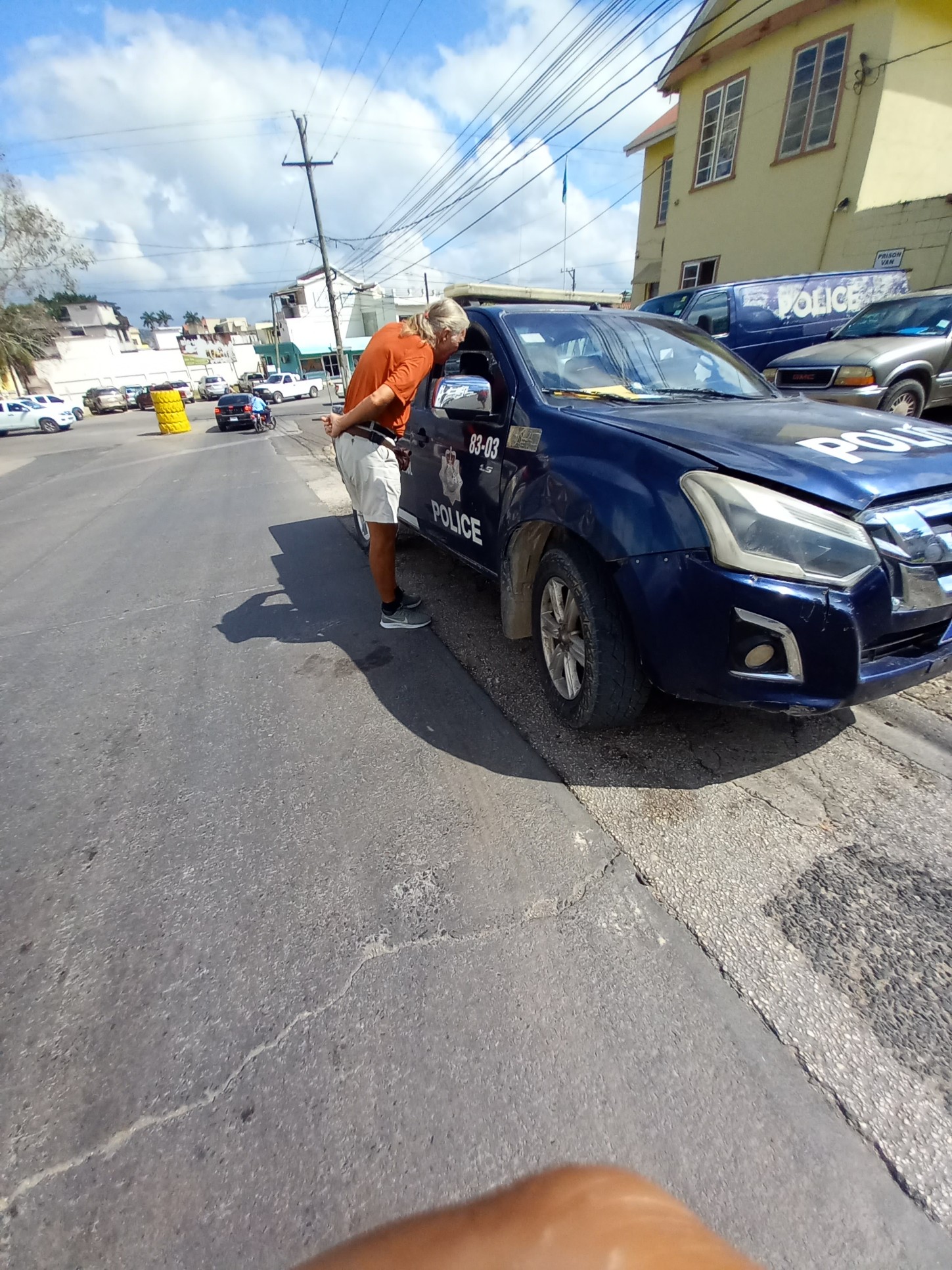
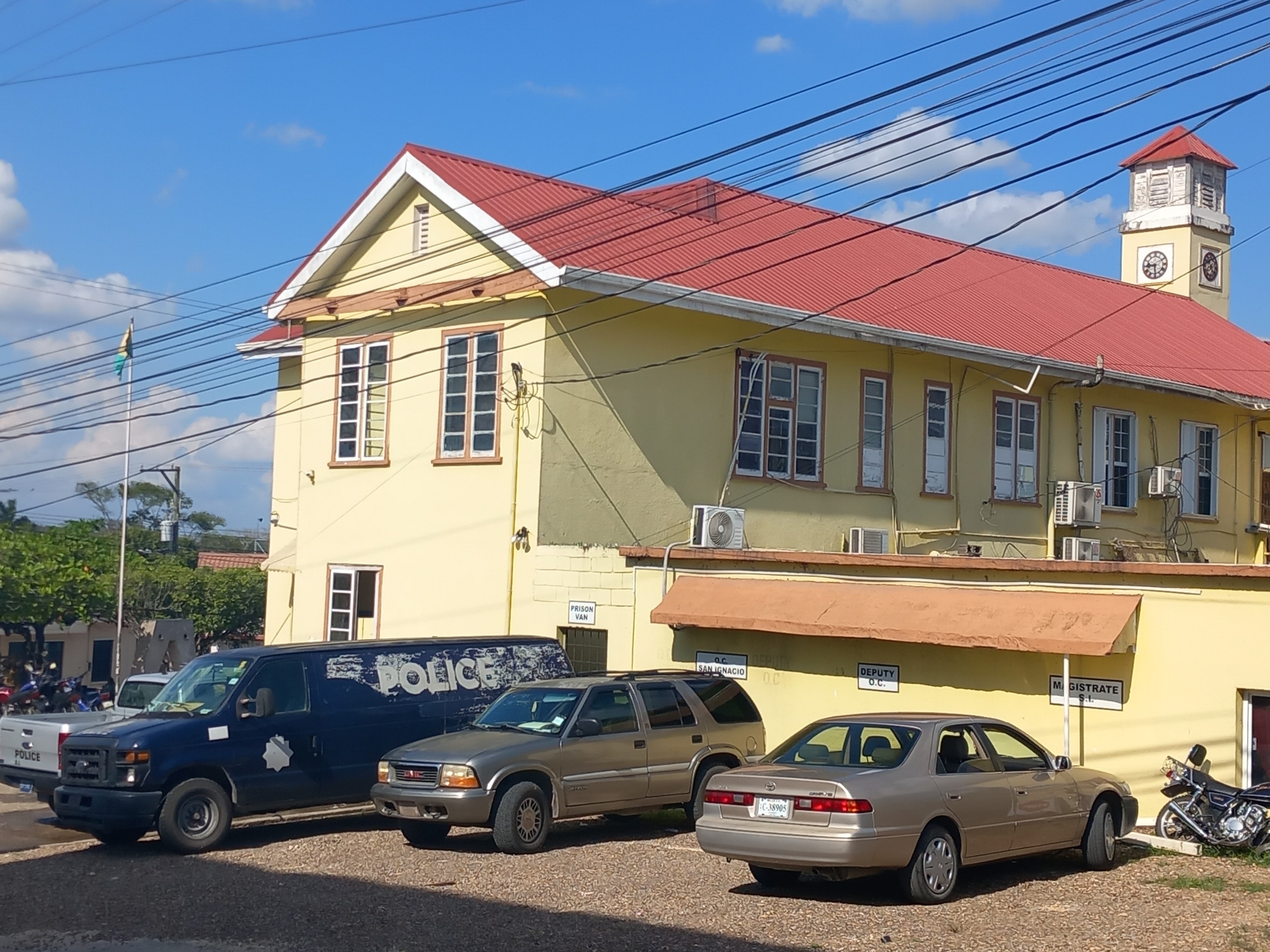
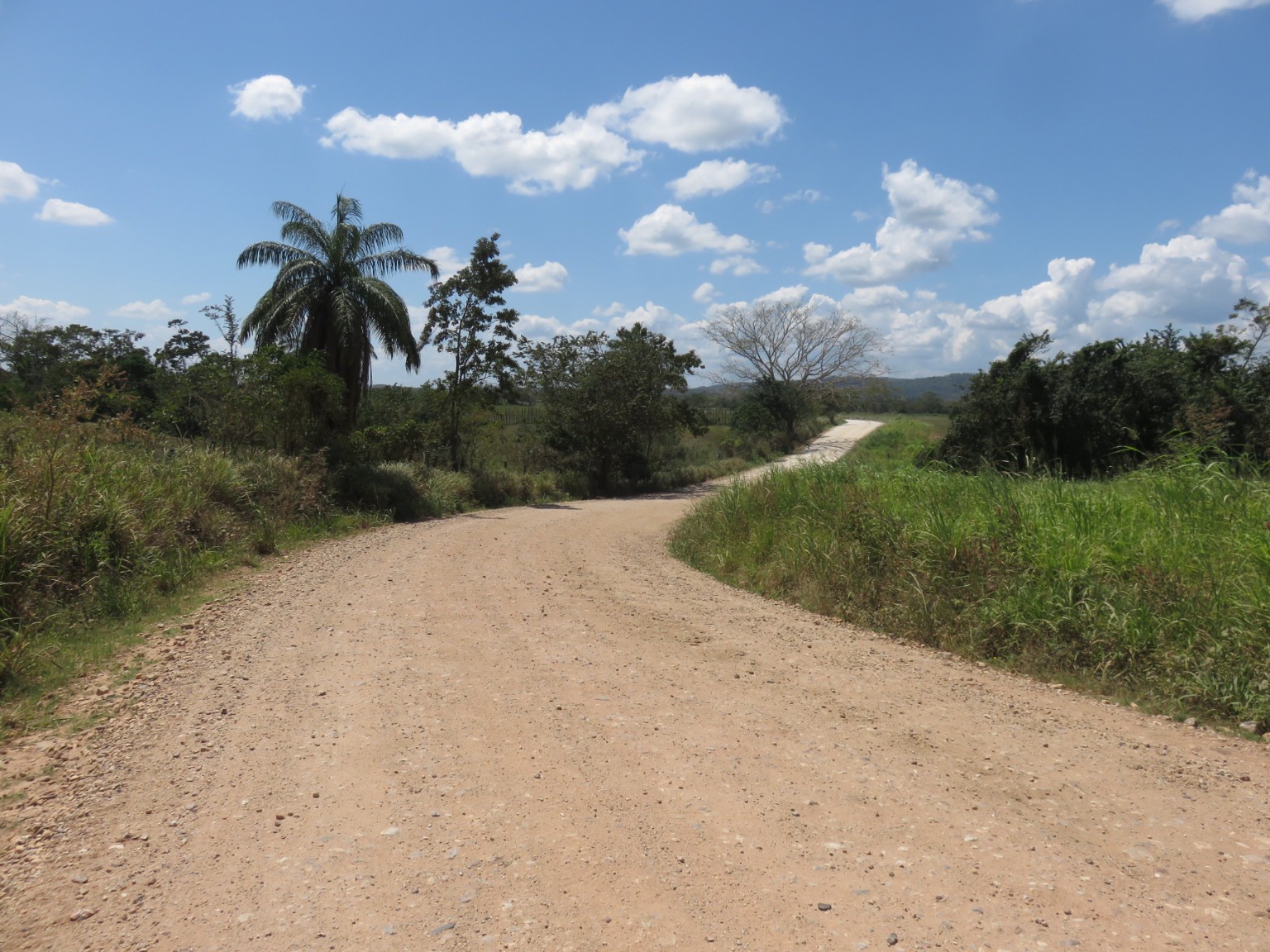
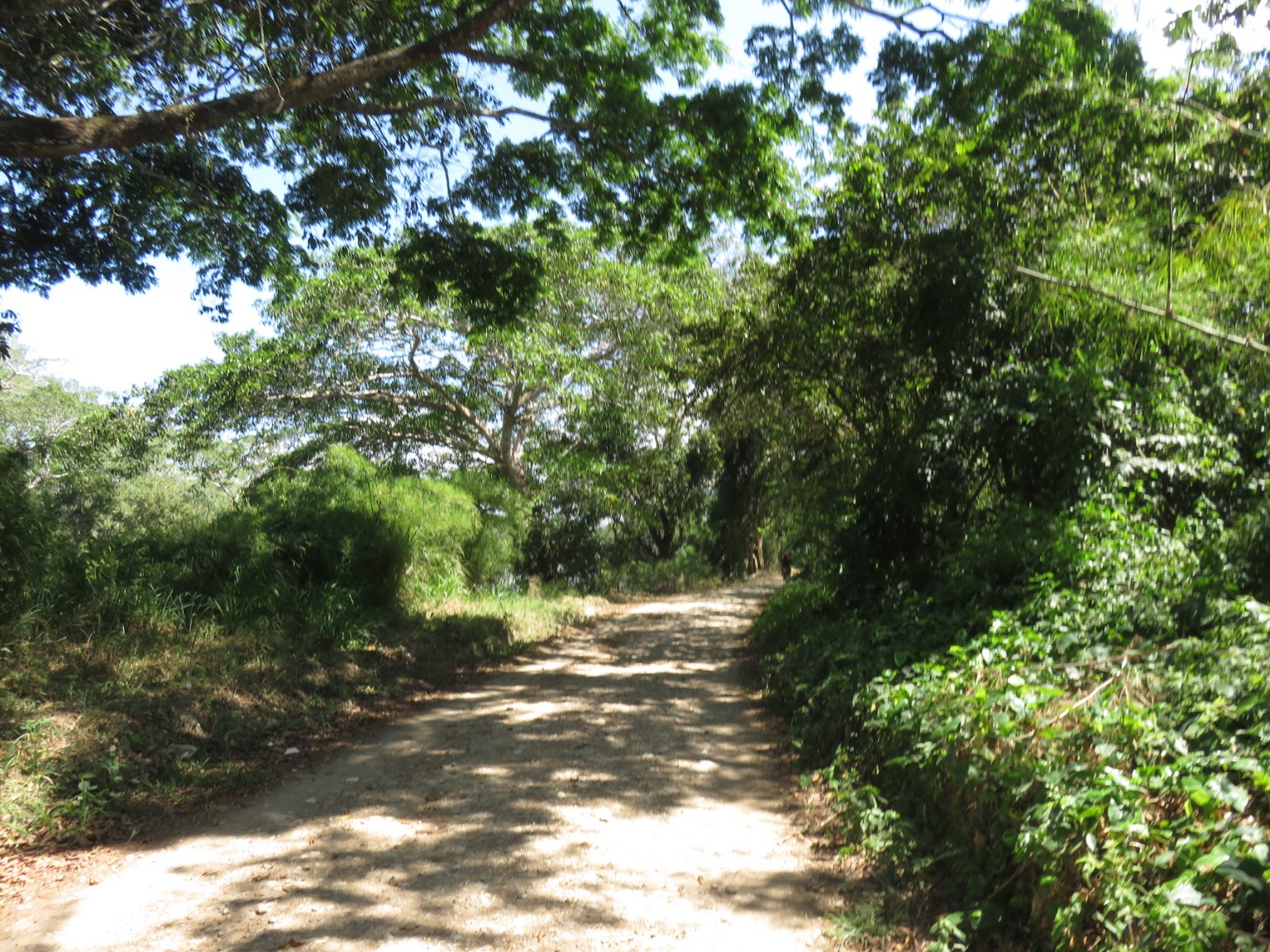
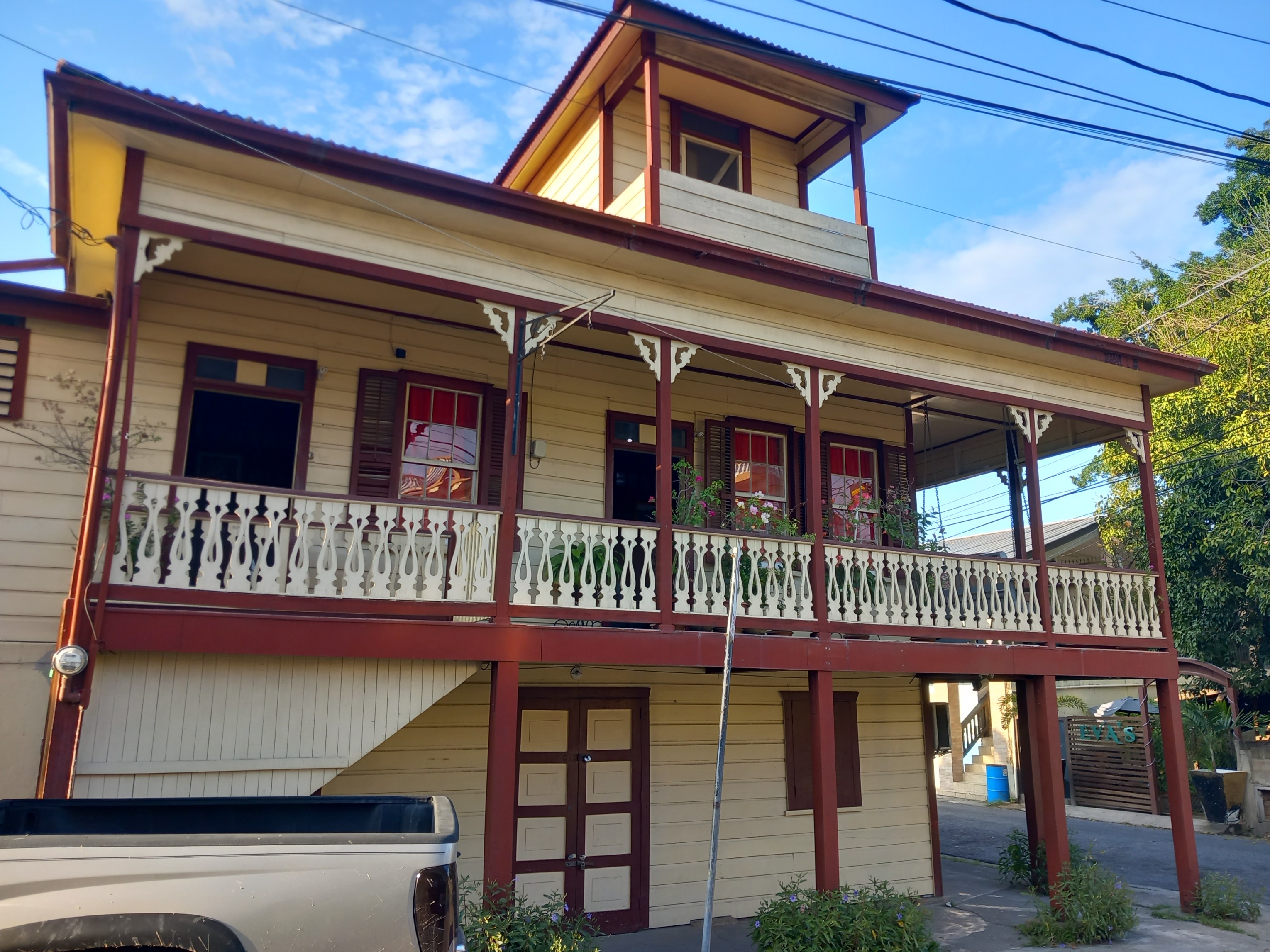
Breakfast at Martha’s Kitchen. Another remnant from the British era although now it only handles traffic in one direction.The rivers in Belize are very clean although the same cannot be said for those who use the banks as recreation areas and do not take their litter home. San Ignacio is a place we take an instant liking to because its friendly hilltop location is completely different to the country we have visited so far, mainly on the coast. It is able to function both as a working town for the residents and as a visitor location for the many tourists. Ambergris Caye it is not and there are no golf carts – not that they would be able to navigate the hills.The wooden clapper board houses from the colonial times are everywhere – some are better preserved than others.The local Police Formation, not Police Station – this means it can only arrest, prosecute, try, and convict those in the township of San Ignacio township.David is asking the policeman what O.C and S.I. stand for on the place names in the car park. Since you ask, its ‘Officer in Charge’ of the Police and Magistrate for ‘San Ignacio’. The building is opposite where we stay so we should be safe here. The Prison Van has clearly seen better days although we find it hard to imagine they have criminals hereabouts such is the kind, friendly, helpful nature of the people. We later discover, sadly, there is a major drug and drink problem and also that many people lost their jobs and/or businesses during the Covid period.We decide to take a cycle ride in the real countryside since it is so rural in this part of the country. The dirt roads are just about rideable without the luggage we normally carry, however, with our bags this route would not be possible.
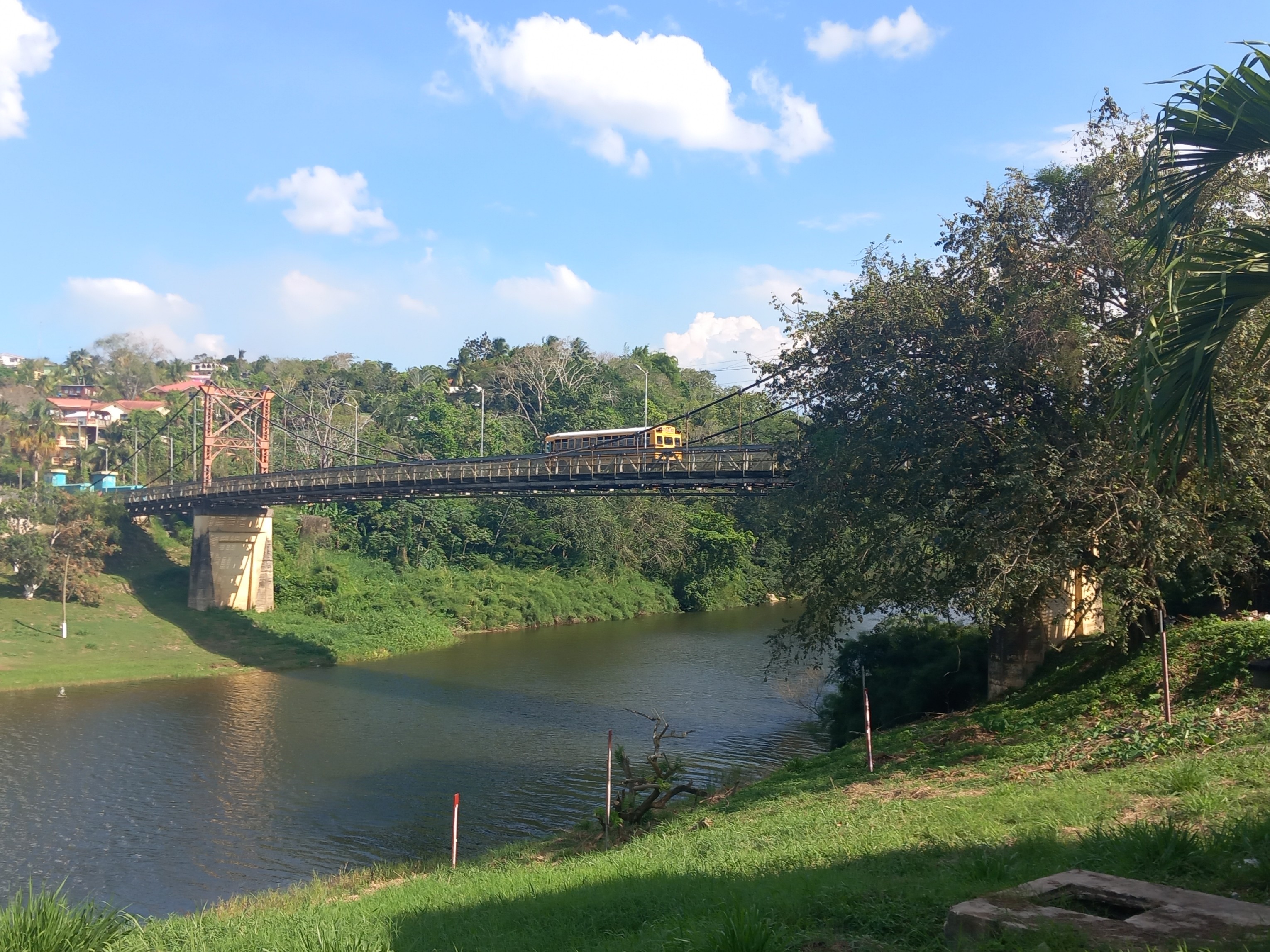
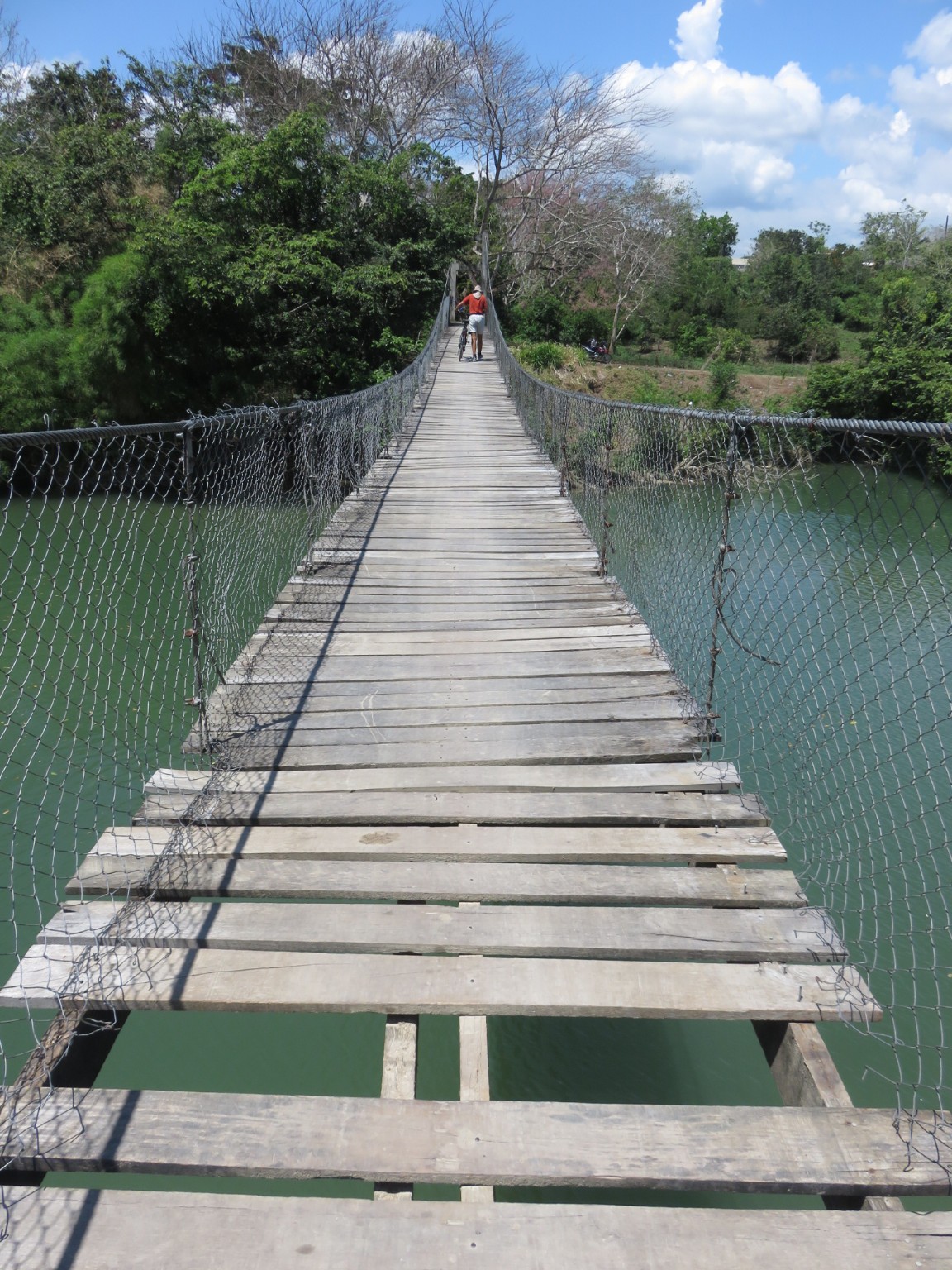
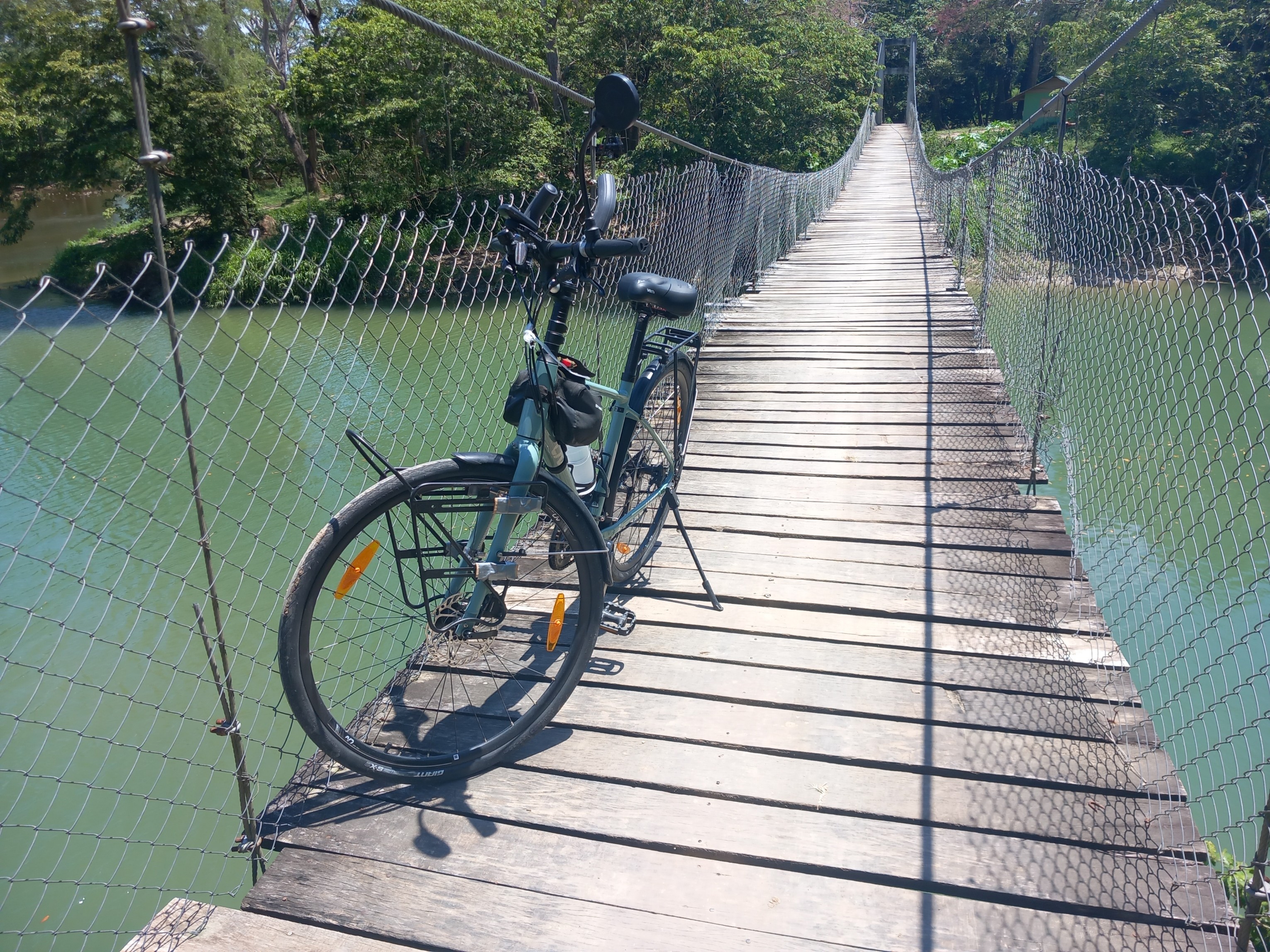
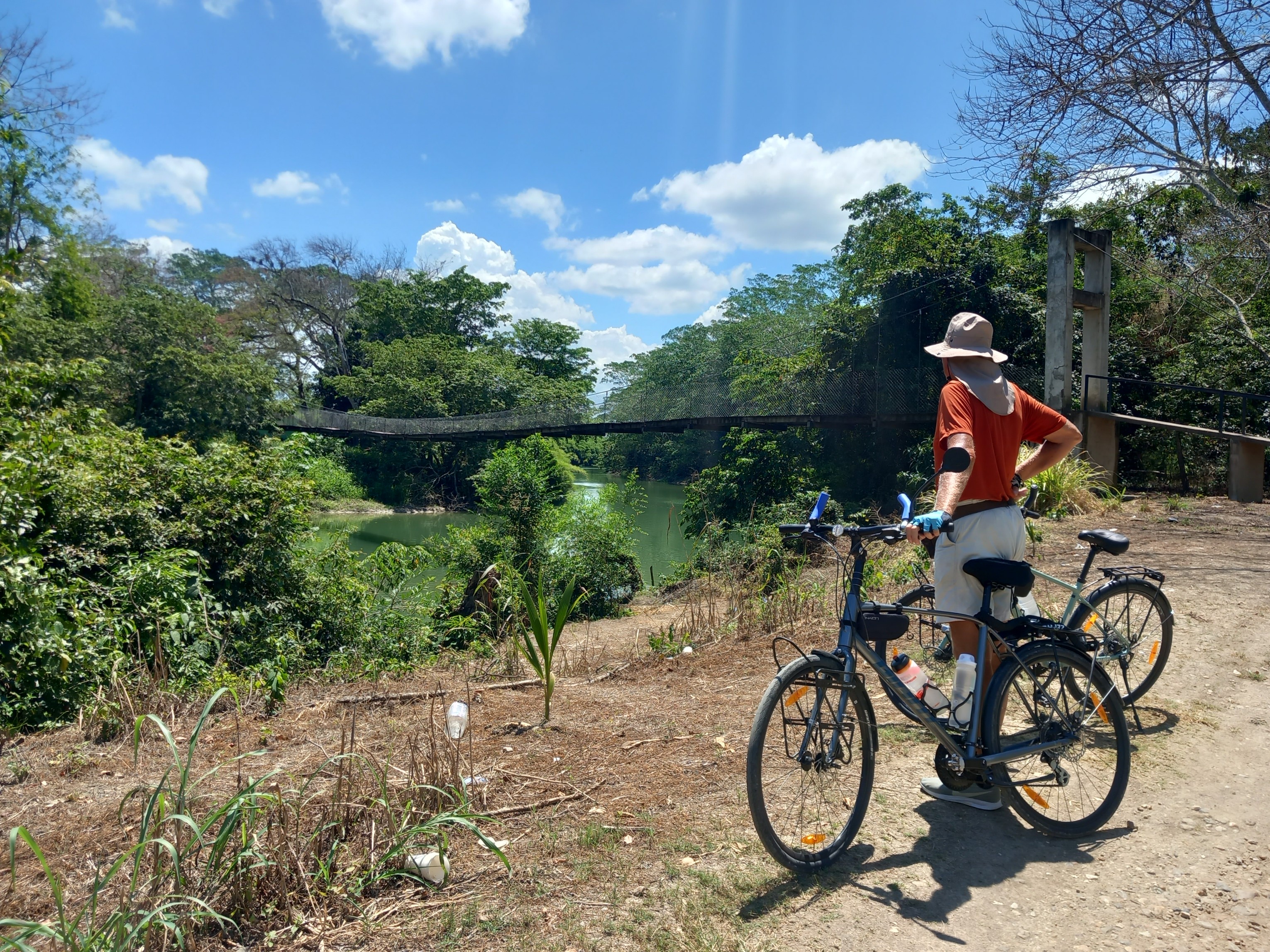
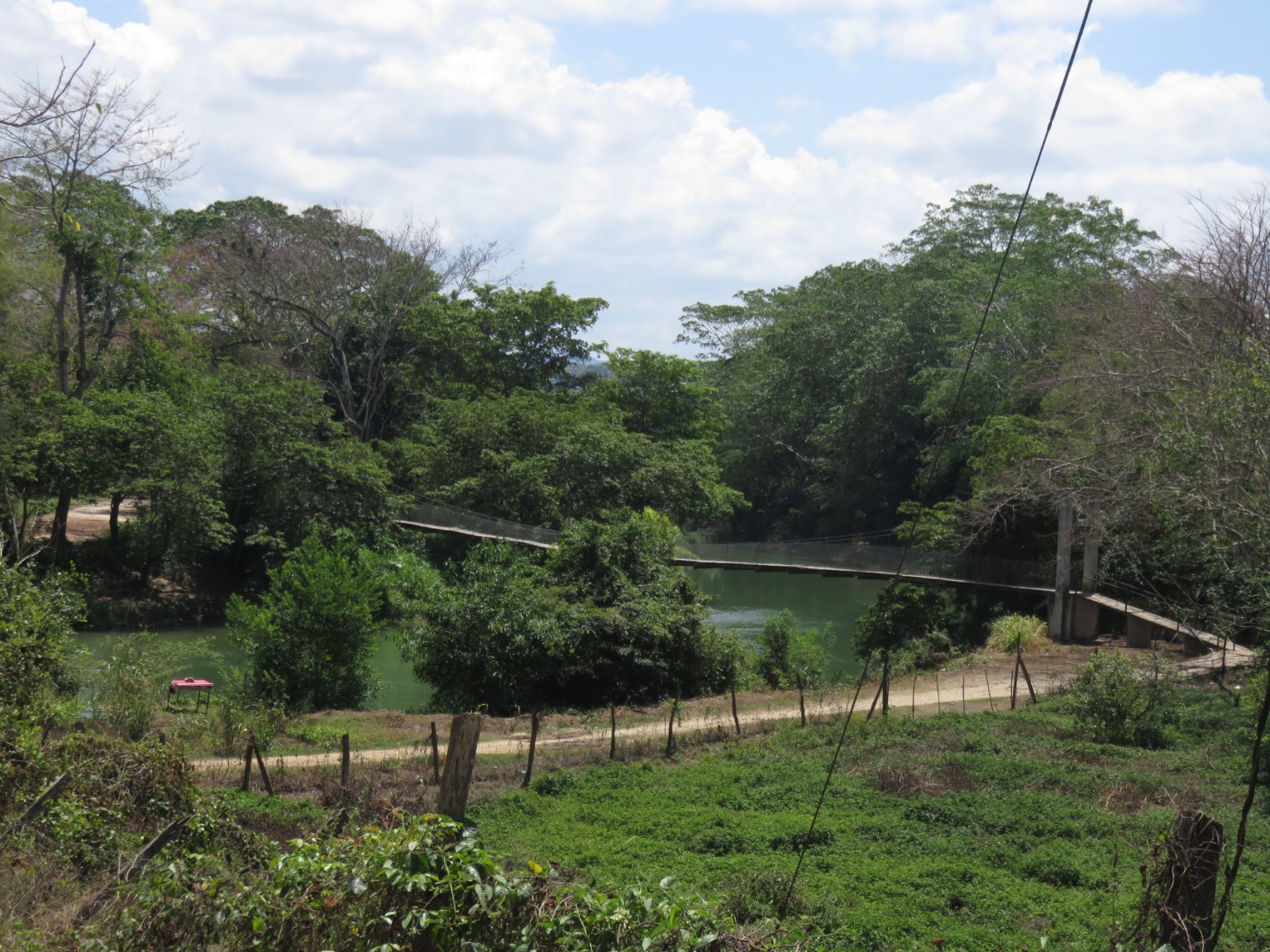
This suspension bridge brings back memories of the many river crossings we did in Asia although this bridge only has one plank of wood missing.
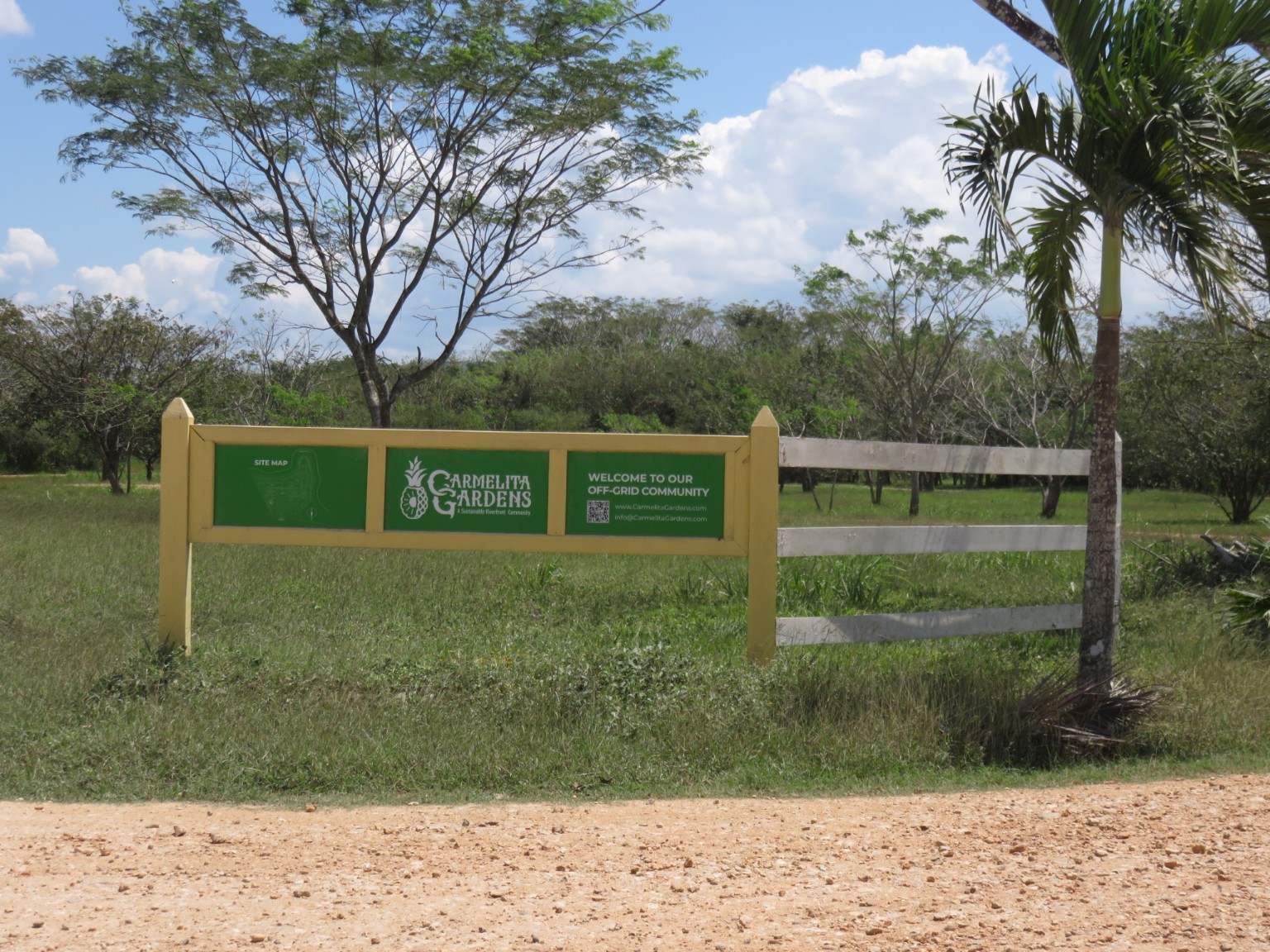
This area, the Cayo district, is the bread basket for the country and is known for its dairy, meat, poultry and arable produce.We had seen this off grid community advertised and thought we would take a look. We were expecting houses with solar panels, water butts, plots of land covered with fruit trees and vegetable plots. We discovered a very nice pleasant remote expat community of mainly Americans living a quiet life just like they would have experienced as children in the 1950’s with their gardens arranged neatly and their food likely to be provided by supermarkets in nearby San Ignacio.
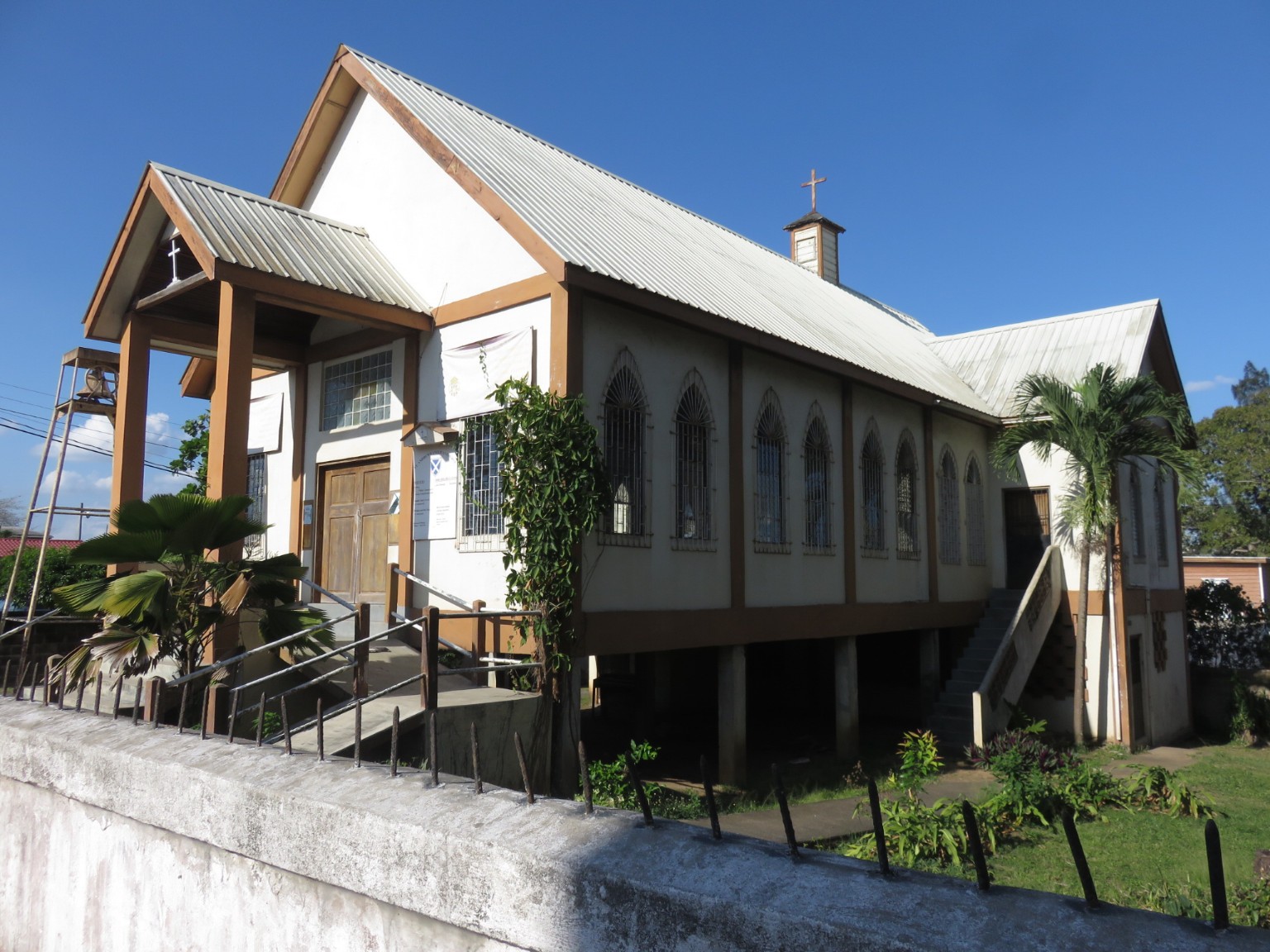
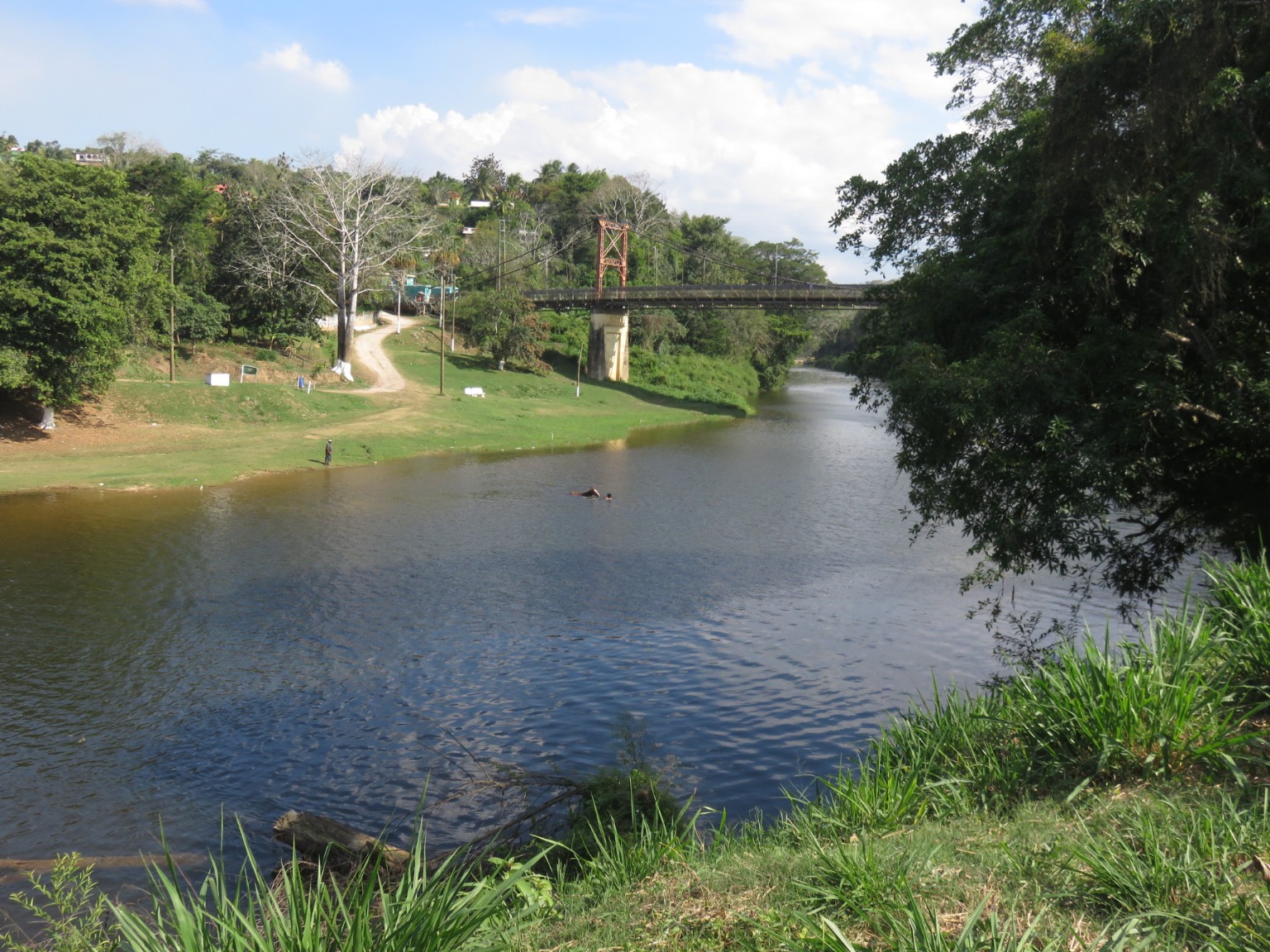
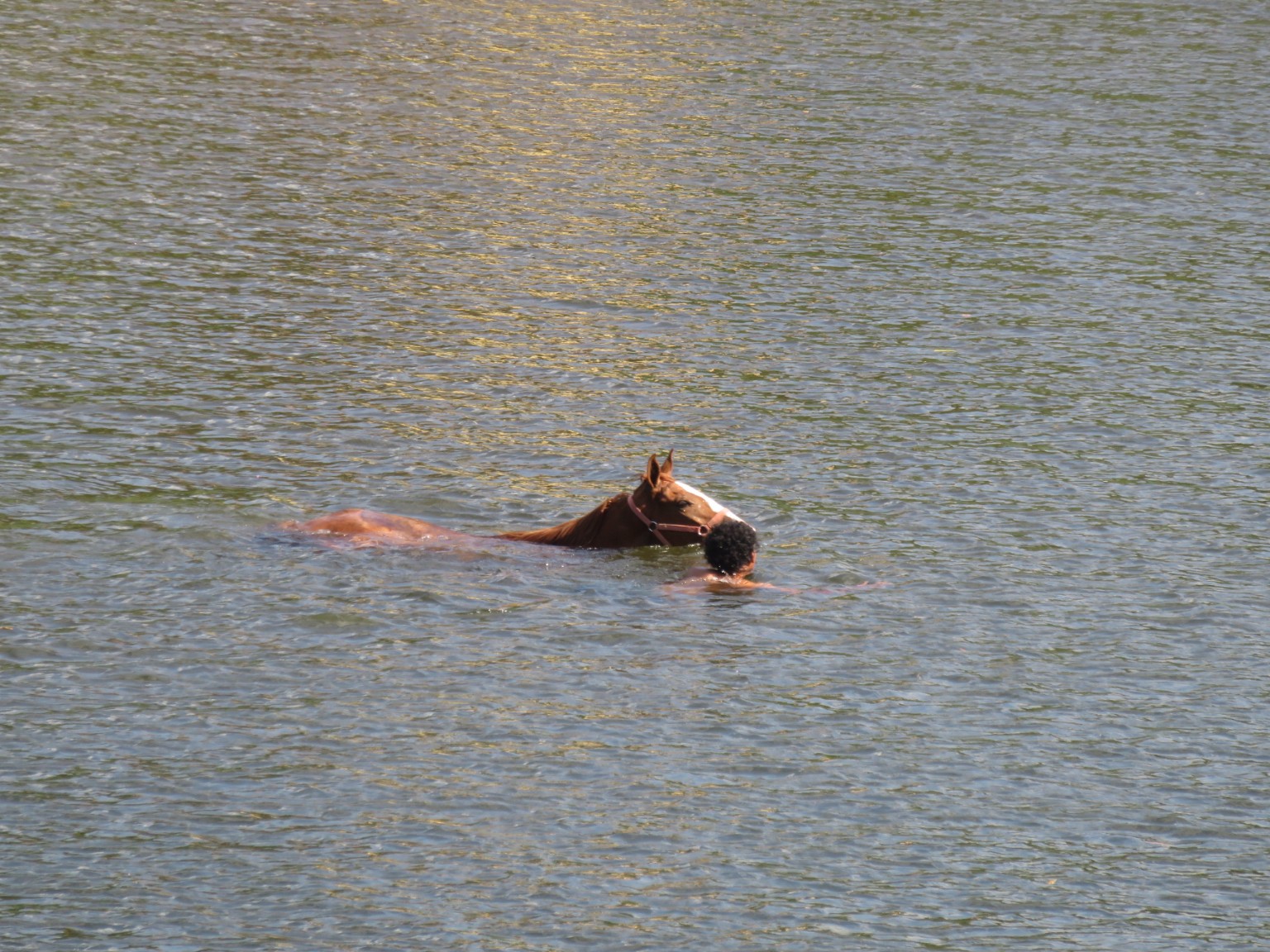
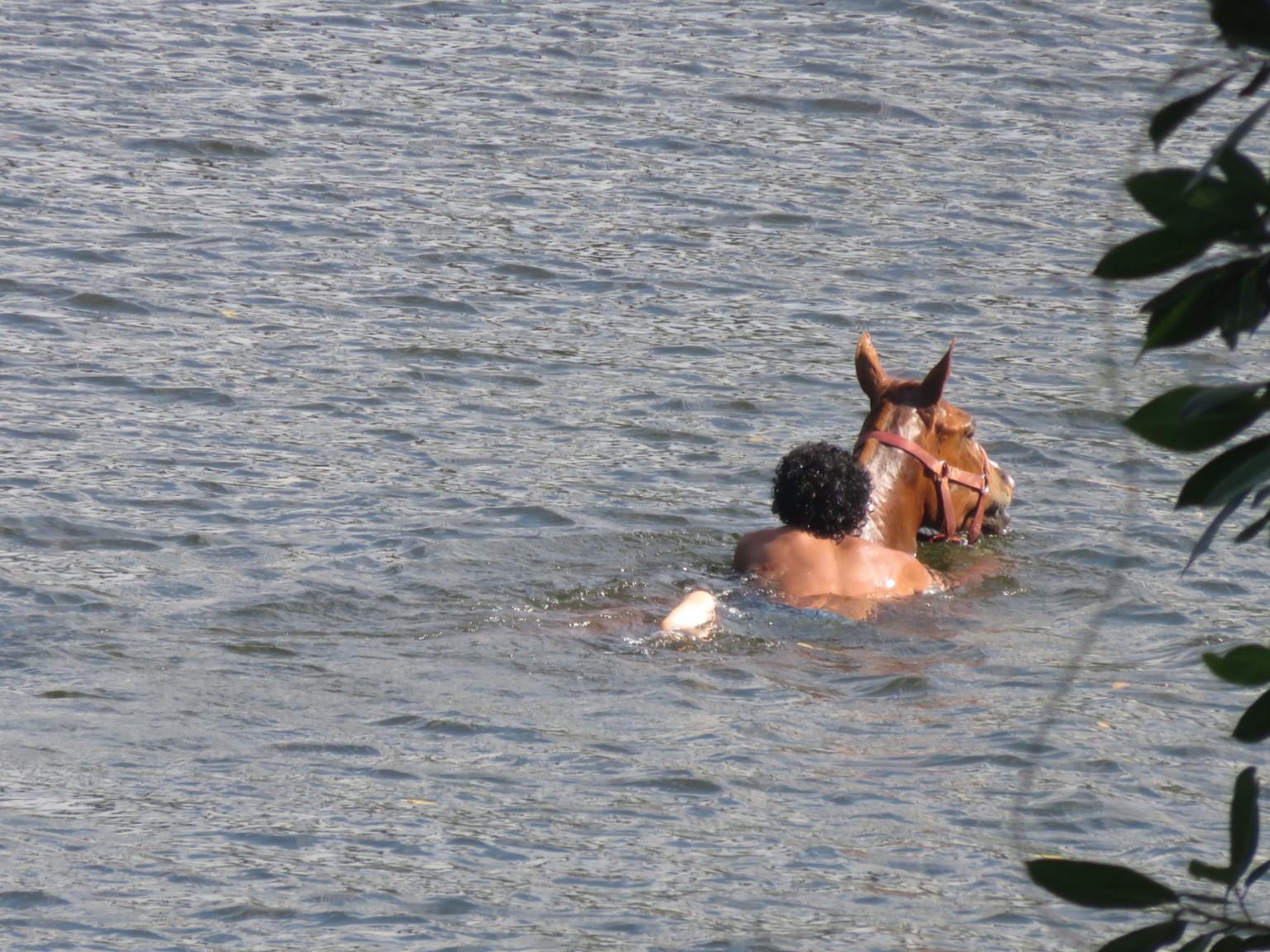
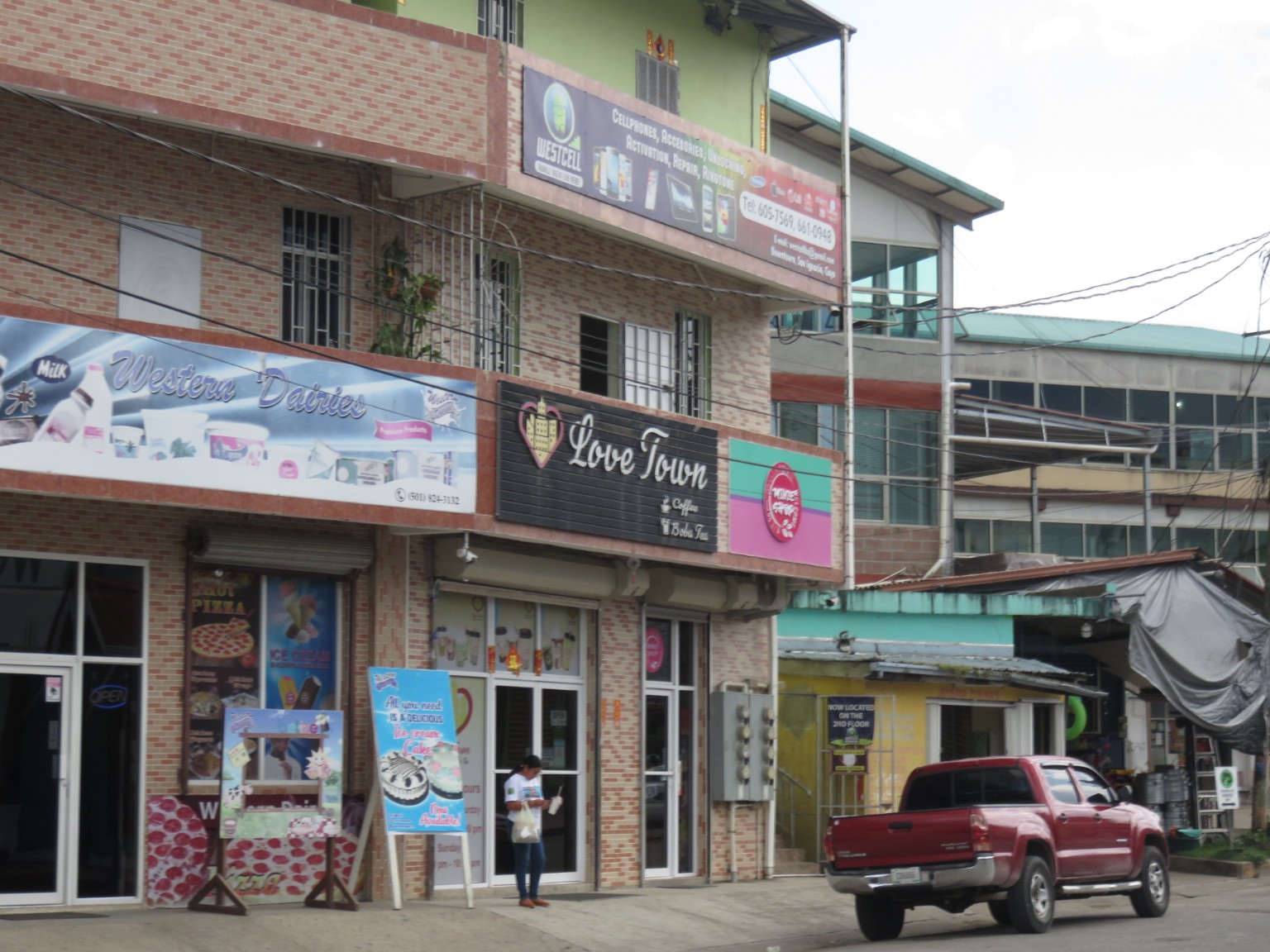
You can relax, dear reader. David does not intend to become a tour guide. It is not only his clothes that are becoming a bit ragged around the edges!One of the few reasonably priced restaurants in town we were able to discover. This country generally is not very cheap to live in both for the visitors and more so for the Belizeans, however, if you are prepared to eat like the locals it can be more affordable.Spikes protruding from the top of the wall is not something we usually associate with church boundaries.Its not every day we see a horse taking a swim with its rider. They were in no hurry to leave the river – it was 36c today – and they had no difficulty swimming upstream.
A colony of at least 7 Iguanas we saw living under a pile of abandoned concrete posts at the riverside. This picture tries to emphasise the nature of the hills in this area.
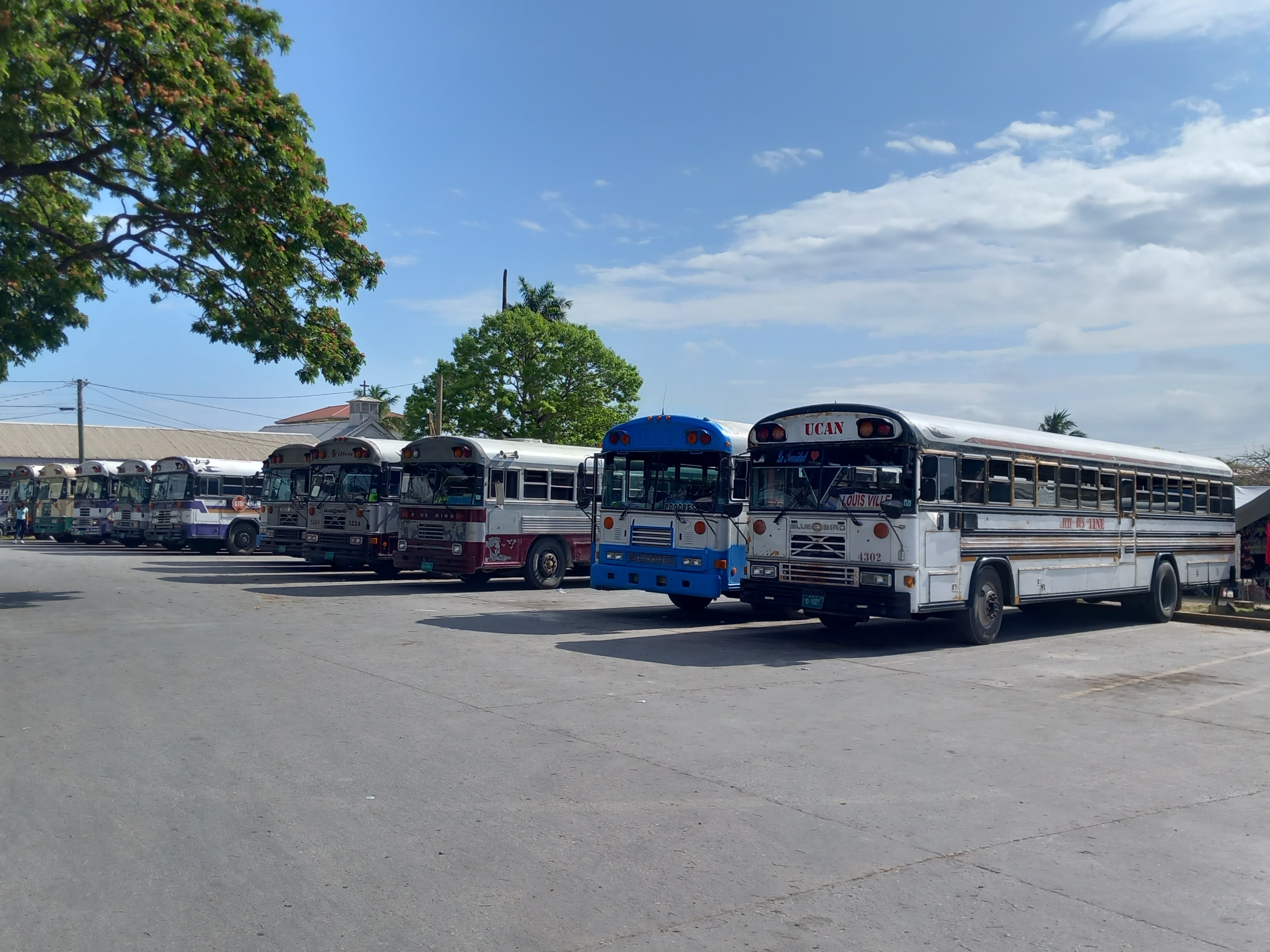
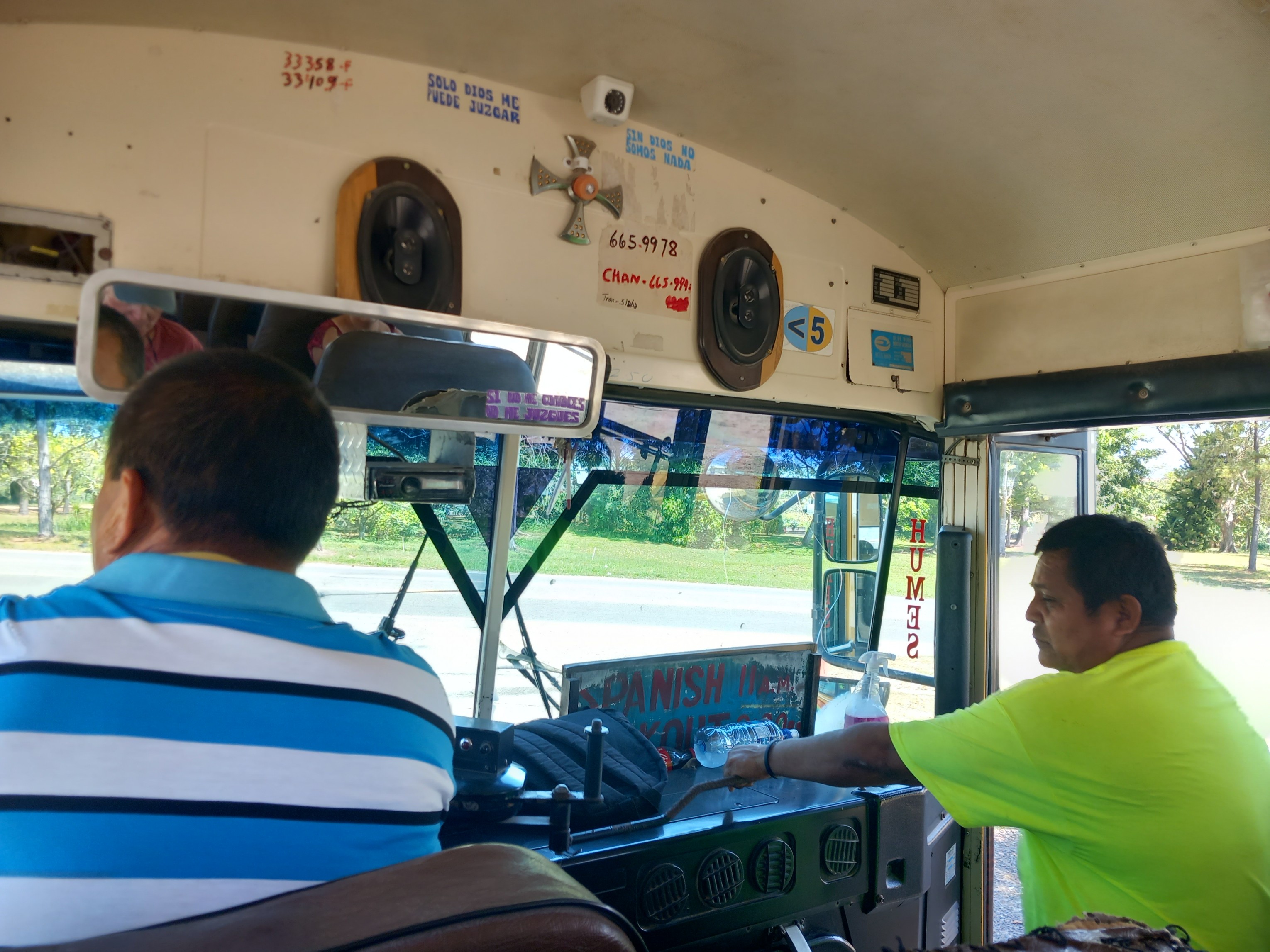
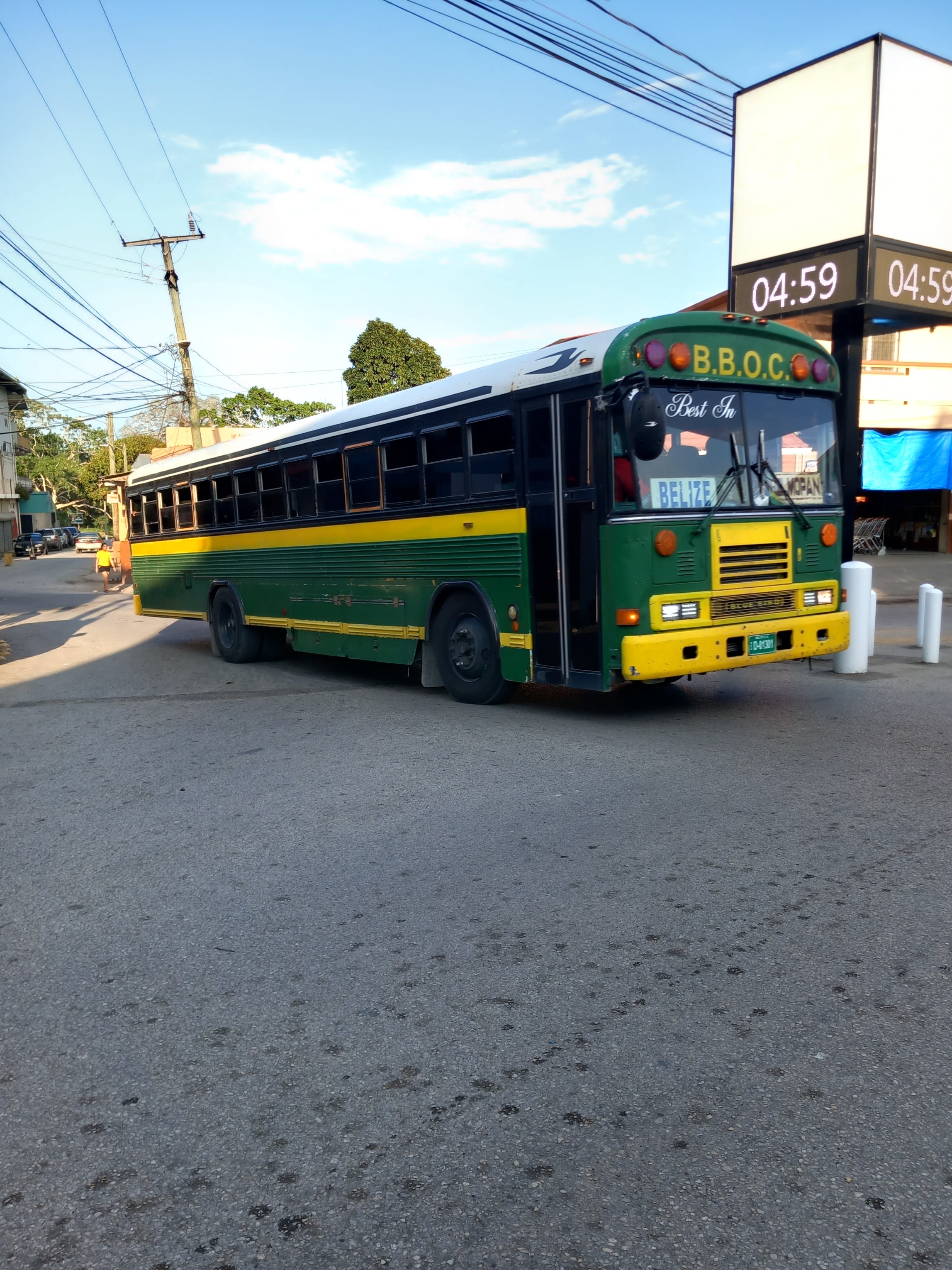
Apologies, dear reader. This is the best look your humble scribe can manage at 6.30am.Another change of plan. Everyone we had spoken to about our intention to ride the length of the Hummingbird Highway (promoted as the most scenic route in the country) was met with the same advice. The road is too narrow for cyclists, there is no shoulder, the drivers are crazy, the bends and hilltops are blind and, it’s so quiet with traffic you could be attacked and robbed. In short we decided to take a bus from Independence to Belmopan and ride from there to San Ignacio. The bikes and luggage are in the hold for the next 2.5 hours.The picture quality dropped down a level because the views are through unclean bus windows and the sky is overcast. Our spirits were also deflated because this was a really scenic route taking us into the hills, around 250 metres of height, and away from the sea level for the first time in 2 months. The advice we were given proved to be correct; the driver drove far too fast for the conditions and he was not alone given the reckless overtaking manoeuvres we saw by him and others.This is the Dangriga bus station, a place we had already visited when cycling along the coast.
Bus travel.
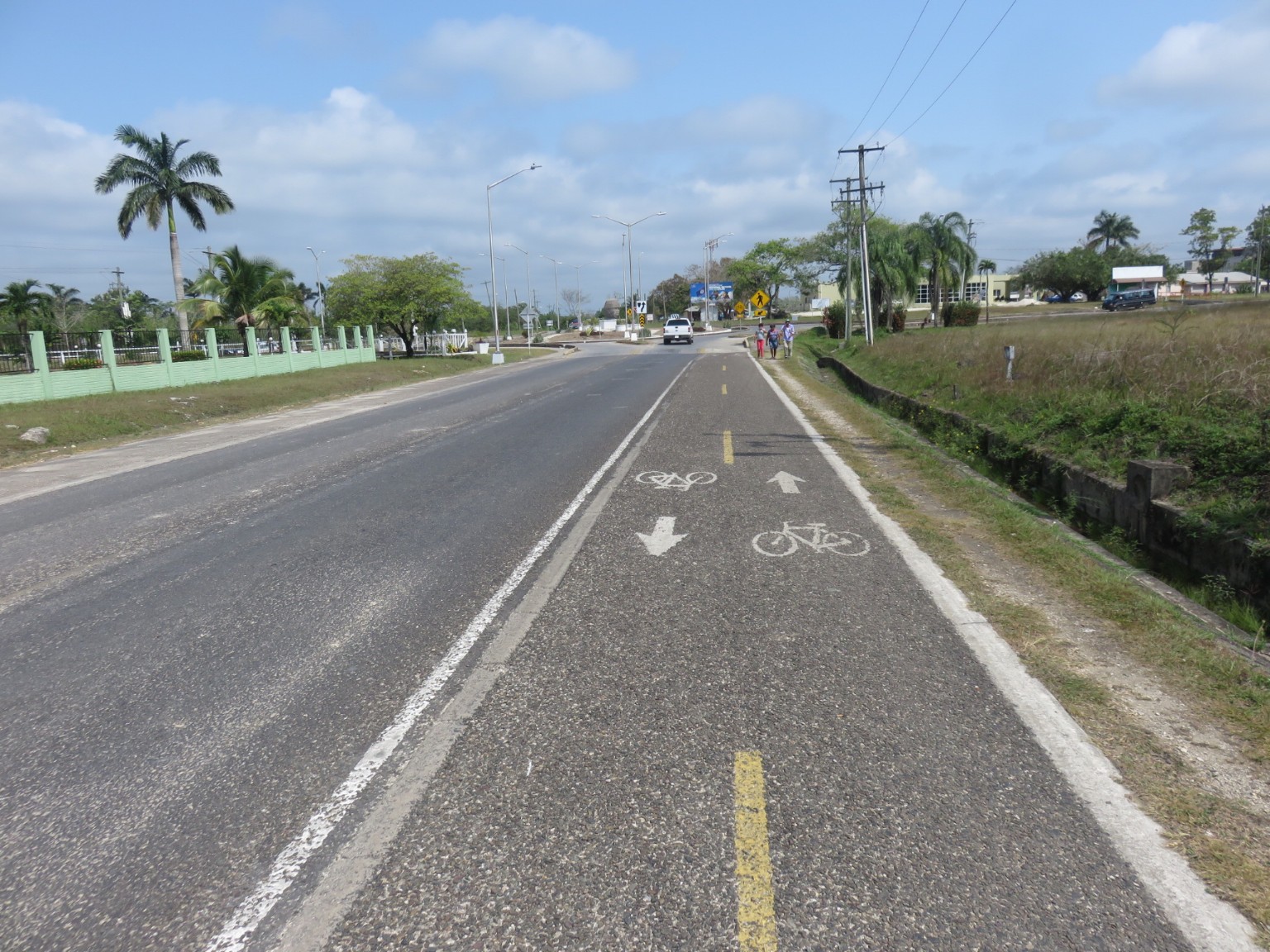
In Belmopan we find a quiet spot to reassess our situation, repack the bikes and set off for San Ignacio.Belmopan does not have much to recommend it other than its cycle lanes. Belize City used to be the capital until Hurricane Hattie blew in during 1961 and devastated the city. The decision was made to relocate the capital to Belmopan far away from the coast and in the hills. It is a very functional working town full of public buildings, embassies, well ordered streets and dull empty recreational areas.
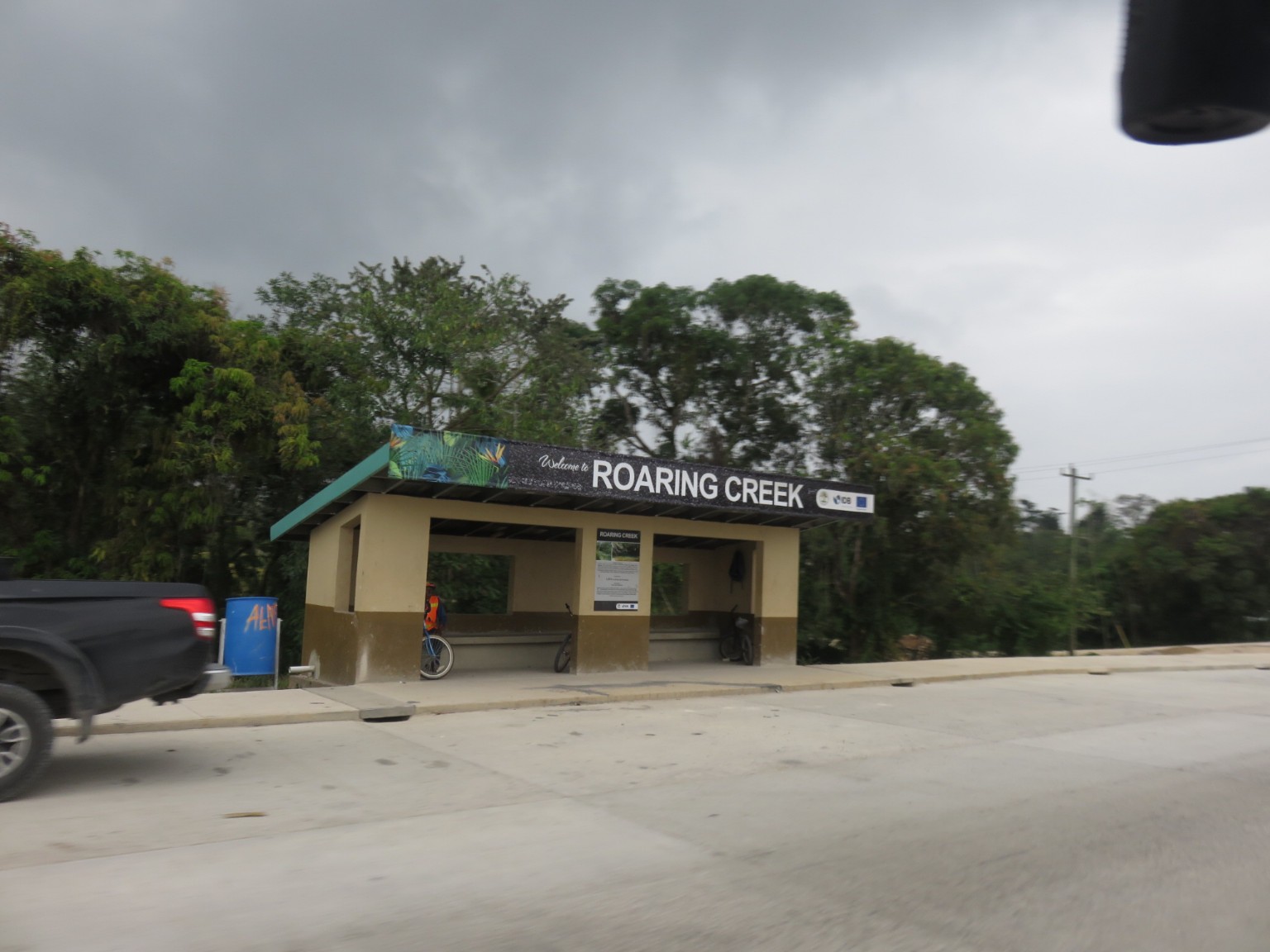
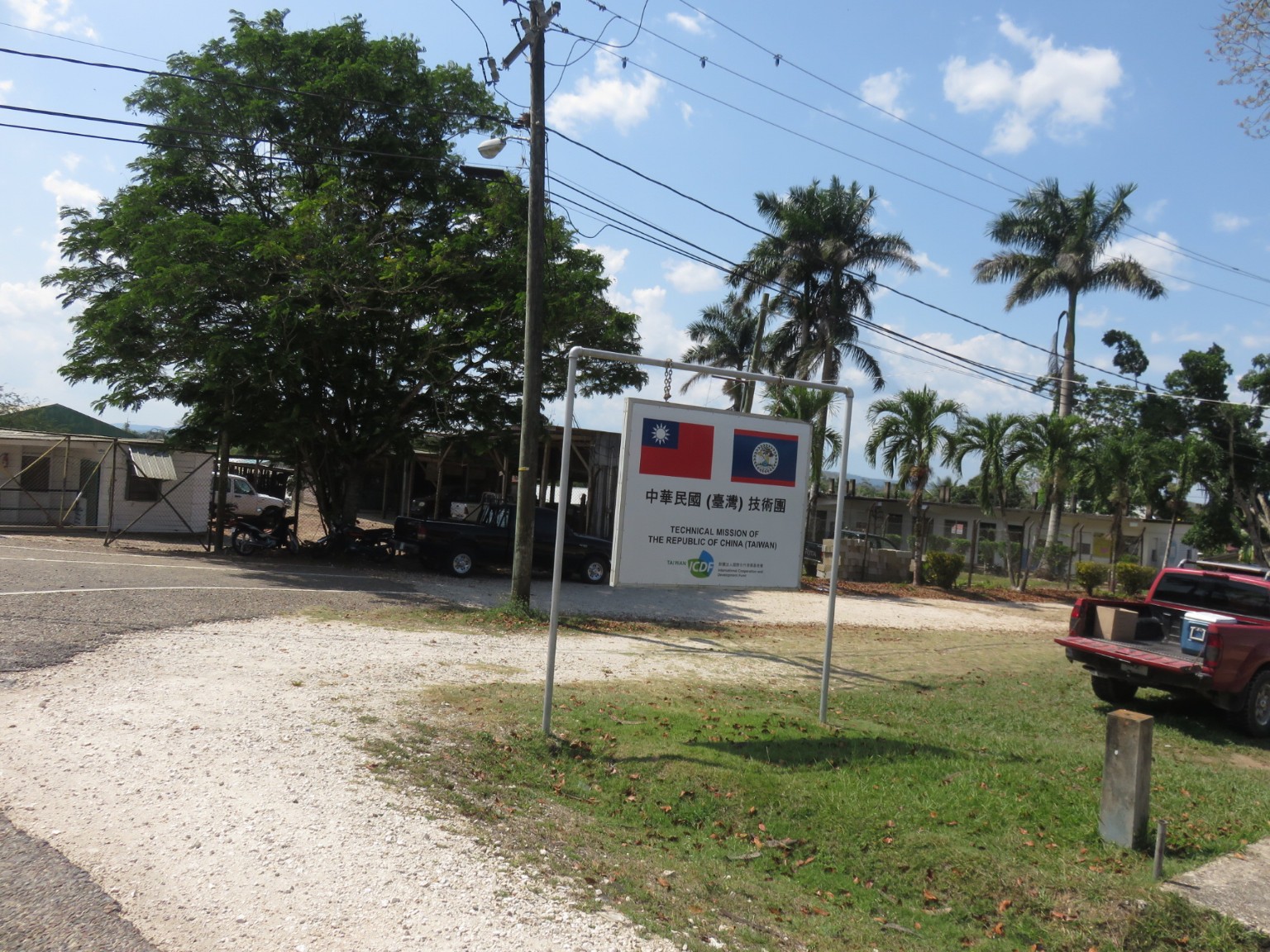
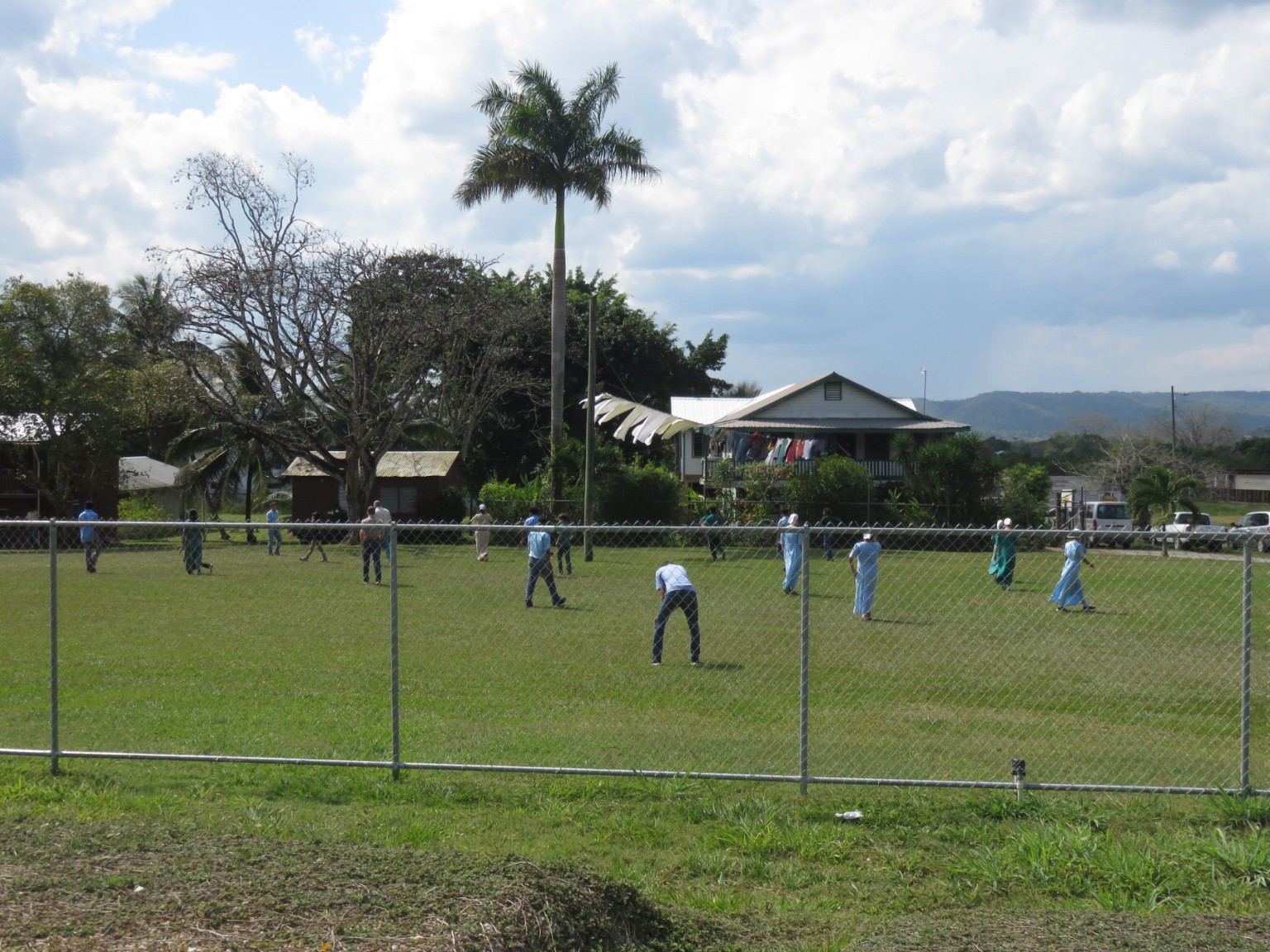
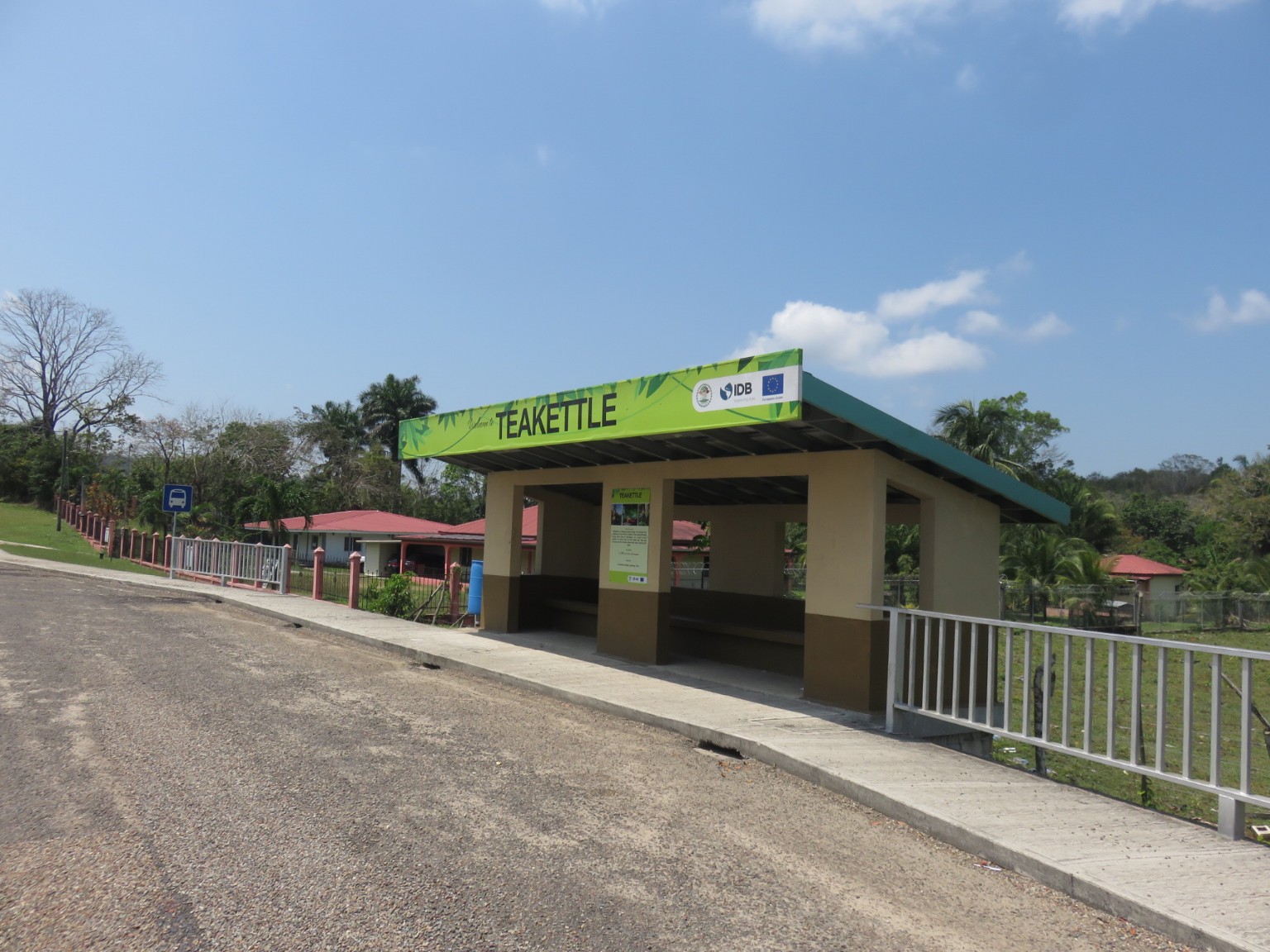
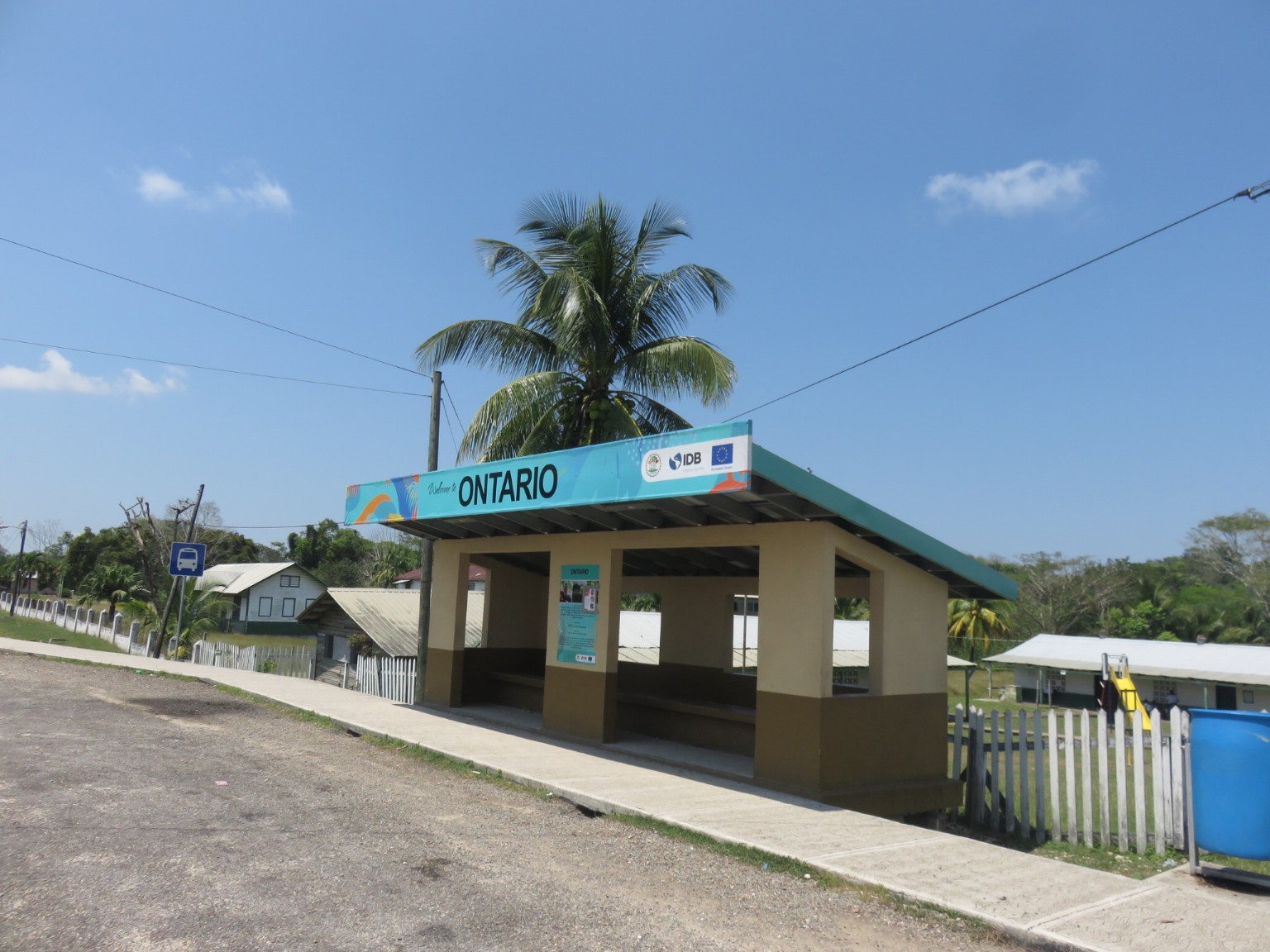
The scenery changes dramatically from the endless flat we have been used to for weeks. It is now gently rolling hills, very rural with a succession of colourful villages to pass through with names like, Roaring Creek, Teakettle, Unitedville and Ontario.The Chinese have quite a presence in this country from technological research at this location to running all the supermarkets, some restaurants and being co-founders in the upgrade of the roads with the Belize government.It is immediately obvious that this area is more prosperous than many other we have visited with large farms for dairy, beef, chicken and arable produce. There are also large areas dedicated to sugar cane productionGiven the ladies dress outfits we think this is a Mennonite community kick about for both genders.
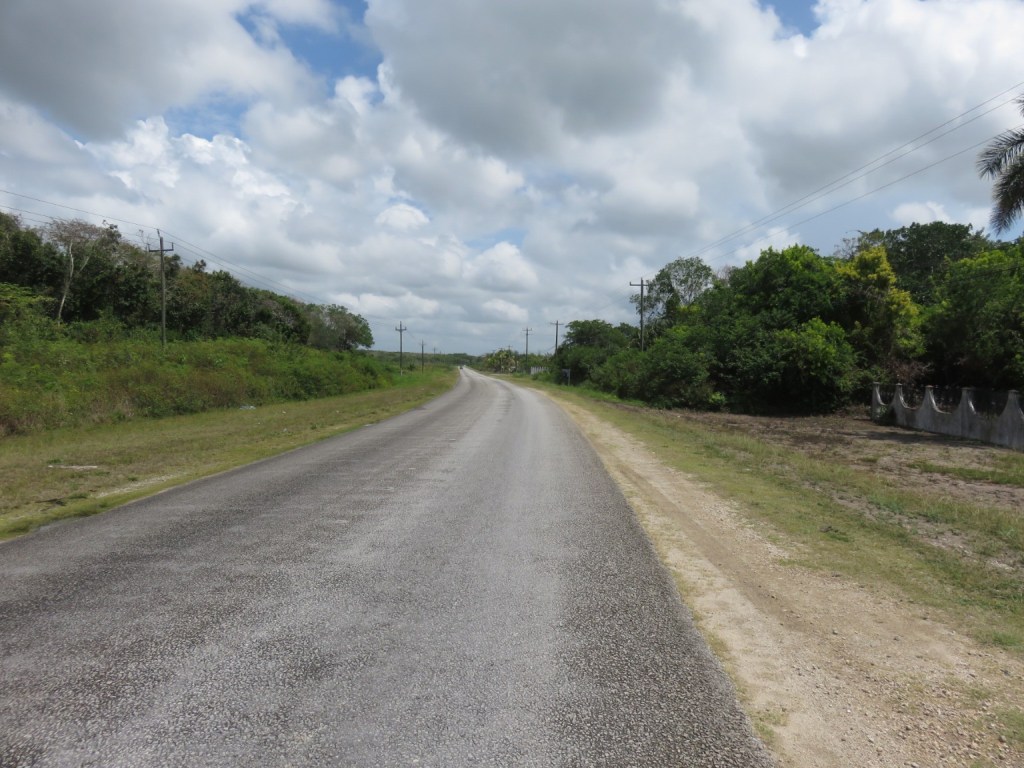
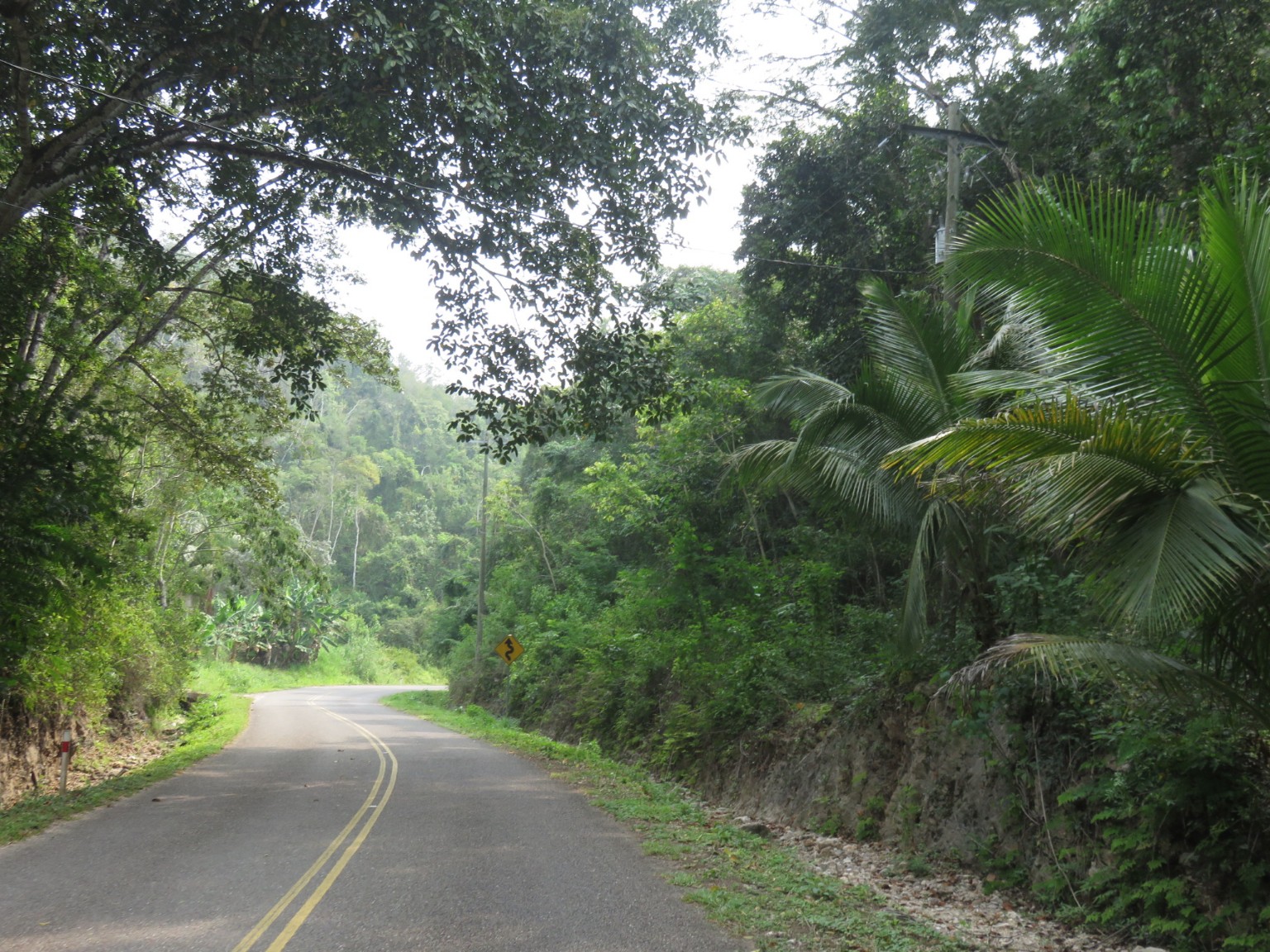
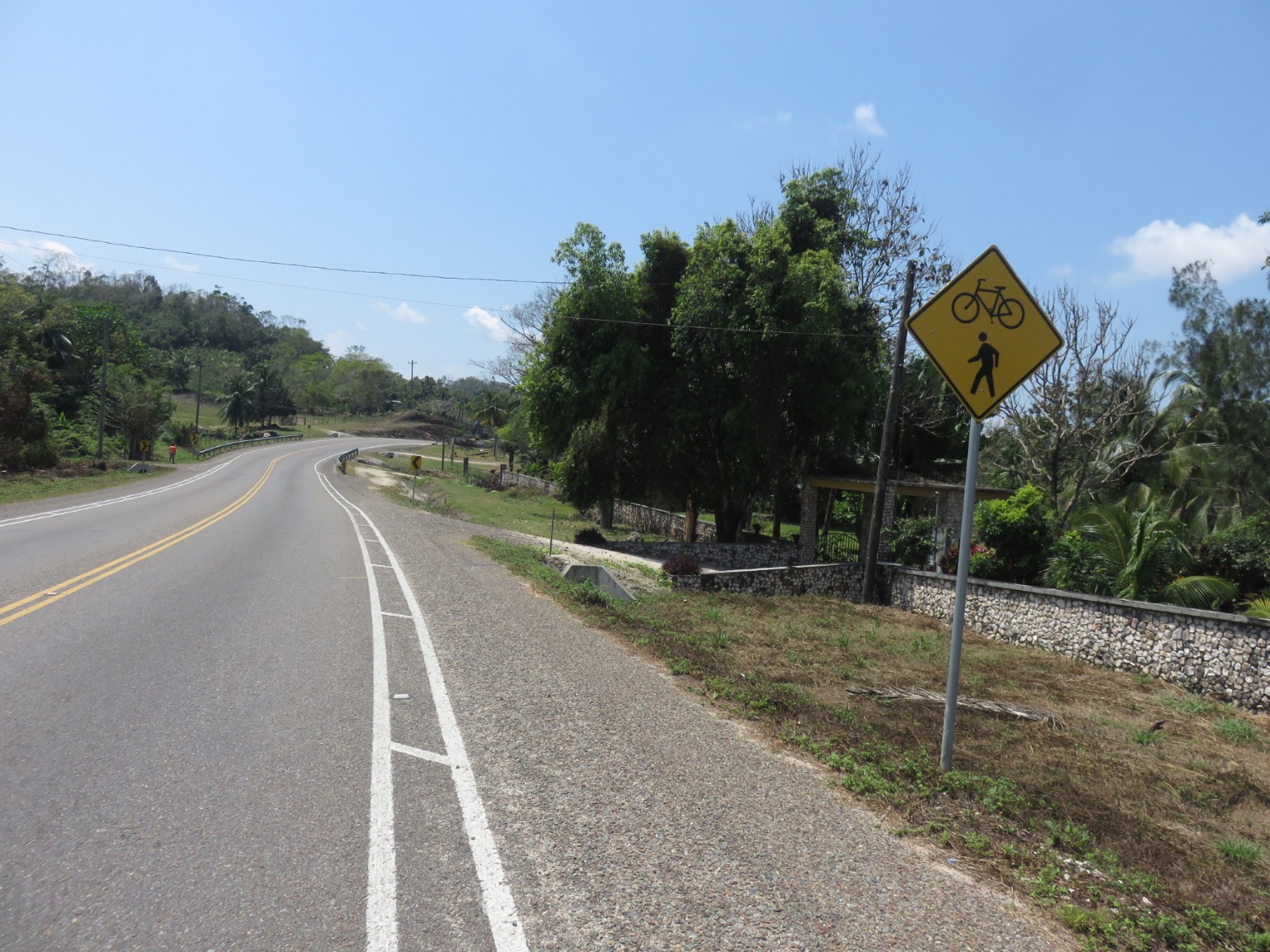
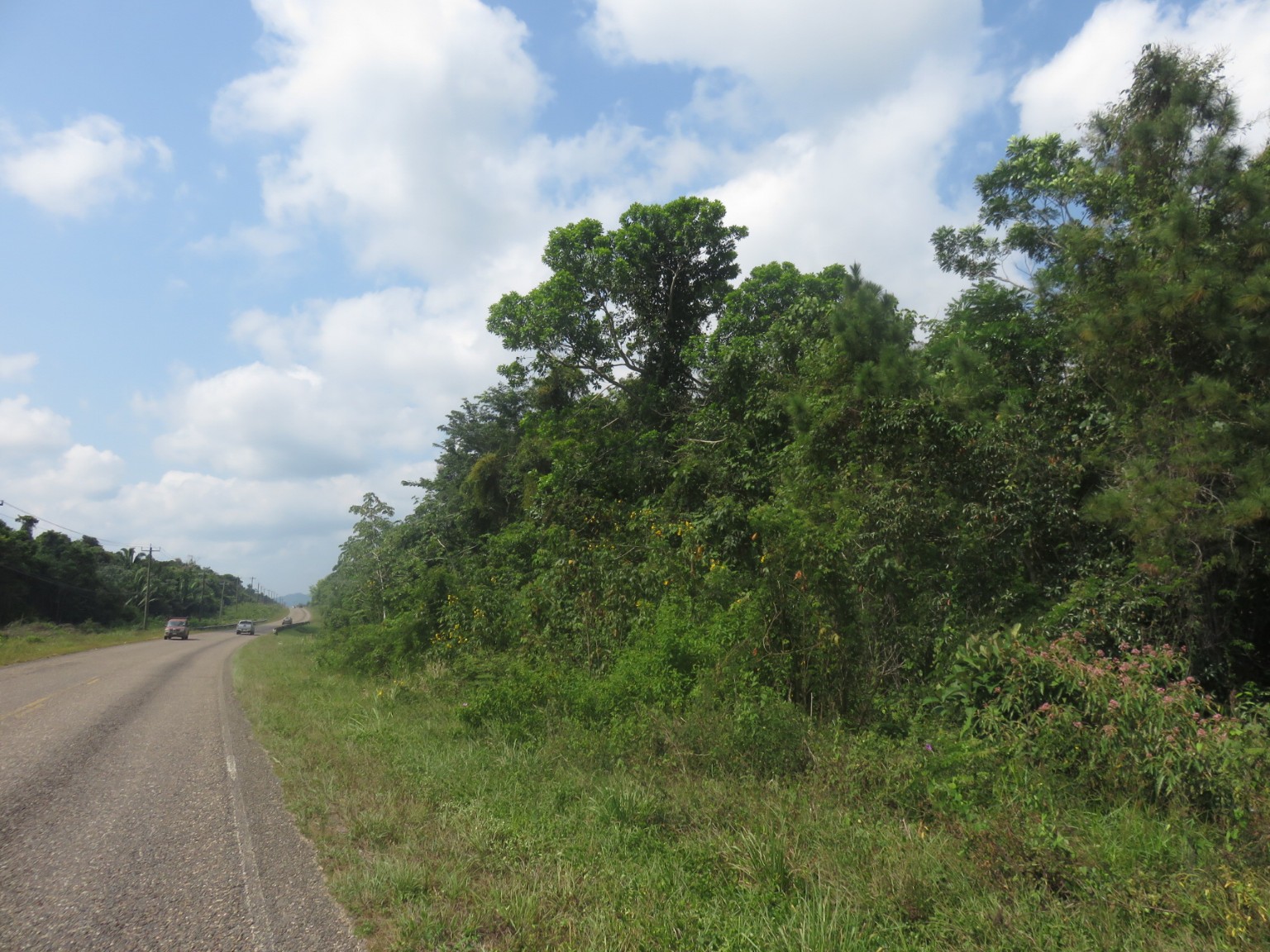
We’re a lot happier on this road because it is smooth, not too busy and has a shoulder for us to use.David often wonders at these views because of its similarity with his home county – minus the palm trees, naturally.
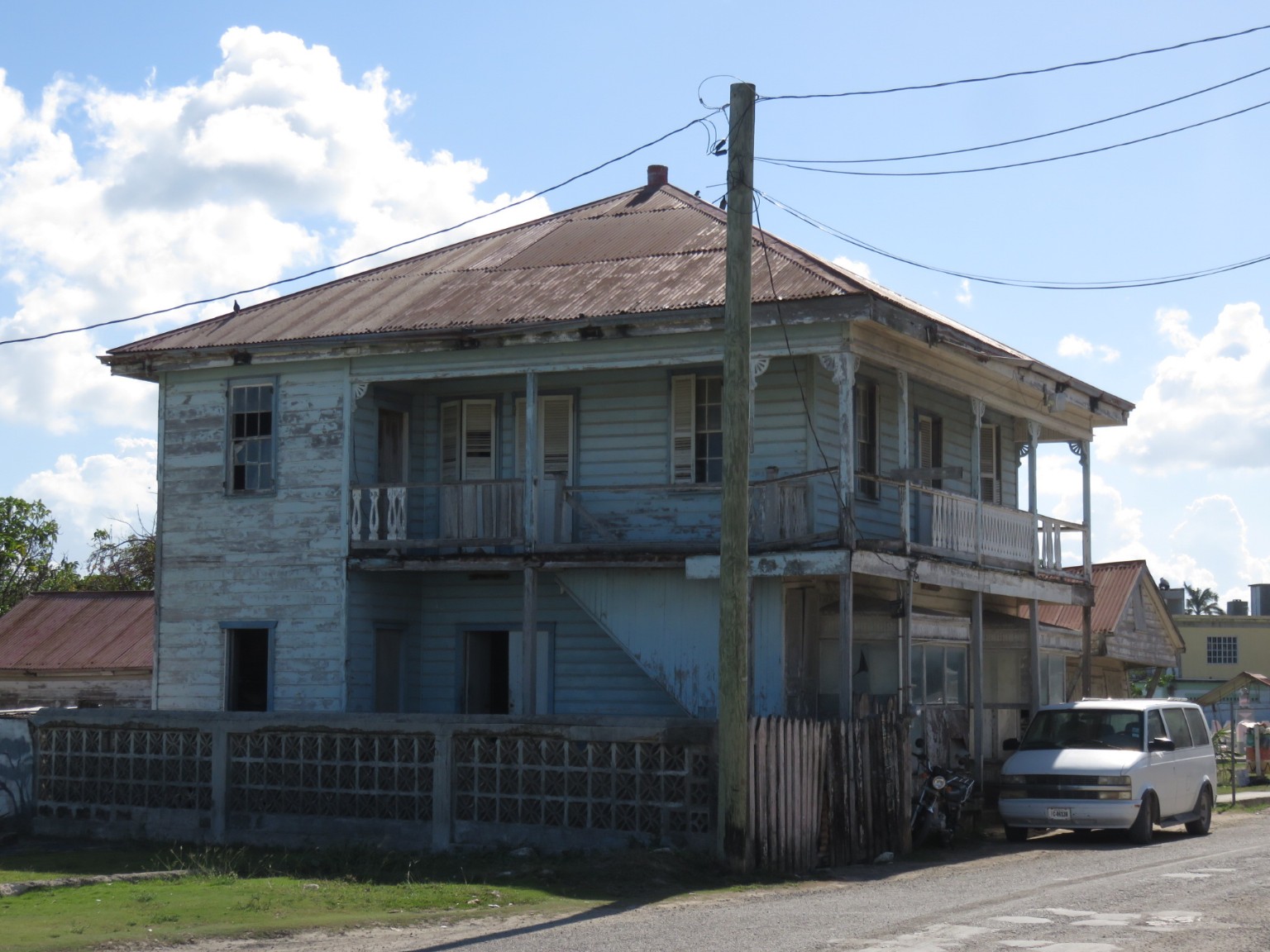
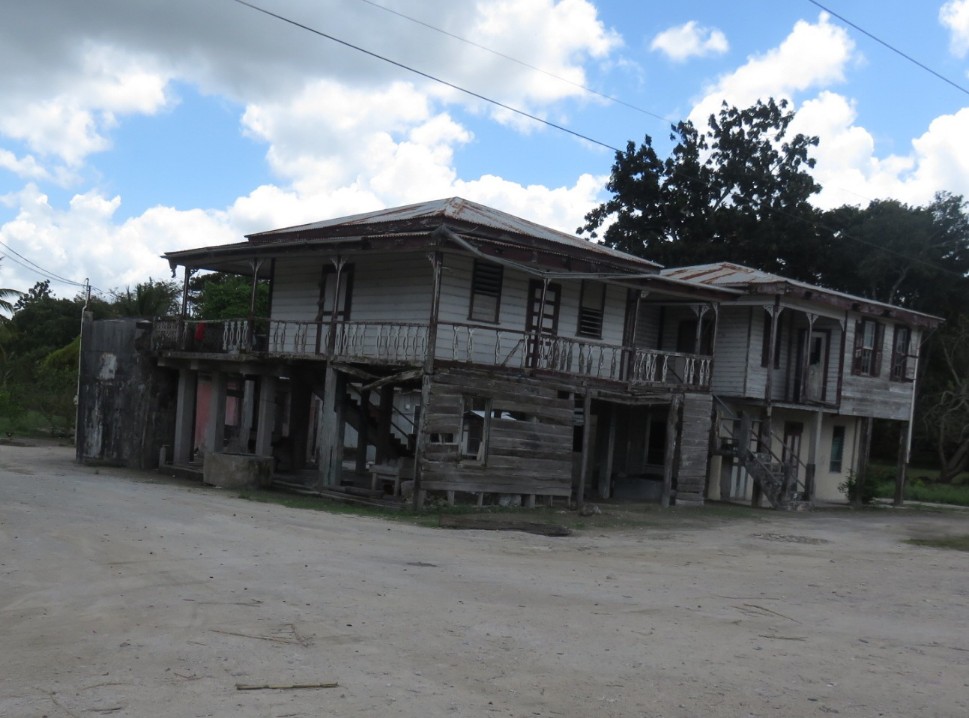
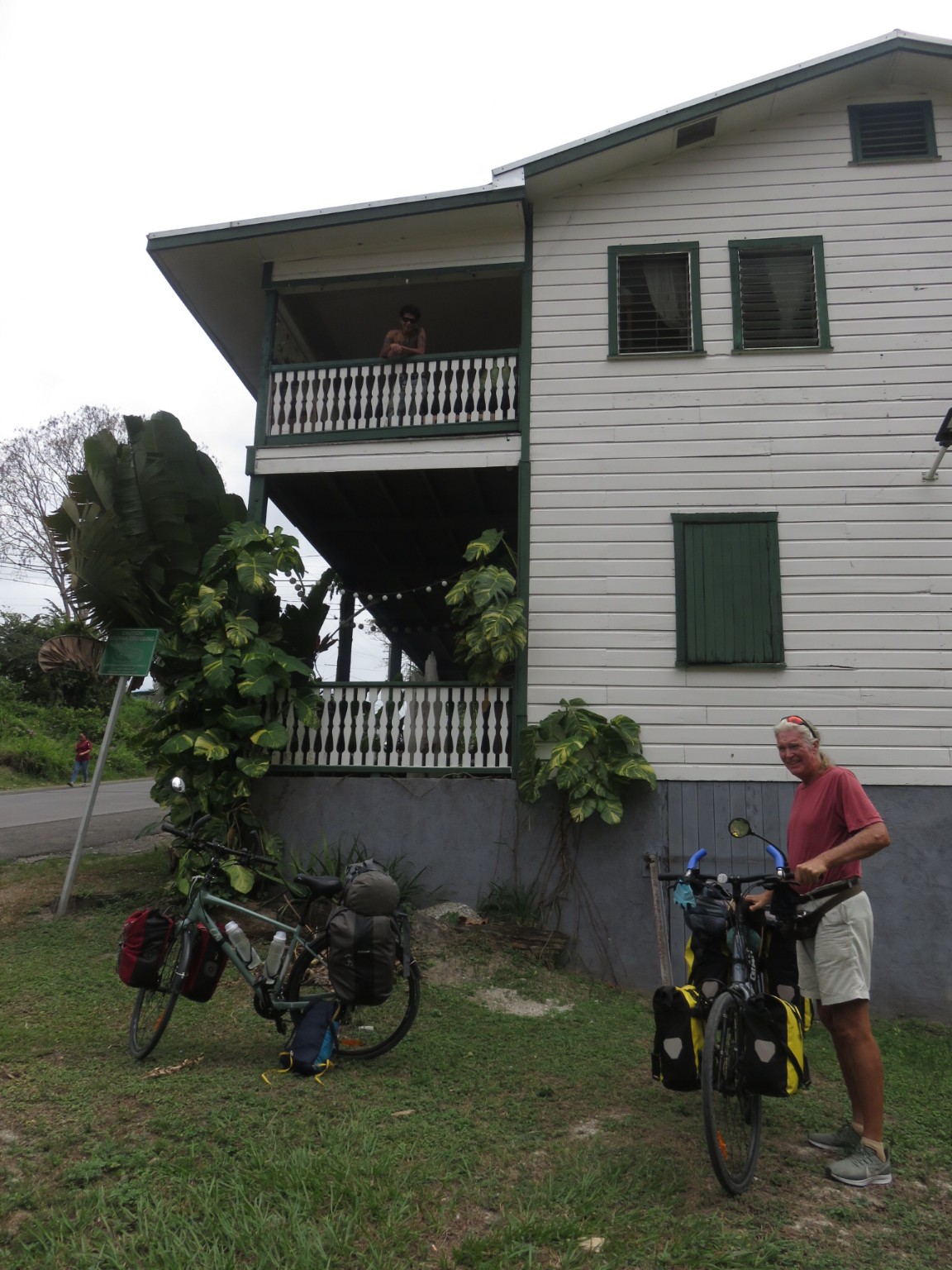
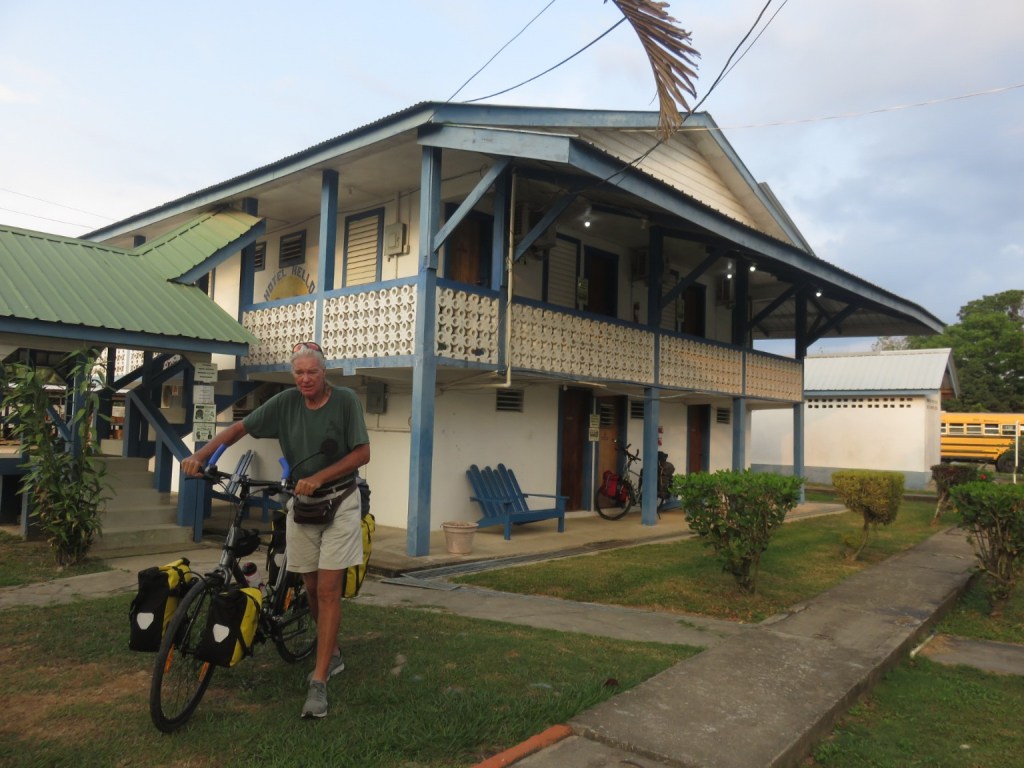
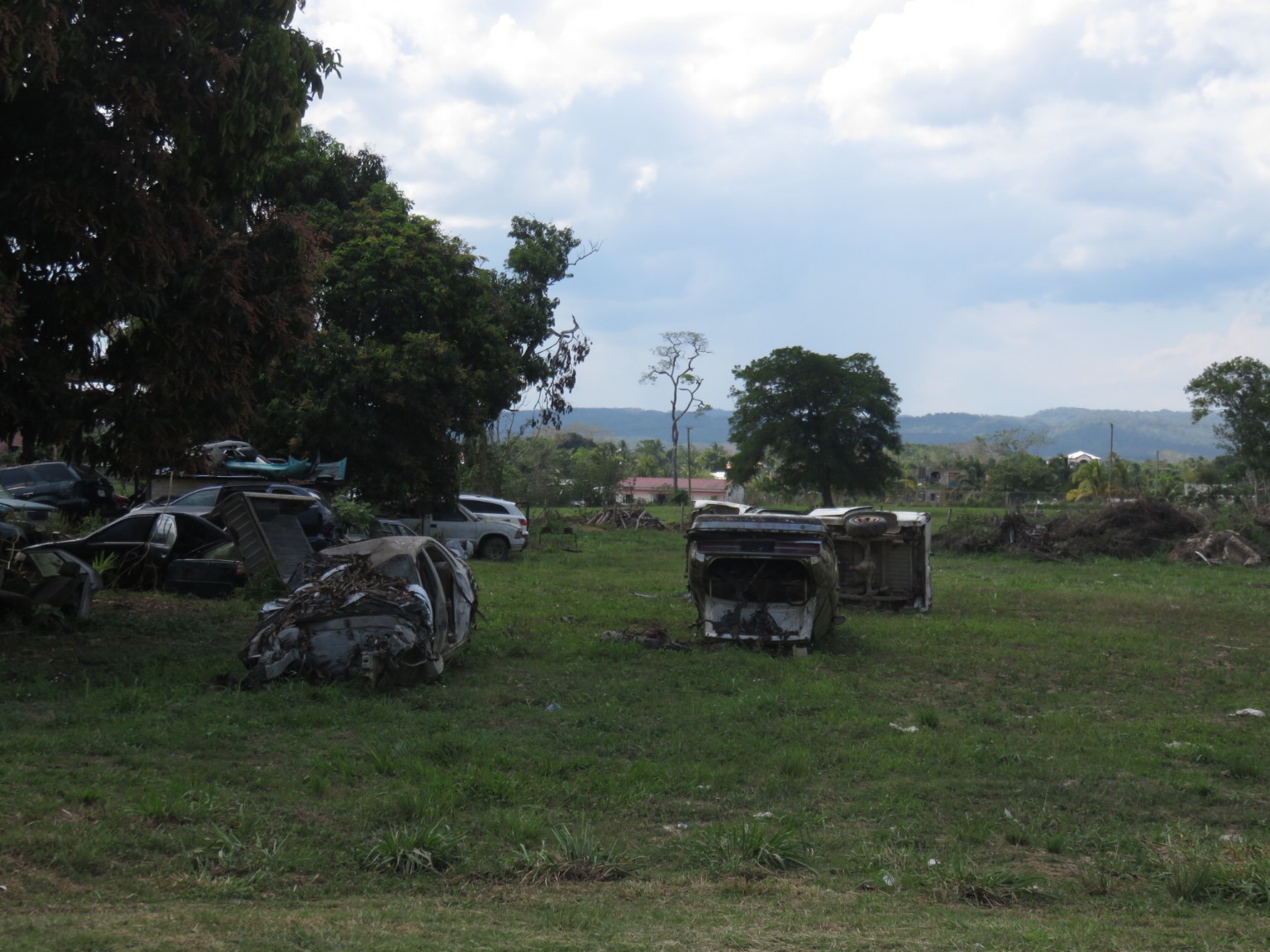
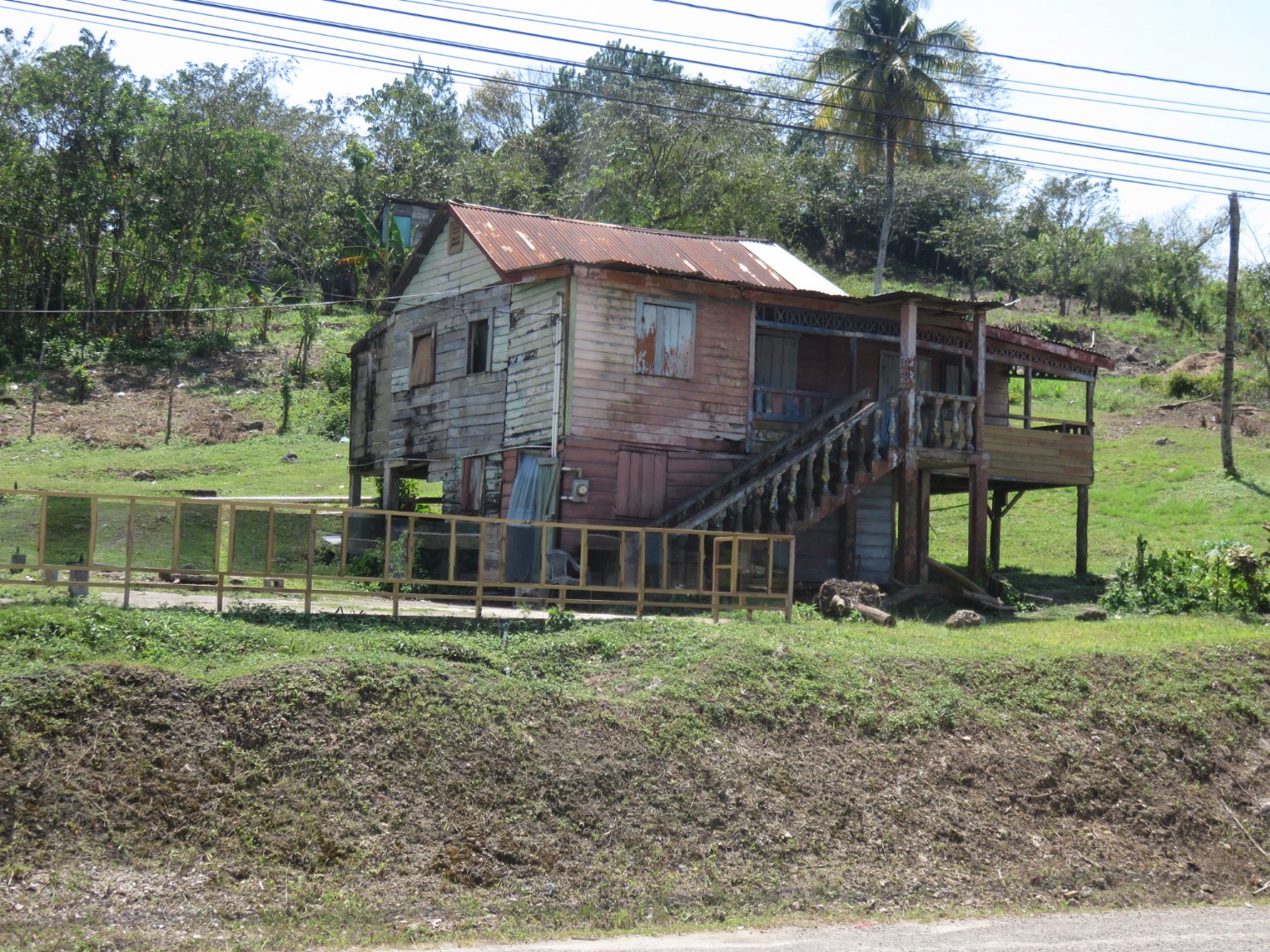
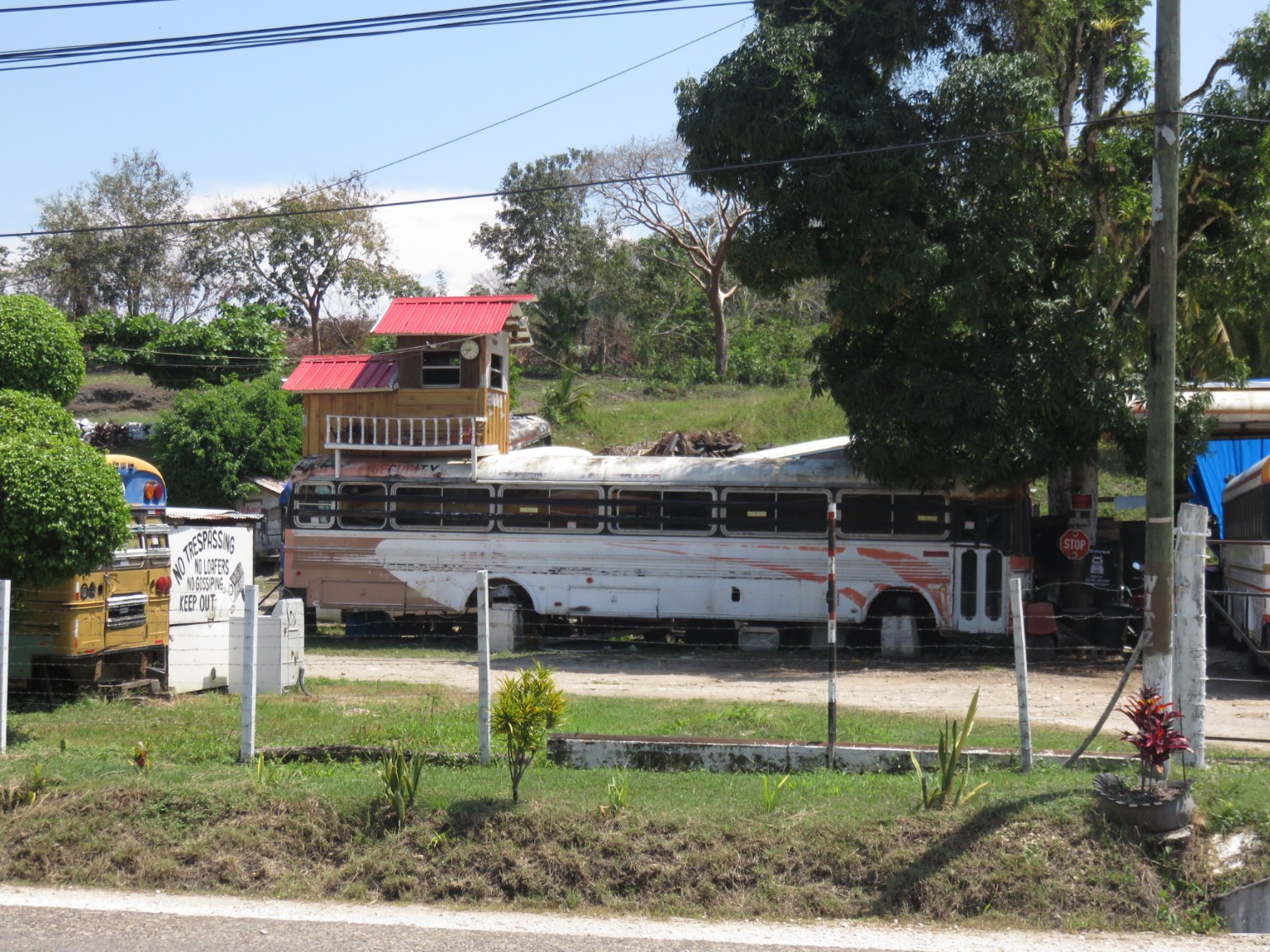
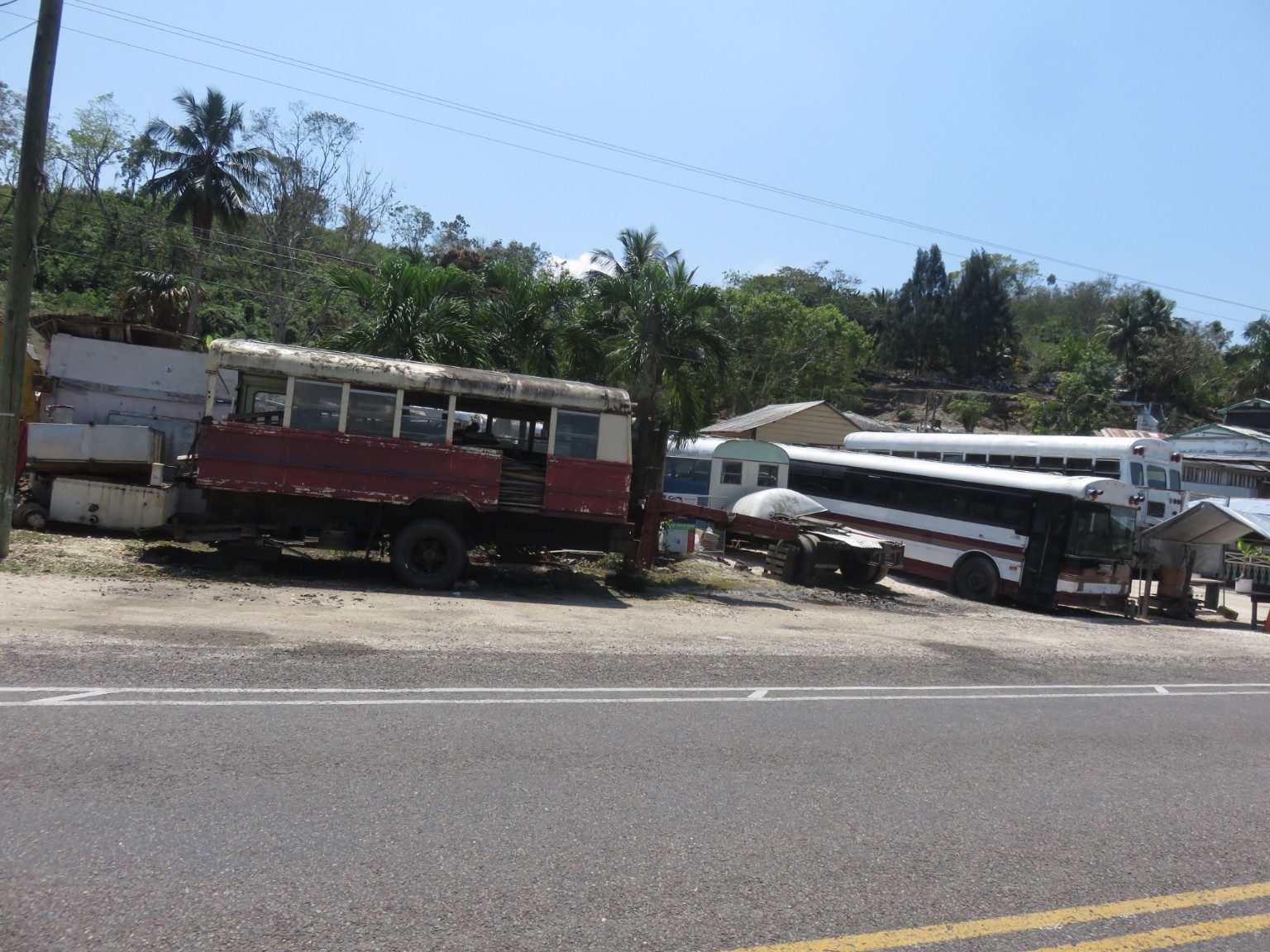
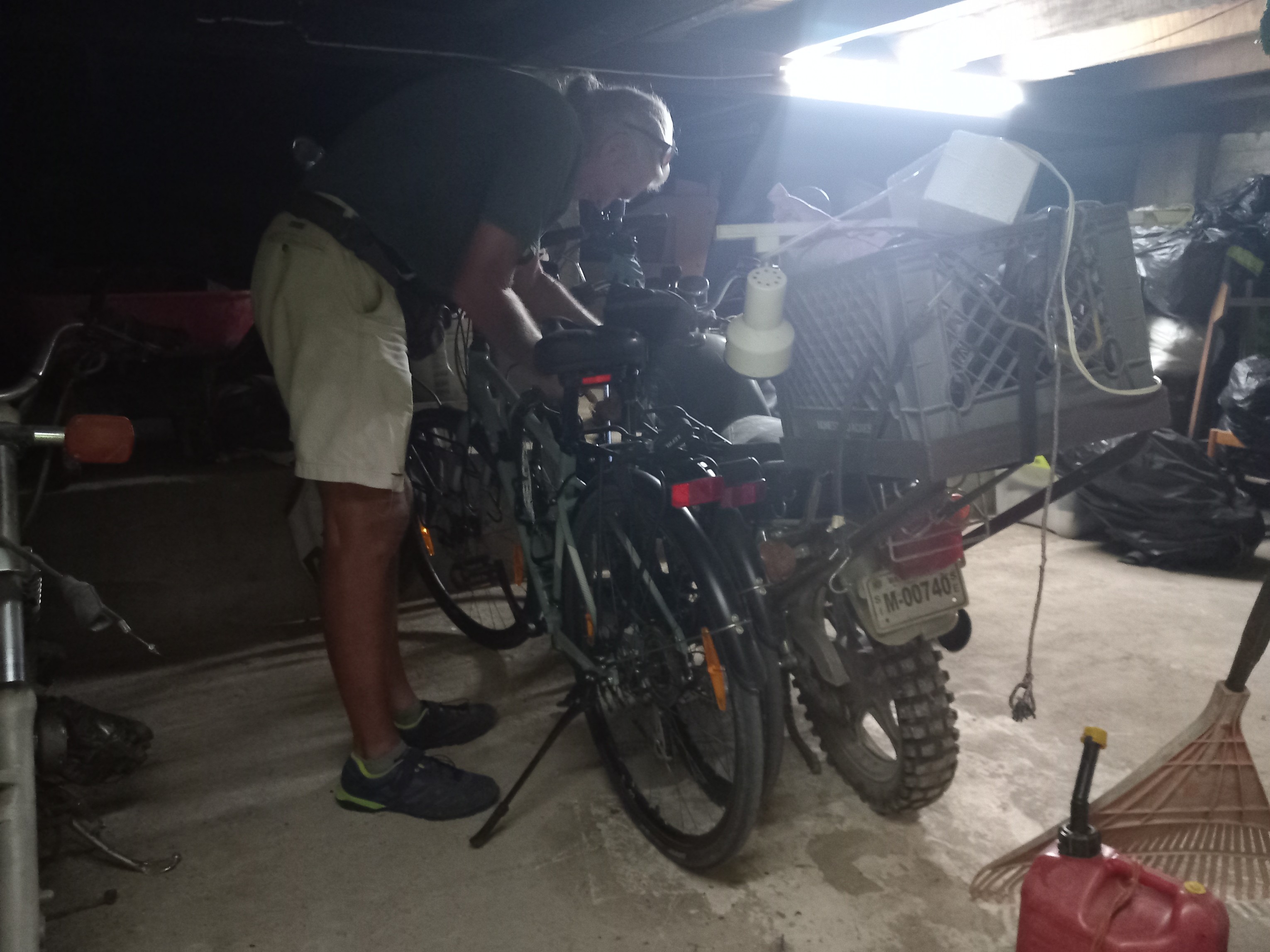
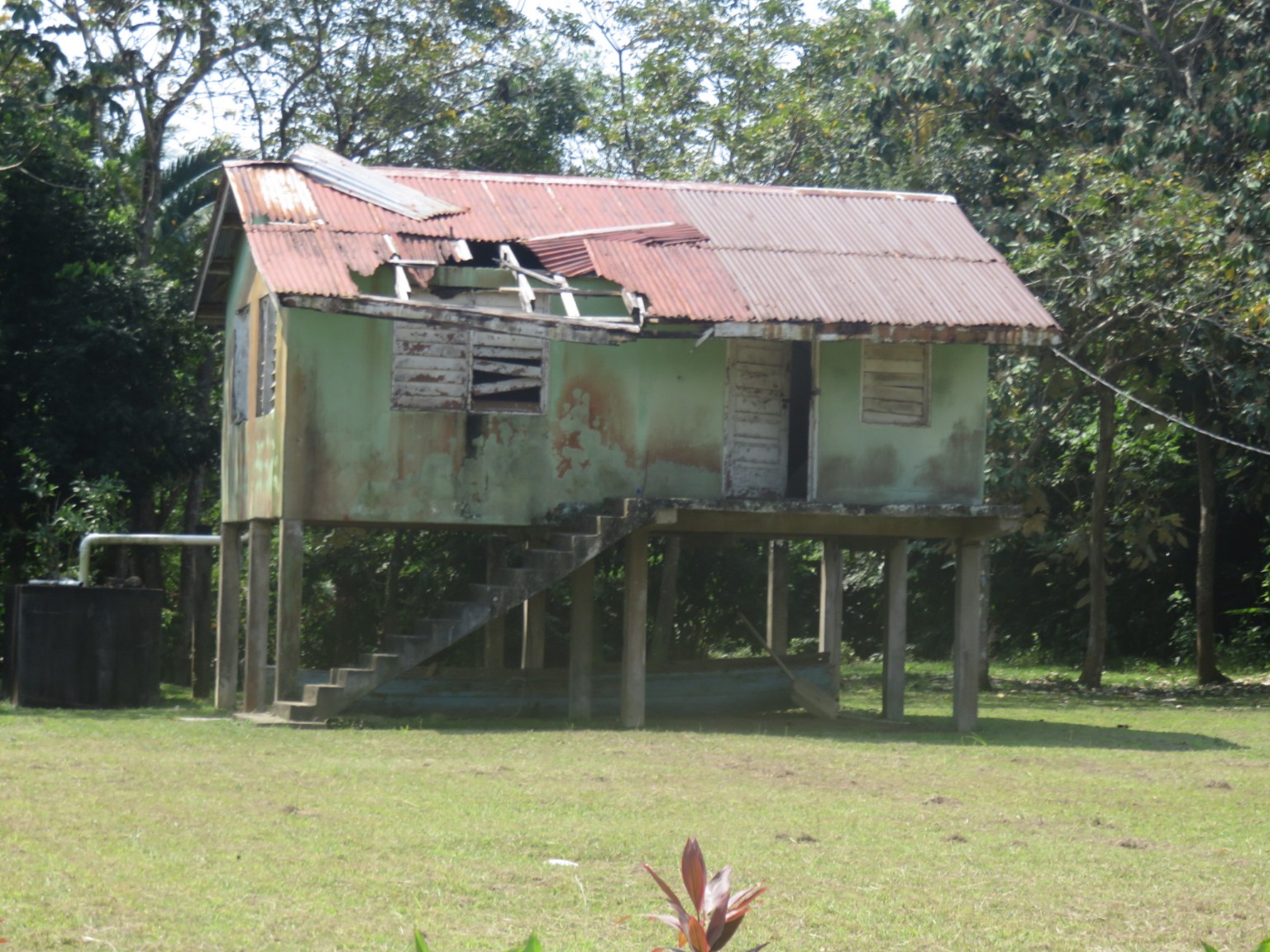
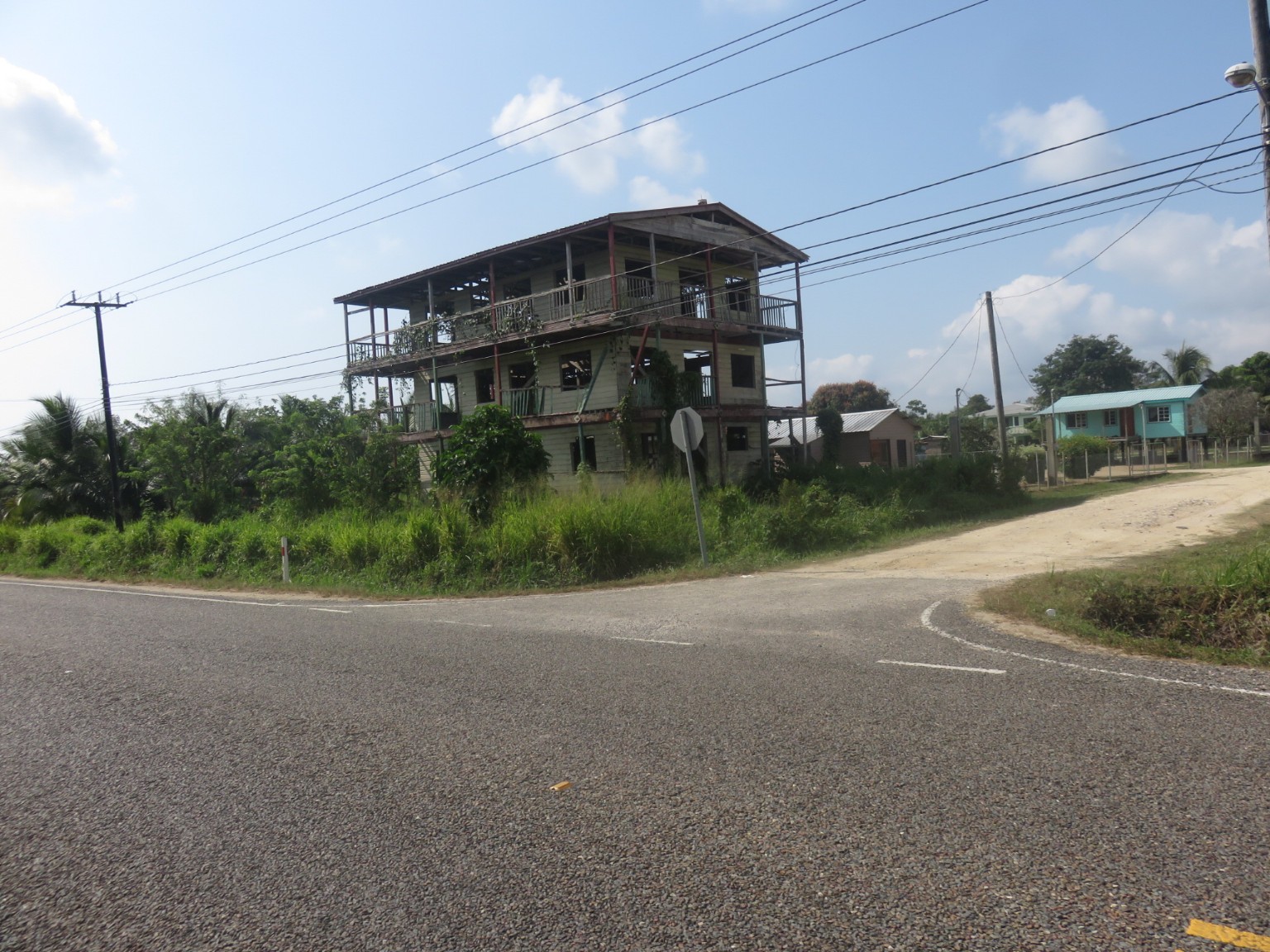
It is beyond us to explain how such a beautiful country tolerates the abandonment of vehicles and homes that are no longer of any use! Proof, if it were needed, that they are sympathetic to cyclists on this road; it helps to overcome the disappointment of missing out on riding the Hummingbird Highway.Journey’s end, for this leg, in San Ignacio.. We have a private room in a Hostal with our bikes in the basement next to our room chained together and to the manager’s motorbike for extra security.Maybe we shouldn’t be so concerned about security because the manager’s main bike is a large, new, Harley Davidson which he parks out on the road, and we are opposite the local Police Station. On the other hand, once bitten, twice shy!
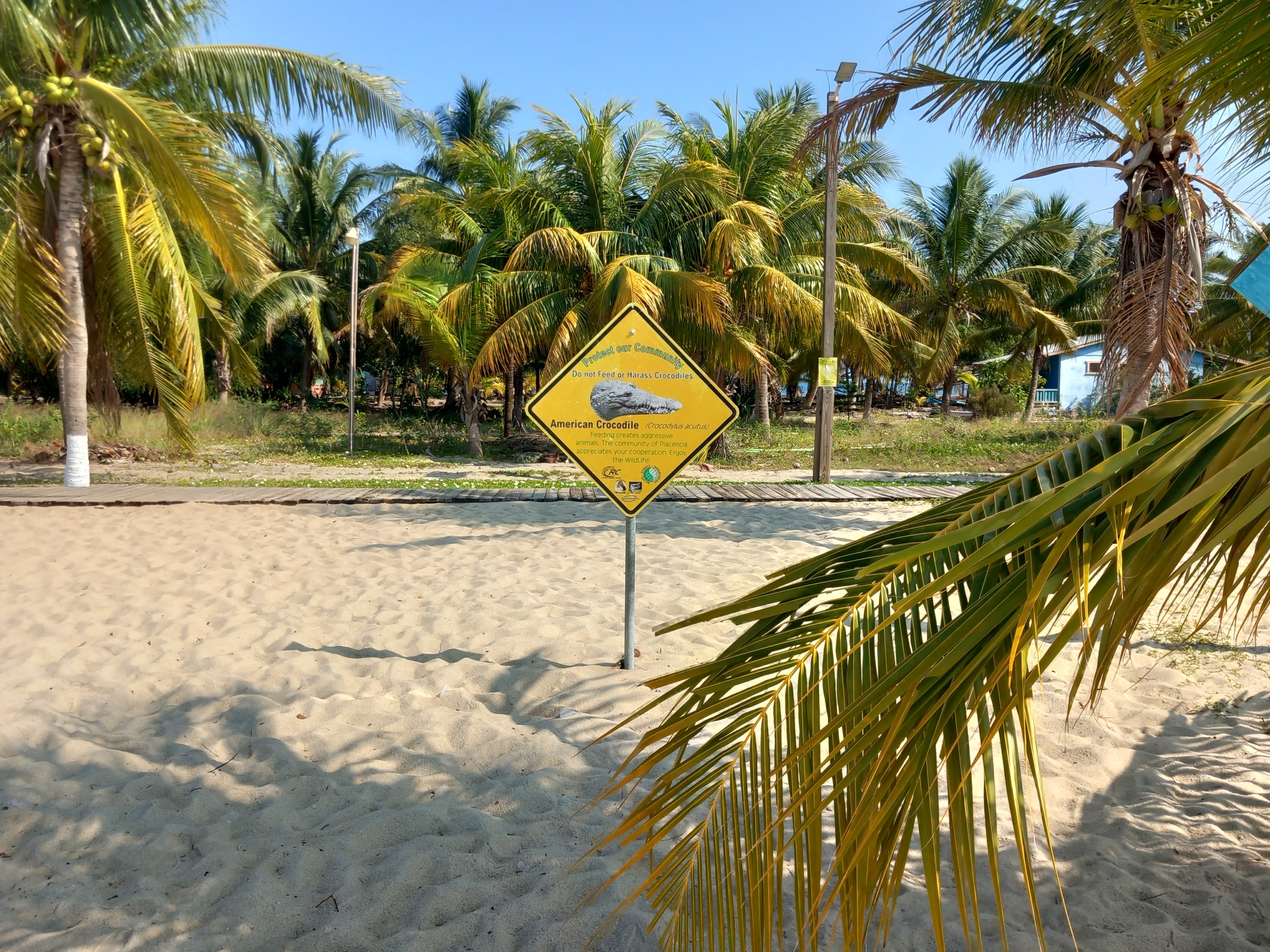
We may be in paradise surrounded by expensive waterfront homes however, the largely retired North American owners need help around their houses and gardens and this is the type of inexpensive roadside cafe where the locals dine before and after work. Our biggest challenge has been wild dogs in Mexico although we have to point out that after 2 weeks in Belize we haven’t been chased by one. We hope not to see any crocodiles.
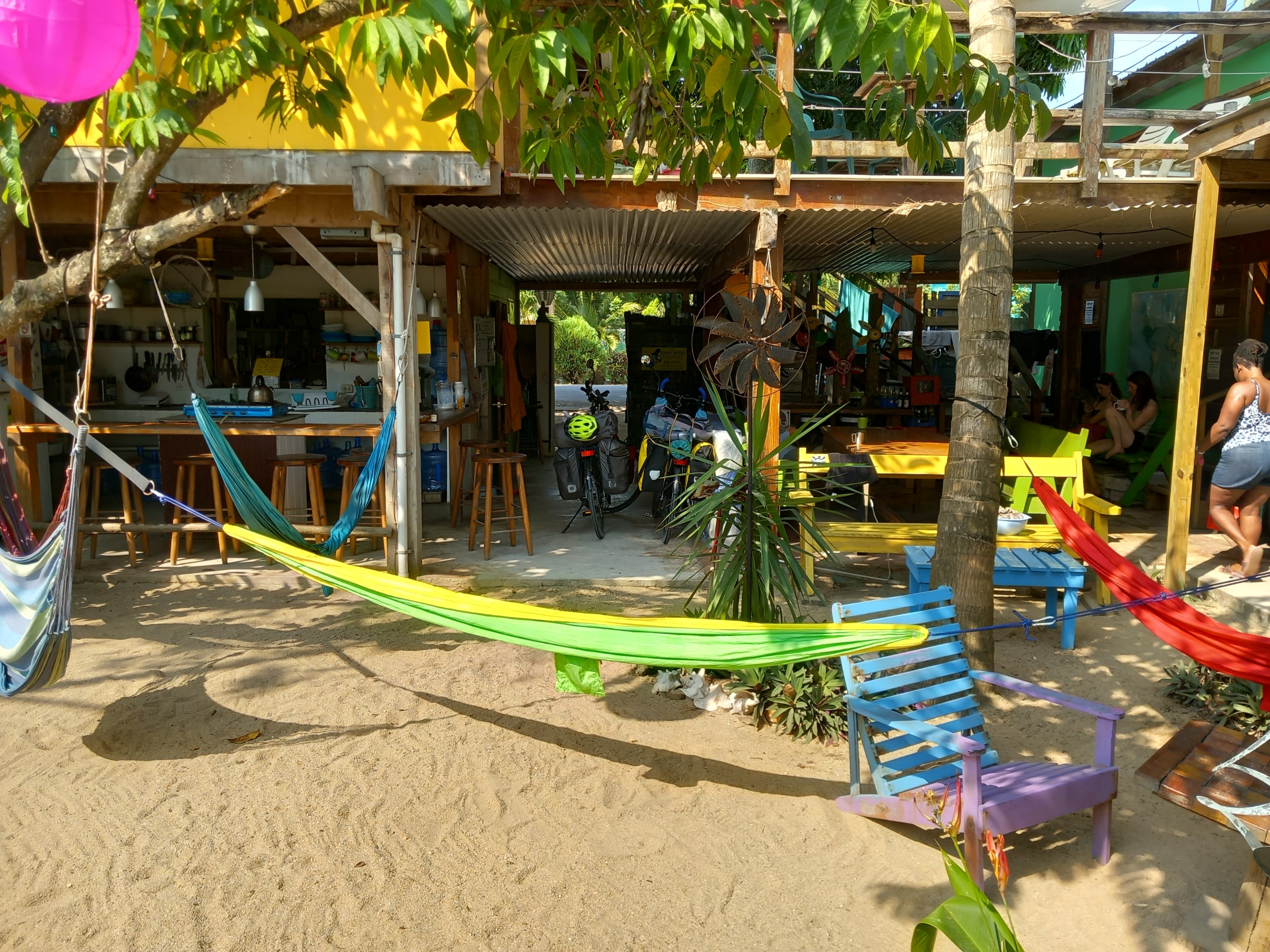
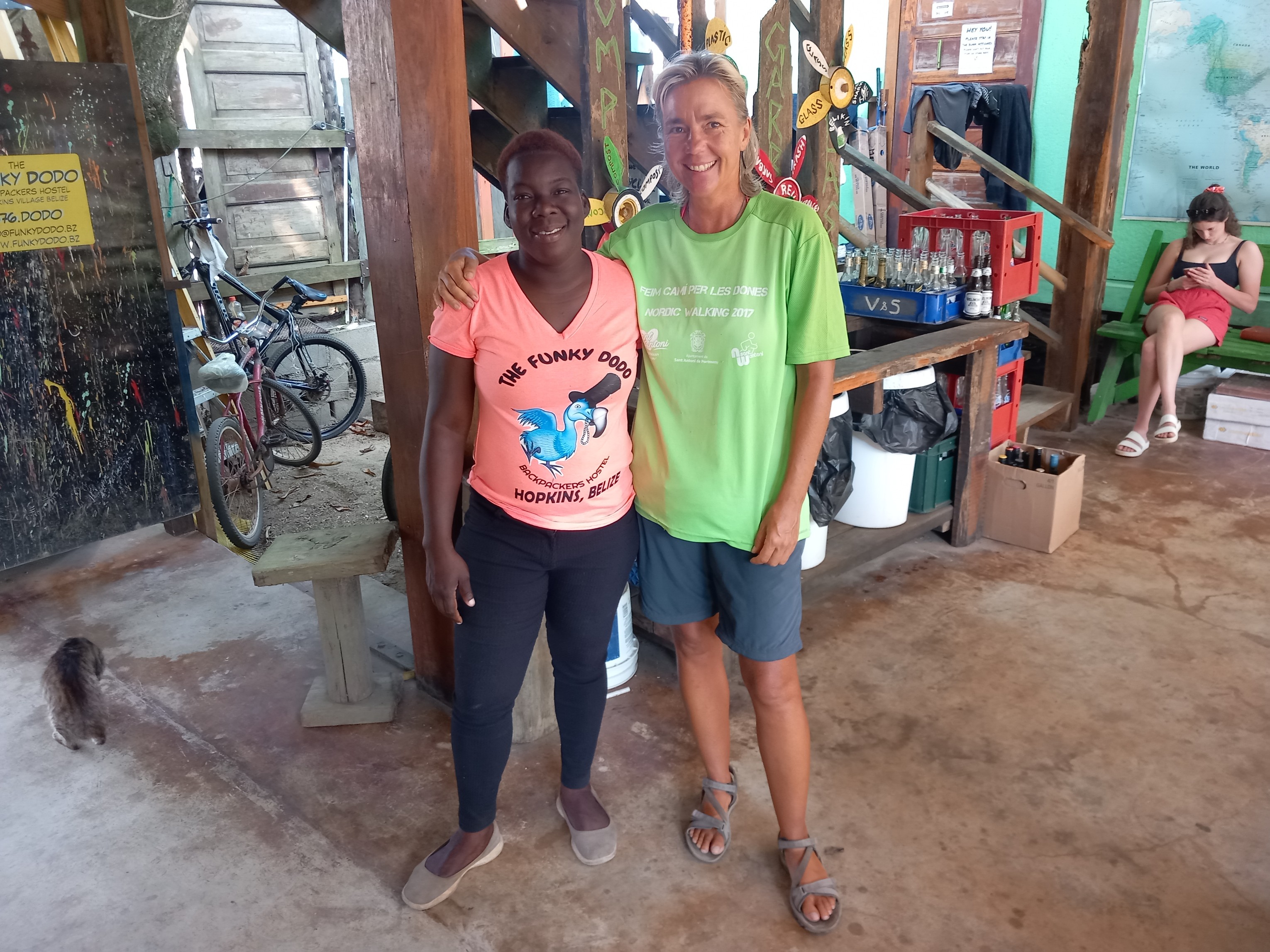
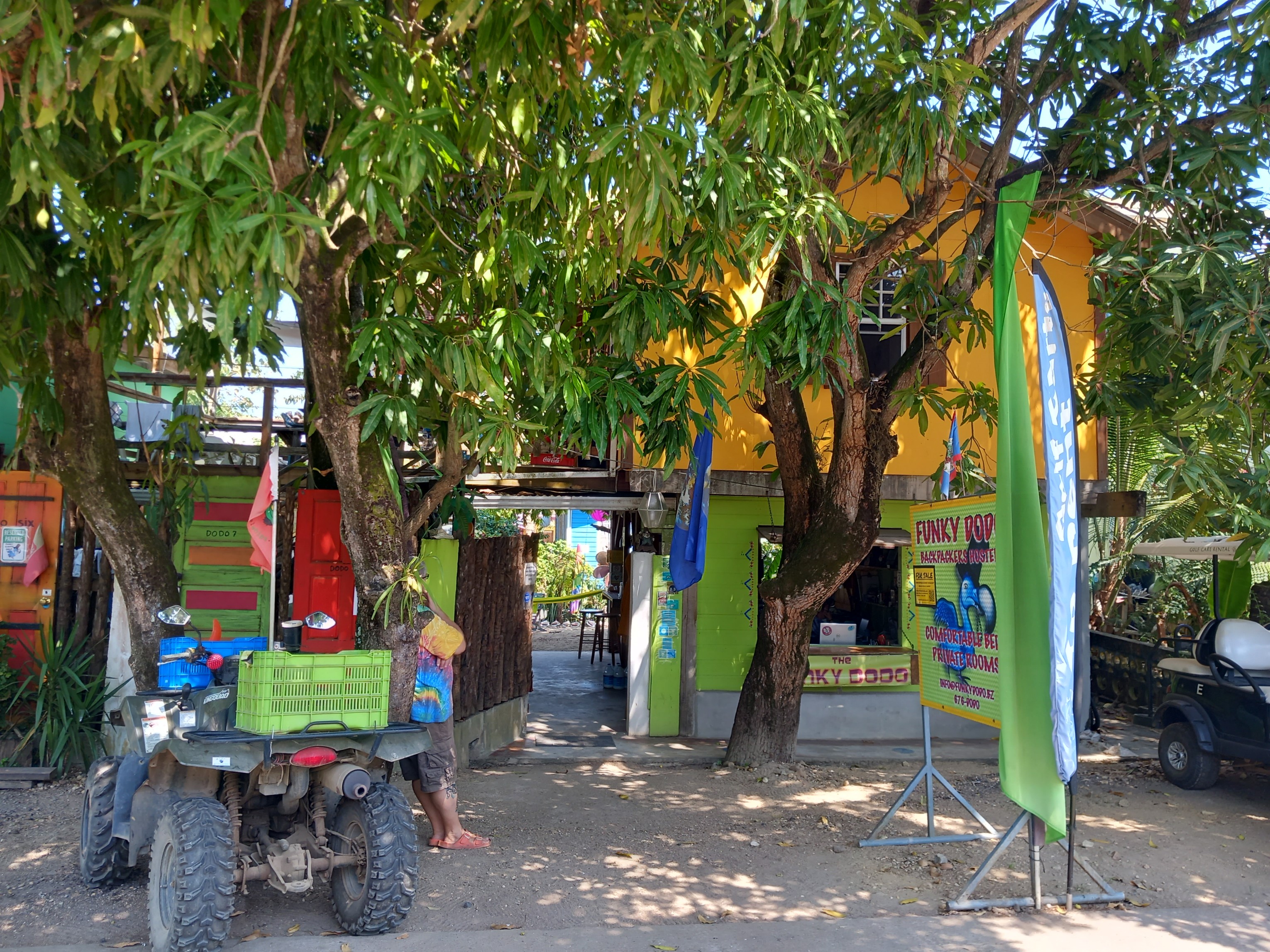
Some more views of Hopkins before we leave……..This was the lounge area of the hostel we stayed in at called The Funky Dodo – its a genuine name and listed in the LP guide although we didn’t realise that until after we checked in.Now we’re en route to Placencia and have to cross the mangrove swamp via a very uneven track.
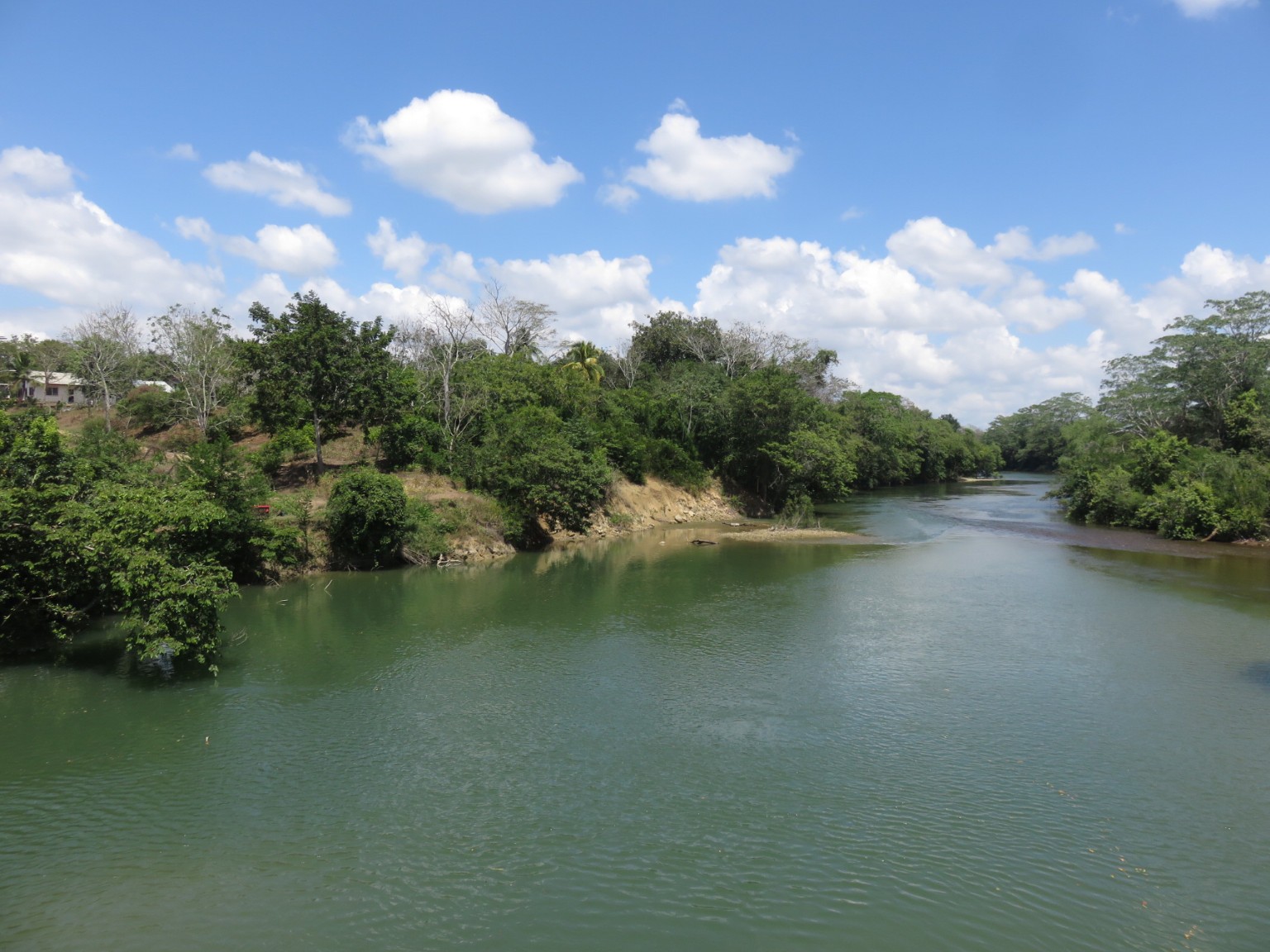
The route passed along a very pretty river side with some expensive looking expat houses overlooking the water.
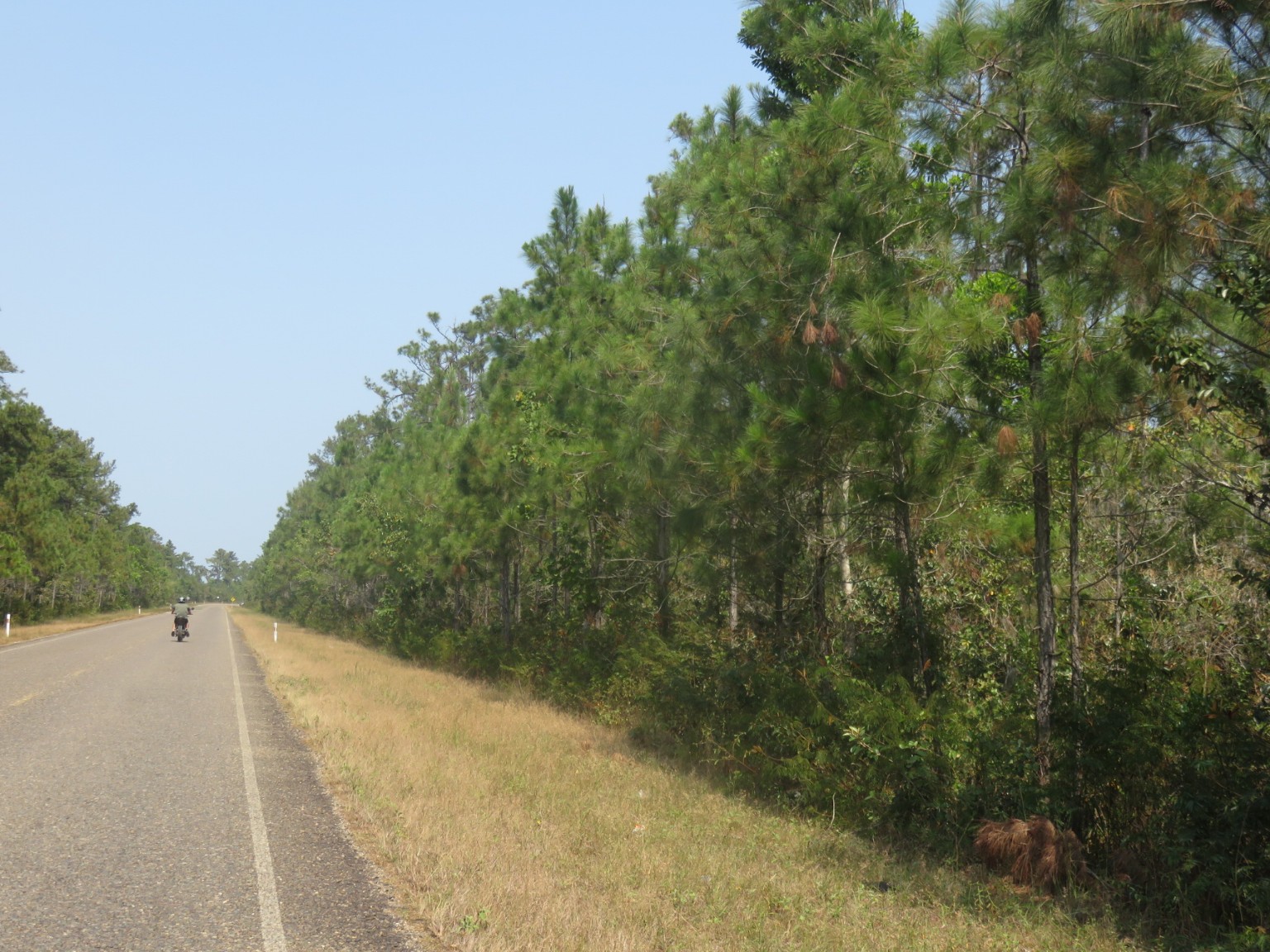
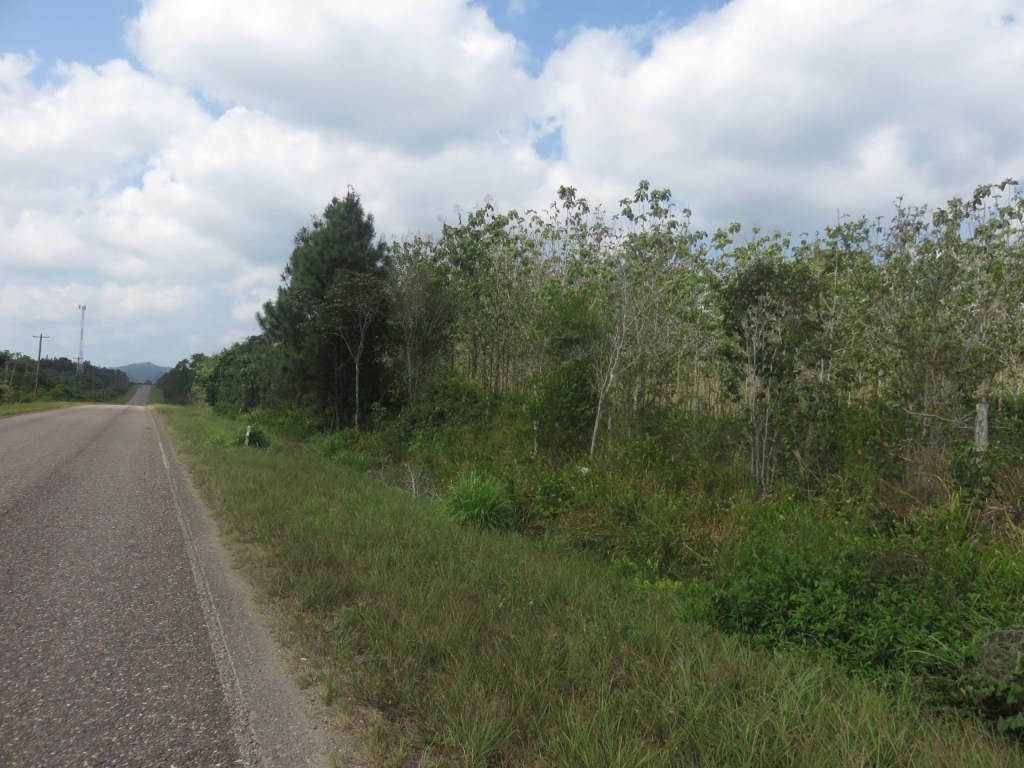
As usual amongst the prosperous houses are the abandoned properties.Back on the main road, the Southern Highway, it is the usual narrow single lane in each direction without any shoulder for us to use. Thankfully the road is still relatively free of traffic. The day’s scenery changes from mangrove swamp to bush to jungle to savannah such is the dominance of the natural habitat in this country. We are literally on a narrow ribbon of tarmac travelling through what is still largely untouched trees and vegetation.
A bit low key compared to Chitzen Itza, however, a reminder that the Mayan civilisation once dominated this area.
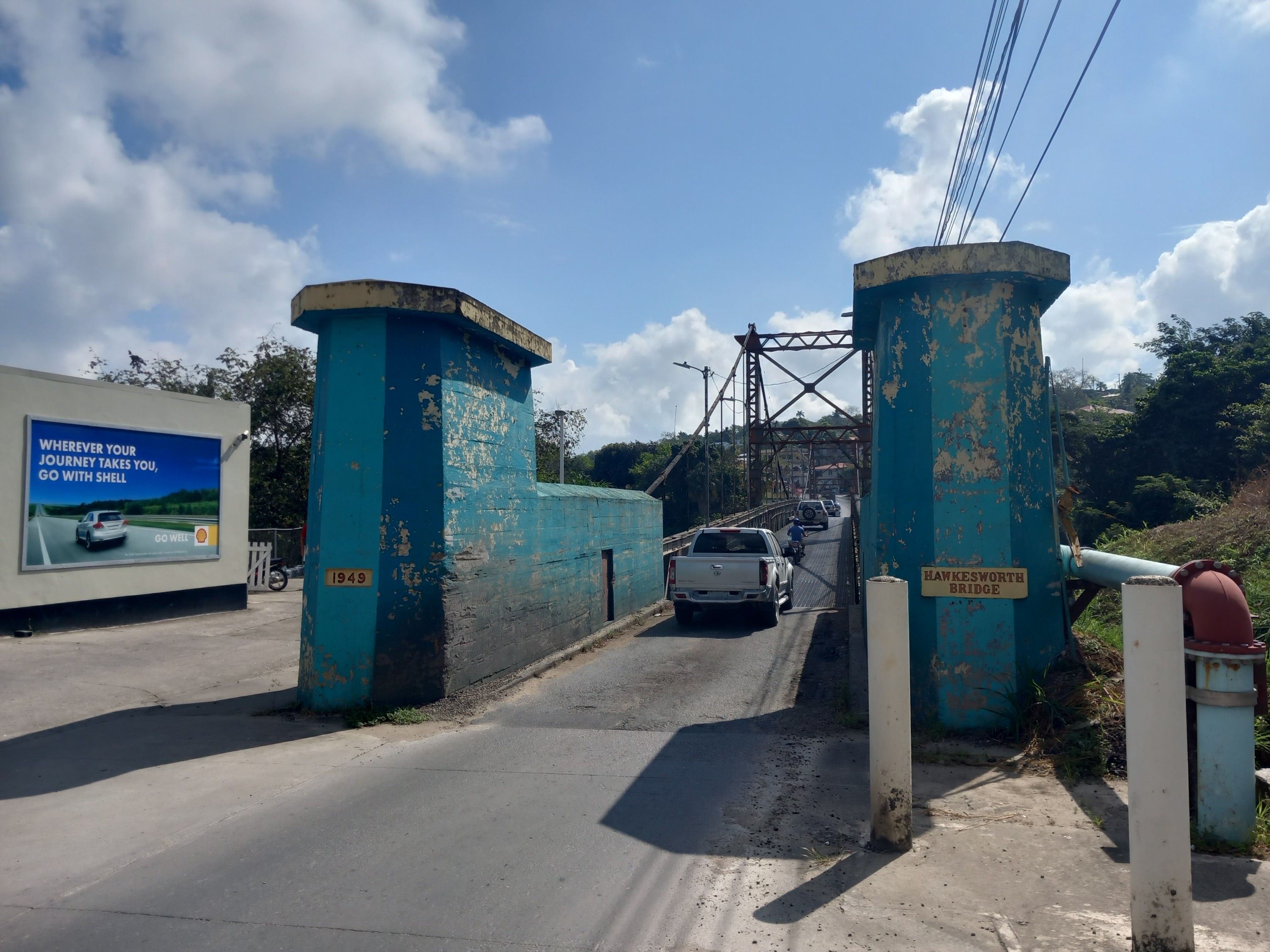
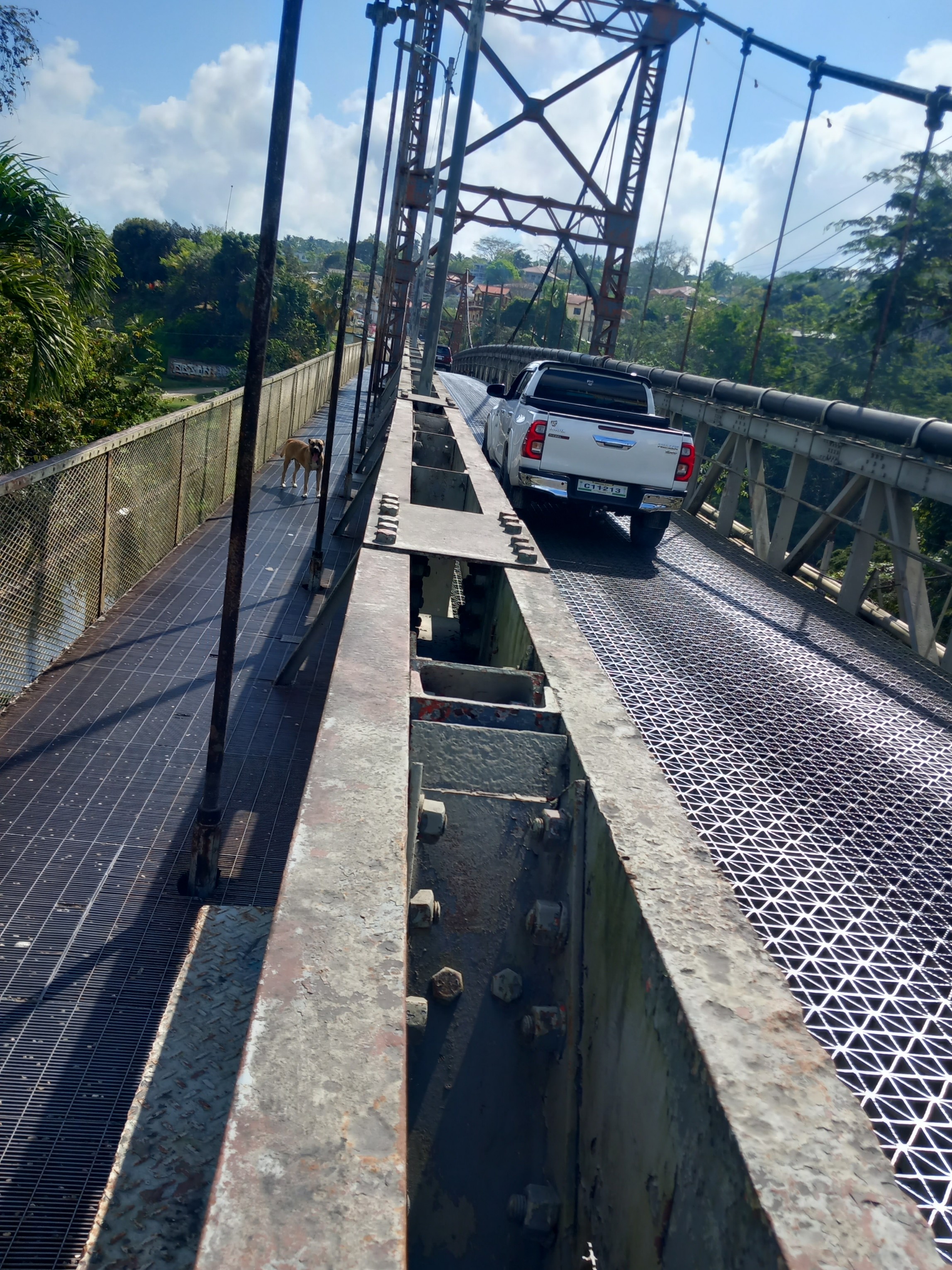
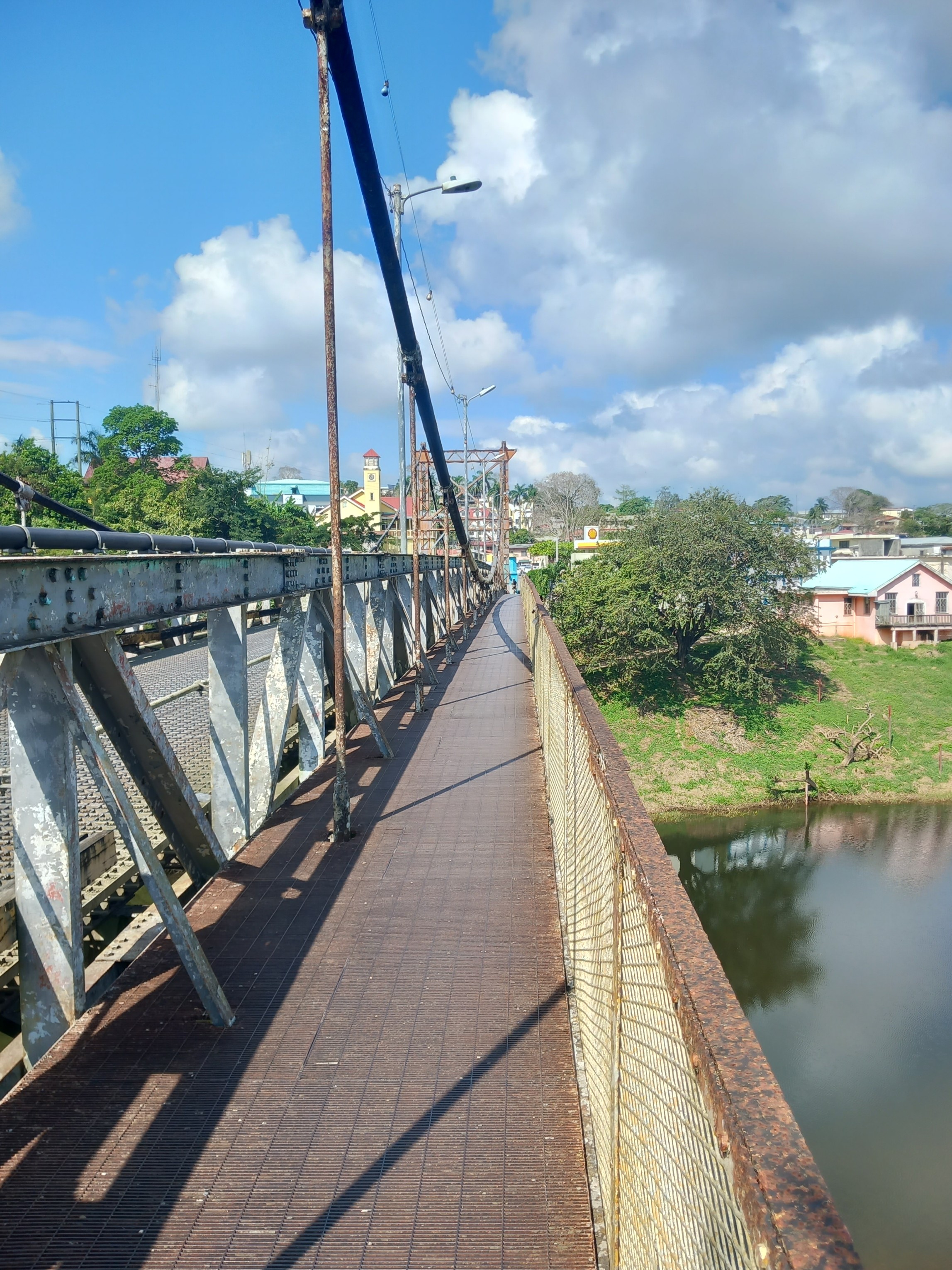
A metal bridge funded by the British when they were the colonial power in this country – it was then known as British Honduras.It is worth noting that large parts of the country are being preserved as sanctuaries, nature reserves and retained in their natural habitat. This is ideal for the environment although less helpful when planning a road trip because there is not any obvious circular tour that can be done – stages have to be backtracked or dead ends reached only to be U turned .
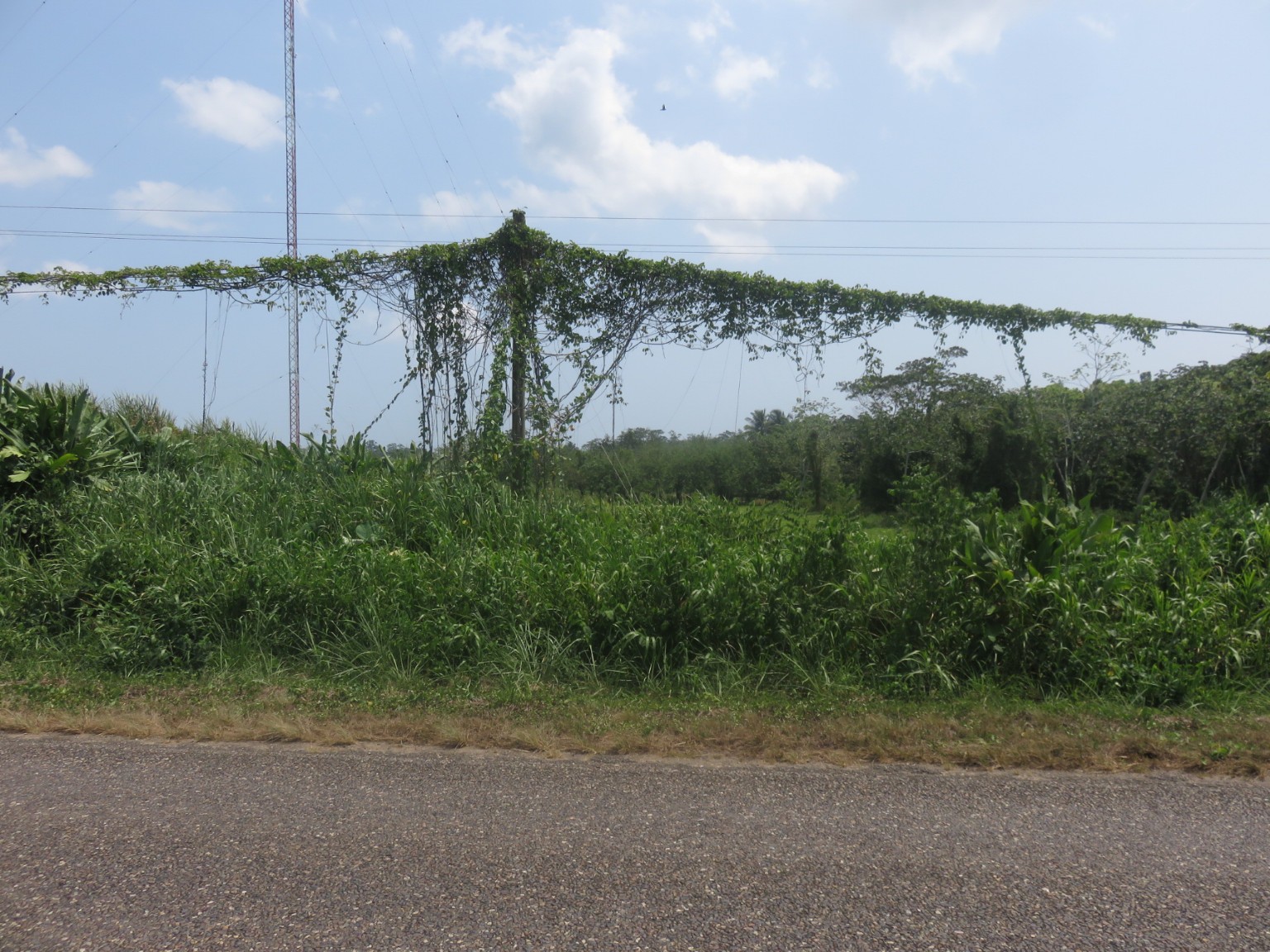
Another example that the jungle will reclaim the infrastructure if its not kept trimmed and cleared of the undergrowth – in this case electricity pylons and their attached cables.
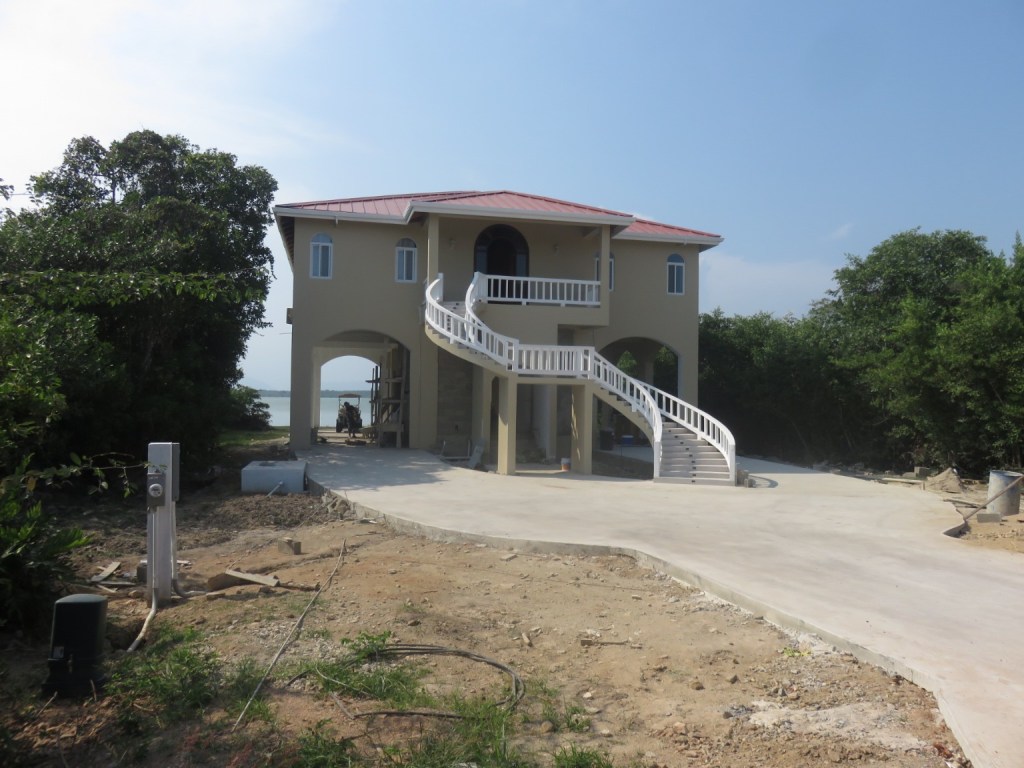
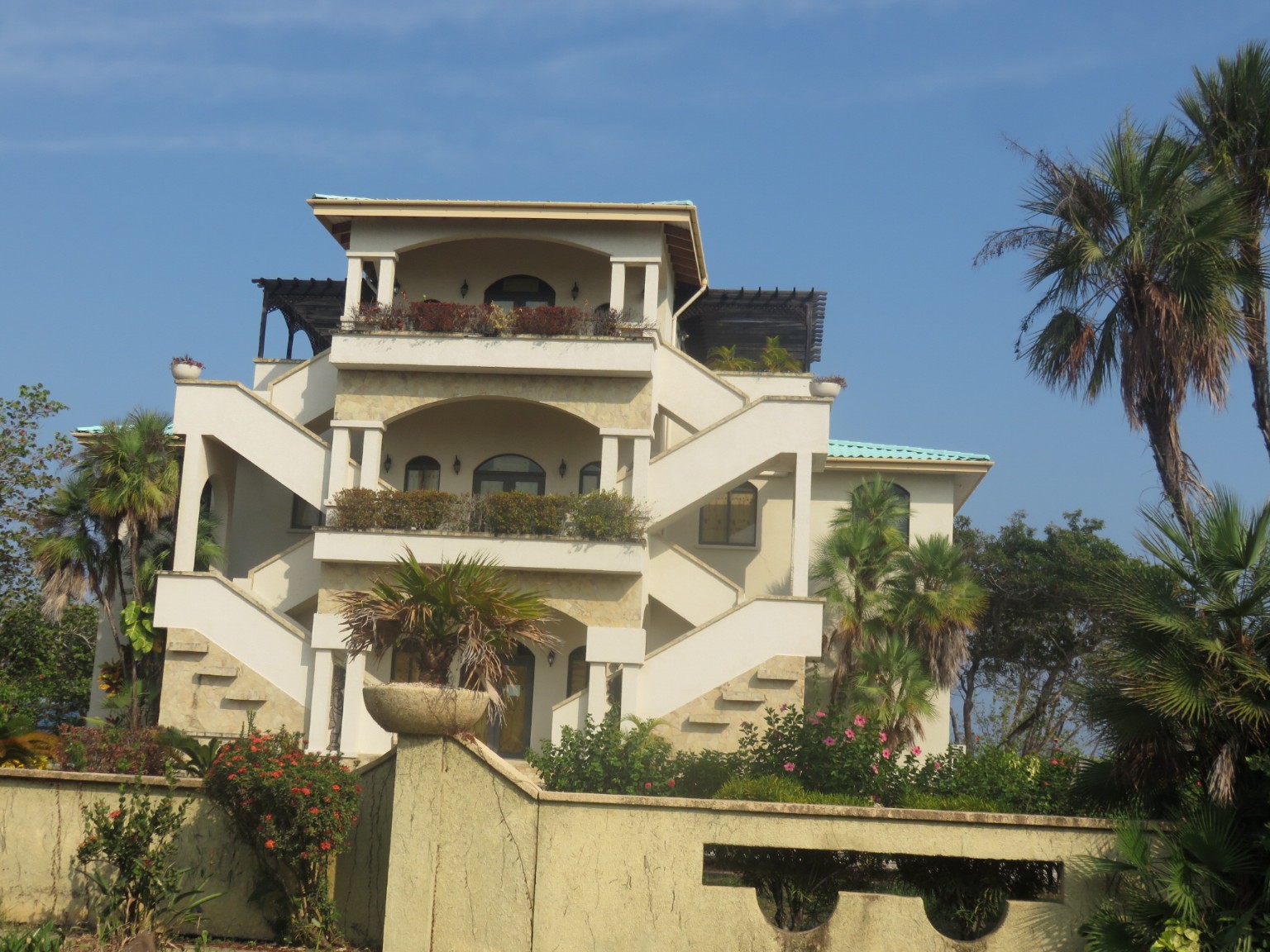
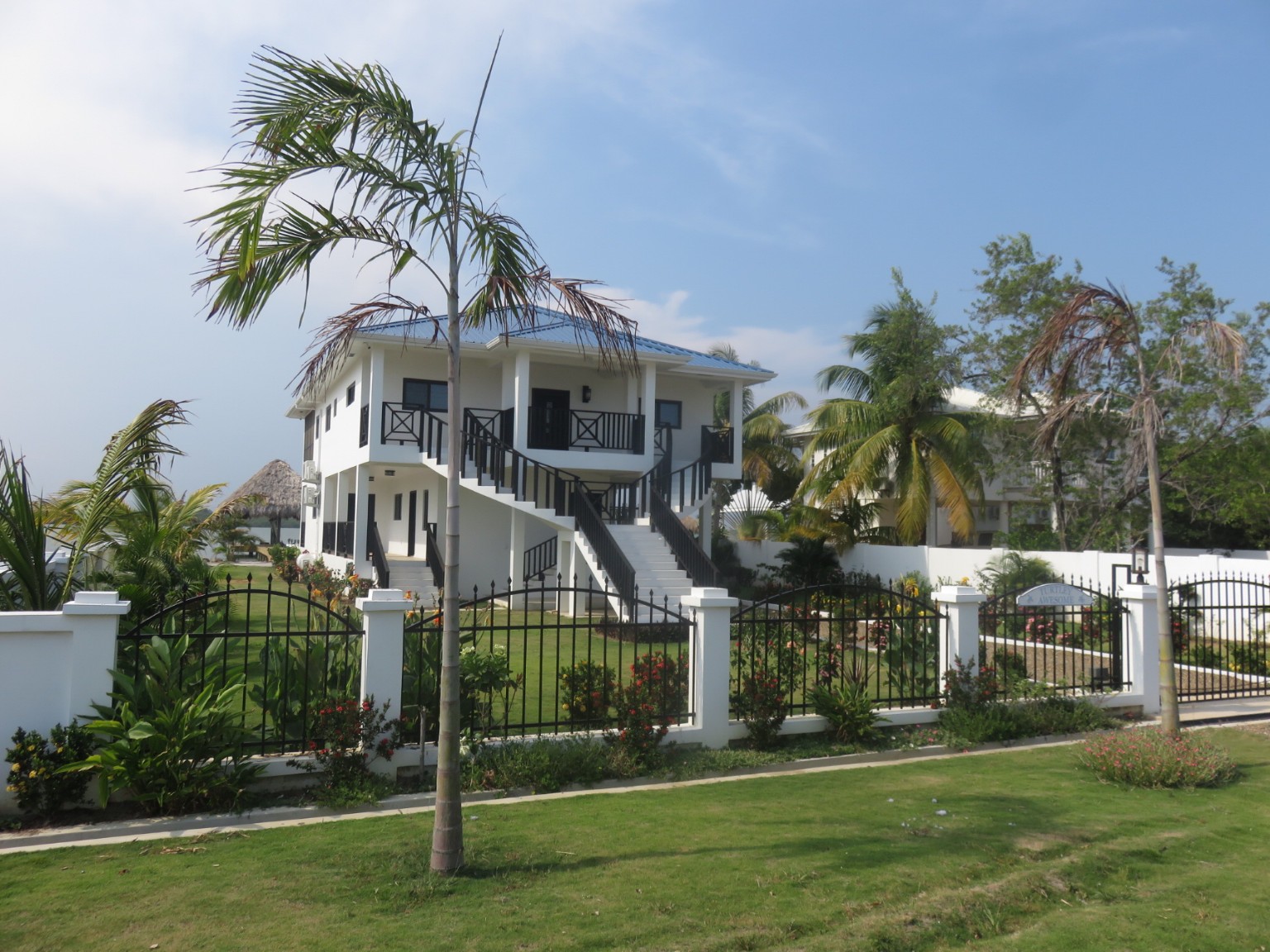
Now we begin the 25 mile ride along the only road that leads to a Caye (all the other Cayes have to be accessed by boat, unless you’re like Leonardo Di Caprio and can use a combination of private jet, superyacht and/or helicopter. There is a lagoon to our right and the Caribbean to our left; it is barely one property between each body of water. These houses are primarily owned by expats and, once again, those familiar with Florida will recognise the styles and plot layouts.
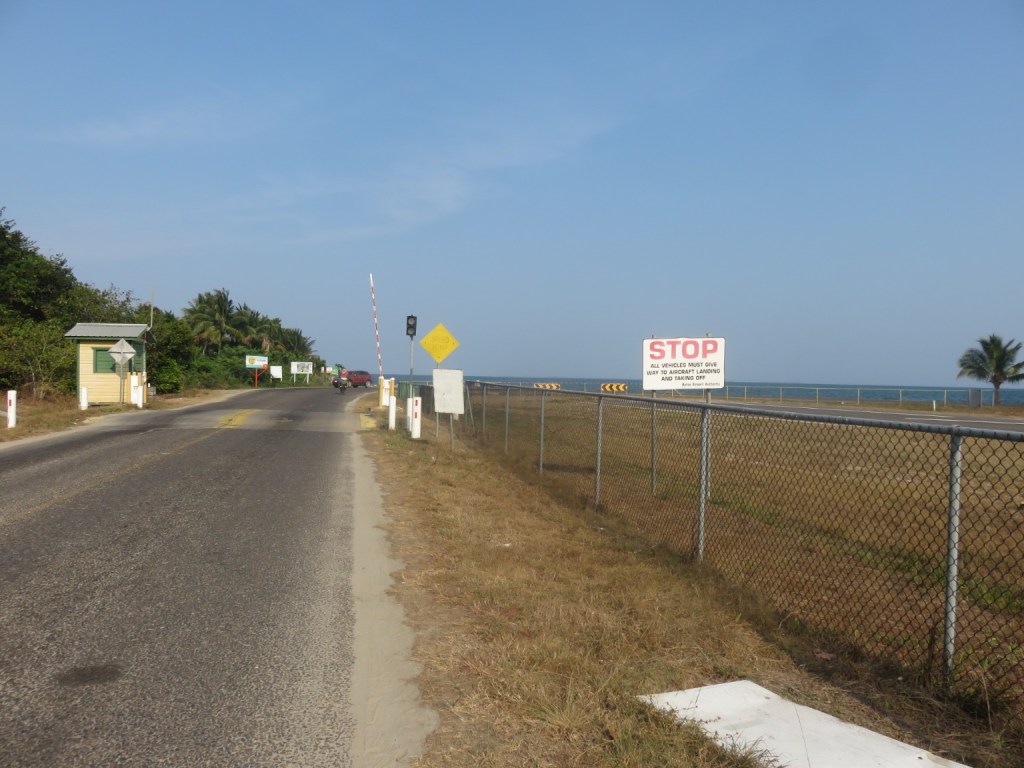
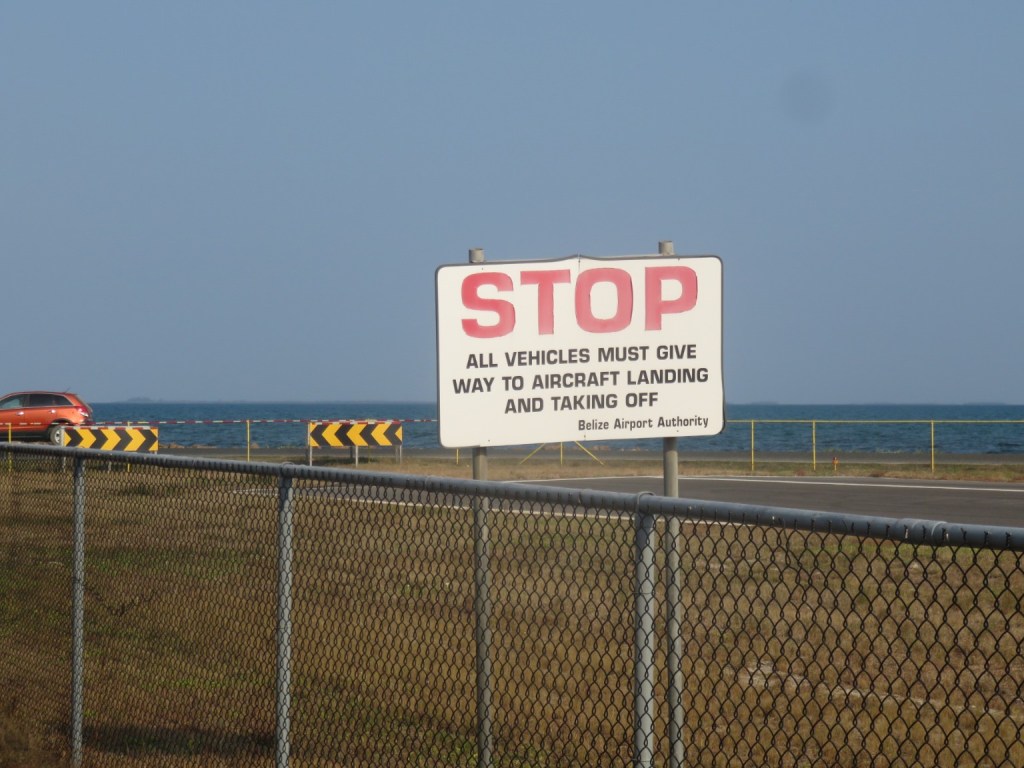
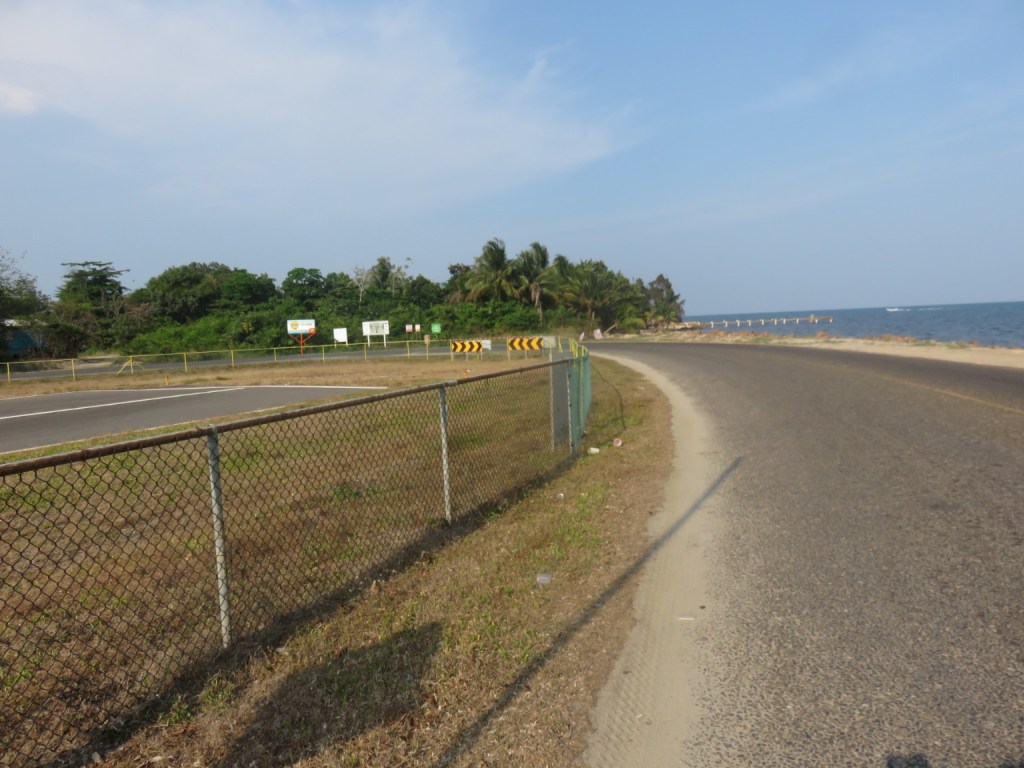
Those familiar with Gibraltar airport will recognise the proximity of runway and sea and the need to shut the road when aircraft take off and land. The only difference here is that the road goes around the end of the runway whereas in Gibraltar the road goes across the runway.
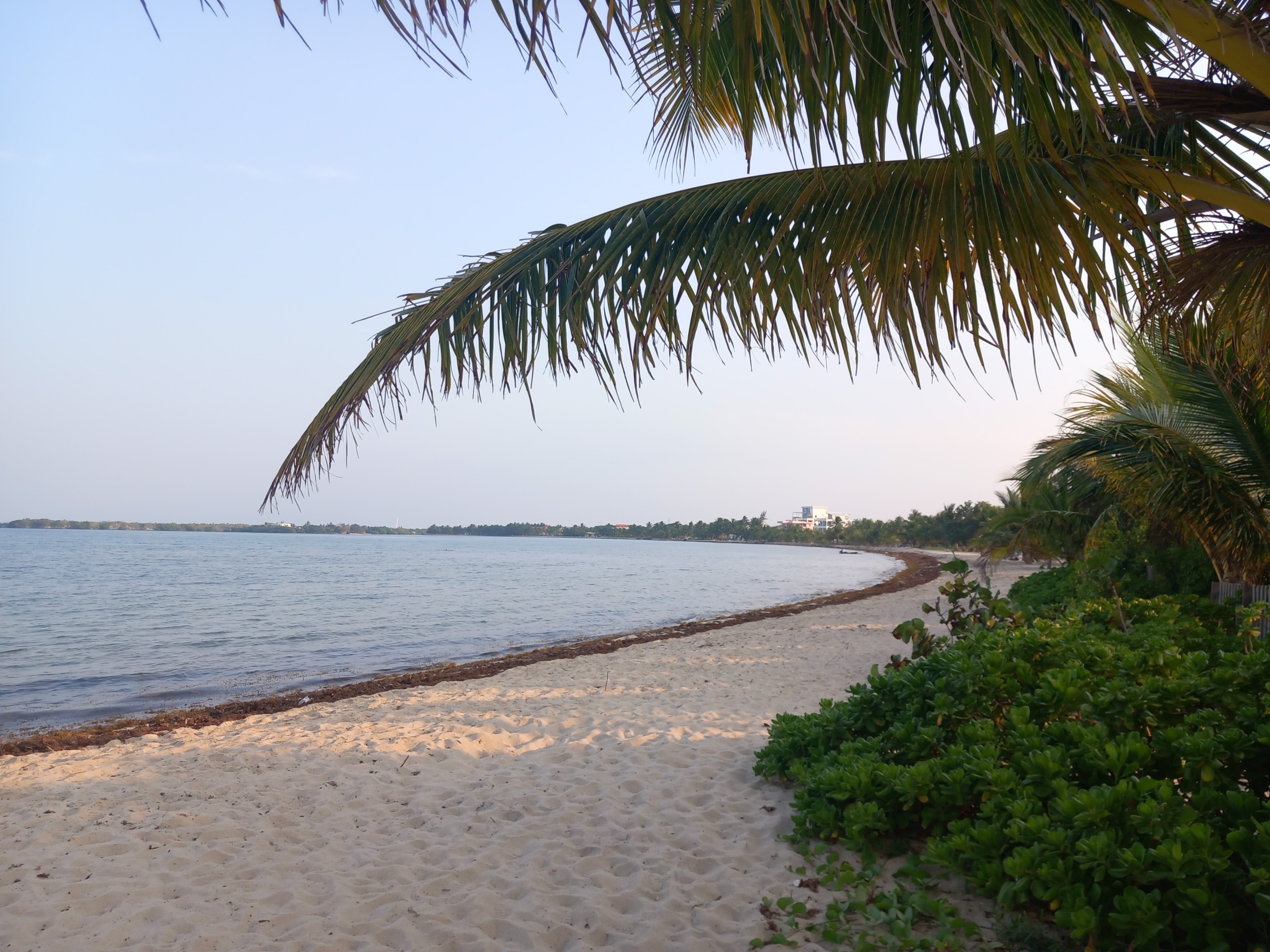
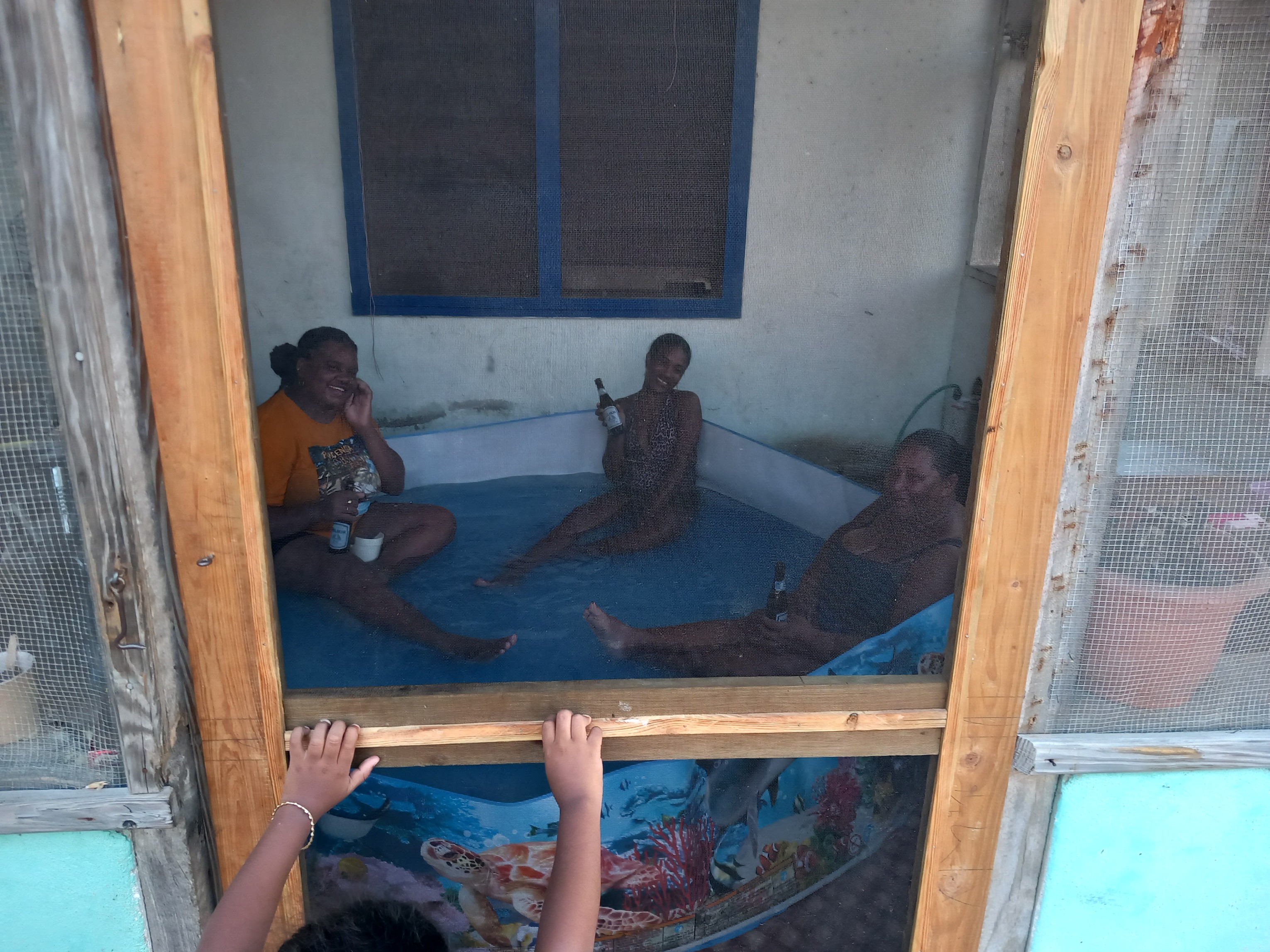
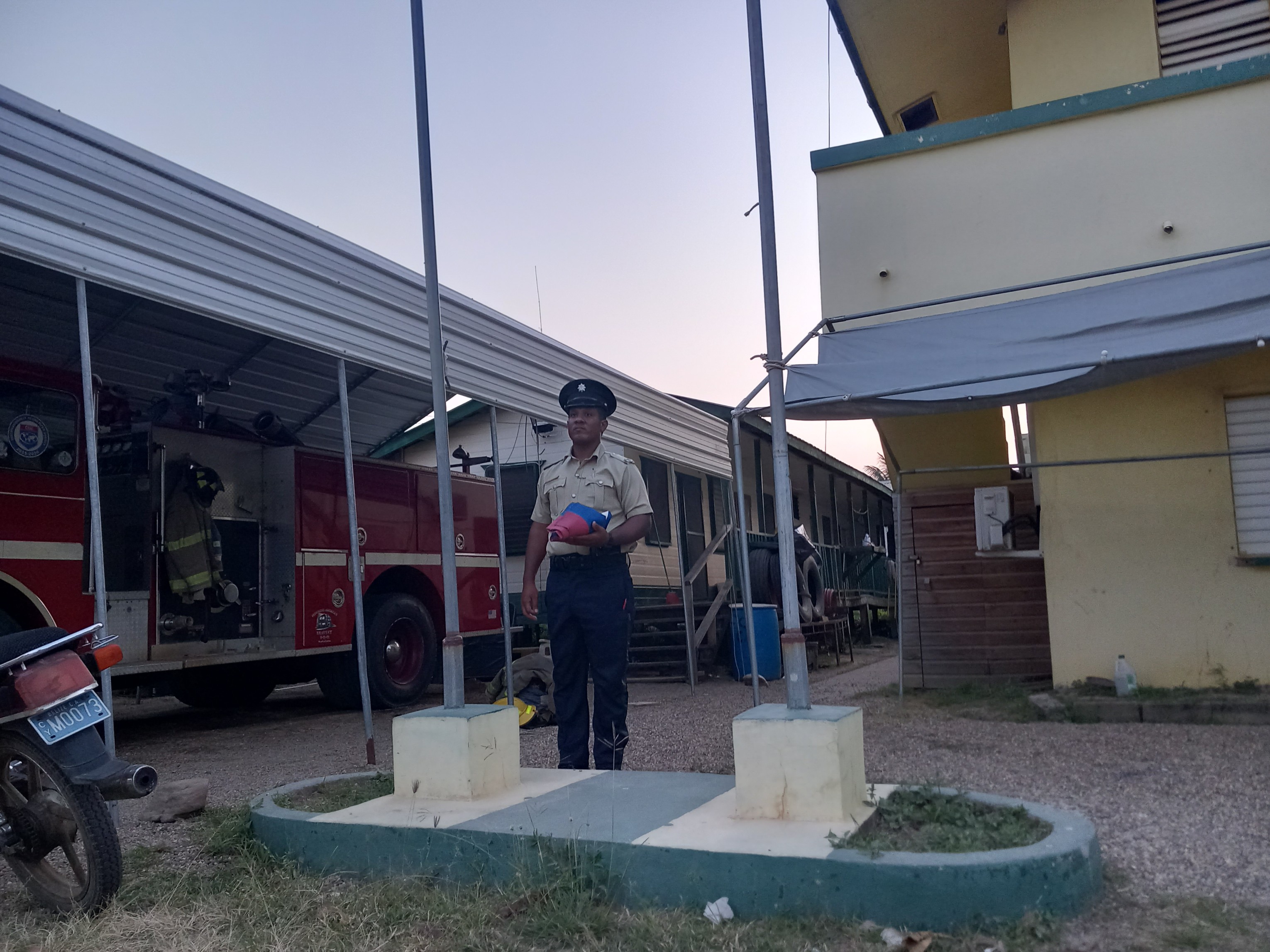
Paradise is still plagued by the seaweed. Interestingly from our observations the Mexicans were attempting to control the situation whereas the Belizeans seem to leave nature to its own devices.This family’s living room is next to the footpath as we go in search of dinner. The music is blaring and they are drinking and are seriously happy with their life. One of them was still in the paddling pool when we returned an hour later.At 6am every day the Police raise their flag and the Belizean flag. At 6pm every day the flags are lowered. When we asked why they do it the answer was that it has always been done since the British were here. The duty officer didn’t know why other than his father always did it before him until he retired.
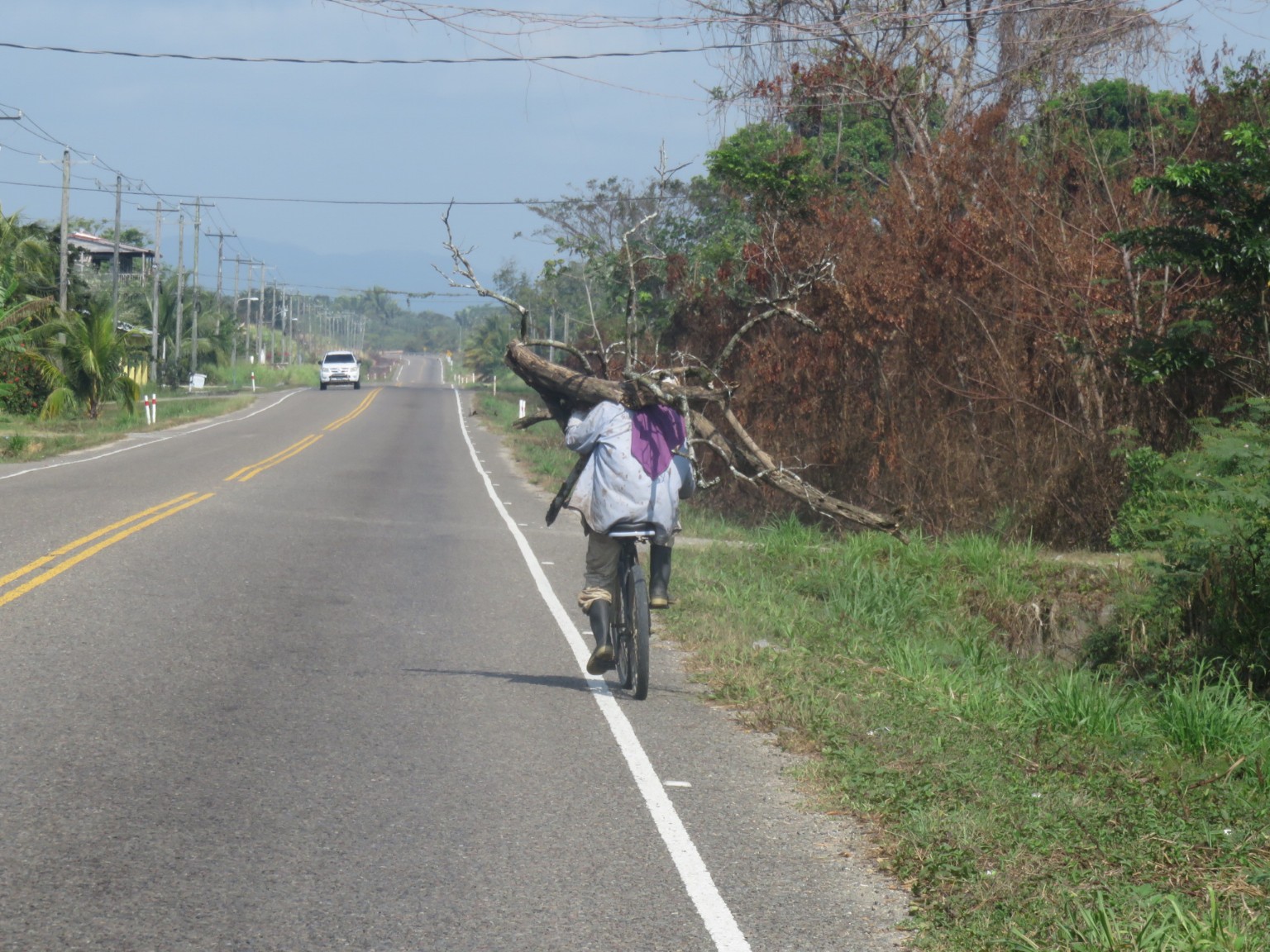
One last view of the creek in Dangriga (translation: sweet water) to the side of our accommodation. We were told the water only spills over the beach into the sea during the wet season.We have now joined the Hummingbird Highway so named because of the almost continuous birdsong.A brief drink stop.Firewood for cooking fires – no need for heating in a sub tropical climate.Sometimes the road surface is not as smooth as it looks!
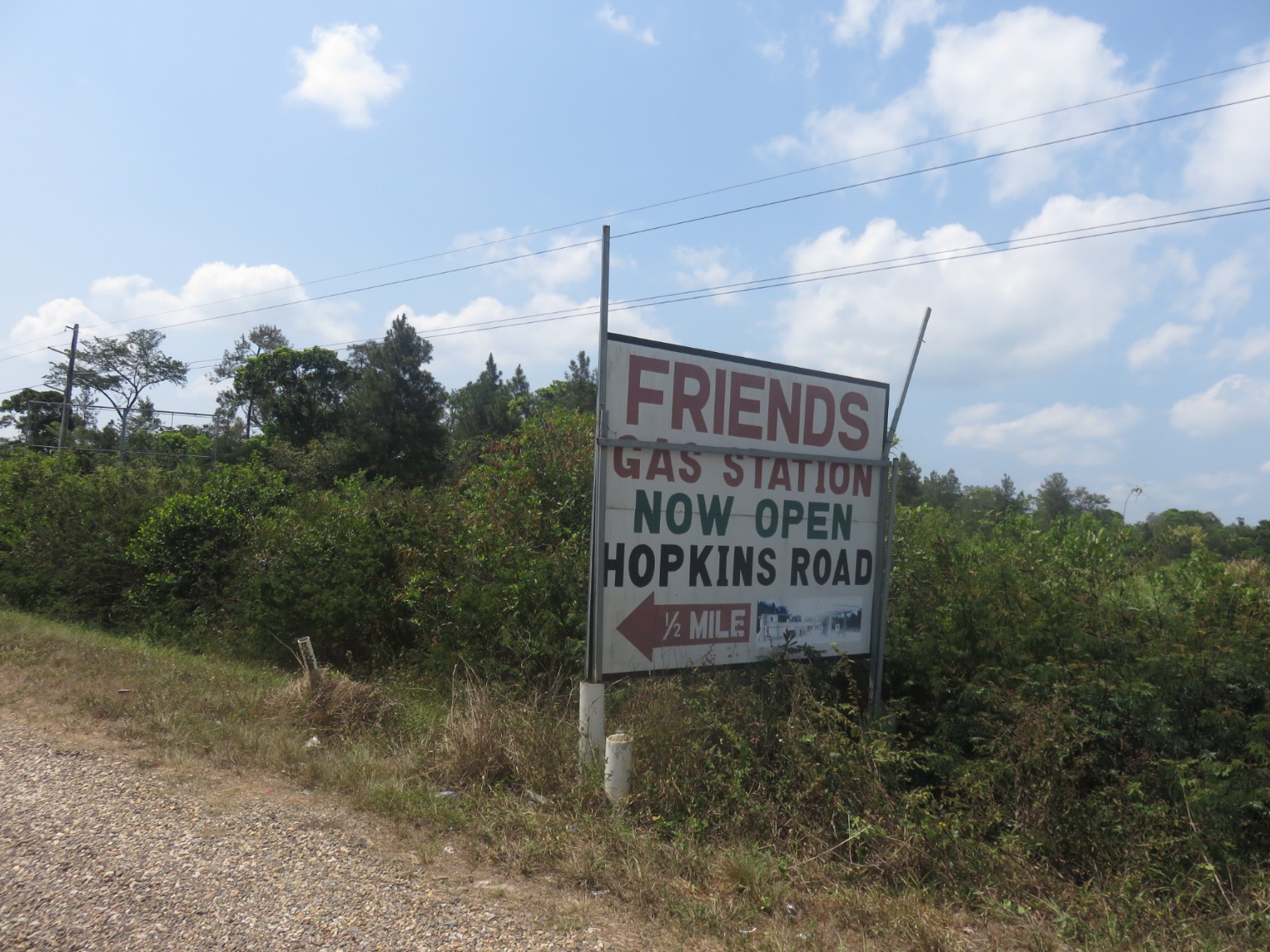
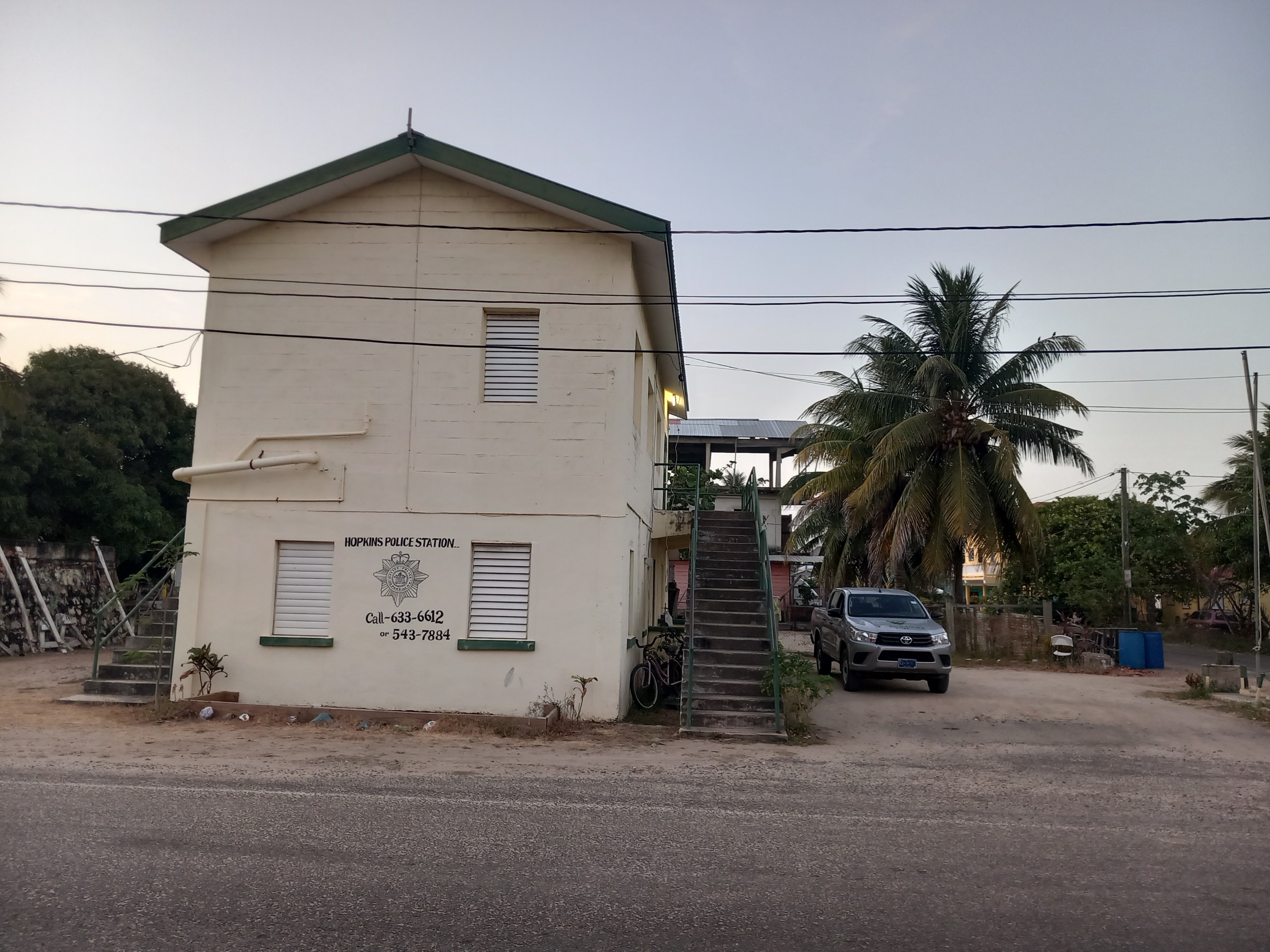
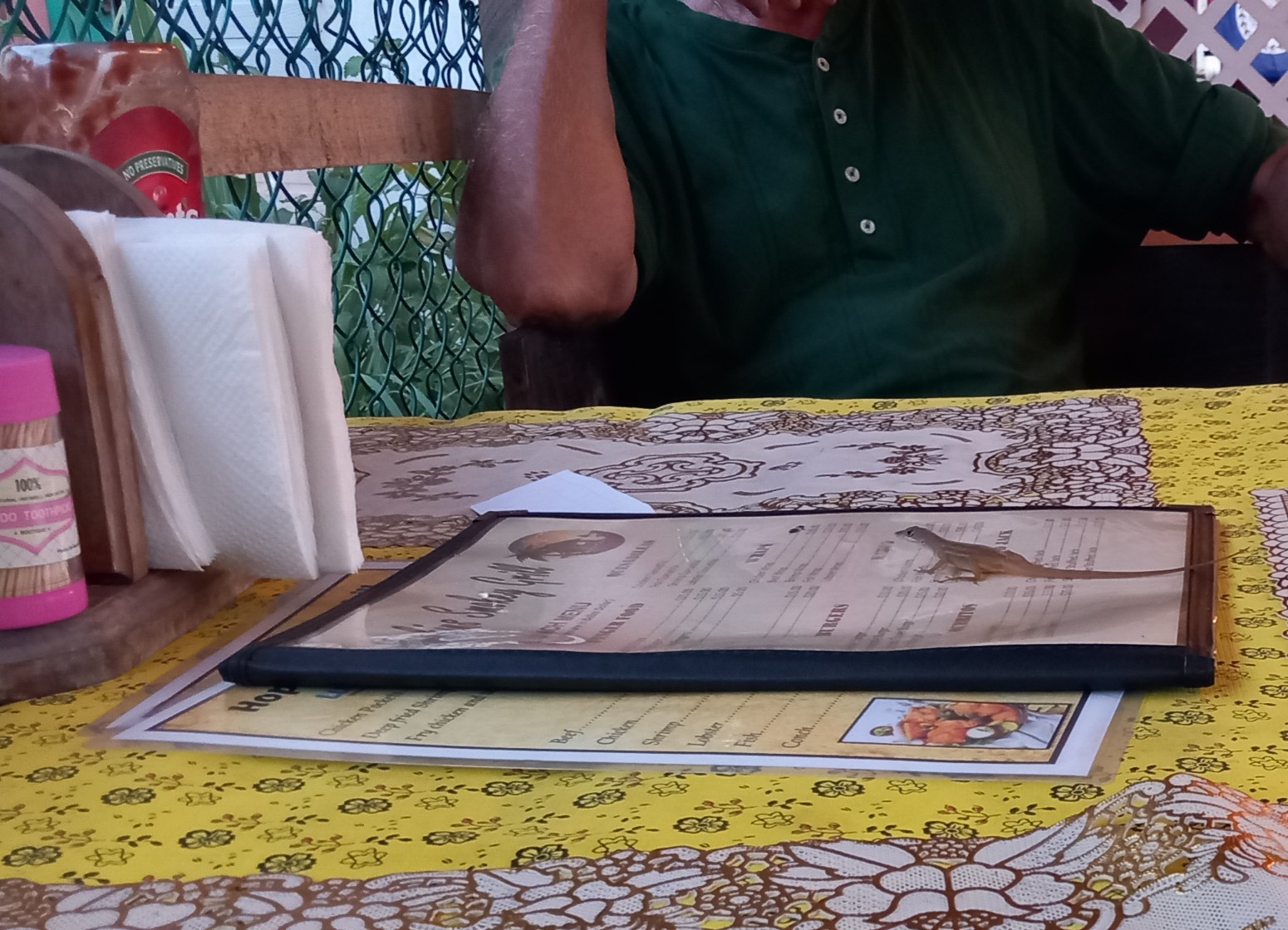
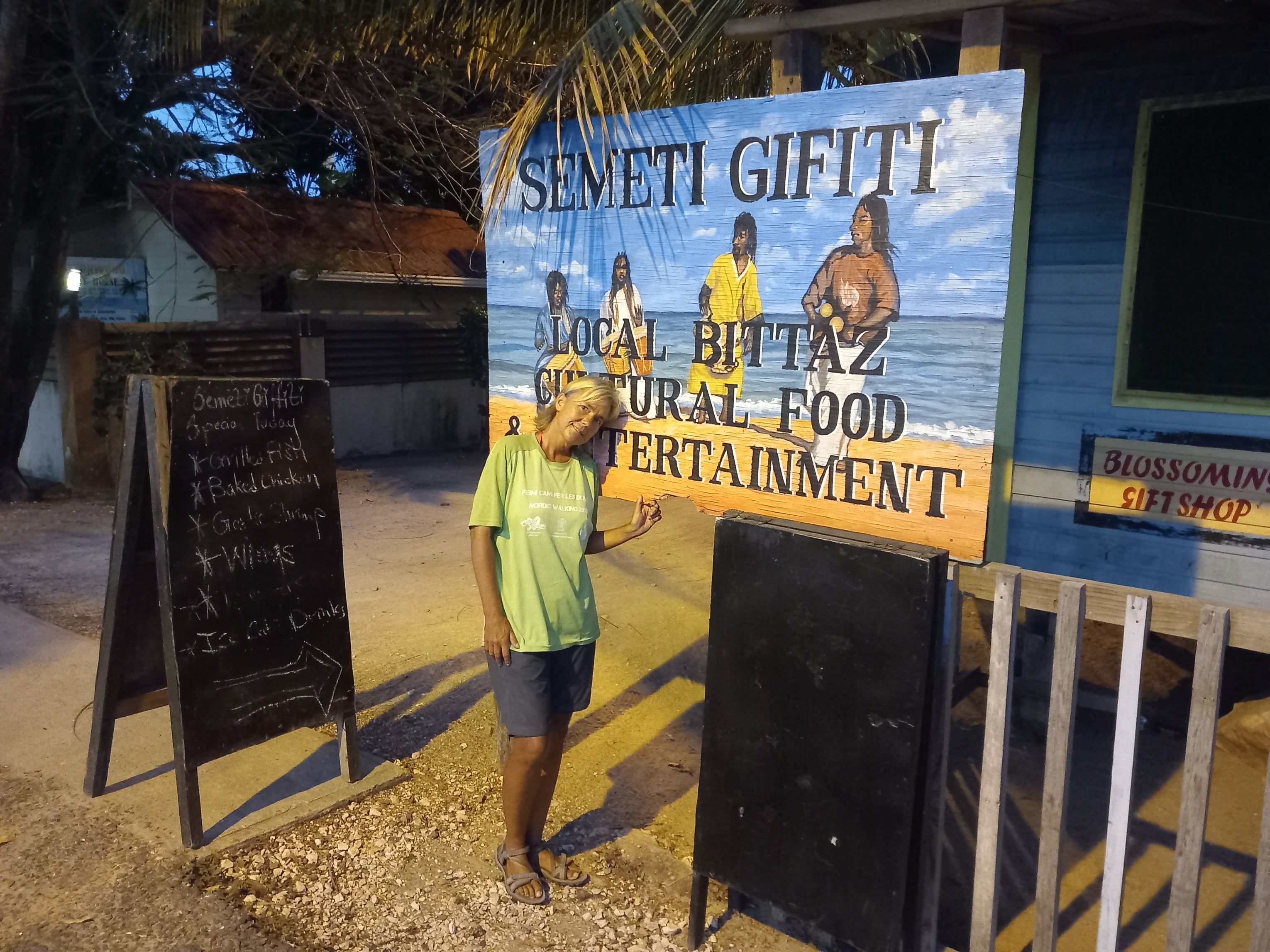
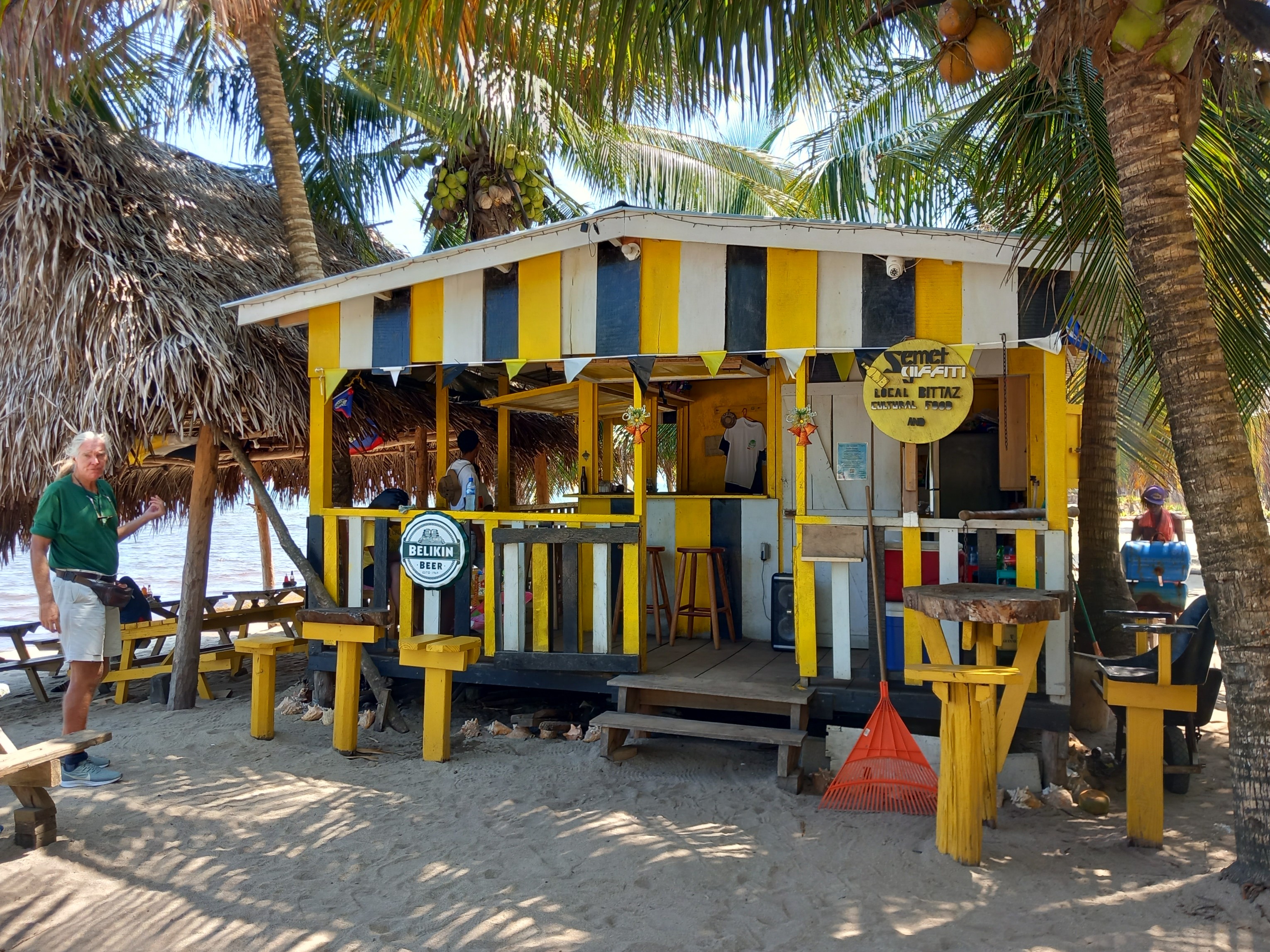
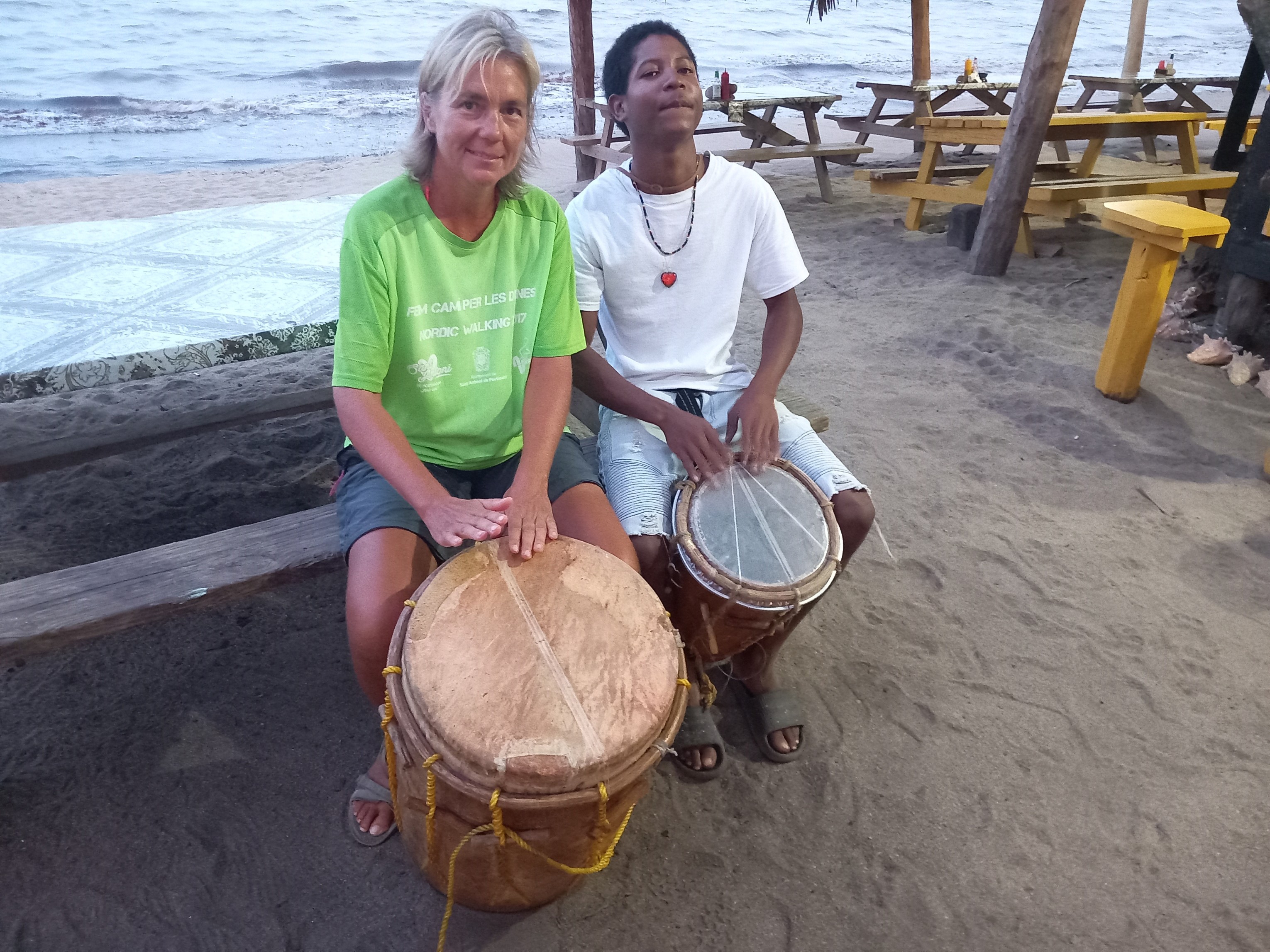
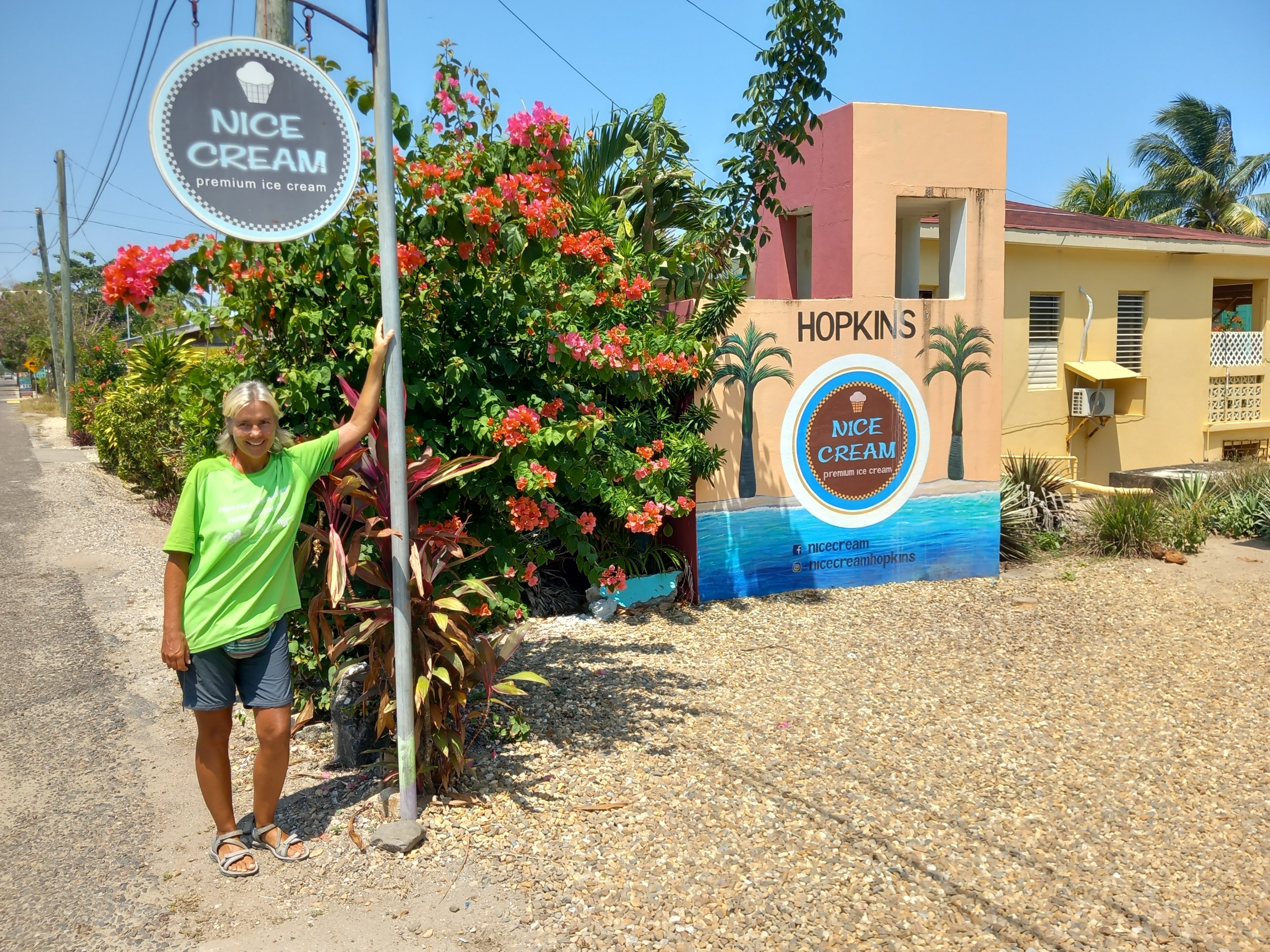
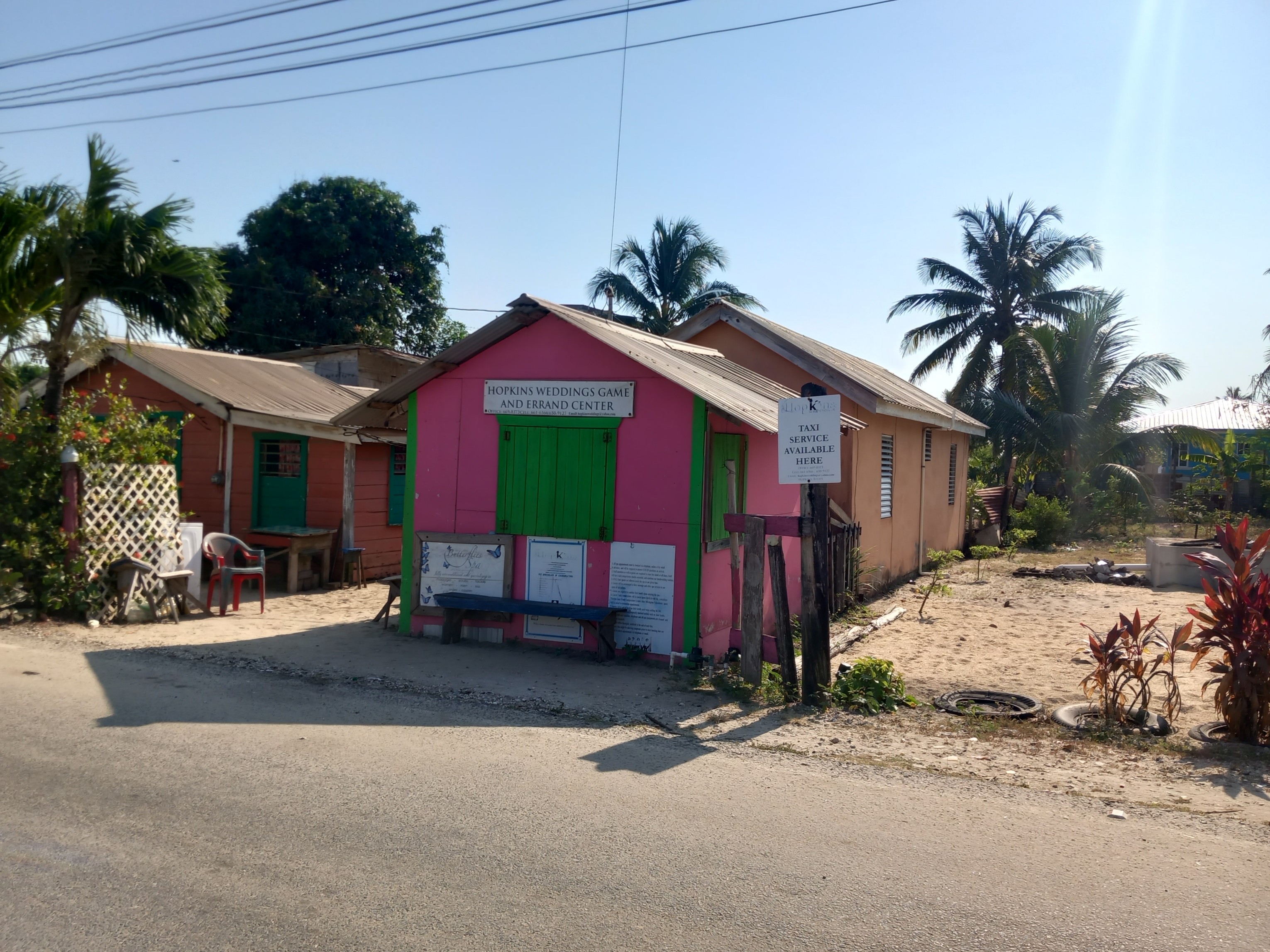
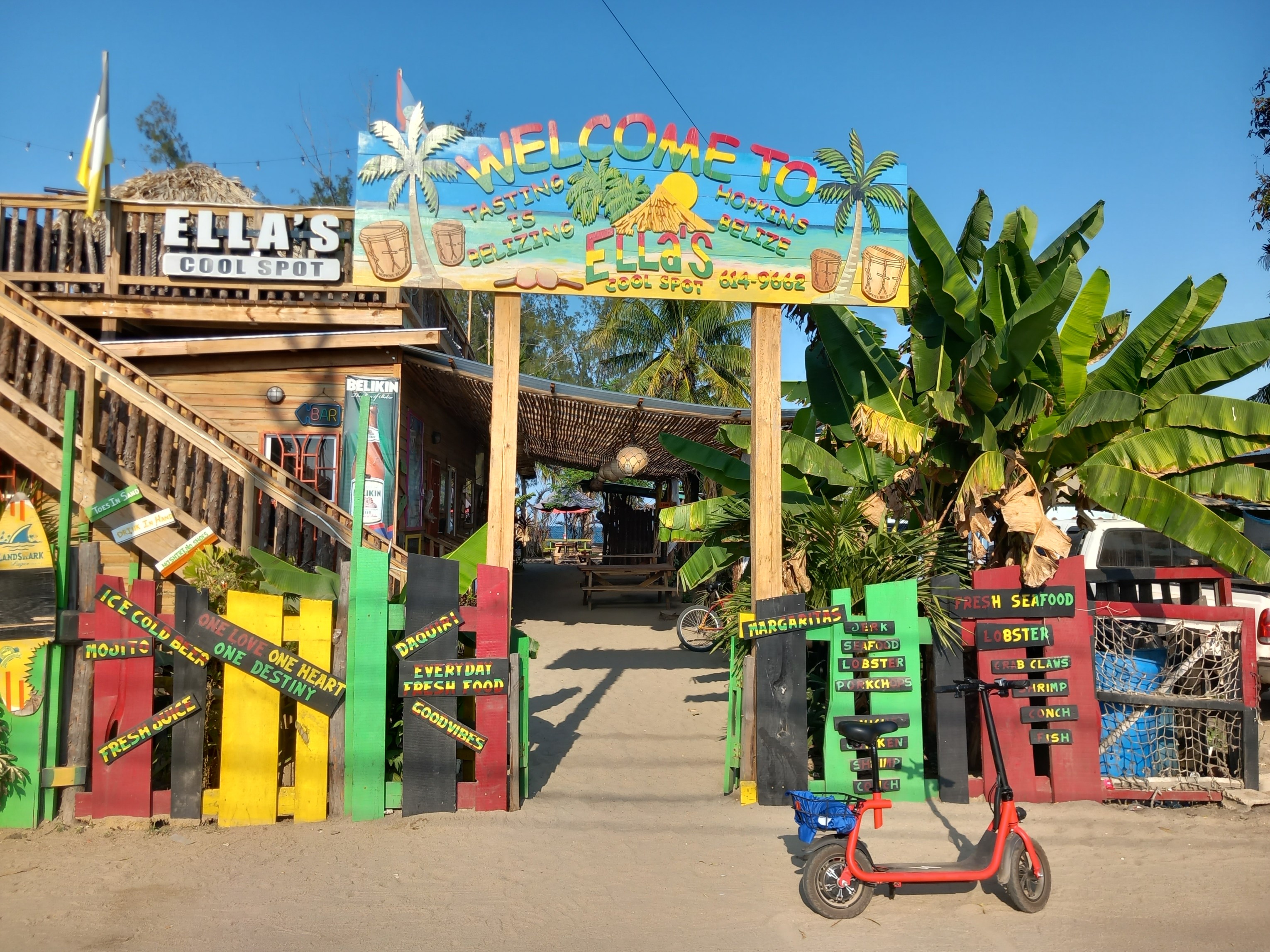
The Hopkins Tourist Police Unit base in this small village of 1500 people. Strangely the town of Dangriga is 9000 people and doesn’t attract tourists although we liked it there; Hopkins fully caters for the tourist market.The lizard may be on the menu but he was not for sale.Olivia receiving an impromptu drumming lesson.
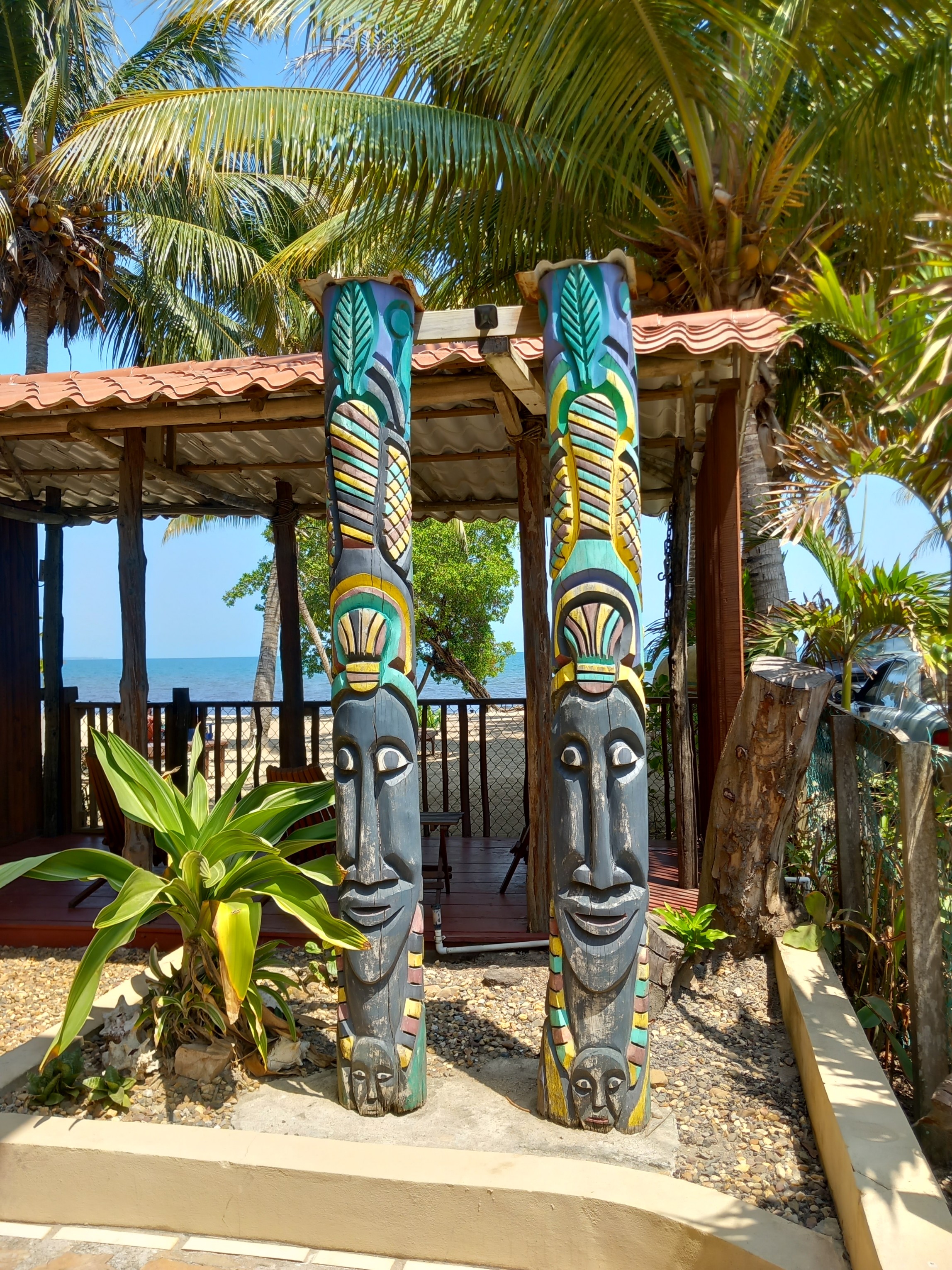
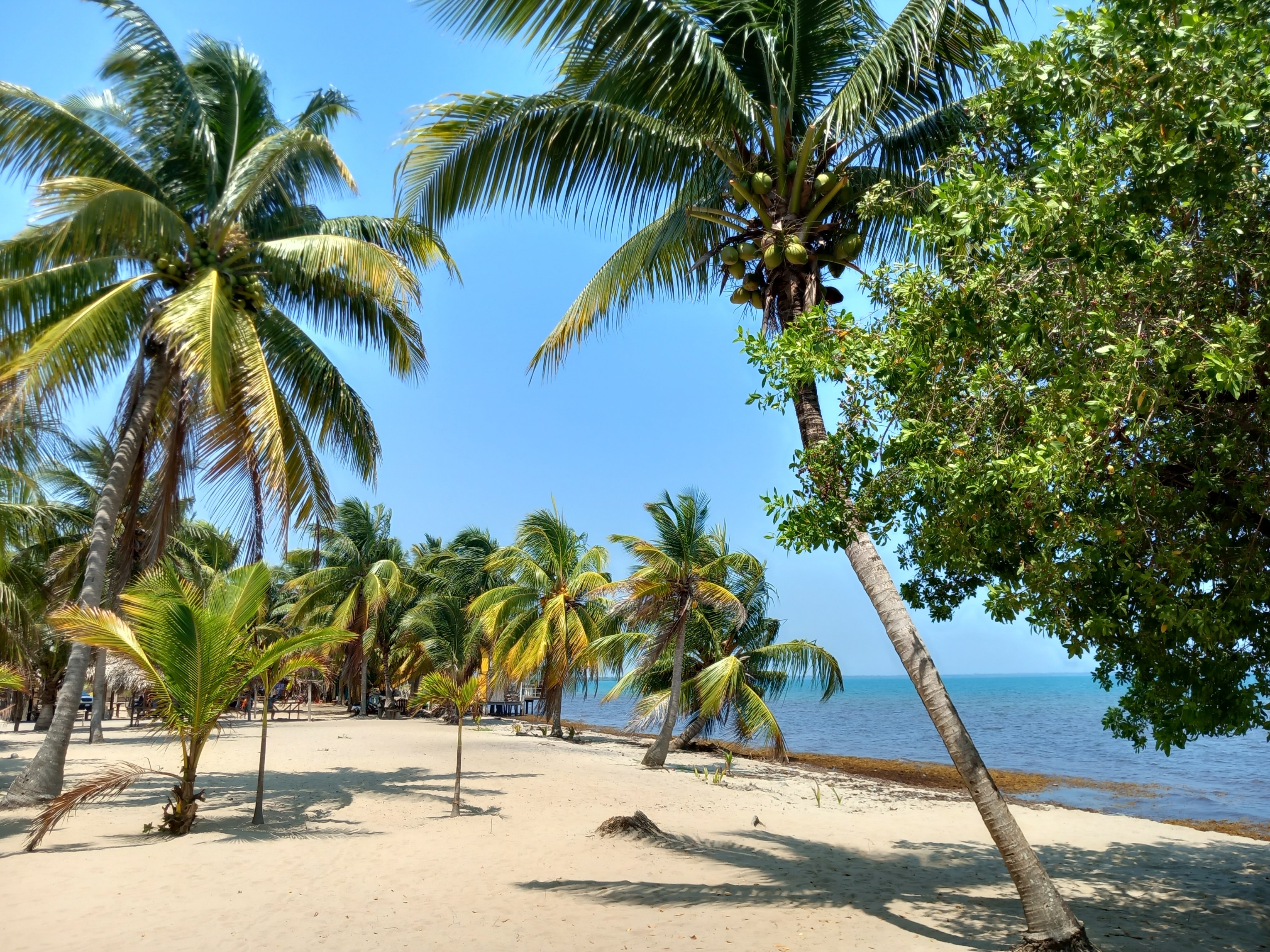
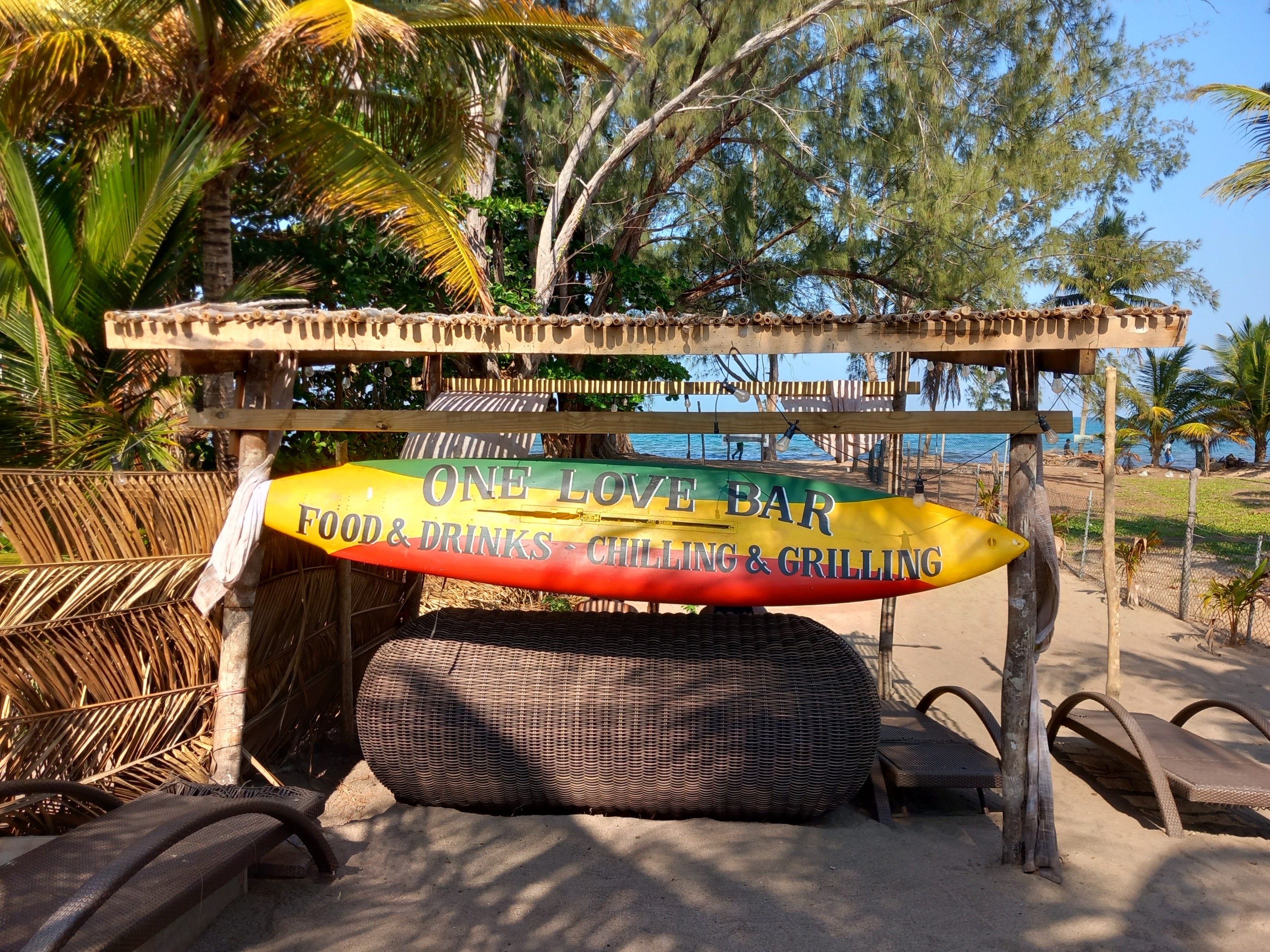
Hopkins was as laid back as it looks and a lot less crowded than San Pedro on Ambergris Caye.
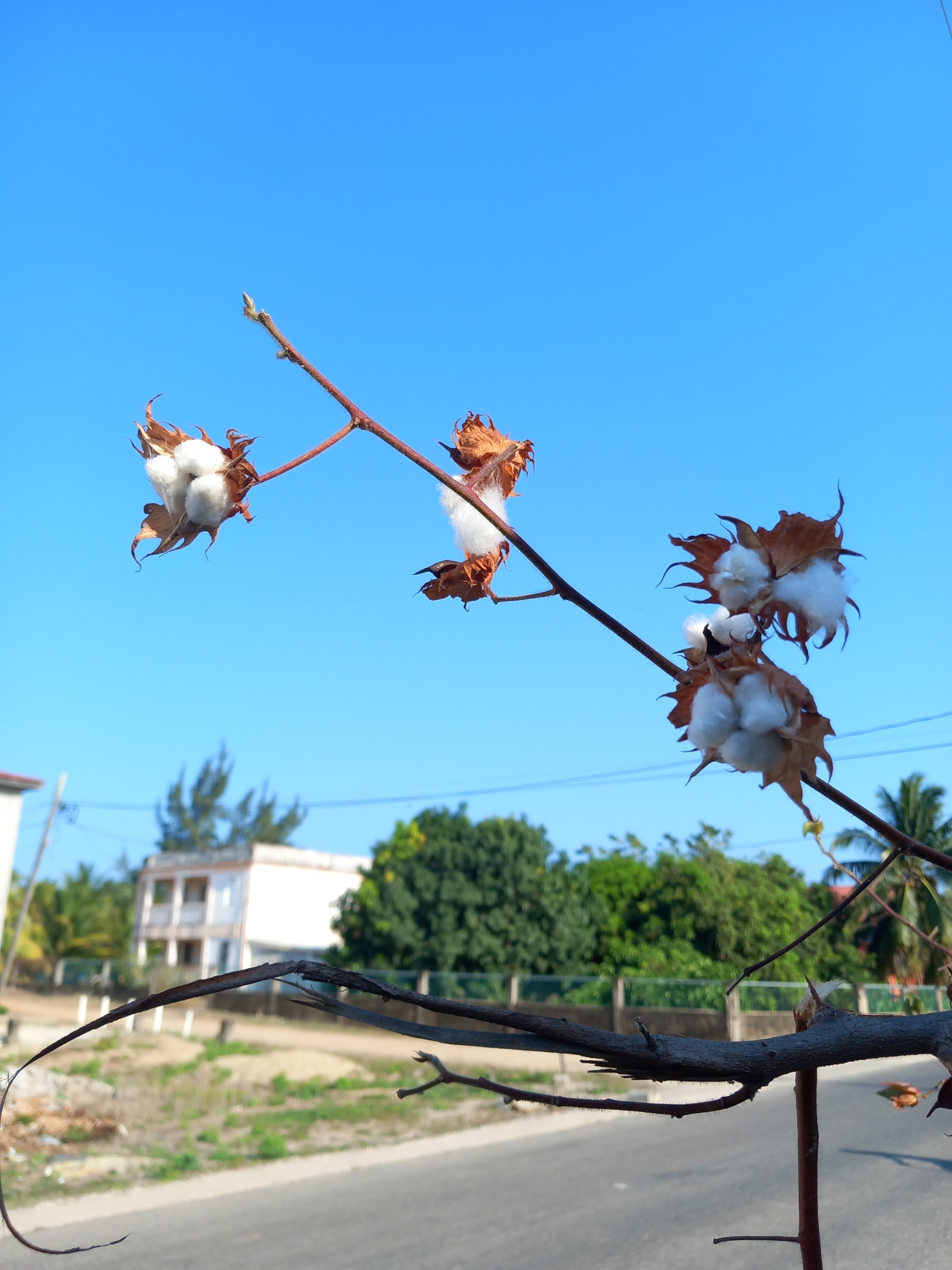
Cotton growing in someone’s garden.Bicycles were few and golf carts were fewer.


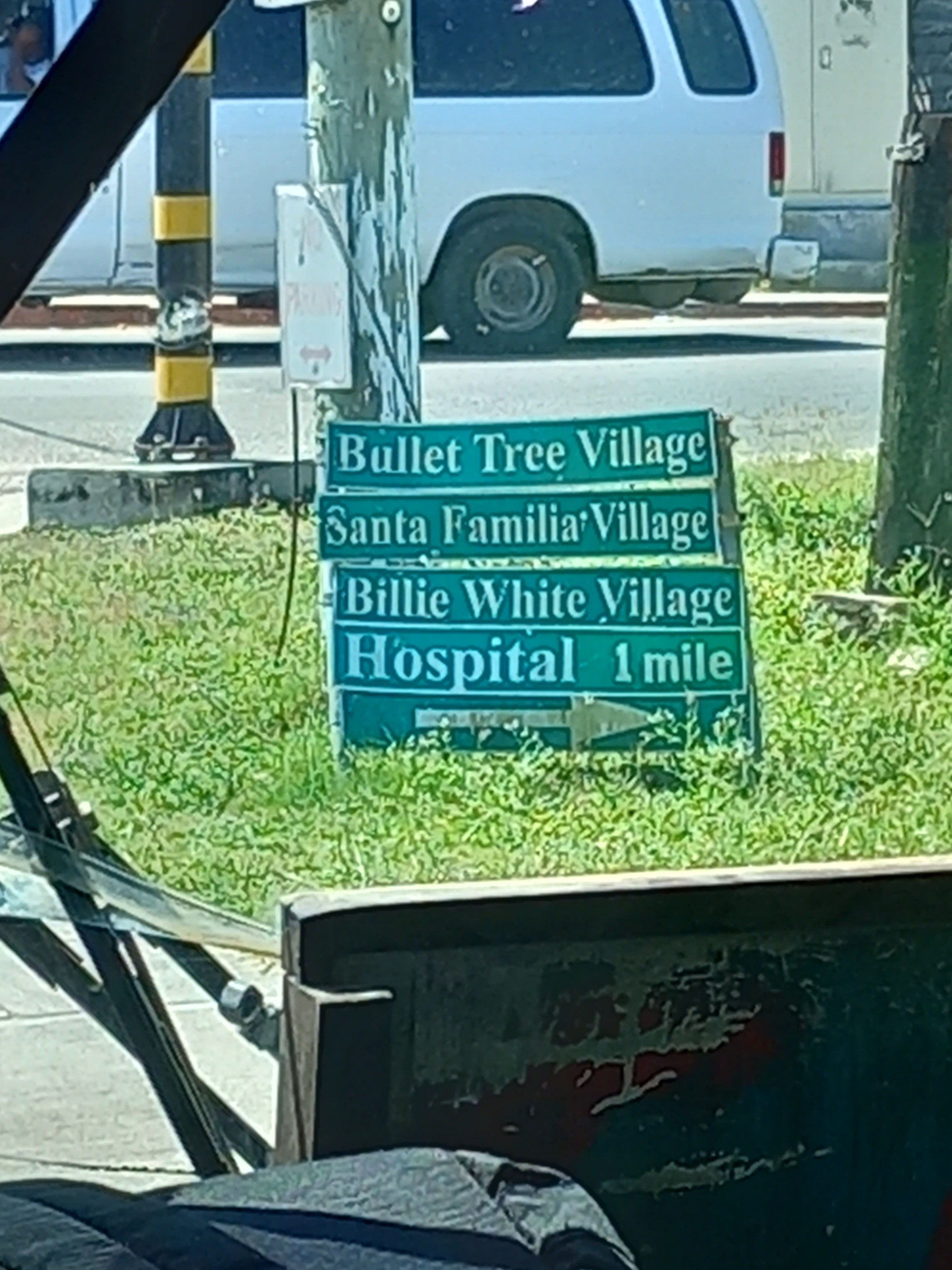
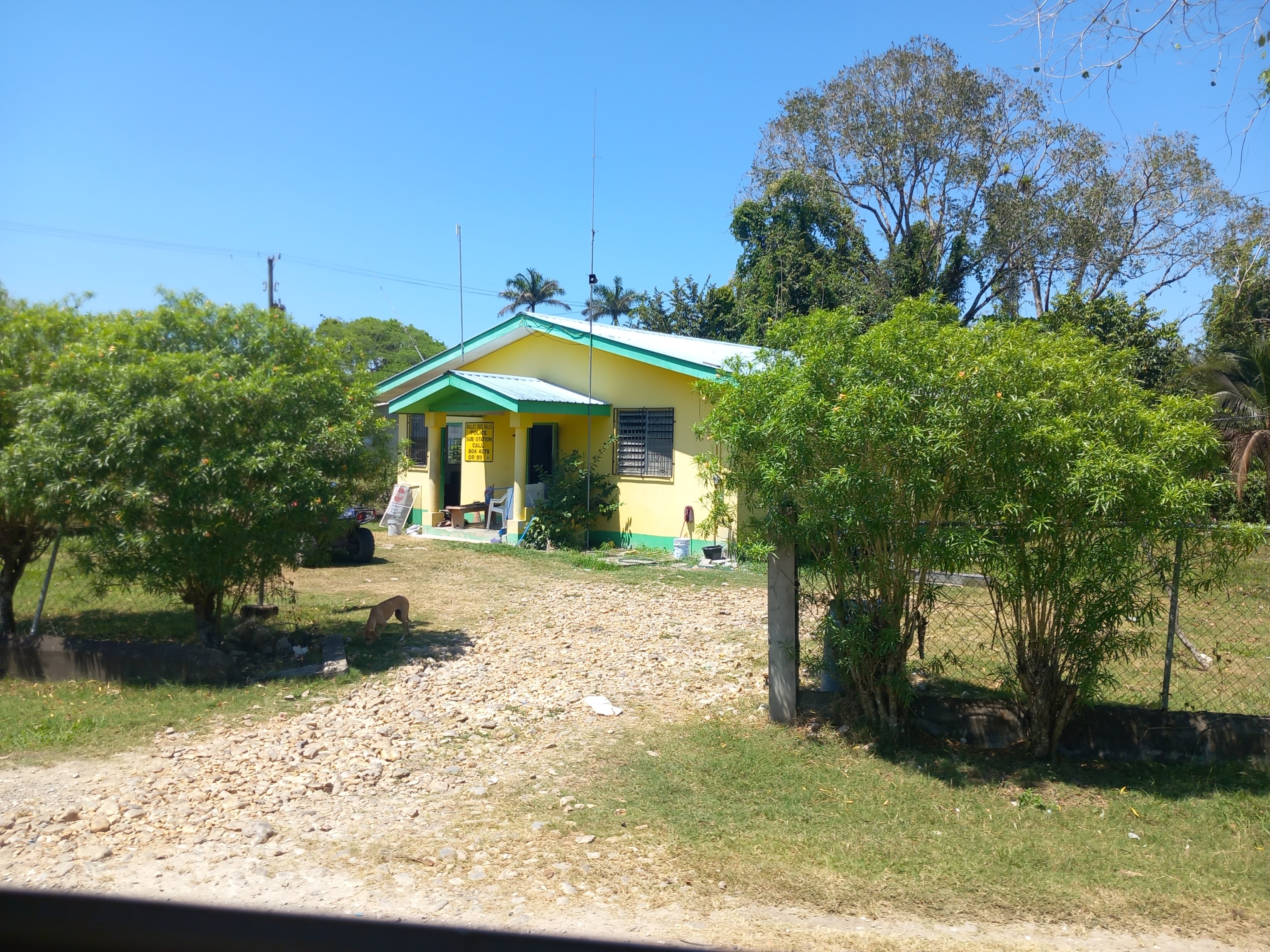
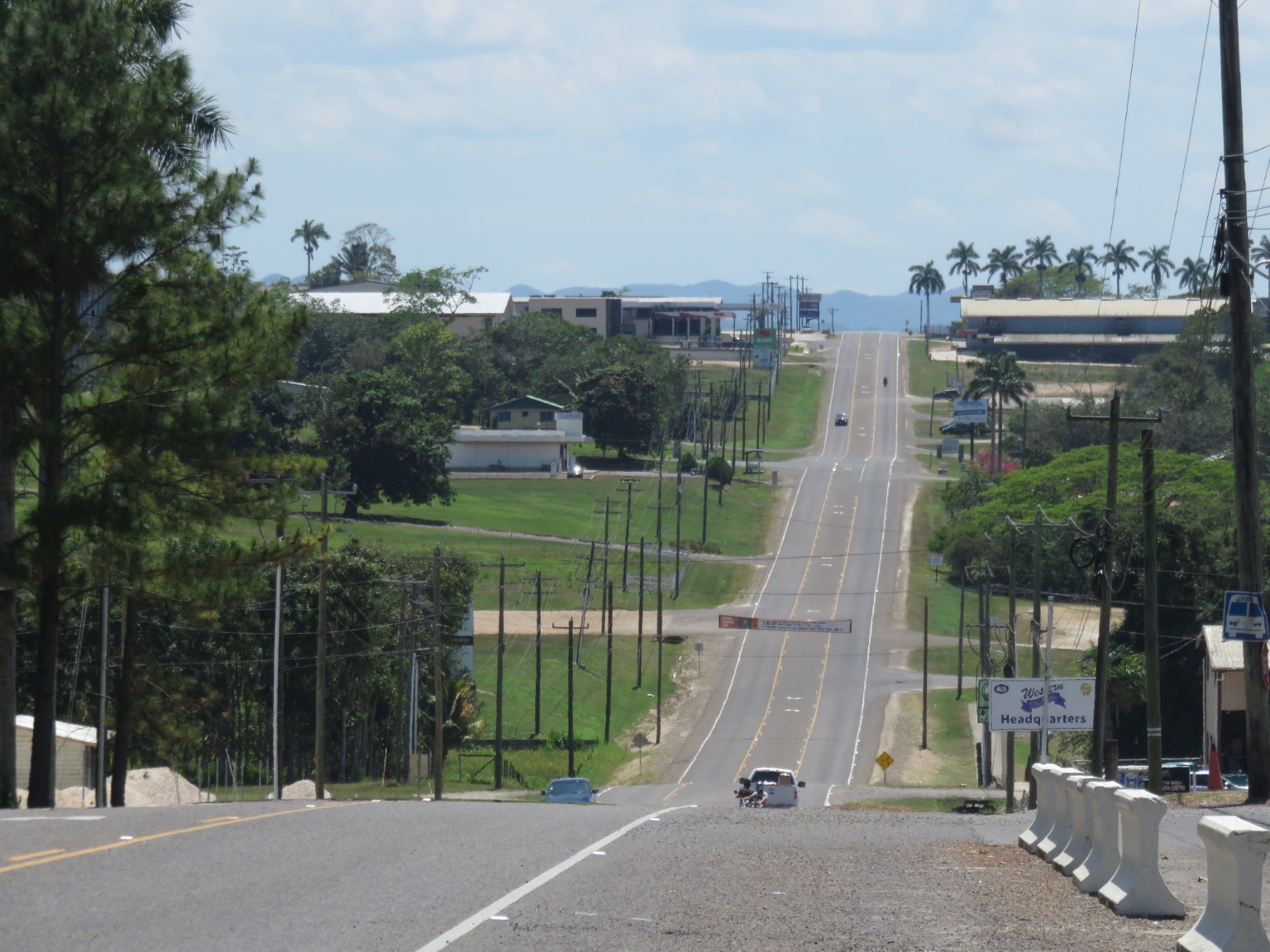
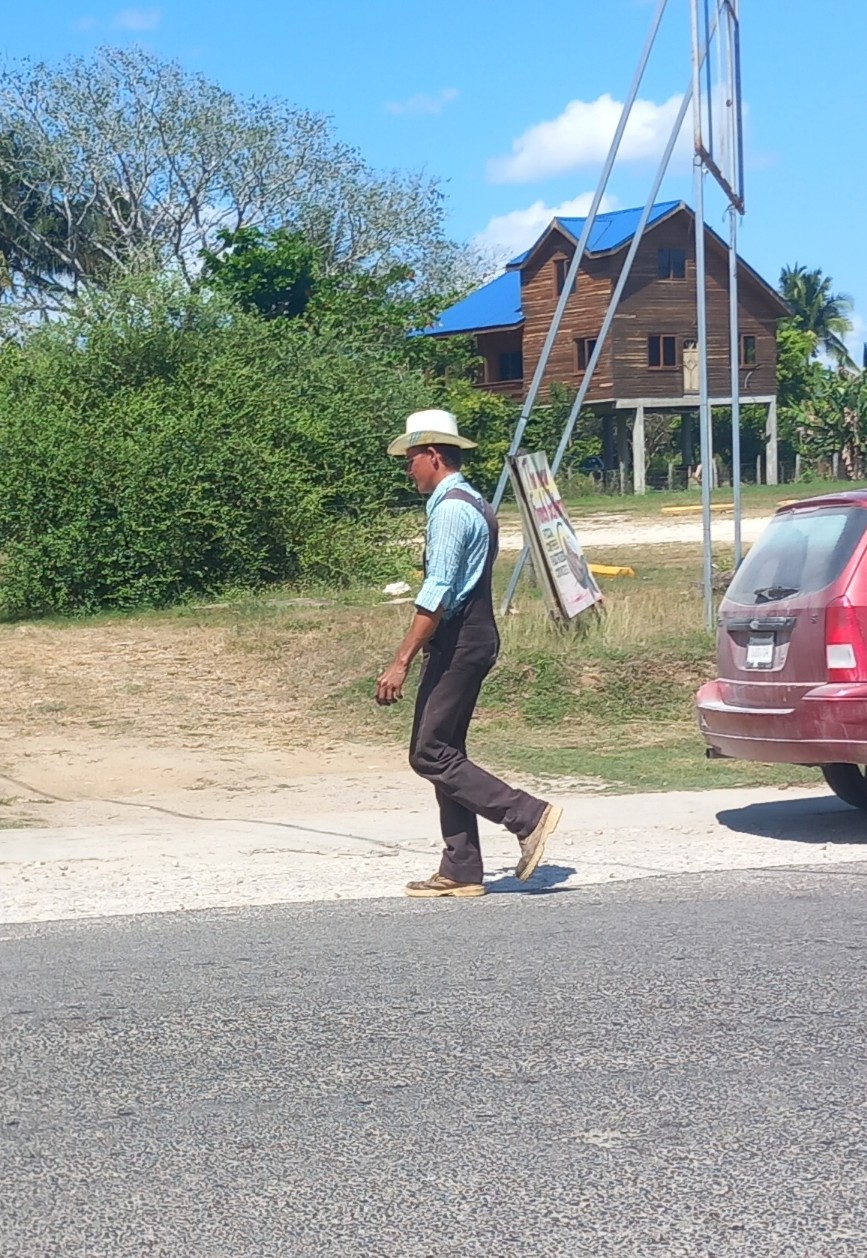
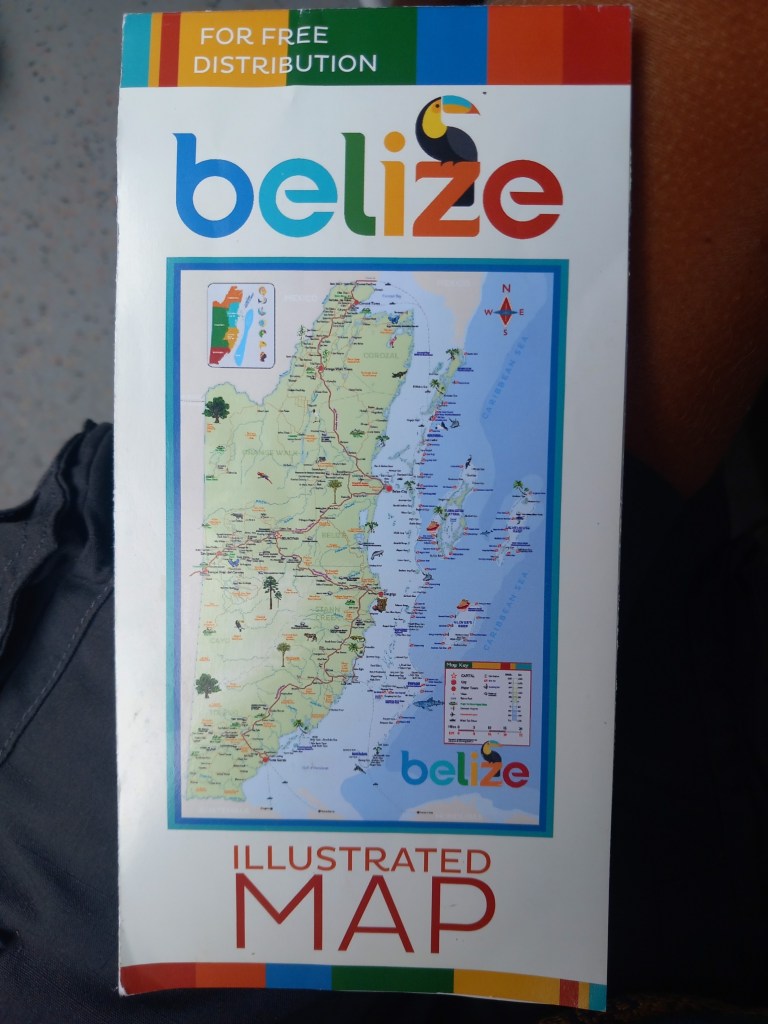
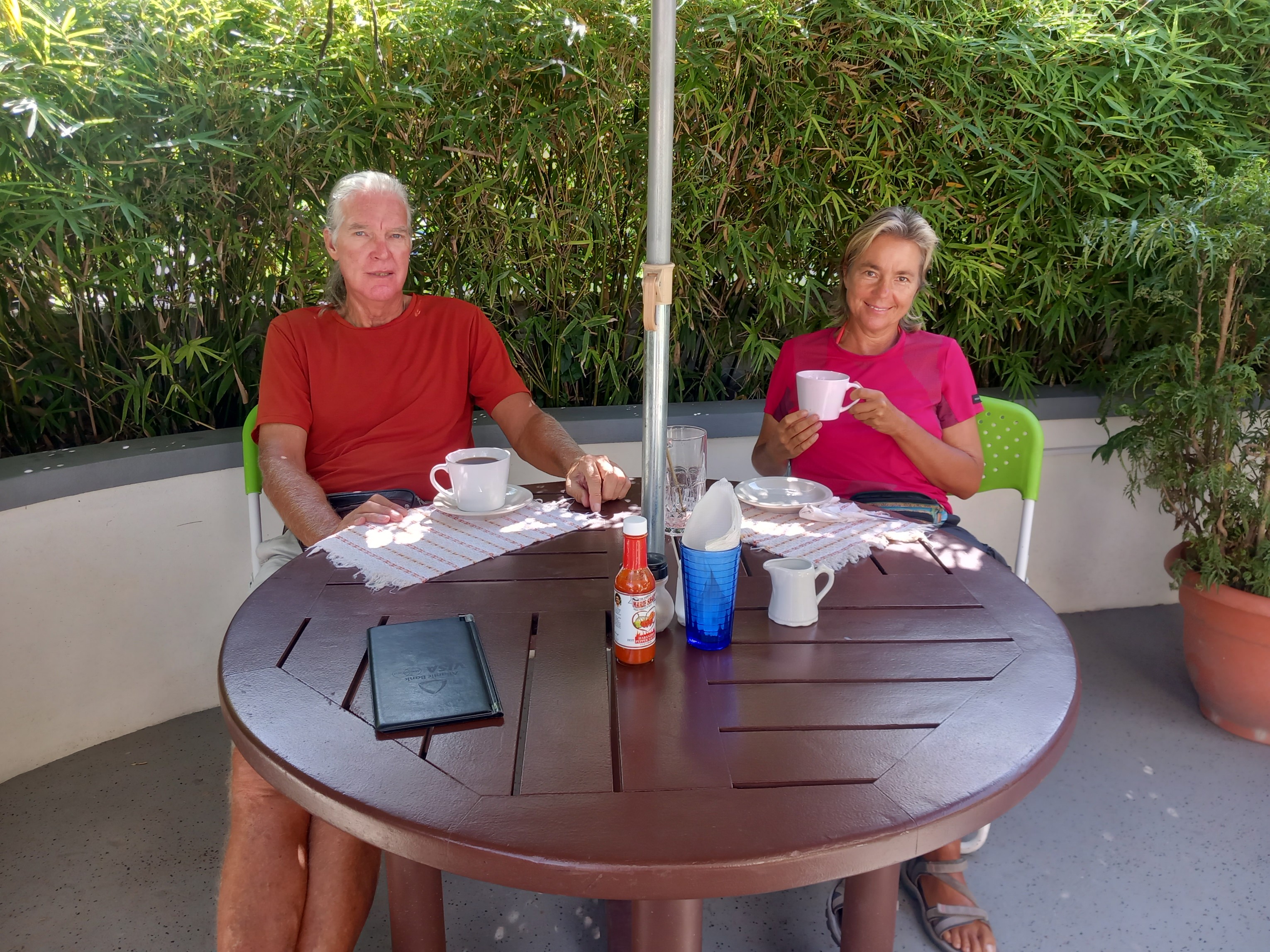
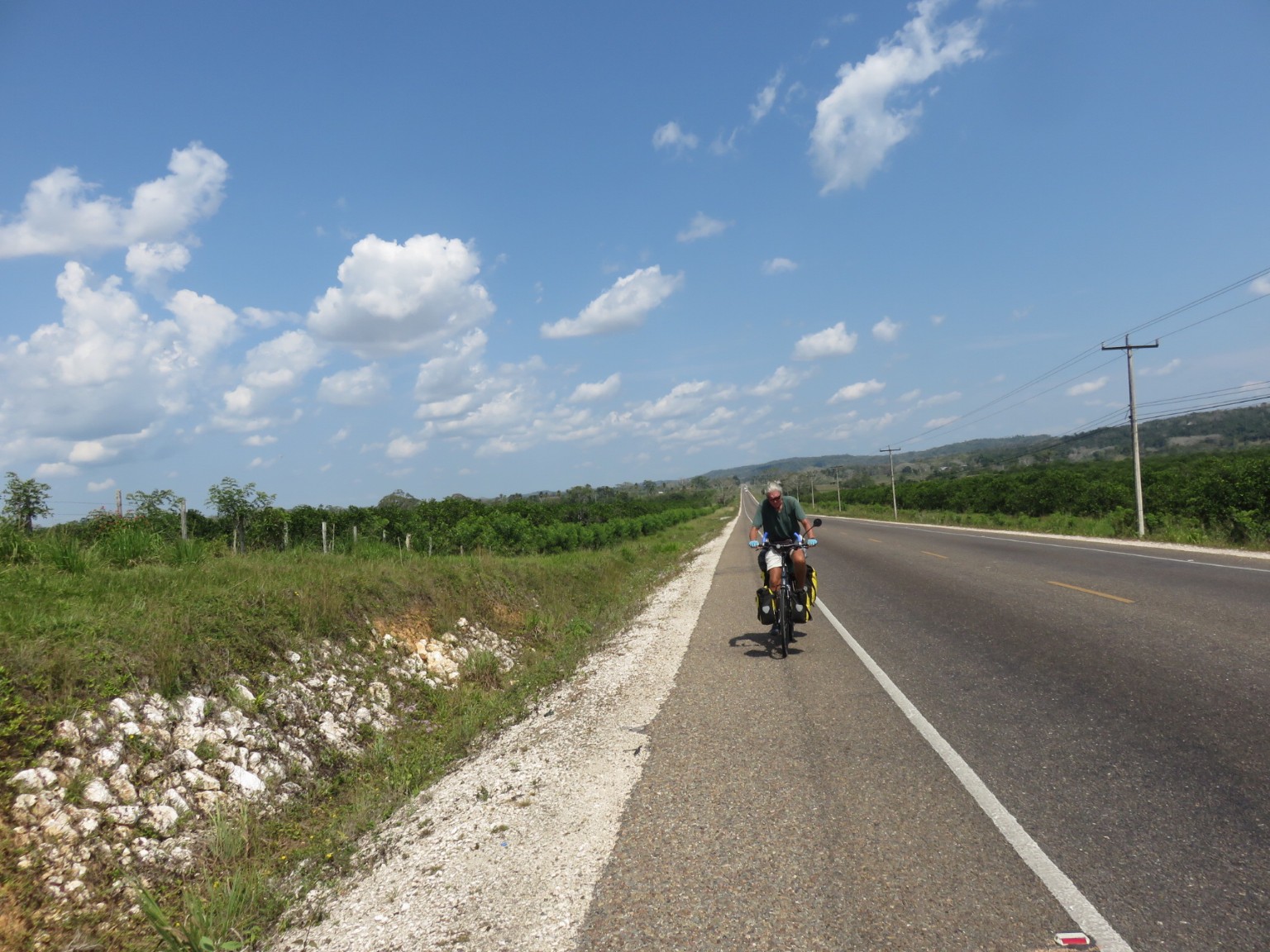
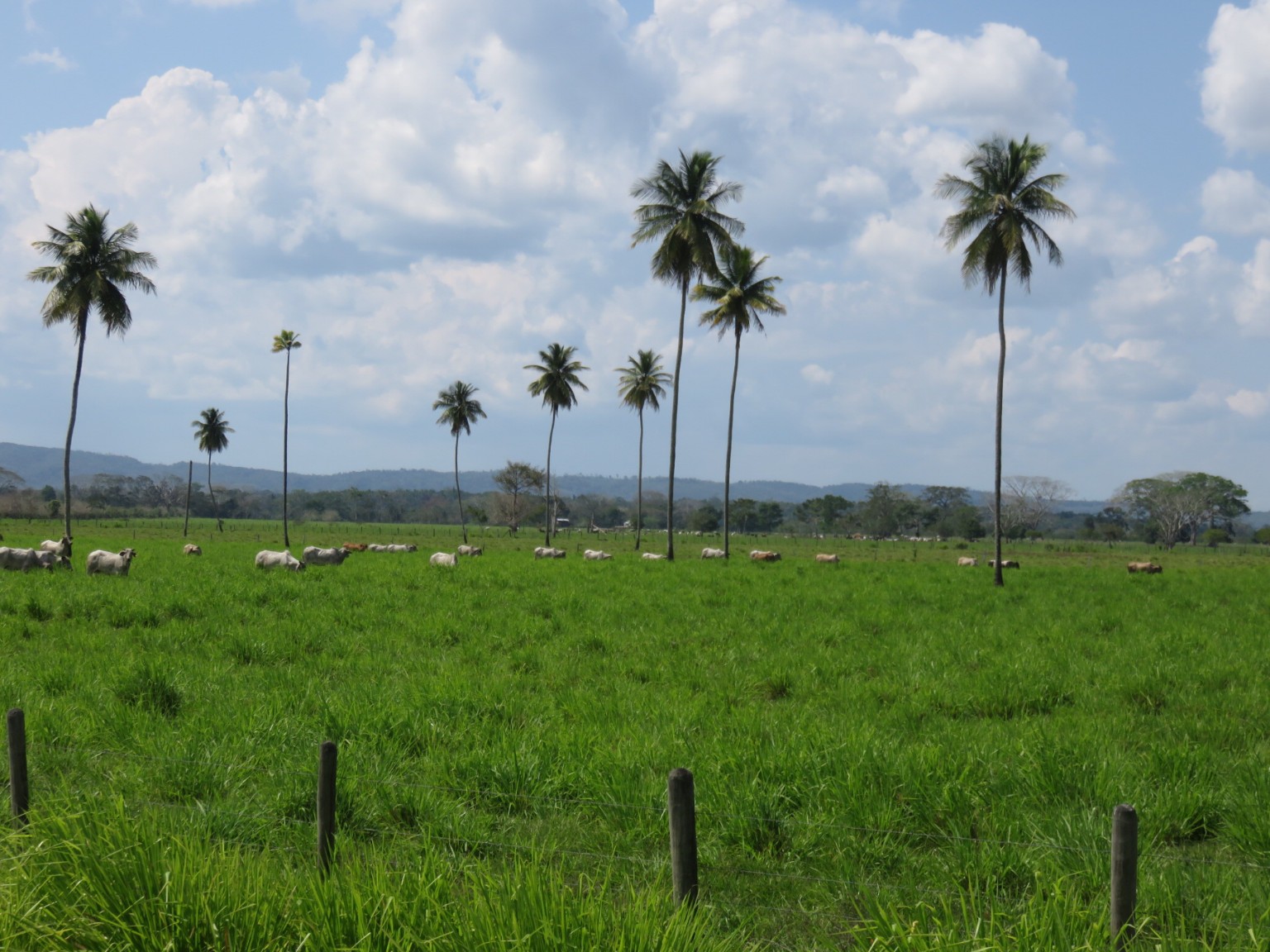
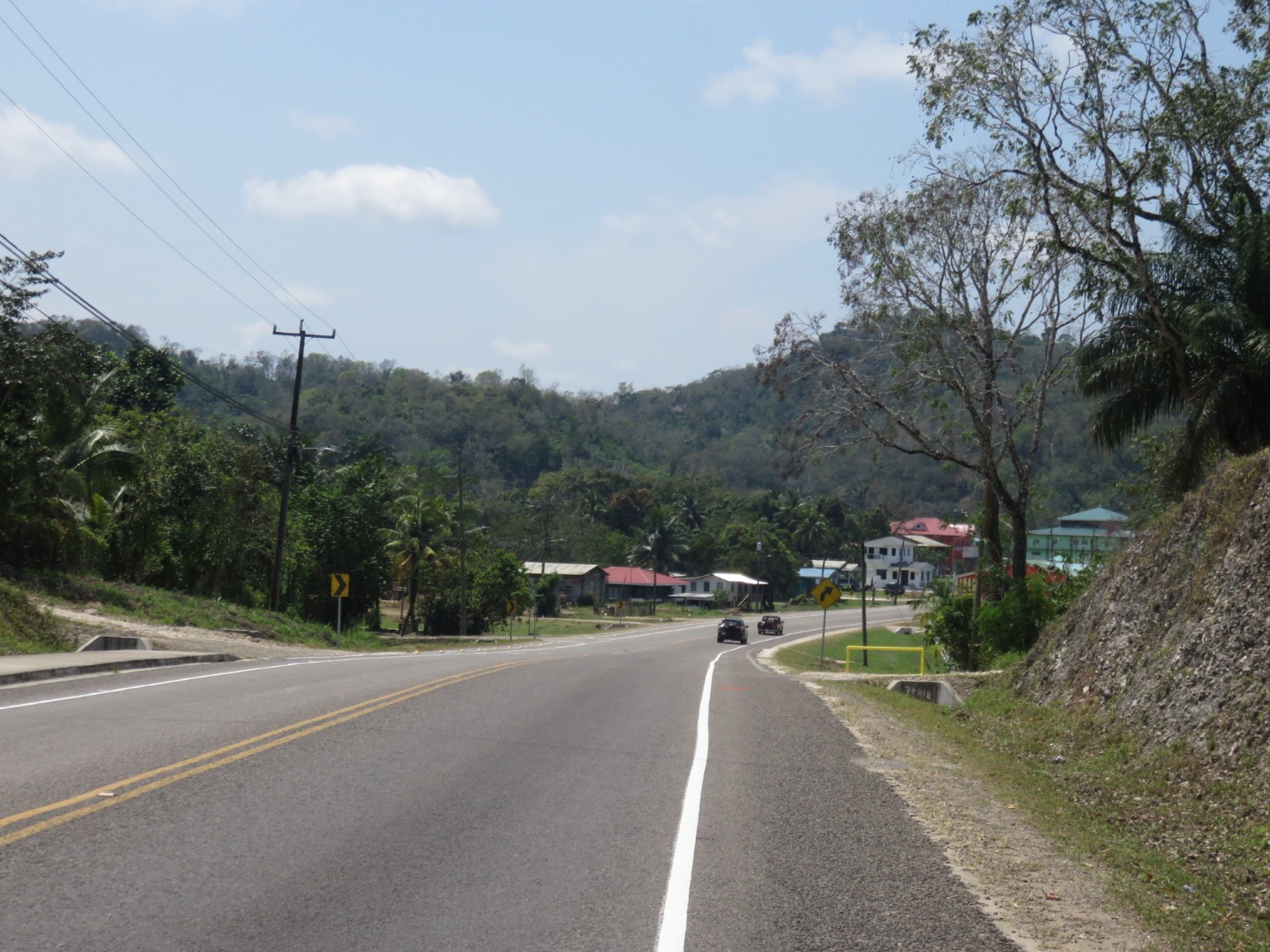

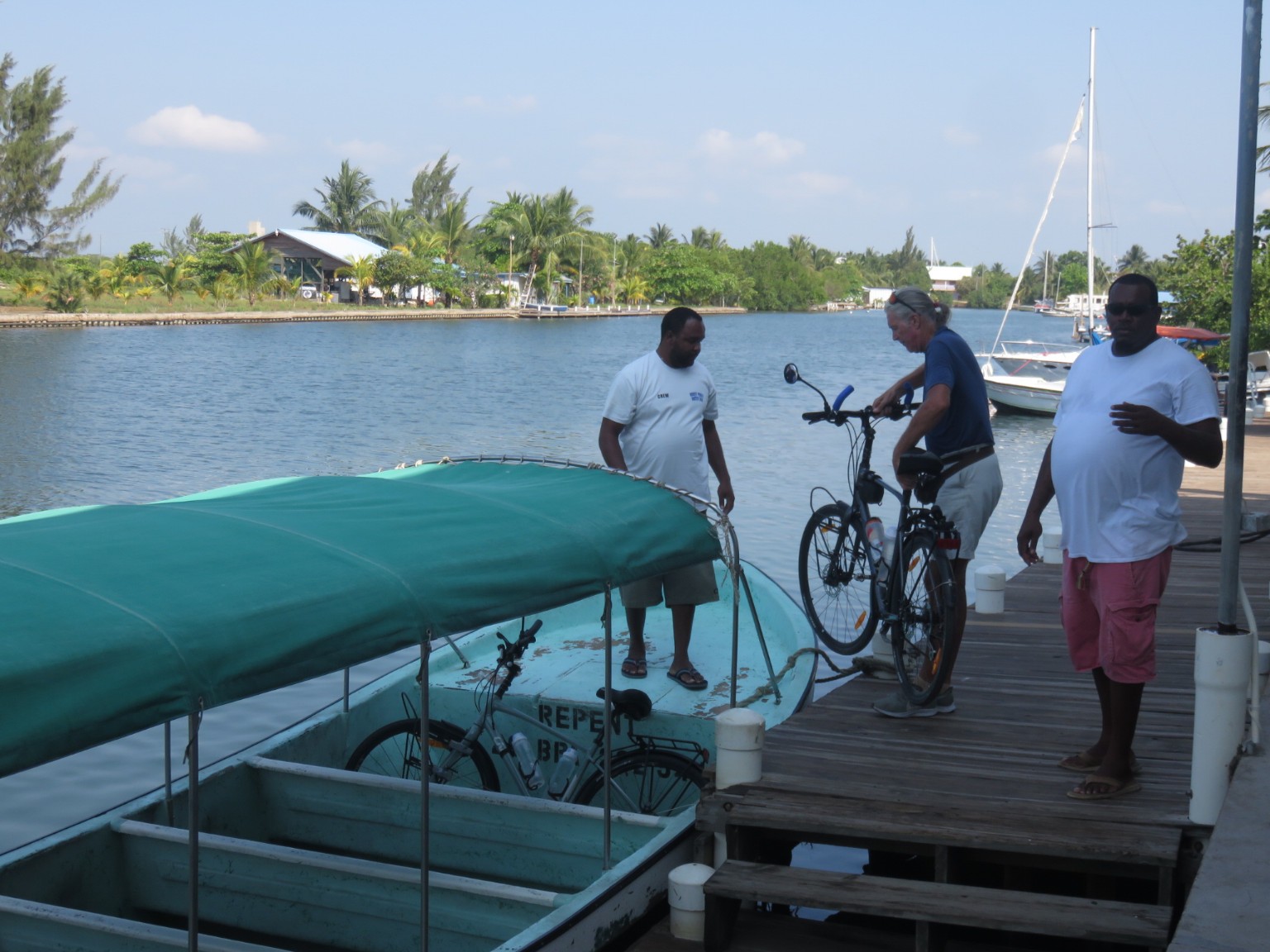
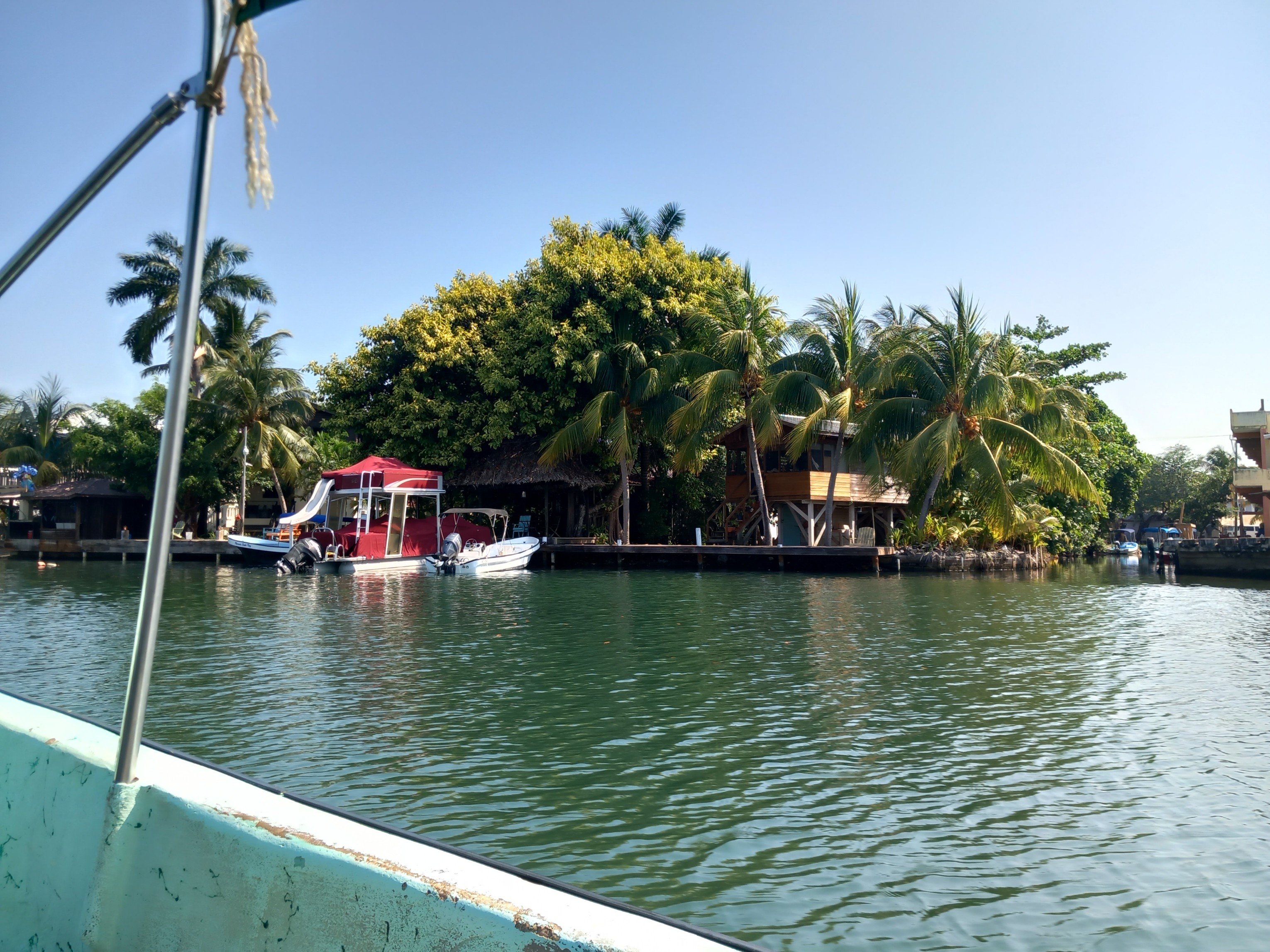
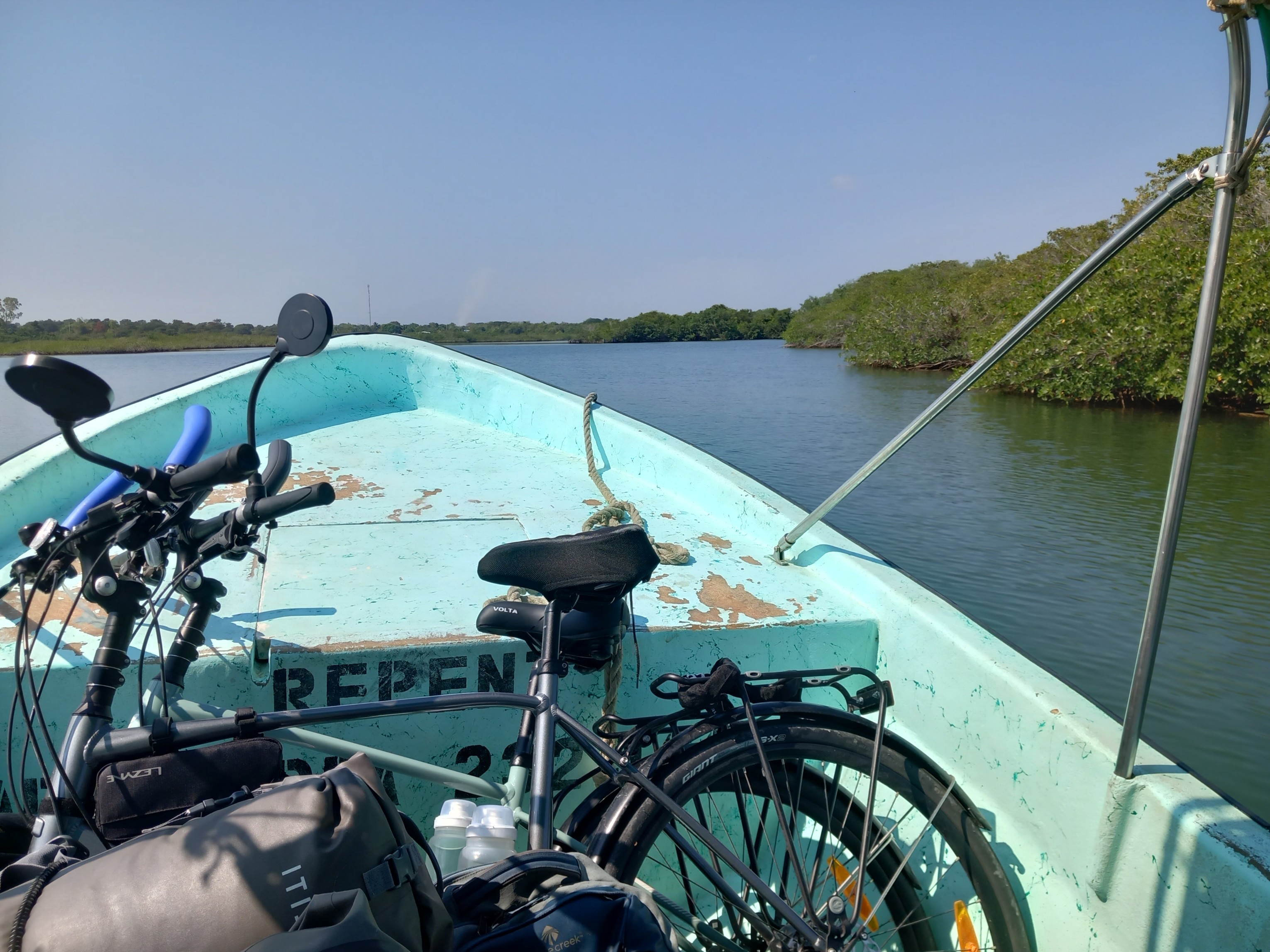
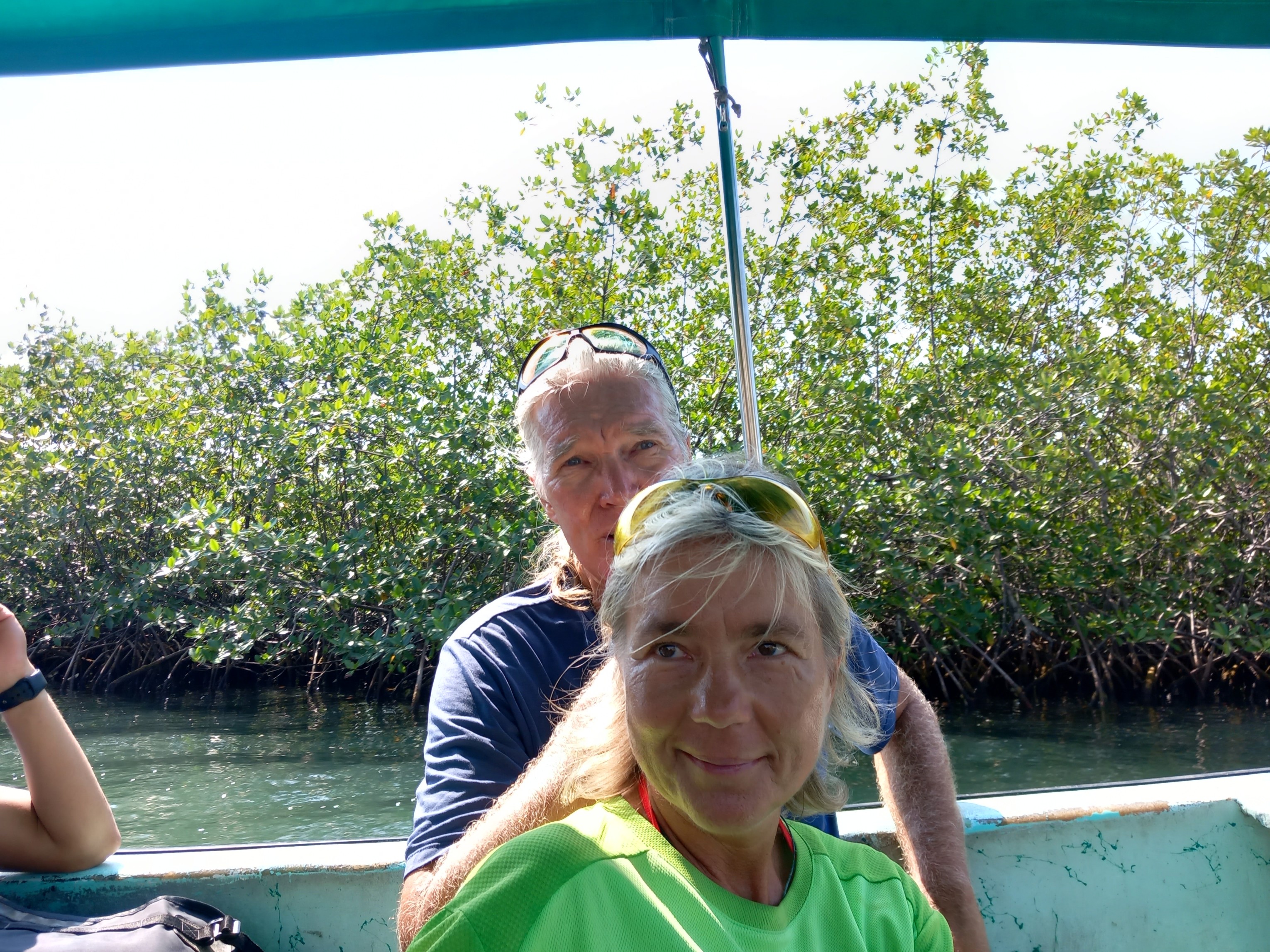



 Mexico and Belize