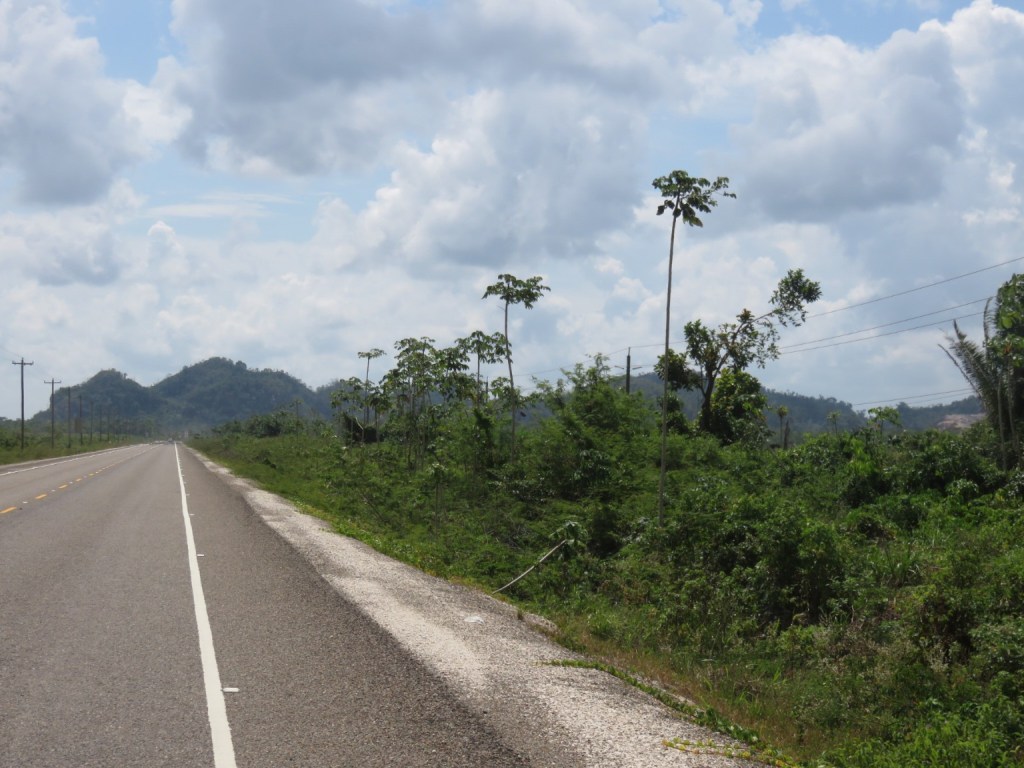
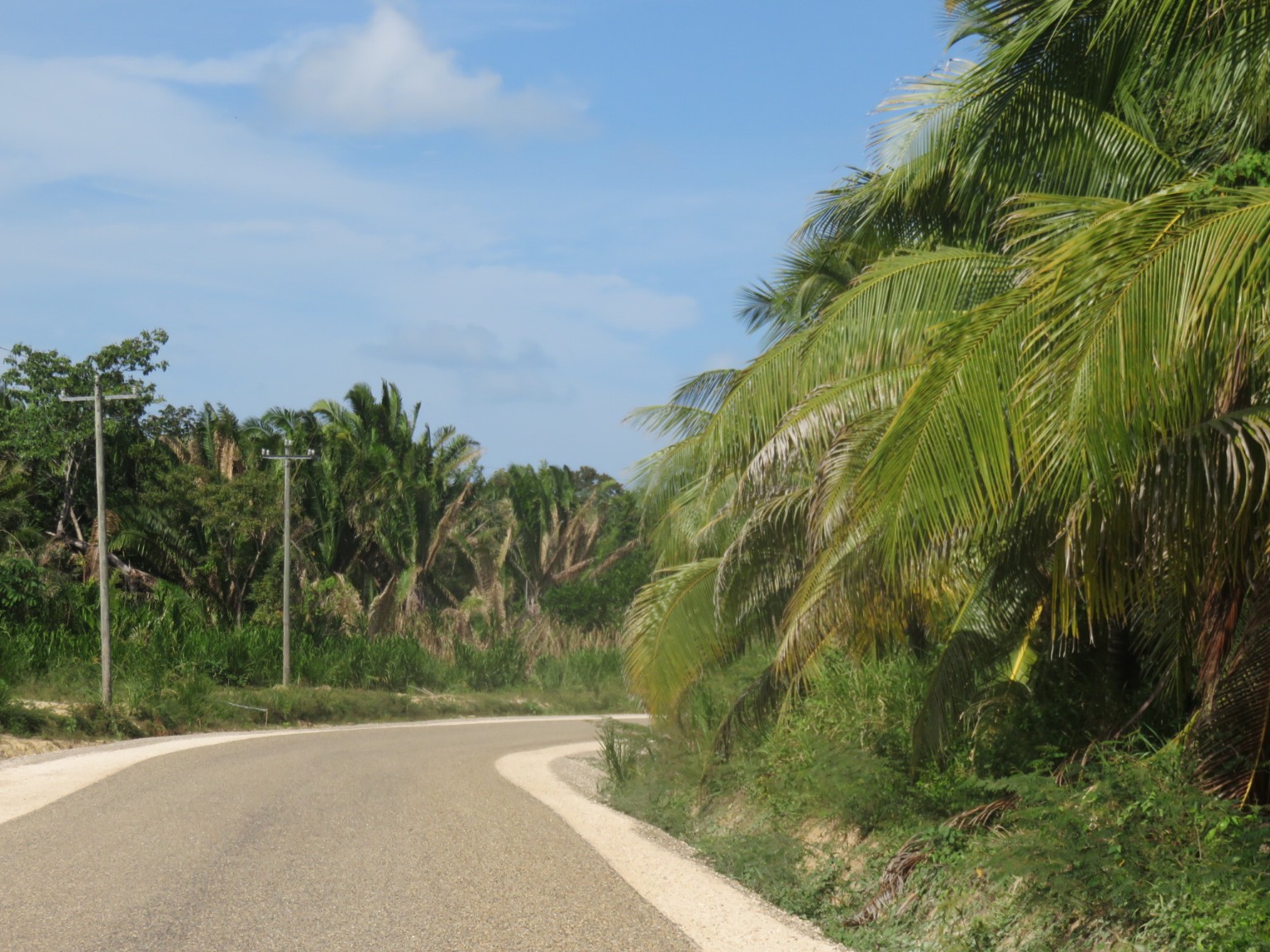
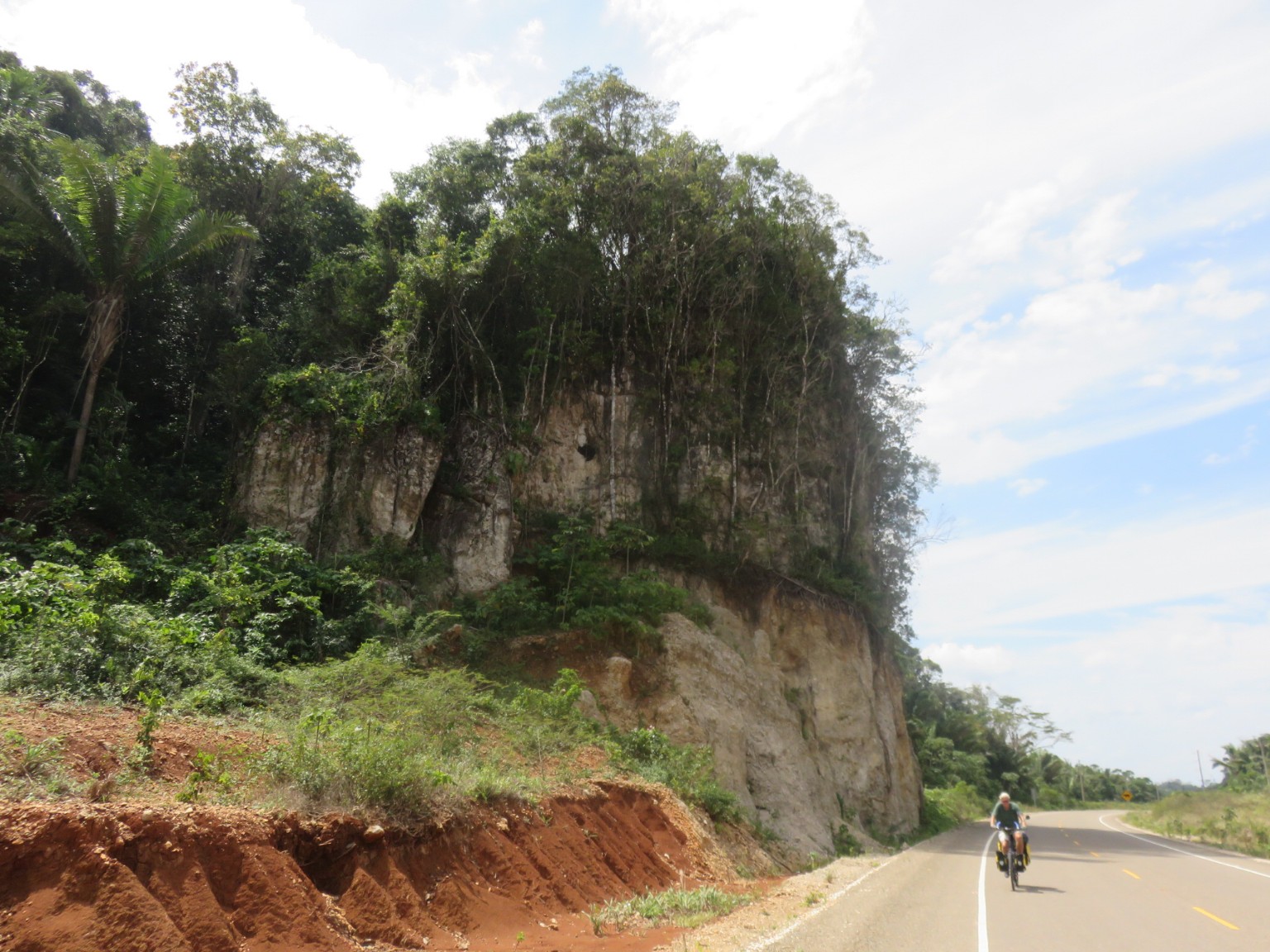
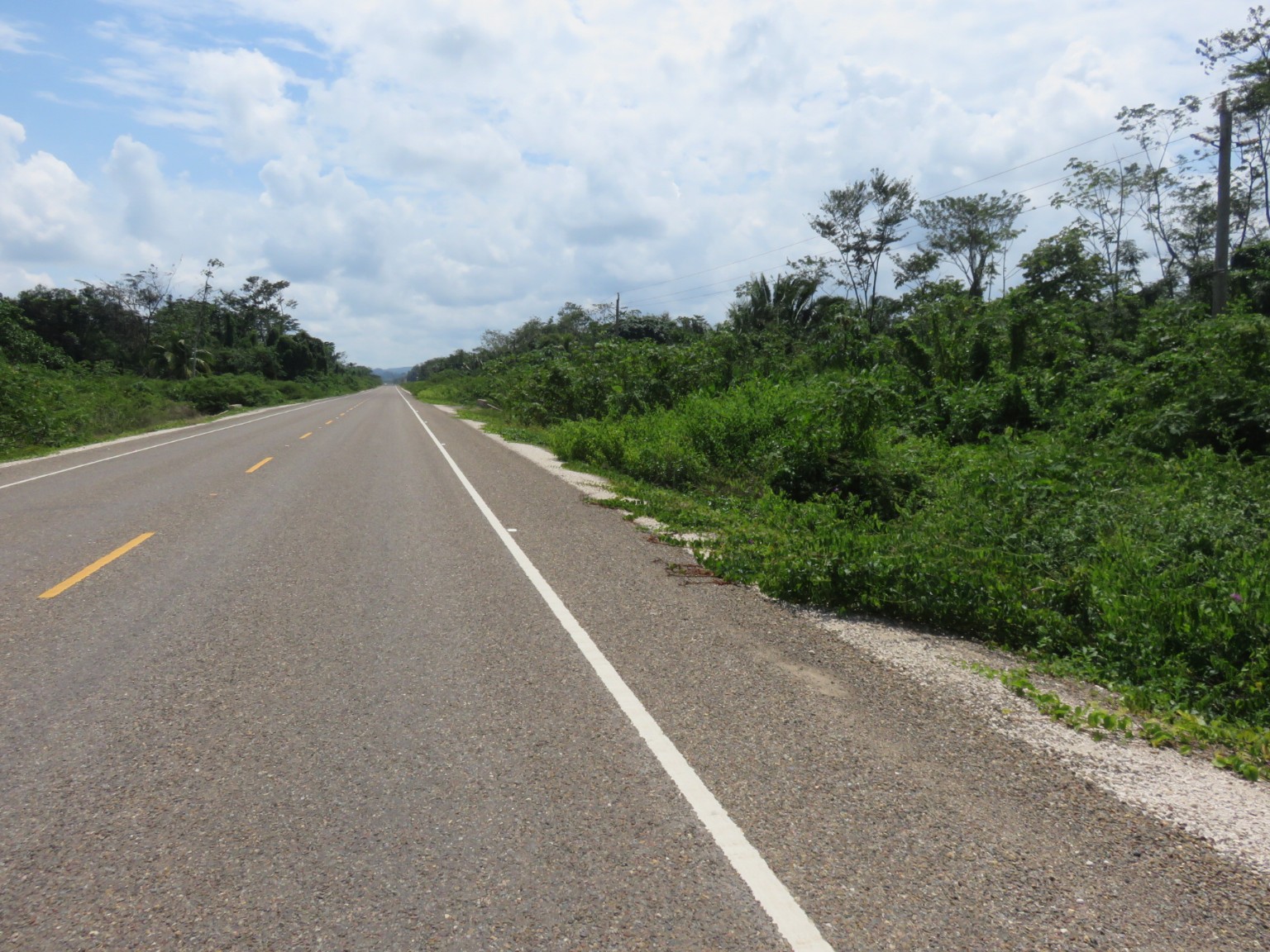
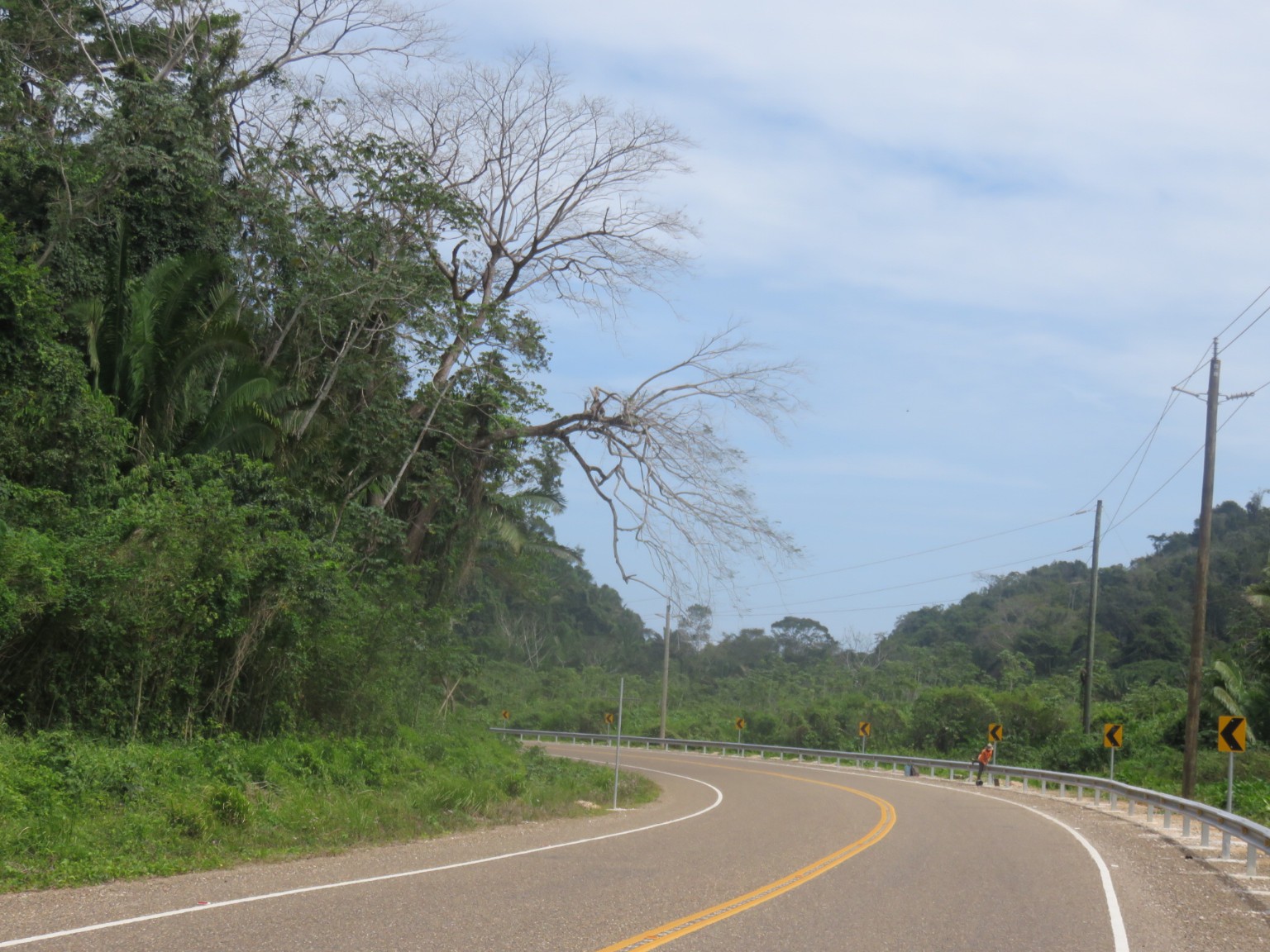
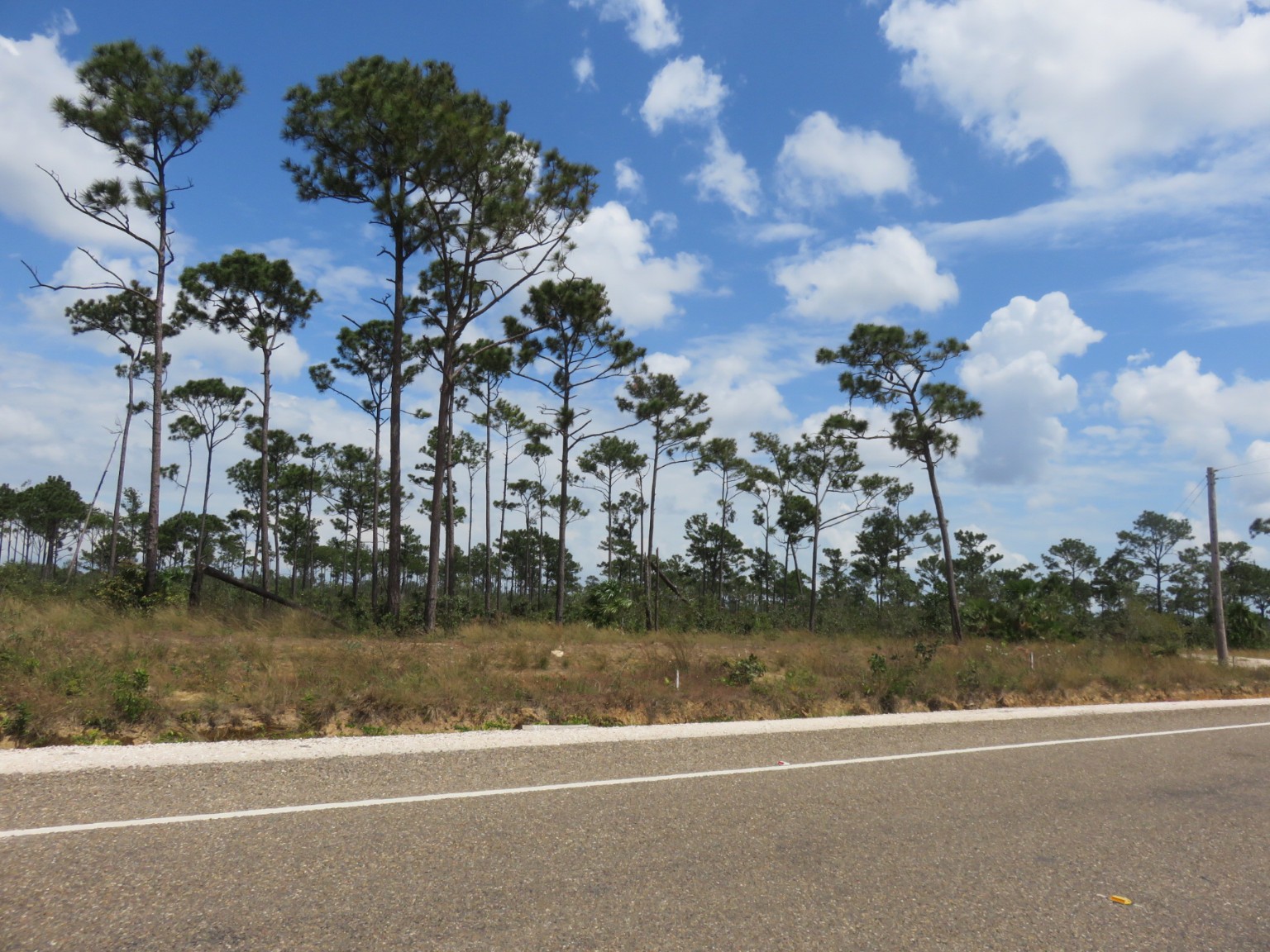
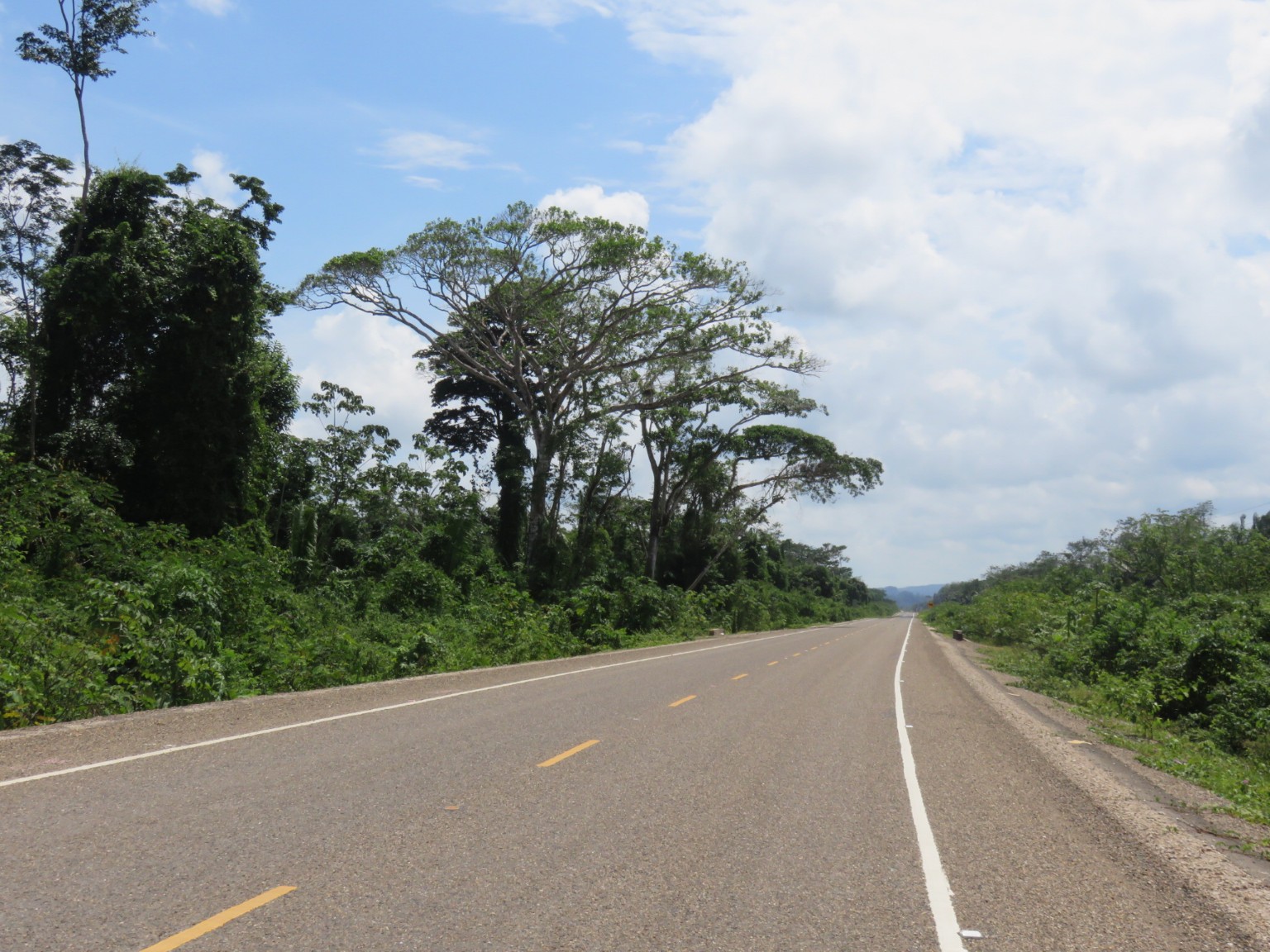
We’ve left the lively Western Highway and are now travelling along the Coastal Road which has a shoulder, sort of, is in better condition and almost no traffic – cycling bliss! \
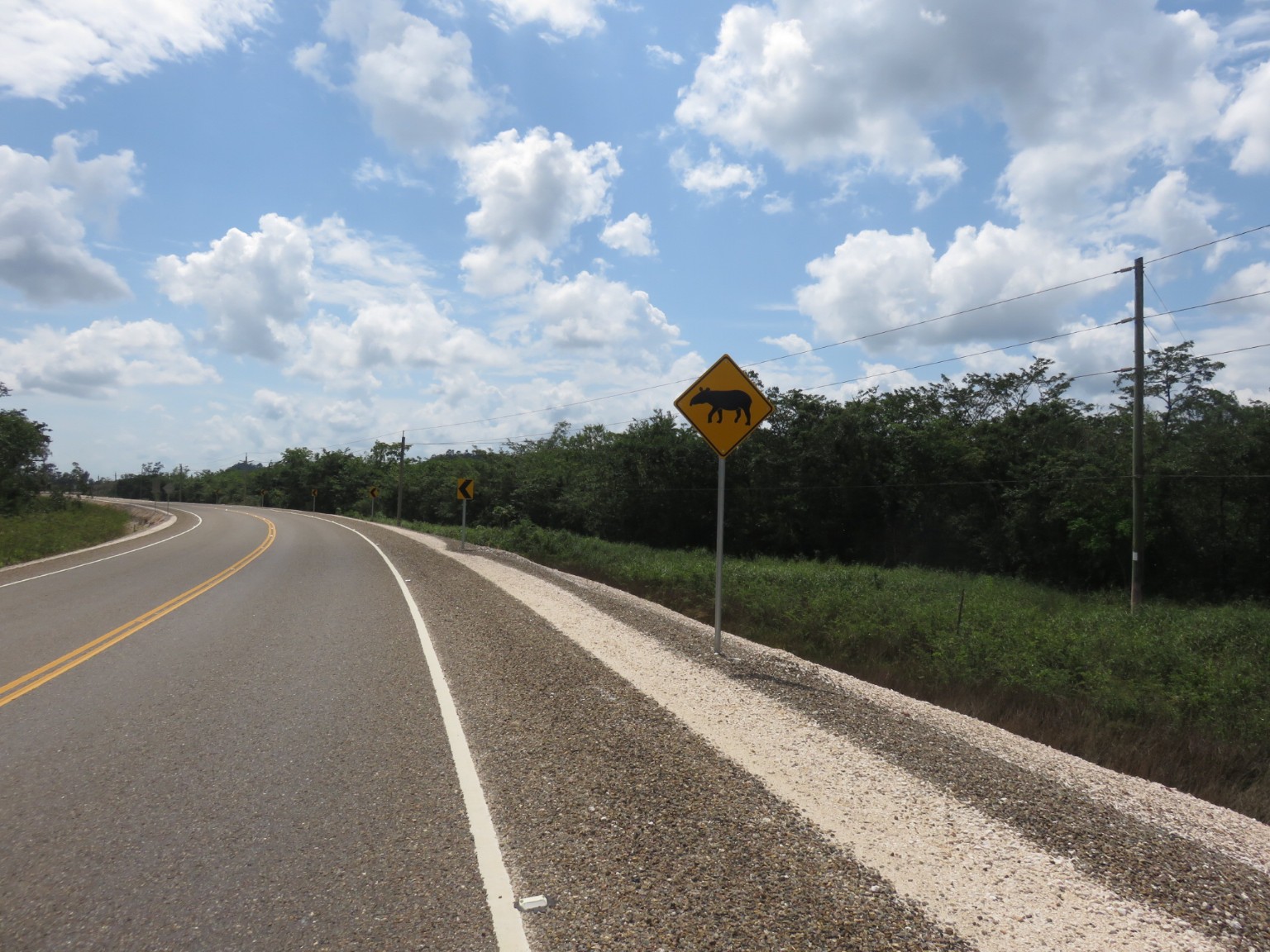
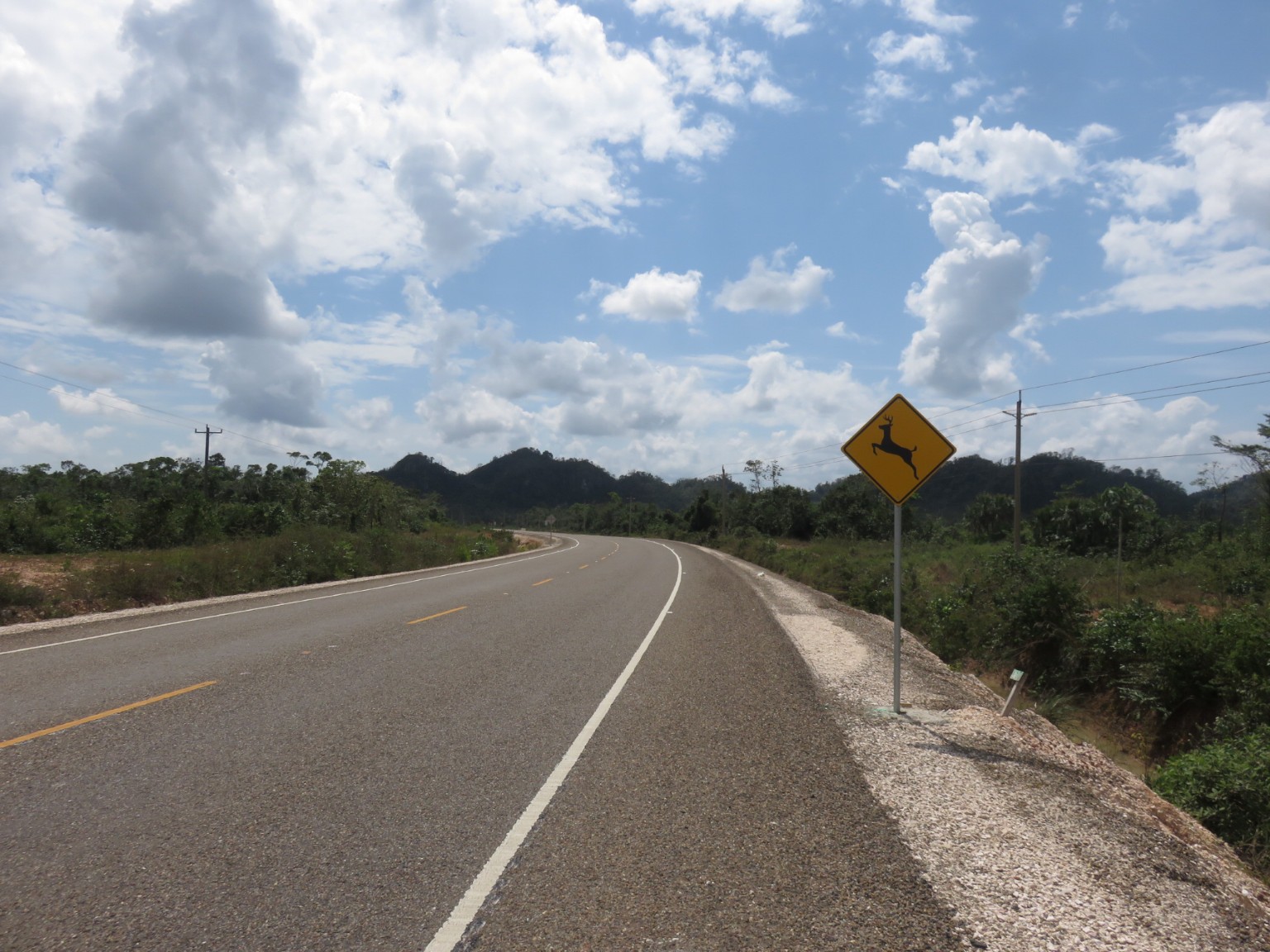
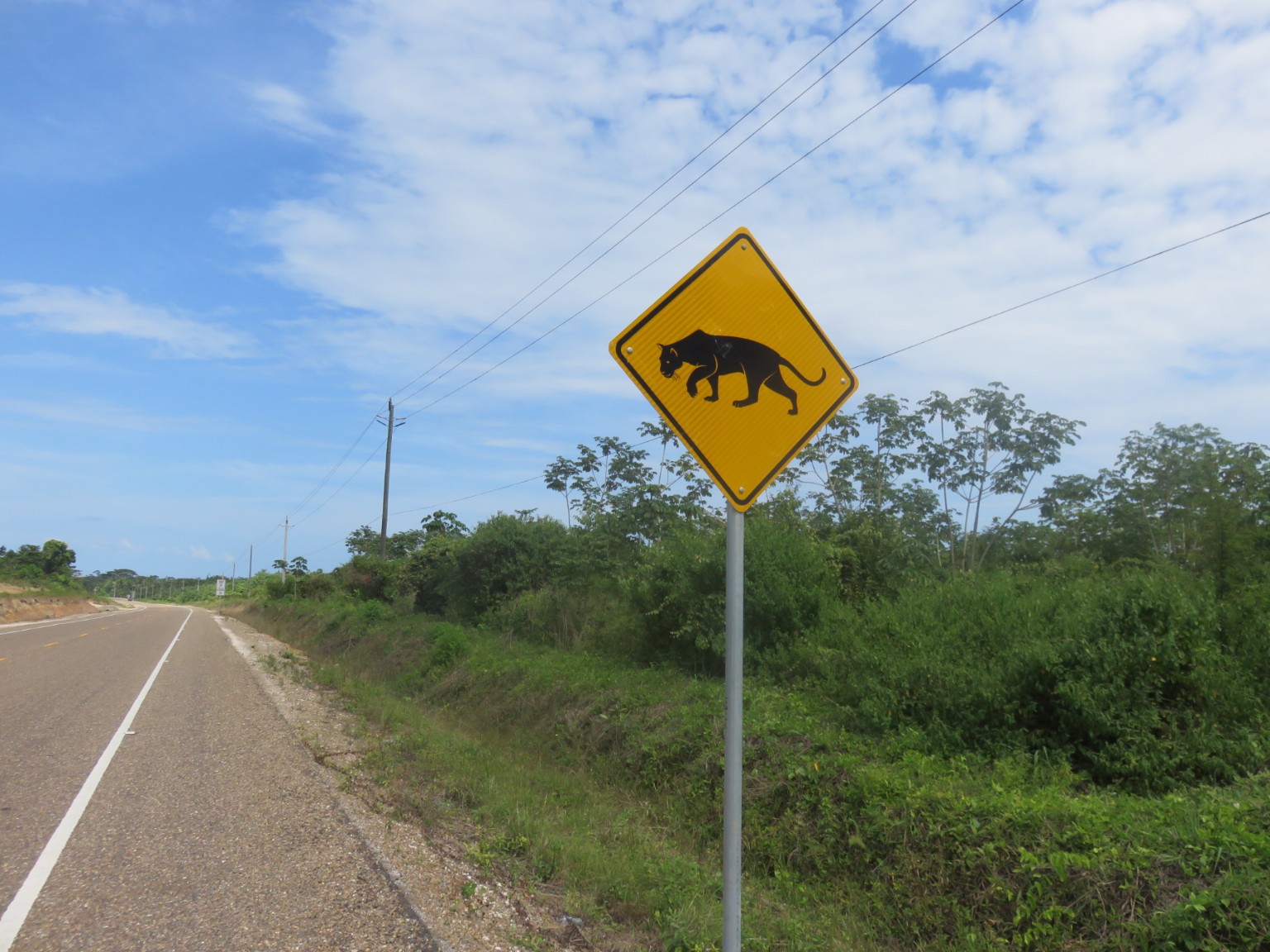
The wild animal signs are less of a concern here – this is a Tapir, Its difficult to see the 4 metre deep rain water gullies beside the road.There is not much out here except bush, bush and more bush.We haven’t seen a deer and are unlikely to because they are mainly nocturnal.
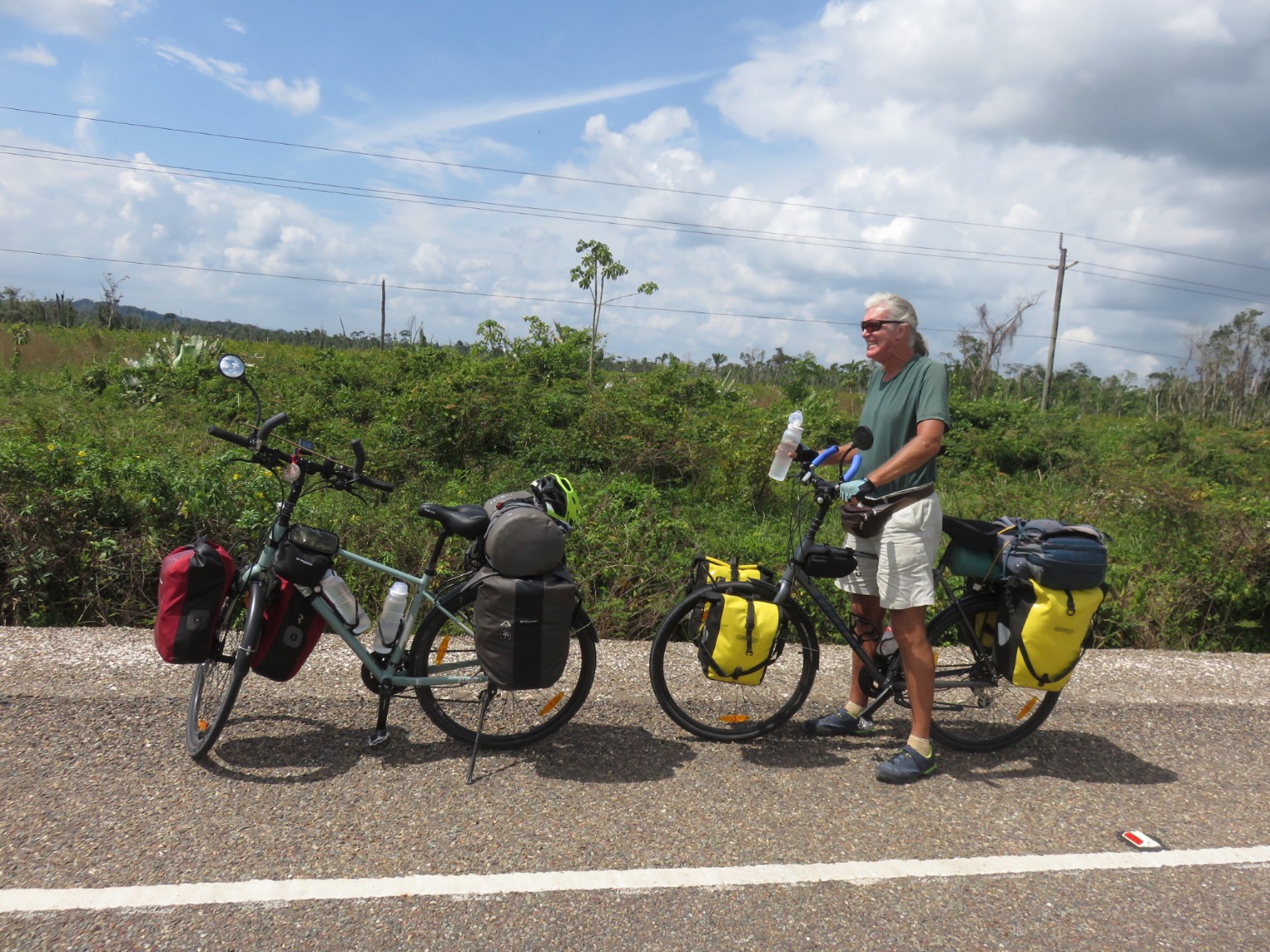
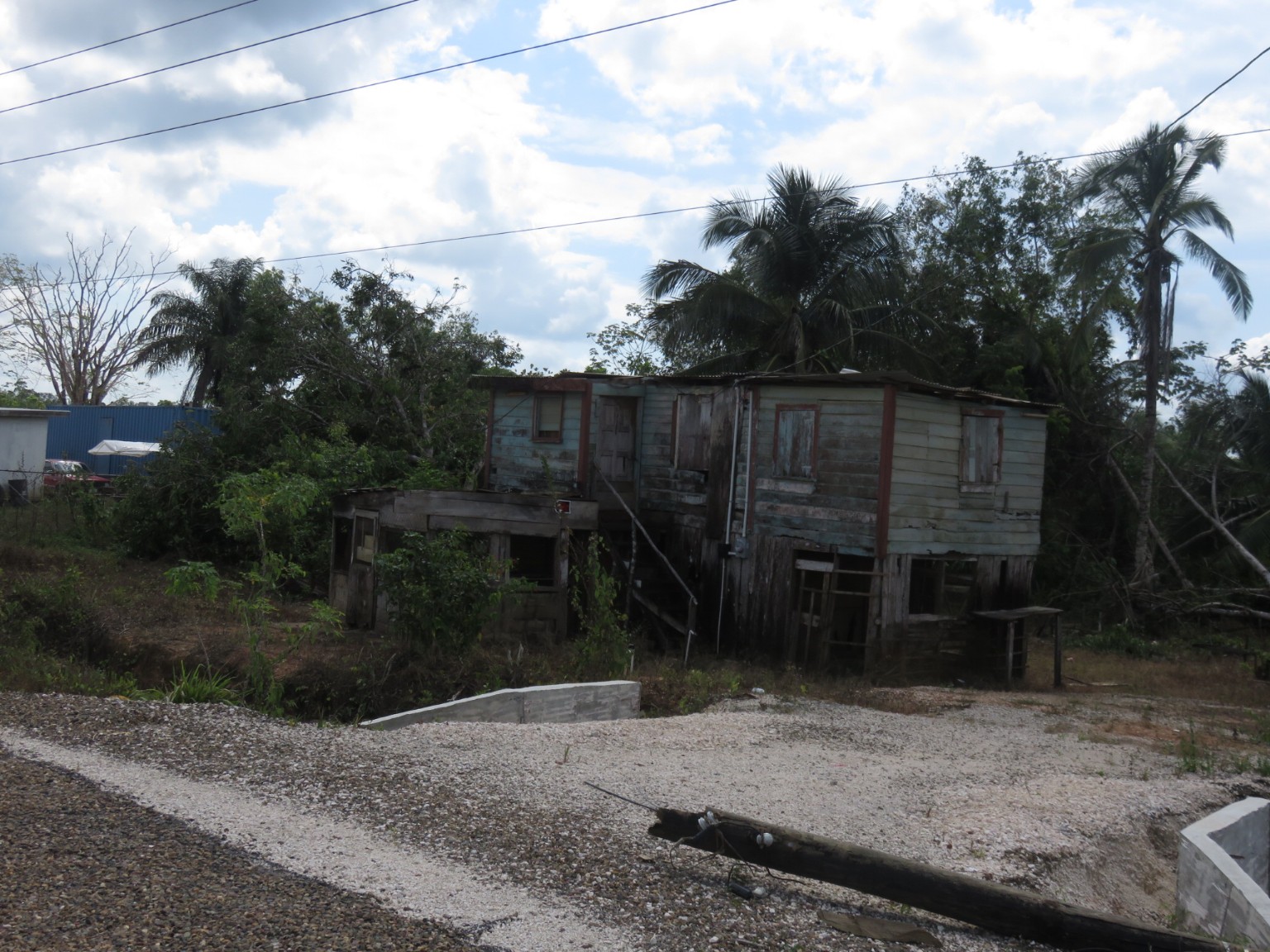
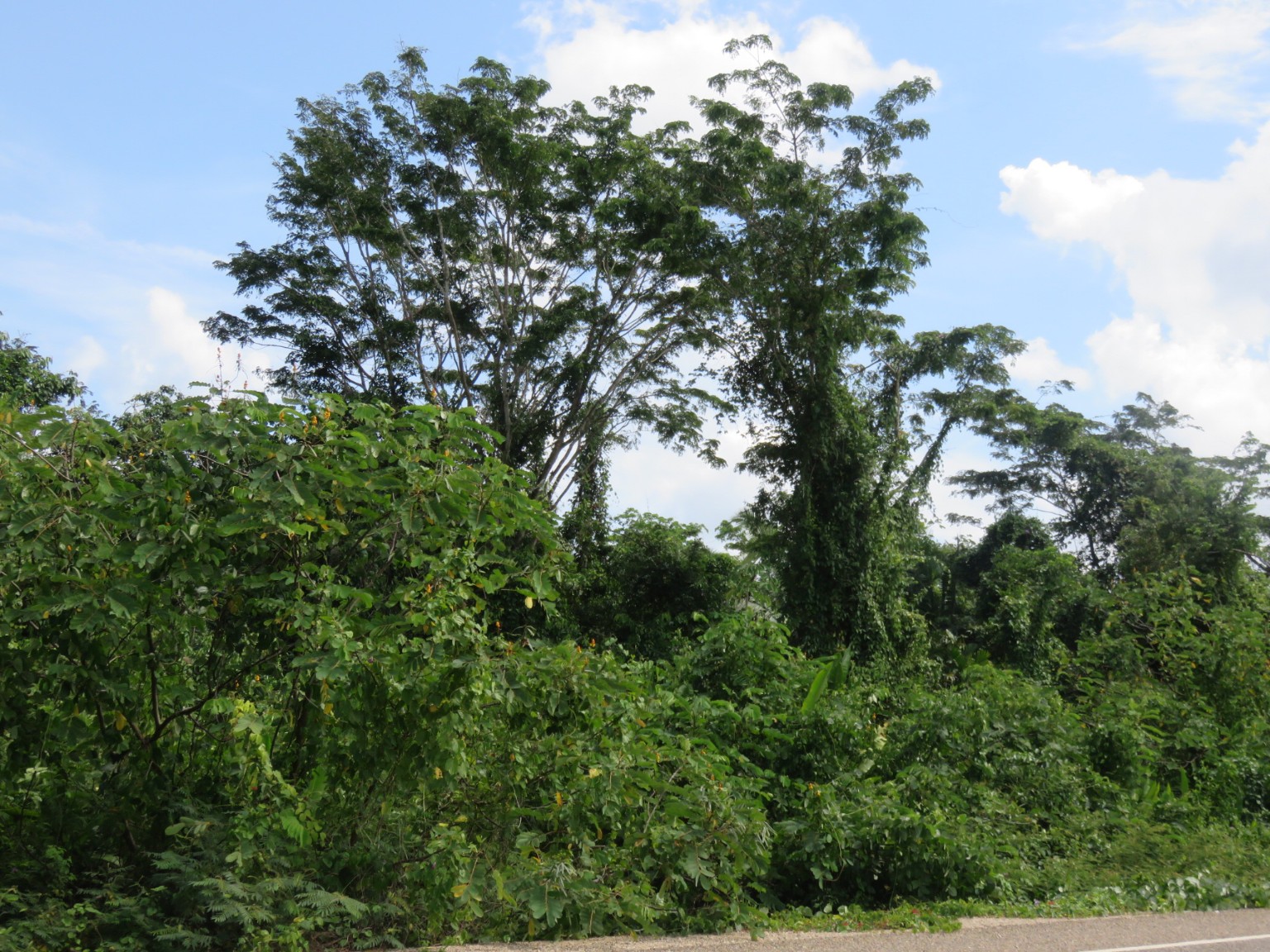
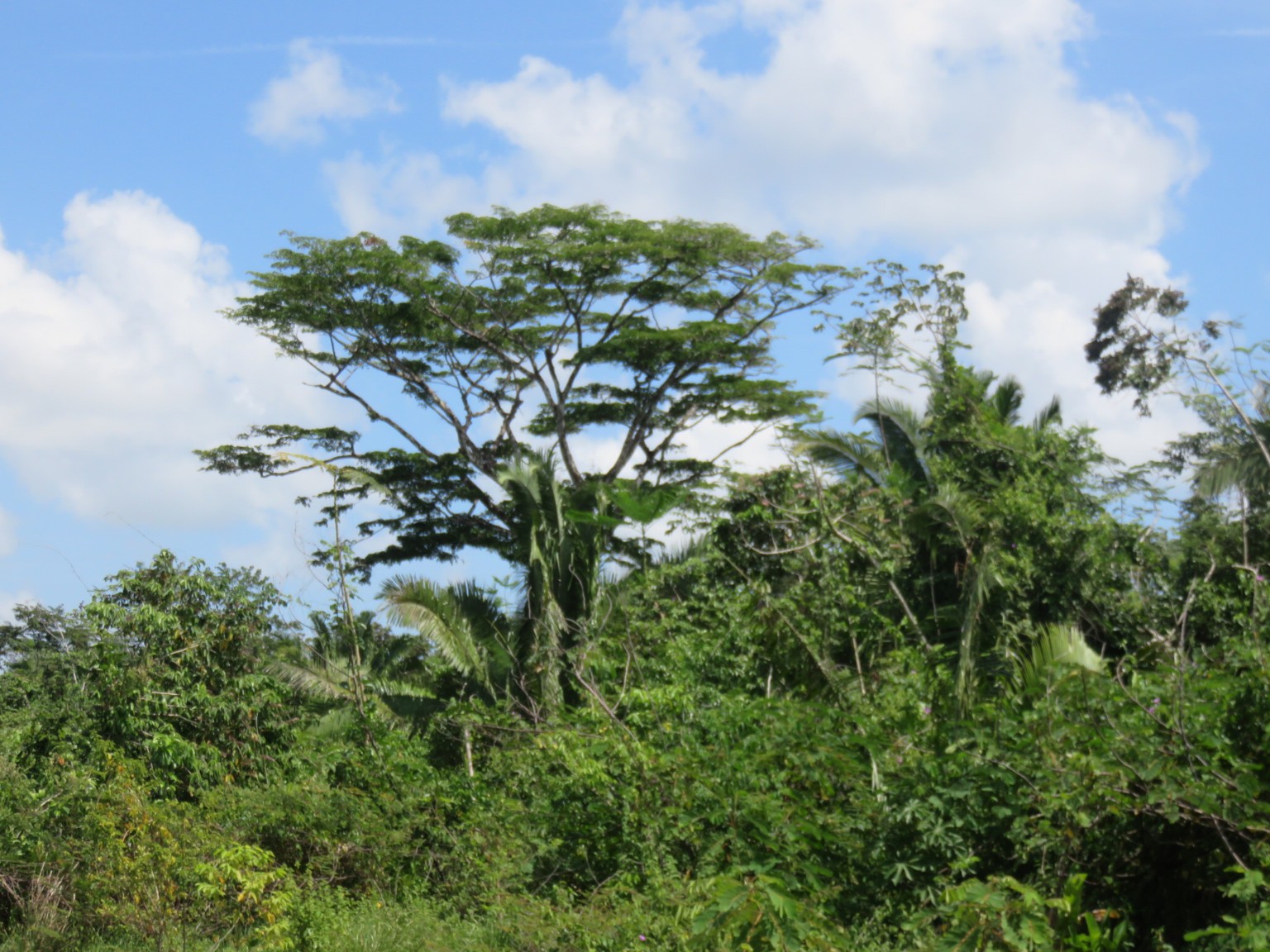
The road crew is so friendly he his offering us their water because he knows there is no resupply for 30 miles.We see many abandoned houses although it looks like someone could be building nearby very soon? We didn’t have to wait for a gap in the traffic to take these photos – the road really was this quiet. Some take the view that the quieter the road the more likelihood of a highway robbery occurring; we choose to benefit from the lack of traffic and check each stretch of road with the locals before we set out. Our immediate concern is the standard of driving of the local population who clearly drive too fast for the conditions. We still have to be mindful of the really wild animals.You will notice that if the roadside is not kept trimmed of the undergrowth the bush/jungle will easily reclaim the road way and return the area to its natural habitat.
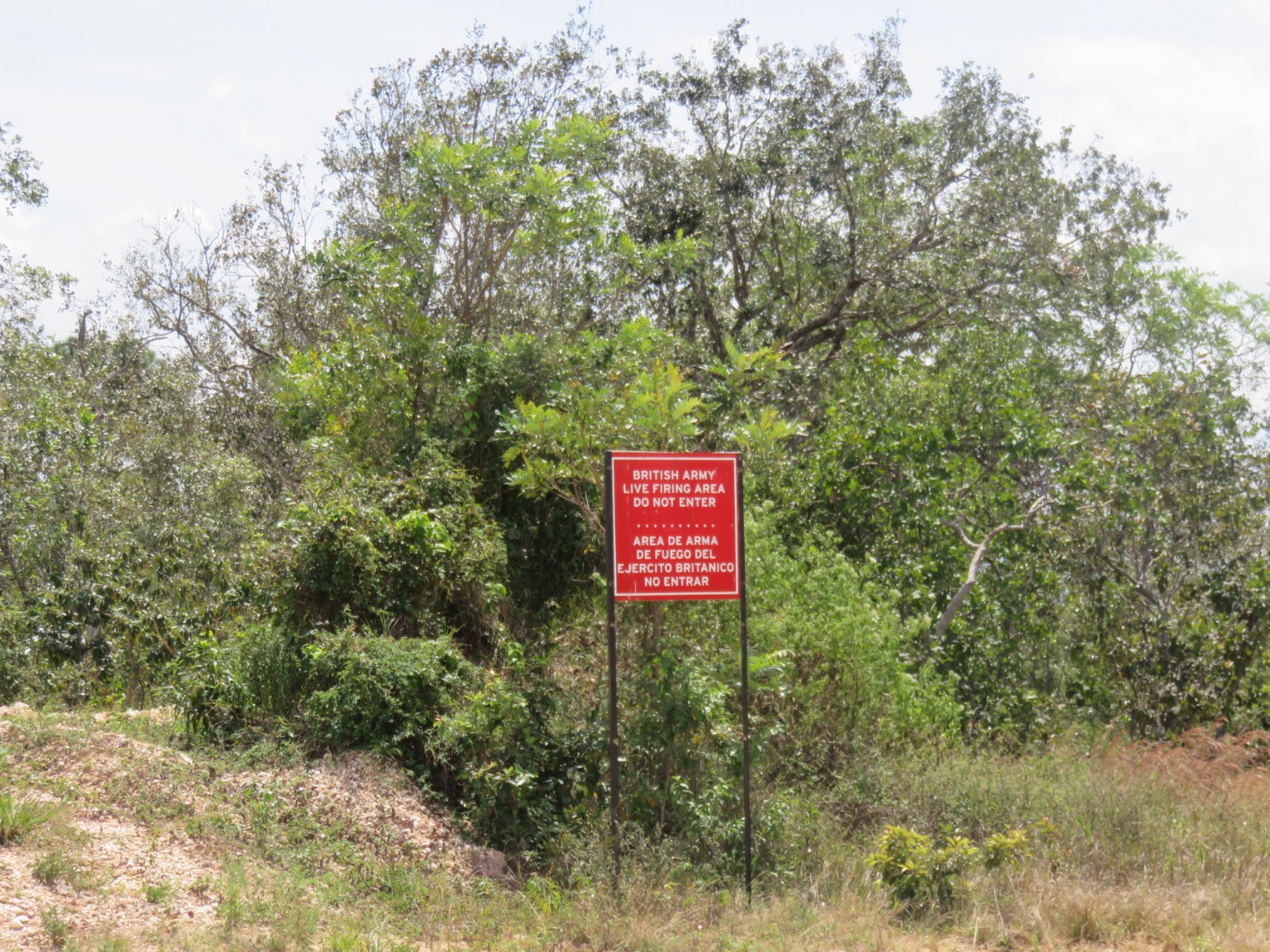
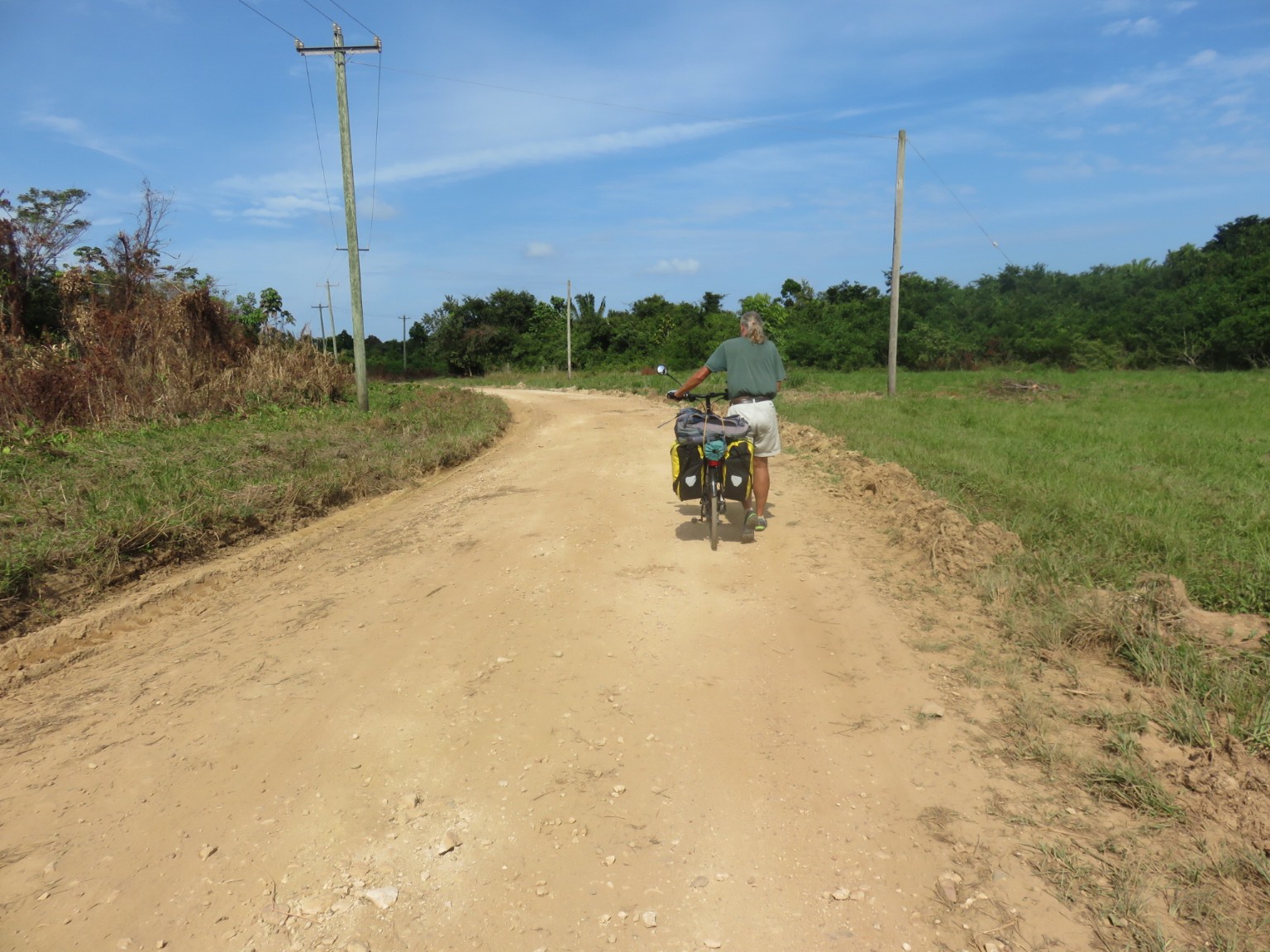
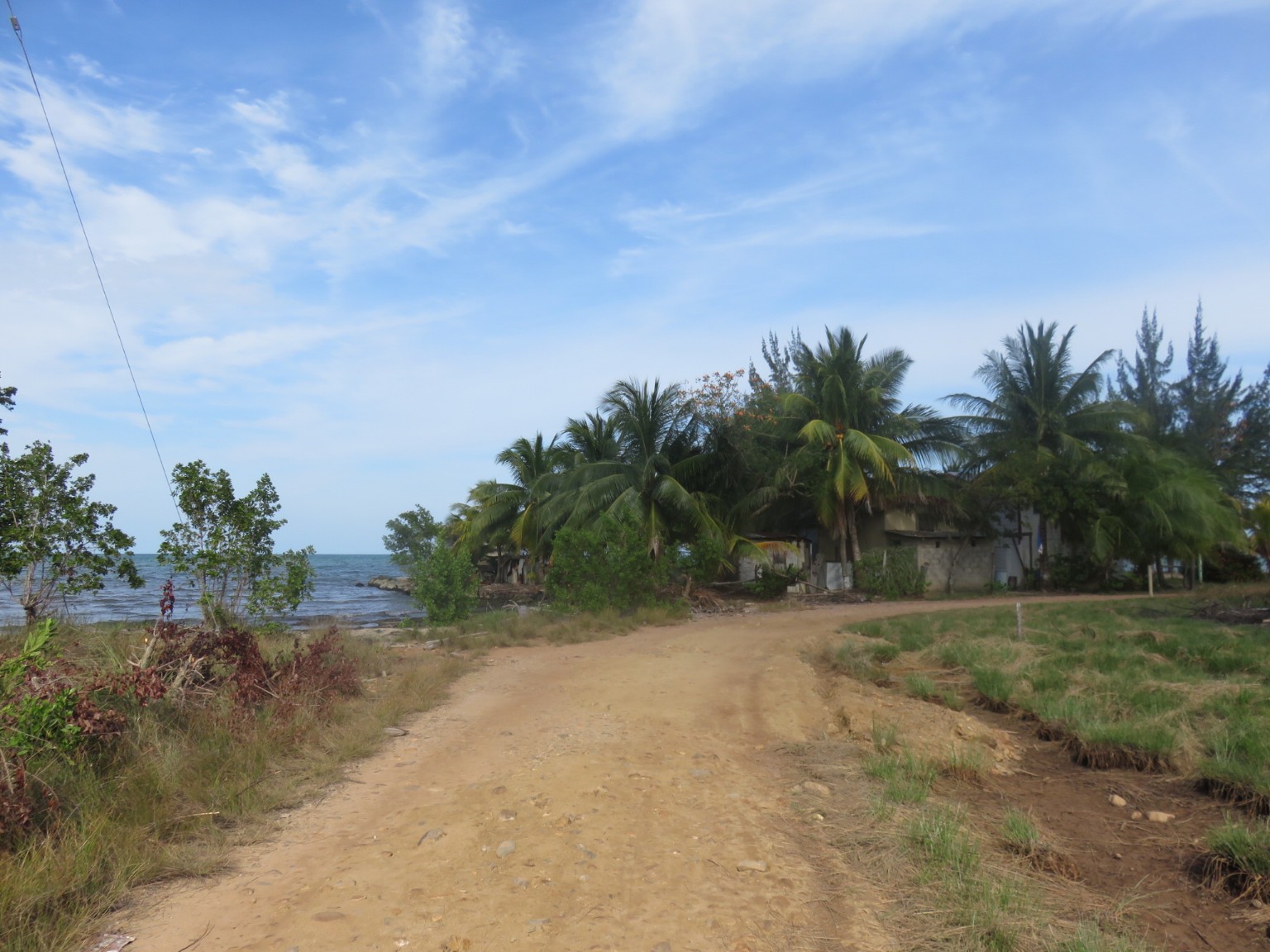
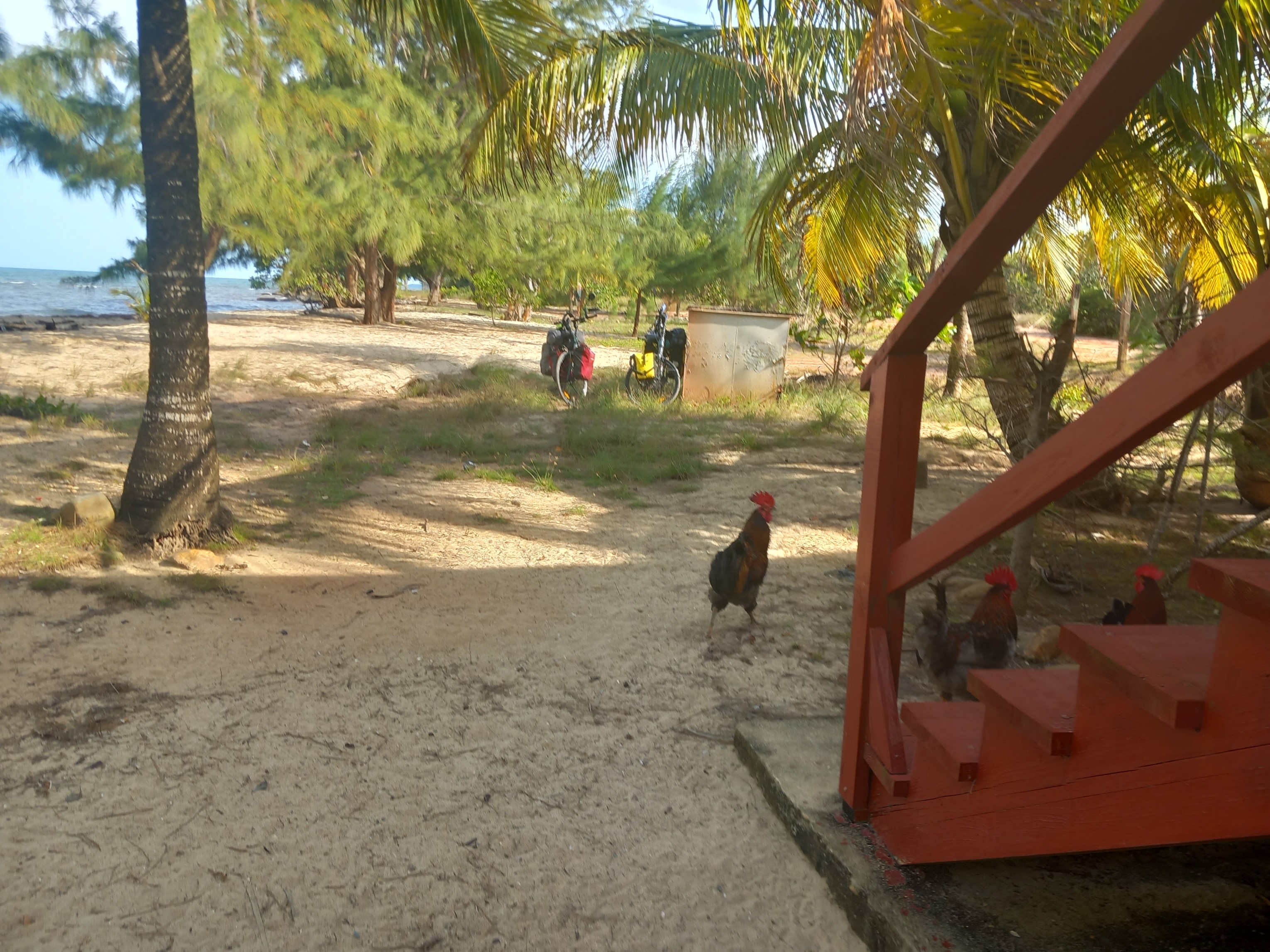
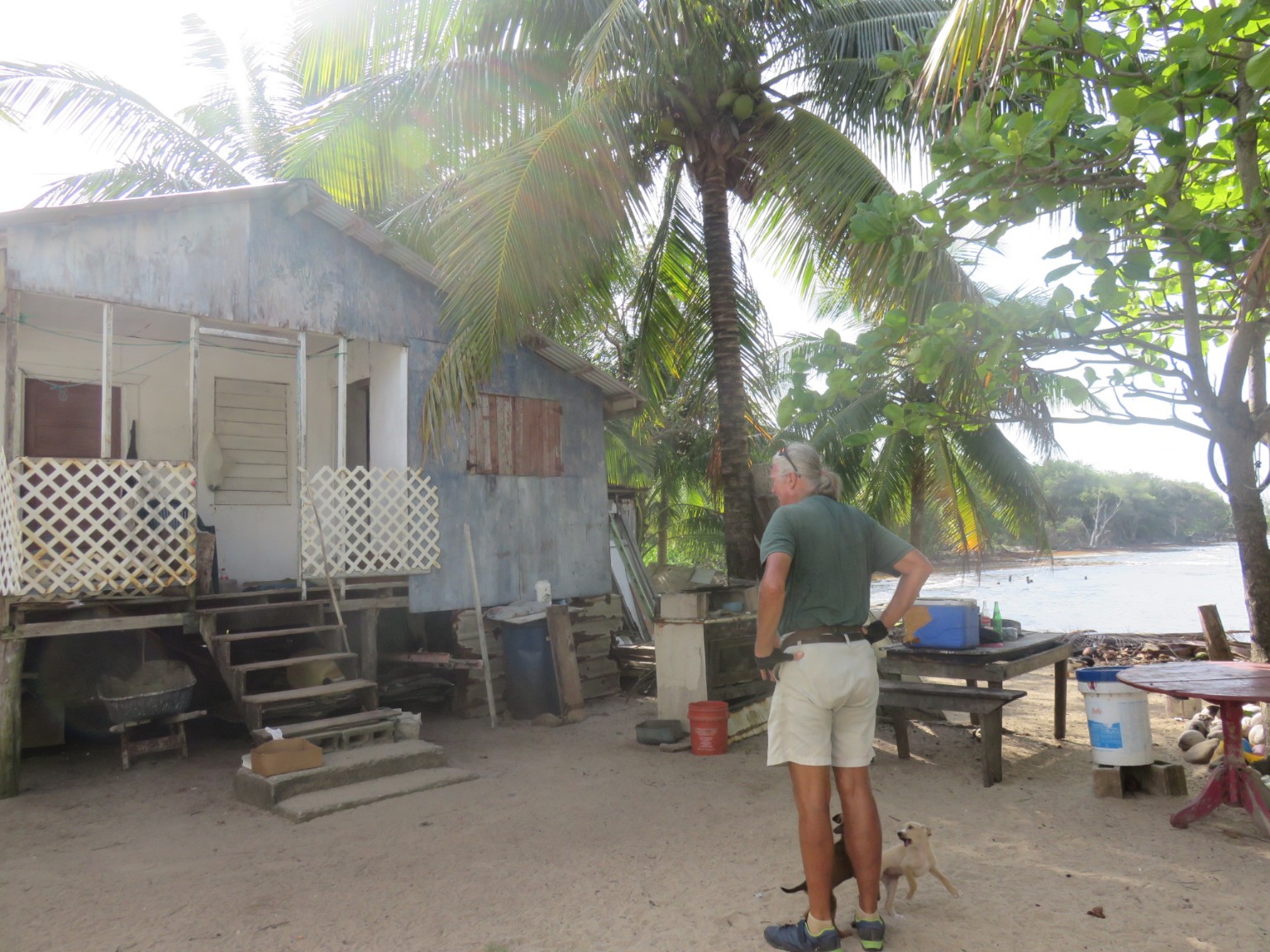
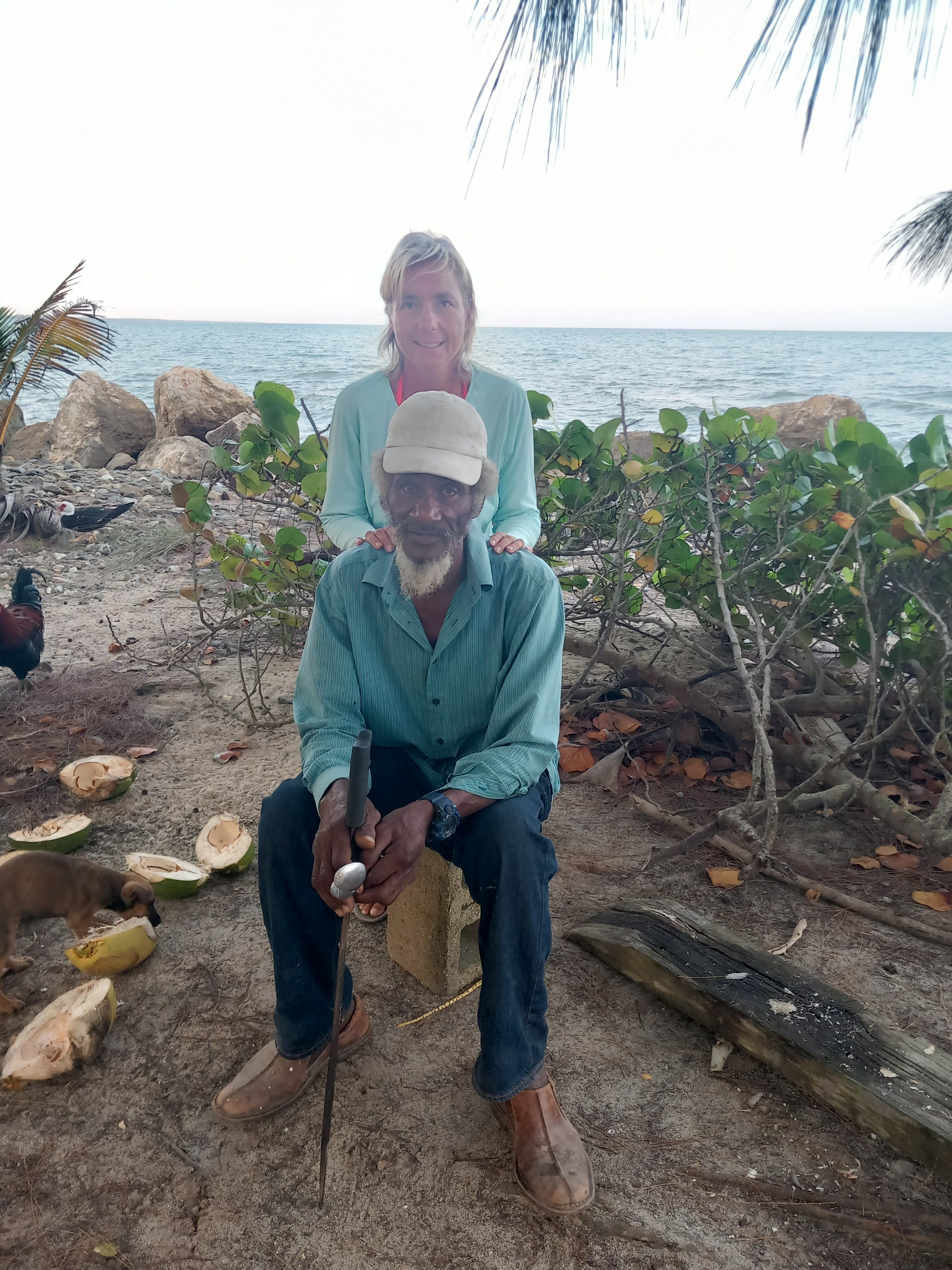
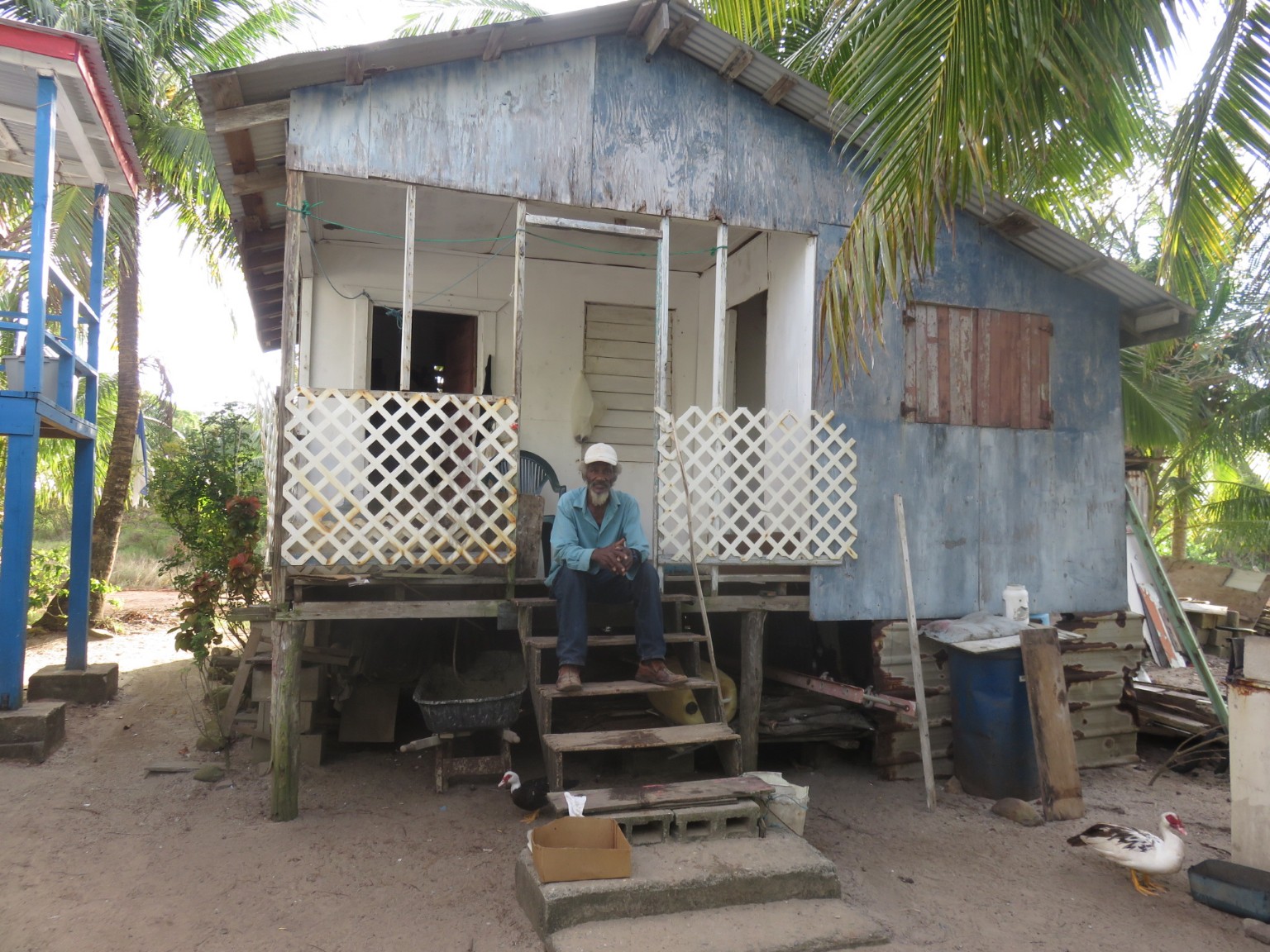
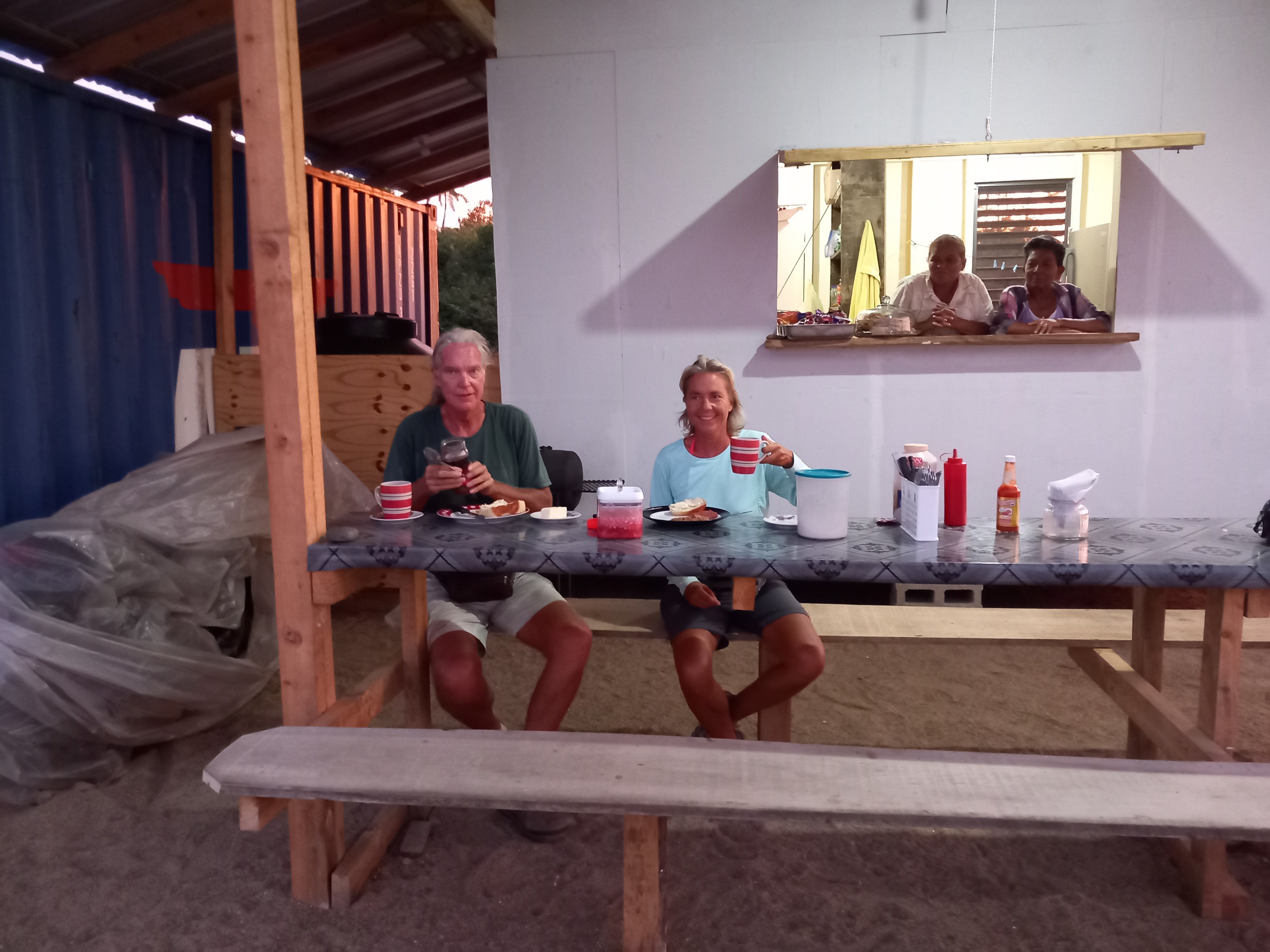
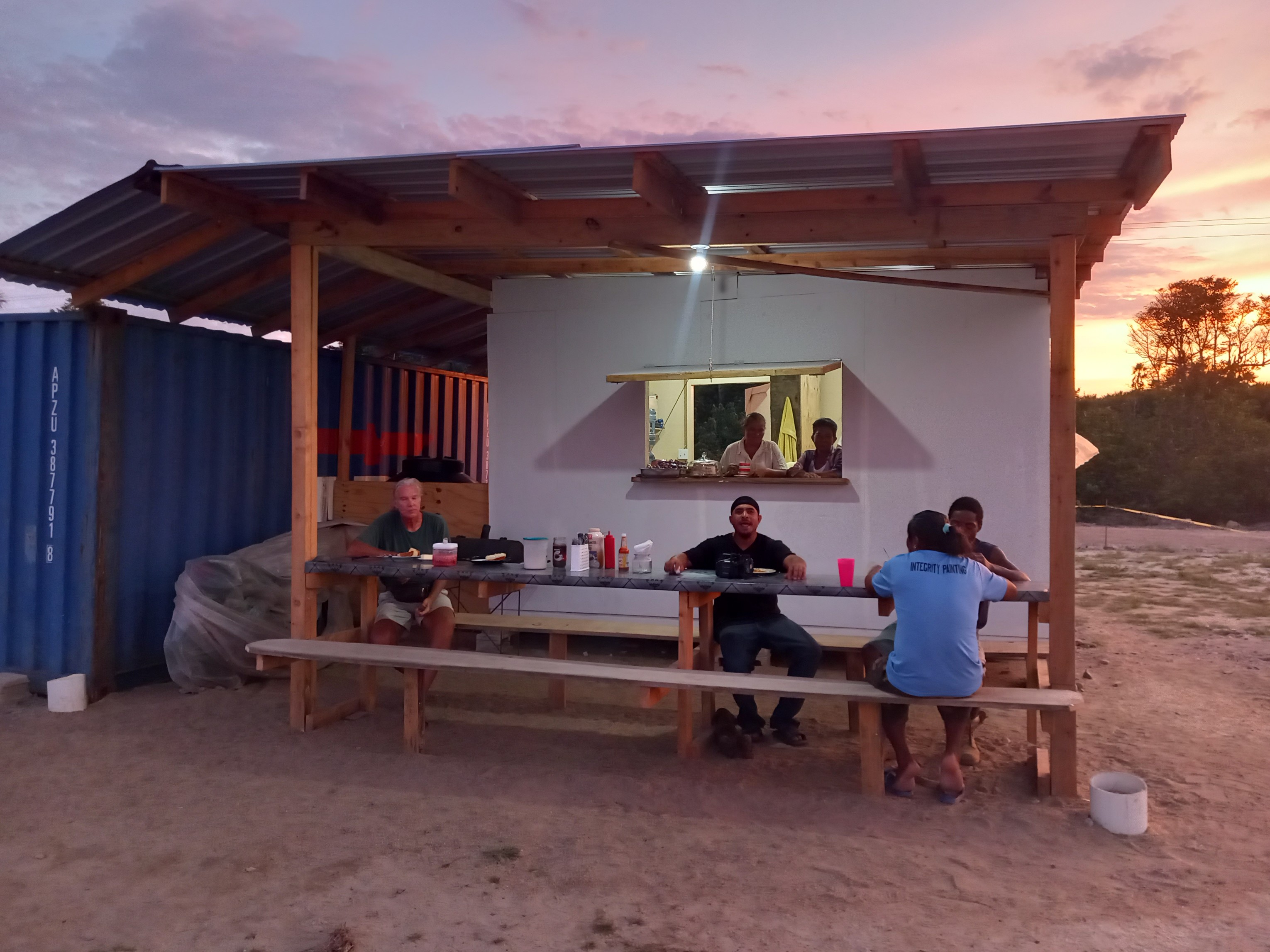
Today there was no firing when we passed. We have yet to see any army presence in the country; we’ve been told that Belize does not have a standing army although several countries as well as the British use this jungle for their tropical training. We saw troop movements on a daily basis in Mexico but no here.We are in search of someone called Joseph who we read allows people to camp at his place on the beach. It is so far from the main road we are beginning to wonder whether or not he still exists? The track is too uneven to ride with luggage.This is looking promising because we’re at the end of the track and on the beach.We are met by puppies, chickens, ducks but no Joseph. We sat there for 30 minutes wondering if he would arrive, or should we go ahead and put up our tent. And then in the distance, around 400 metres along the beach, we see two people moving and decide to go and ask if they know where is Joseph – we discover him there with a construction crew of 15 people building a brand new resort. They invite us to return for dinner and breakfast. More immediately they supply us with water because we ran out whilst battling headwinds for 5 – 6 hours.This is Joseph.
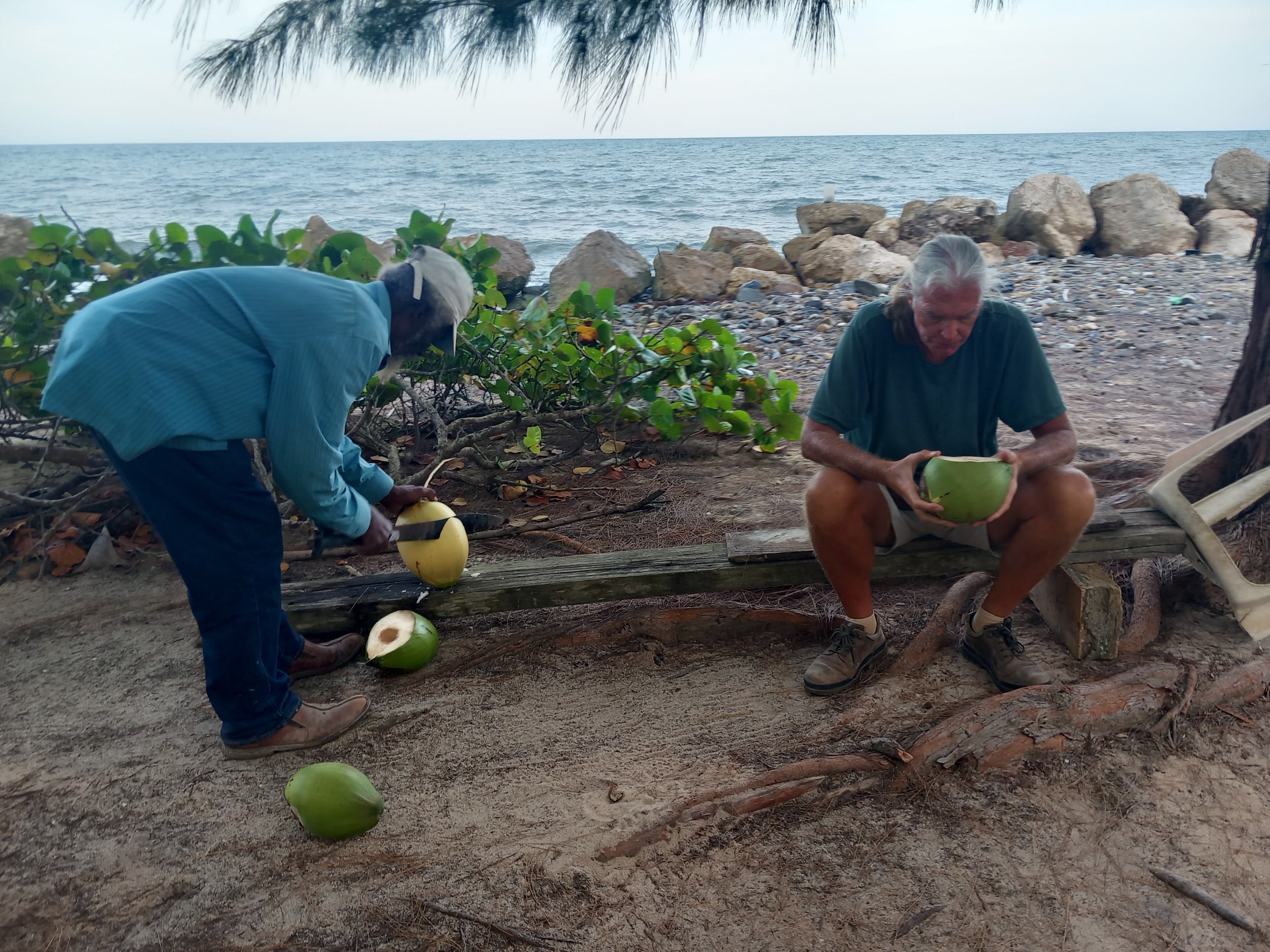
We are now used to seeing men, women and boys carrying machetes around openly for chopping firewood or coconuts for us.
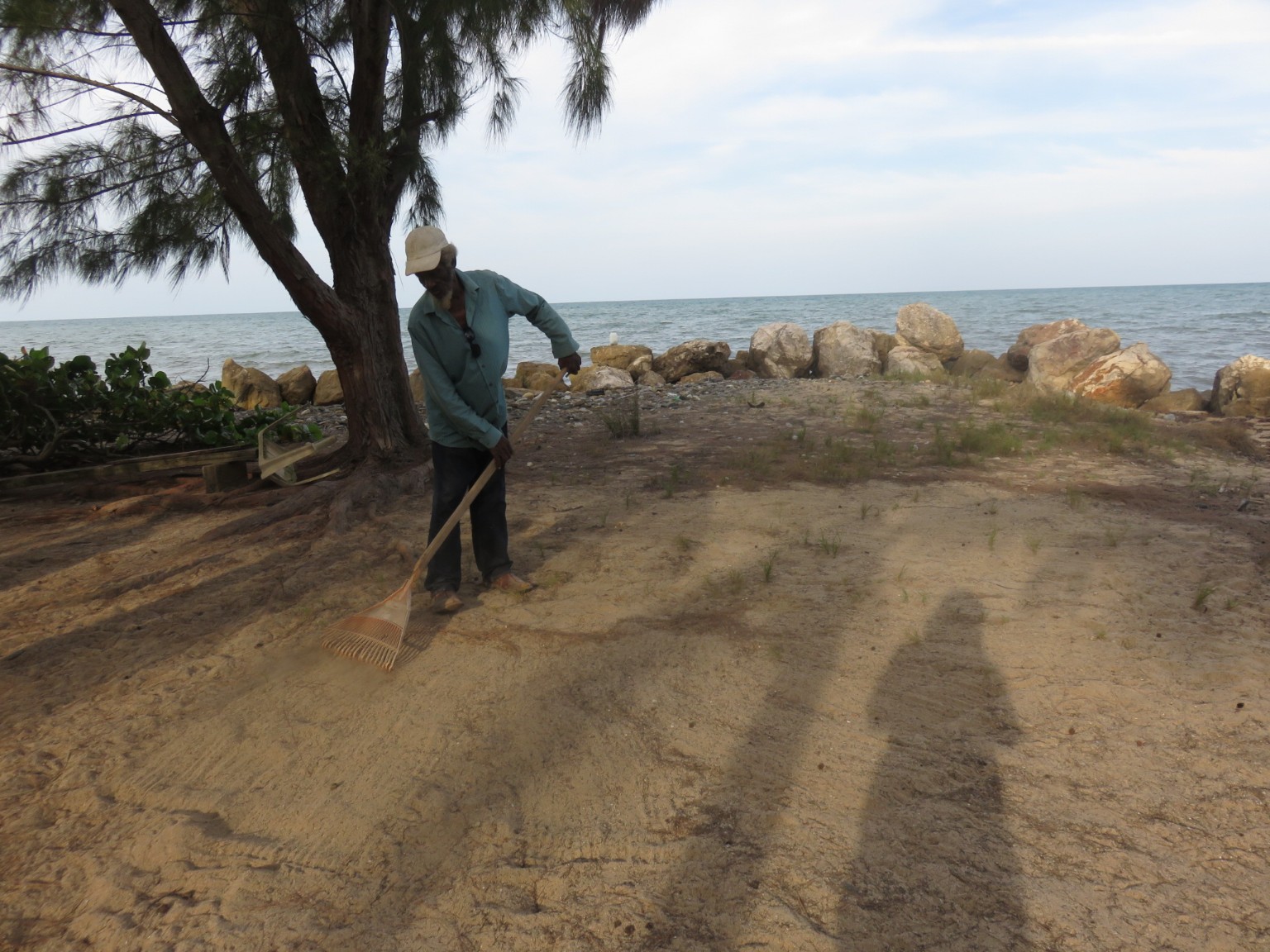
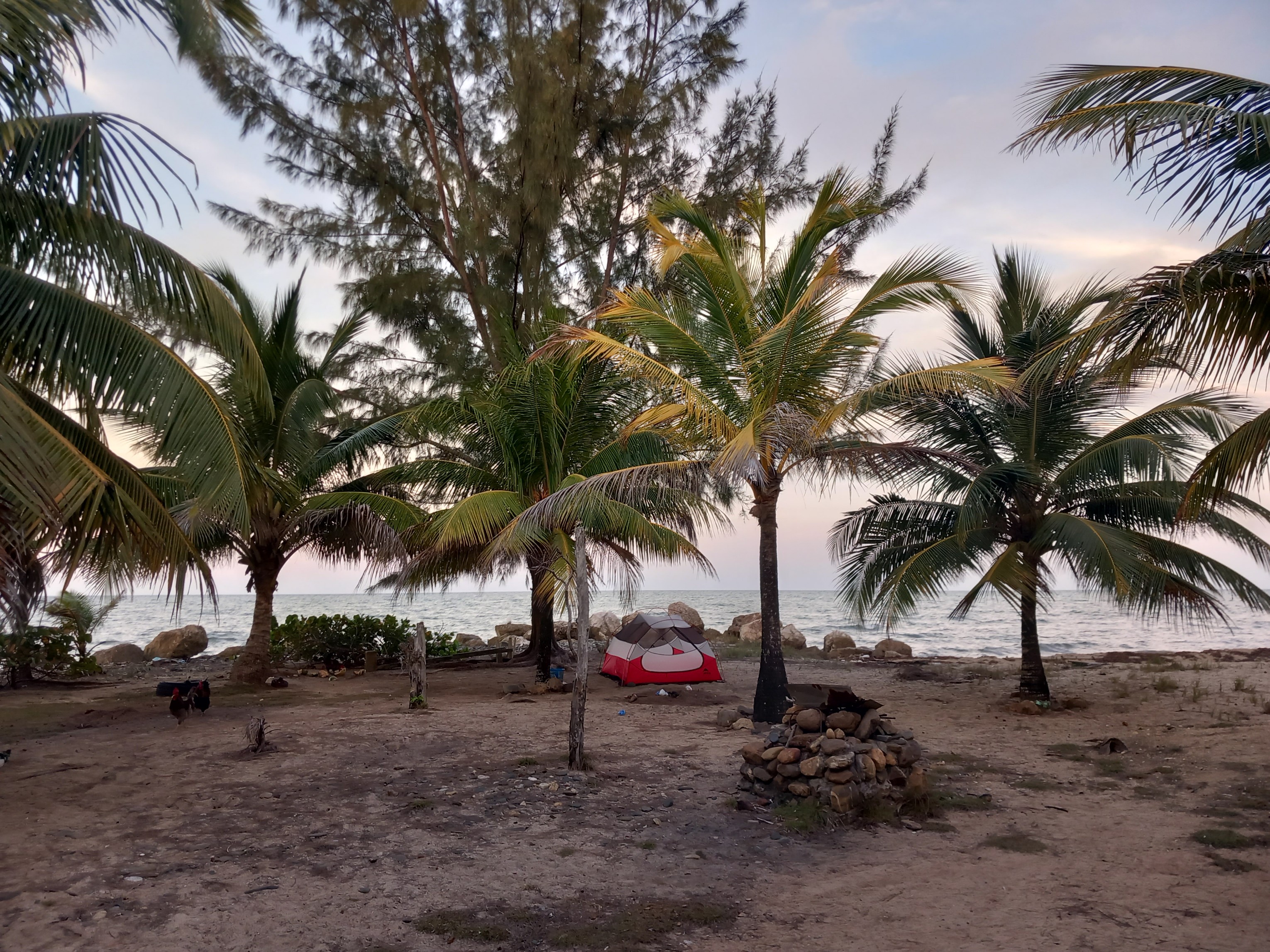
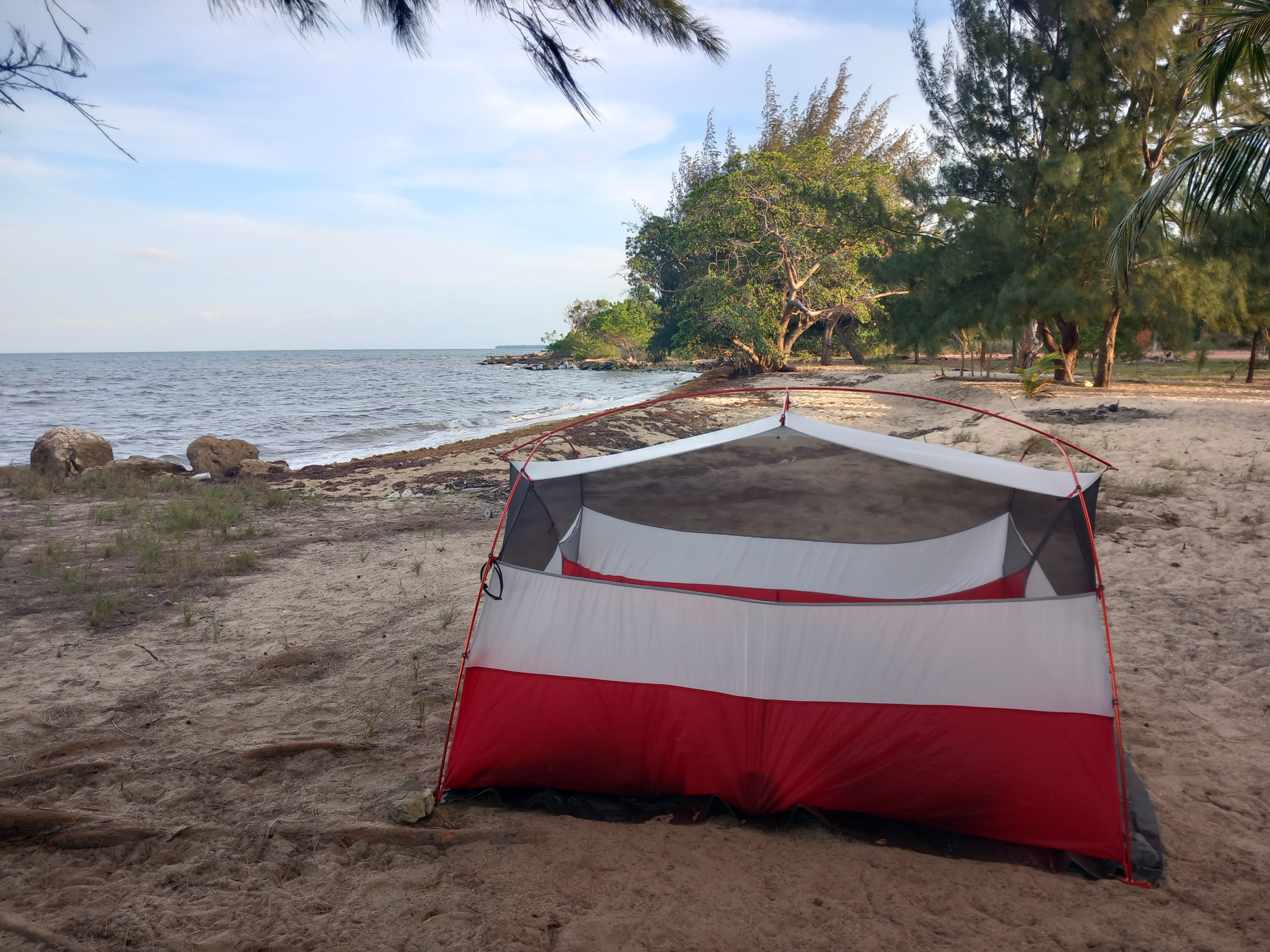
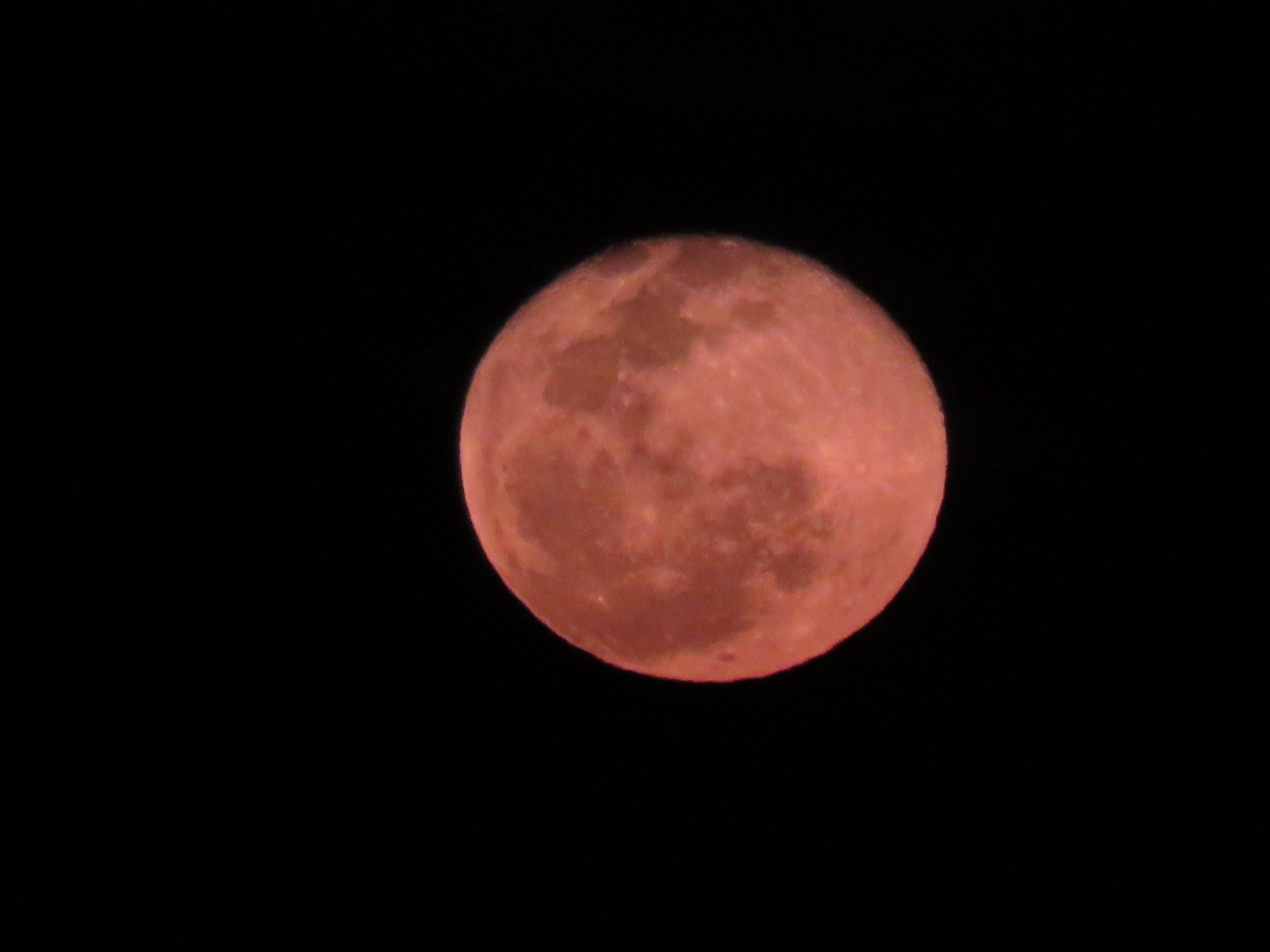
Joseph has a stunning position on the beach which is so authentic it has no electricity, no running water, no flush toilet, and no internet.Joseph is a very attentive host and rakes the ground in preparation for the tent.Whilst we’re erecting the tent unknown to us he is climbing a palm tree and collecting coconuts for us to drink and eat the meat. Our starter before joining the construction crew for dinner.Luckily we pitched the tent behind those rocks because the wind/waves increased during the night and we needed their protection to ensure we didn’t wake up to a flooded bedroom, such was our proximity to the Caribbean. We also checked the Palm Trees above our tent to ensure there were no coconuts which could fall on us or our flimsy accommodation. Dinner is provided by the construction crews own catering department. We are not stupid – we arrived dead on 6pm when the men were still cleaning up after their challenging day’s work.We reflect on such an unusual day in that we had breakfast with academic-type insectologists, wrigglythingologists, etc. furthering their studies in the jungle and end it with dinner on the beach with hardworking contractors who live and work on site – also miles from anywhere.The moon tonight we thought was rather special.

 Mexico and Belize