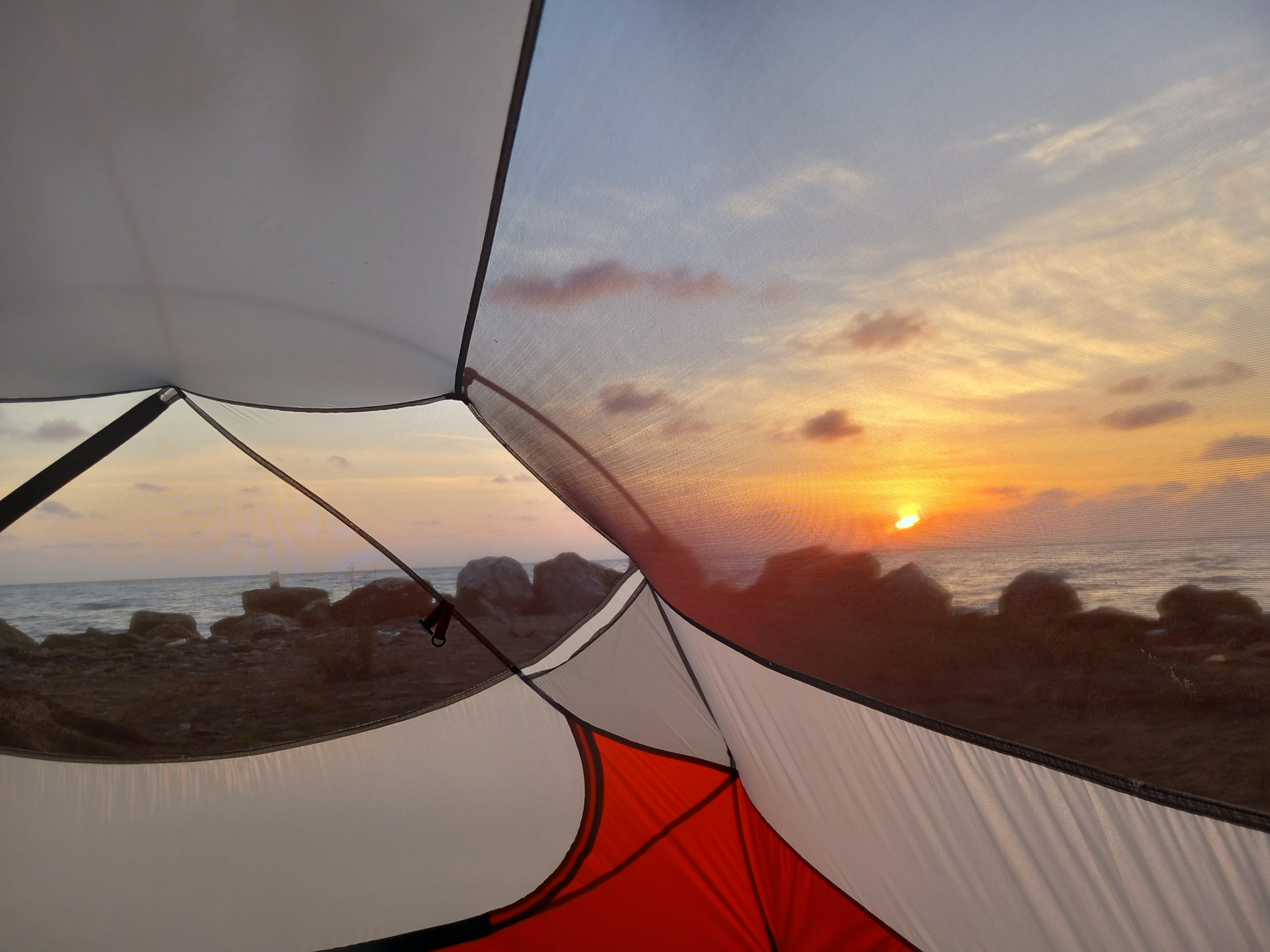
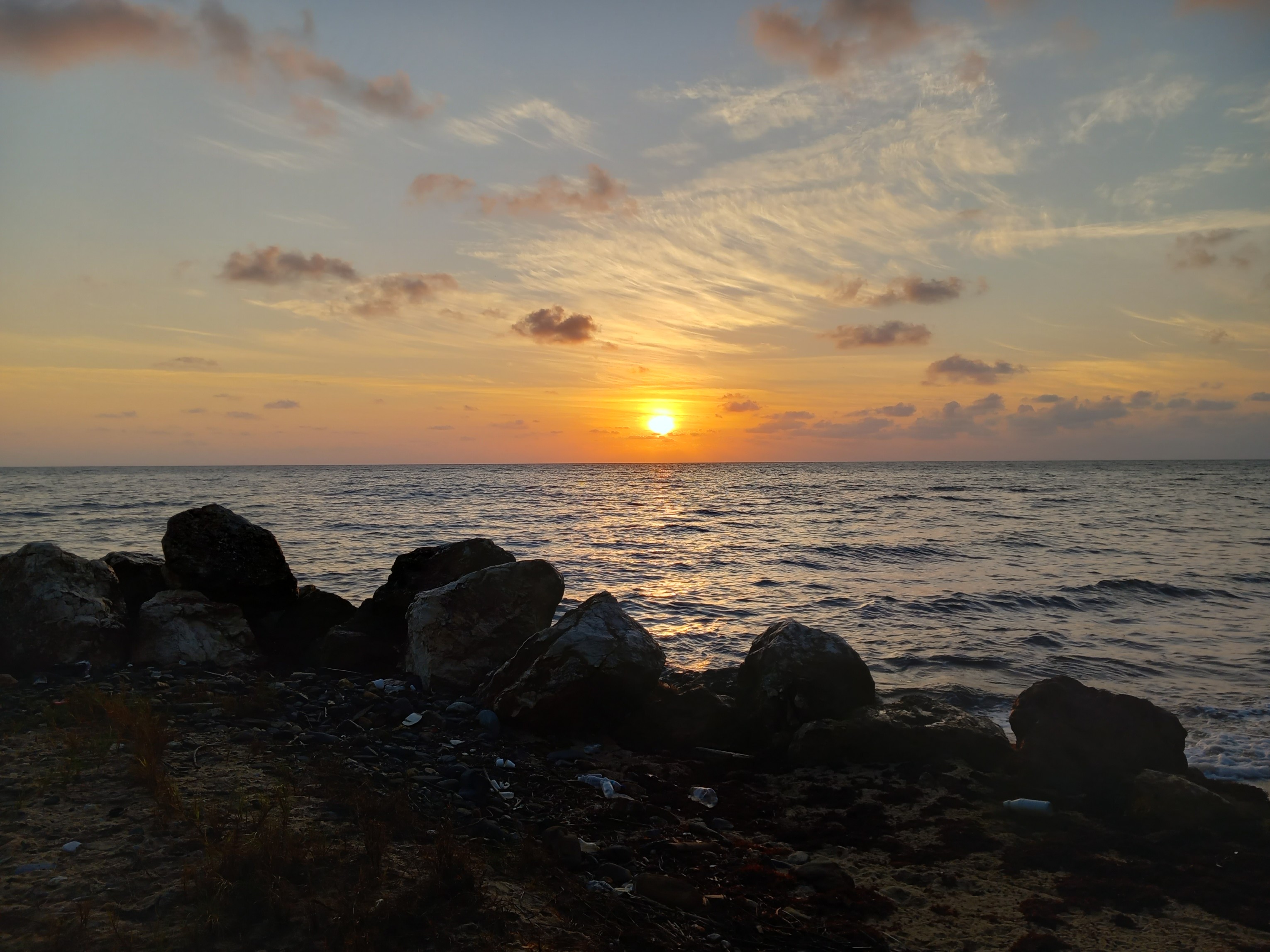
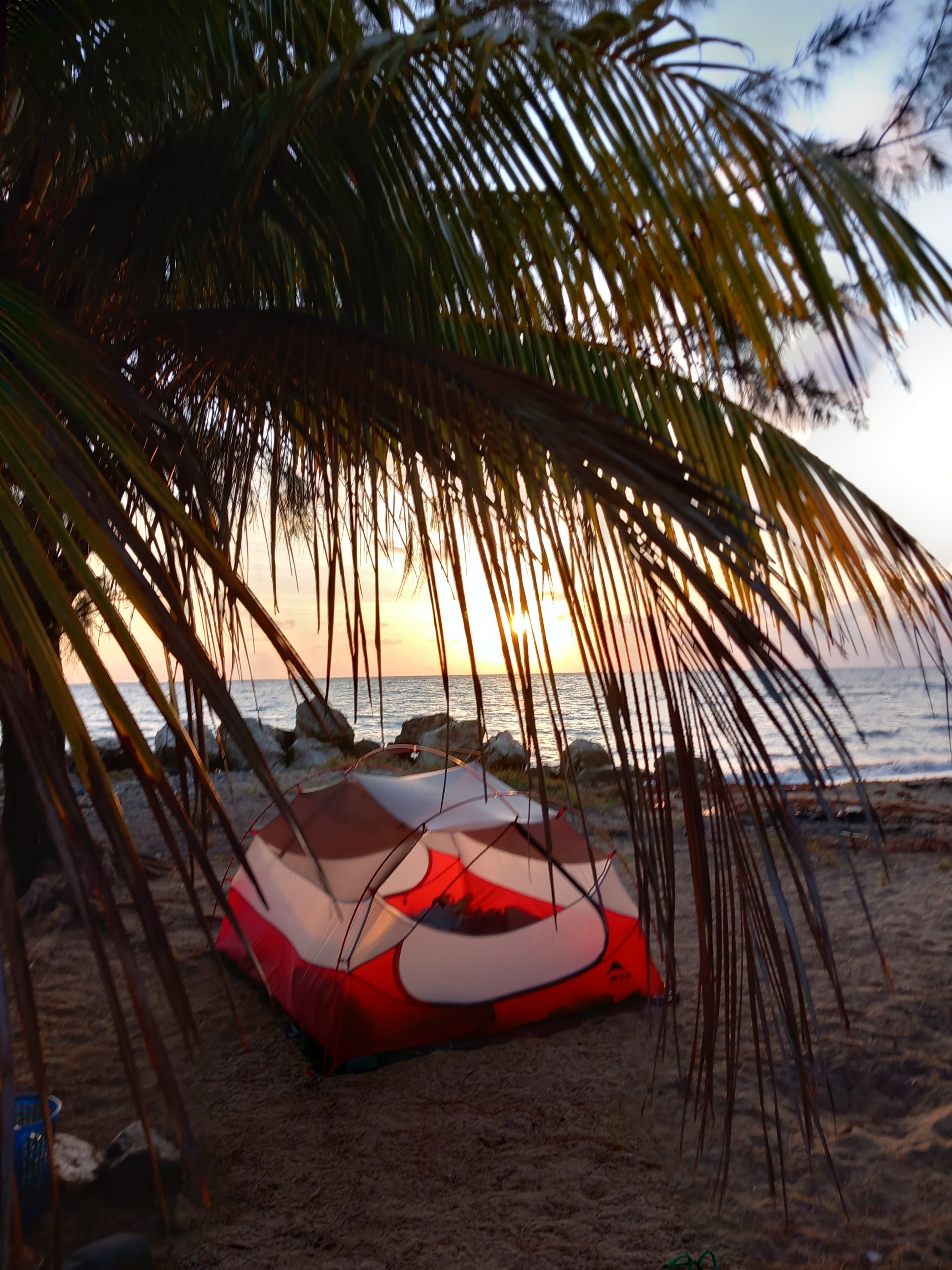
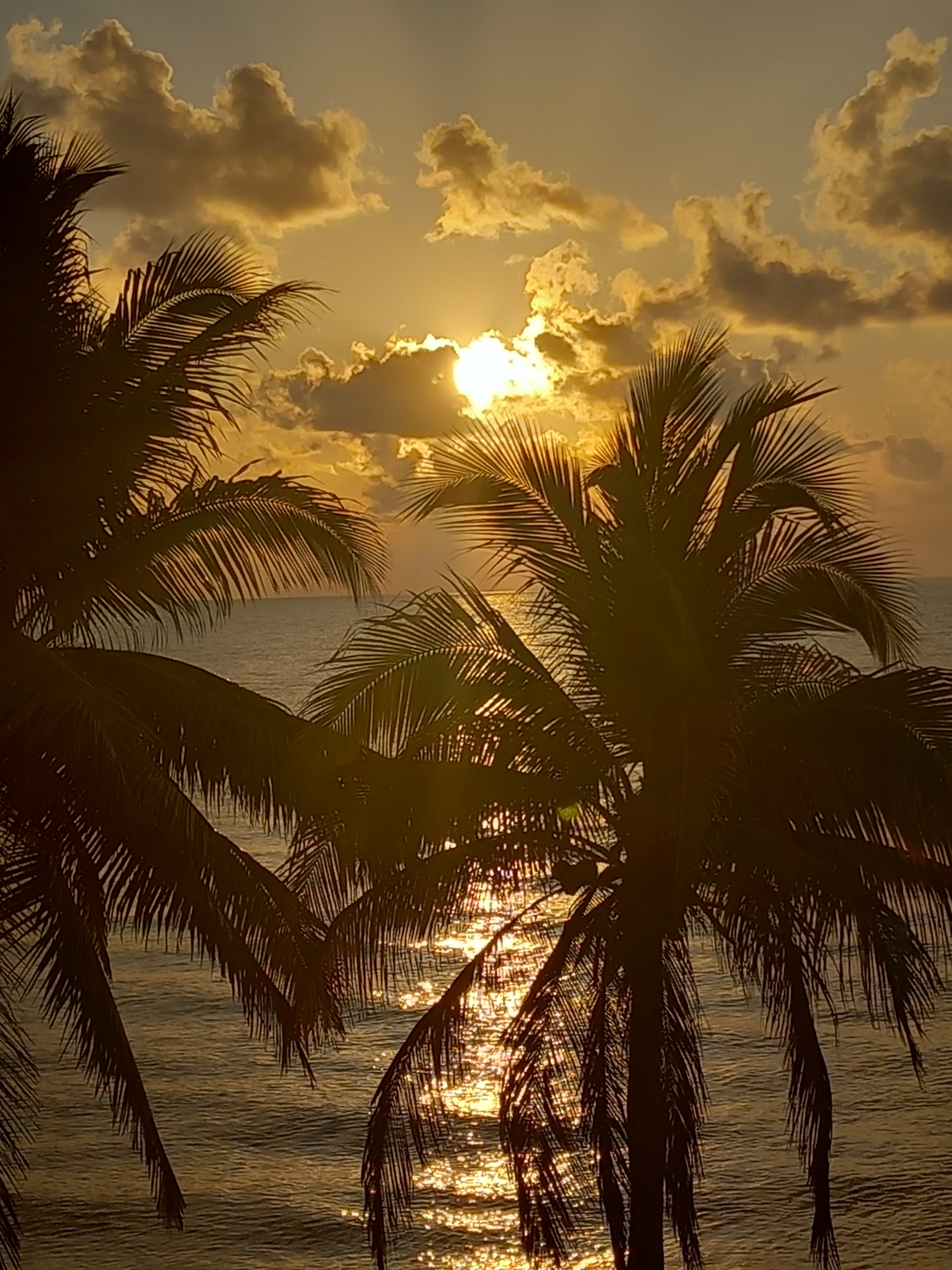
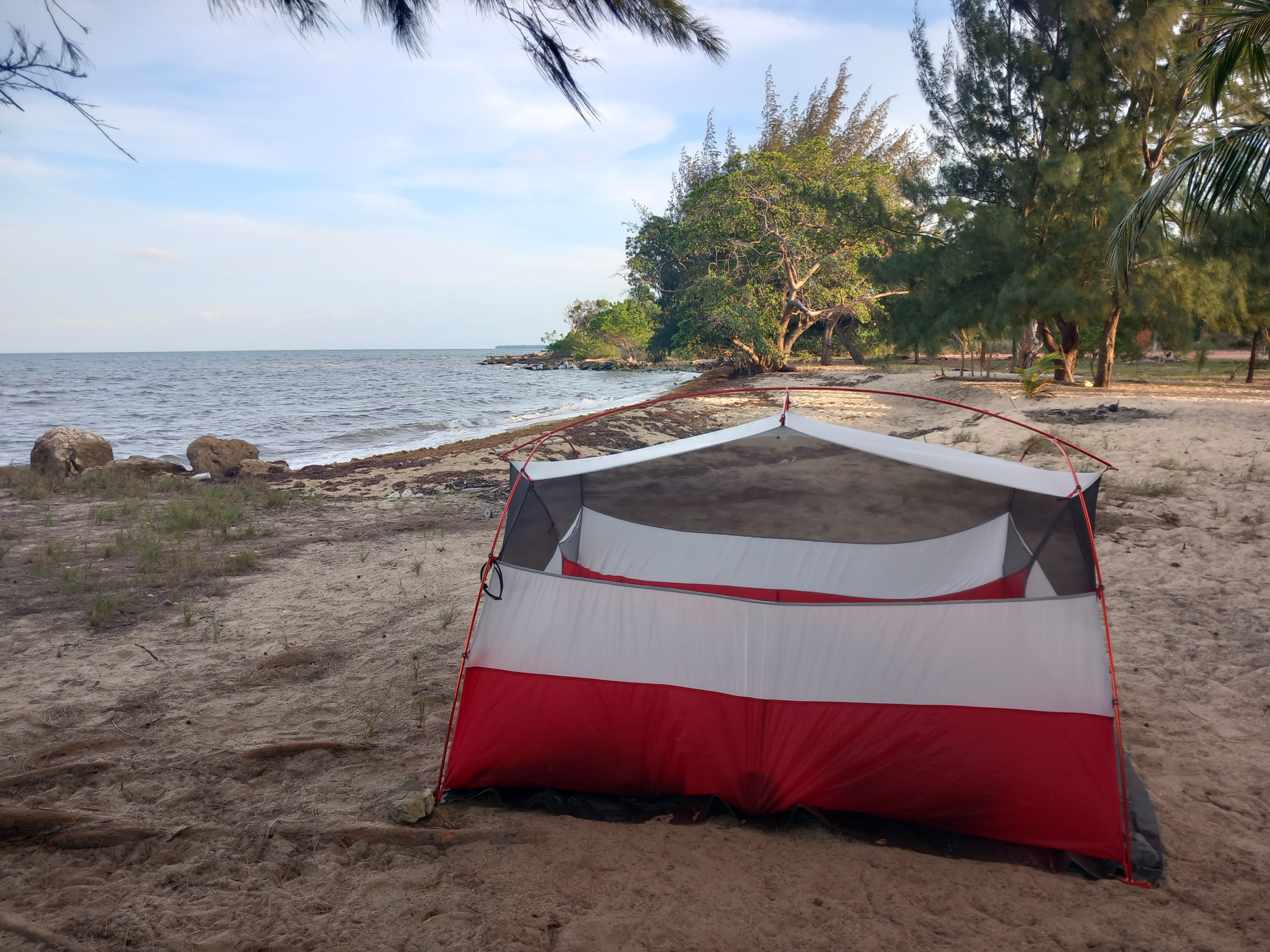
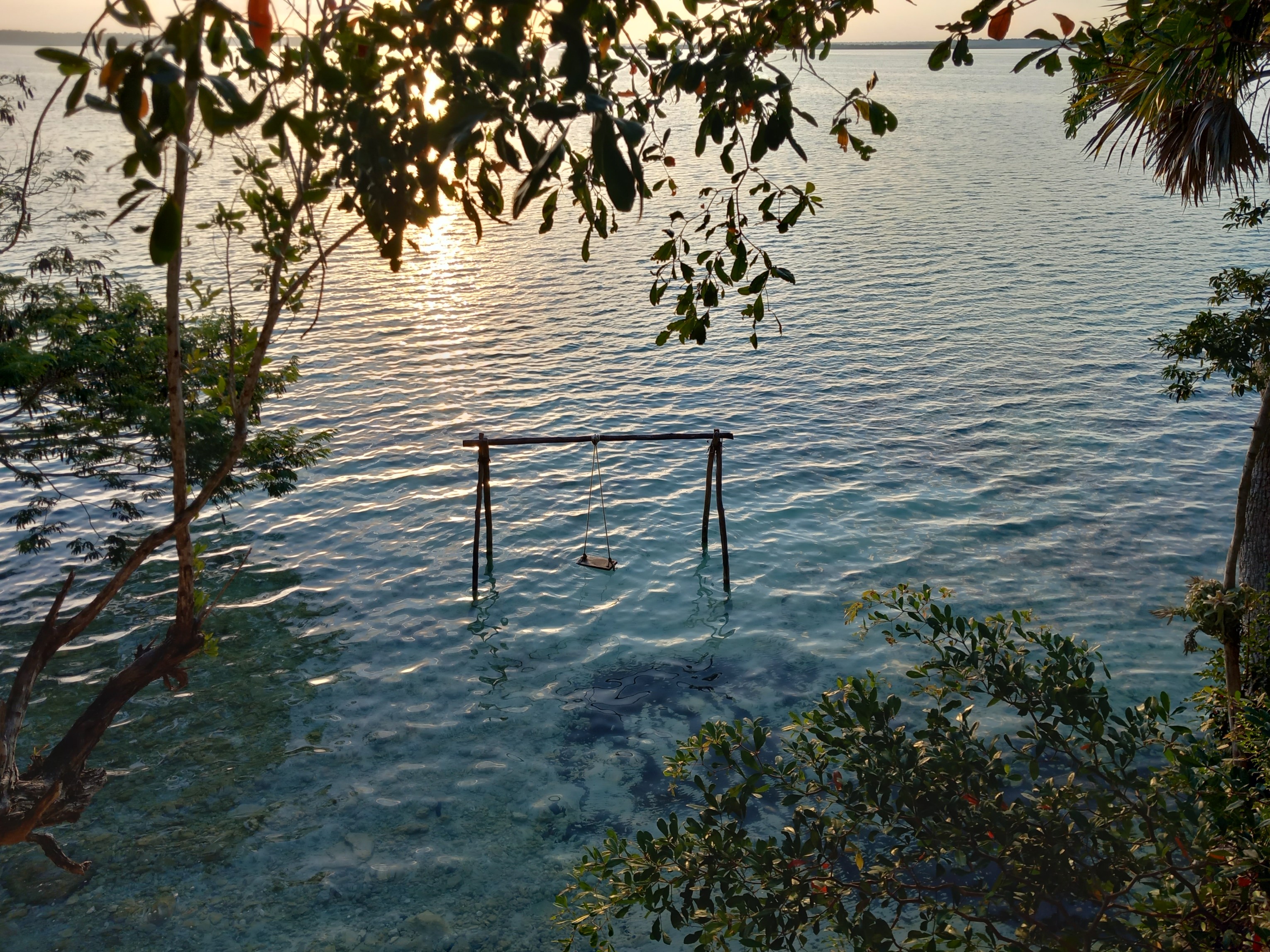
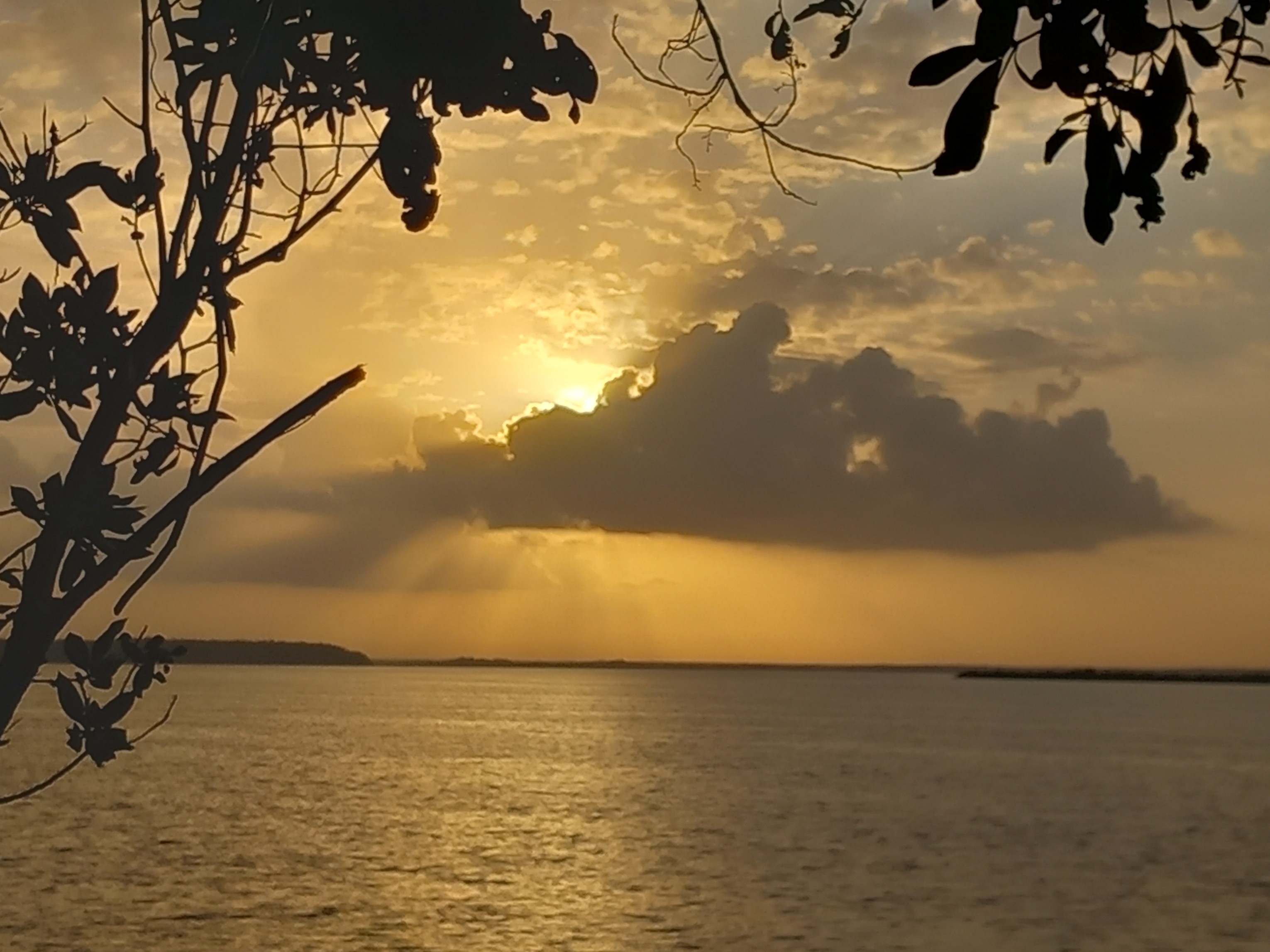
The full moon provided wonderful night time views through the roof of our tent – we don’t use the fly sheet when we have this level of privacy and its unlikely to rain.Whilst we miss our sunsets we are more than compensated with views like this at sunrise.
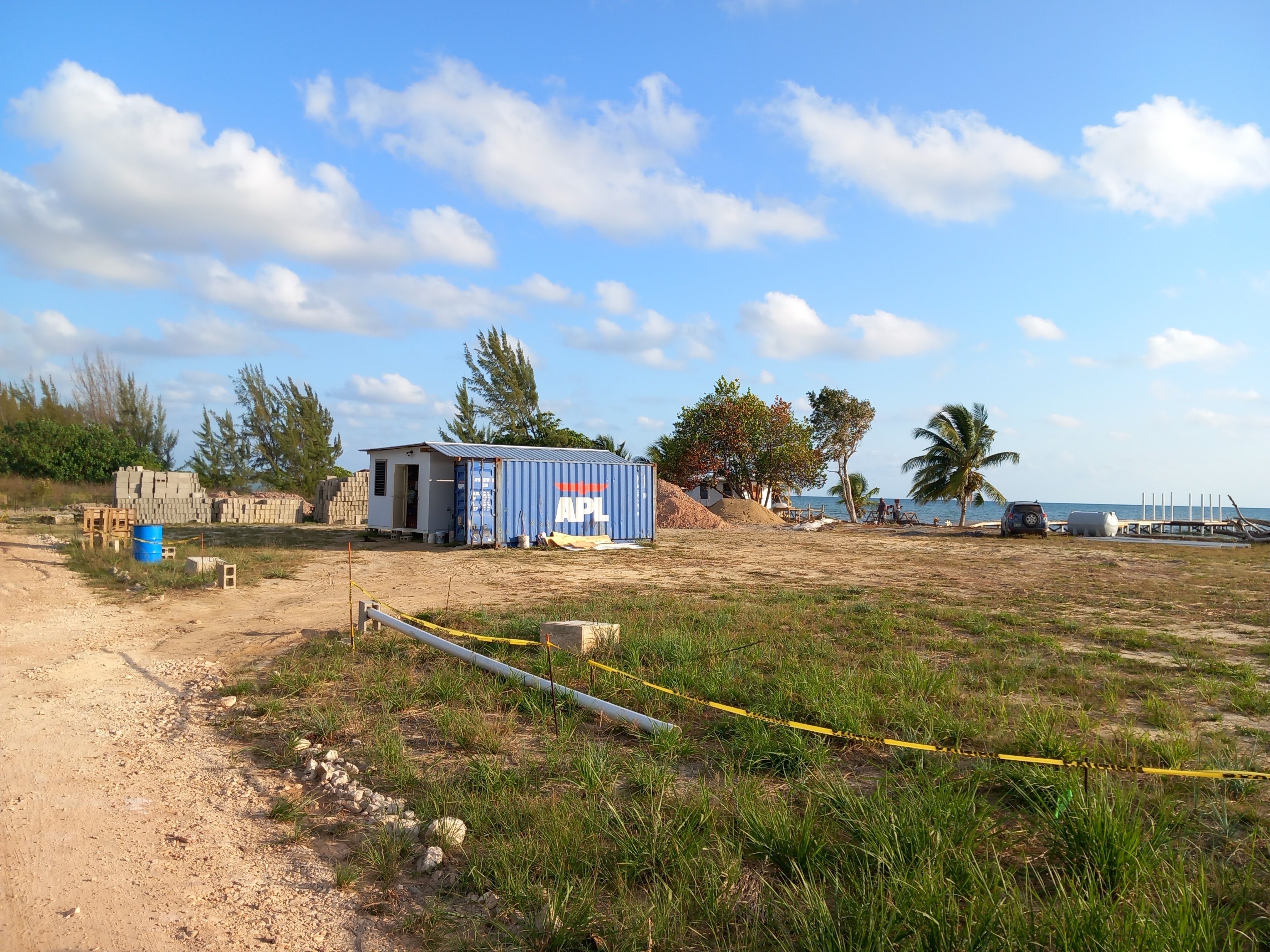
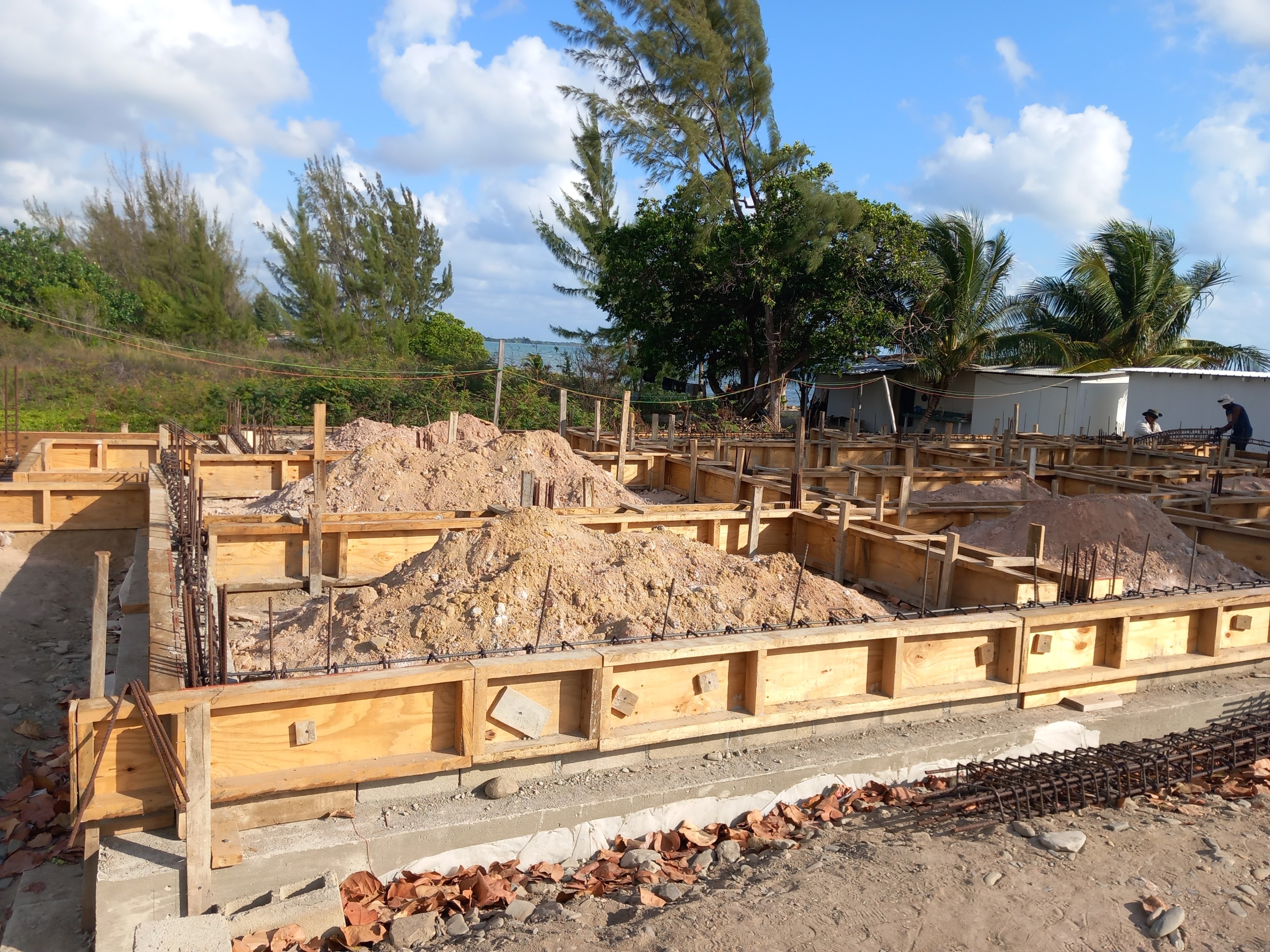
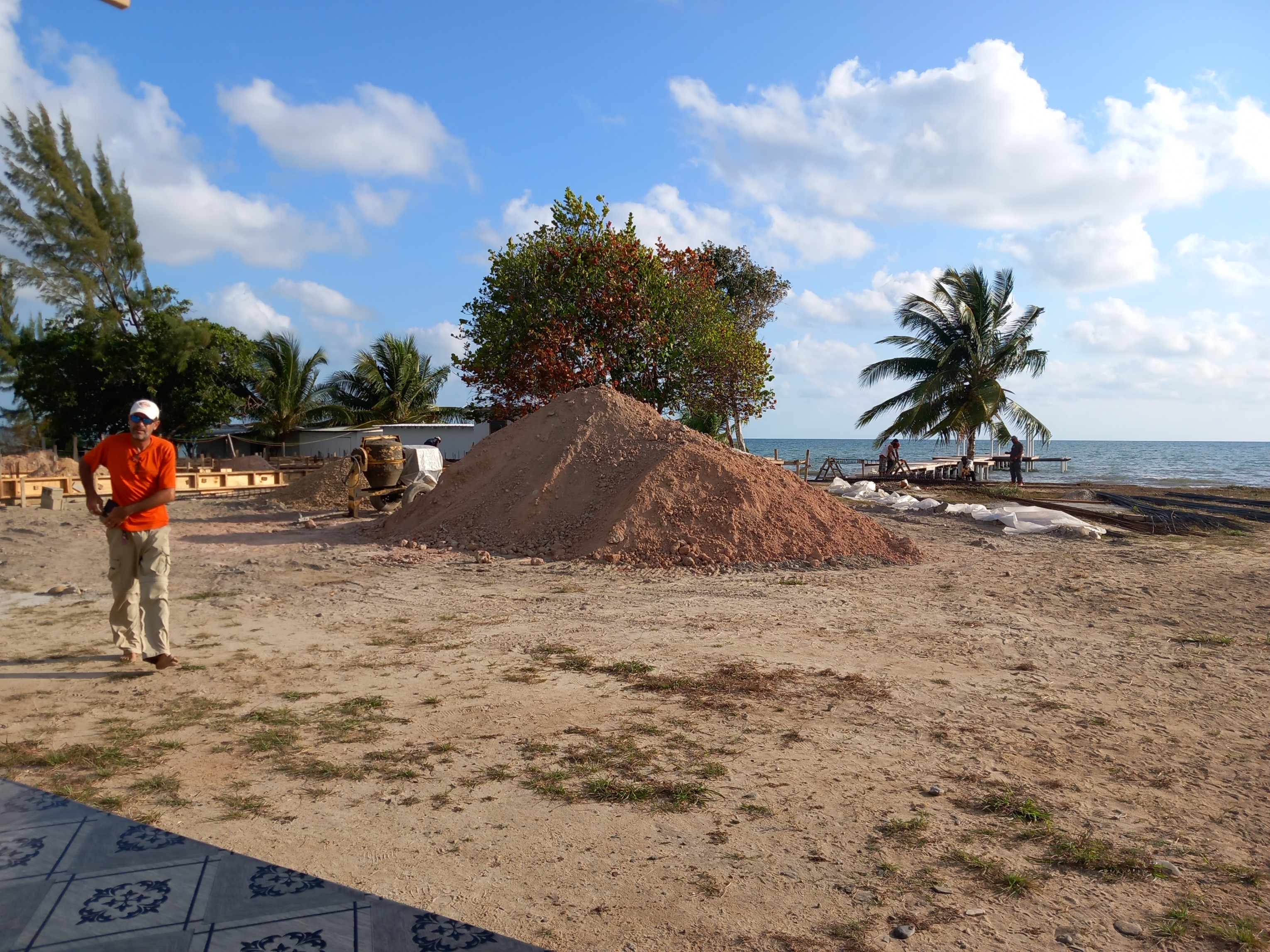
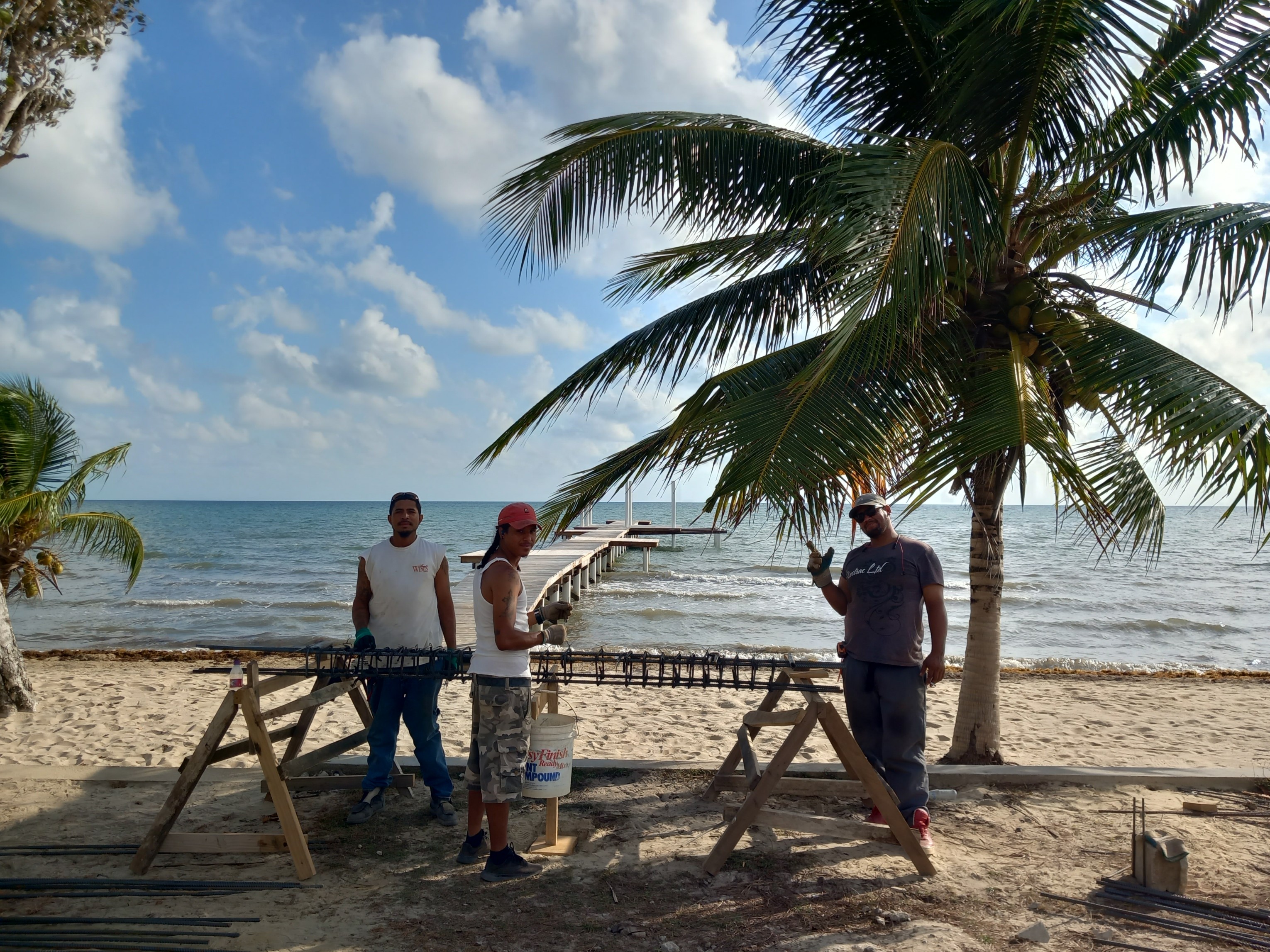
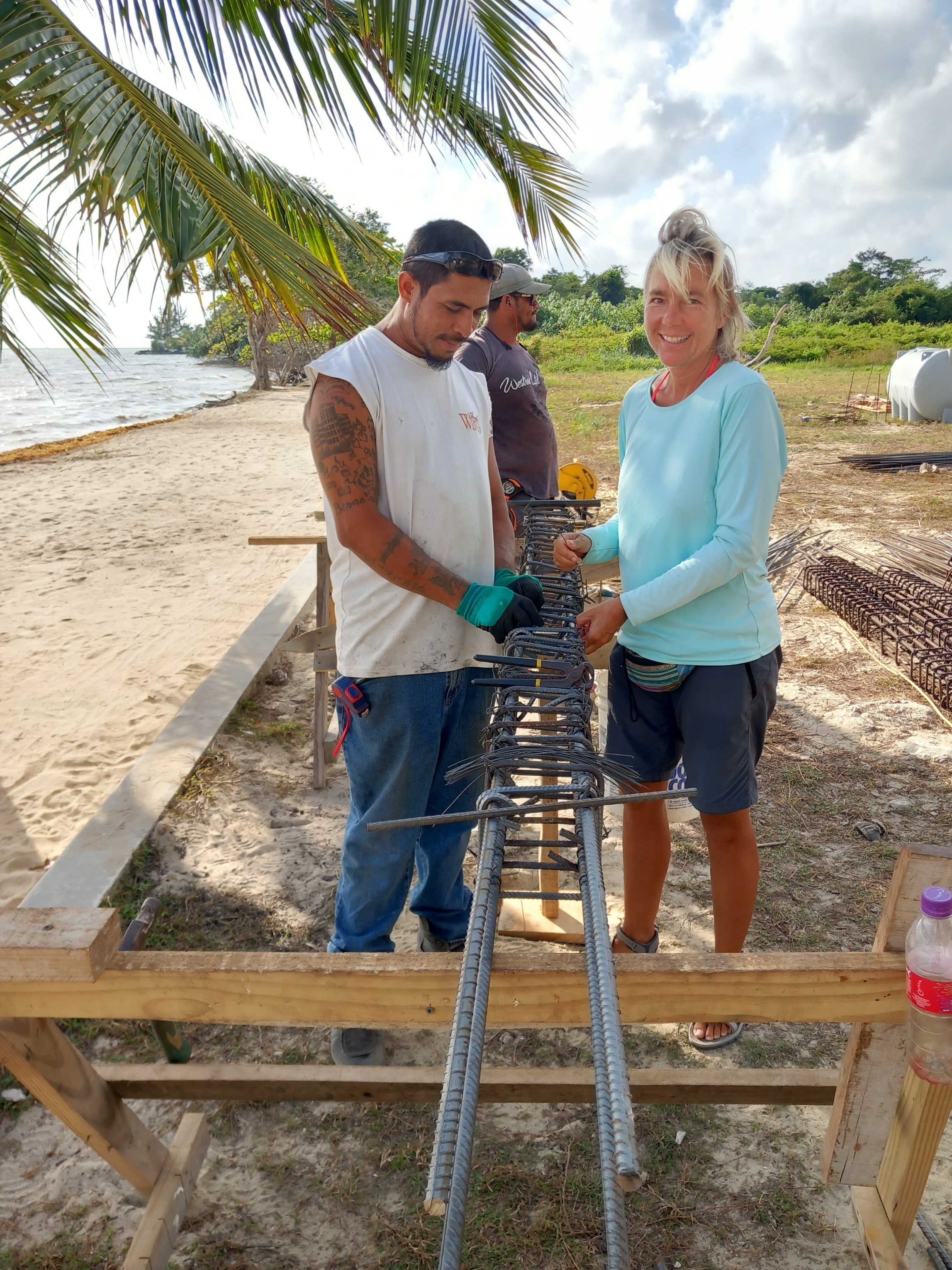
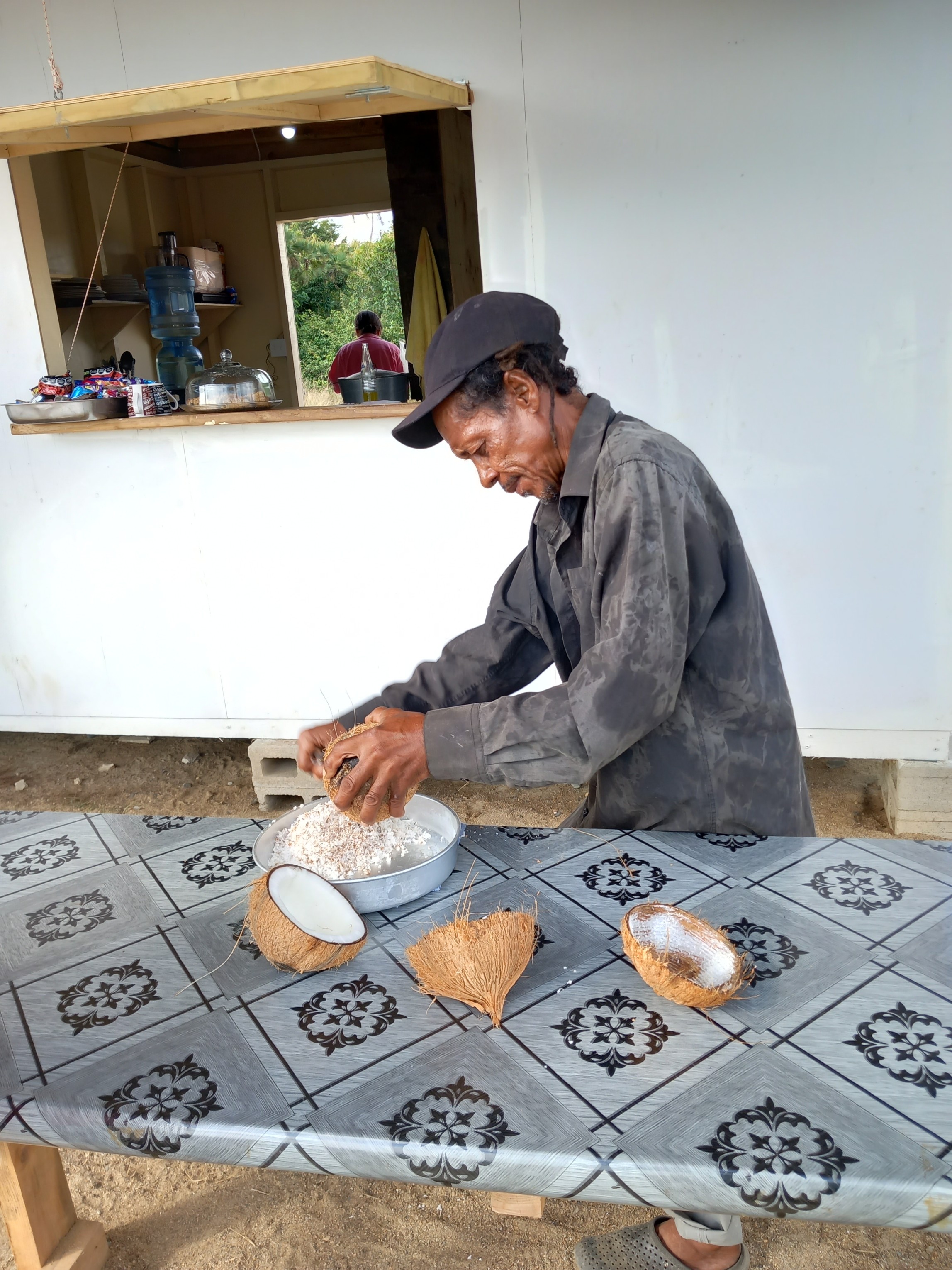
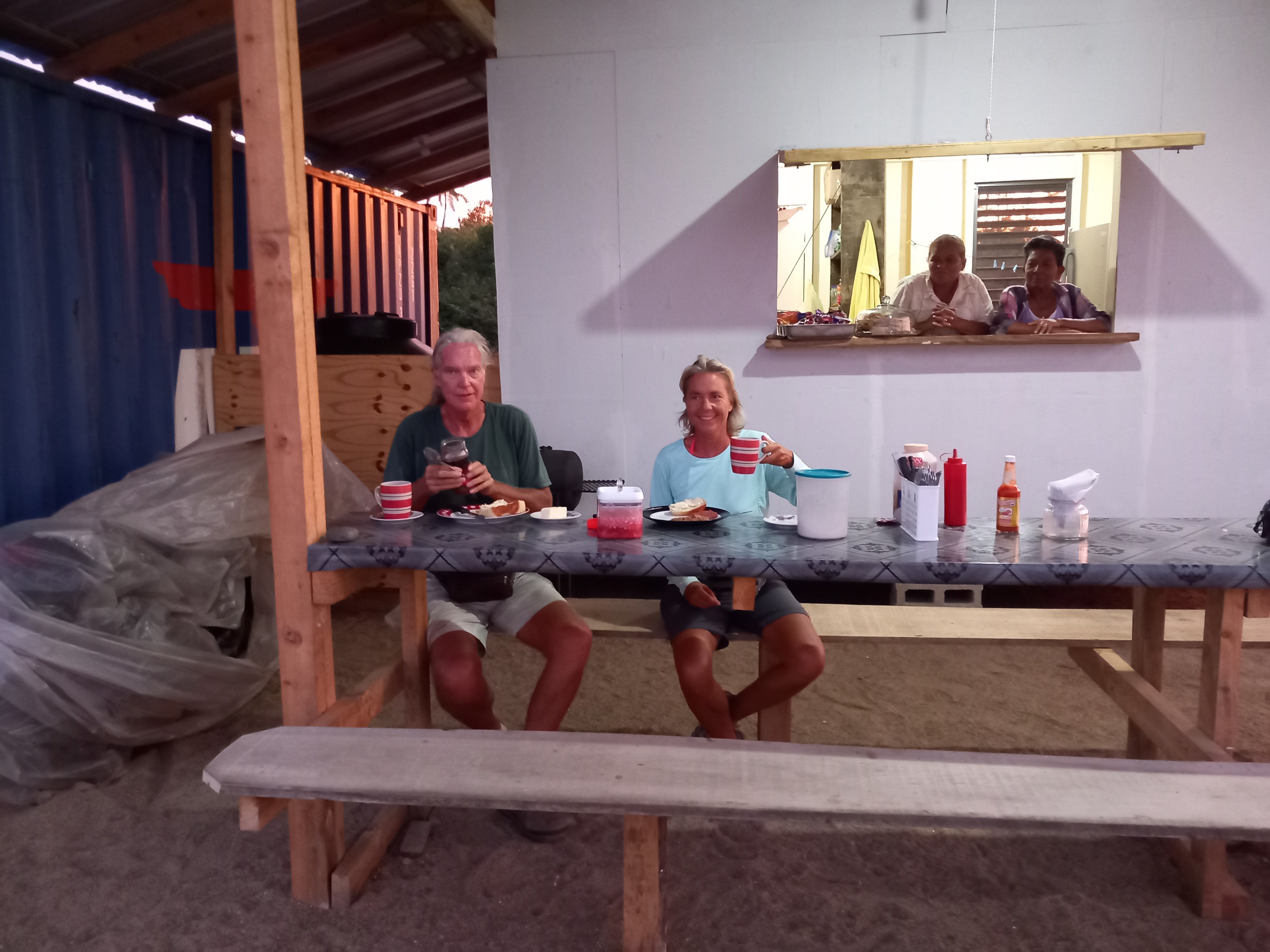
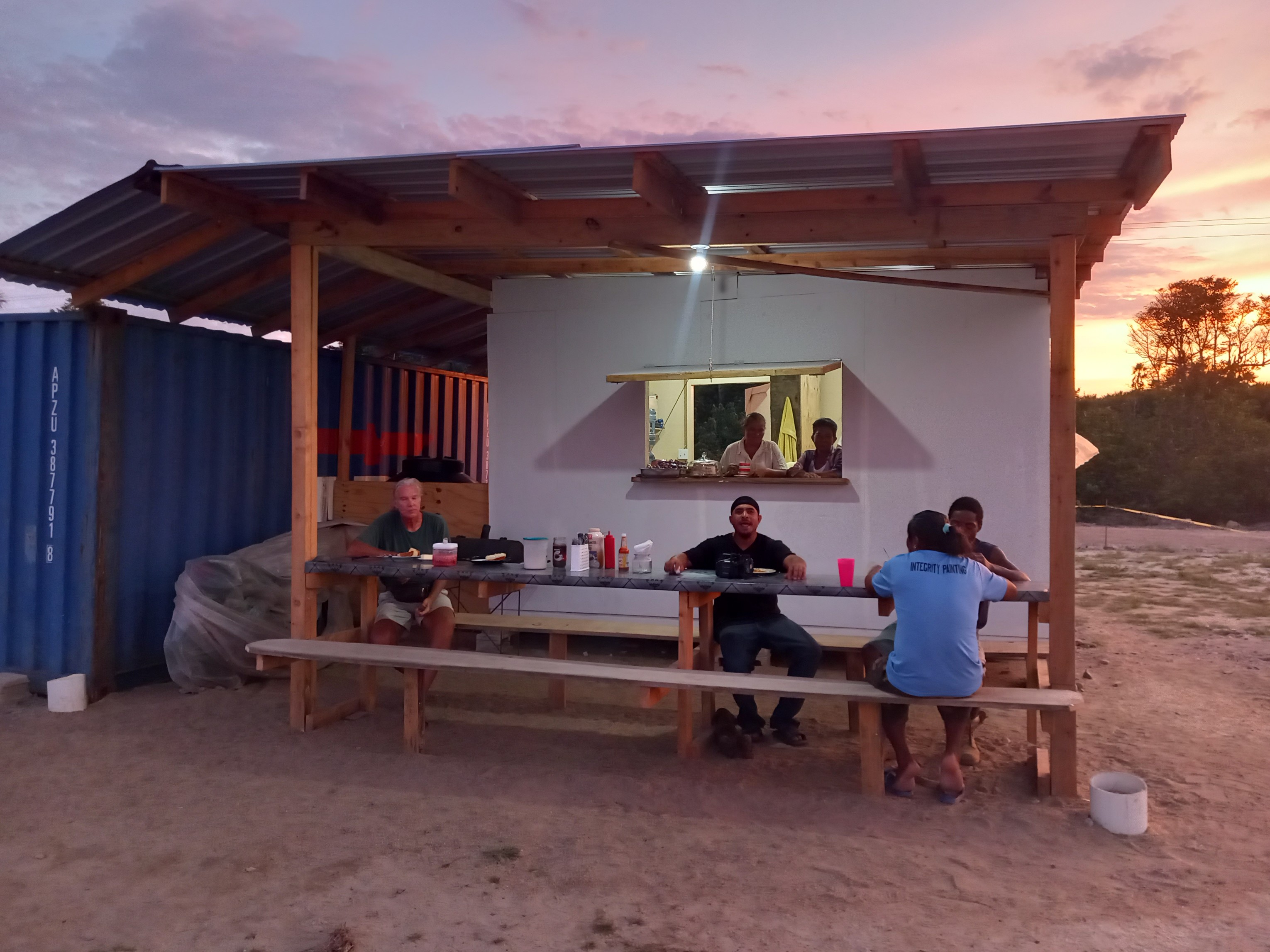
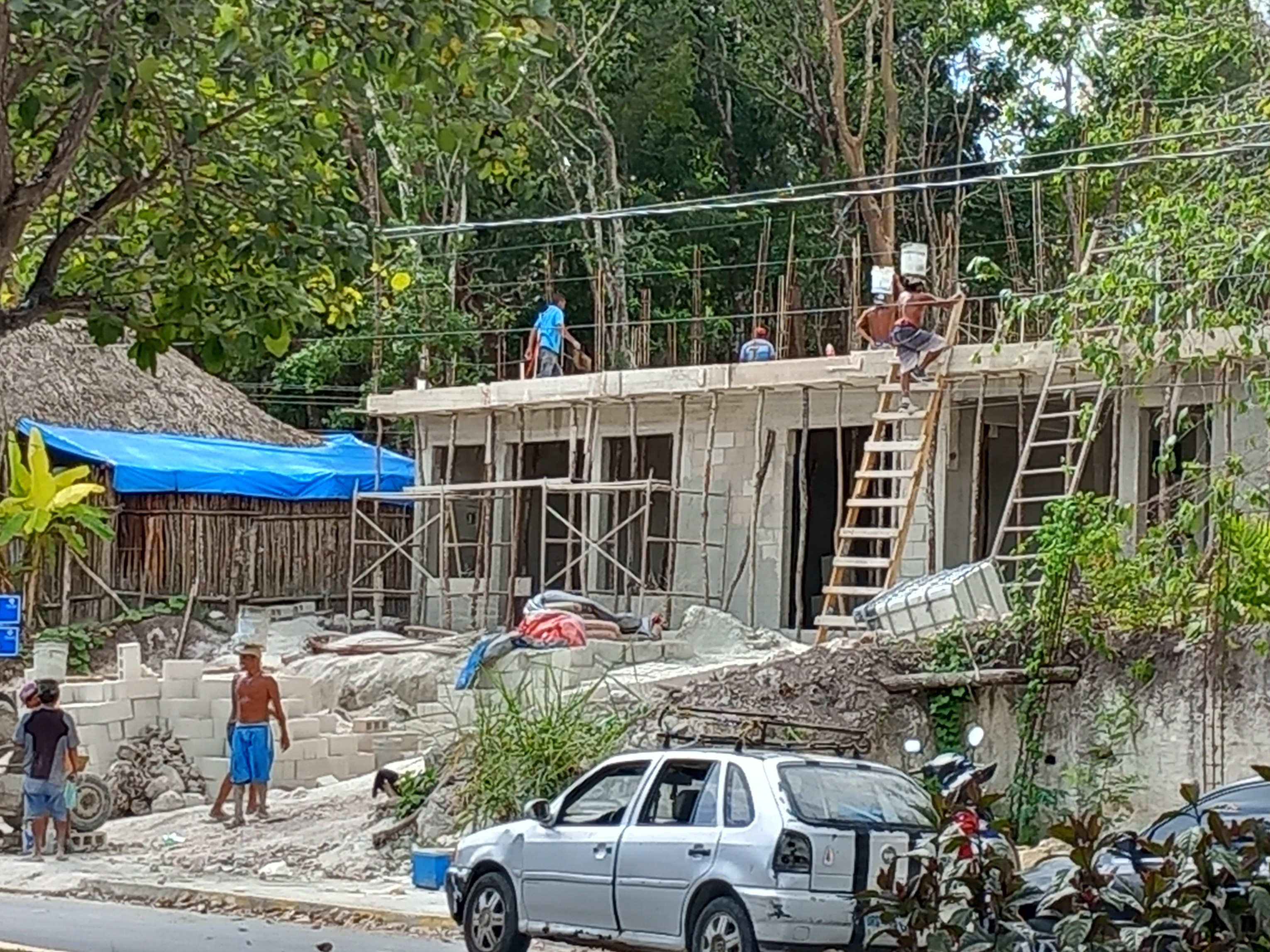
The men are already at work having had their breakfast at 6am when we arrive at the prearranged time for us at 7am.We’re told this will be the owners accommodation. To the left will be his guests accommodation and behind the camera position will be 42 units for rental. There is another 2.5 years to go for this schedule to be completed. One of their main objectives is to ensure all the foundations are completed during the dry season otherwise the trenches are waterlogged and someone has to get up at 5am to start the water pumps to enable work to continue that day.This is the the Construction Manager – we knew the instant we saw him because he was the one with the clipboard and pen – who is responsible for the men not running out of materials. You will notice the lack of safety helmet, high visibility jacket and safety shoes.Grinding out the coconut meat for both lunch and/or dinner ingredients together with juice drinks.
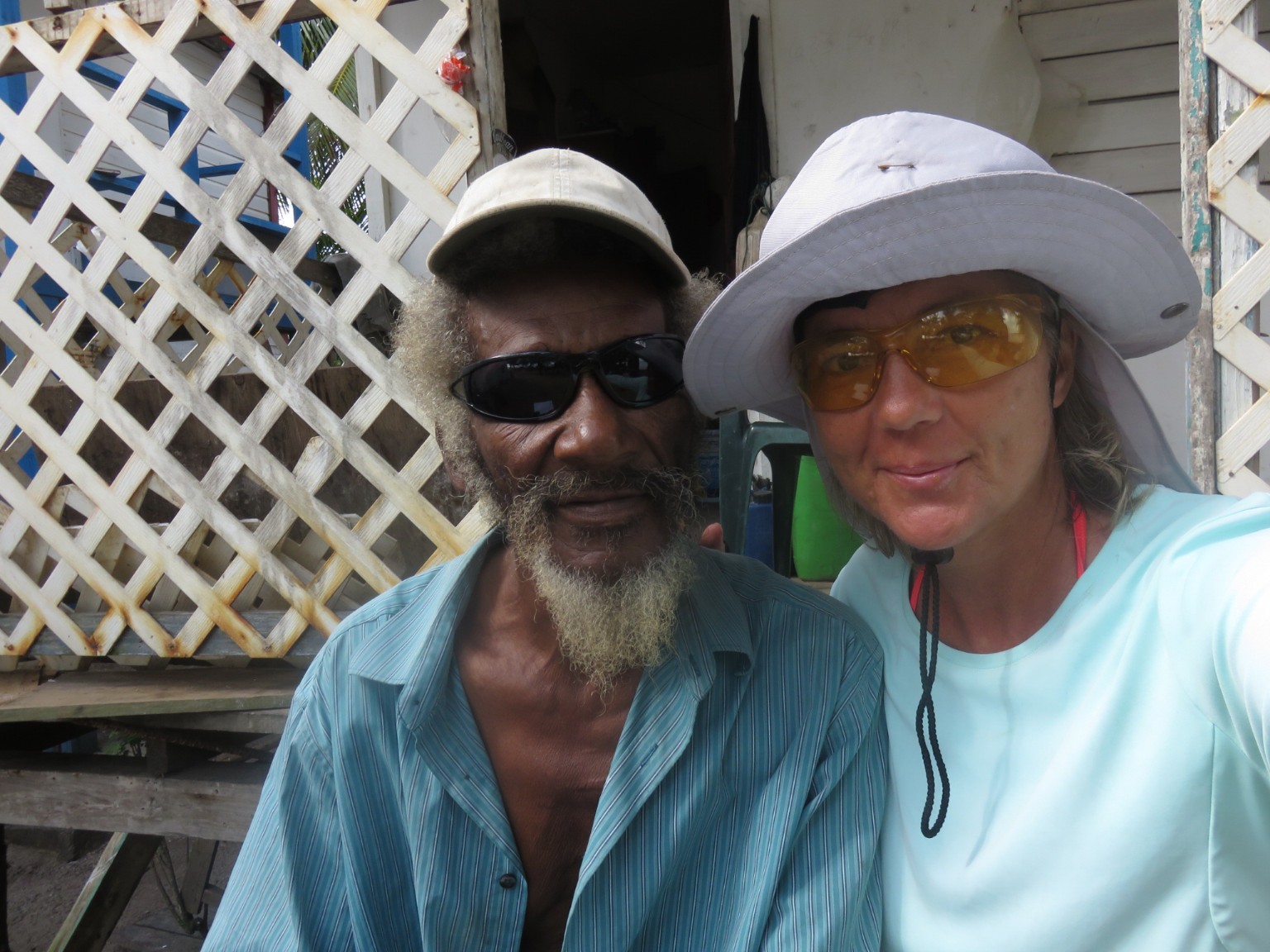
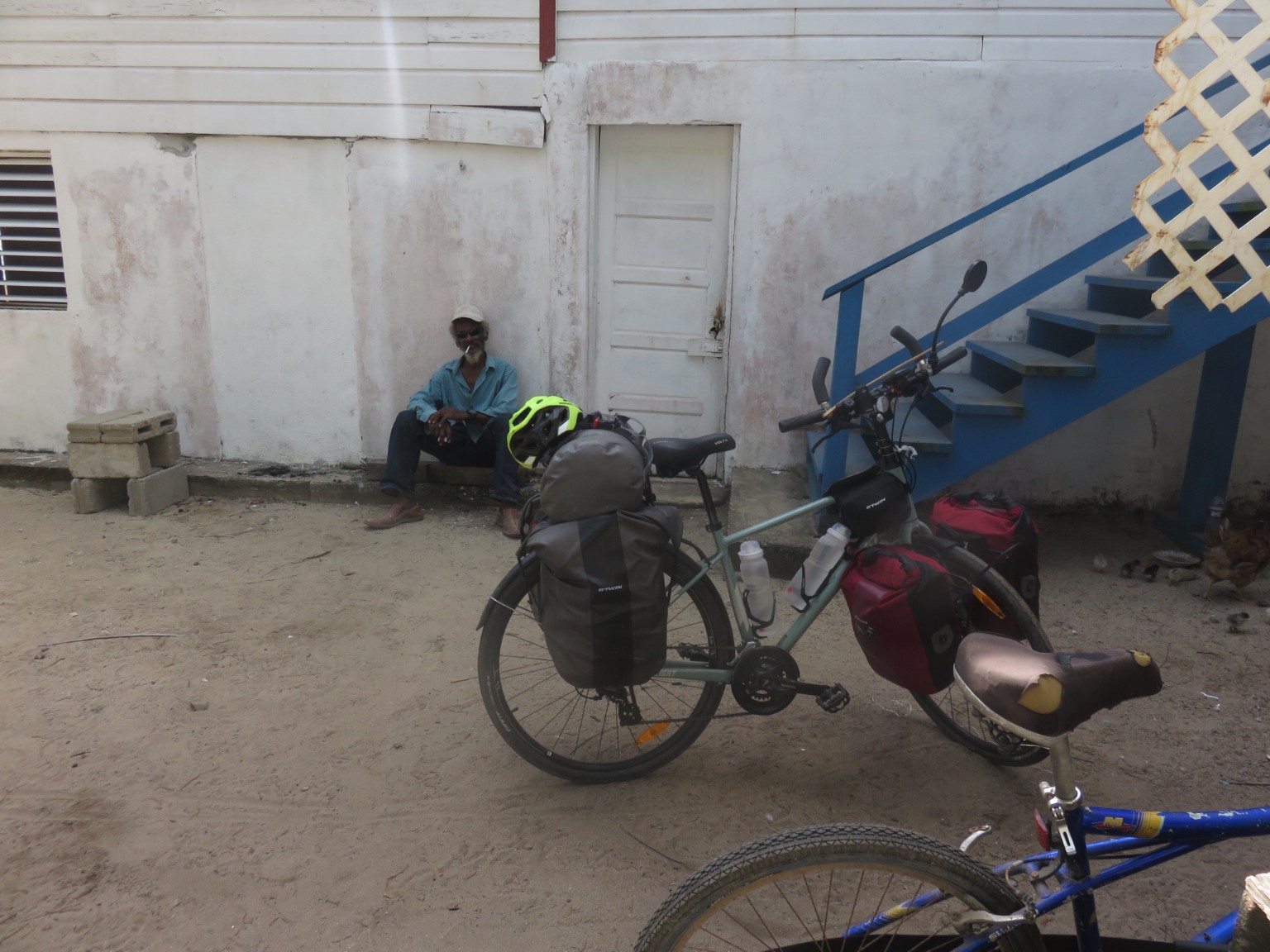
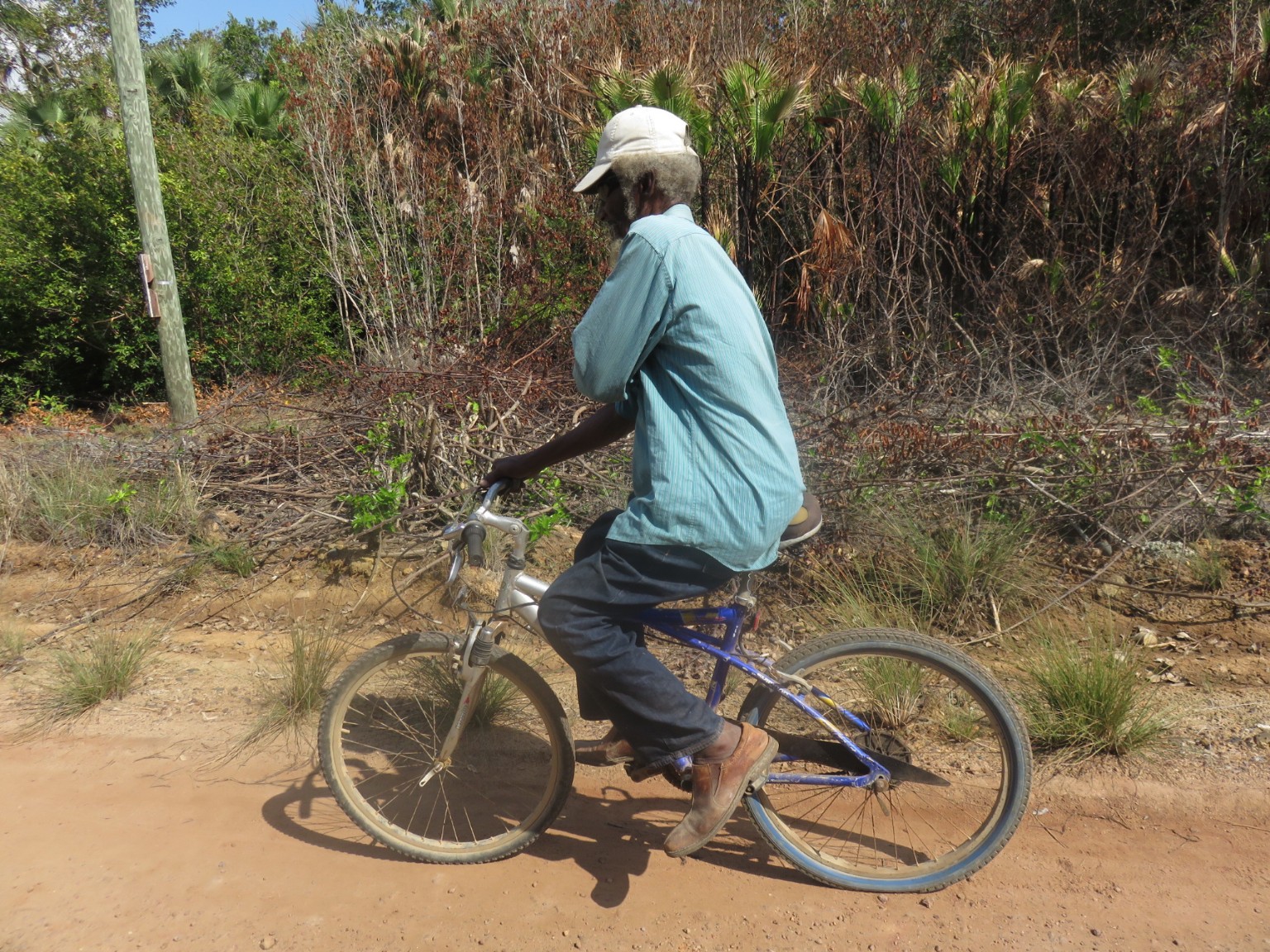
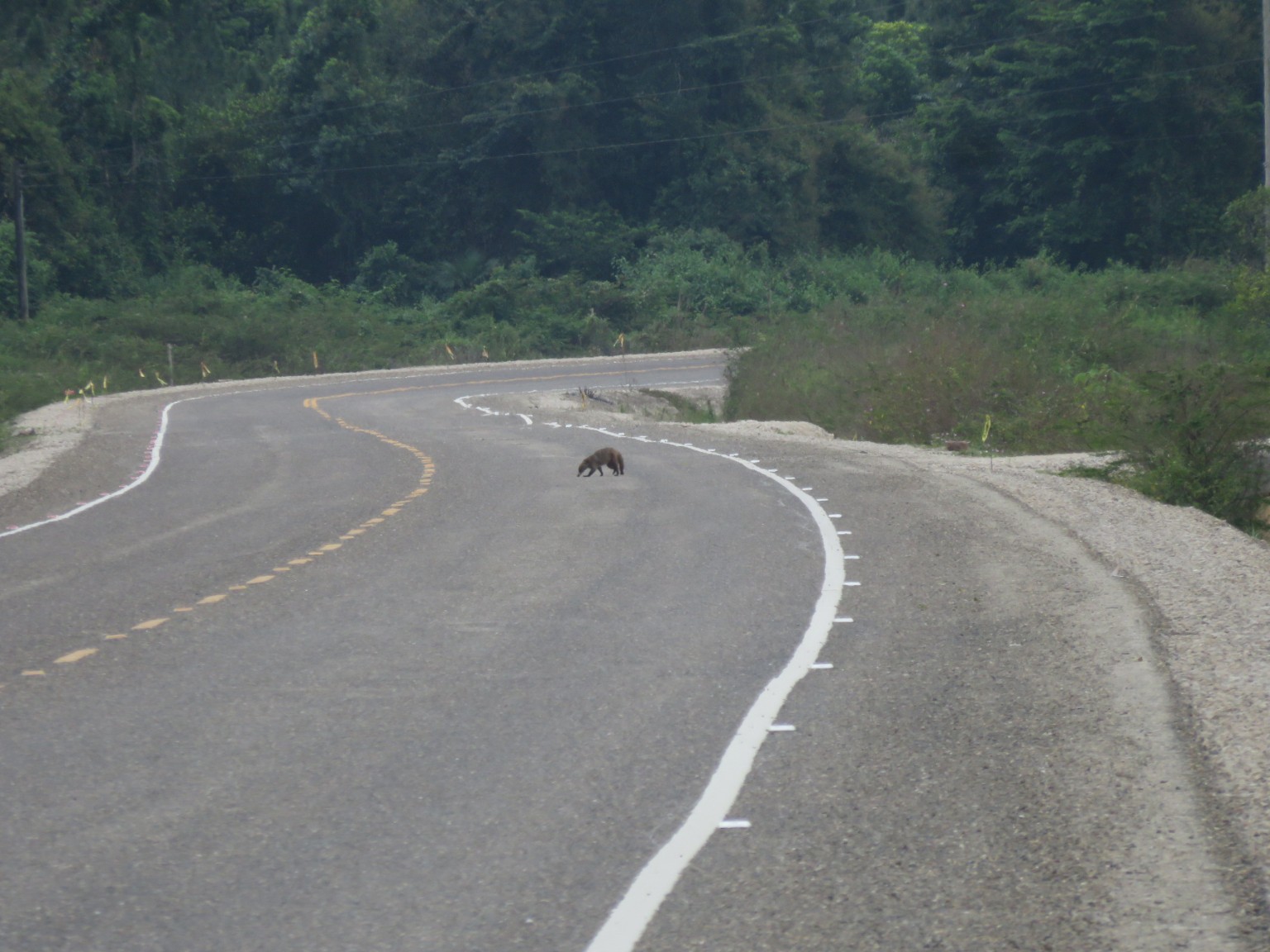
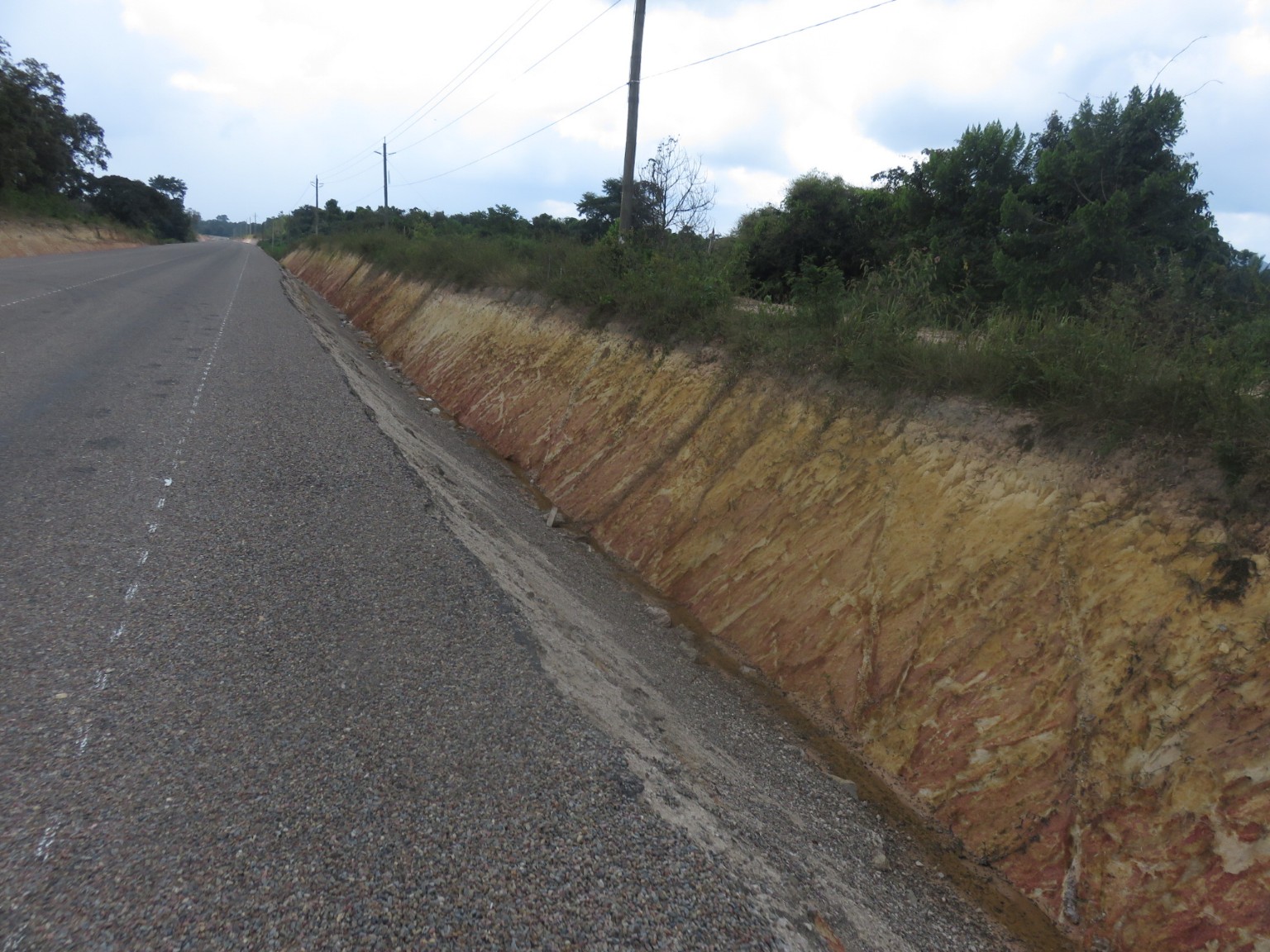
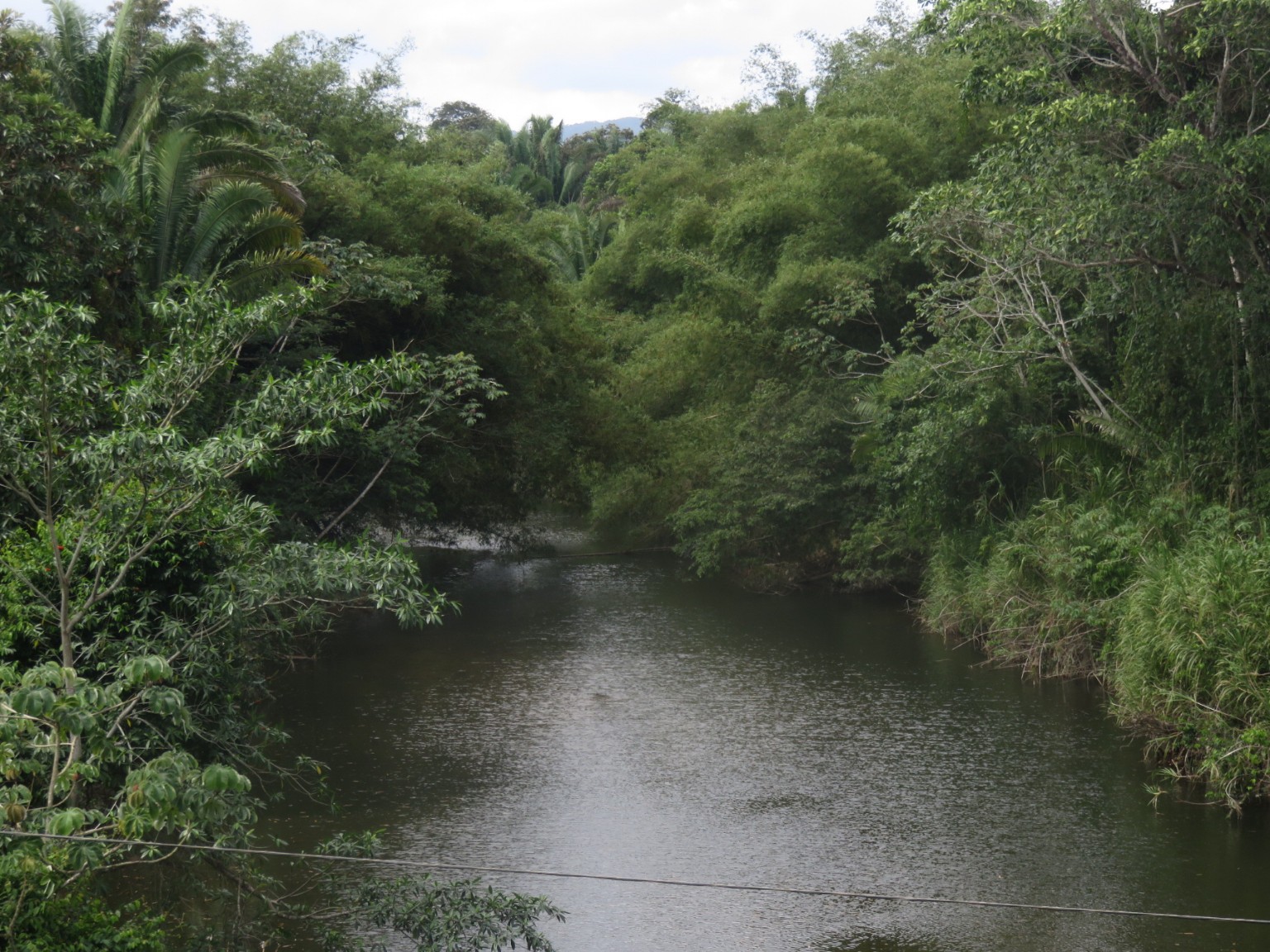
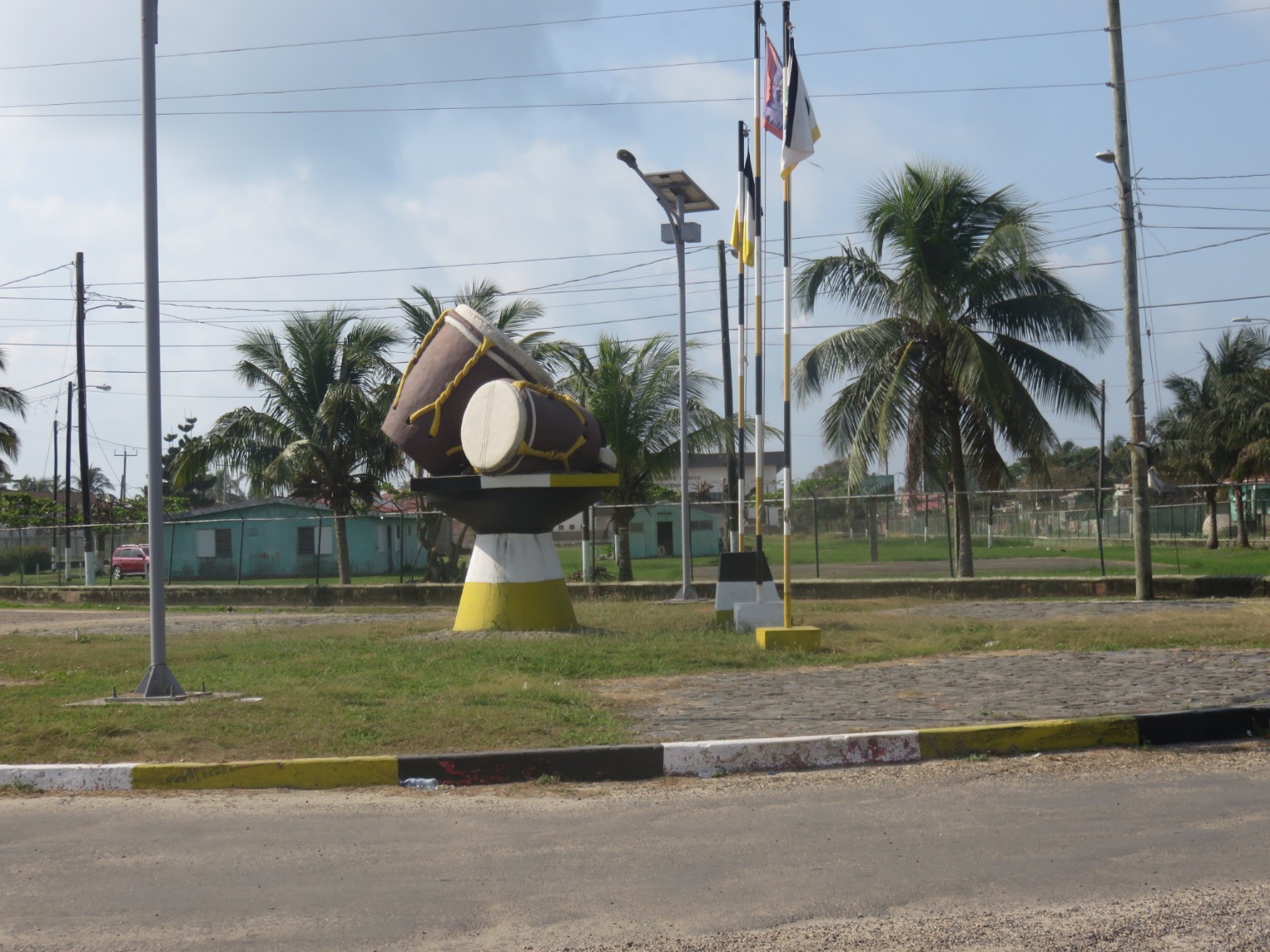
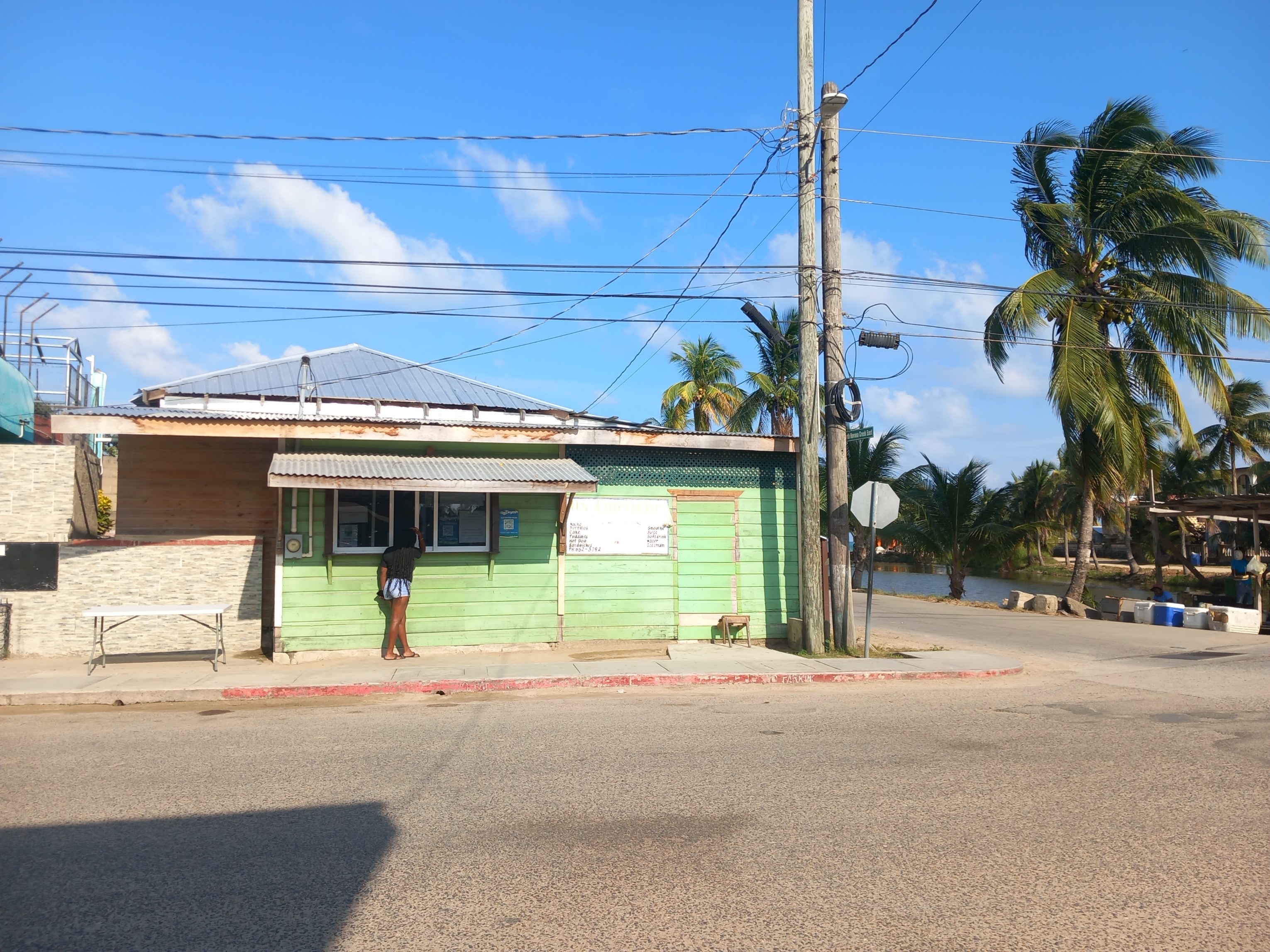
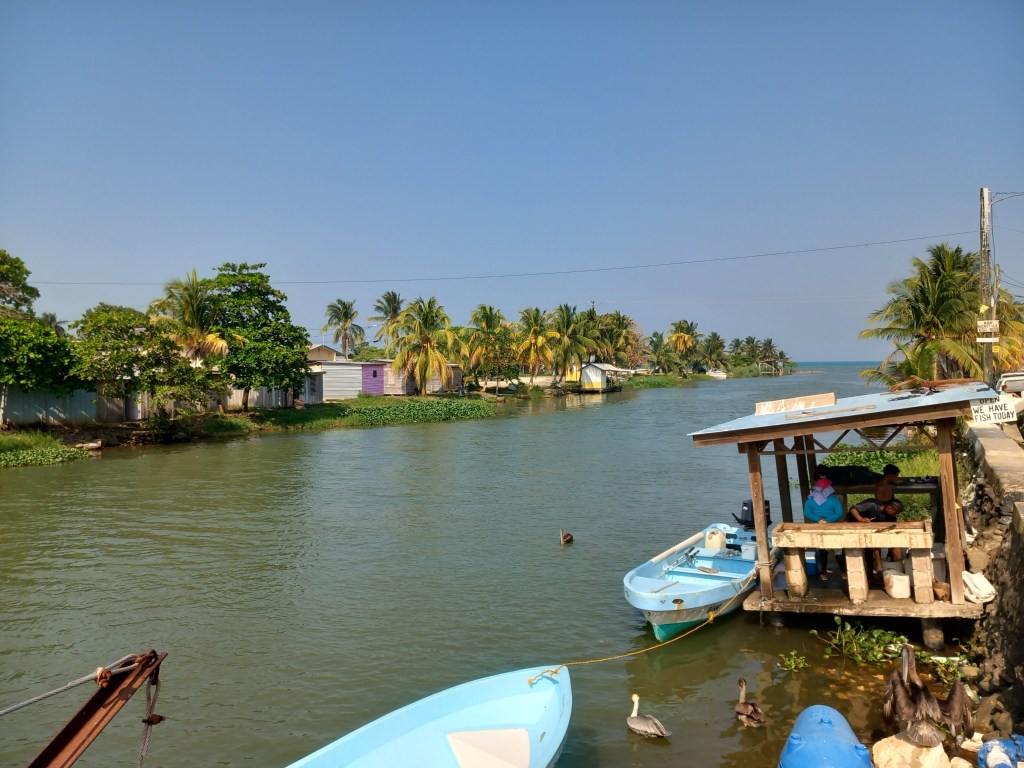
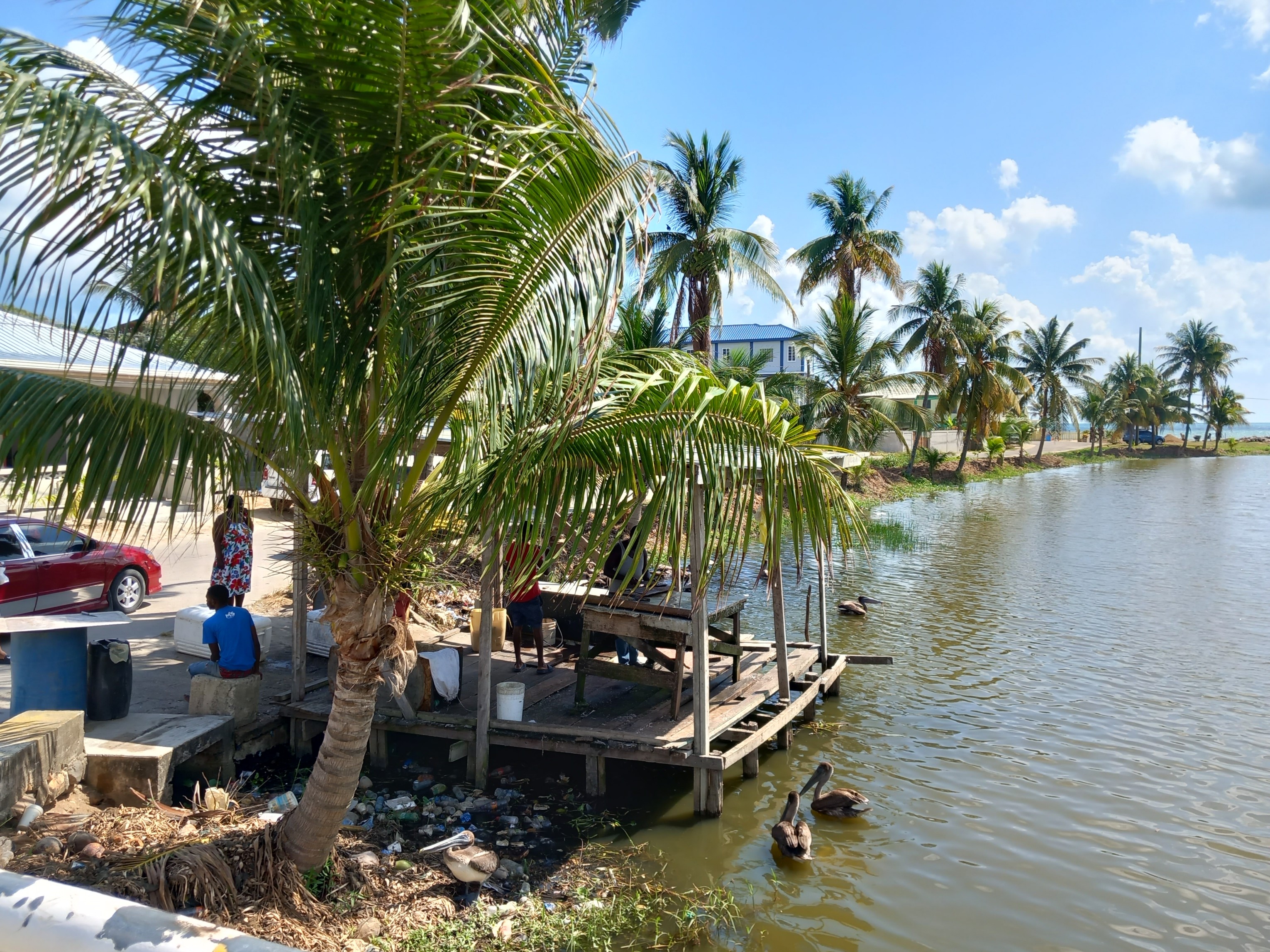
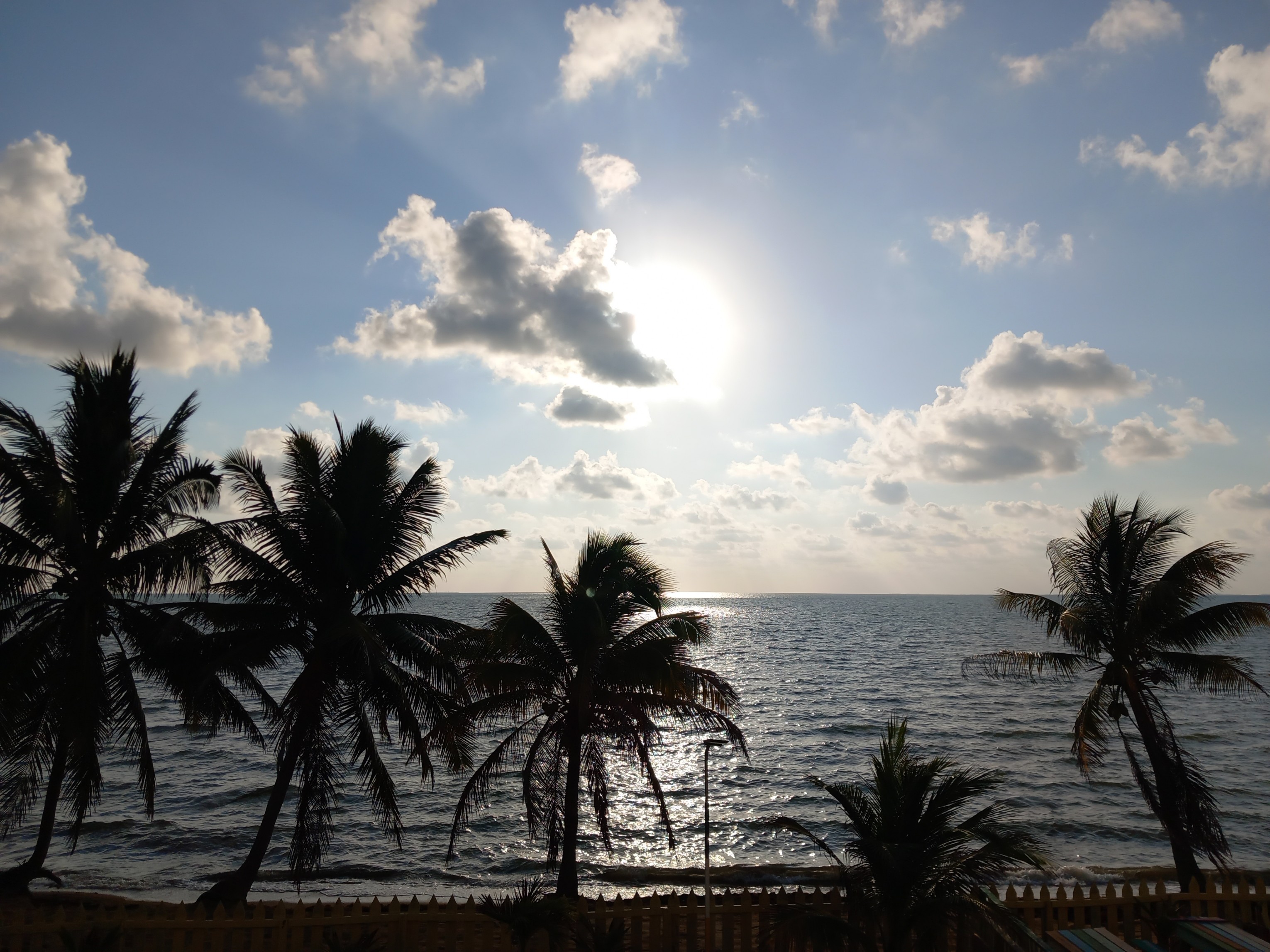
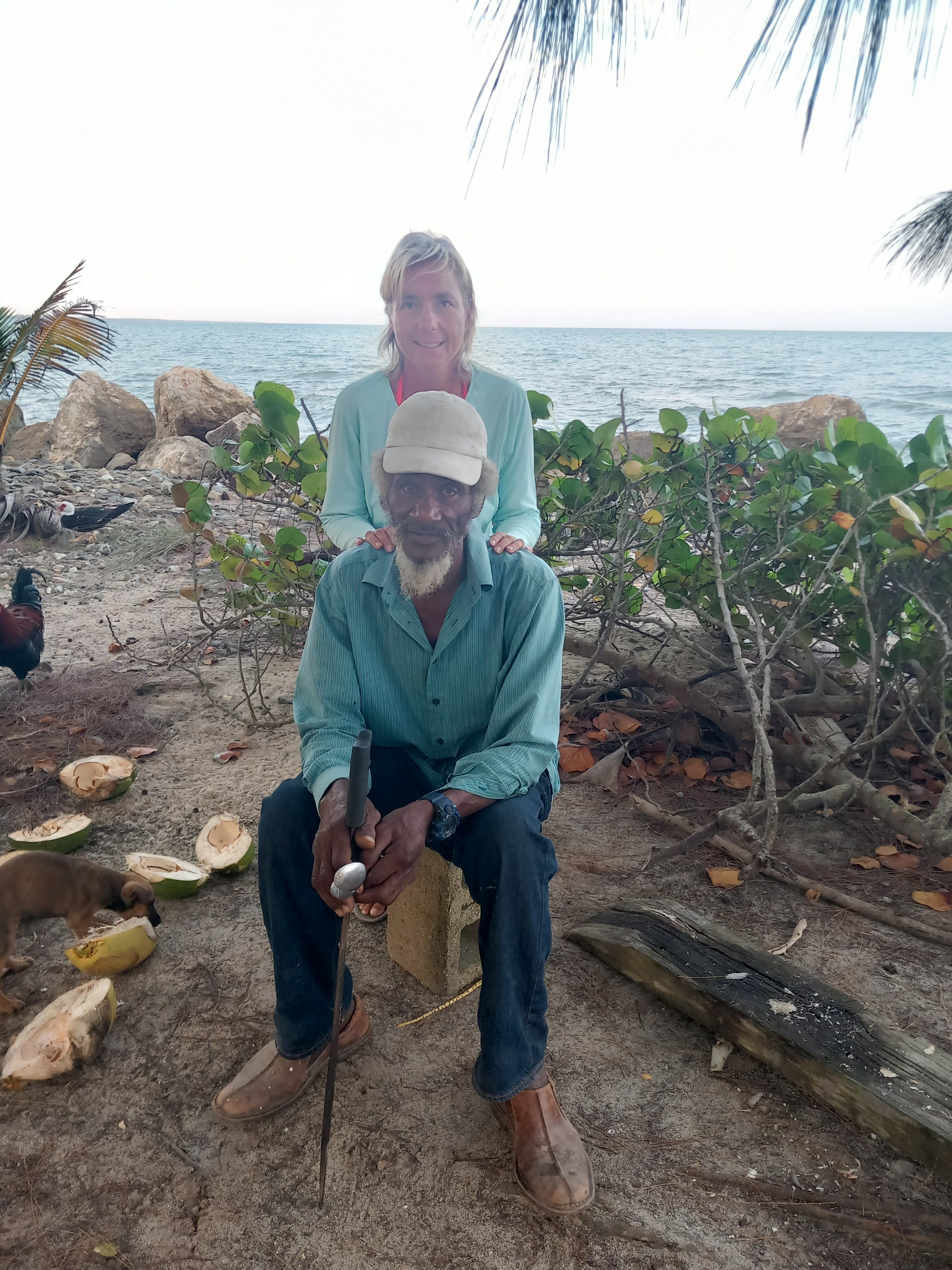
People like Joseph are not found by accident – we knew he was there and went looking for him. Whilst he enjoys his life living off grid, however, with the new resort being built nearby he will not be so isolated for much longer.Another person we discovered who has so little and yet is as happy as it is possible to be.Joseph was keen to ride his bike with us as far as the village before we went our separate ways.Its not everyday we interrupt a Tapir inspecting the roadkill. He was very sensitive to our approach and this was as near as we could get to film him.These roadside gullies are very deep, about 4 metres, and steep – not a good idea to fall asleep at the wheel because it may not end well?We pass many rivers and the water quality is much better than the Mexican equivalent – we can usually see the bottom of the river bed. There is every shade of green you can imagine generated by one plant or another.We do encounter the occasional road crew, however, they are the only ones we see between towns and villages apart from passing traffic.The drums on the roundabout at the entrance to Gangriga are a recognition of the contribution the Garifuna tribe has made to the area and their brand of music. Ironically the local centre for the drumming music is the next village down the coast at Hopkins which we shall visit later in the journey.This is a takeaway where we wait for our order on the shaded side of the road – restaurant prices are more expensive here than in Mexico and portion sizes are significantly smaller so some economies have to be made. A fish merchant on one of the rivers……..………and another fish merchant on the side of the creek at the end of the road where we stay. The fish are bought from local fishermen and kept in ice covered cool boxes until they’re sold. The wooden block is where the fish are filleted and the always attentive Pelicans are fed the scraps. We have a first floor room with balcony on the beach and have these beautiful sunrises.
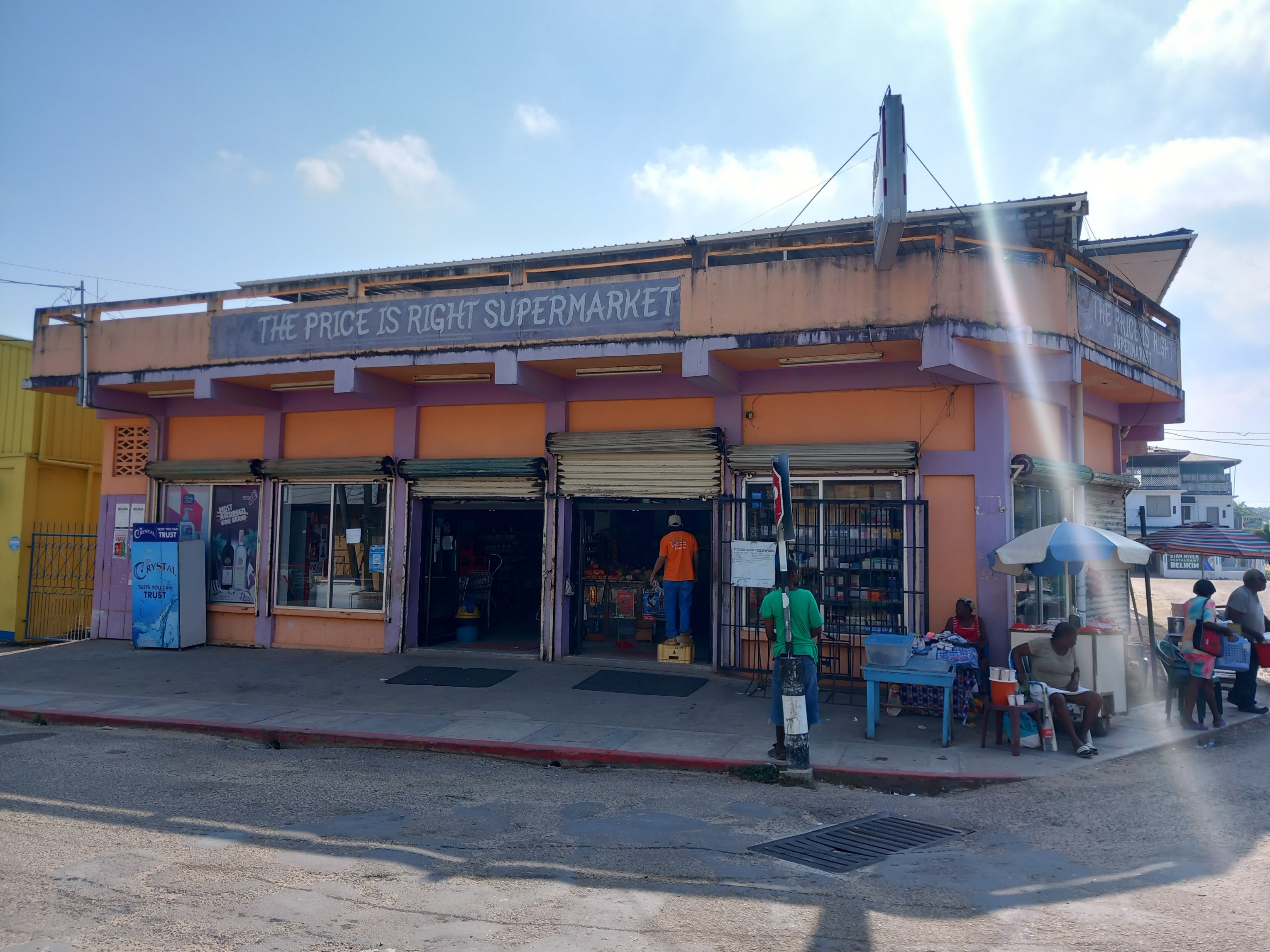
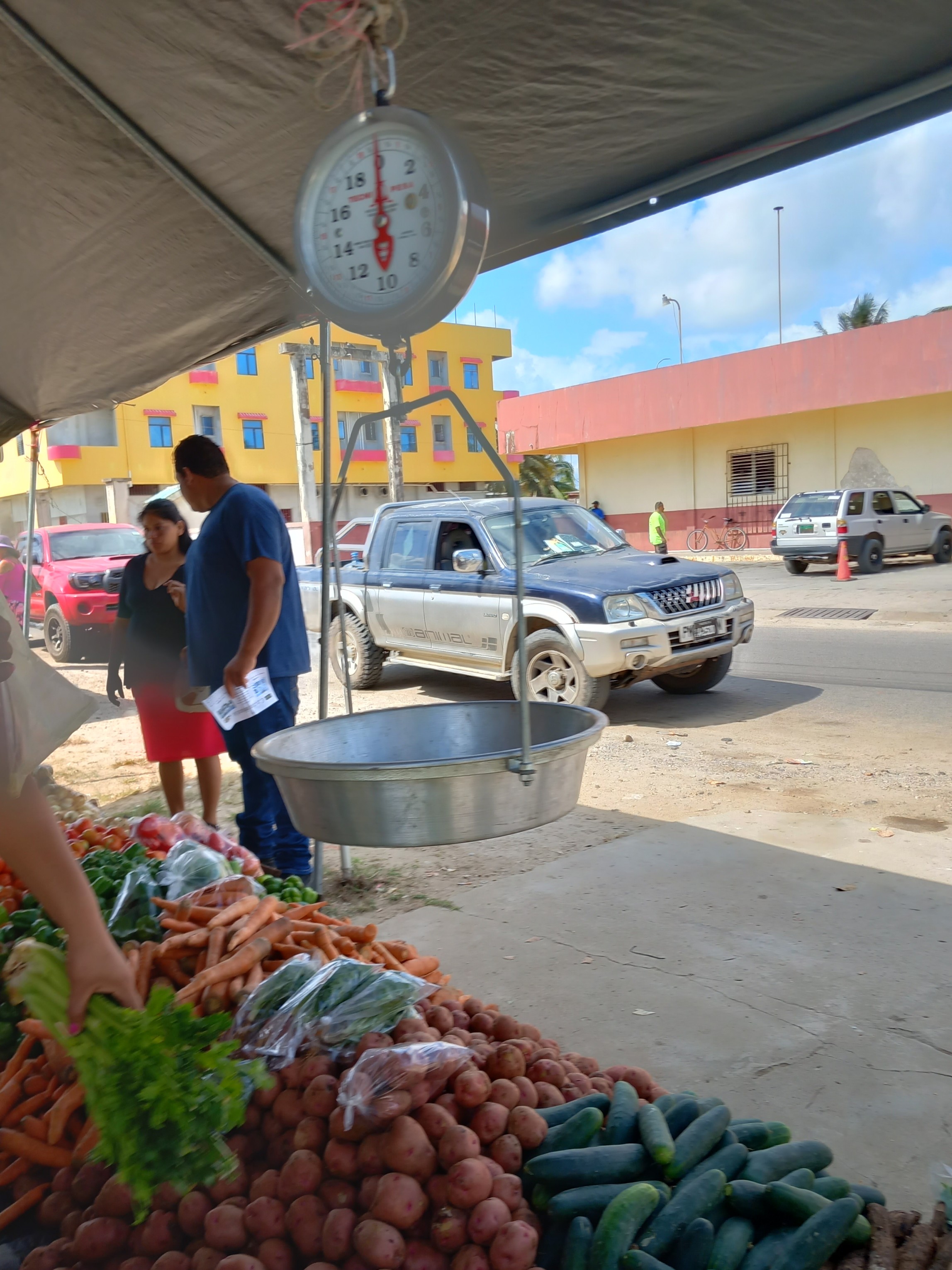
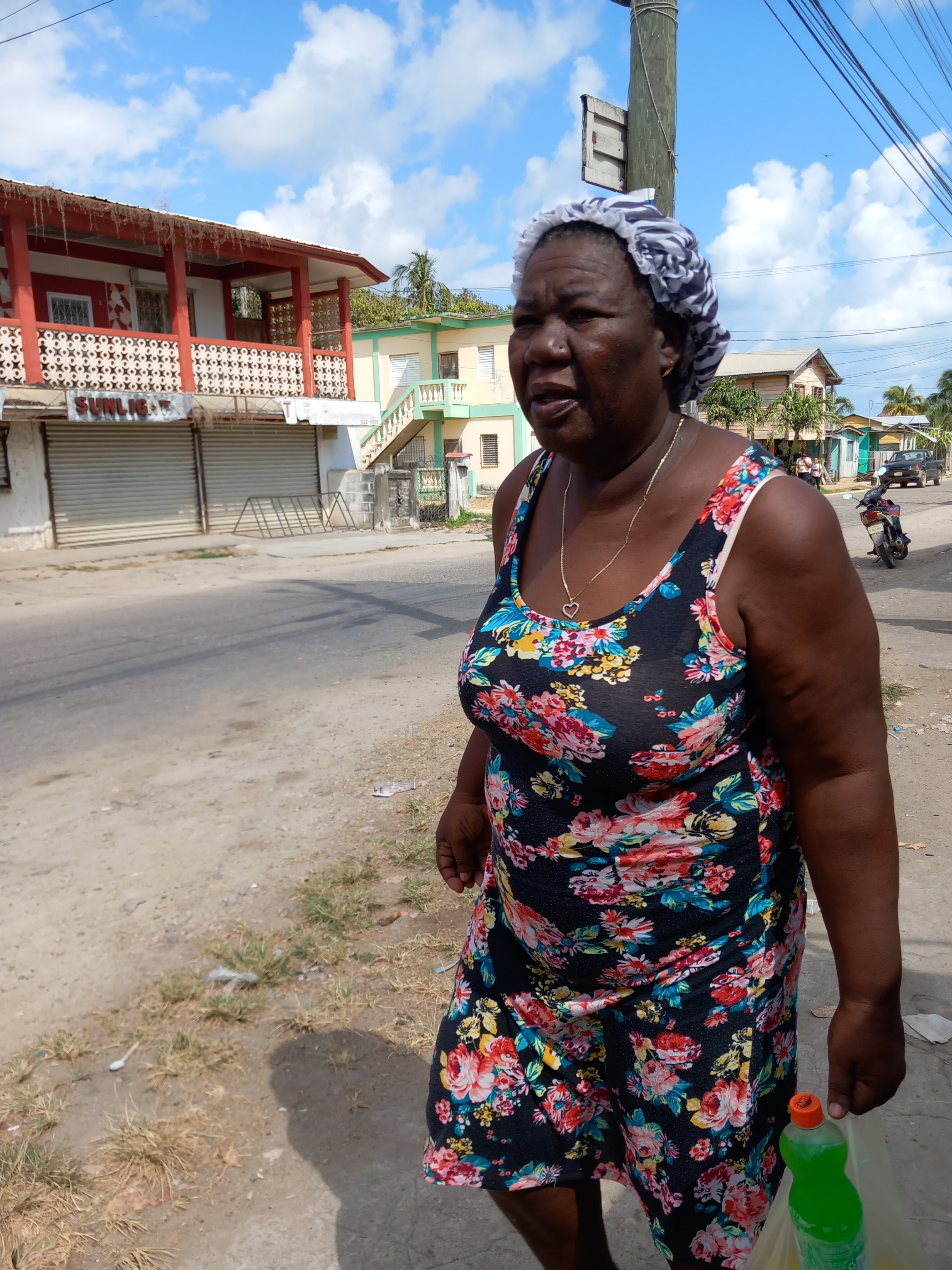
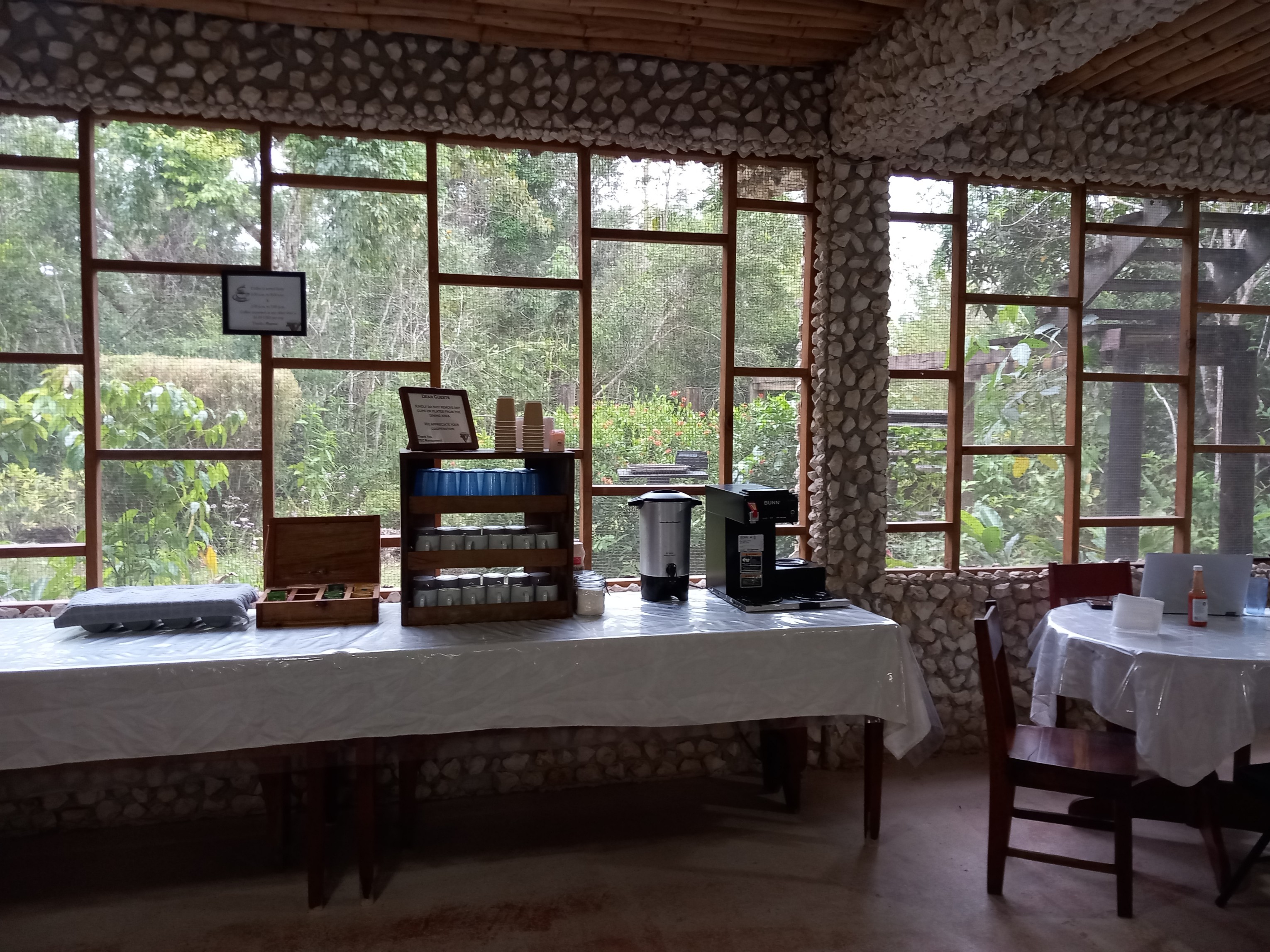
A very pleasant breakfast location.We never did find out who the price was right for! The customers or the owners?We took the picture for the old fashioned scales, however, across the road is the Bus Station; you would never know because there is not any sign, although its been there for ten years, and the buses enter/exit at the rear of the building.A typical Belizean lady going about her business.Another sunrise we enjoyed whilst we recovered from our first week’s travelling and sightseeing.
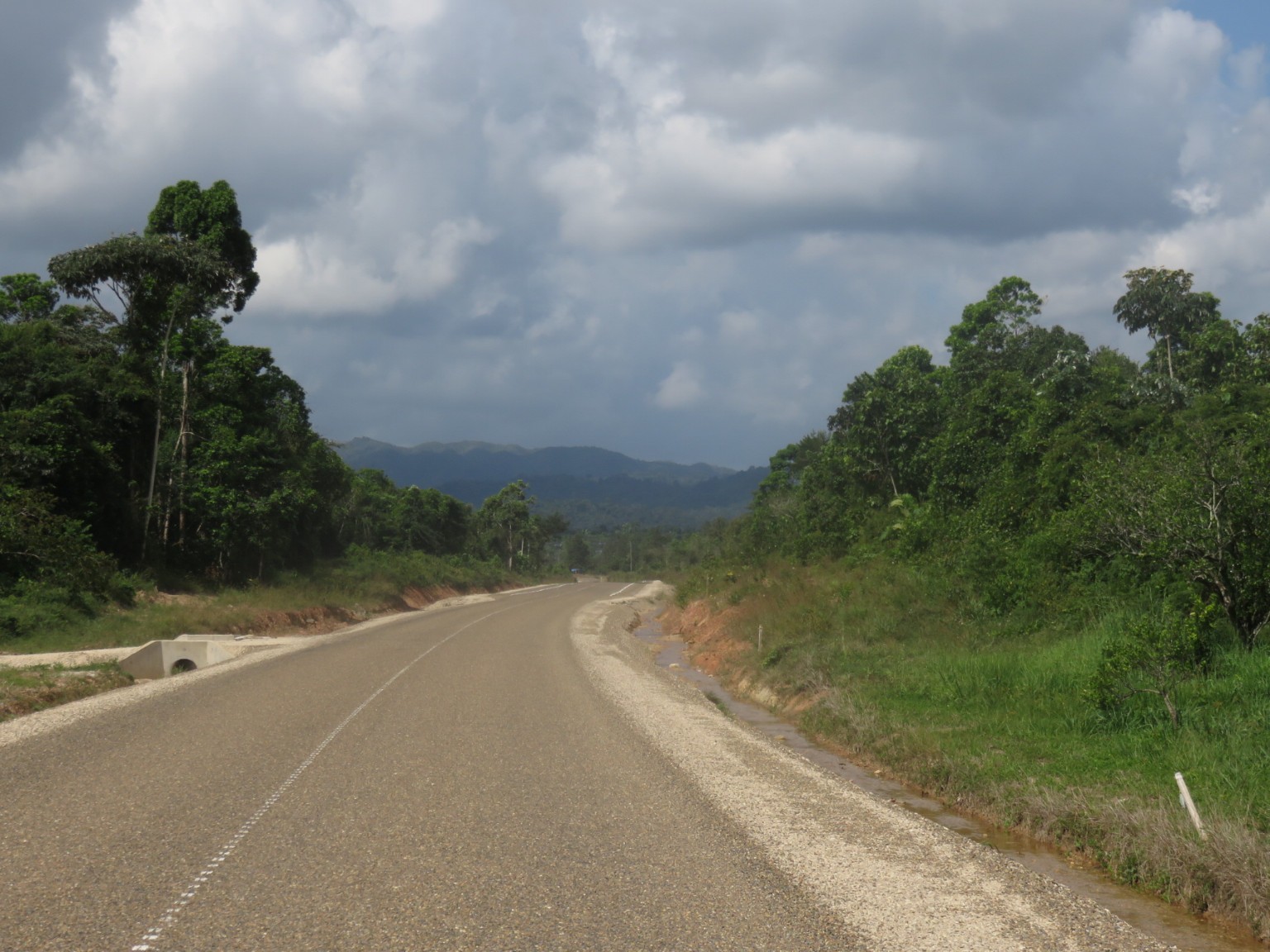
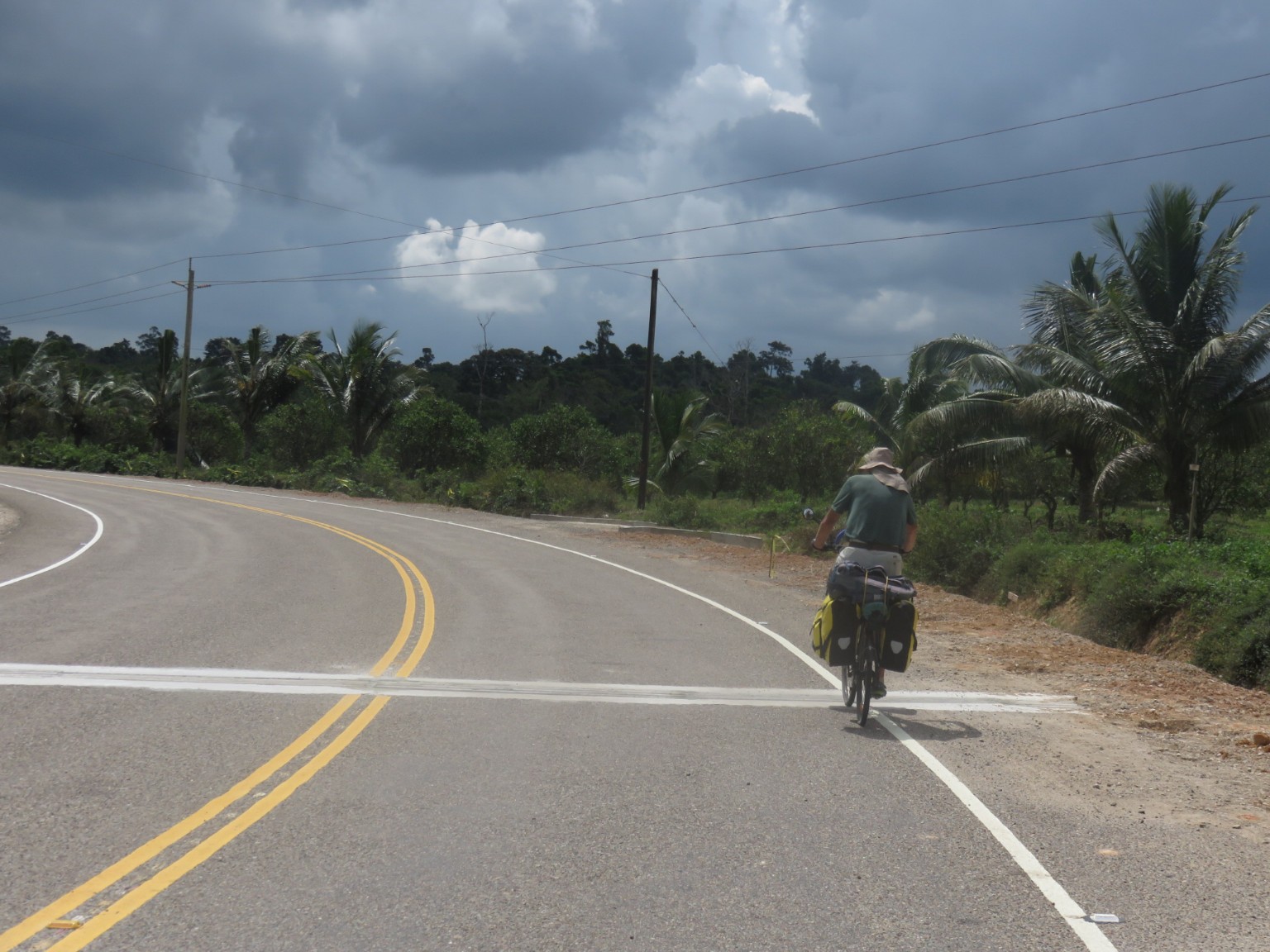
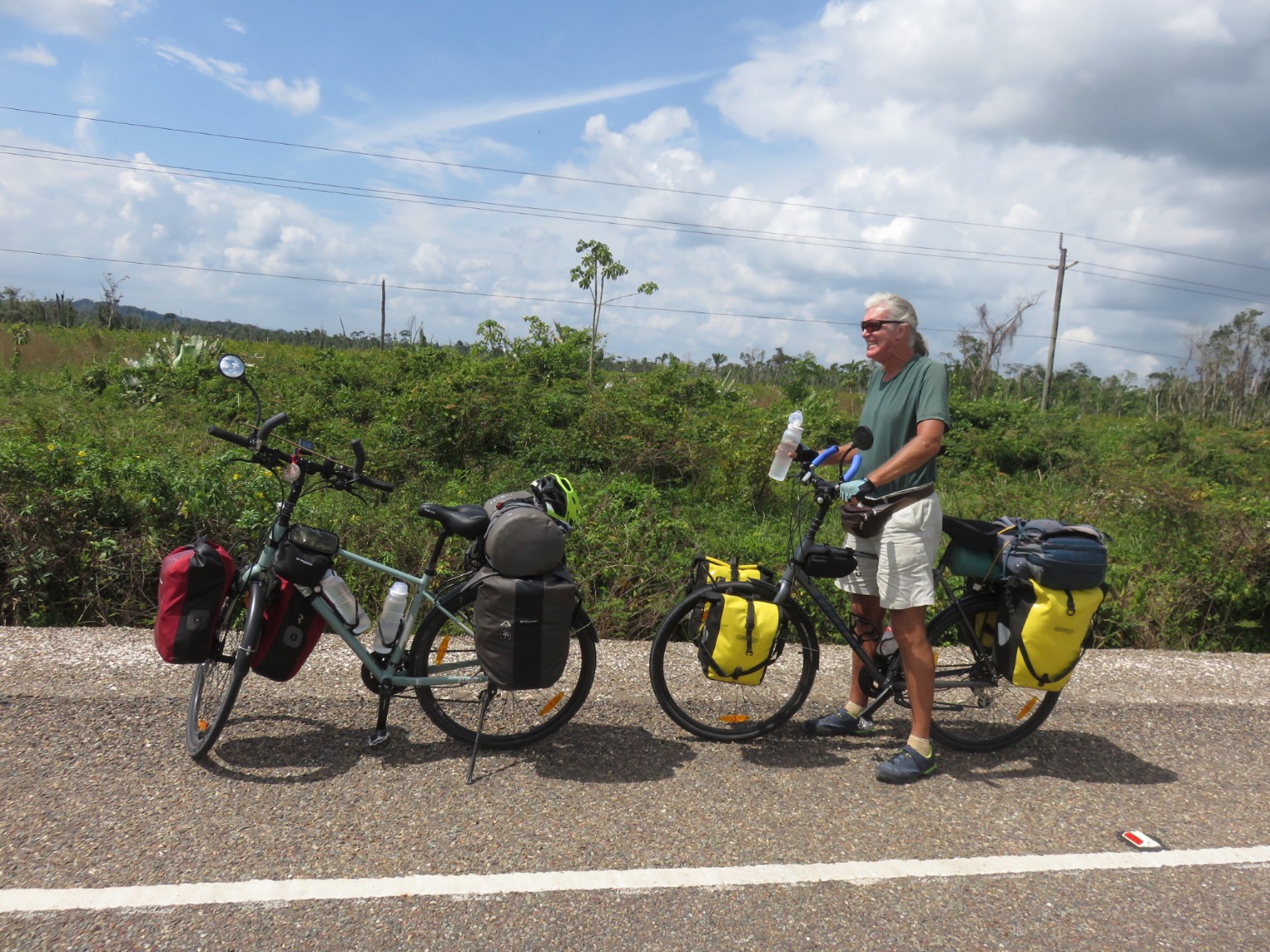
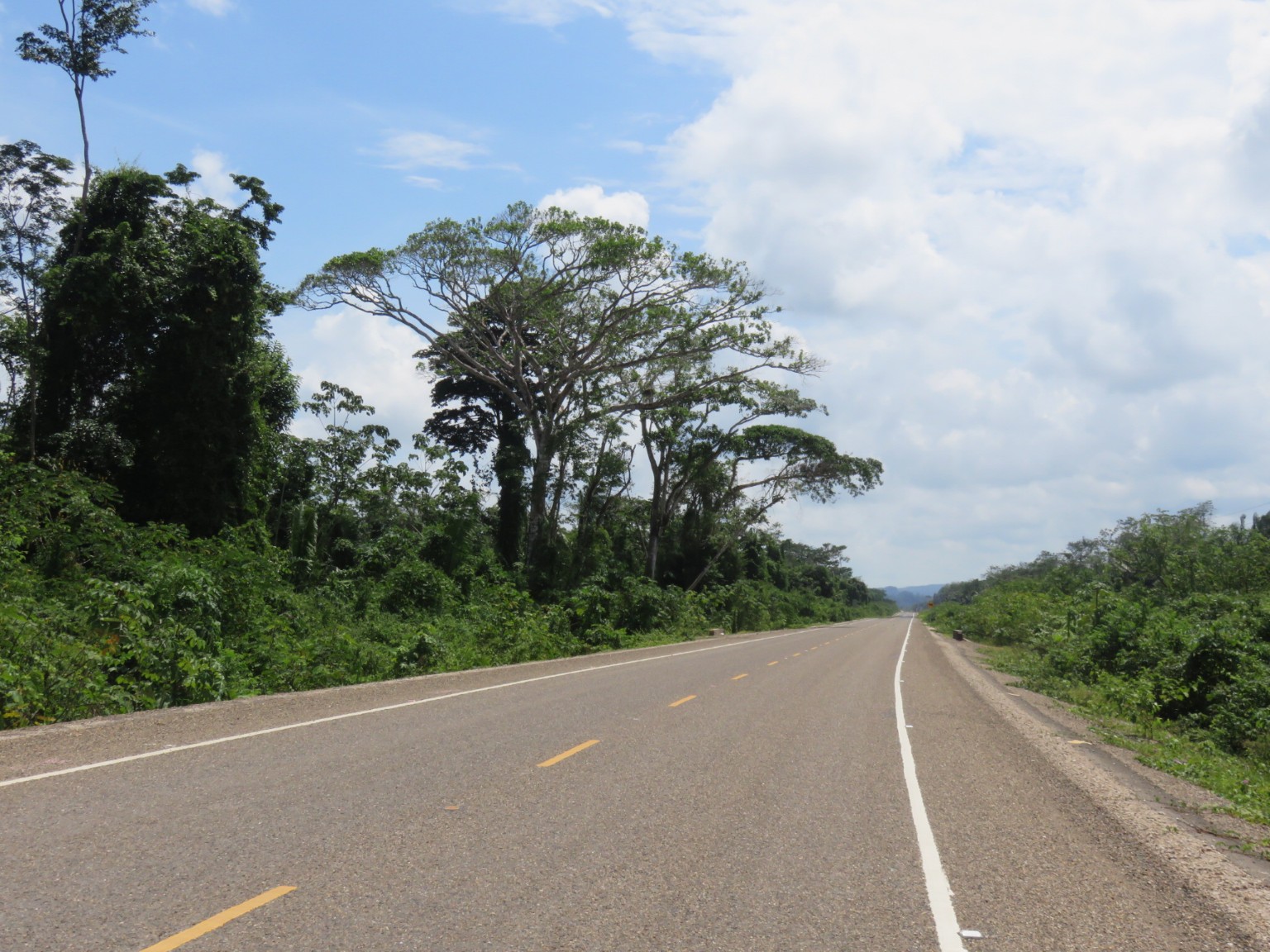
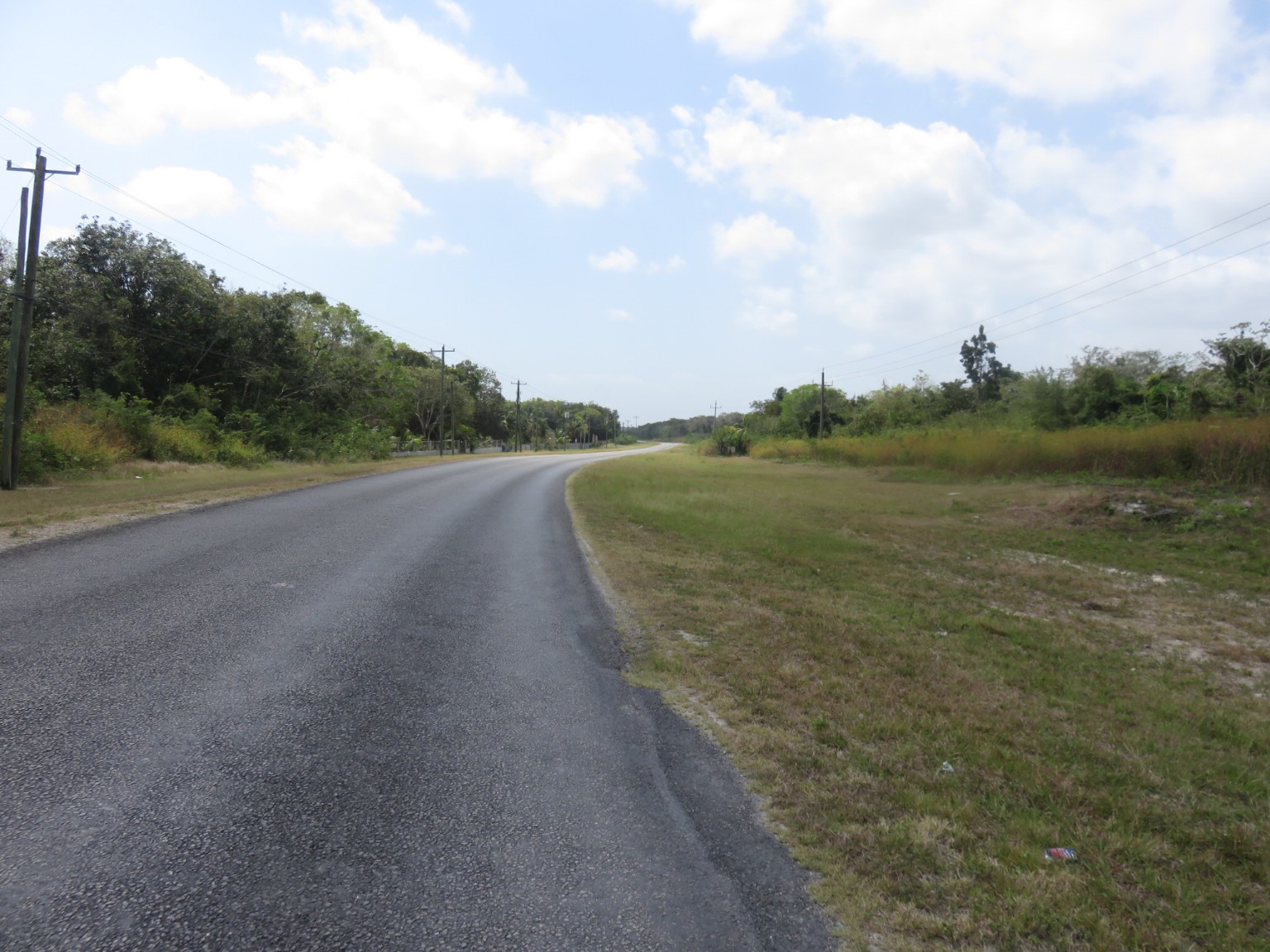
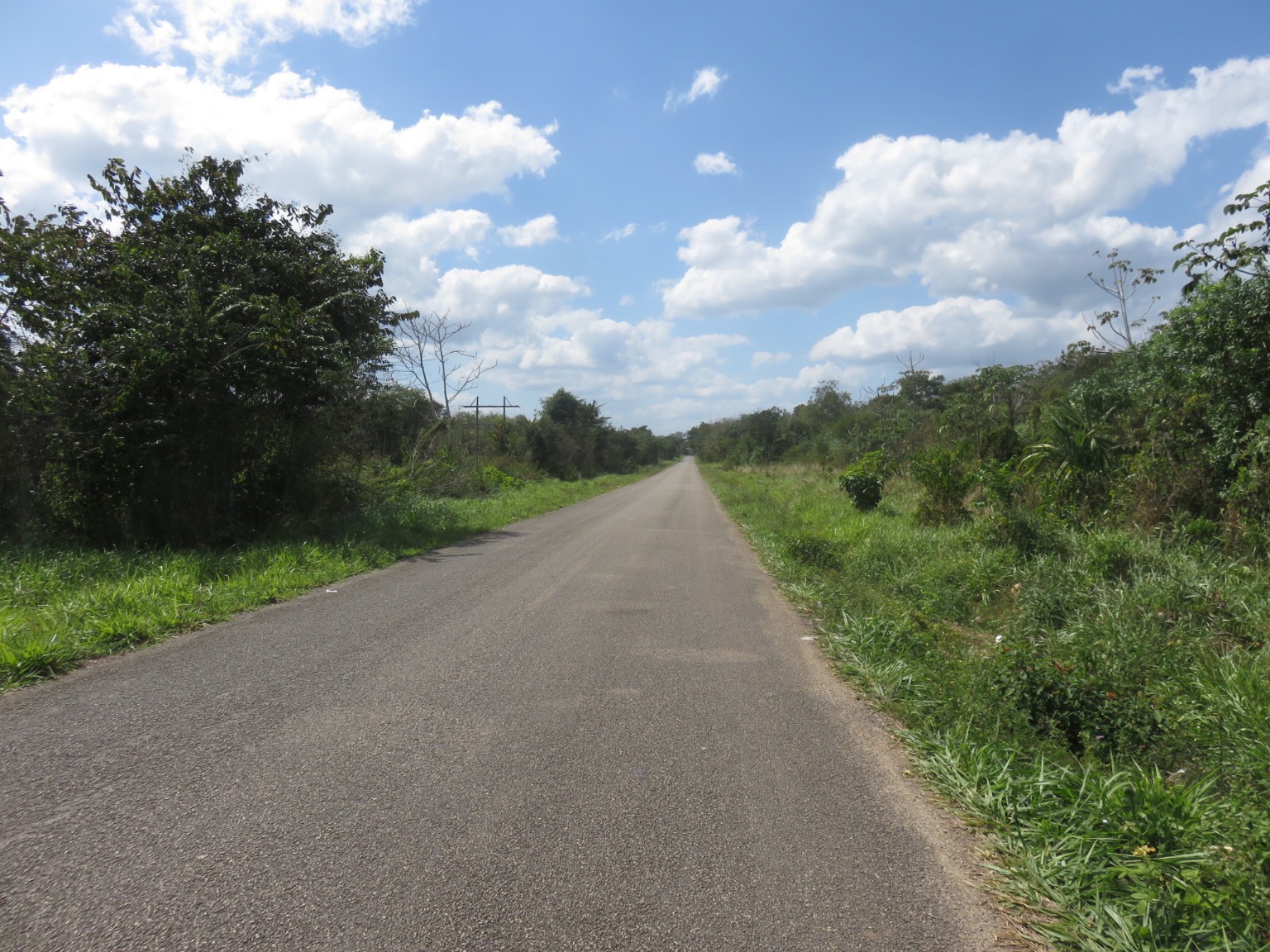
We’ve left the lively Western Highway and are now travelling along the Coastal Road which has a shoulder, sort of, is in better condition and almost no traffic – cycling bliss! \
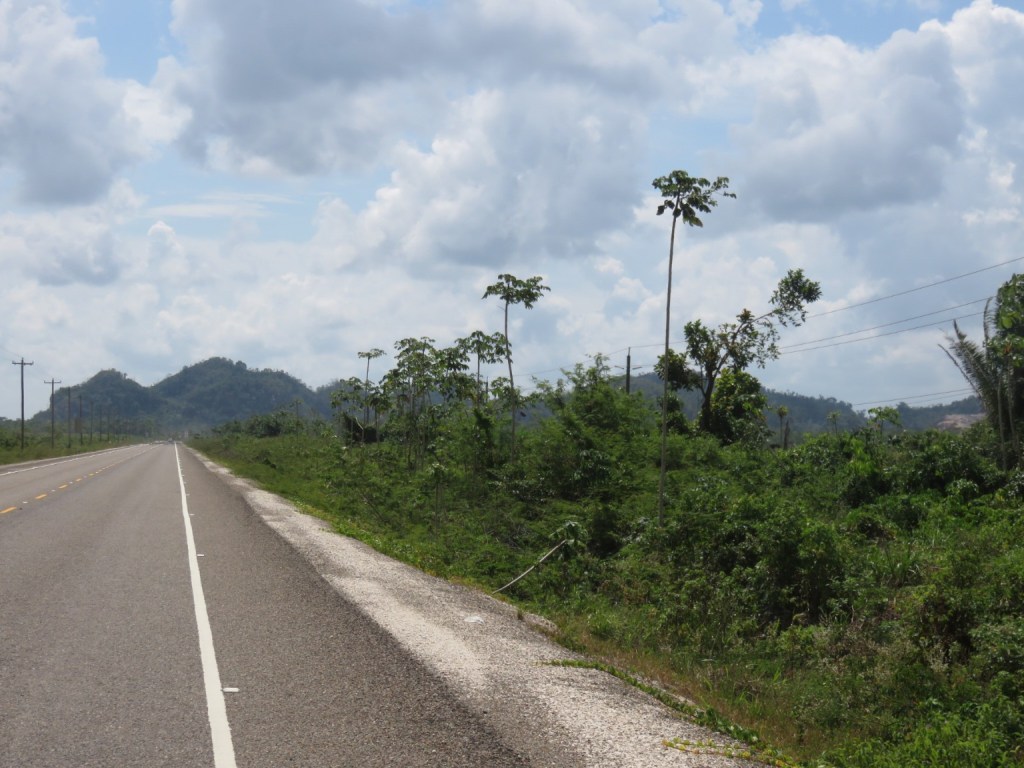
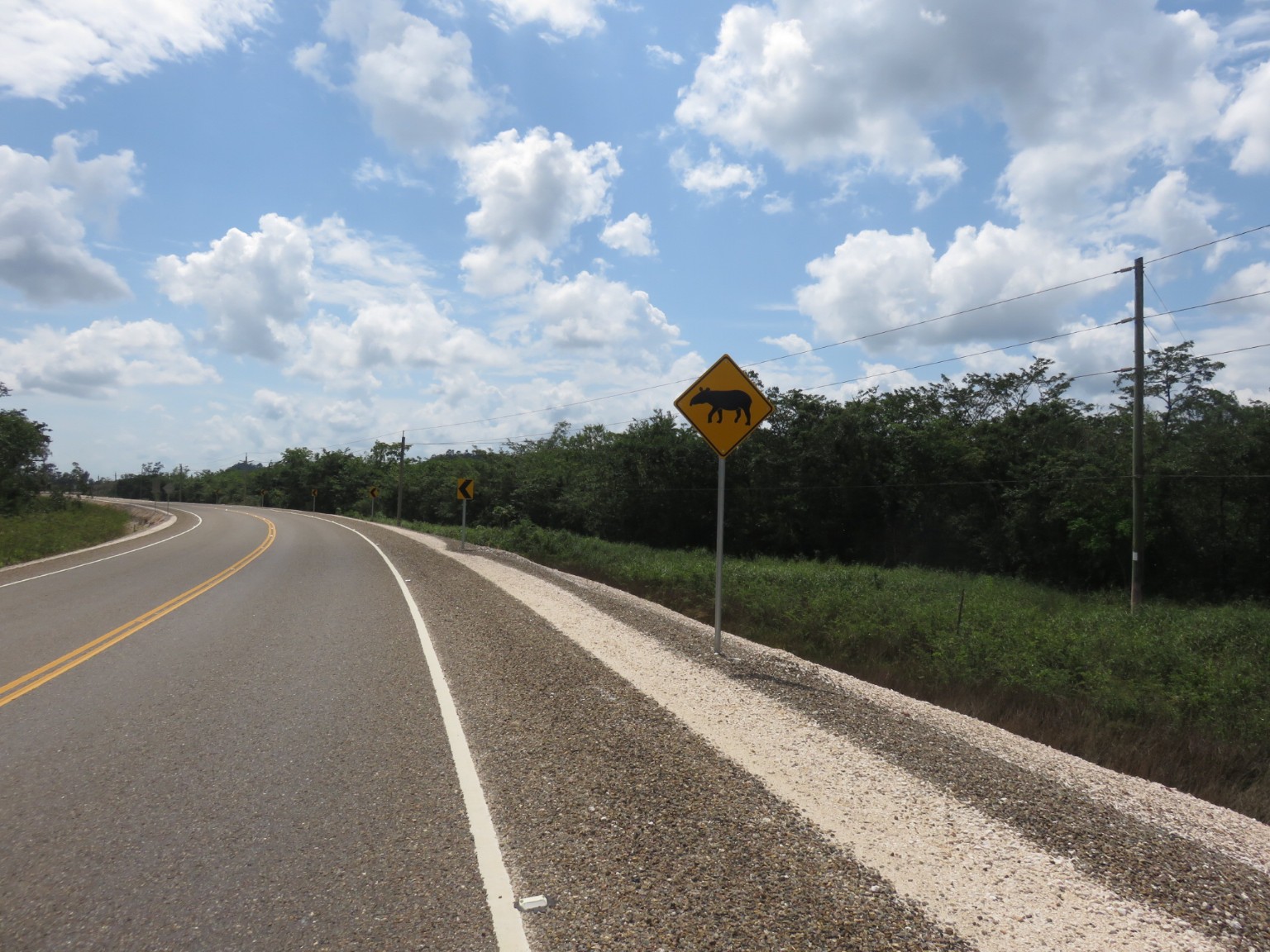
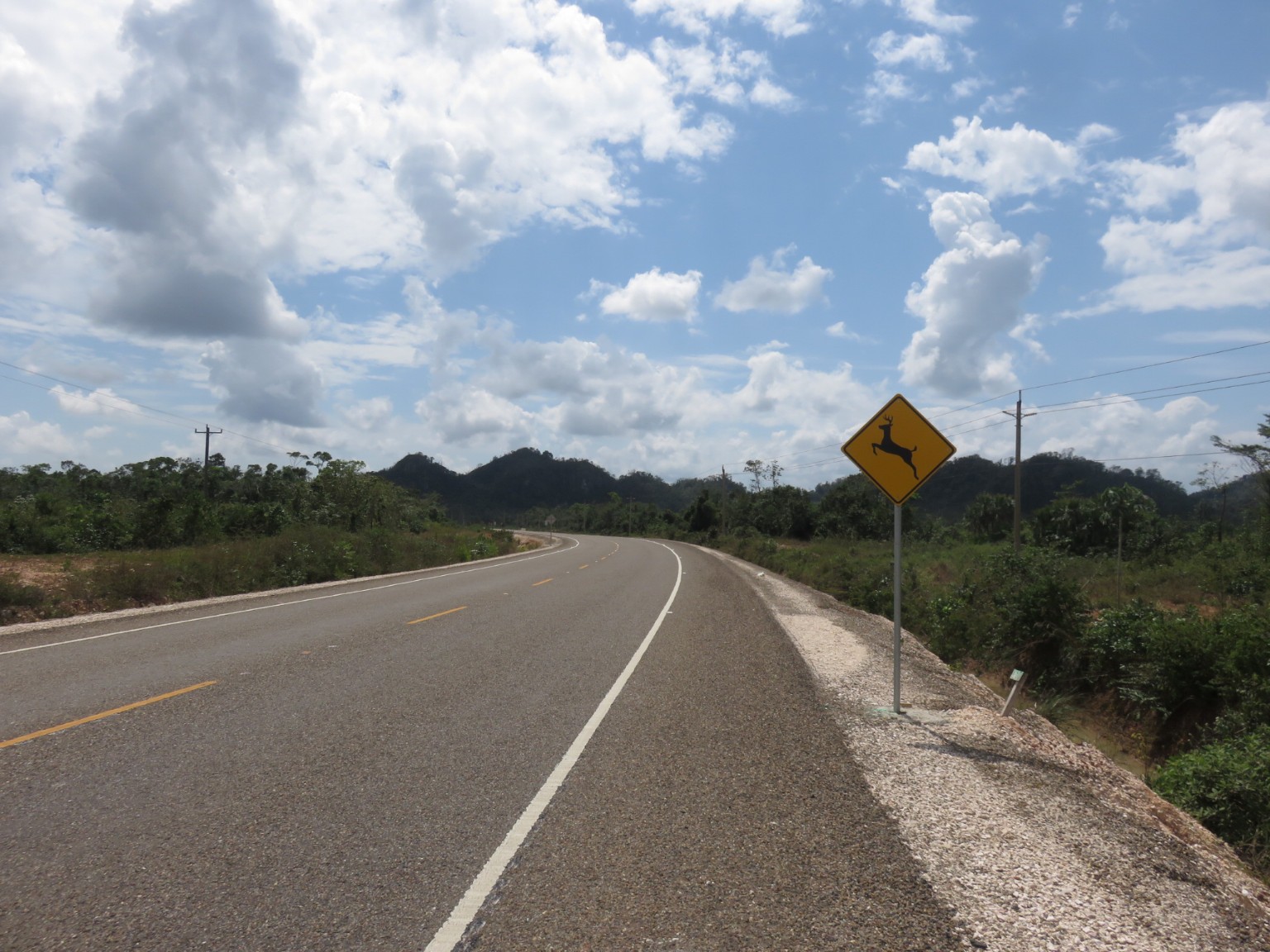
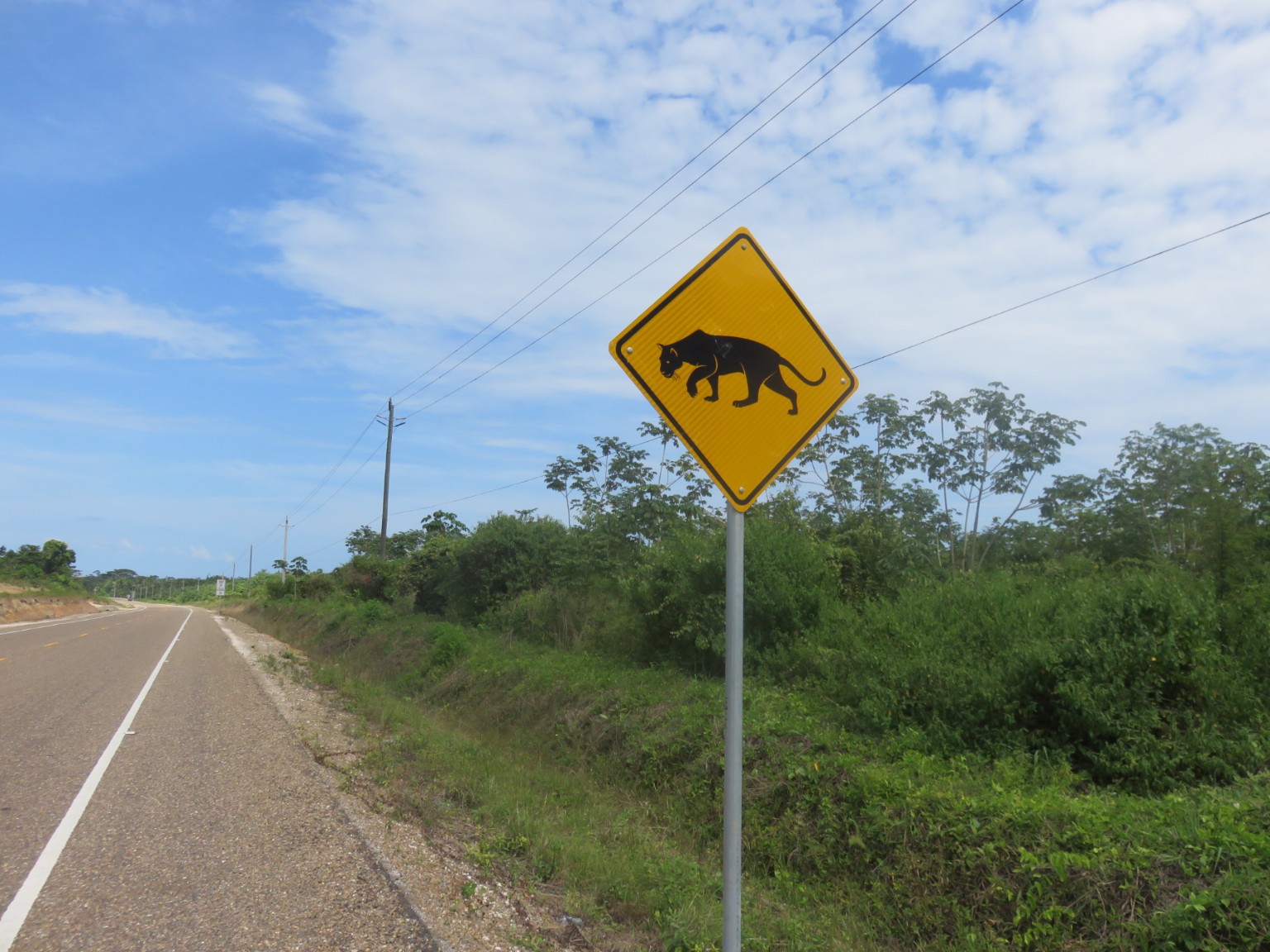
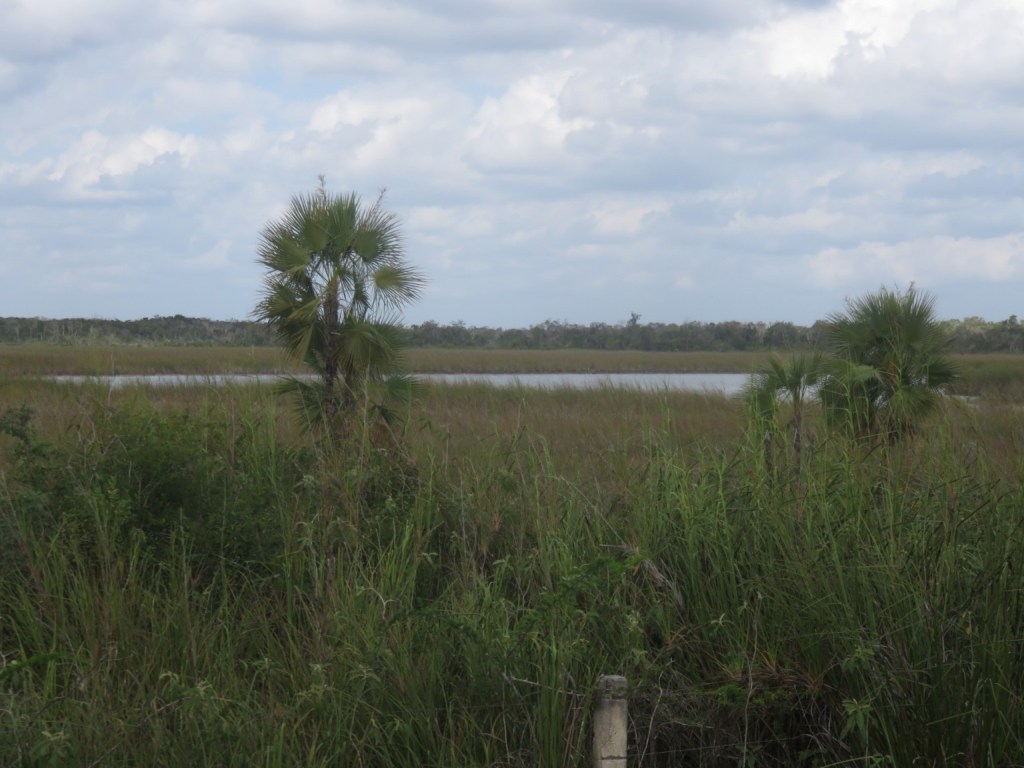
The wild animal signs are less of a concern here – this is a Tapir, Its difficult to see the 4 metre deep rain water gullies beside the road.There is not much out here except bush, bush and more bush.We haven’t seen a deer and are unlikely to because they are mainly nocturnal.
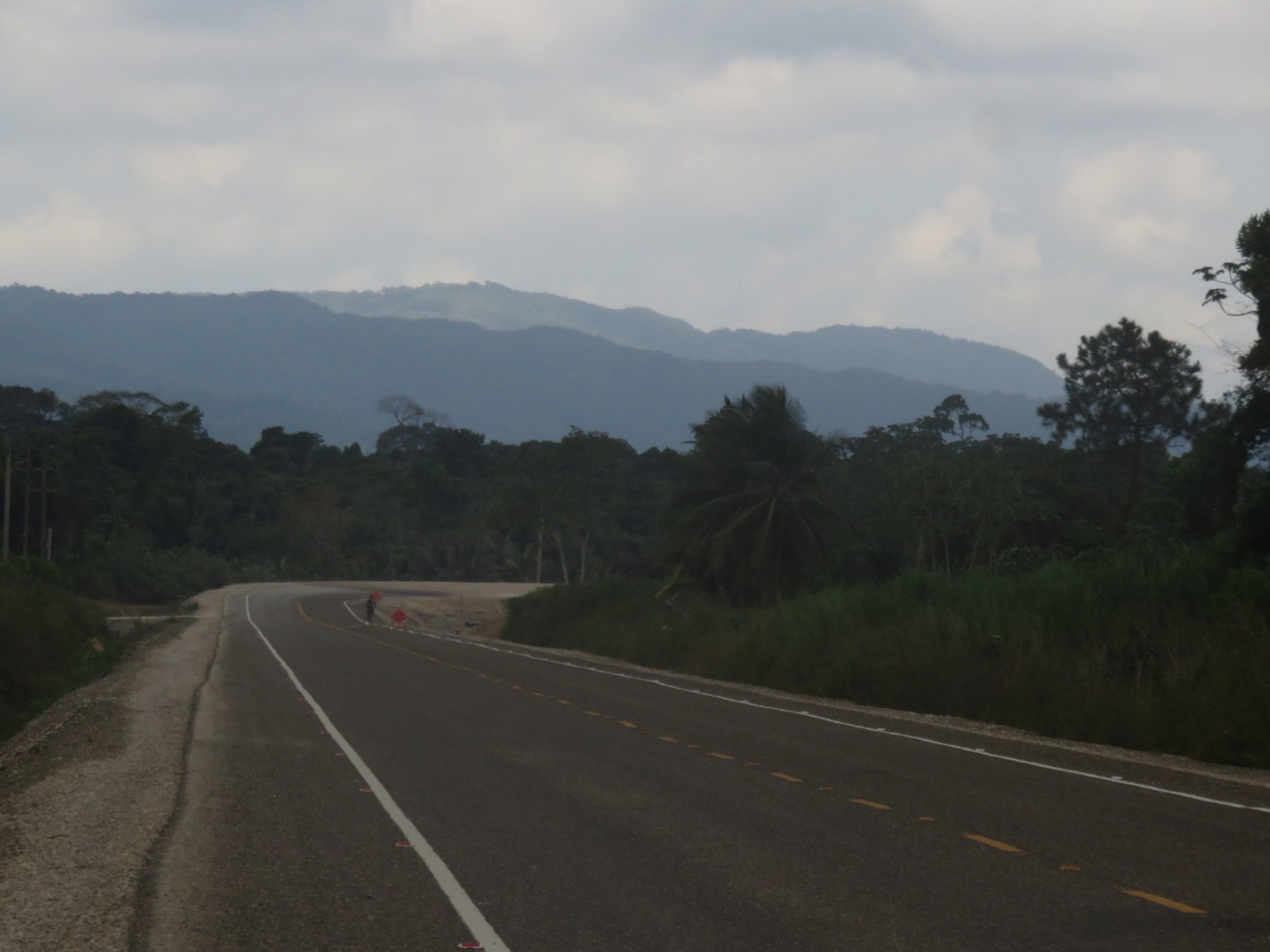
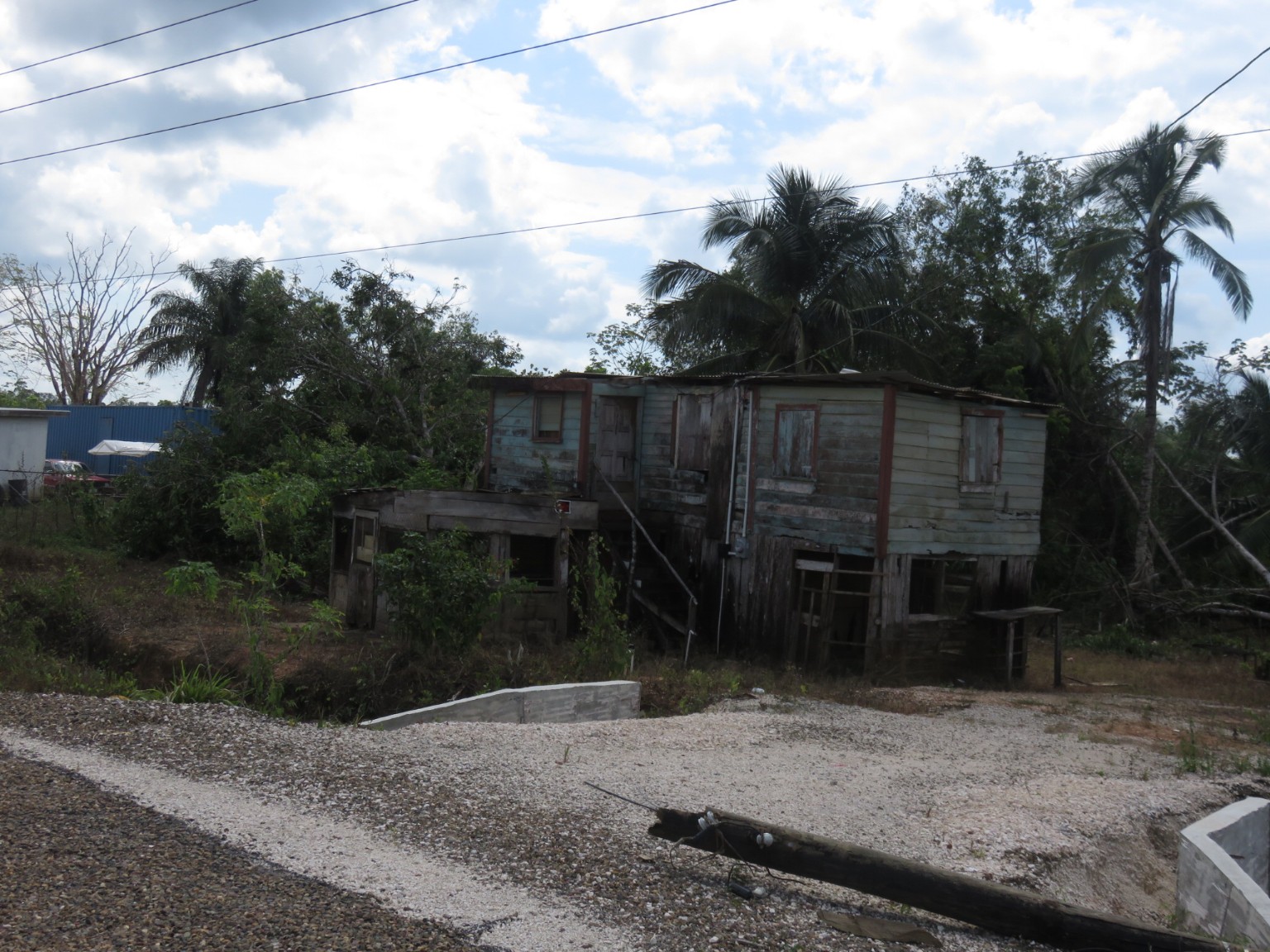
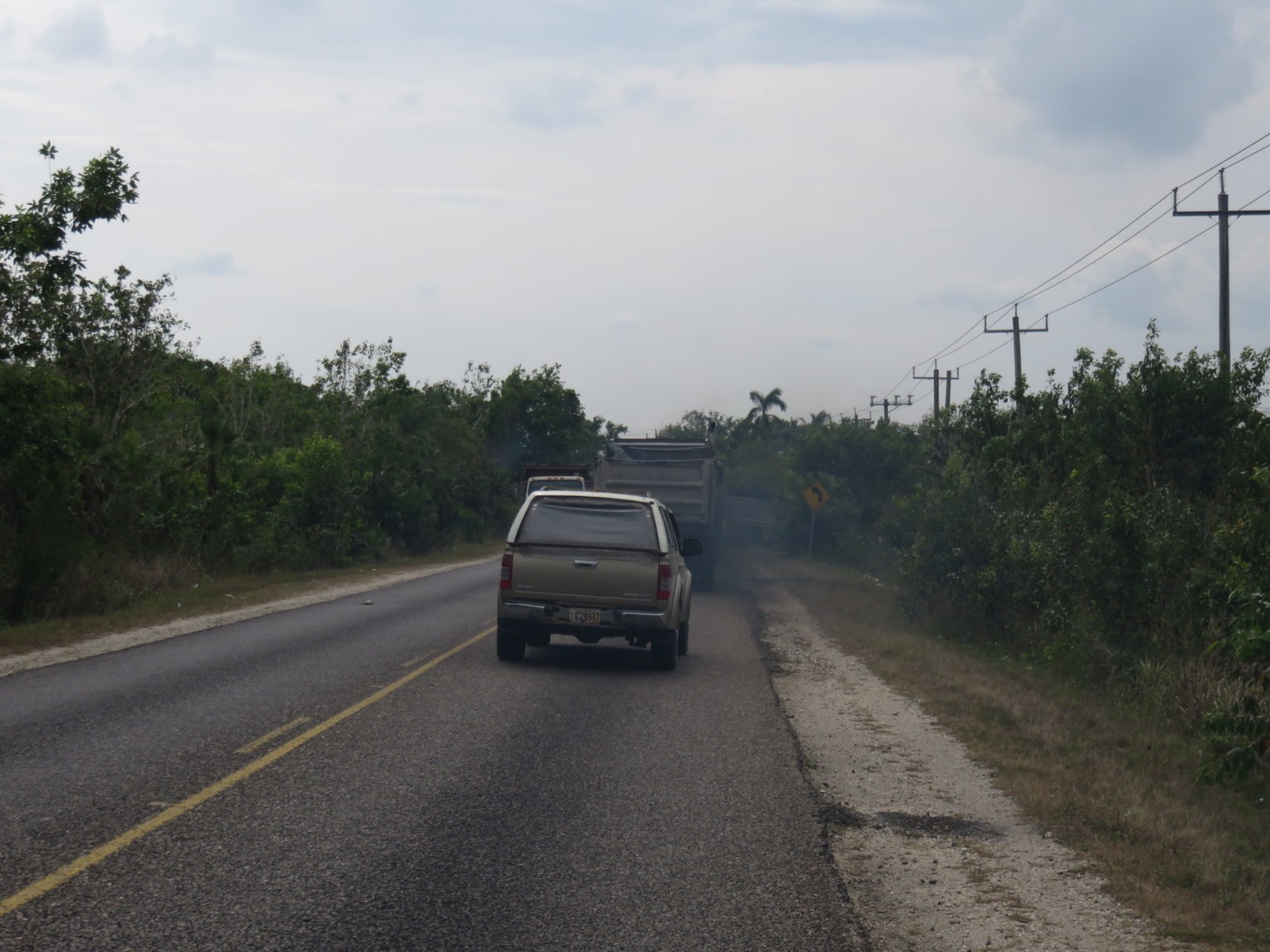
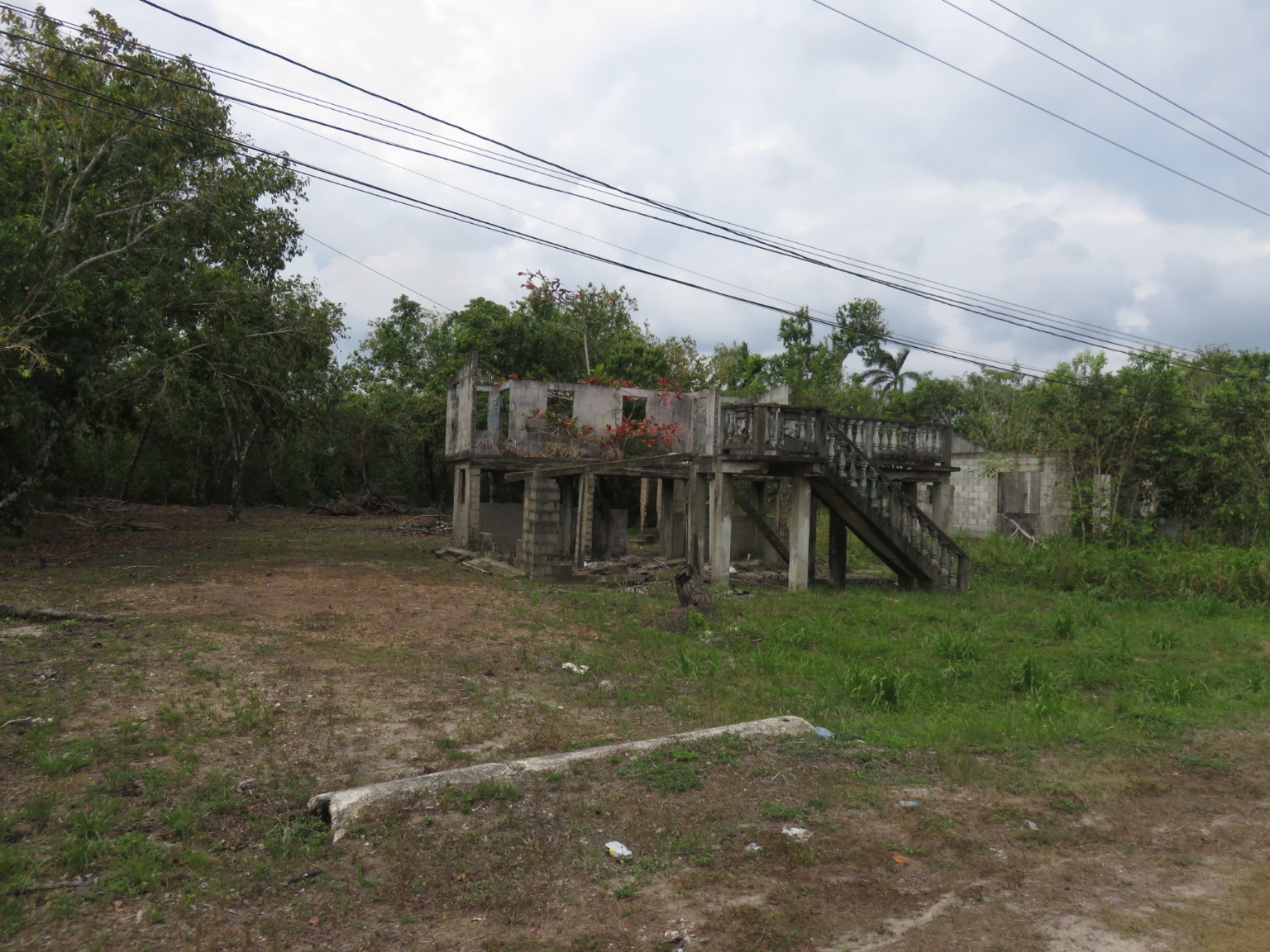
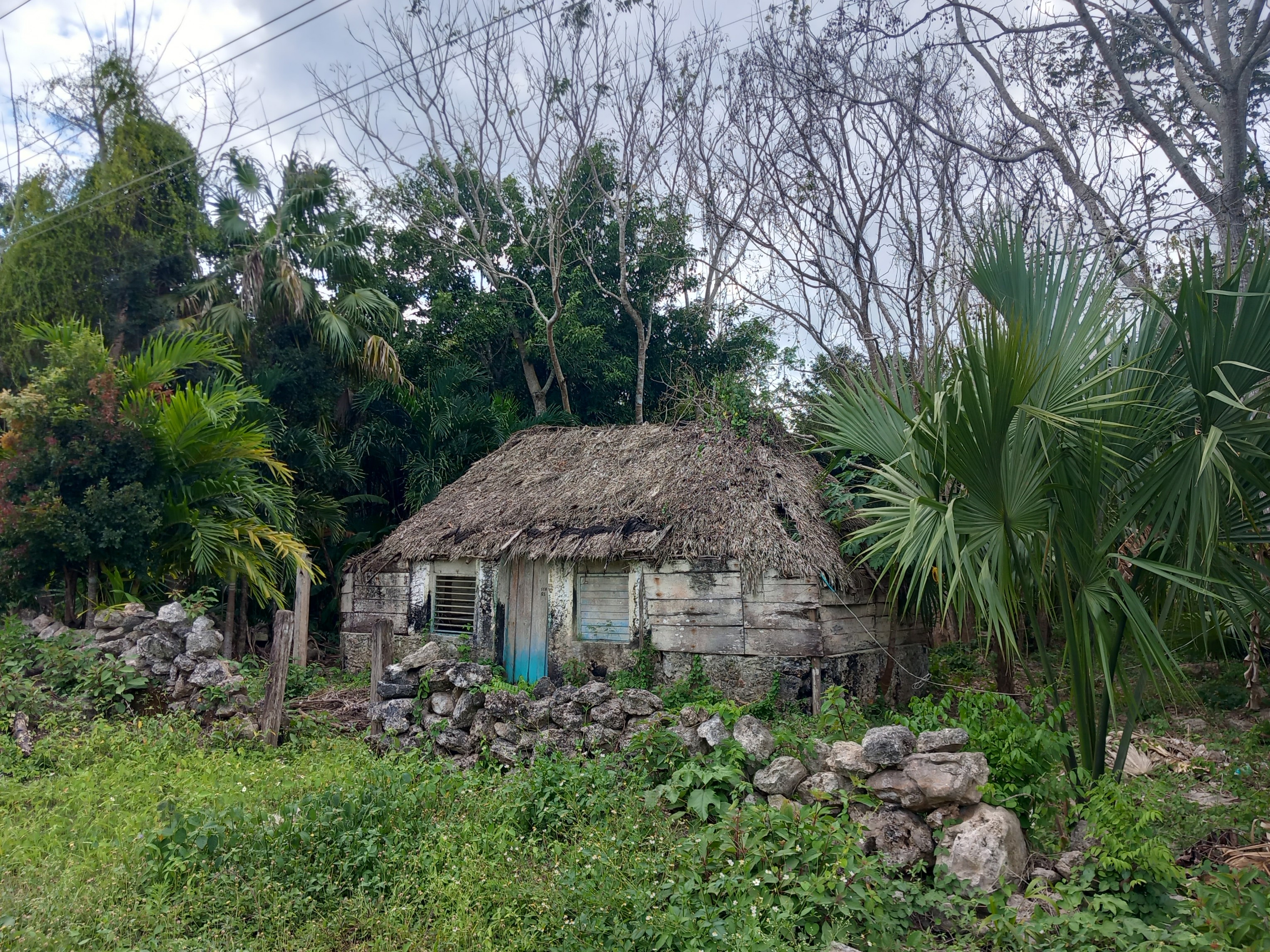
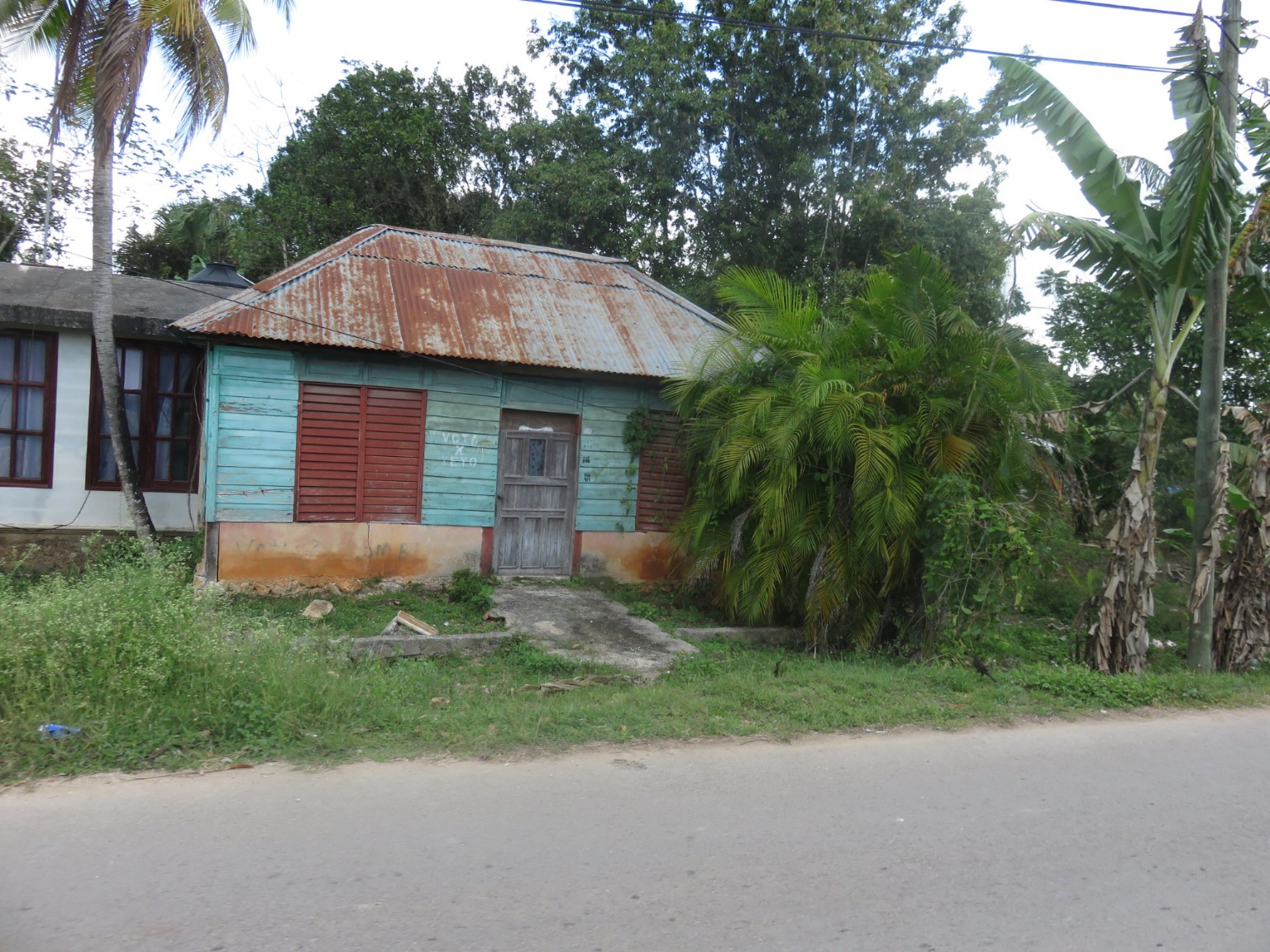
The road crew is so friendly he his offering us their water because he knows there is no resupply for 30 miles.We see many abandoned houses although it looks like someone could be building nearby very soon? We didn’t have to wait for a gap in the traffic to take these photos – the road really was this quiet. Some take the view that the quieter the road the more likelihood of a highway robbery occurring; we choose to benefit from the lack of traffic and check each stretch of road with the locals before we set out. Our immediate concern is the standard of driving of the local population who clearly drive too fast for the conditions. We still have to be mindful of the really wild animals.You will notice that if the roadside is not kept trimmed of the undergrowth the bush/jungle will easily reclaim the road way and return the area to its natural habitat.
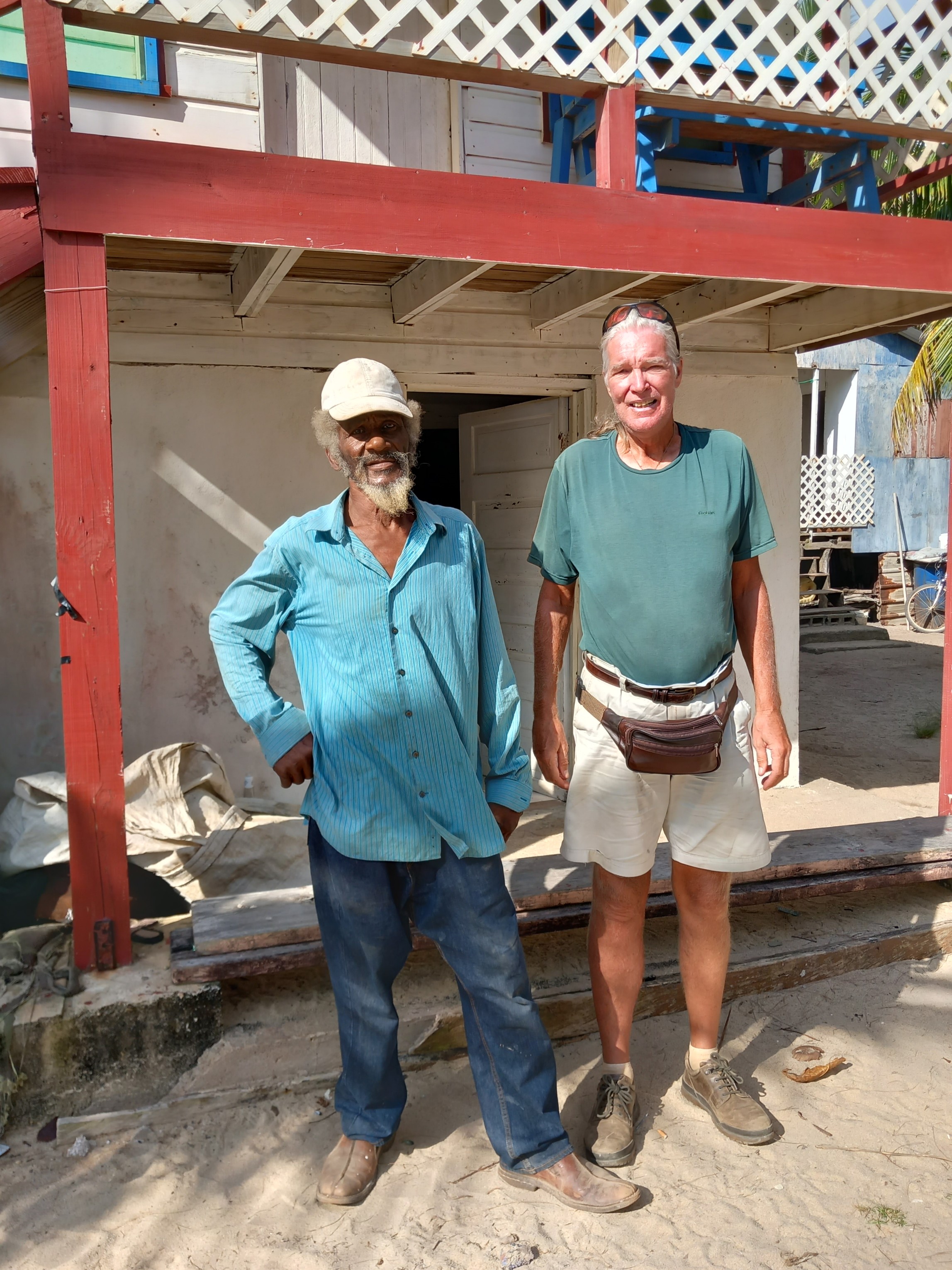
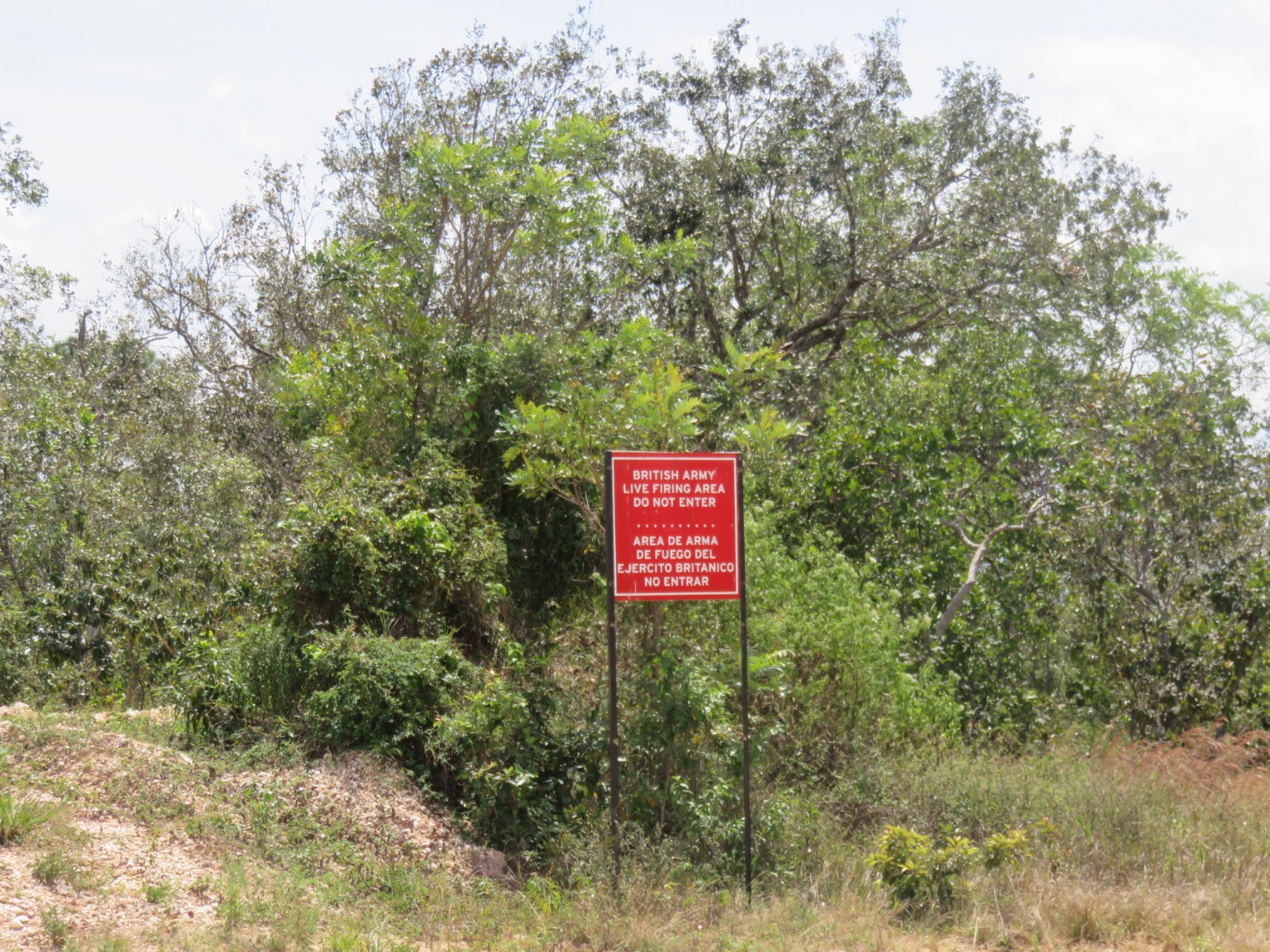
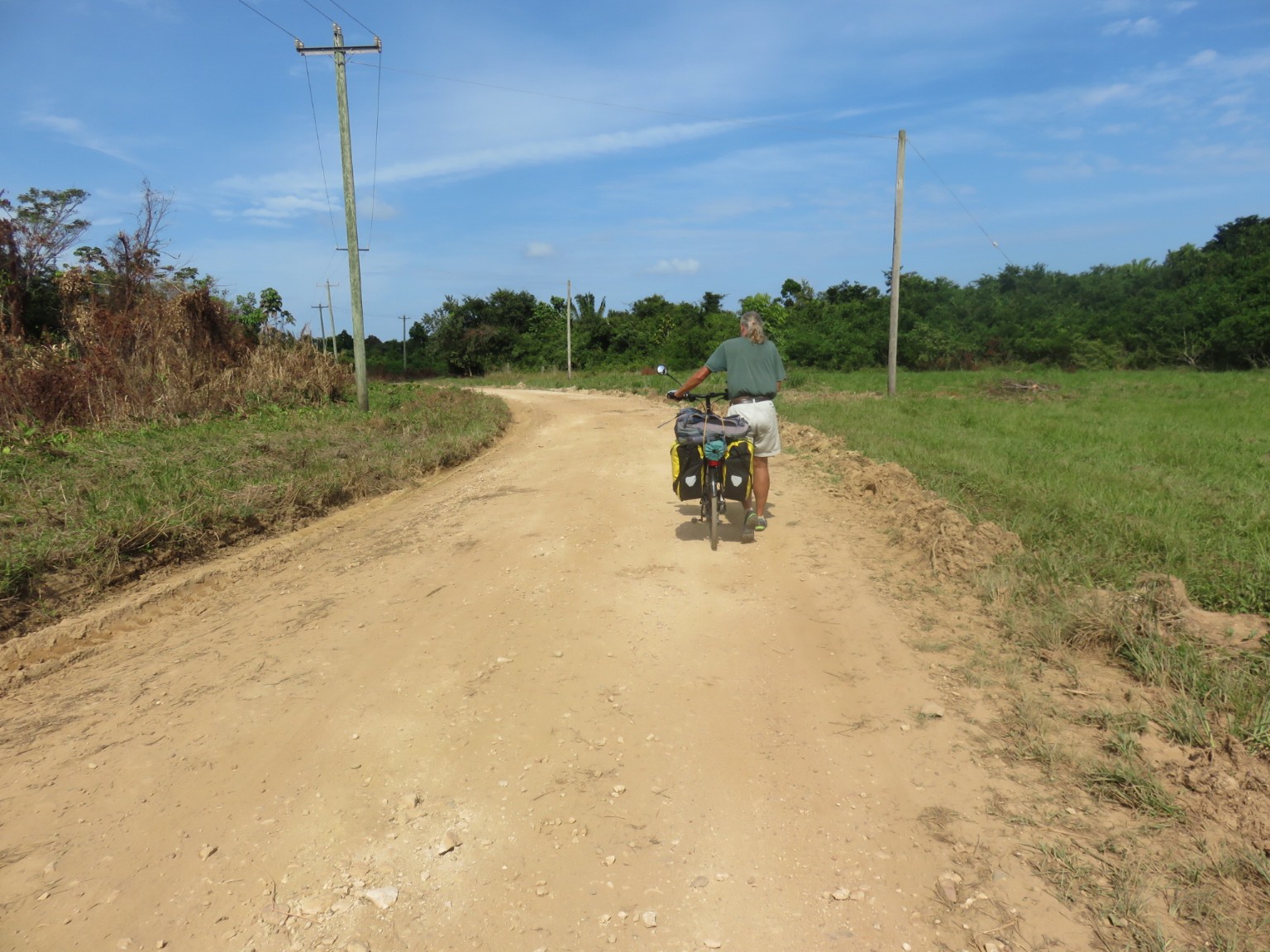
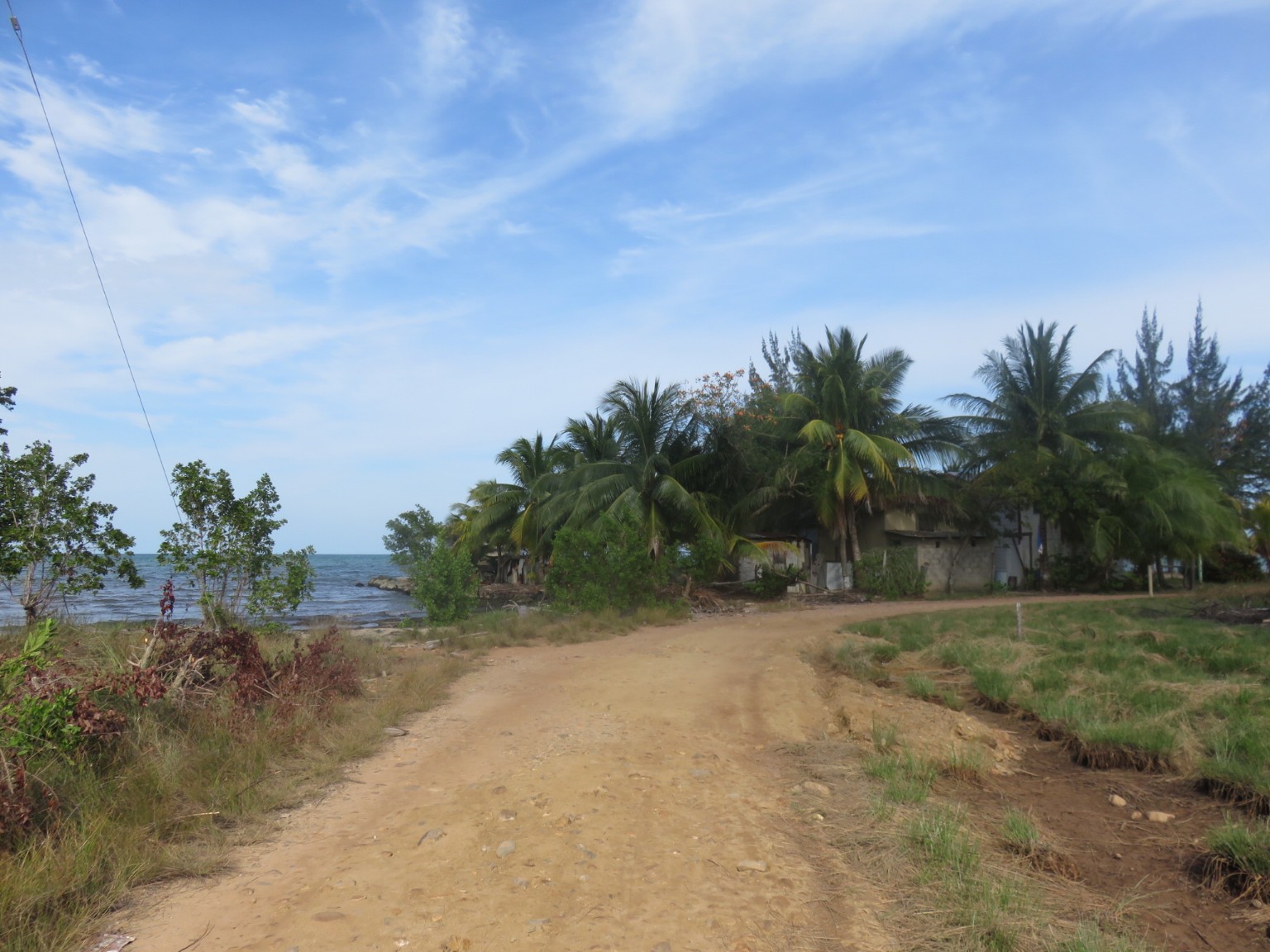
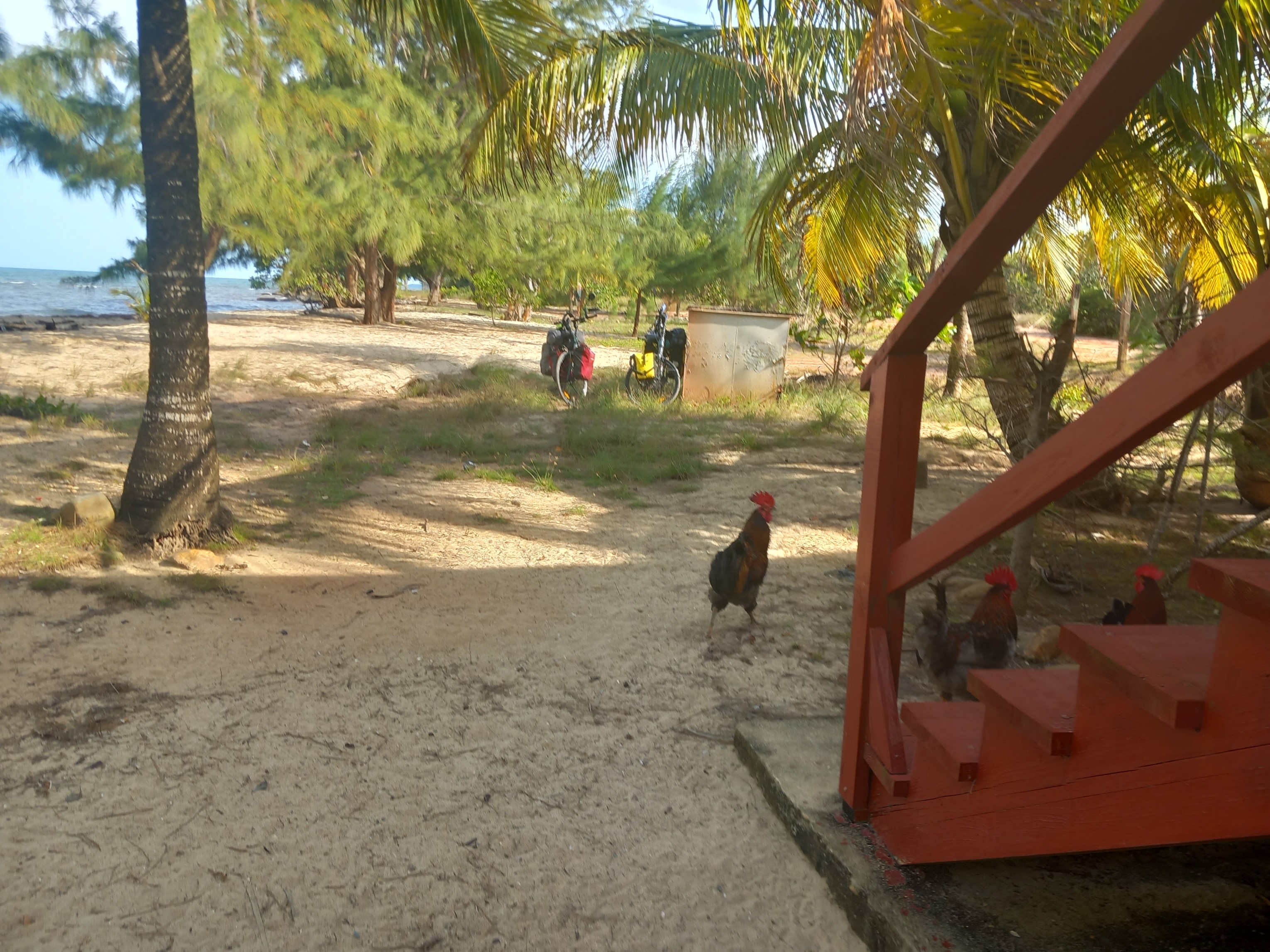
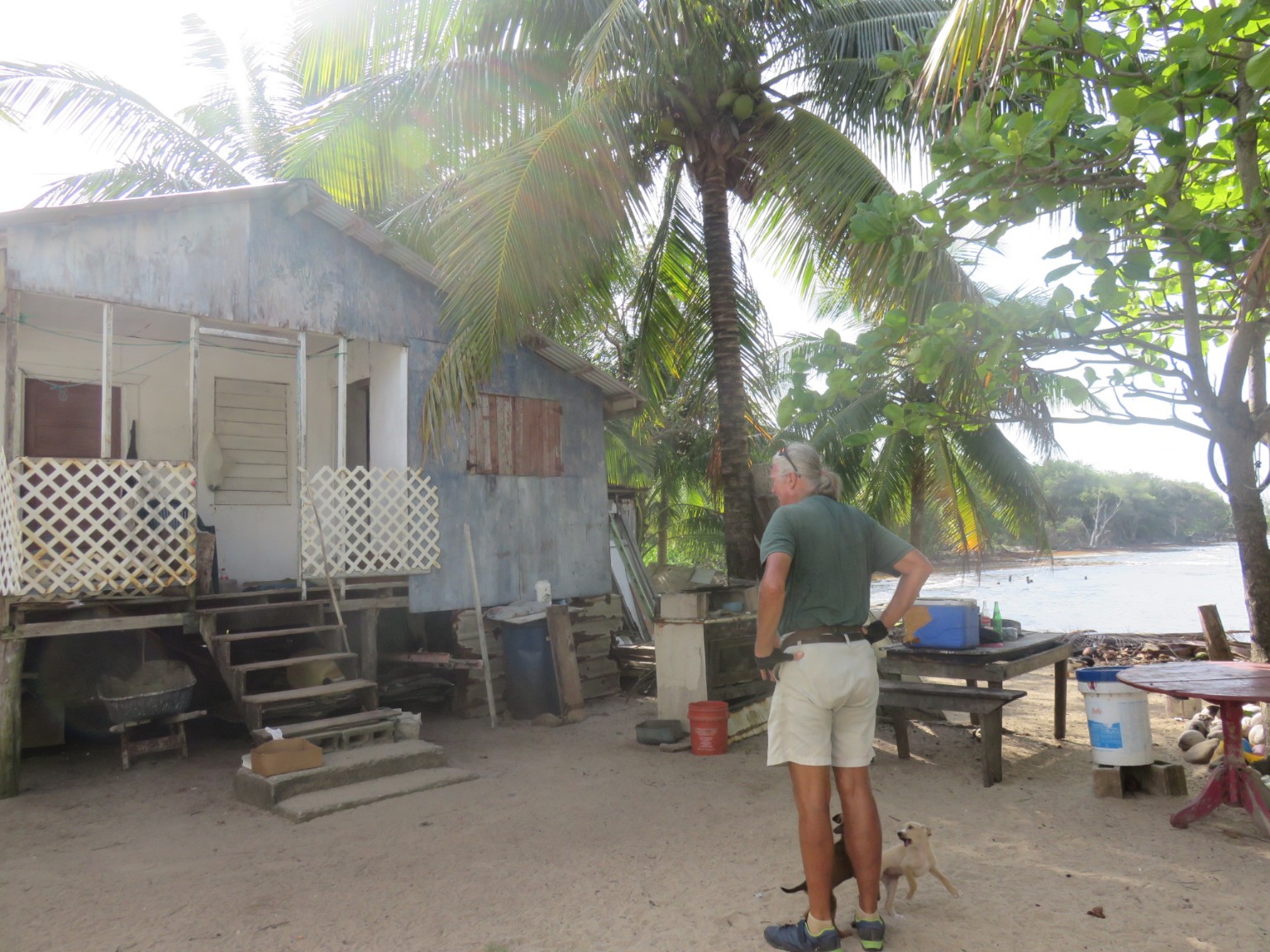
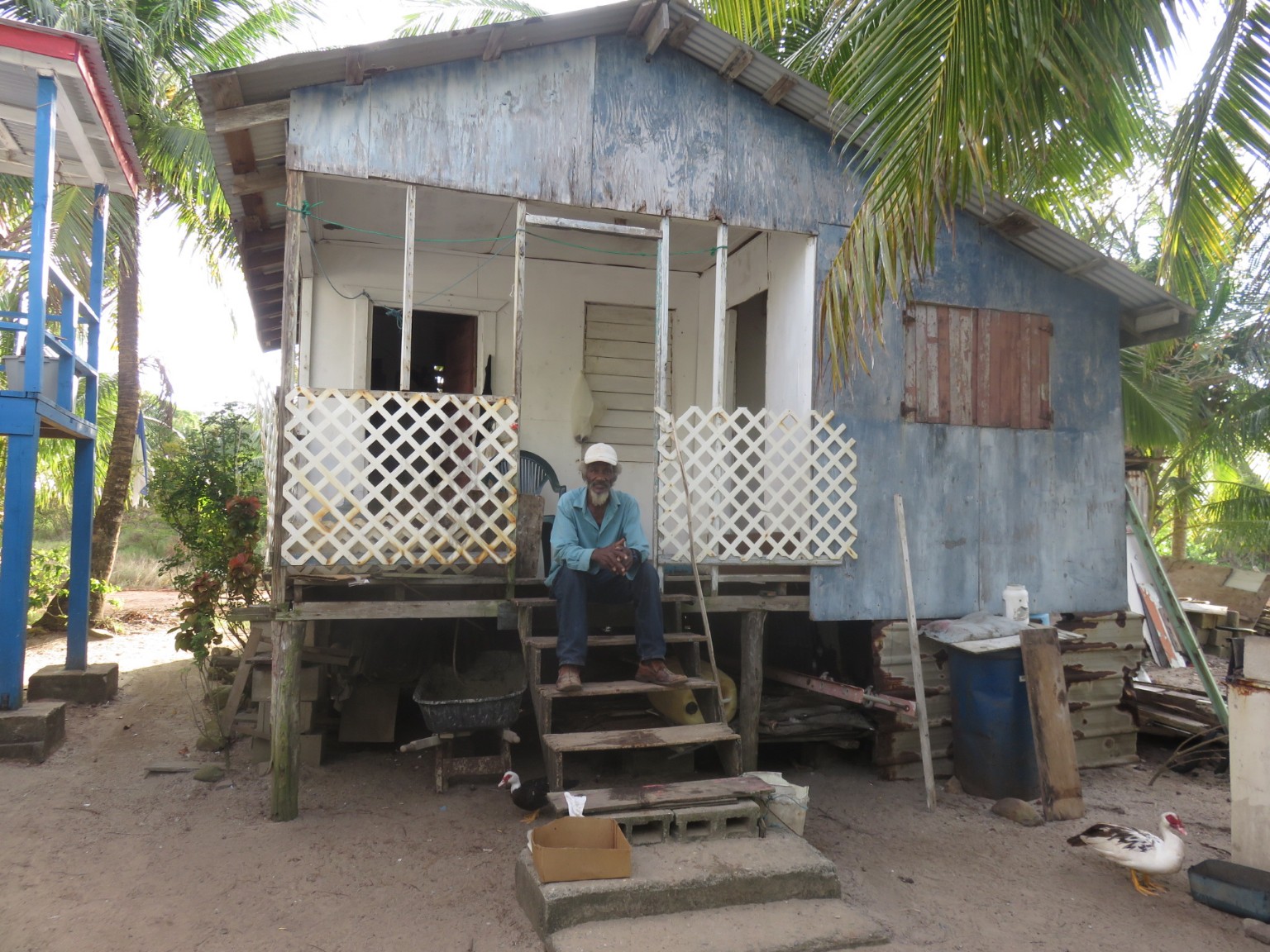
Today there was no firing when we passed. We have yet to see any army presence in the country; we’ve been told that Belize does not have a standing army although several countries as well as the British use this jungle for their tropical training. We saw troop movements on a daily basis in Mexico but no here.We are in search of someone called Joseph who we read allows people to camp at his place on the beach. It is so far from the main road we are beginning to wonder whether or not he still exists? The track is too uneven to ride with luggage.This is looking promising because we’re at the end of the track and on the beach.We are met by puppies, chickens, ducks but no Joseph. We sat there for 30 minutes wondering if he would arrive, or should we go ahead and put up our tent. And then in the distance, around 400 metres along the beach, we see two people moving and decide to go and ask if they know where is Joseph – we discover him there with a construction crew of 15 people building a brand new resort. They invite us to return for dinner and breakfast. More immediately they supply us with water because we ran out whilst battling headwinds for 5 – 6 hours.This is Joseph.
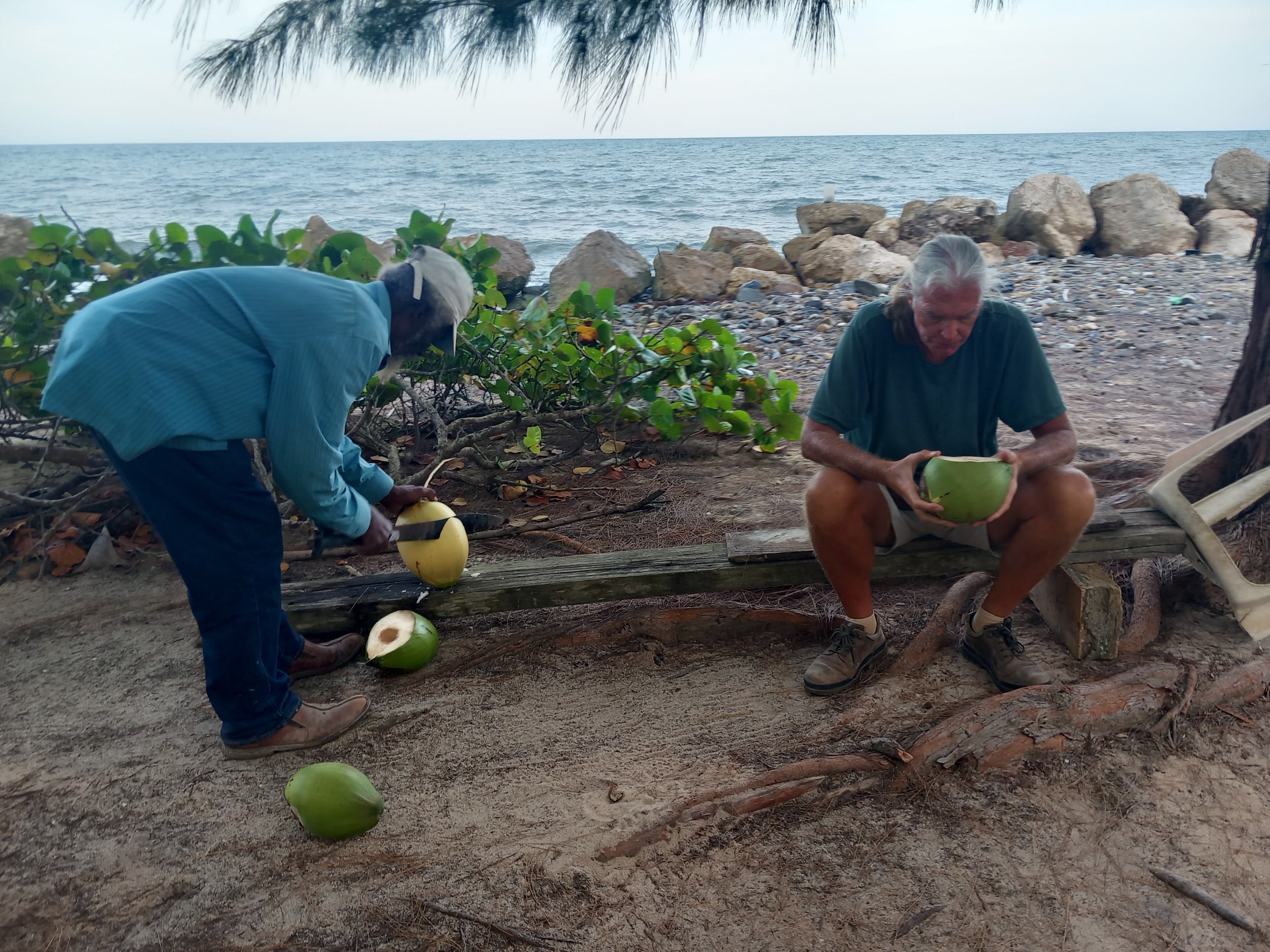
We are now used to seeing men, women and boys carrying machetes around openly for chopping firewood or coconuts for us.
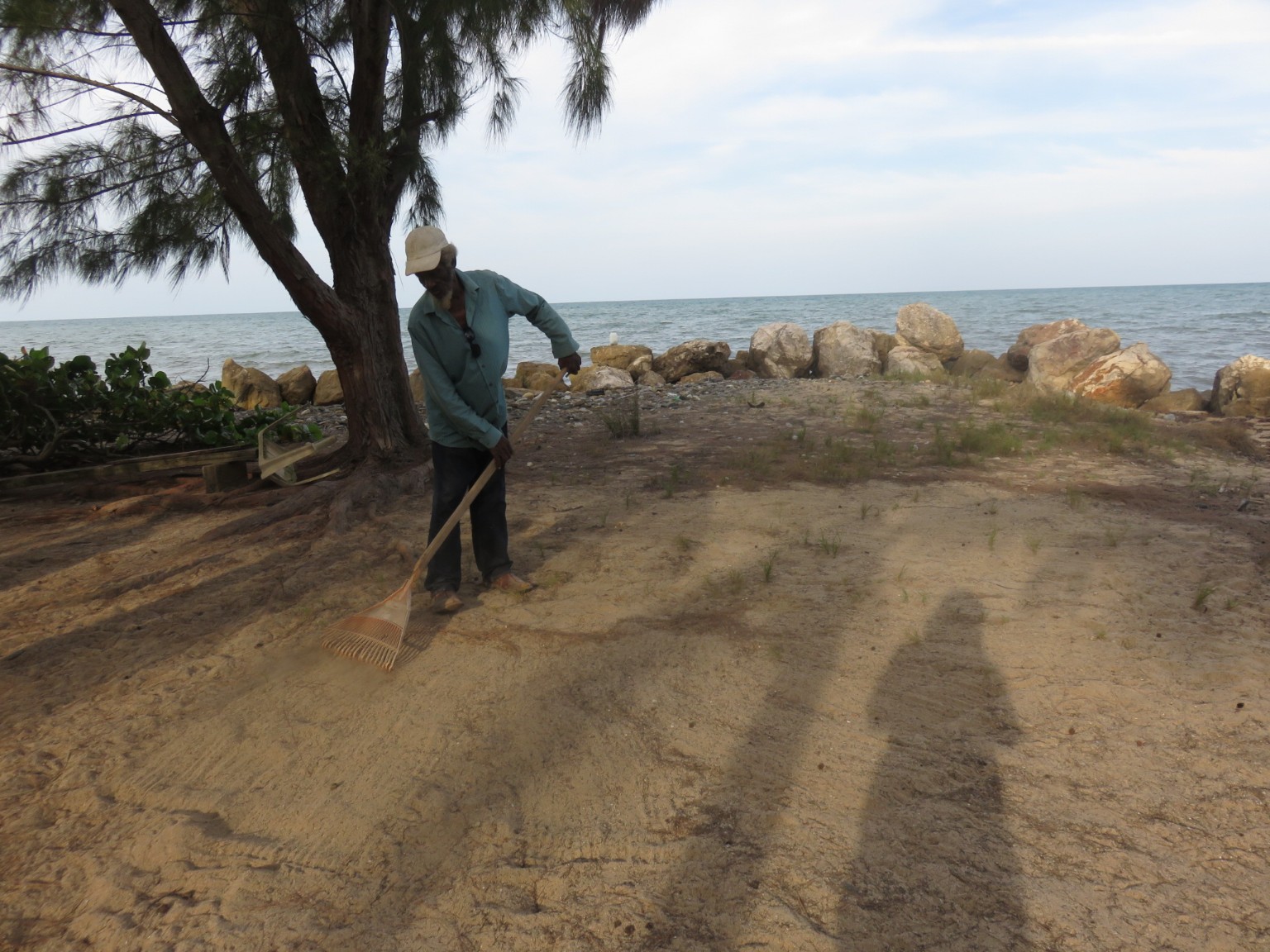
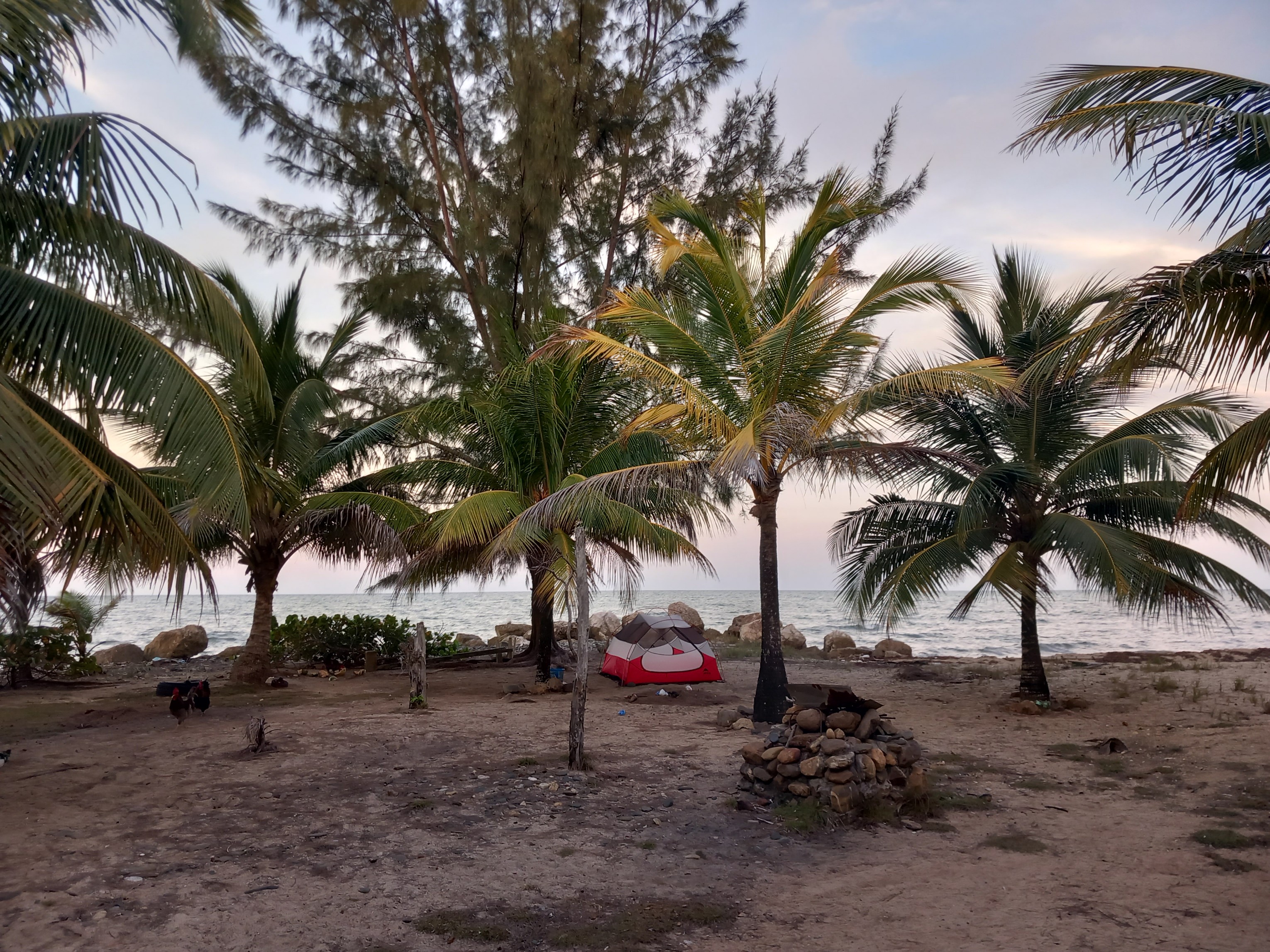
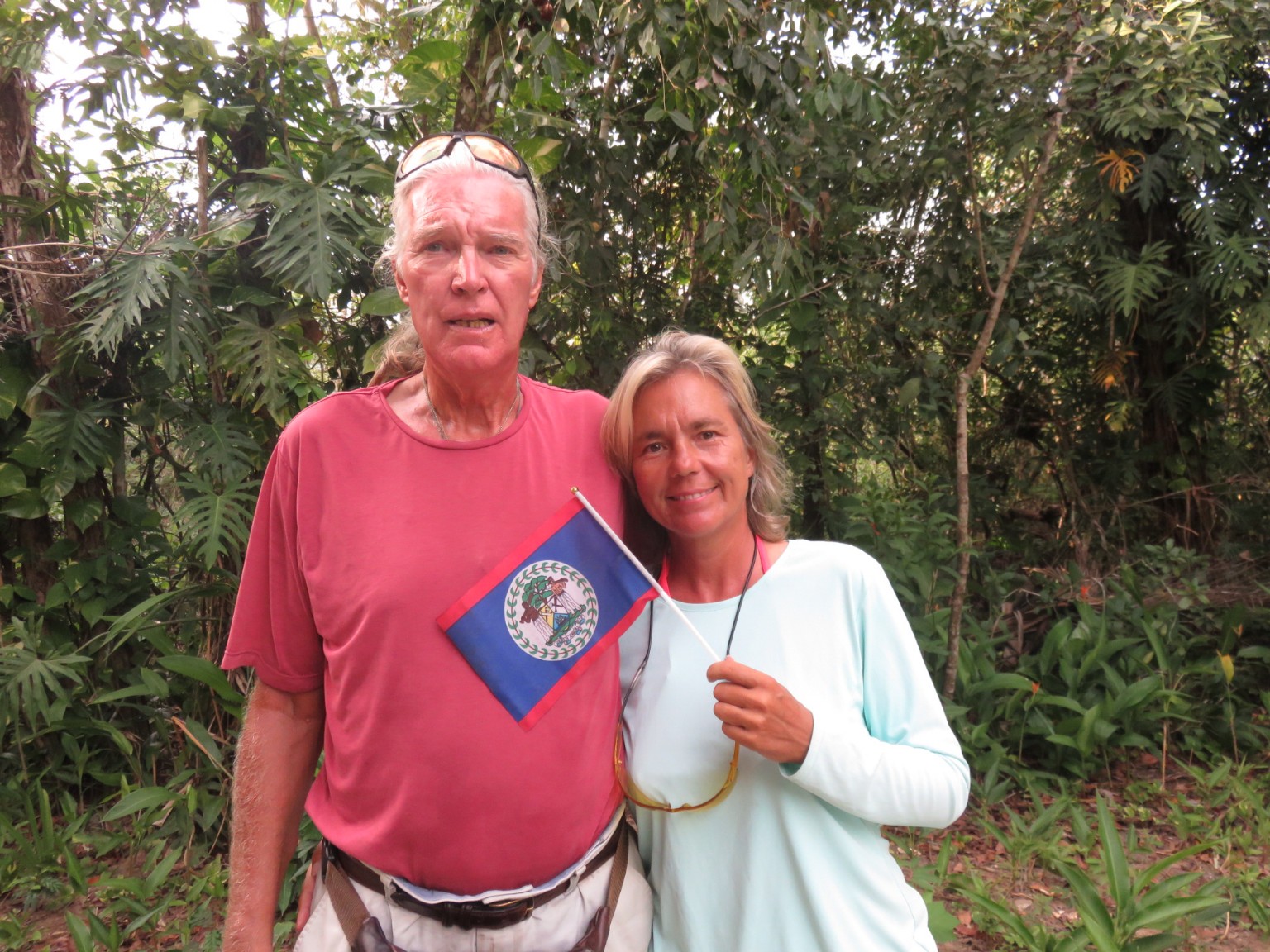
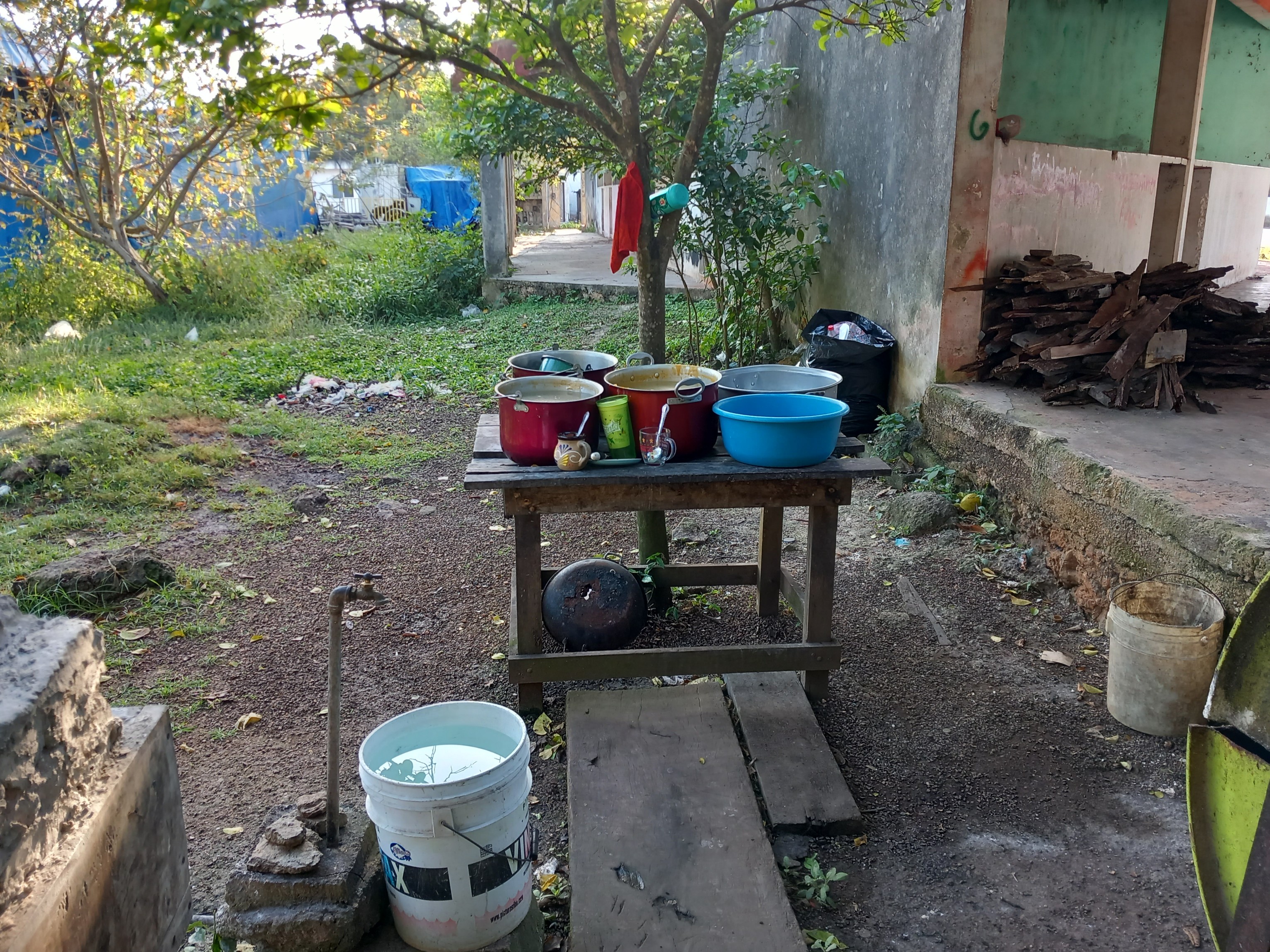
Joseph has a stunning position on the beach which is so authentic it has no electricity, no running water, no flush toilet, and no internet.Joseph is a very attentive host and rakes the ground in preparation for the tent.Whilst we’re erecting the tent unknown to us he is climbing a palm tree and collecting coconuts for us to drink and eat the meat. Our starter before joining the construction crew for dinner.Luckily we pitched the tent behind those rocks because the wind/waves increased during the night and we needed their protection to ensure we didn’t wake up to a flooded bedroom, such was our proximity to the Caribbean. We also checked the Palm Trees above our tent to ensure there were no coconuts which could fall on us or our flimsy accommodation. Dinner is provided by the construction crews own catering department. We are not stupid – we arrived dead on 6pm when the men were still cleaning up after their challenging day’s work.We reflect on such an unusual day in that we had breakfast with academic-type insectologists, wrigglythingologists, etc. furthering their studies in the jungle and end it with dinner on the beach with hardworking contractors who live and work on site – also miles from anywhere.The moon tonight we thought was rather special.
This is breakfast and we are staying in the building behind on the top floor.
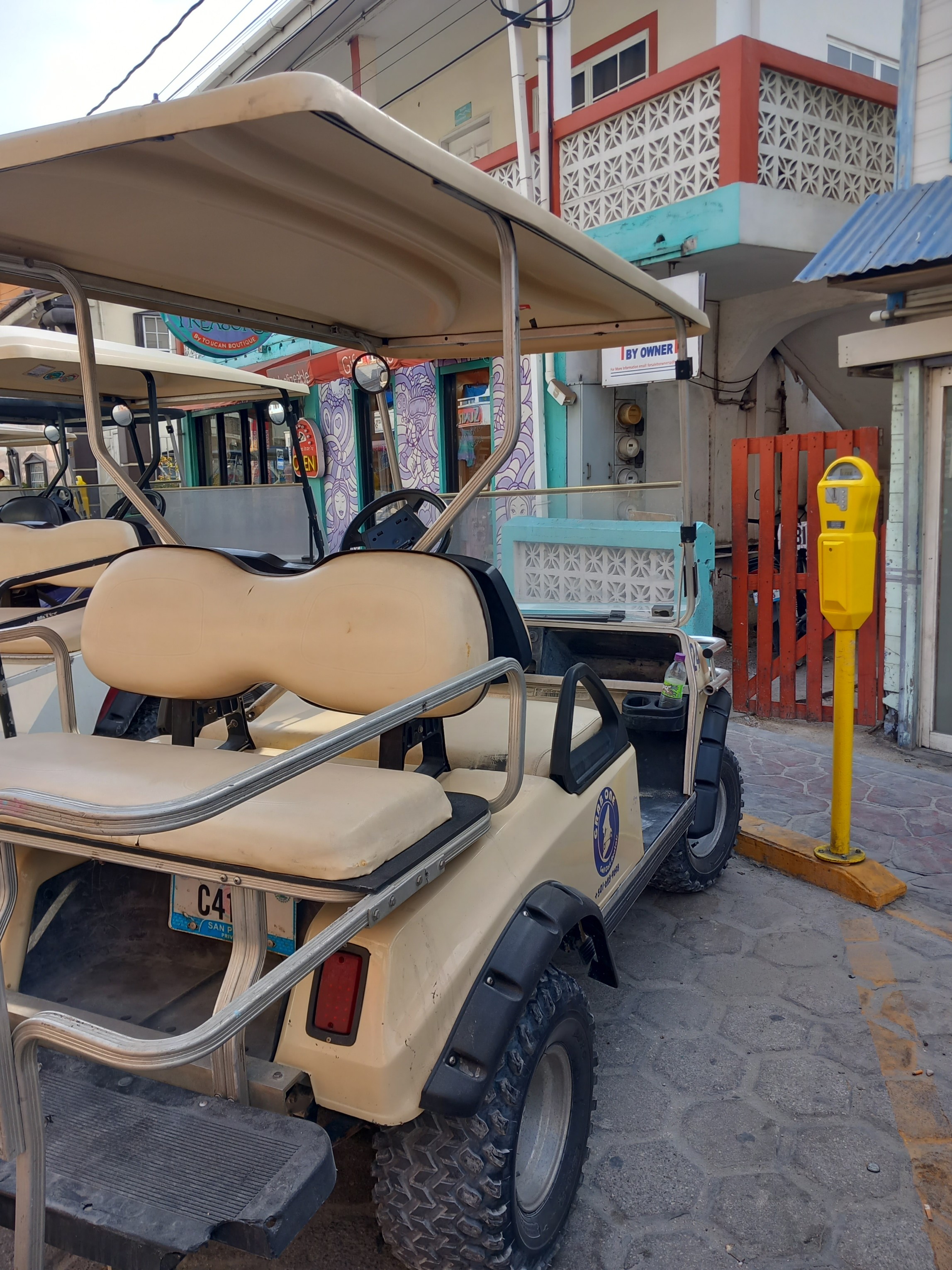
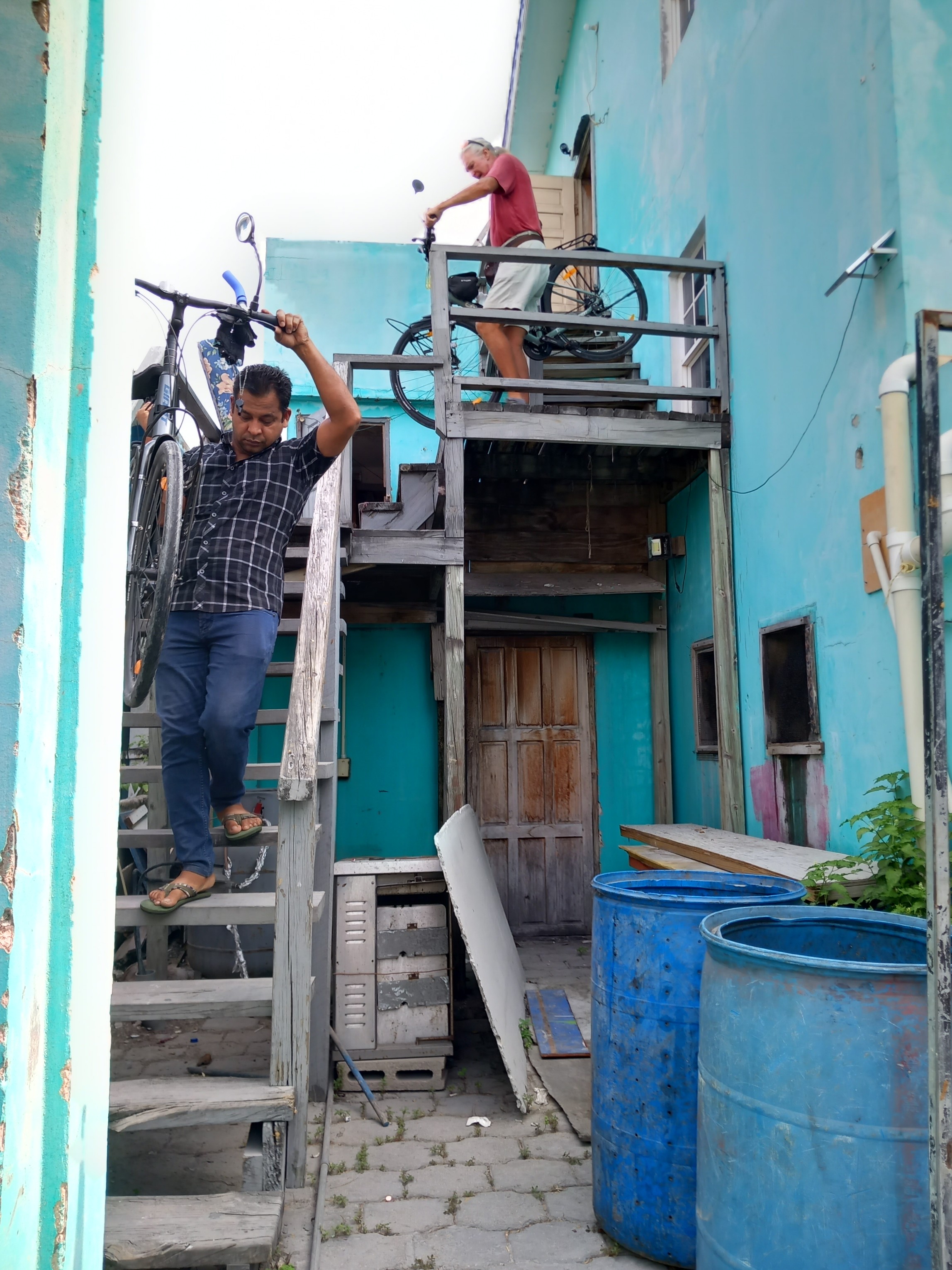
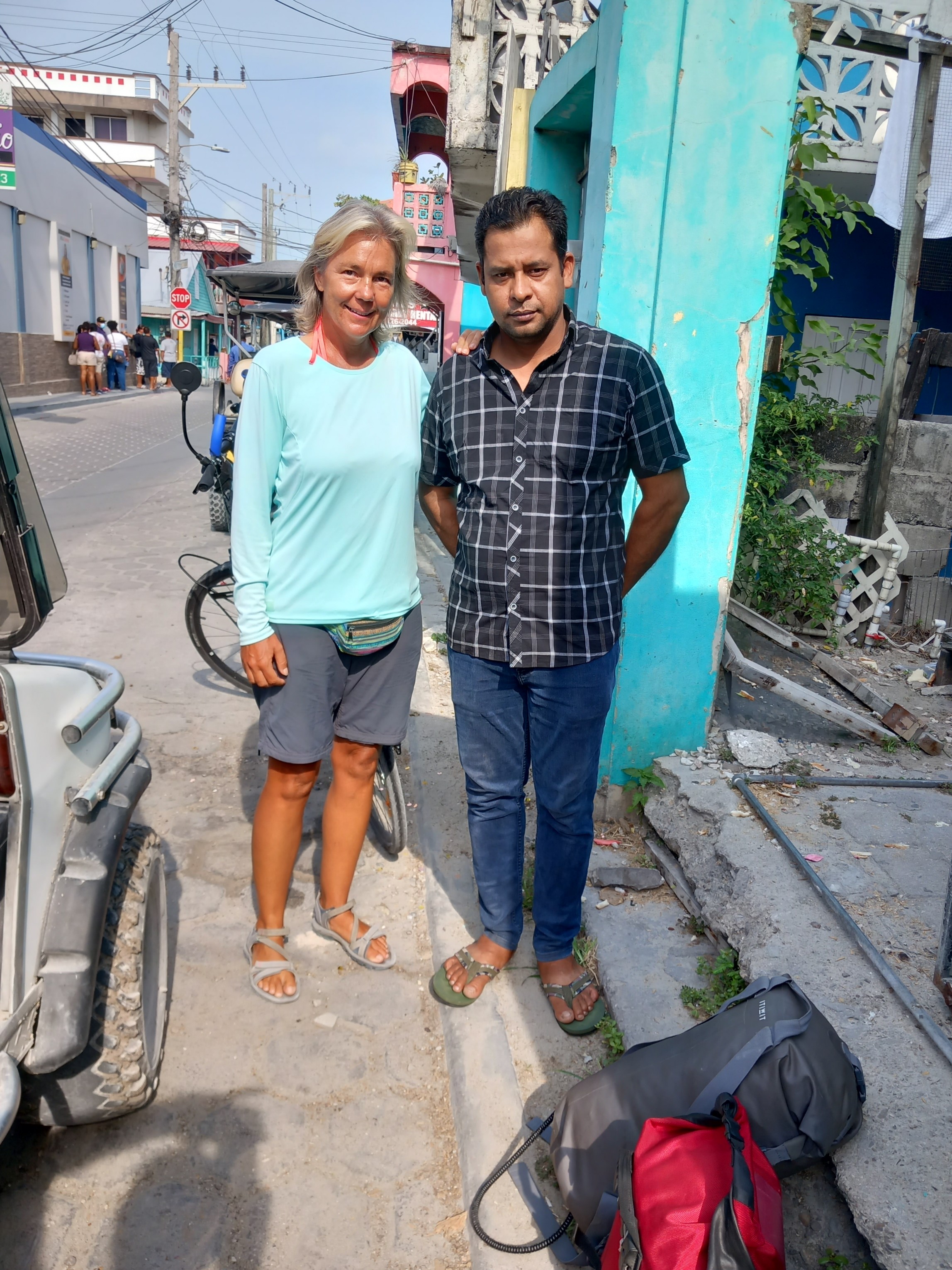
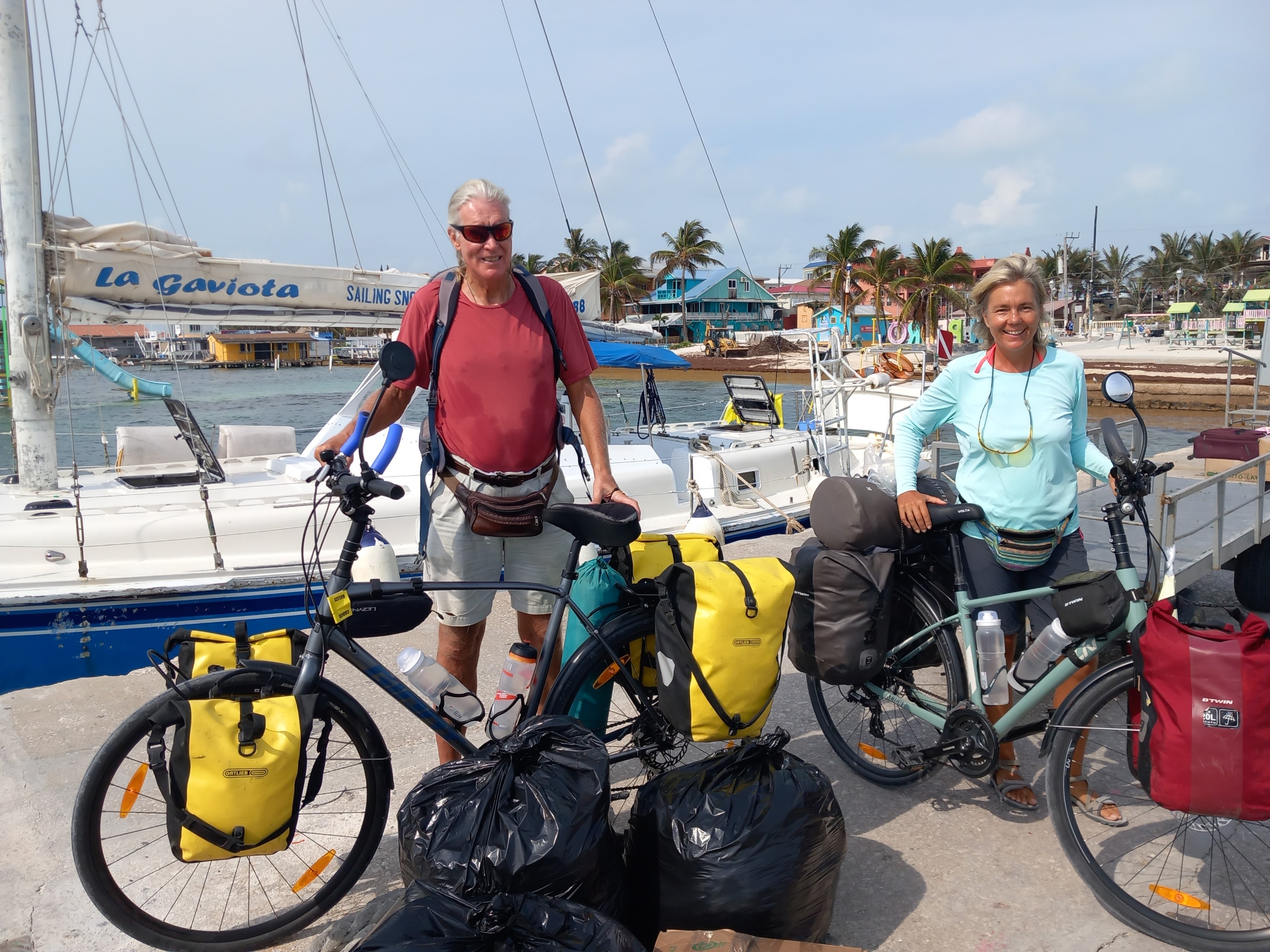
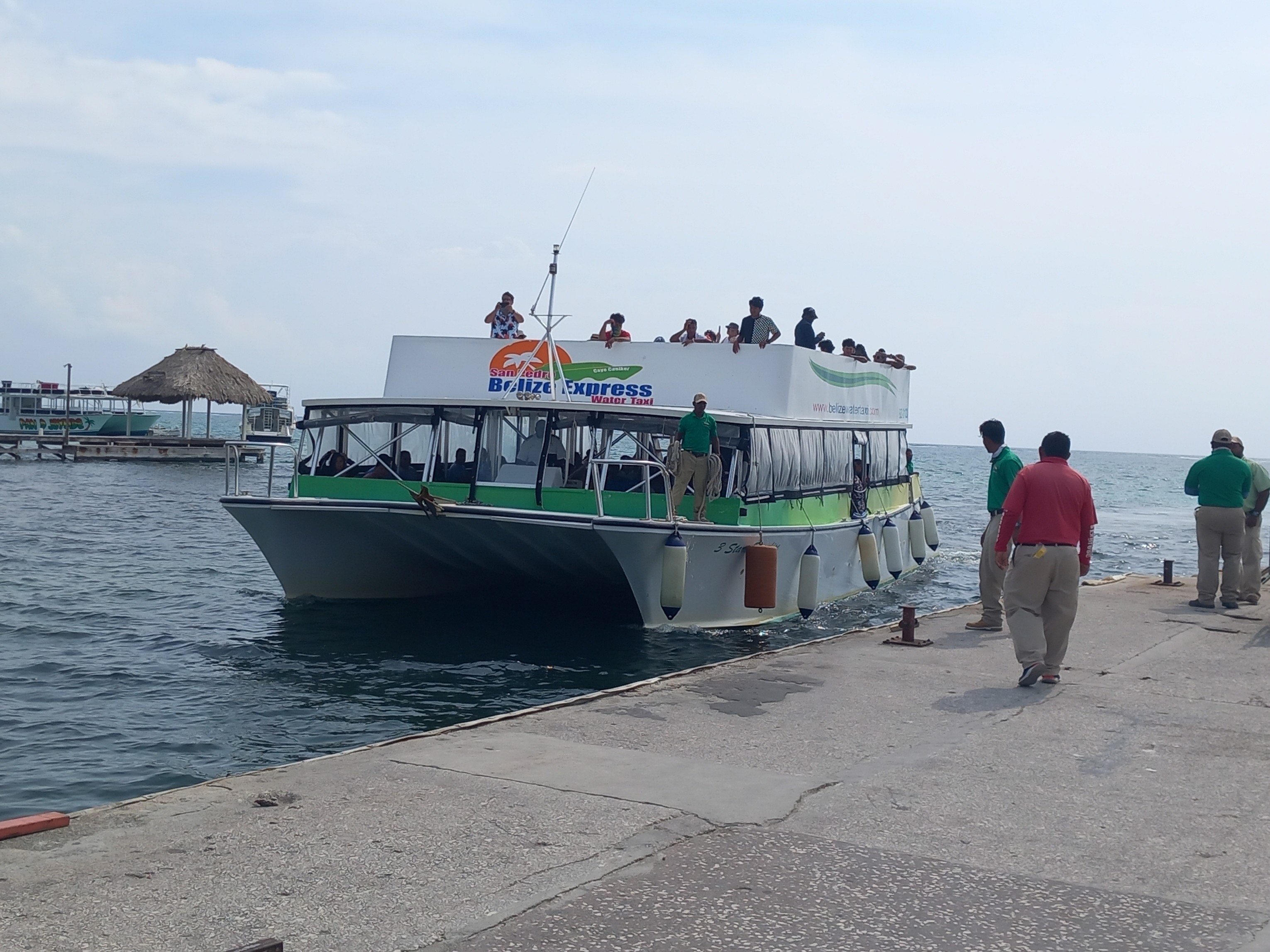
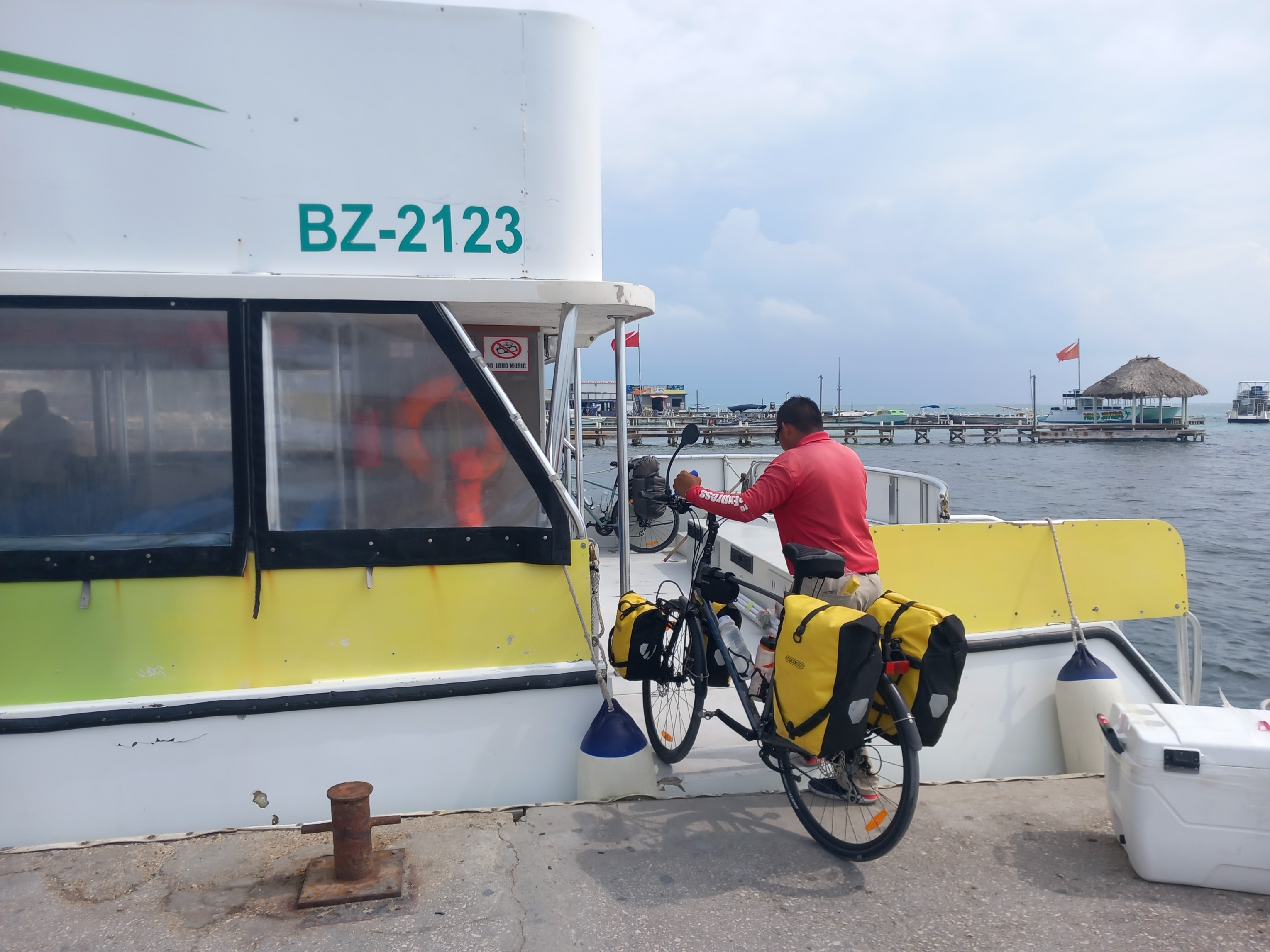
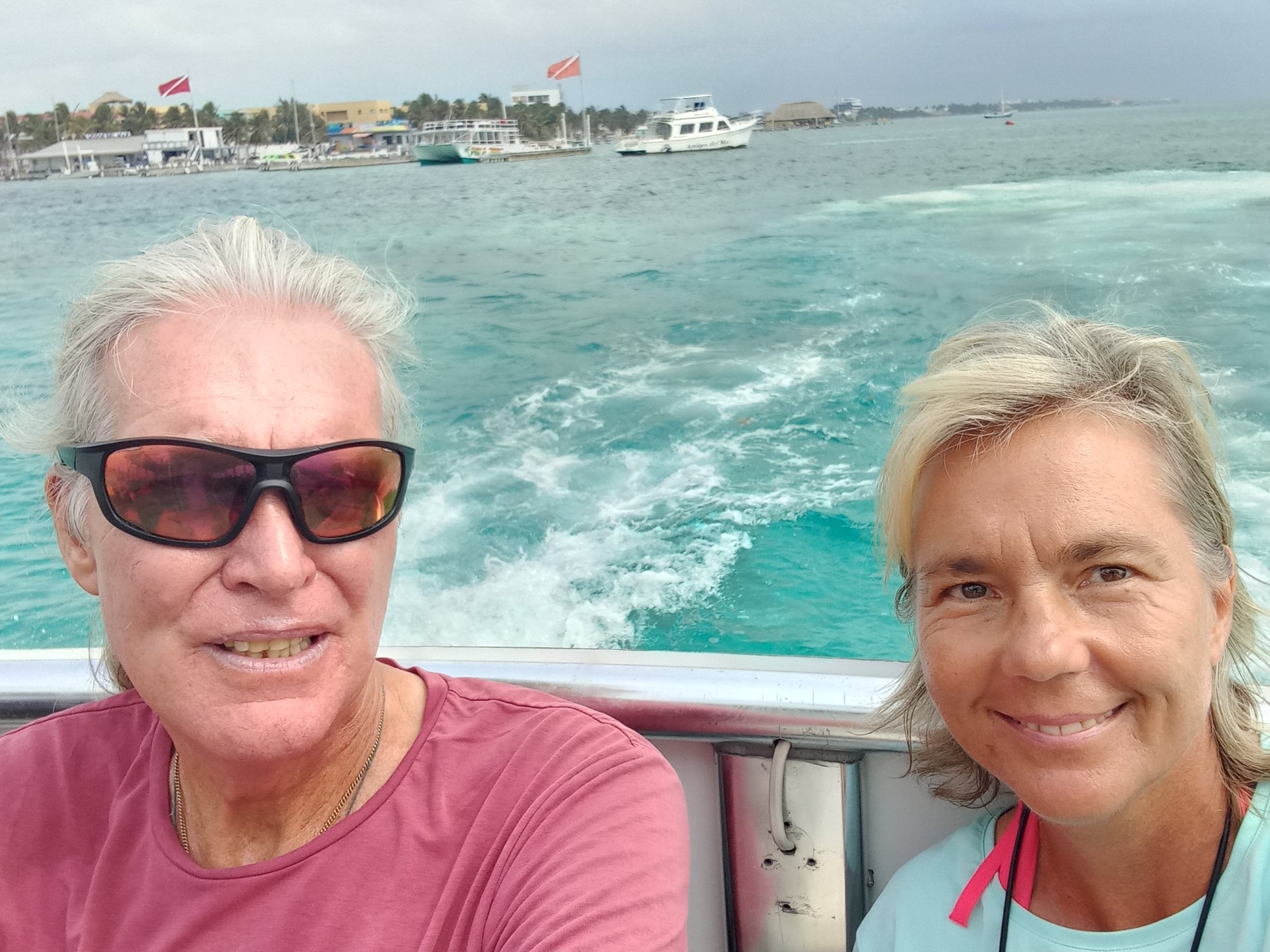
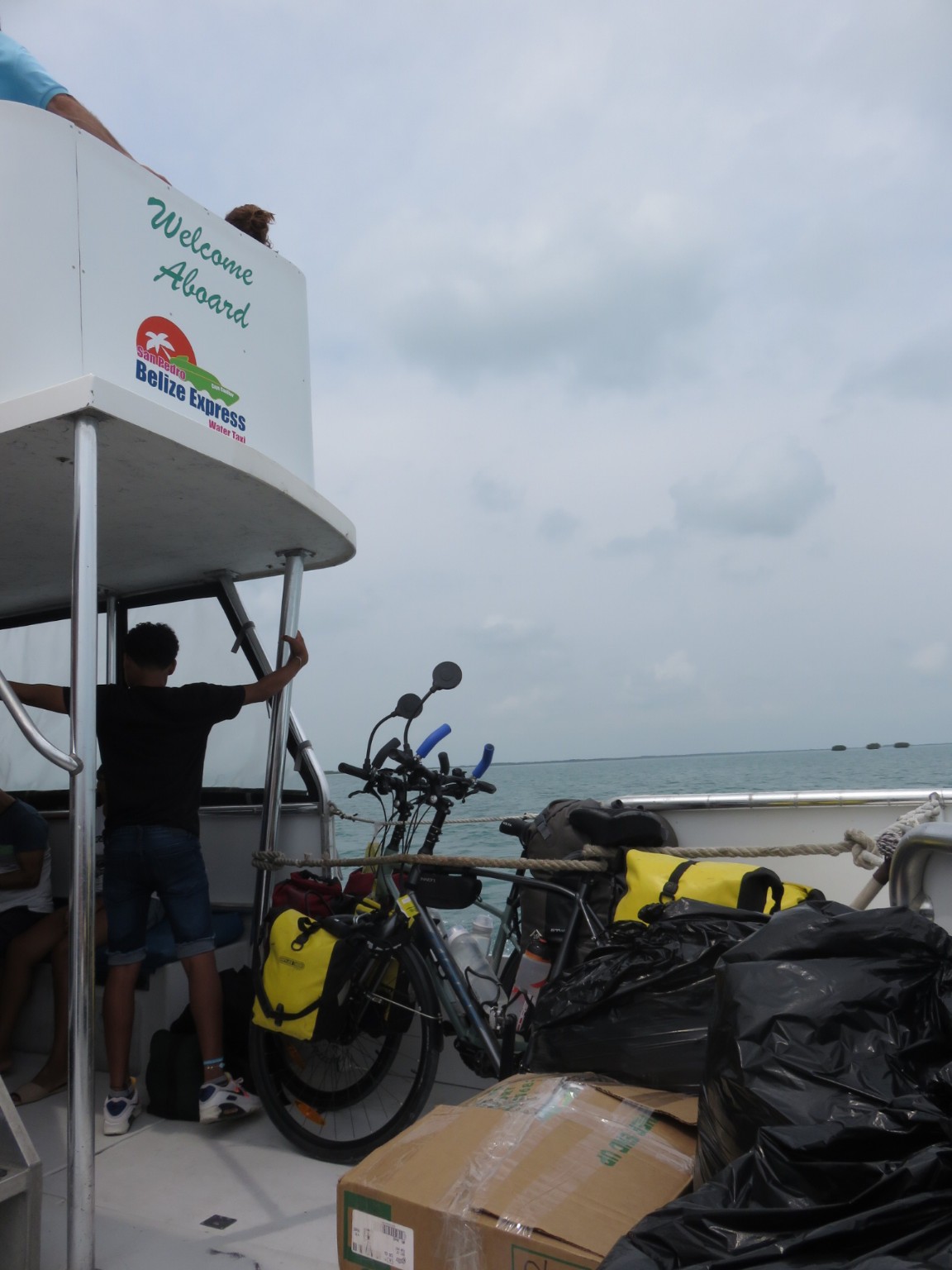
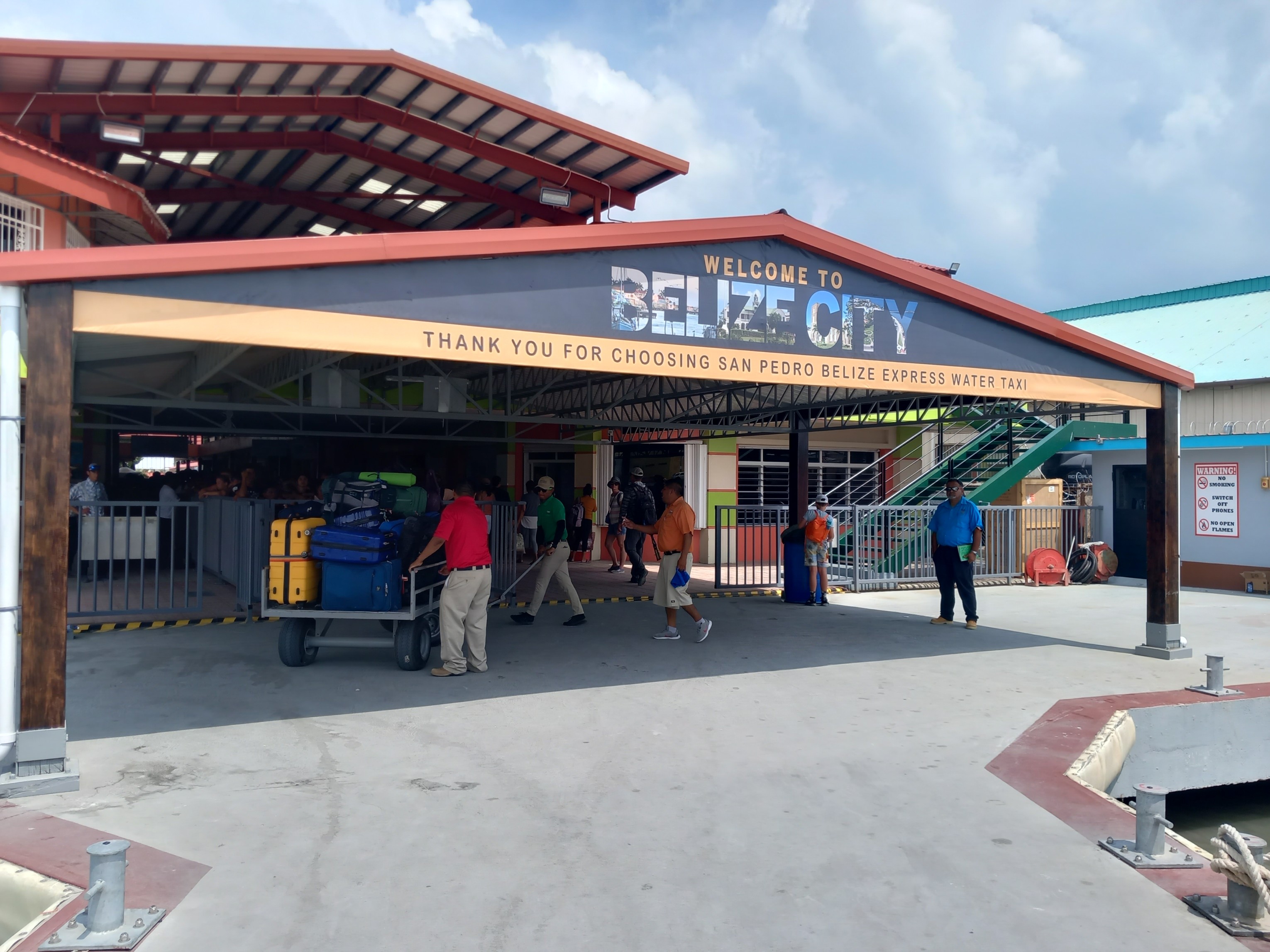
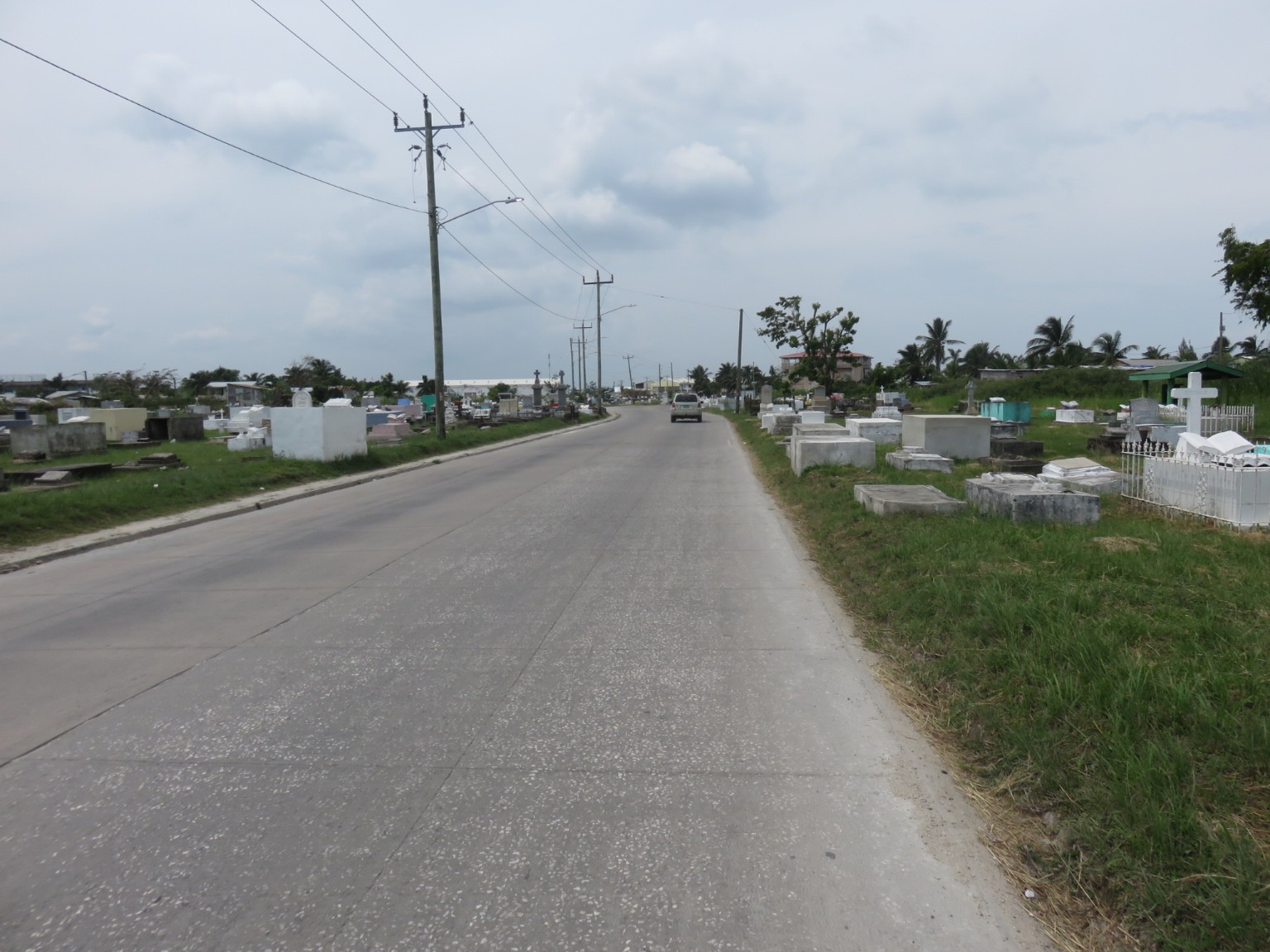
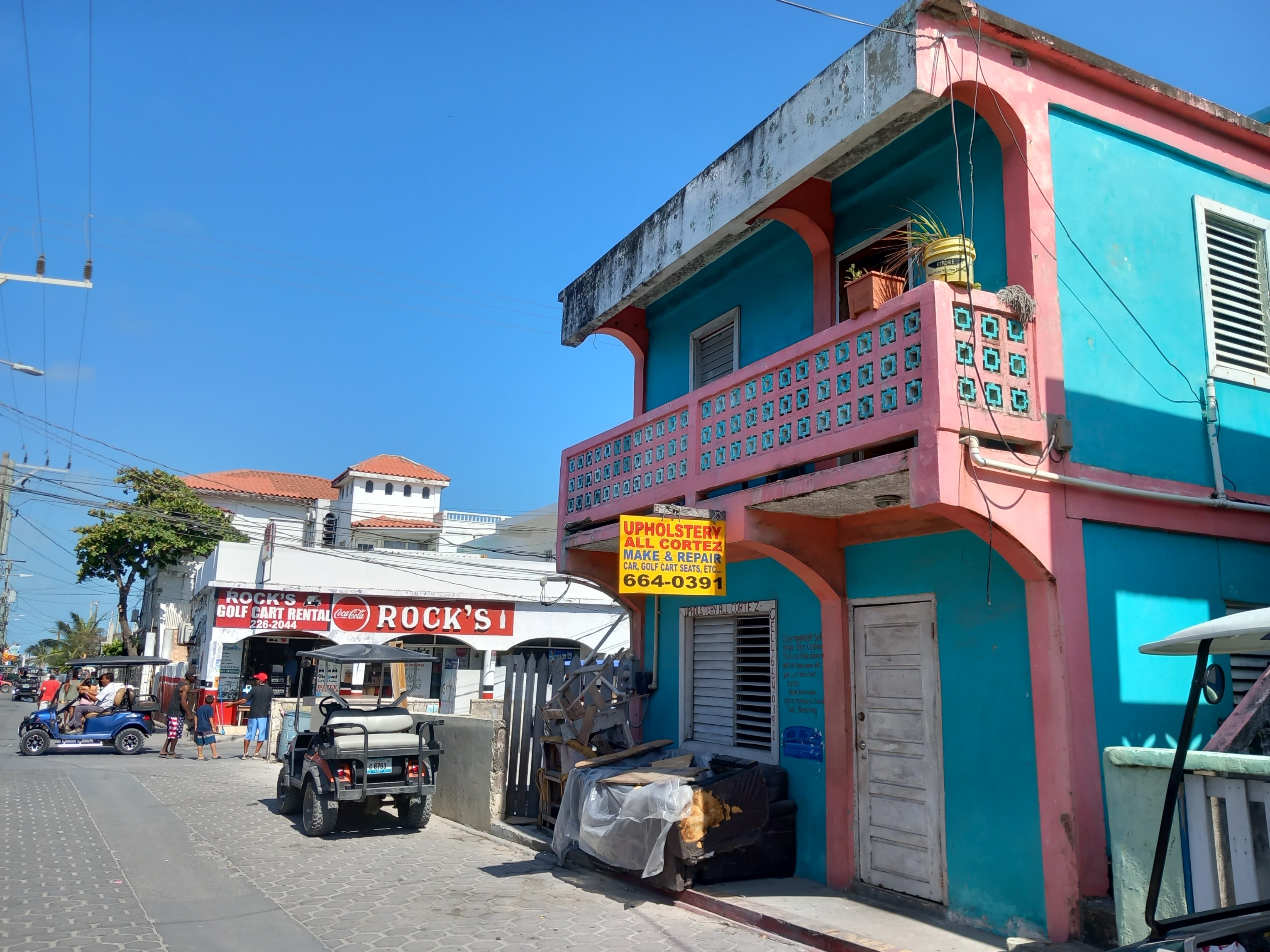
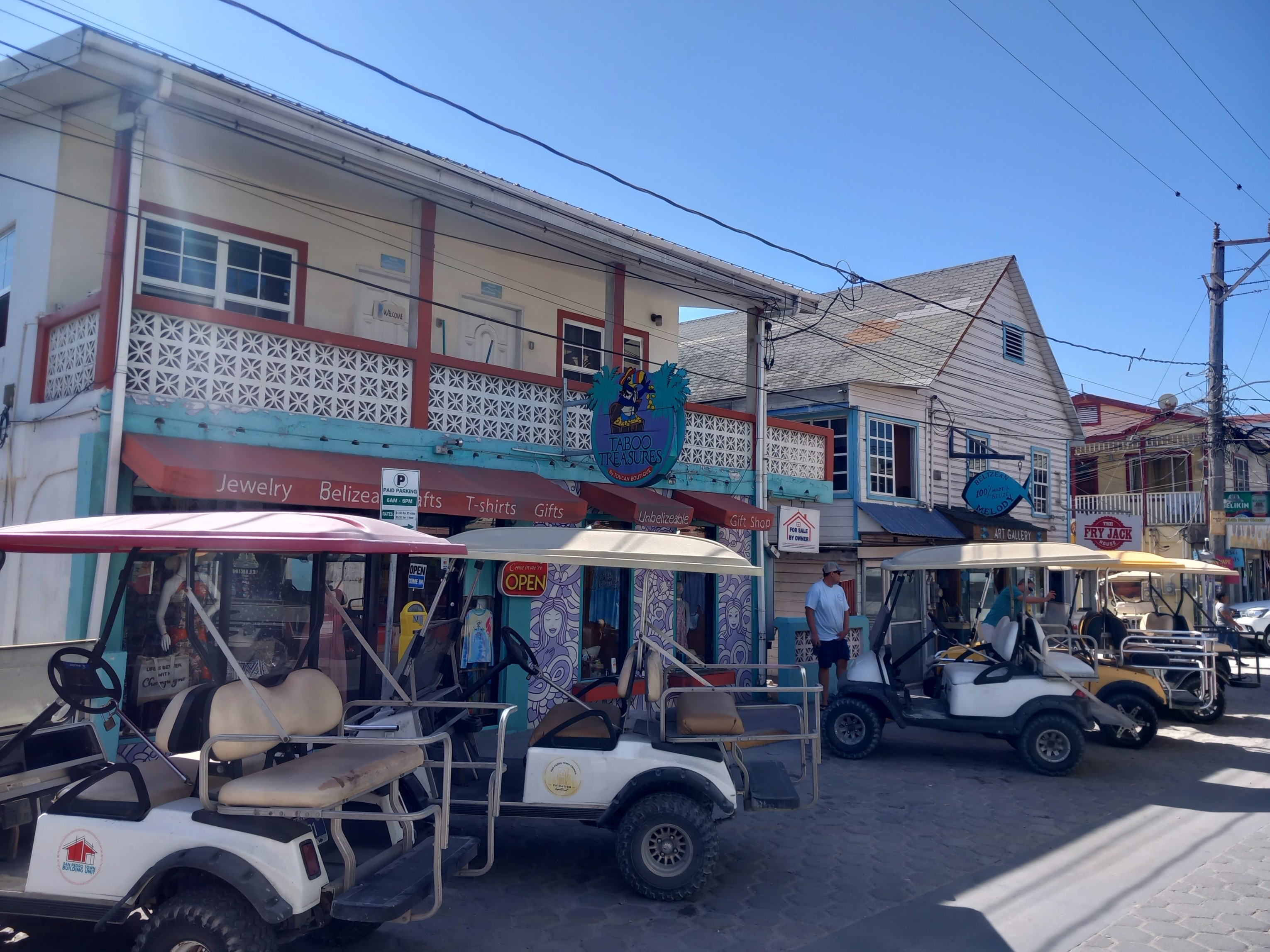
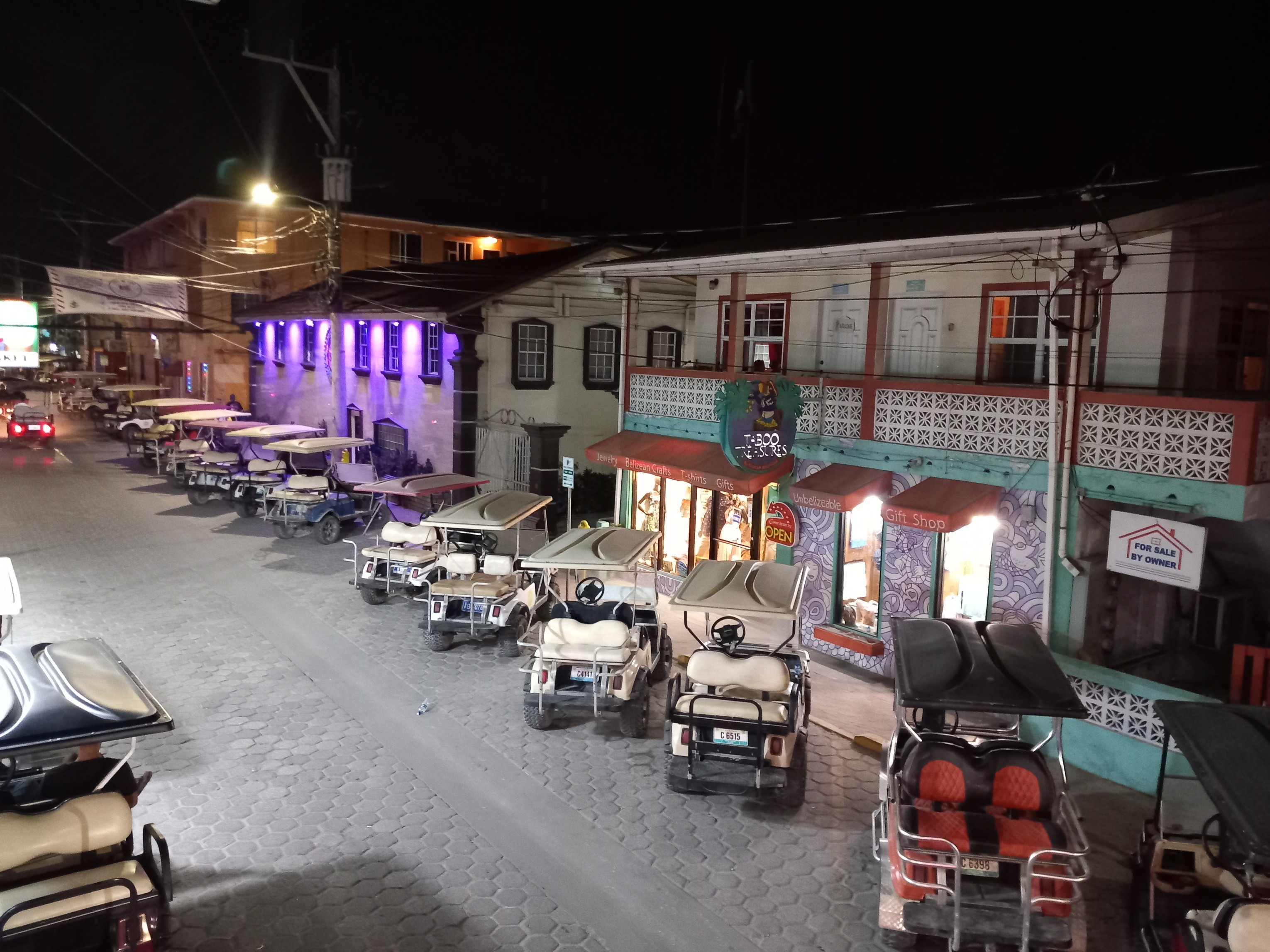
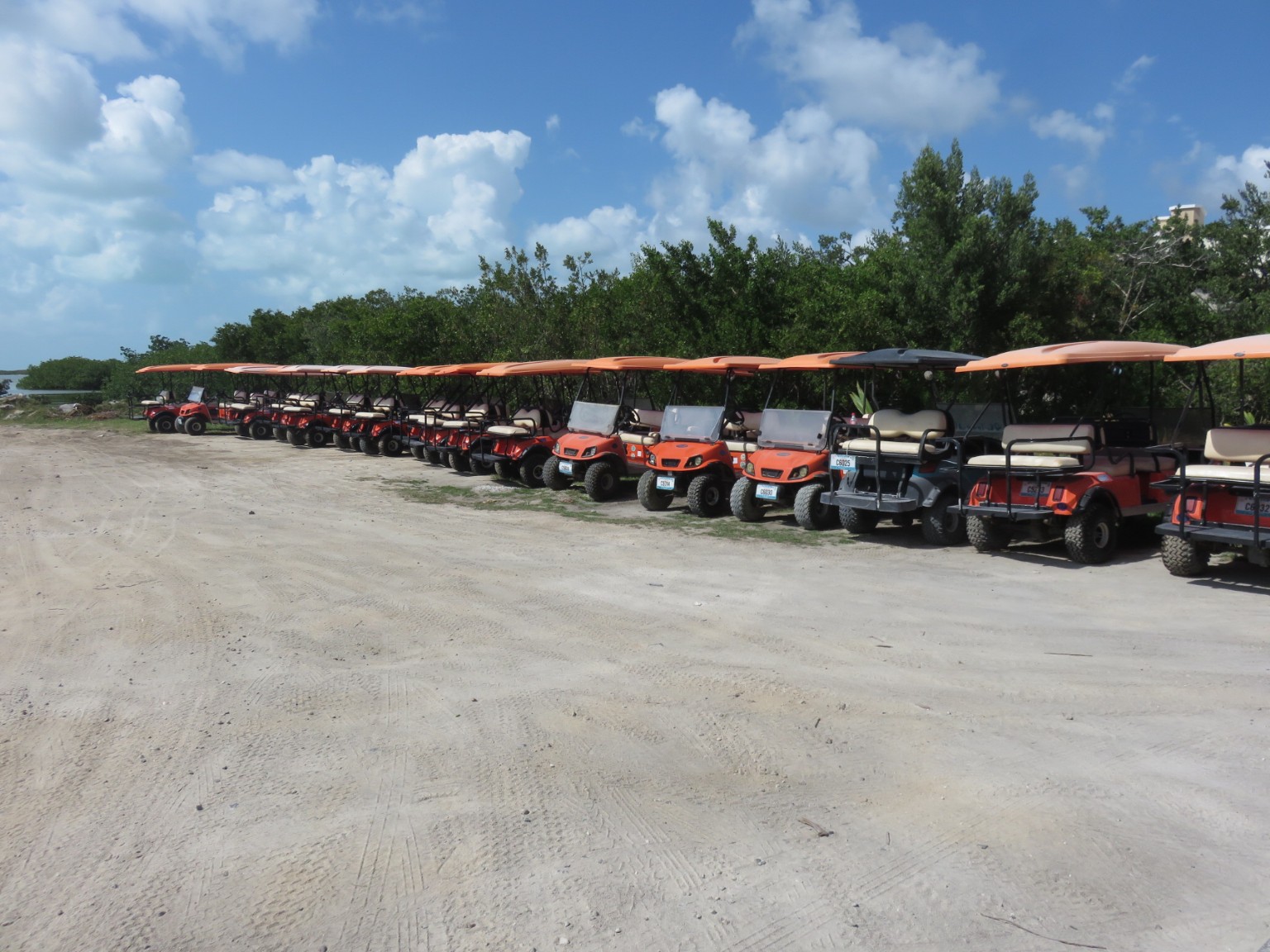
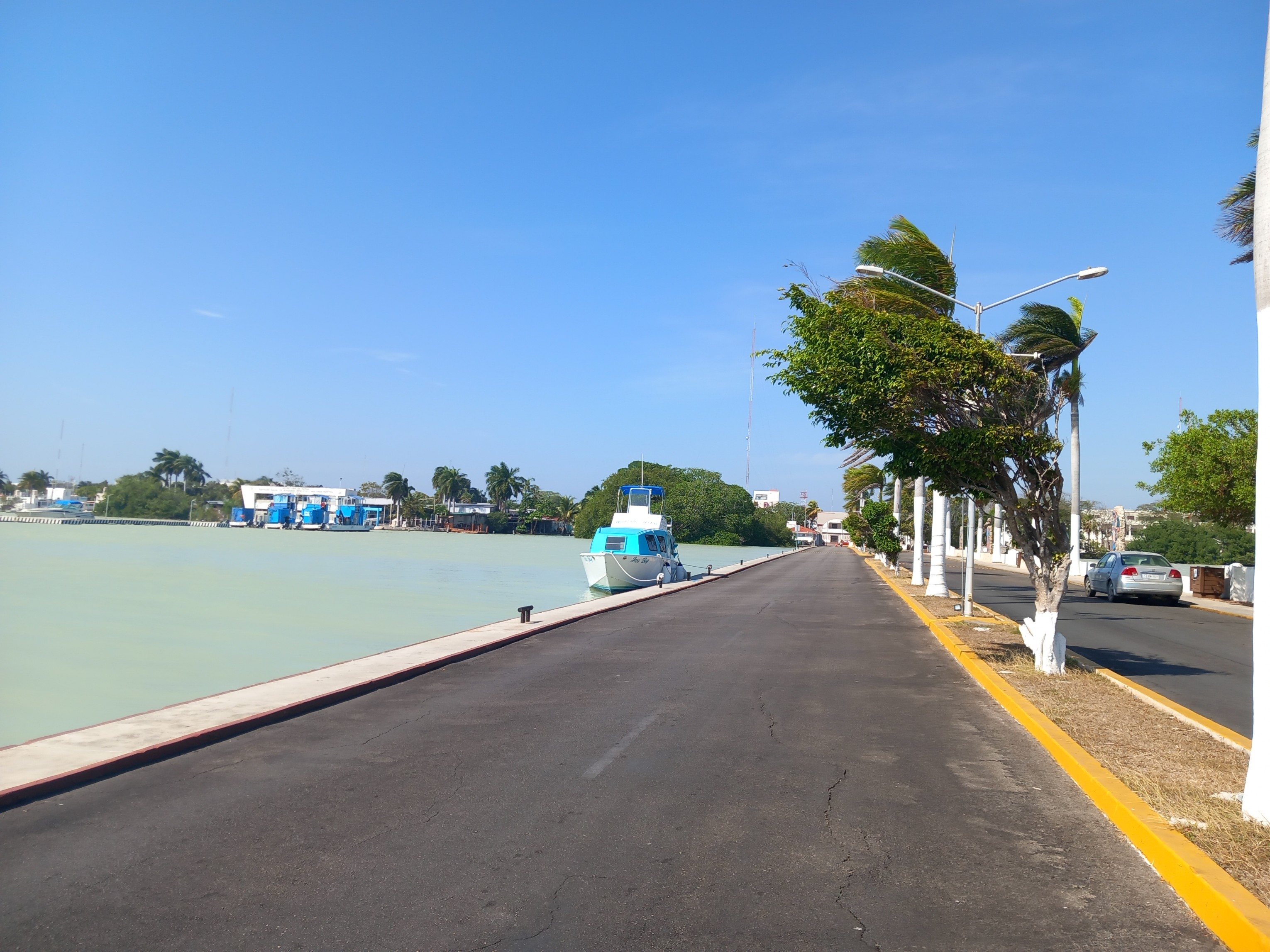
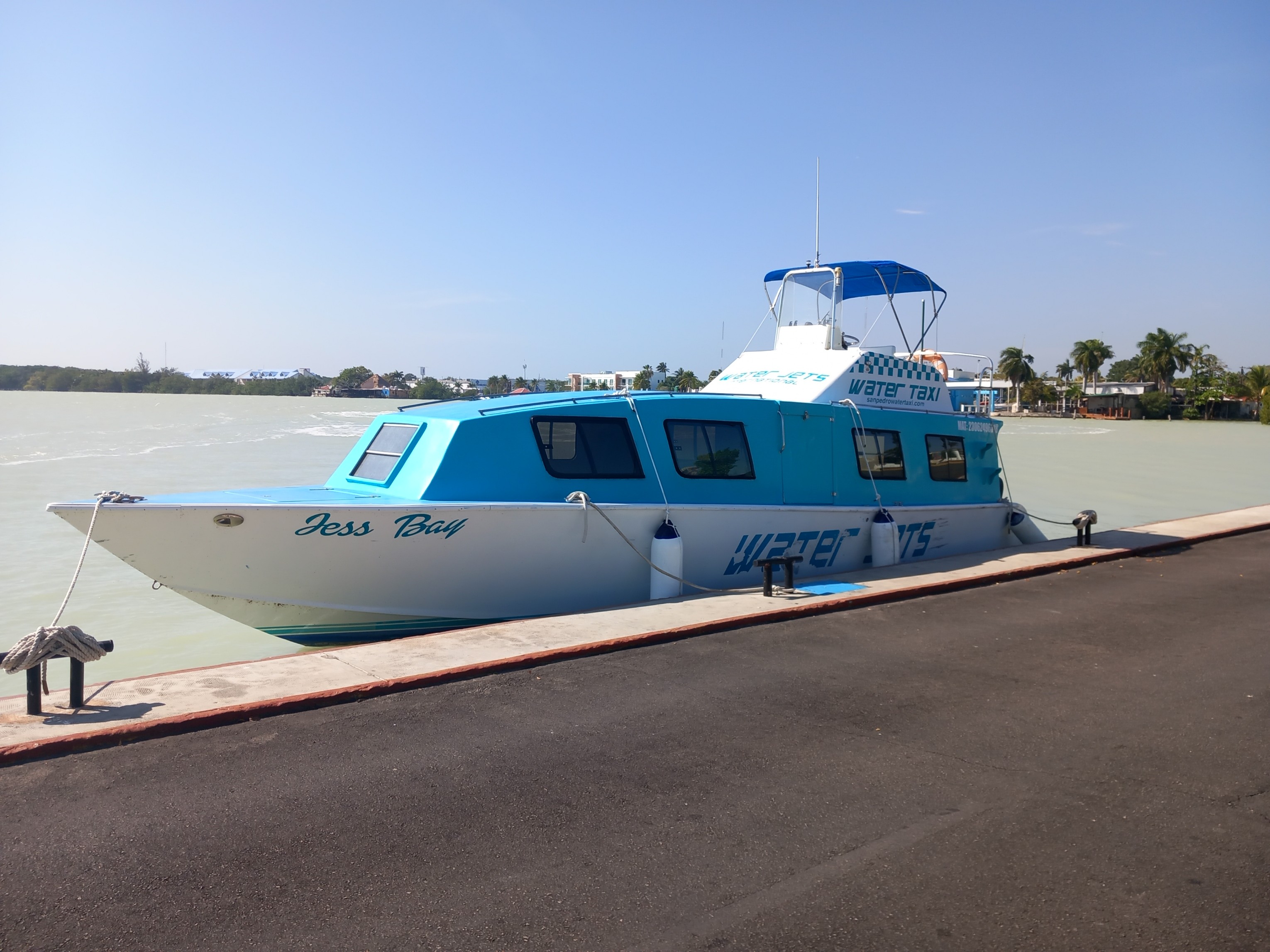
Golf carts are everywhere.For those who may not know Belize is a former British Colony hence the signs and language being in English, the distances measured in miles and yards, and parking meters are required even in paradise. Although they drive/ride on the right hand side of the road.Time to move on and we have help carrying the bikes down from our room.This very helpful chap is from Bangla Desh. Preparing to board another water taxi with our bikes.This is our taxi arriving which will take us from Ambergris Caye to Belize City.Thankfully we have a large enough taxi so that the bikes can be rolled on and rolled off without the need for unpacking and repacking.It seems that we’re spending more time on boats than dry land these days?We rode from the dock straight through the capital of Belize city and saw very little to keep us there; this being the only photo taken – they don’t revere their dead like the Mexicans do if this cemetery is anything to go by?
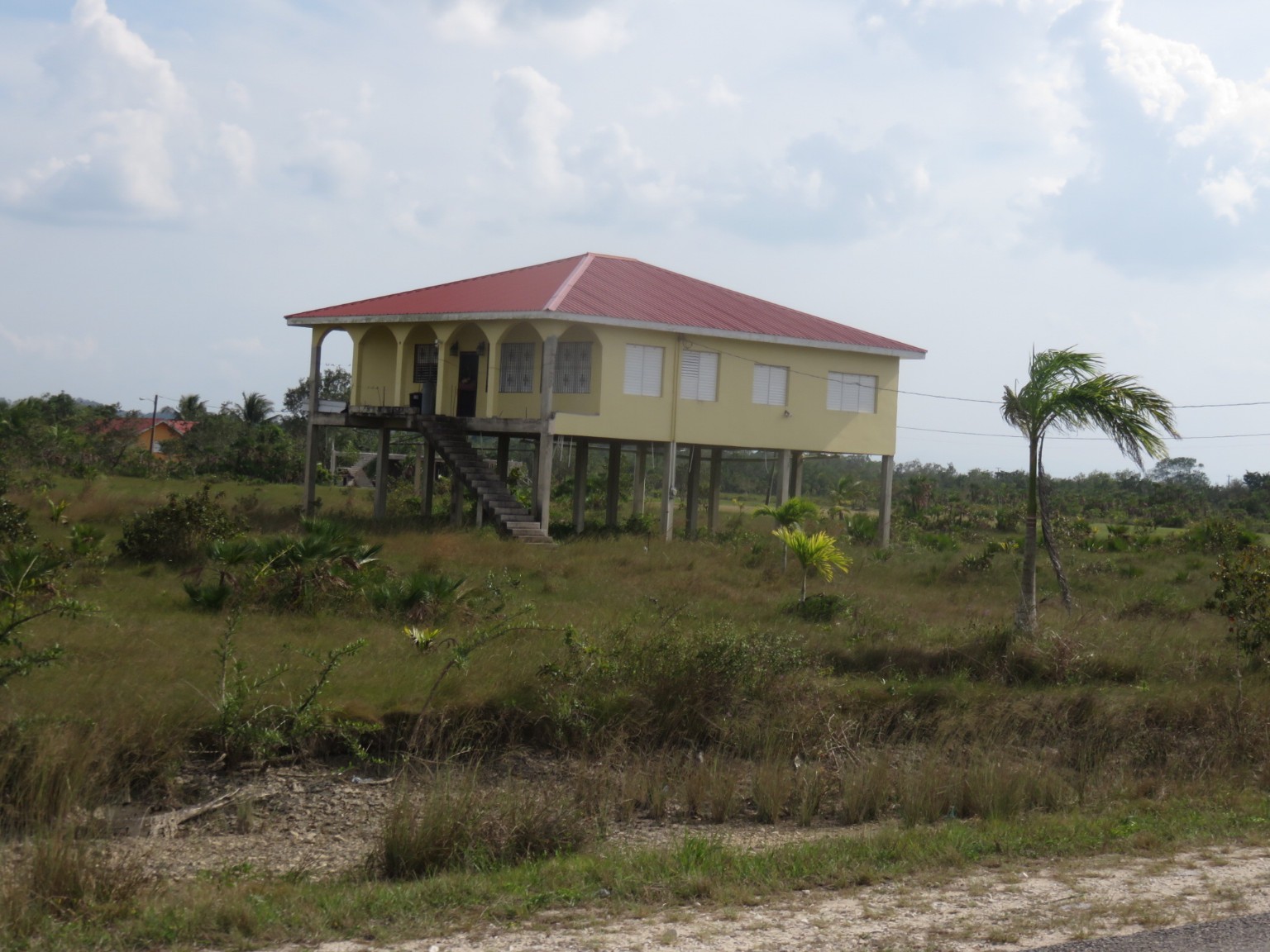
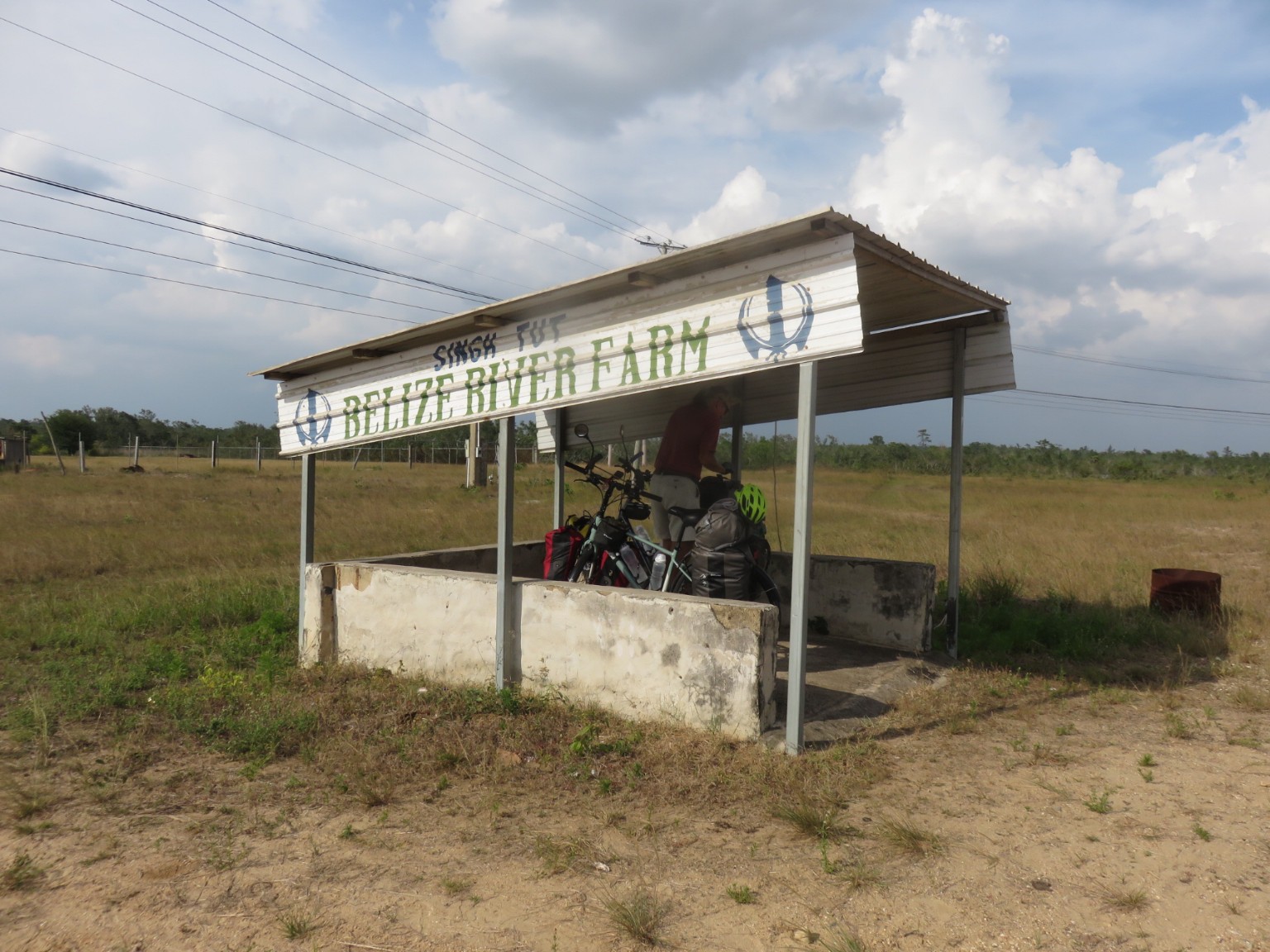
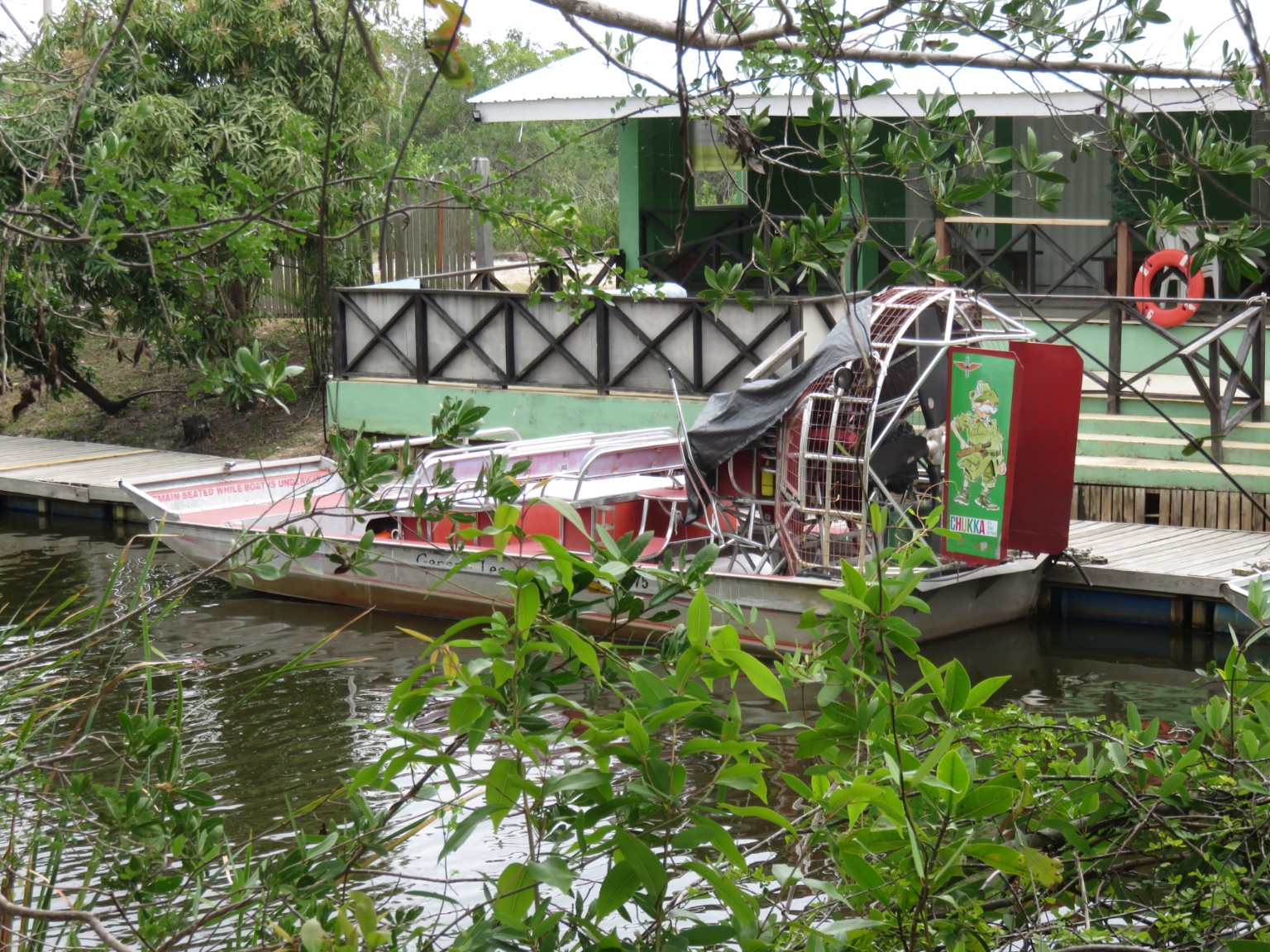
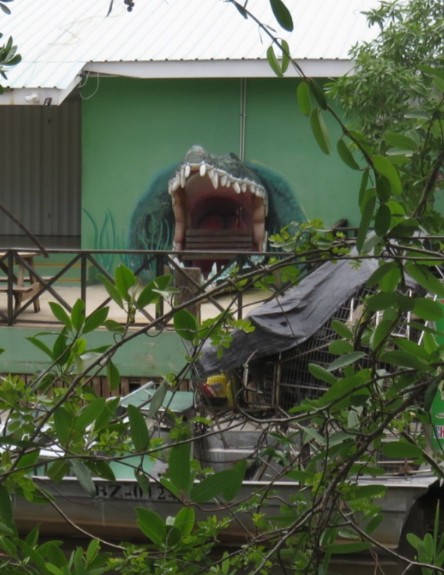
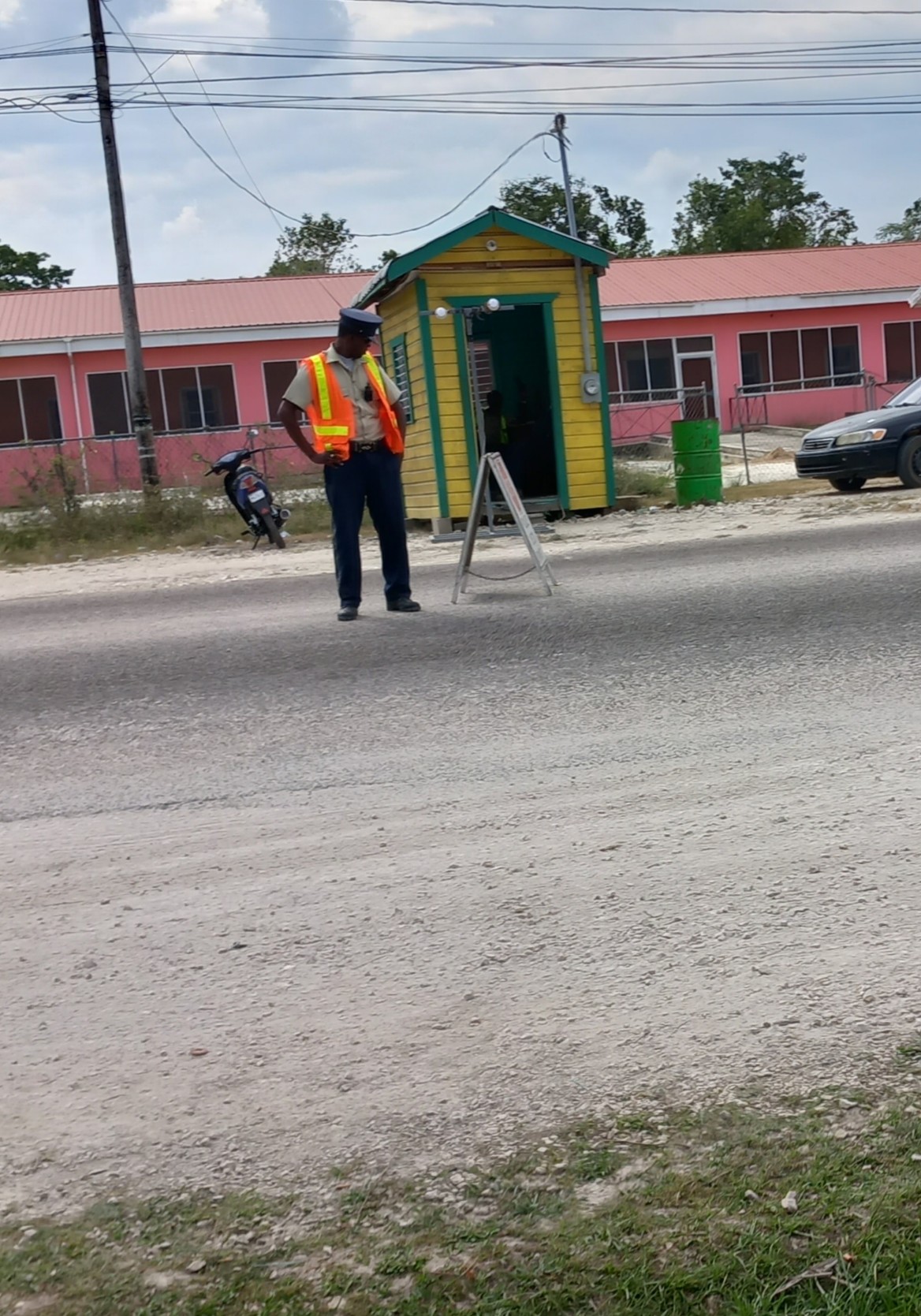
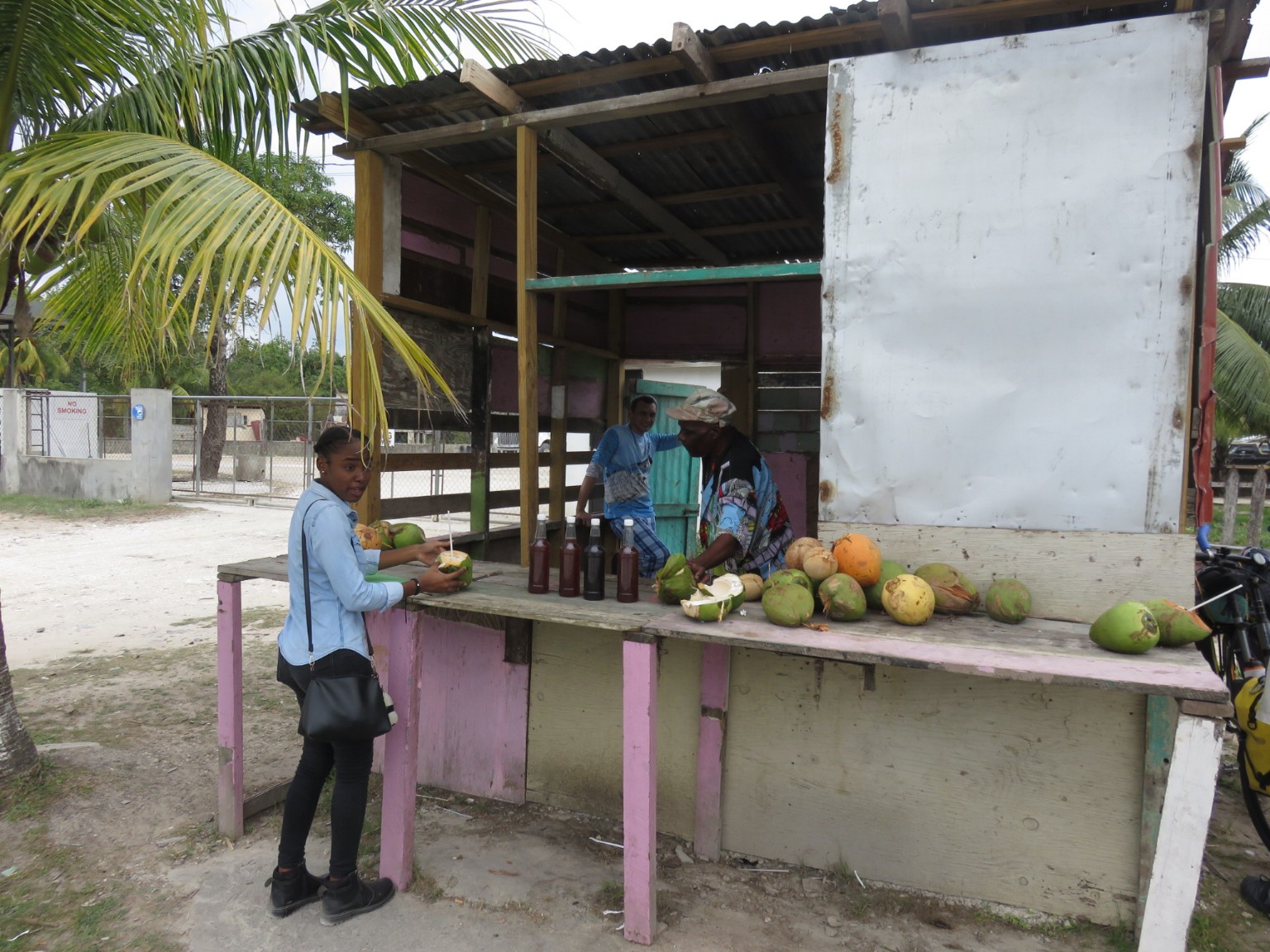
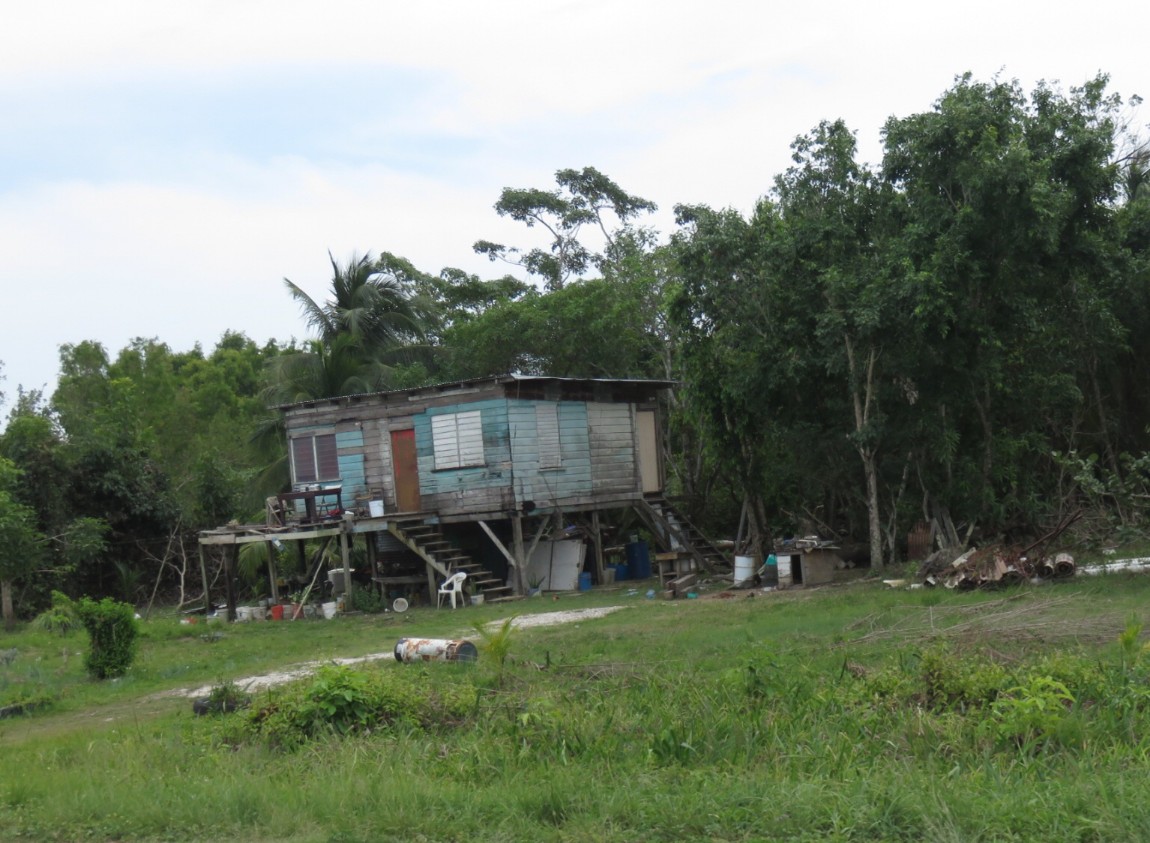
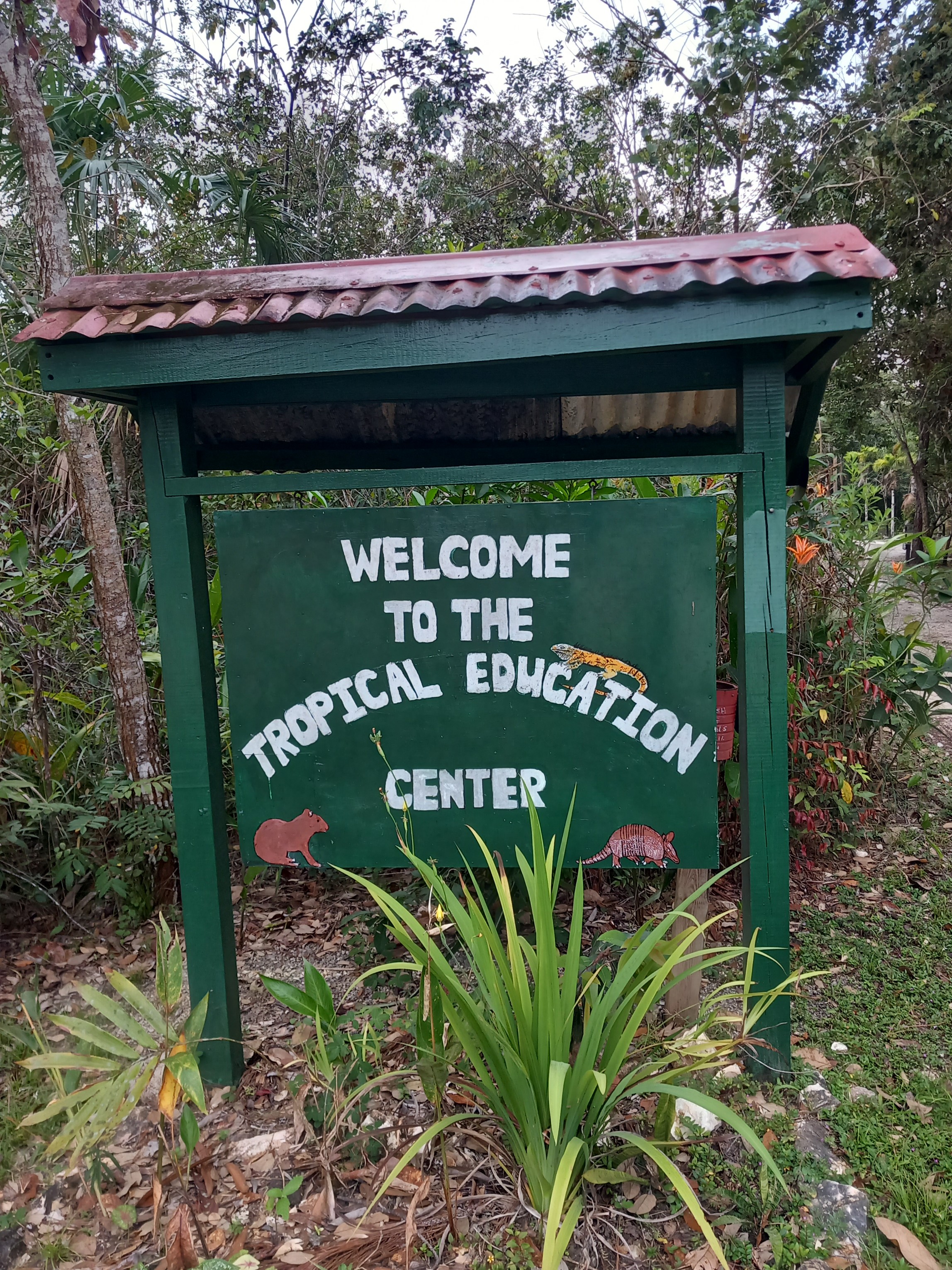
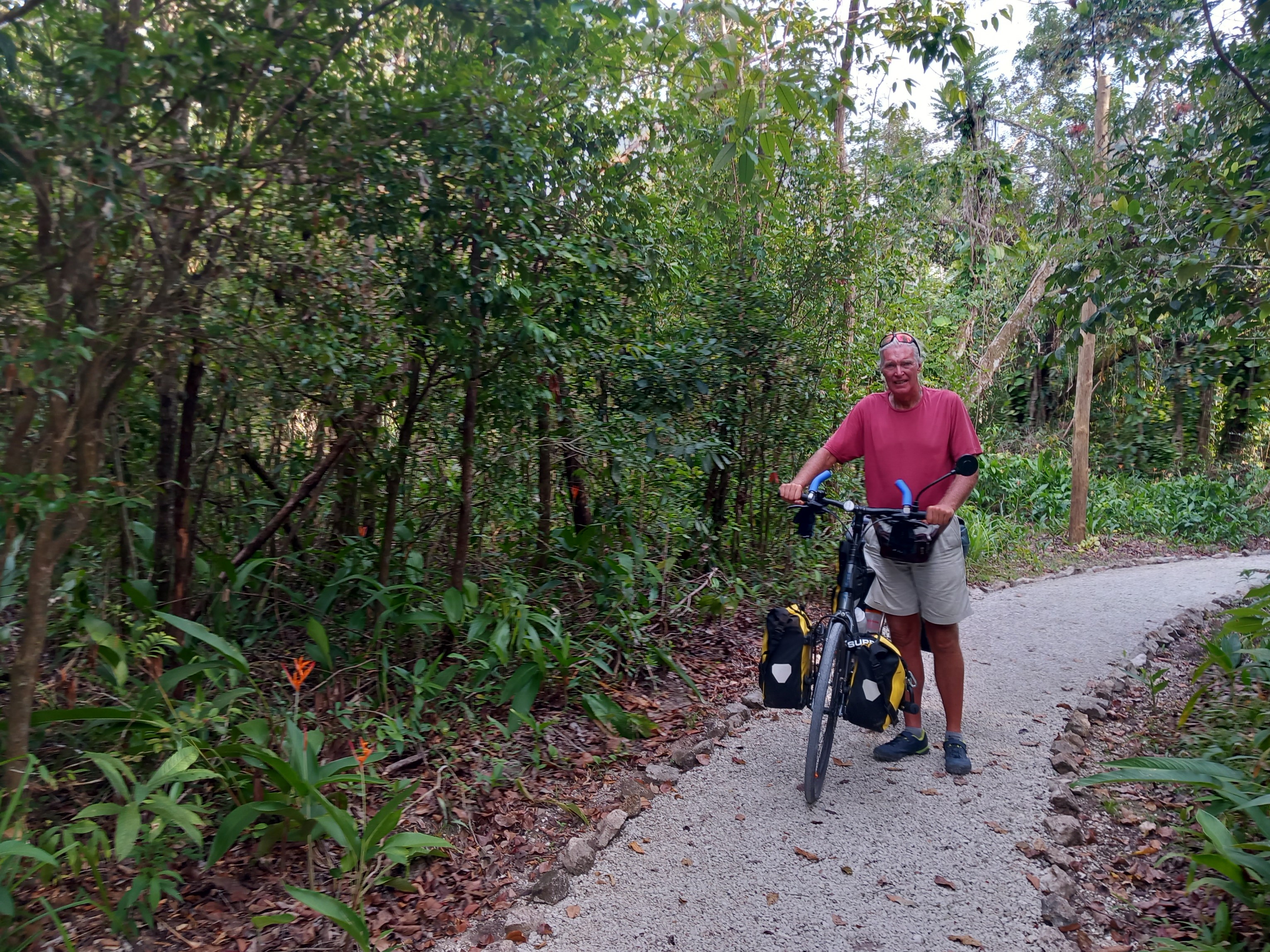
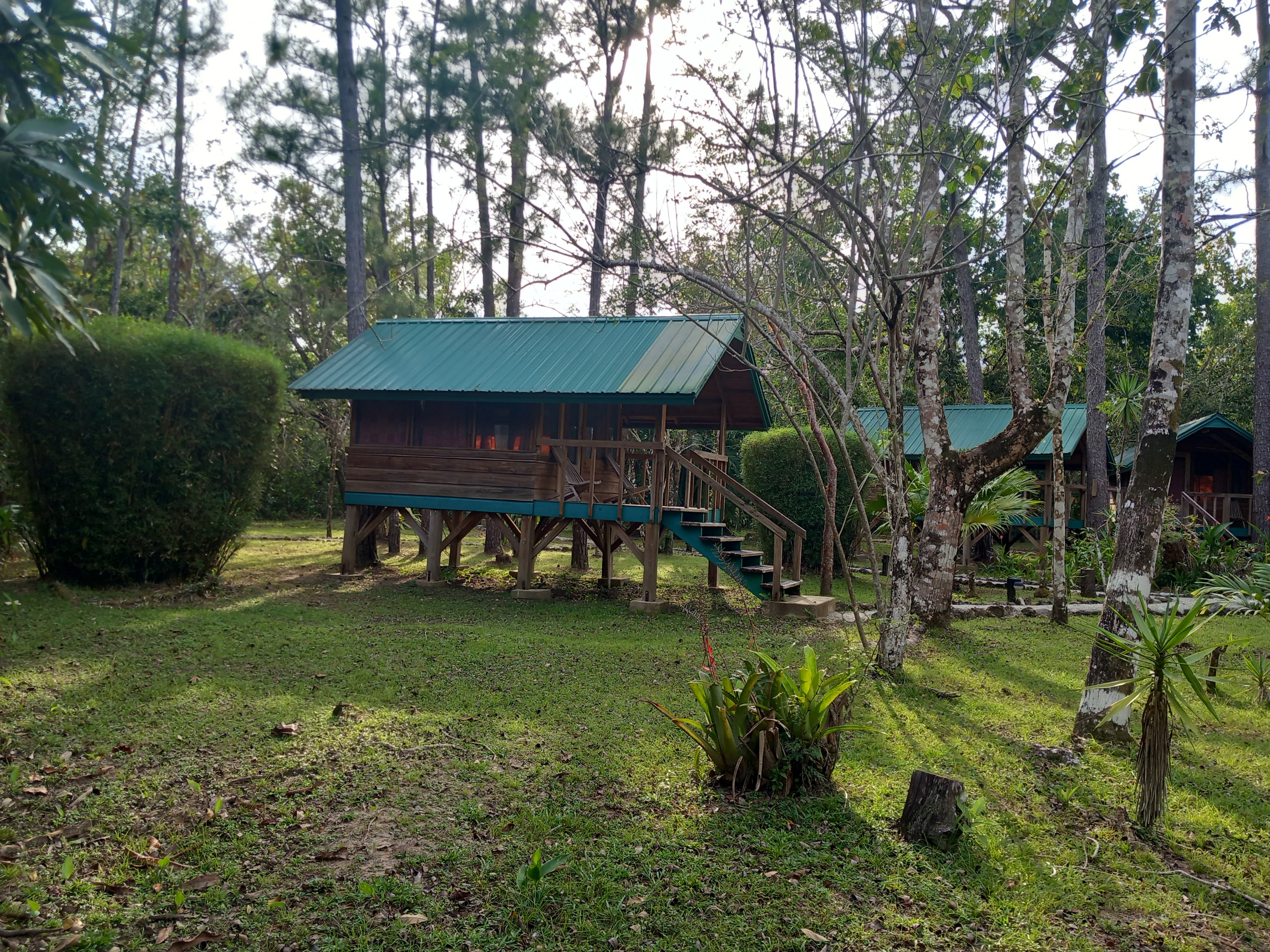
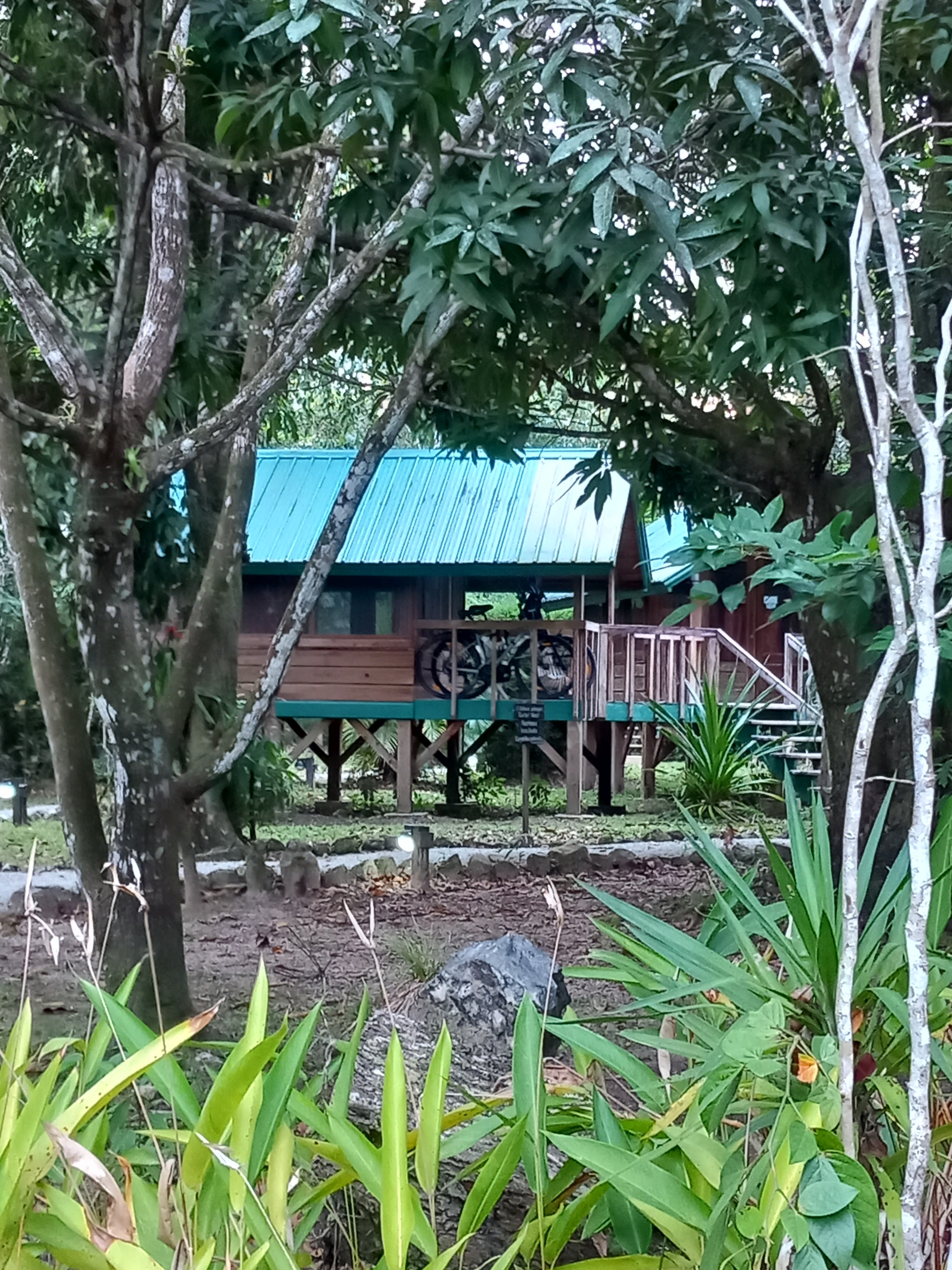
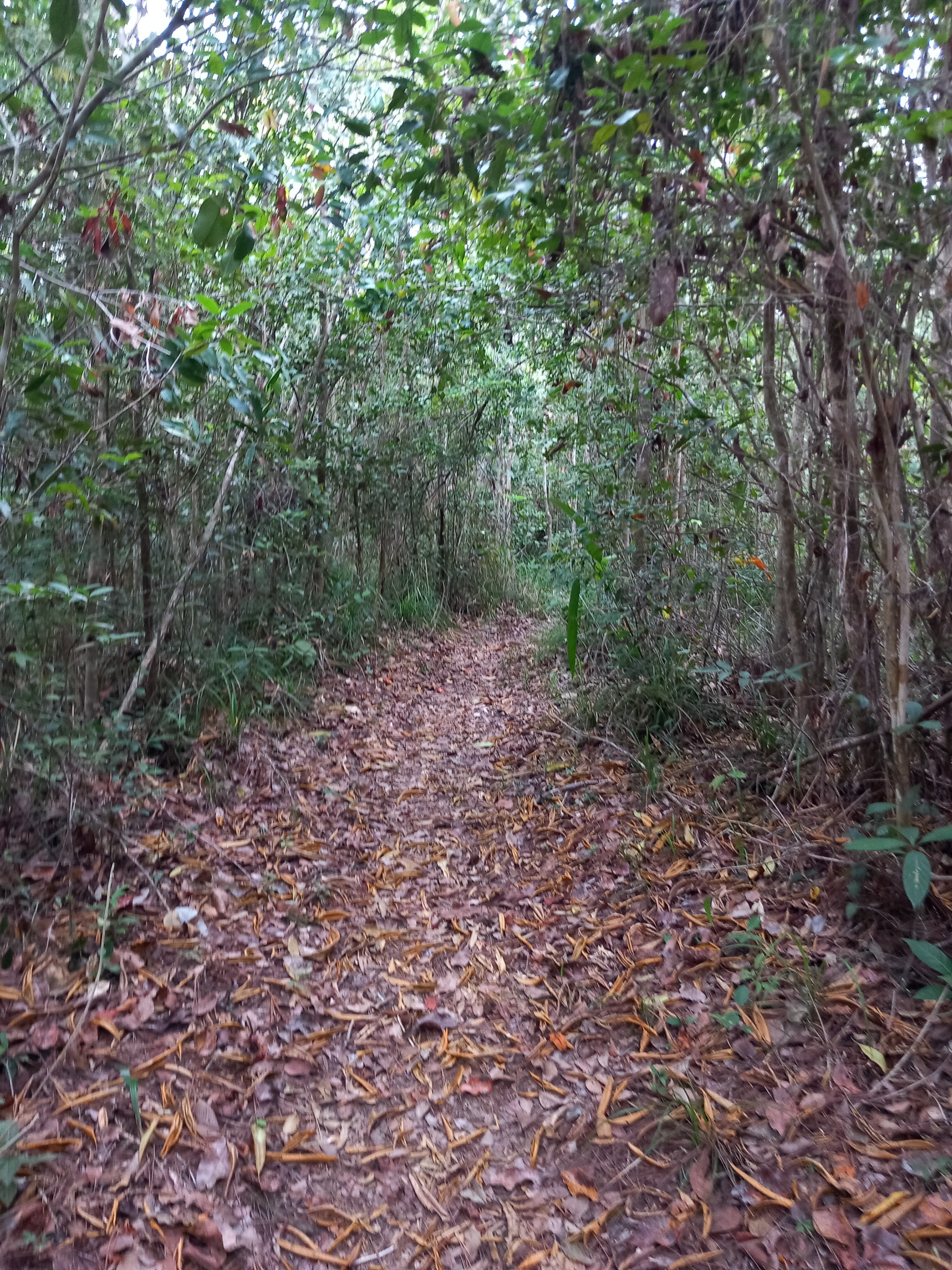
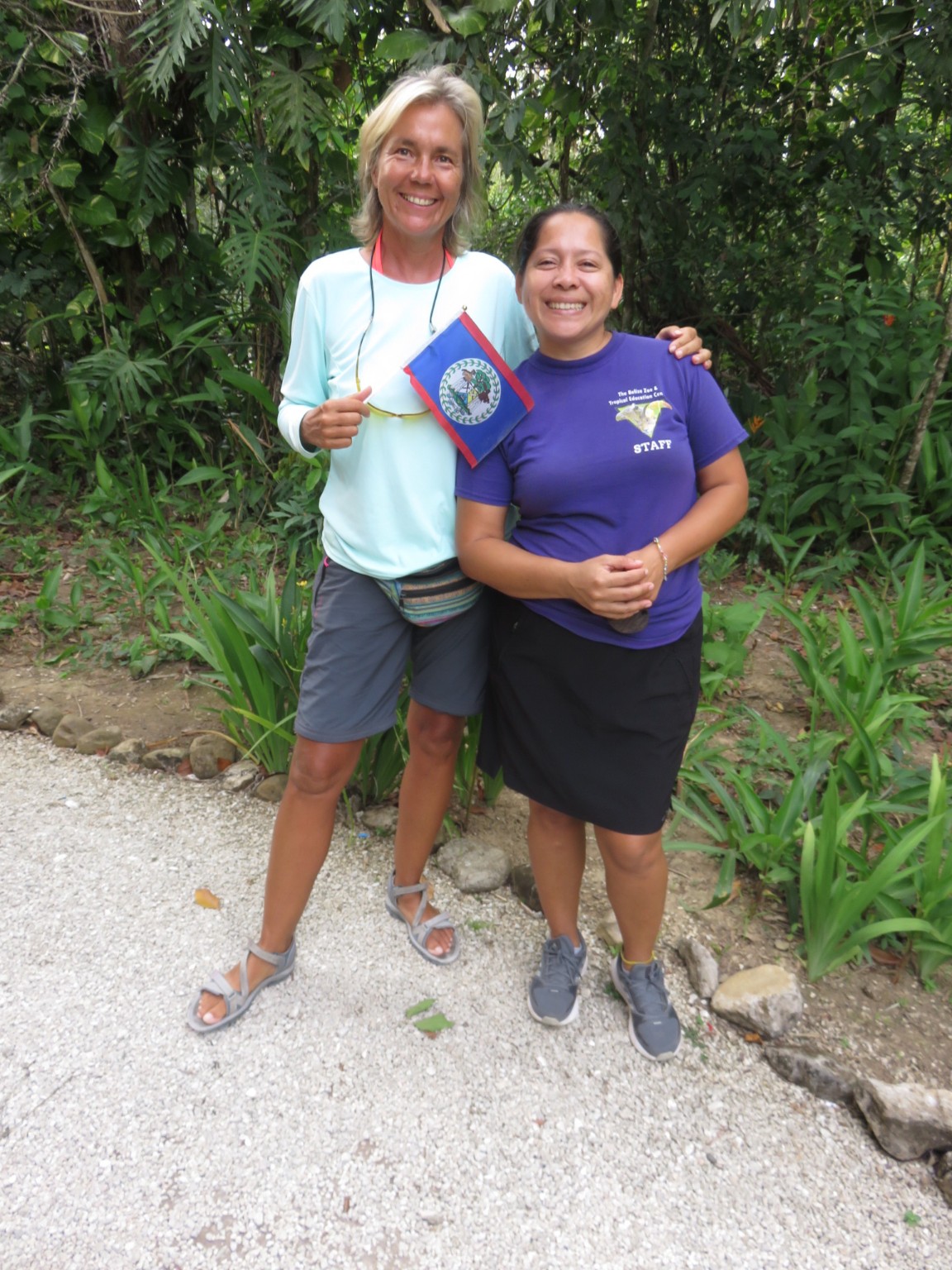
The newer houses are built on stilts because they have 168 inches of rain per year (300 centimetres).The standards in bus shelters has dropped since we cross the border – one of many indicators that this is a much poorer country than Mexico. Also there are only 400,000 inhabitants compared to Mexico’s 128 million.One of our first observations is that as friendly as the people are here off the road, on the road the drivers are not as considerate as their counterparts over the border. The roads being narrower and often lacking a shoulder we have to have our wits about us more so than previously.This is an airboat for hire and indicative of us now approaching the mangroves/swamp area with the jungle not too far away.This is a police checkpoint although they have no interest in us other than to wish us a good journey.Our first stop where we had to ask where we were because they don’t go in for road/village signs; Hattieville is its name and this was the coconut man we met who gave David his first English lesson. David thought he was talking about Harry Kane the footballer and he was explaining to us about the hurricane that wiped out this village in 1961.This was the first accommodation available since leaving Belize City 30 miles (50+ kilometres) earlier. It is in the jungle and its where people go to study insects, reptiles, flora fauna etcFortunately the walkways around the site have already been cleared because either side its very dense with bush and sounds of movement as pass.
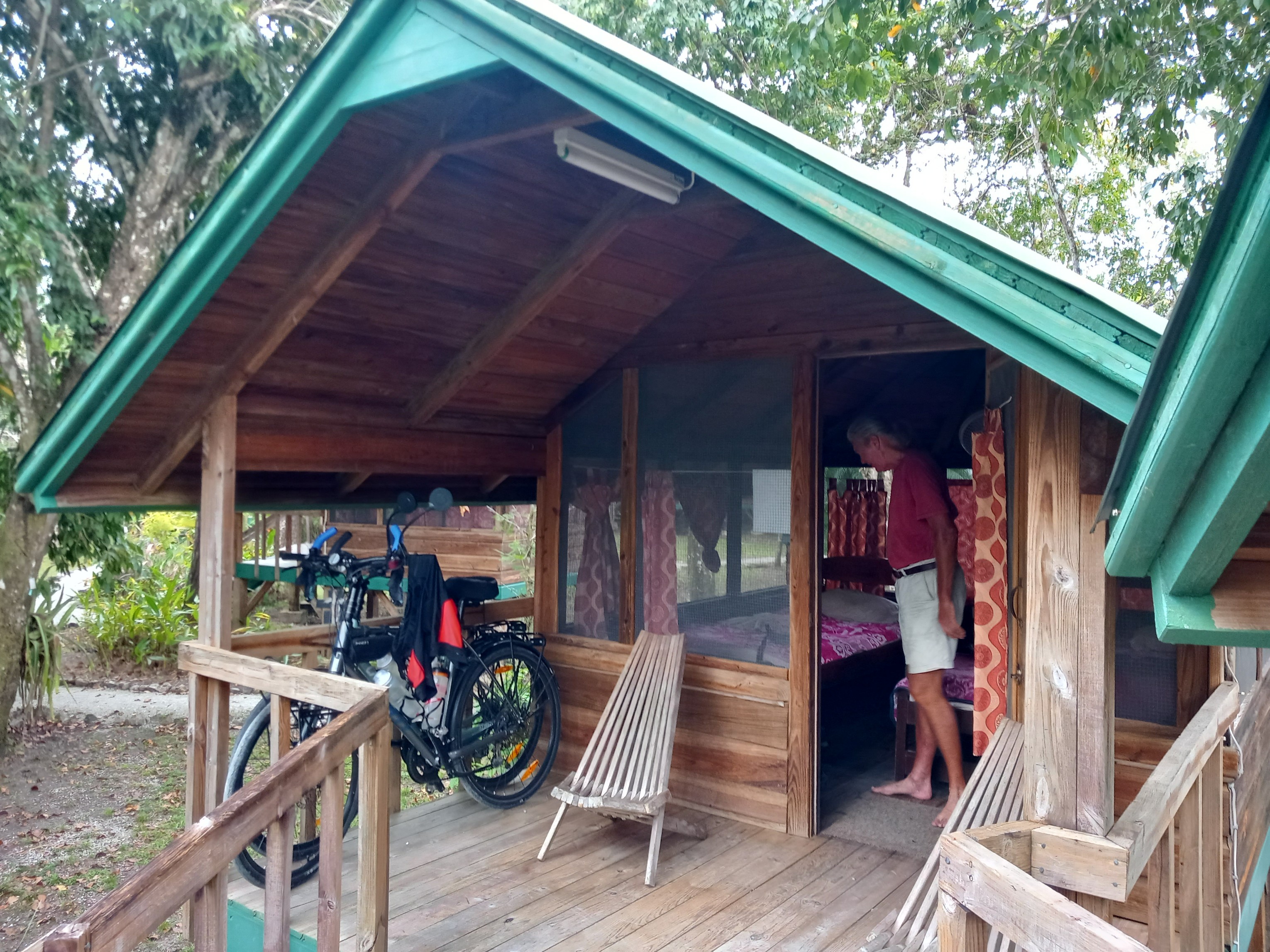
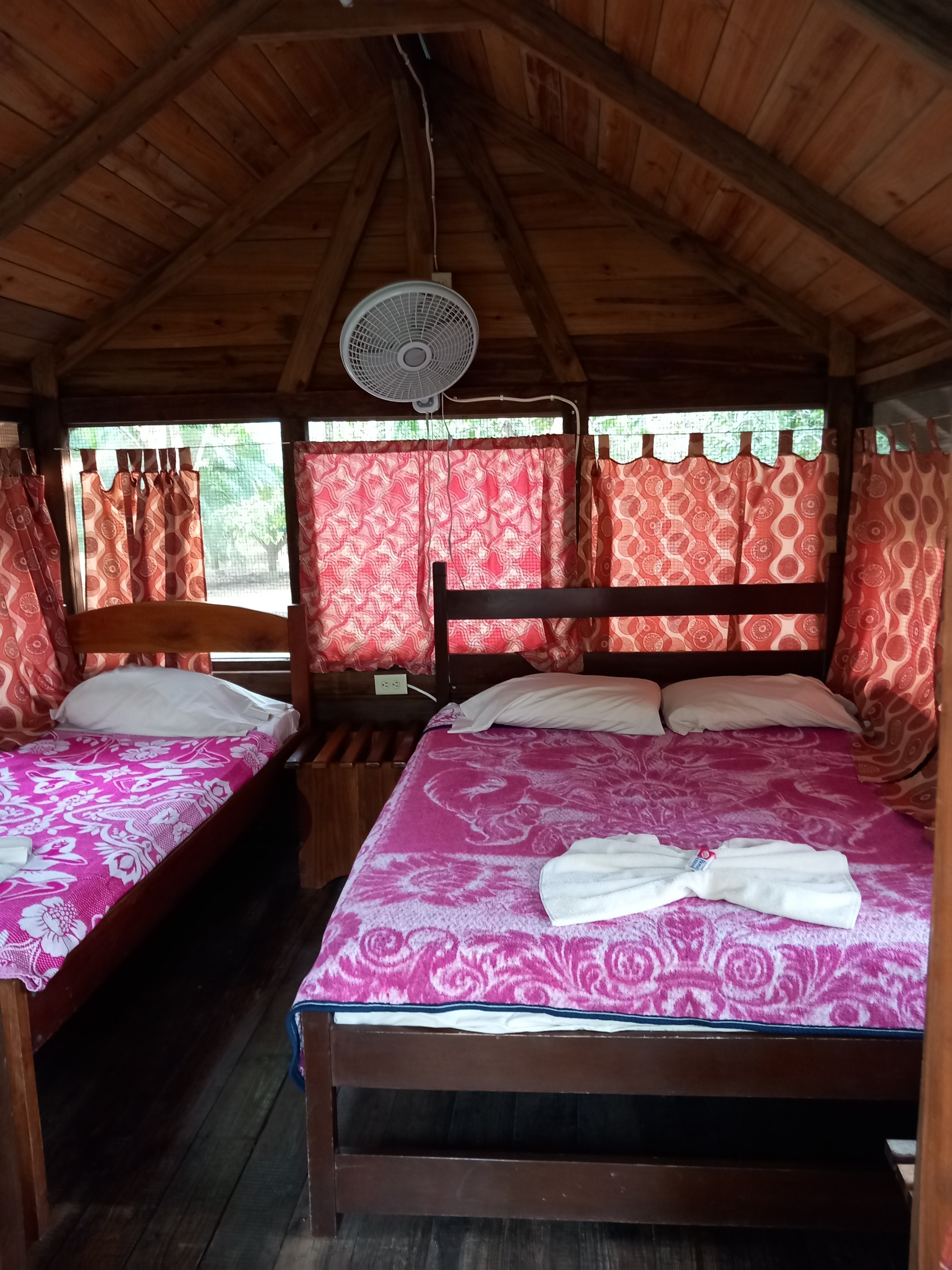
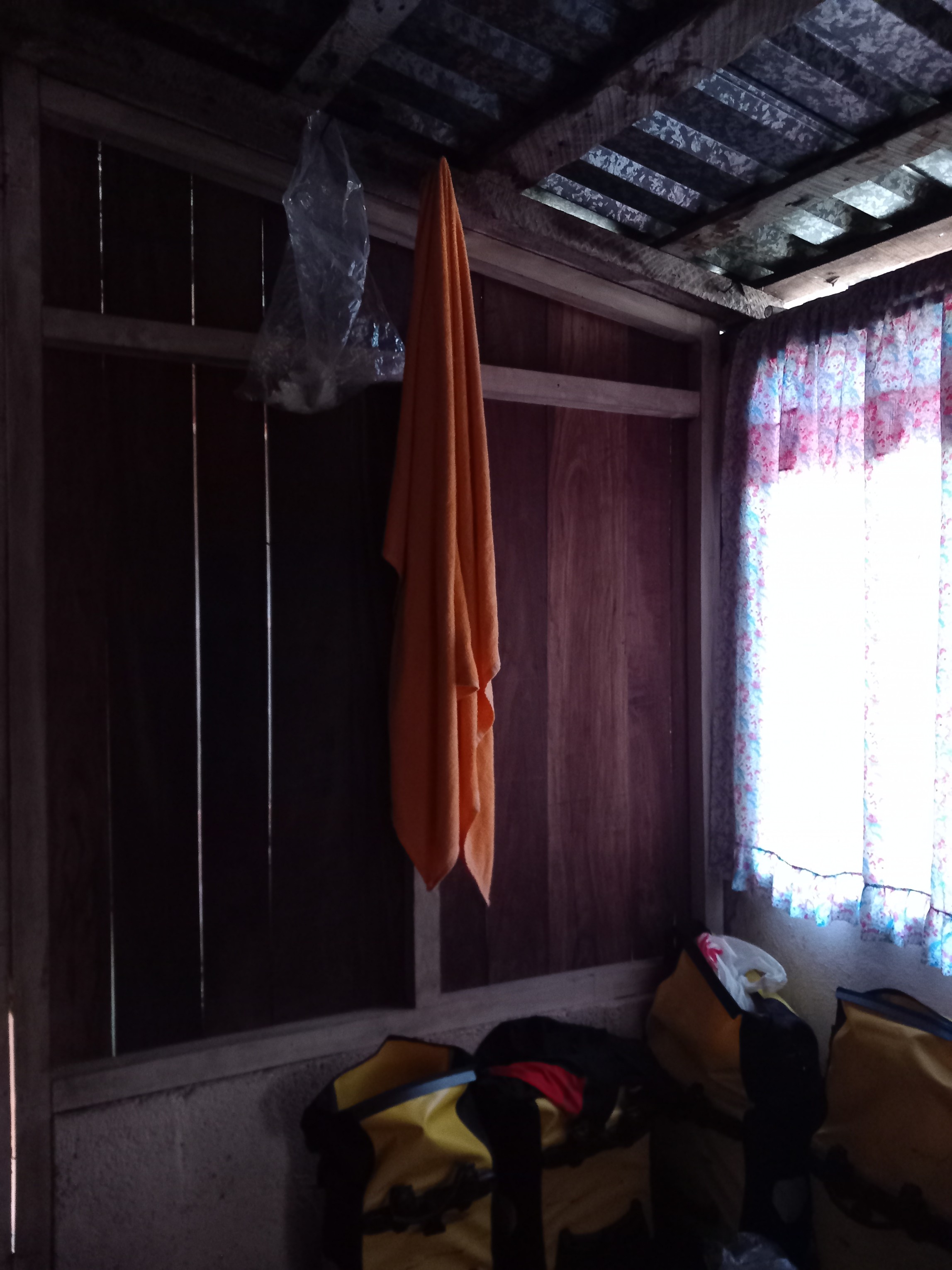
There are camping areas, family rooms and cabanas like we stayed in for accommodation with a communal shower/toilet block.The dining area which we shared with around two dozen post graduate students.
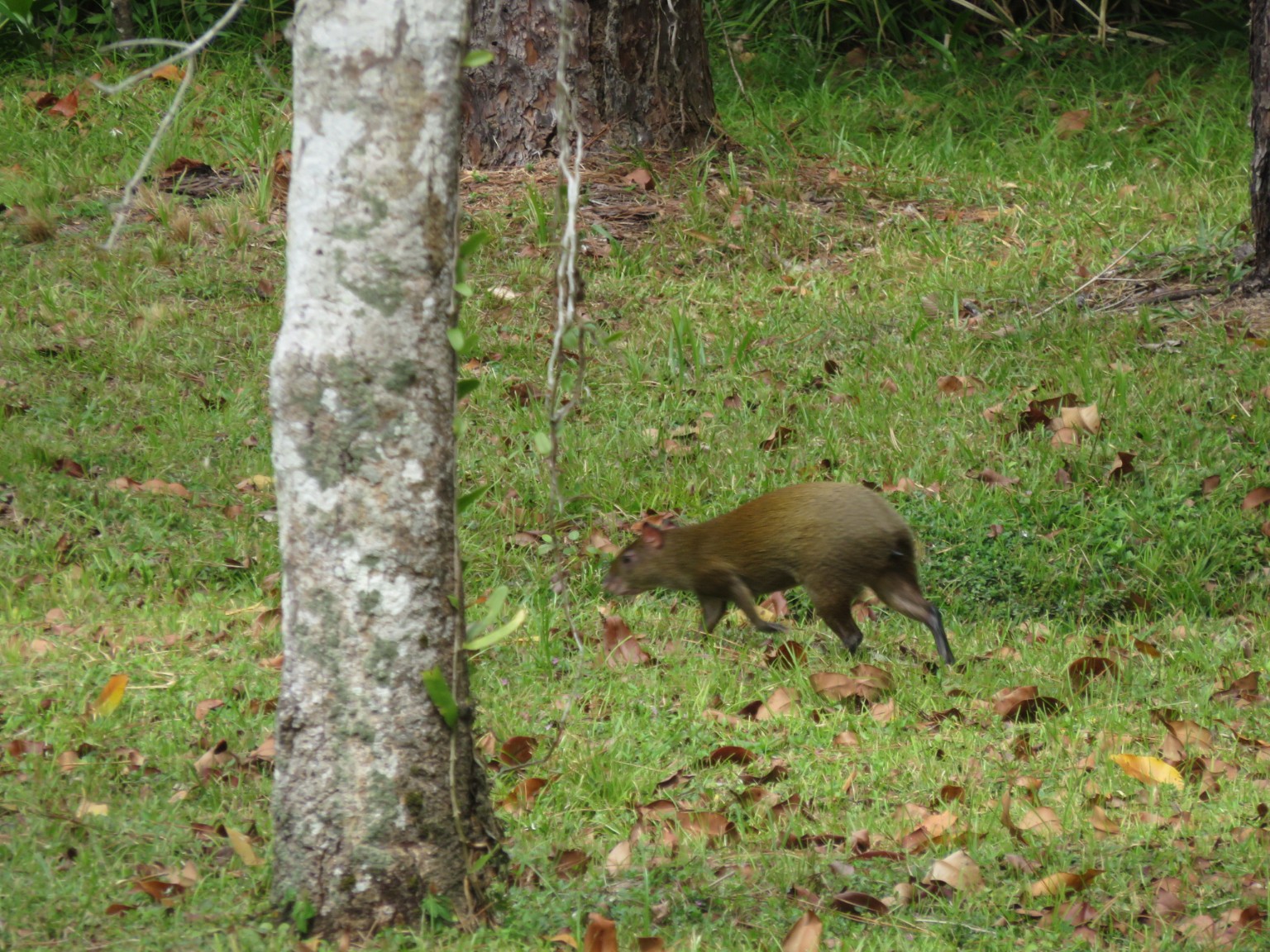
The Tapir is one of the national emblems of Belize.
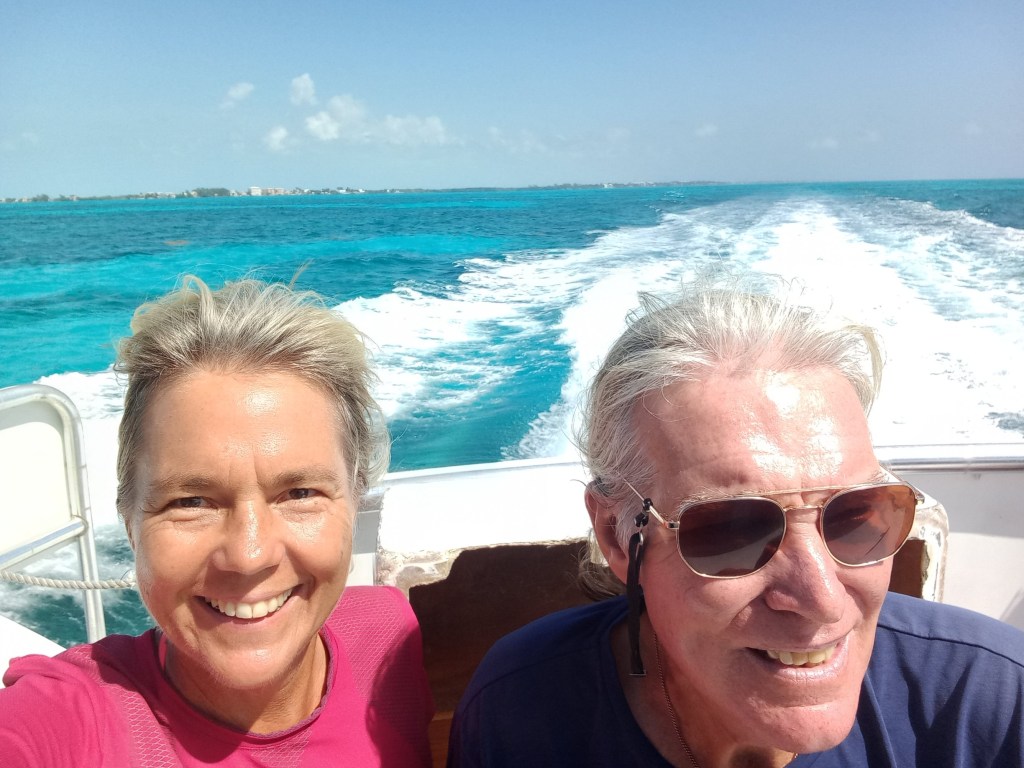
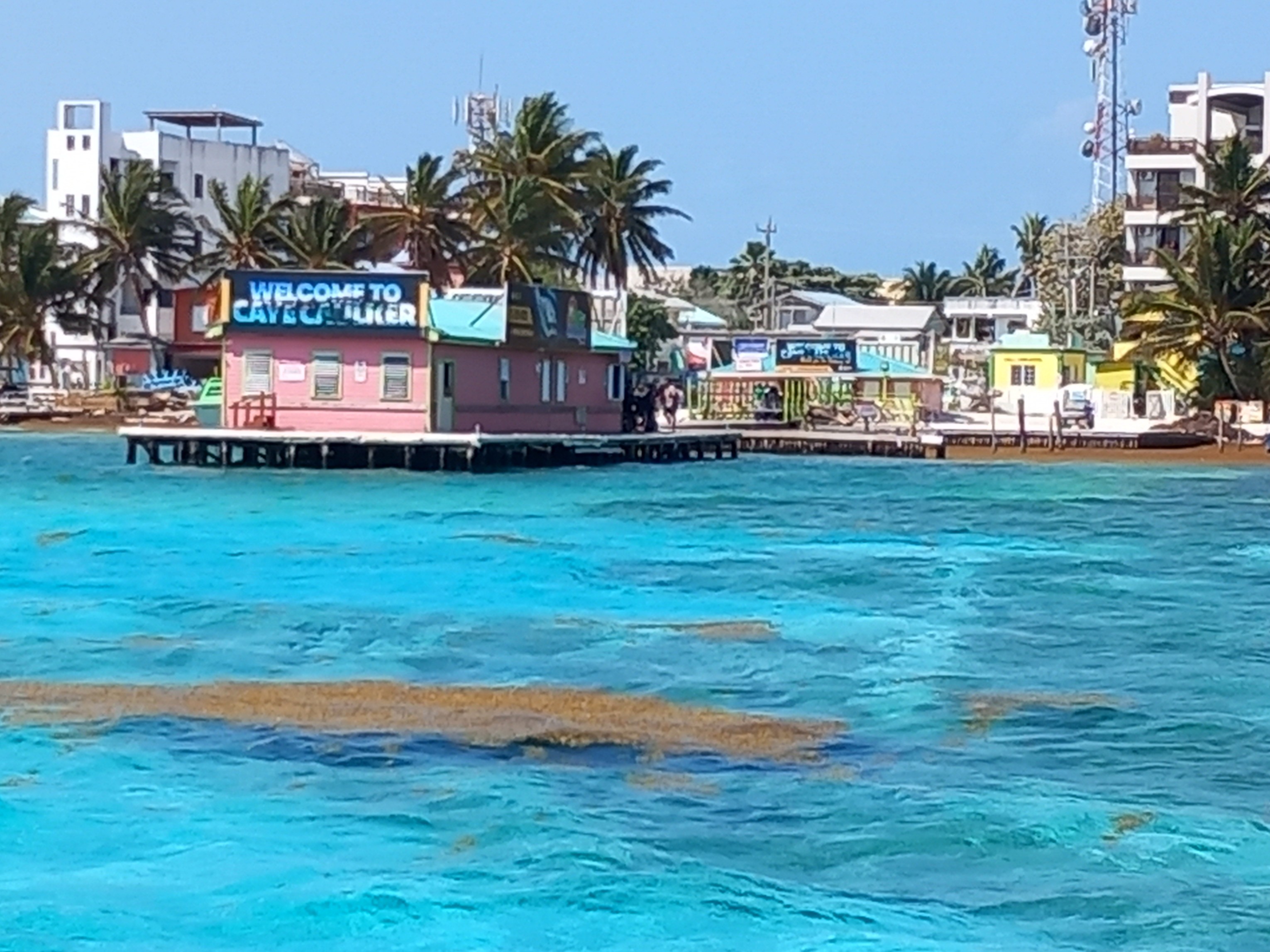
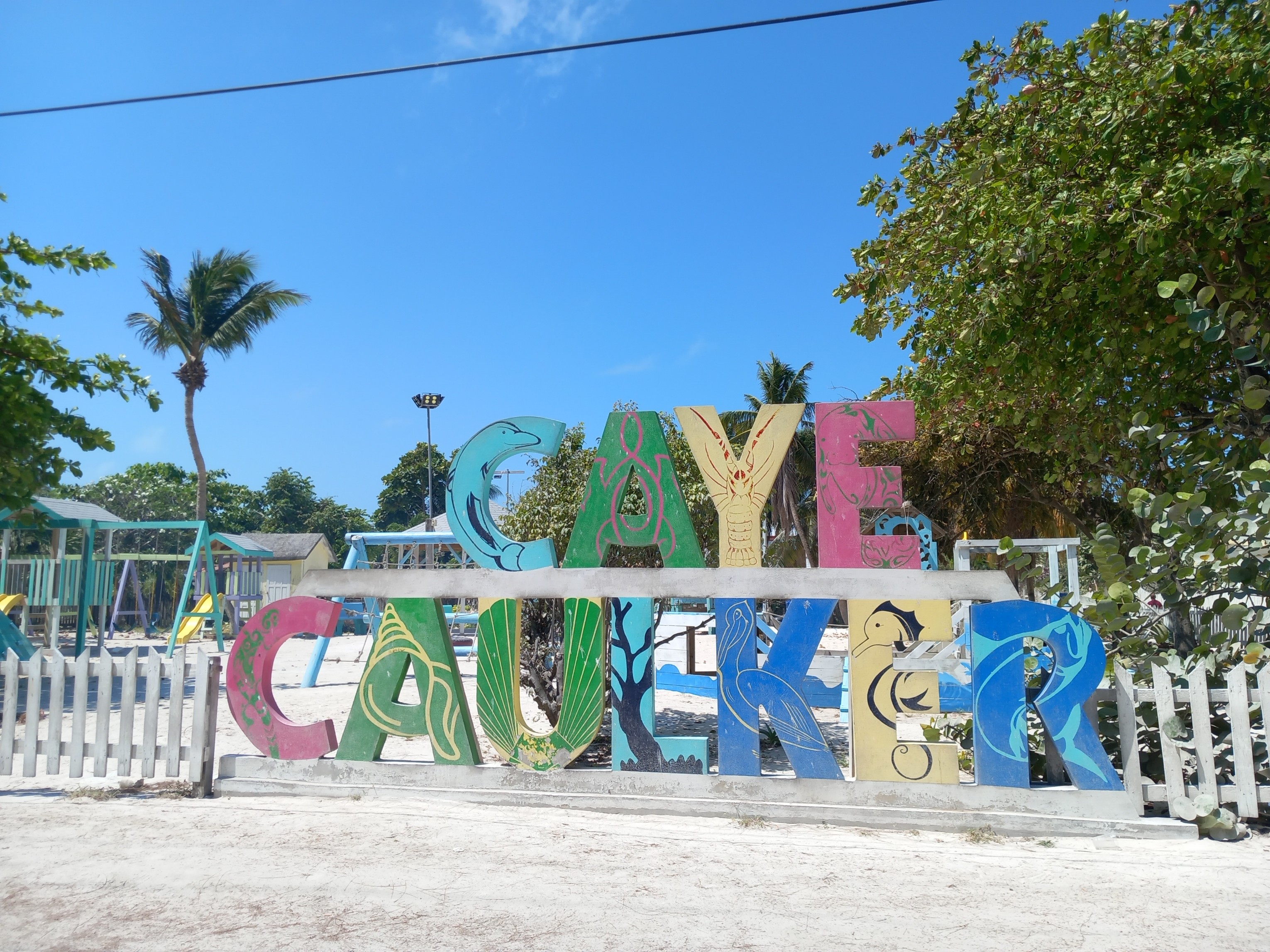
To provide a break from the hustle of San Pedro we take another water taxi to Caye Caulker.
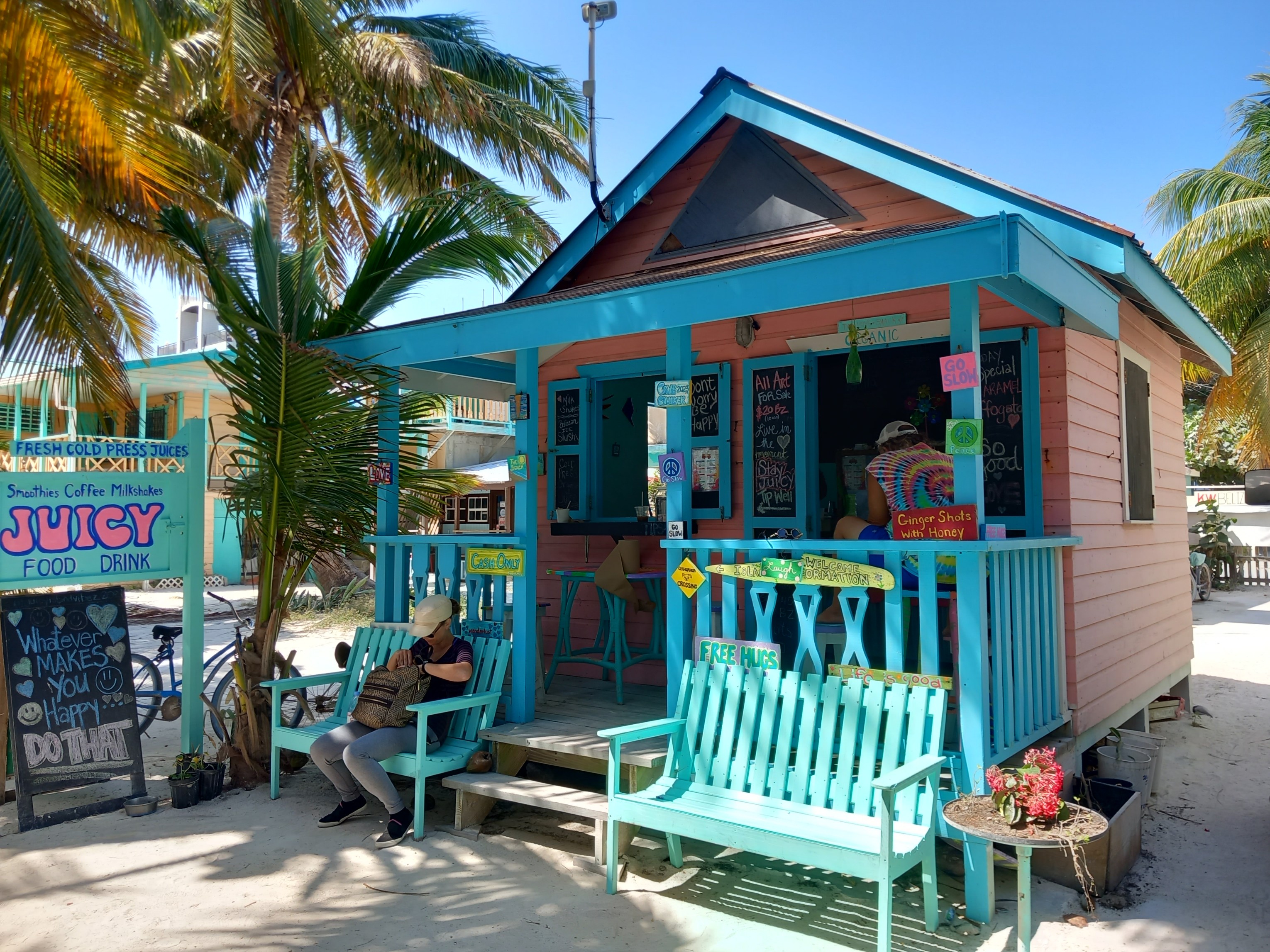
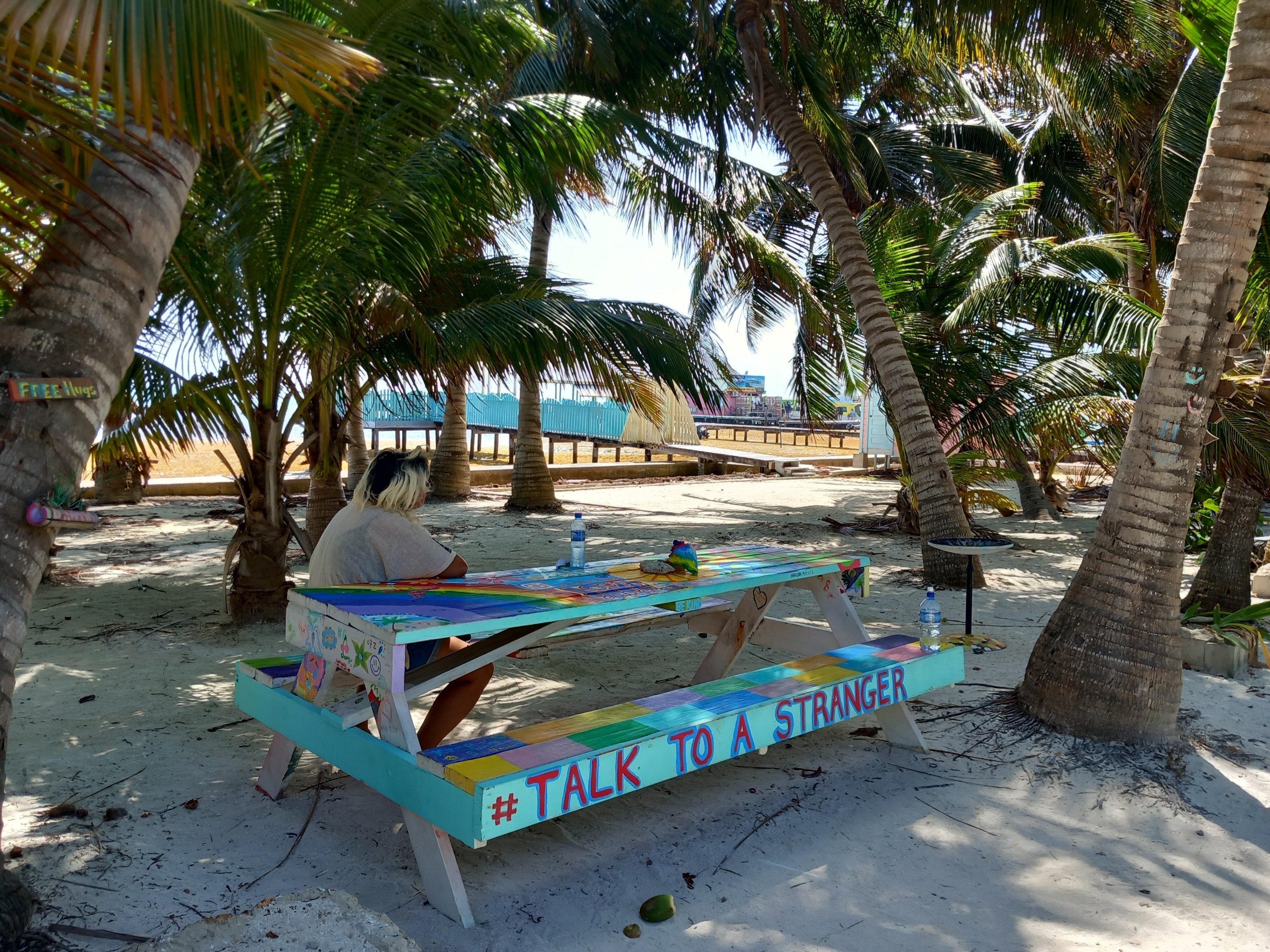
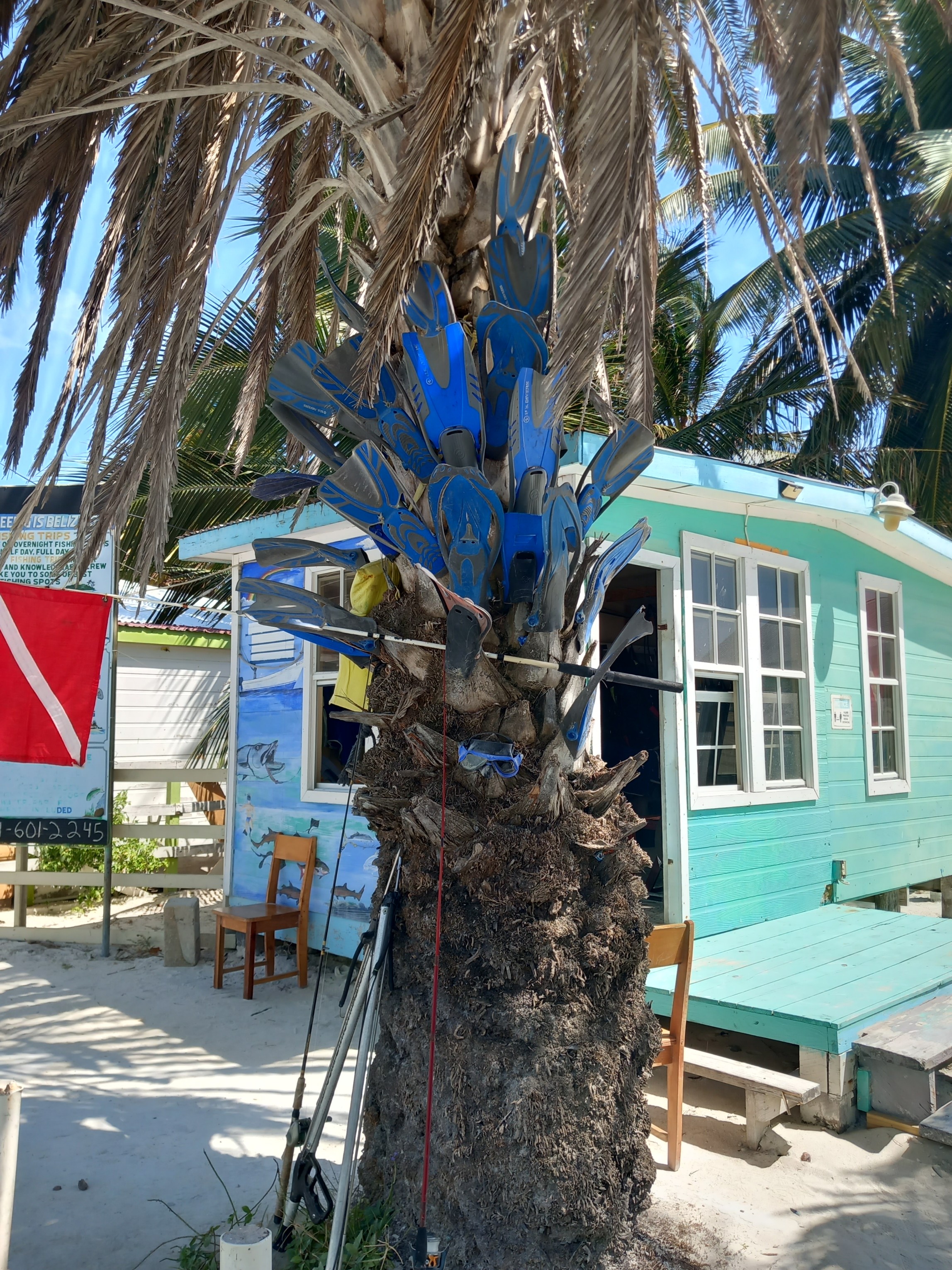
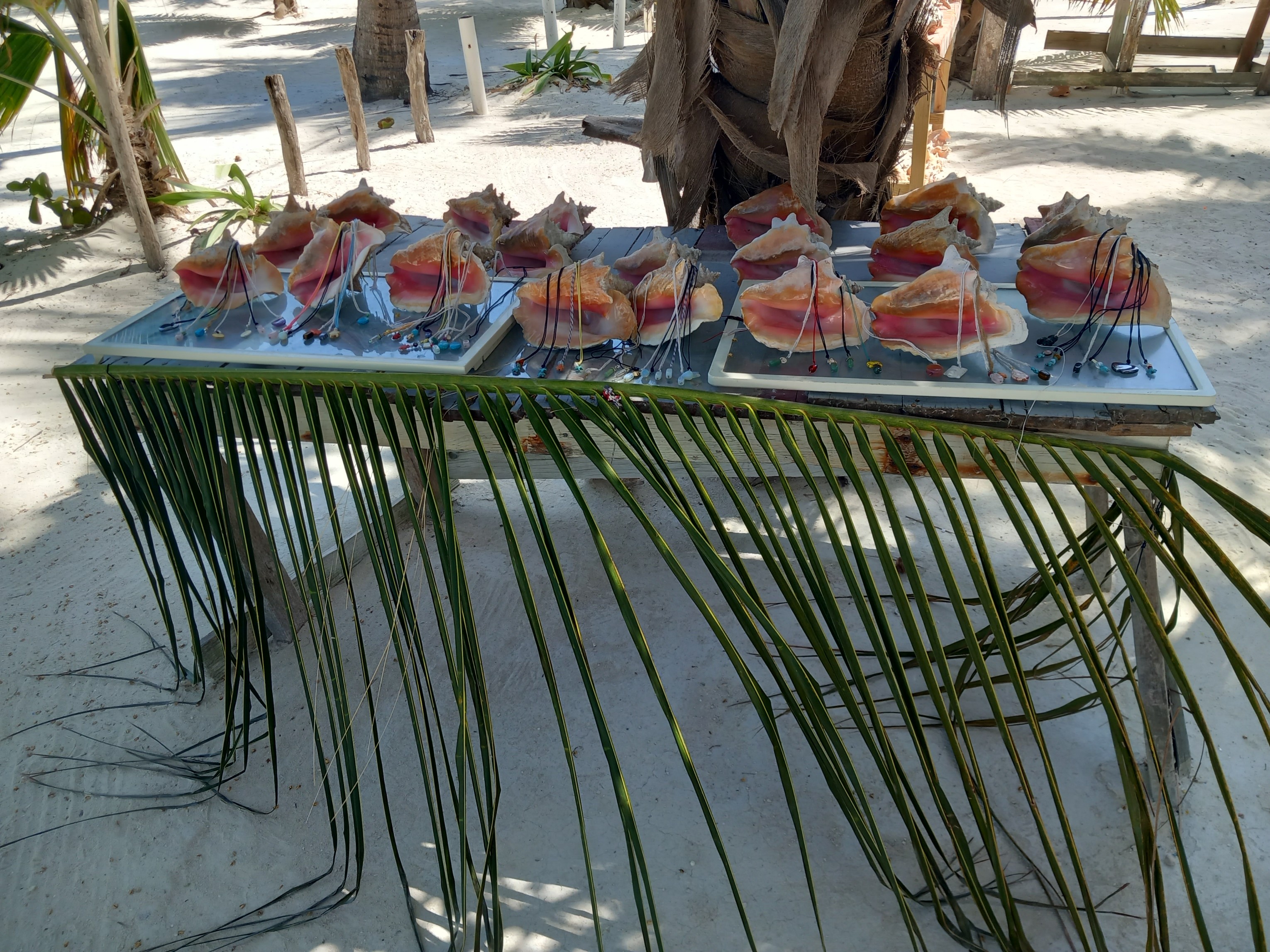
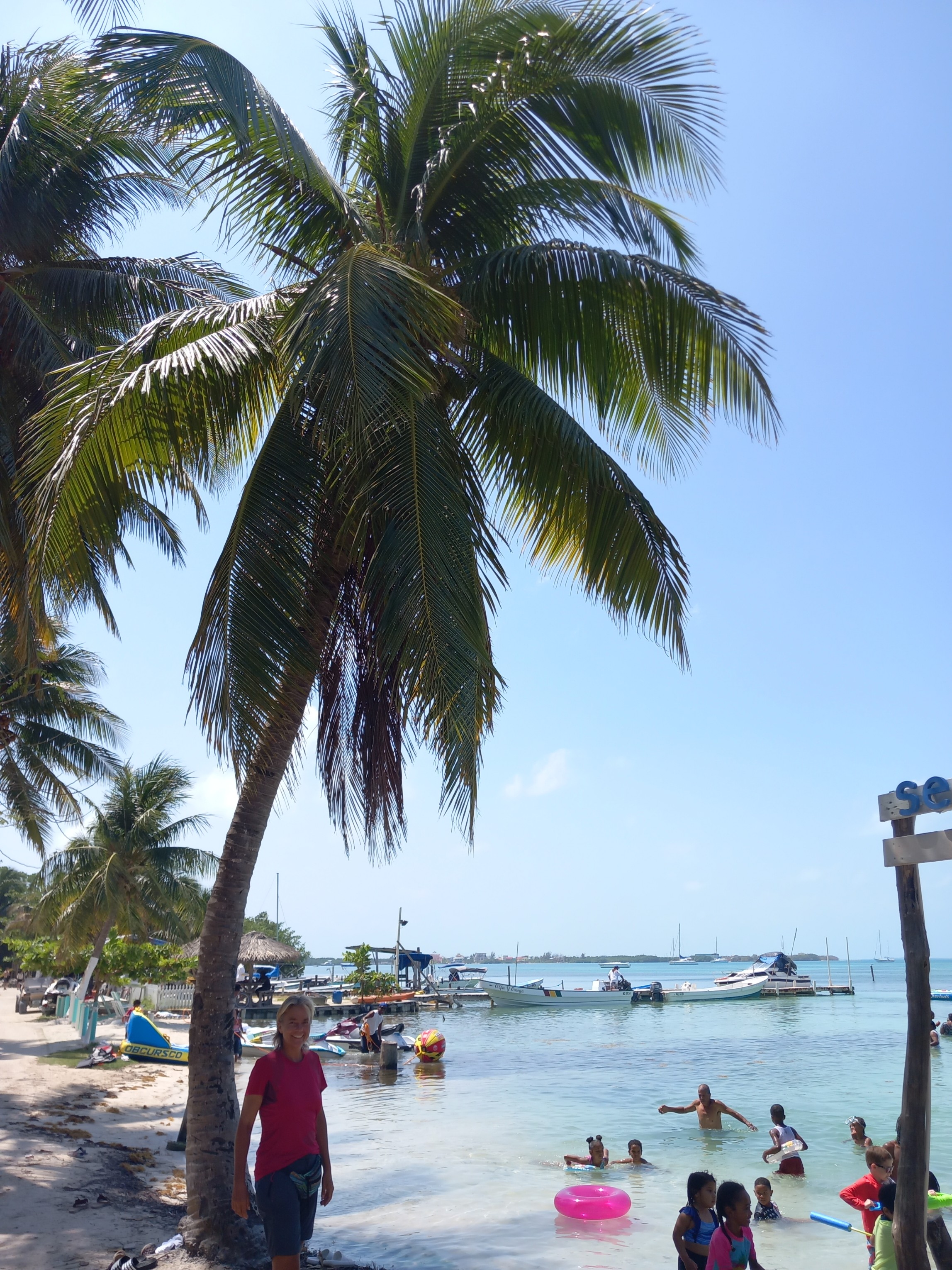
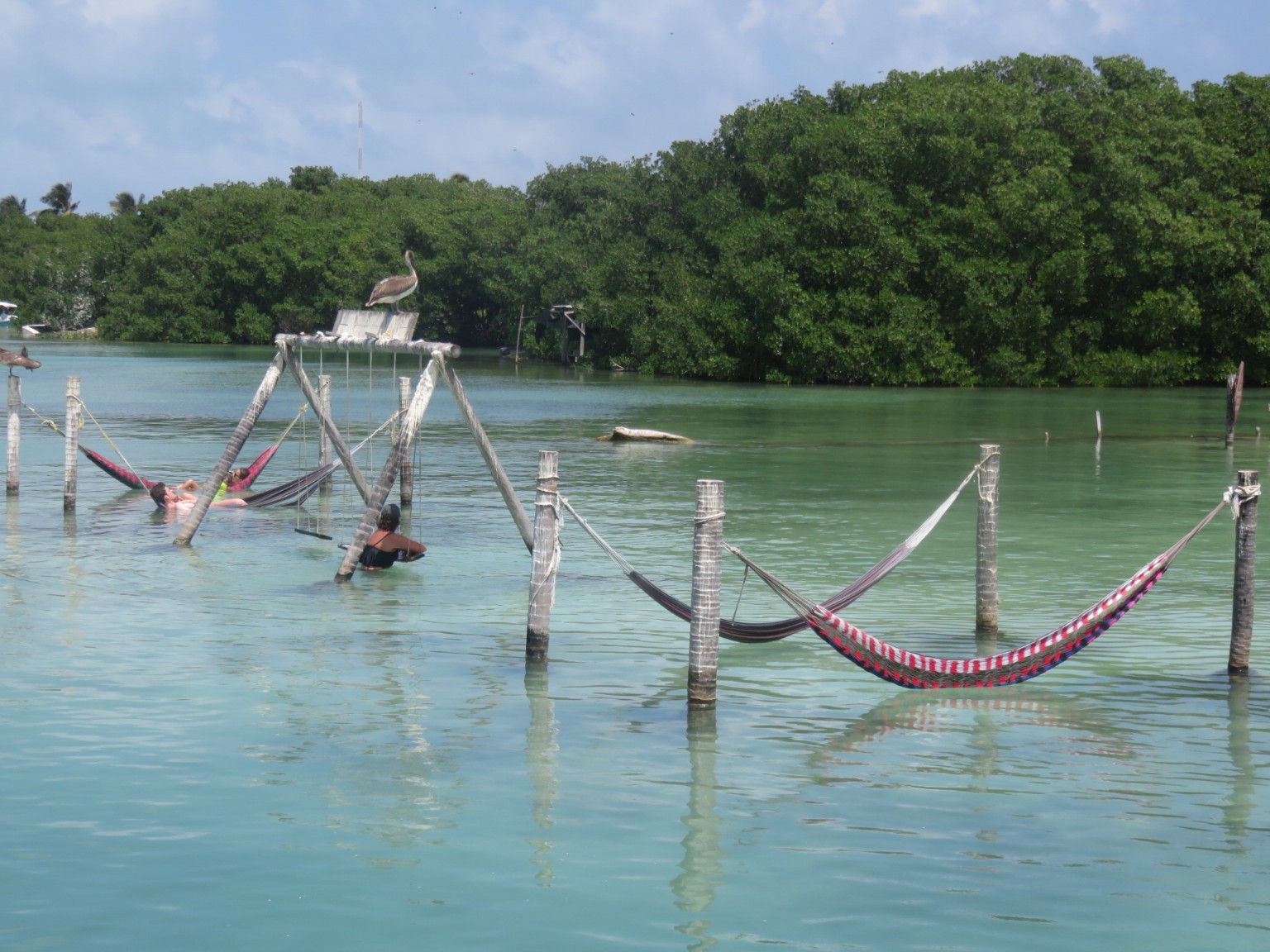
It is immediately noticeable that the pace is much slower here than on Ambergris Caye. It is 30 minutes by taxi, 5 minutes away by aircraft and is easily walkable in 3 or 4 hours.
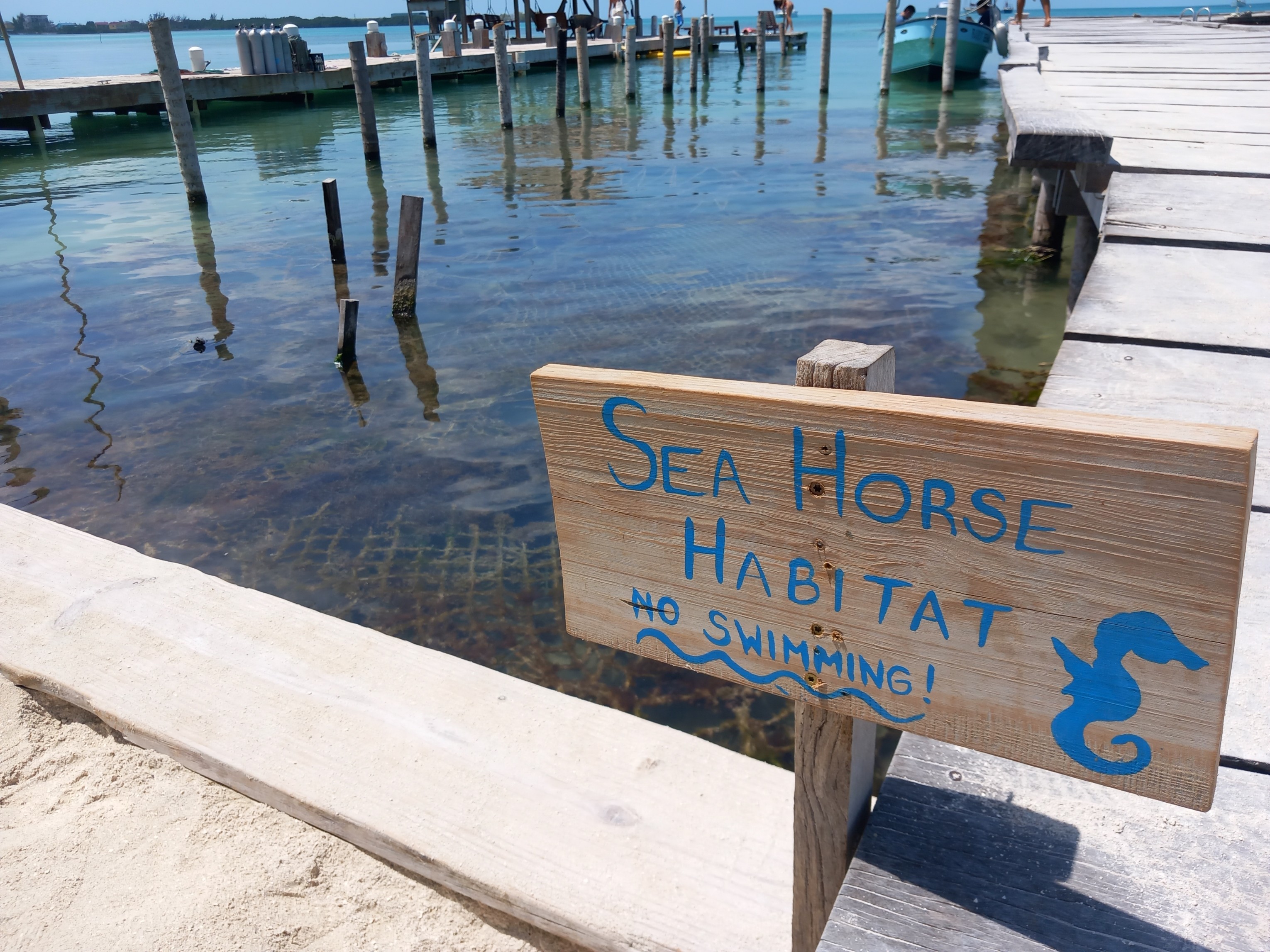
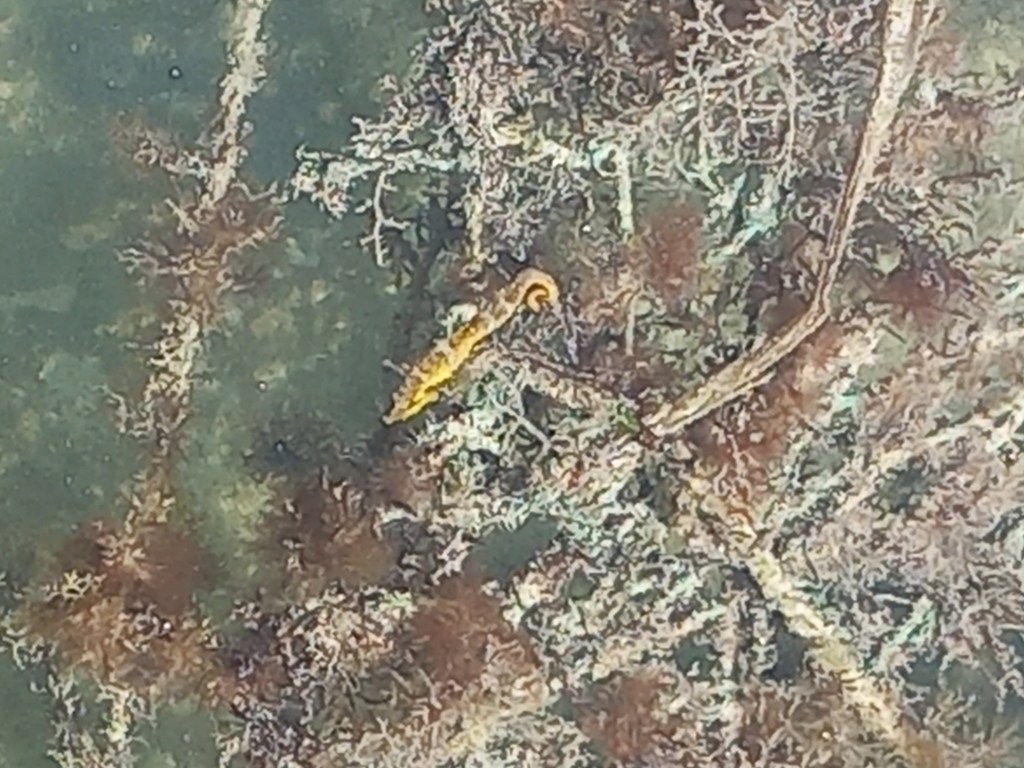
We found two seahorses although we needed help from a resident to find one of them.
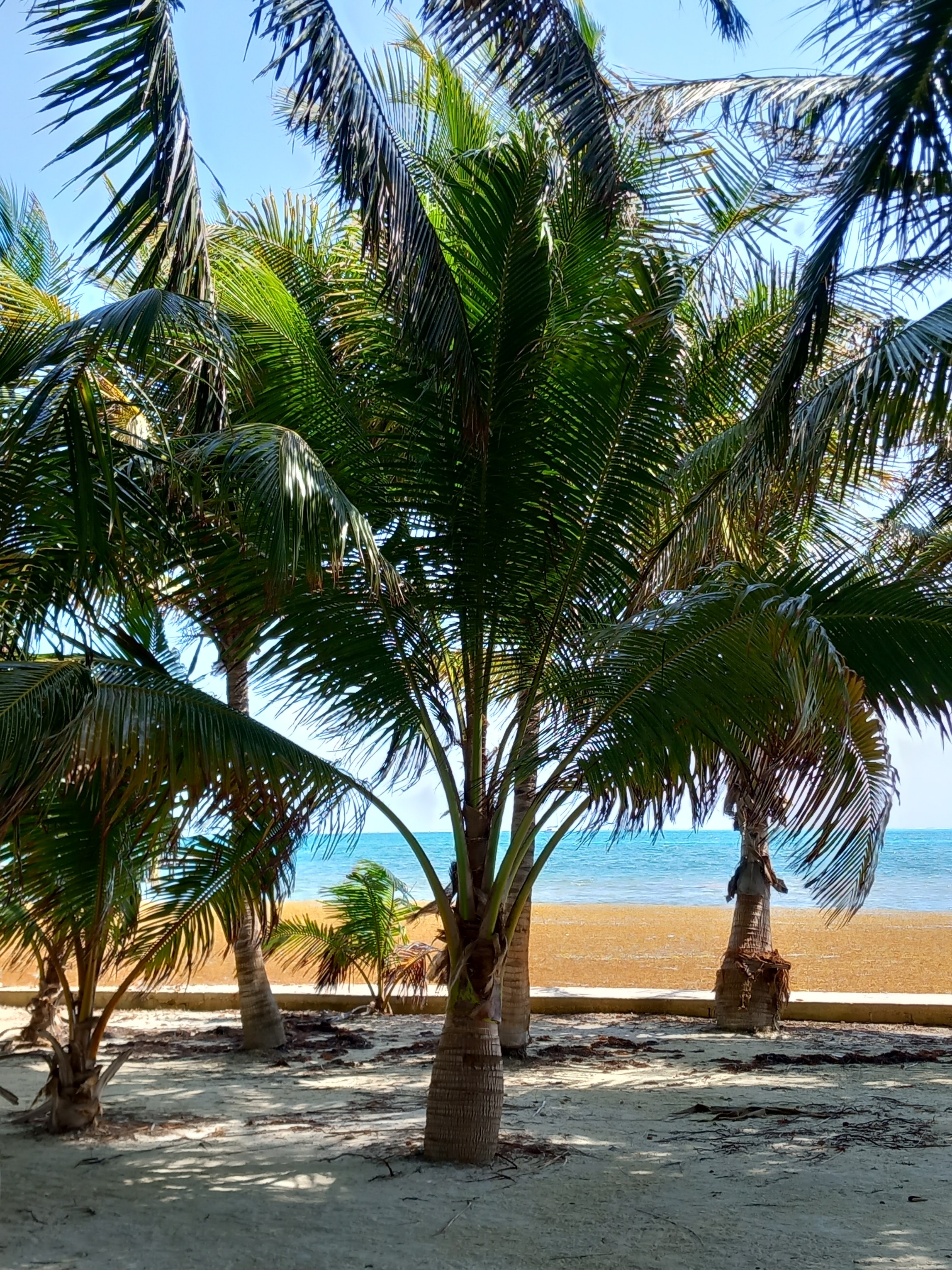
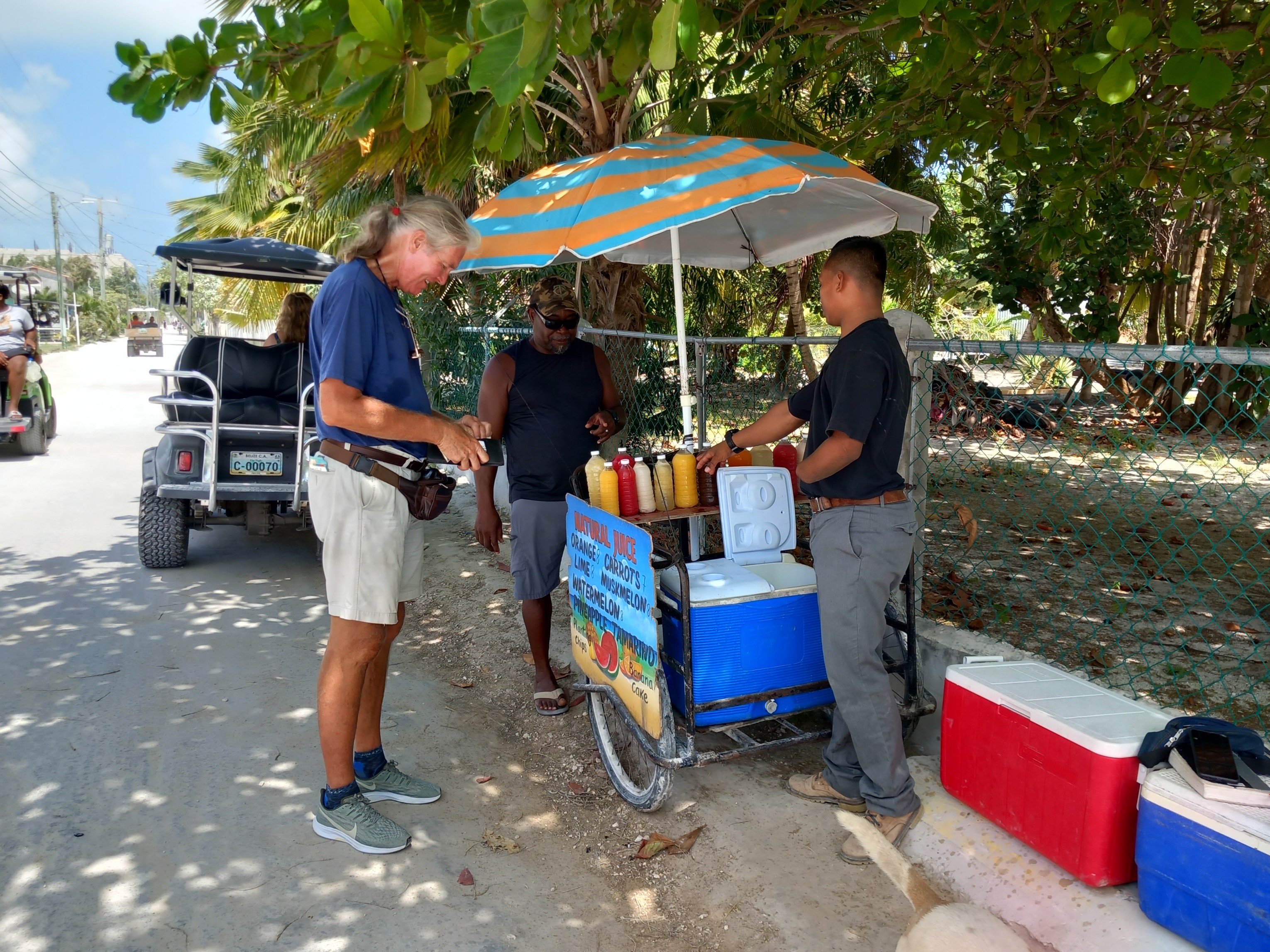
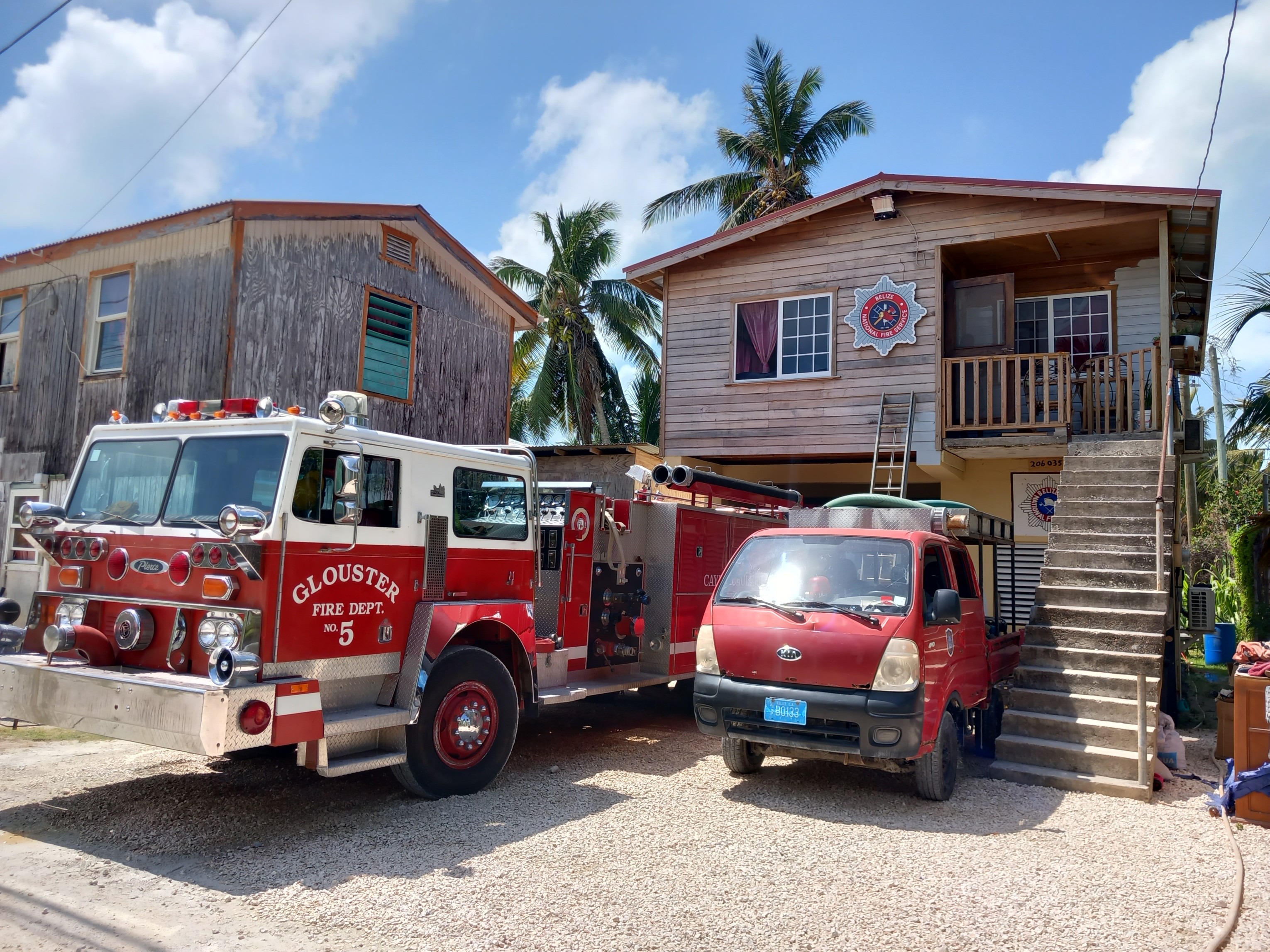
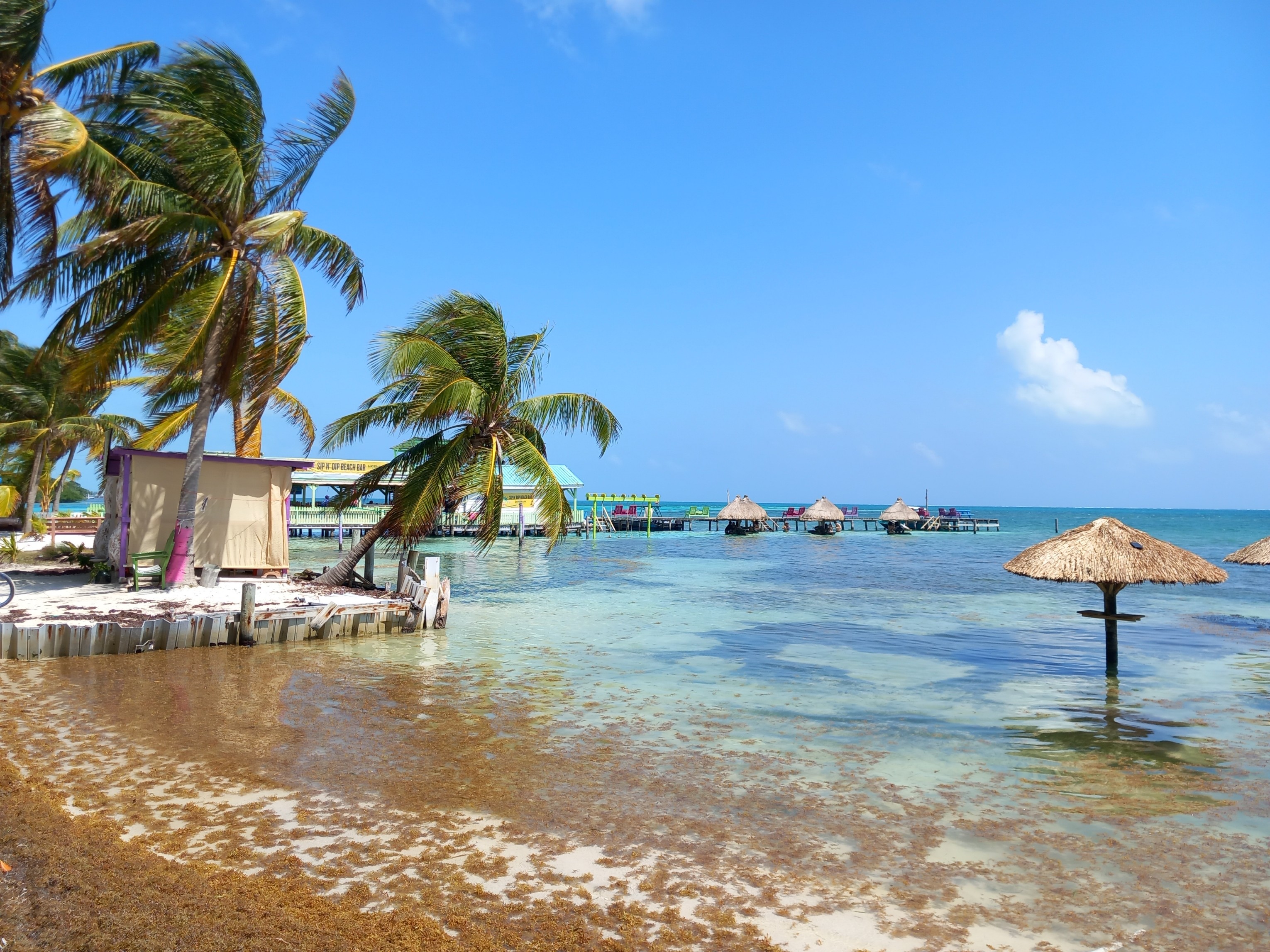
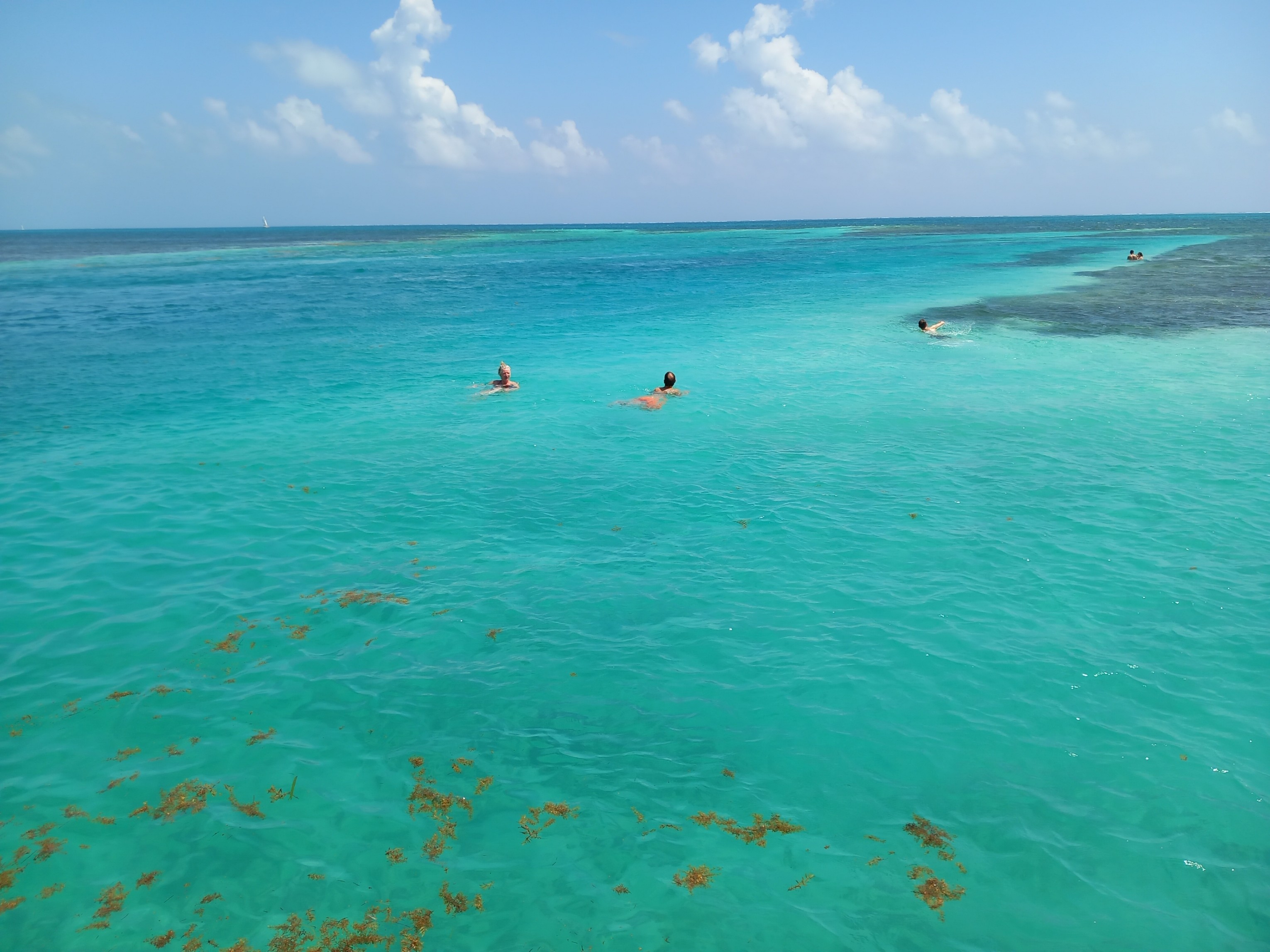
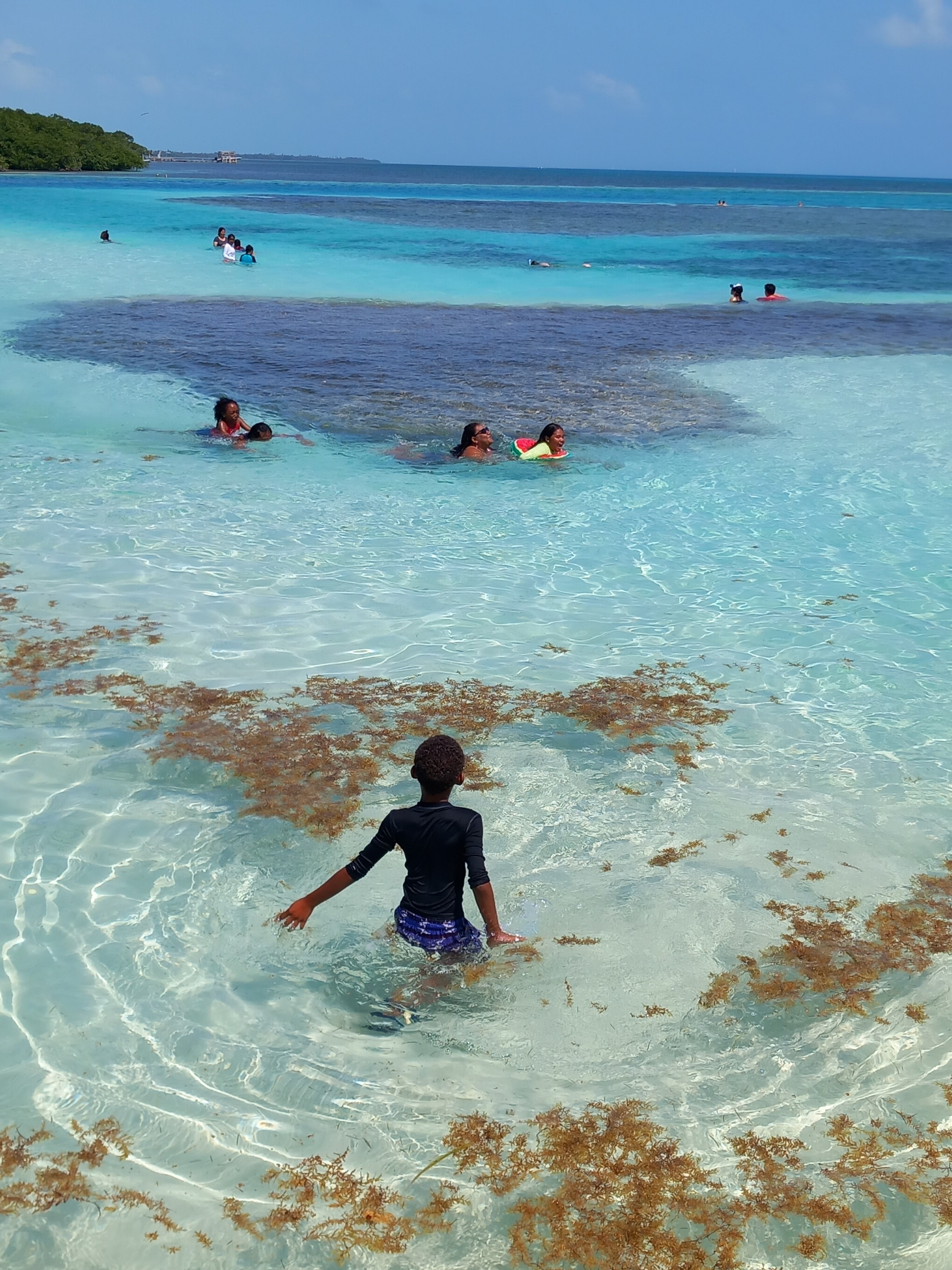
We do enjoy our daily fix of either natural pineapple or coconut juice if we can find one.Interesting how we never saw fire engines numbers 1 to 4?The sea weed, or should we say, sargasm which is the tourist board preferred name is only evident on the windward side of the islands. The leeward side is completely clear of it.
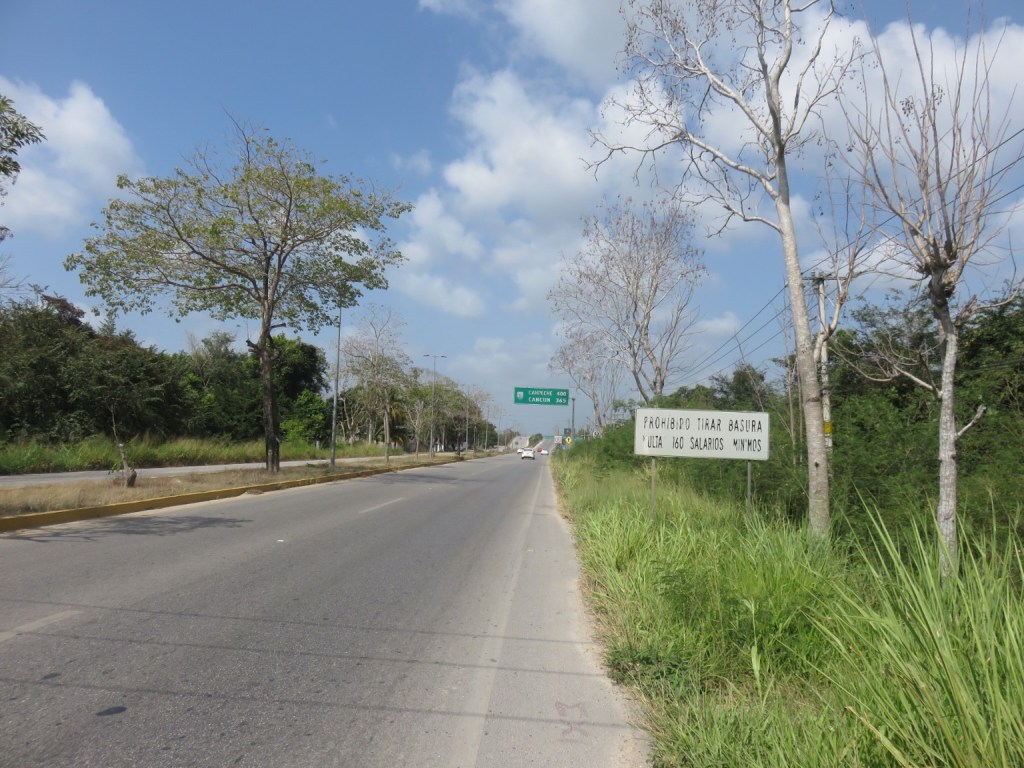
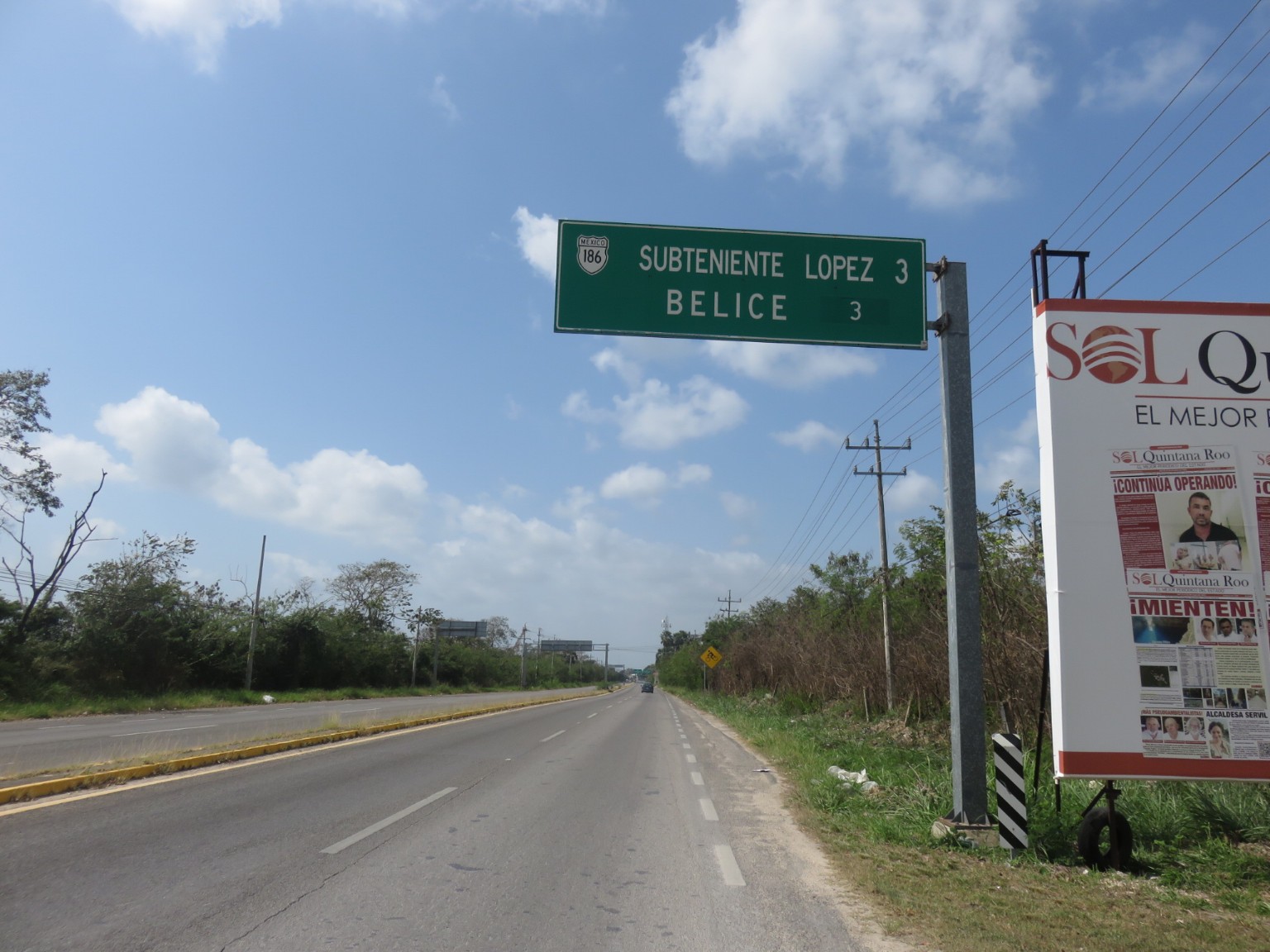
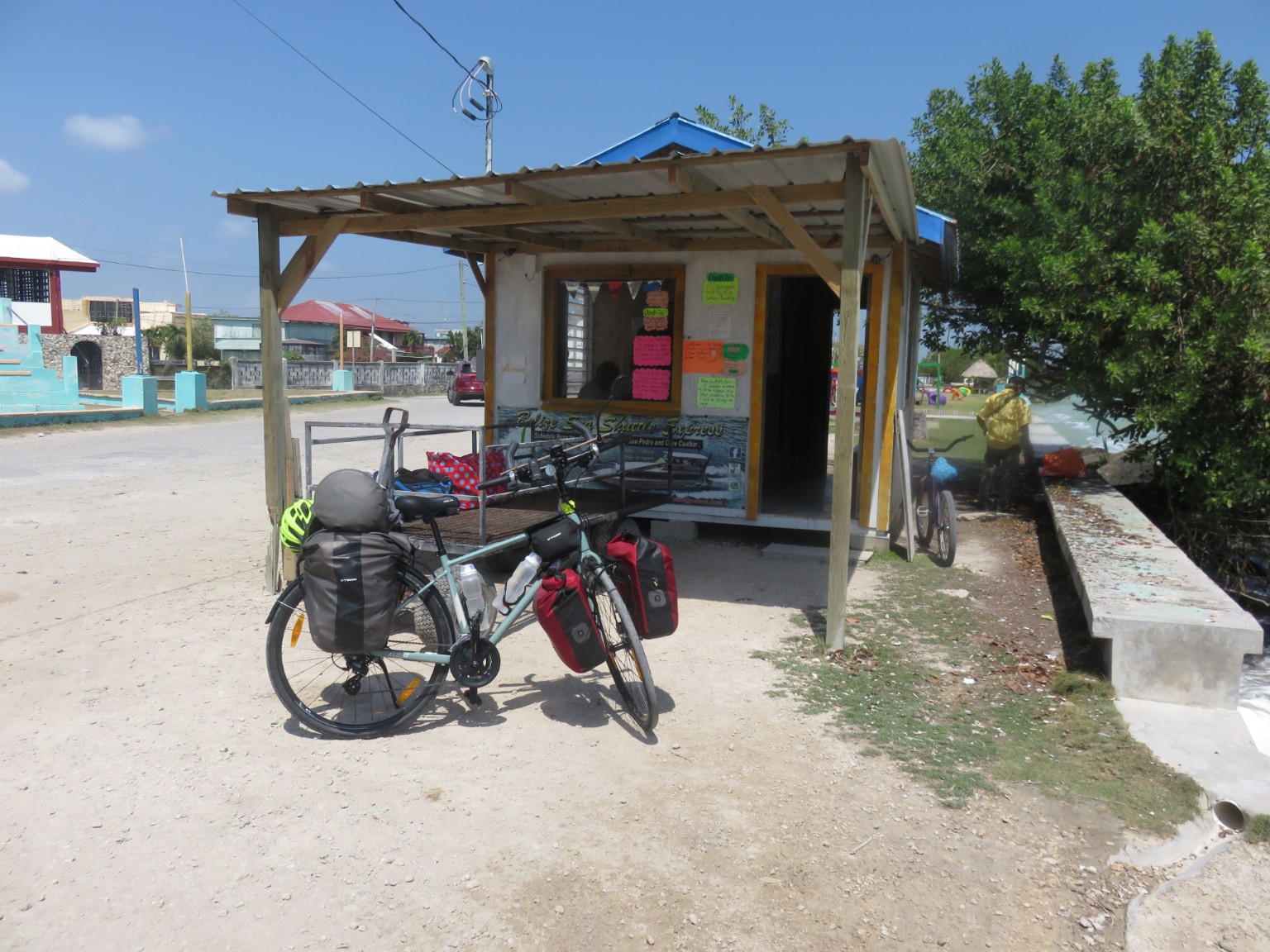
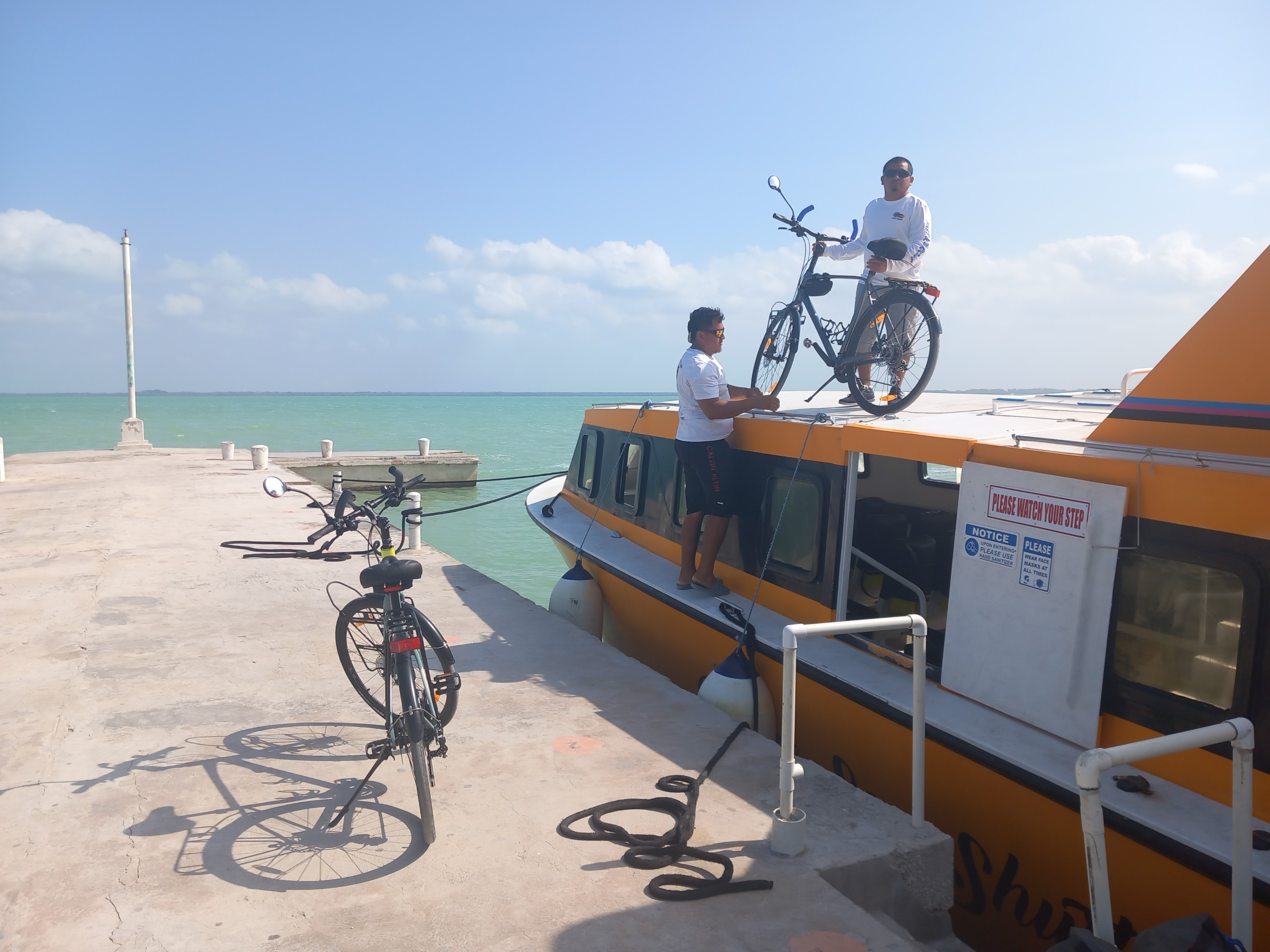
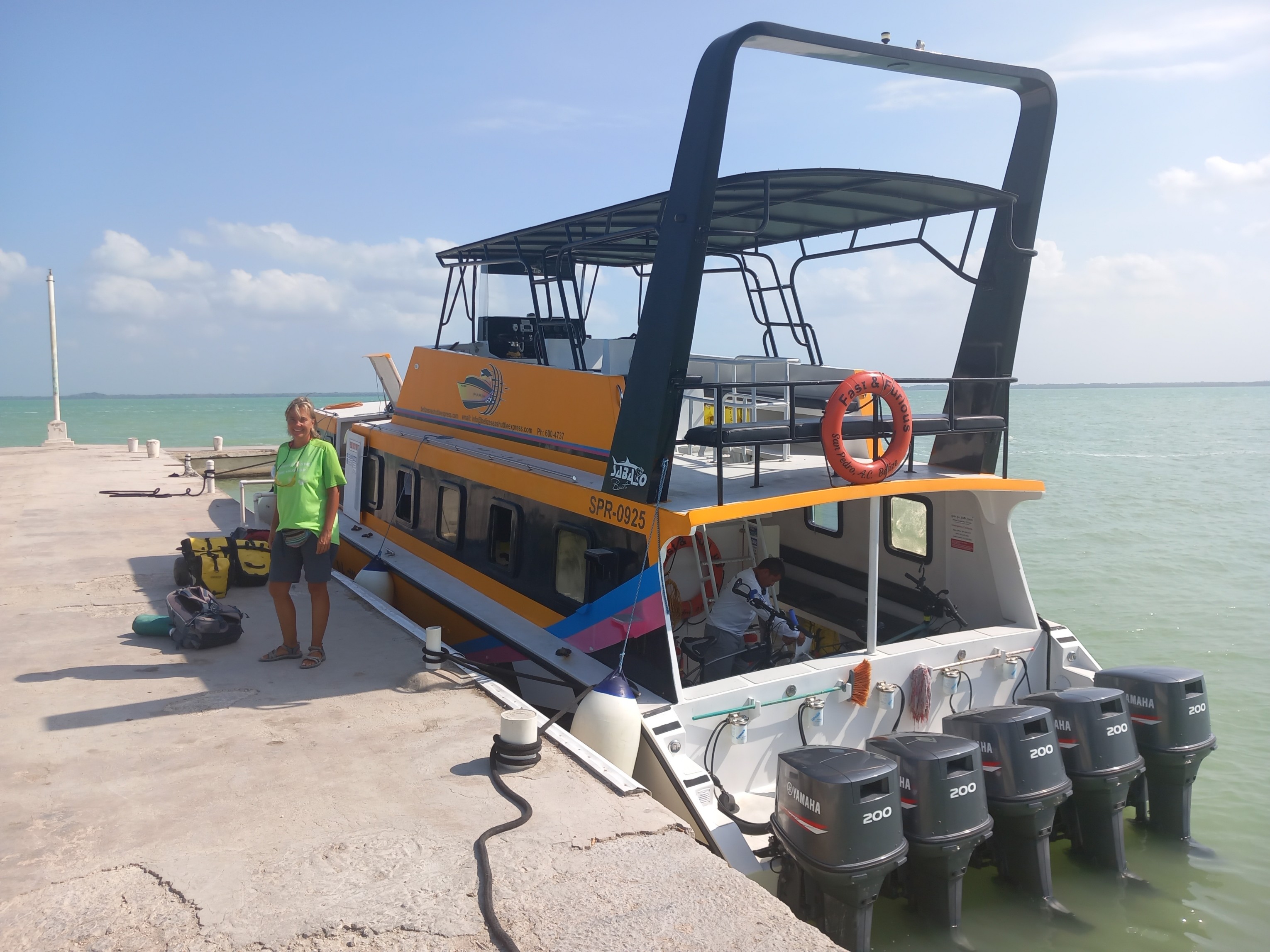
The sign says there is a fine of 160 x your monthly salary for dropping litter; now, if only they could catch those ruining their countryside? A Saturday and not many people crossing from Mexico into Belize. There would have been two less if we had not challenged the Mexican border guards decision preventing us going across by bicycle because we were a ‘security threat’. When we explained we were returning in three weeks to fly home from Chetumel they reversed their decision. At the Belize side of the border we are welcomed with open arms almost (the 670 peso charge per person and the 30 peso ‘tip’ because they didn’t have change from 700 which we both offered) was simple and very casual albeit with a serious message in the back of the Travel Guide they gave us on arrival. Immigration officers were dressed and behaved like tourist guides and the Border Guards were like a welcoming committee and not a firearm anywhere. Our first view of the different road conditions in Belize; this is the beginning of the Phillip Godson Highway leading from the border to the capital Belize City – not much other than enough room for a single lane in each direction, no central line marking, and no hard shoulder. The people were very friendly waving to us and calling out their welcomes as they passed in the opposite direction as did those on the roadside. With our new parts fitted in Chetumel after the ride down to Corozal it was obvious there are still adjustments needed and this deaf and dumb chap had just the right tool for the job. There are no social services in this part of the world; if you don’t work you don’t have an income. We see people almost on a daily basis working at all sorts of jobs who are seriously disabled, however, we choose not to film them but admire their spirit and determination to provide for themselves.The first town we arrive in is called Corozal and this is the ticket office for the ferry to Ambergris Caye – much cheaper than the ferry from Chetumel. We have our first of many experiences with travelling back in time to the 1960’s. Tickets are issued with clipboard and pen at the ready, no credit cards accepted, cash only, and the ship’s manifest is handwritten. When we asked where we could go to charge the mobile ‘phone with credit neither of the three chaps knew what we were talking about! Thankfully they knew the ATM was around the corner so we could return and pay for the tickets.The first attempt to load was to place the bikes on the top of the boat in front of the wheelhouse. They spent 10 minutes wrapping David’s bike in cardboard and trying to tie it securely before realising it would be better located elsewhere. Now, if you thought the Fast and Furious film franchise was all about street racing cars, think again? Look at the name of the boat and then notice the five engines; this thing was going to move very fast. Which is why they moved the bikes down below where you can see the captain securing them in the stern. We were happier because this would mean less spray and, therefore, less salt in the working parts.
One of the islands we pass belongs to Leonardo Di Caprio according to our captain – presumably he needs somewhere peaceful and quiet to relax whilst he prepares his next speech telling us how we can cut our carbon emissions down to net zero?We had a very enjoyable ride for 1.5 hours across to San Pedro, the capital of Ambergris Caye.
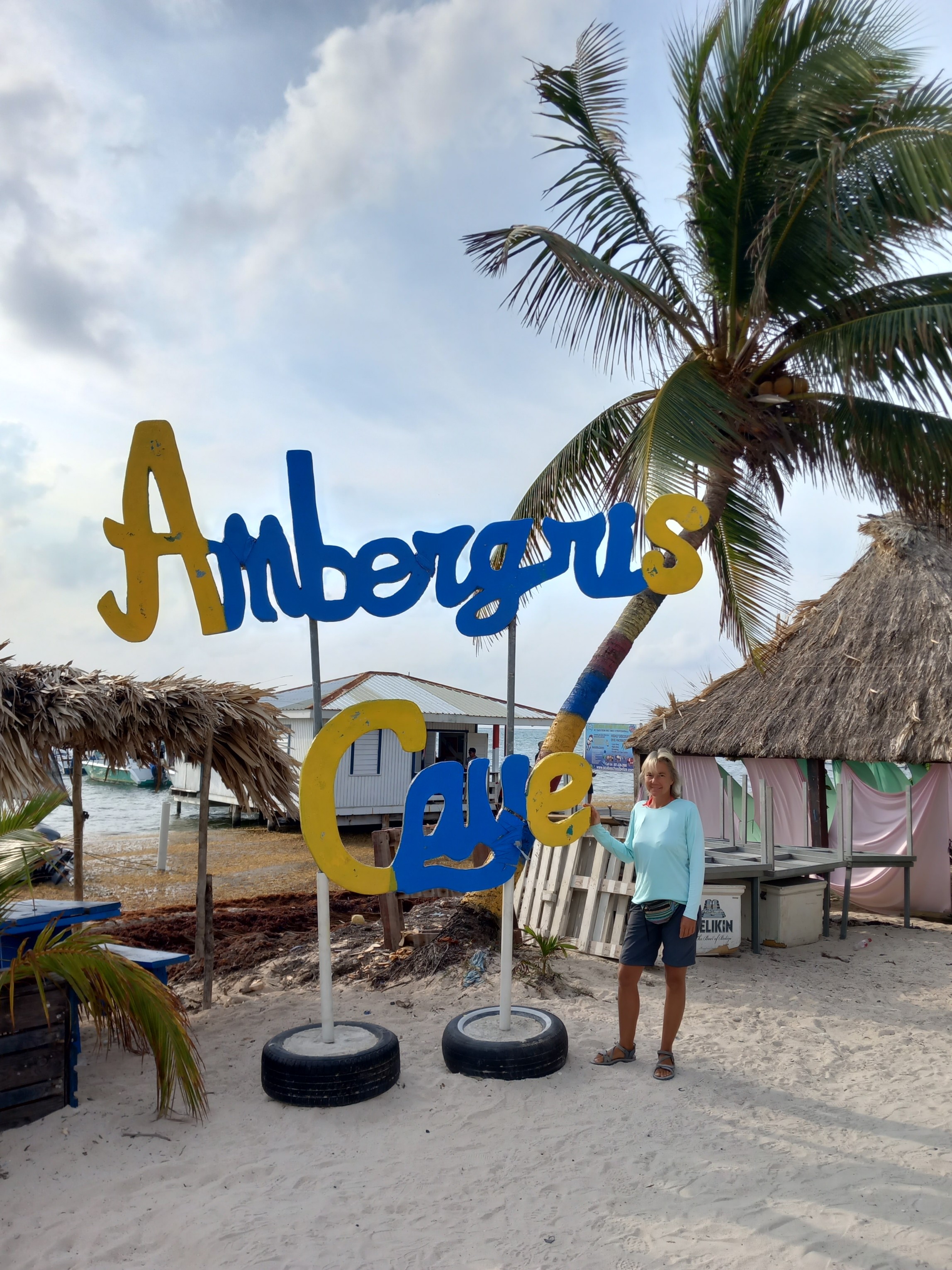
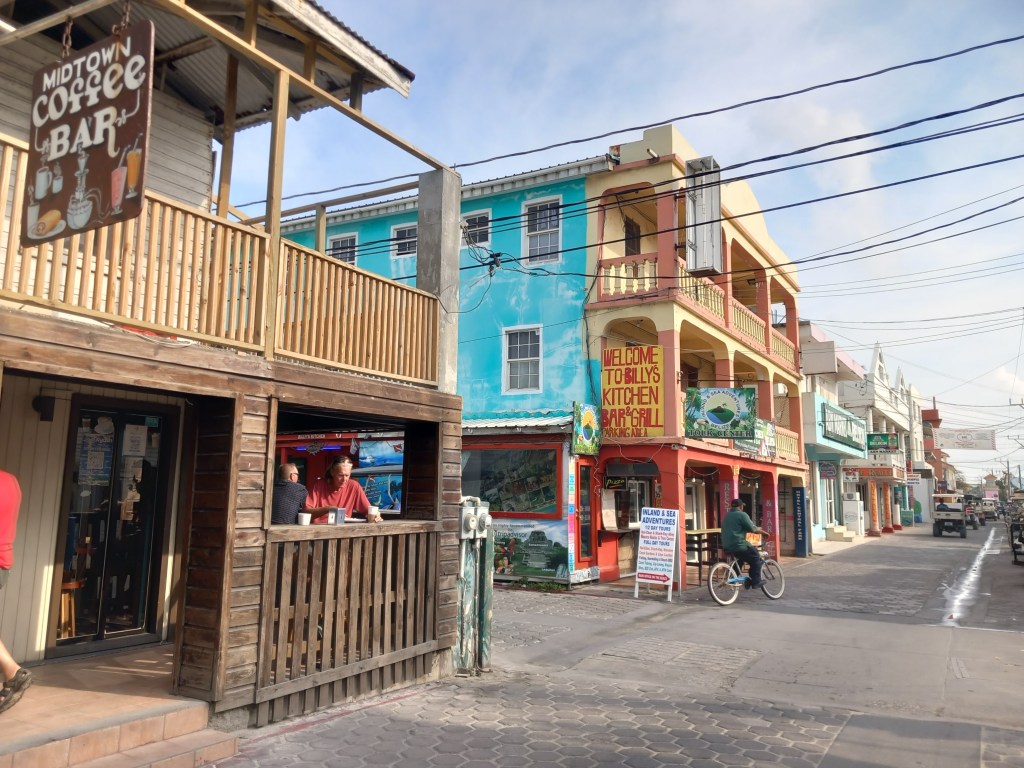
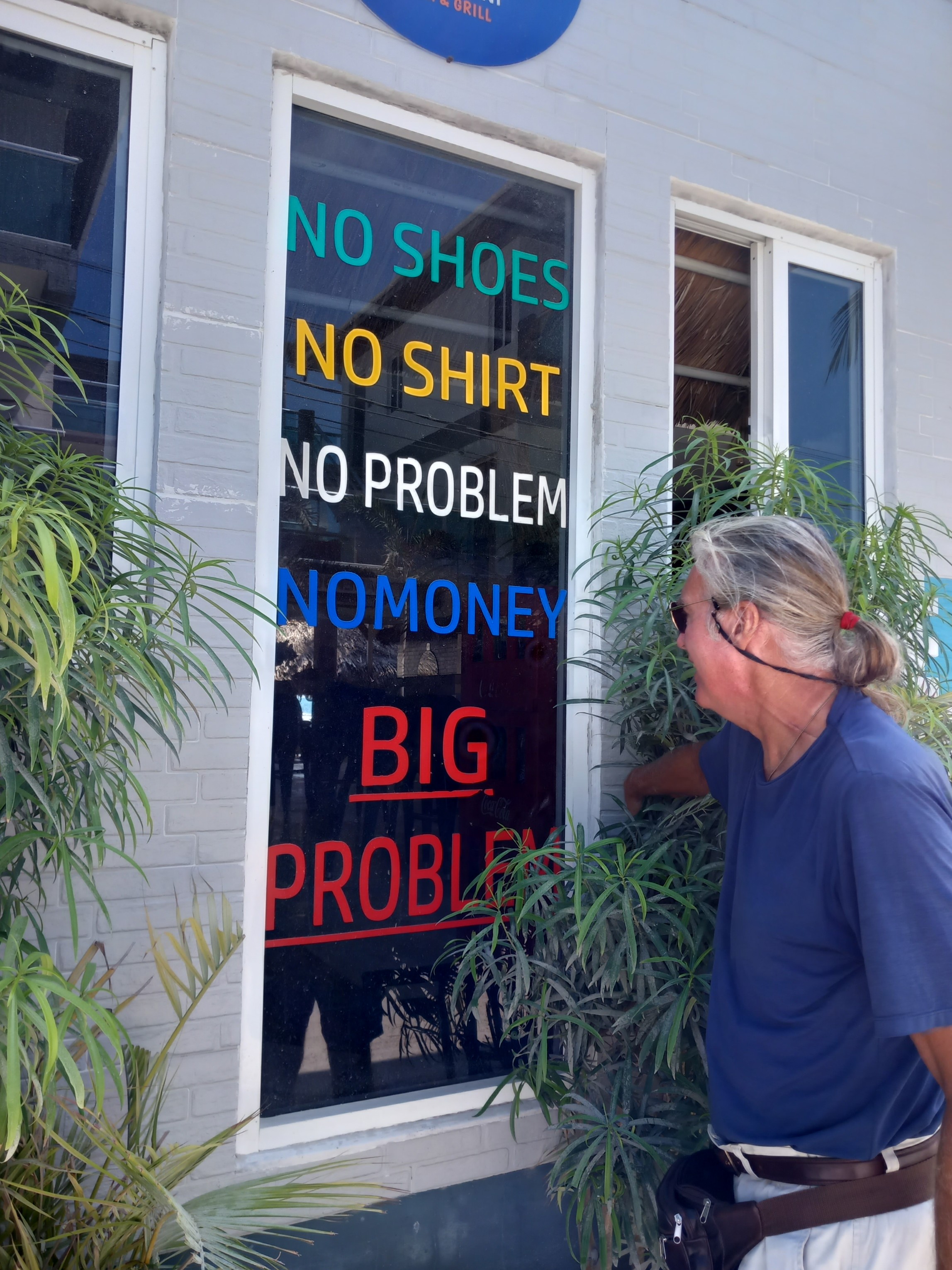
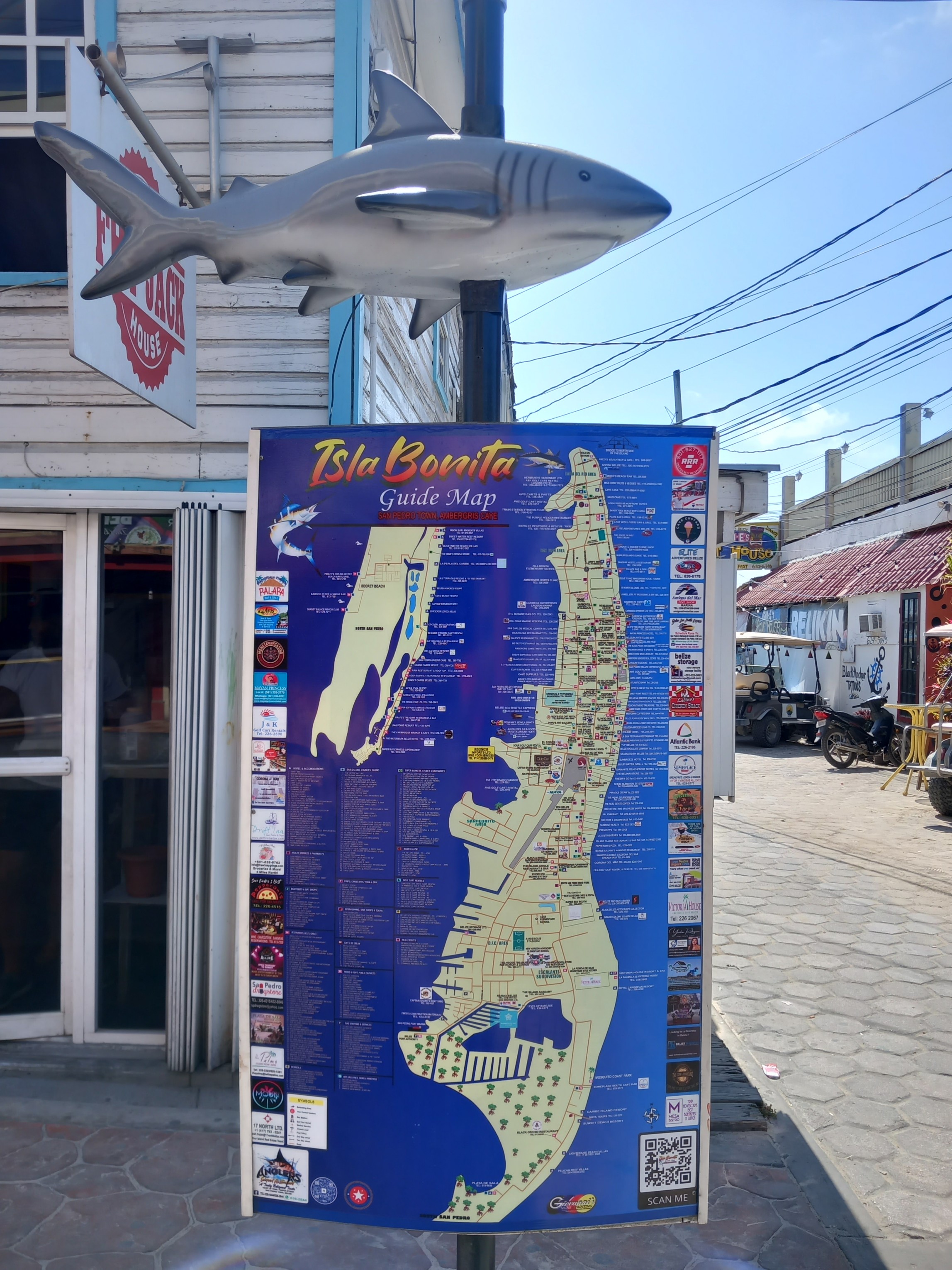
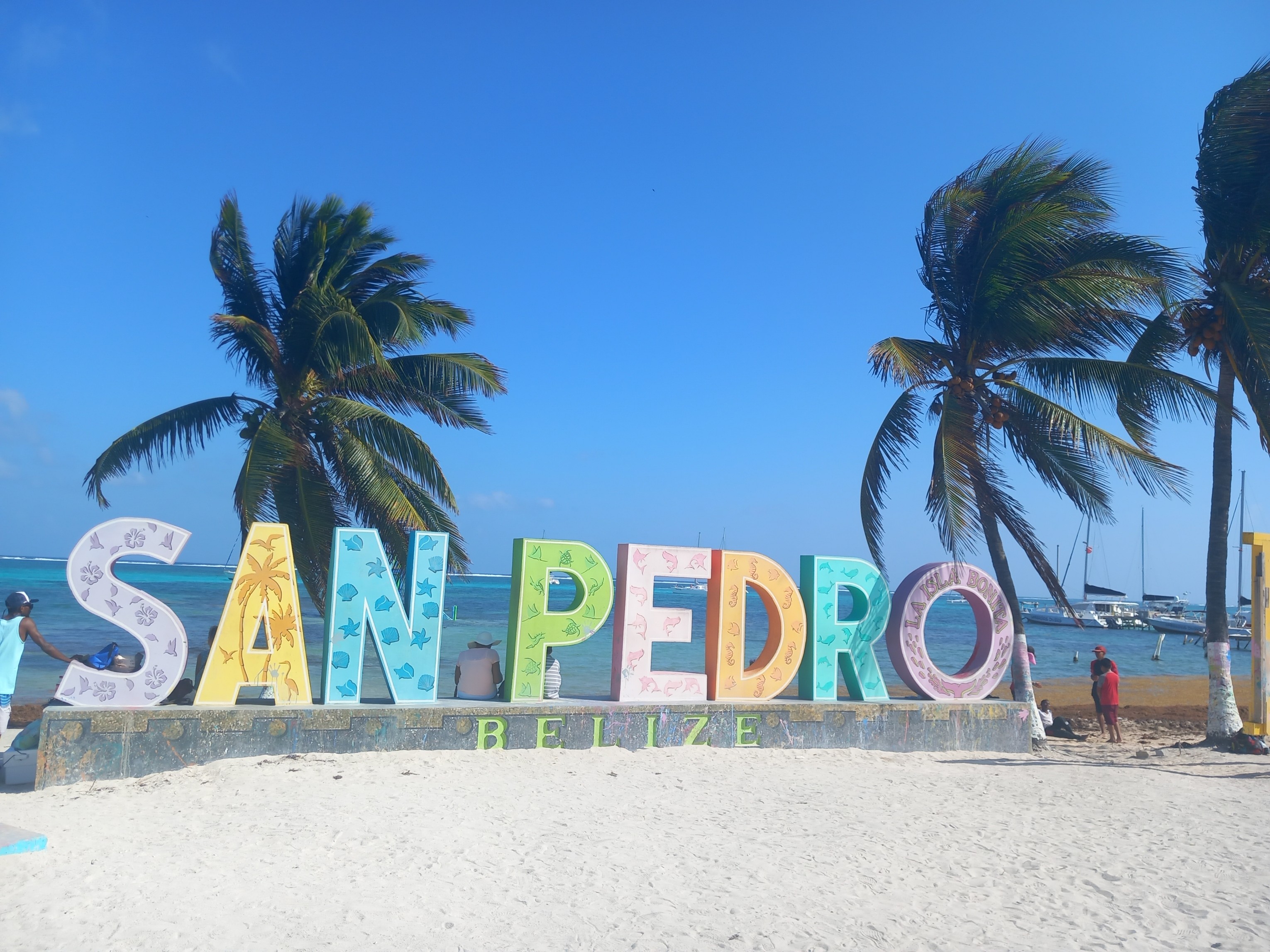
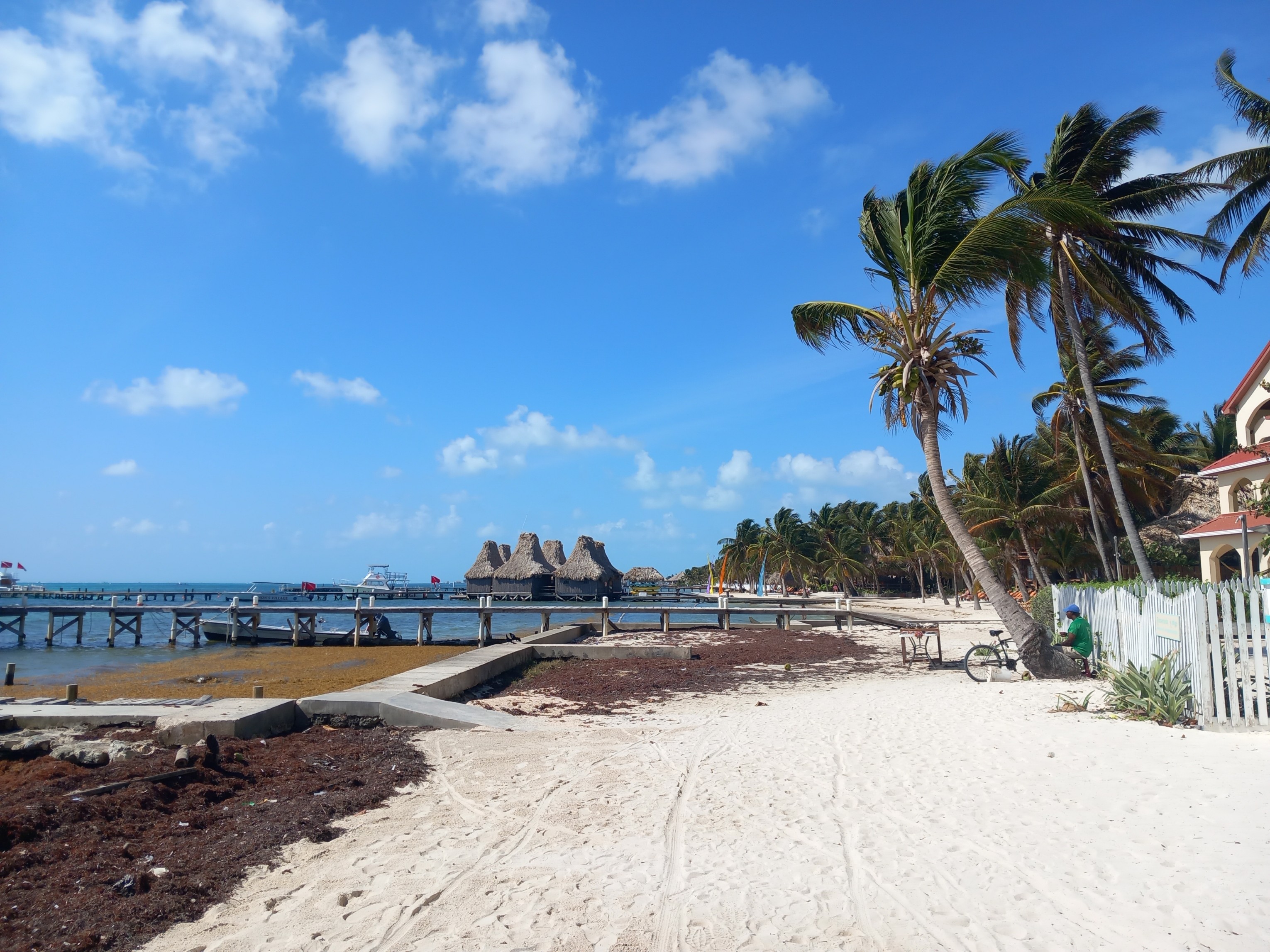
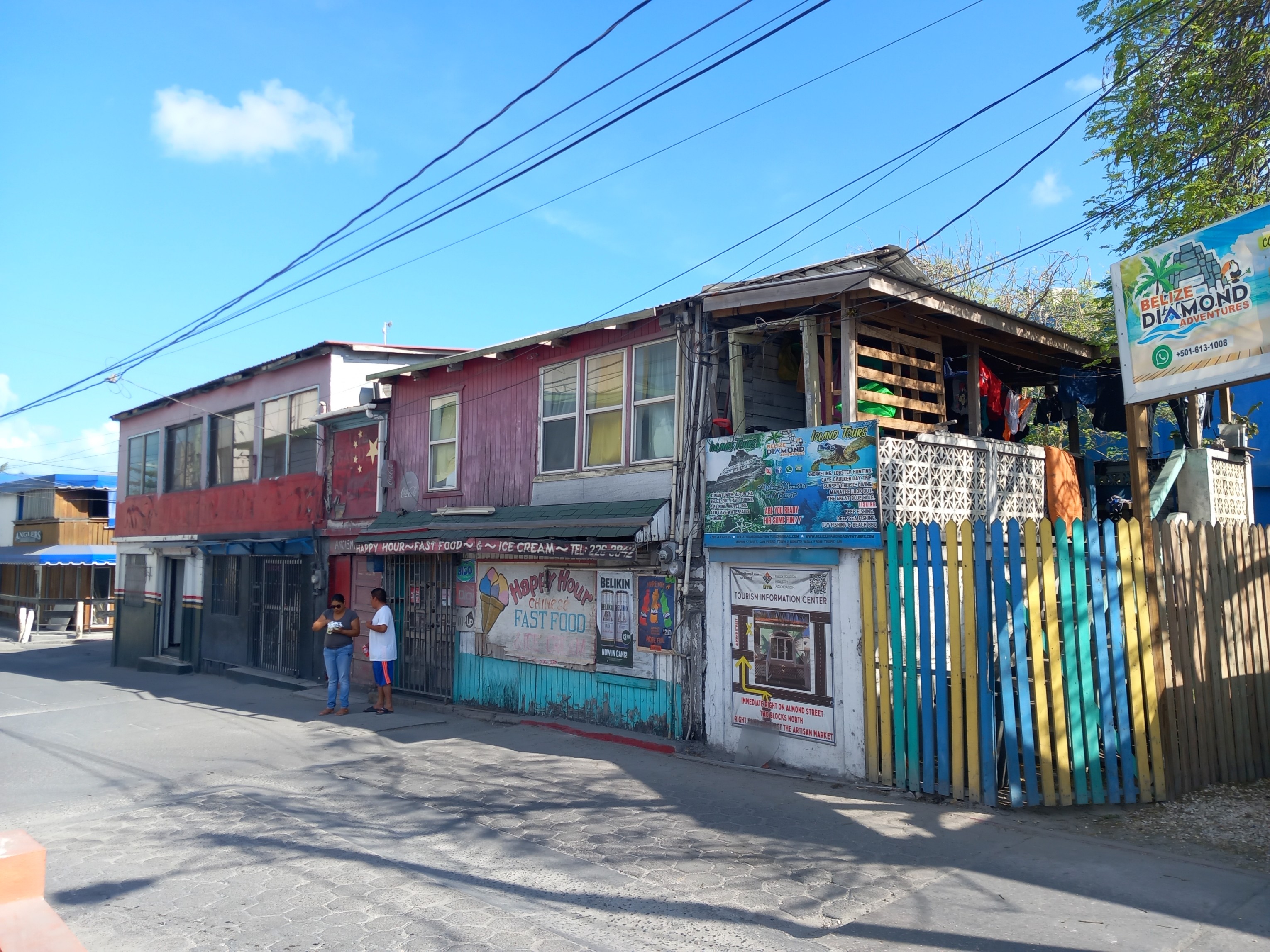
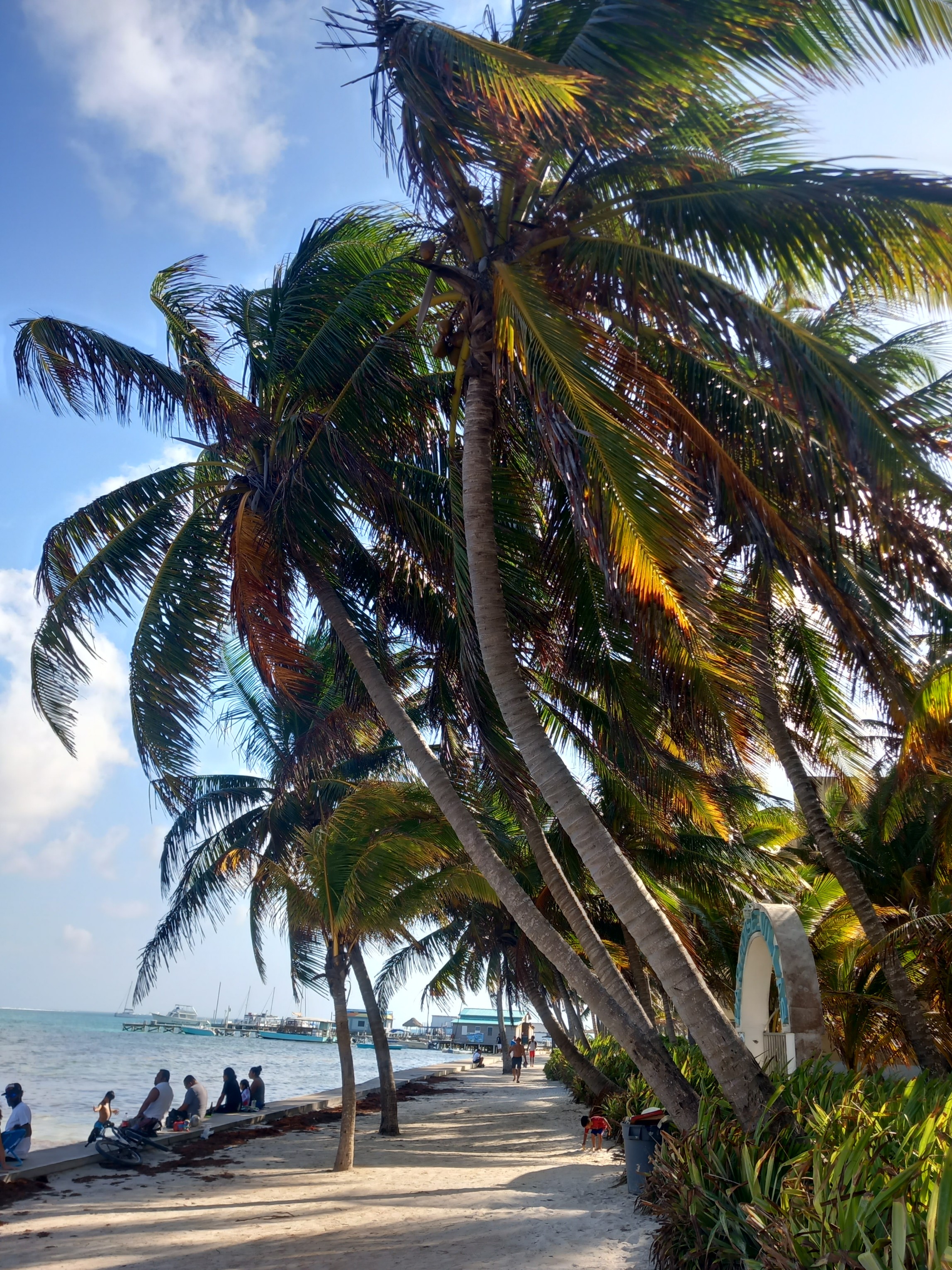
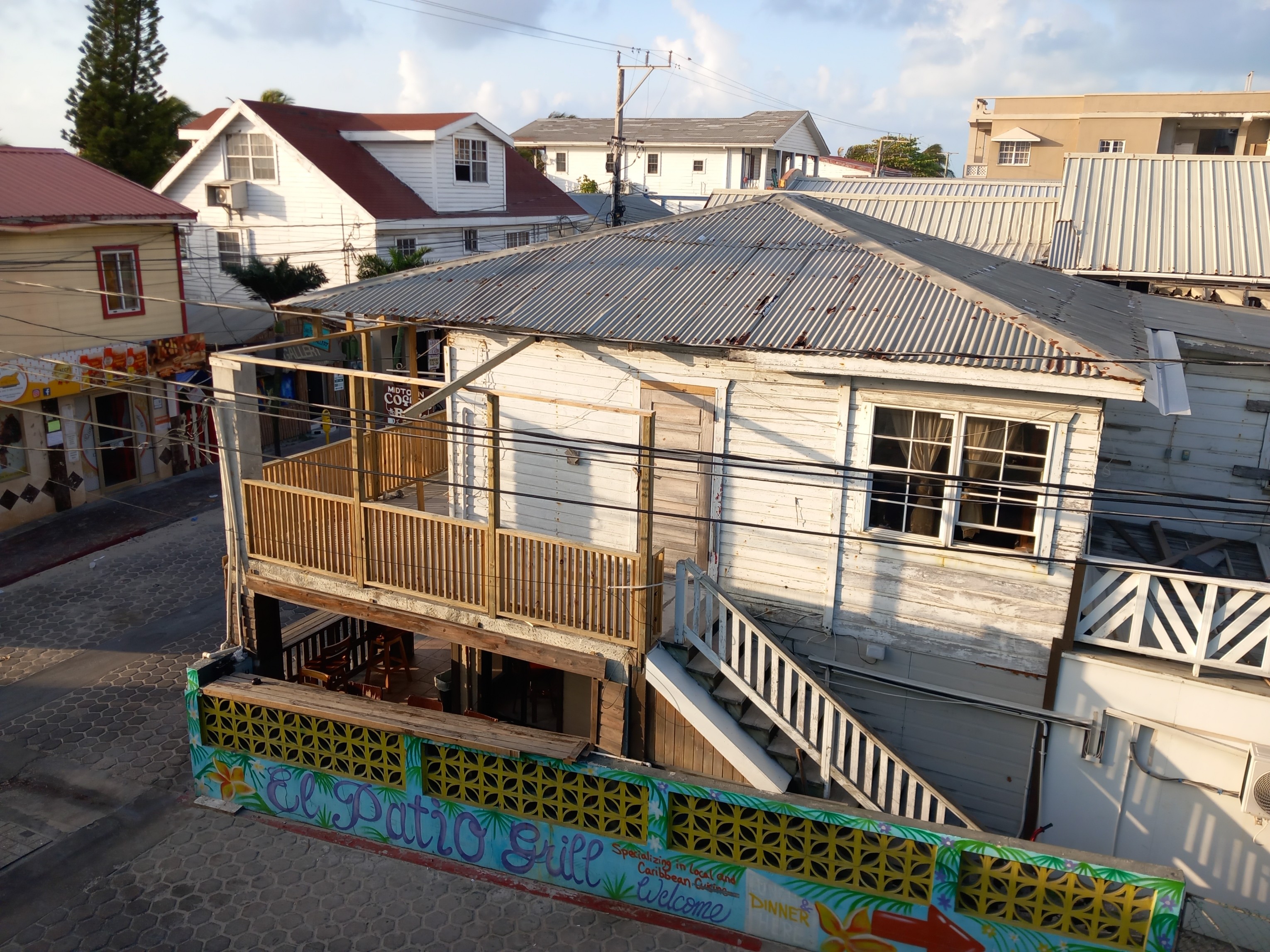
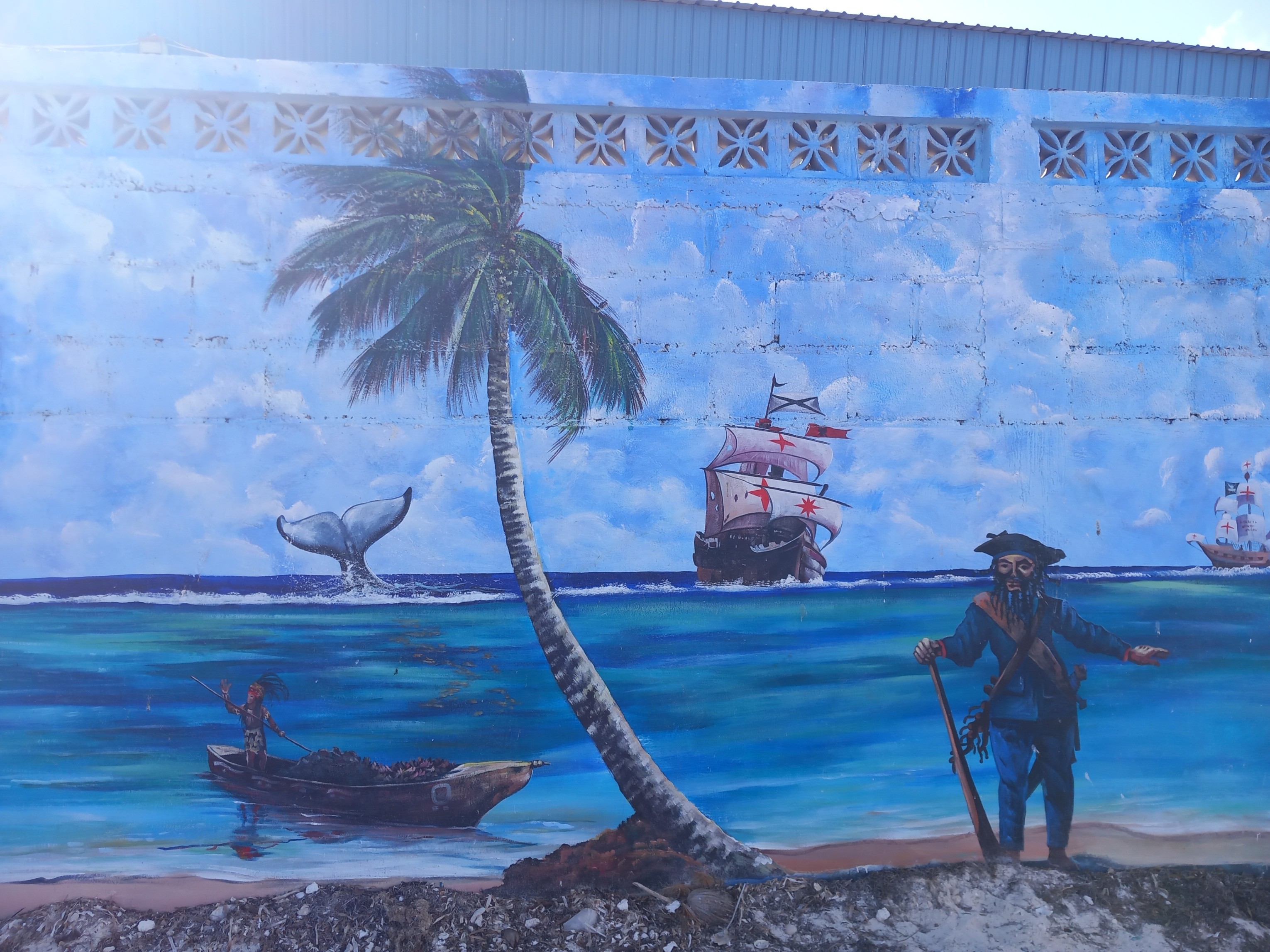
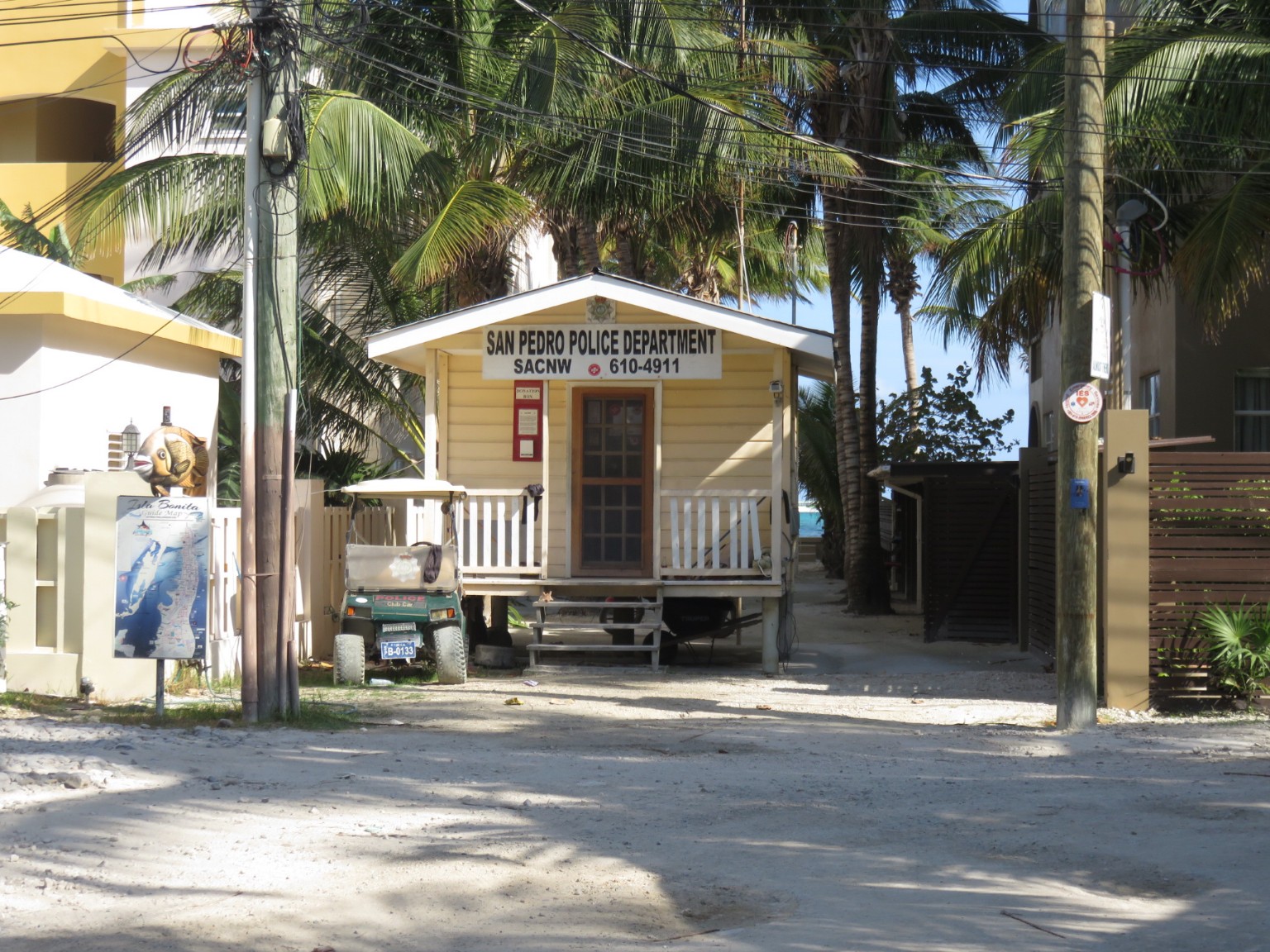
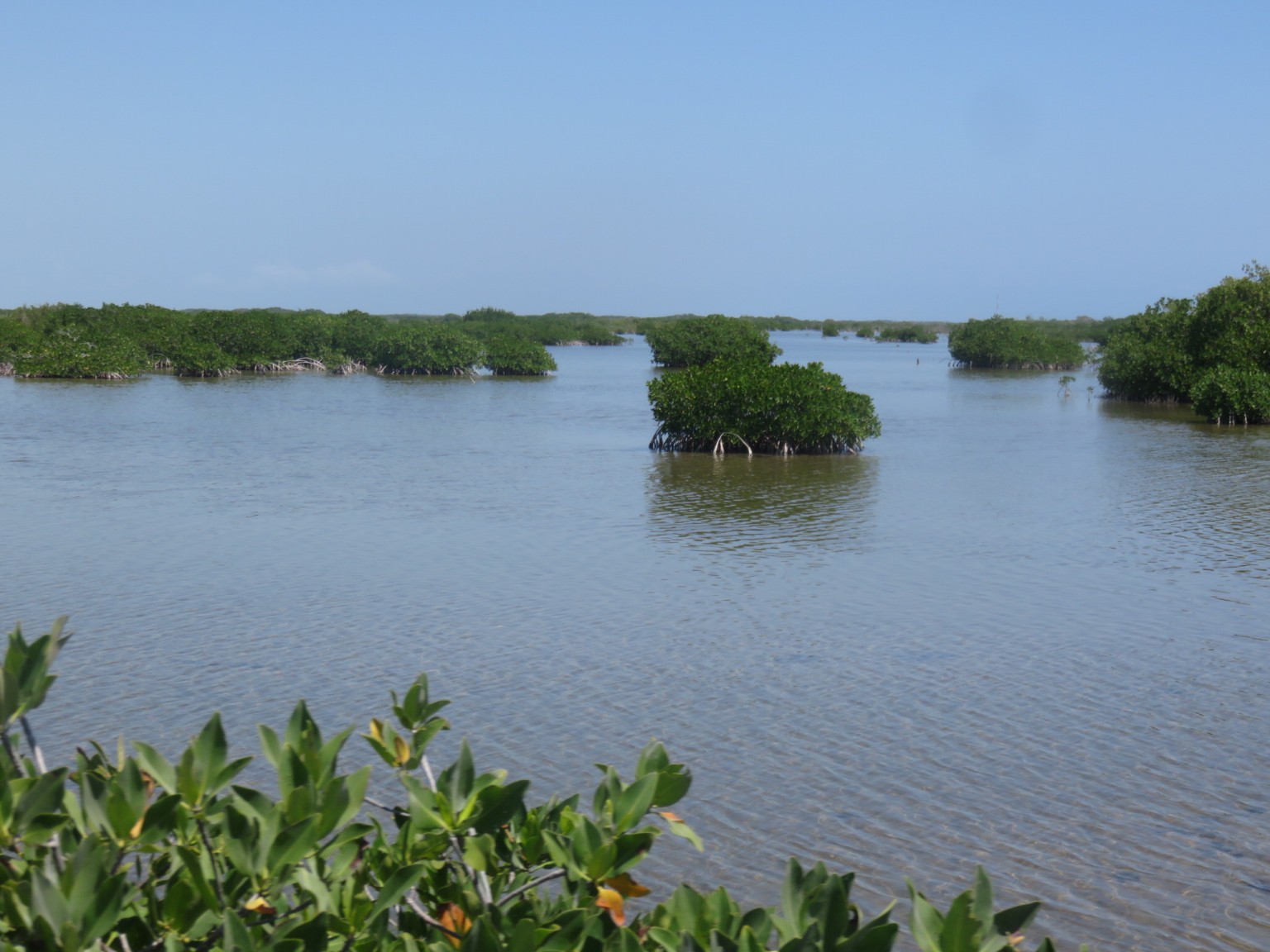
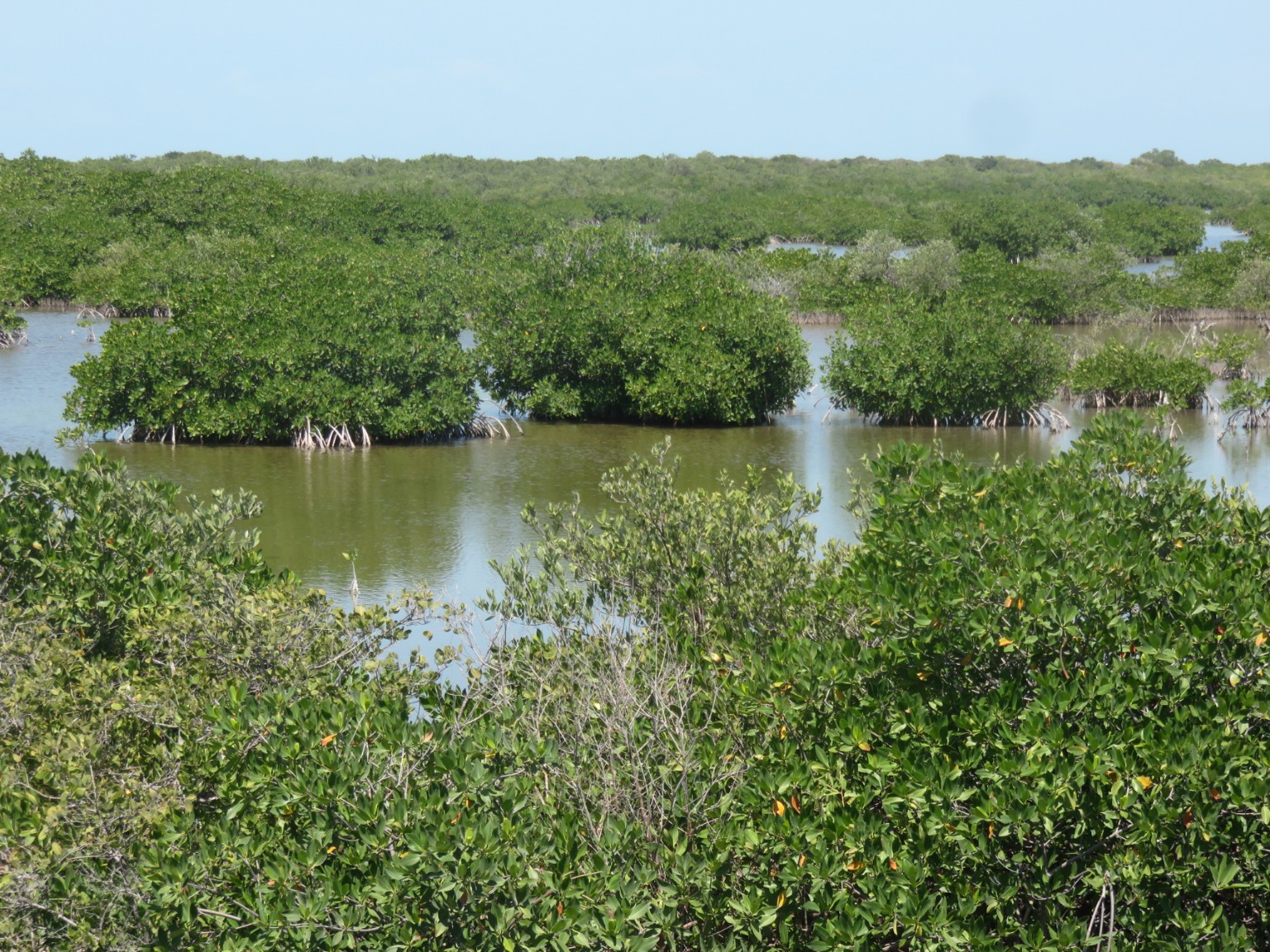
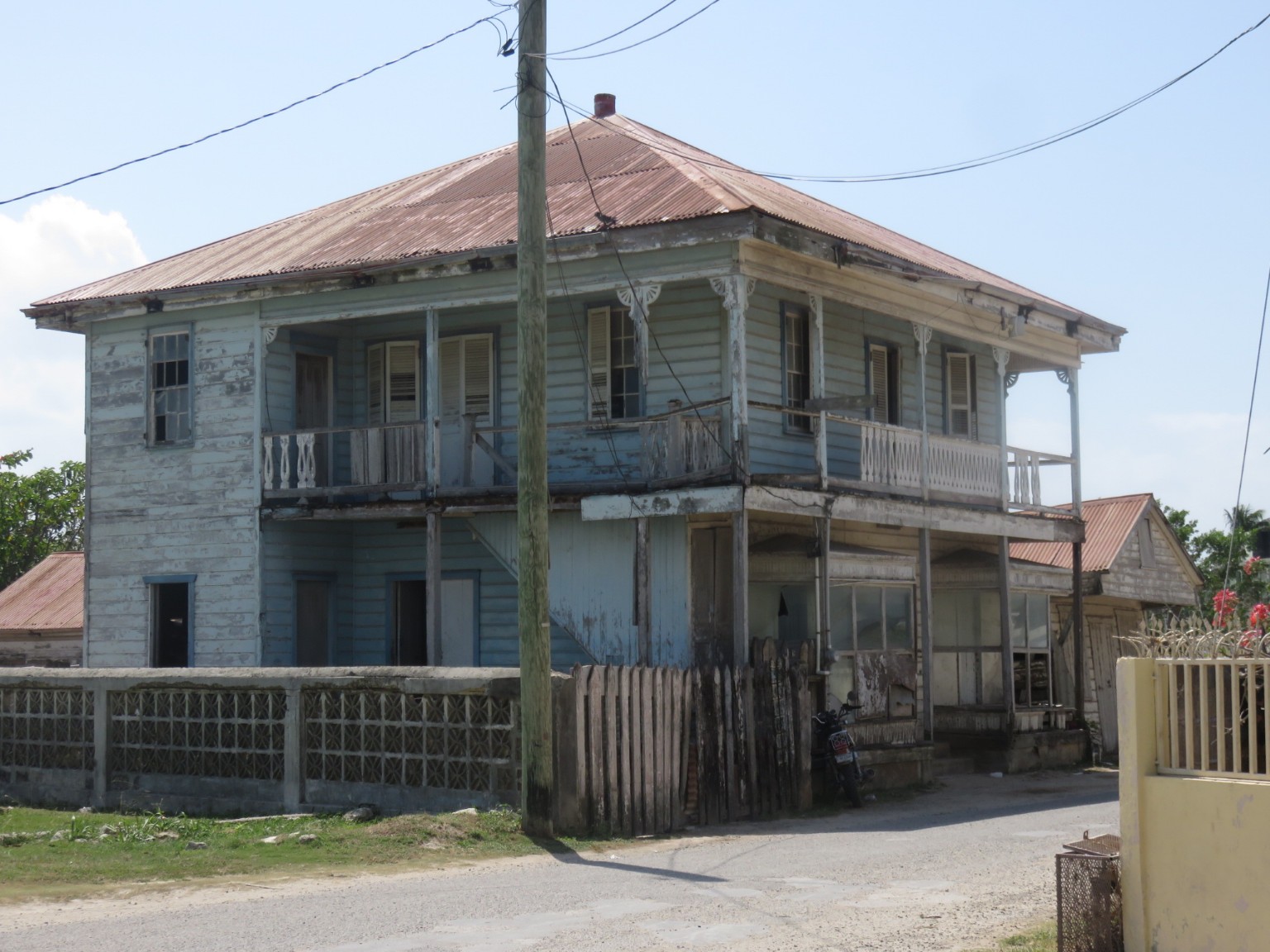
Ambergris Caye is better known by some as La Isla Bonita from the song made famous by Madonna. Unsurprisingly the Tourist Board do not miss an opportunity to promote the island with this connection.The first thing you notice on the beaches to the windward side of the island is that the sea weed problem experienced in Mexico continues all the way down this coast – some have said this has been an issue all the way from Florida this season.The older 50’s style timber buildings continue to be used beside newer buildings.The very few cars allowed are all taxis. The main mode of transport are these golf carts and bicycles.The keener eyed amongst you will notice the tide break in the distant background; this is 0.5 miles from the beach and is where the second largest barrier reef in the world is located because it runs for 80 miles (120 kilometres) along this coast down to Guatemala. It protects these islands from tidal waves and provides an enormous source of income for the dozens of tour companies that offer snorkelling and diving expeditions down to the reef.We are fortunate to find the last remaining room on a Saturday night in the centre of San Pedro. This is the view from our second floor location taken early Sunday morning before the endless procession of golf carts are in use.This is the width of the roads – about wide enough for two golf carts to pass with few footpaths so it can be congested. There are only three roads because the island is quite narrow although it is 25 miles long ( 40 kilometres). At one point it widens to 5 miles where the mangroves are, however, it takes some getting used to that you can walk from one side to the other in three/four blocks.A reminder, if it were needed, that the area was settled by Pirates.
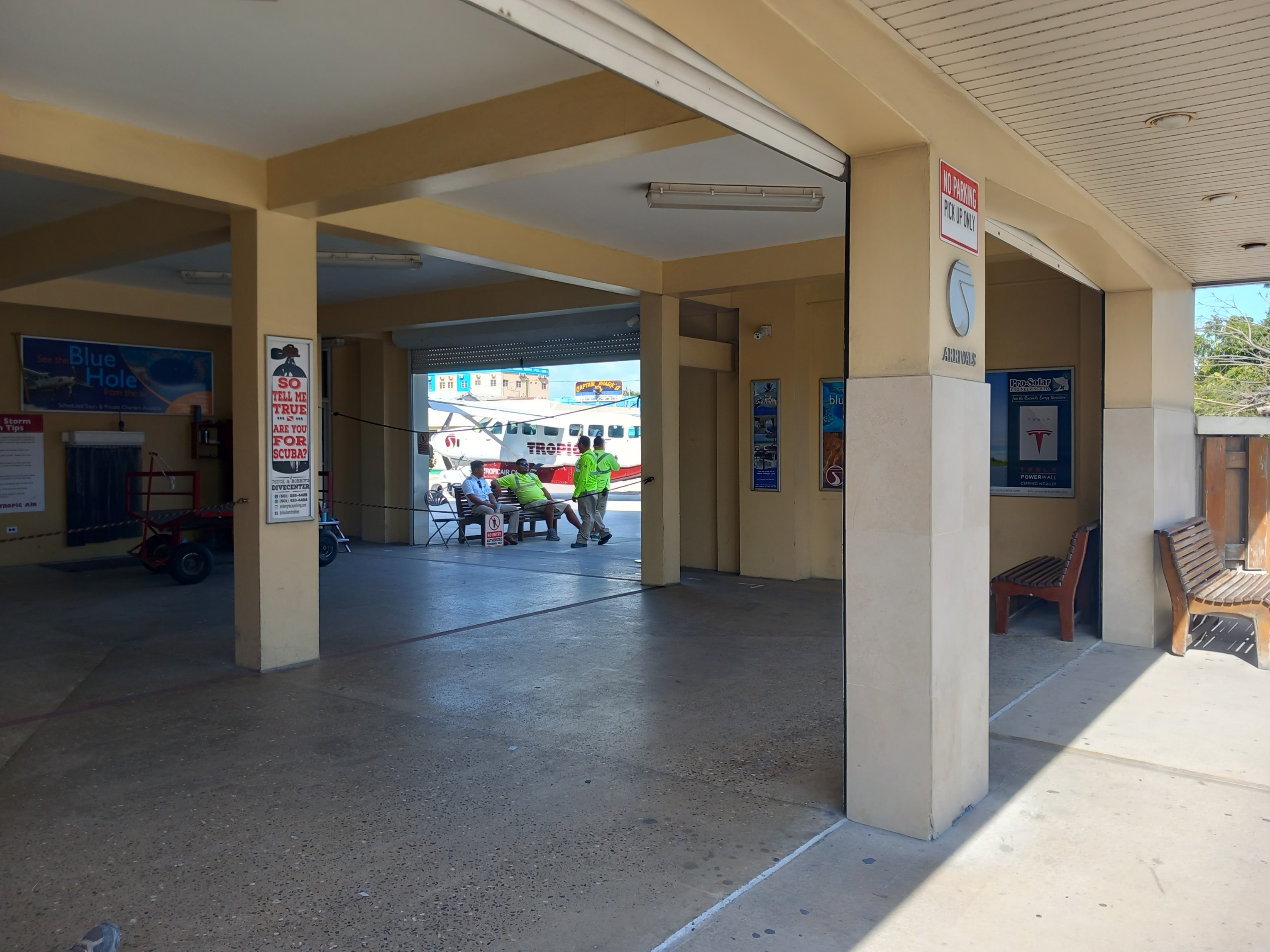
In addition to the water taxis there are numerous flights daily from the airport – note the complete lack of security – this is the arrivals hall.
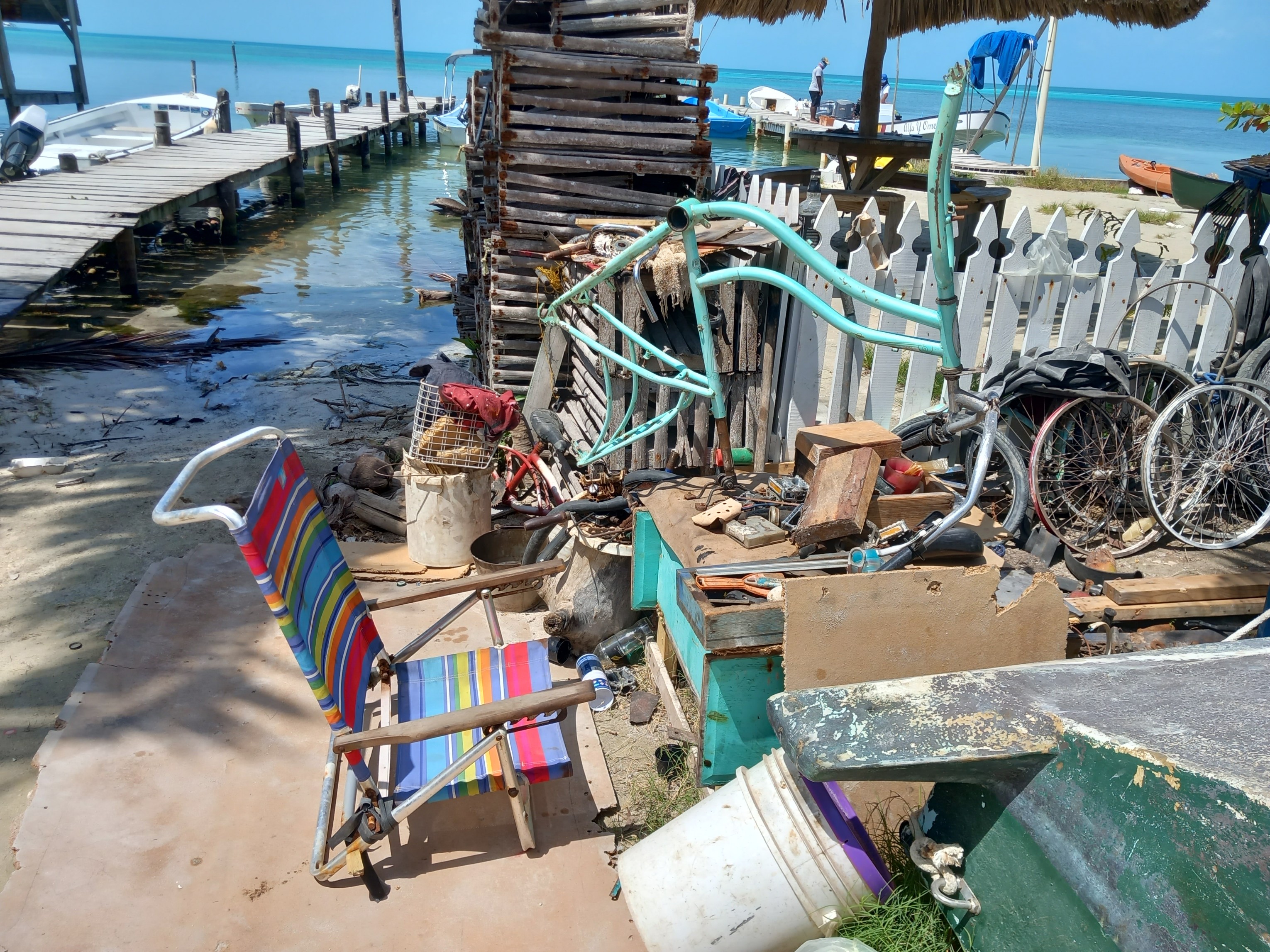
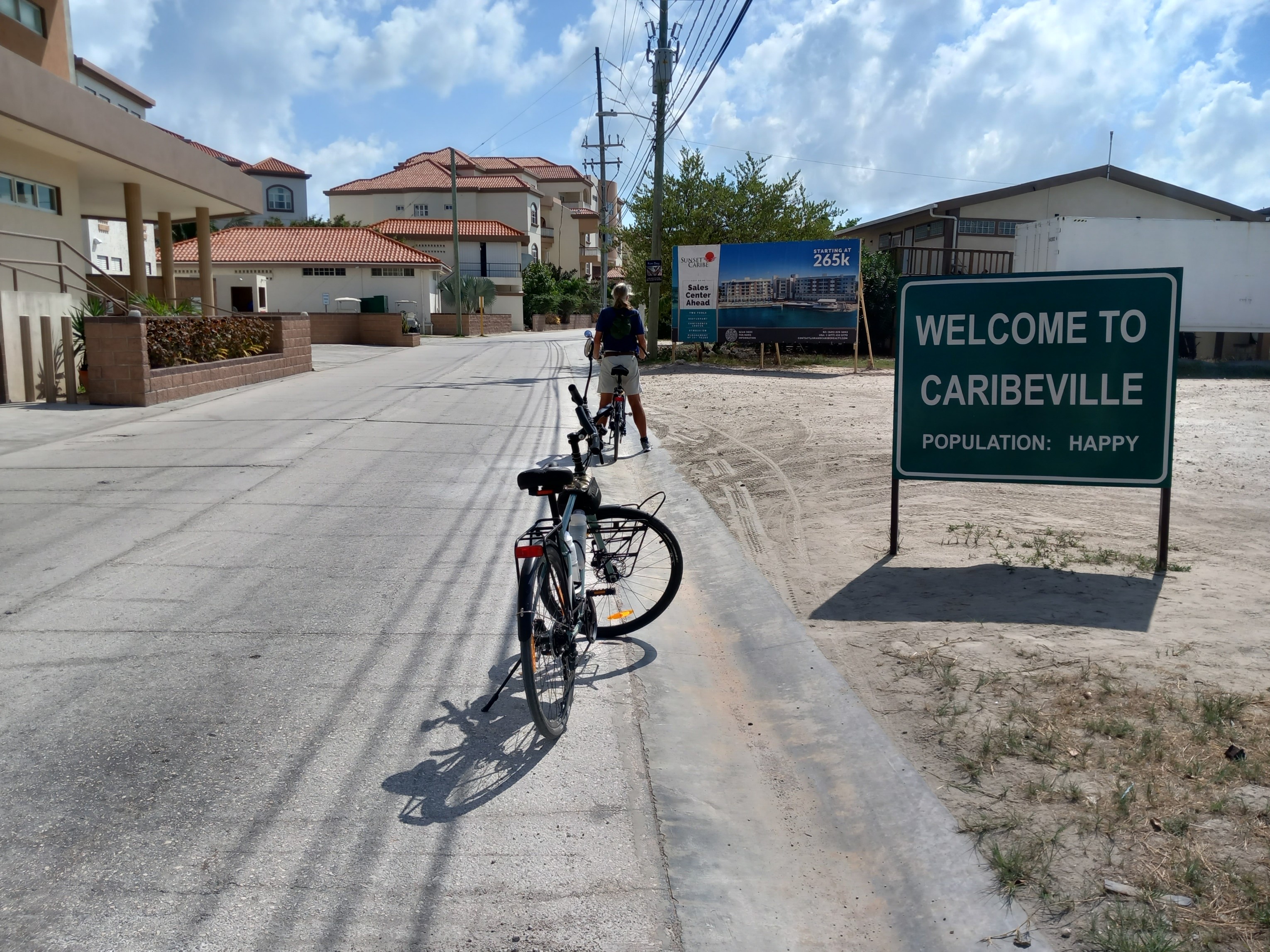
We toured the island from top to bottom on our bikes and it was much quieter outside the main tourist areas and interesting to see how the island would have looked in its original state. There was a lot of building work in progress for new resorts, hotels and apartments.
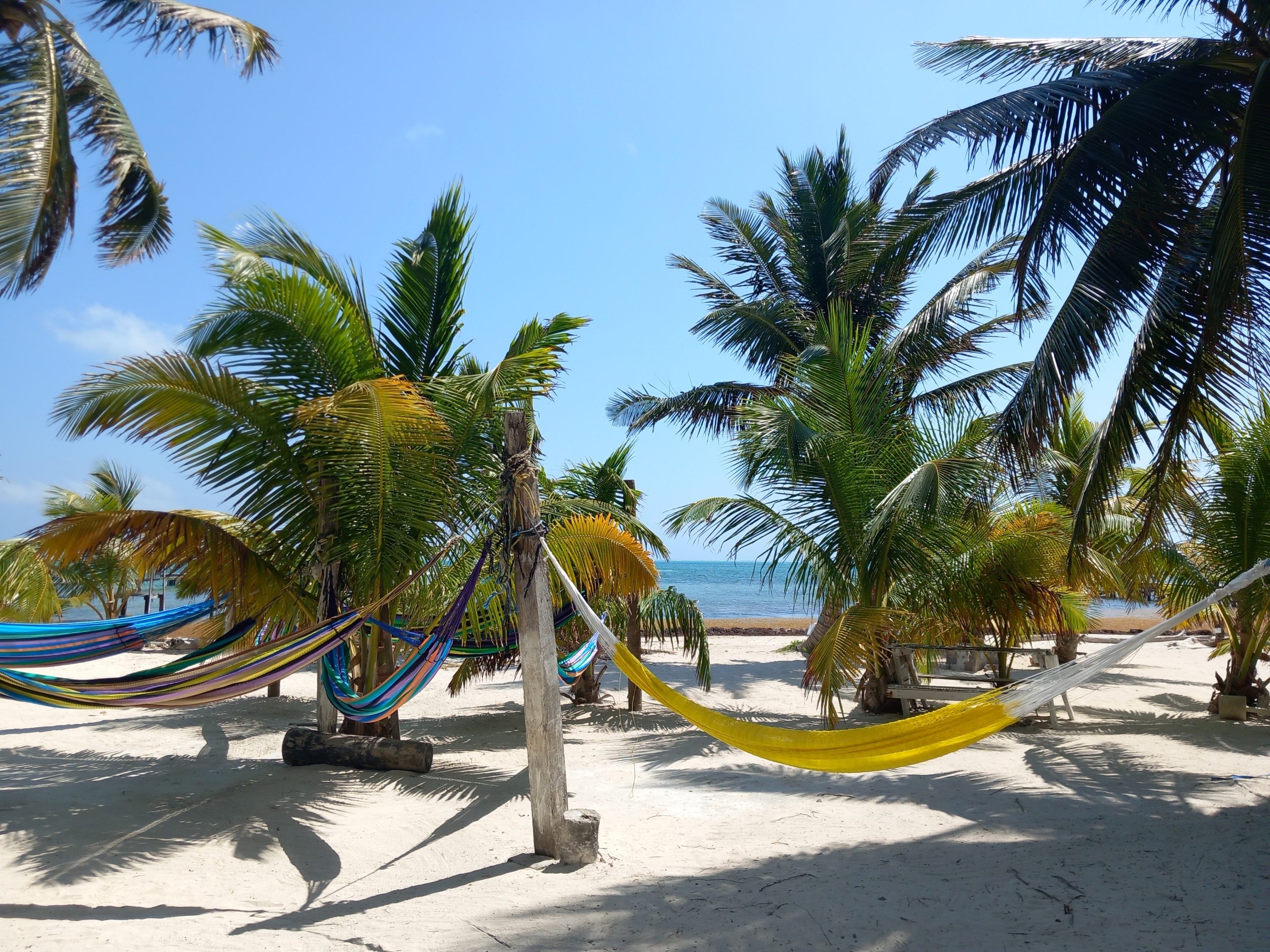
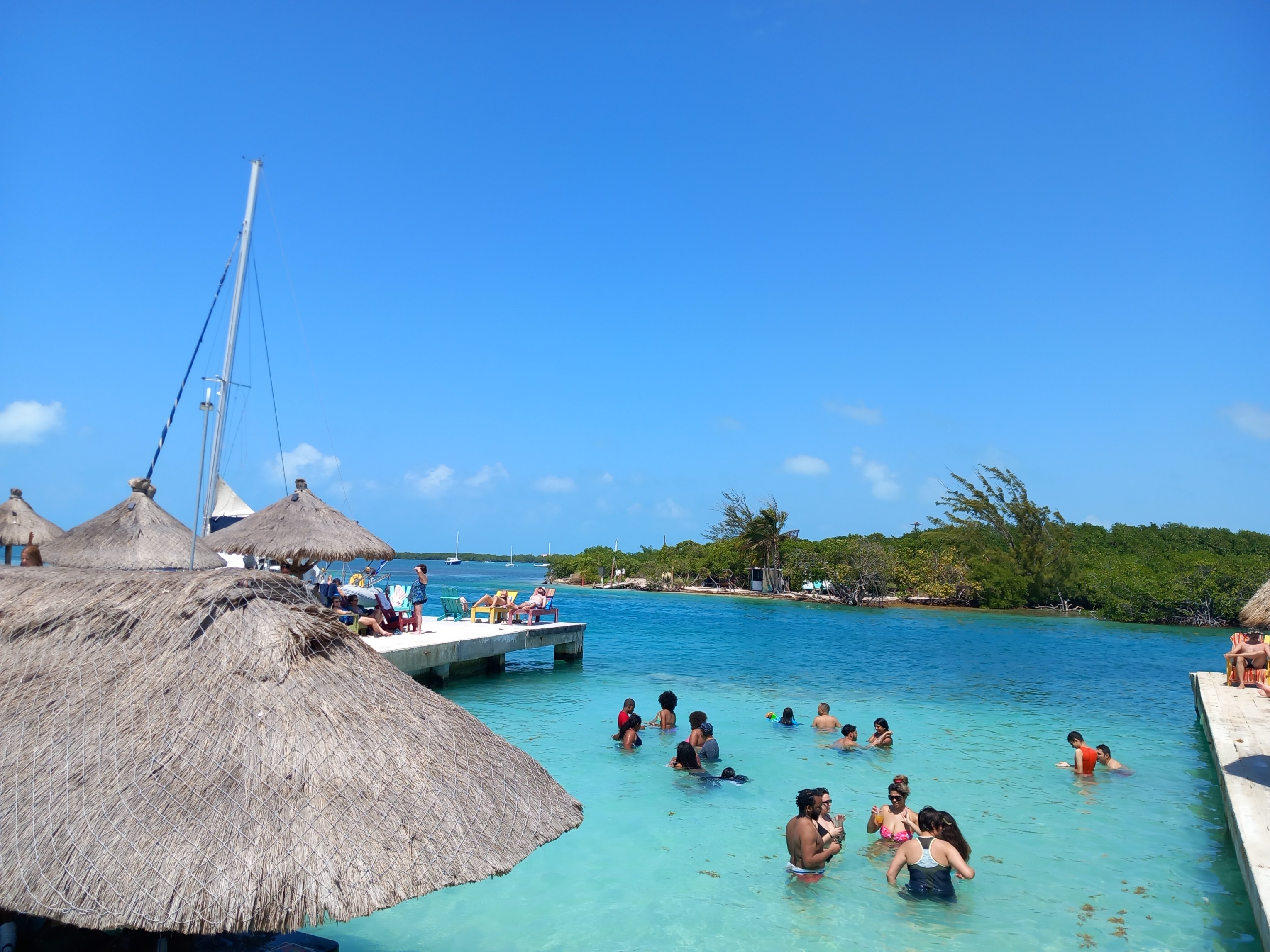
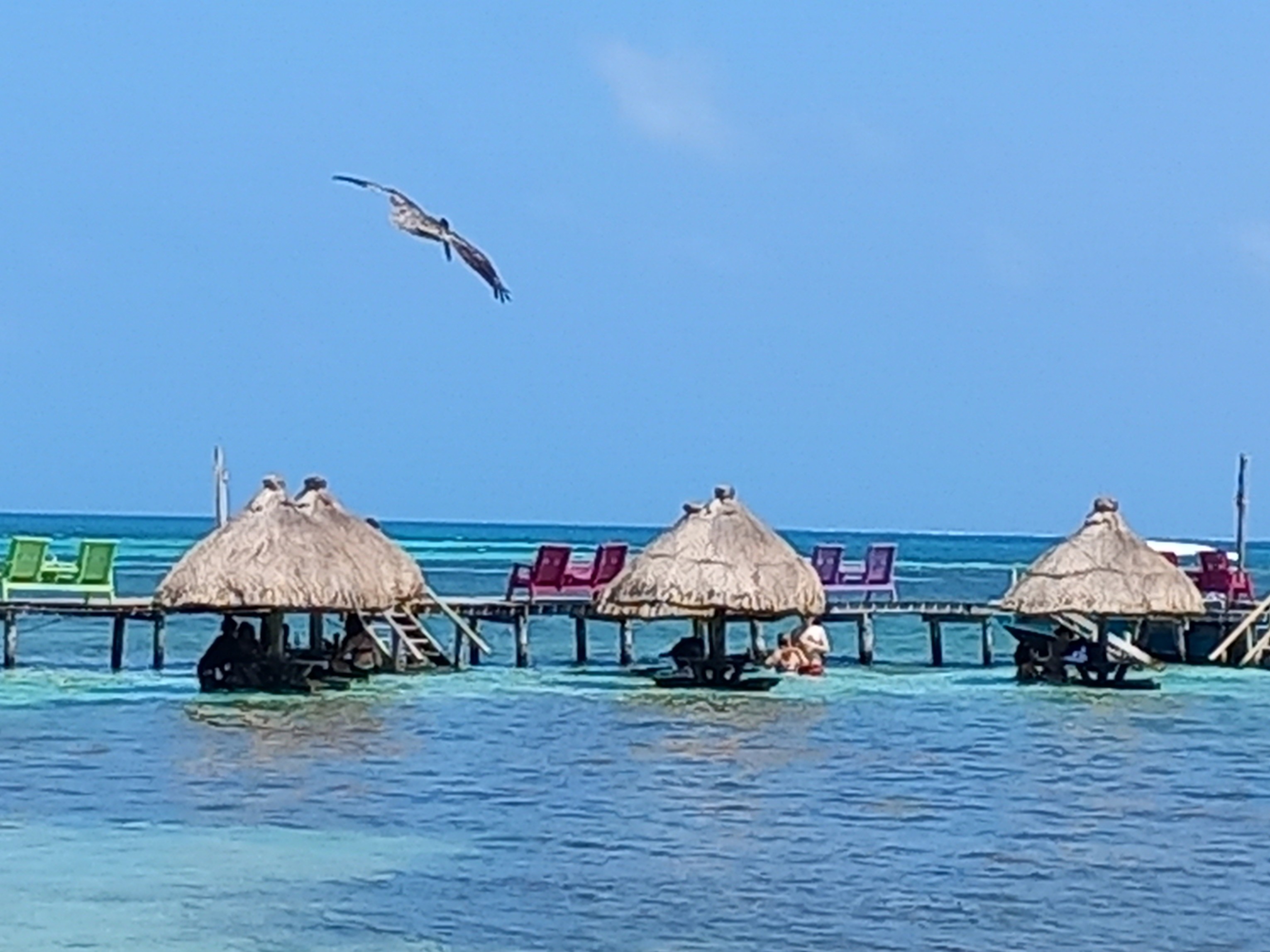
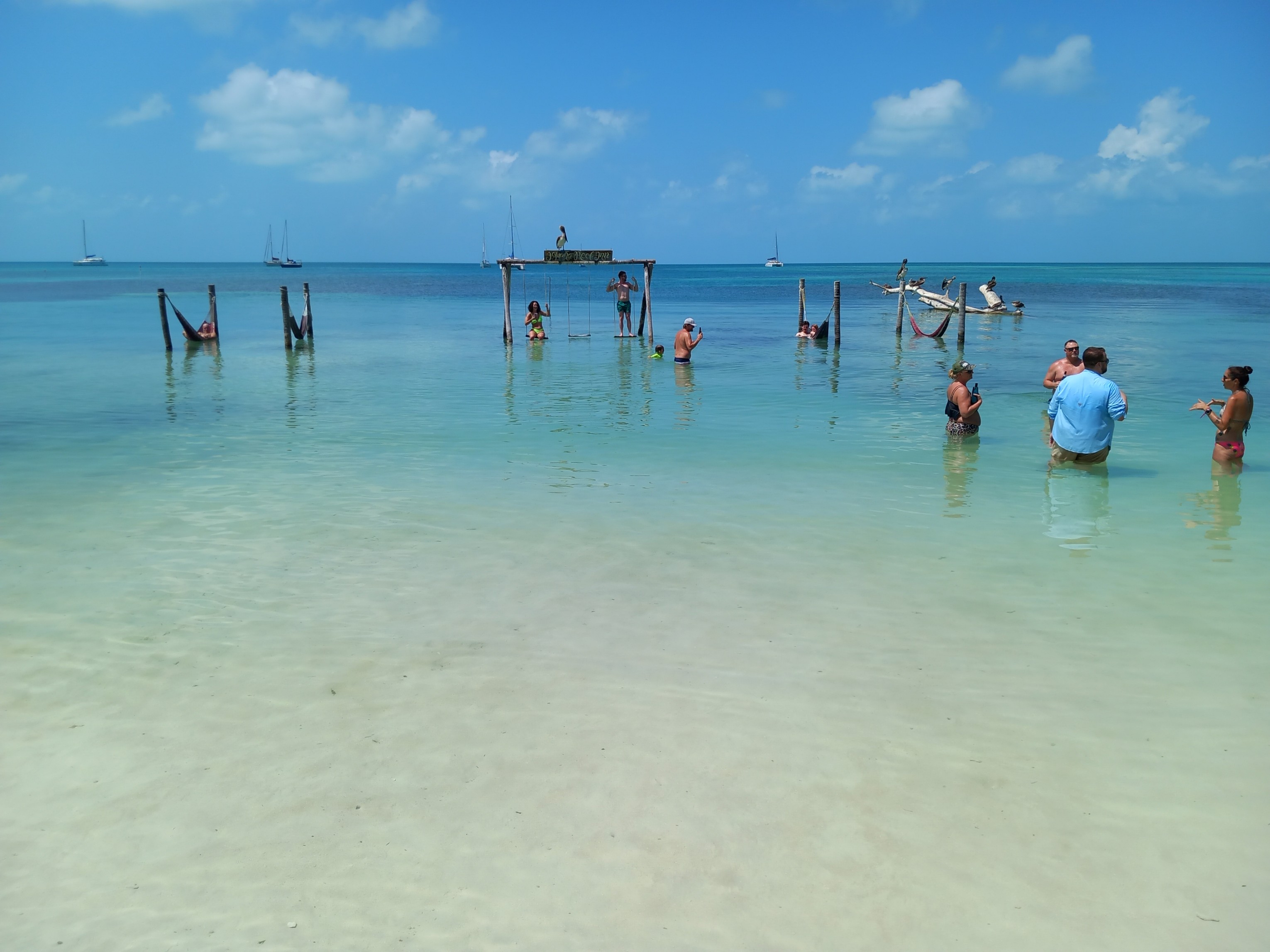
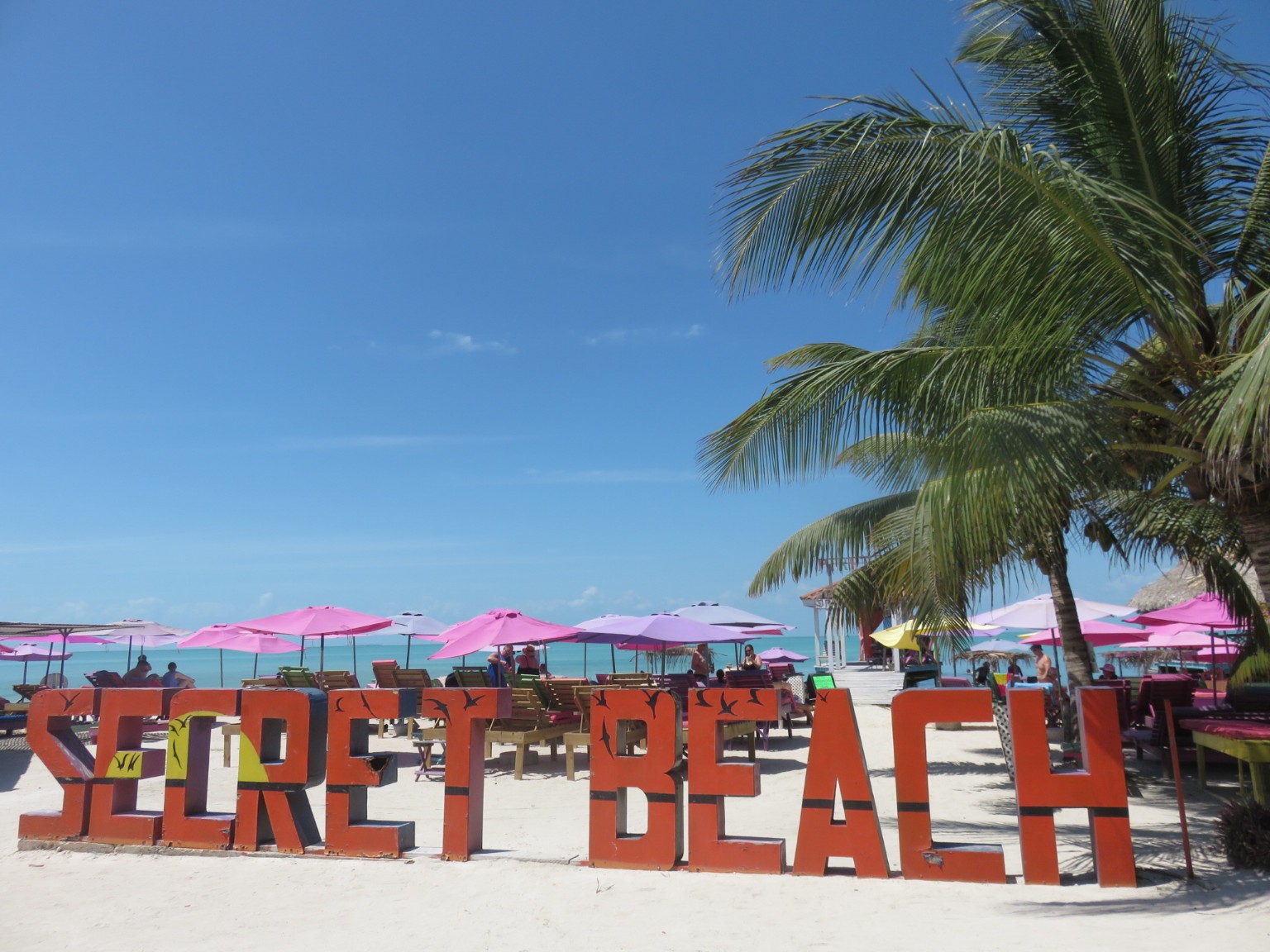
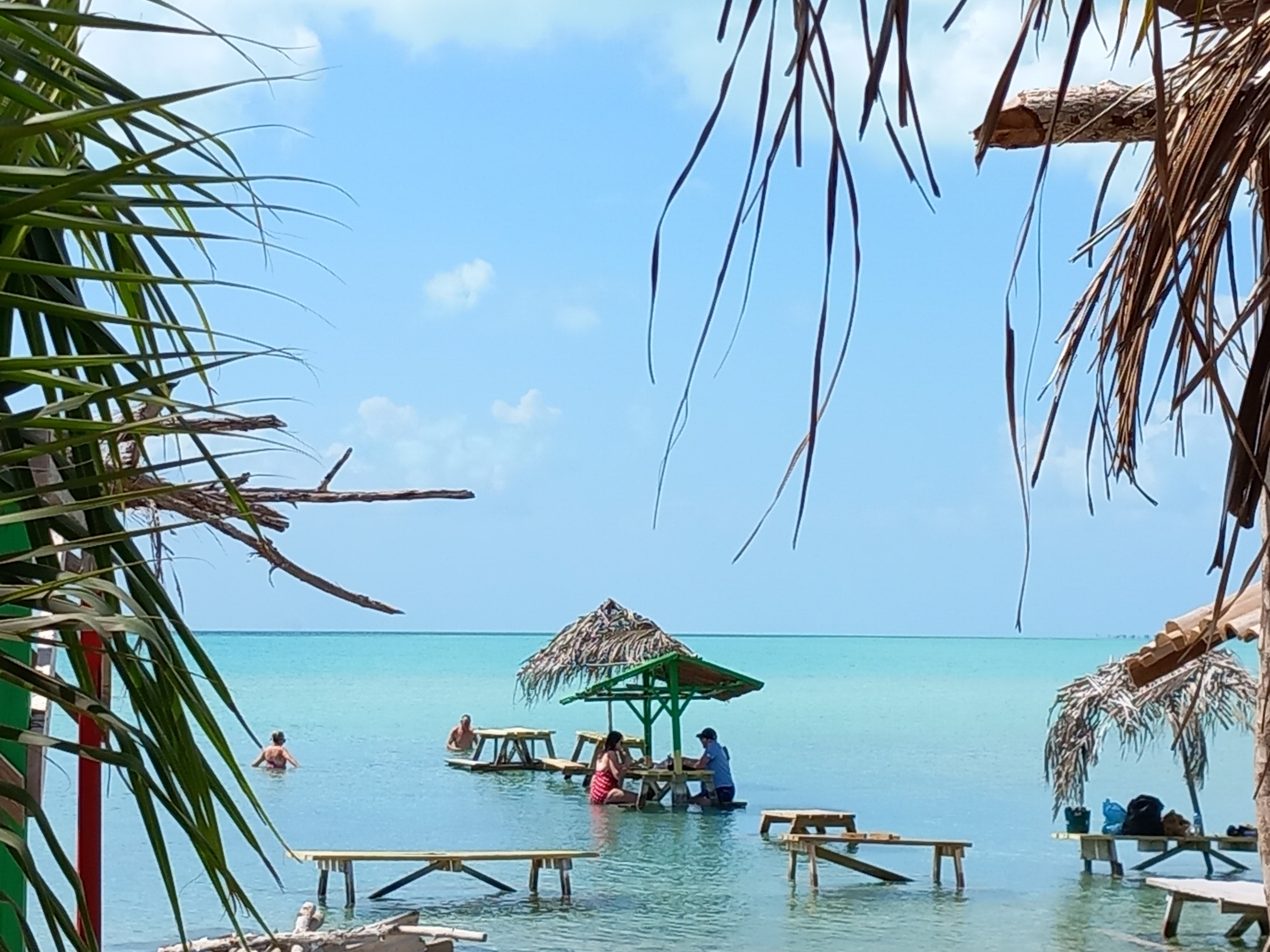
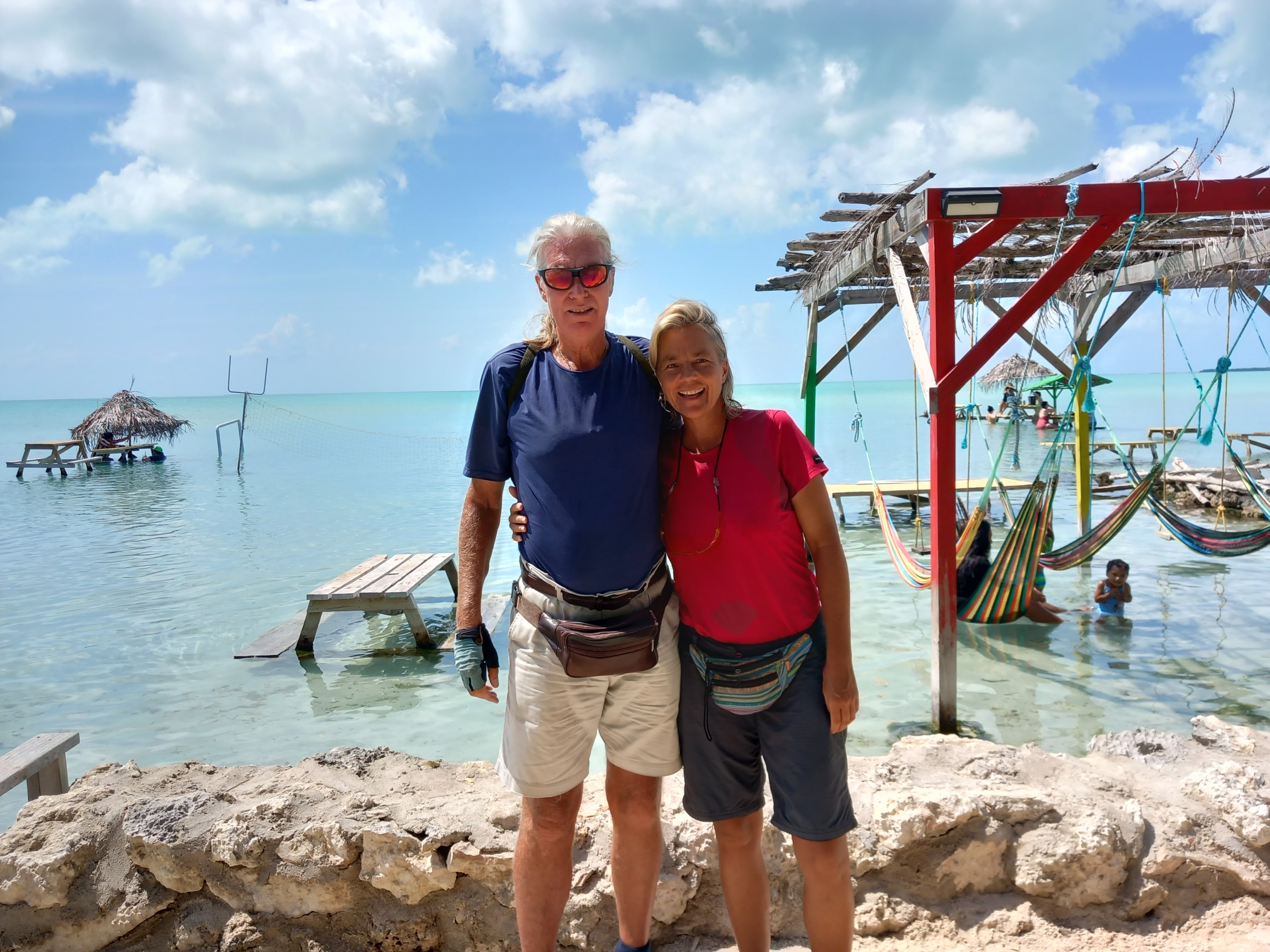
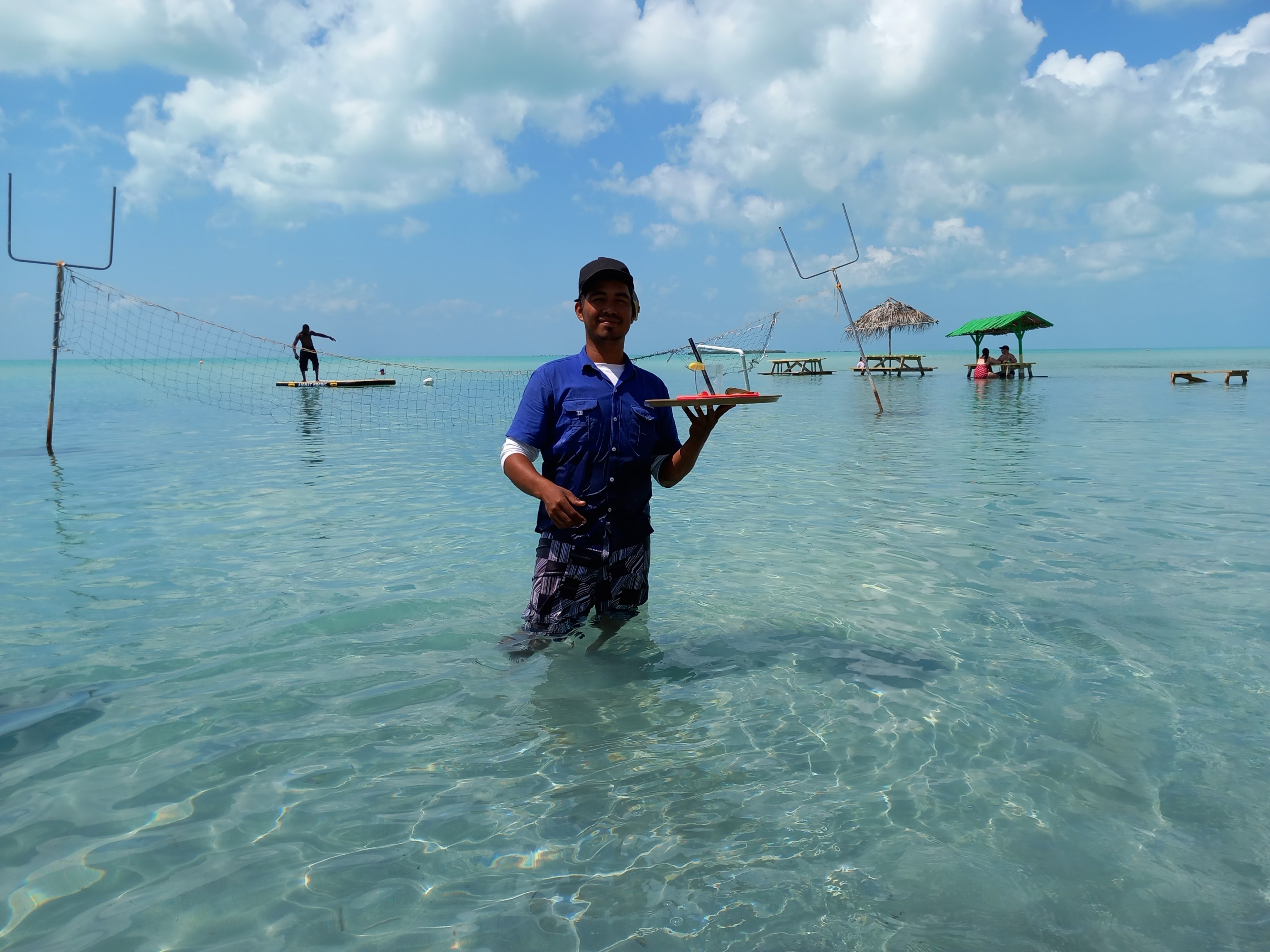
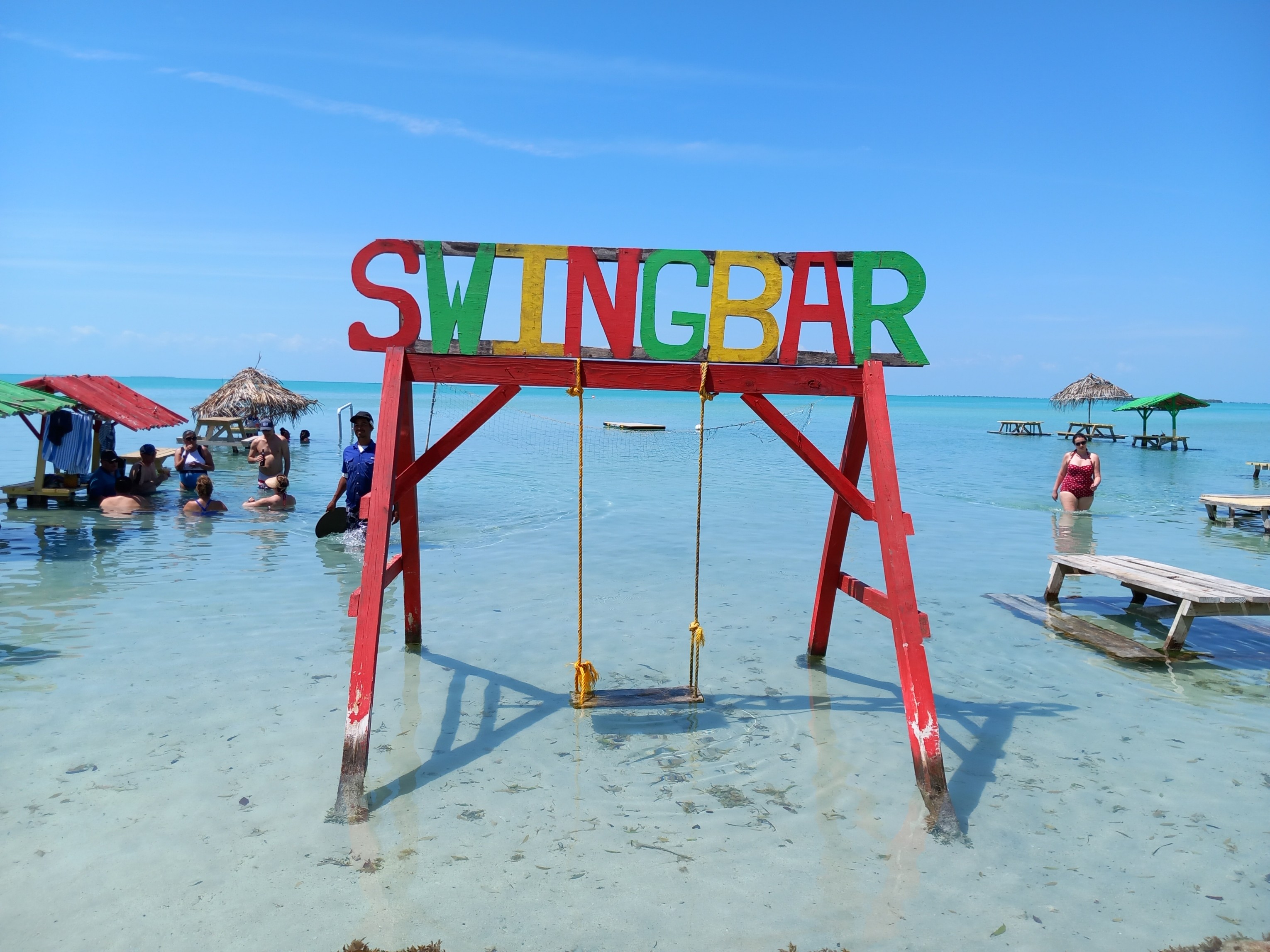
The secret is out, there is a beach towards the top of the island.A typical ‘car park’ at the beach. Why have a bar on land when you can have it in the water?
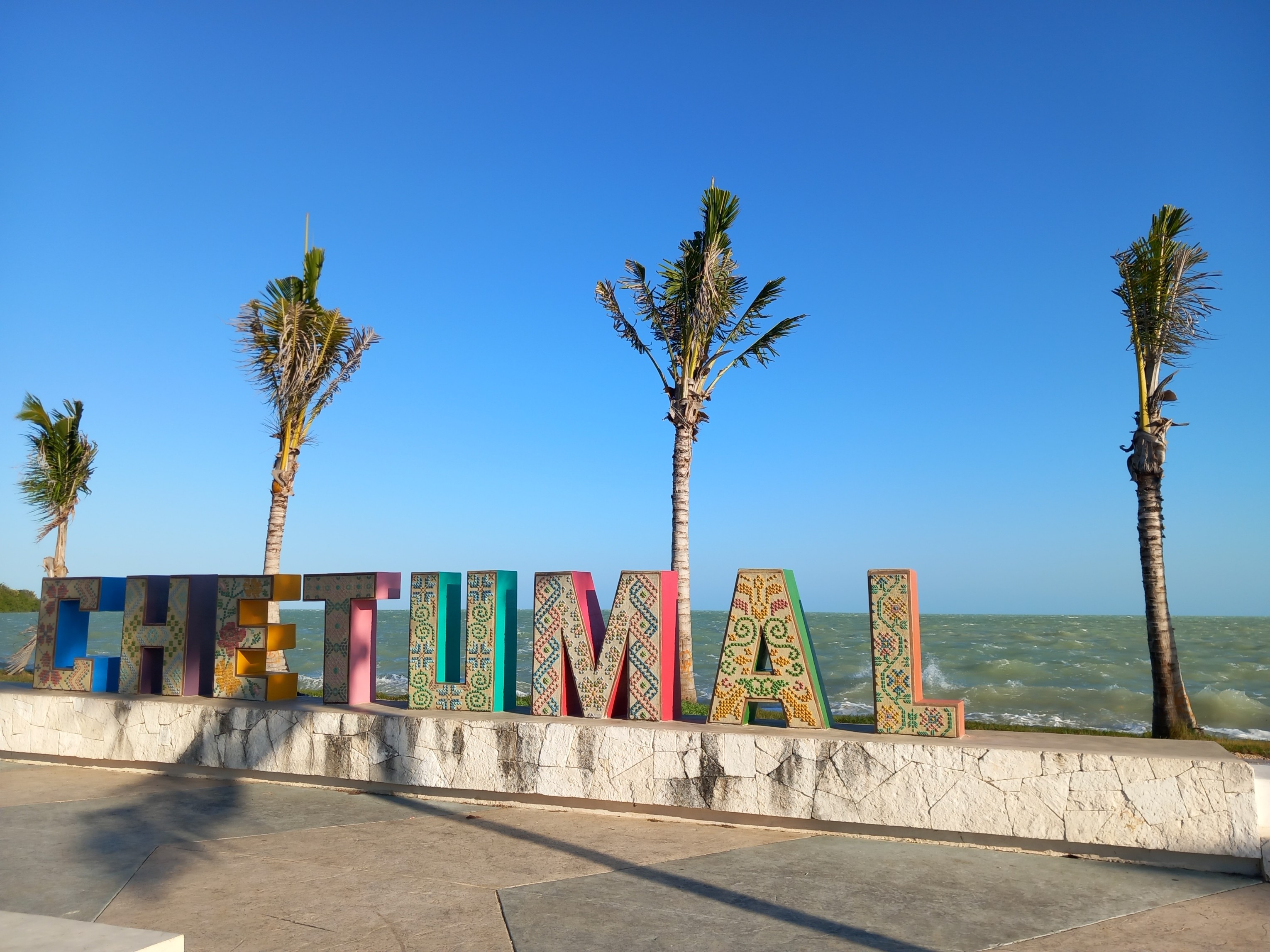
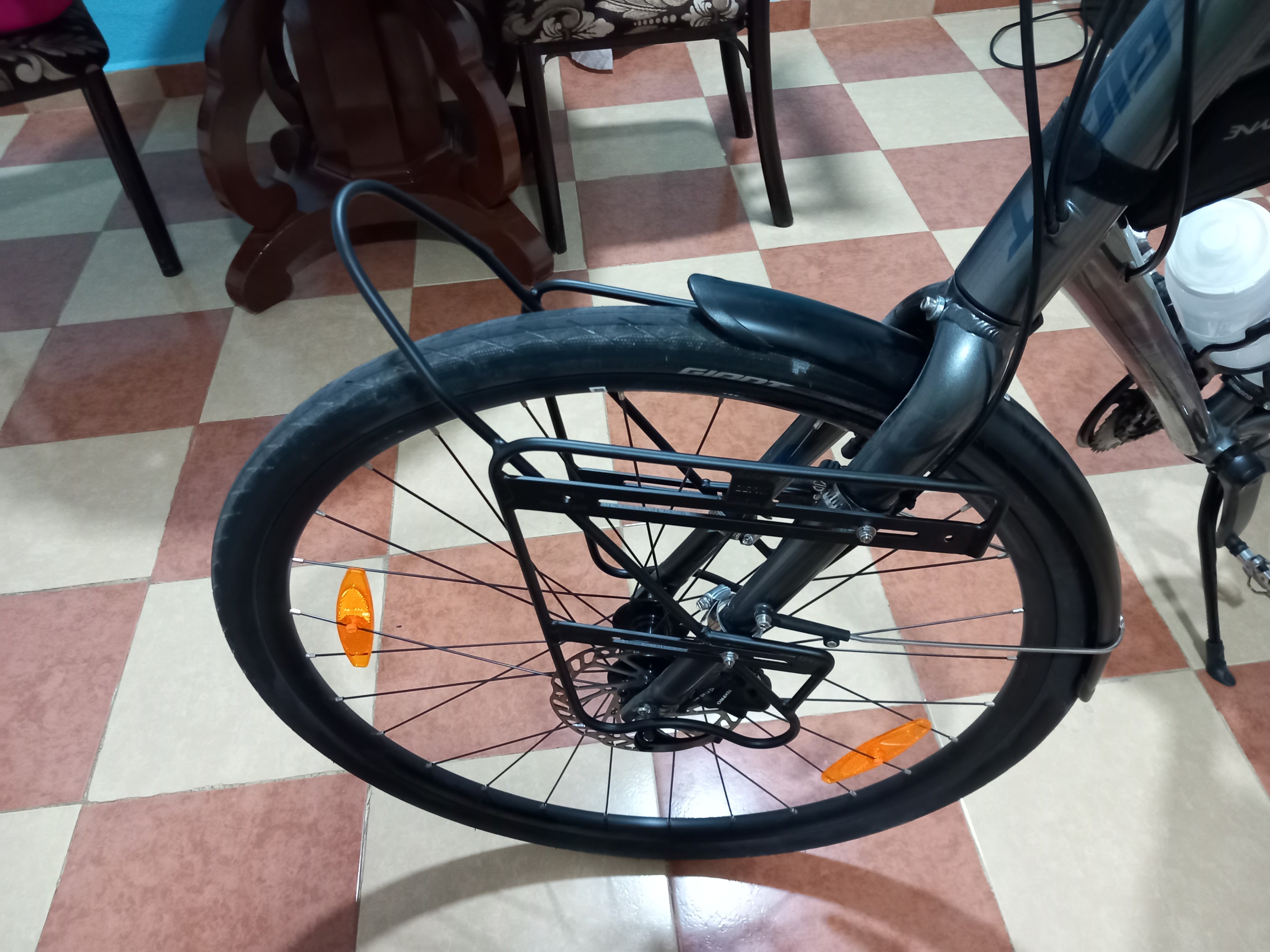
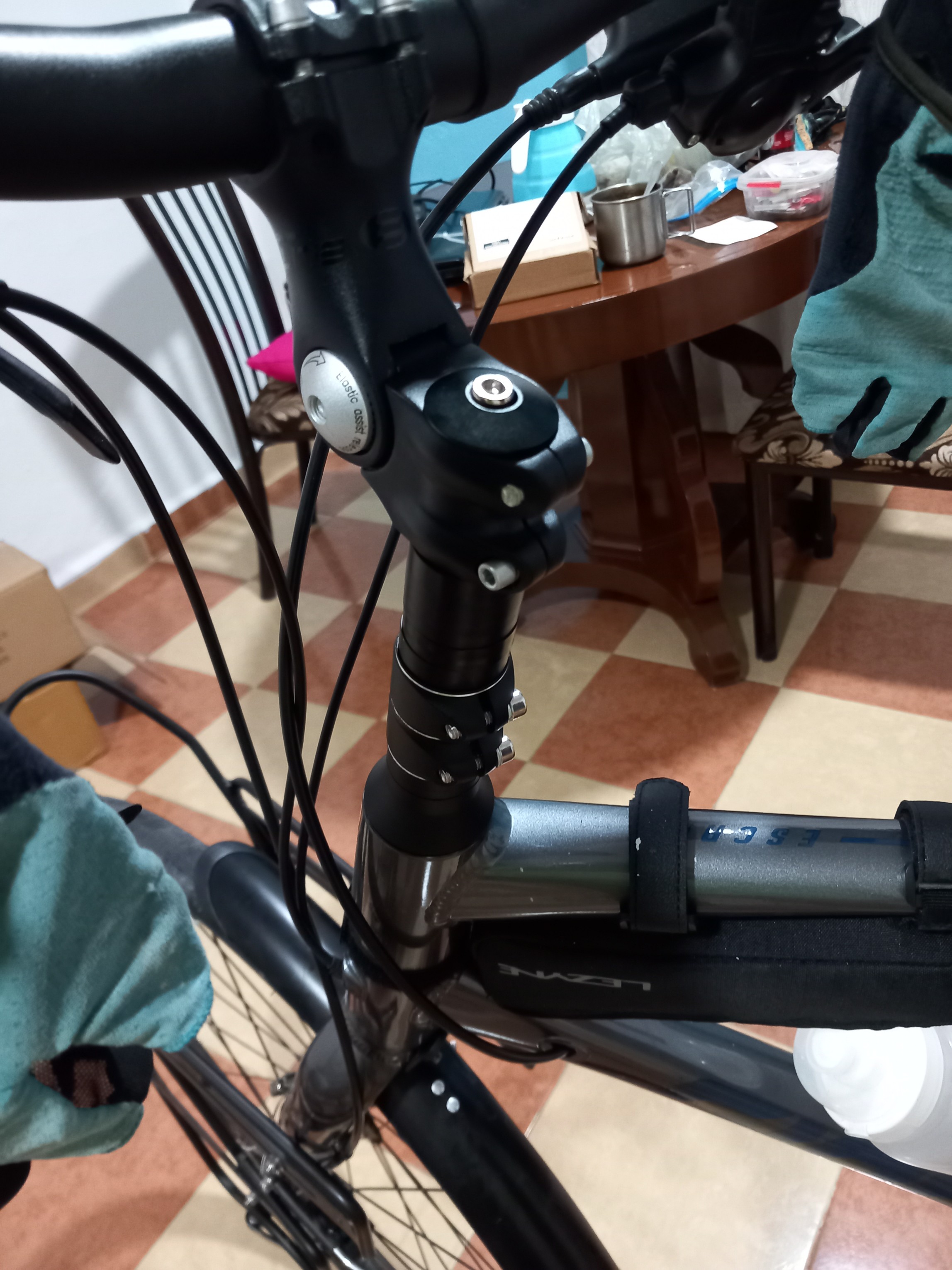
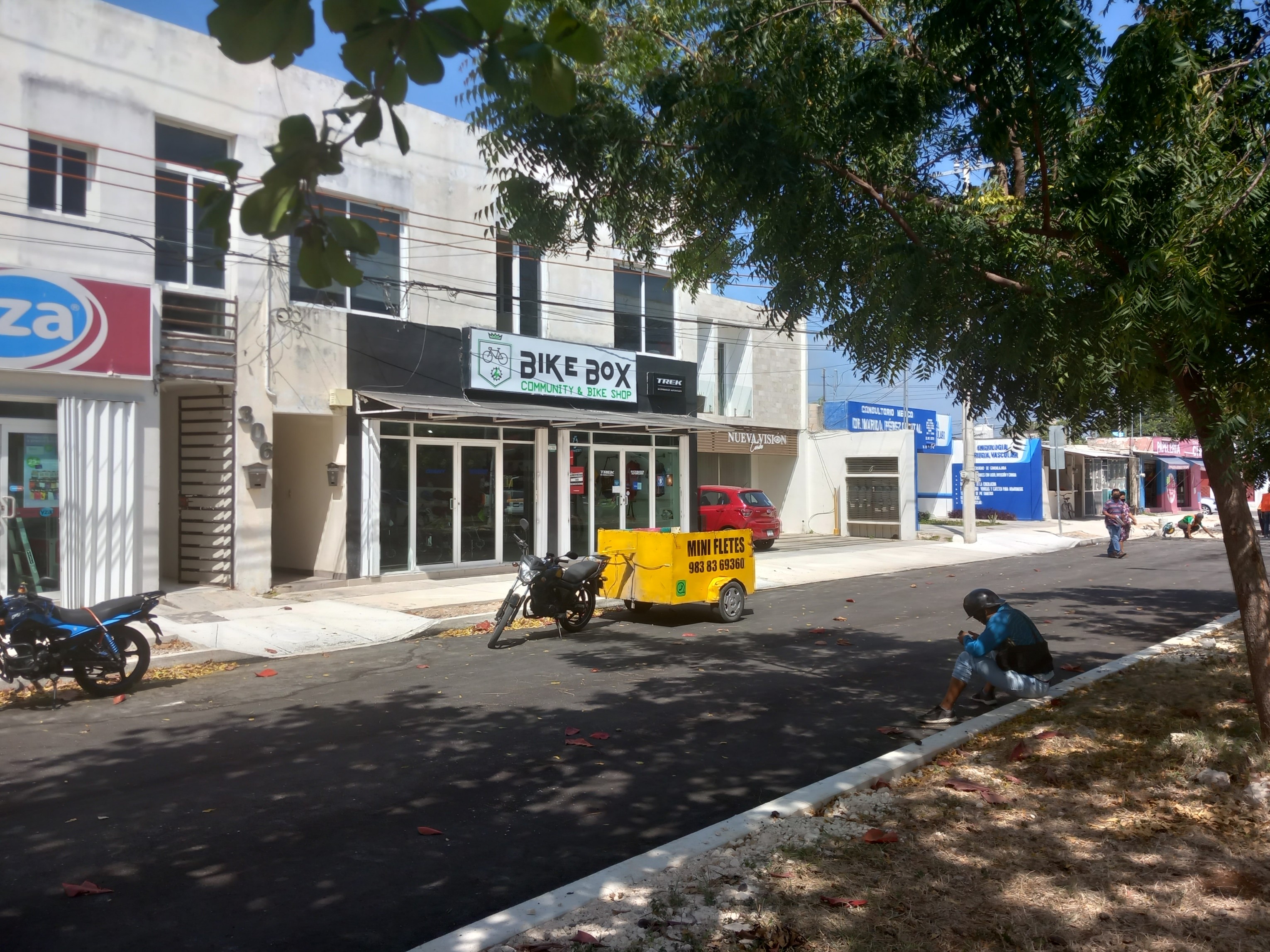
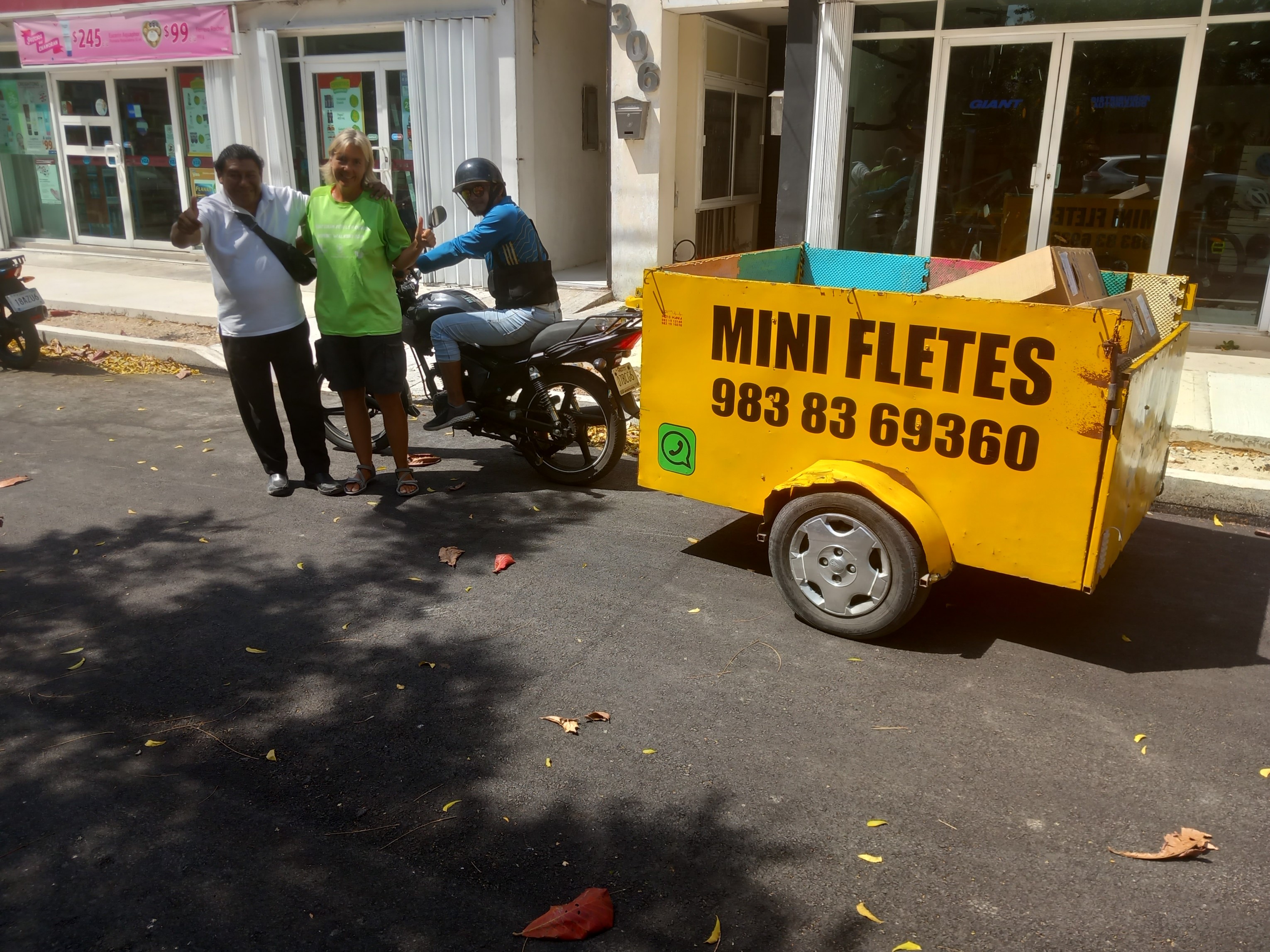
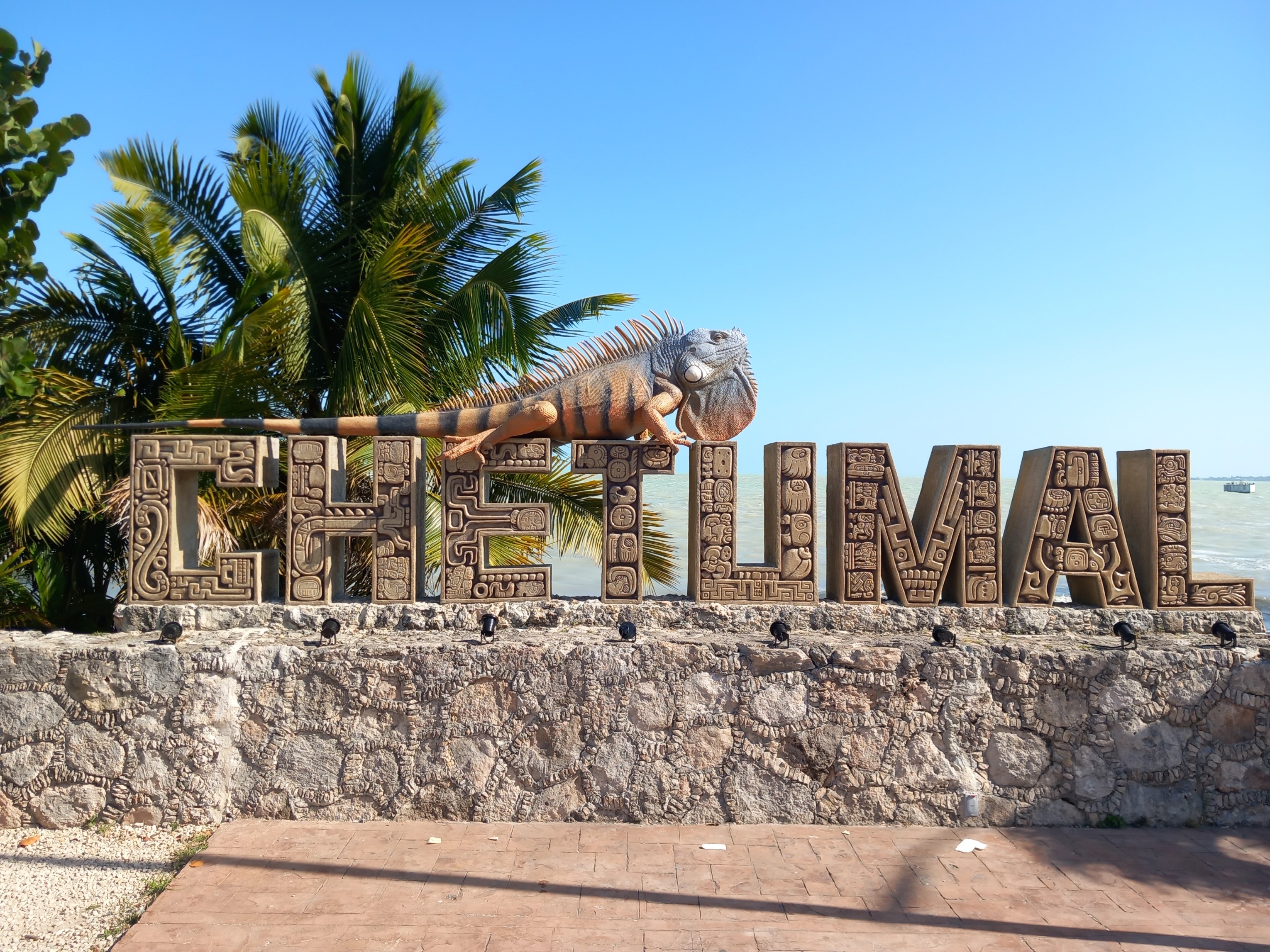
This lagoon is on the landlocked side of the road and not fed by the Caribbean – a lunchtime stop for natural pineapple juice and coconut juice.A rare restaurant that we visited which features in the LP guide although only for drinks.This is a large town of around 250,000 people with wide roads and plenty of space – similar to Coatza which we visited weeks ago – and is the last settlement before we cross into Belize.The parts for our new bikes had been ordered a few days ago and sent to a hotel we were booked into via Amazon from Texas.Different frames for the panniers at the front to provide more stability.Extentions for the handlebars to provide a more comfortable riding position.One option was to take a water taxi from Chetumel to San Pedro on Ambergris Caye, however, that was quite expensive so we decided we would ride across the border and take another water taxi instead; more of that later.Scenes in Chetumel.Blimey. This was a saga. The night before we had arranged with someone in a large department store where they sell new bikes to save us two boxes for our bikes (we shall need these to fly home) and we would return the next morning to collect them. The taxis as shown were booked and we all went to the shop to collect…….nothing. The man had let us down. We went to another large store nearby with our two taxis in this out of town shopping area and they only sold small bikes for children and did not have the larger boxes we required. Olivia rang a shop, coincidentally called the Bike Box, and he had dozens of empty boxes which he was pleased to let us have for nothing.The taxi we travelled in was not large enough for the boxes and the driver organised the motor bike and trailer to carry them essentially from one end of town to the other – back to the hotel who will store them until we return from Belize when we shall require the same two taxis to transport us and the bikes to the local airport for a flight to Mexico City initially and our eventual return to Spain.A temporary departure from Mexico beckons before we return in three weeks.
Some views around the lagoon ………………These chaps were seriously impressive. Watch the video below to see how they carry the cement to the upper floor, in 35c heat.
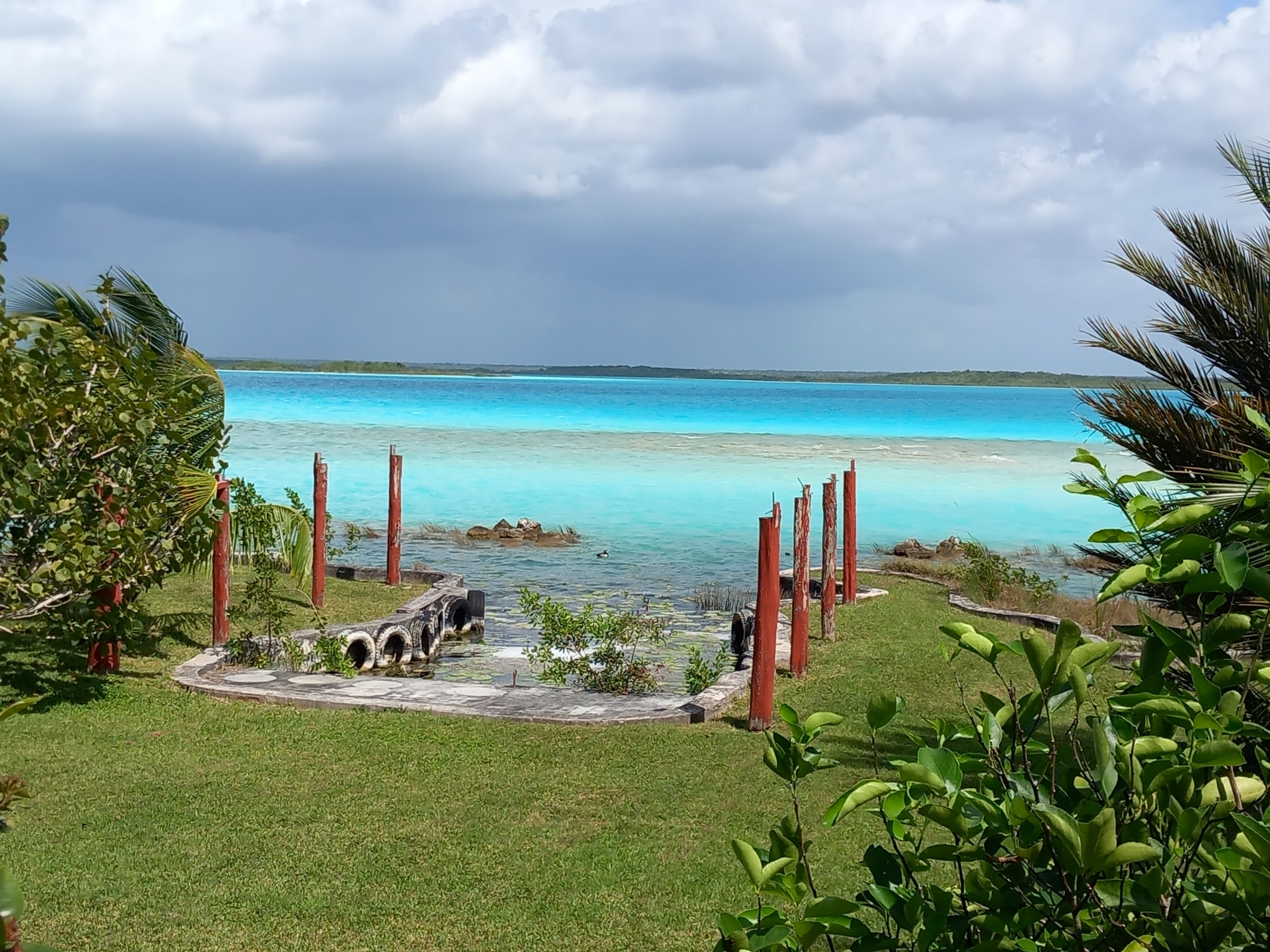
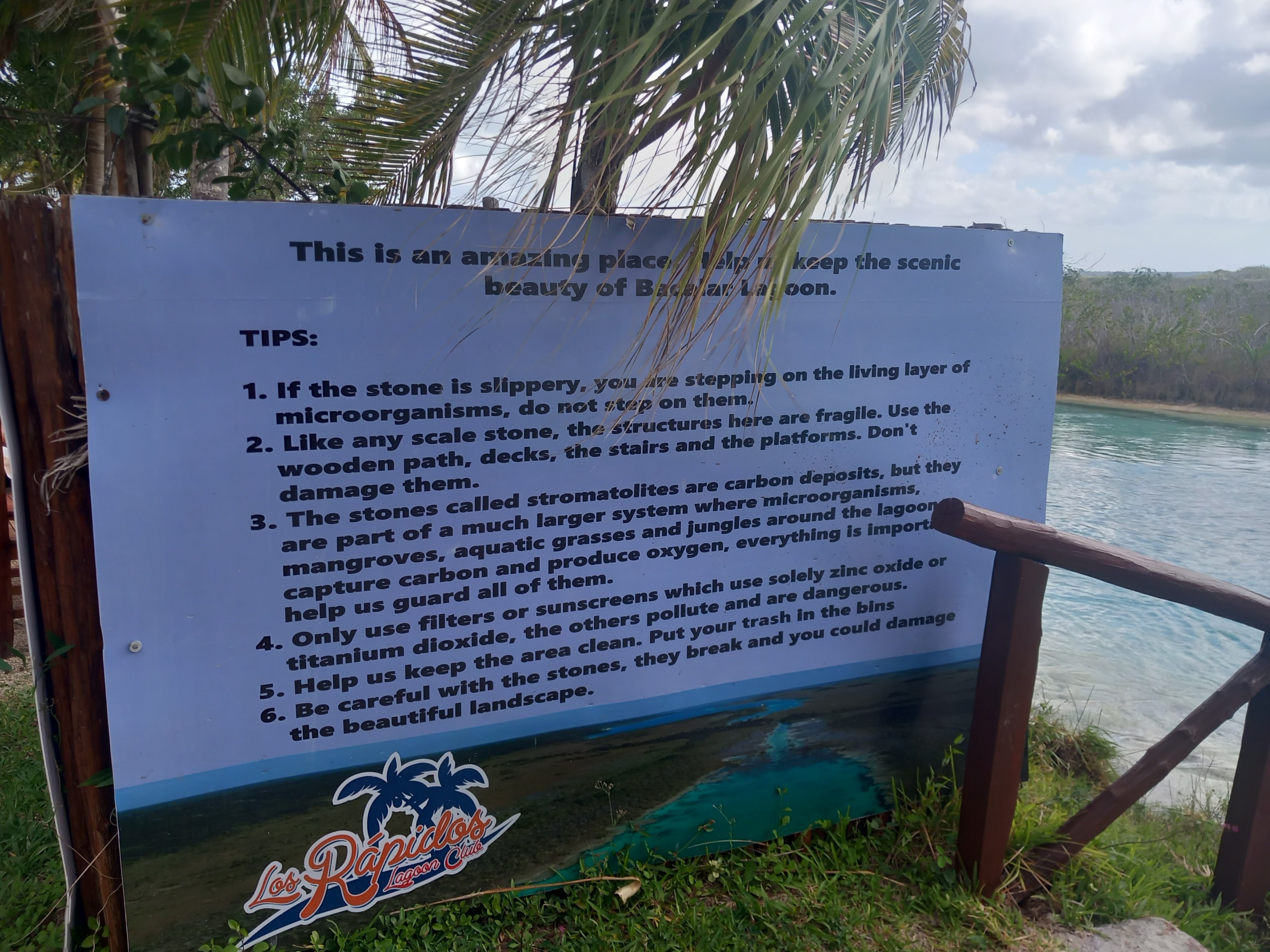
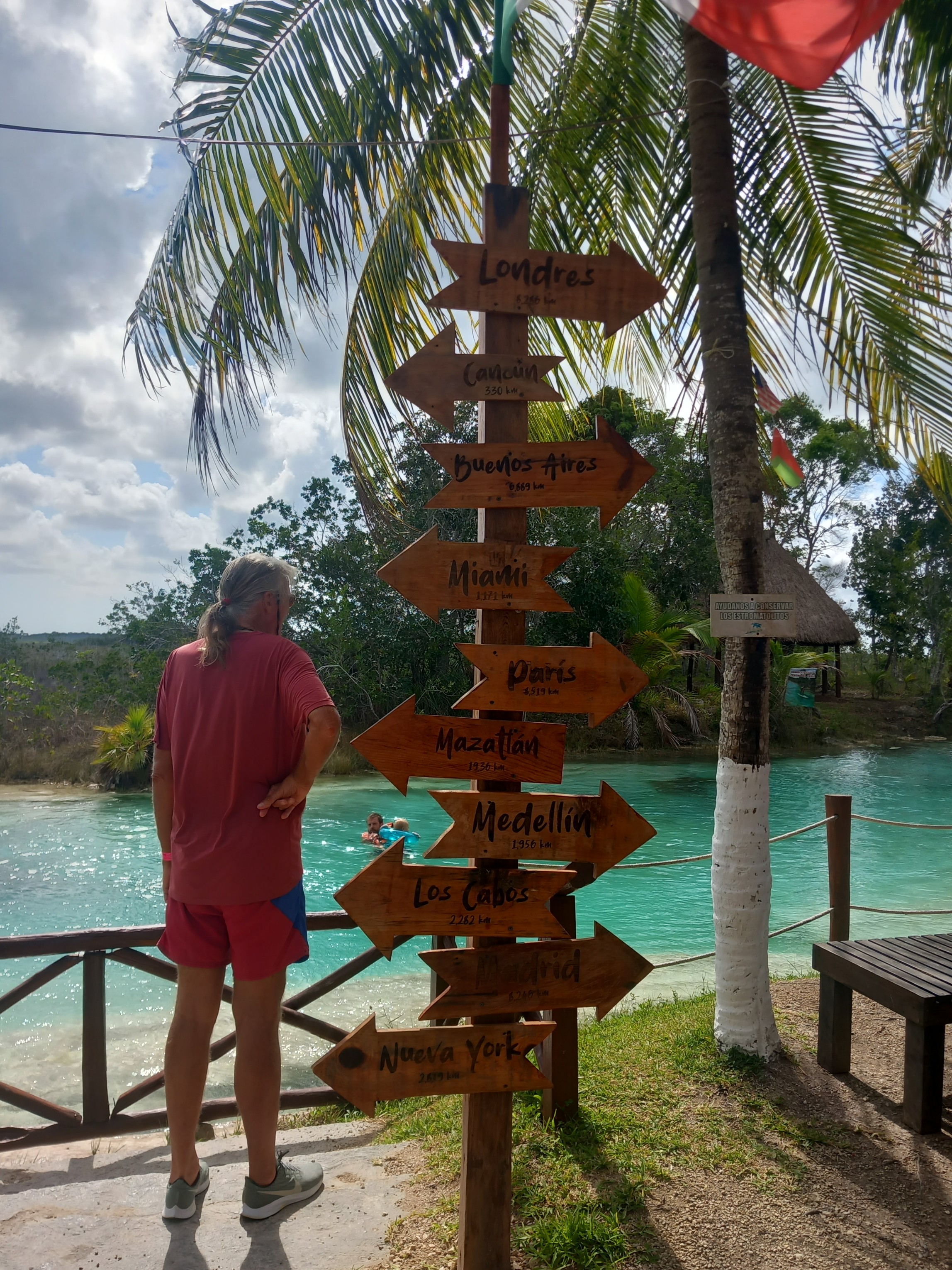
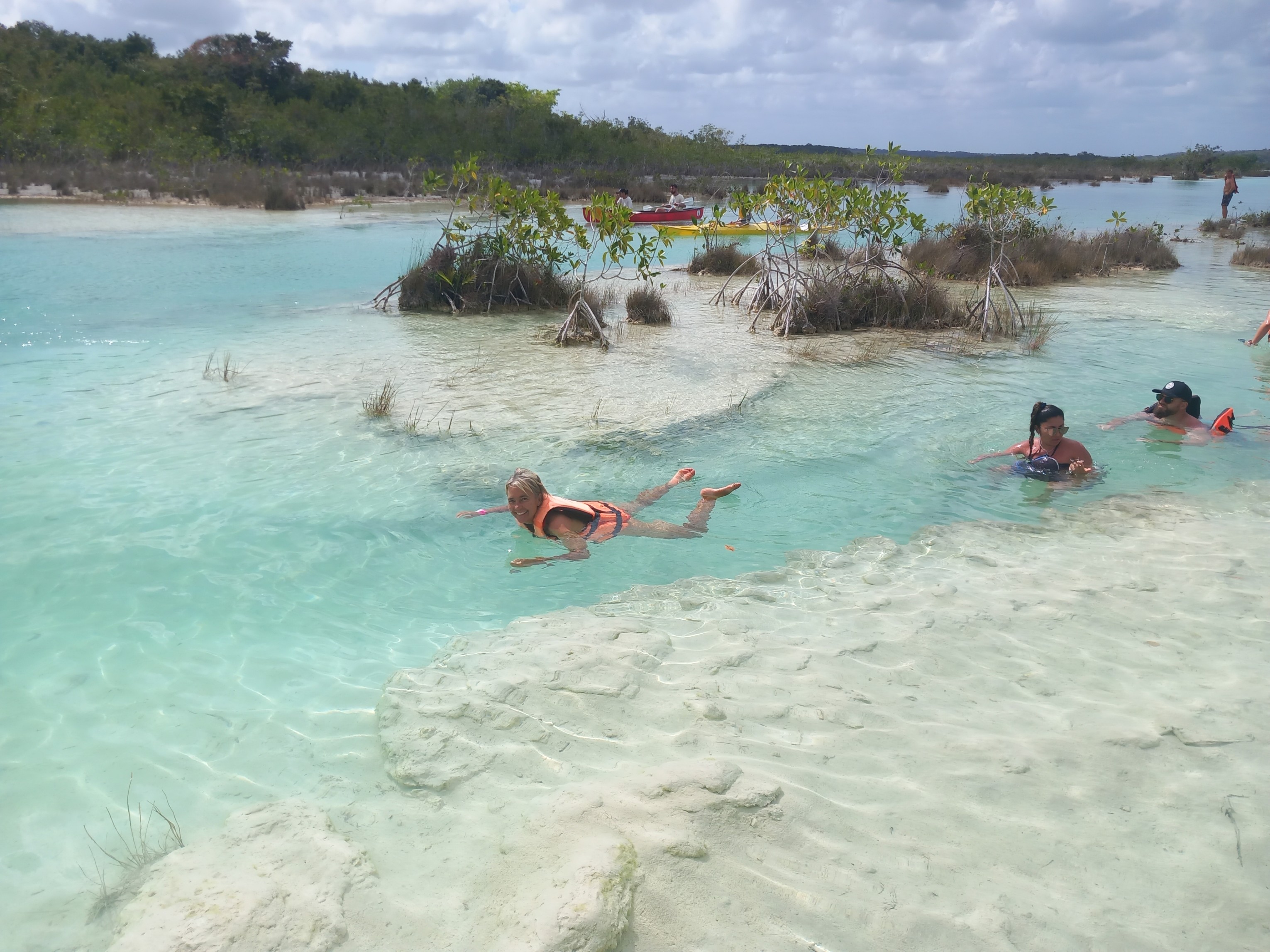
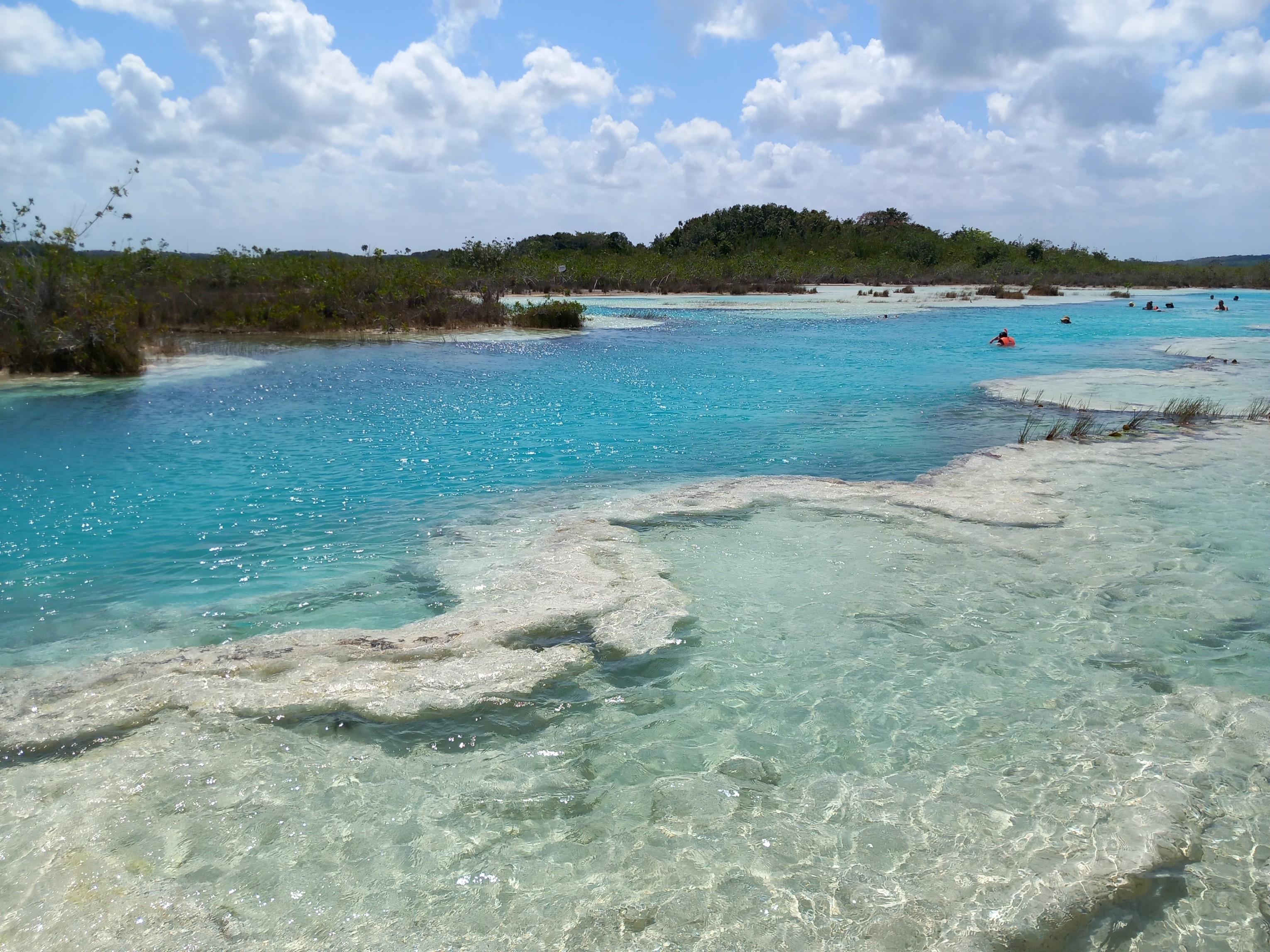
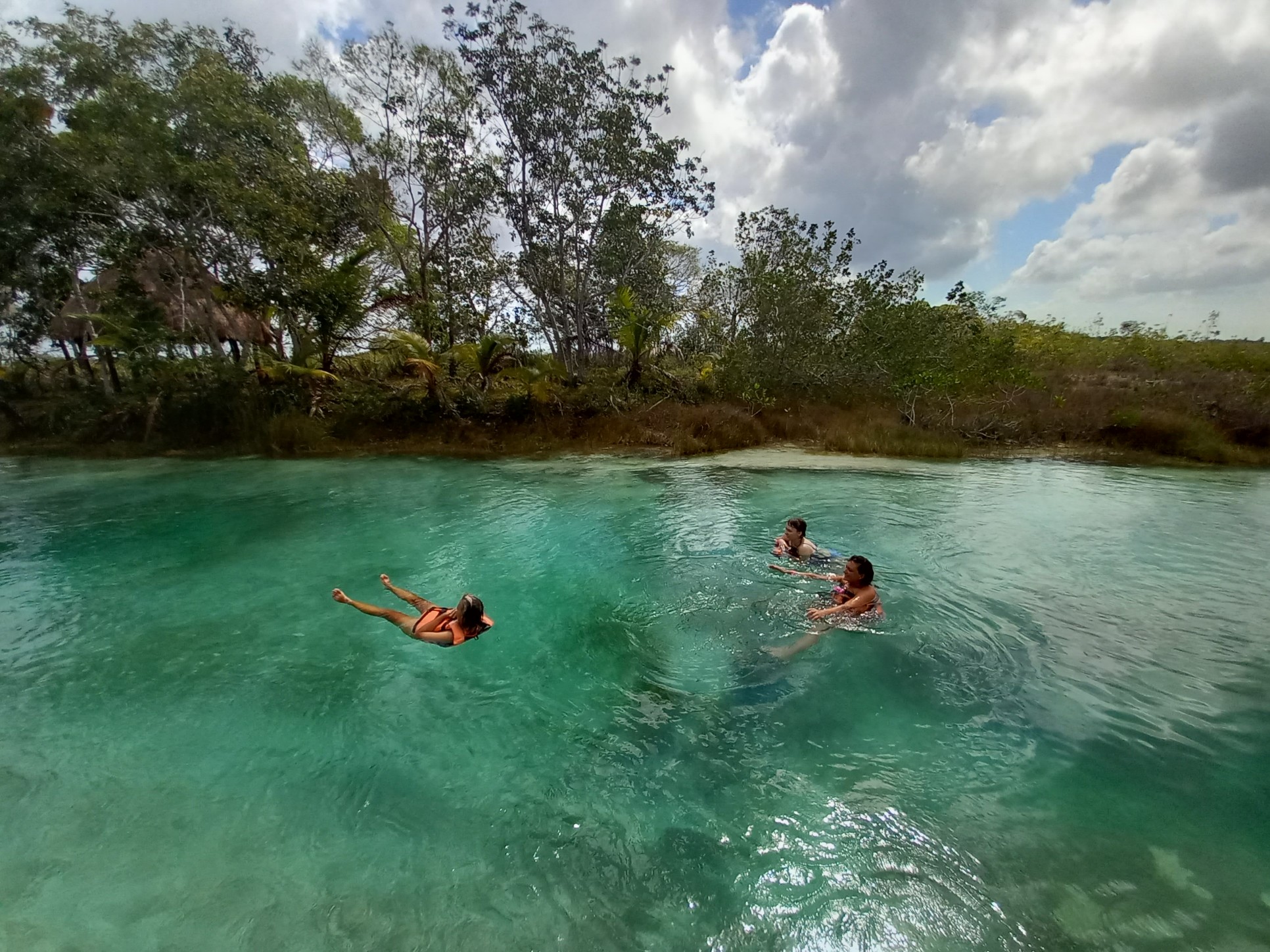
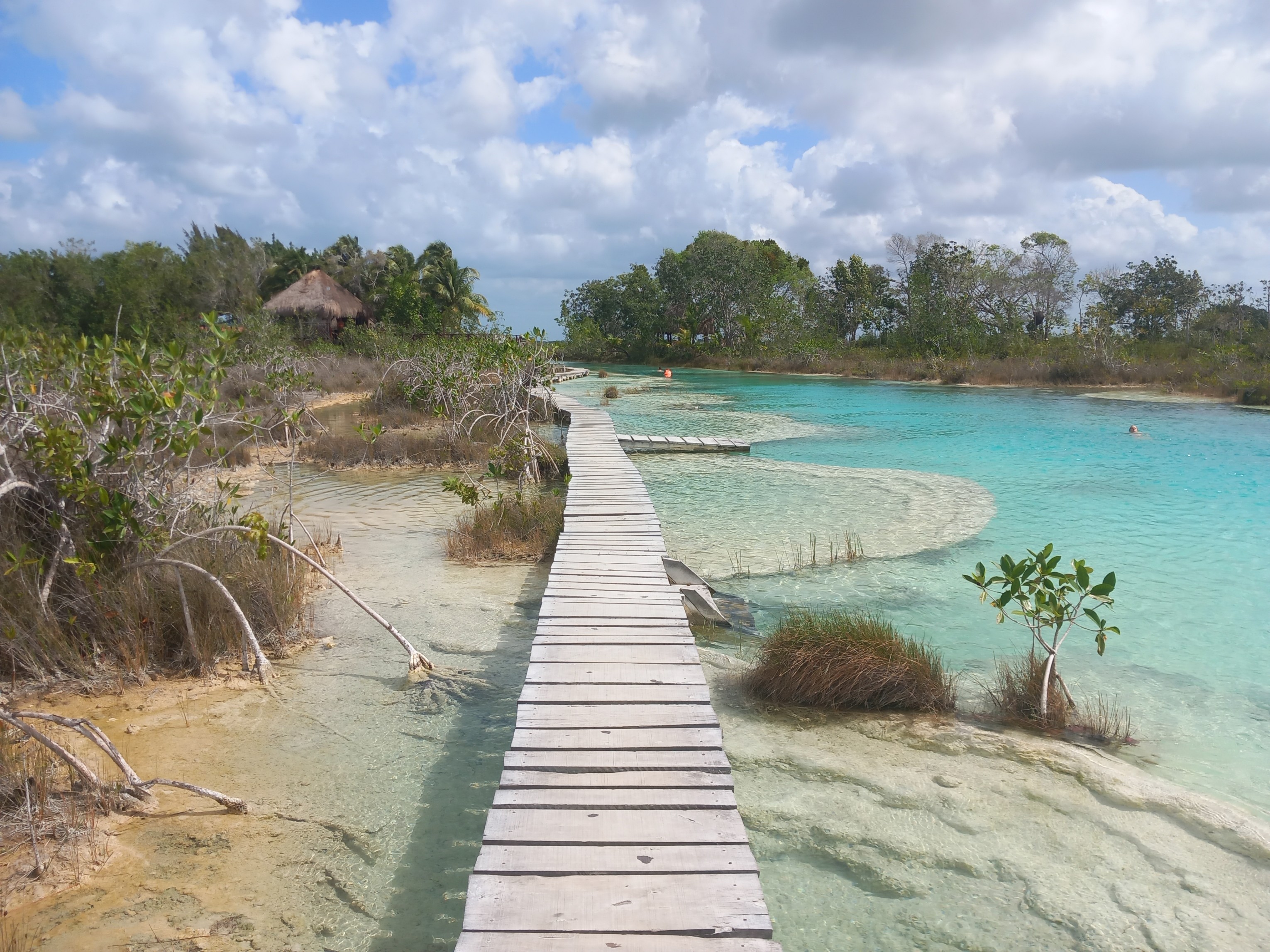
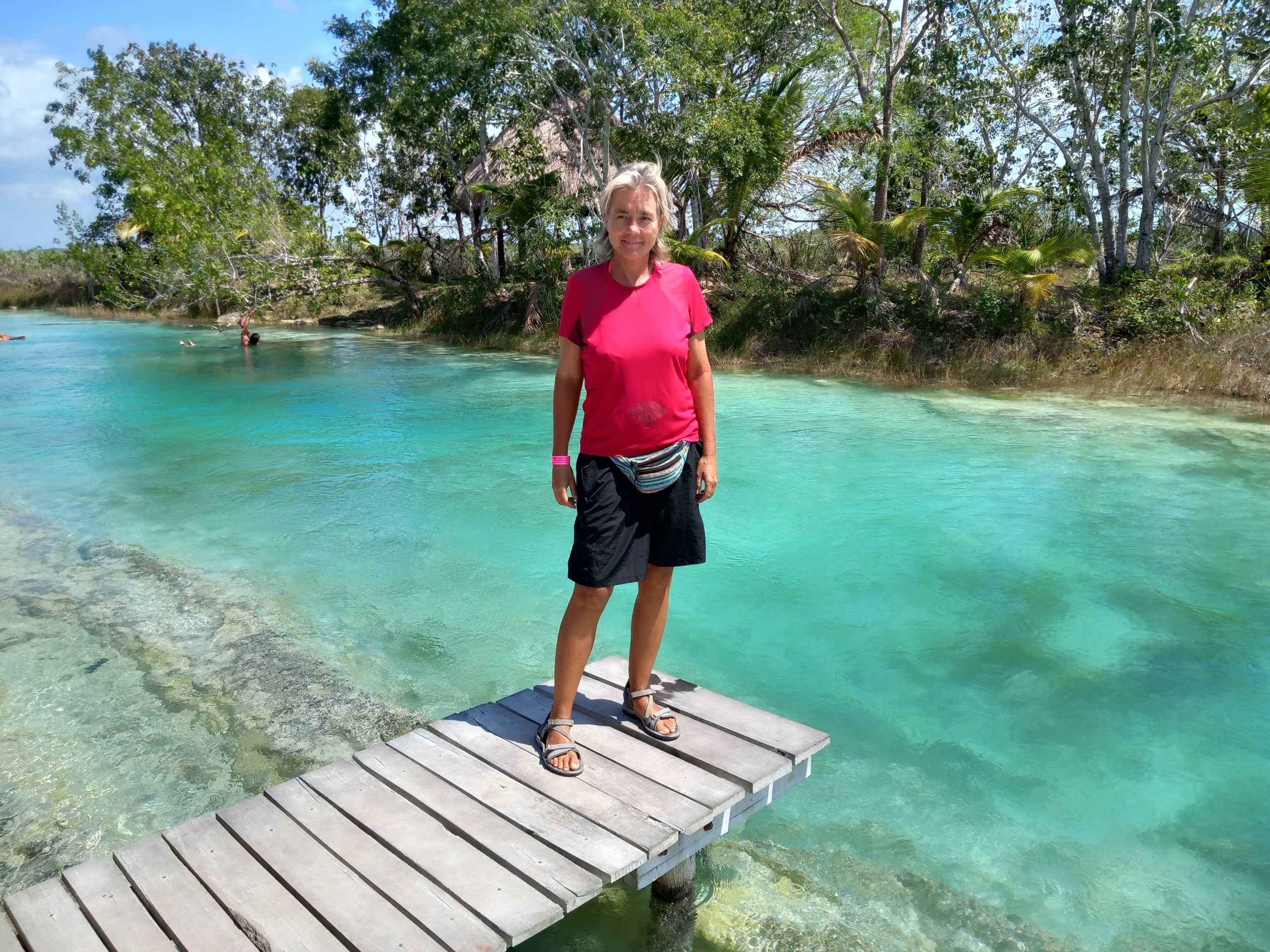
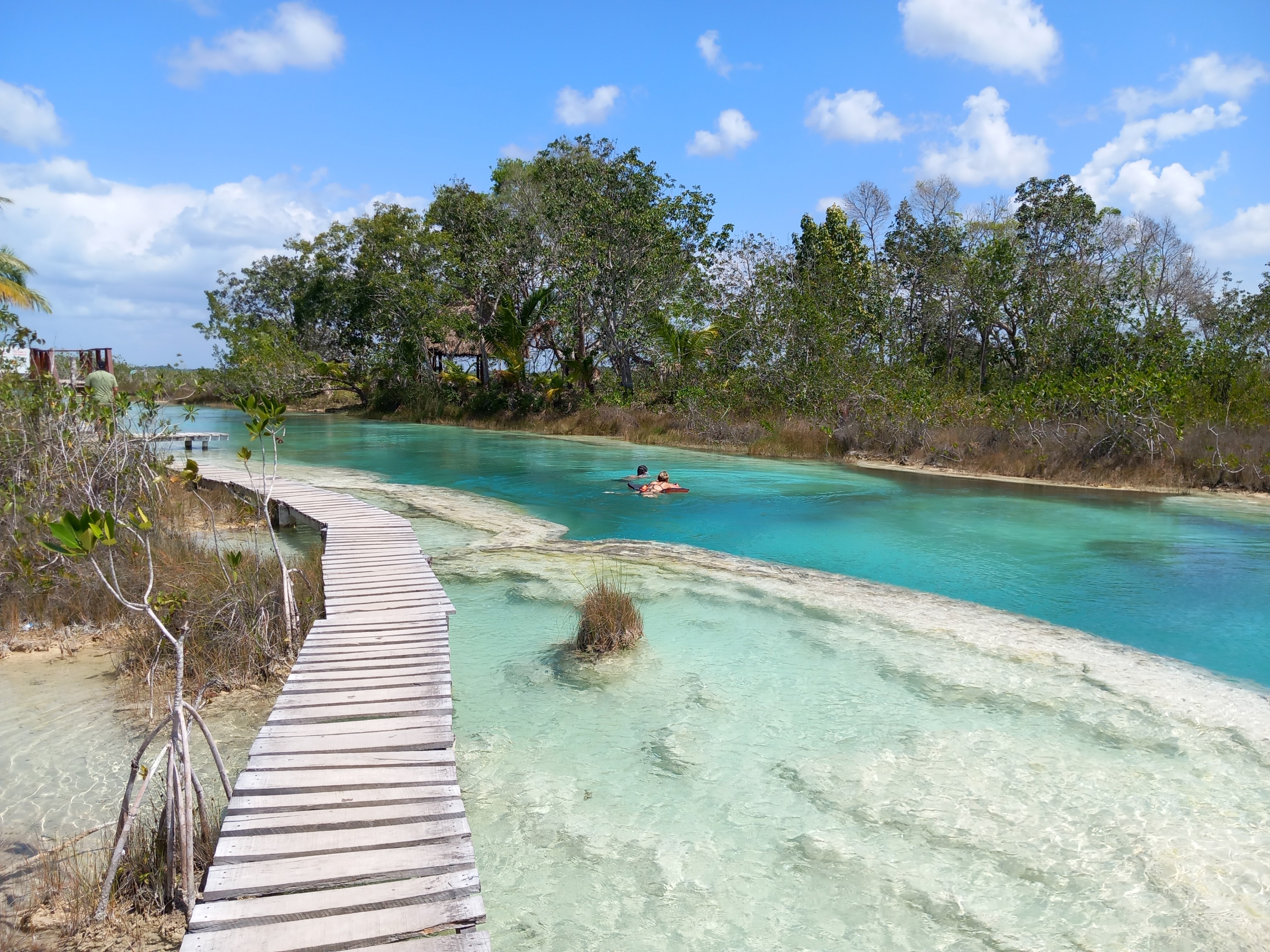
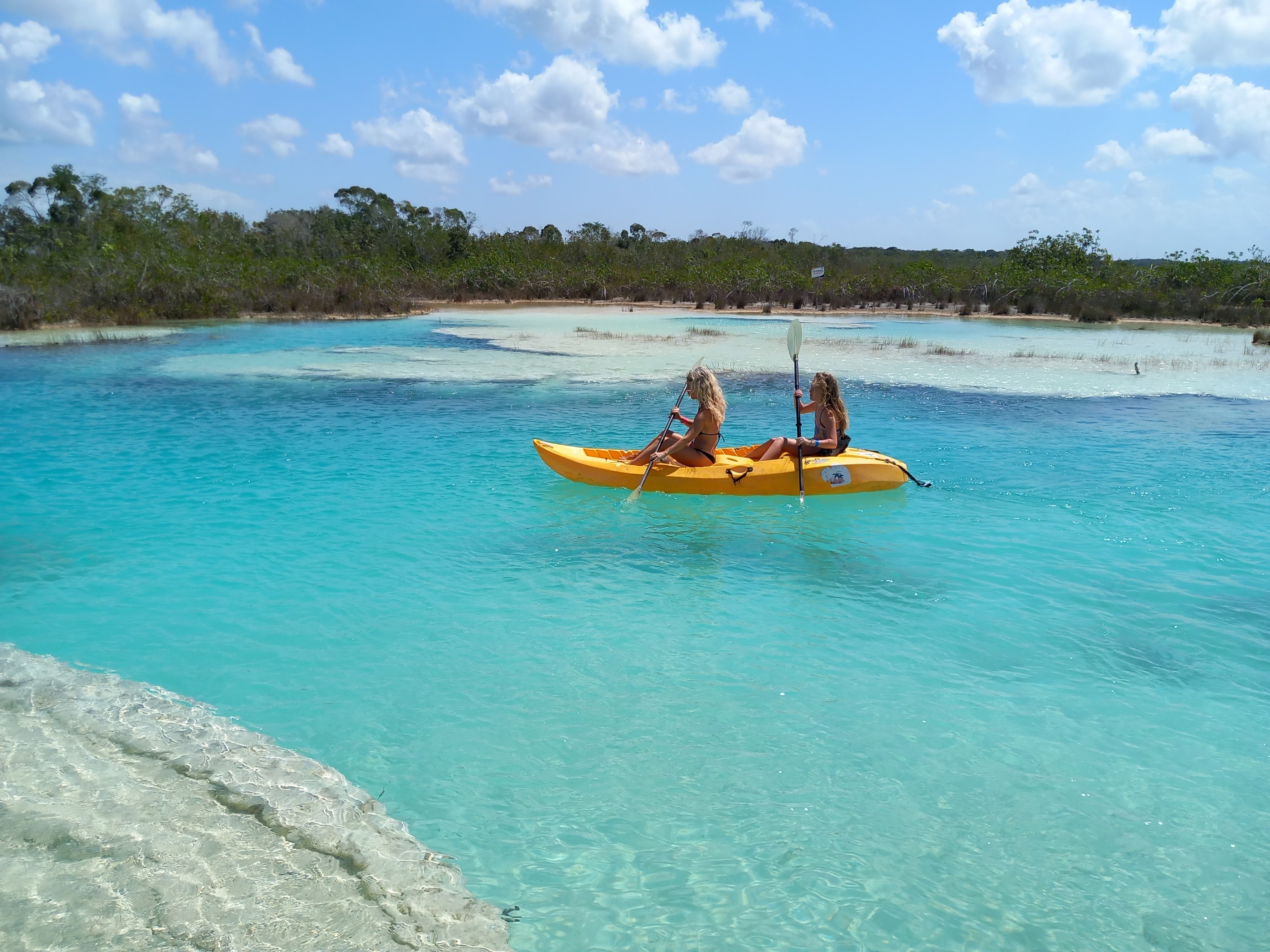
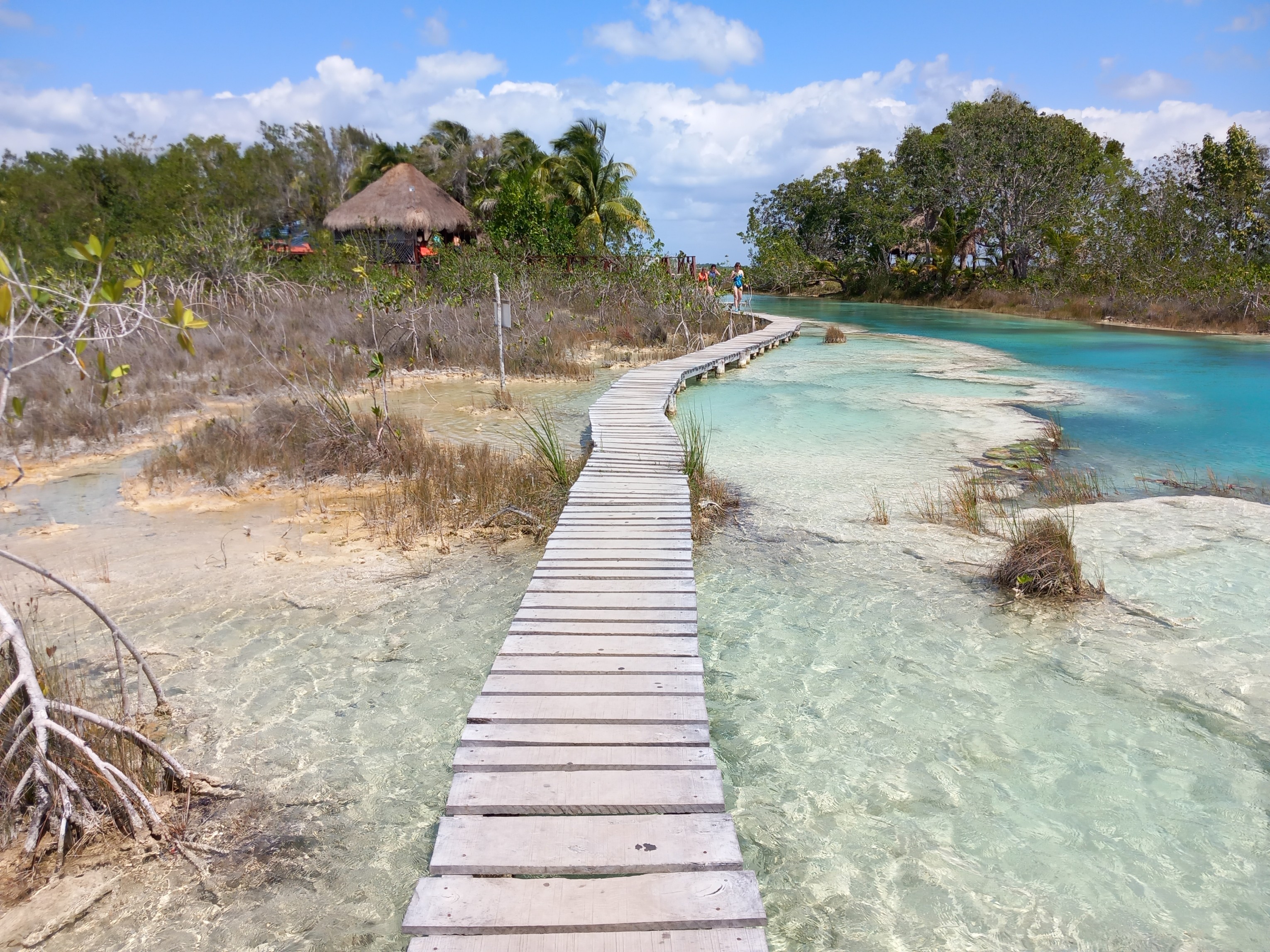
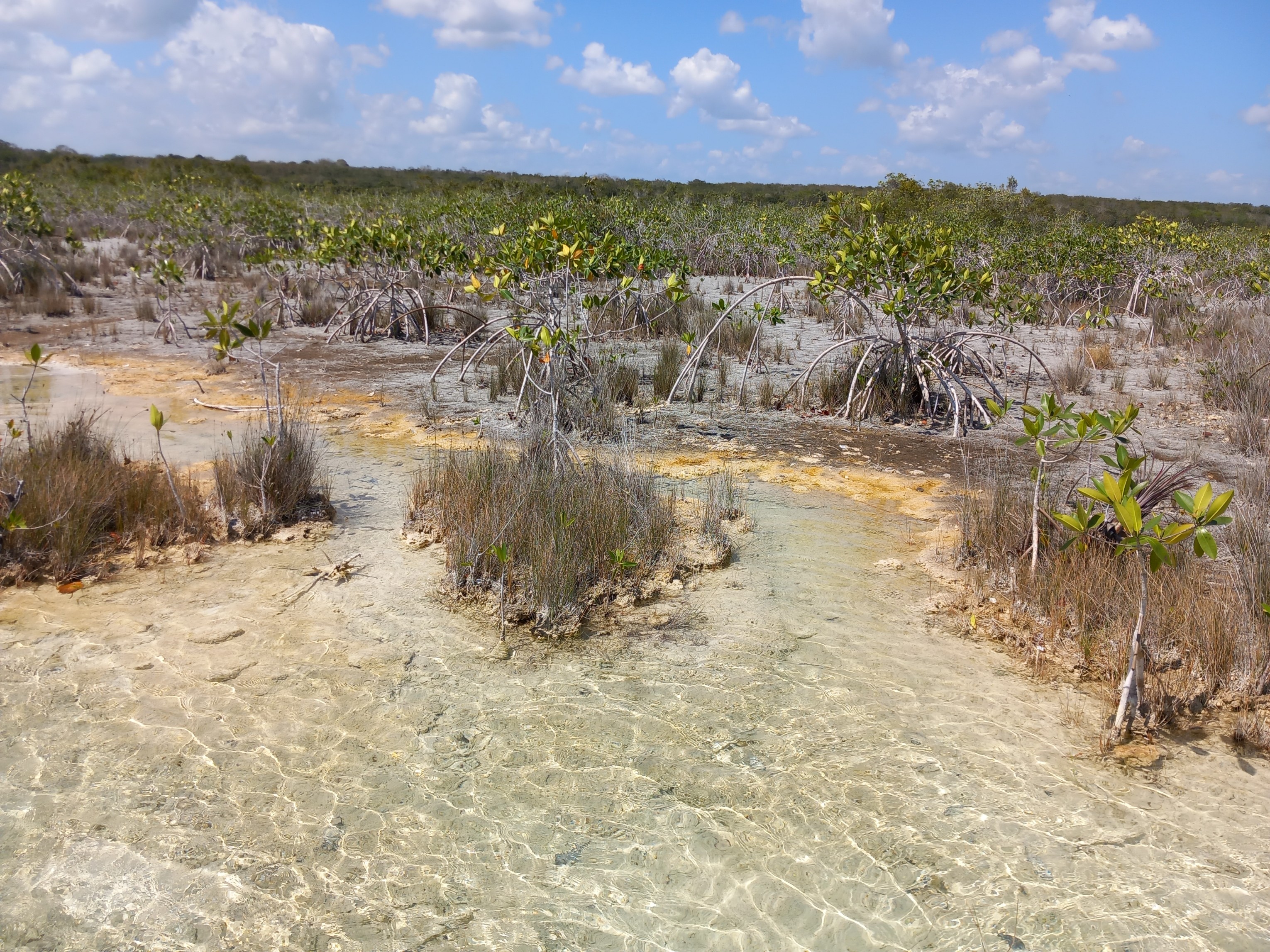
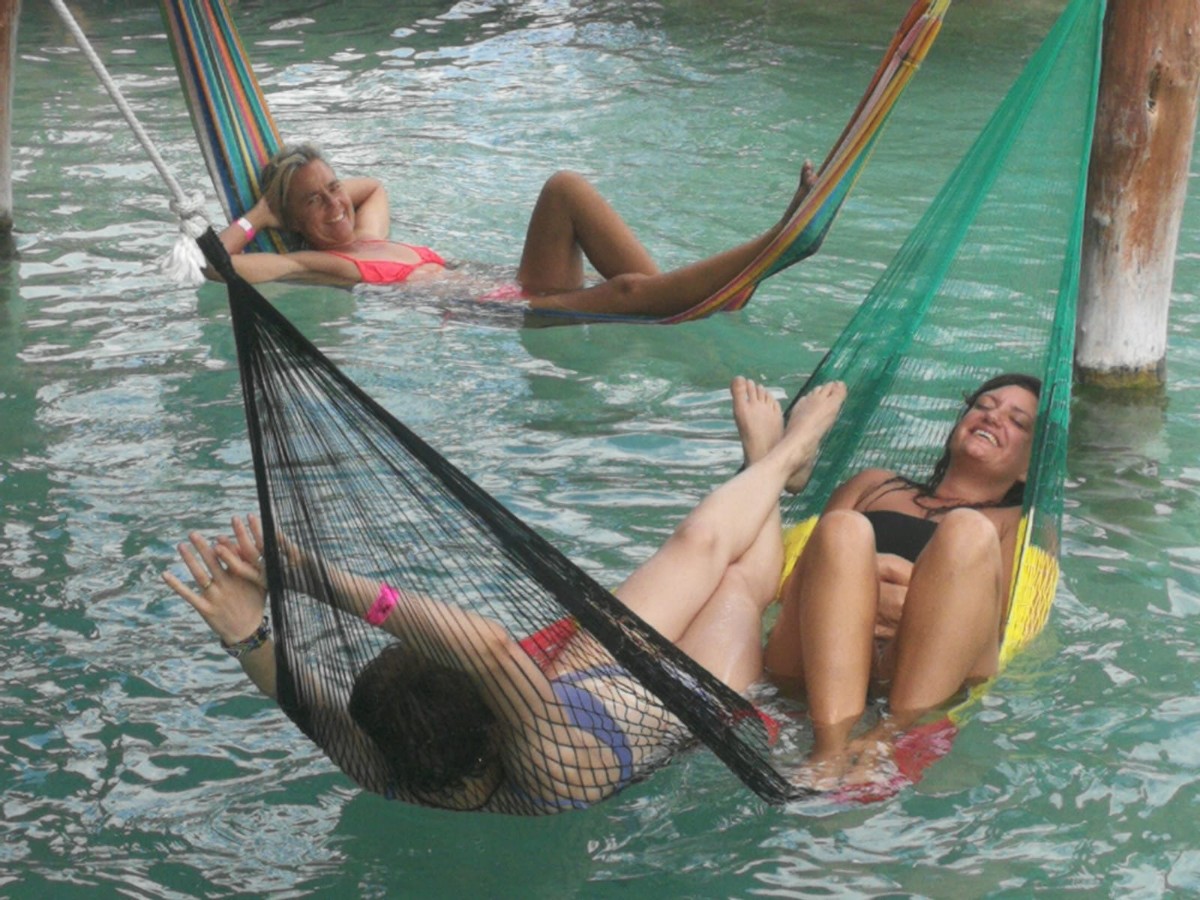
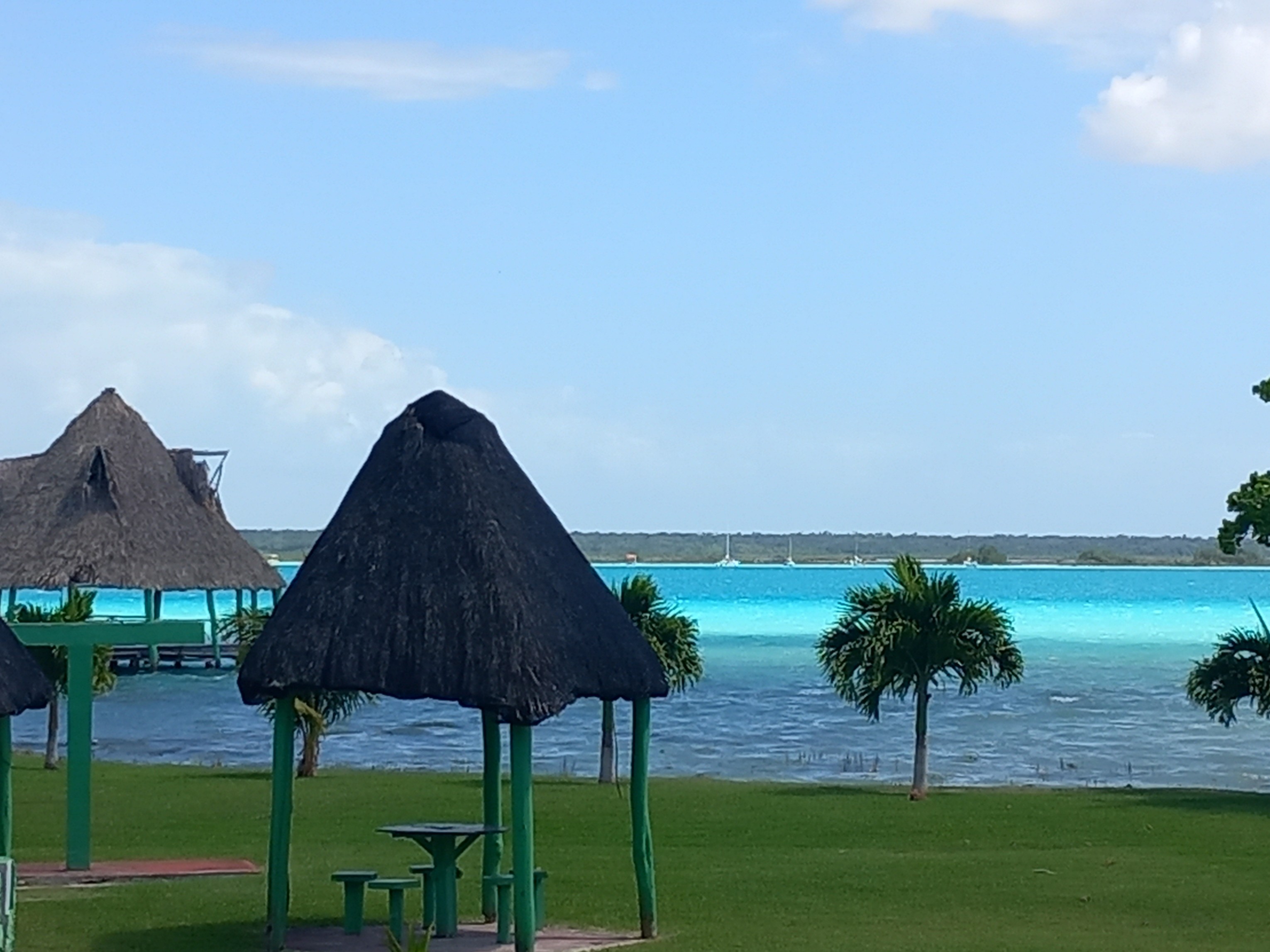
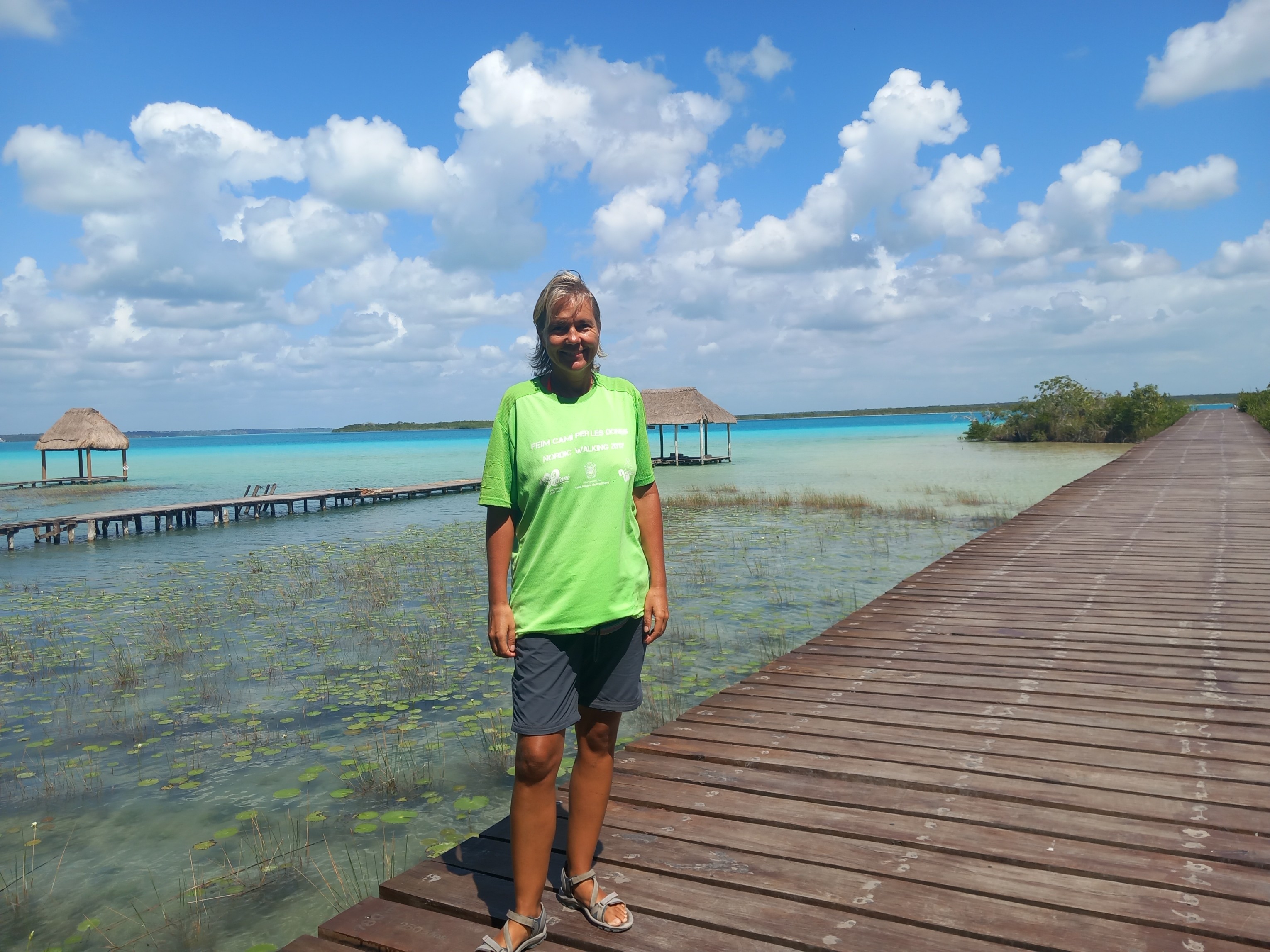
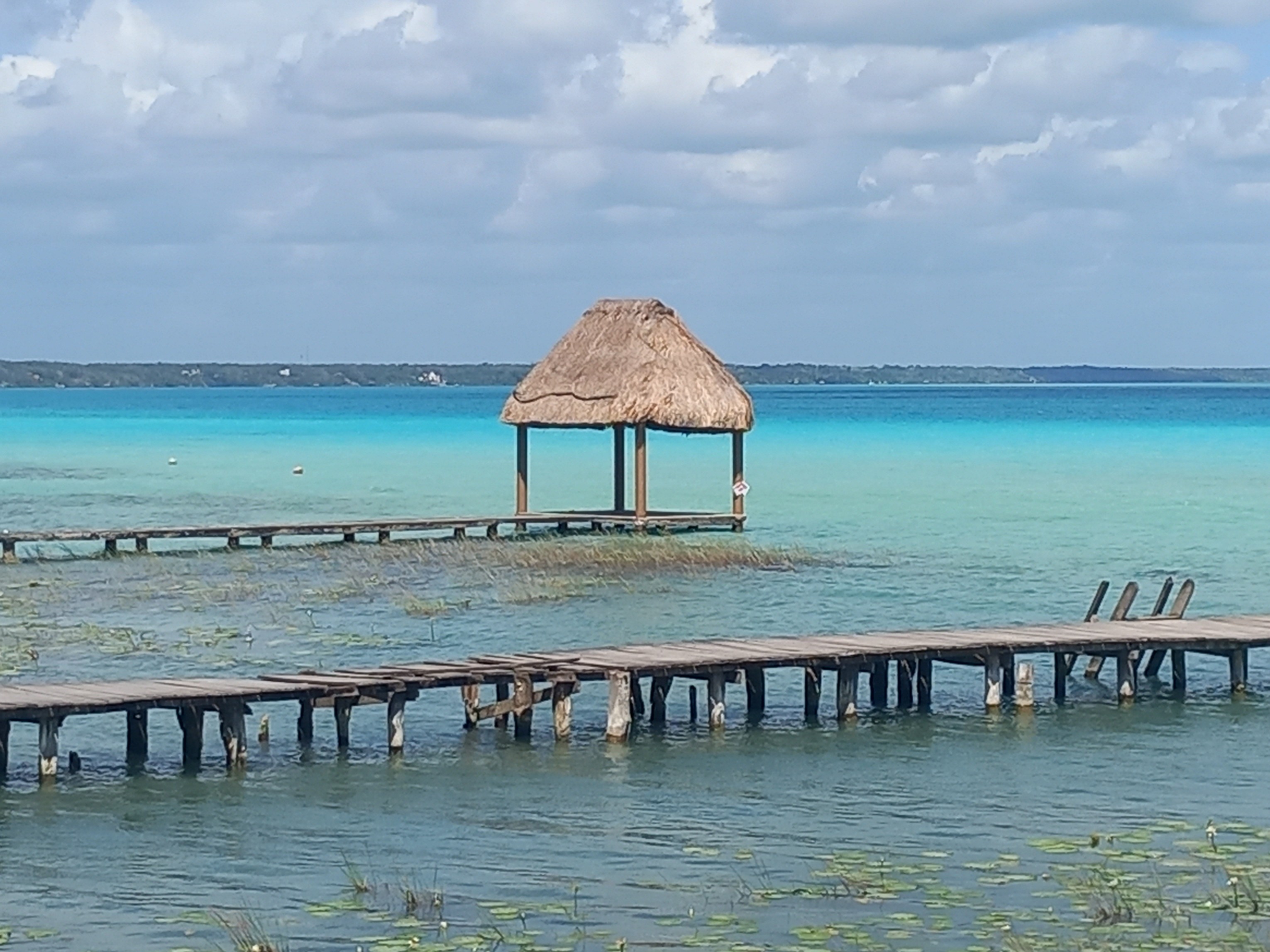
This is the entrance to Los Rapidos – a very unusual place with its multiple colours of blue in the lagoon which are really quite stunning.Somebody had to stay on dry land to take the photos.Visitors can take a boardwalk to the head of the rapids which, it has to be said are very gentle, and then float back to the start of the boardwalk. You can swim against the flow although this is not as easy as it looks or take a kayak.If you look closely you can see its the dry season because the water level is relatively low although the wet season level is fairly easy to identify.At the end of a strenuous swim a hammock awaits.
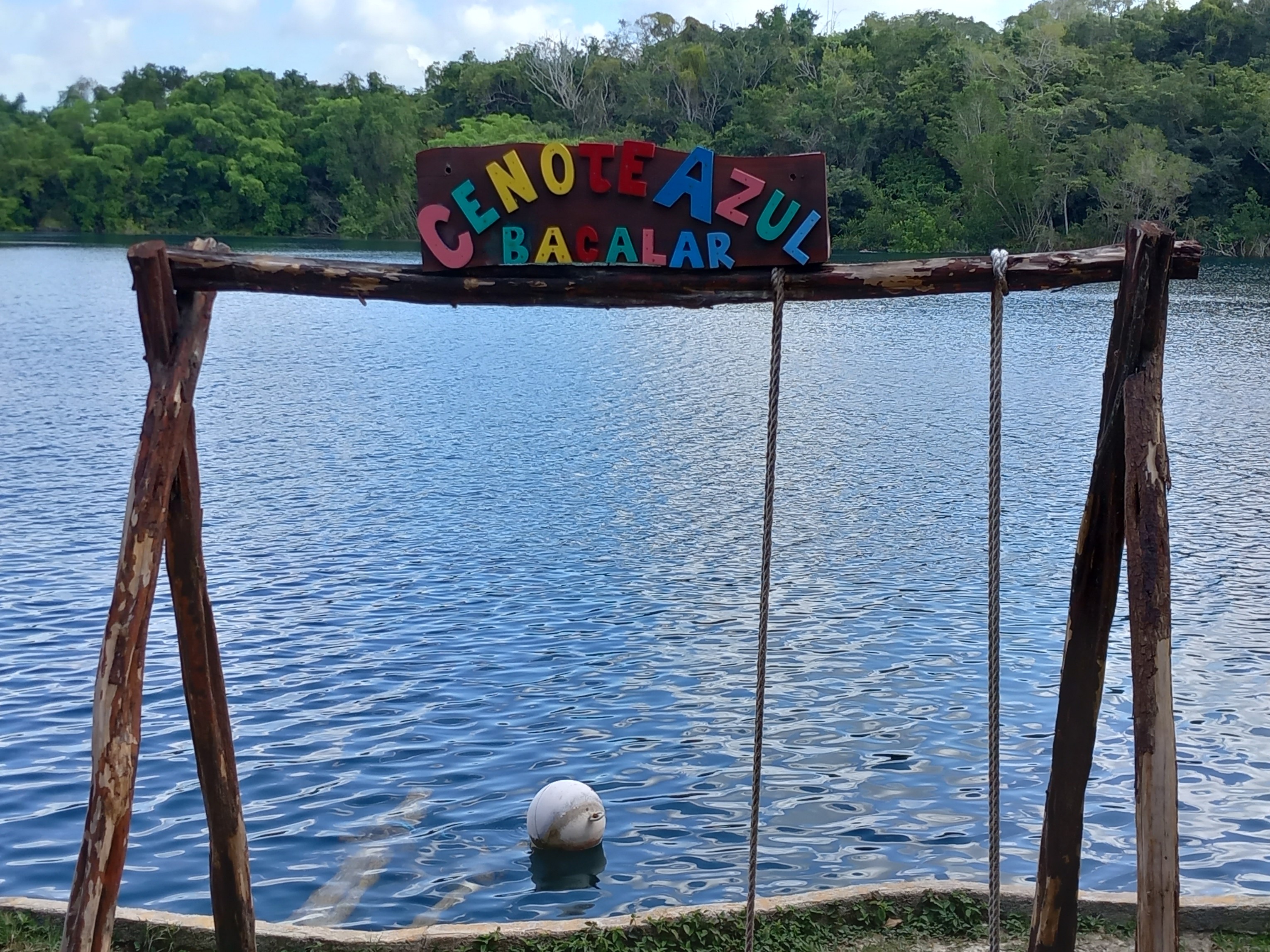
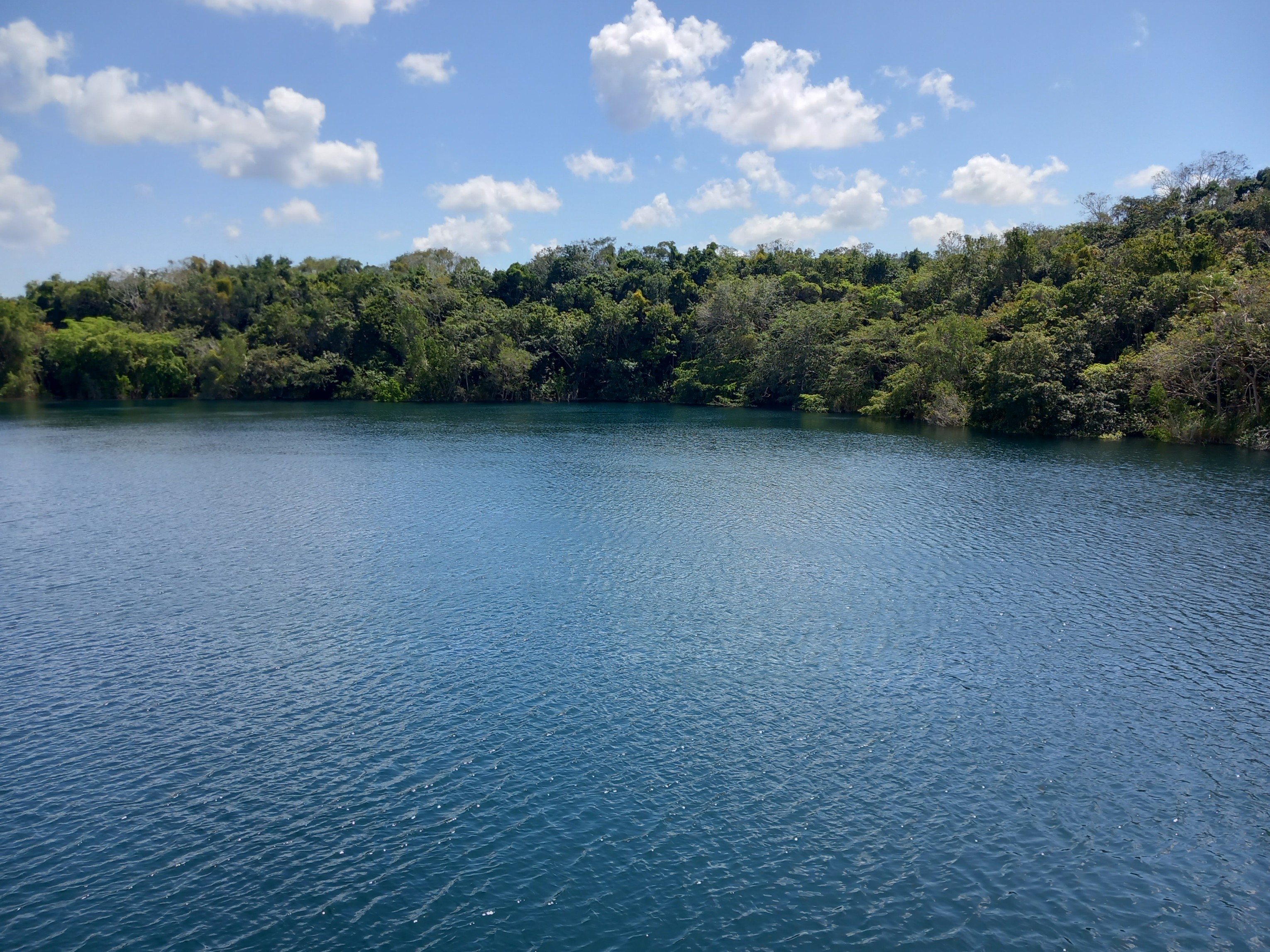
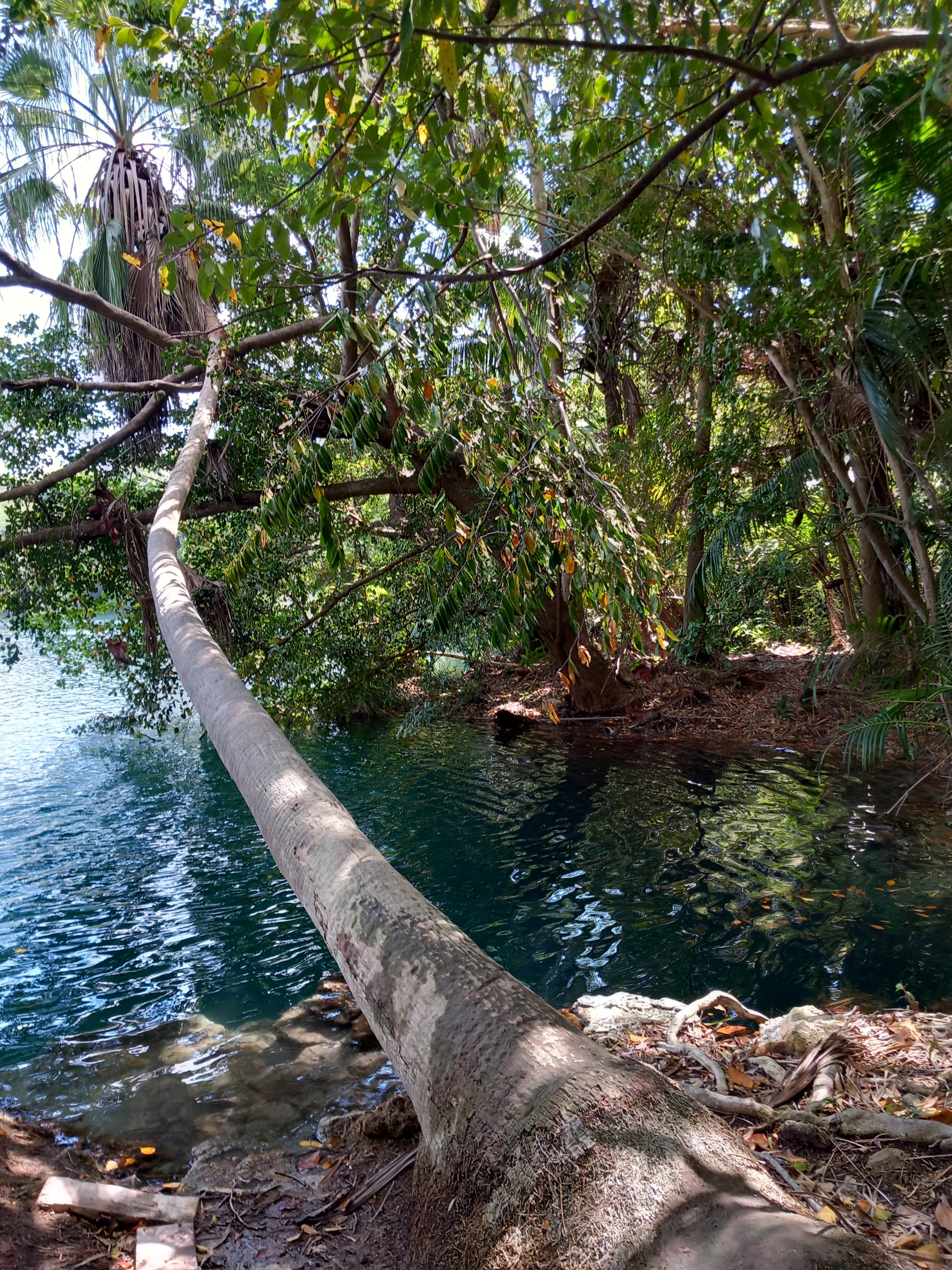
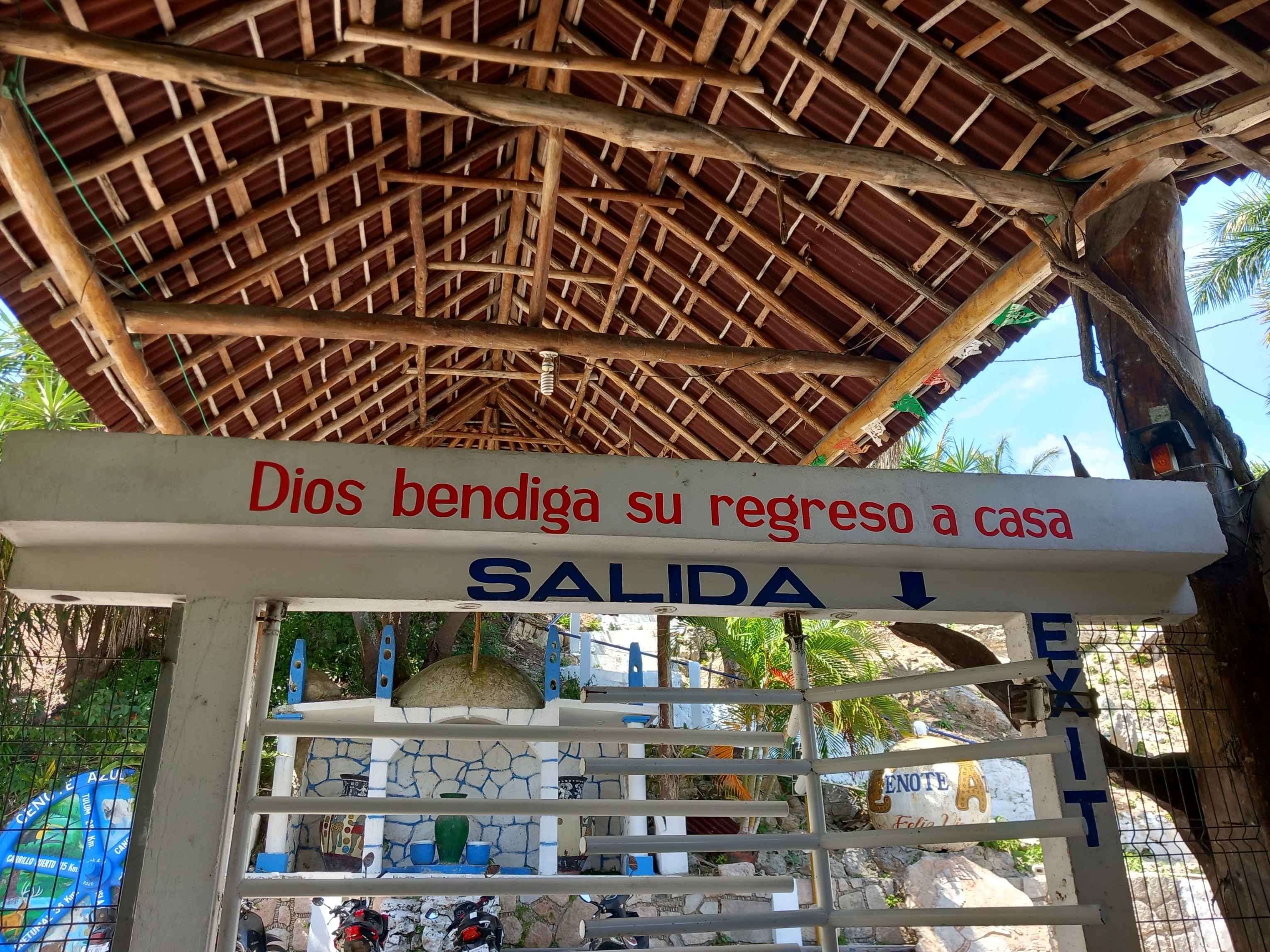
Another attraction in the area is this inland lake which is separate from the lagoon and water is supplied from quite a depth as it is 70 metres deep. It is much more peaceful and quiet with less tourists here and more space than Los Rapidos; clearly they want people swimming in these areas and not the ‘crocodile infested’ part of the lagoon!“God bless your return home”.
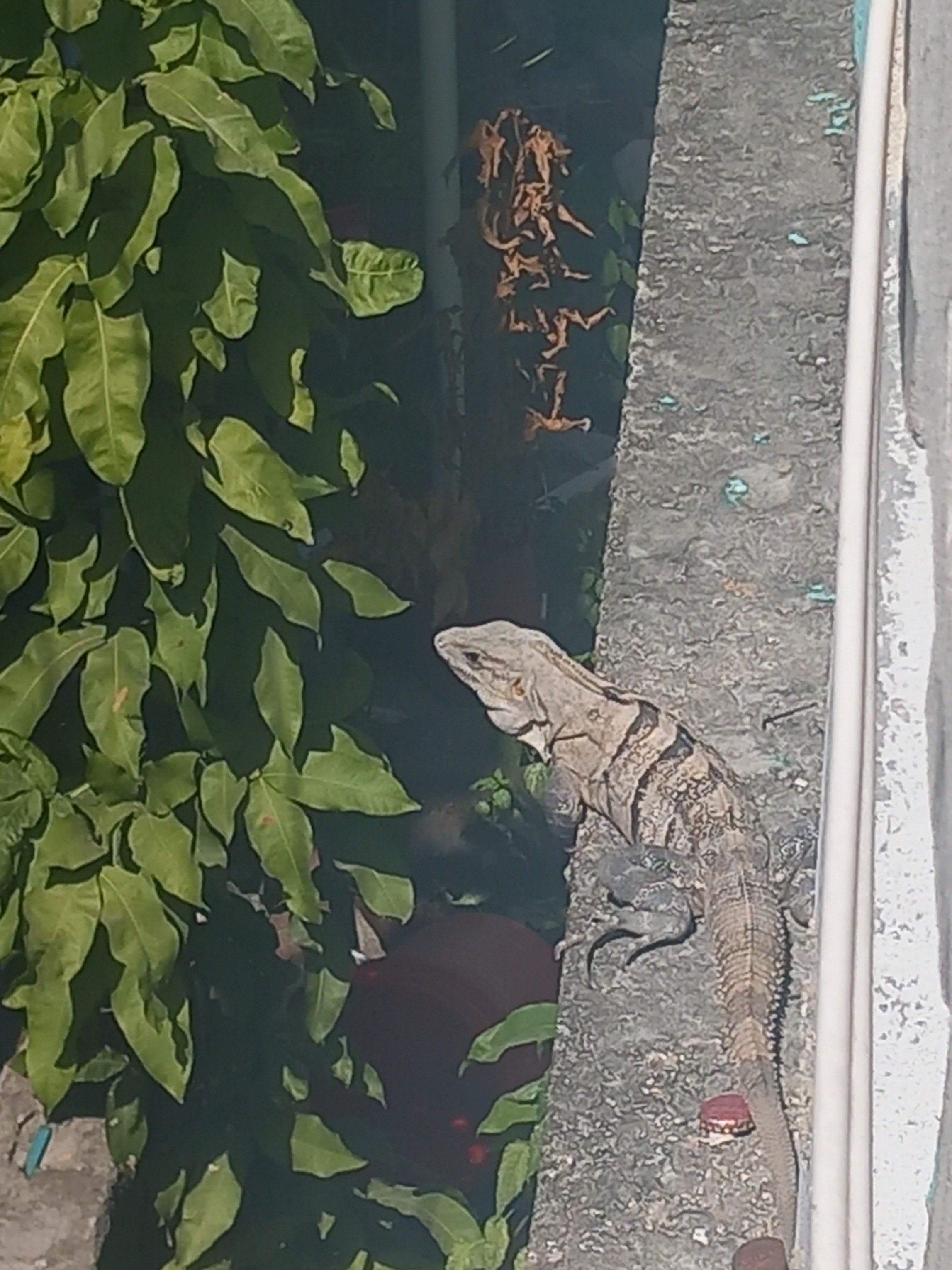
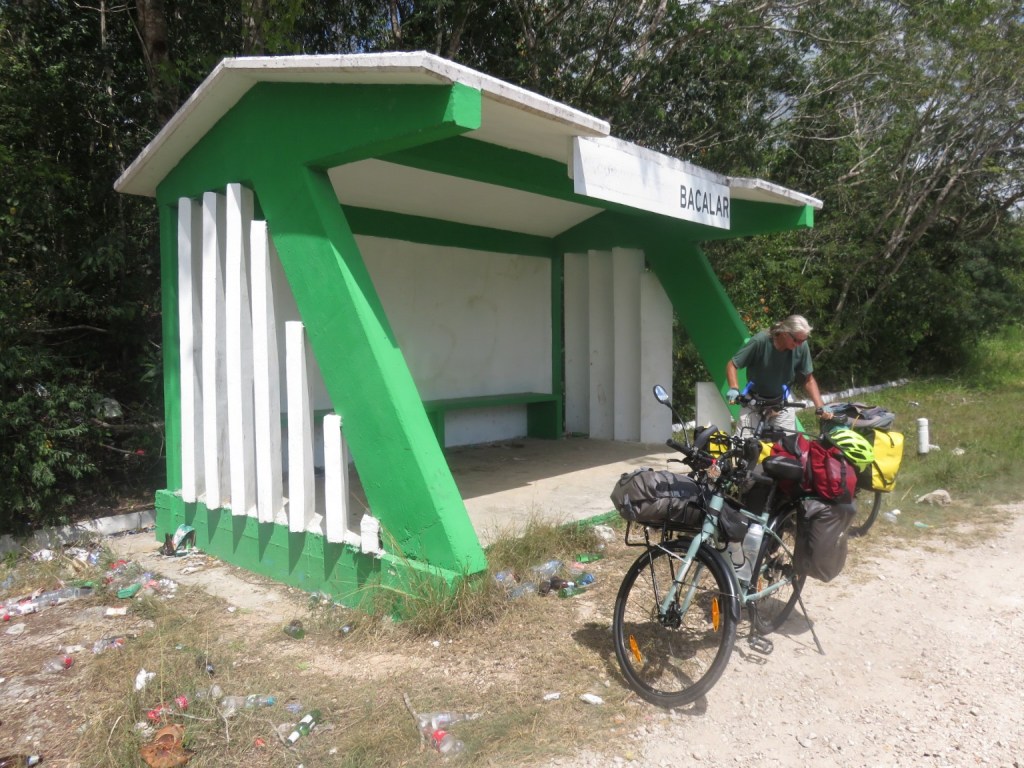
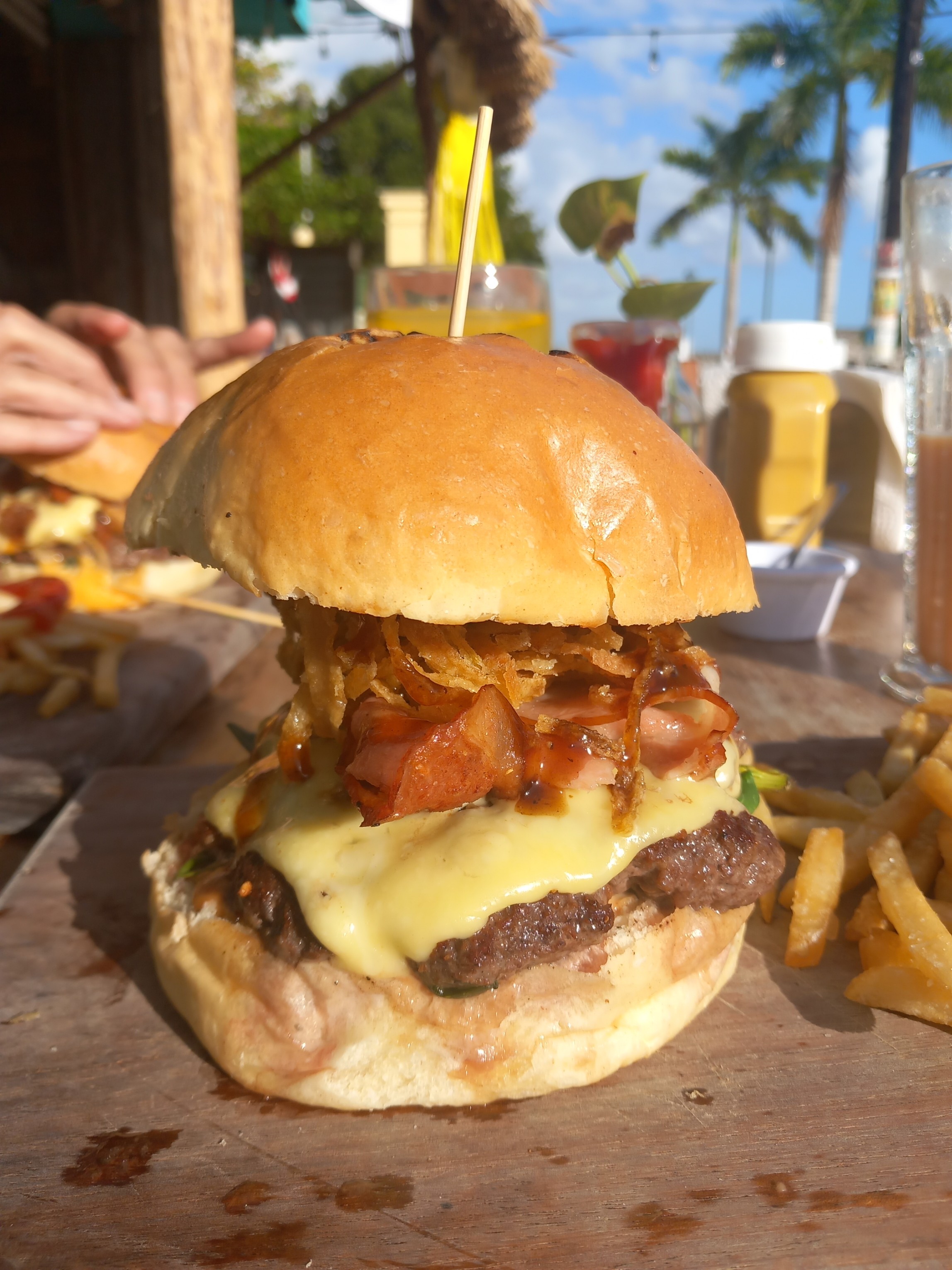
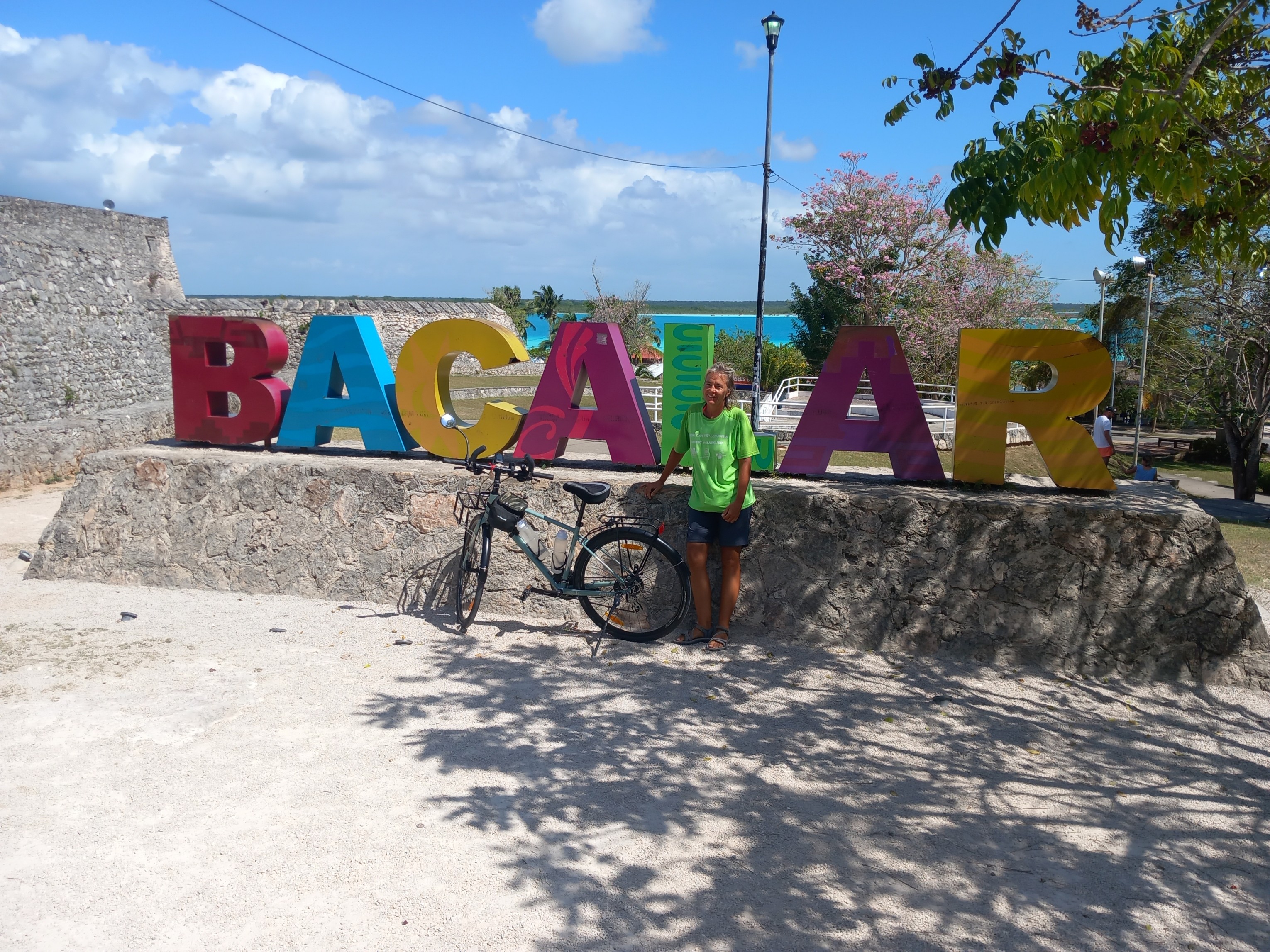
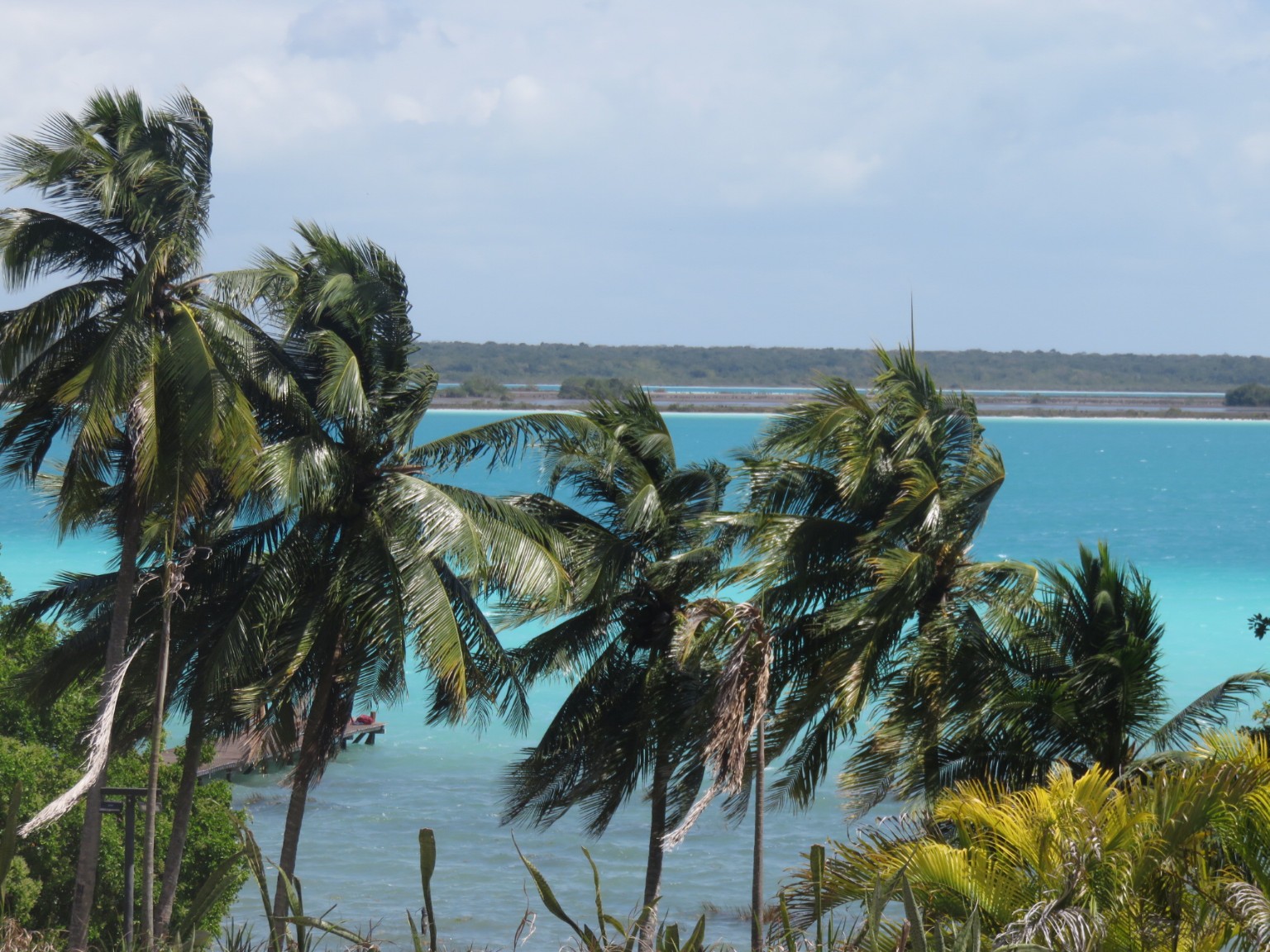
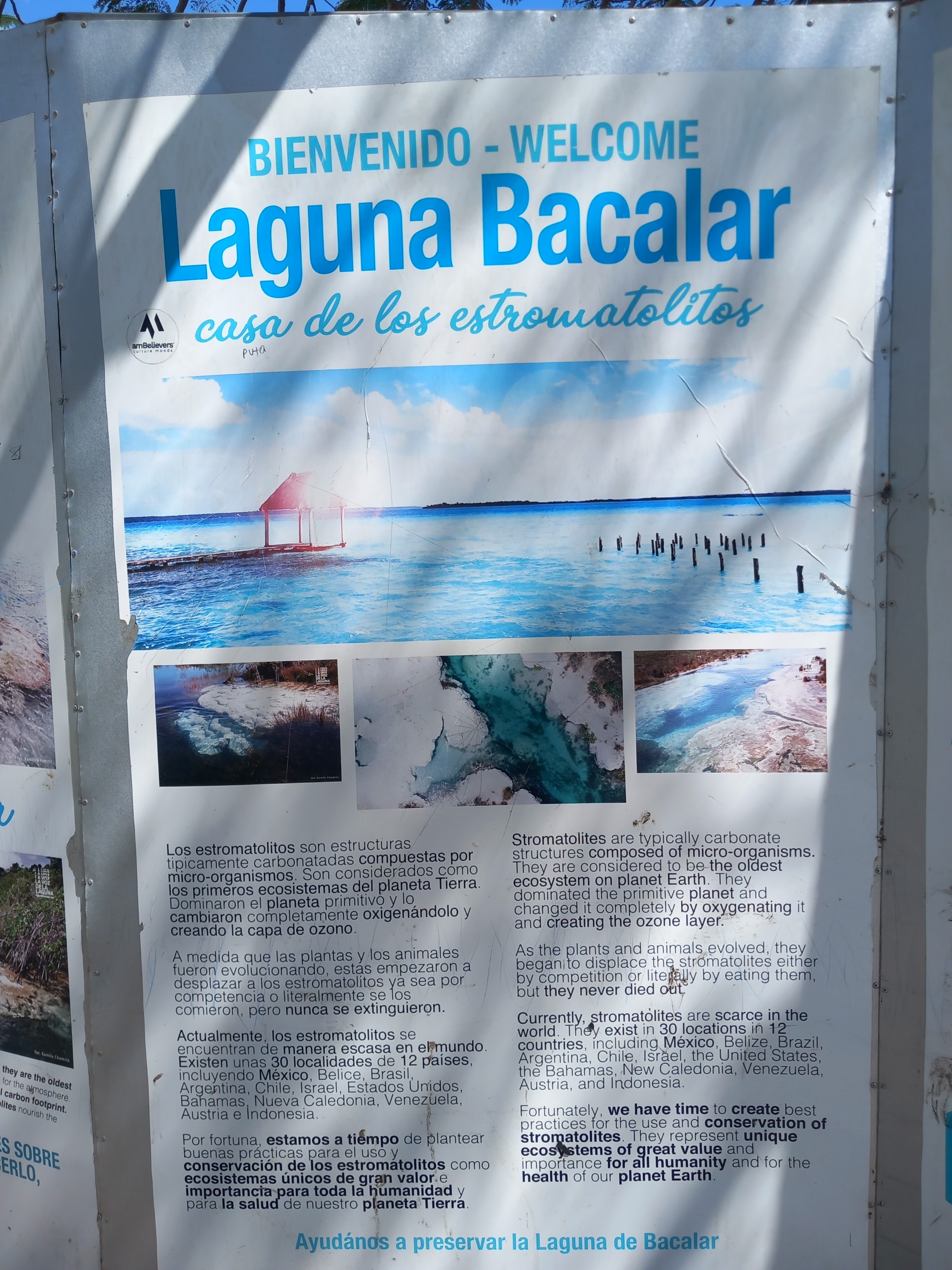
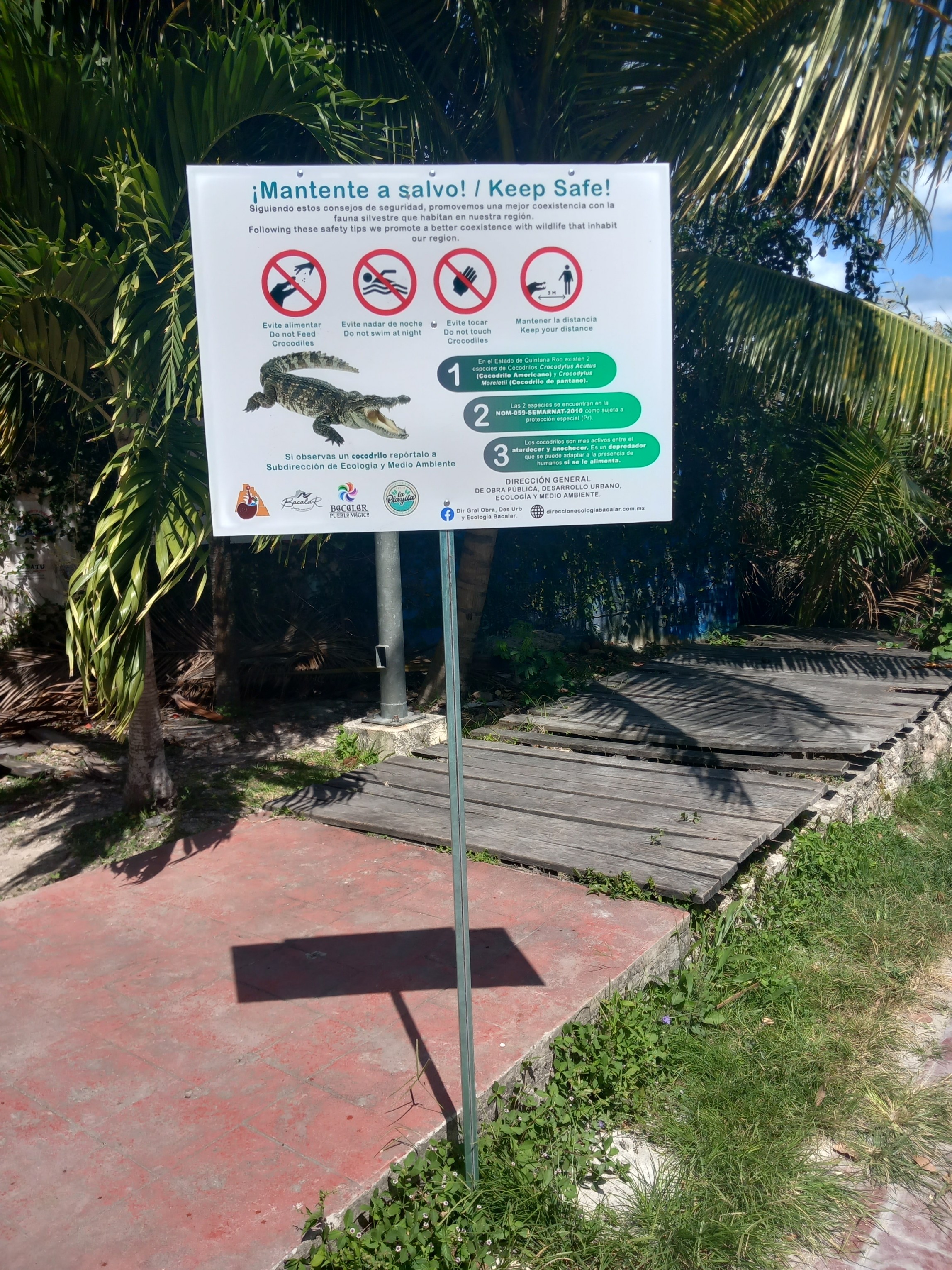
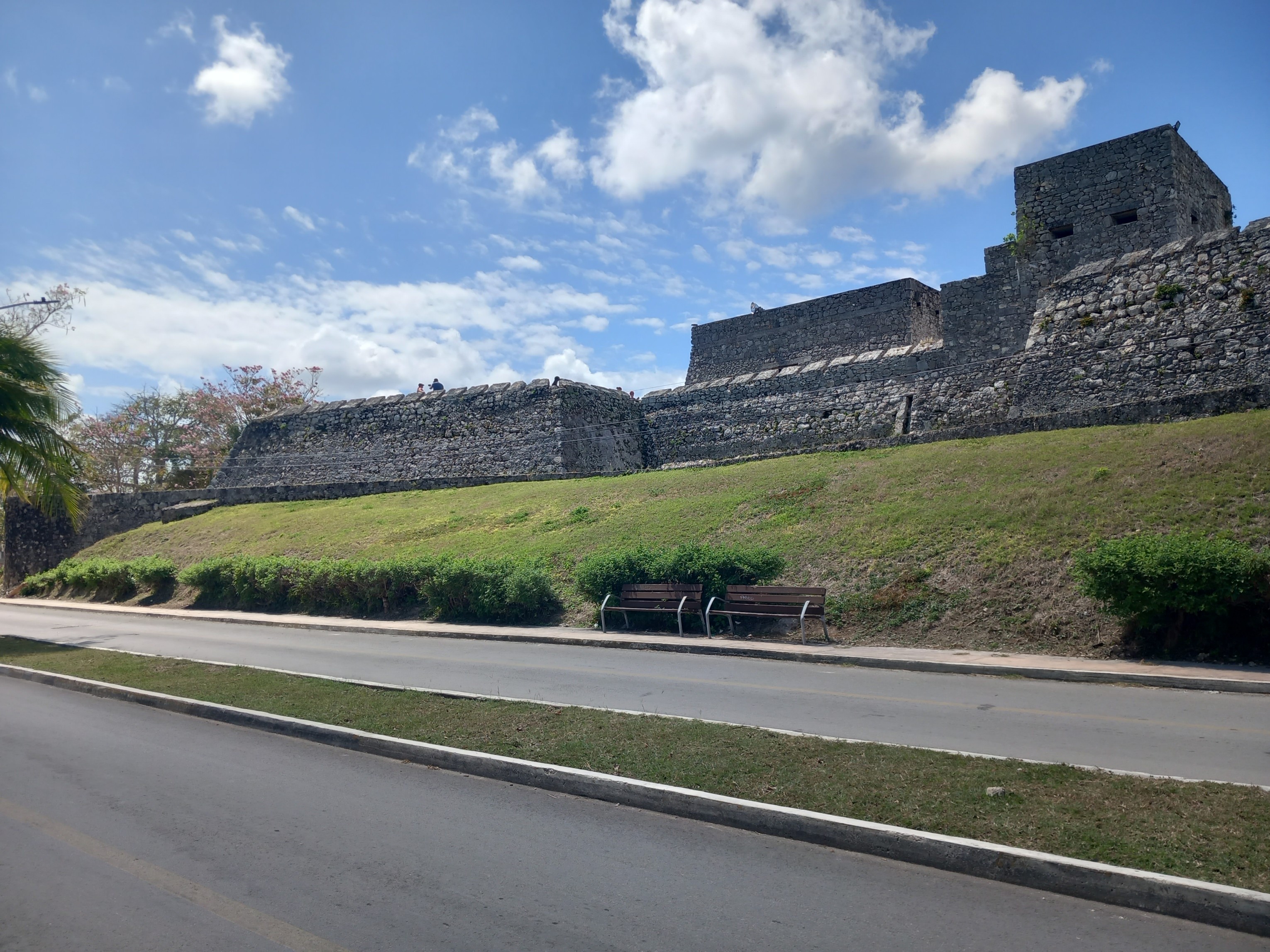
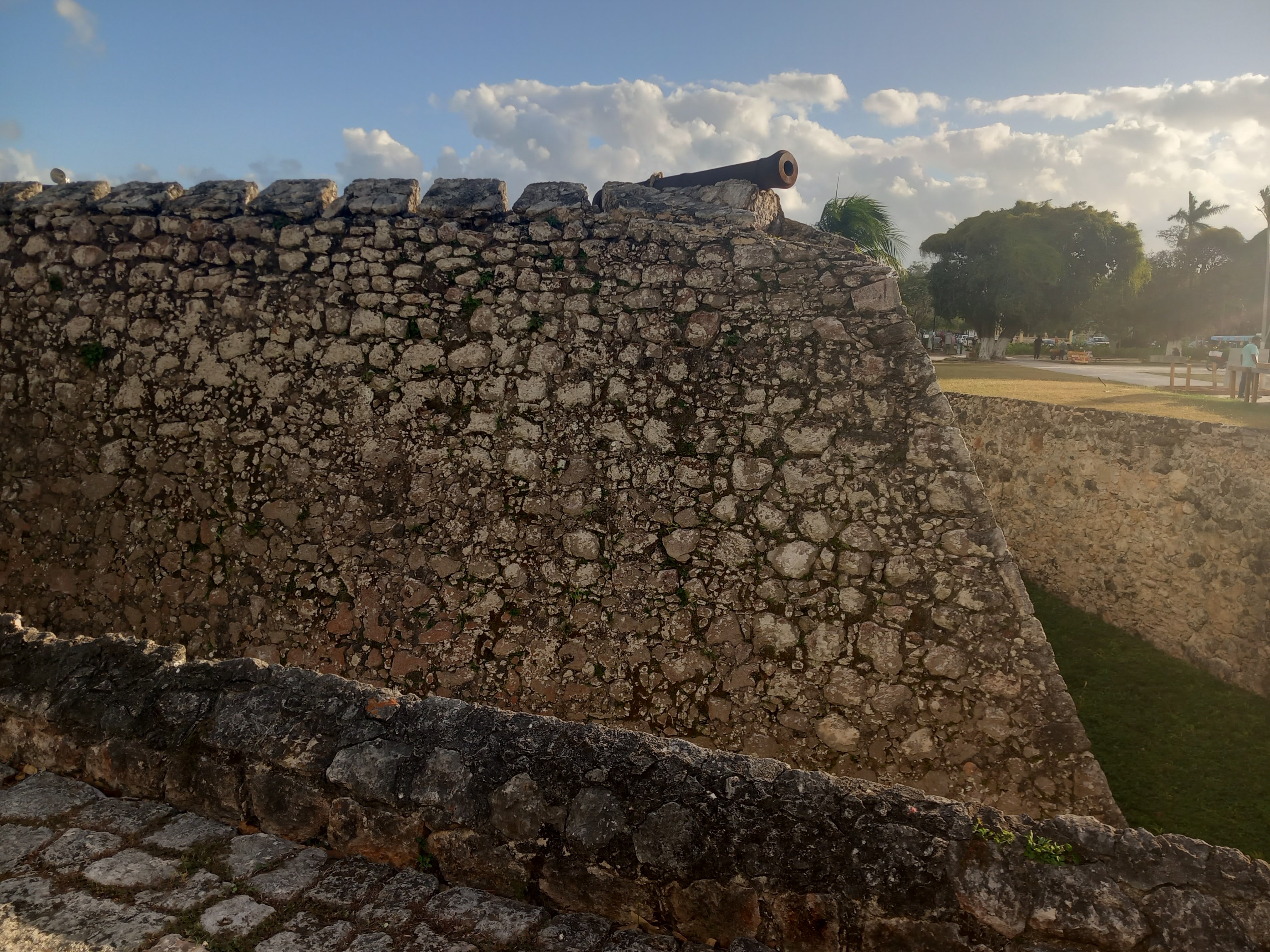
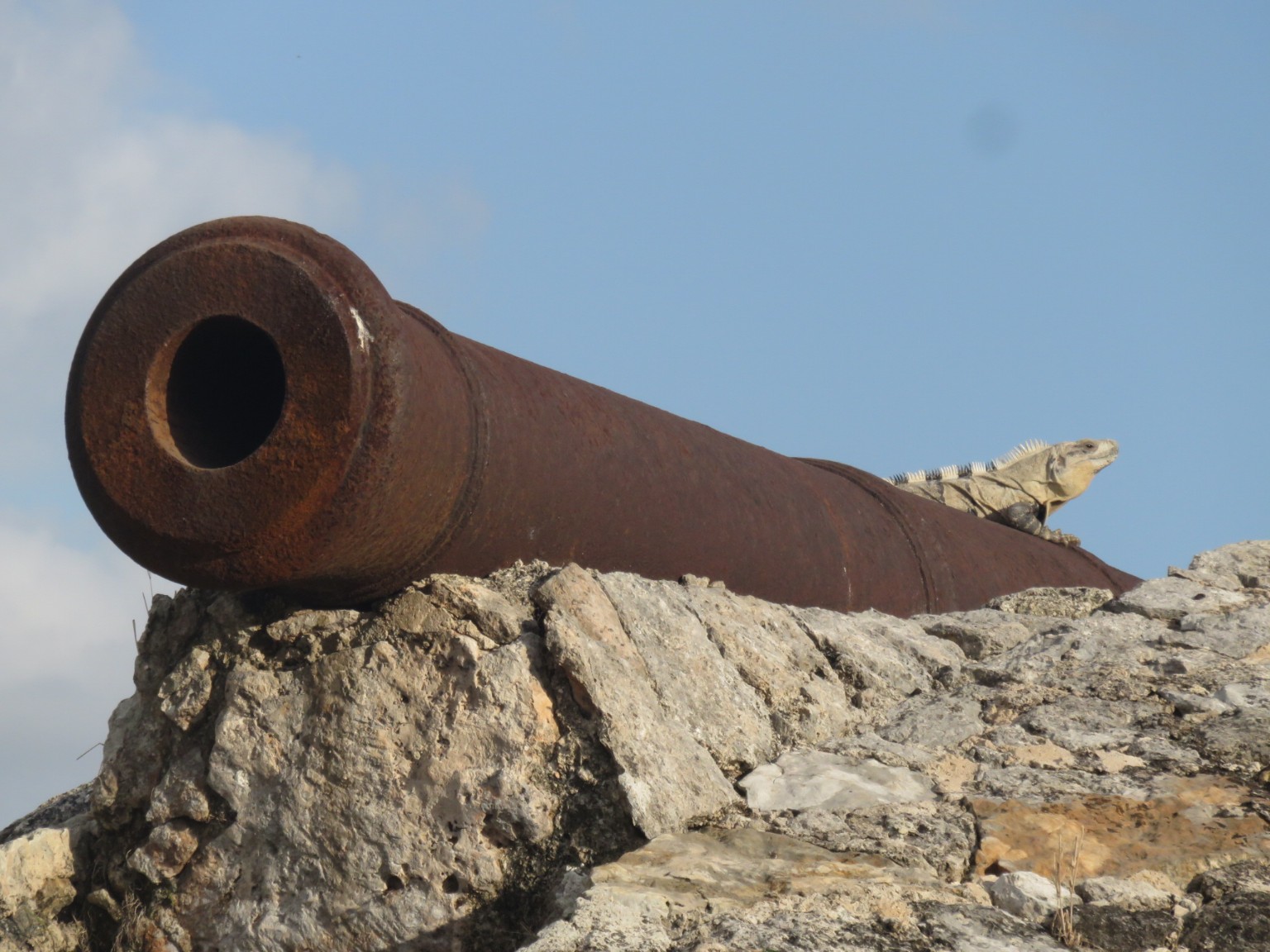
Not only does Bacalar have smart bus stops………………………………….………………..but also a decent burger to make a change from all things Mexican.Laguna Bacalar features in the LP guide which is the first time we’ve been on the tourist path for a few days which means more expensive accommodation and food.Bacalar is roughly in the middle of a 50 miles long lagoon (80 kilometres) with Buenavista towards the head as you travel from north to south. The story goes that the pirates who discovered this area did so whilst sheltering from the prevailing strong easterly winds arriving from the Caribbean. This sign we found amusing; so you can swim during the day and the crocodiles won’t hurt you – only if you swim in the lagoon at night? Right, likely story to persuade people not to swim here because there are no crocodiles, however, some will spend time looking for them.These are the ruins of the fort which was built to fight off the pirates trying to loot and pillage back in the day.Yes, the British were here led by Sir Francis Drake.Not many cannons have iguanas to guard them from over zealous tourists.
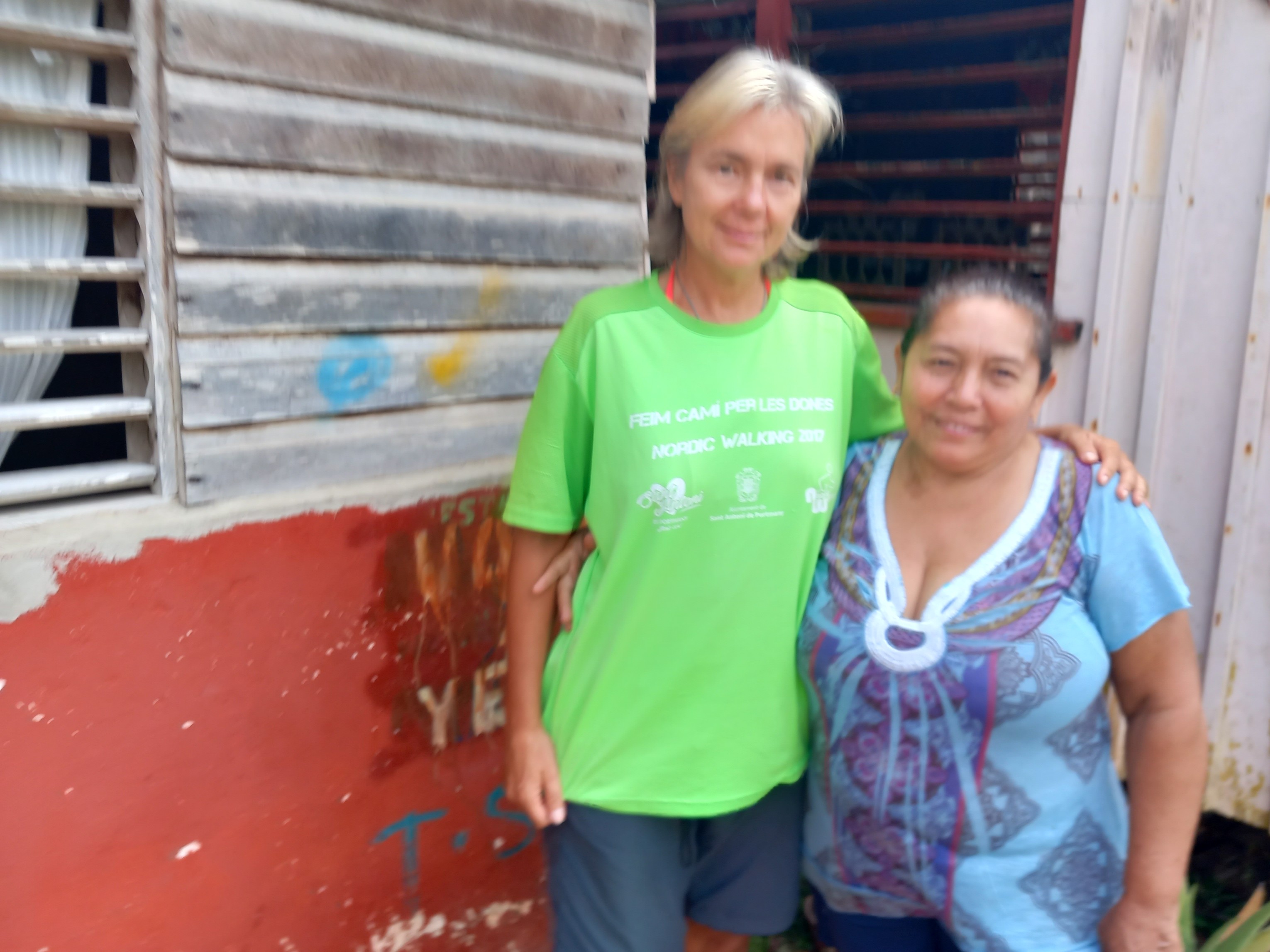
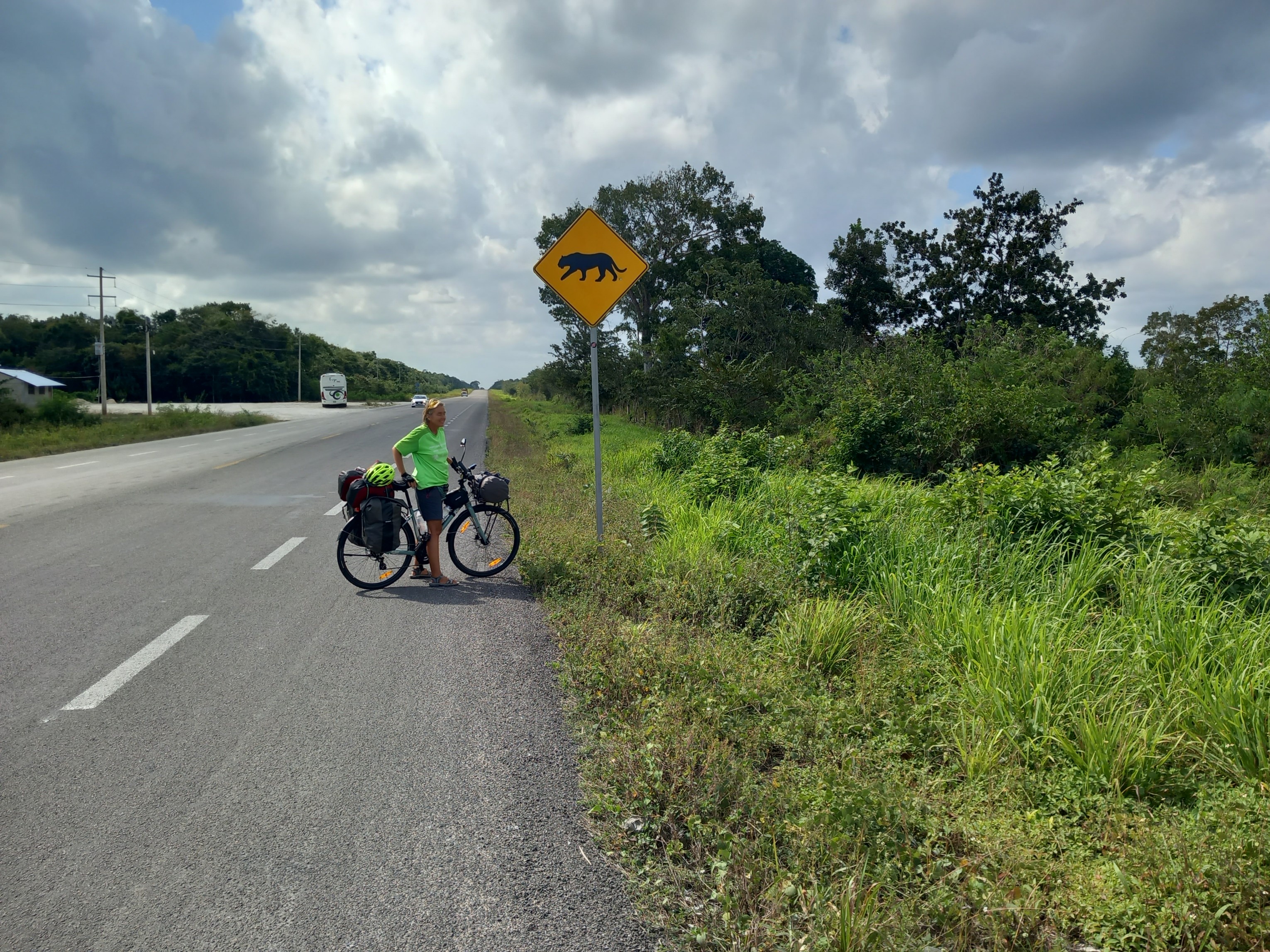
Preparing to leave again although it was an experience living with someone in their home.Another open stretch of road without any sightings of the jaguar as shown on the sign – whilst we have seen around 6 snakes on the road only one has been alive and he was about a metre long and pencil thin and keen to avoid our wheels.
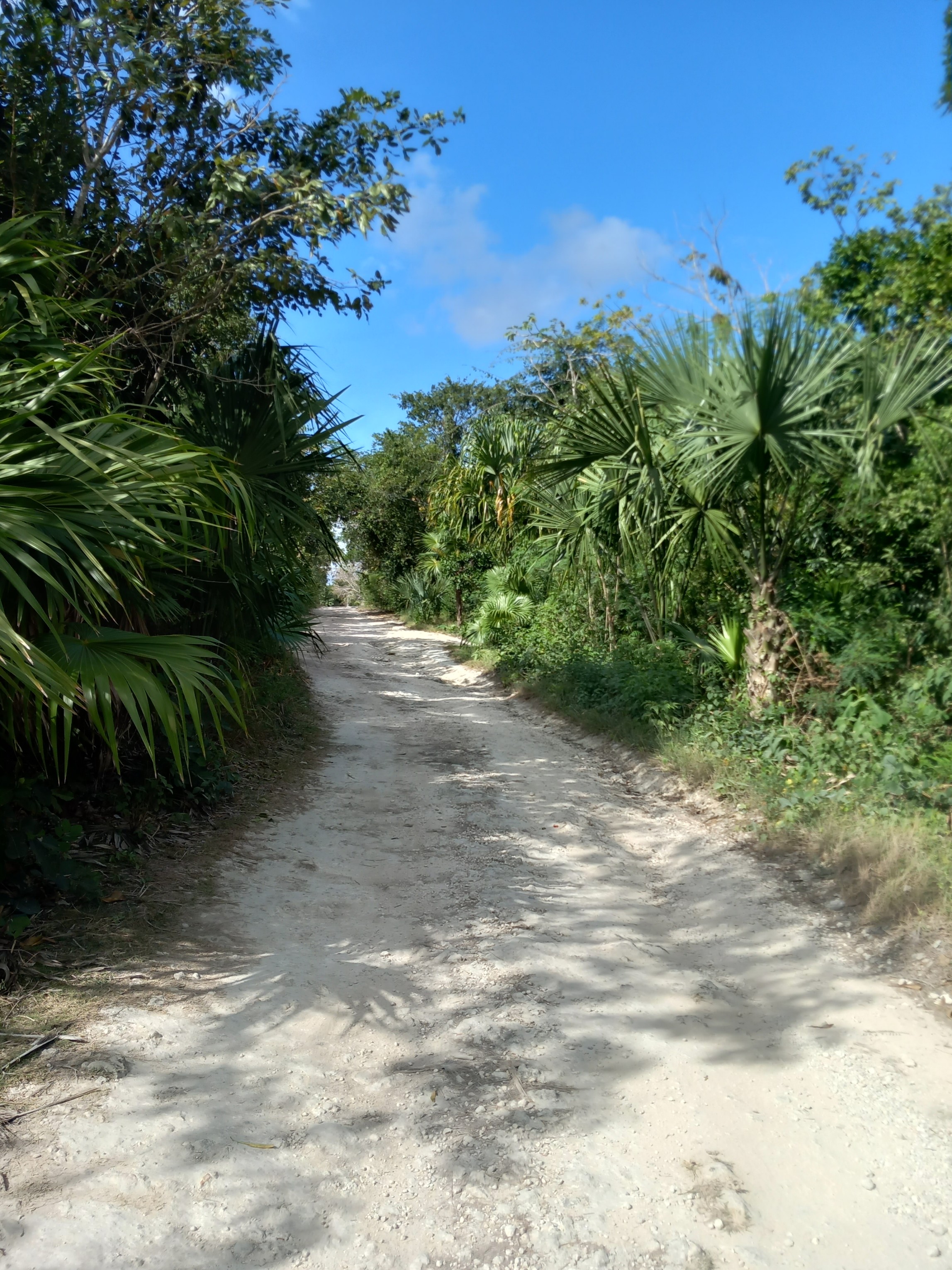
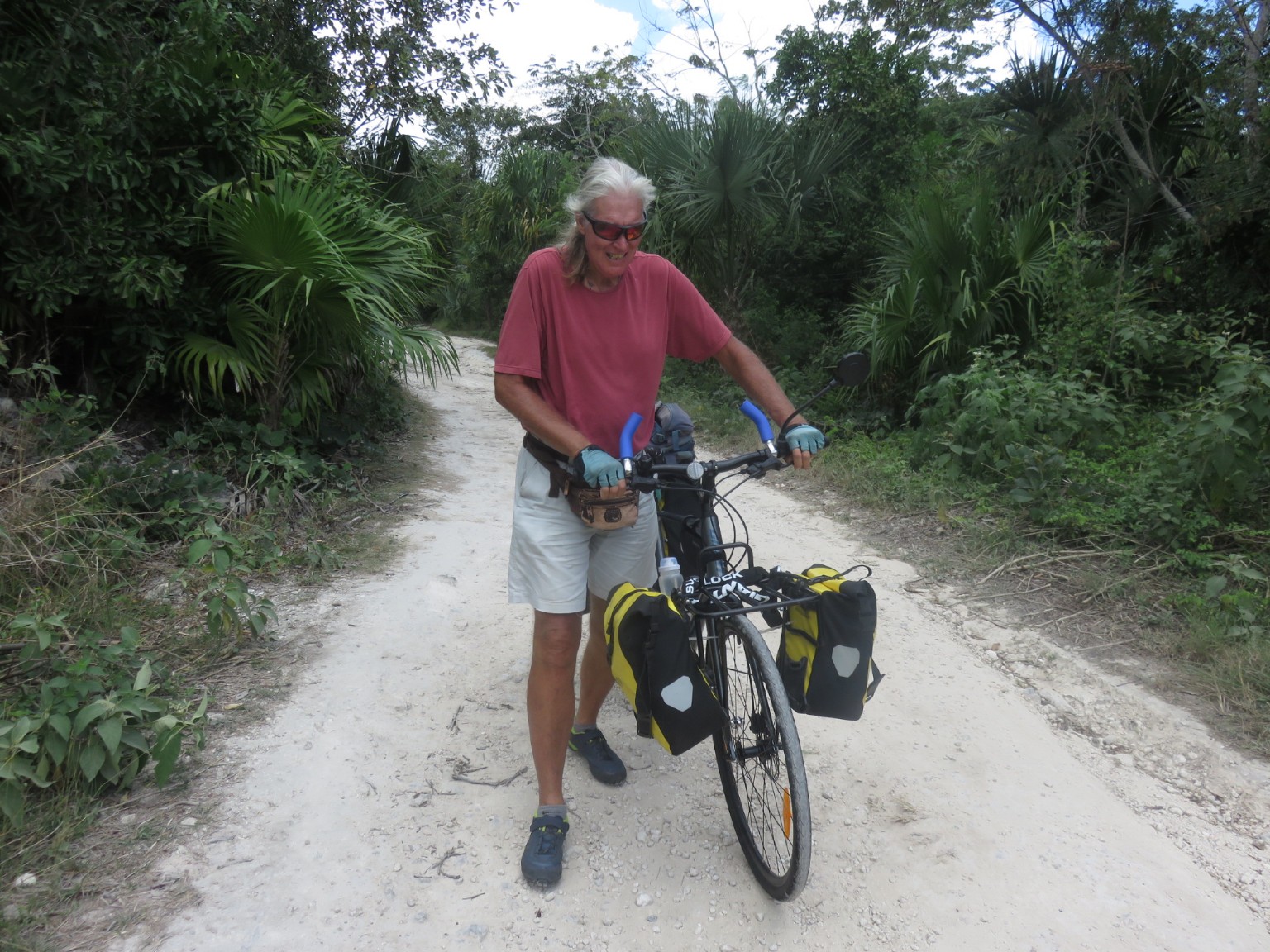
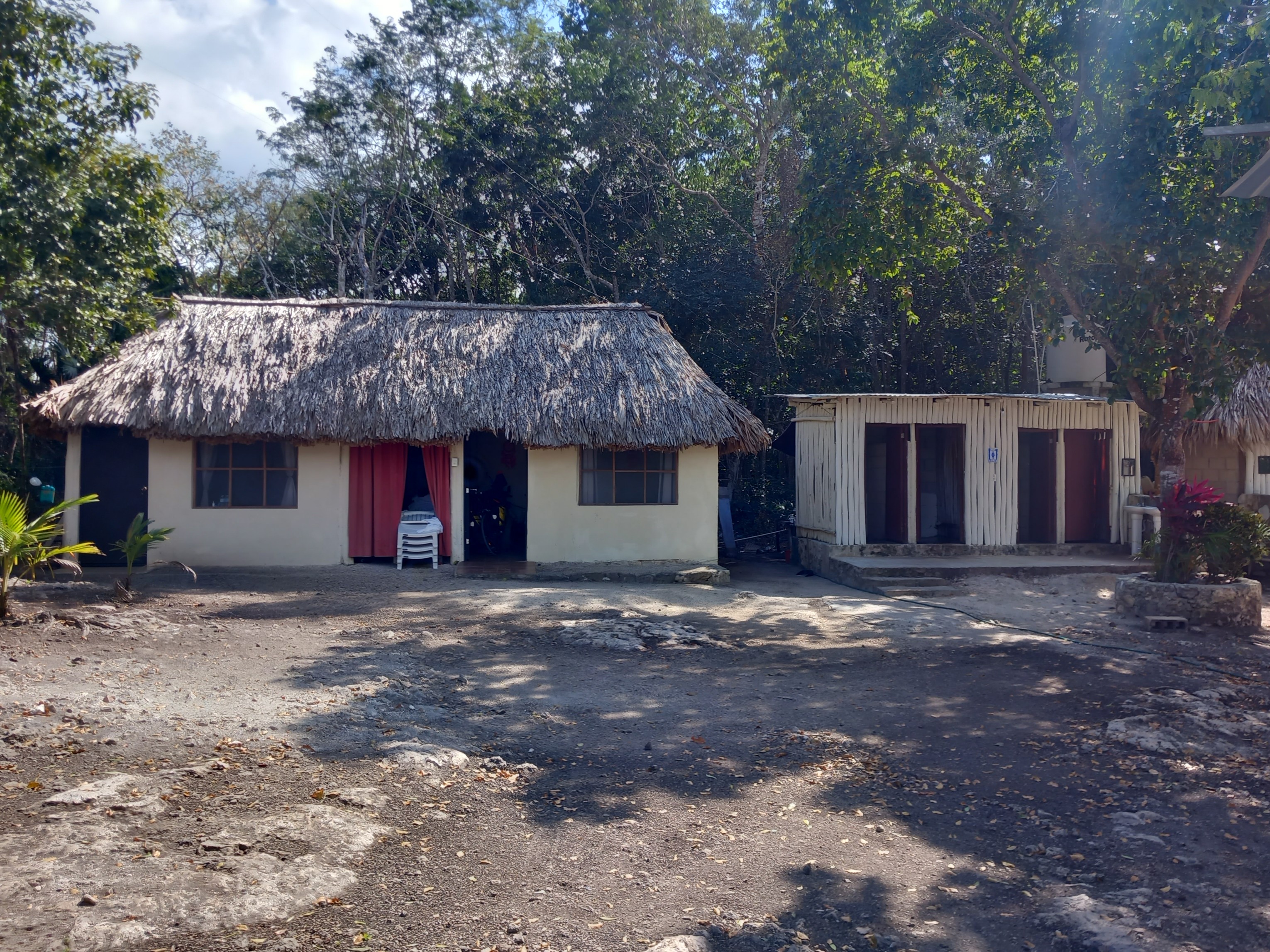
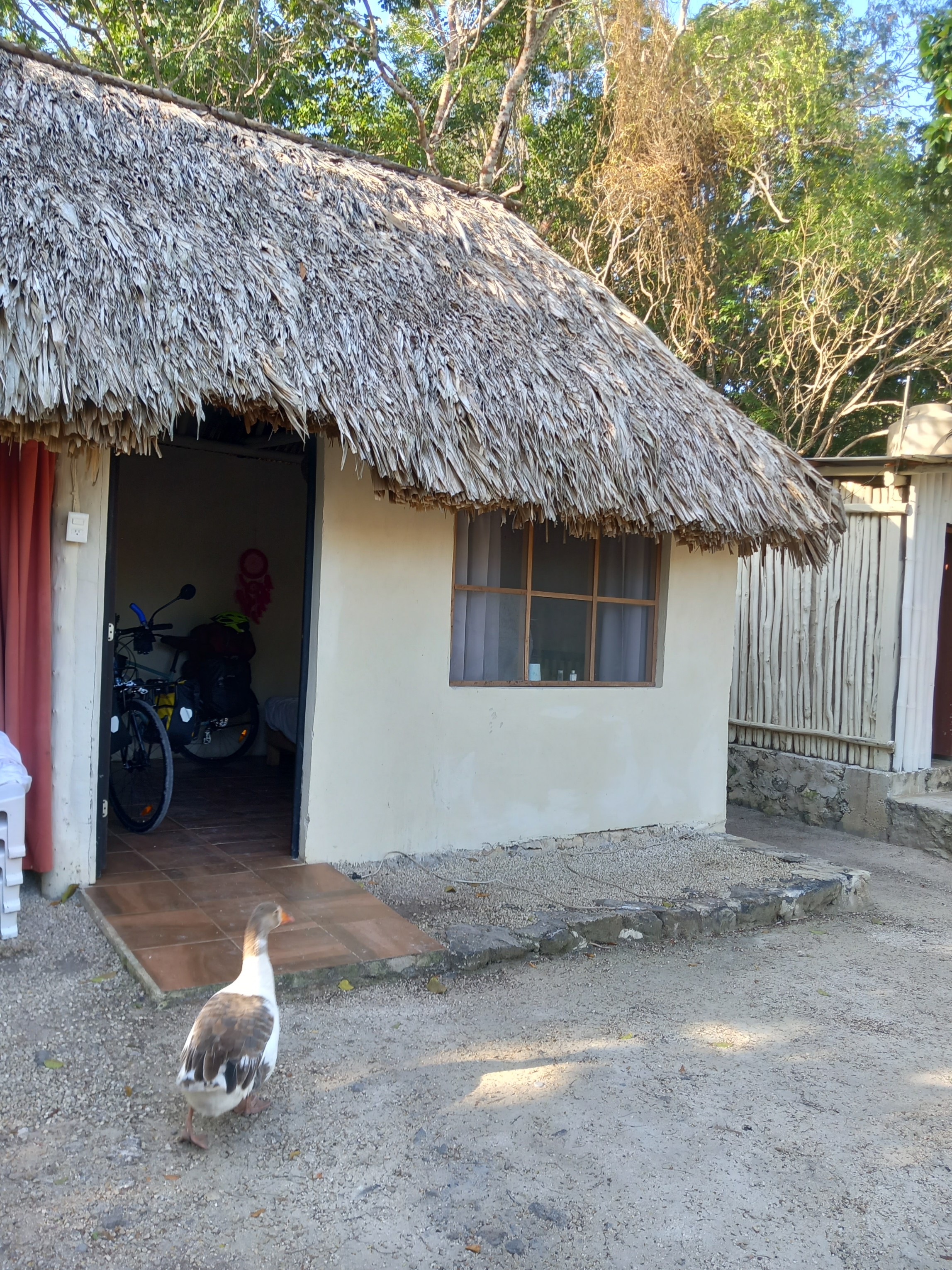
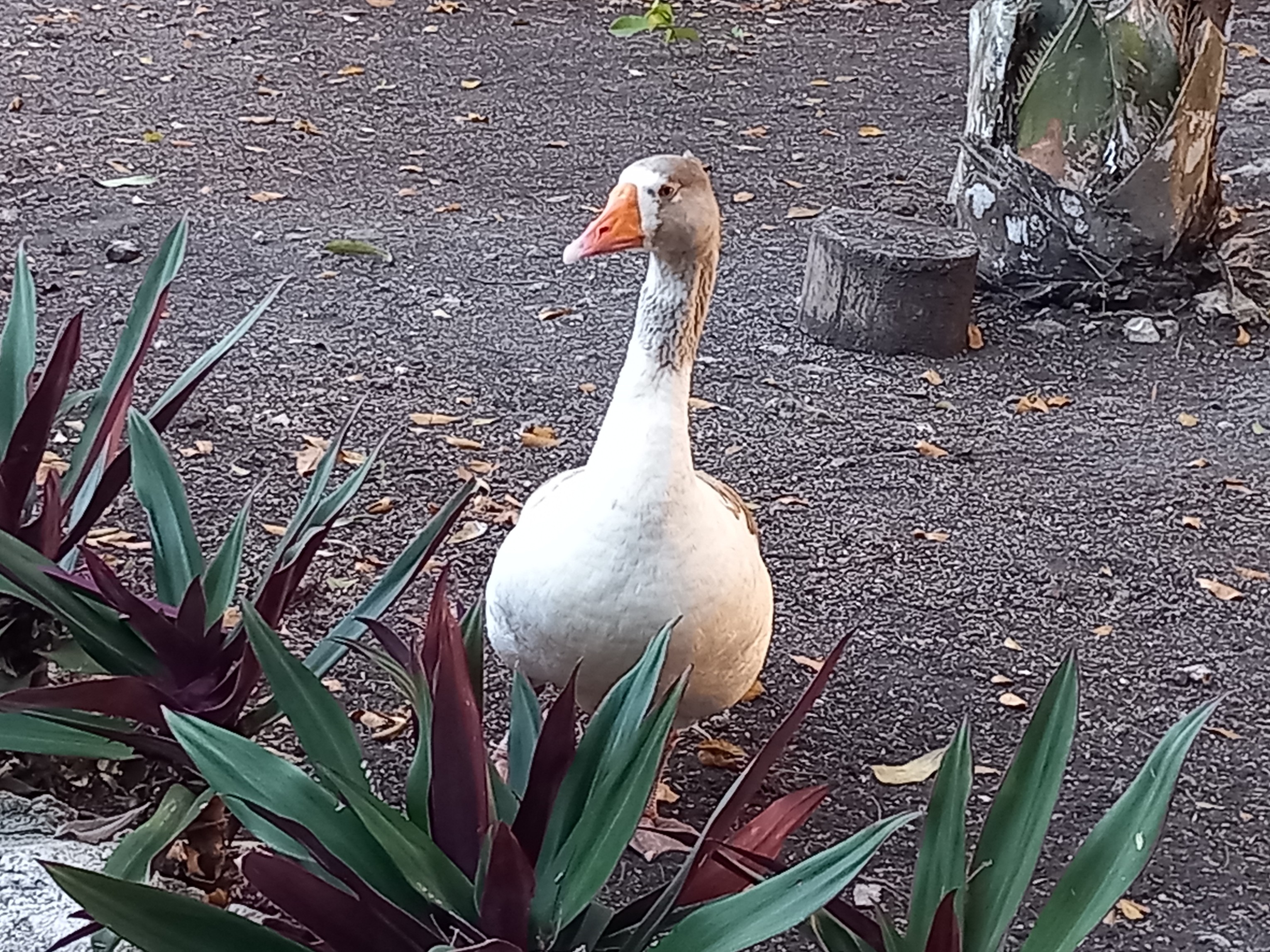
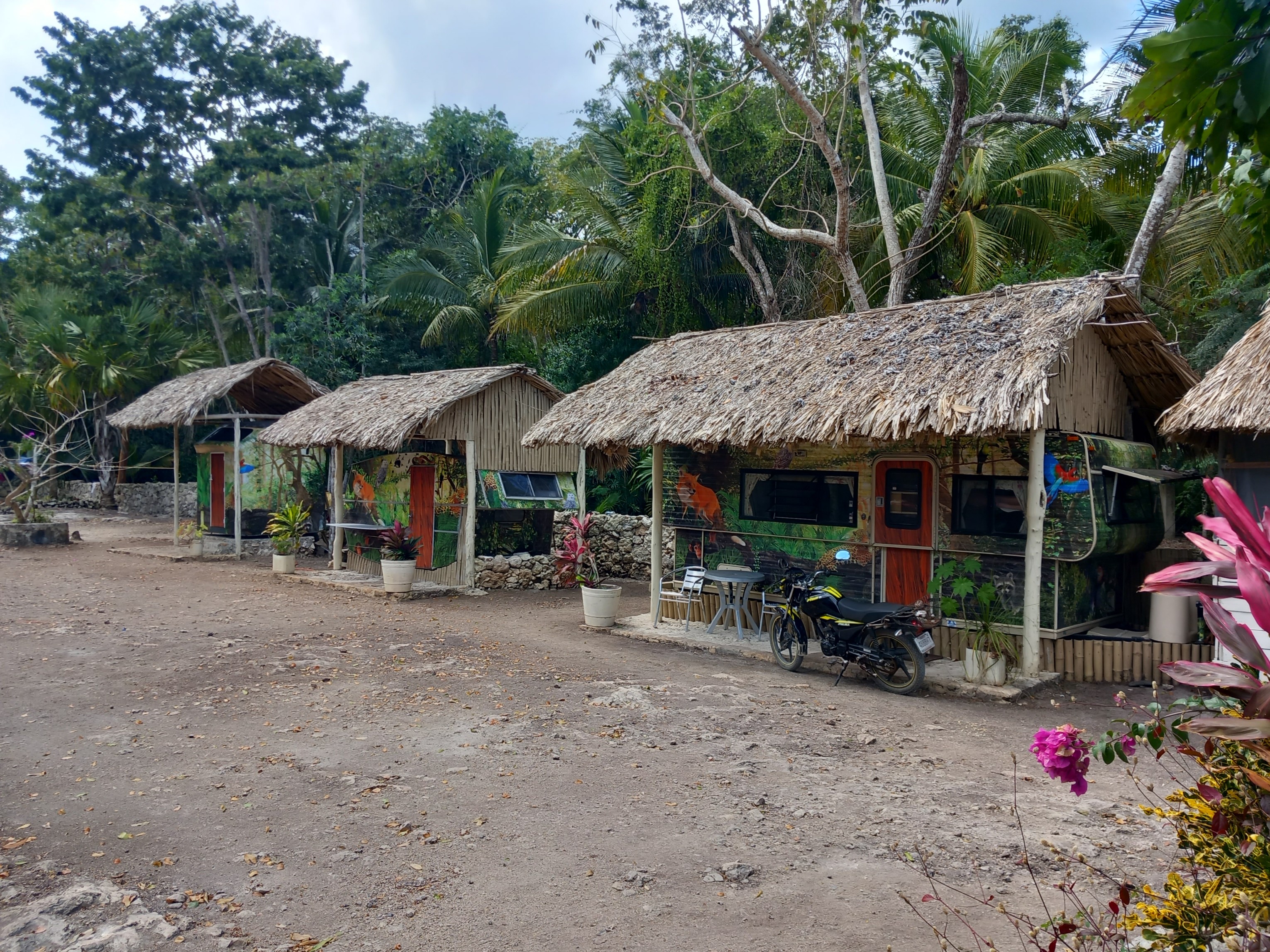
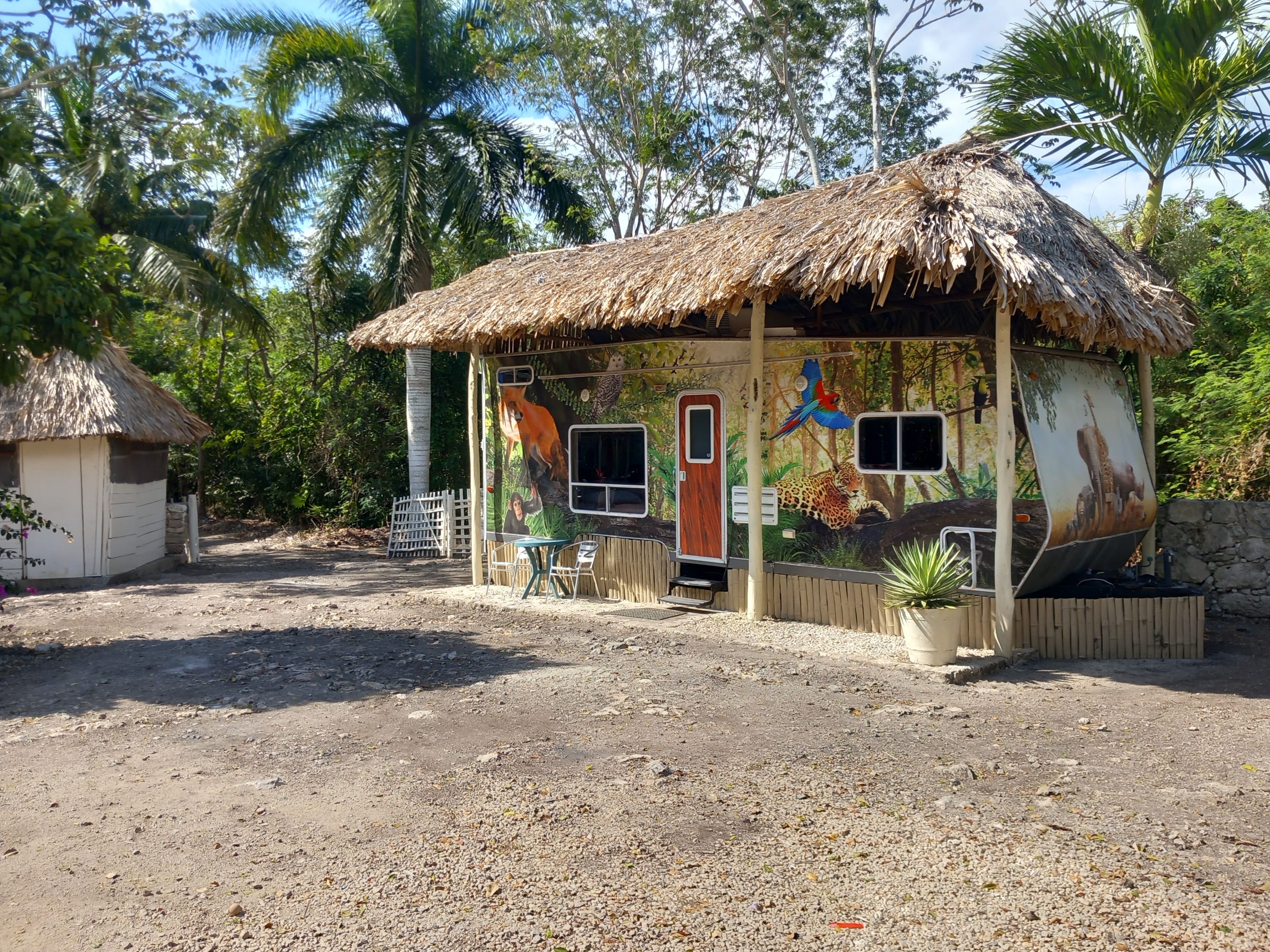
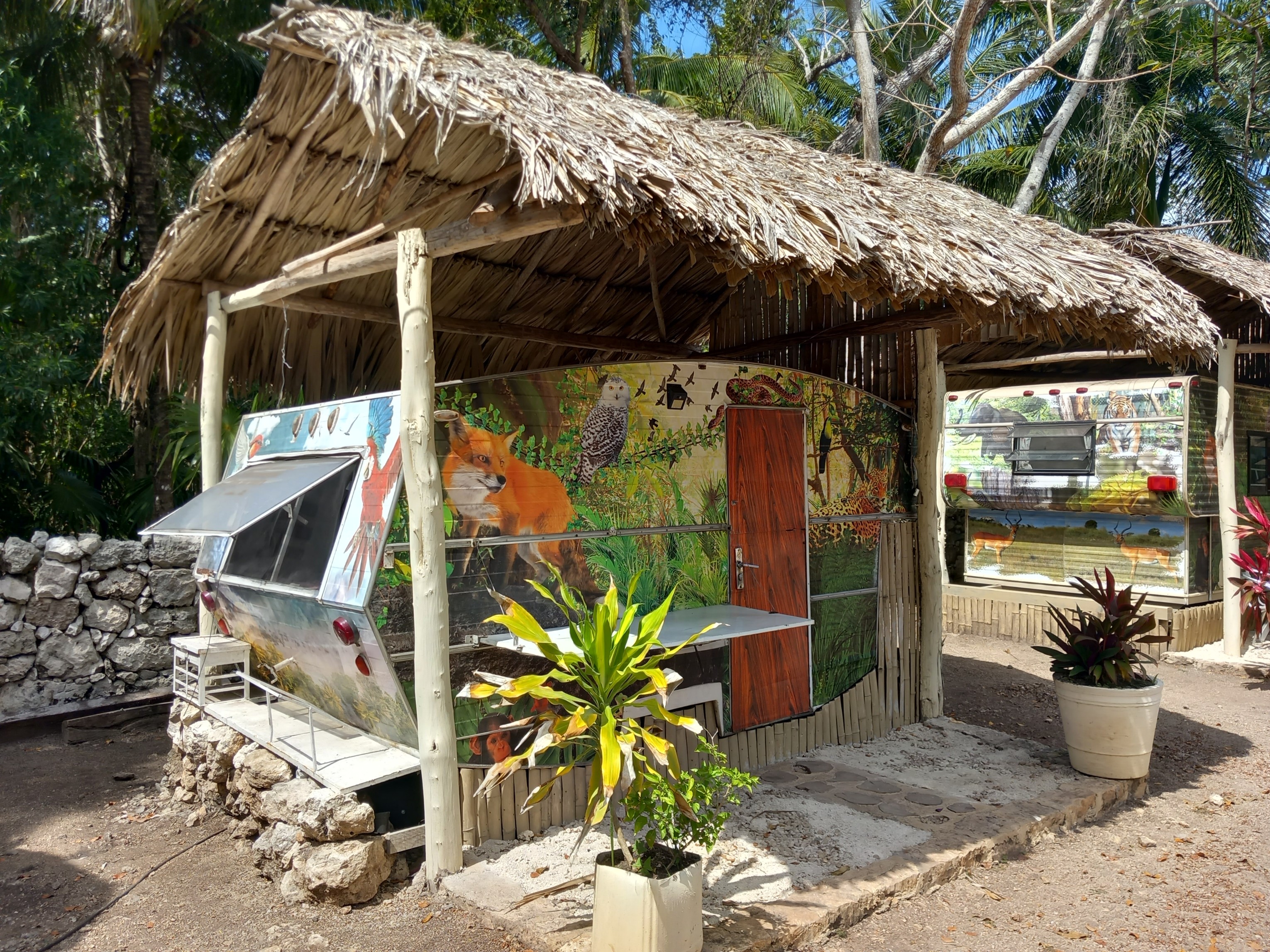
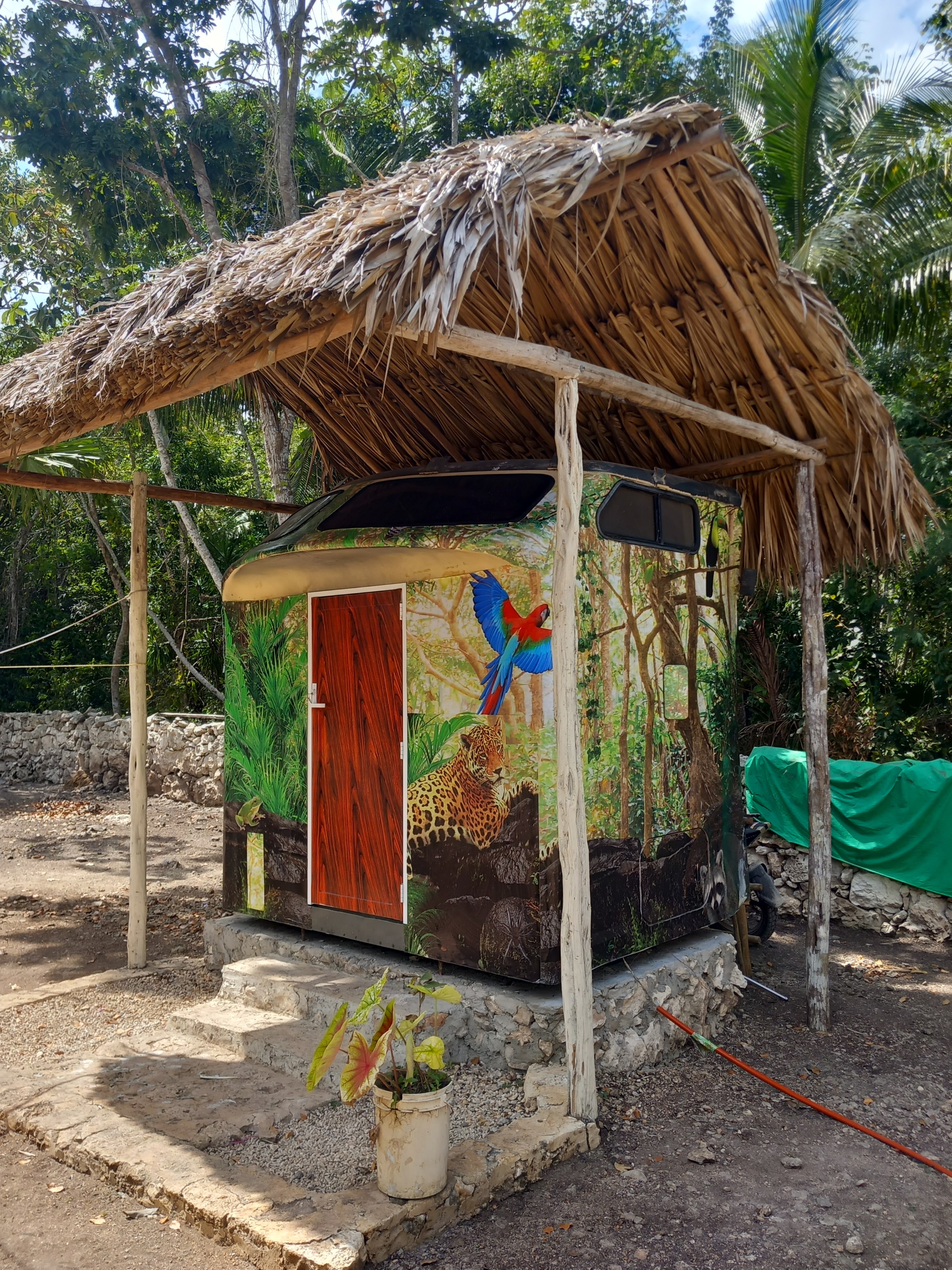
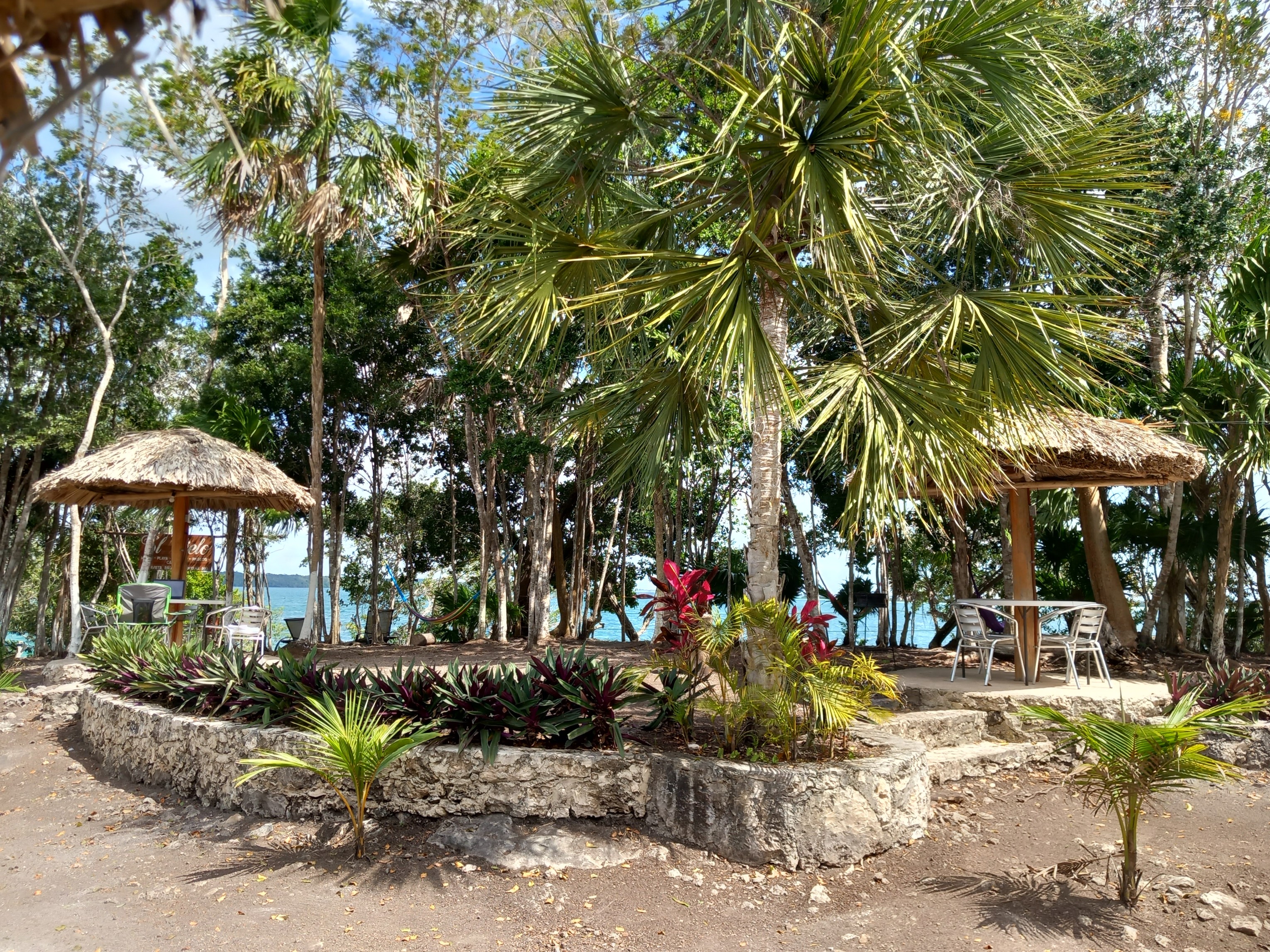
This is the beginning of the last 800 metres to this night’s accommodation; after last night’s no show we are somewhat concerned at what we may find – yesterday at least the smooth tarmac road ran all the way to the closed door. Dismounting to walk on the rough track does not inspire confidence.What a pleasant surprise! A couple of cabanas with shared toilet/shower block to the right – men and women separate ( no nonsense with multiple genders here)!A solitary goose patrols the grounds in lieu of private security.Opposite the cabanas are these converted motorhomes.The smallest of them all – less than 2 metres by 2 metres – being used by a chap from Atlanta, Georgia whilst we were there.This is the view from the covered cooking and dining area in the centre of this interesting project with a beautiful position by the laguna.
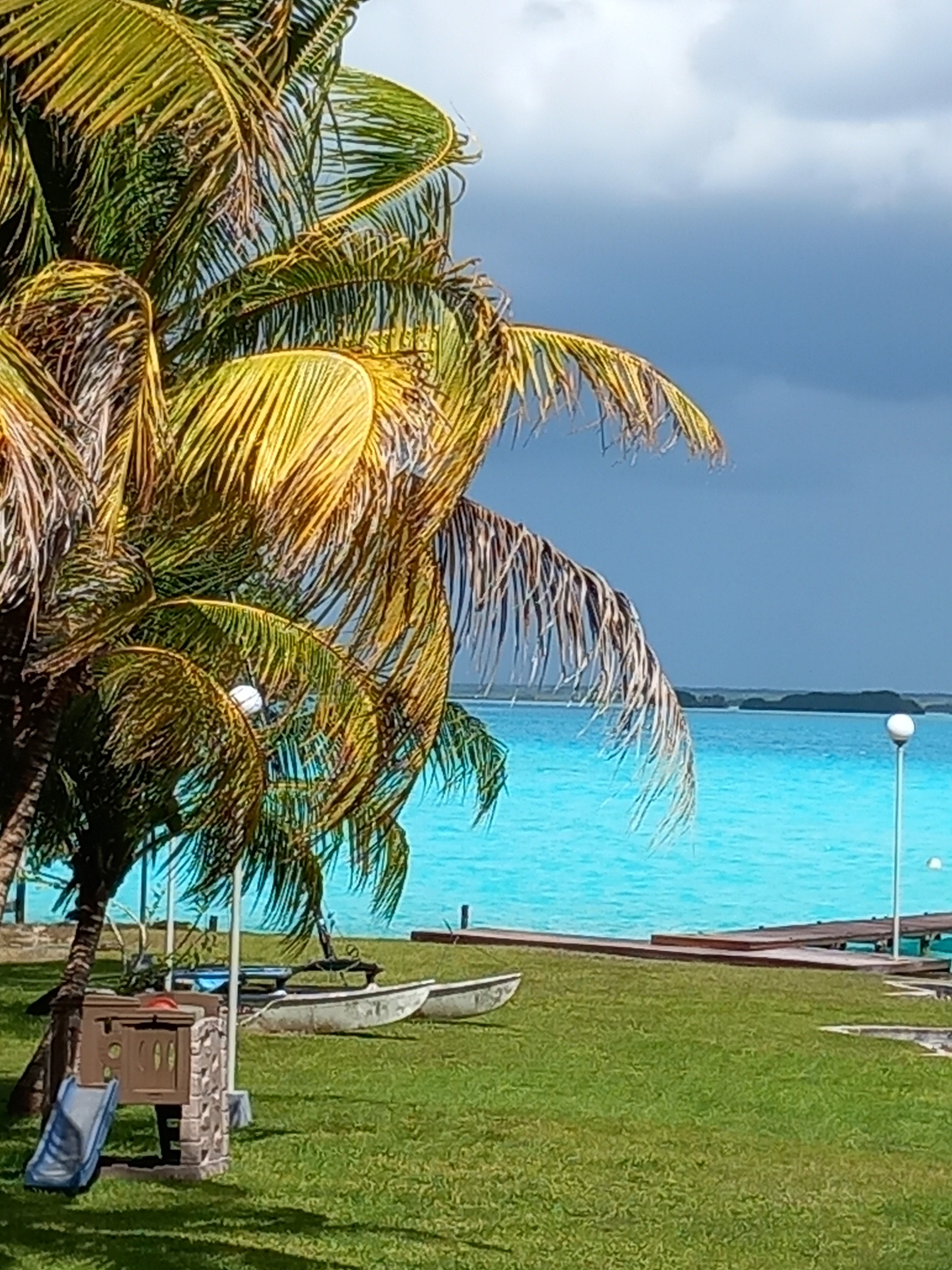
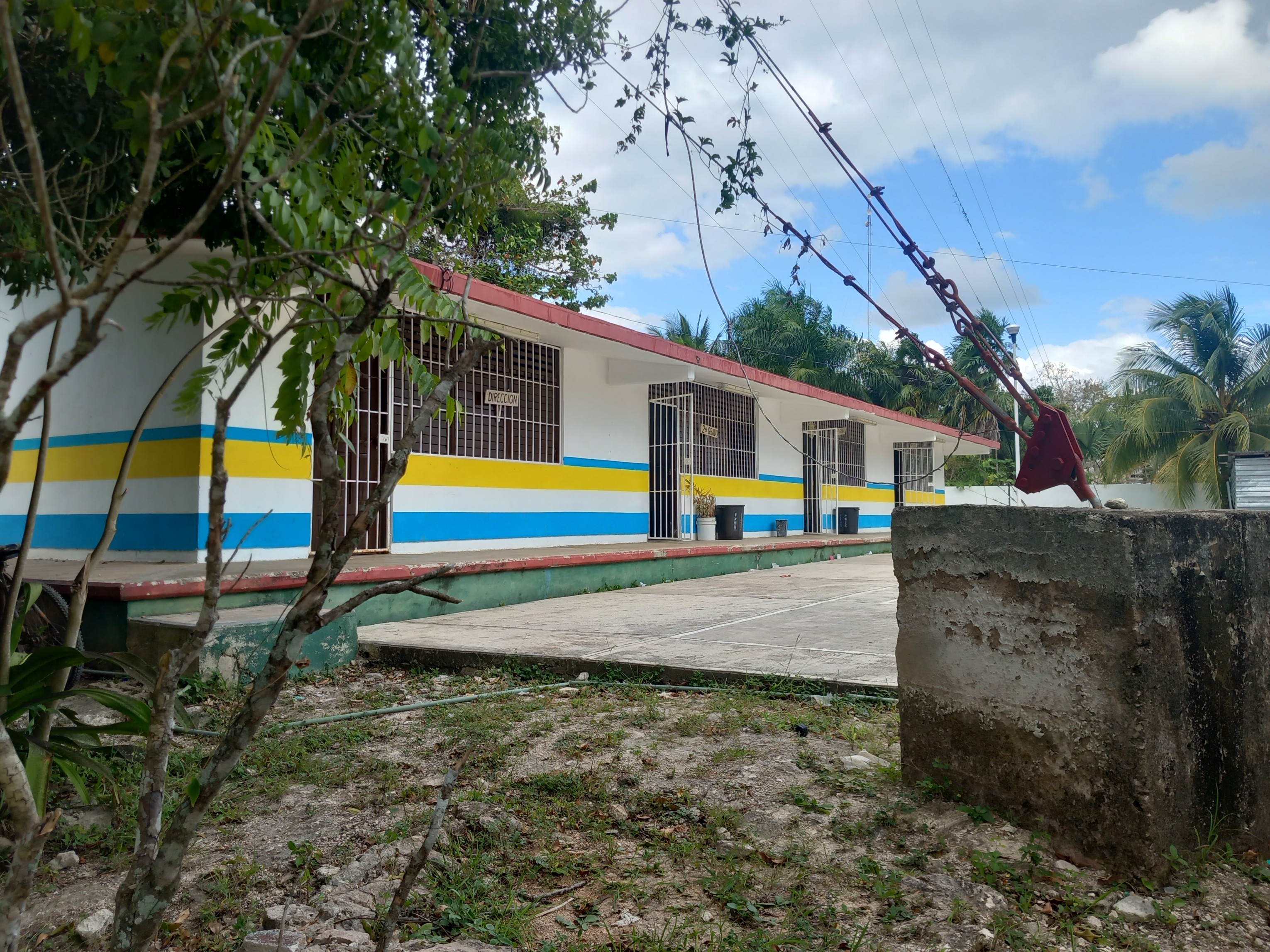
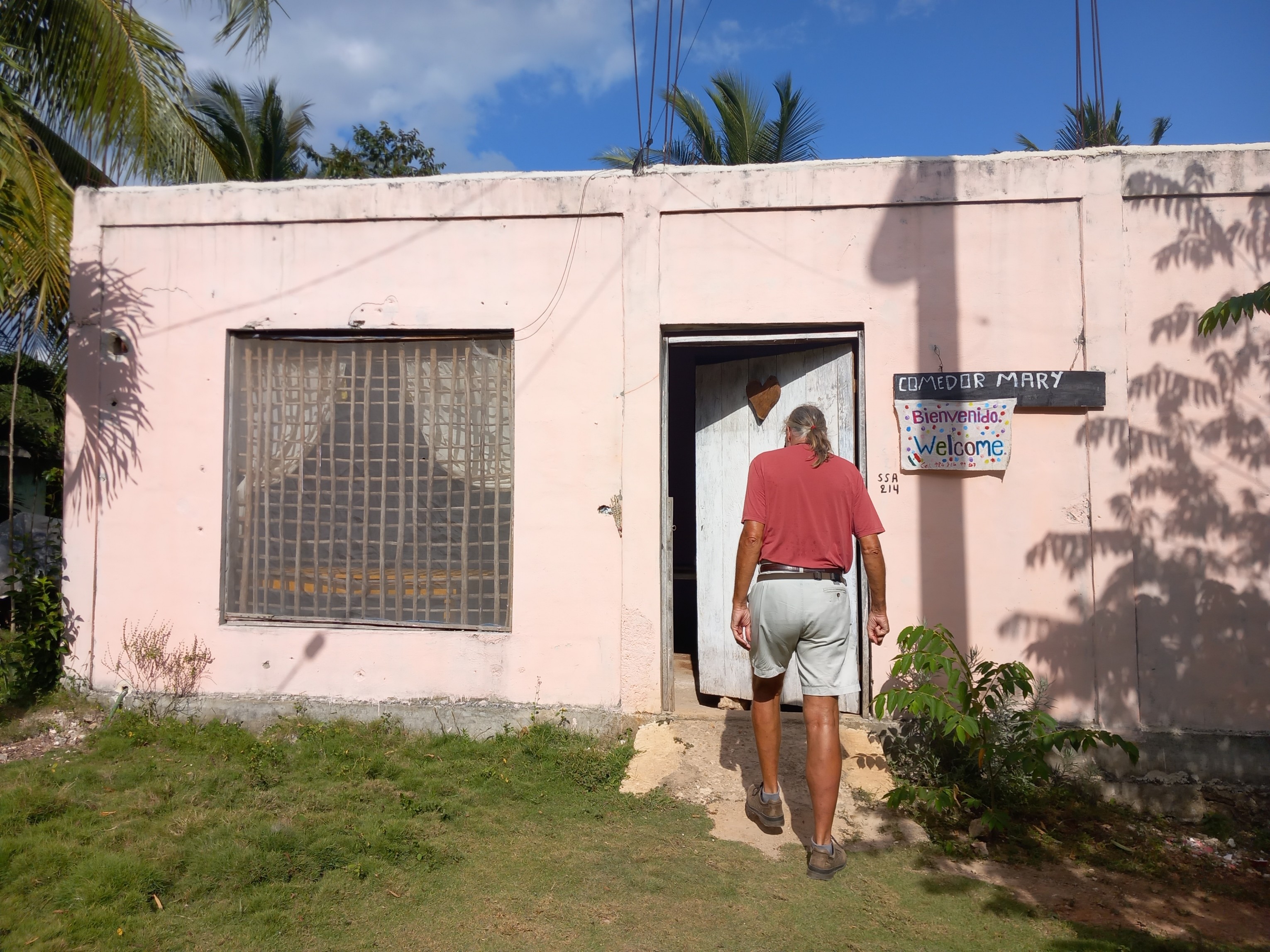
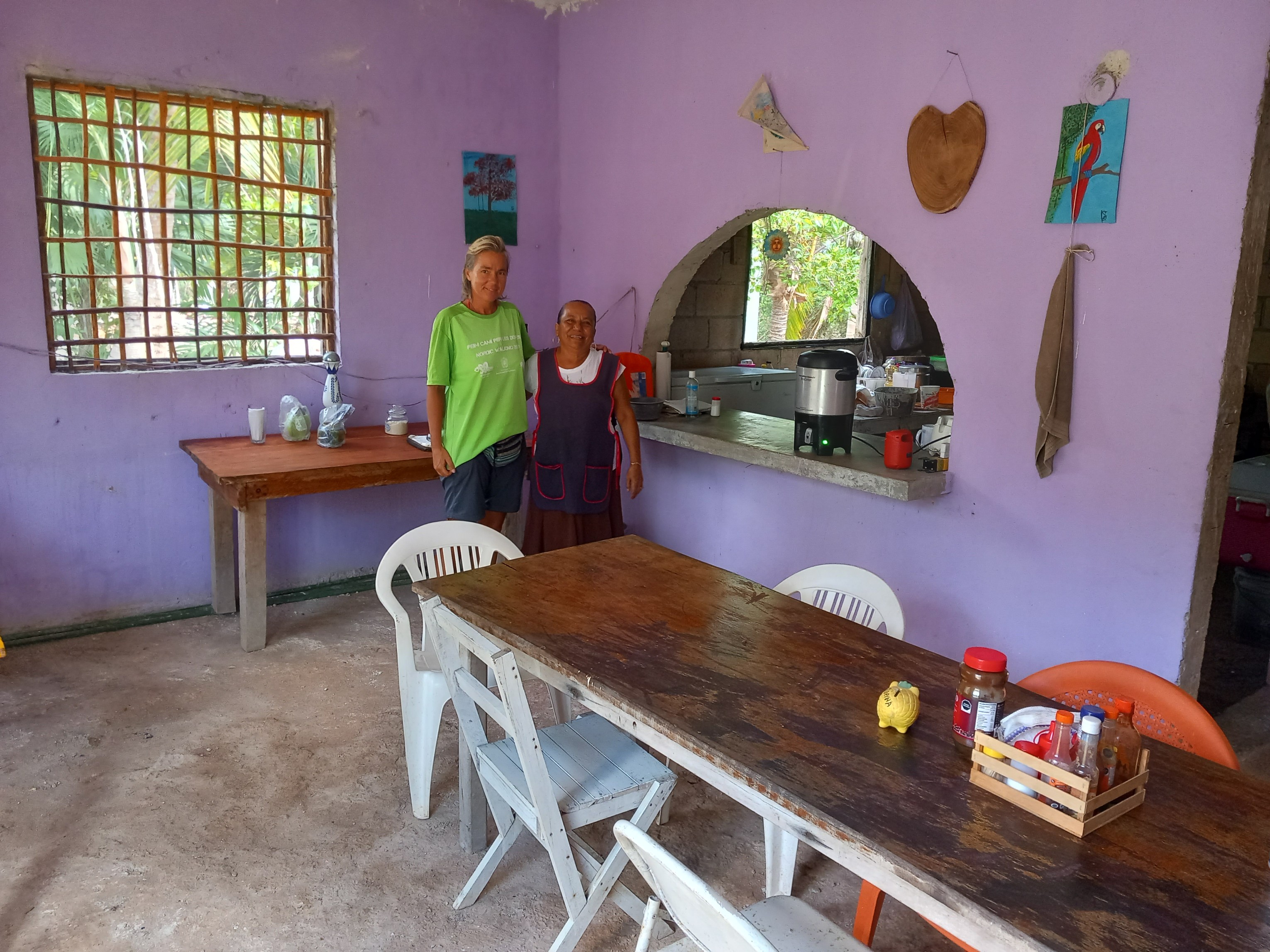
A bit choppy for kayaking, however, ideal for the paddling pool.A few pictures of views as we stroll around looking for somewhere to eat – Buenavista is a small village and dining options are not too plentiful.This is not the local jail – it’s the primary school with a room for each year group. The photo had to be taken through the bars on the main gate.En route to a local lady who provides meals in her dining room.This is Mary and her only competition is the hotel around the lagoon from where we stayed. Who needs uniformed staff and water views when we have those almost constantly in these parts? I bet the food is as good here as at the hotel – we returned for breakfast.Sunrise over the laguna.
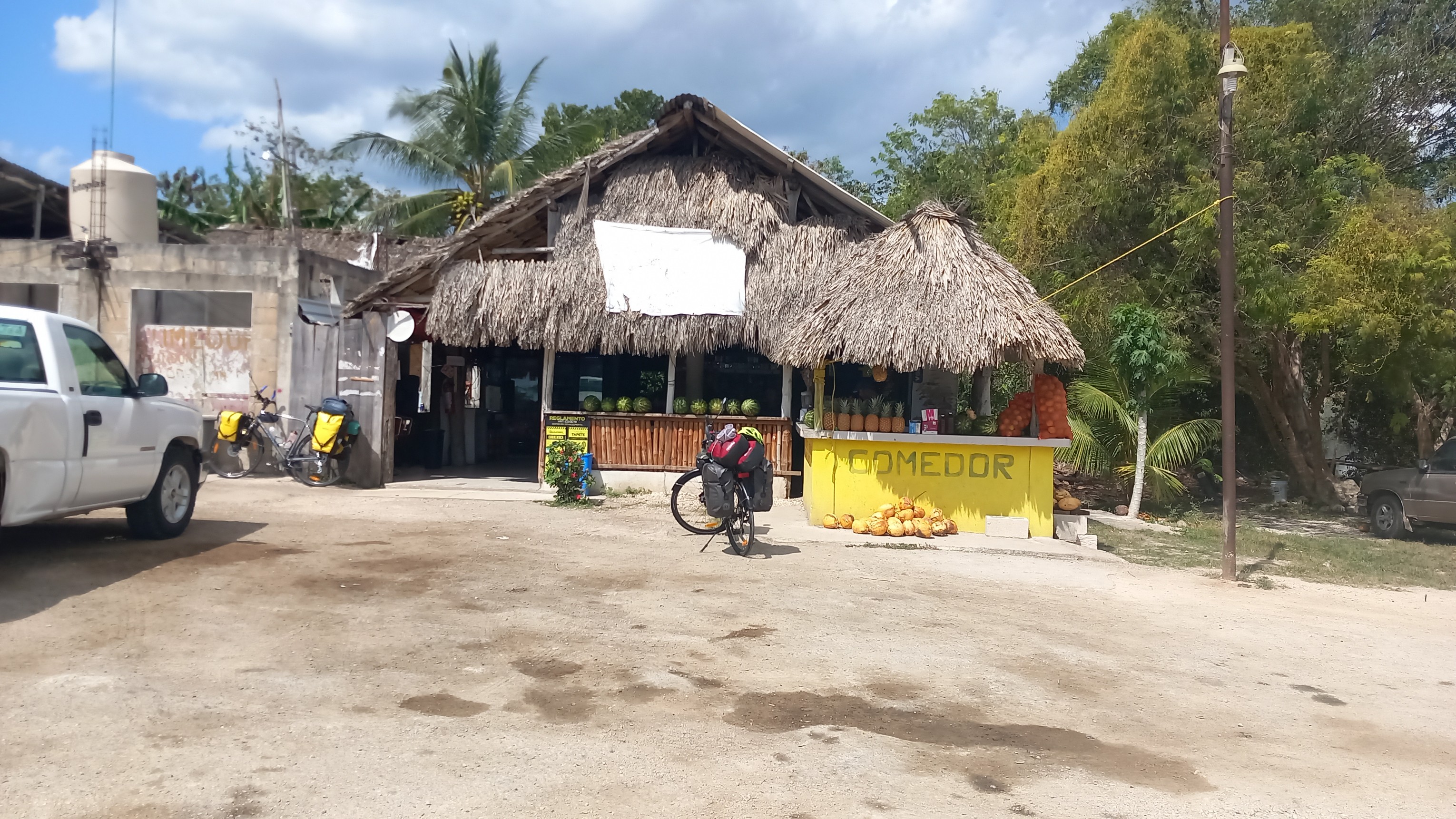
The first open view of our surroundings on the open road for weeks.One of the better stops for cold coconut and pineapple drinks. The lorries are lined up out of view to the right for the restaurant meals. We are enjoying being back in our preferred domain of Mexican prices for locals and not tourist prices for a few days now.
We left the main road to ride 7 kilometres into a dead end village because it was the only accommodation listed.
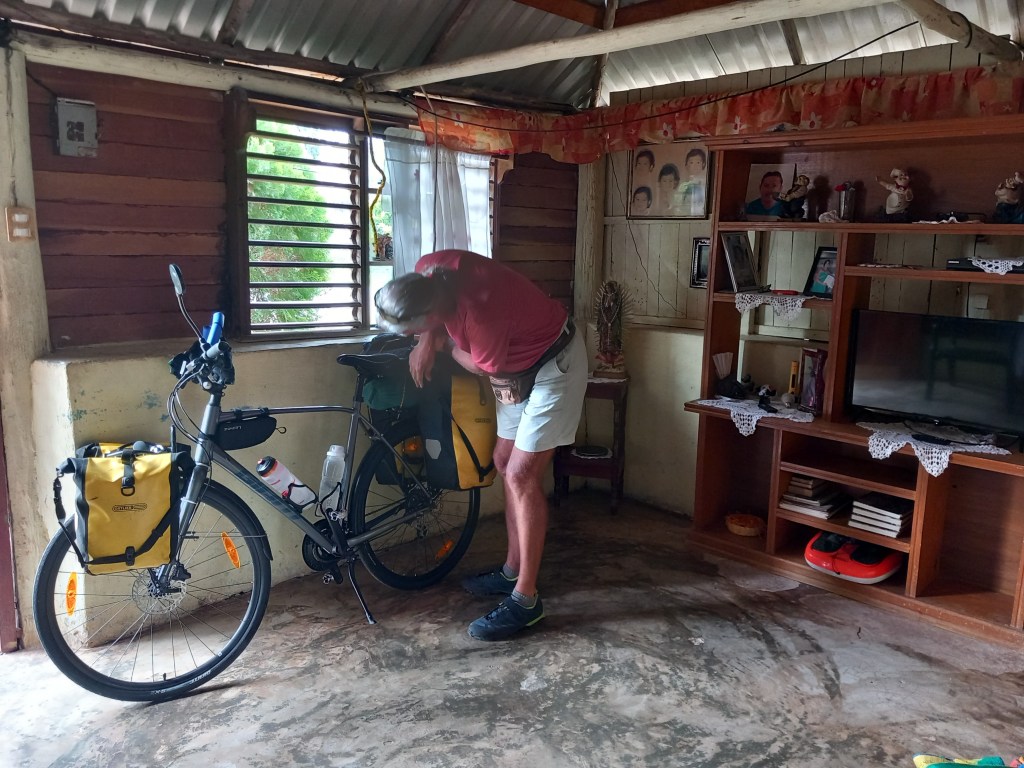
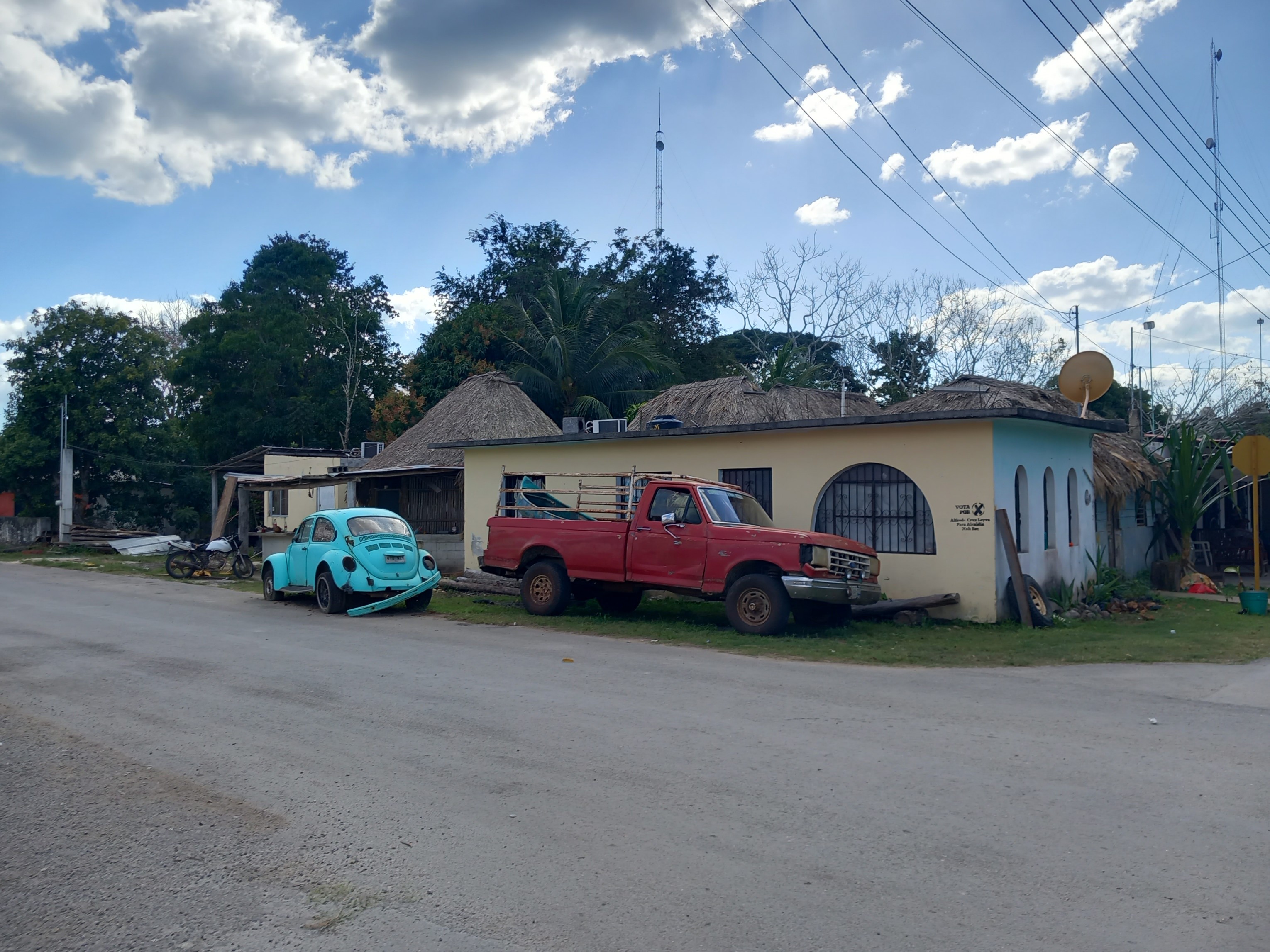
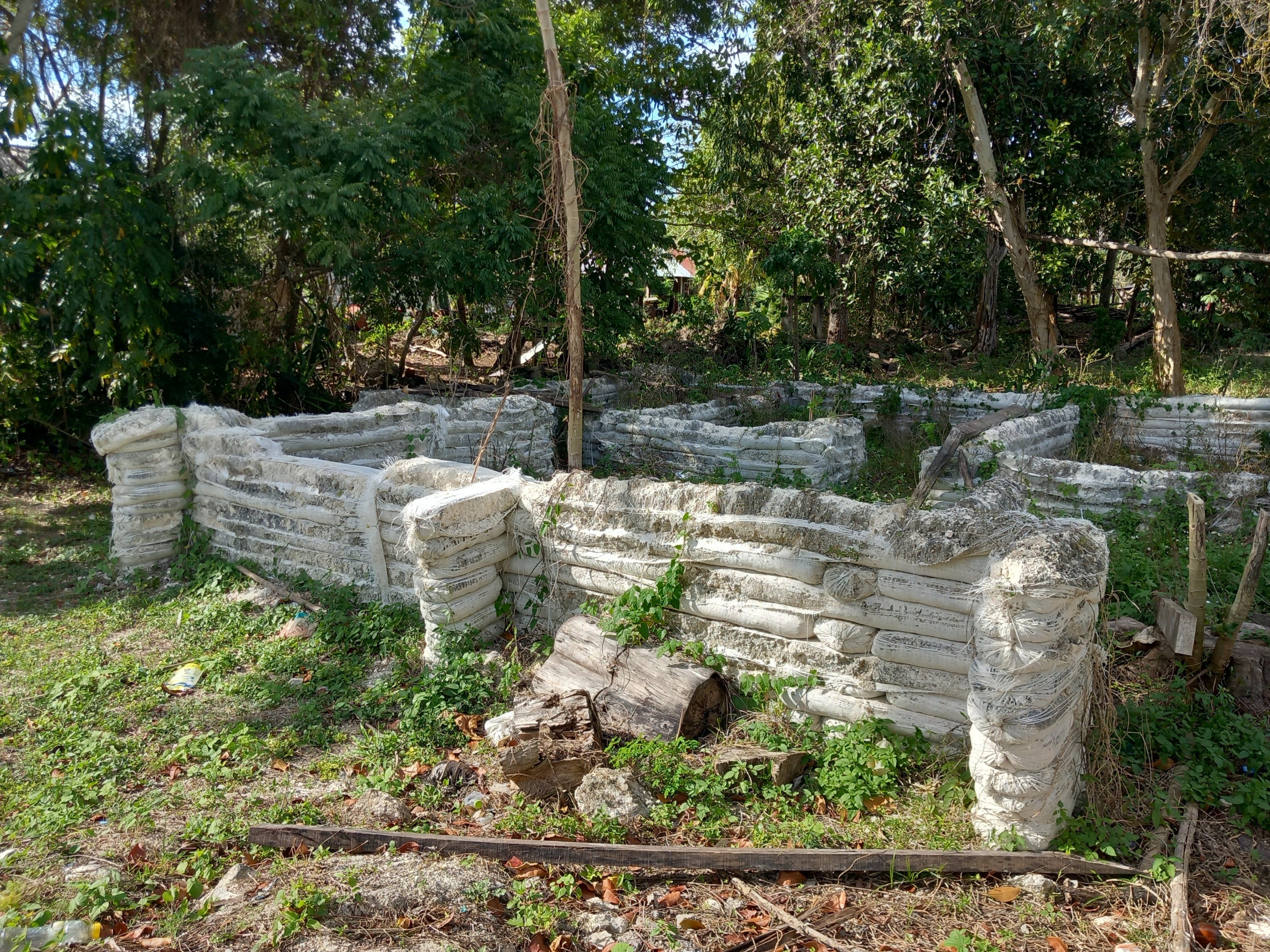
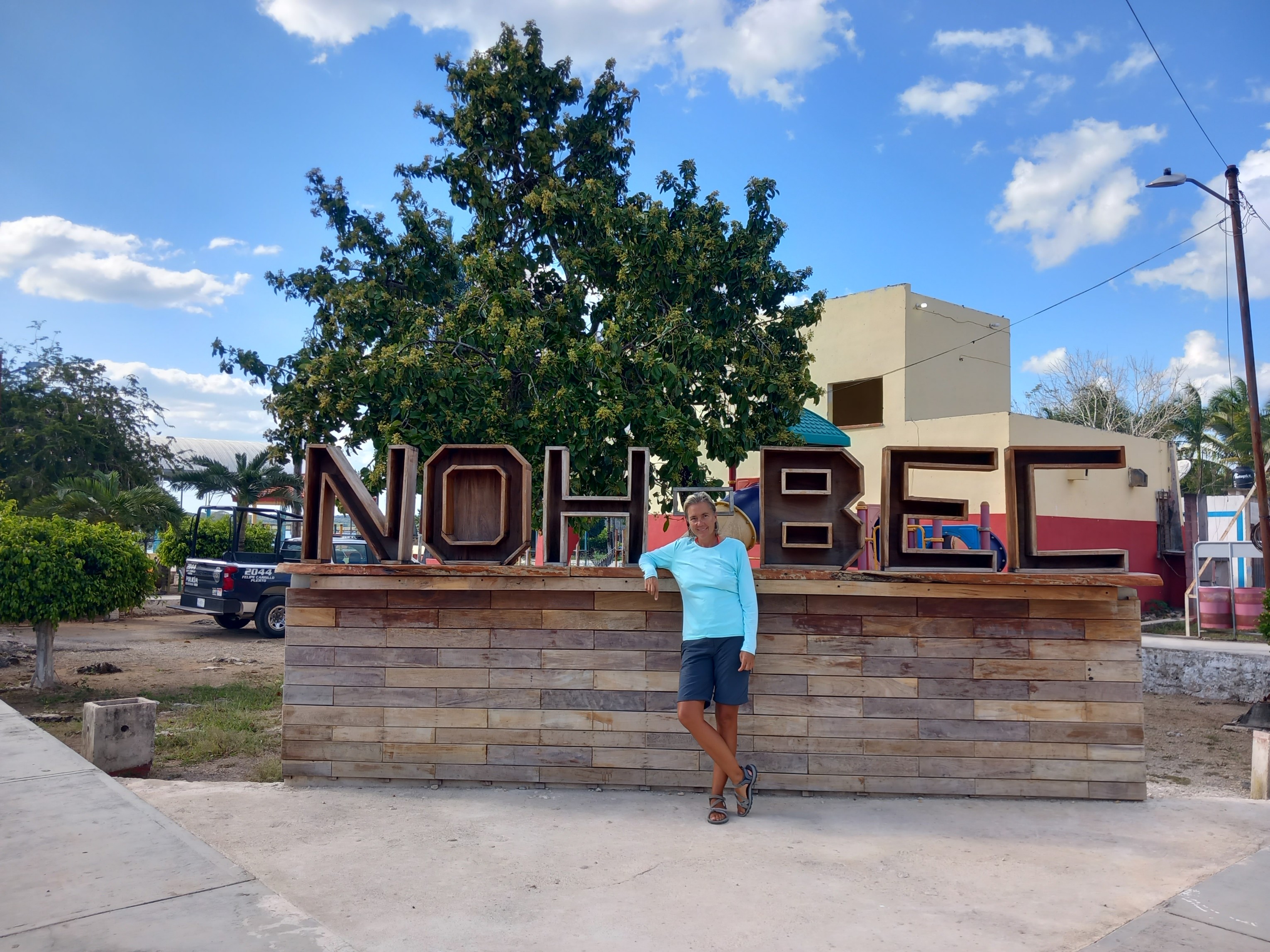
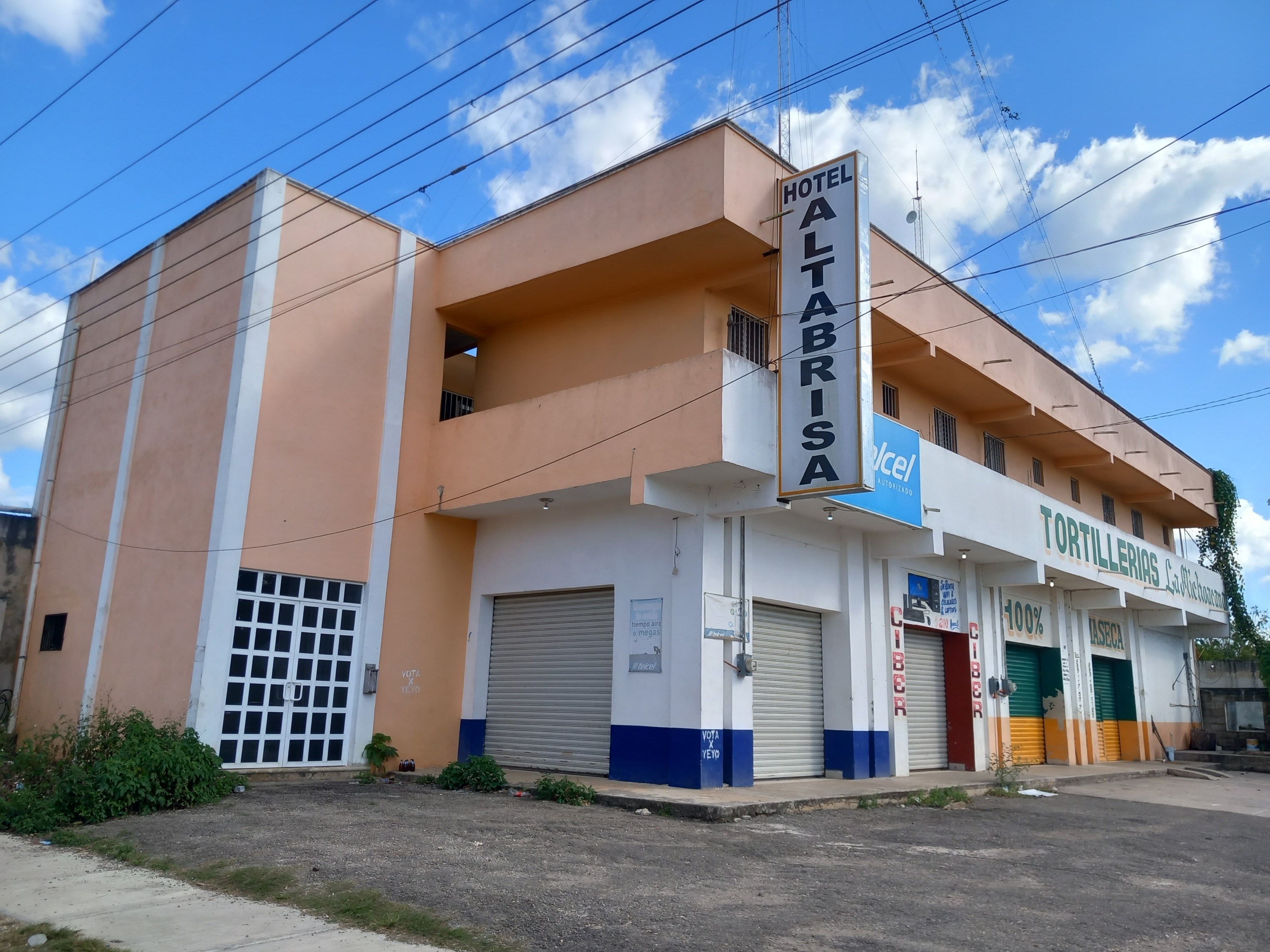
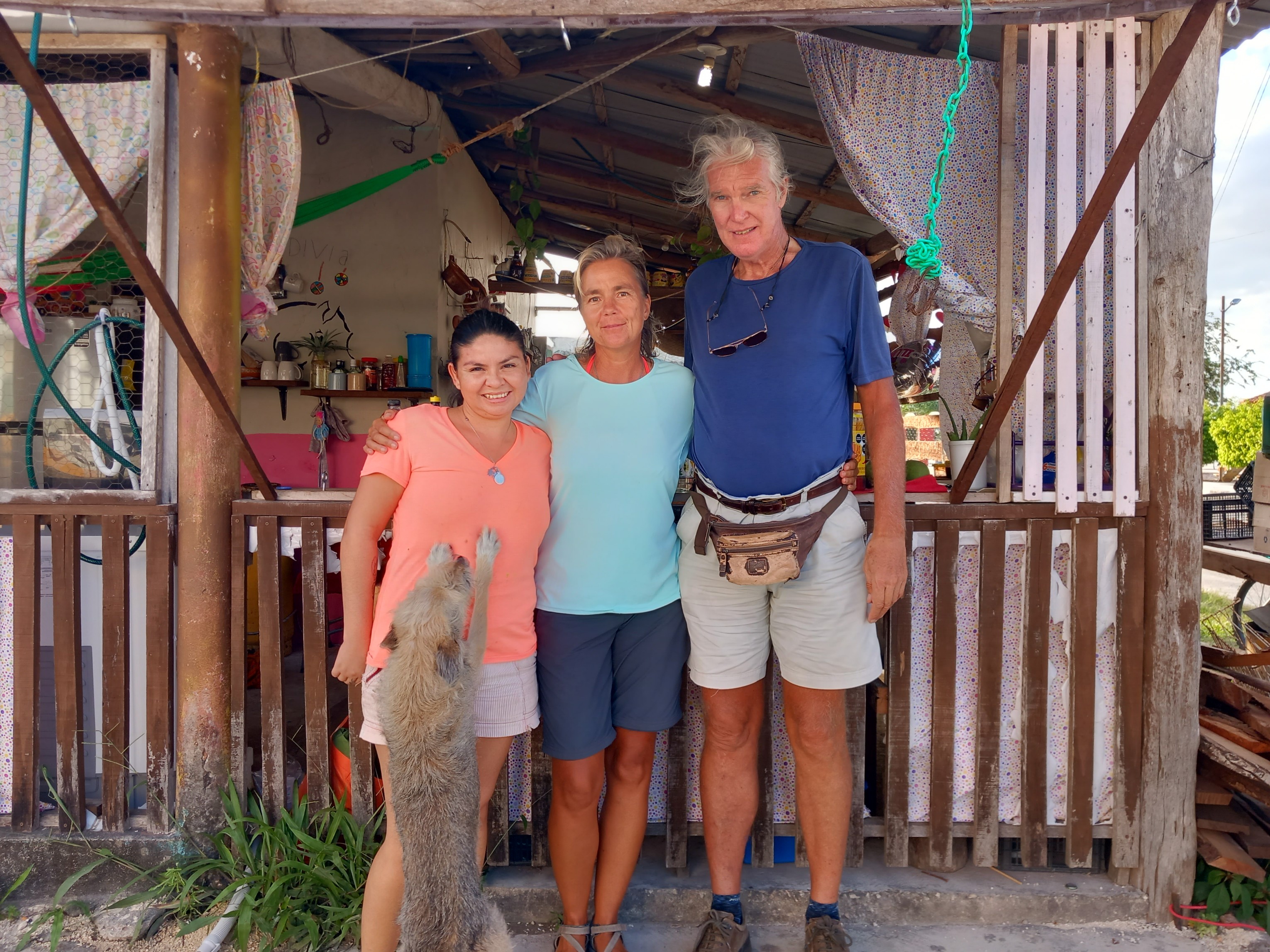
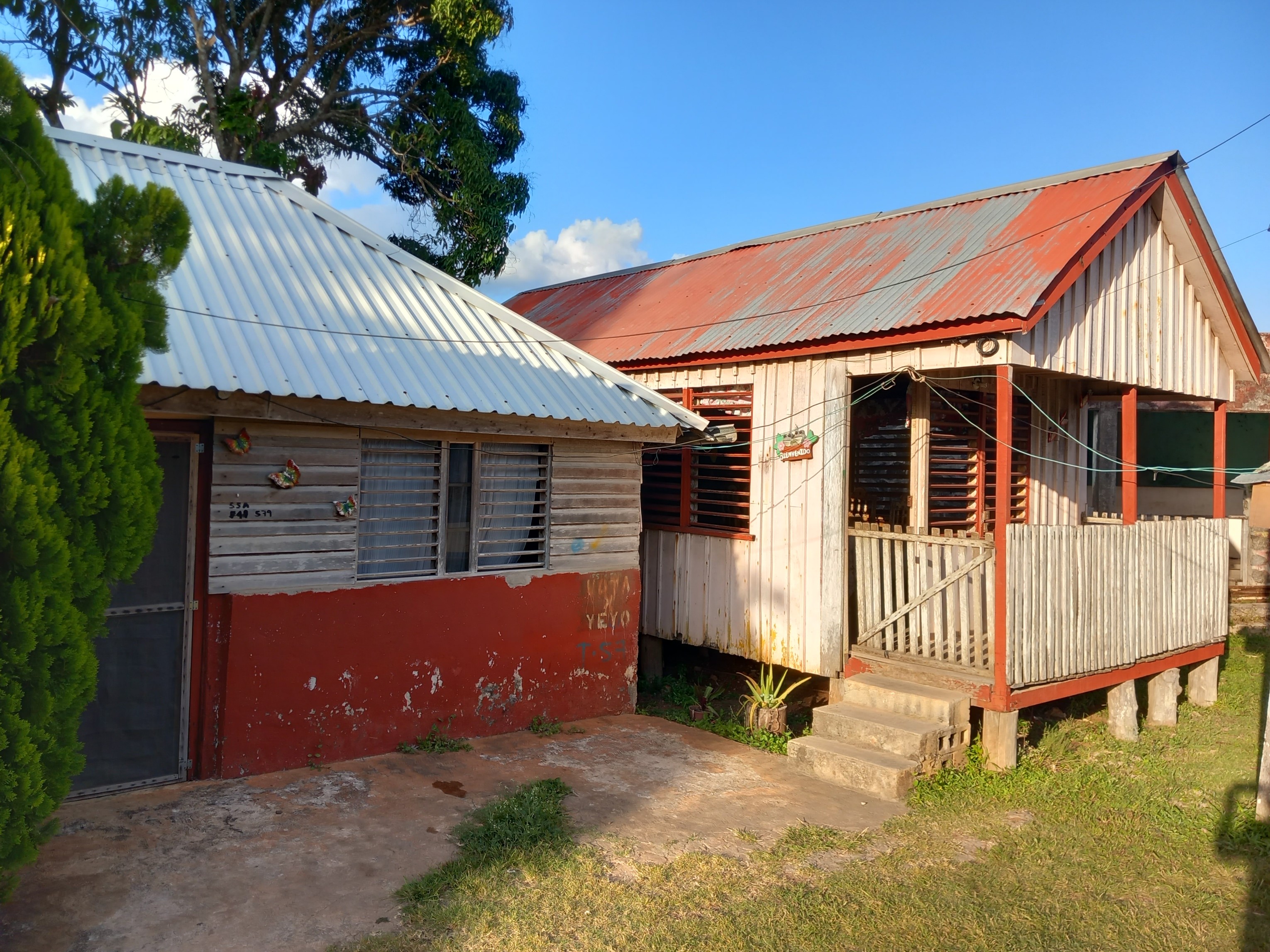
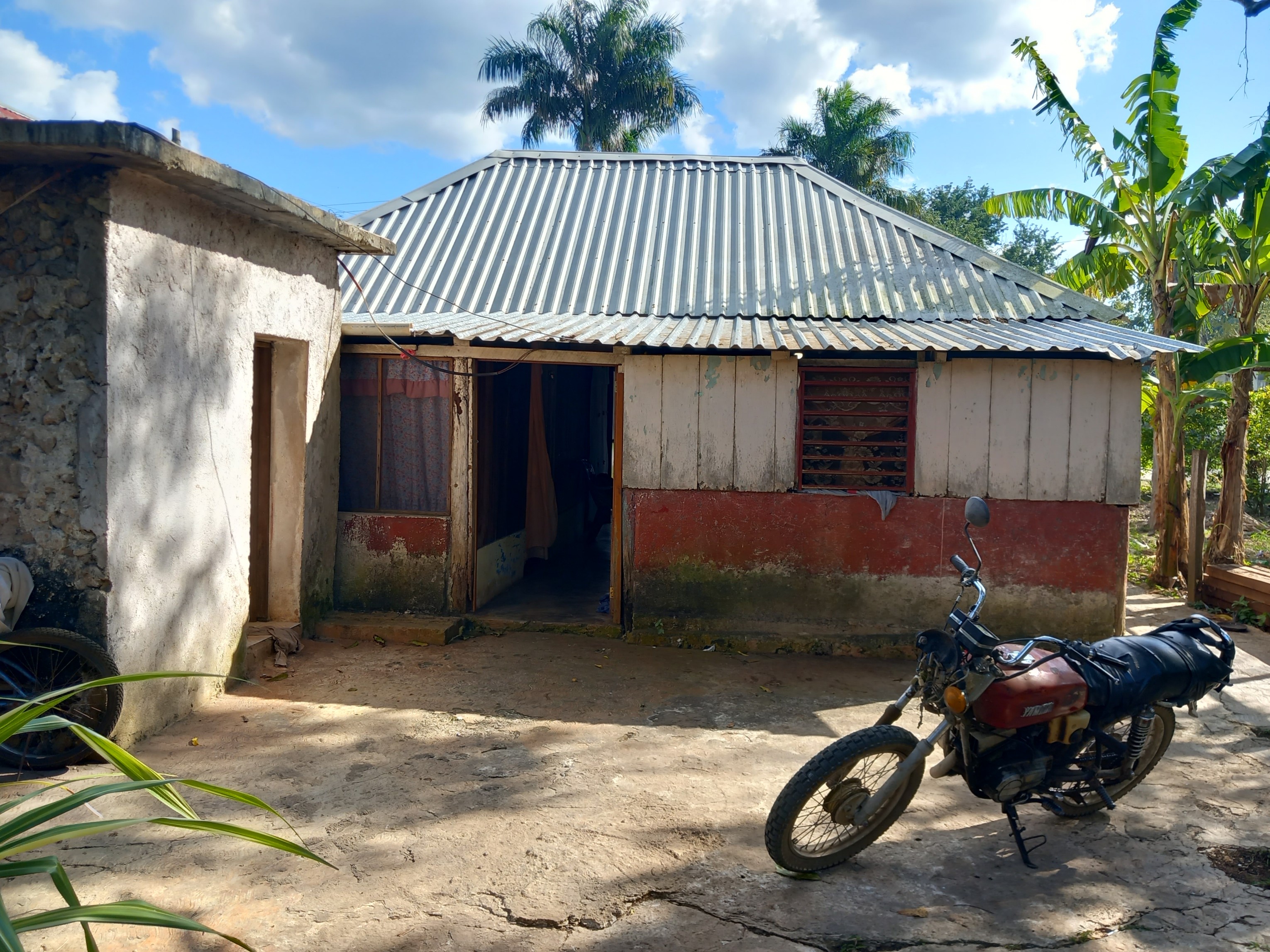
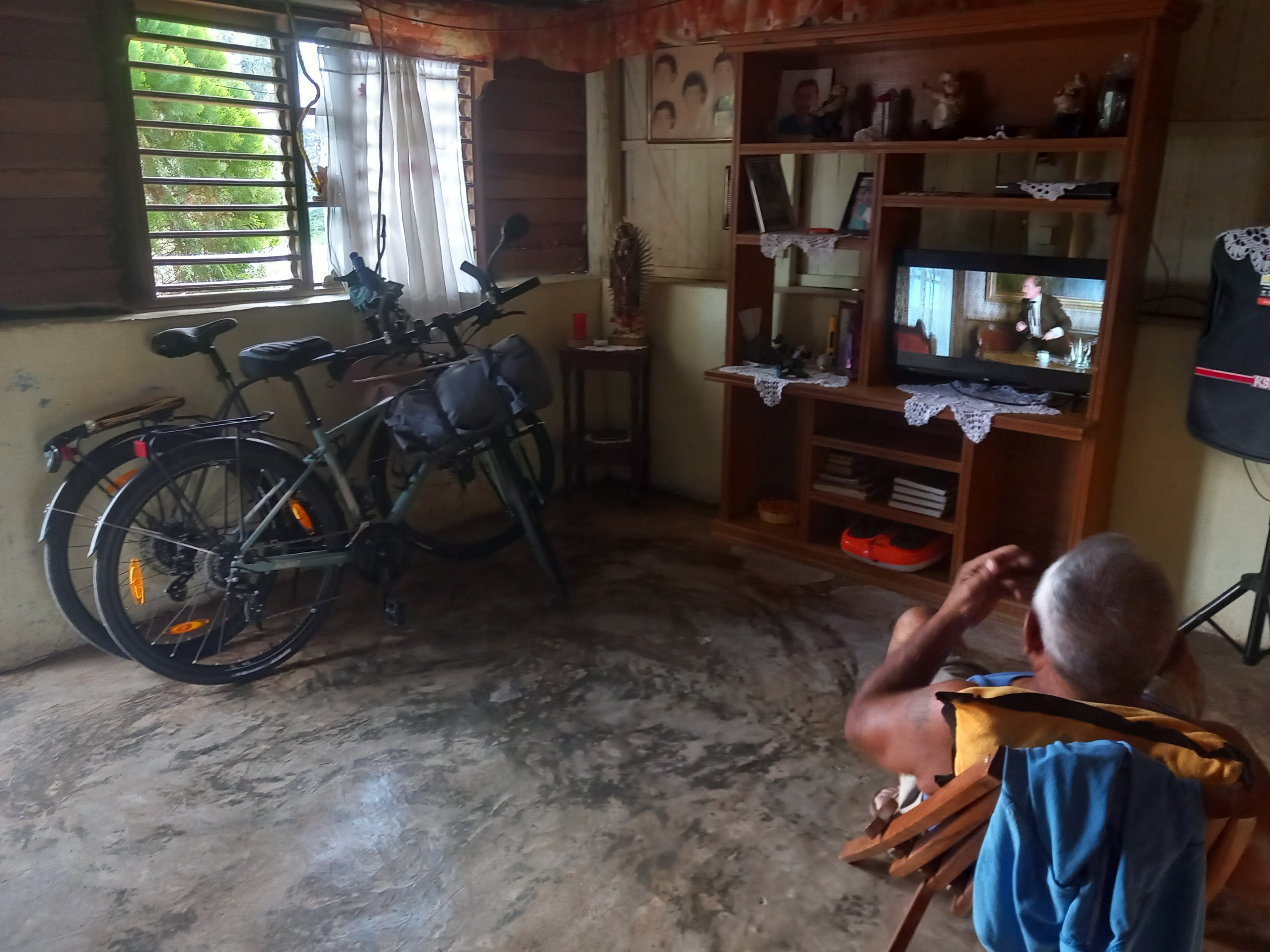
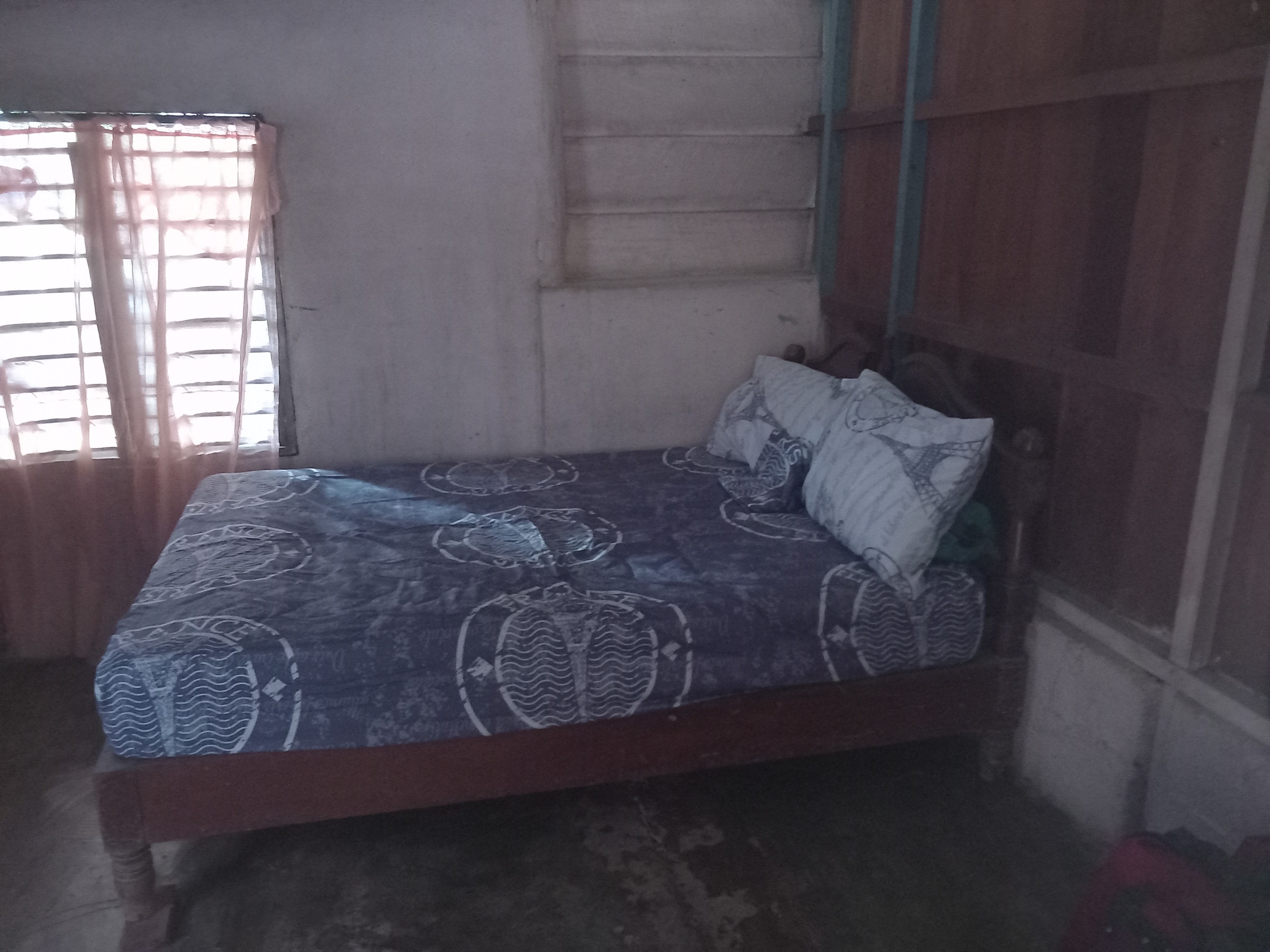
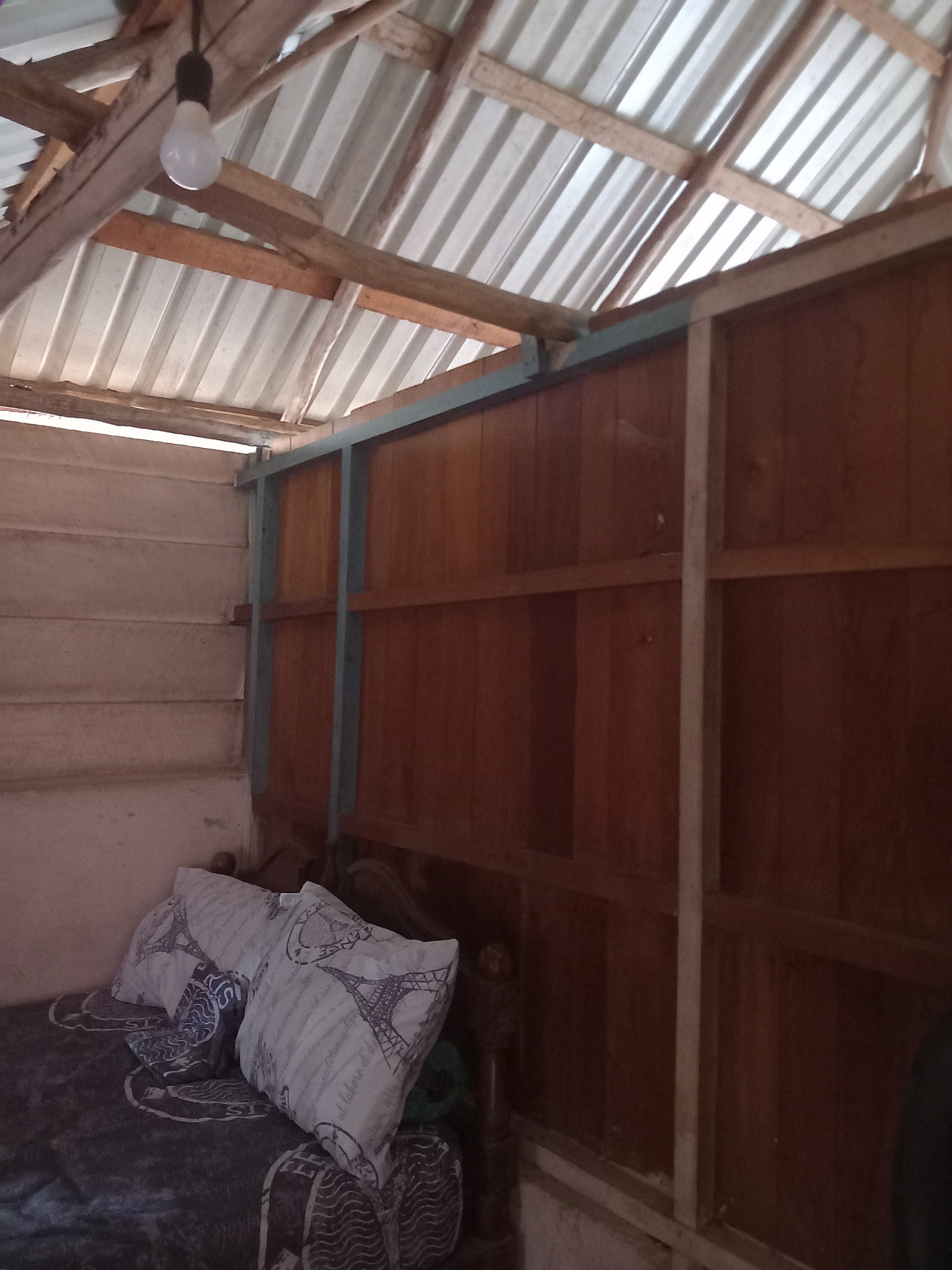
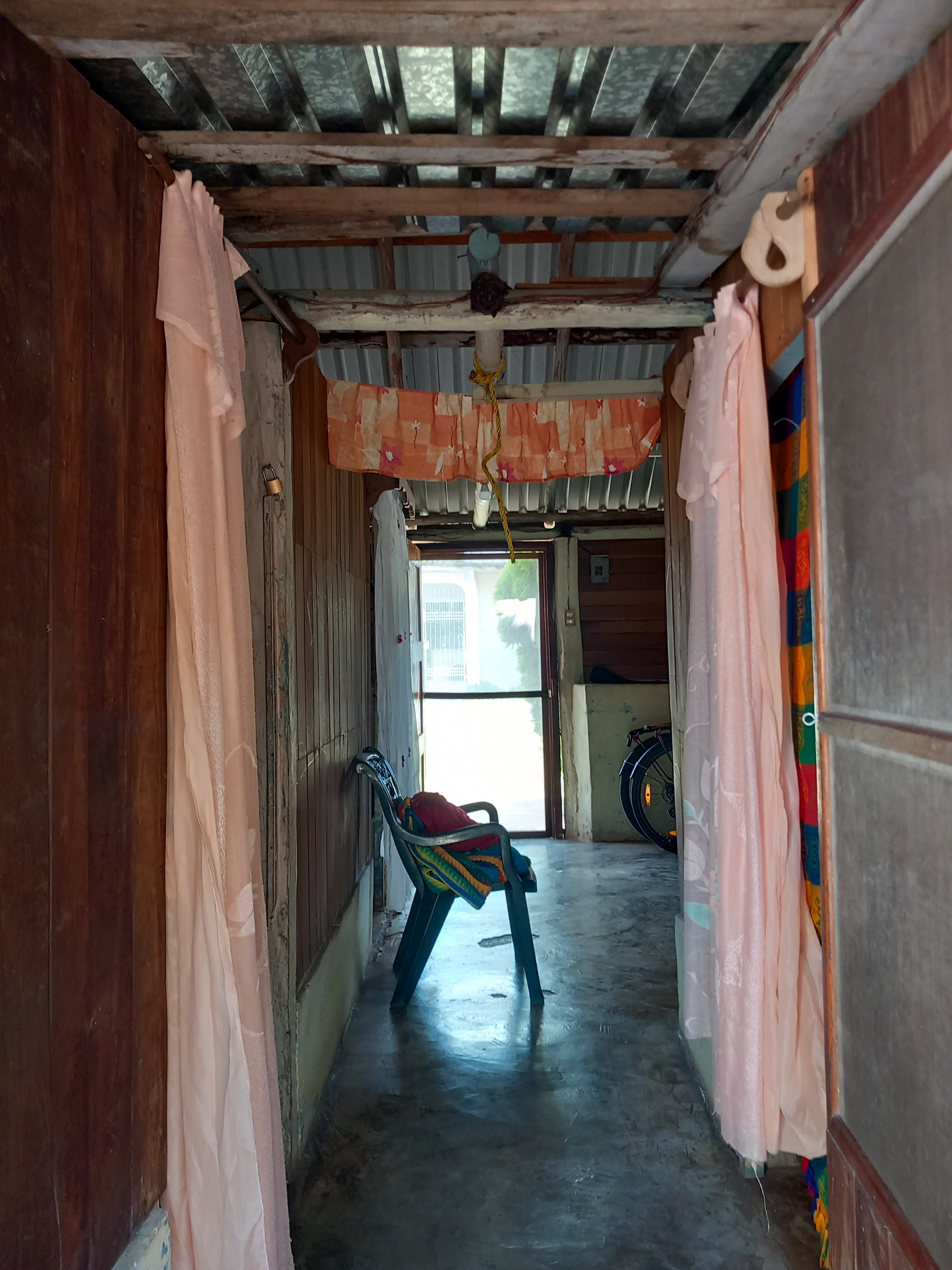
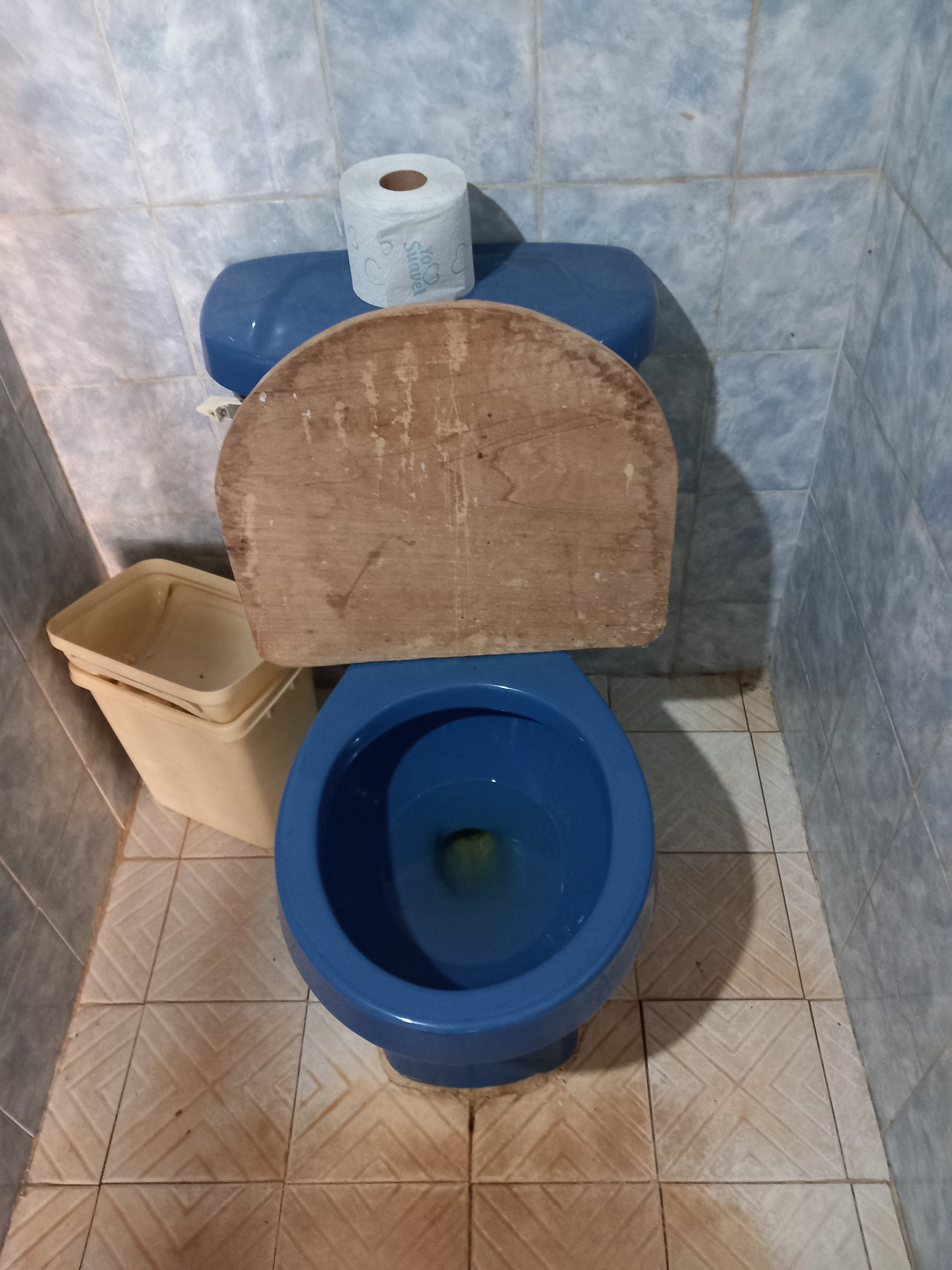
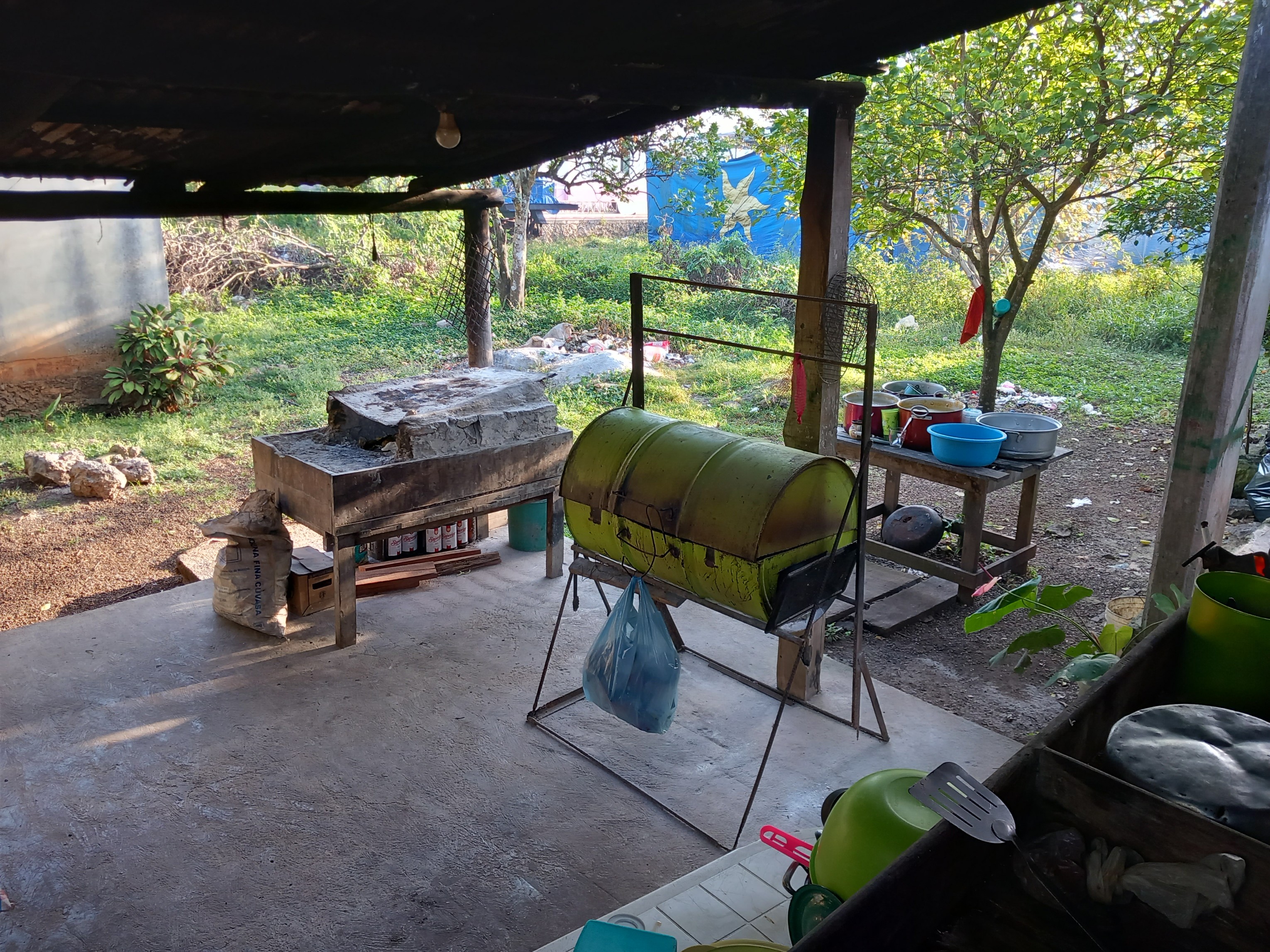
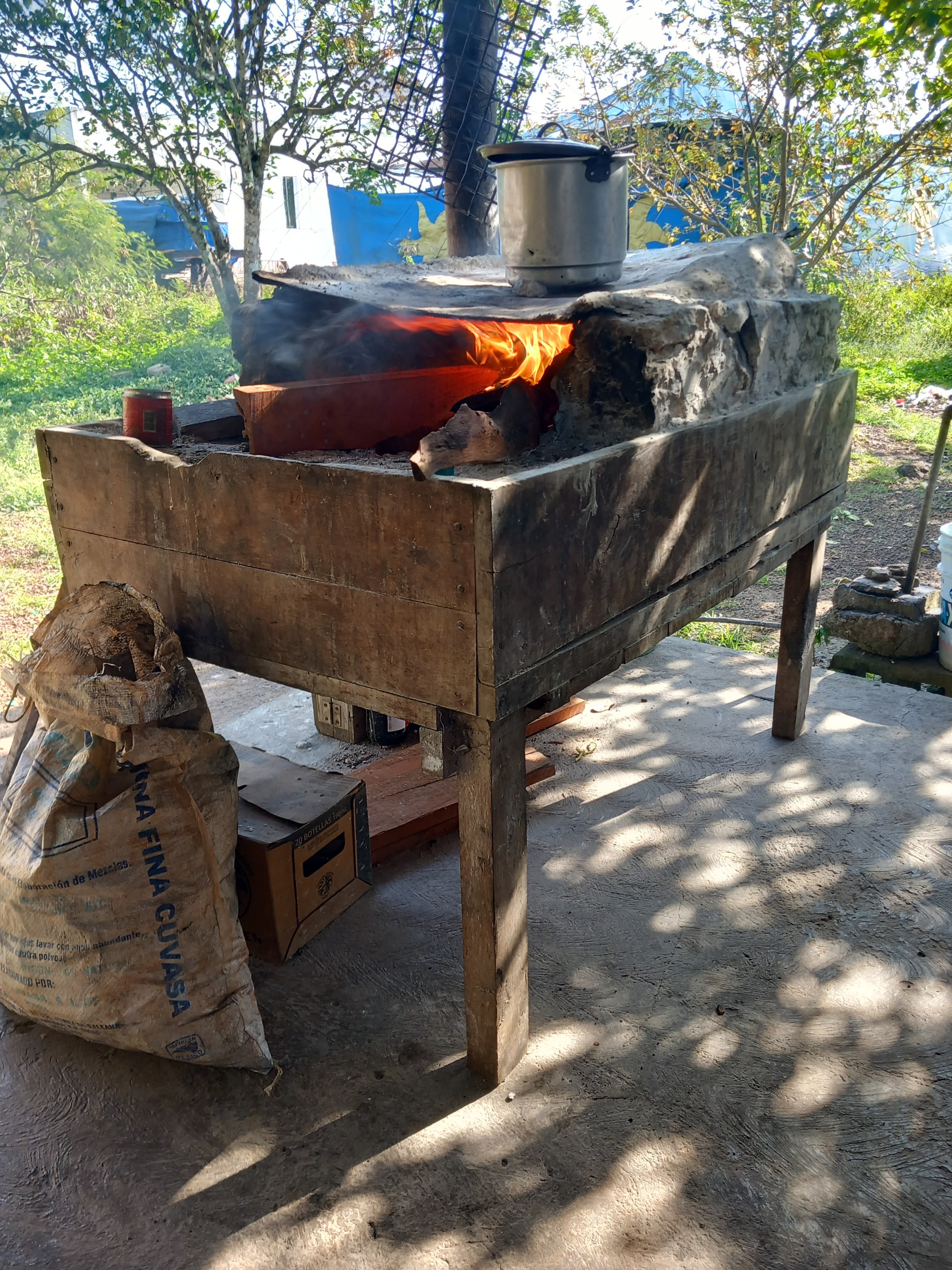
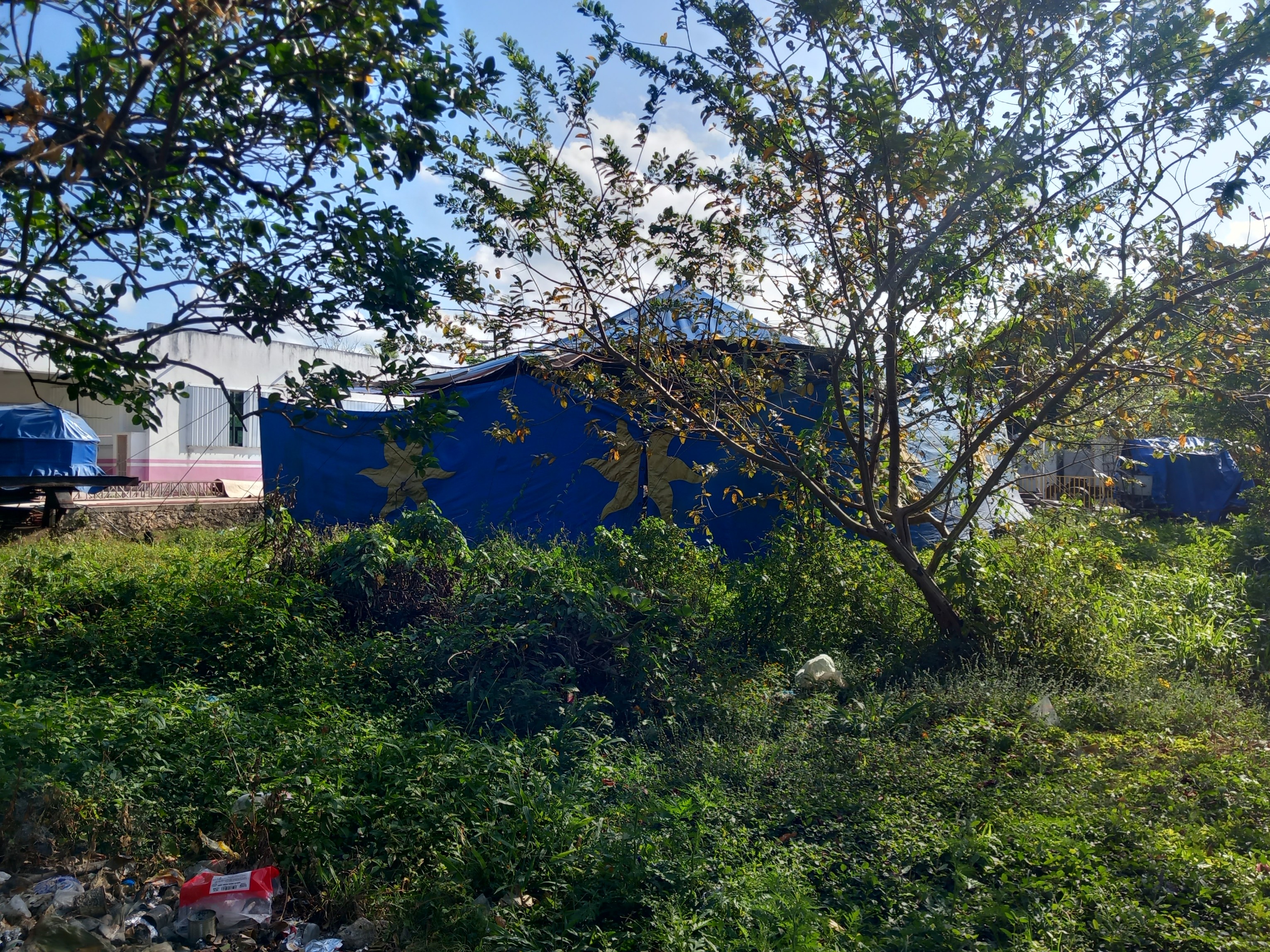
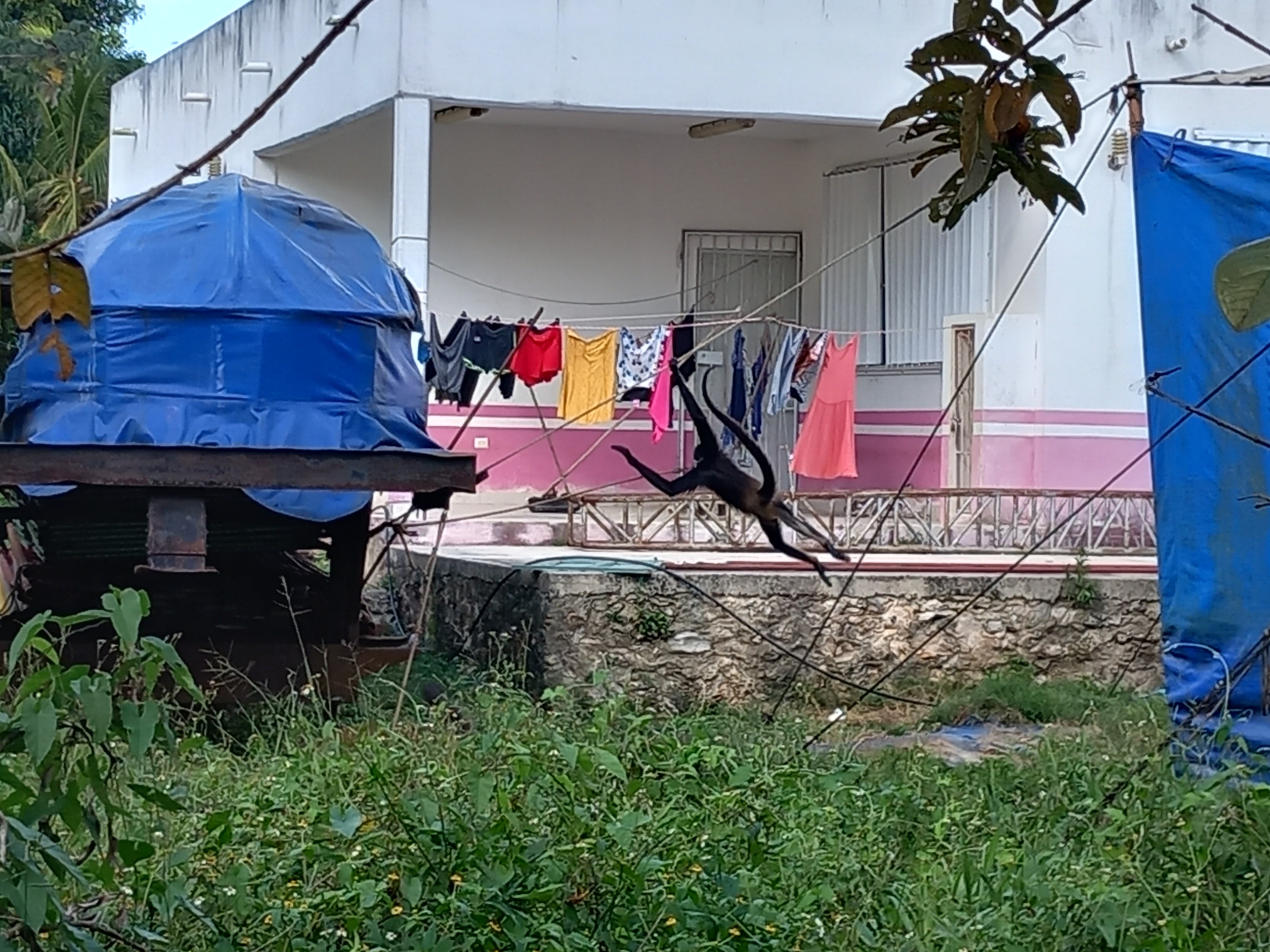
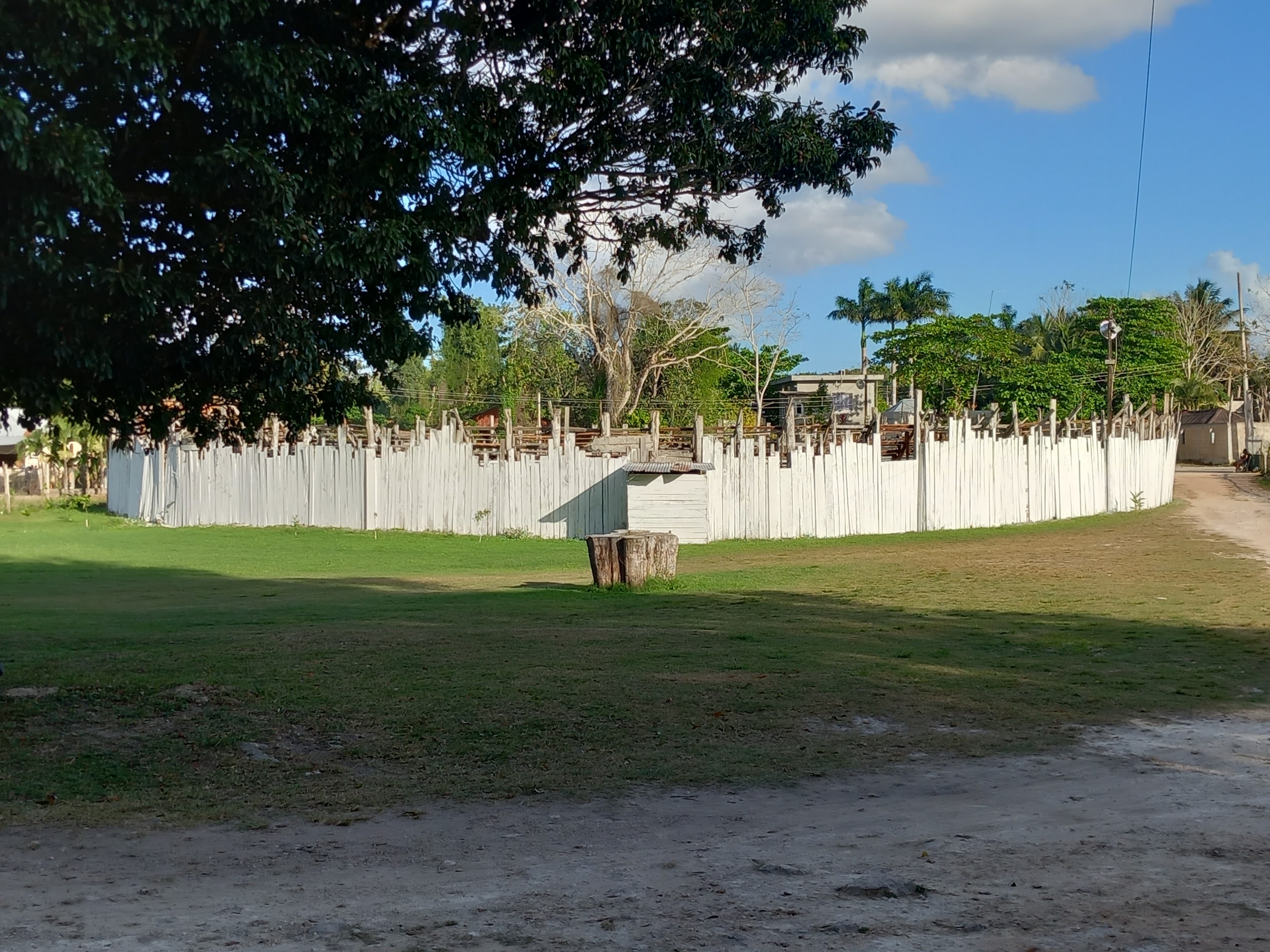
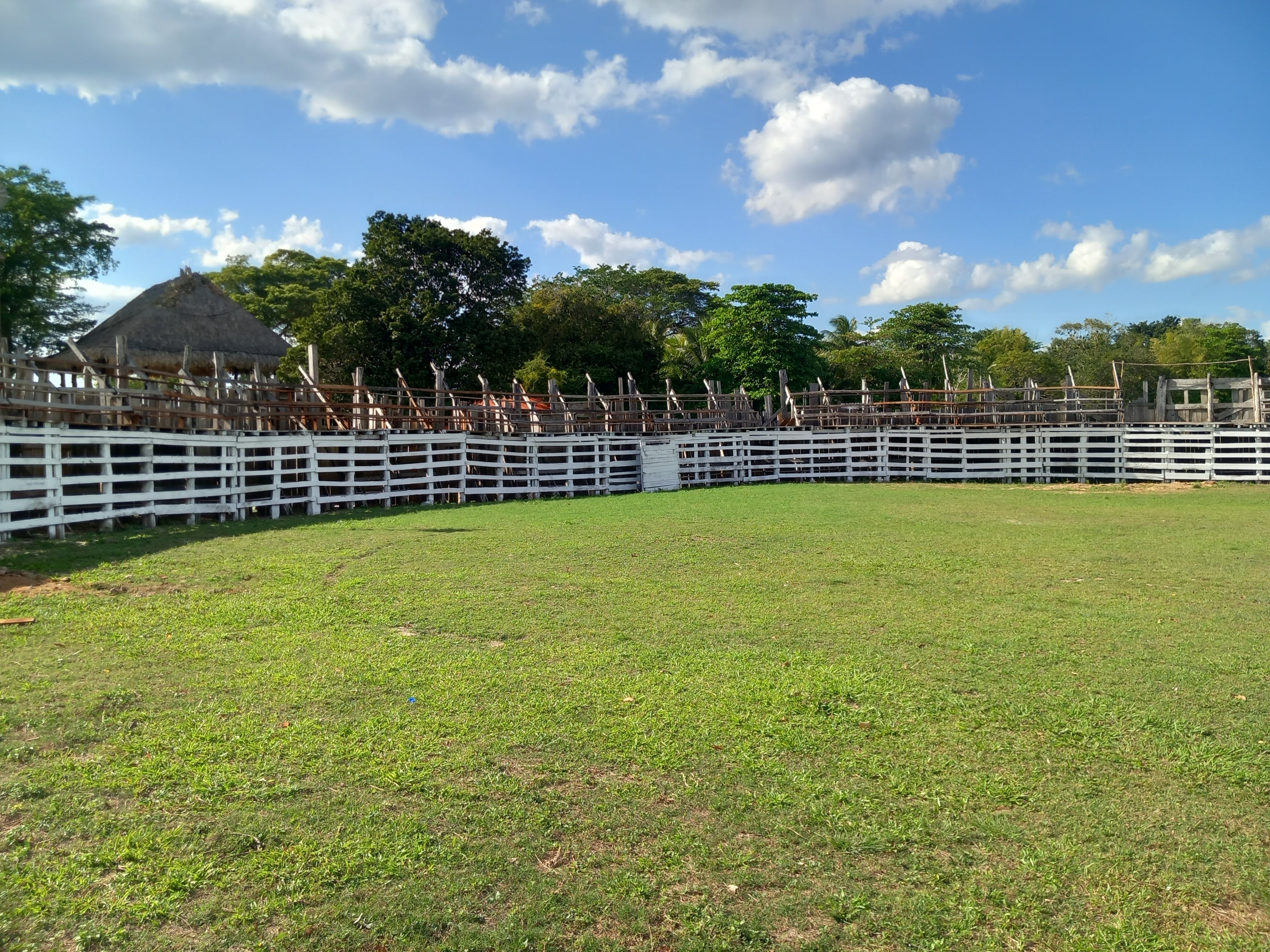
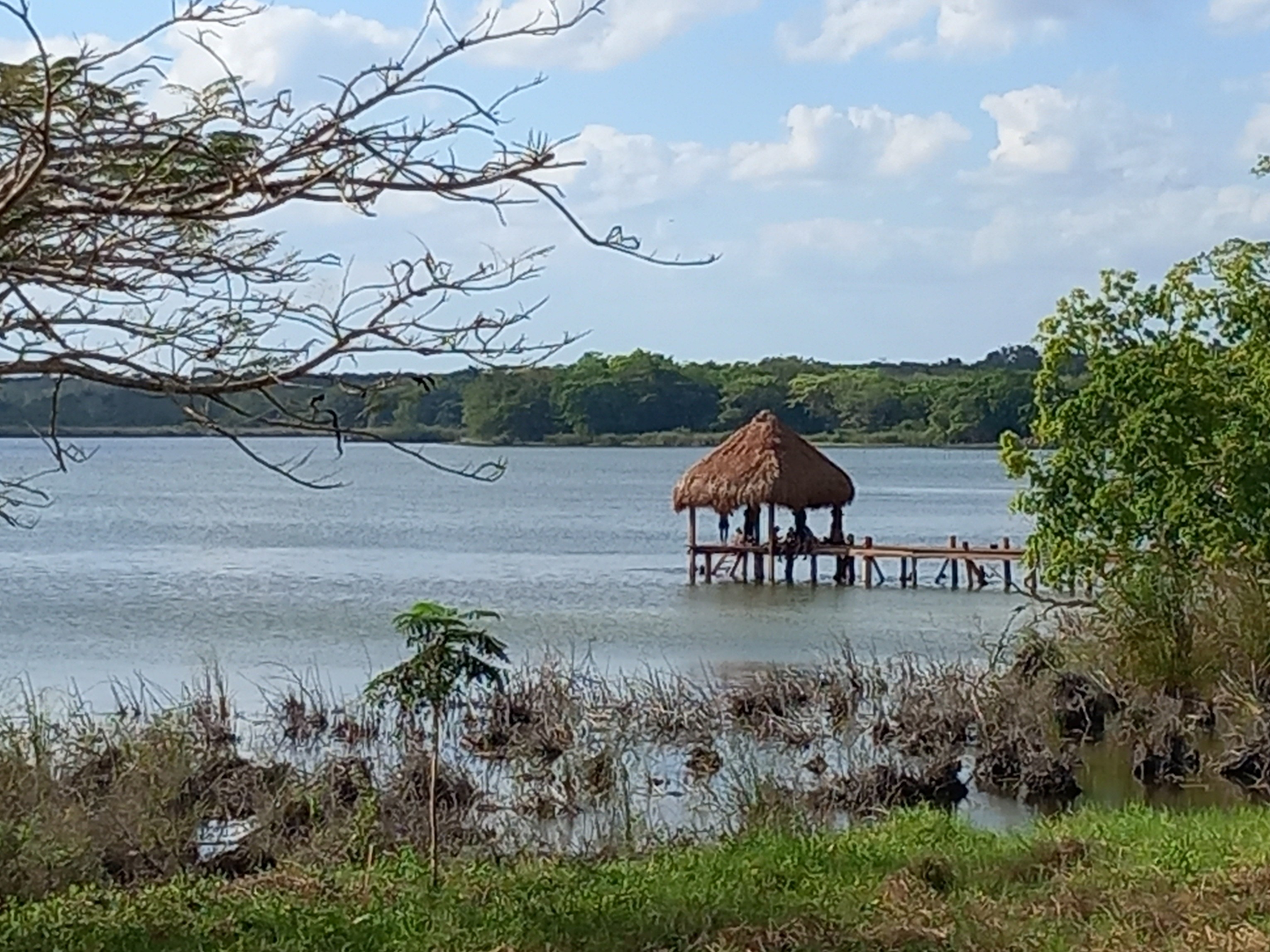
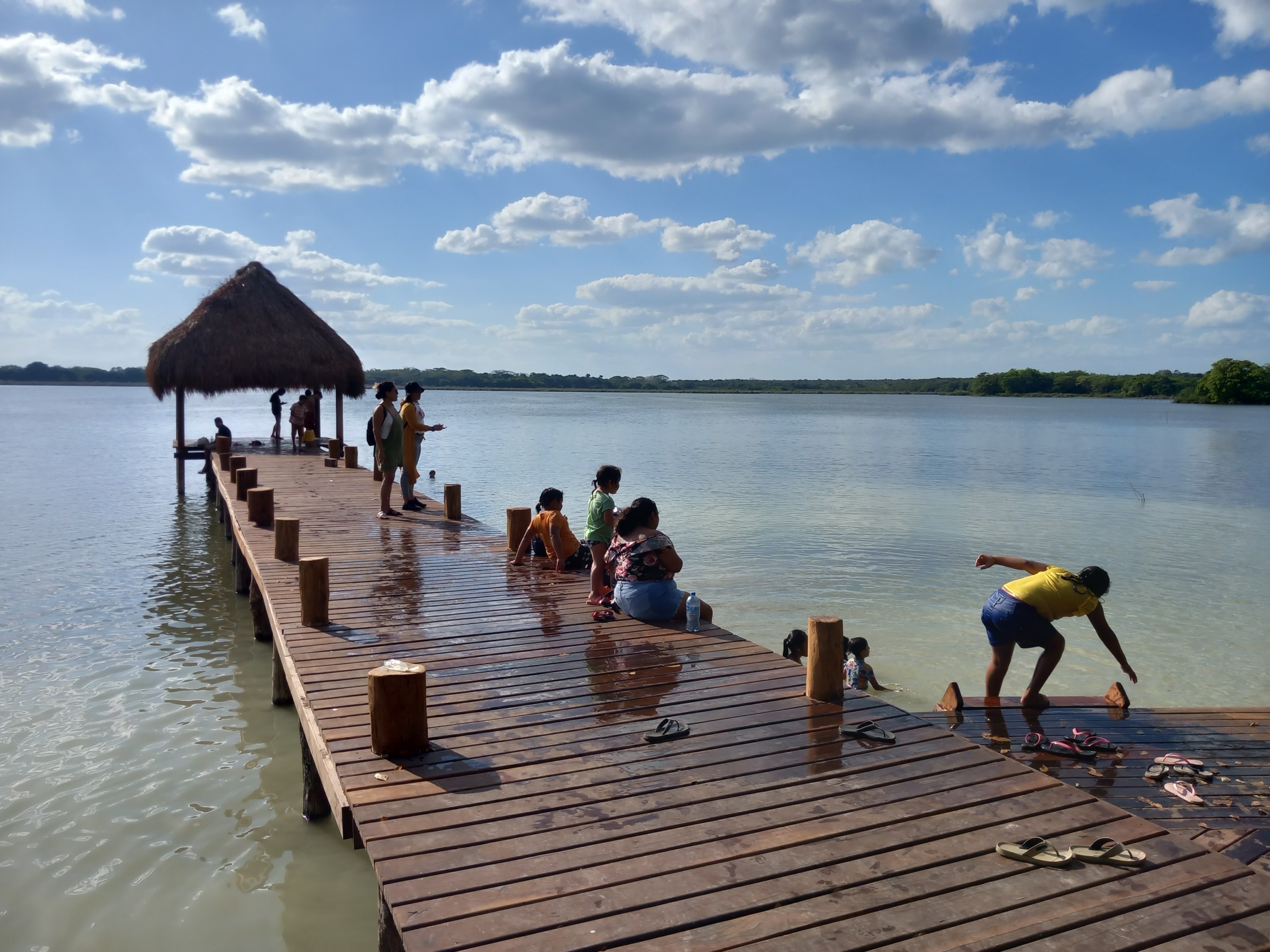
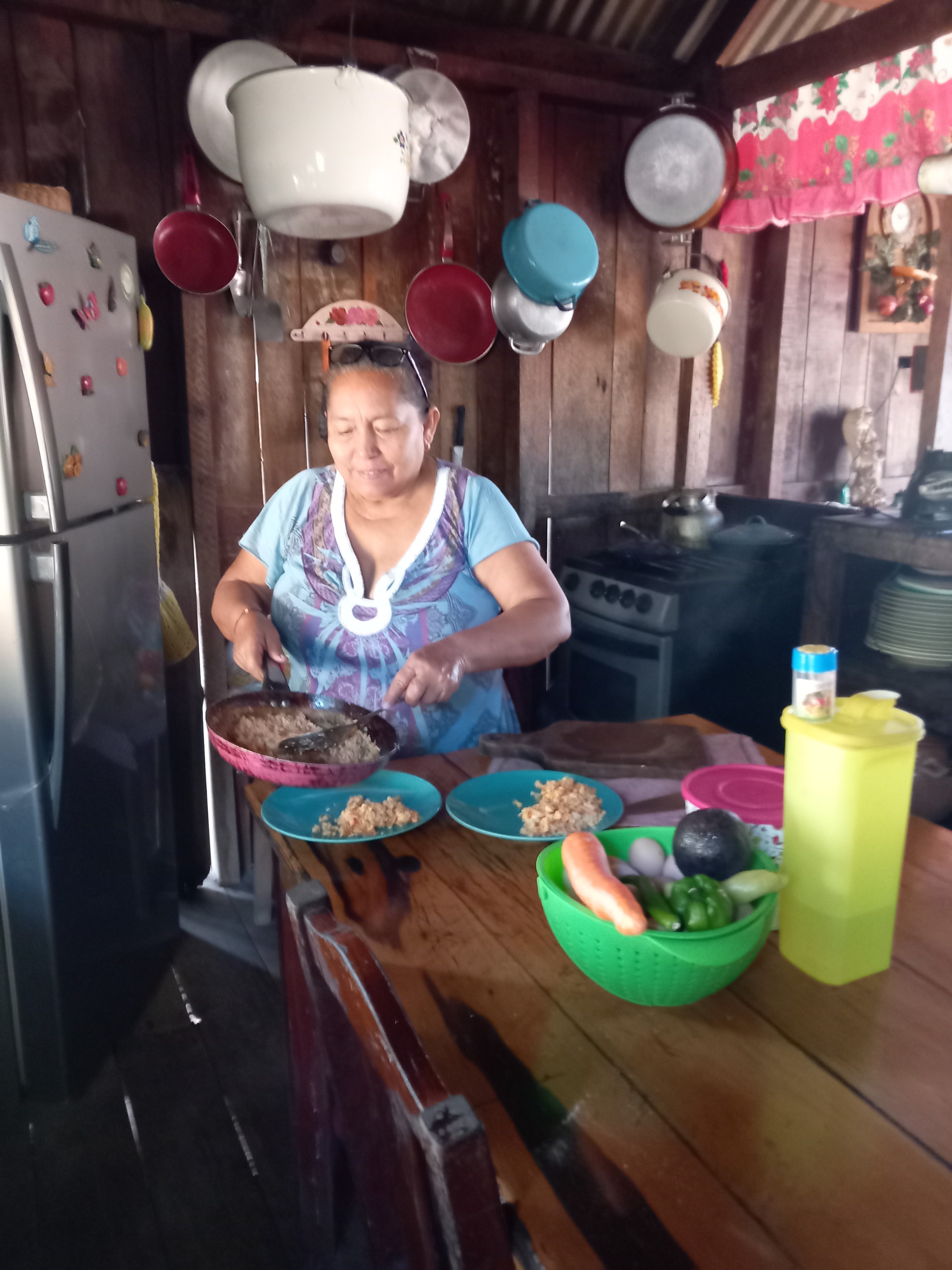
This is a section of the foundations for the previously mentioned railway line – there is no one working because its a Sunday. Its supposed to be completed by the end of 2023 having been started in 2020; from what we have seen they will do well to finish by 2030 – on one occasion we saw 7 men clearing the bush ( one had a chainsaw and the remaining 6 had machetes).Rolling into Noh Bec – not one of the more prosperous areas, however, very peaceful and quiet consistent with a village of around 2000 people.We were told someone began building this house and ran out of money and has abandoned the project. This is a true story. Olivia ‘phoned ahead and made a reservation with someone so they were expecting us, or so you would think! This is what we discovered on arrival – all shut up and it had not been in business for a while (we never did find out who Olivia made the reservation with).This lady owns the bar opposite the hotel and gave us the unfortunate news about the hotel and then followed up with offering to take us to a couple who rented a room about 3 blocks away.This is the house we stayed in – living room and 3 bedrooms on the left and dining room and kitchen on the right.This is the rear entrance. The couple slept in the room on the right and we were in the room on the left. The concrete block building is the shower/toilet area.The bikes are in the living room for the night. At least they were not interrupting our host watching Clint Eastwood in ‘Joe Kidd’, who sounded really strange when dubbed into Spanish.We were 2 blocks away from a lake so we took the precaution of erecting our own mosquito net over the bed.This was a step up from a few nights ago – the toilet had both a lockable door and a shower with hot water next to it.Our hosts had two monkeys.The local bullring which is only used during March each year.They are hoping to attract tourists to their lake meanwhile the local children are making the most of it.This was one of the best breakfasts we had and all cooked on an open fire.






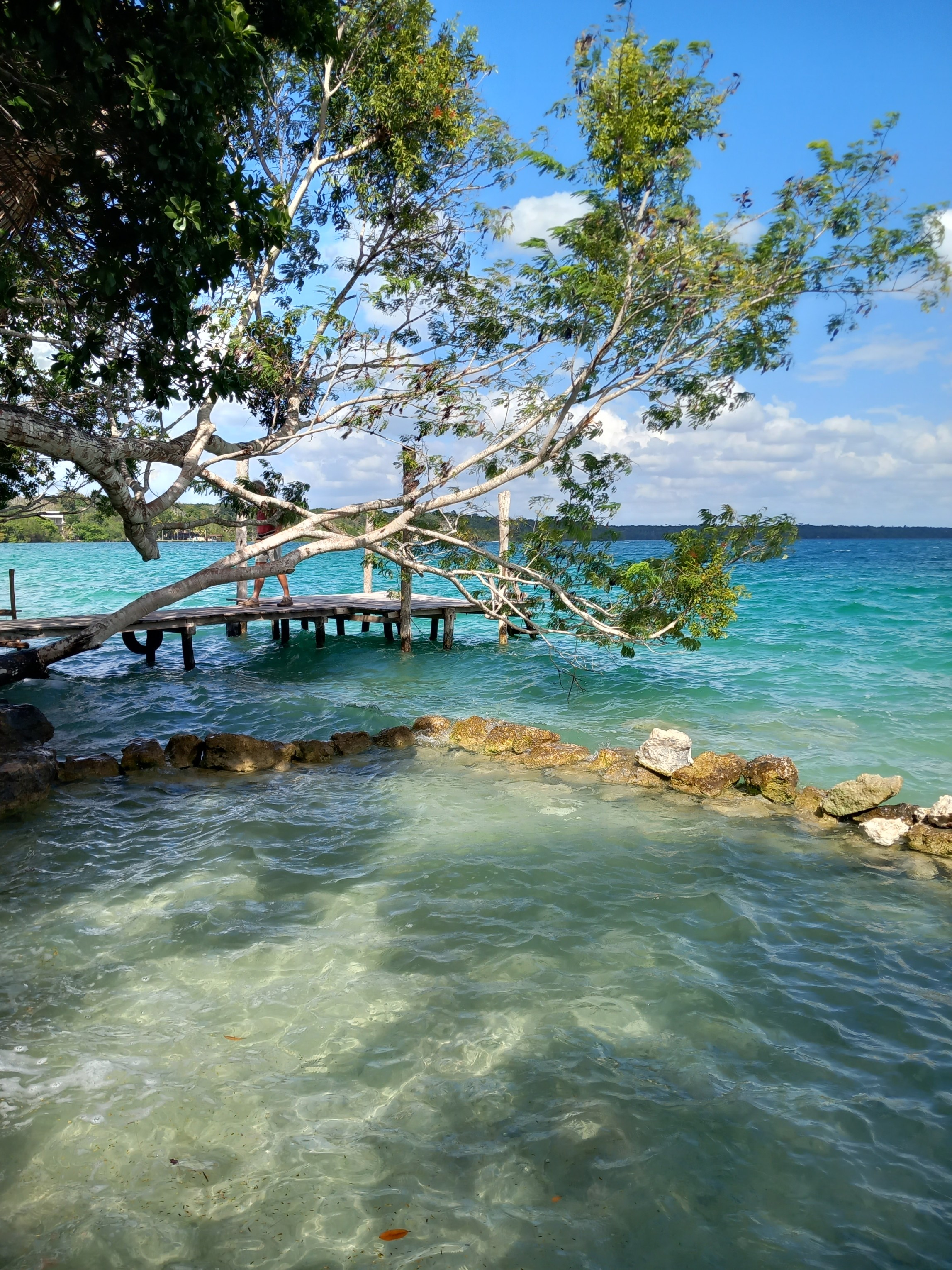
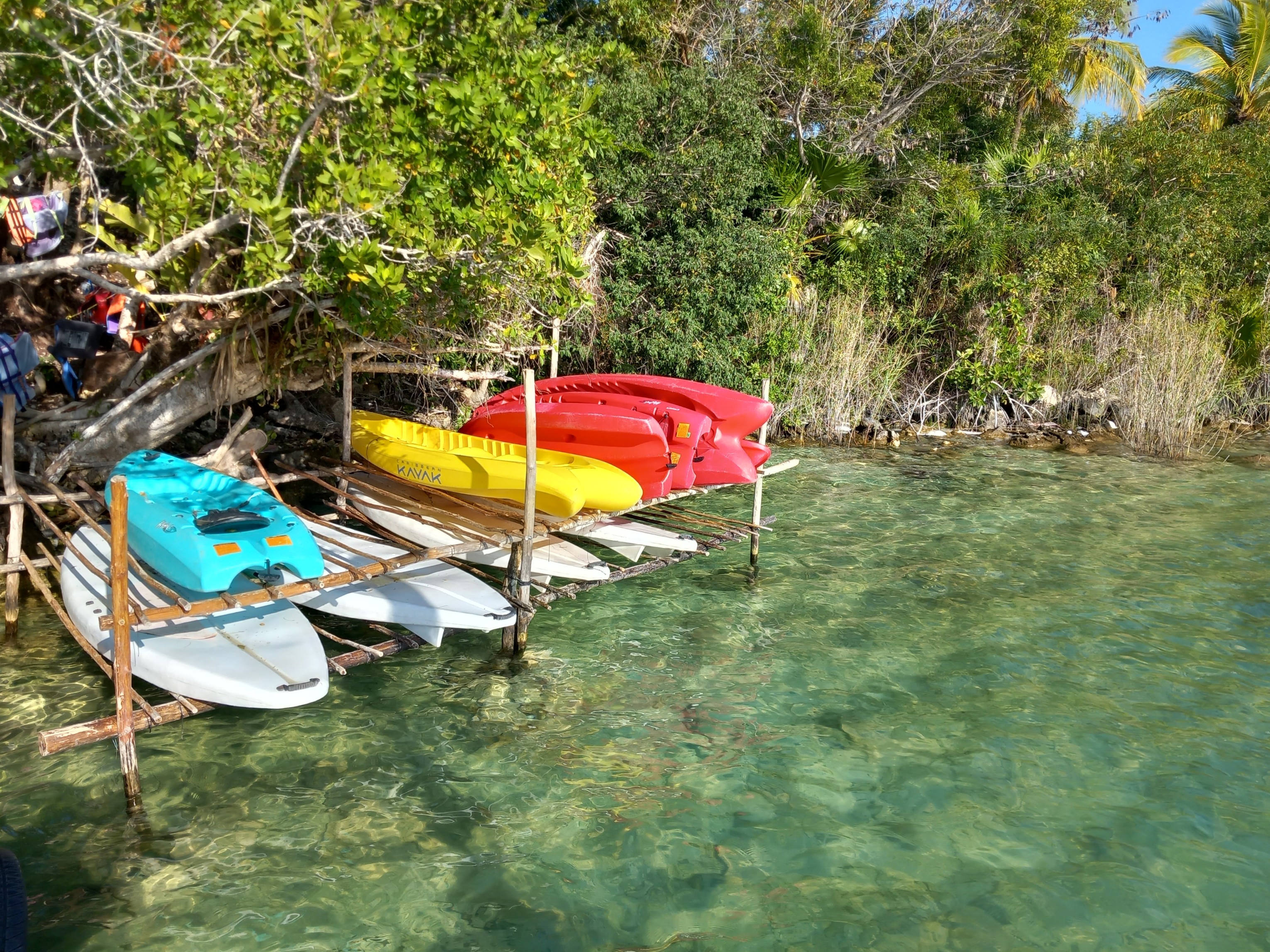
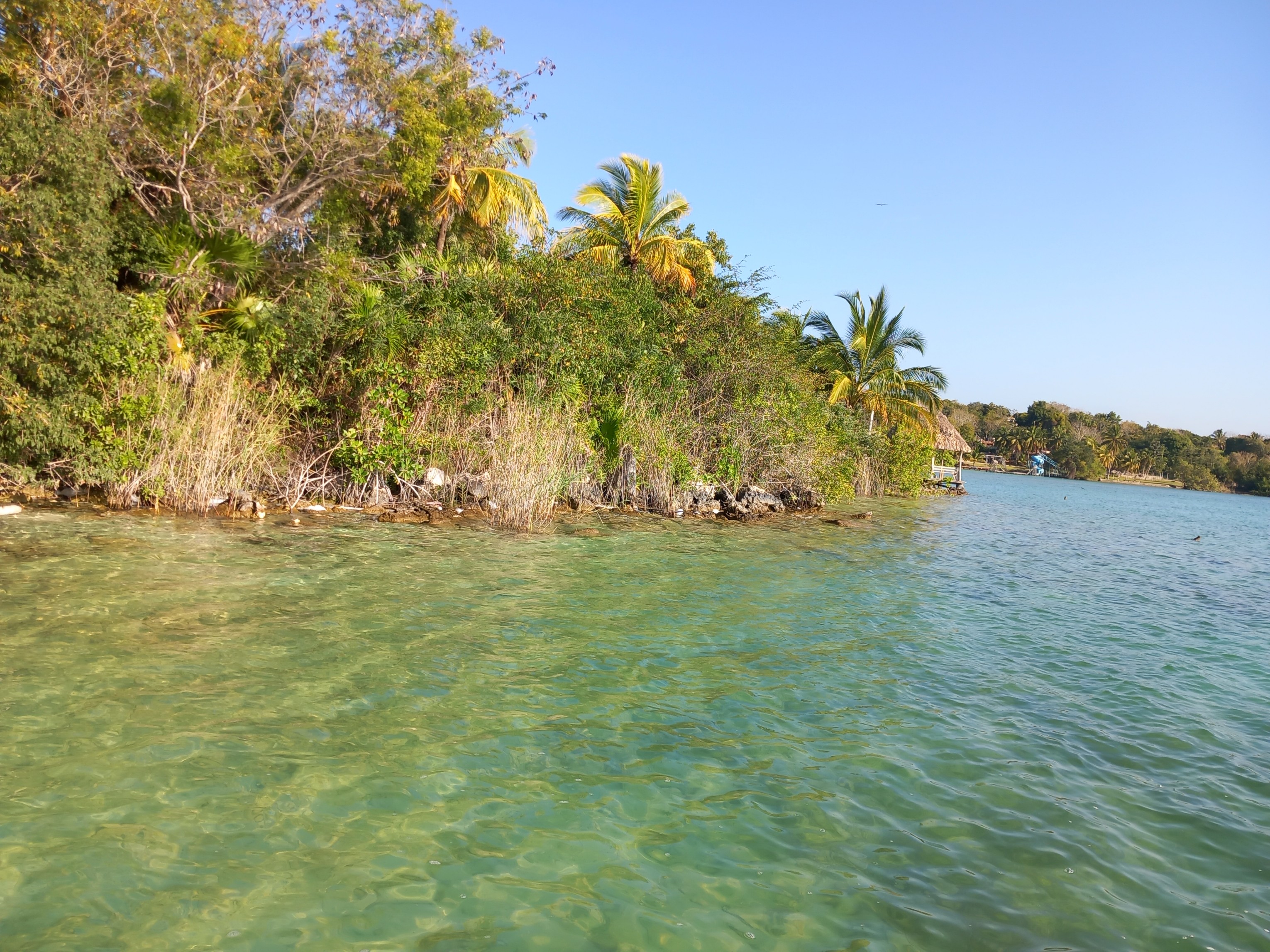
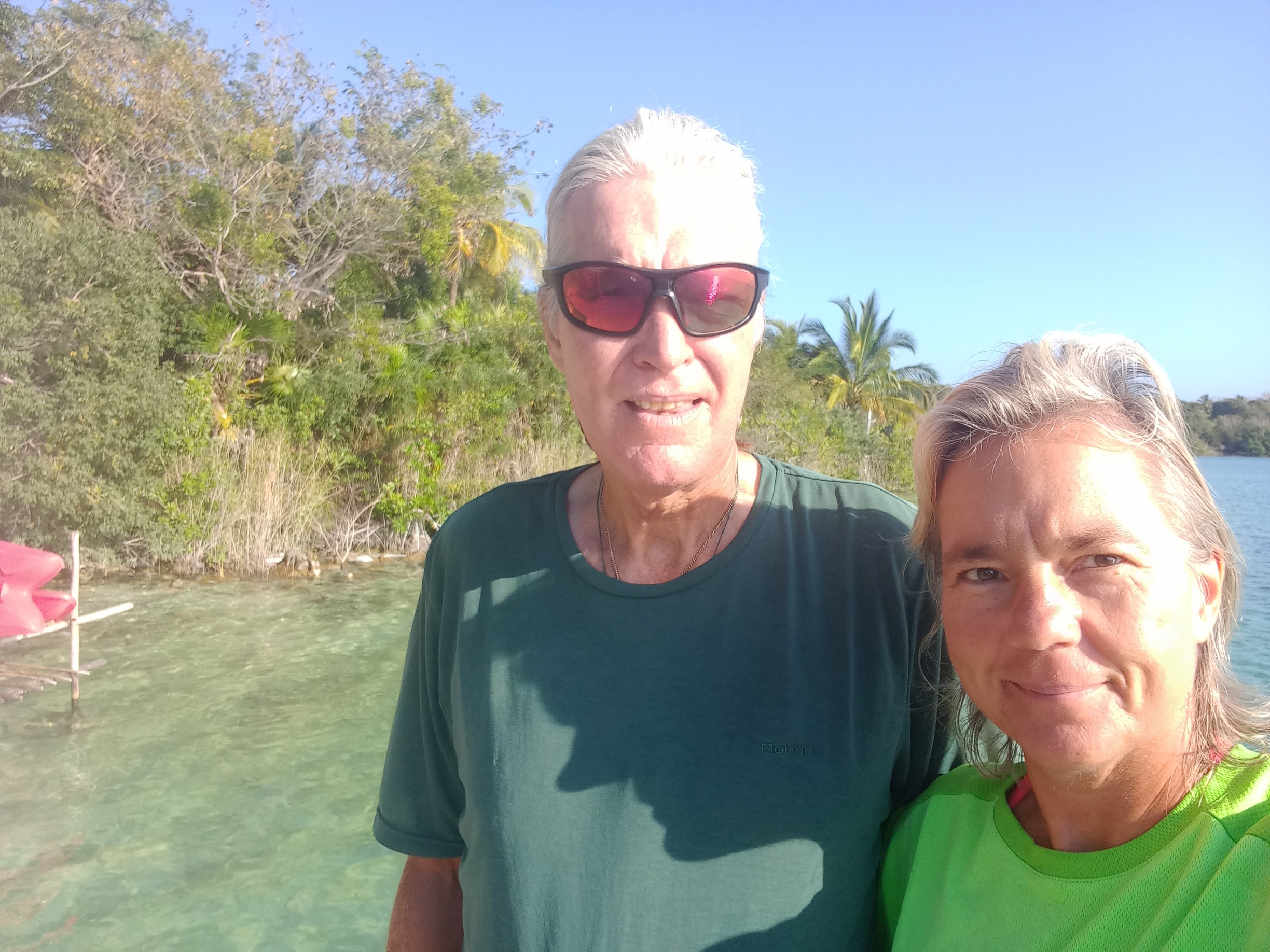
 Mexico and Belize