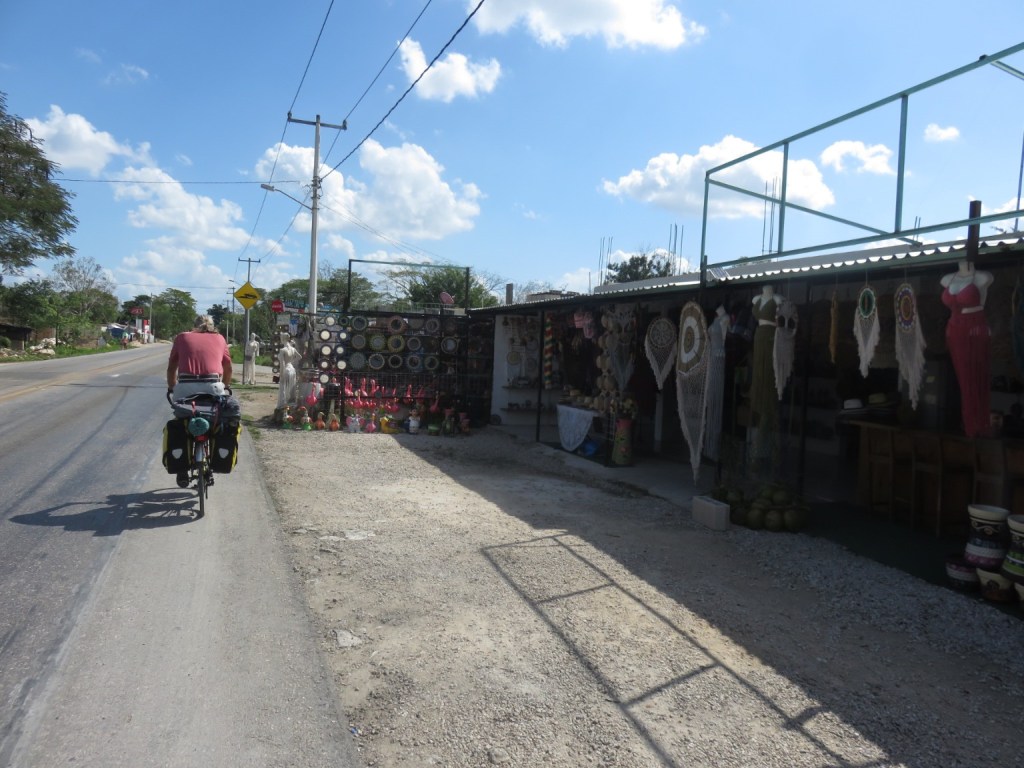
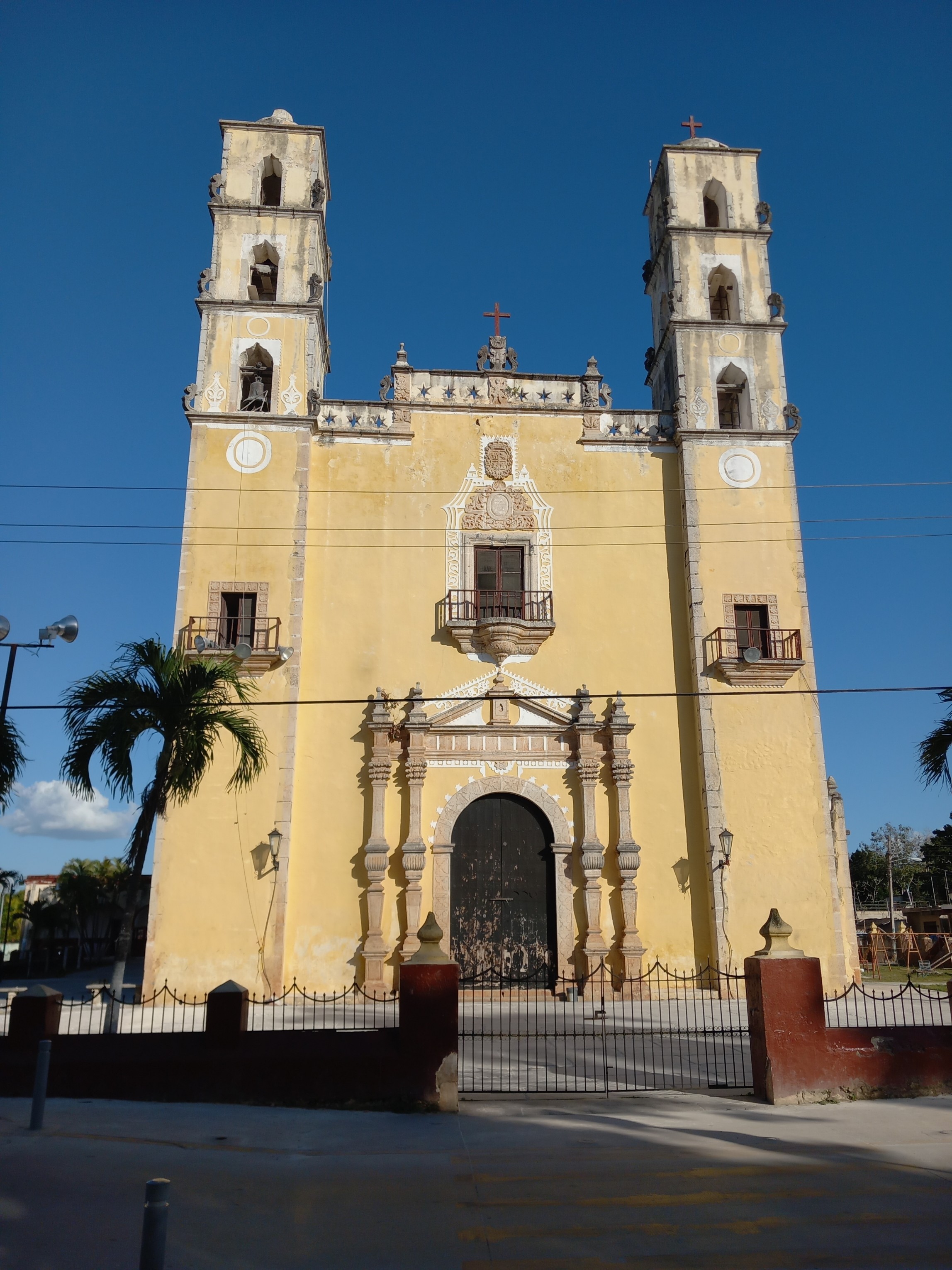
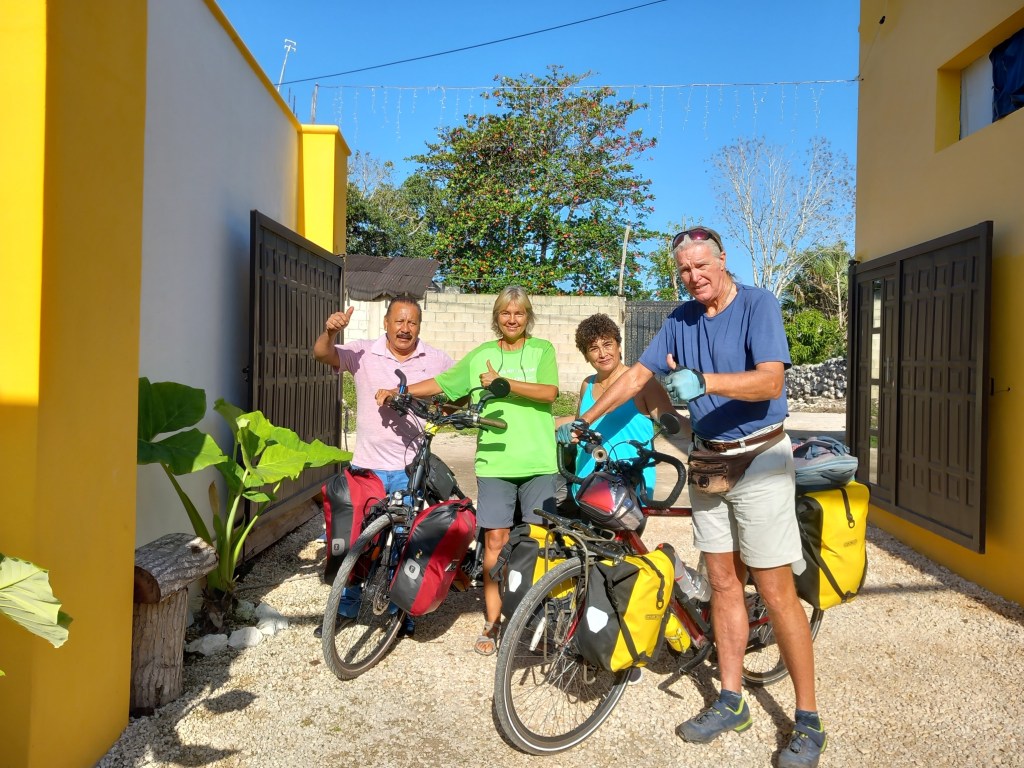
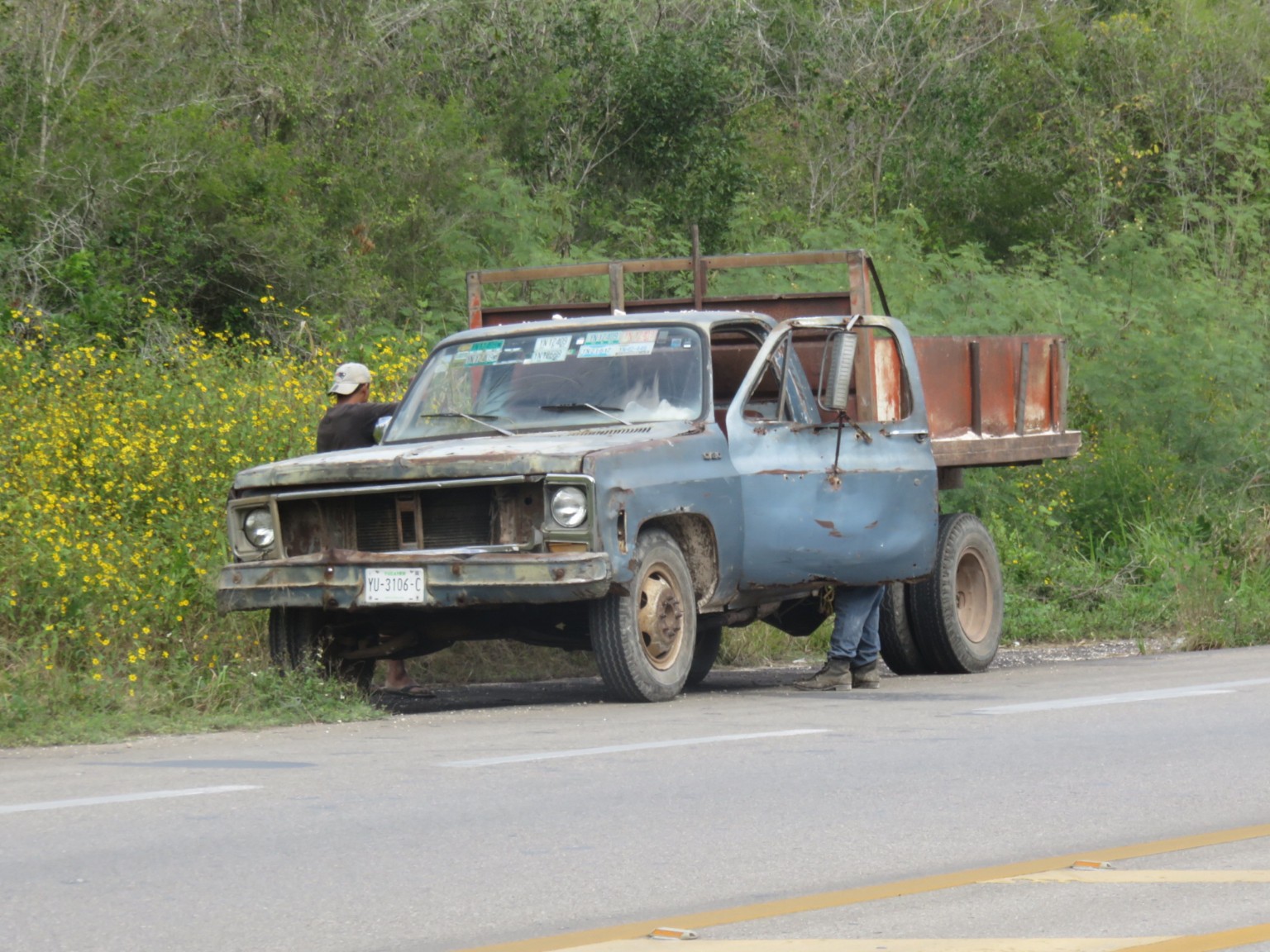
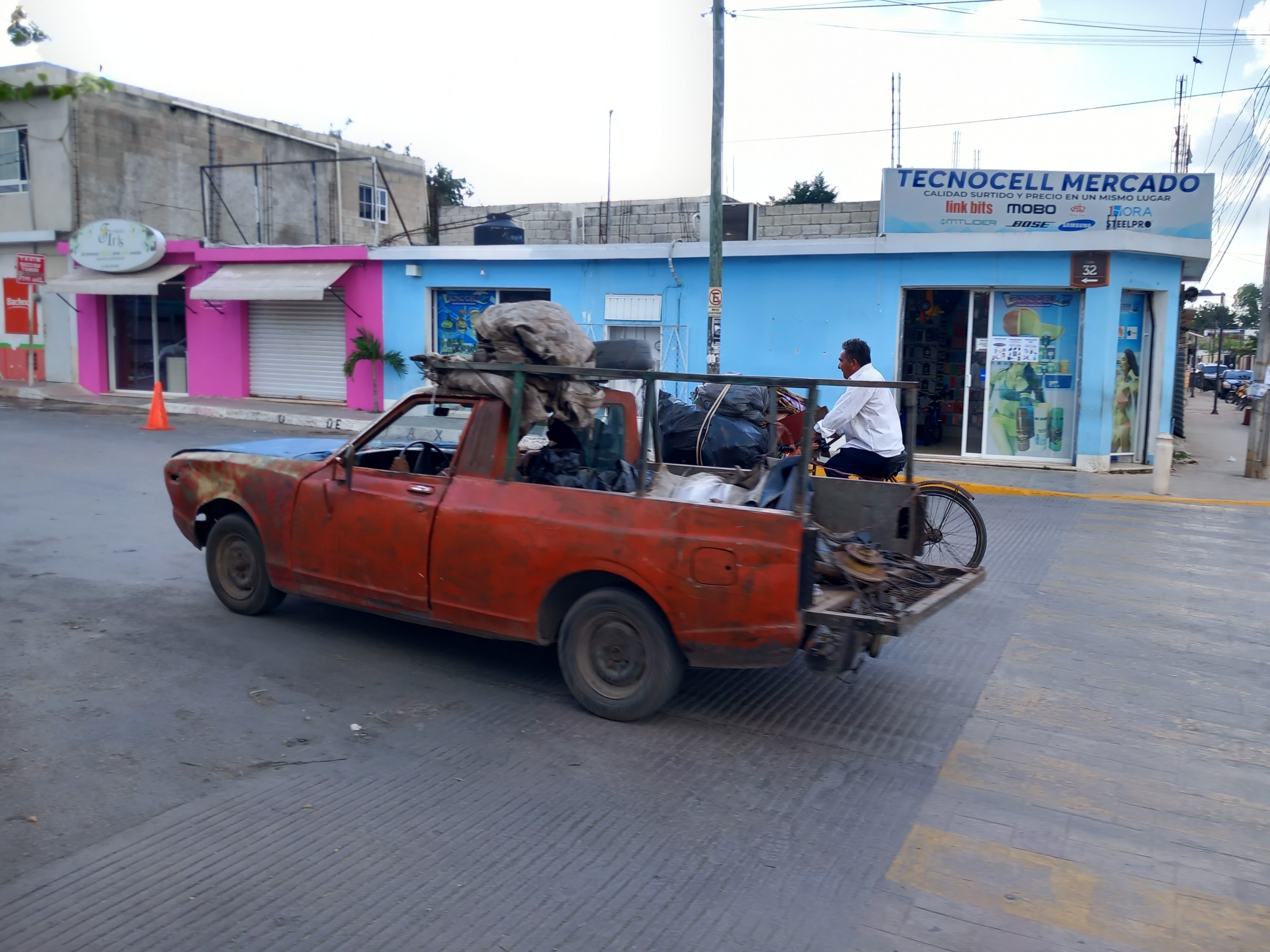
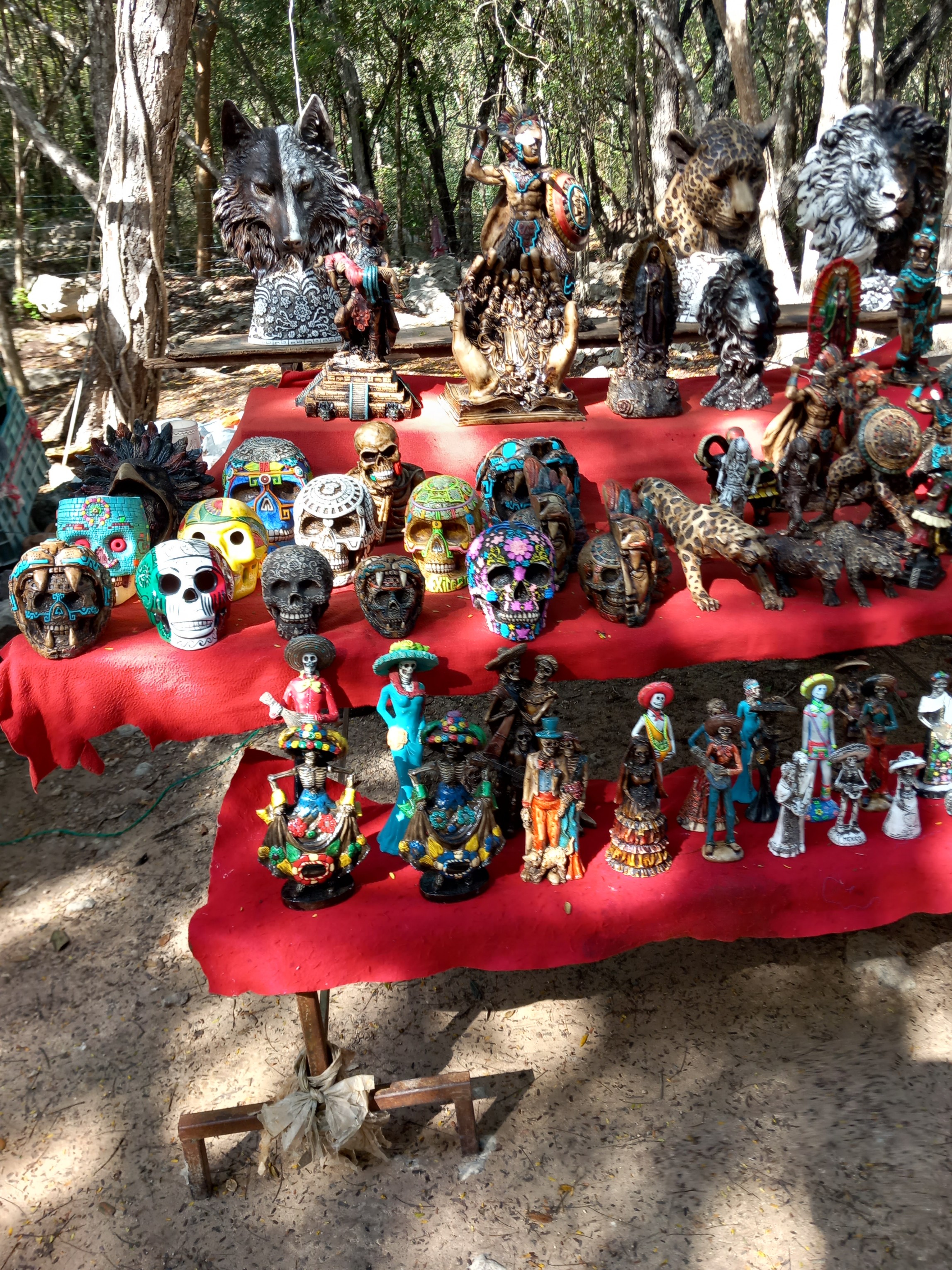
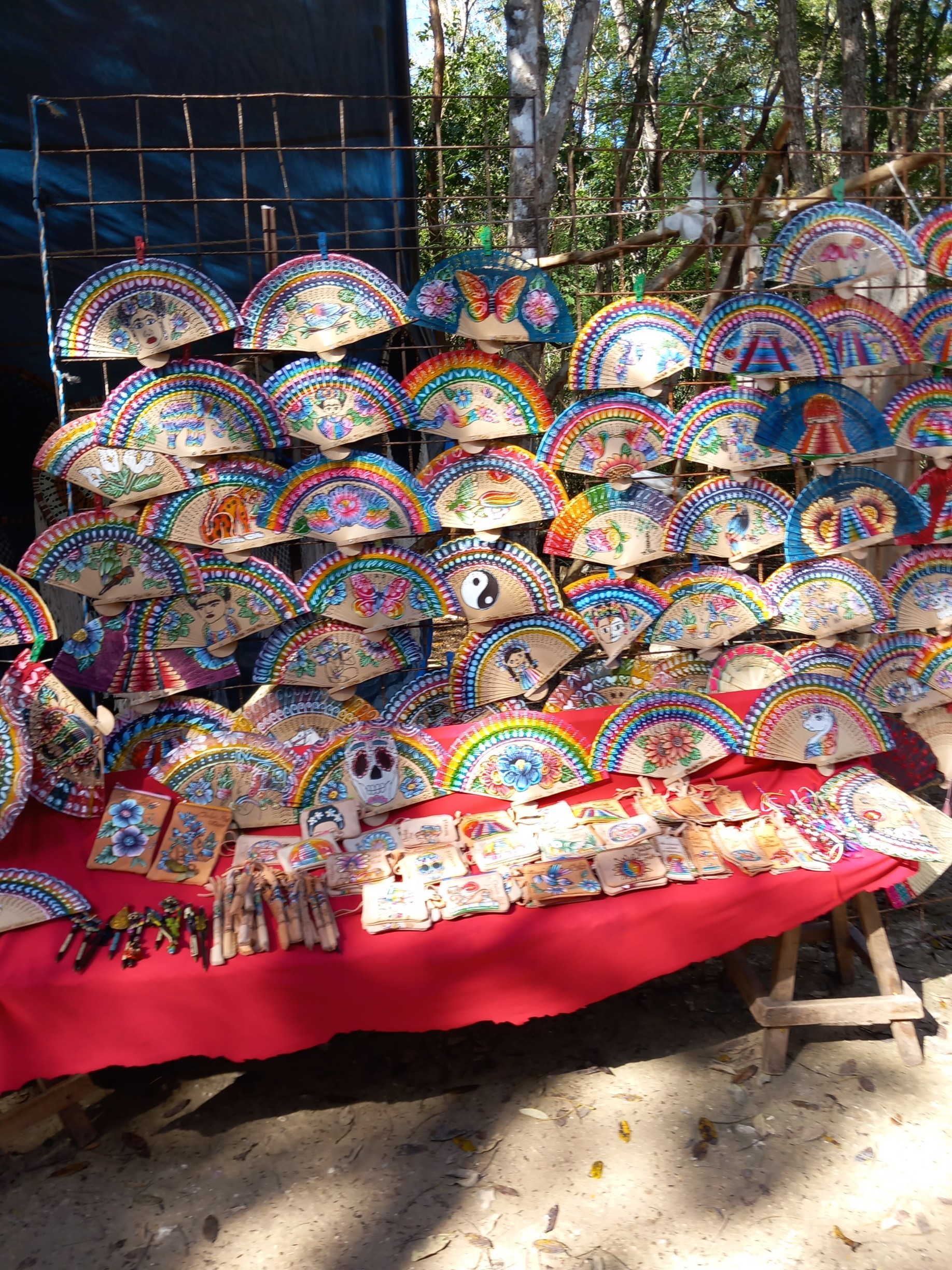
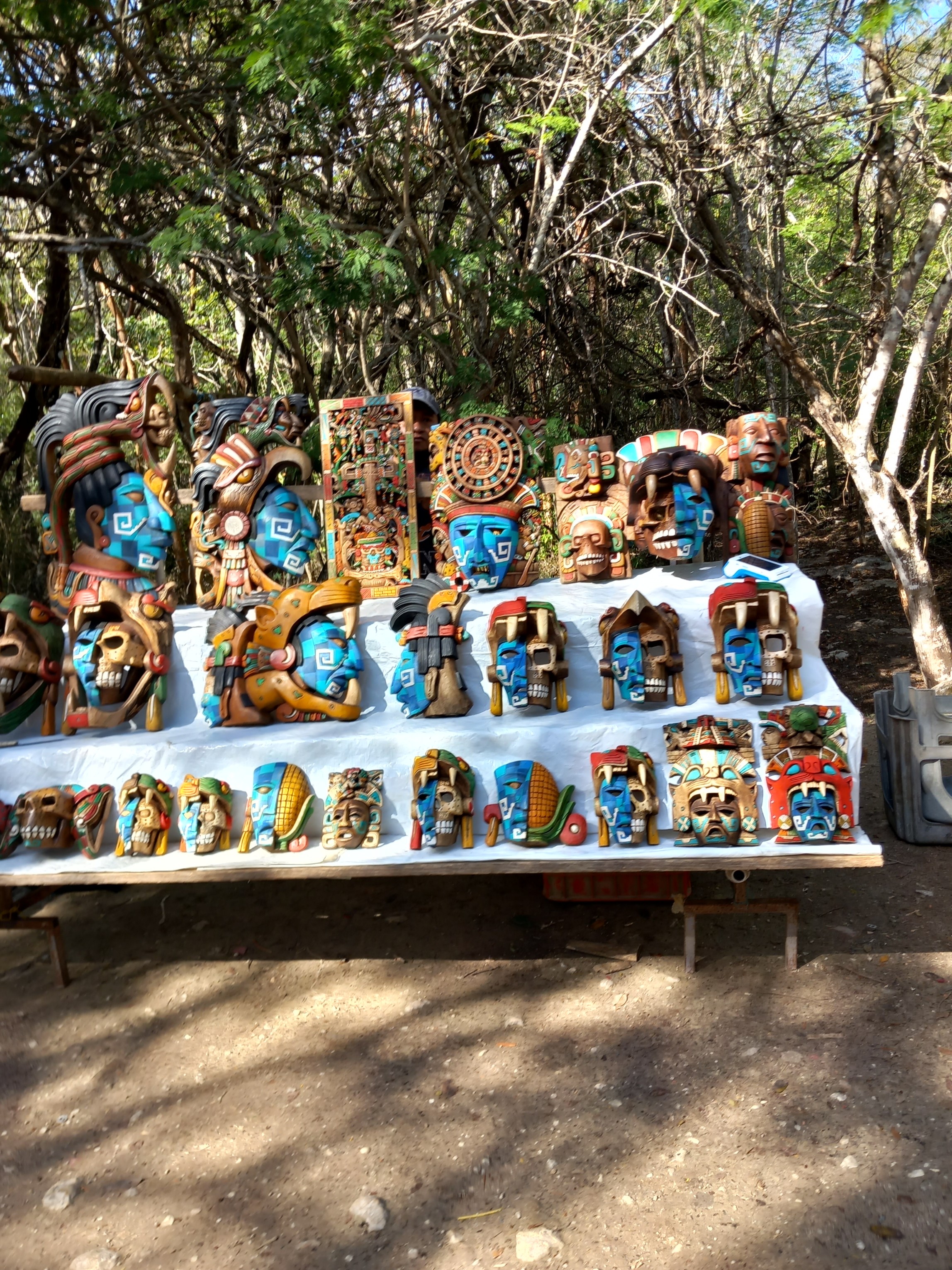
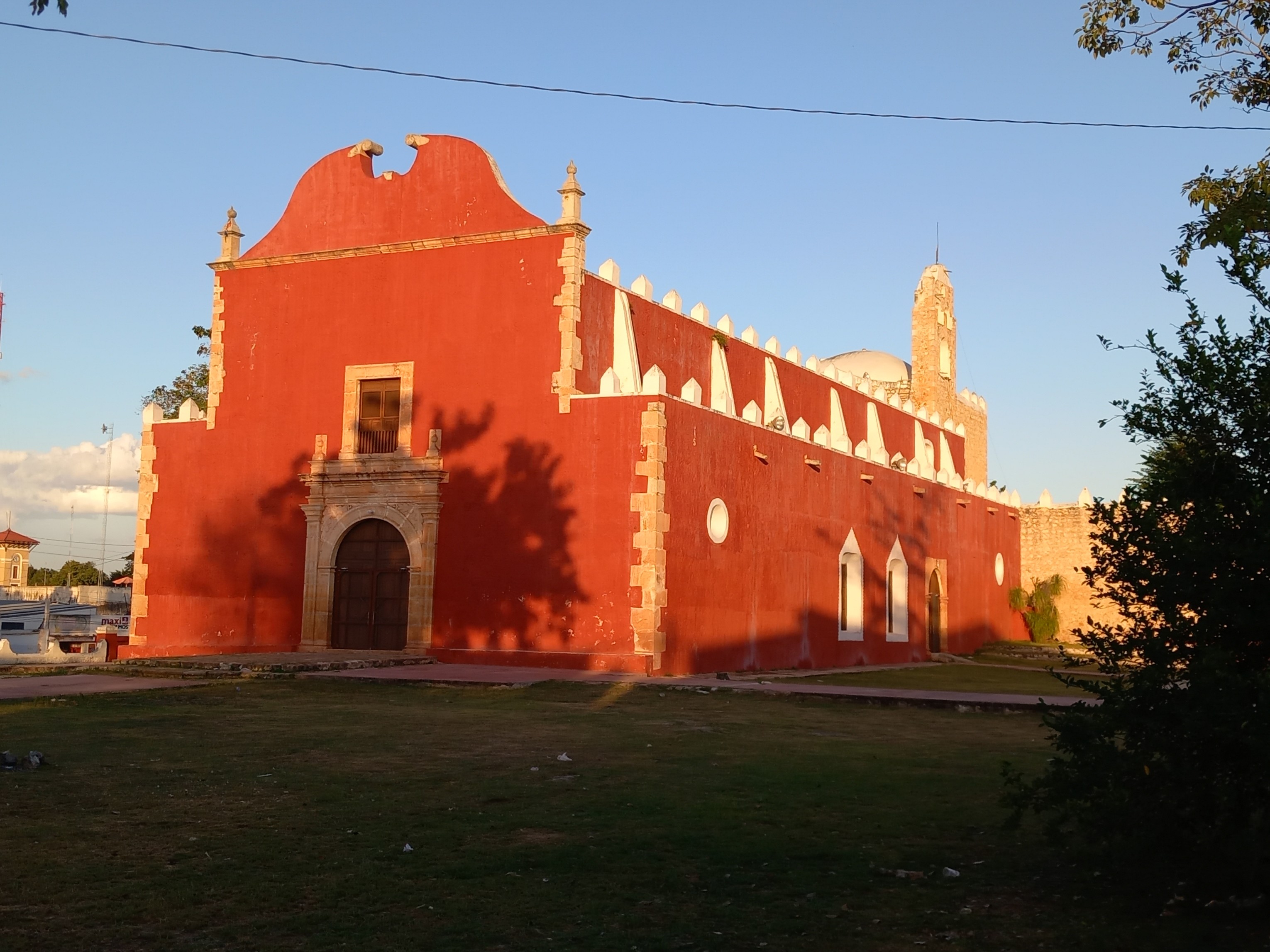
Roadside stalls are everywhere now and not confined to tourist attractions. They call out to us repeatedly – where do they think we have room to carry their goods? We didn’t know we had so many ‘amigos’ in Mexico! Chemax was another charming and delightful village, although the church is overdue some tender loving care, we discovered purely because it was the correct distance from where we were to where we wanted to be to provide overnight accommodation. How these ancient machines are maintained and kept in service is as much a mystery to us as the old vehicles on the roads?
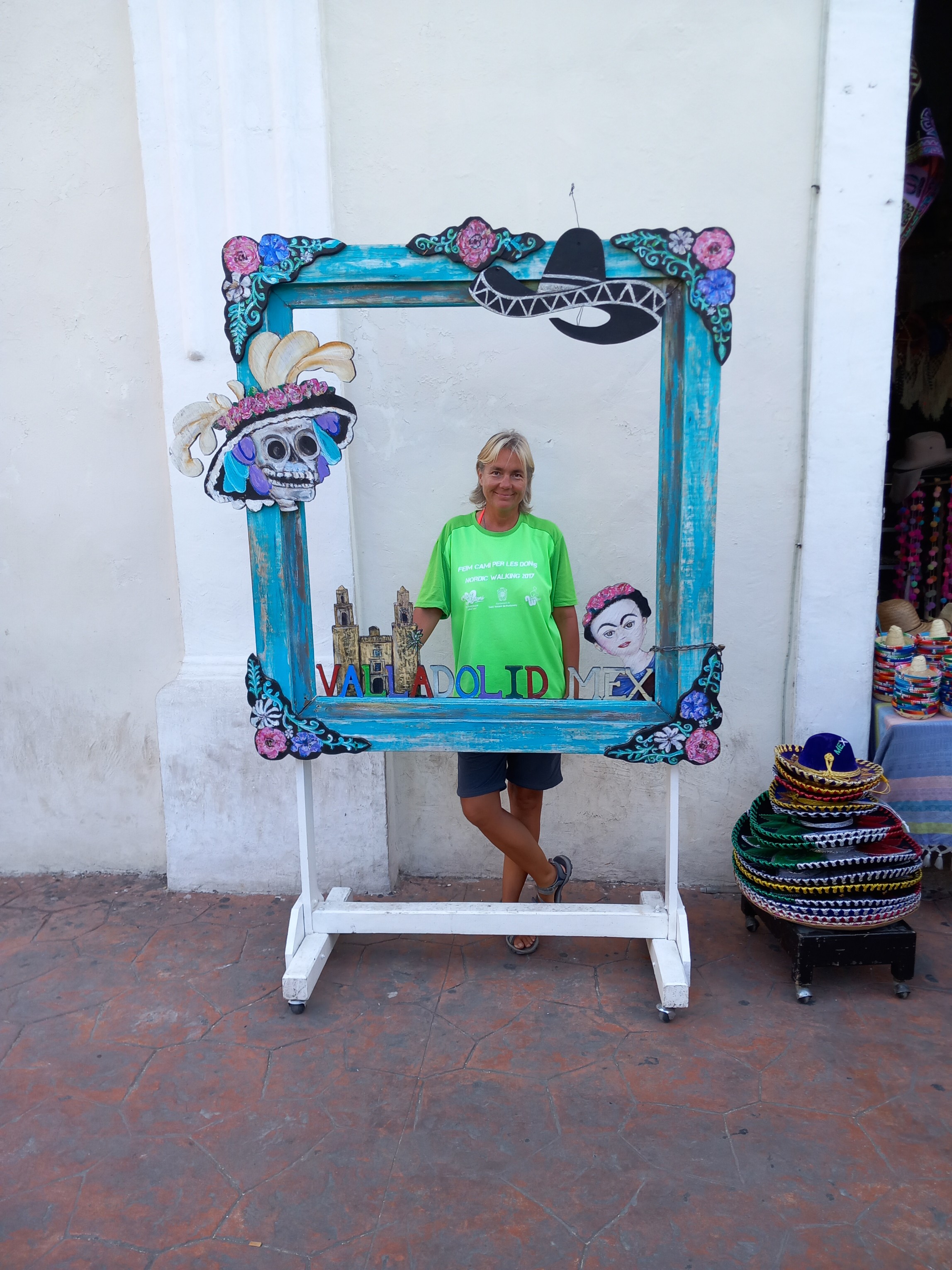
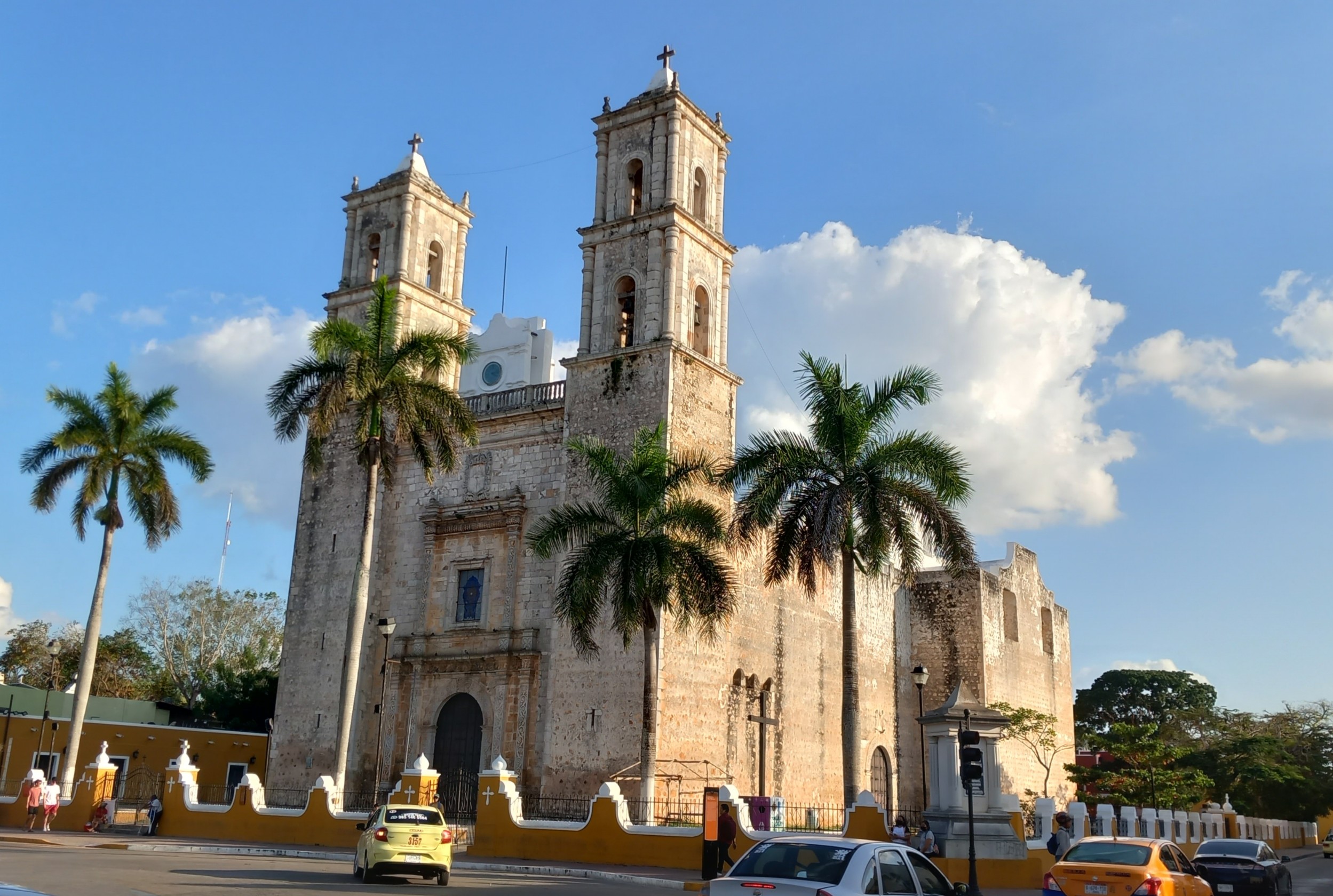
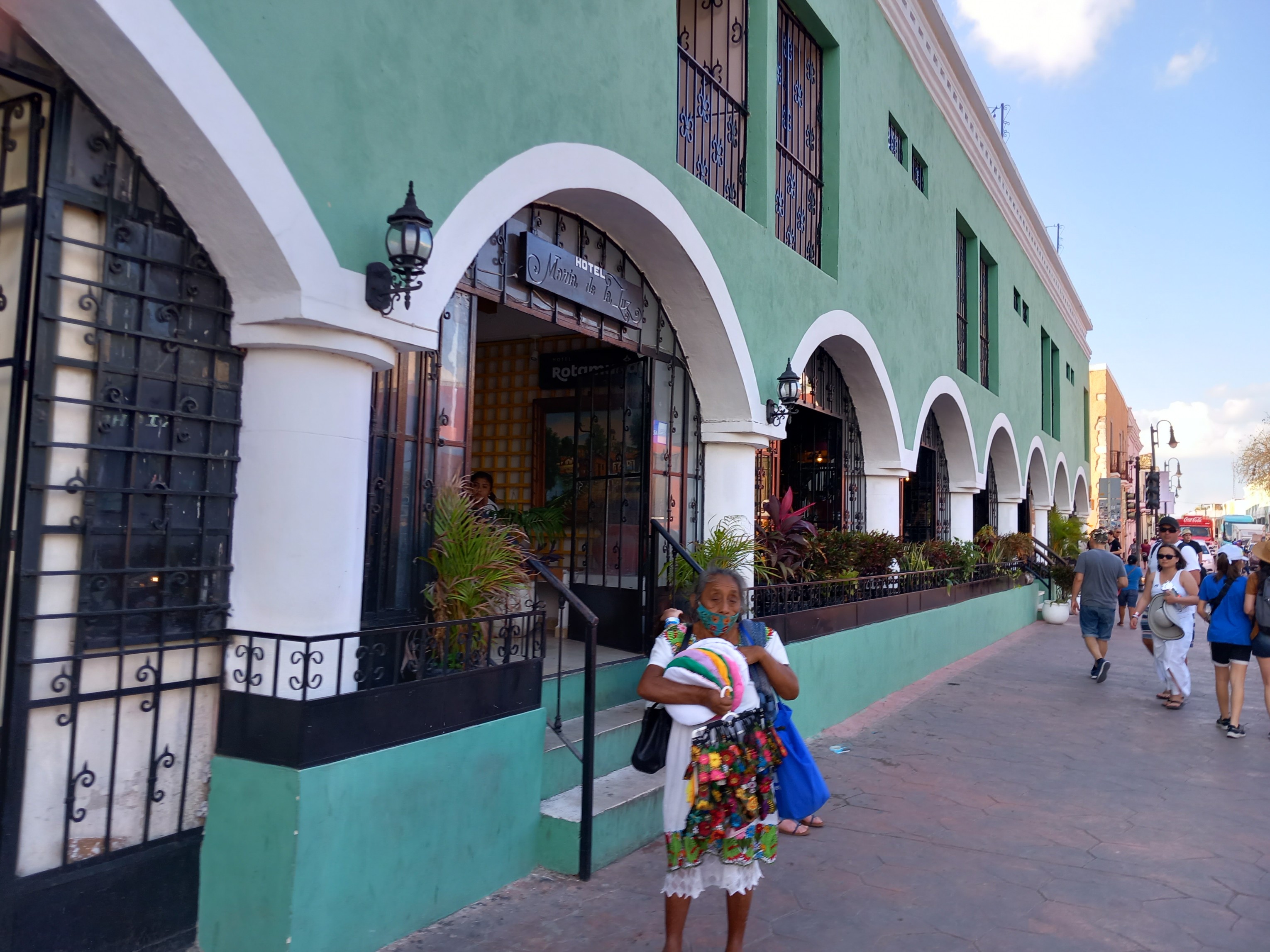
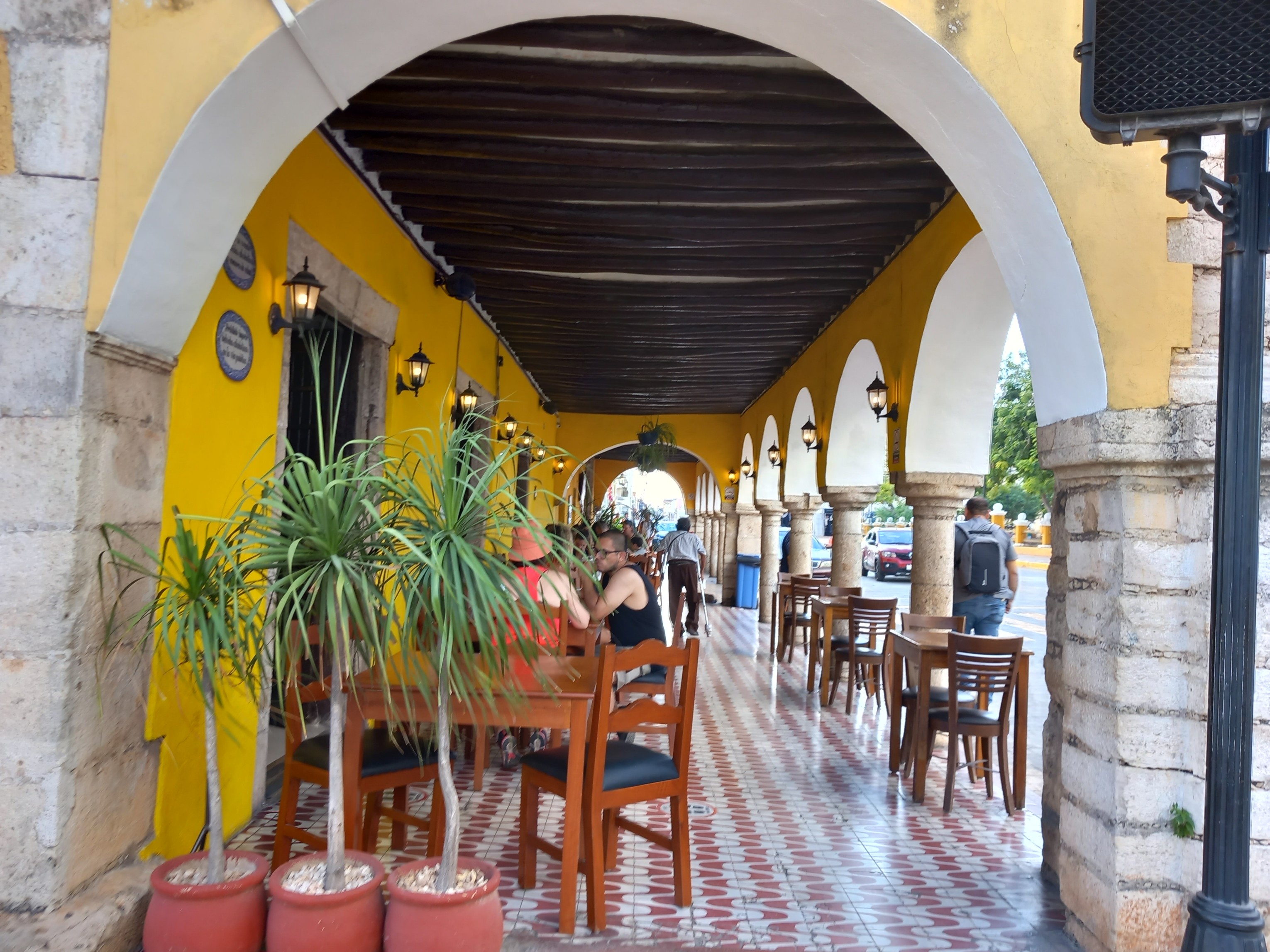
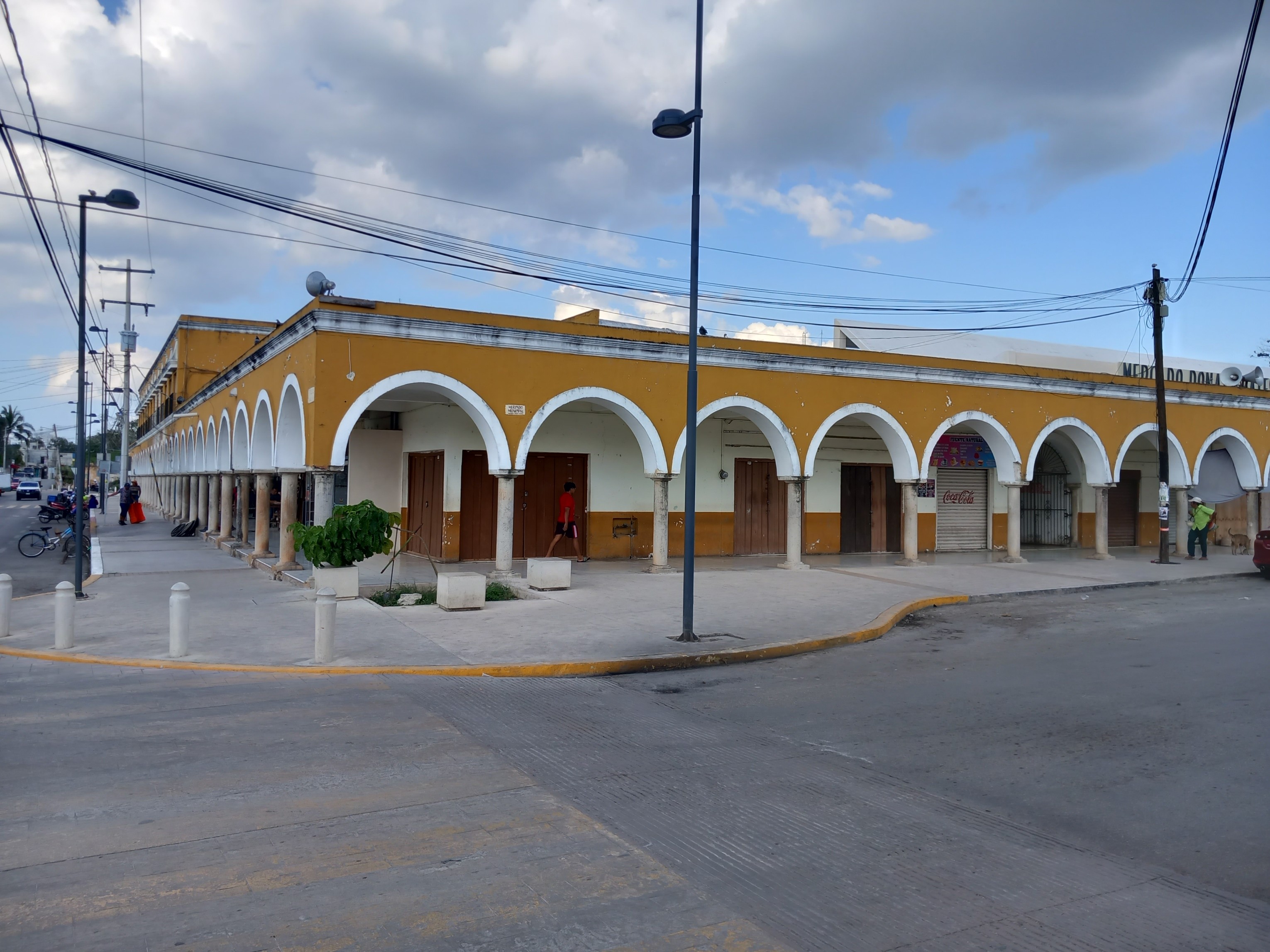
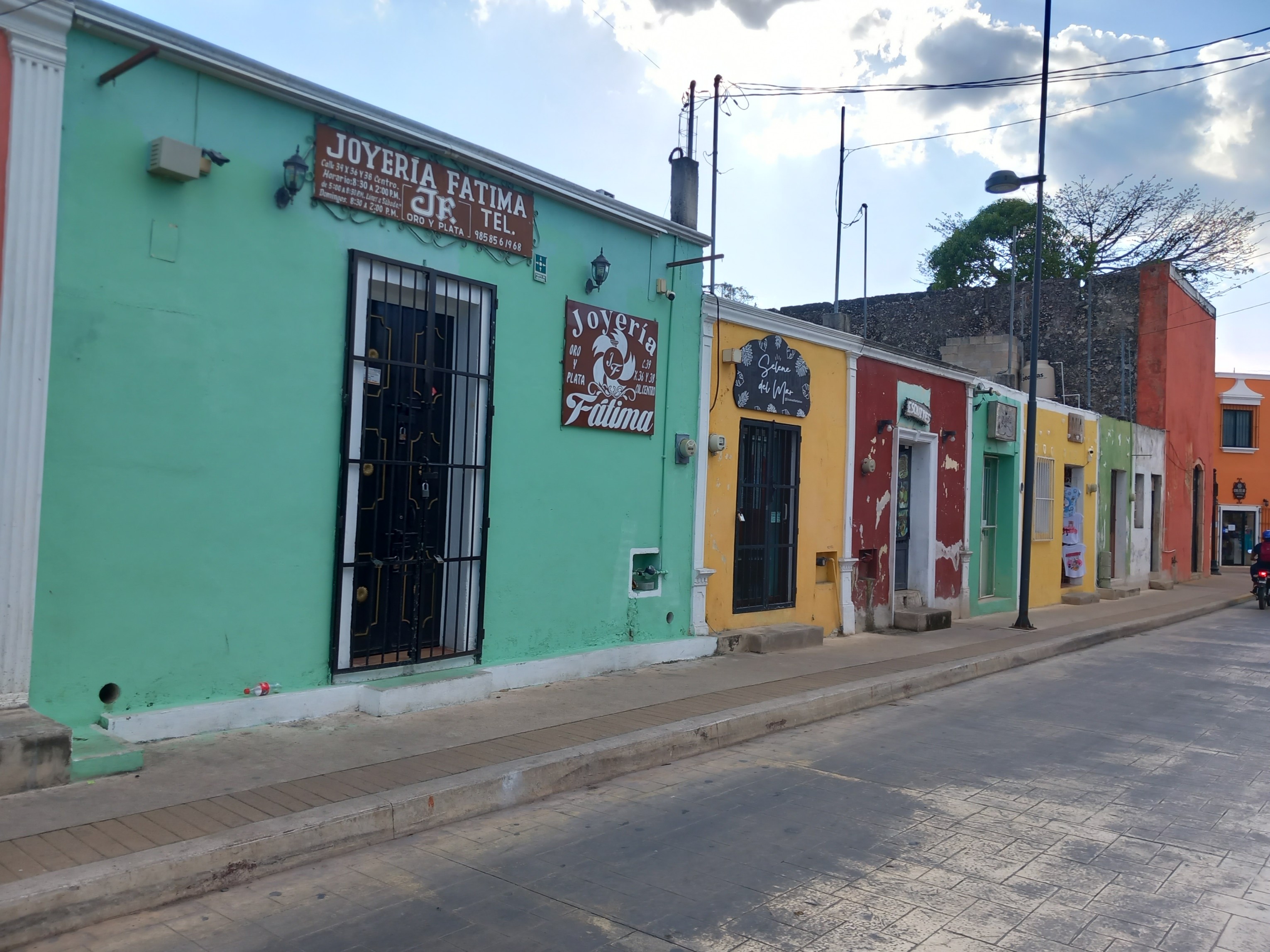
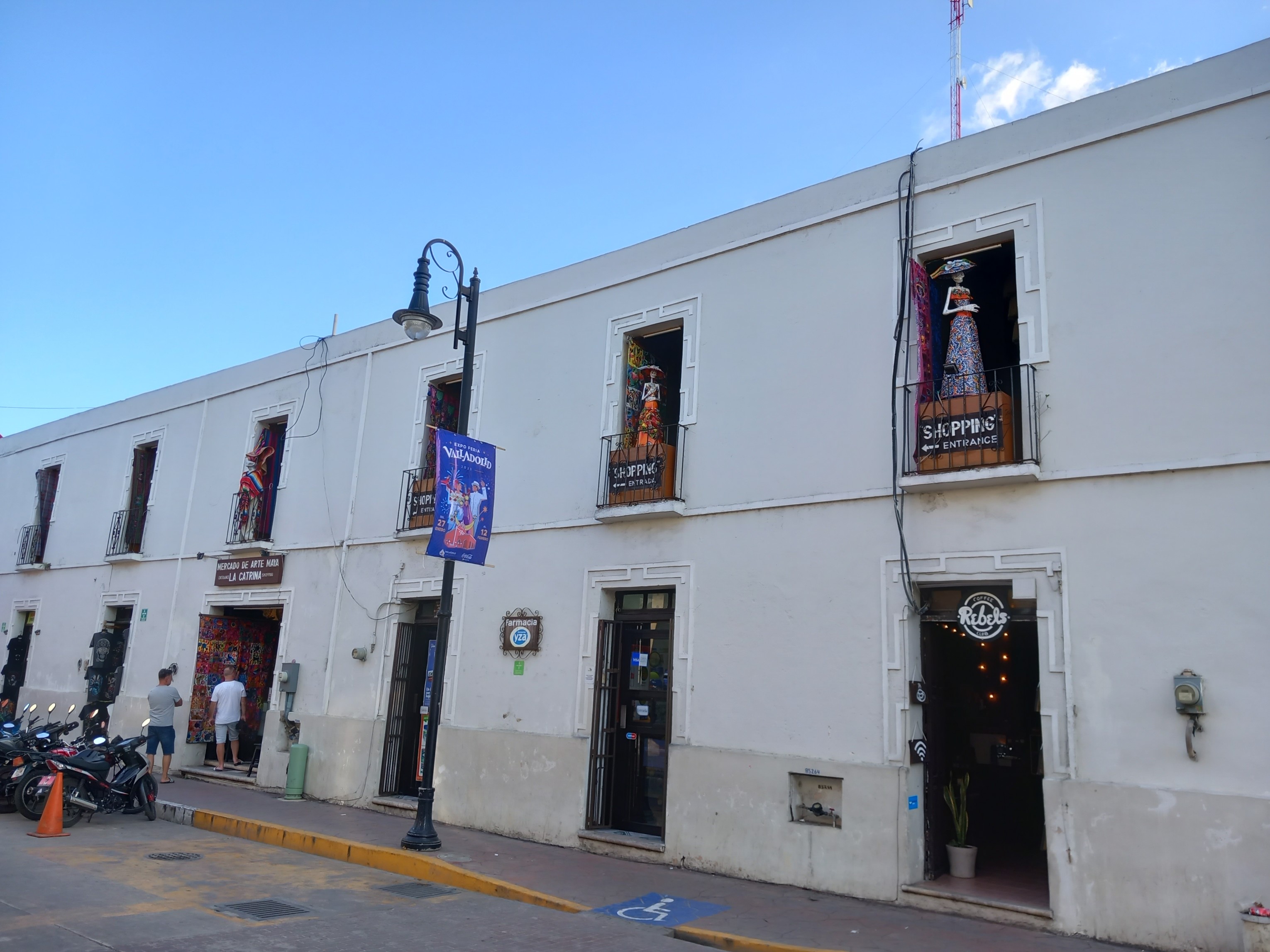
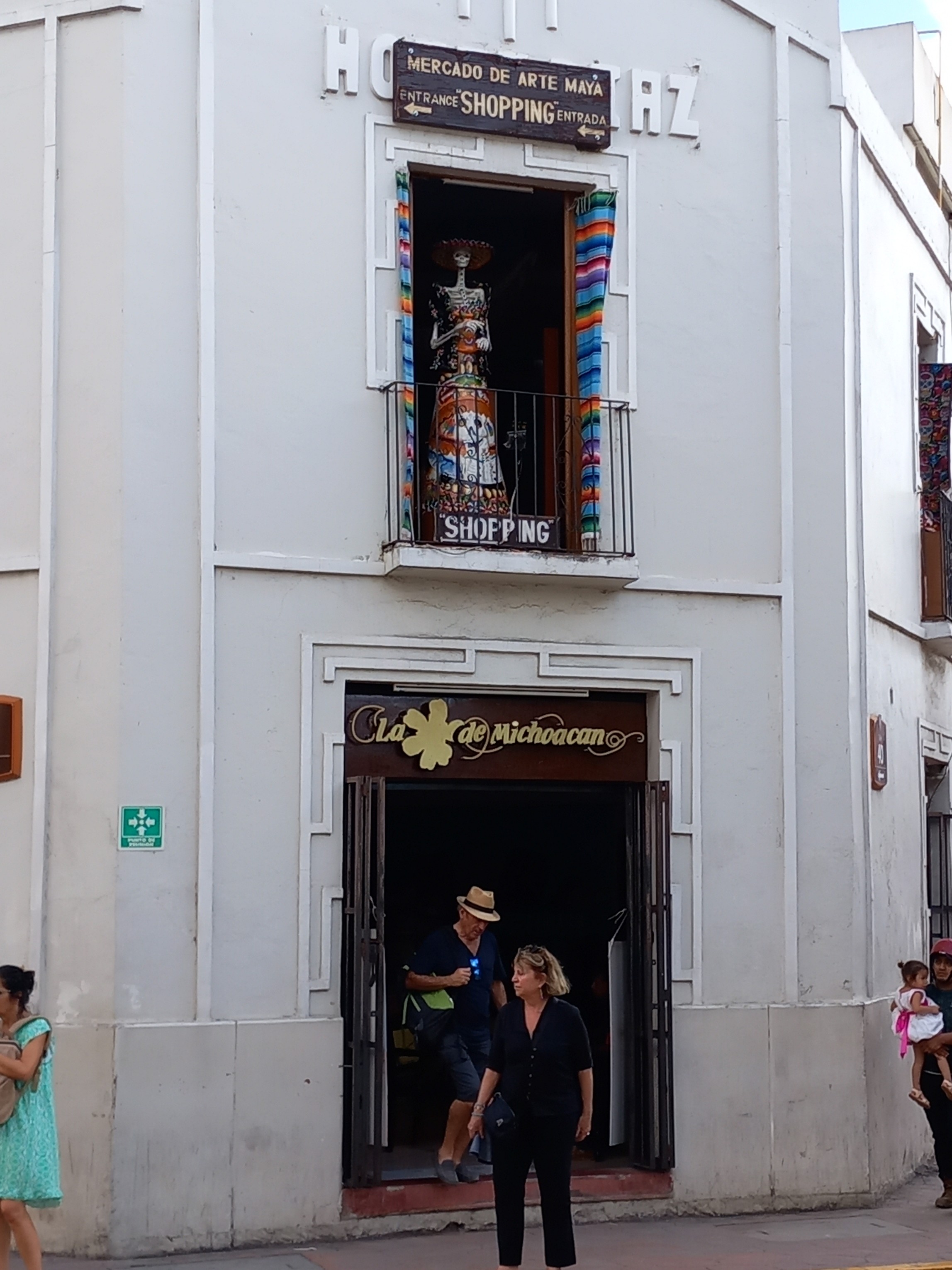
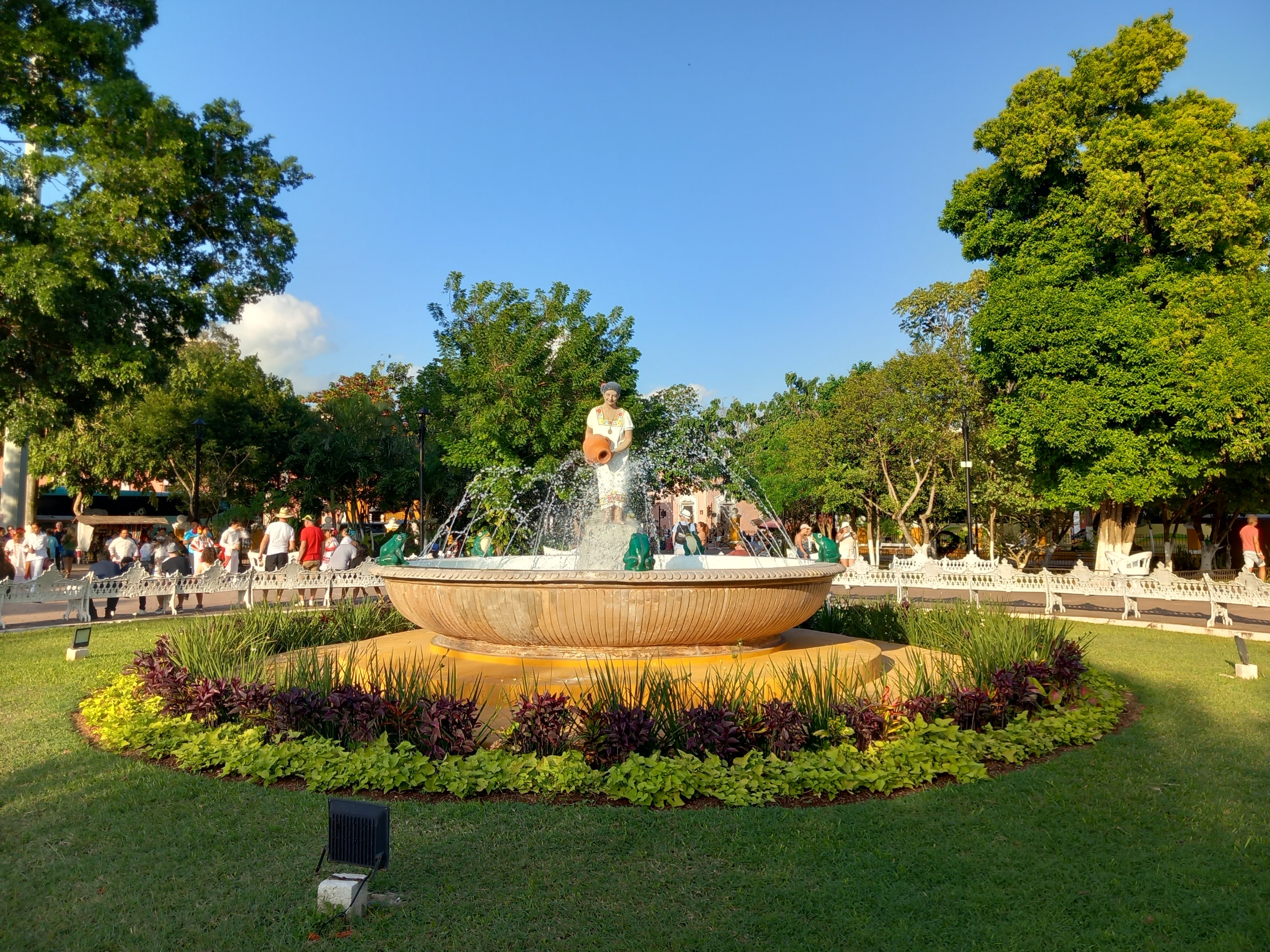
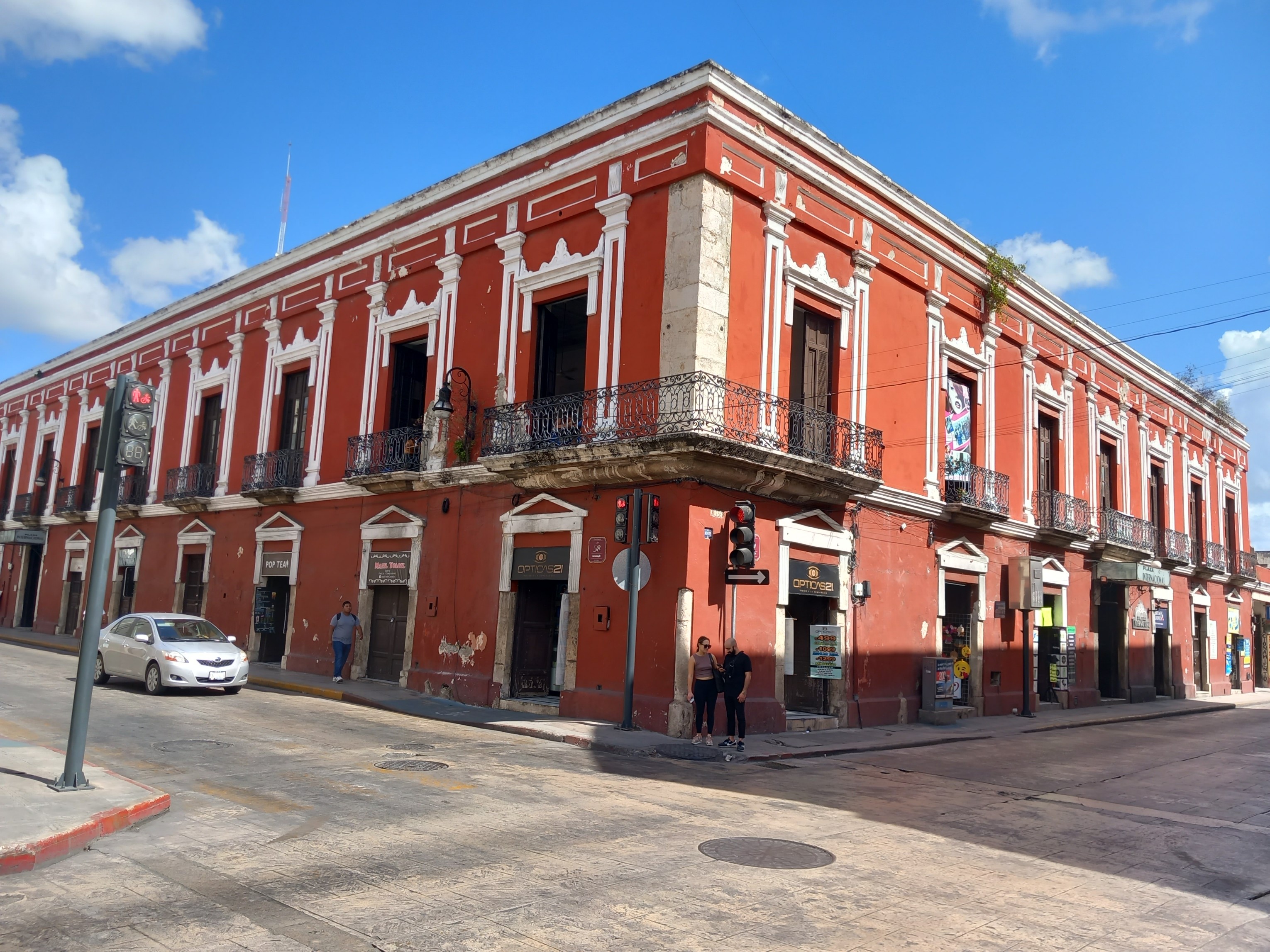
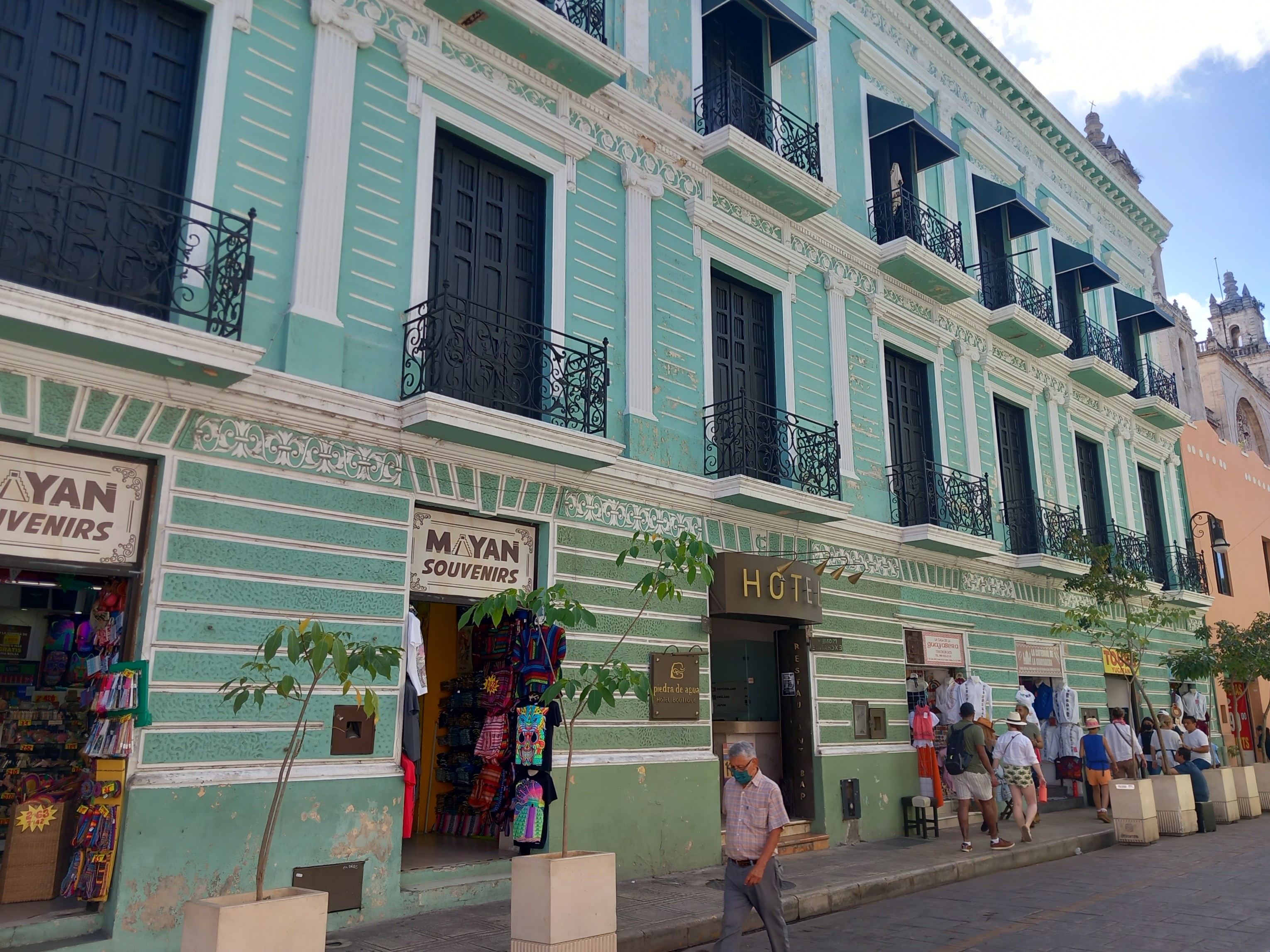
This is one place we could have stayed for much longer, however, onwards we go.We are both amazed an amused at how these older vehicles are kept going.Another one for the risk averse health and safety inspectors.We’re onto another tourist mecca at Villadolid.It is very clean and tidy and quite well preserved.As at Campeche and Merida the pastel coloured buildings feature regularly.We found this clothes shop quite intriguing given the size of the models in the windows – we’re still trying to identify who is their target market?
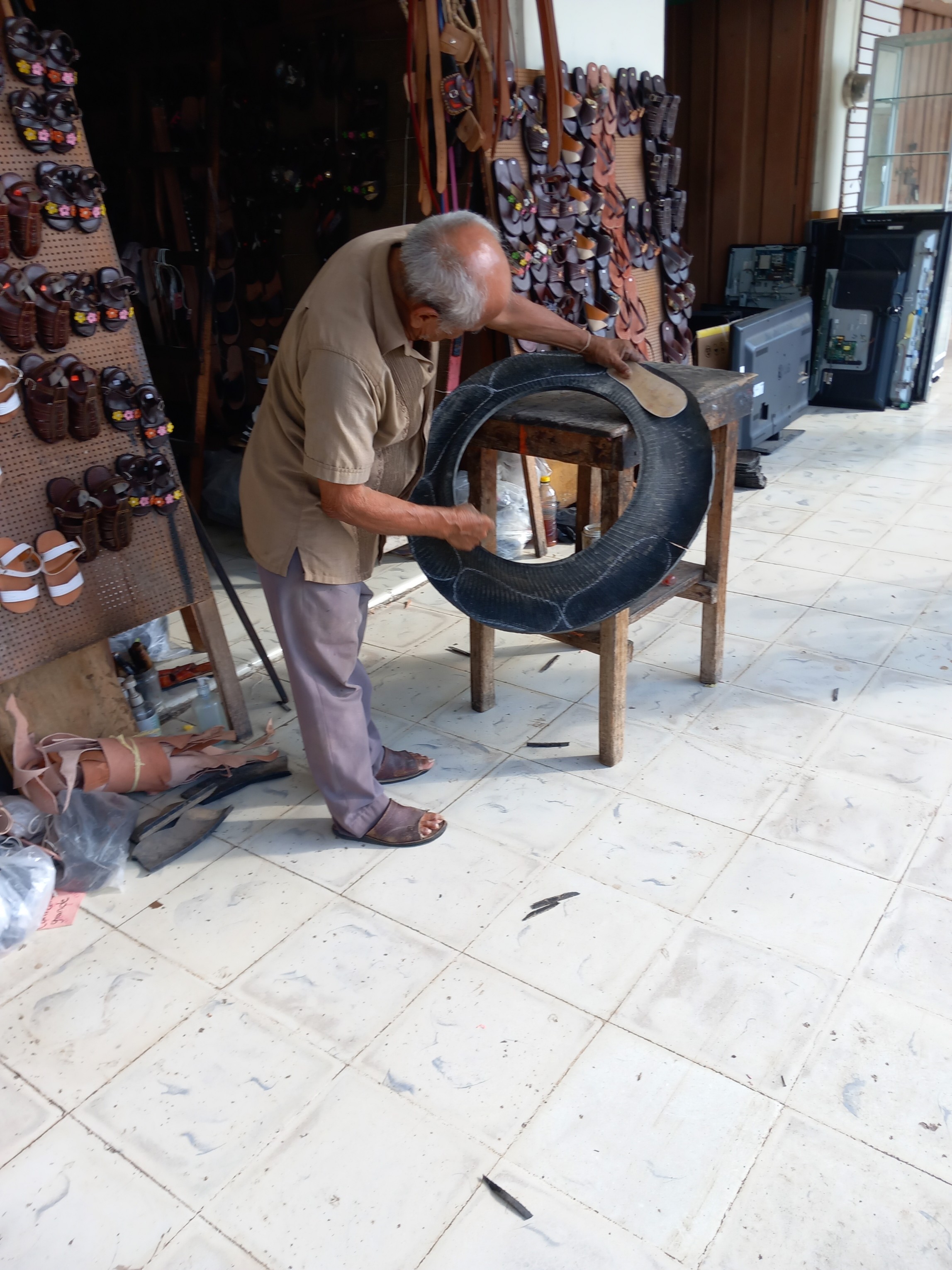
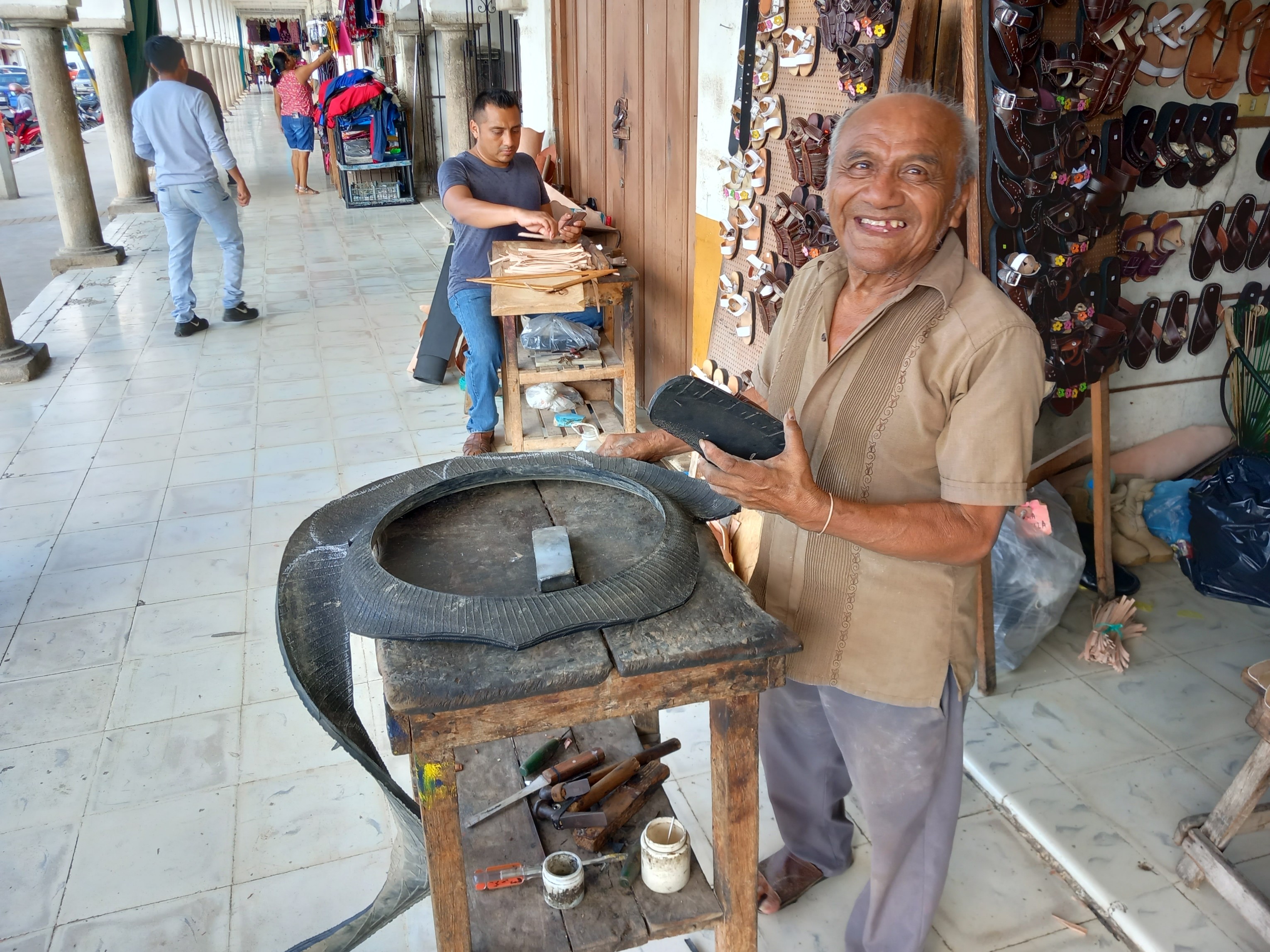
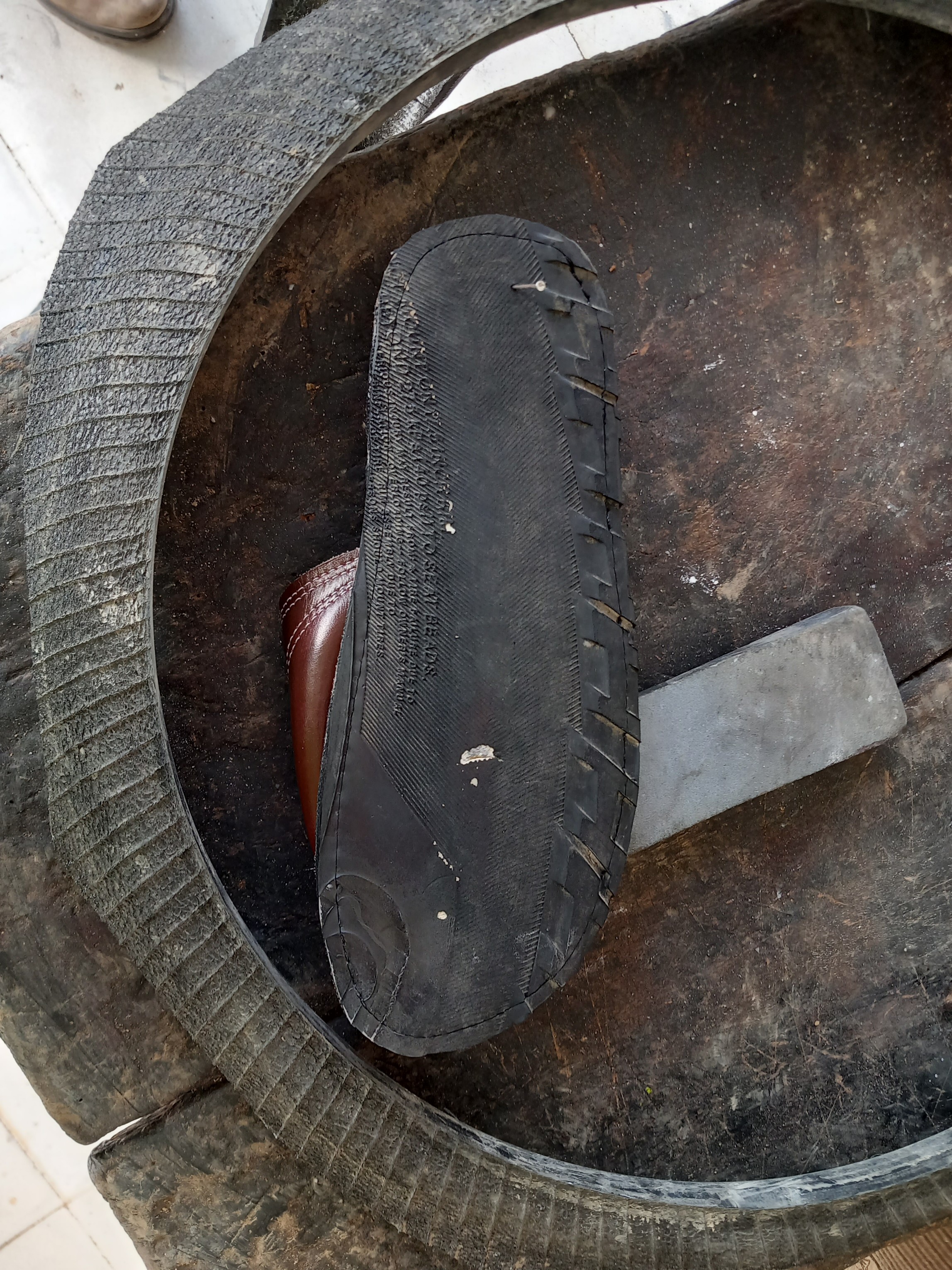
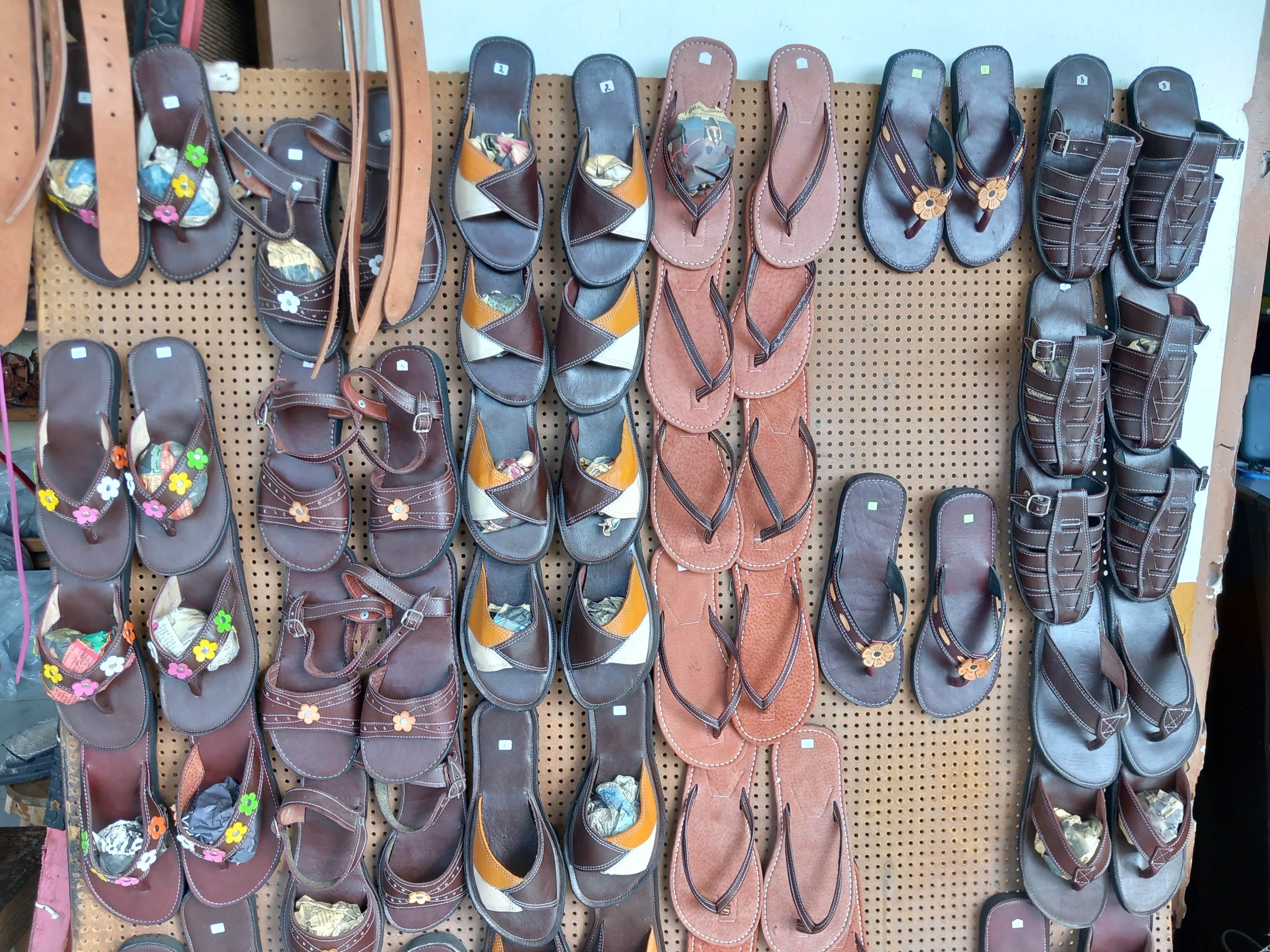
The vehicle tyres are soon reused by this man’s handiwork – he had a shop full of shoes on display that he had made.
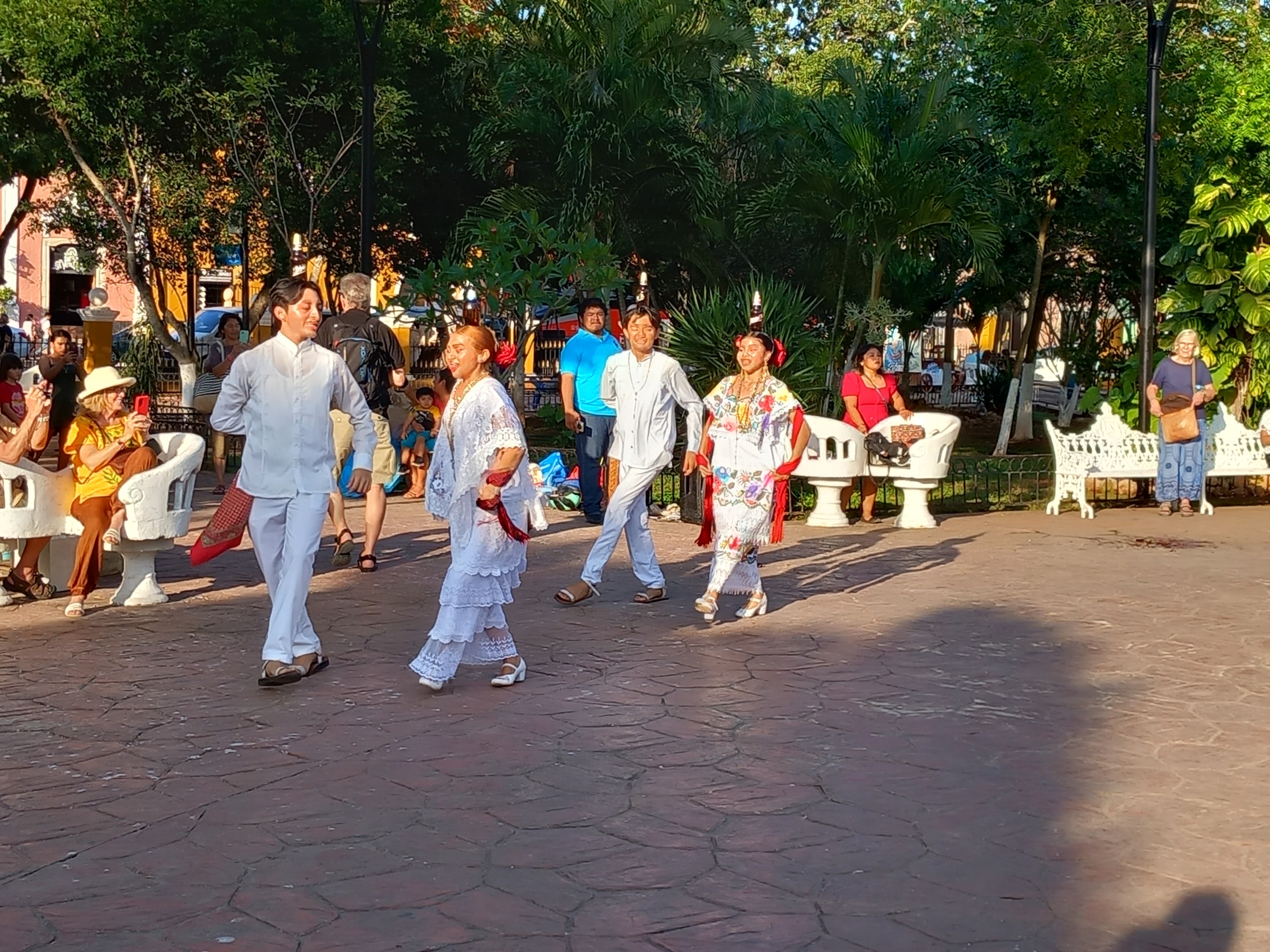
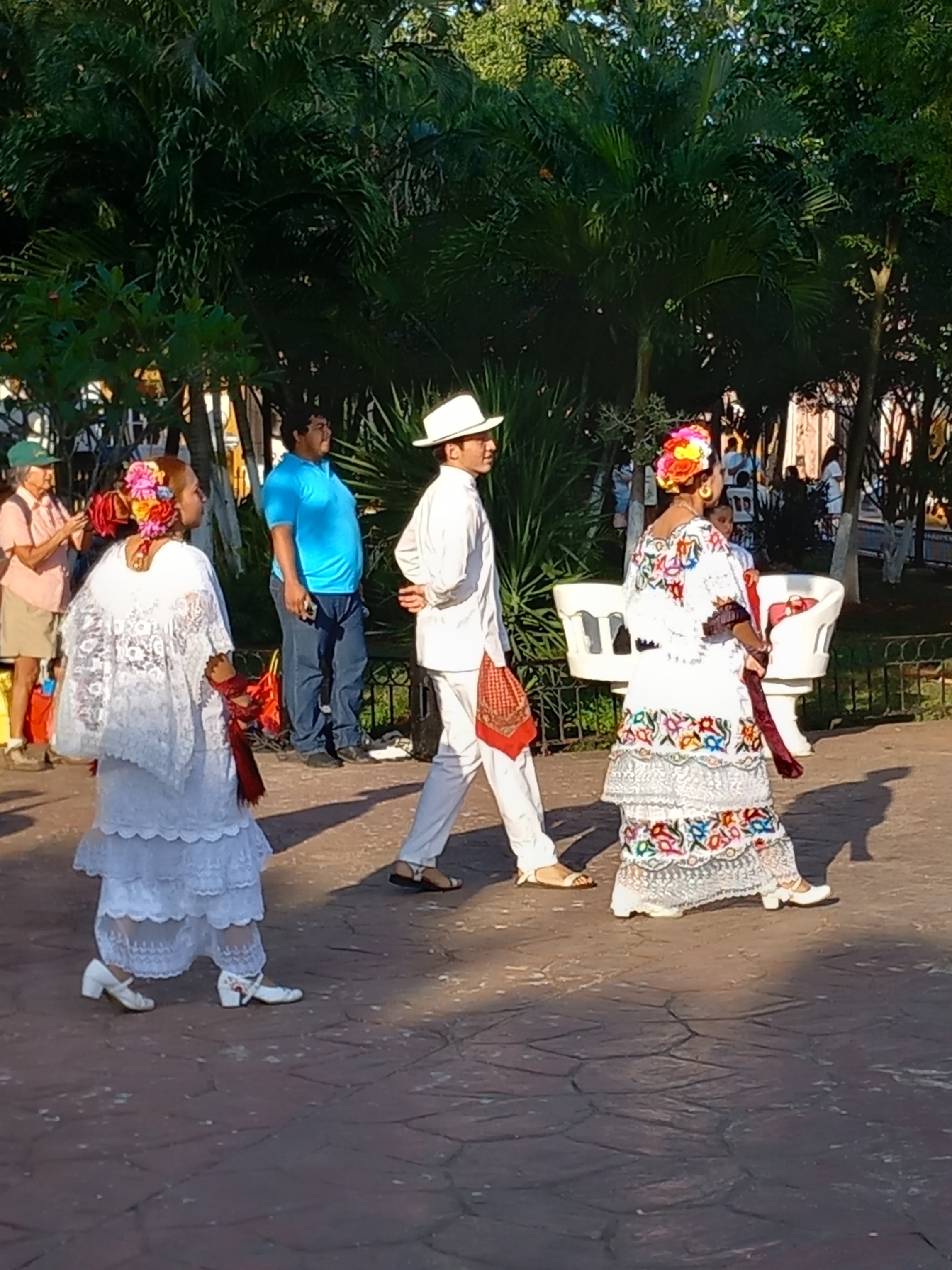
This was in the middle of the afternoon on the main plaza – notice the half bottles of water they balance on their heads whilst dancing. There were seven women and three men; one drops a bottle – it could only be a man! Still, very impressive.
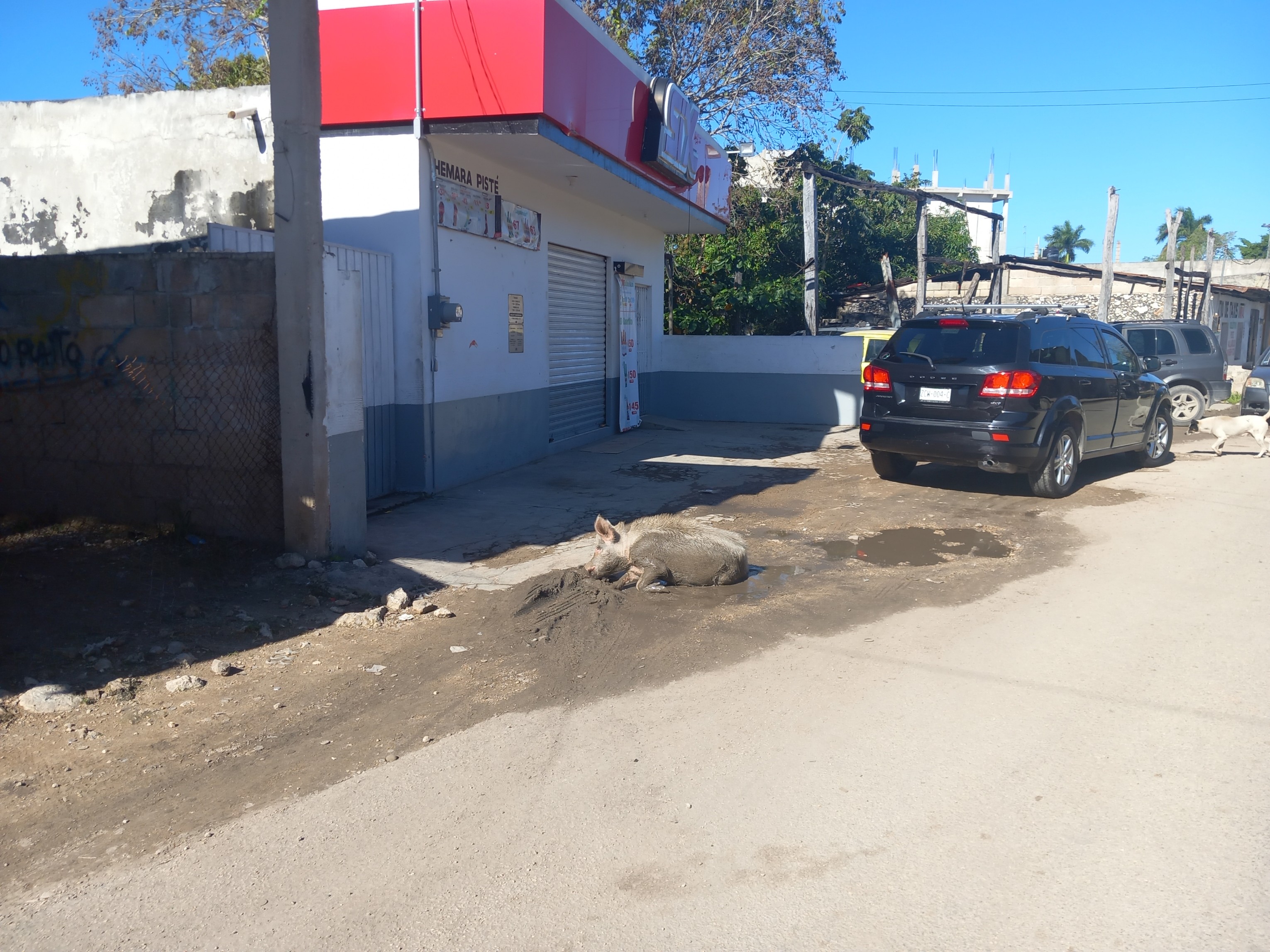
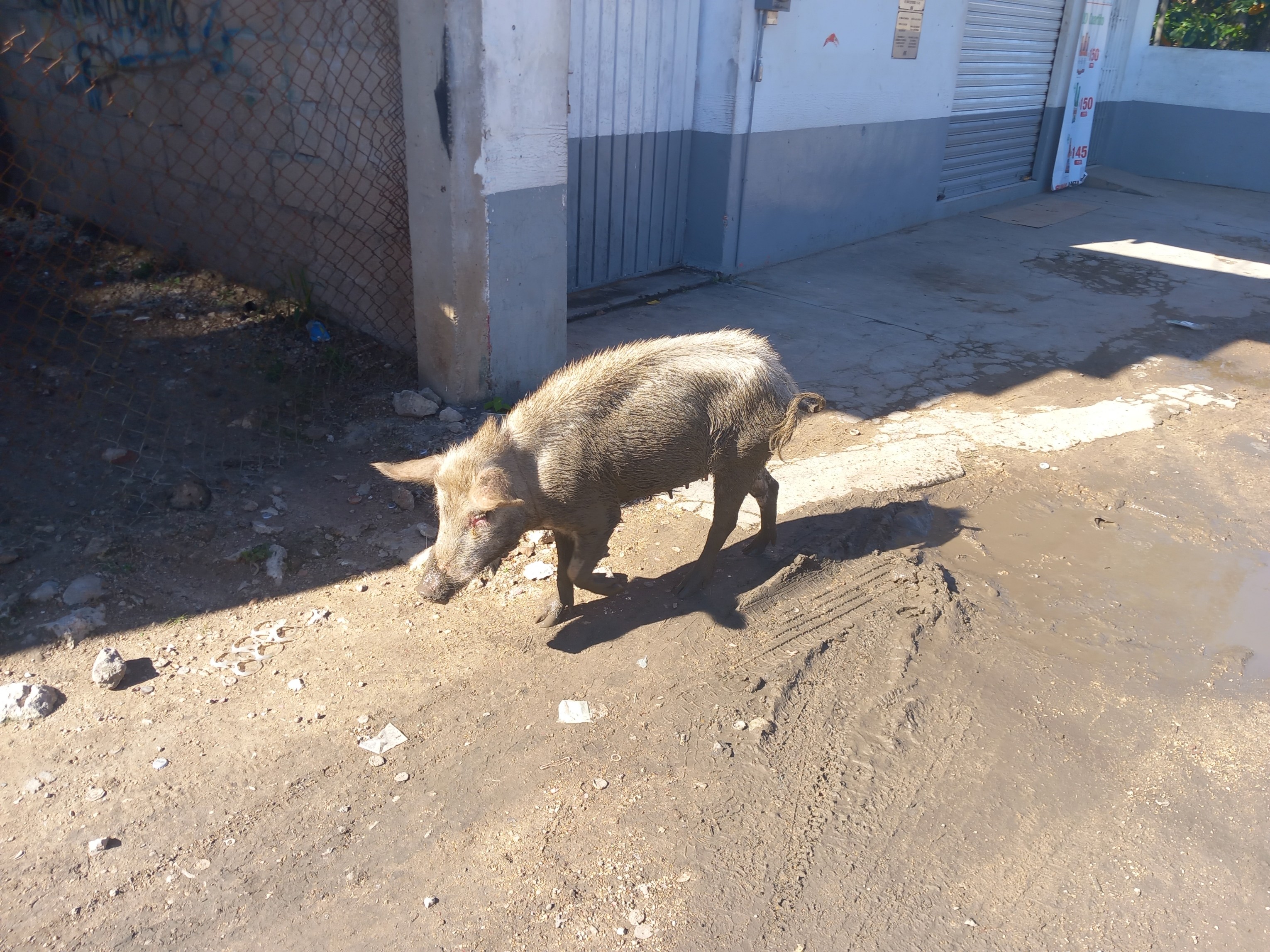
We think this is taking ‘free range’ to another level with this pig (he wasn’t tethered). He must look forward to the wet season – we couldn’t find him the next day when the roads had dried.
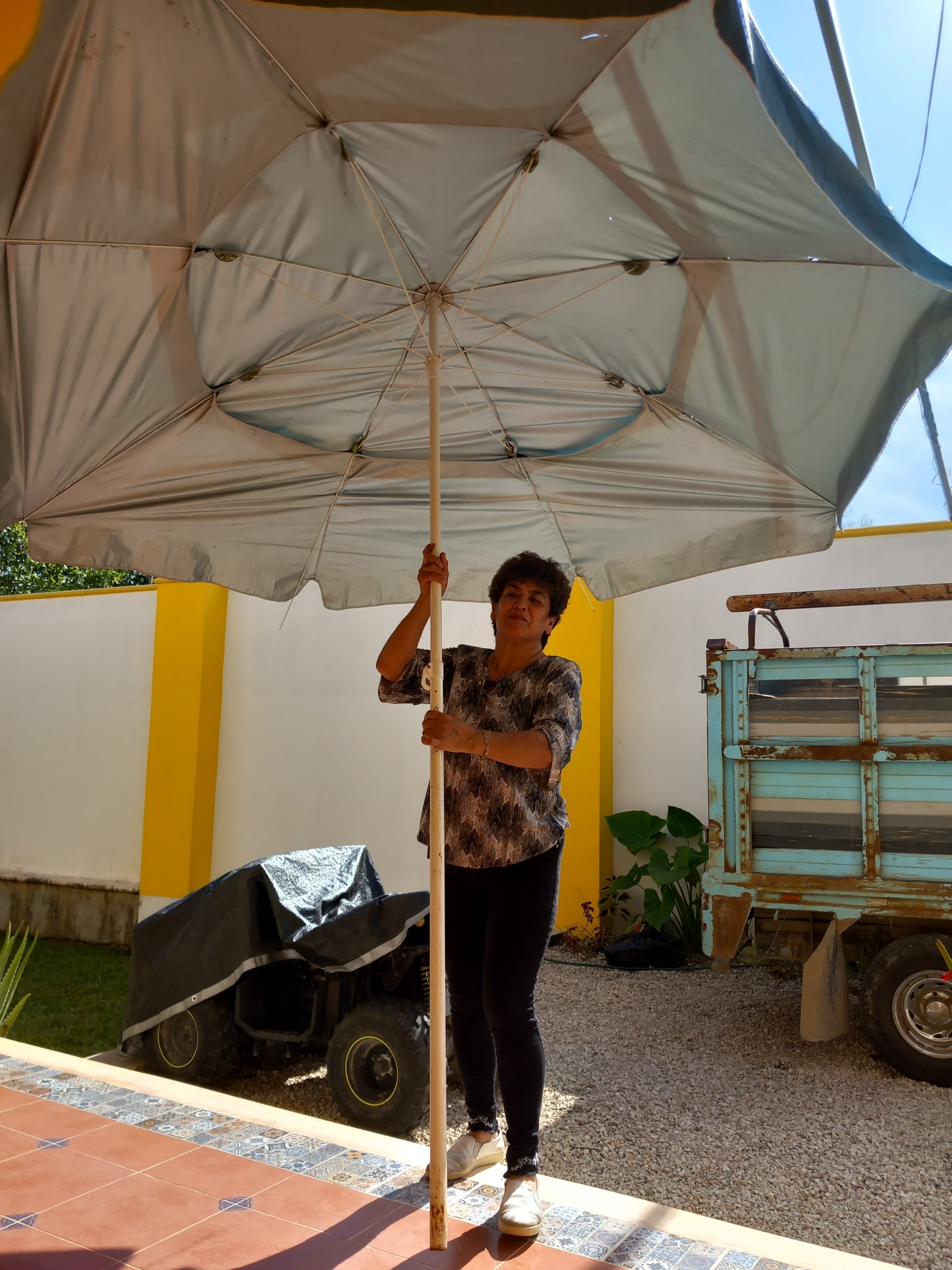
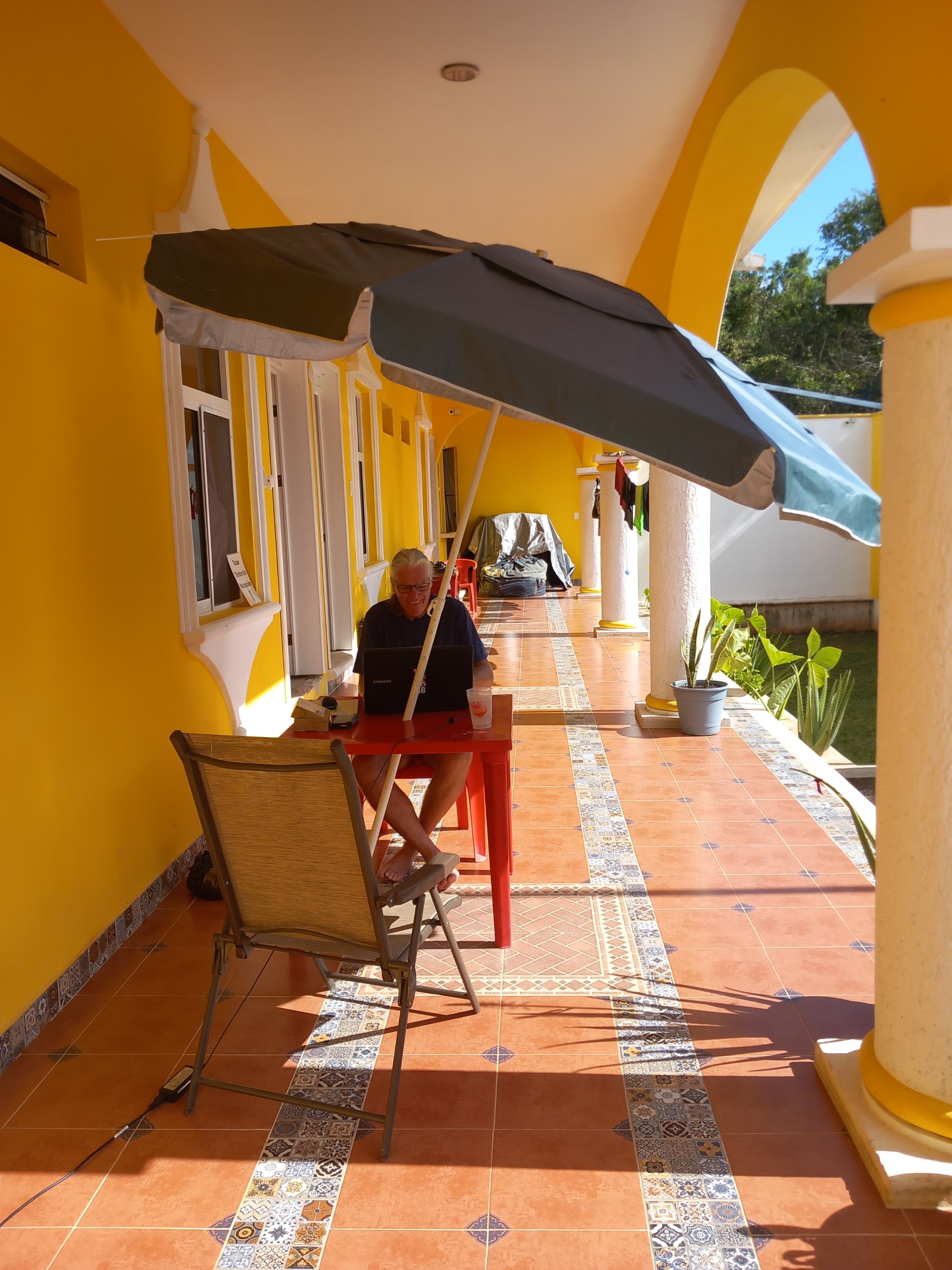
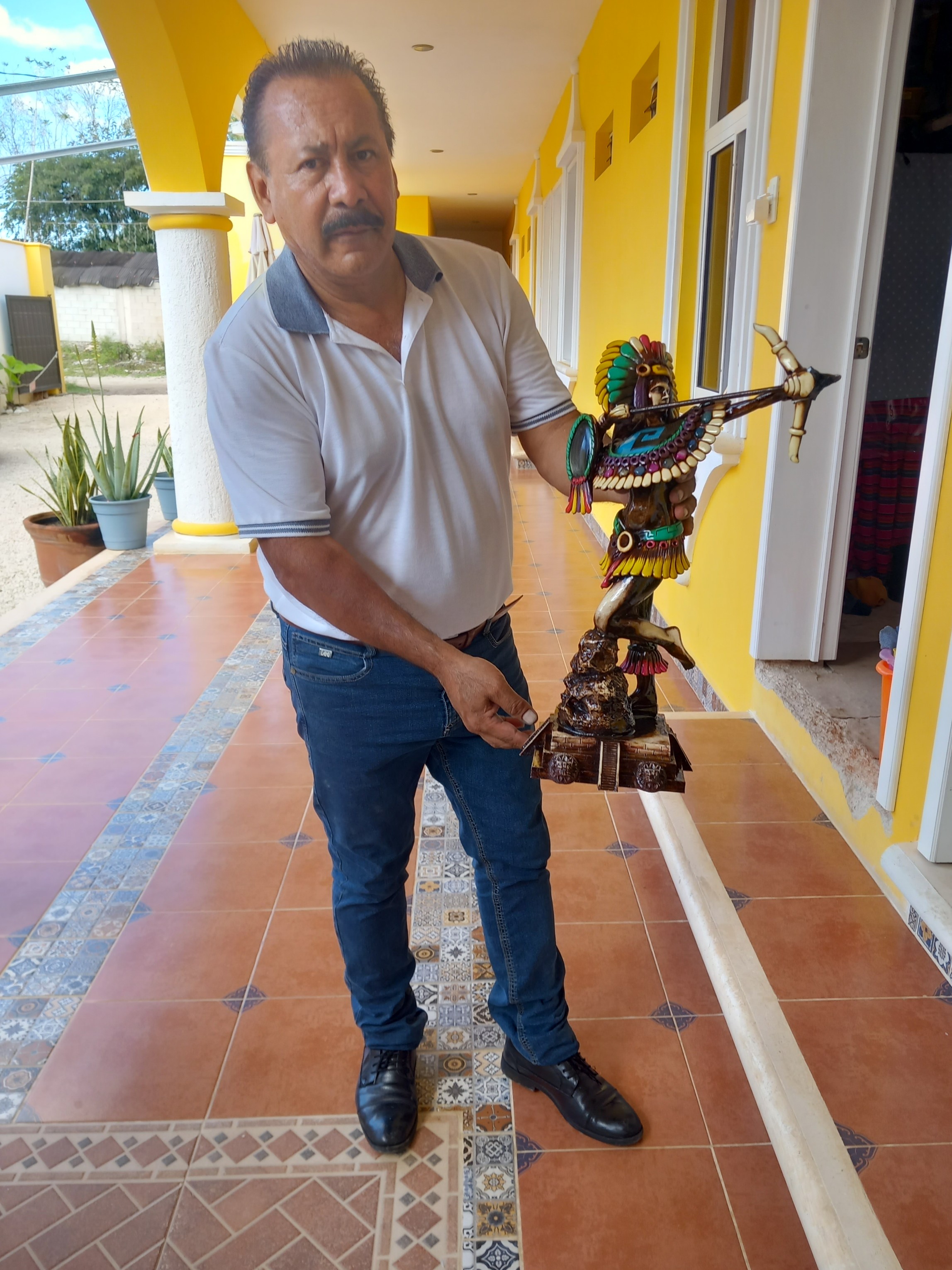
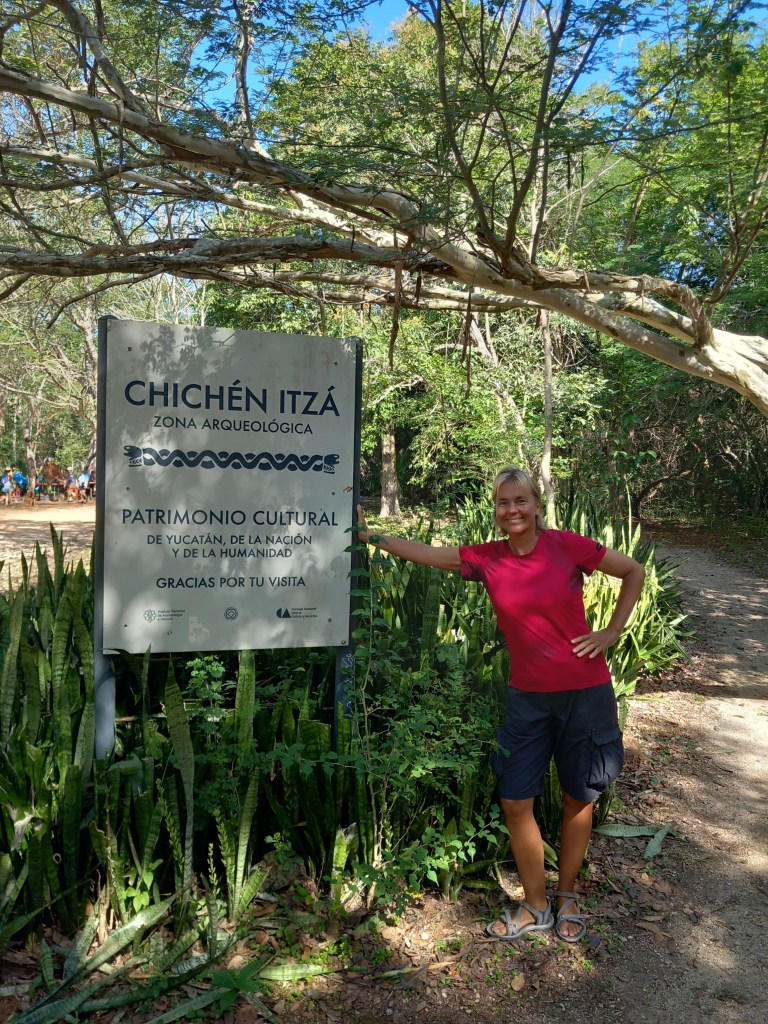
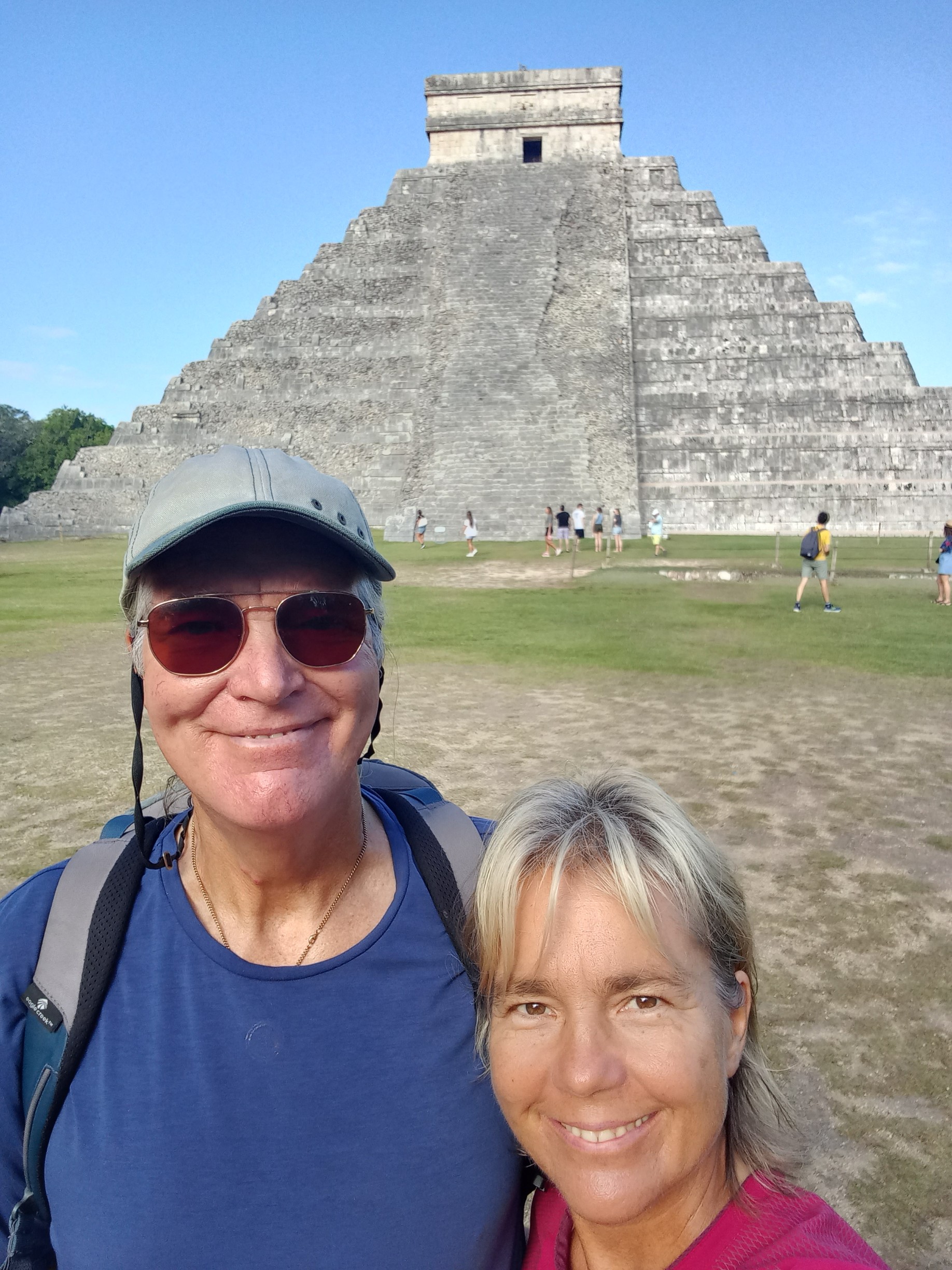
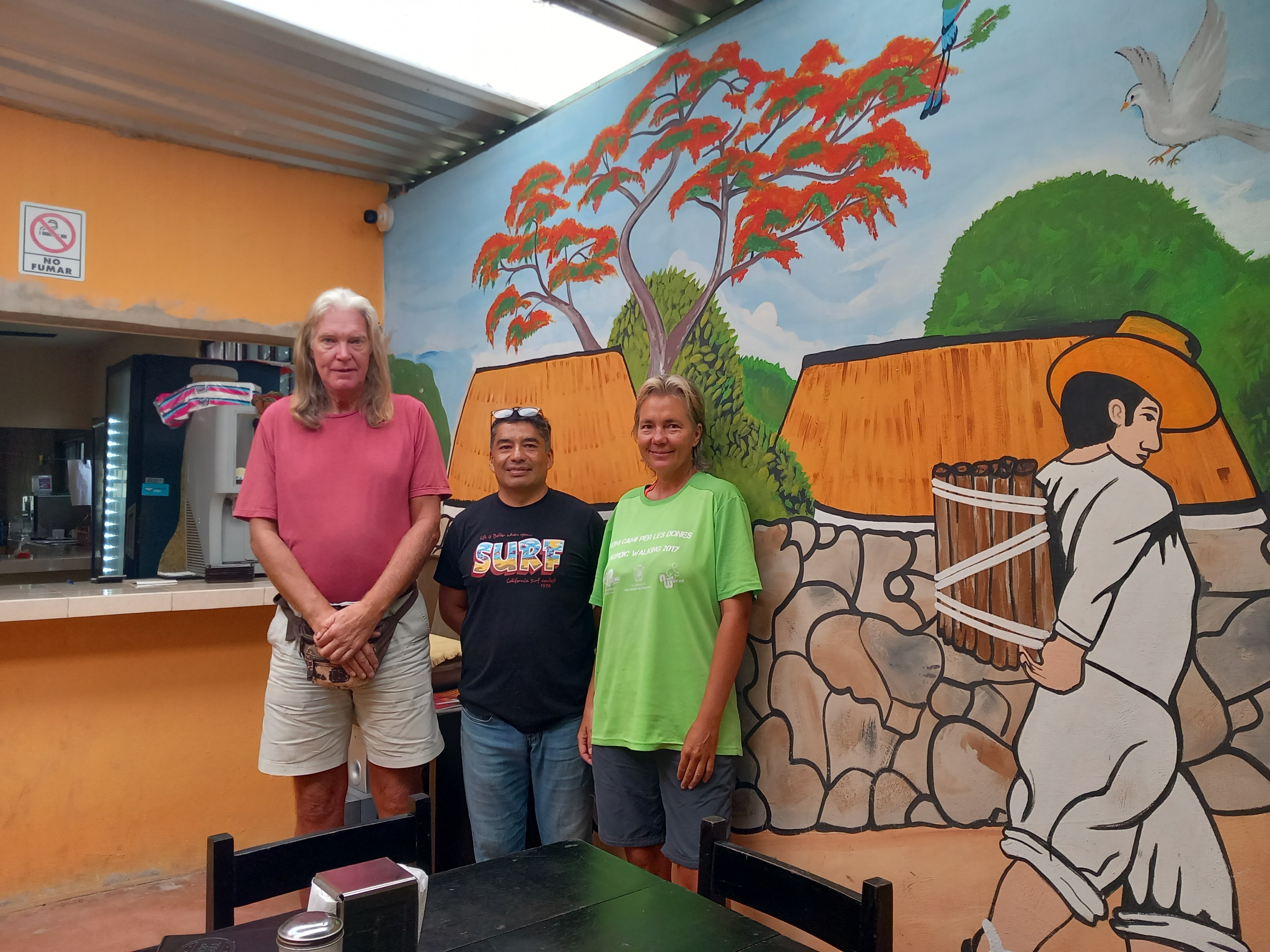
This lady and her husband were the perfect hosts. Without asking she appeared with this umbrella to provide shade as the sun had moved around during the time David had taken to take care of his administration duties……………. Our co host with one of his many creations – these are handmade by him and his wife together with running the hotel.We have to be on our best behaviour today mixing with real tourists at a well known site – the LP guide recommended being there early before the tourist parties arrived by 11am. We go through the turnstiles around 8 am.
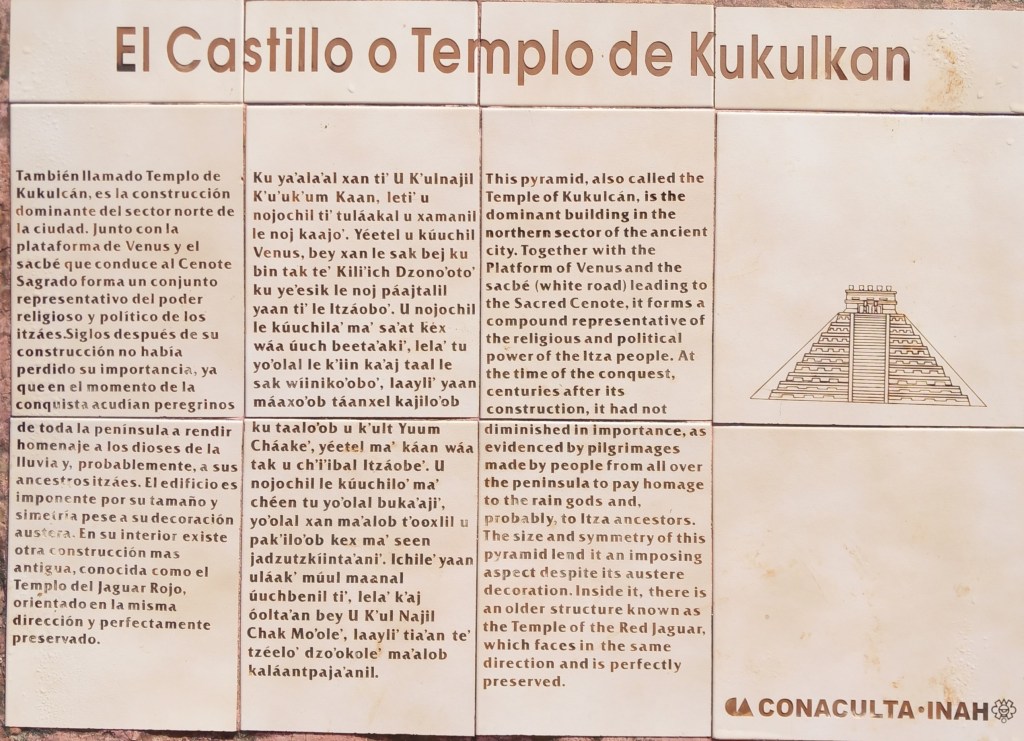
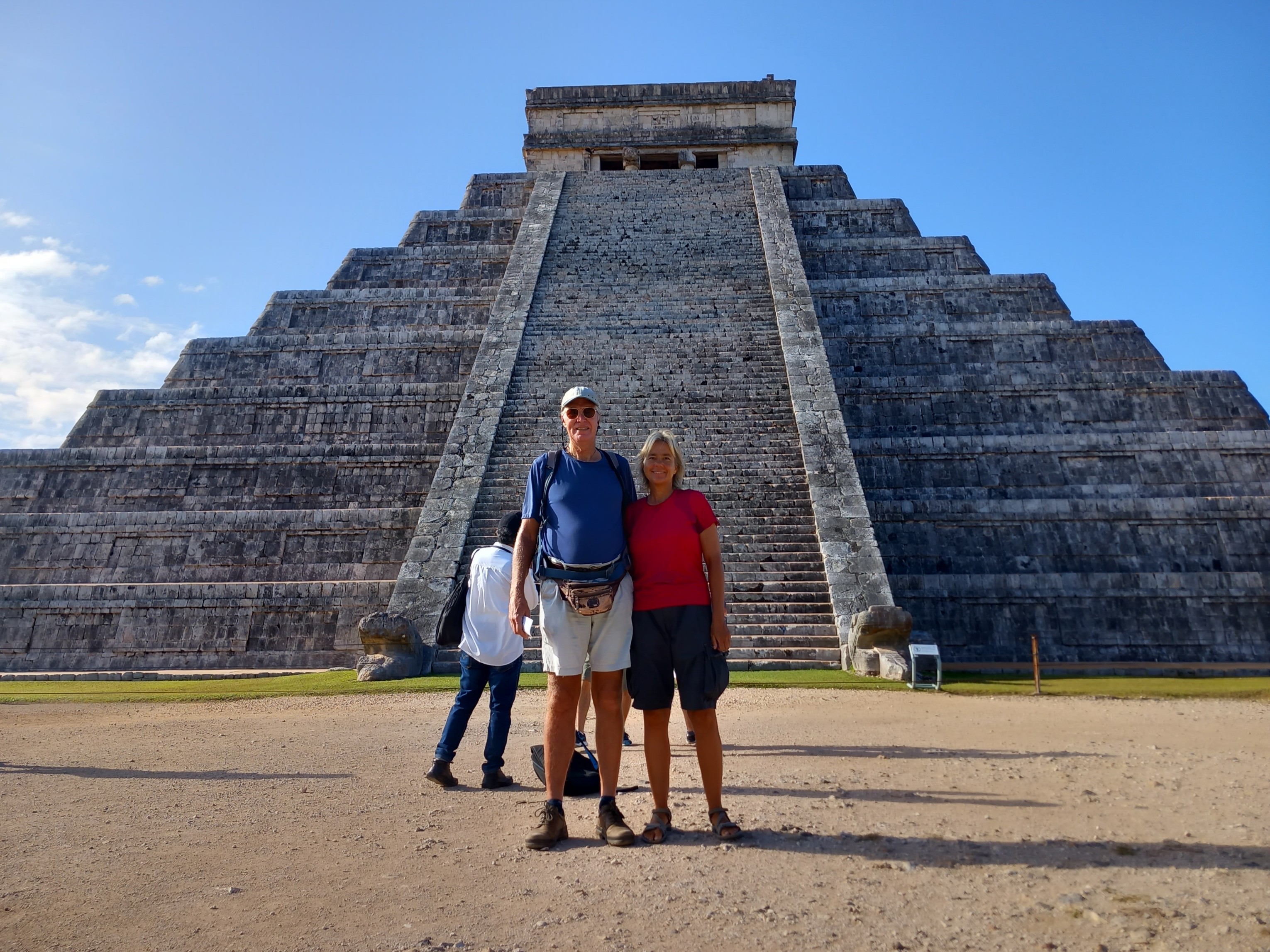
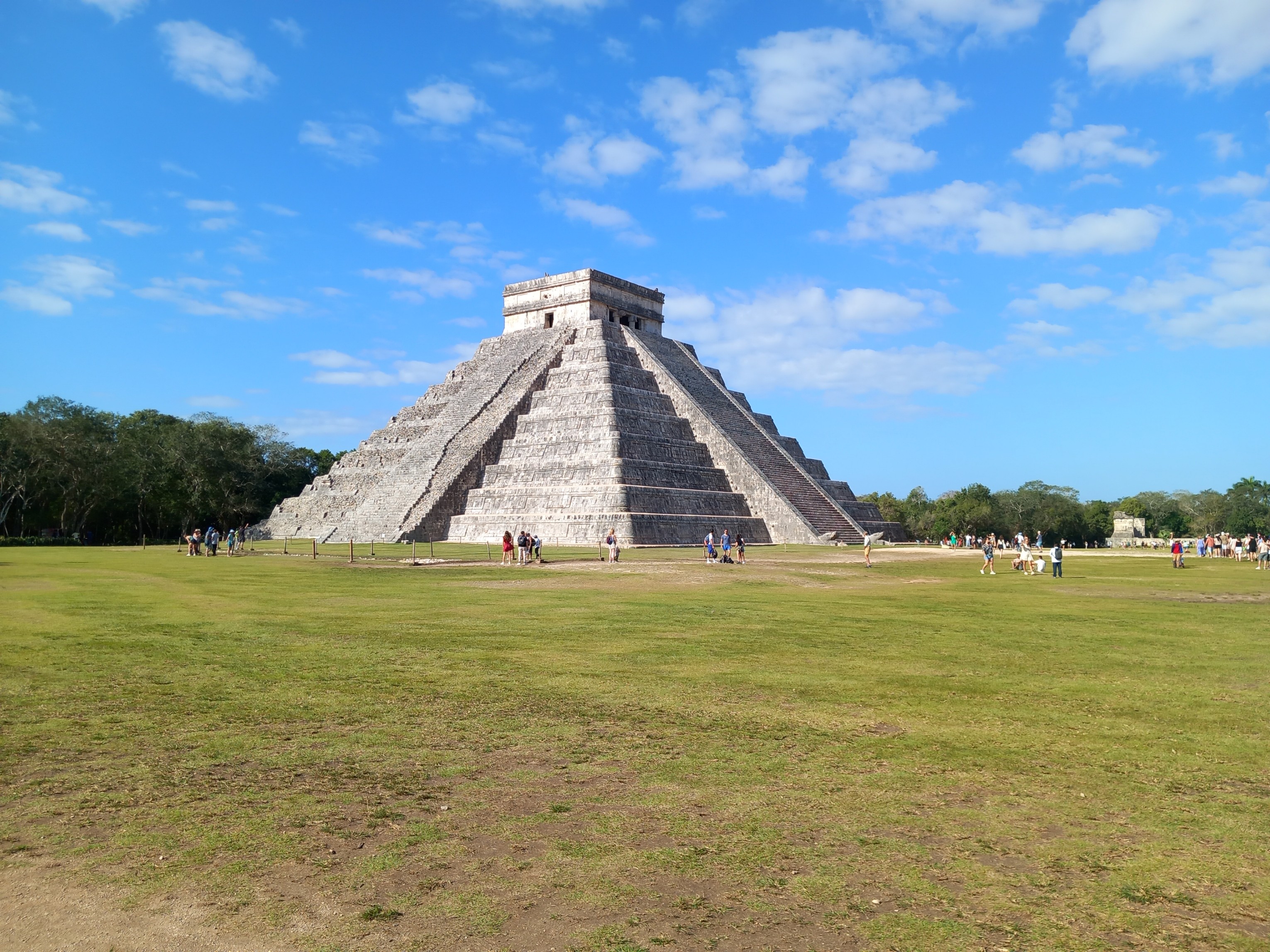
Ideally we would have been able to climb this and taken views of the surrounding countryside as well as the monuments down below. Sadly, in 2006 someone did that and fell to their death and it is now cordoned off for safety reasons. We were surprised they allowed people up there in the first place – the 97 steps are so steep you need to be an elite athlete to complete the climb/descent and with 1.7 million visitors a year the wear and tear on the stonework would be a huge challenge to maintain.
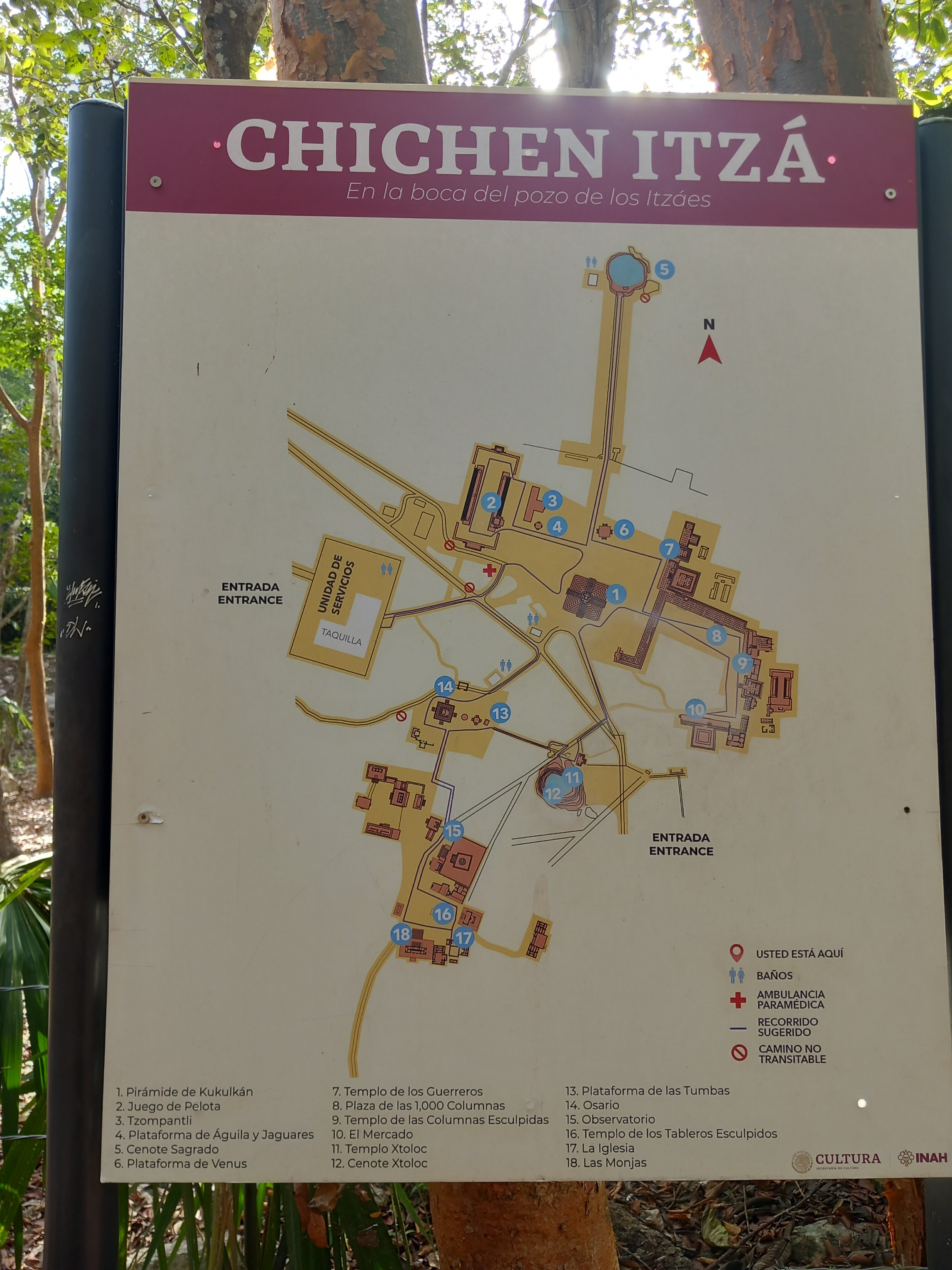
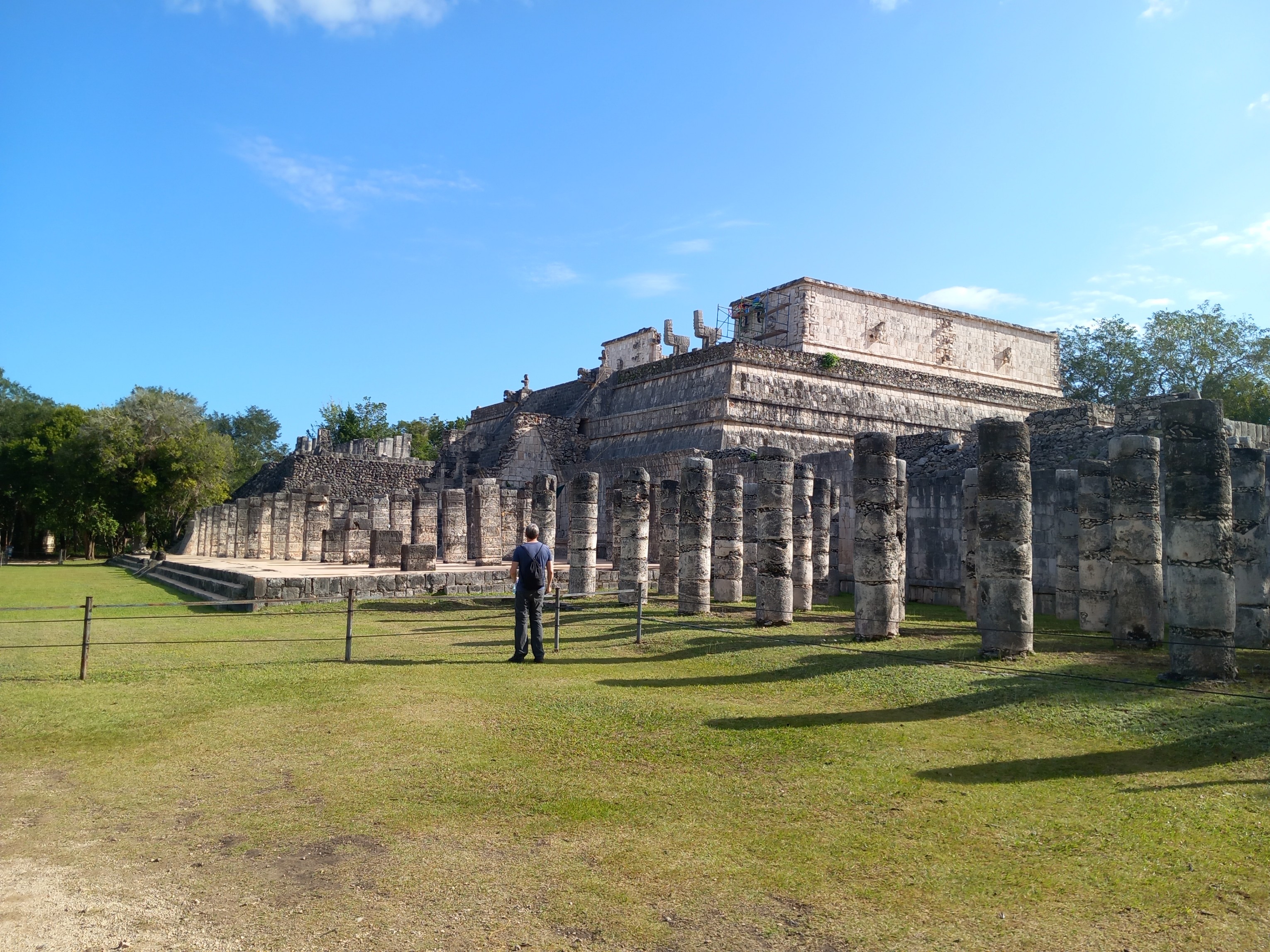
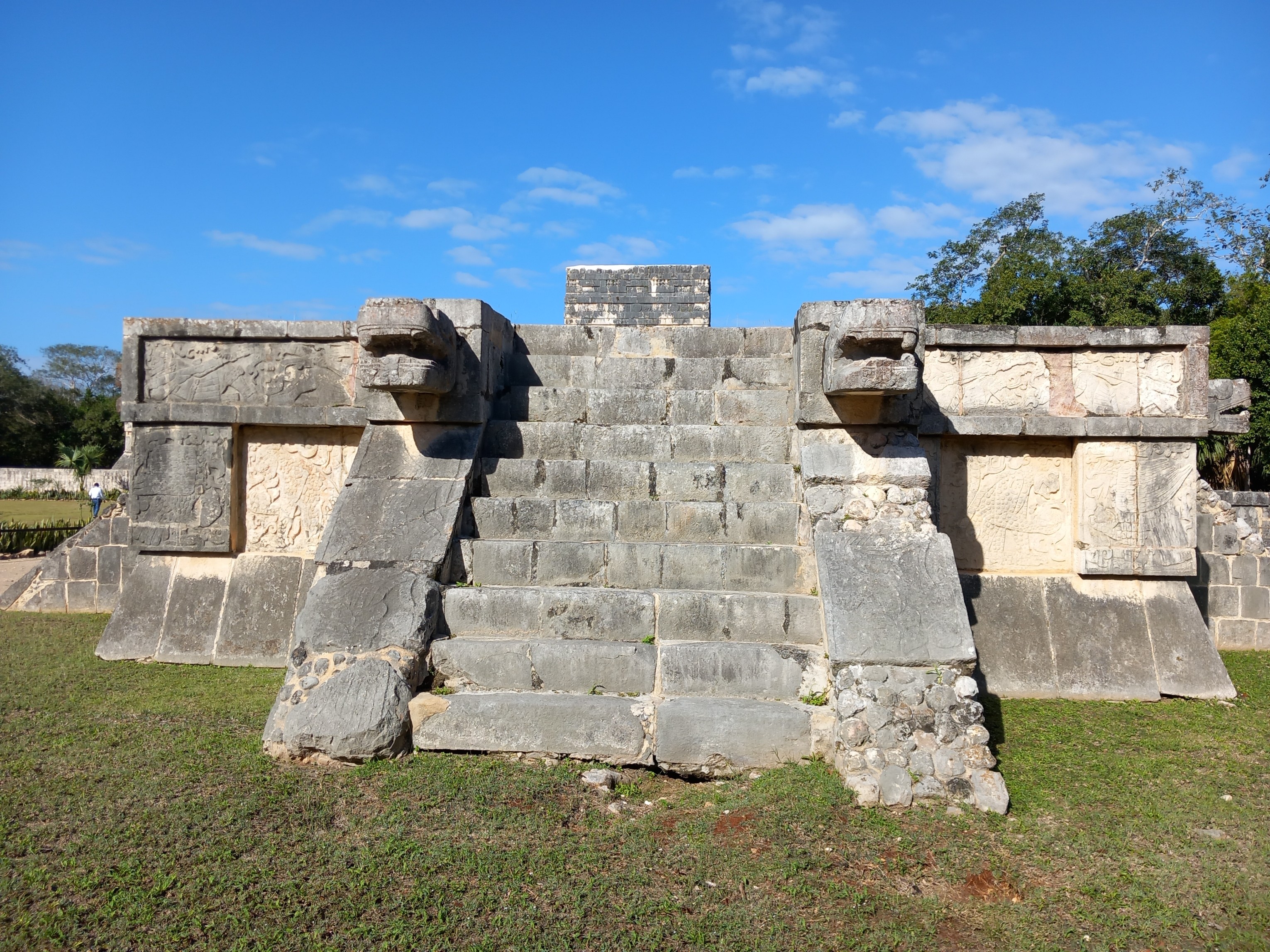
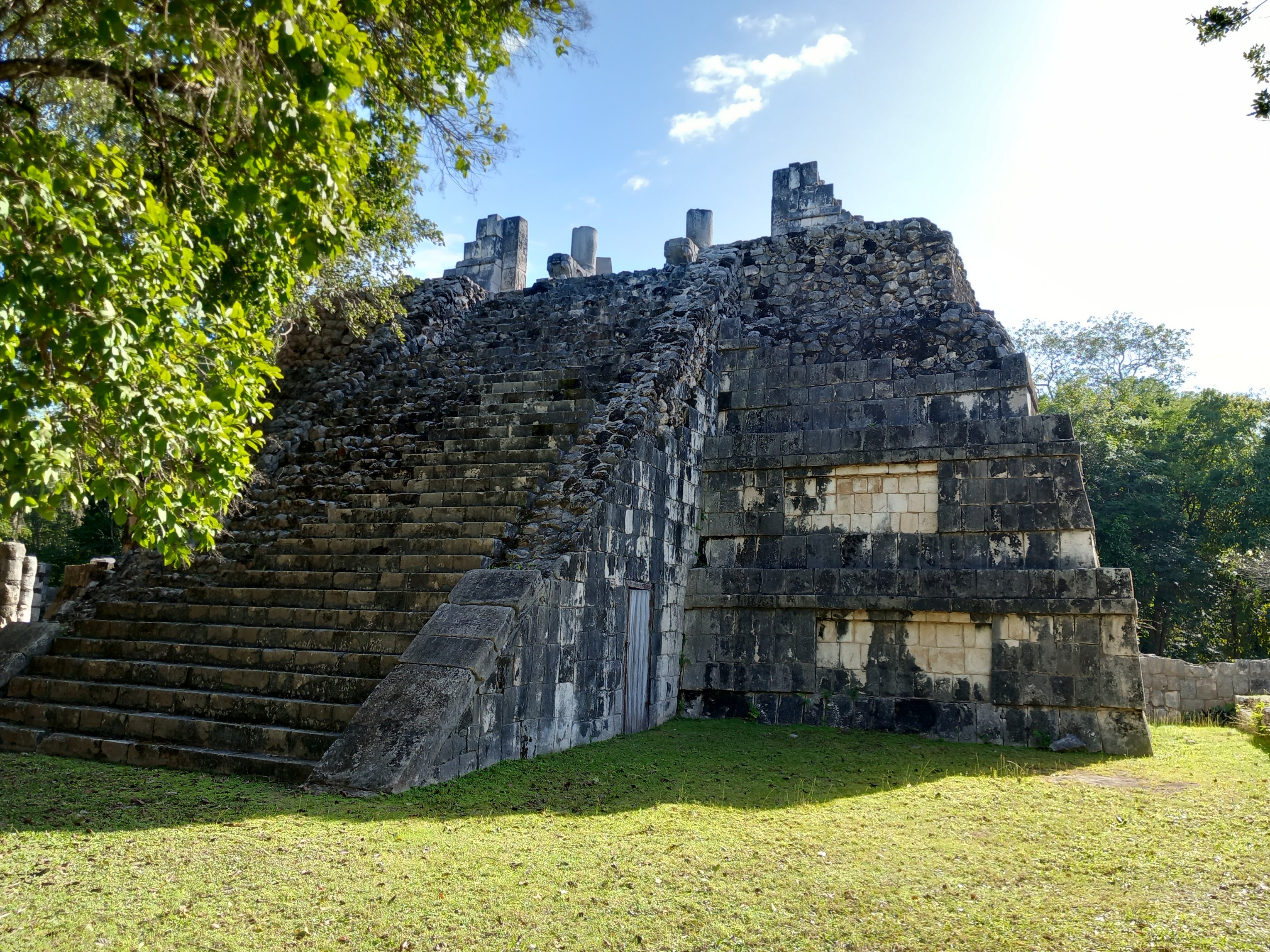
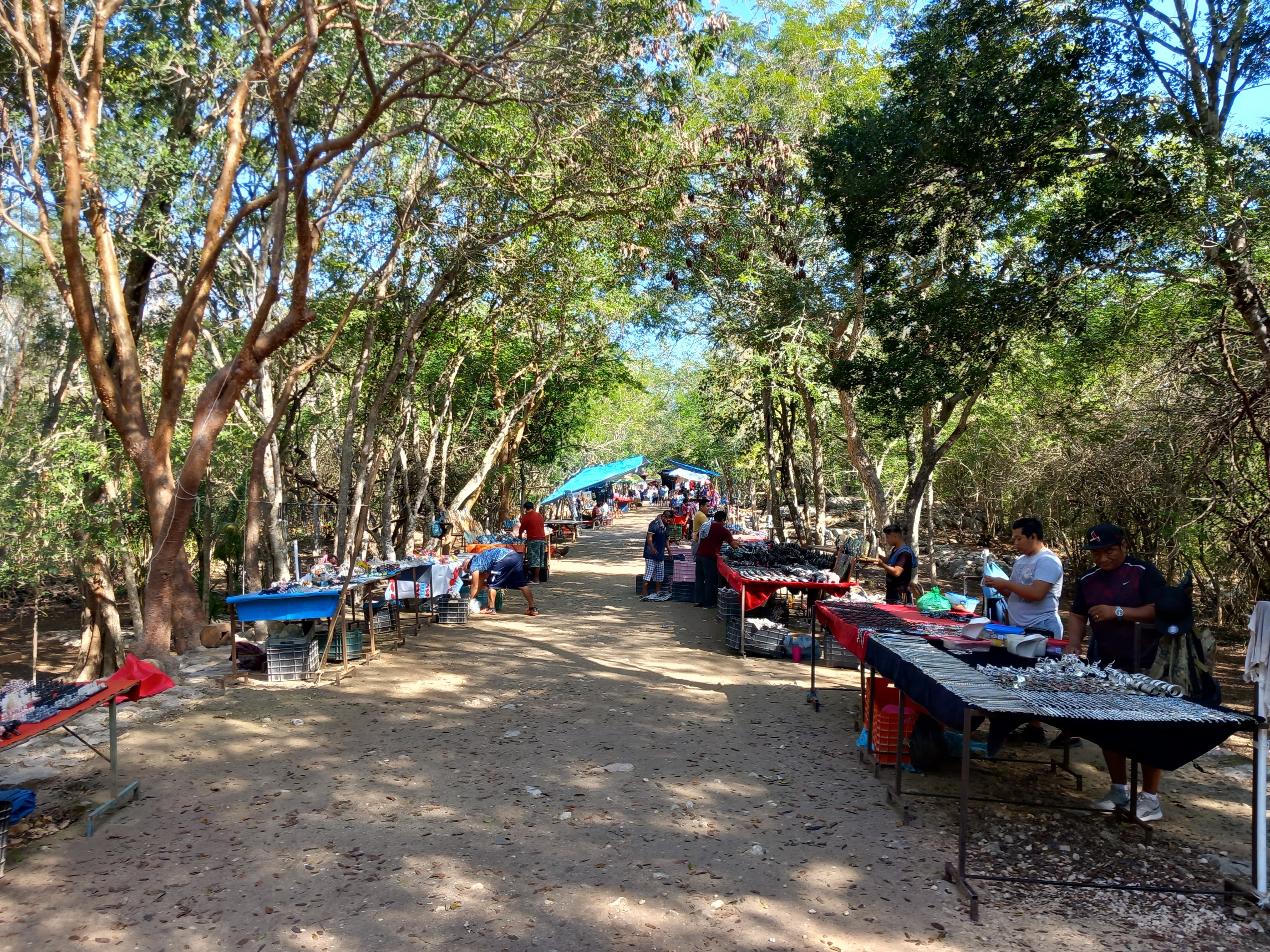
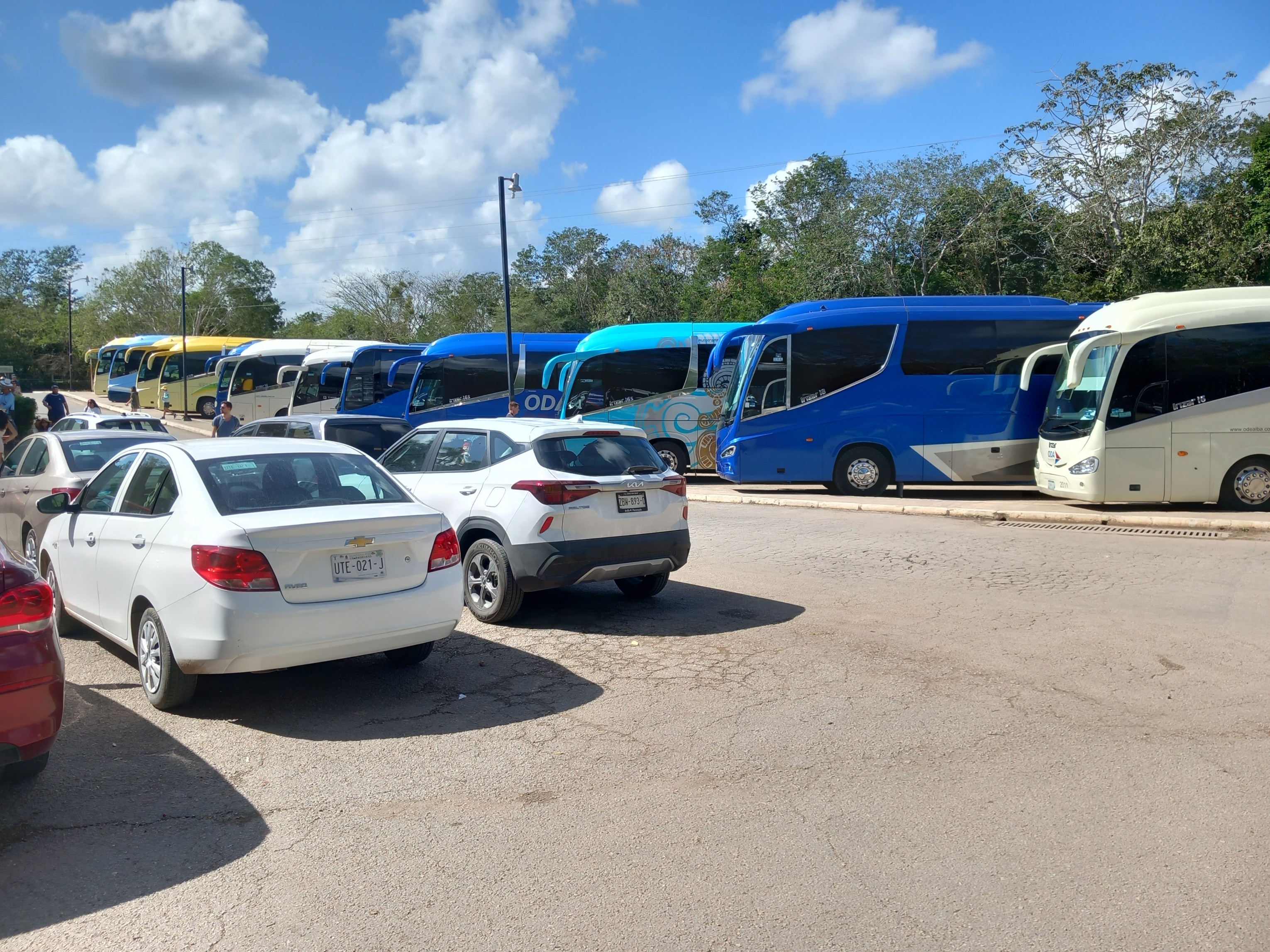
Whichever way you look at El Castillo it is impressive especially when you consider the tools available to them between 900 and 1200 AD.Inevitably this reminded us of our visit to Anghor Wat in Cambodia. Fortunately this site is only 47 hectares and we covered what we wanted to see in under 3 hours – Anghor Wat is 10 square kilometres and we needed a hired Tuk Tuk to transport us around for a day.The stall holders were still setting up as we wandered around; there were dozens of them mostly selling the same types of things. Thankfully they only call out to you and don’t chase you down the road and physically try to propel you back to their stall like some places we could mention (Cuba?)Although the stall holders were relatively well behaved we were on full alert after our experiences at dinner and breakfast. At dinner we were expecting 60 pesos in change and only received 40; at breakfast we were anticipating 250 pesos in change and only received 50 (this is not a typing error). On both occasions we promptly challenged our server and neither apologised, showed any contrition or interest that they made a mistake. A lesson learned for the remainder of this trip. When we arrived there were three coaches in the car park; when we left there were 27 and we understand that’s a normal day for them.
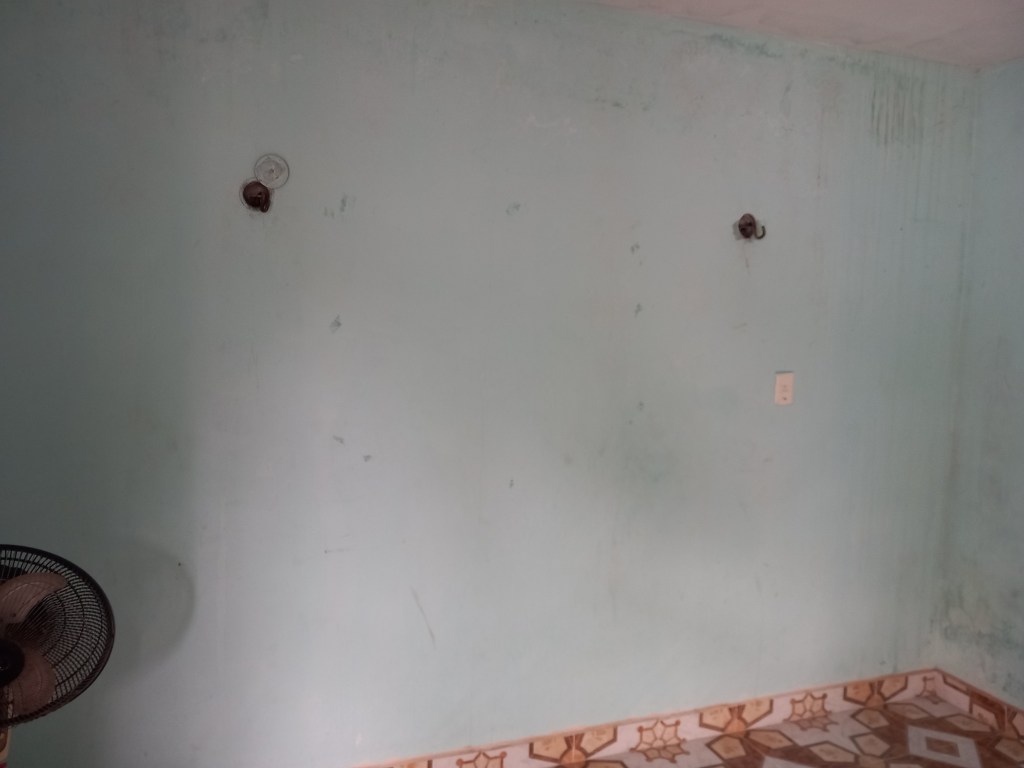
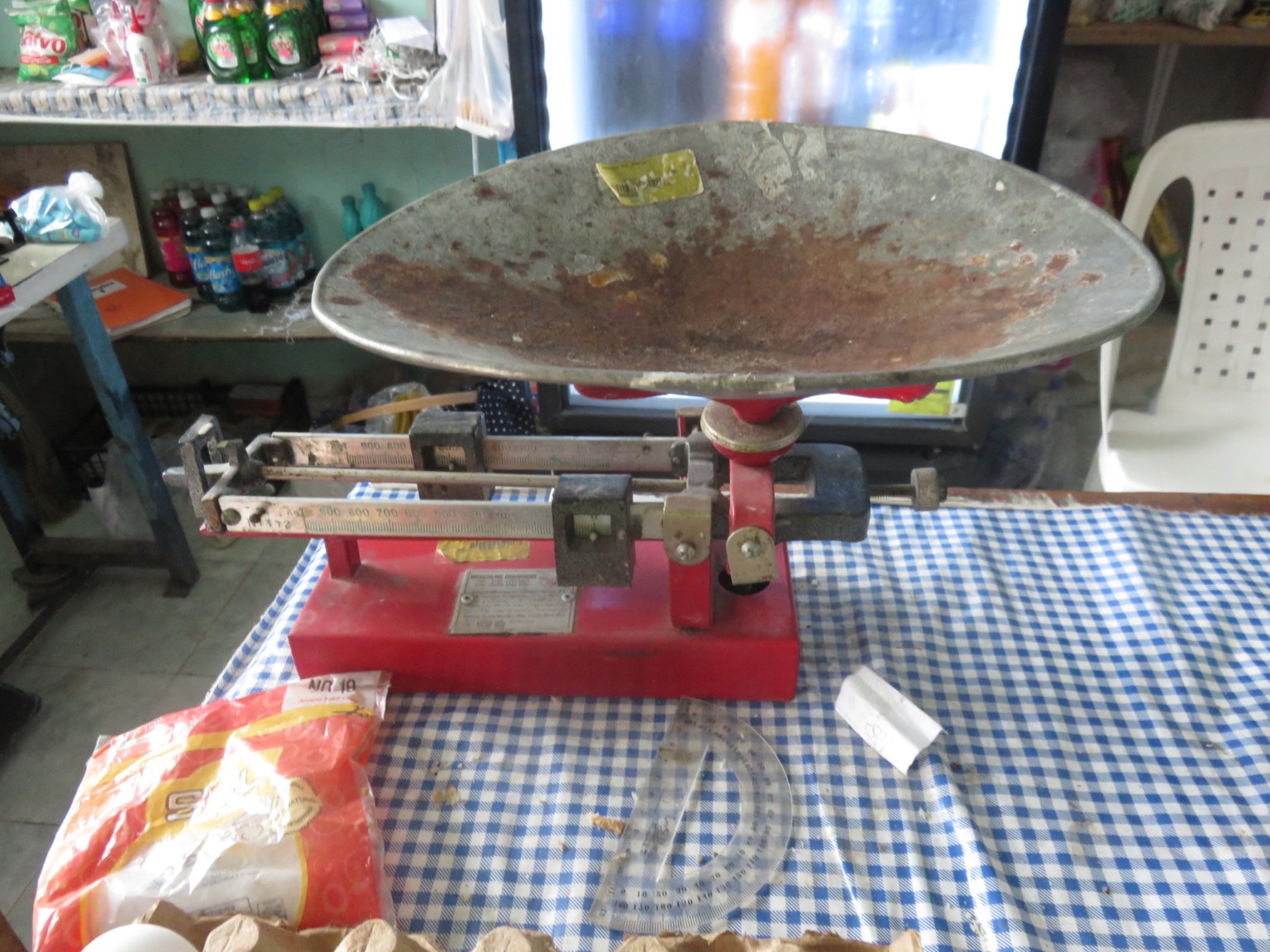
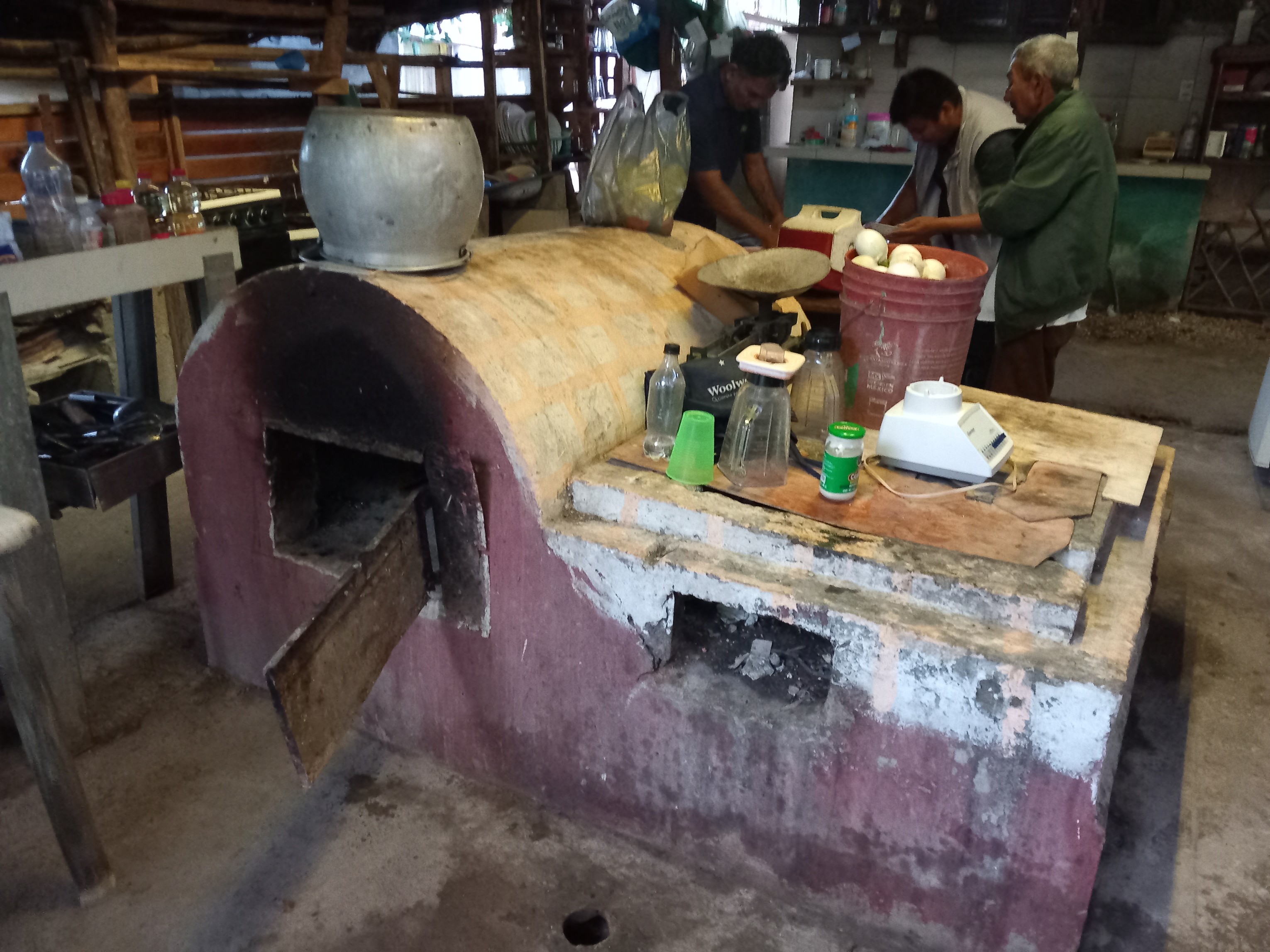
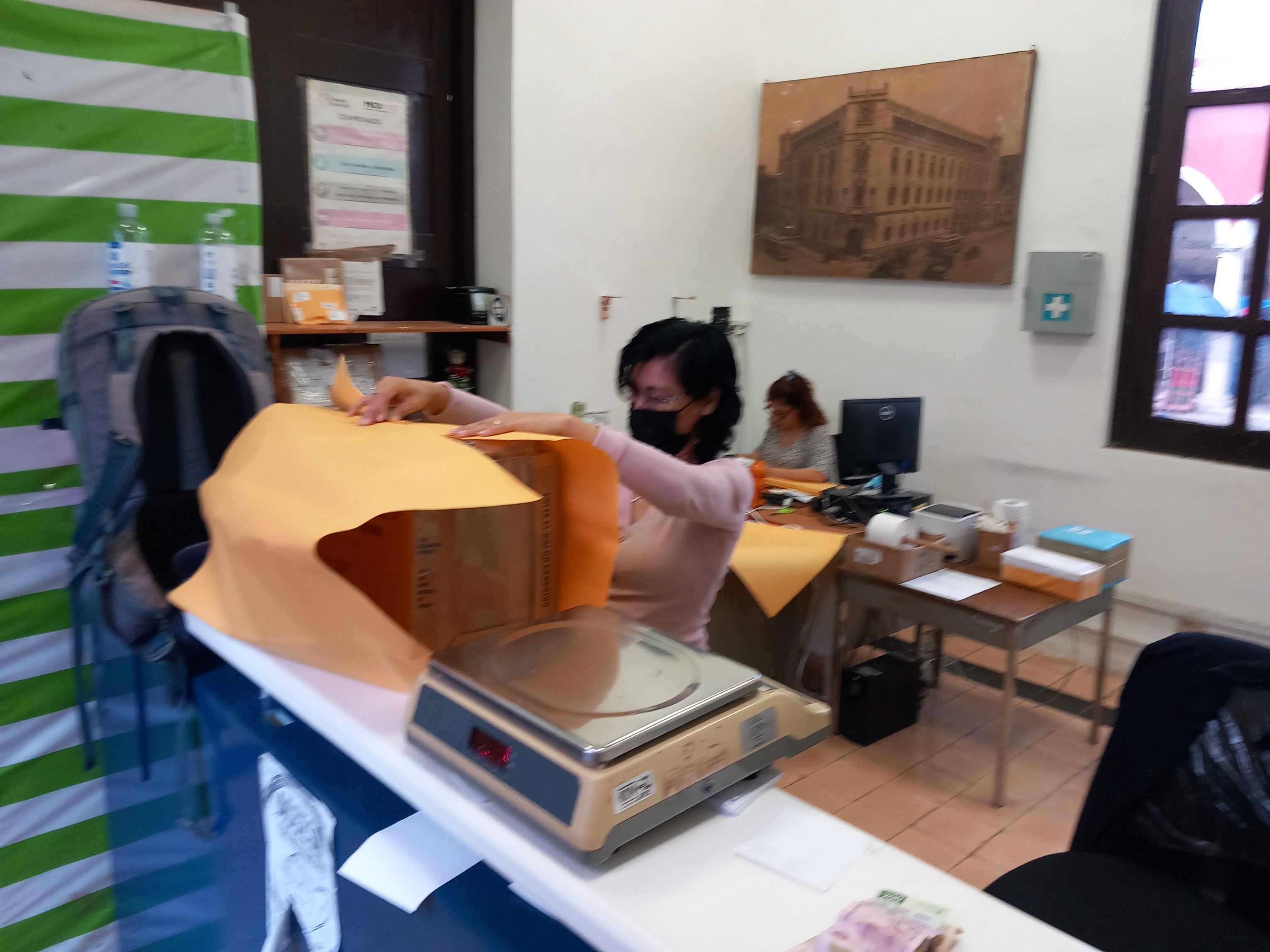
The hooks are for those who prefer to use hammocks – we choose sown-in ground sheets with mosquito nets.An antique weighing scale still in use.
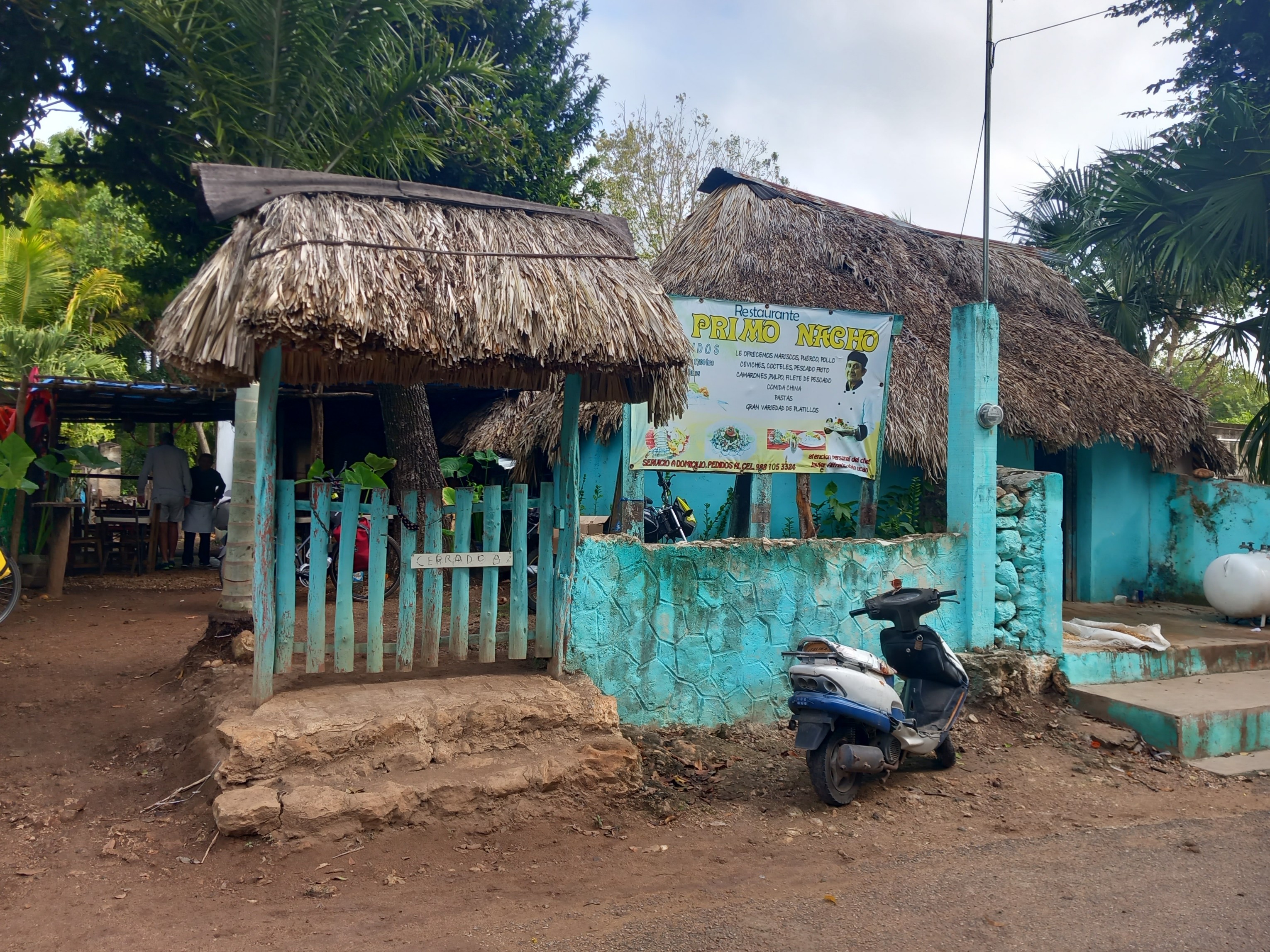
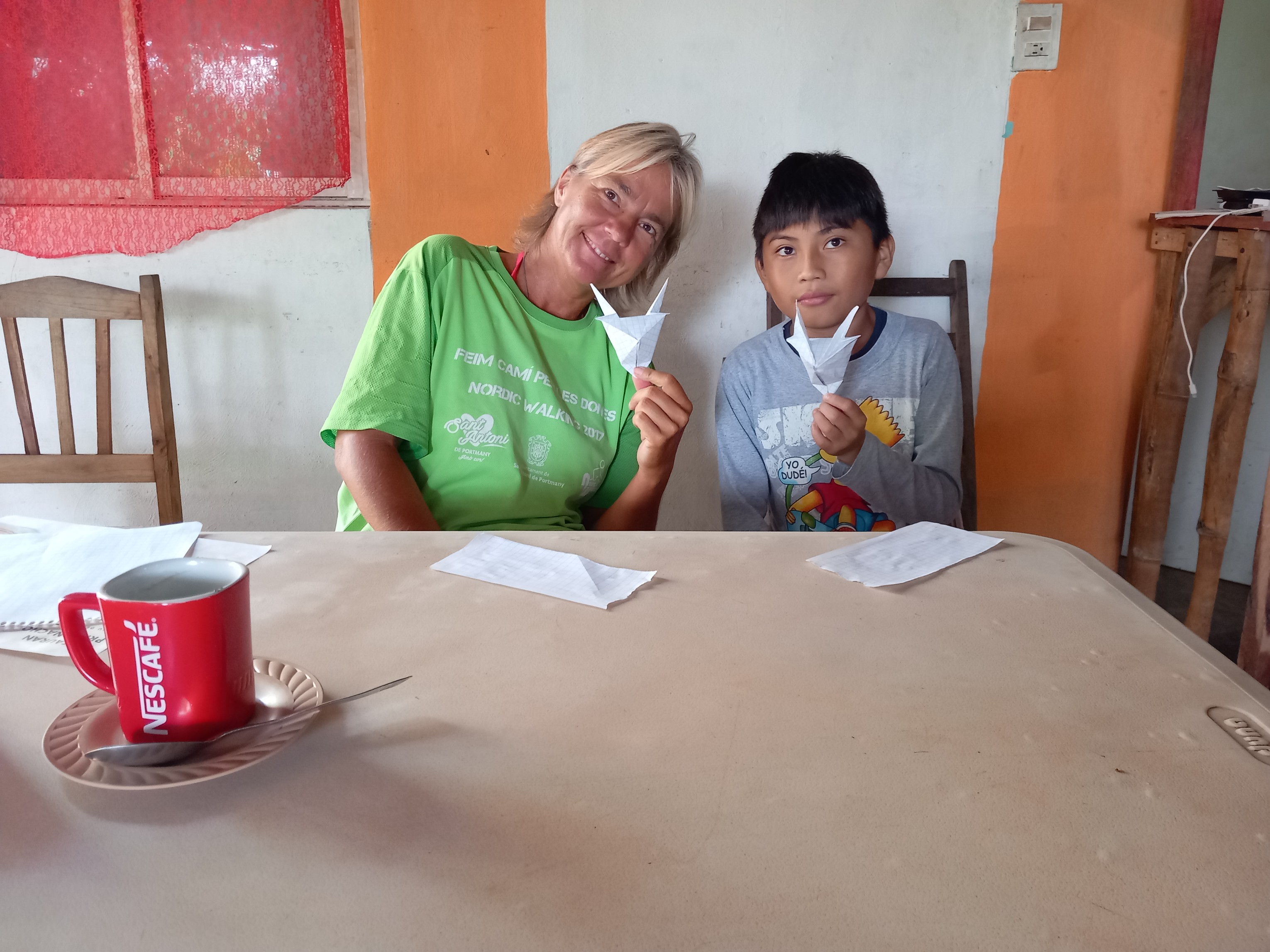
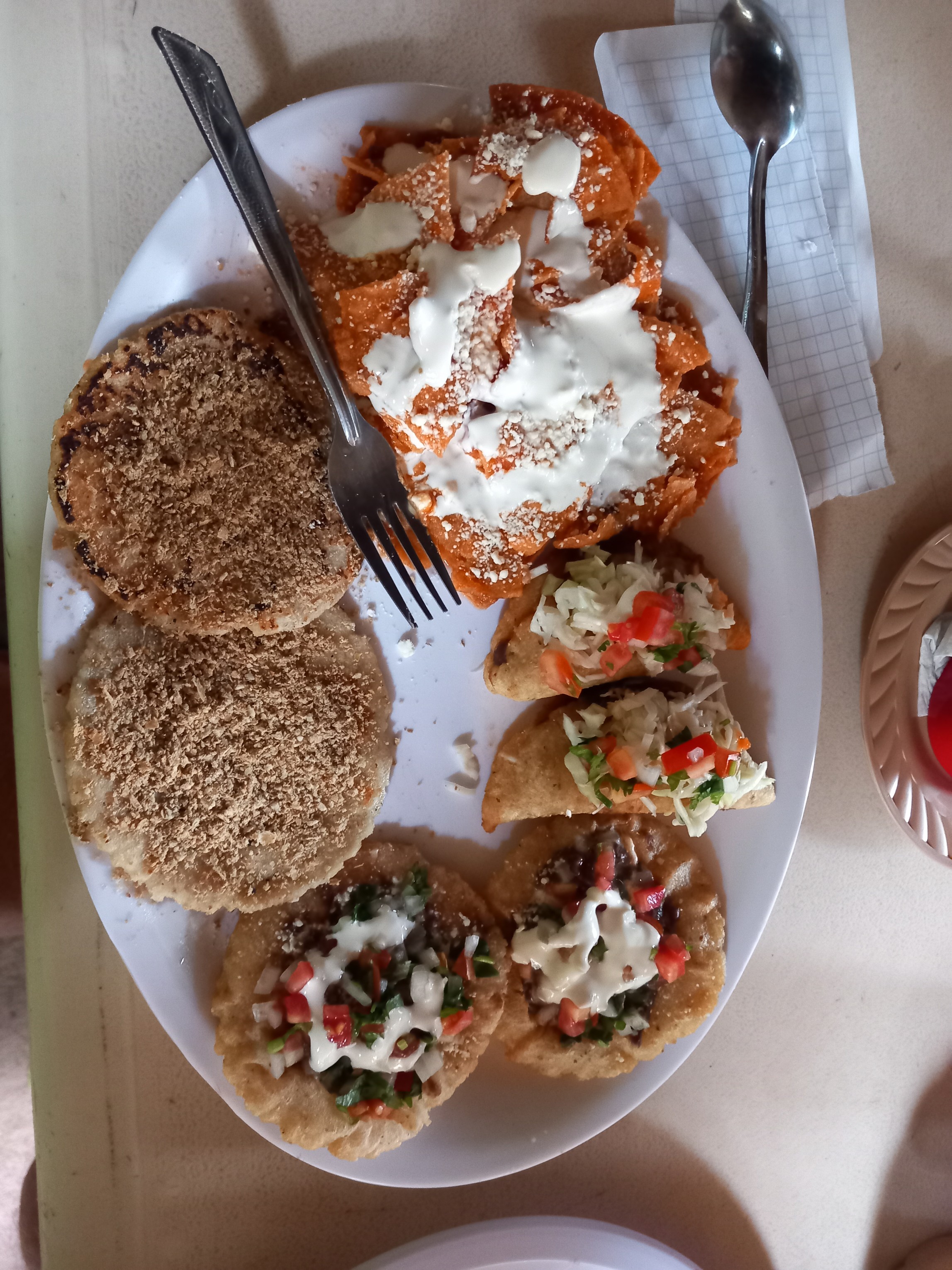
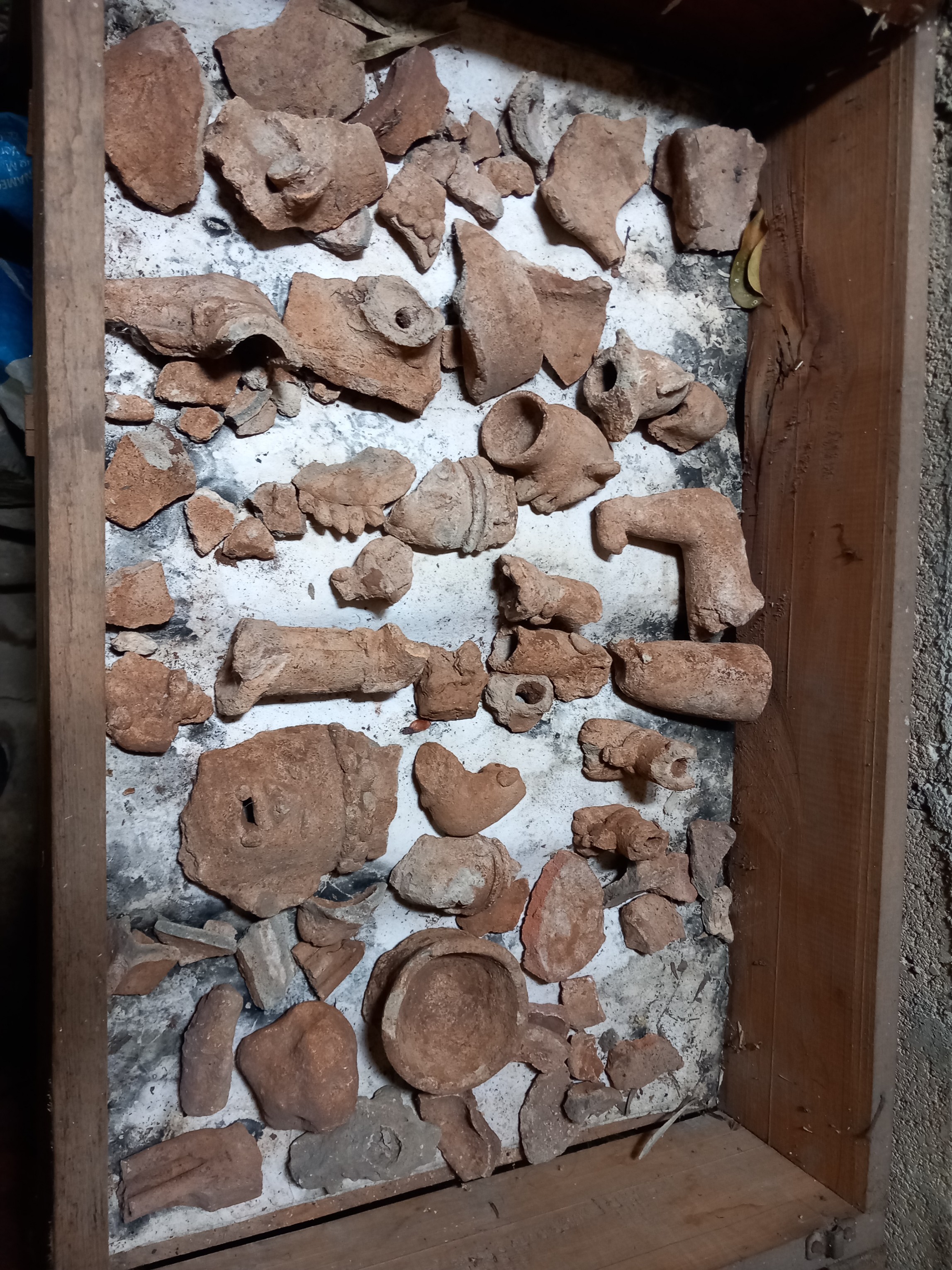
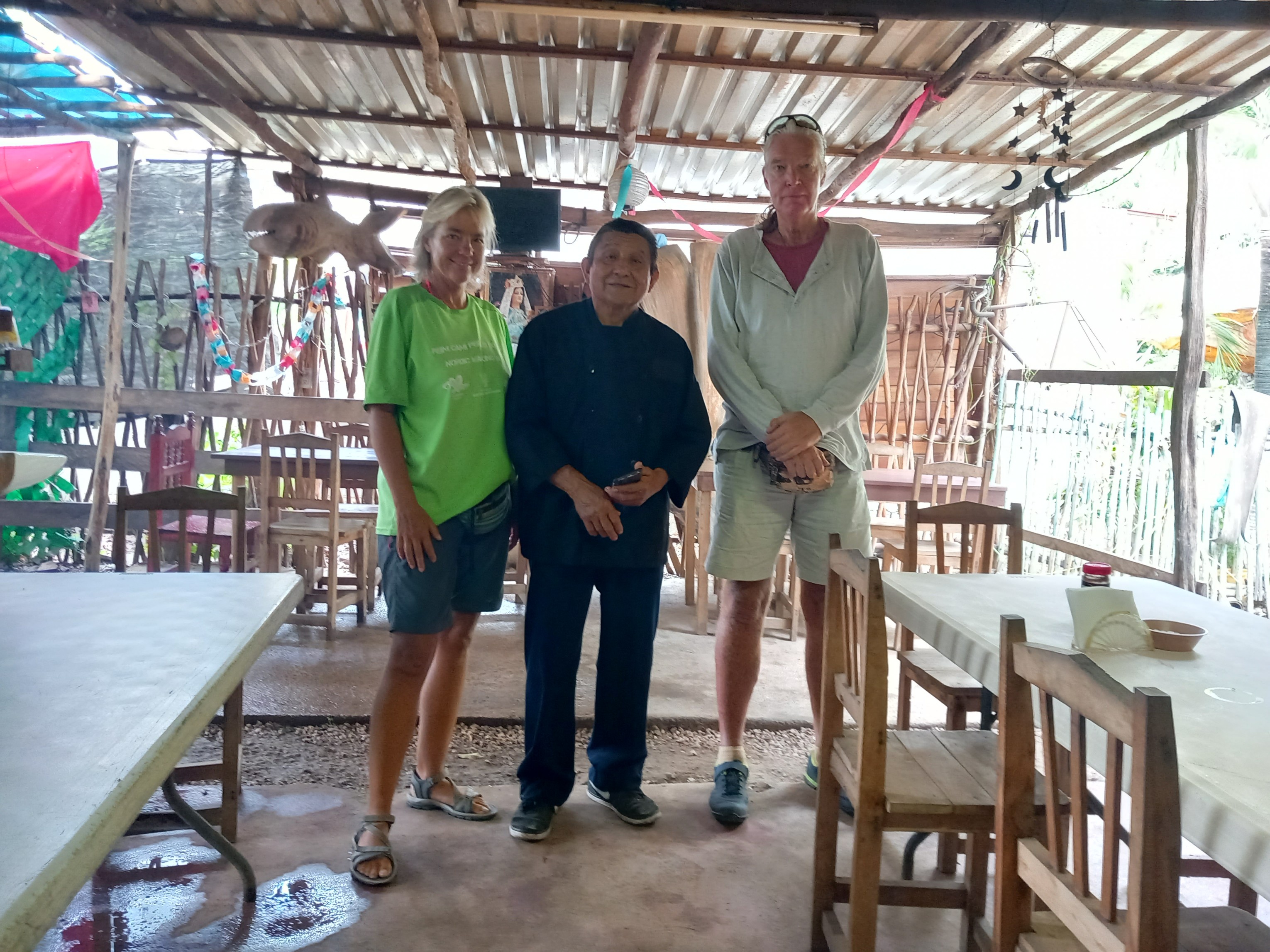
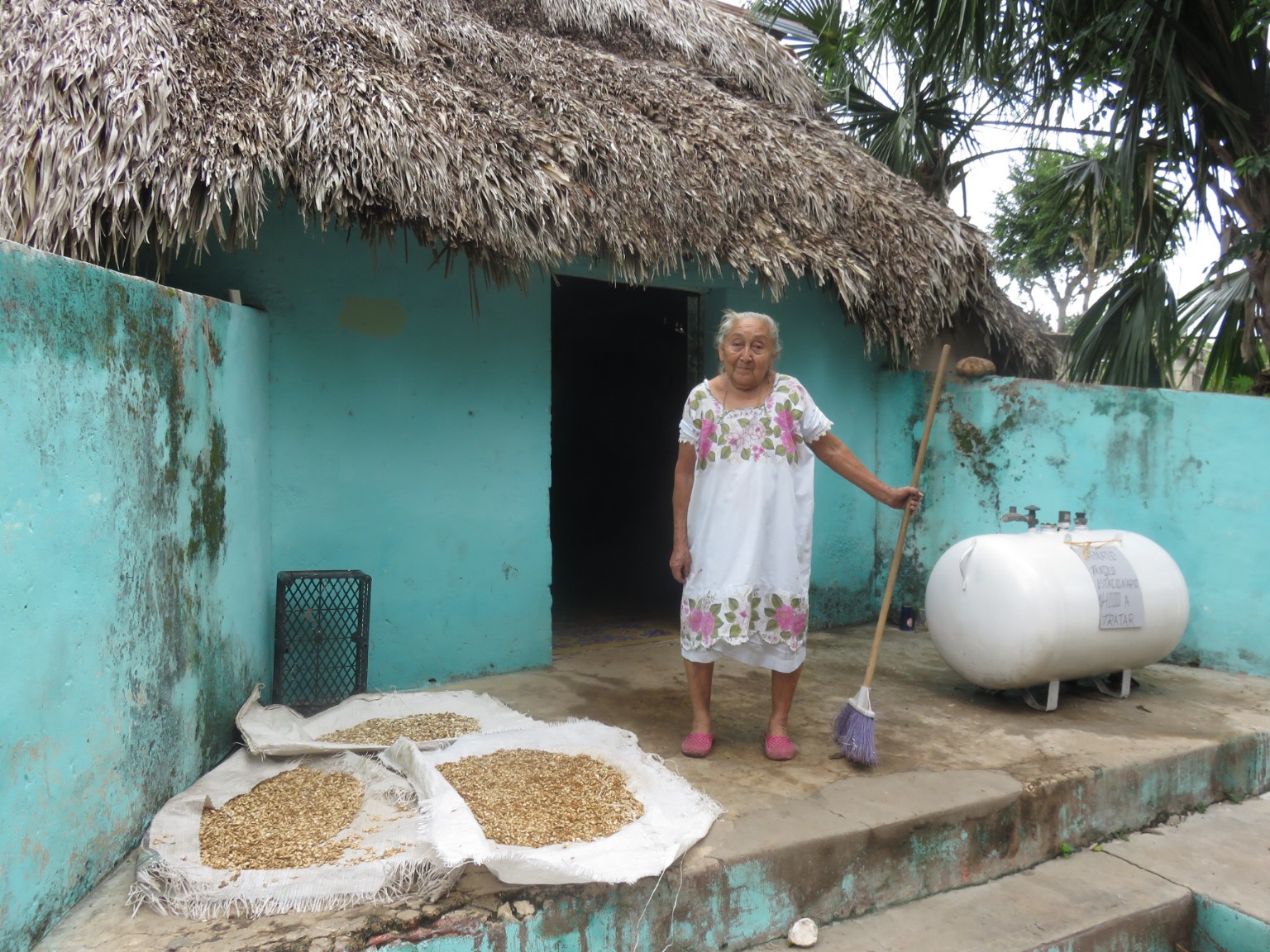
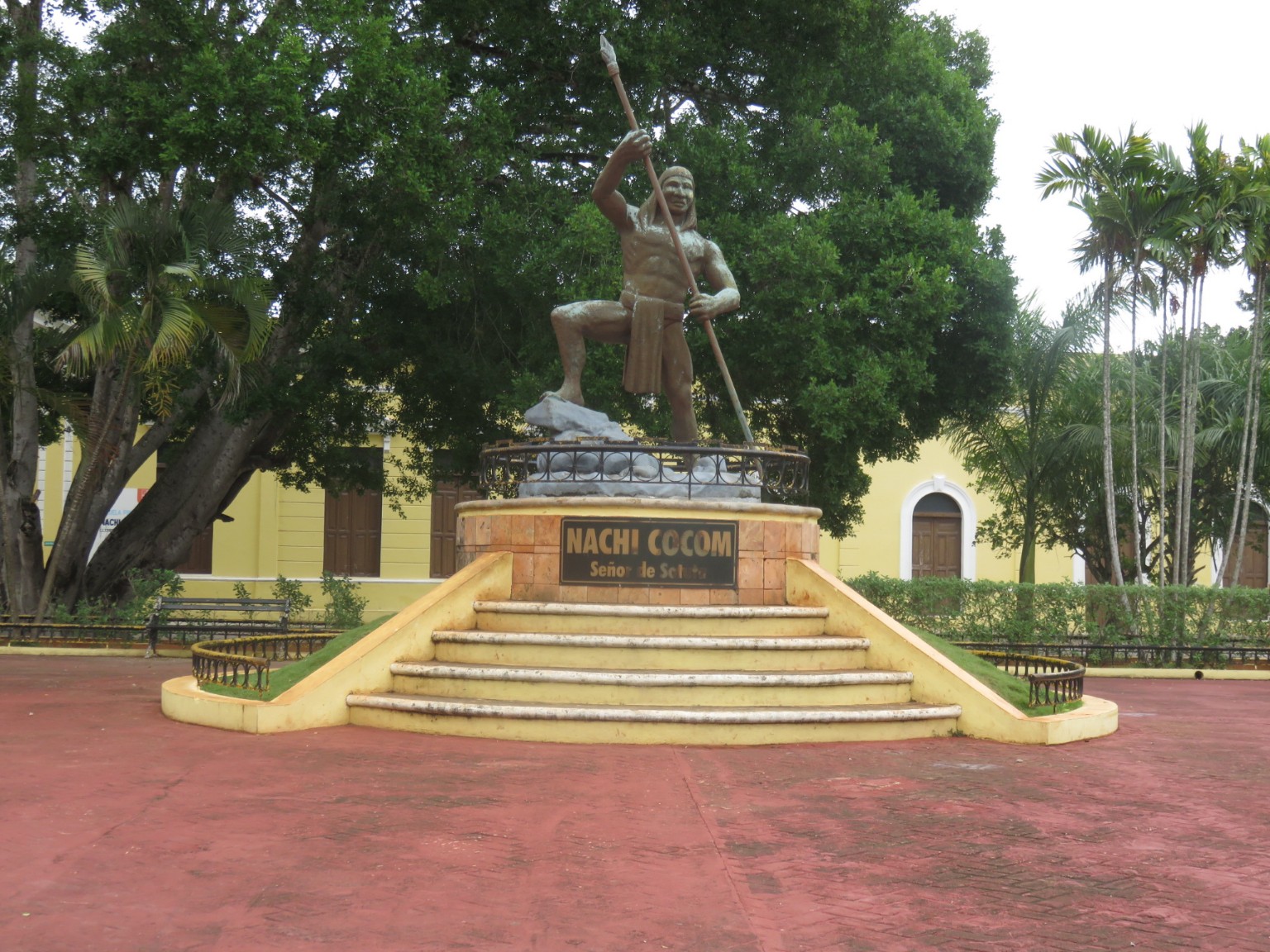
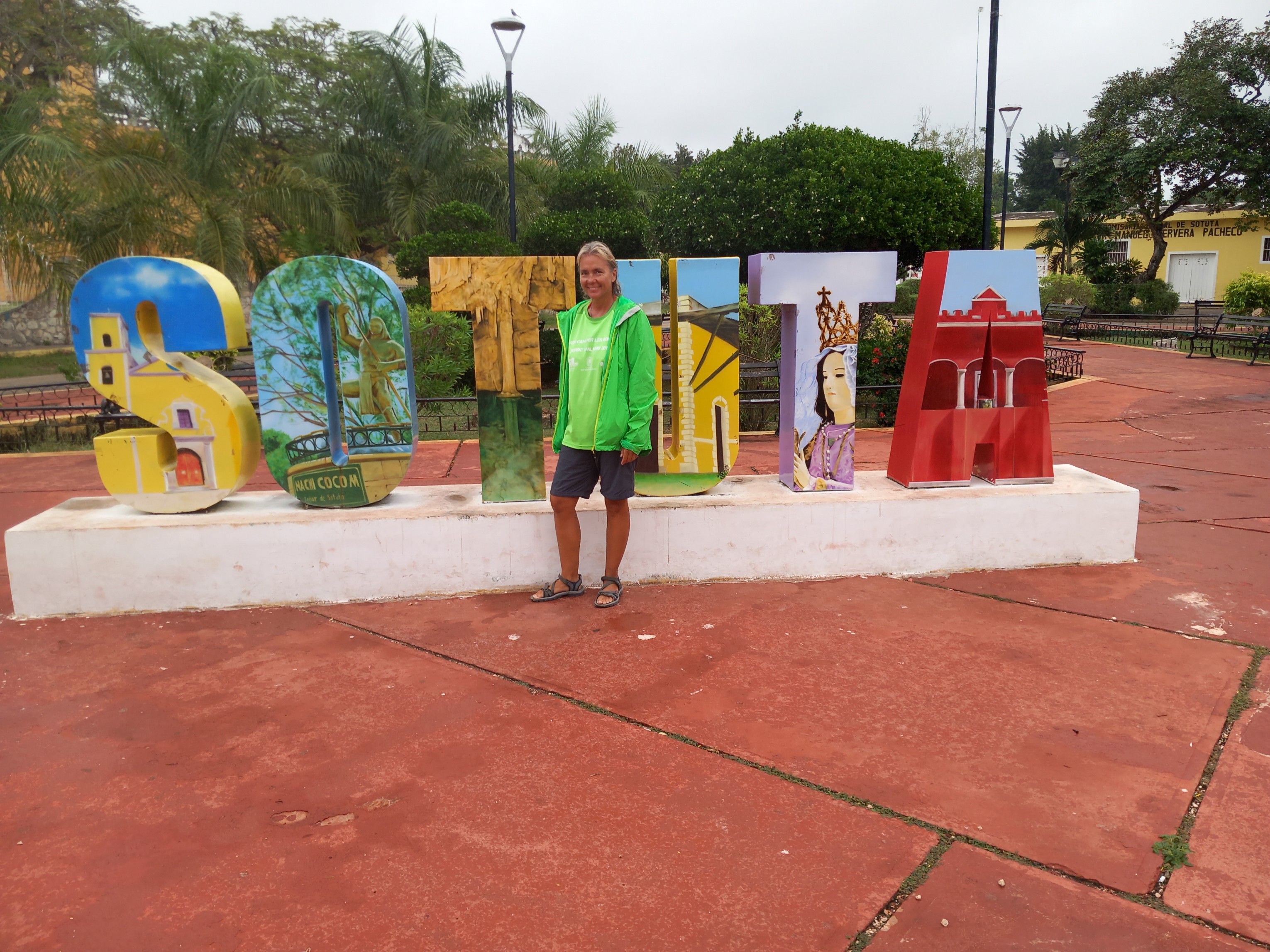
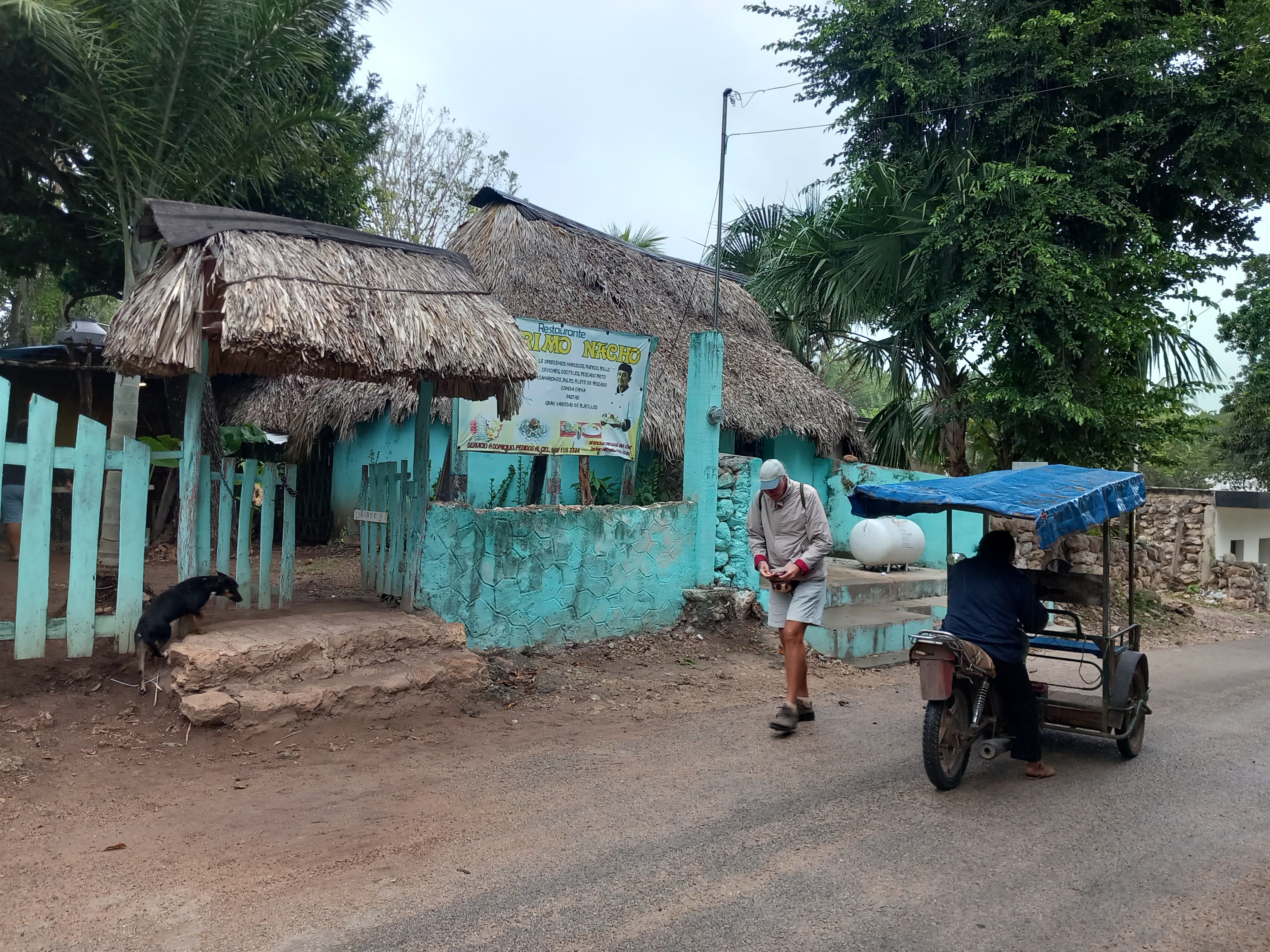
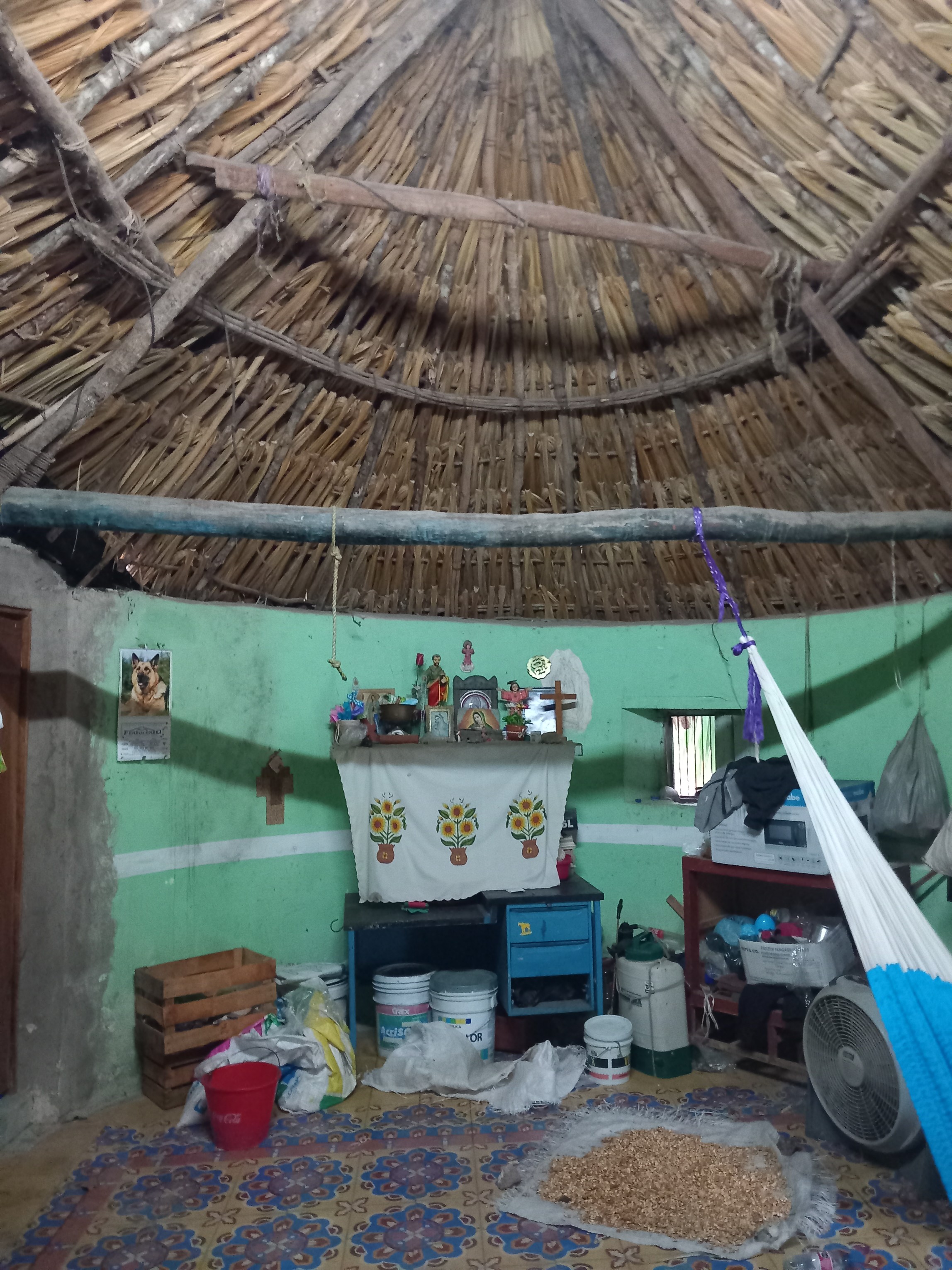
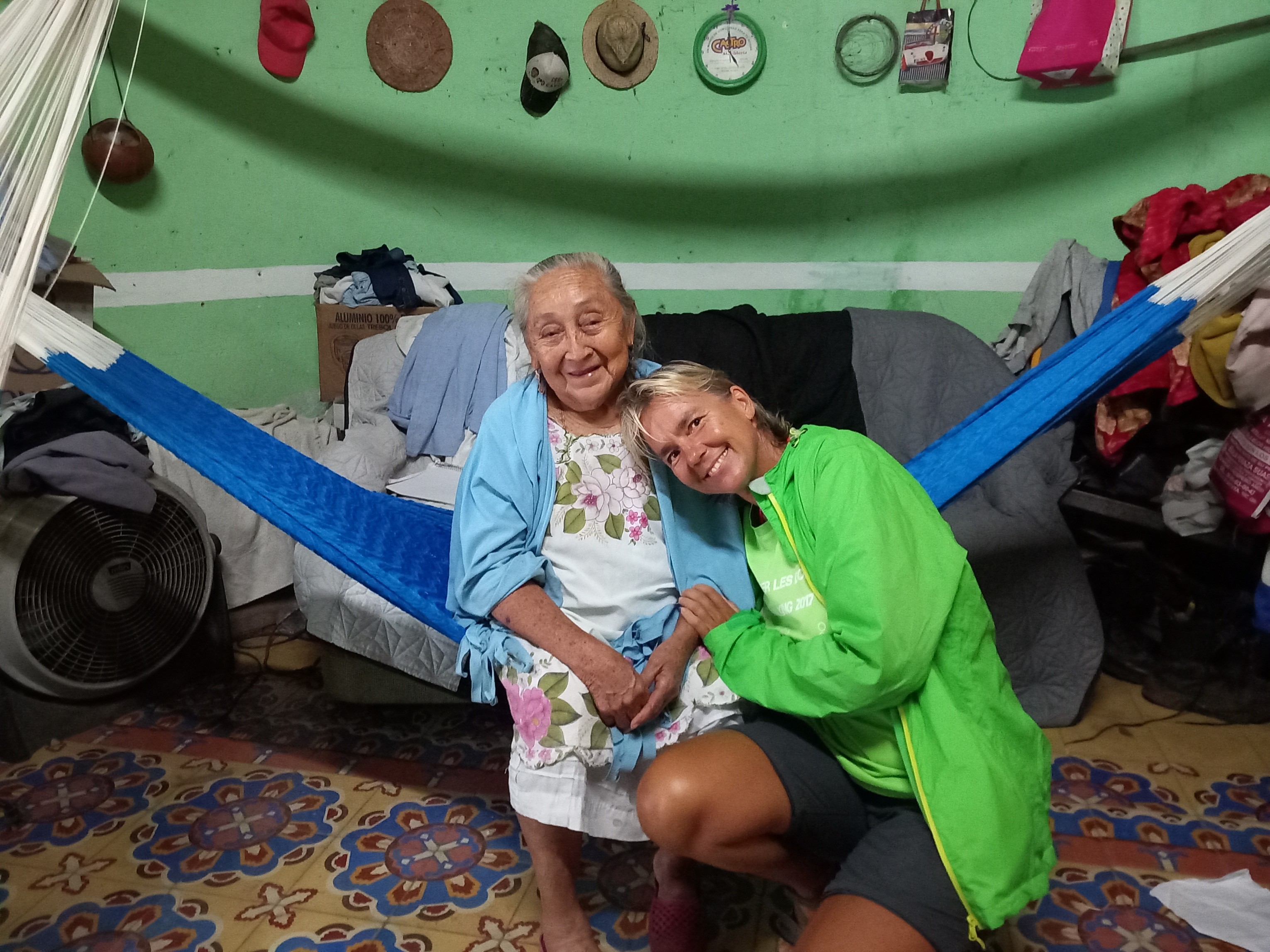
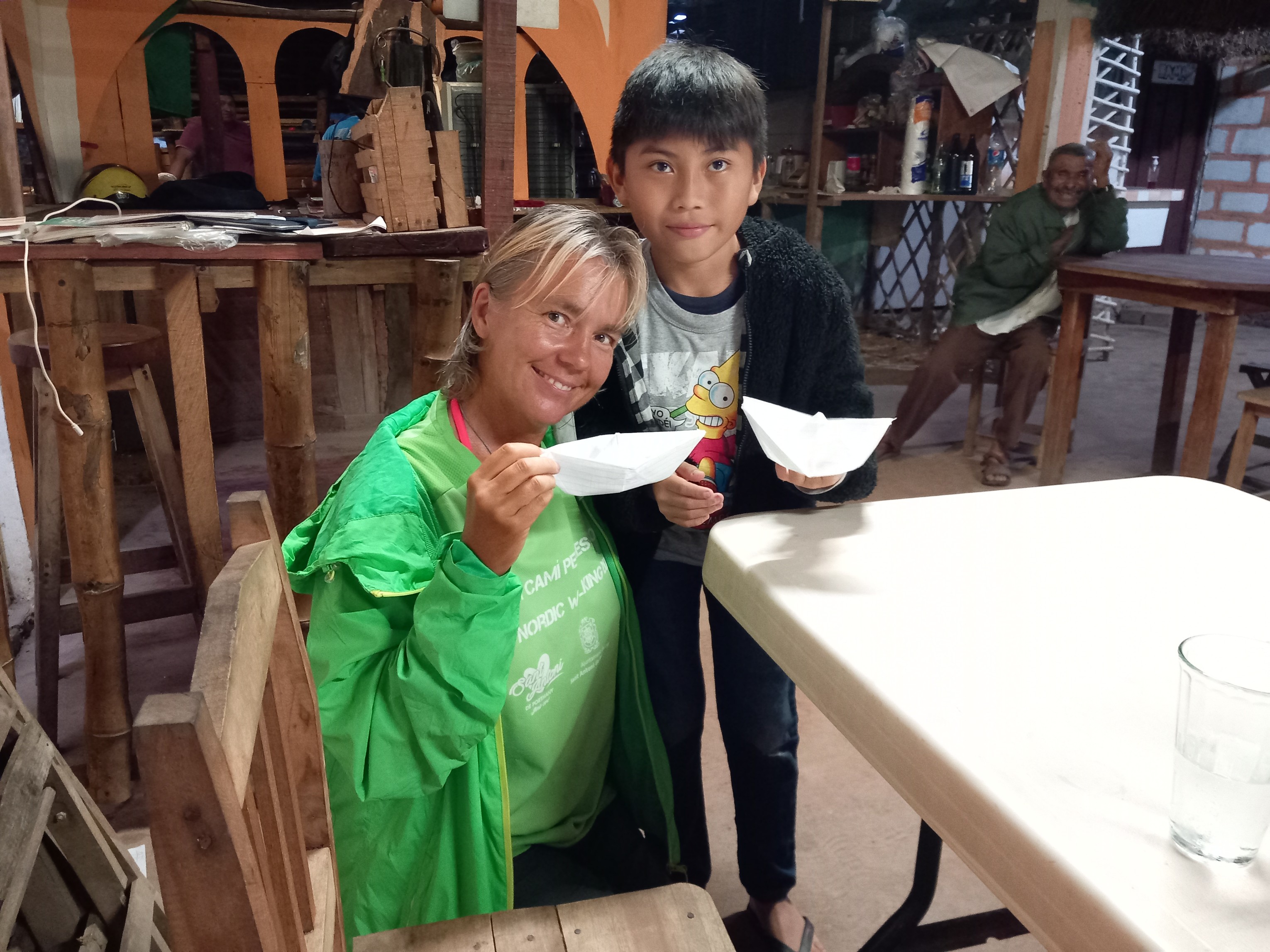
The grandson showed Olivia how to make a paper boat before dinner last night so he was shown how to make a paper dog before breakfast.A traditional Mayan breakfast and, yes, it tastes as good as it looks.A museum collection within the restaurant.The food standards could not be faulted, however, the toilet facilities appear to be a work in progress?Our genial host, Nacho, who gave his name to the restaurant.Pumpkin seeds being put out to dry after the overnight downpour – 75 years old and still working for the benefit of the family.We had a very enjoyable time meeting with some very friendly and helpful people as we leave Sotuta.
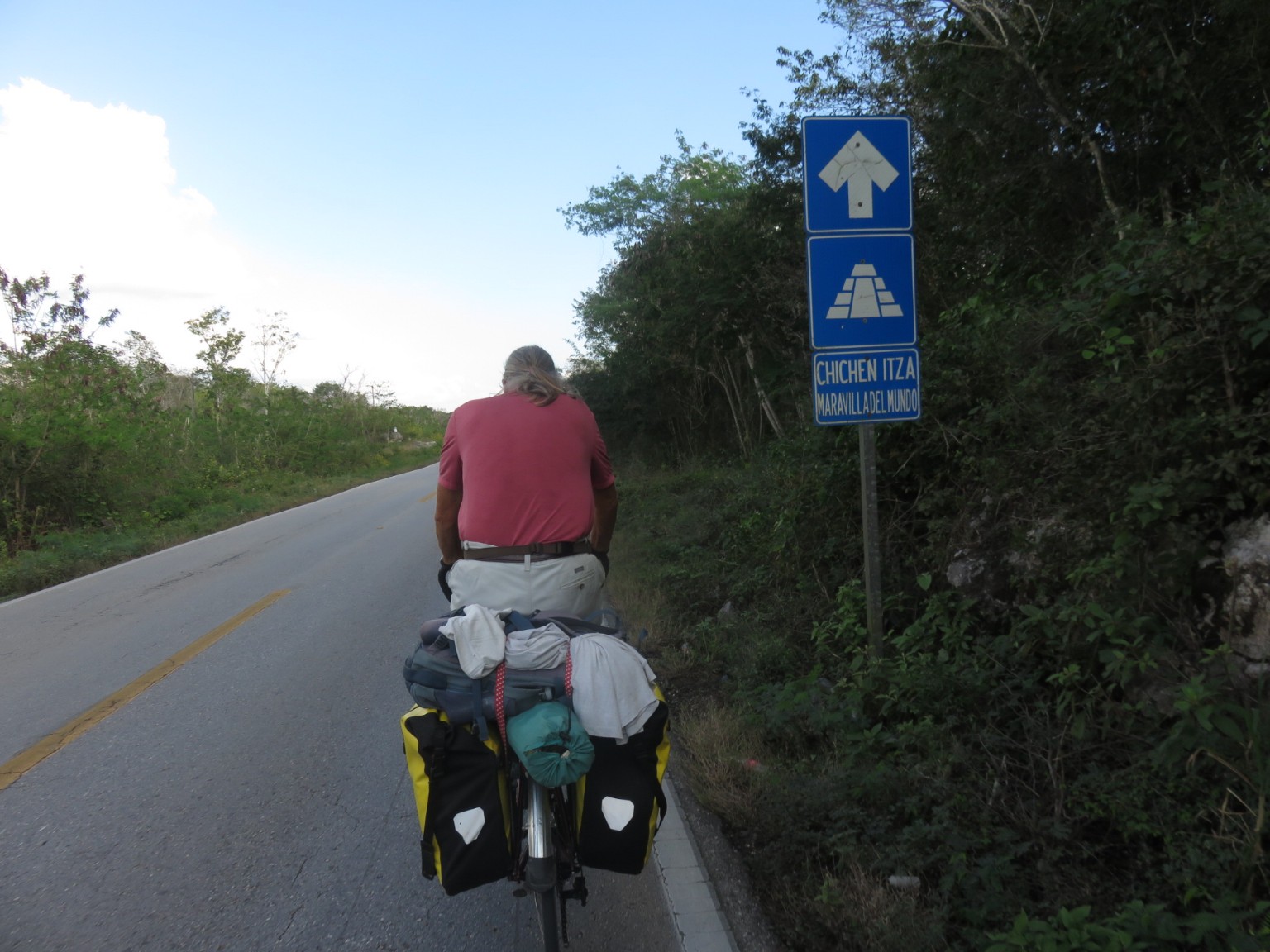
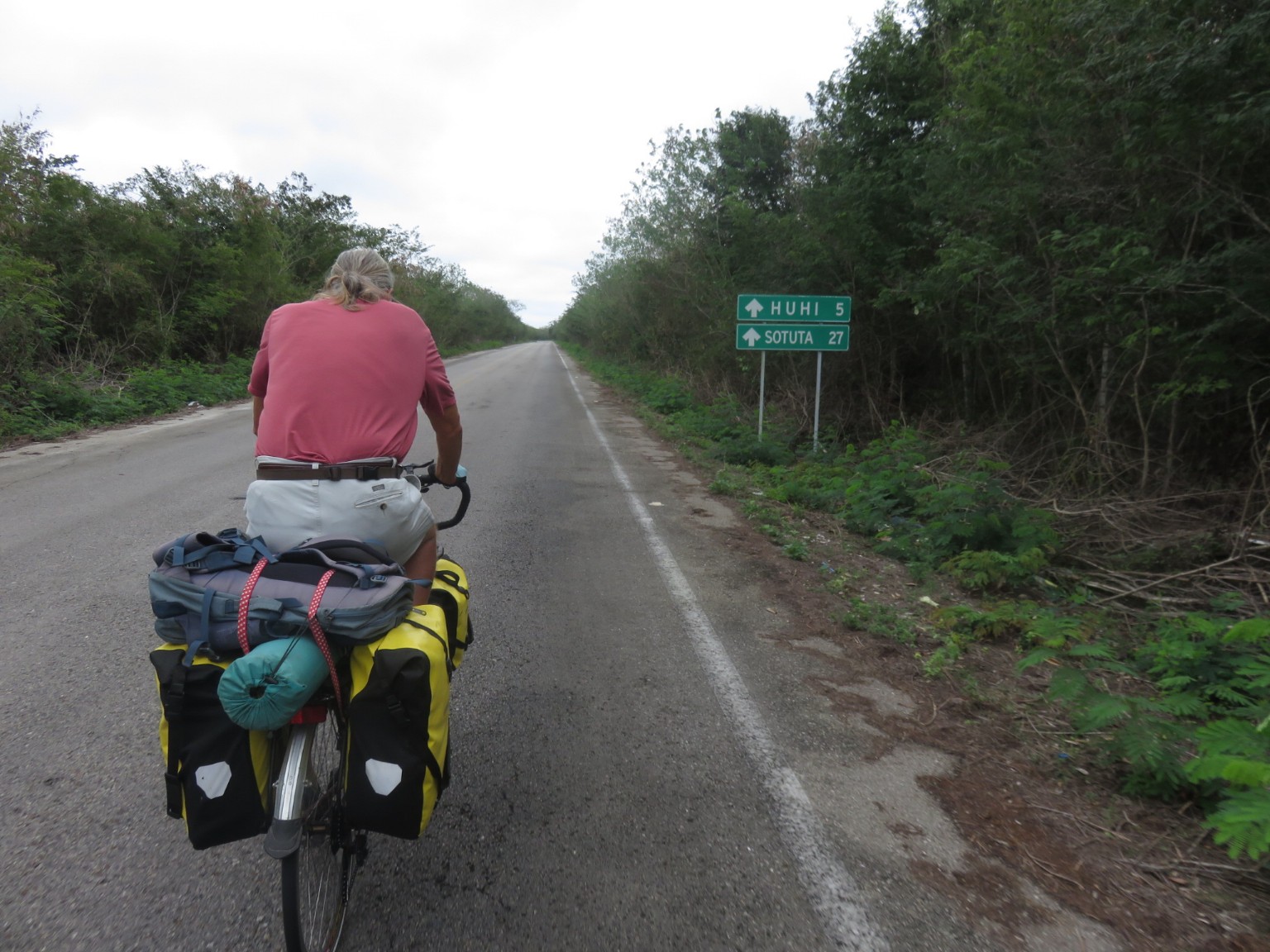
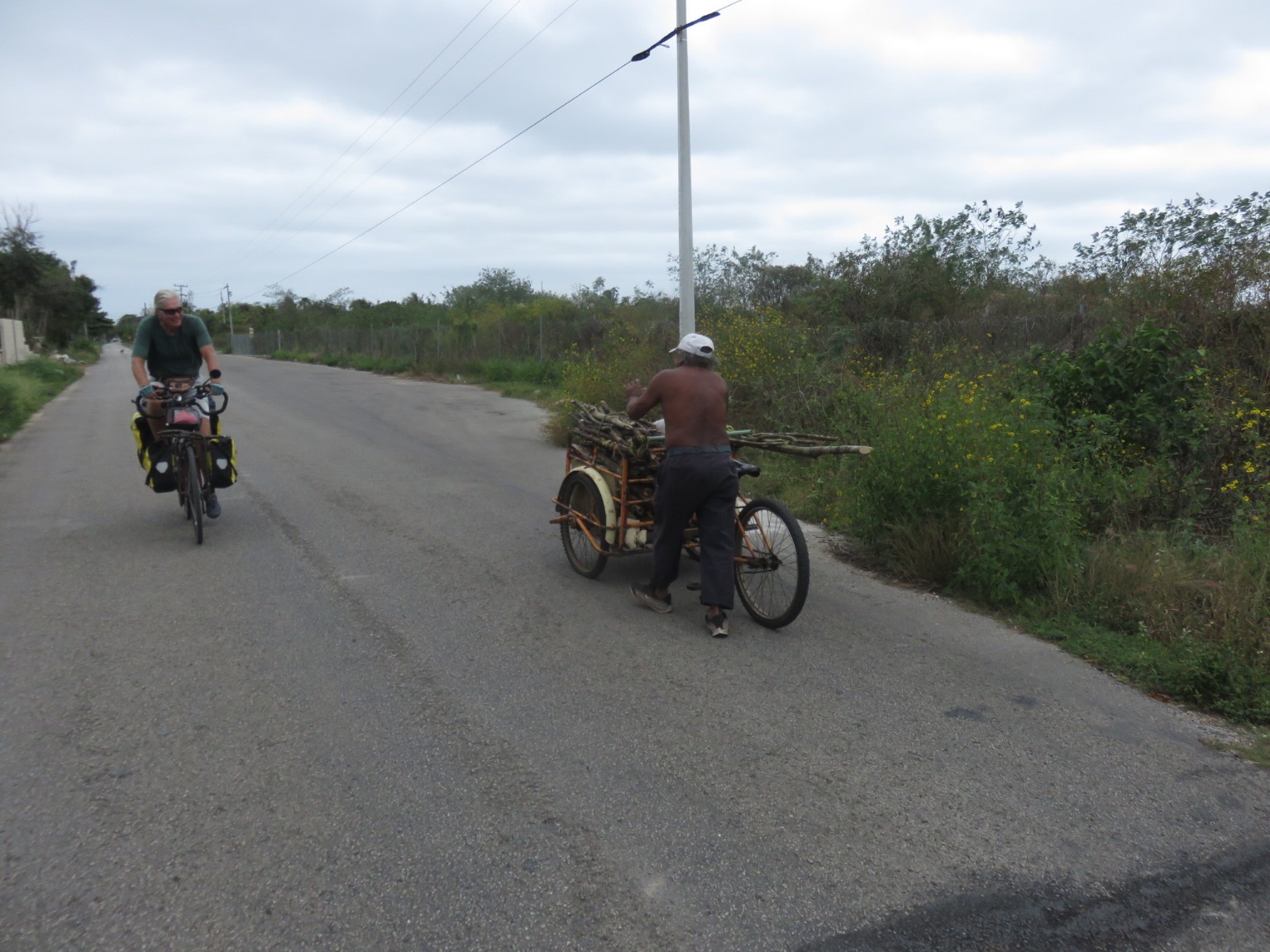
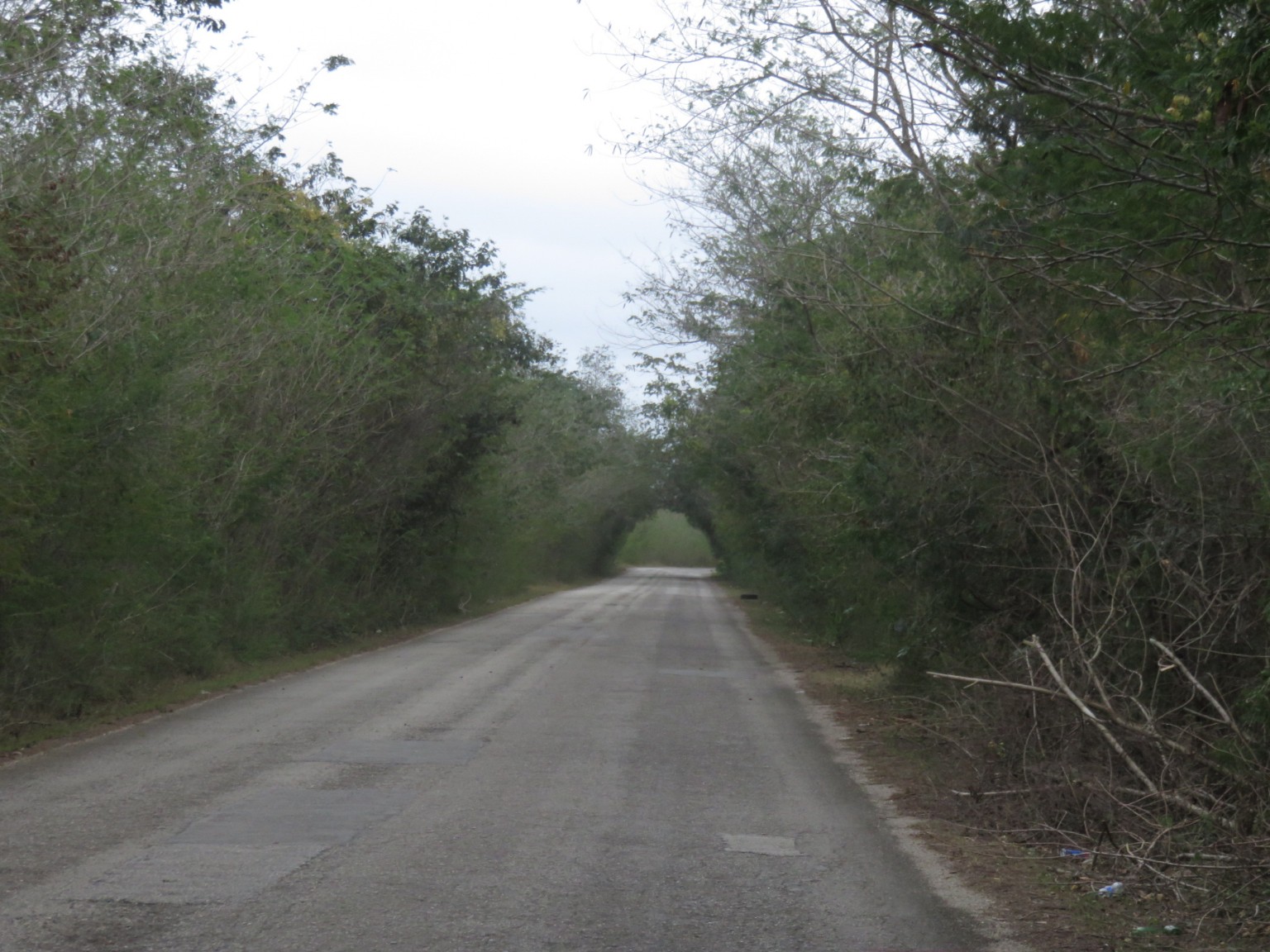
And its back to a still and very quiet road which we largely have to ourselves and the woodcutters.An infrequent sign telling us what is ahead.
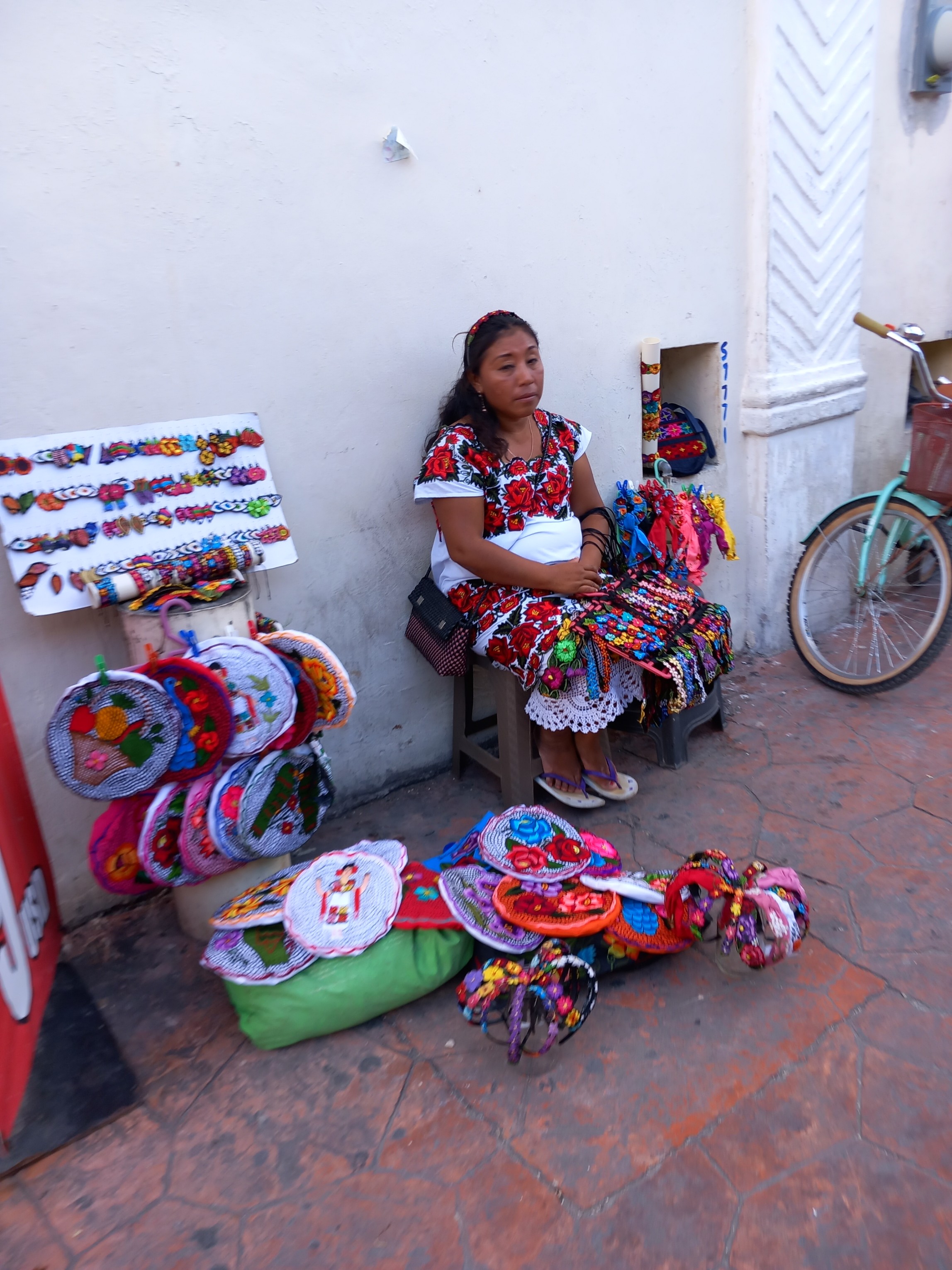
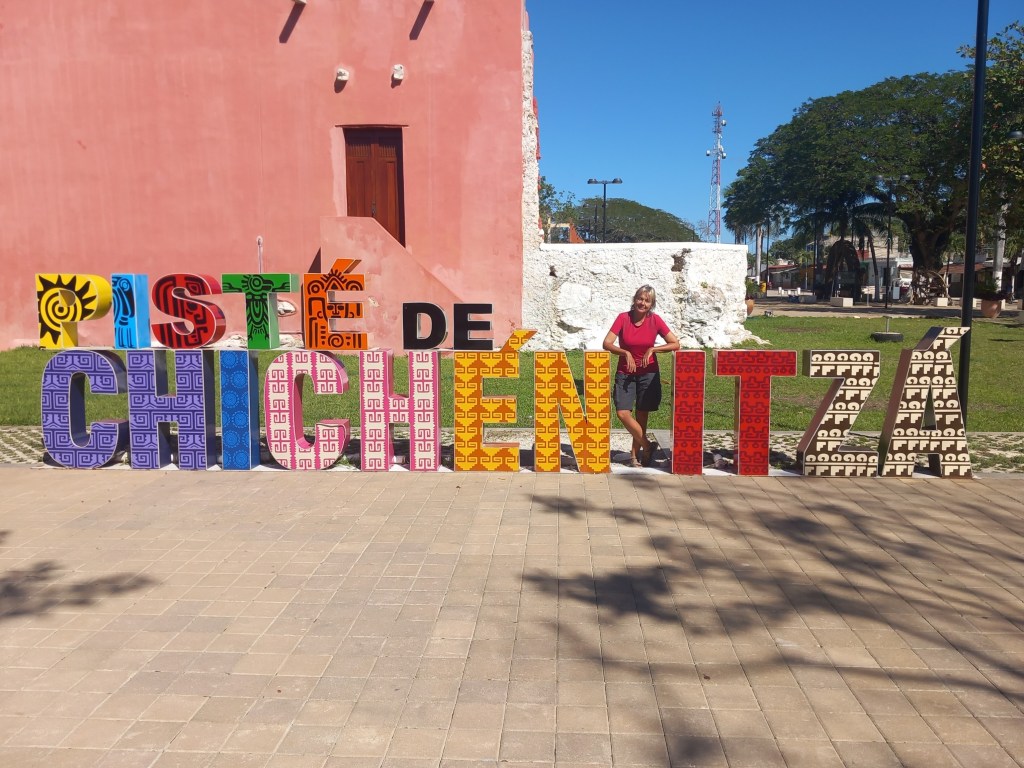
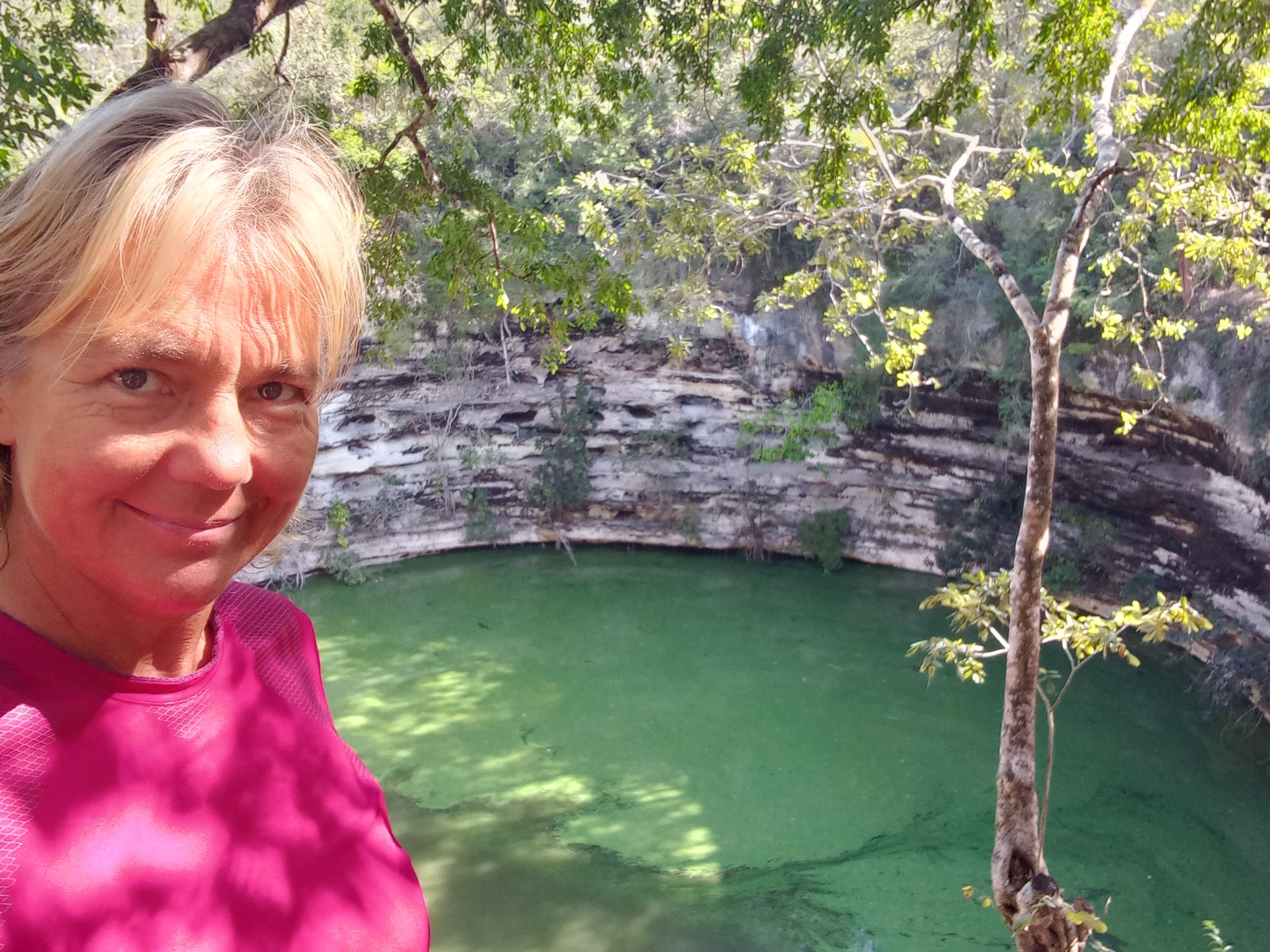
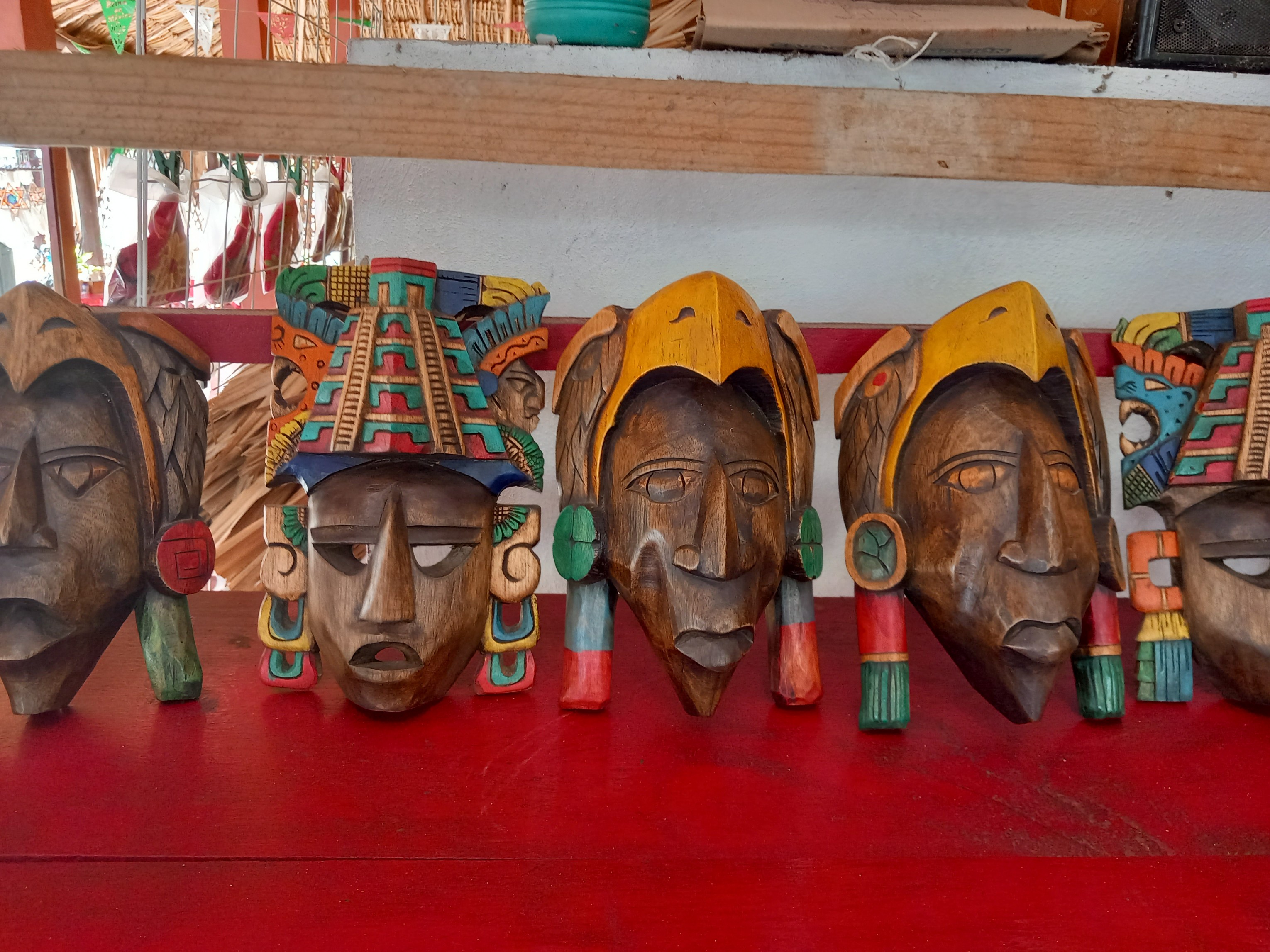
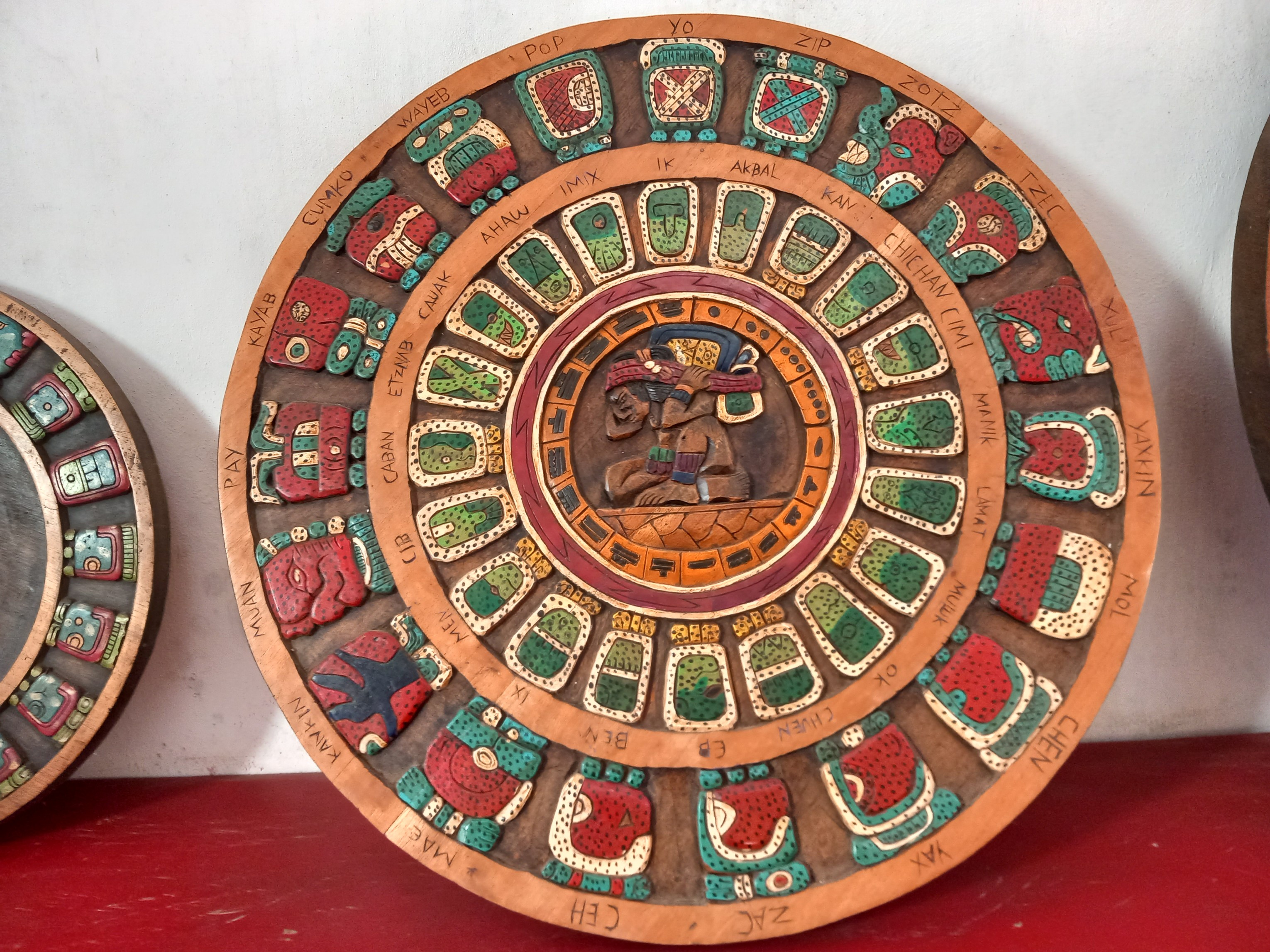
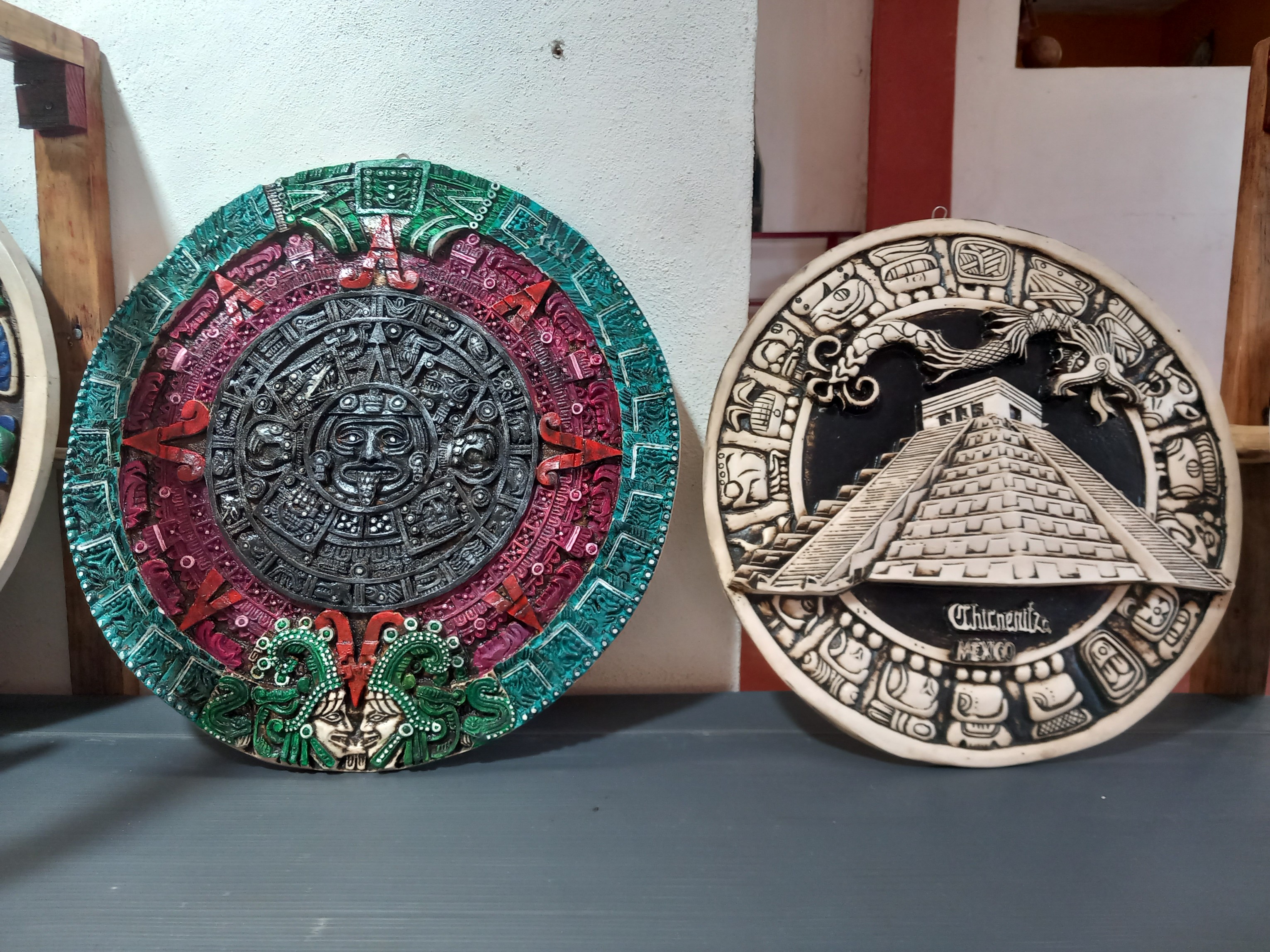
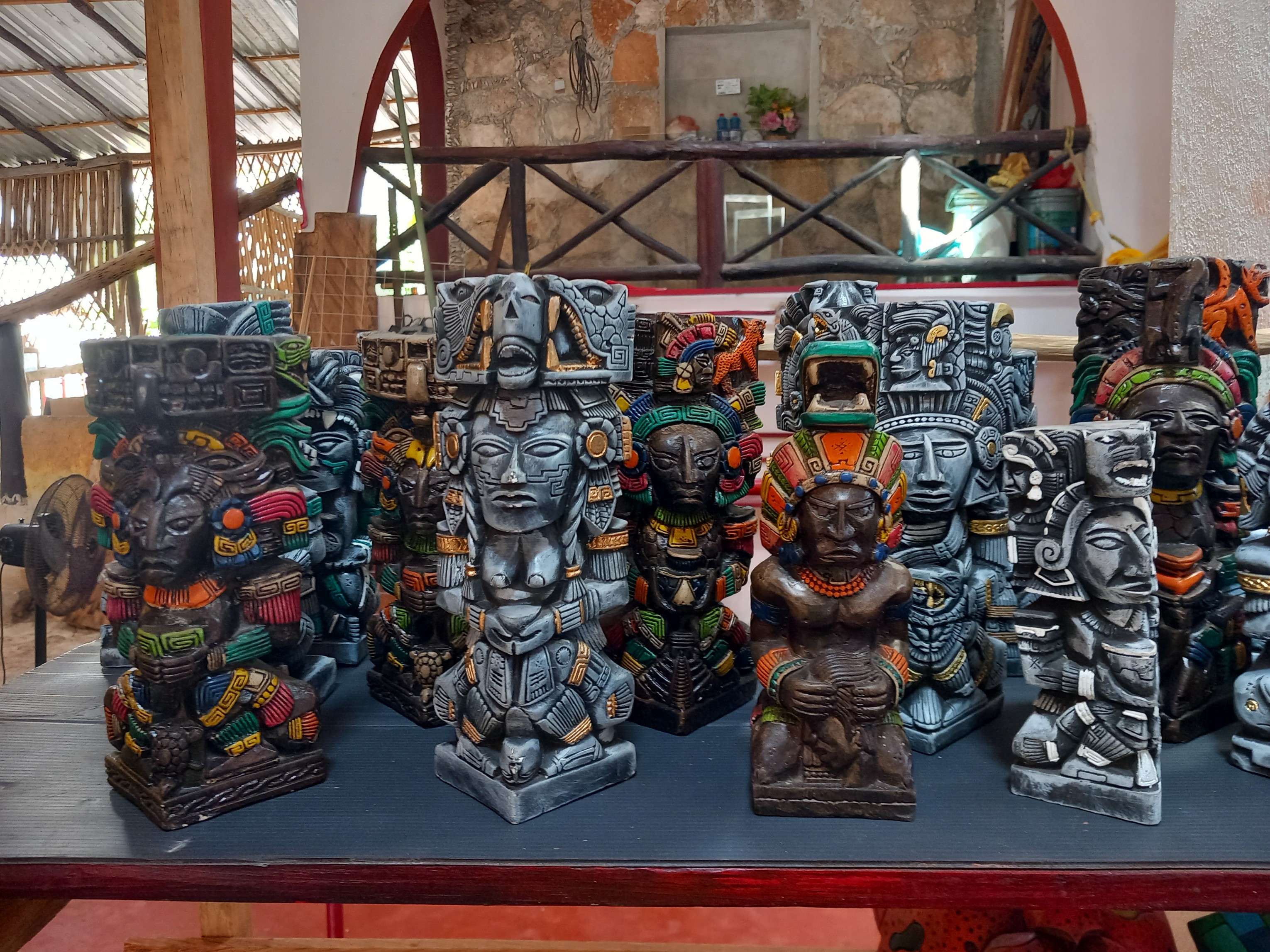
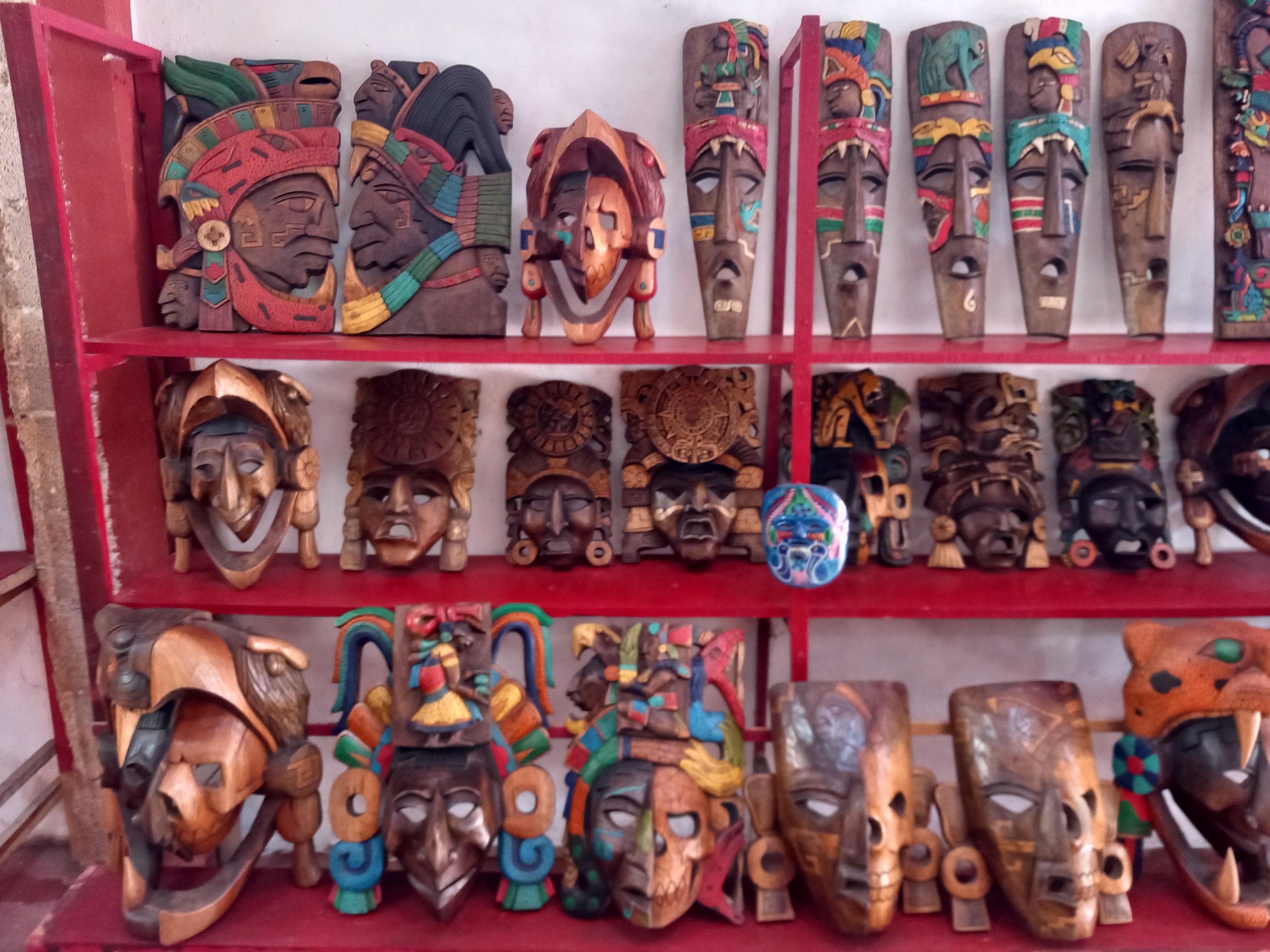
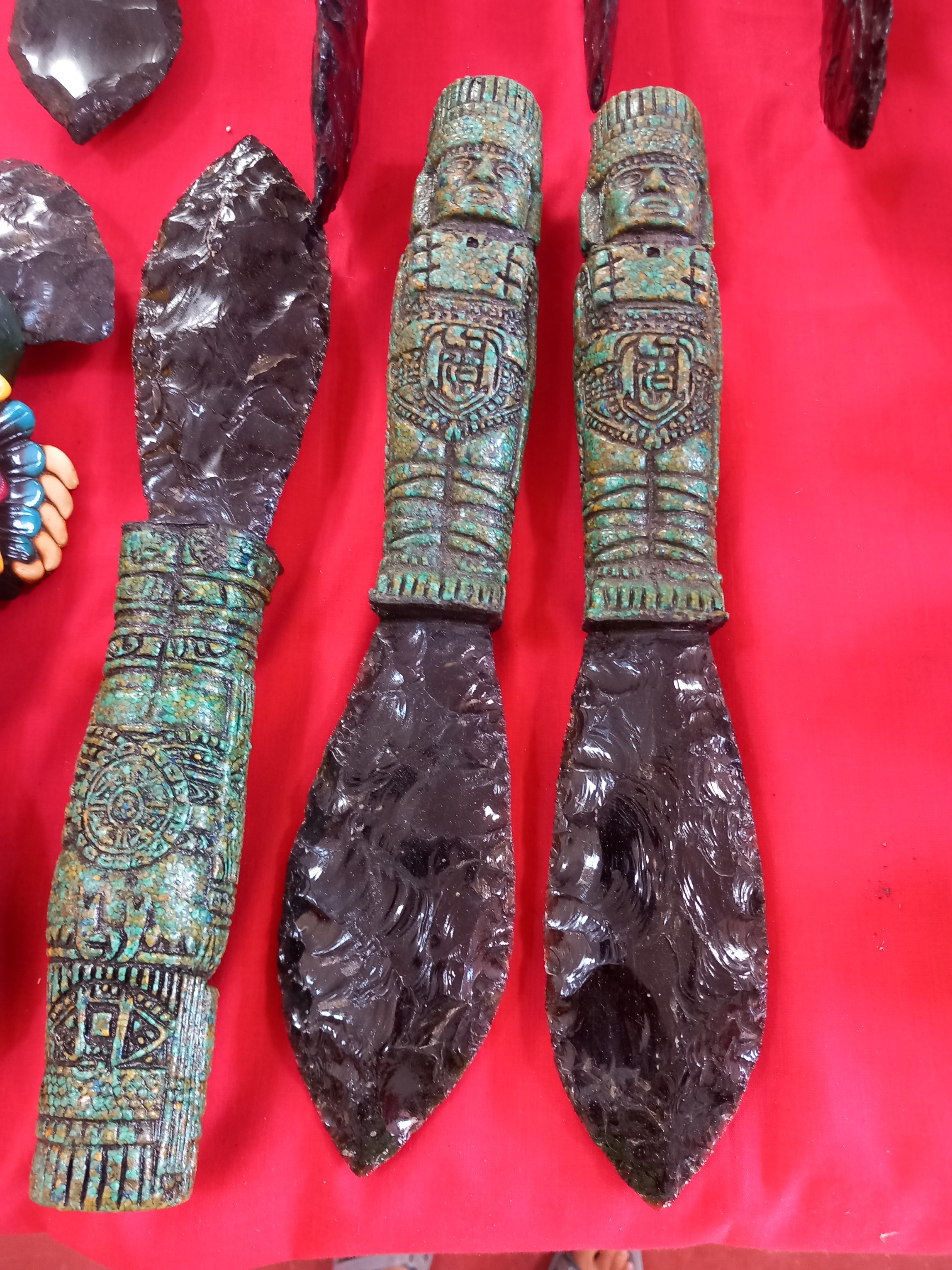
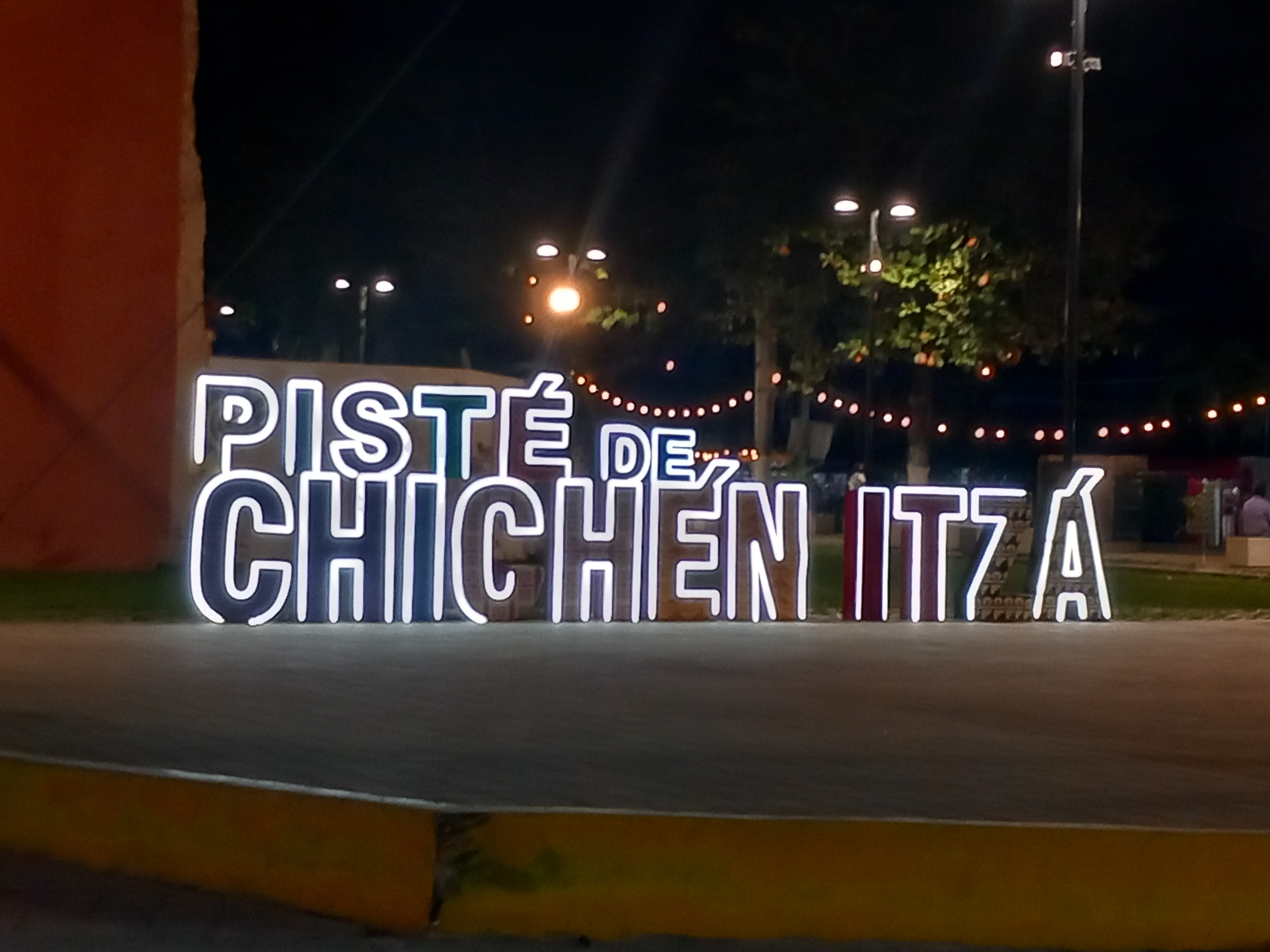
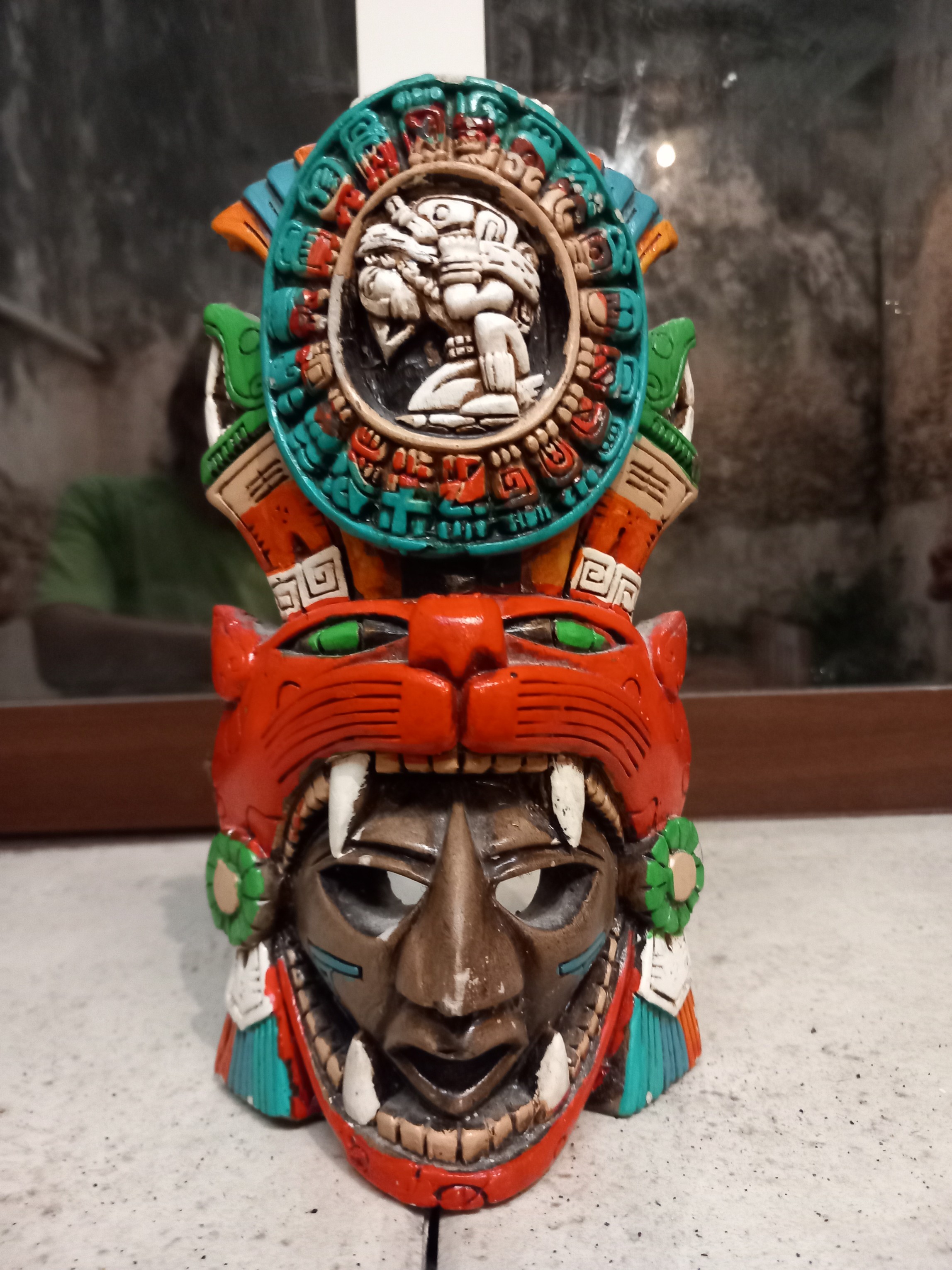
Olivia paid a quick visit on her own to this Cenote because it was recommended whilst David stayed above ground with the bicycles and kit.We are now entering tourist areas and the arts and craftwork on display will be difficult to overlook. We have arrived at Piste – the home of Chitzen Itza.
Some owners, who double up as waiters whilst their wives cook and his son does the home delivery service, are more friendly than others. Many places we go to have loud music playing and we politely ask them to turn it down. This chap went a step further and played music from one of Olivia’s favourite Spanish singers.
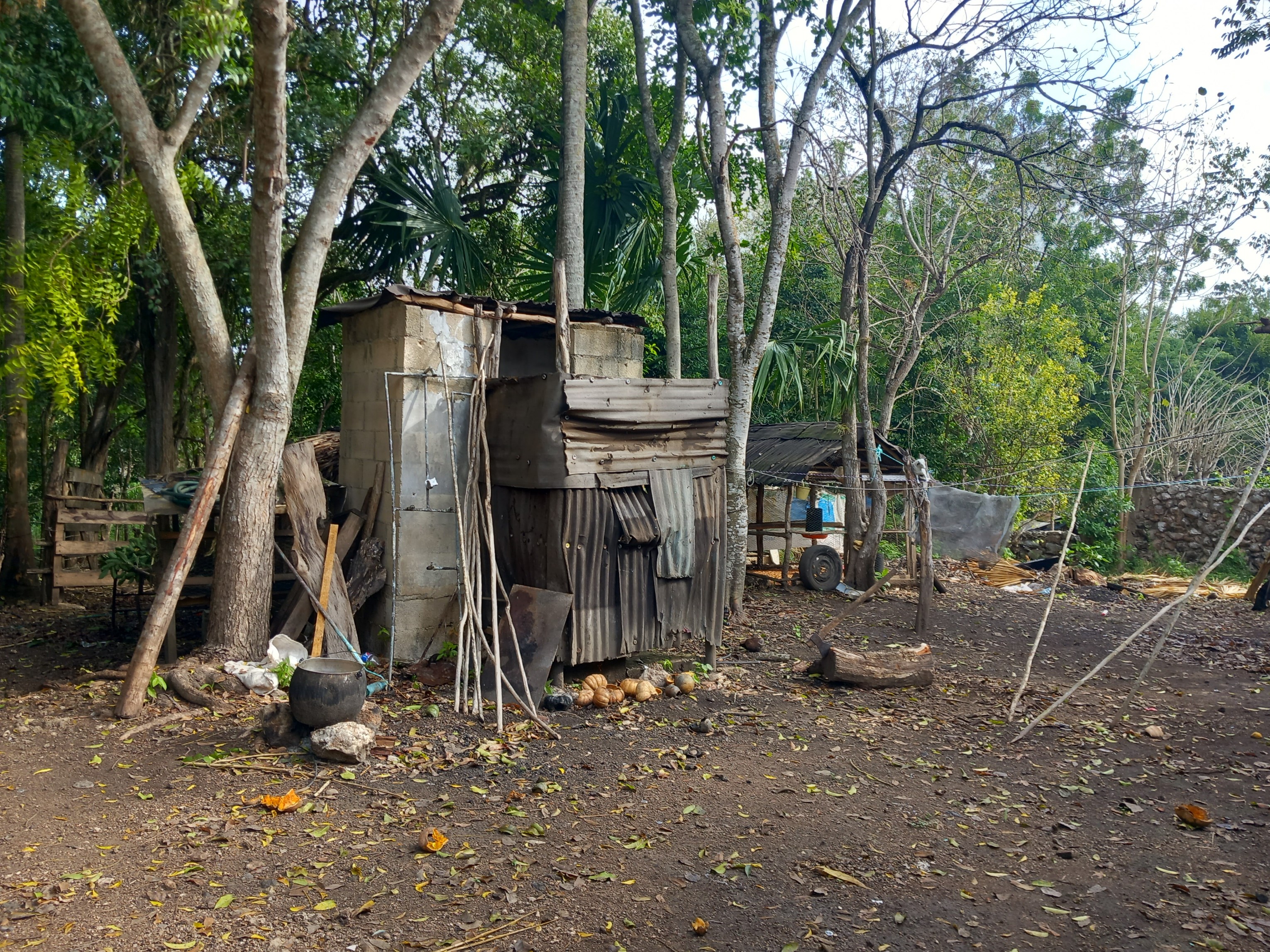
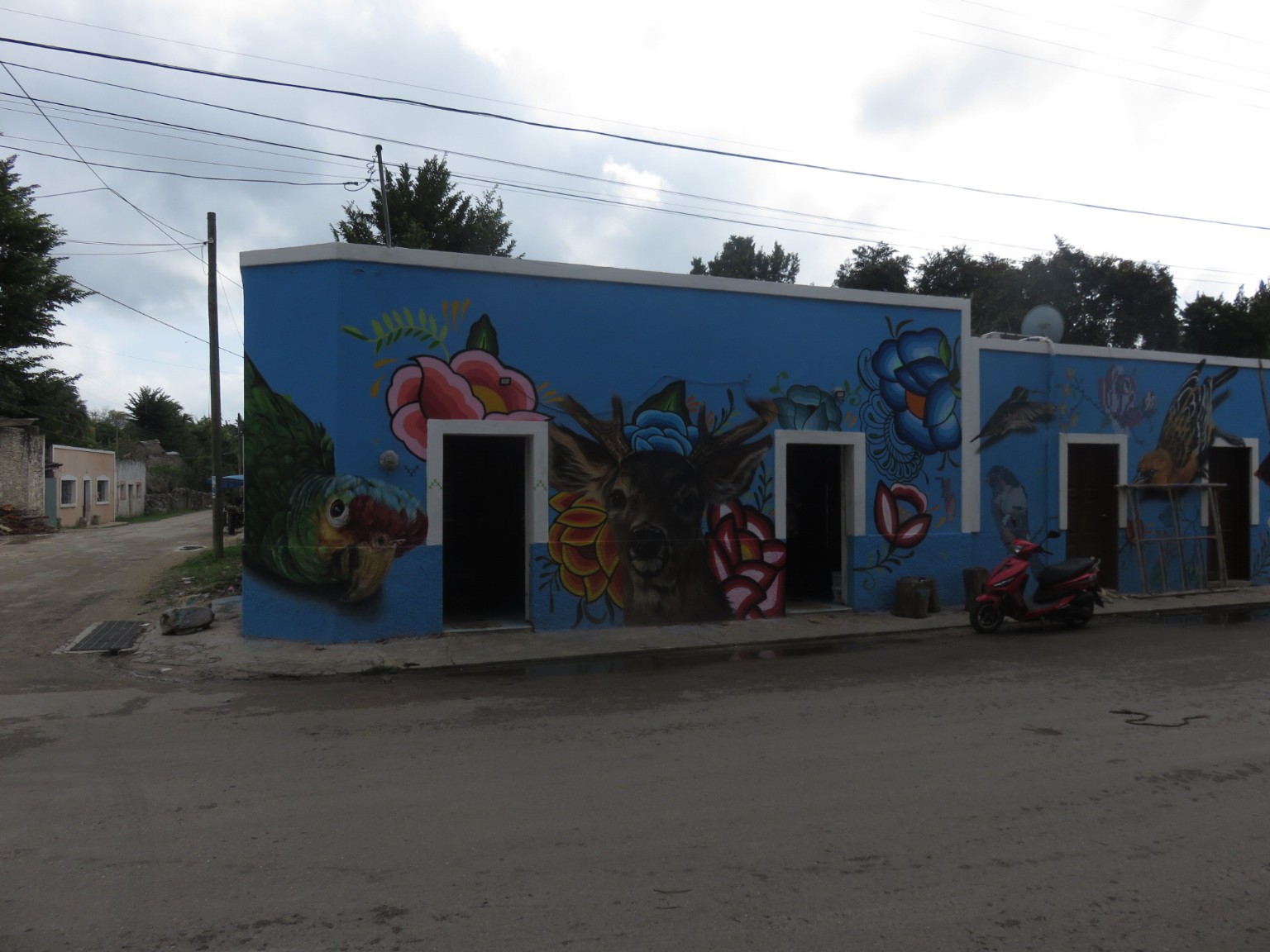
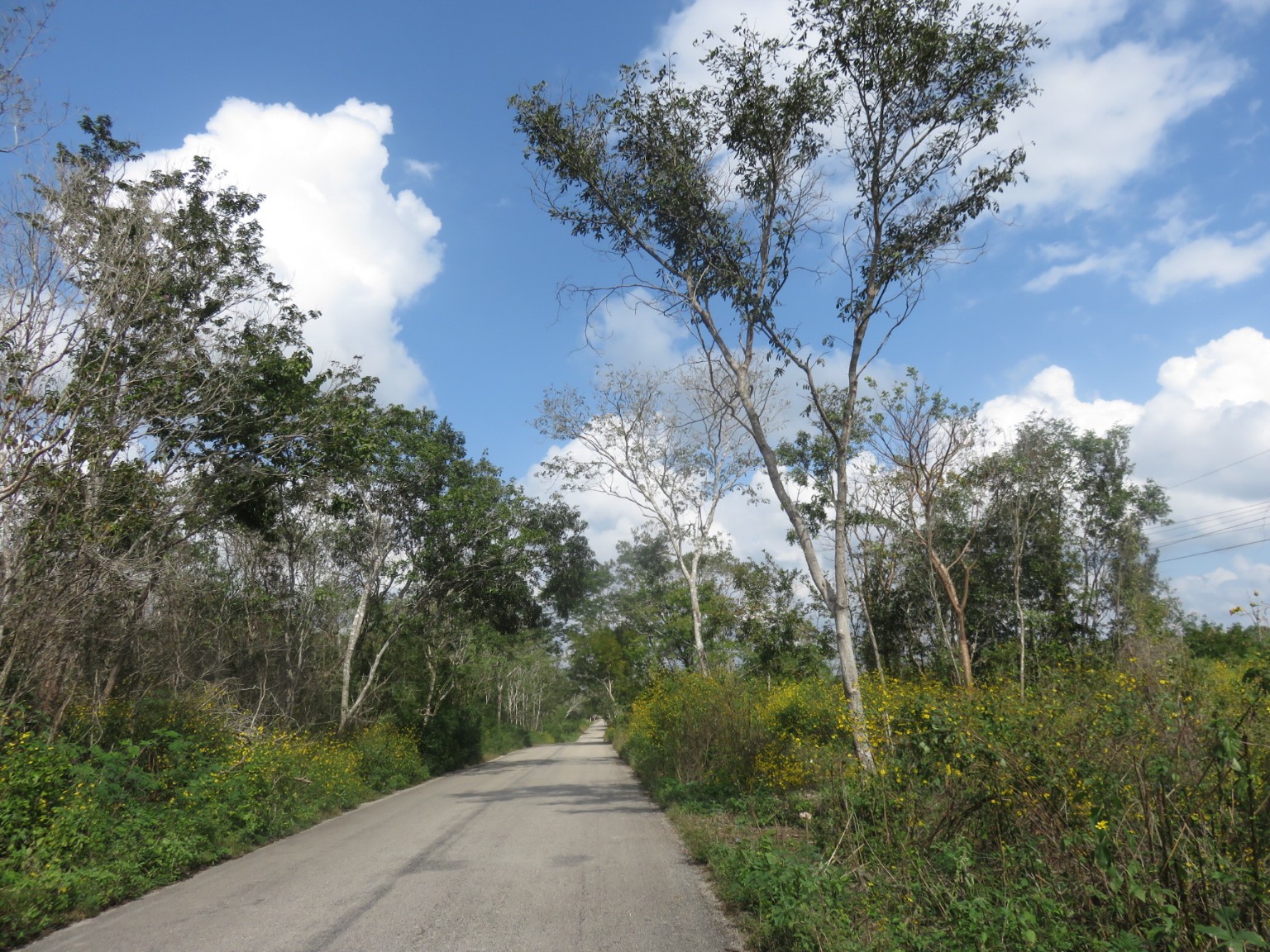
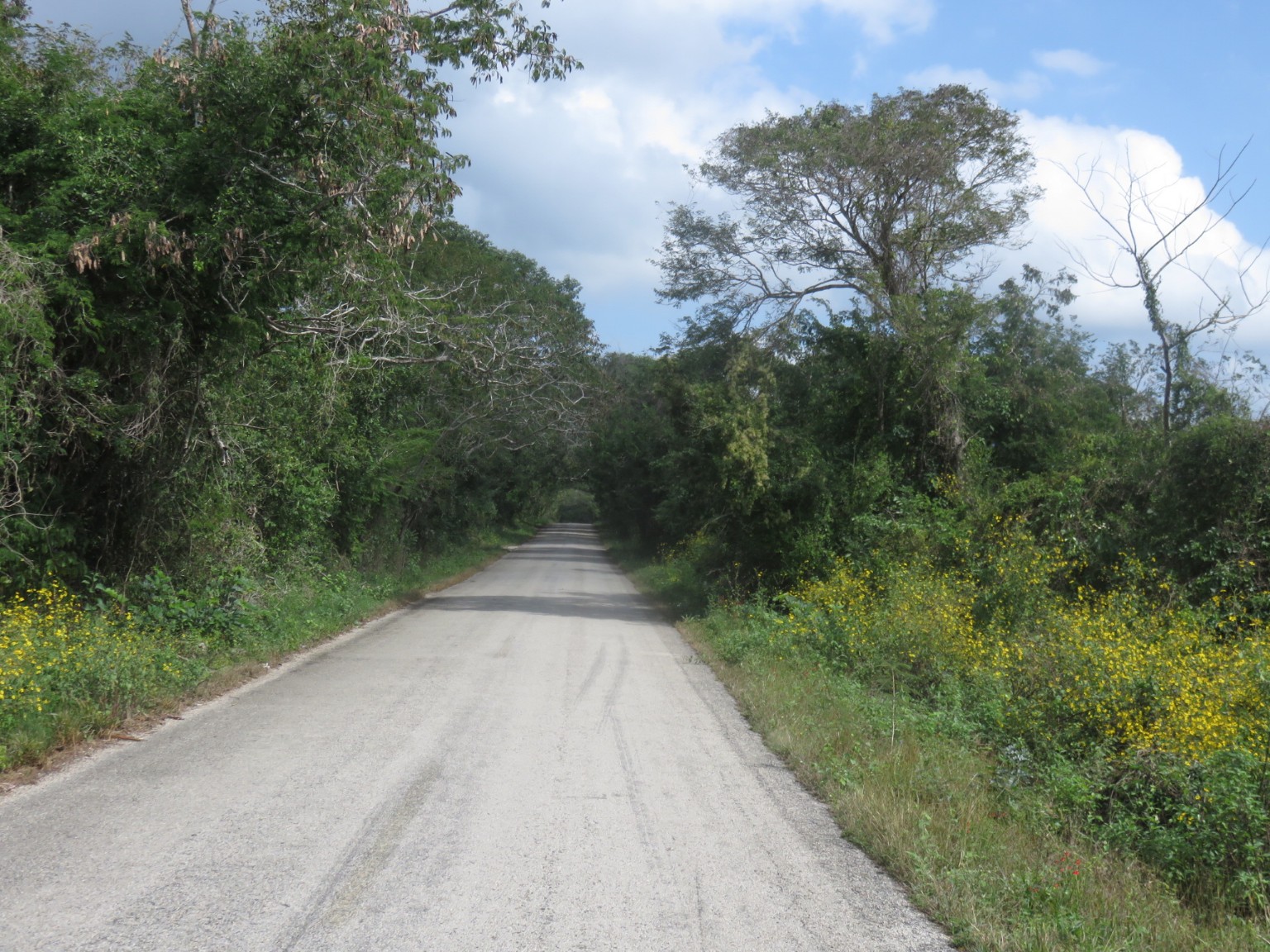
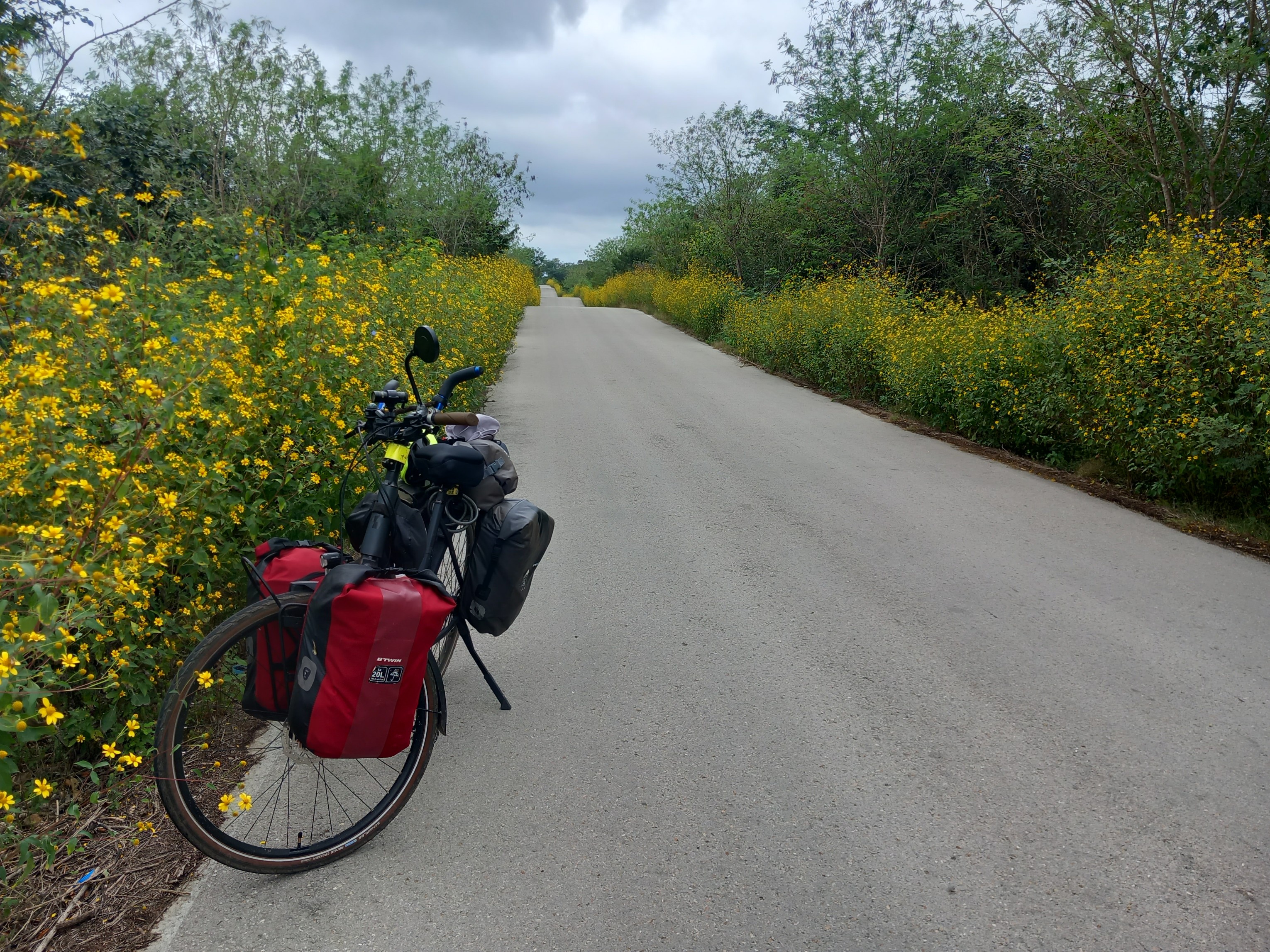
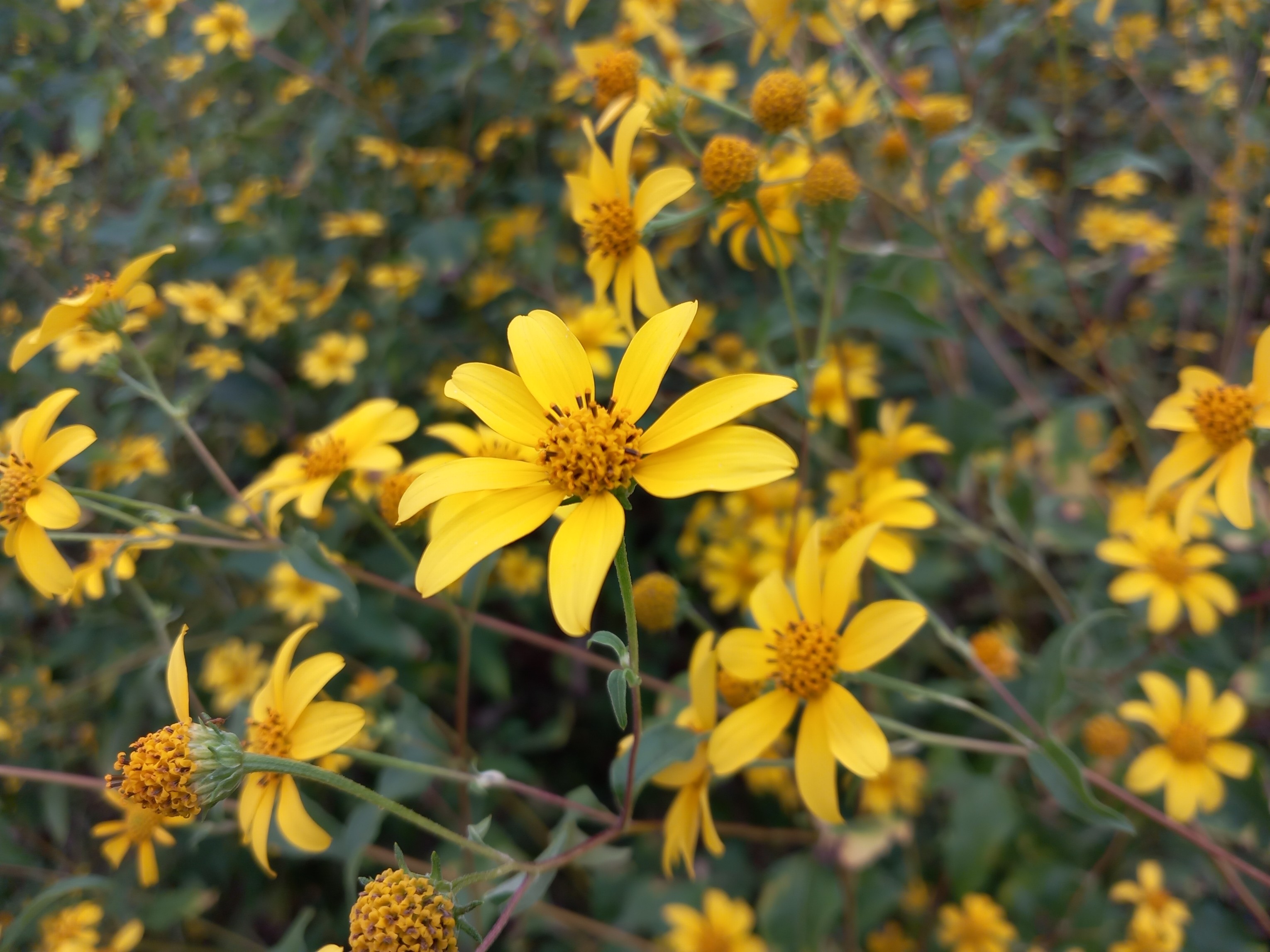
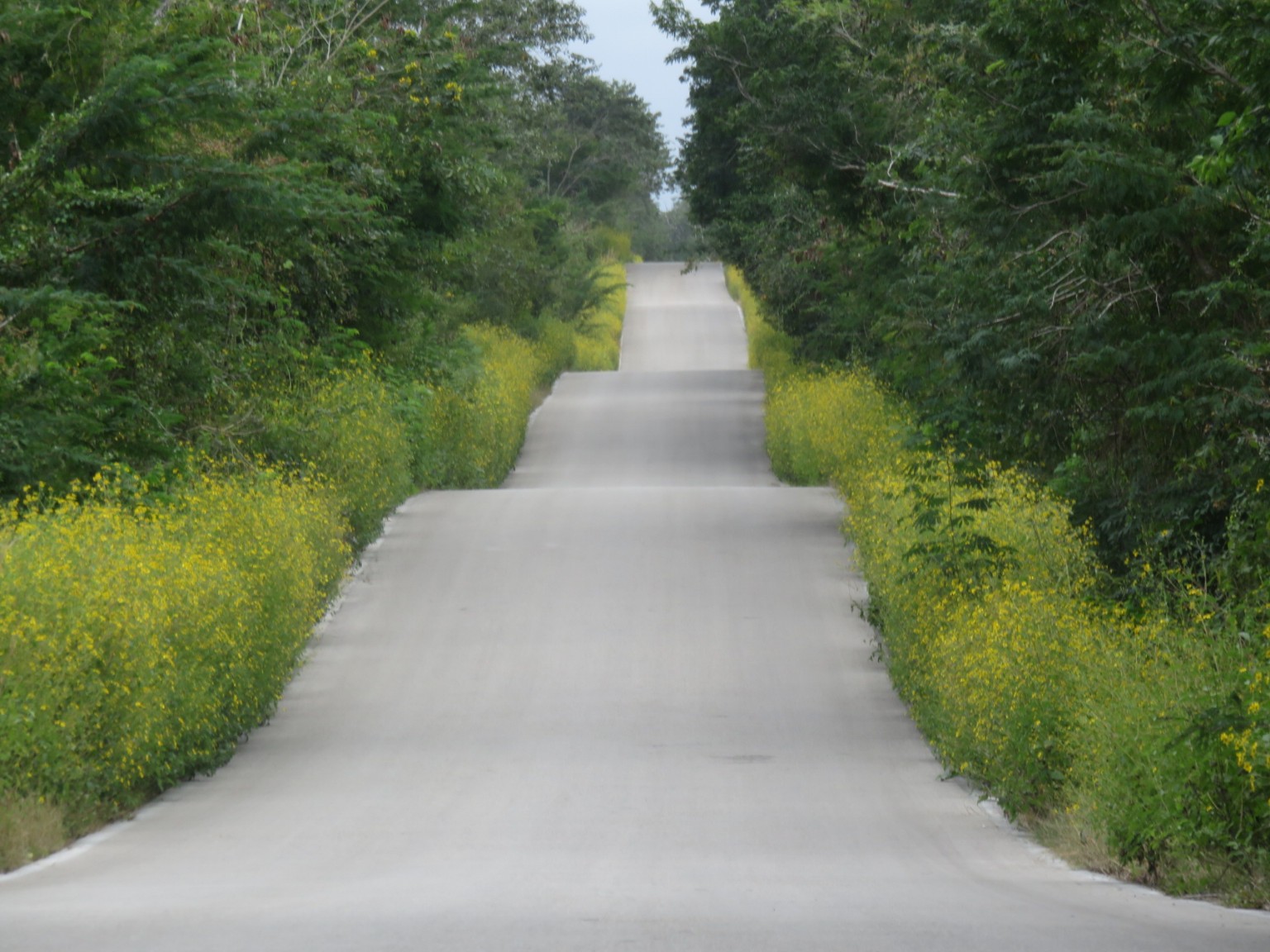
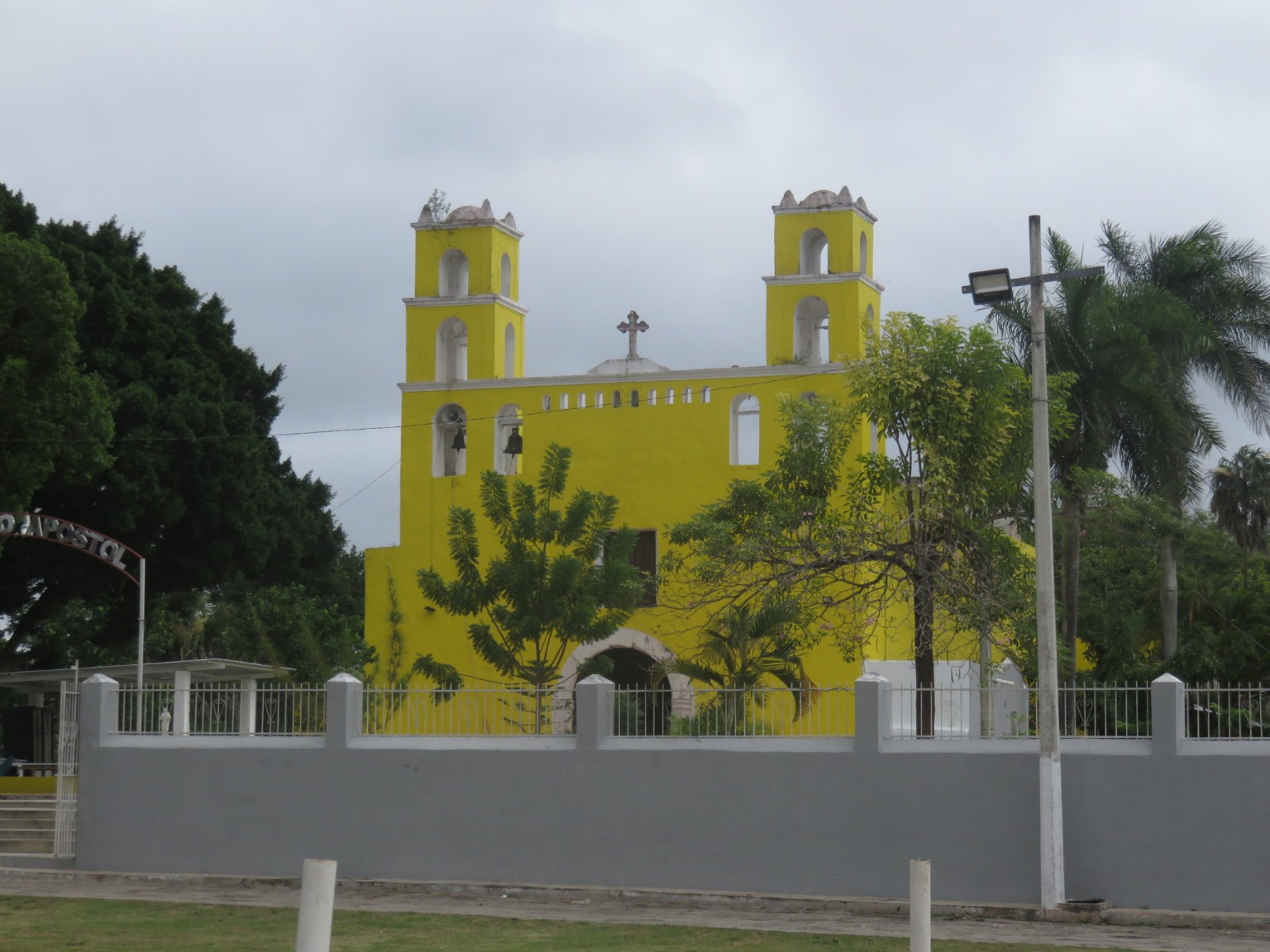
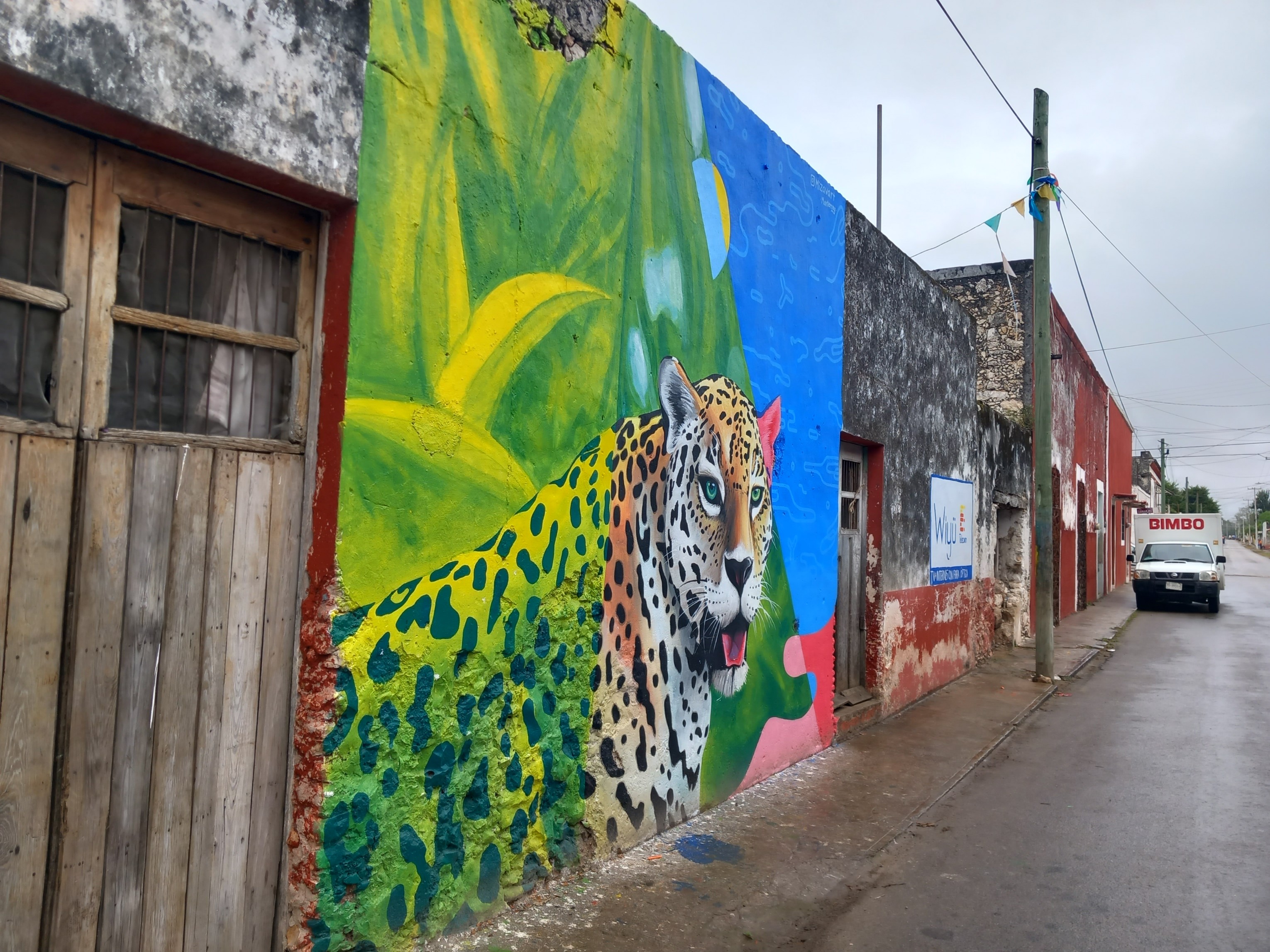
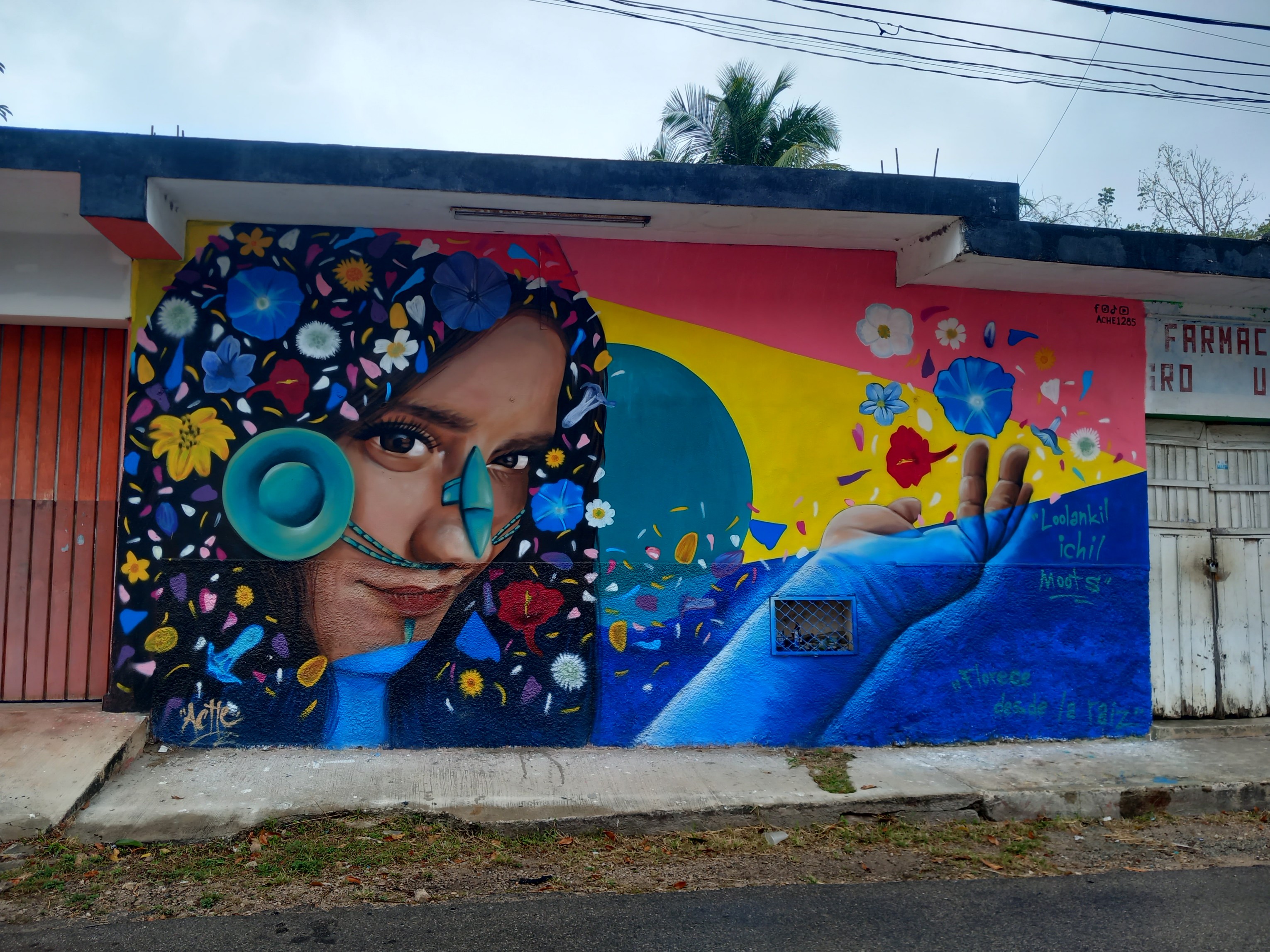
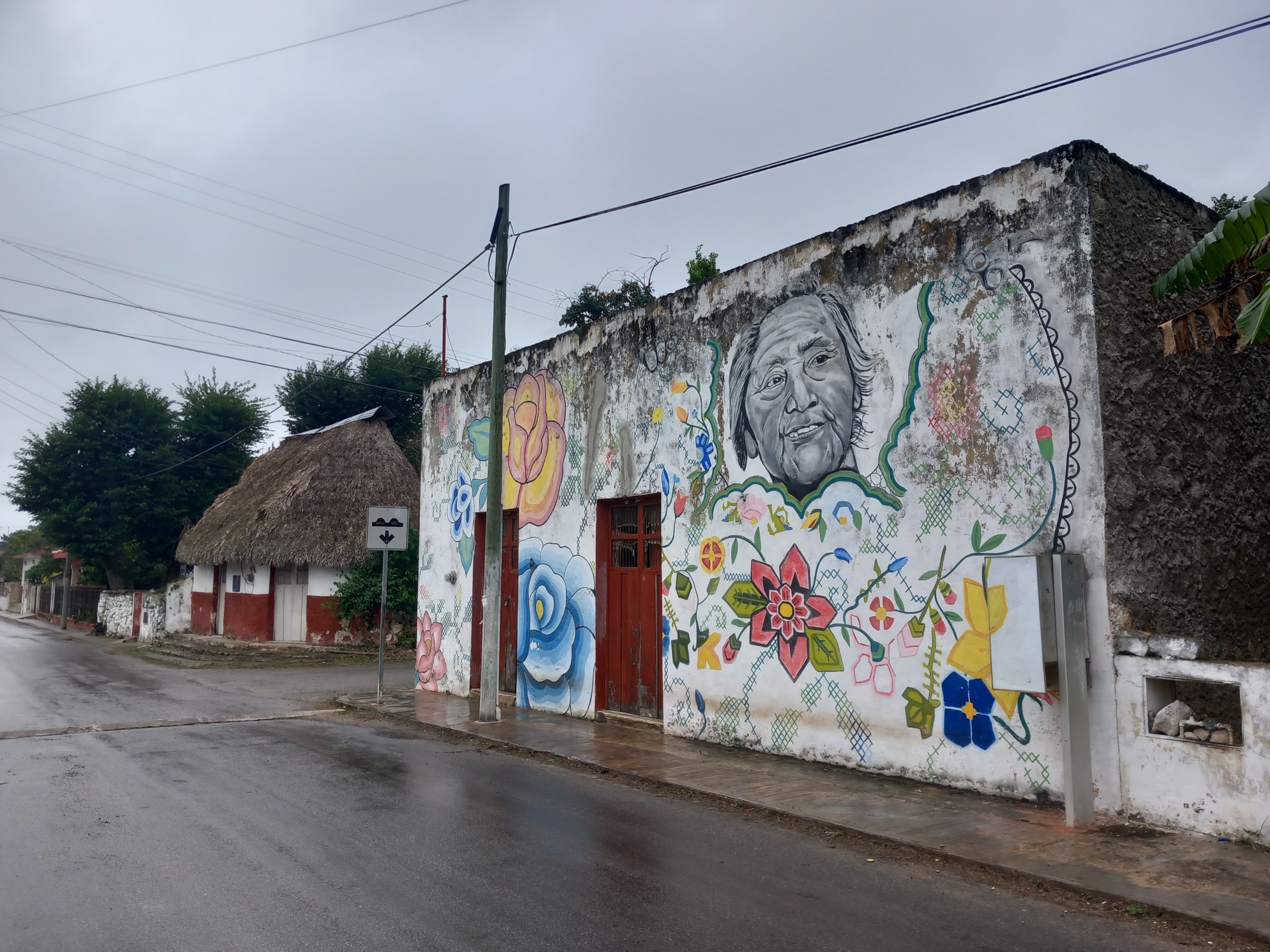
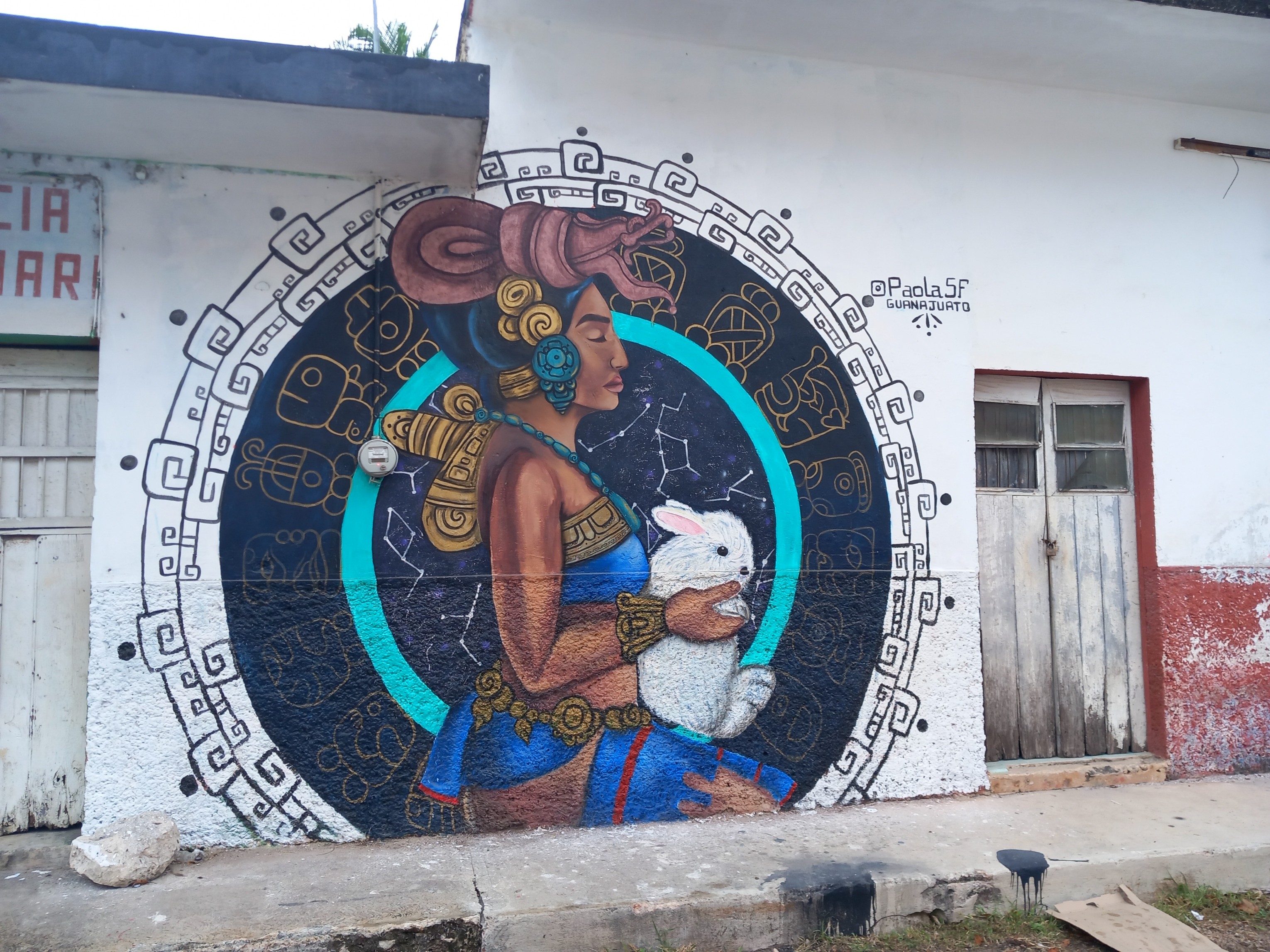
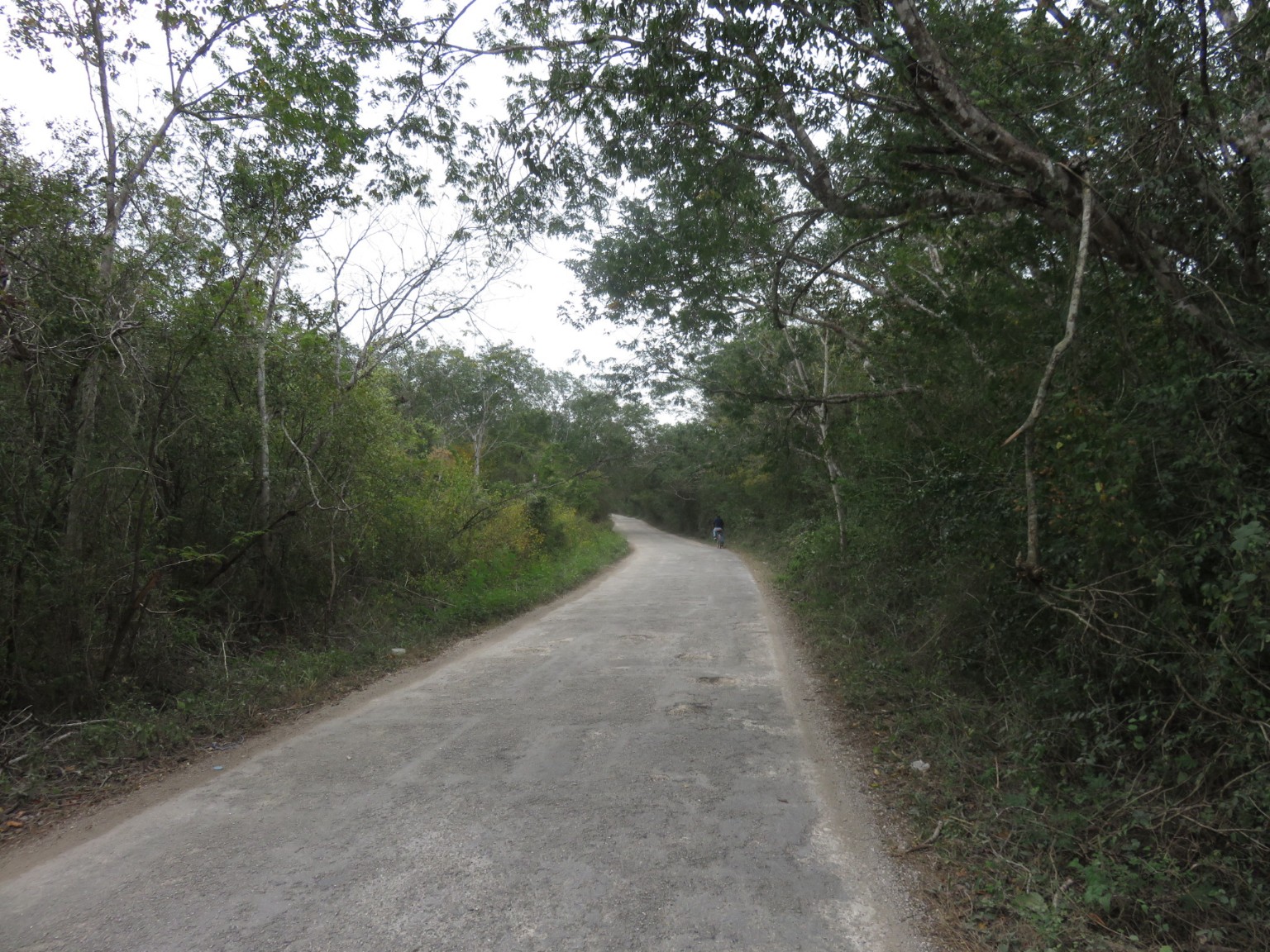
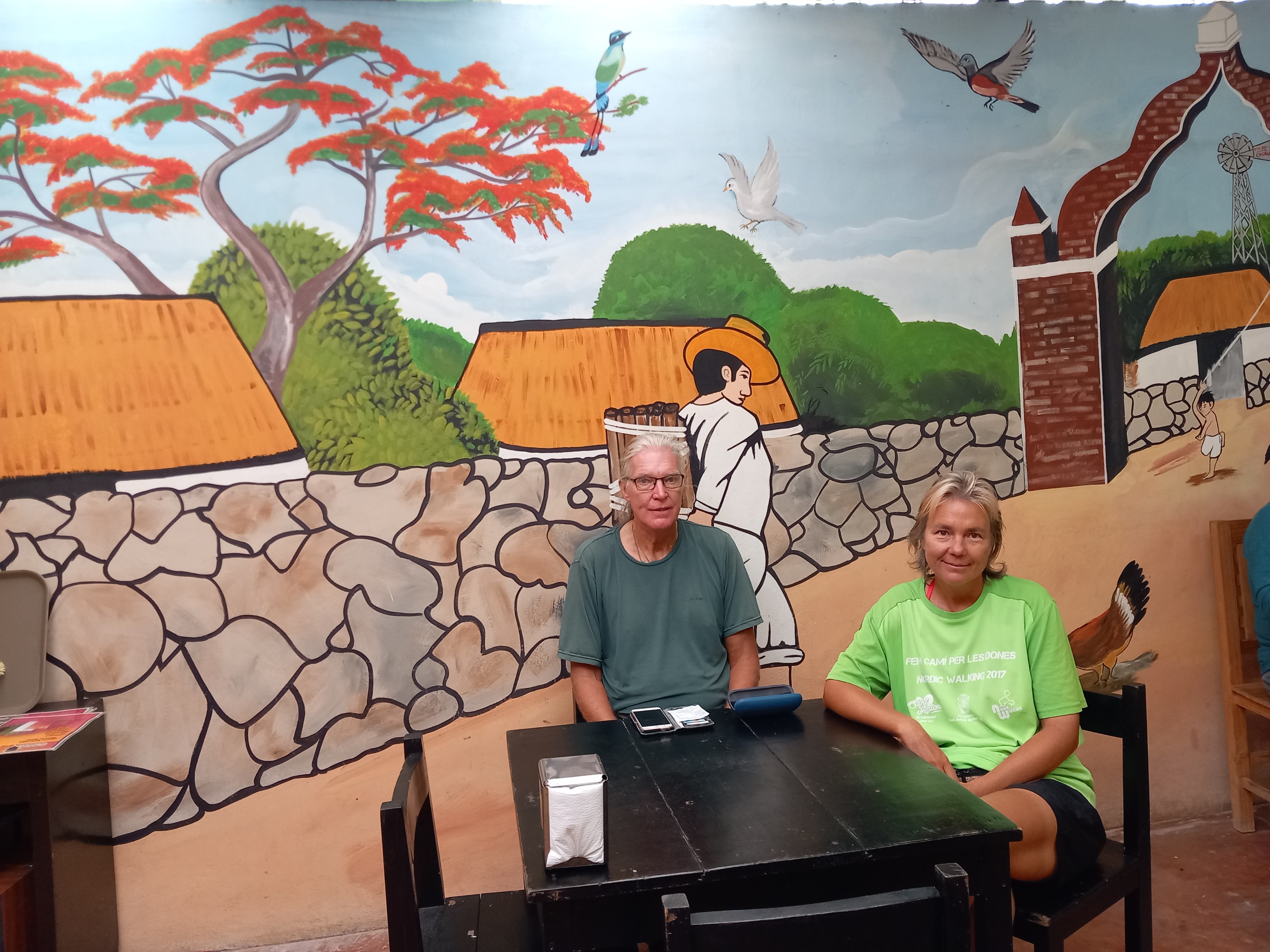
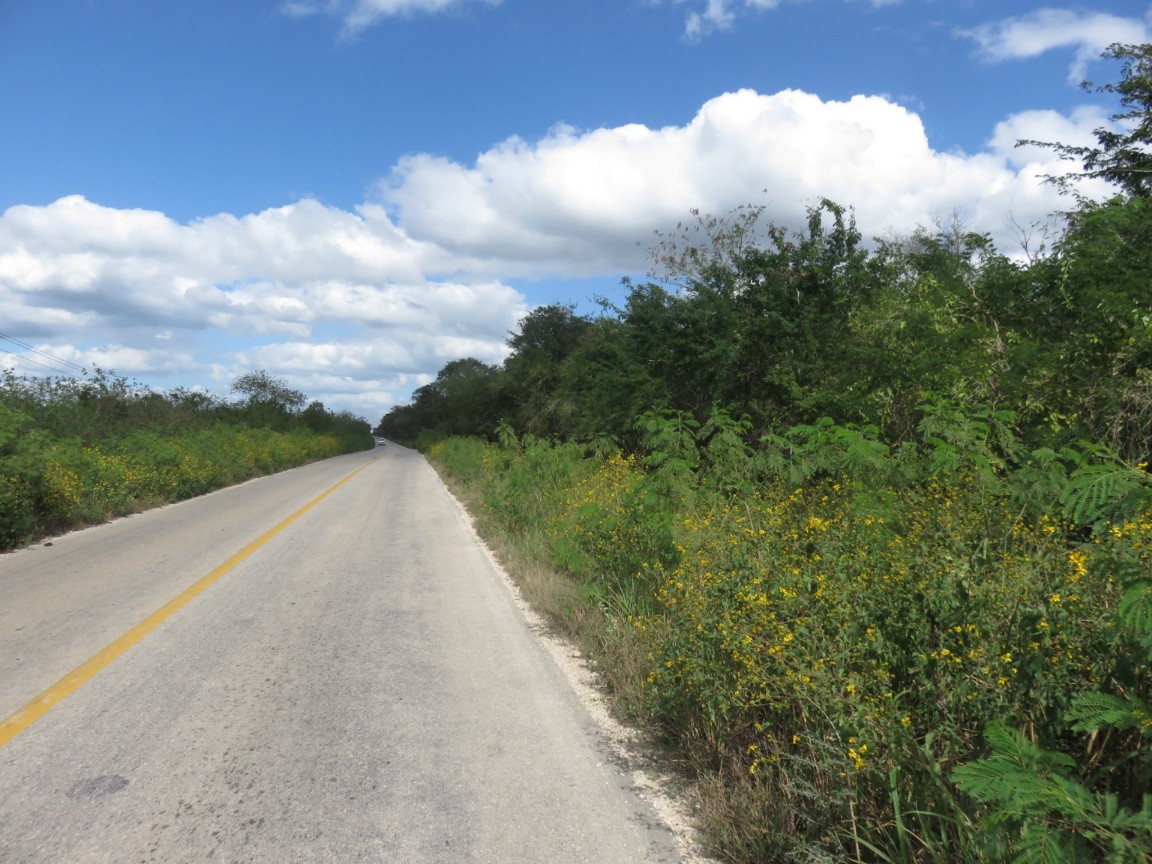
We are now crossing an ecological reservation area and were expecting to hear birds singing, signs directing people to eco sites and some visitors. What we saw were no signs, no people, one Glamping campsite which fronted the road we were on and these yellow flowers or plain bush and trees. Surprisingly there were also numerous places where people dumped their rubbish and the men were allowed to collect firewood – not something that would be tolerated in Europe.Sotuta is the target destination for tonight and we still have the road to ourselves, which, to be fair, is quite smooth by local standards.We are now in the centre of the reservation area and something of a peculiar interest to the local population. There are clearly attempts to open this up to larger numbers of tourists than two random arrivals on bicycles, however, for now we will be the talk of the village before we leave. Of greater concern is the number of times we see children of school age like this who are not in school; we’ve witnessed this everywhere we have visited since we arrived ten weeks ago.Most wild dogs we see are more focused on finding the best place in the shade than strangers on bicycles.We are always impressed by the poorest villages having such well preserved churches.A rare encounter with liquid sunshine during the day.Another feature of many towns and villages are the murals on display and which are not ruined by graffiti.This place took our experience of renting a room to a different level……………downwards.
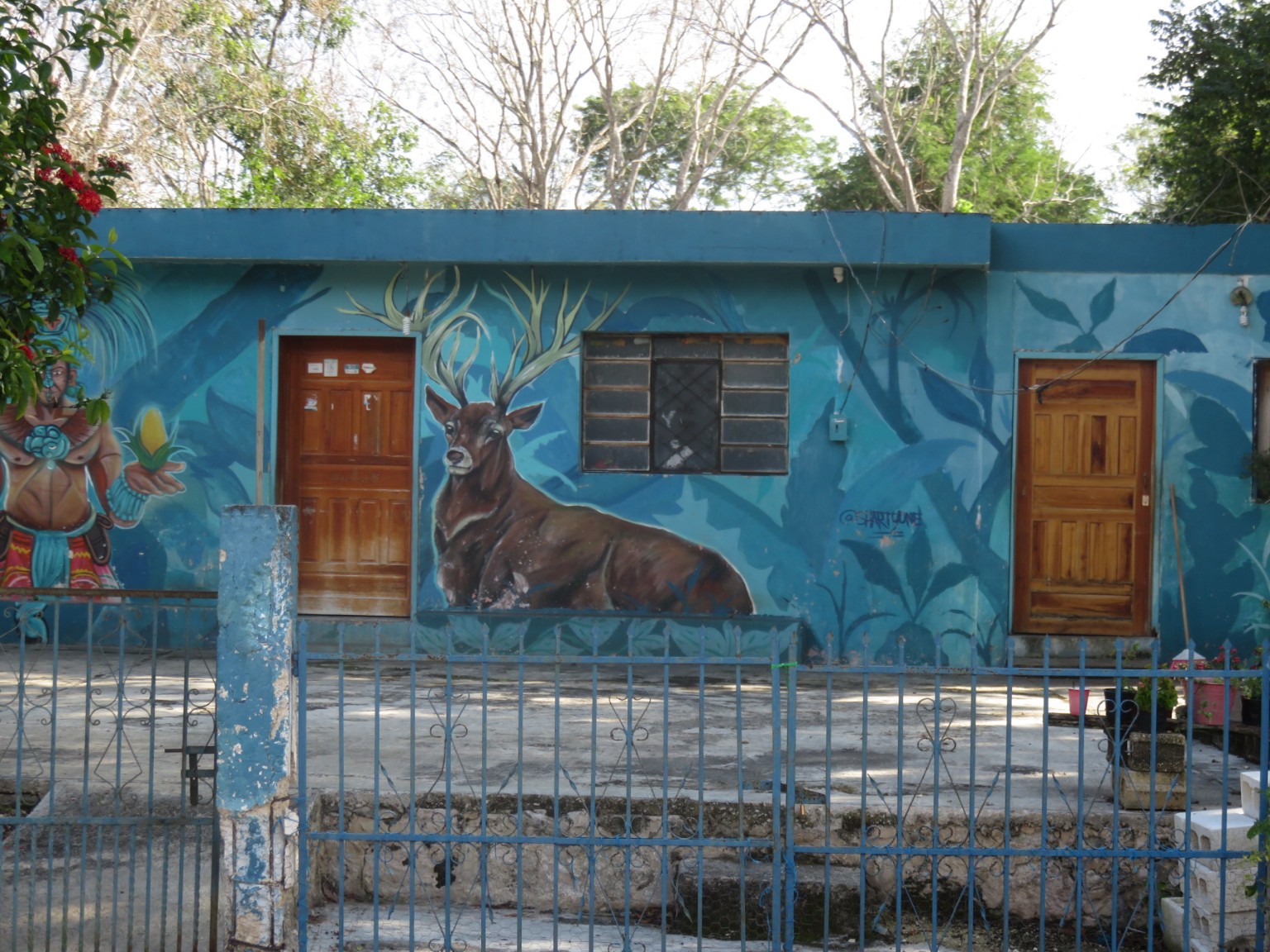
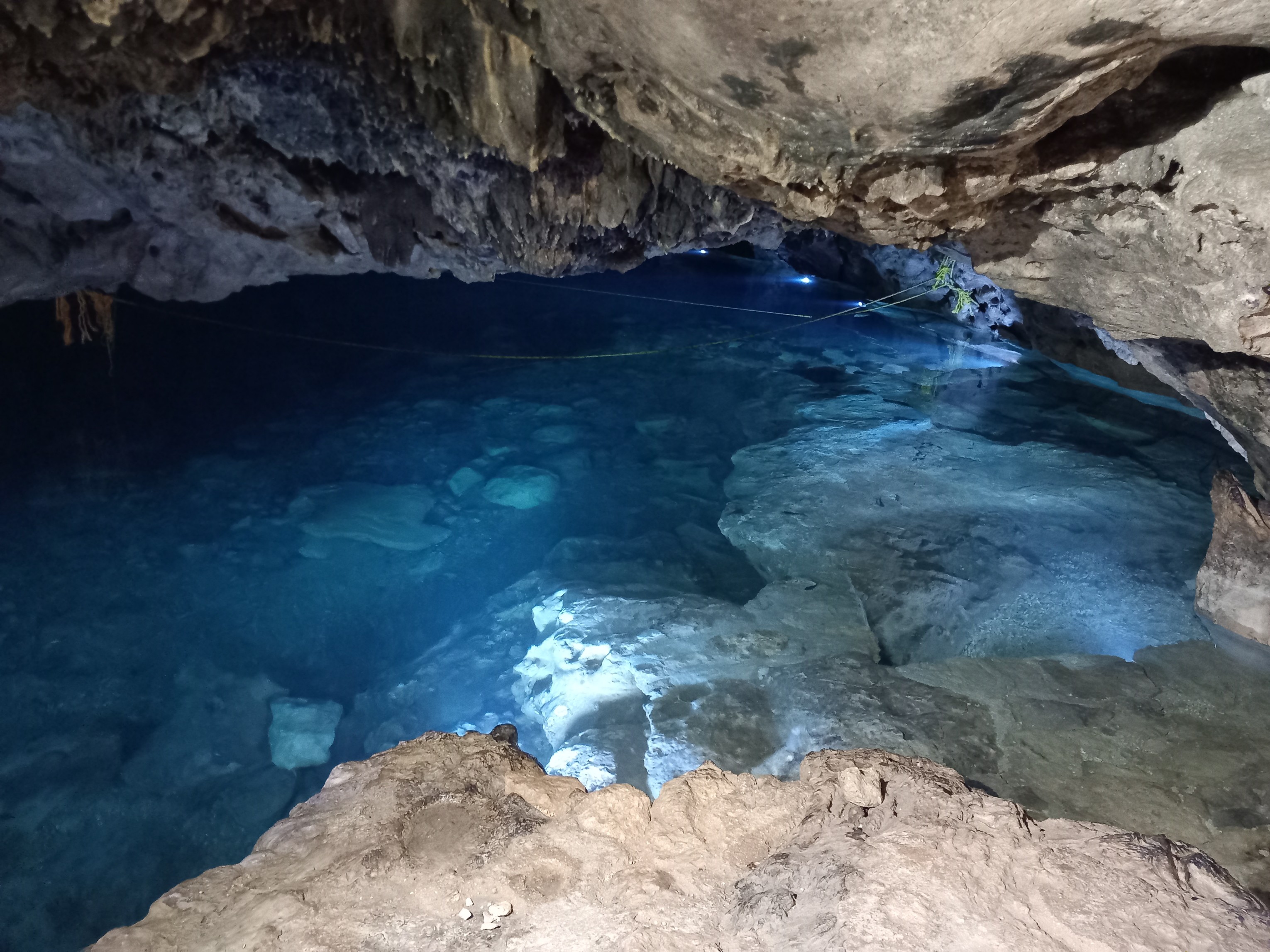
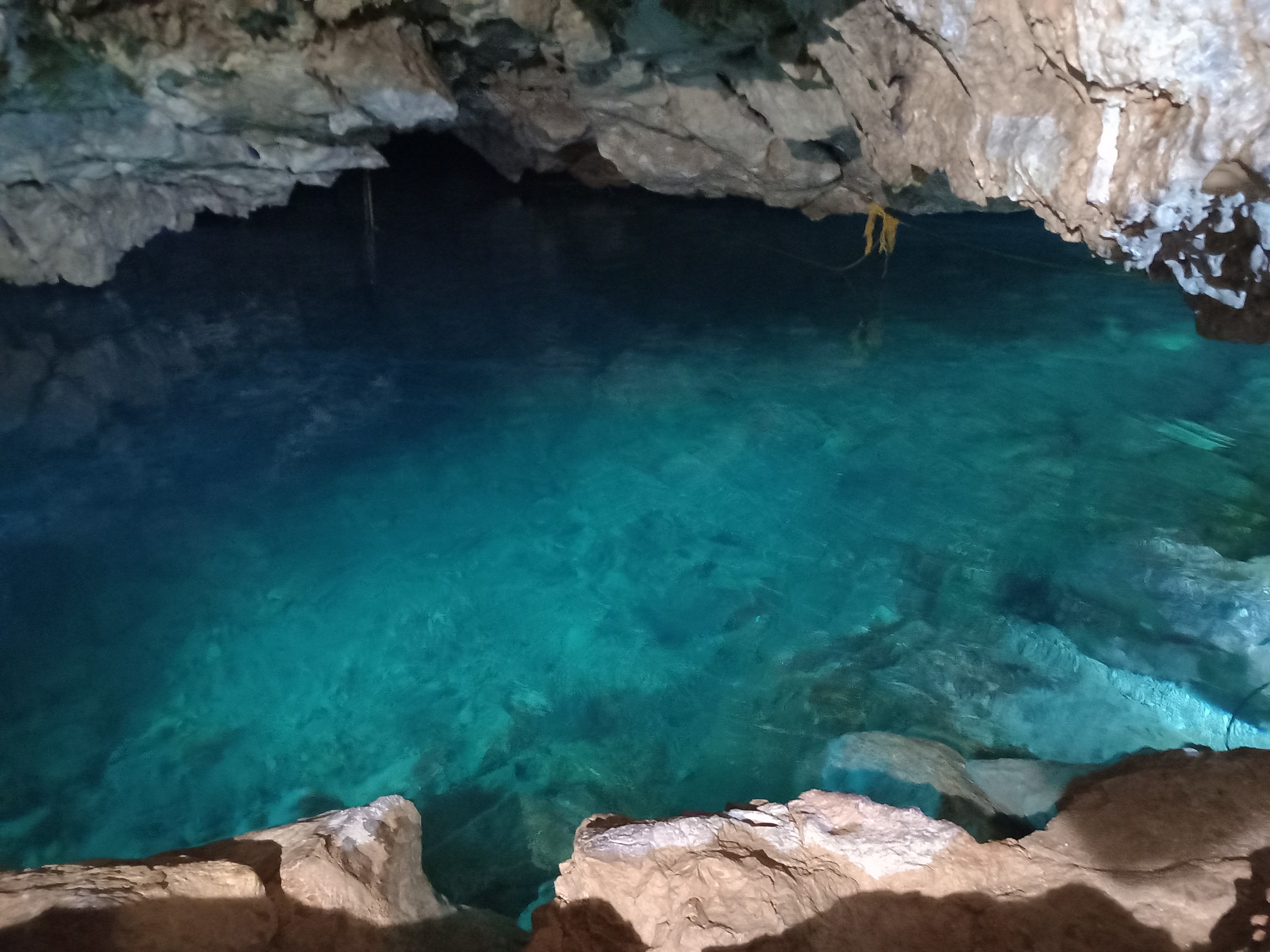
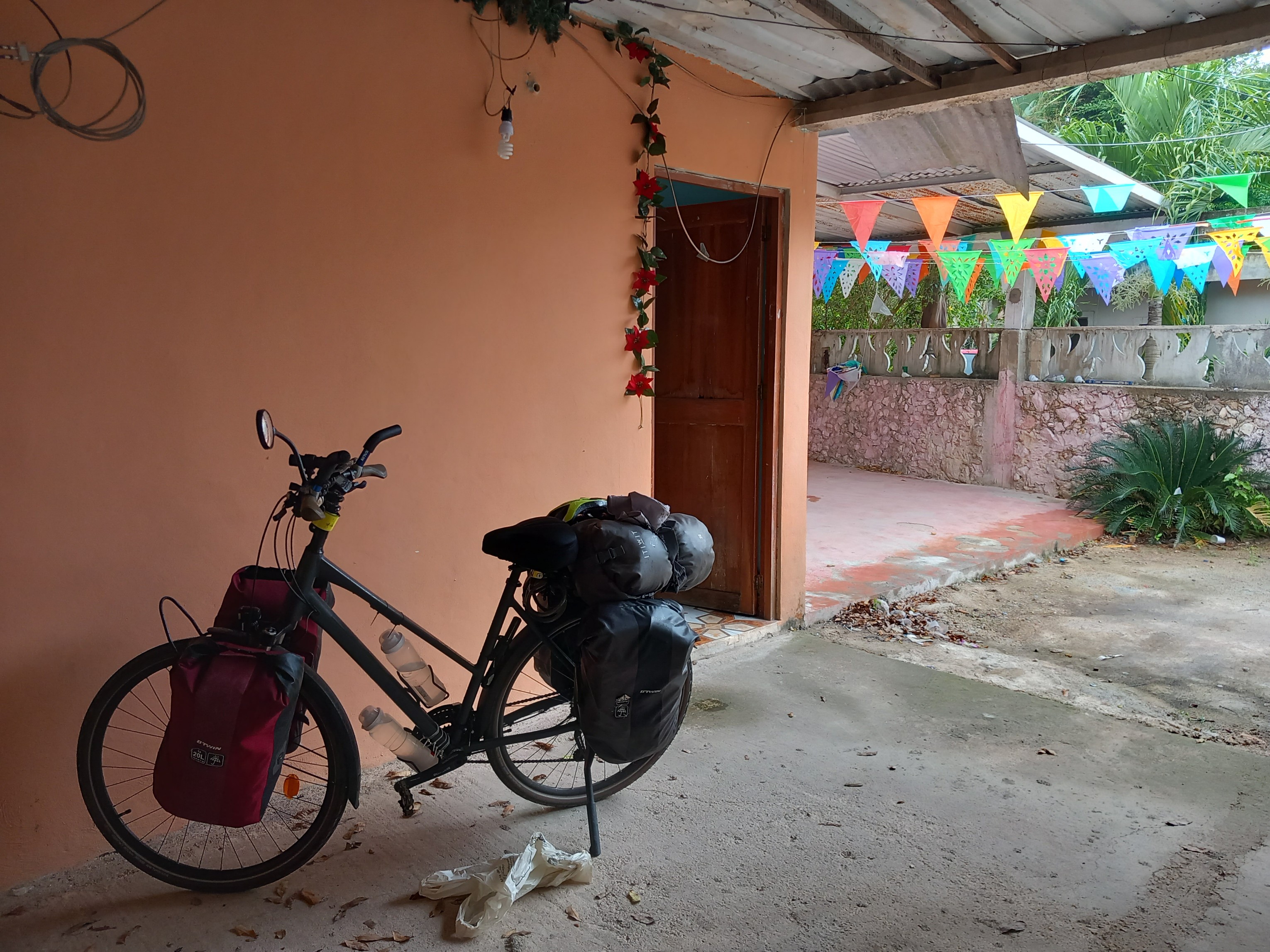
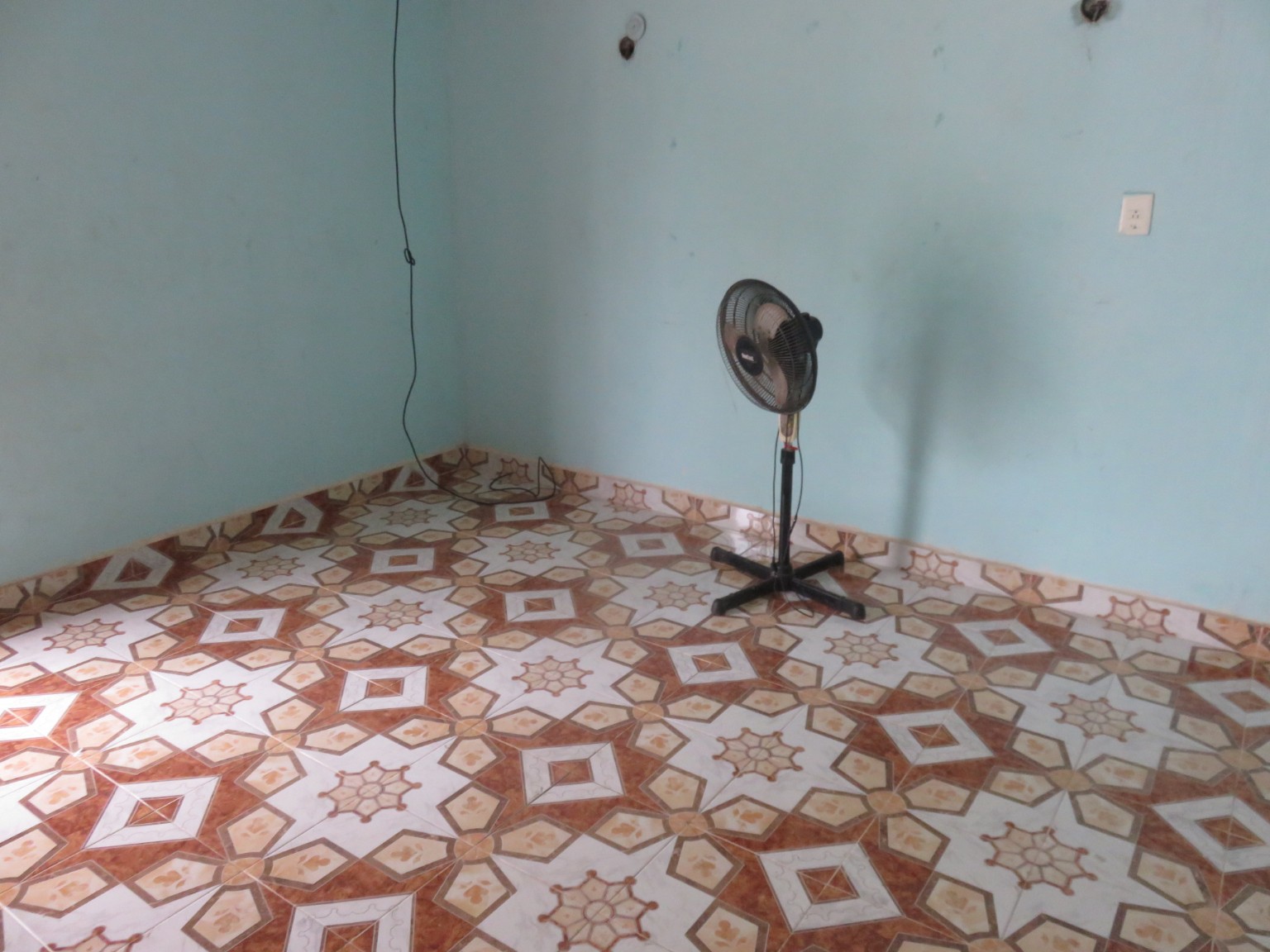
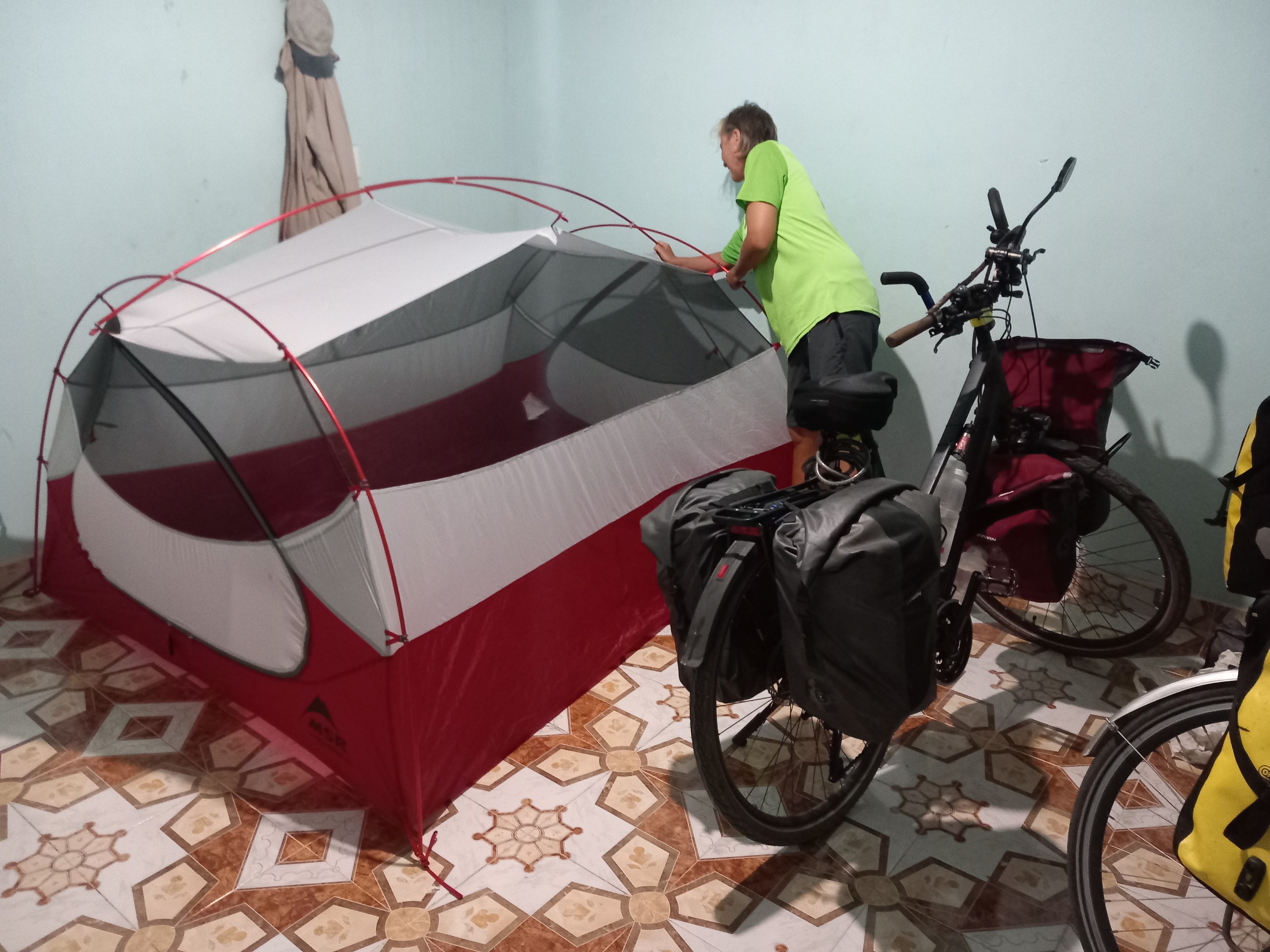
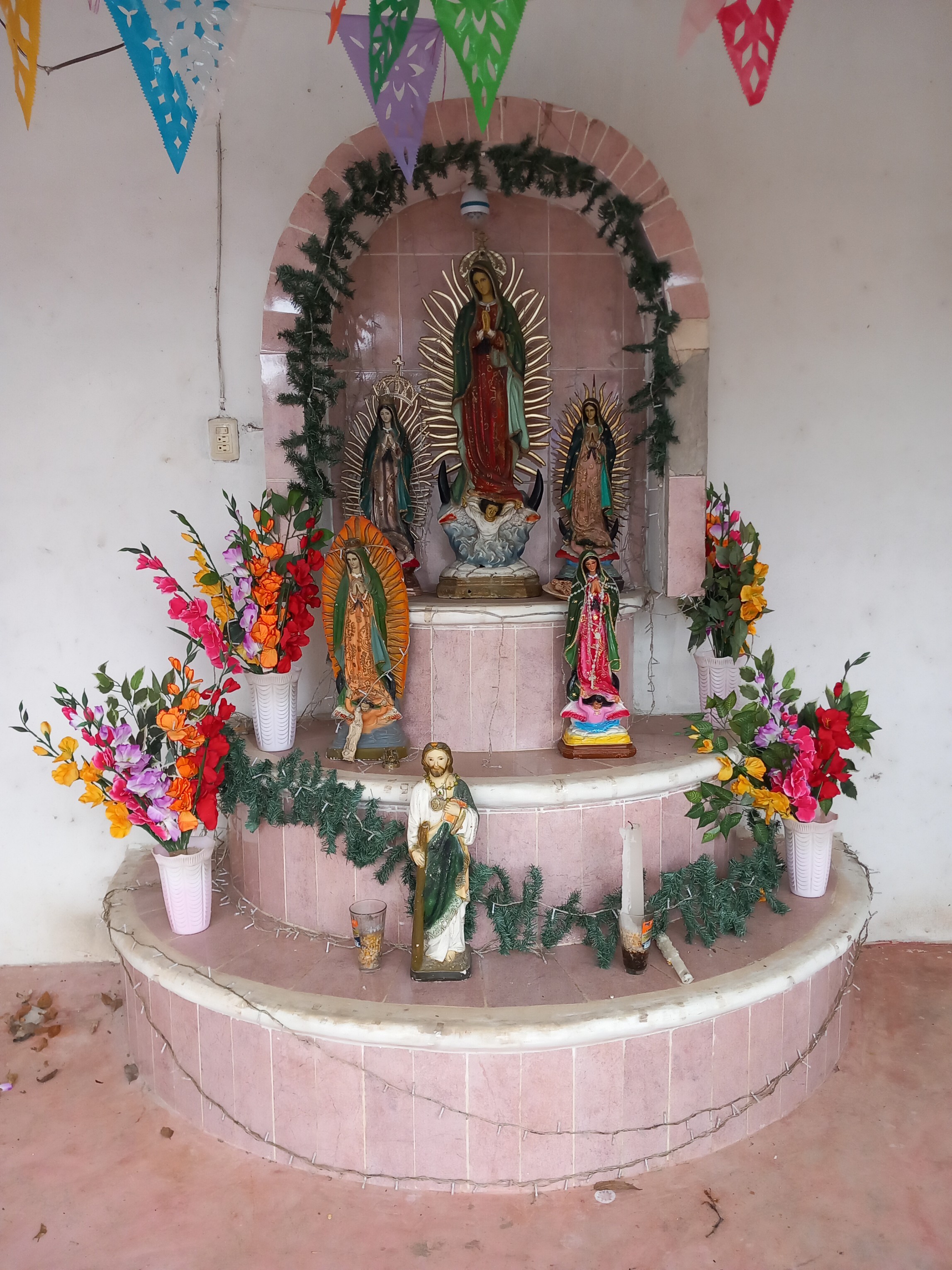
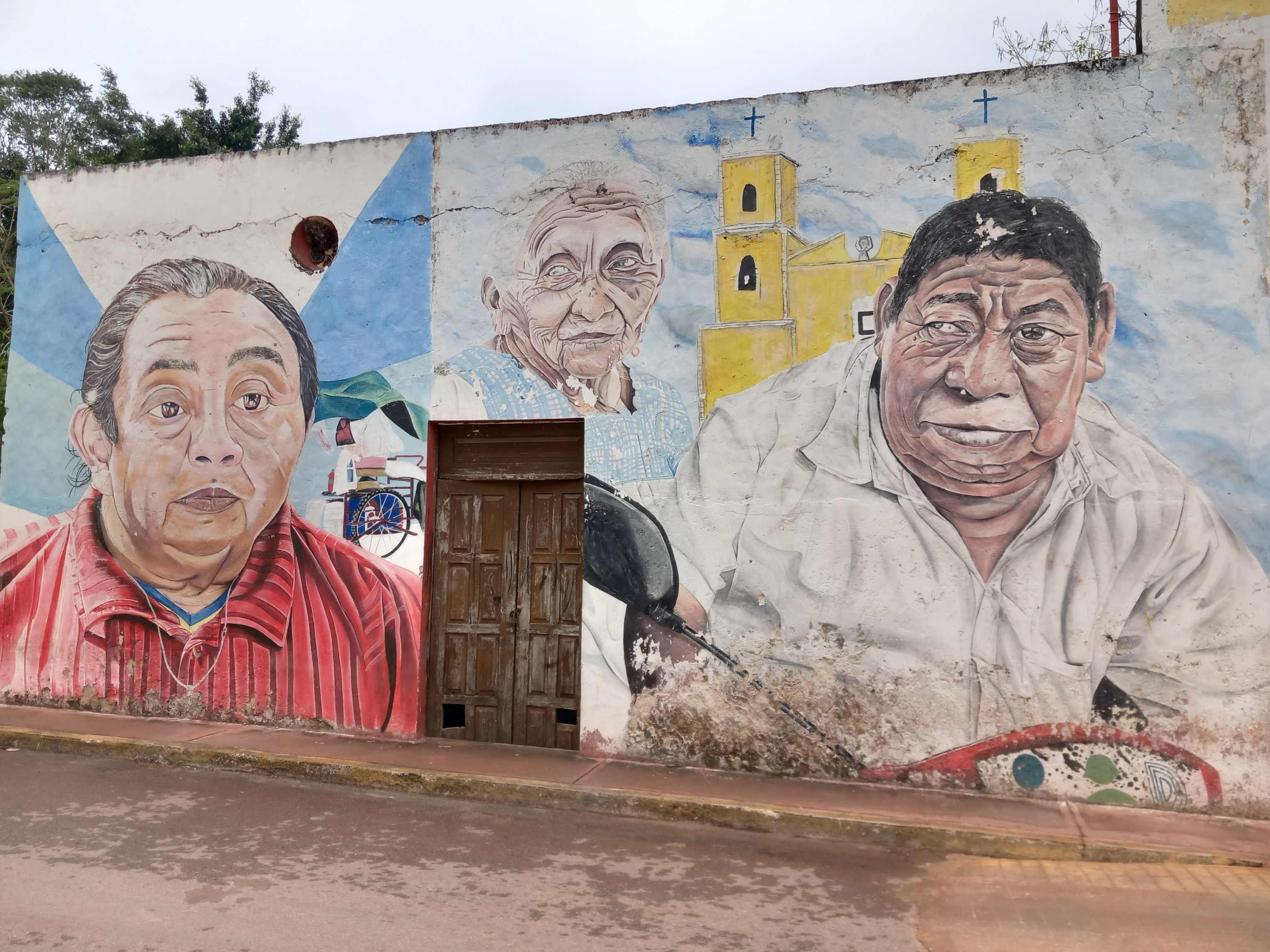
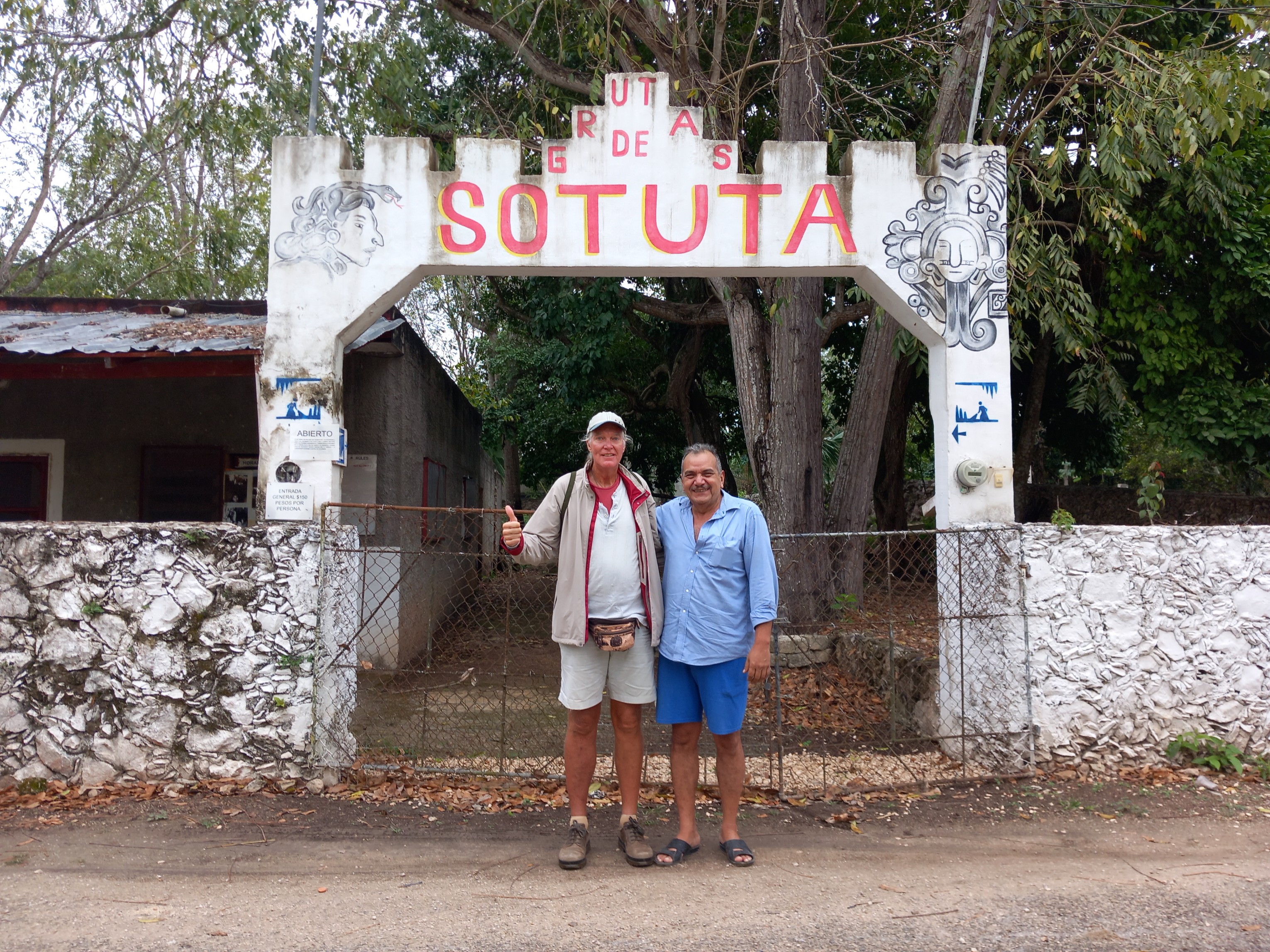
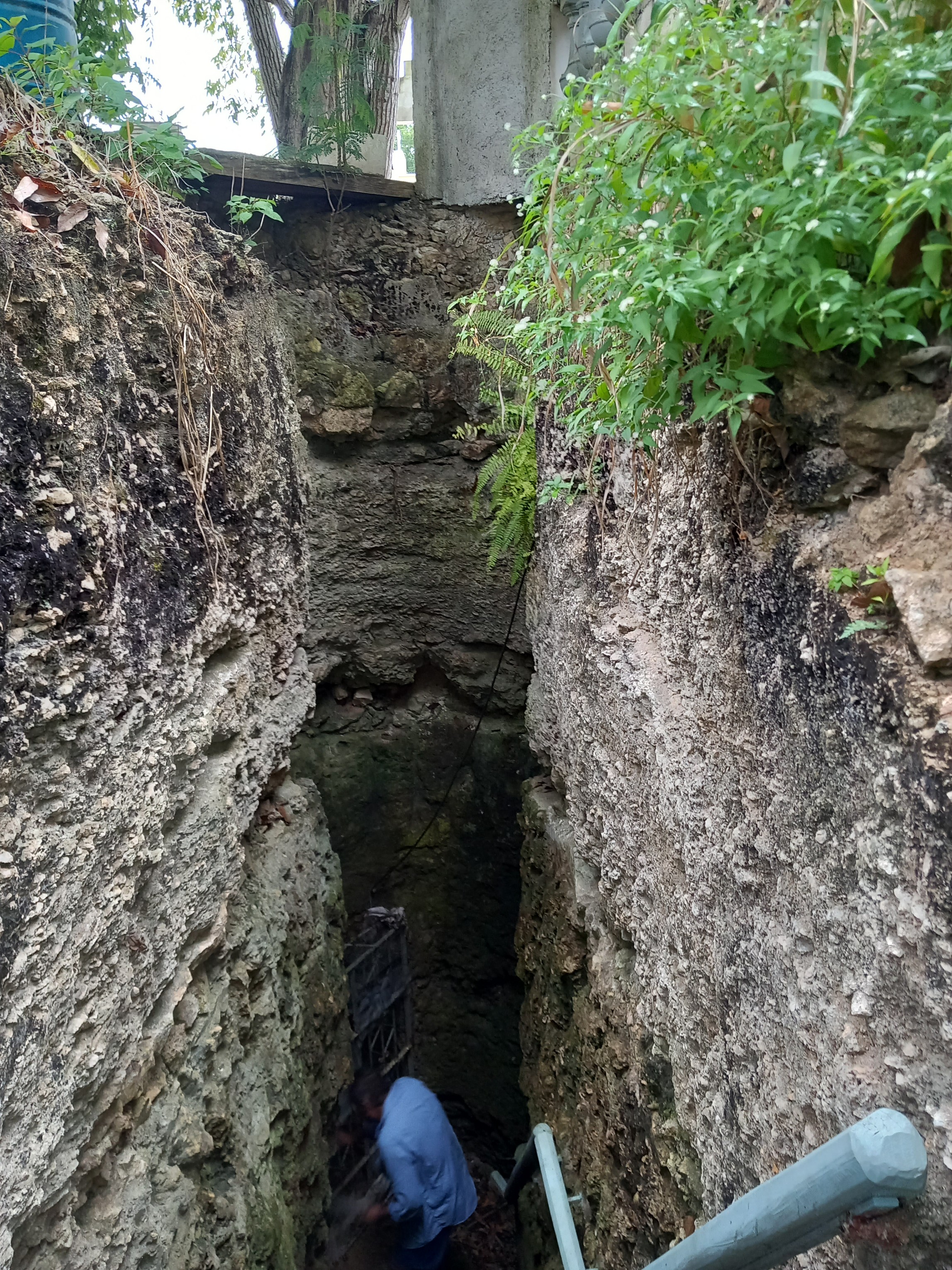
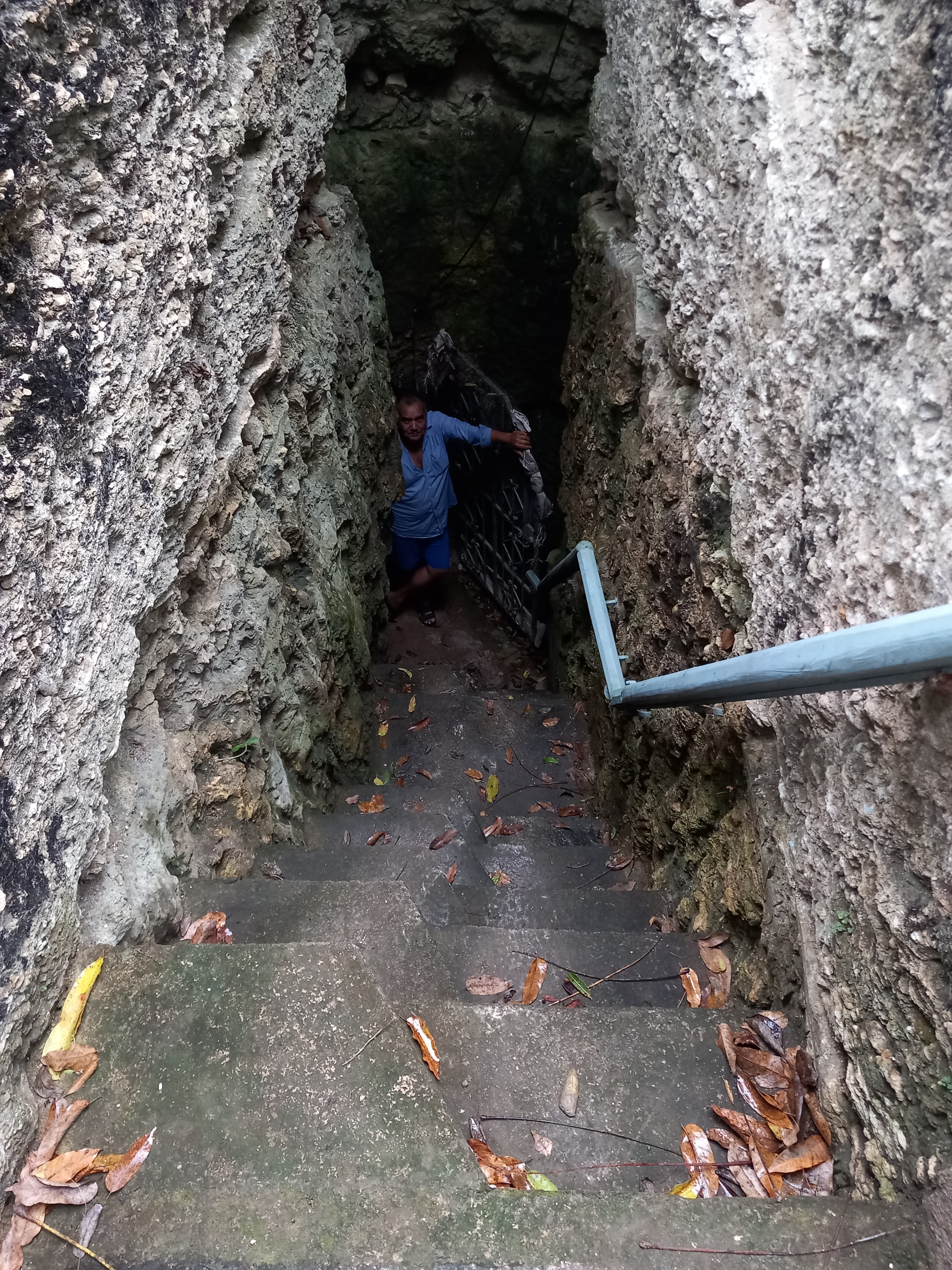
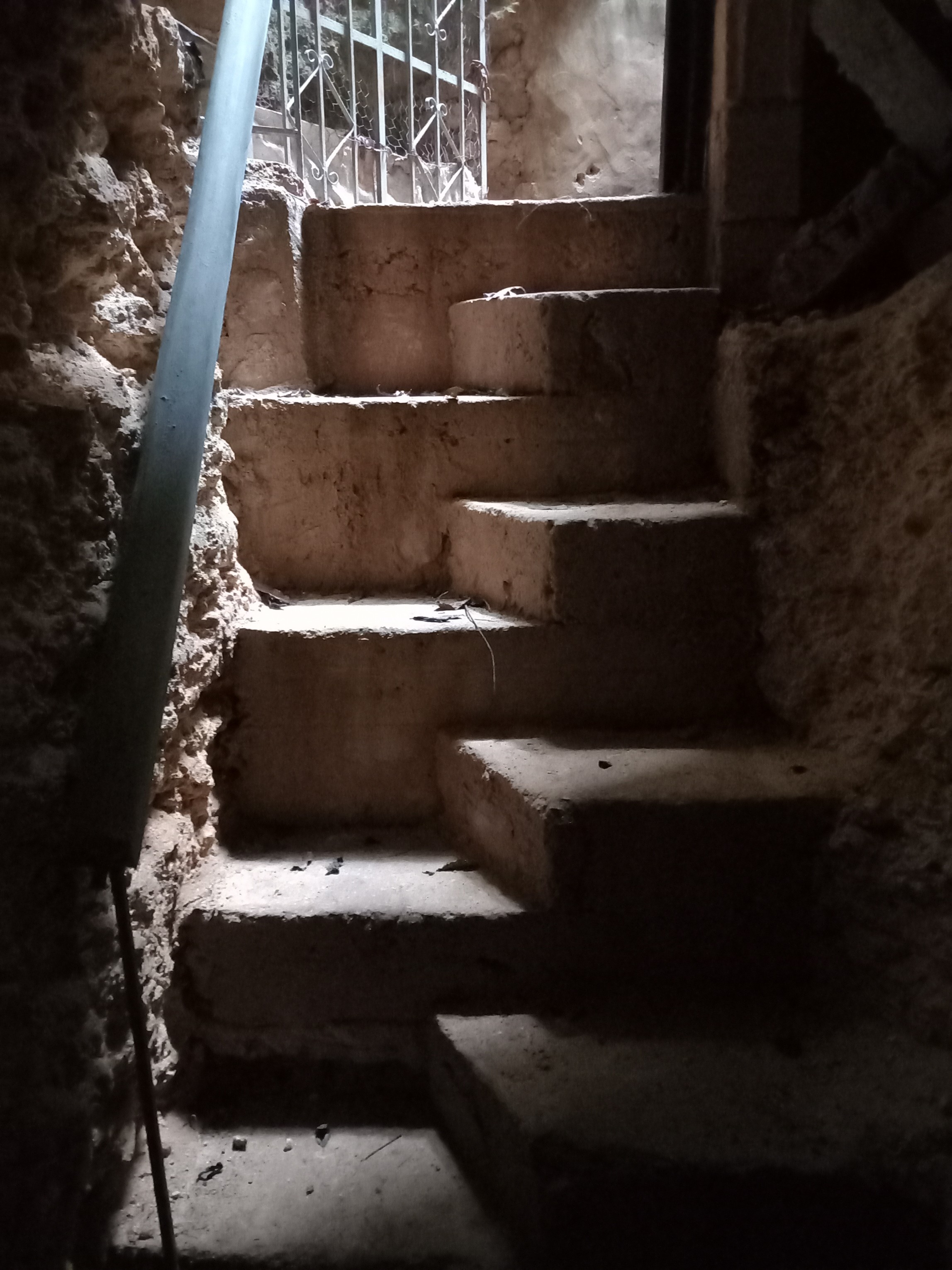
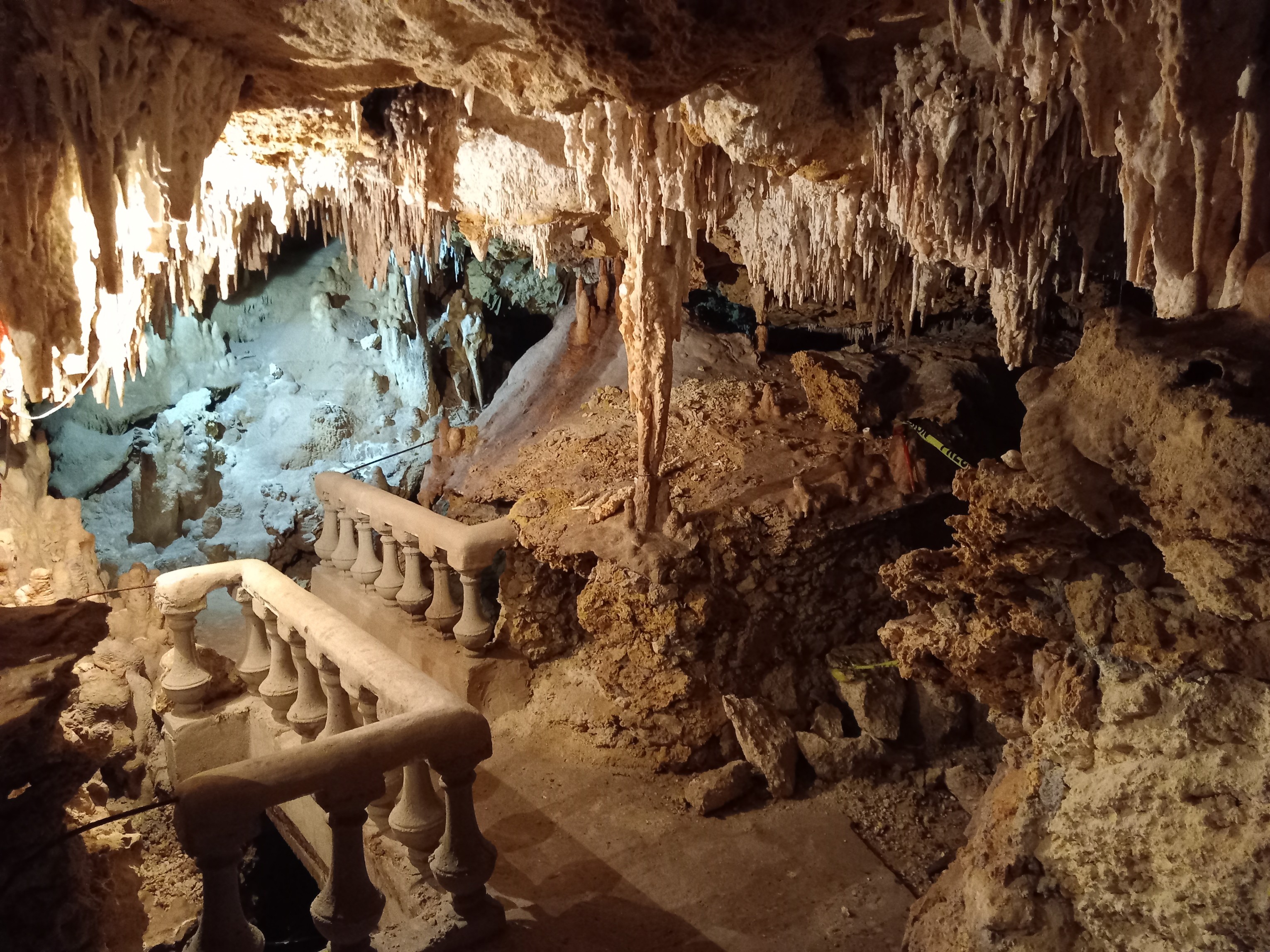
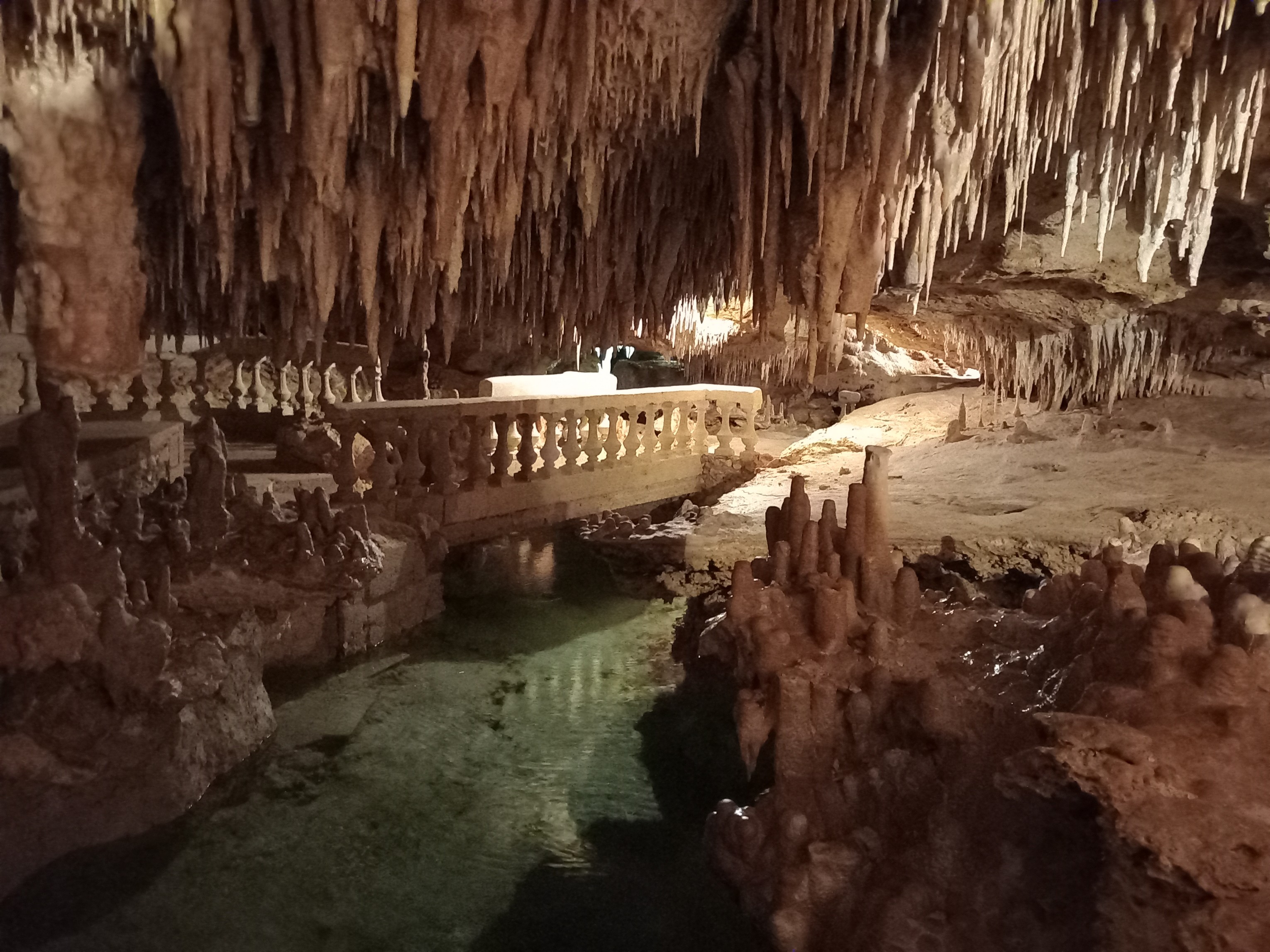
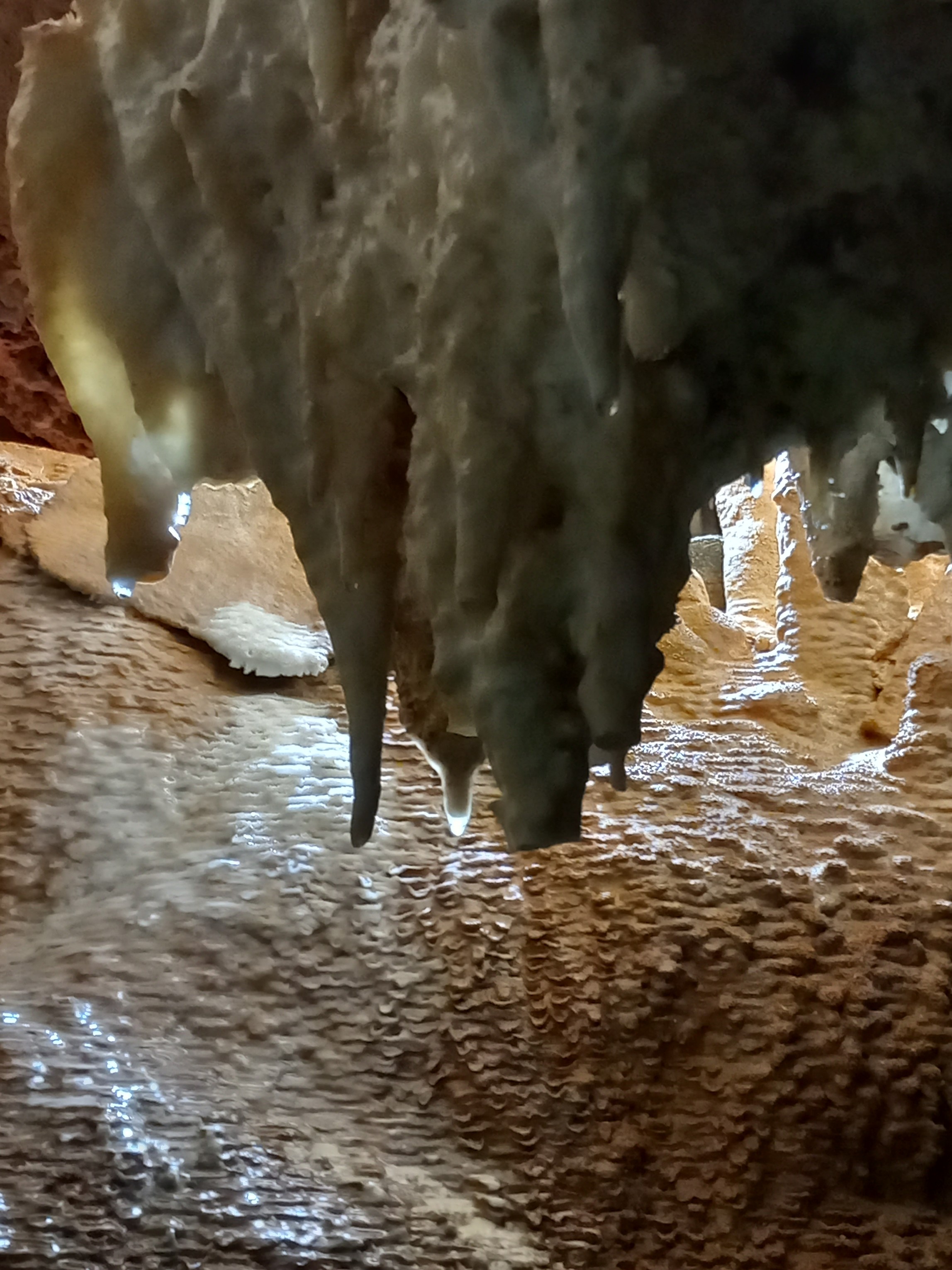
The only hotel in the village was not occupied by owners or staff on our arrival in Sotuta and no one appeared to know where they were. The lady in the dress shop opposite offered to contact her uncle who had a room for rent. This is the room. Fortunately there was a bathroom a few metres away accessed by a covered passage – very useful because the afternoon light shower became a downpour during the night.We have erected this tent more times indoors than outdoors on this trip so far. At least it provides peace of mind should the creepy crawlies choose to pay us a visit when we least expect it.Almost all homes and public places have a place of worship, including room only rentals.These murals display how the facial features of the Mayan descendants are different from the Mexican facial structure.This is the owner of the Cenote we are about to show you who we randomly met in the local mobile phone shop whilst buying credit for the ‘phone.Here we are attempting to show the steep steps down, 8 metres to be precise, to enter the underground Cenote (an underground lake).The only thing we are allowed to touch is the man made balustrade given that the stalactites take one hundred years to grow one centimetre.The colours of the rock are determined by the minerals filtering down through the soil above and are many and varied.
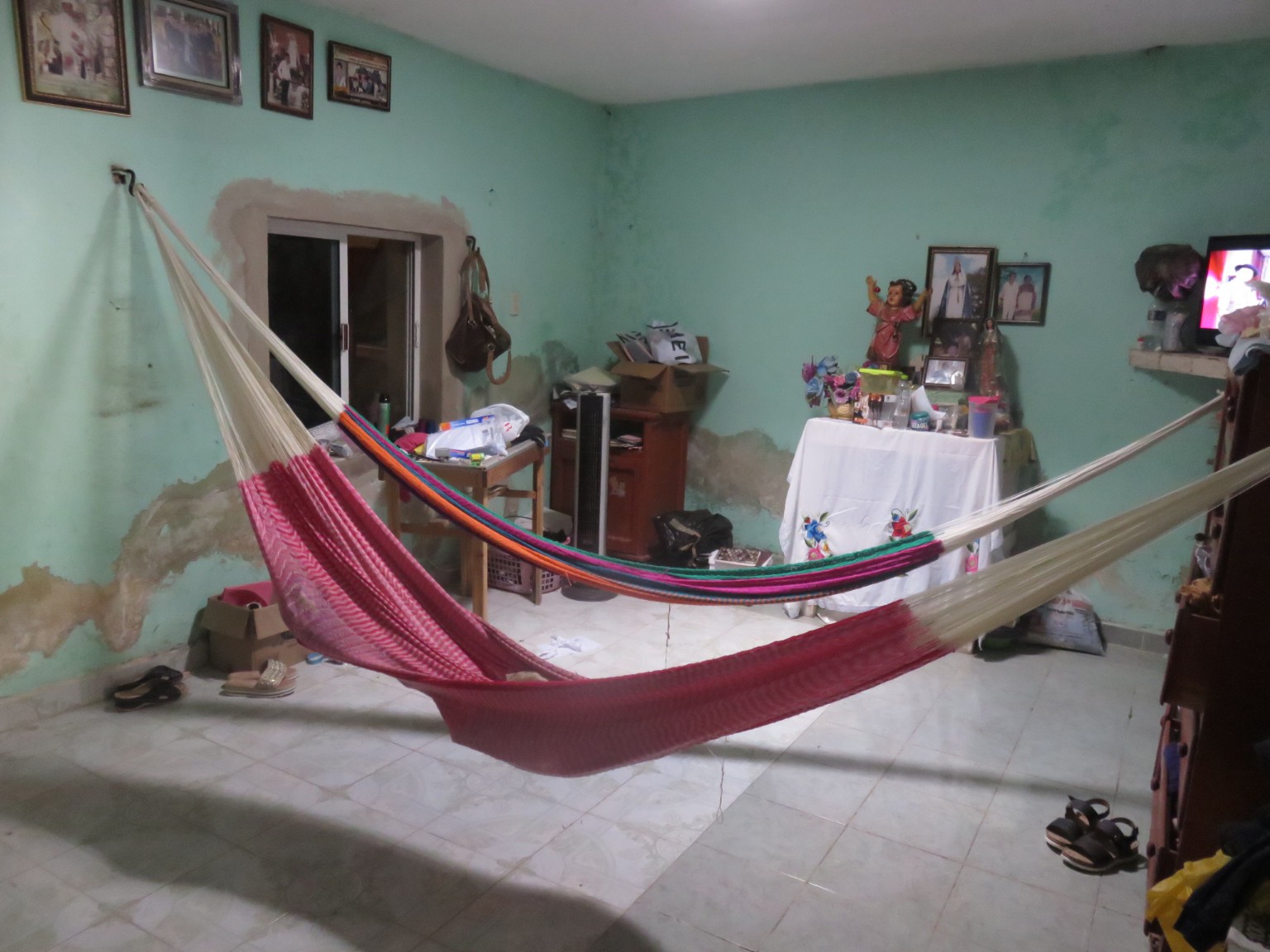
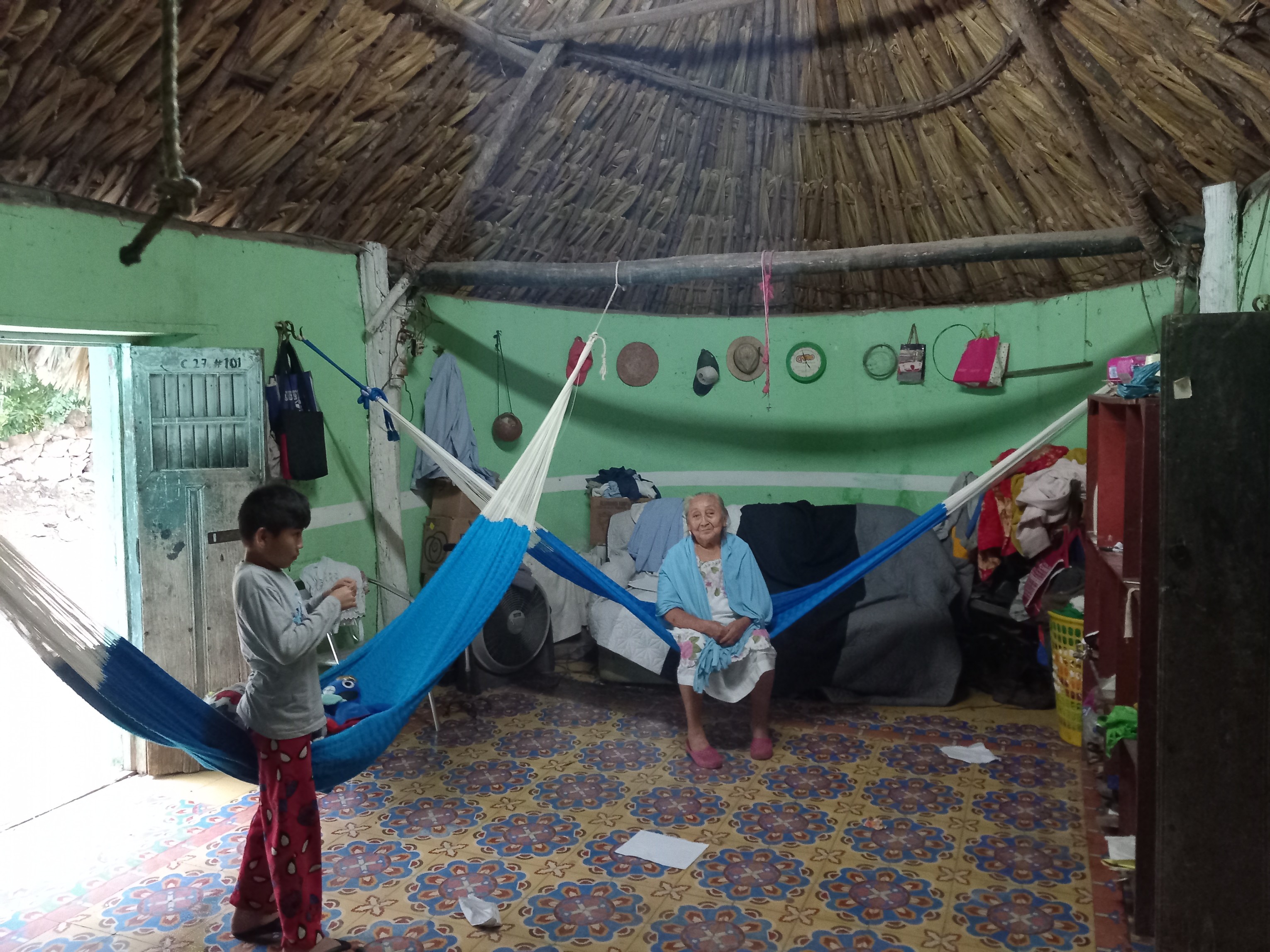
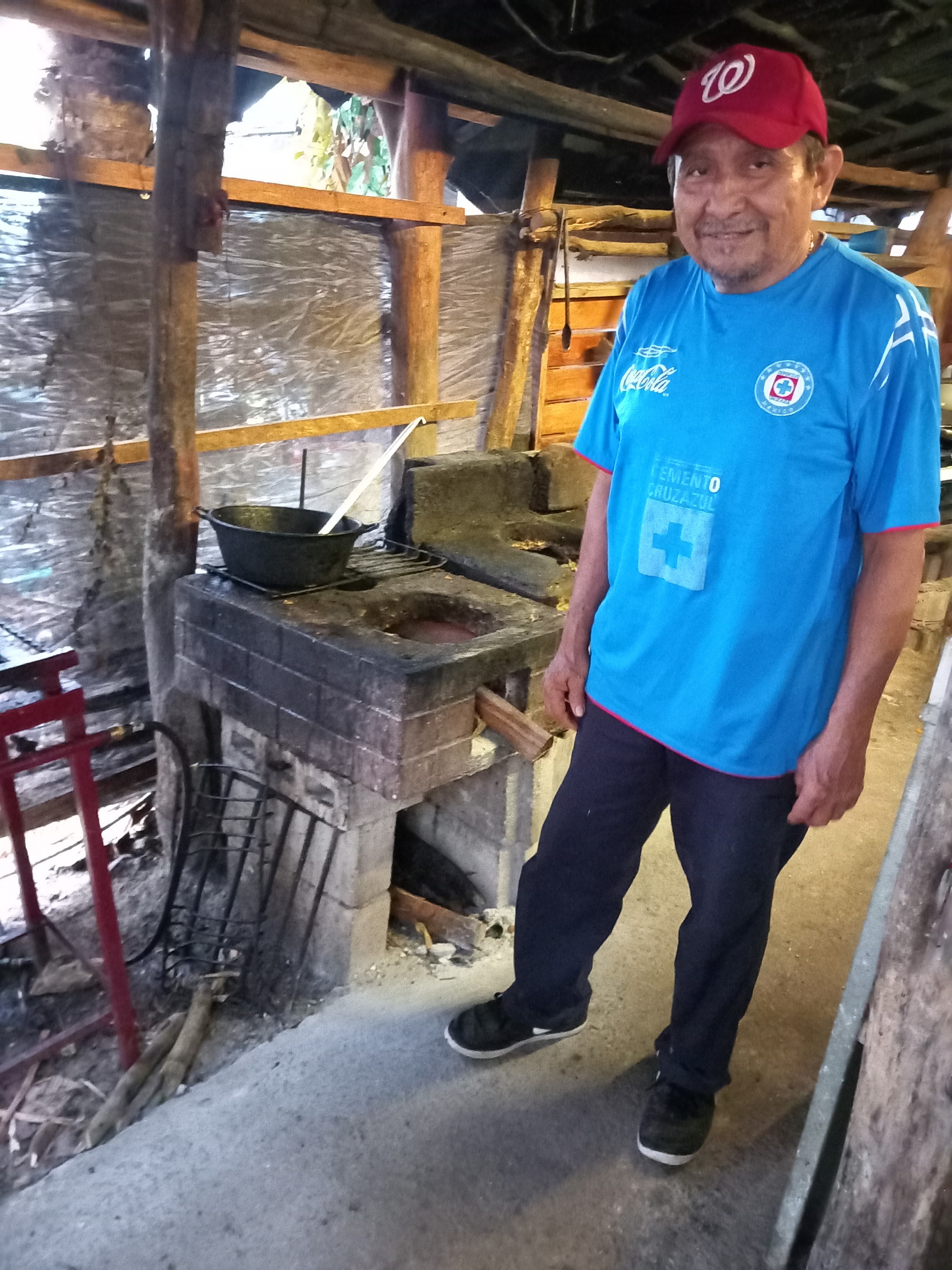
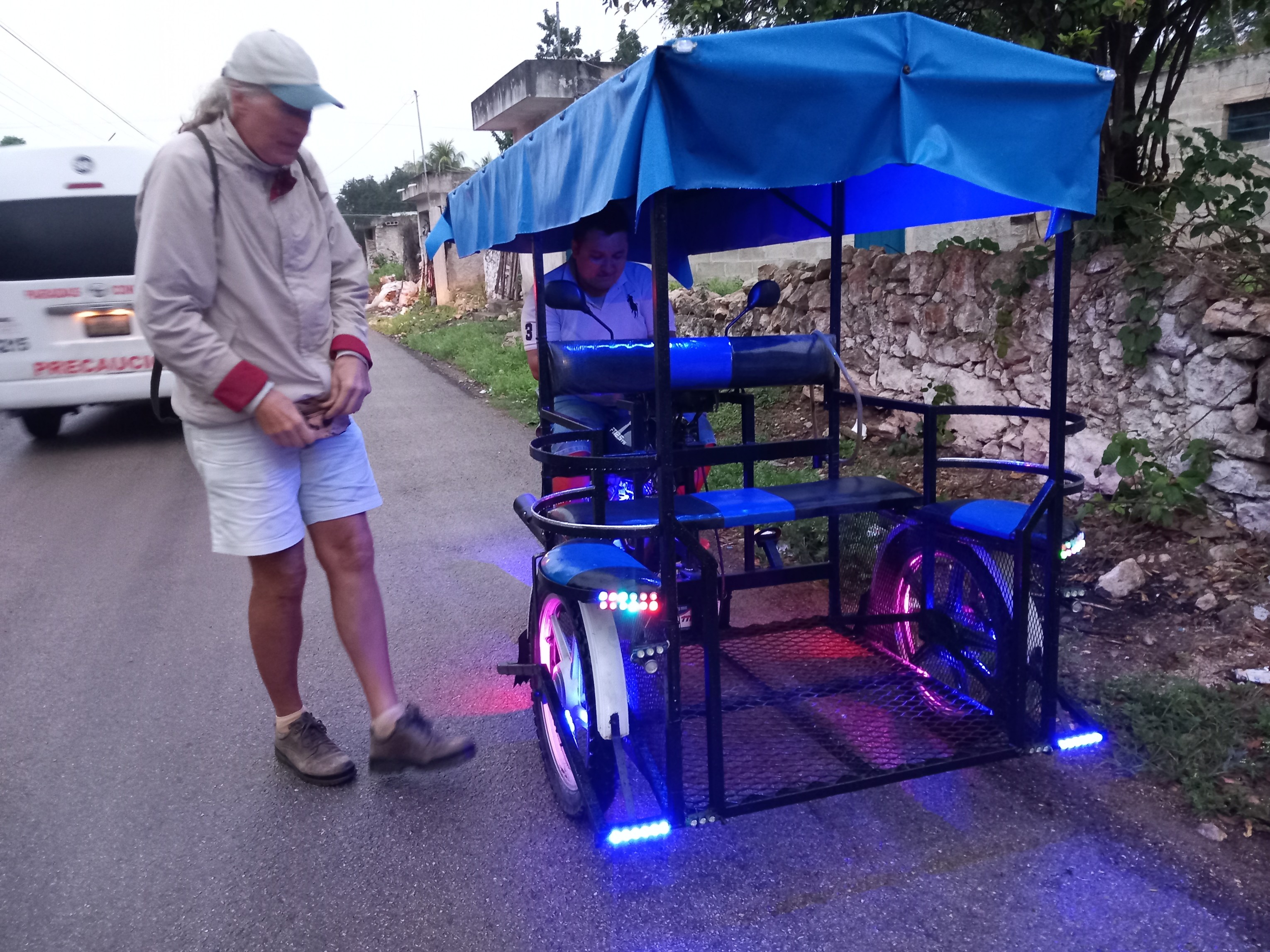
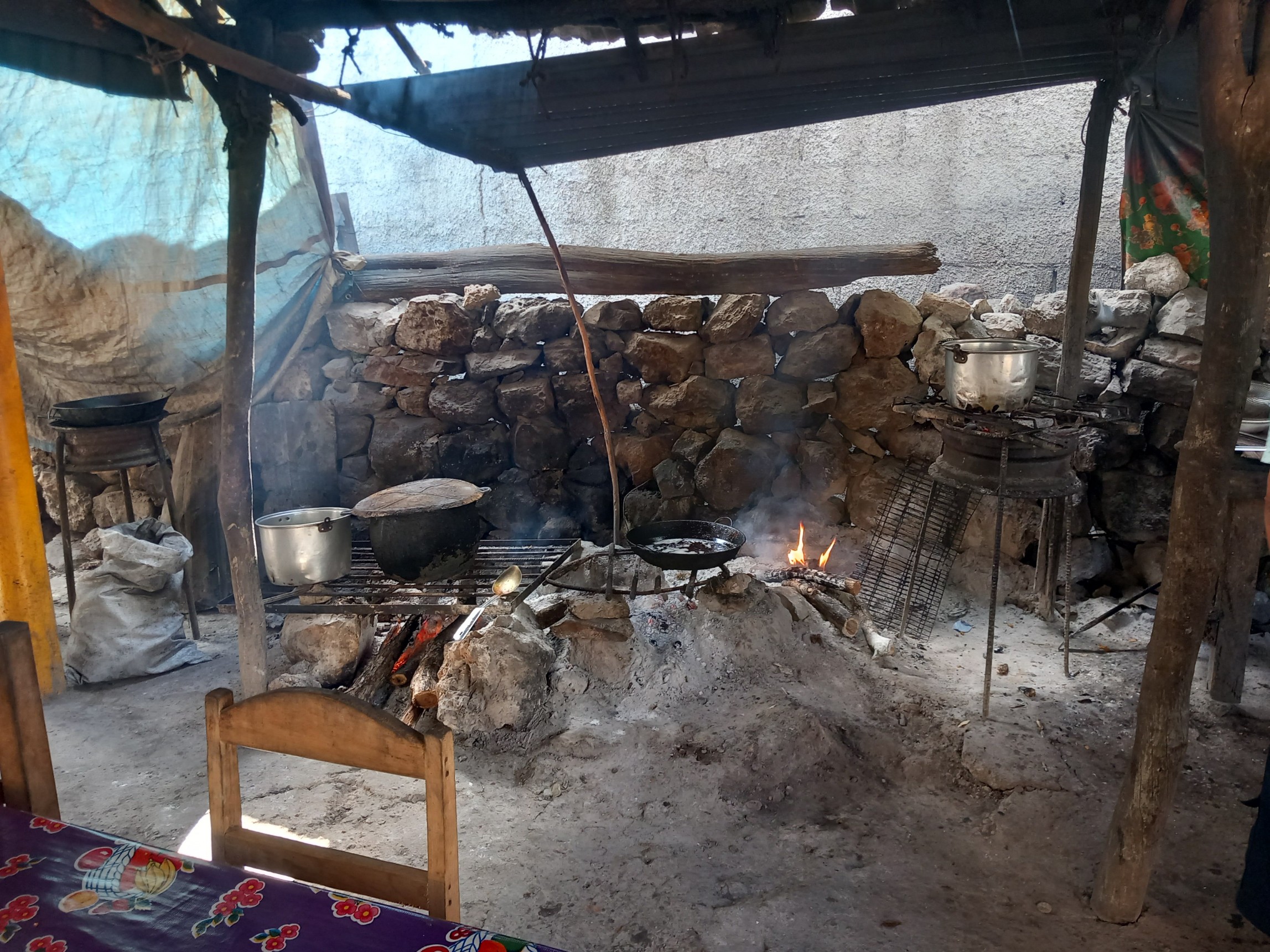
Still raining so we cheat and take a ‘taxi’ to dinner – not that it kept us dry.Olivia has a way of entering people’s homes to demonstrate the simple life (notice the lack of ‘things’) the Mayans lead. Hammocks are preferred to ordinary beds. Here we have the grandmother and 10 year old grandson occupying themselves whilst the son/father runs the restaurant attached to their home.This is the owner who learned how to cook in the Hyatt for many years in Cancun who always wanted his own restaurant; the food was exceptional (we don’t think they taught him at the Hyatt how to cook on an open fire).The owner’s father (he’s 80 years old and still goes into the woods every day to collect the firewood), brother and one staff member are also involved.Making paper shapes with a very talkative 10 year old. This was a Saturday and he enjoyed telling us about his school and will do well in life.A rare outing after dark on a moto taxi, with headlights.
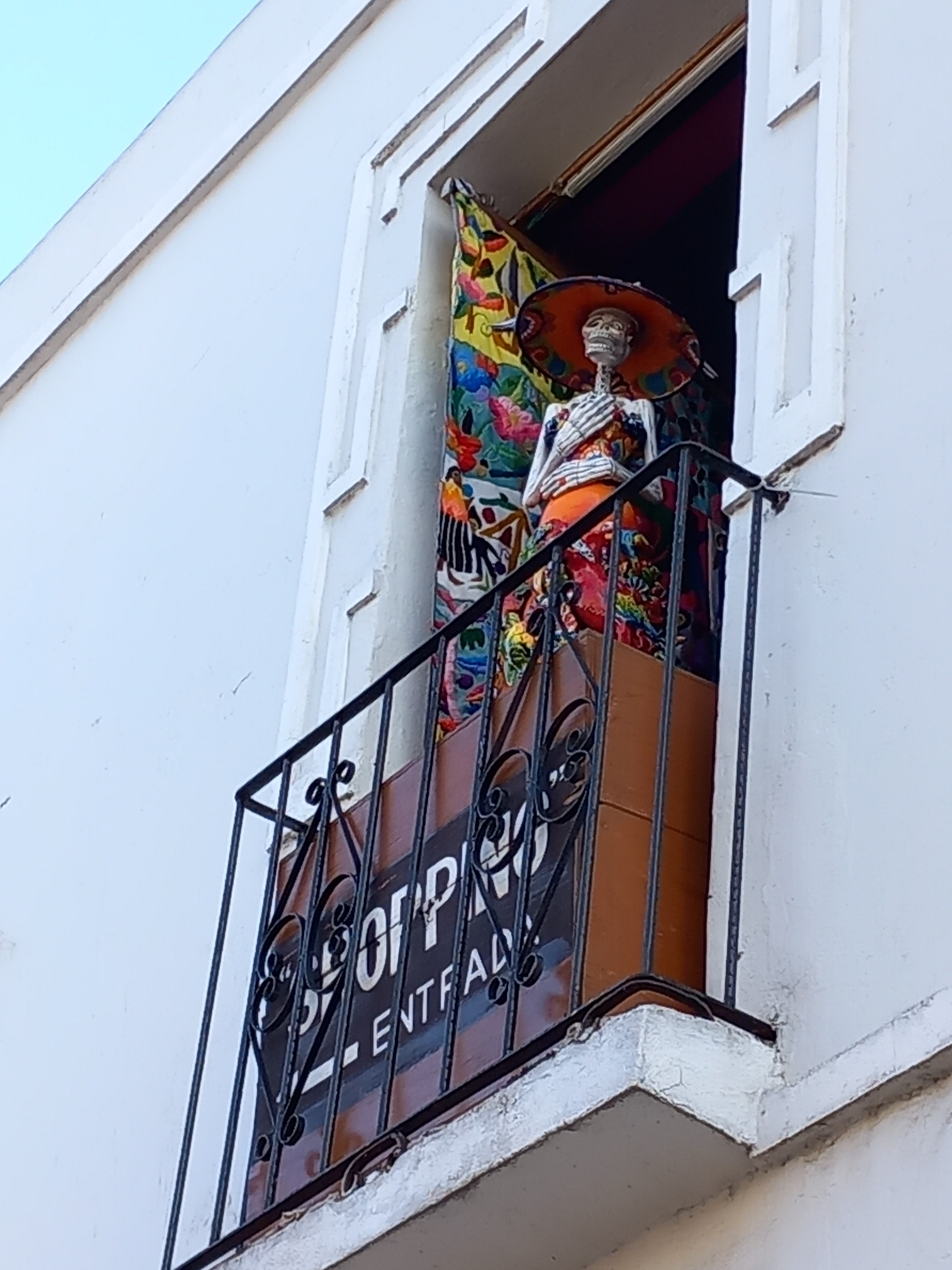
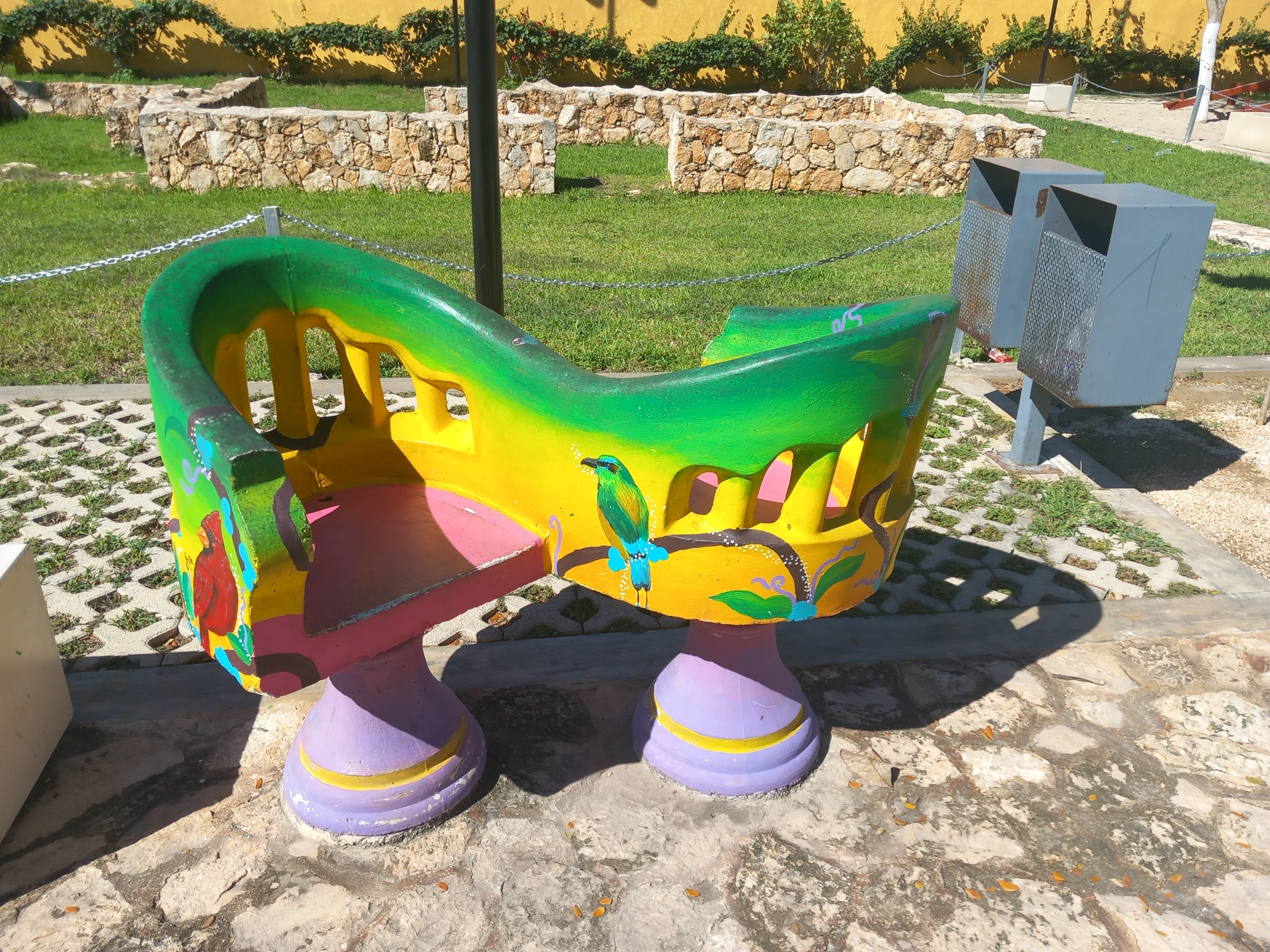
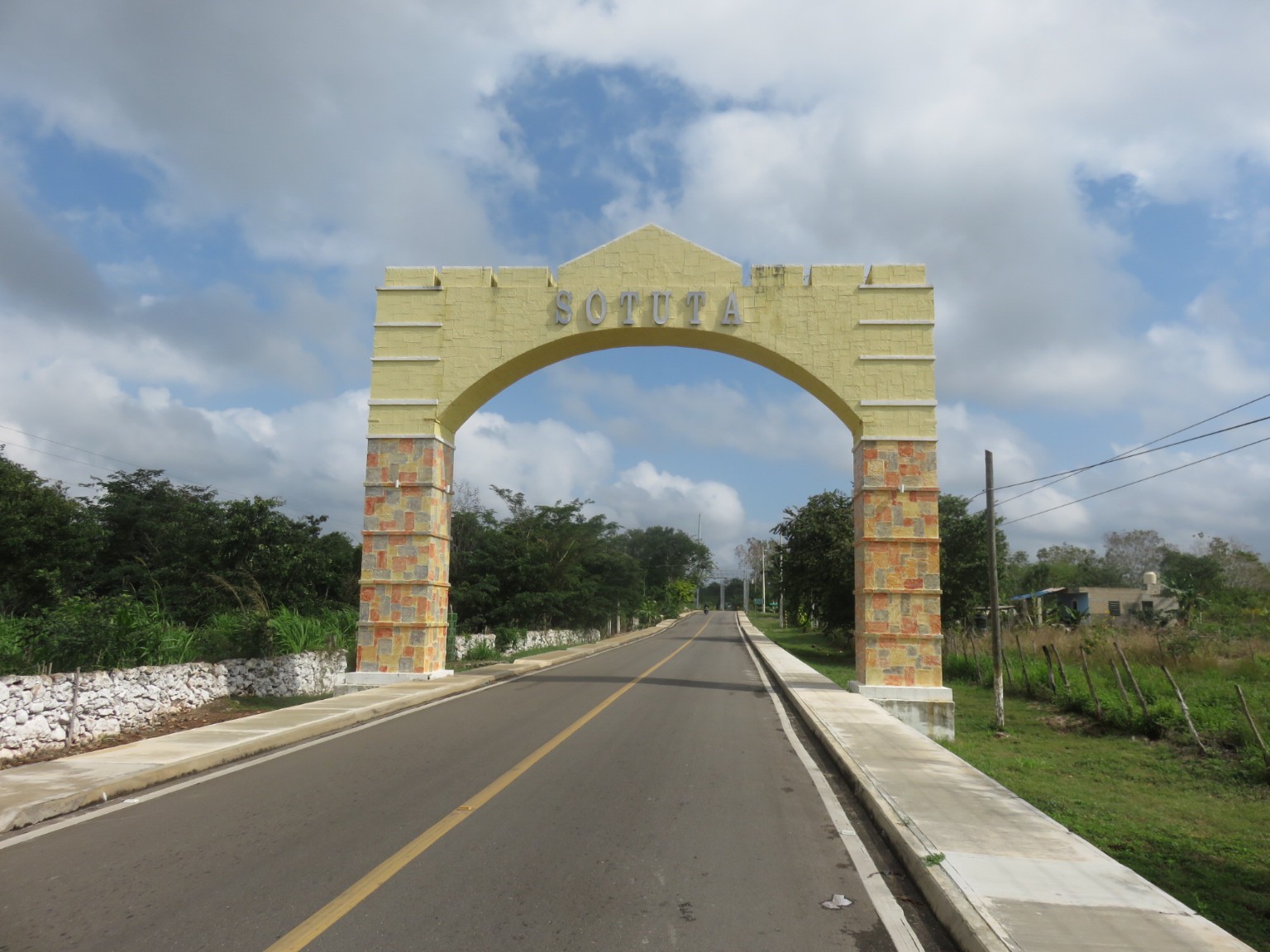
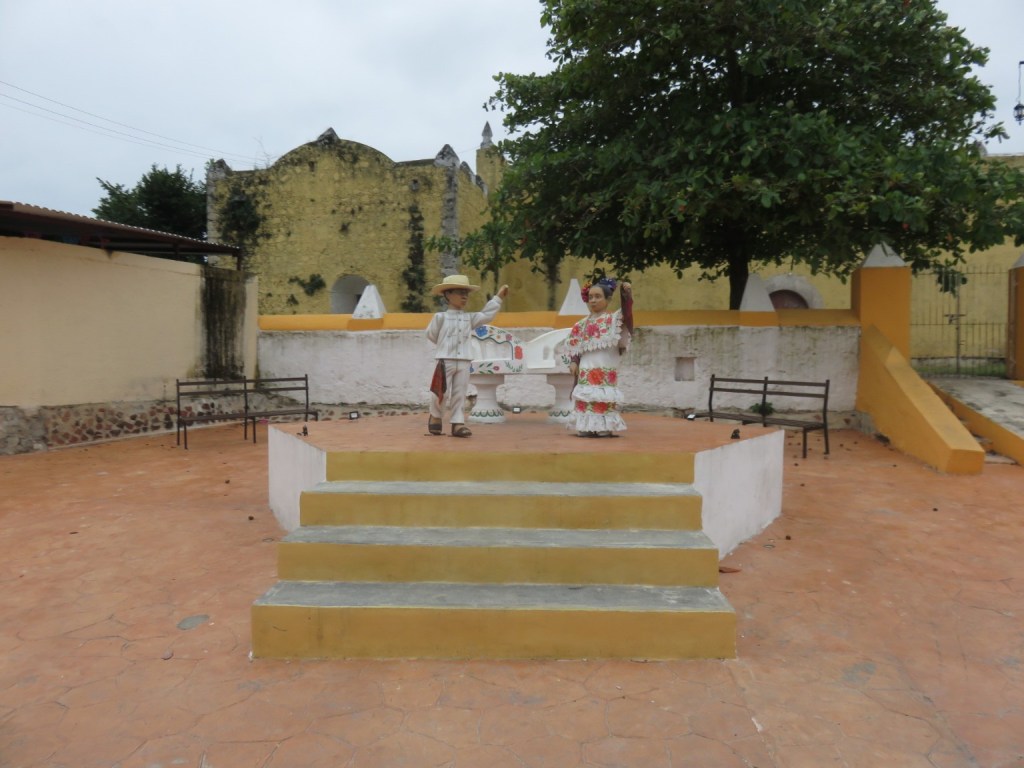
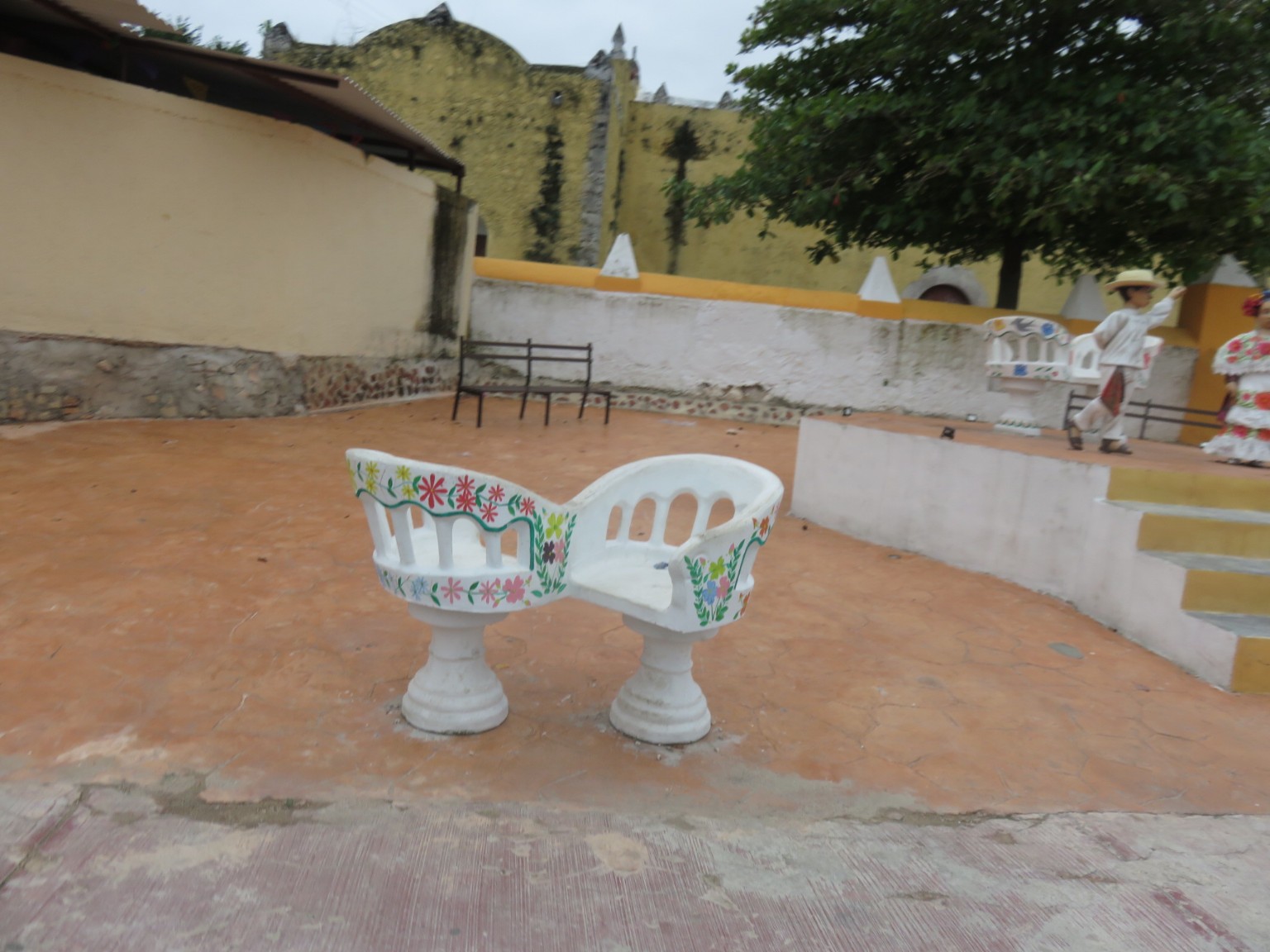
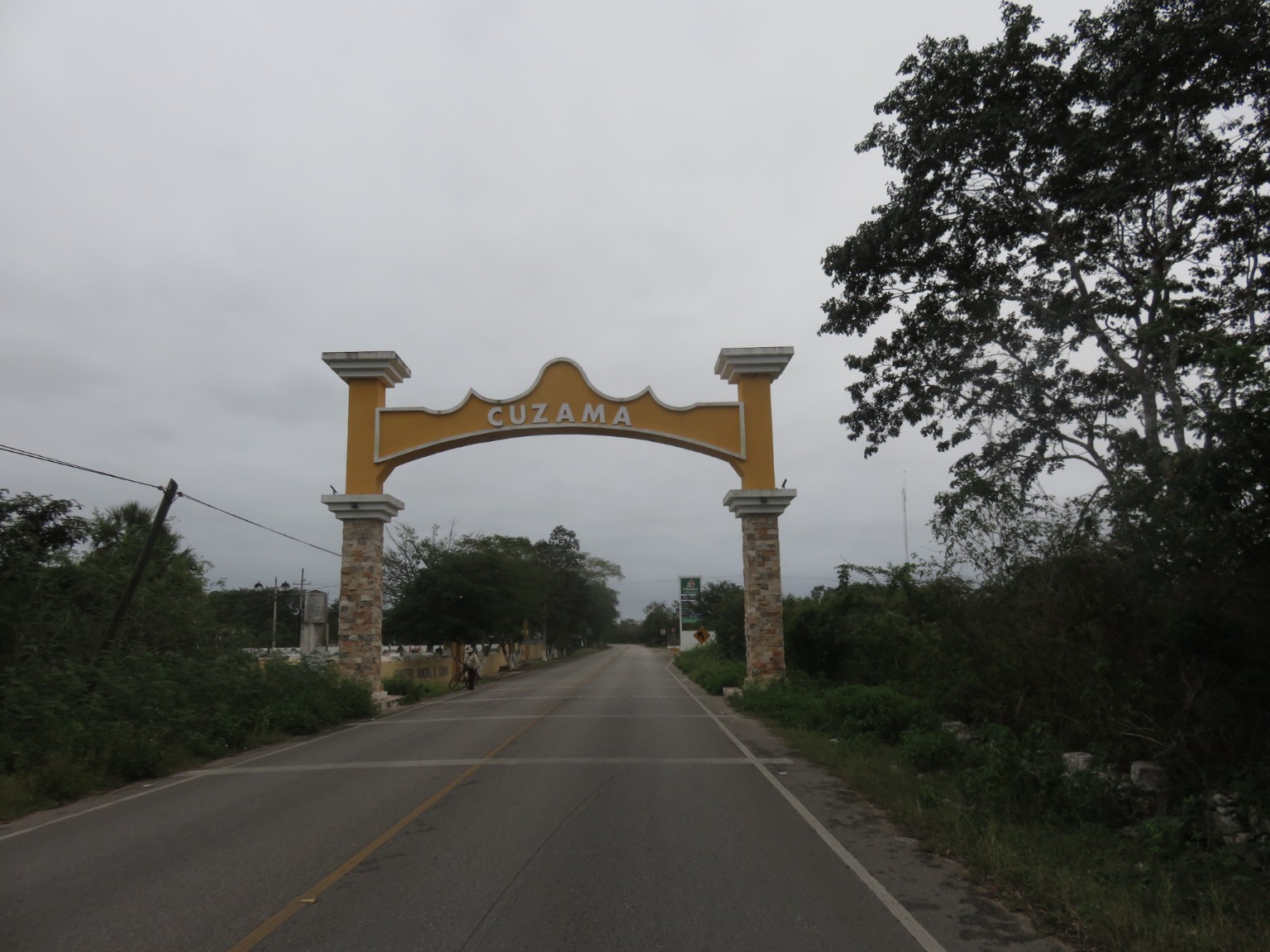
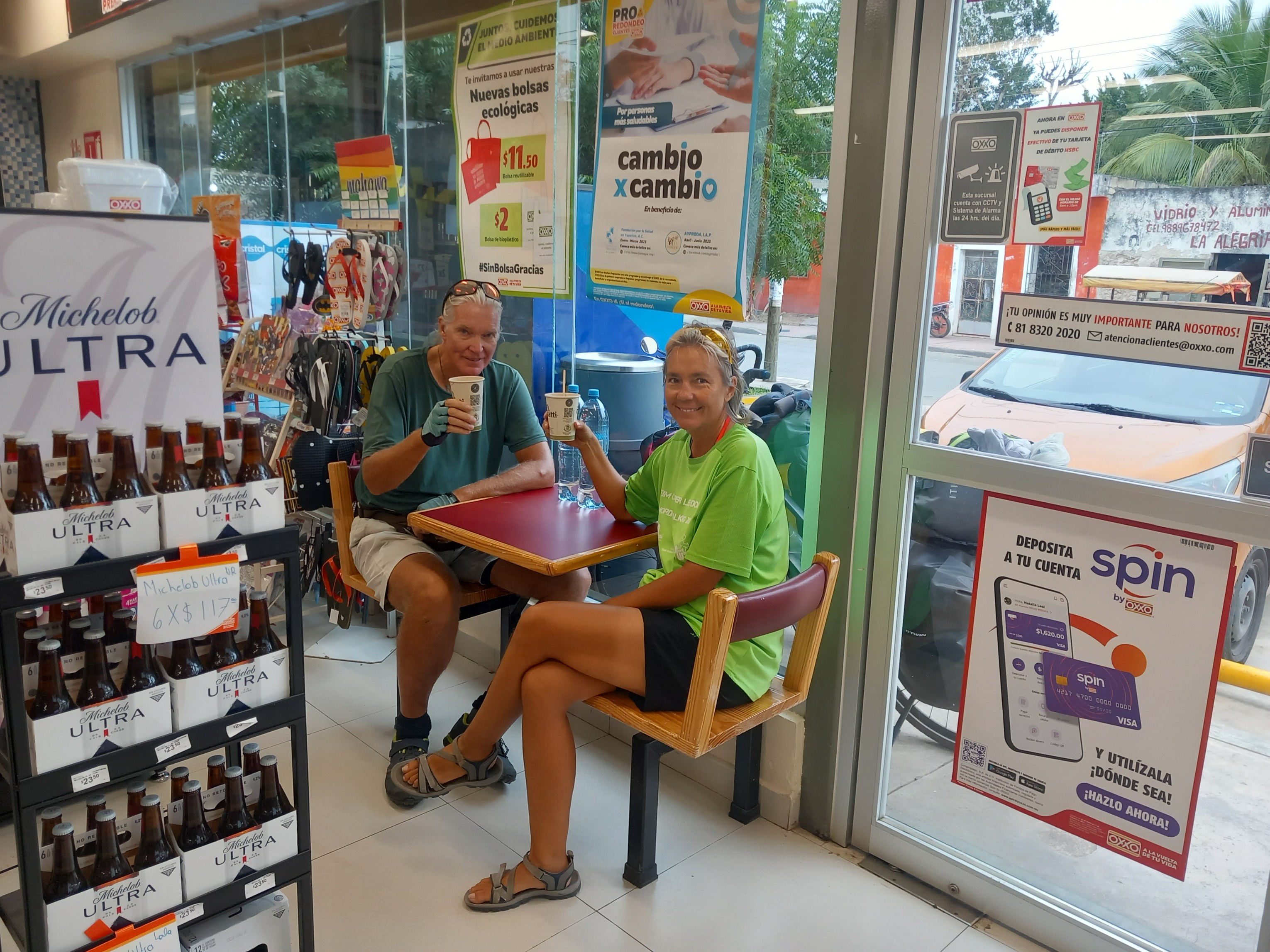
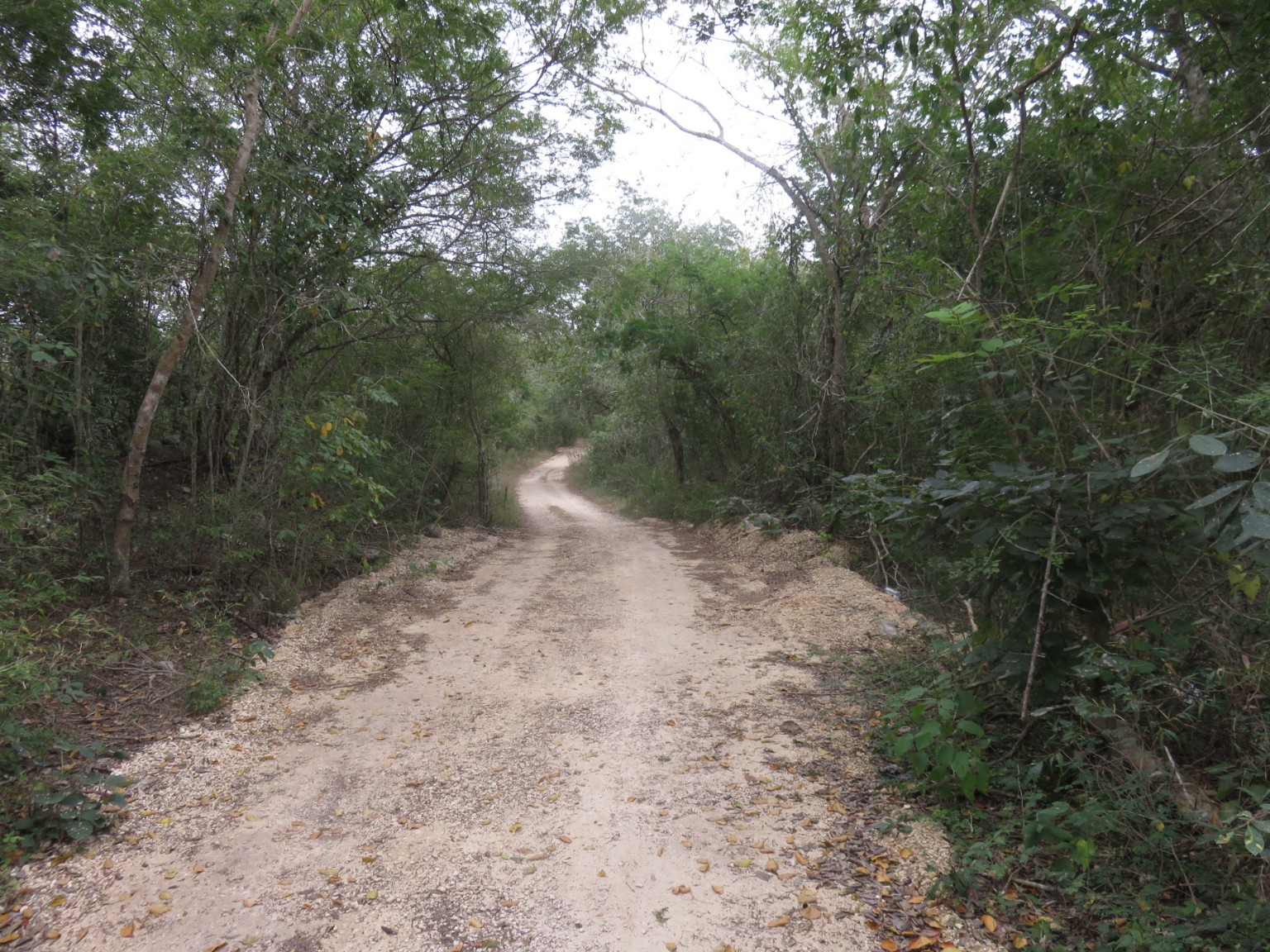
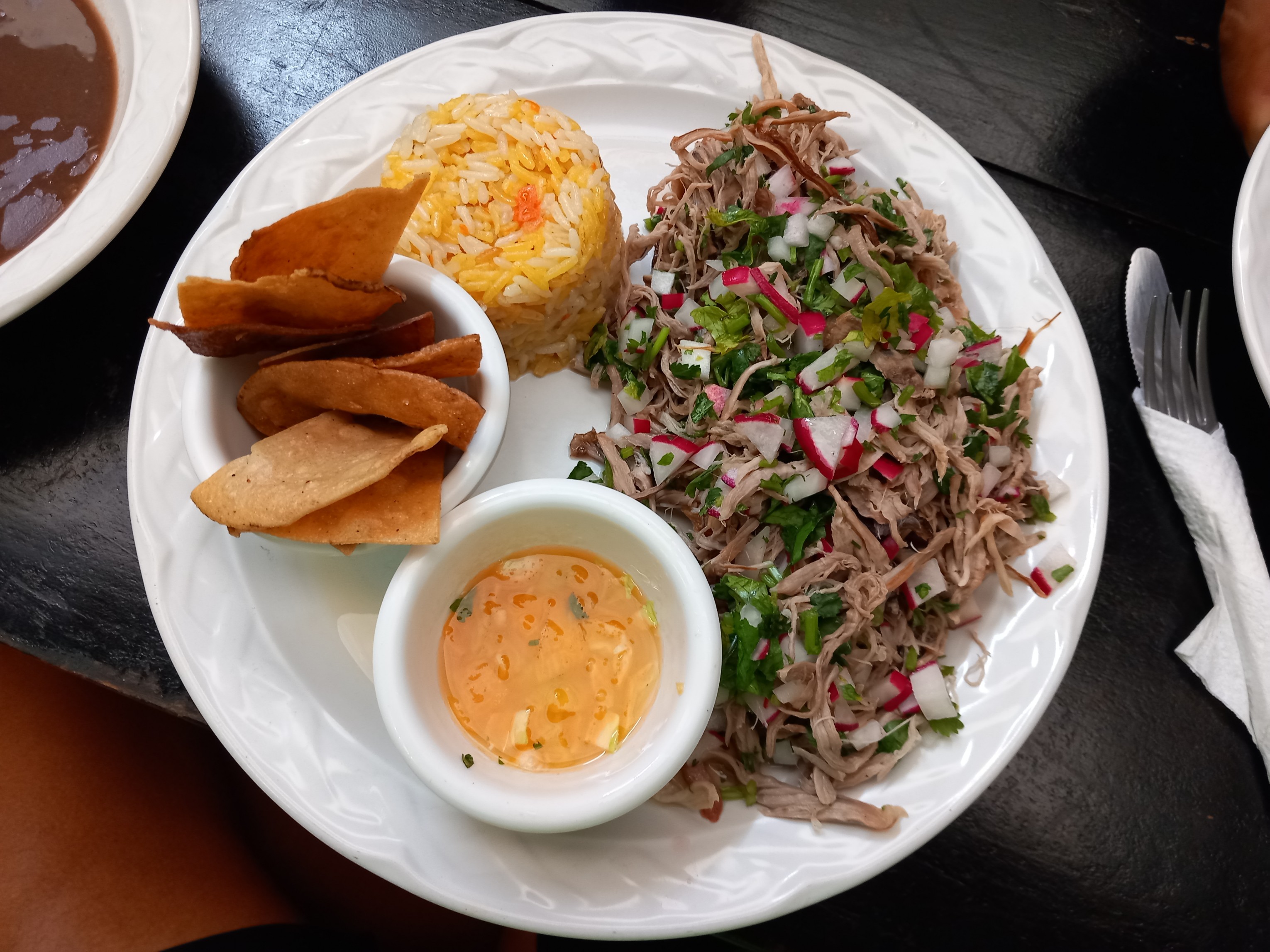
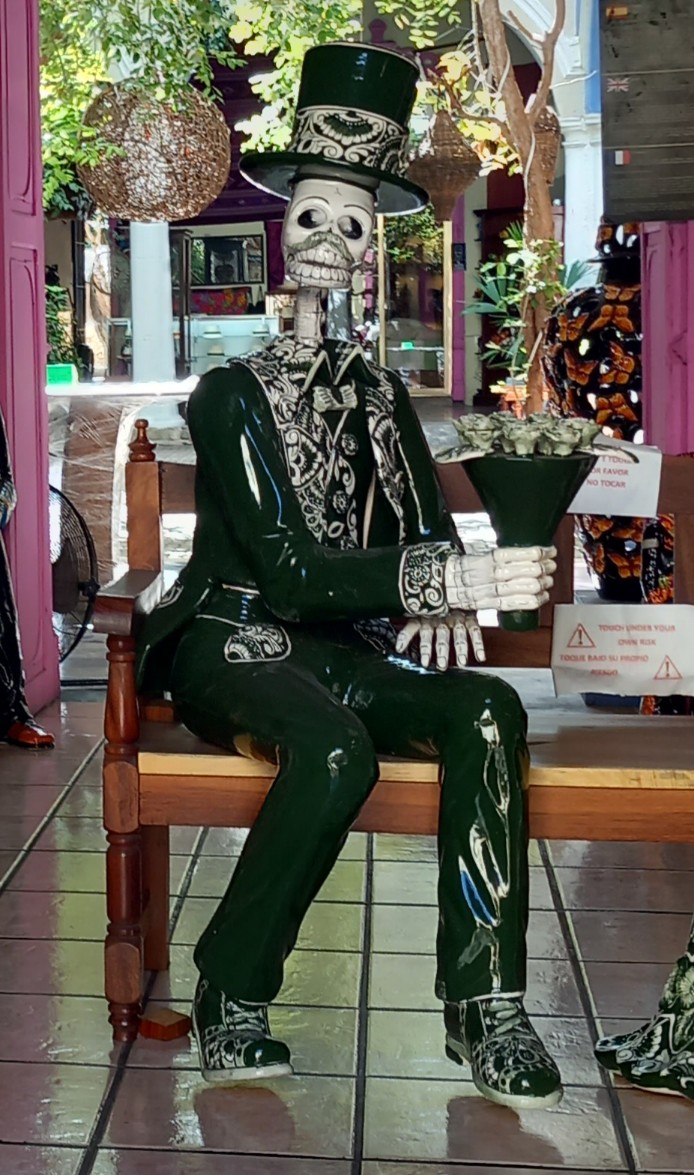
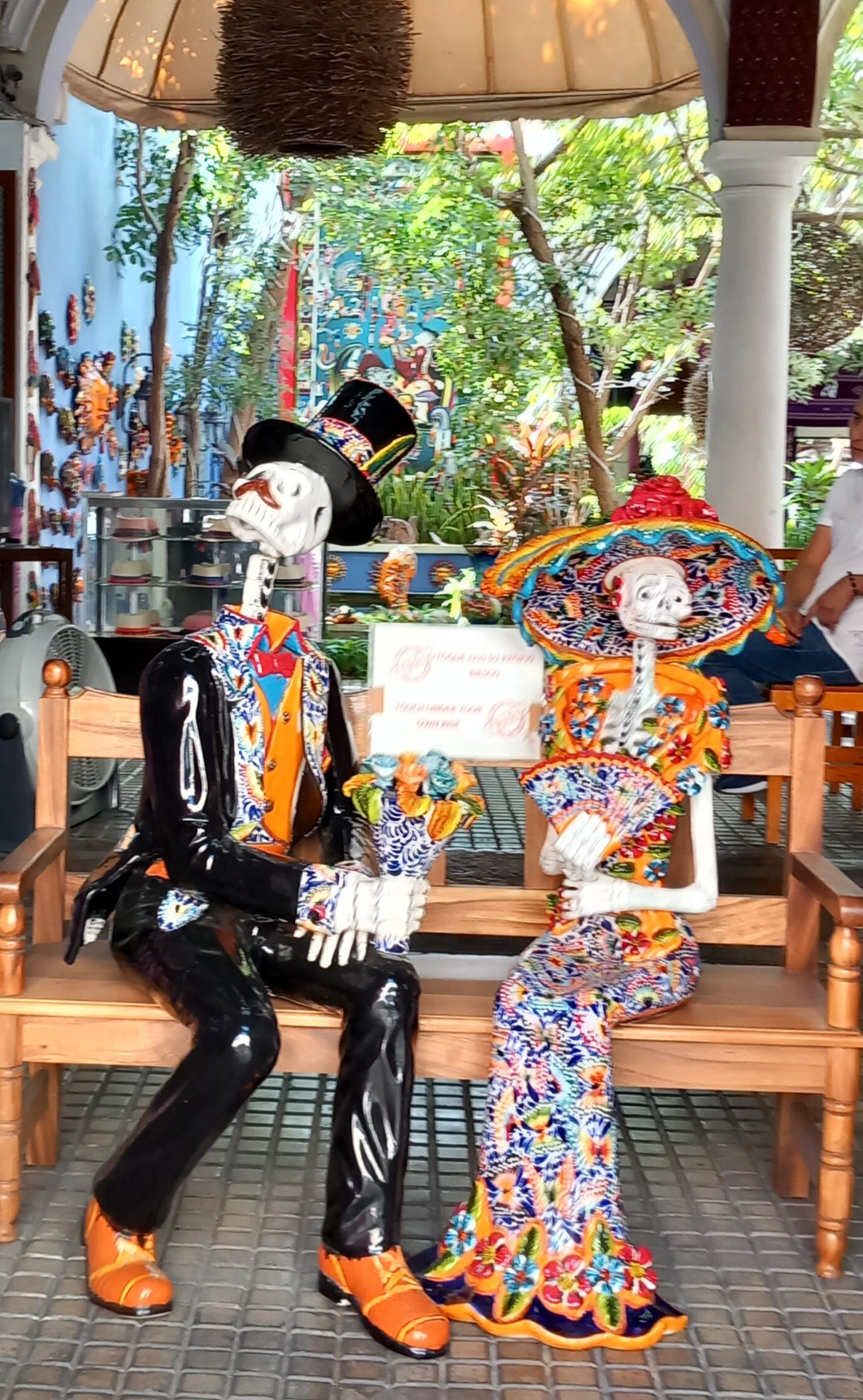
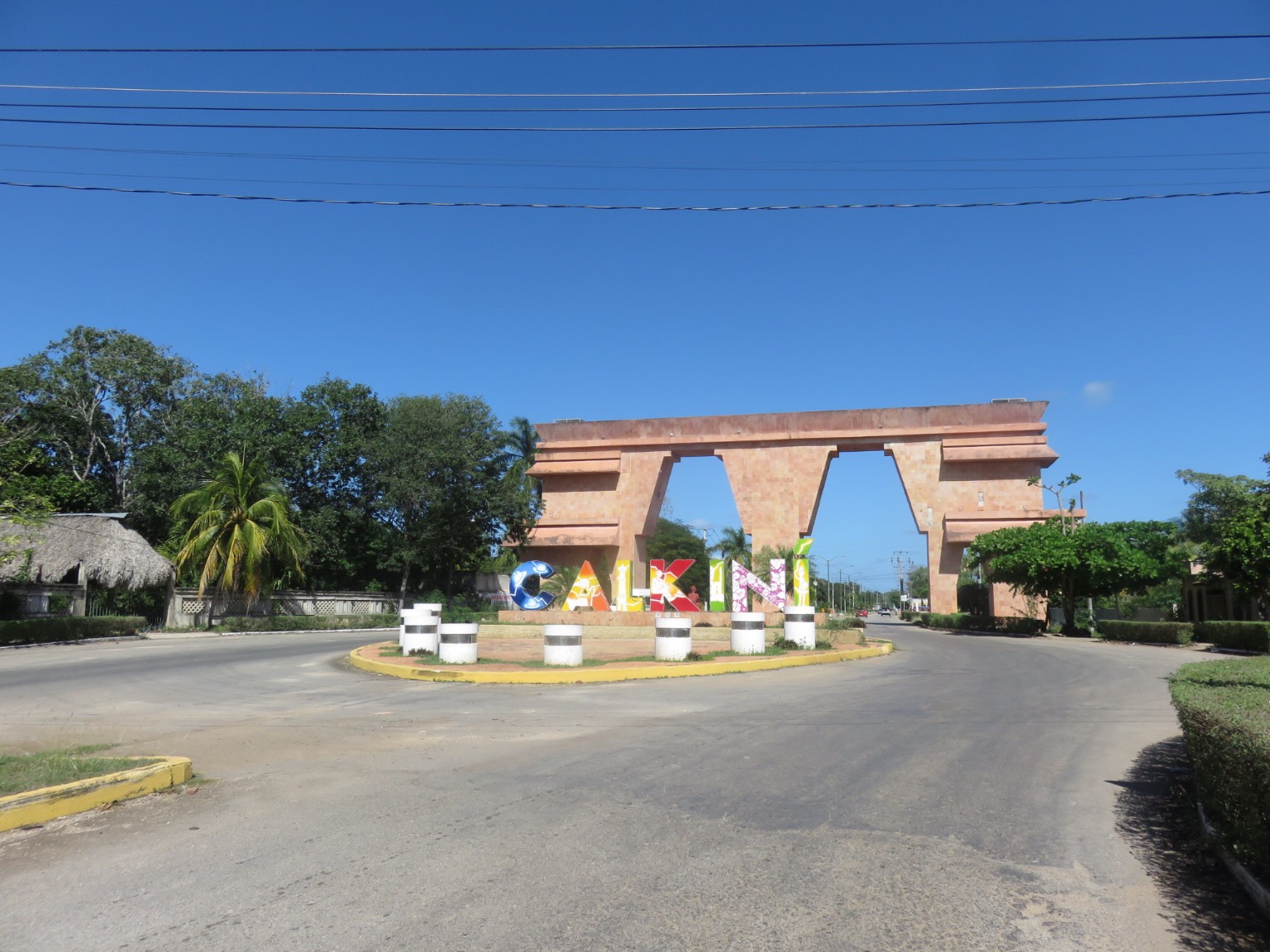
Ornaments appear randomly as we roll through places – sometimes we are able to avoid distractions and picture them.We see these ‘couples’ seats almost everywhere.Some towns and villages have these elaborate archway entrances, others don’t.This is an Oxxo store which we go to a lot for water supplies. They are a convenience shop similar to Spar in Europe except that they have a self service roasted coffee station which we enjoy; this is the only one we’ve found with a table and chair. We are not exactly in the middle of nowhere at this point (a place called Alcanceh), however, we are not far from it.A daily scene we see by the dozen. Men chopping or collecting firewood, not for heating (lowest night time temperature is 21c) only for cooking – often indoors under a thatch roof. Notice also the man has much darker skin indicating a Mayan heritage. The roads have become eerily quiet and not the wide open spaces we were expecting like before with cattle and horses grazing on huge ranches. The road surfaces are not particularly special either – maybe this is why we have not yet seen any other touring cyclists.Sally, once again, demonstrating she has a sense of humour with another of her cross country recommendations. This was not as easy as it looks and required us to walk over the really bumpy bits. Thankfully, it was only 4 kilometres (2.5 miles). The bigger issue is we pass random homes with unwelcoming dogs. It is unlikely we will be able to show these episodes because we are entirely focused on escape and evasion tactics – neither of which enables us to point a camera at the chasing dog(s). A traditional example of Mayan artwork for public display – we are nowhere hear the tourist areas at this point.This is a traditional Mayan dish called Benado, which is like venison or deer in Europe. Olivia appreciated this more than David, possibly because the meat is served cold.Another random discovery for a restaurant which served us well for both dinner and breakfast in a town which does not feature in the LP guide.
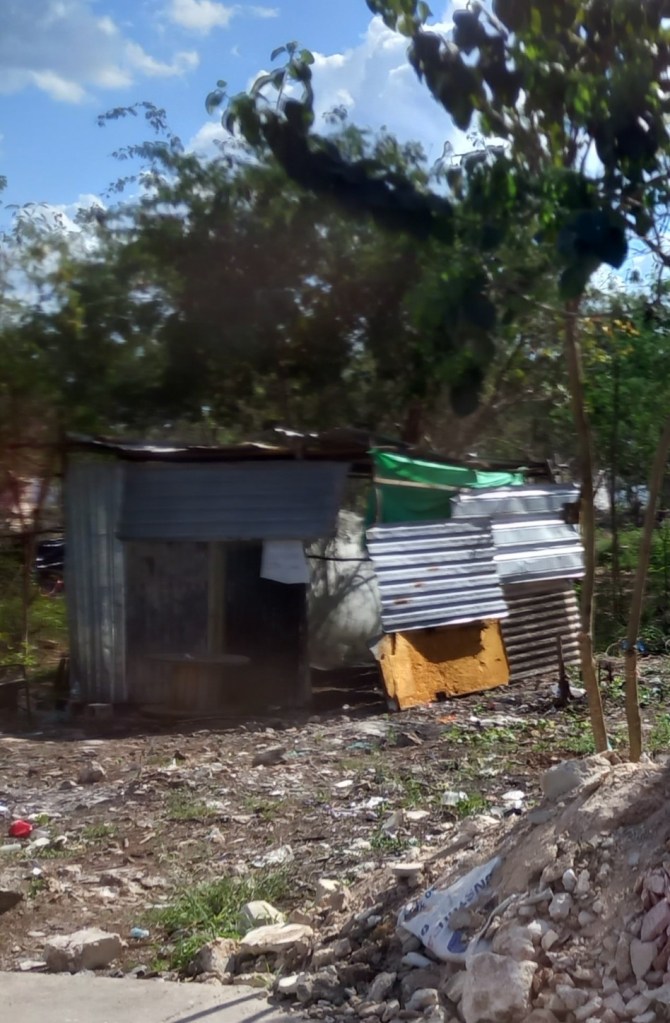
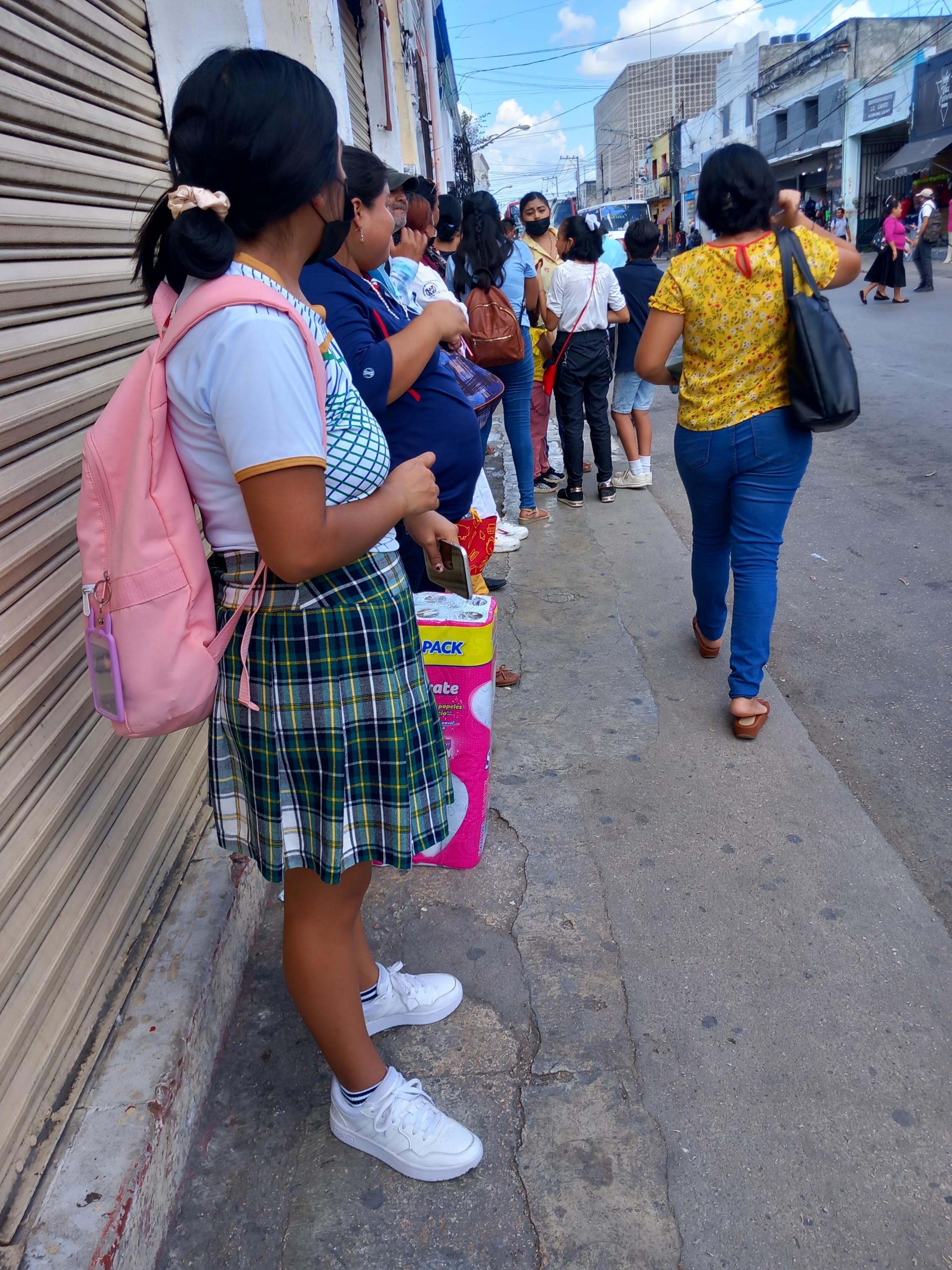
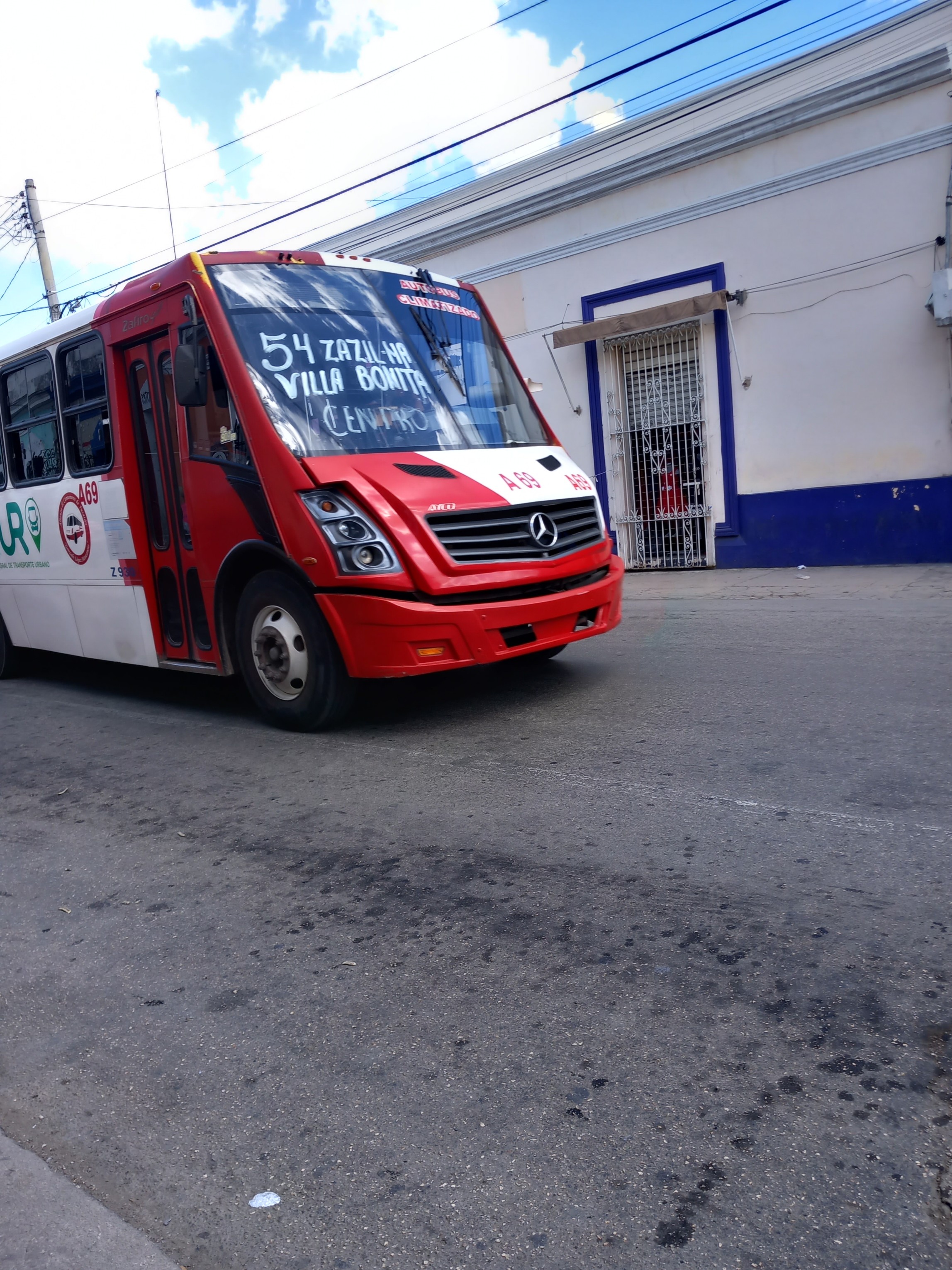
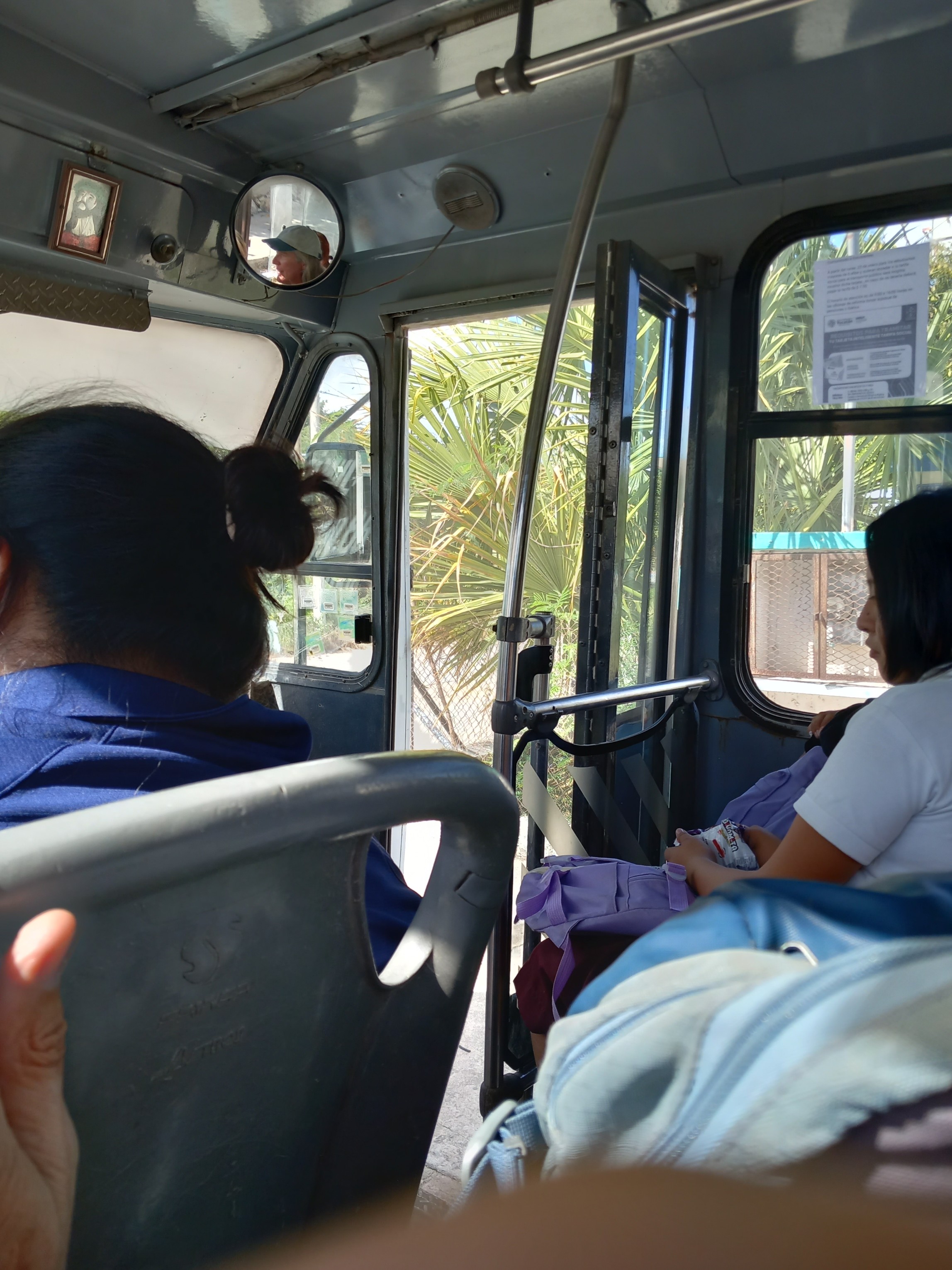
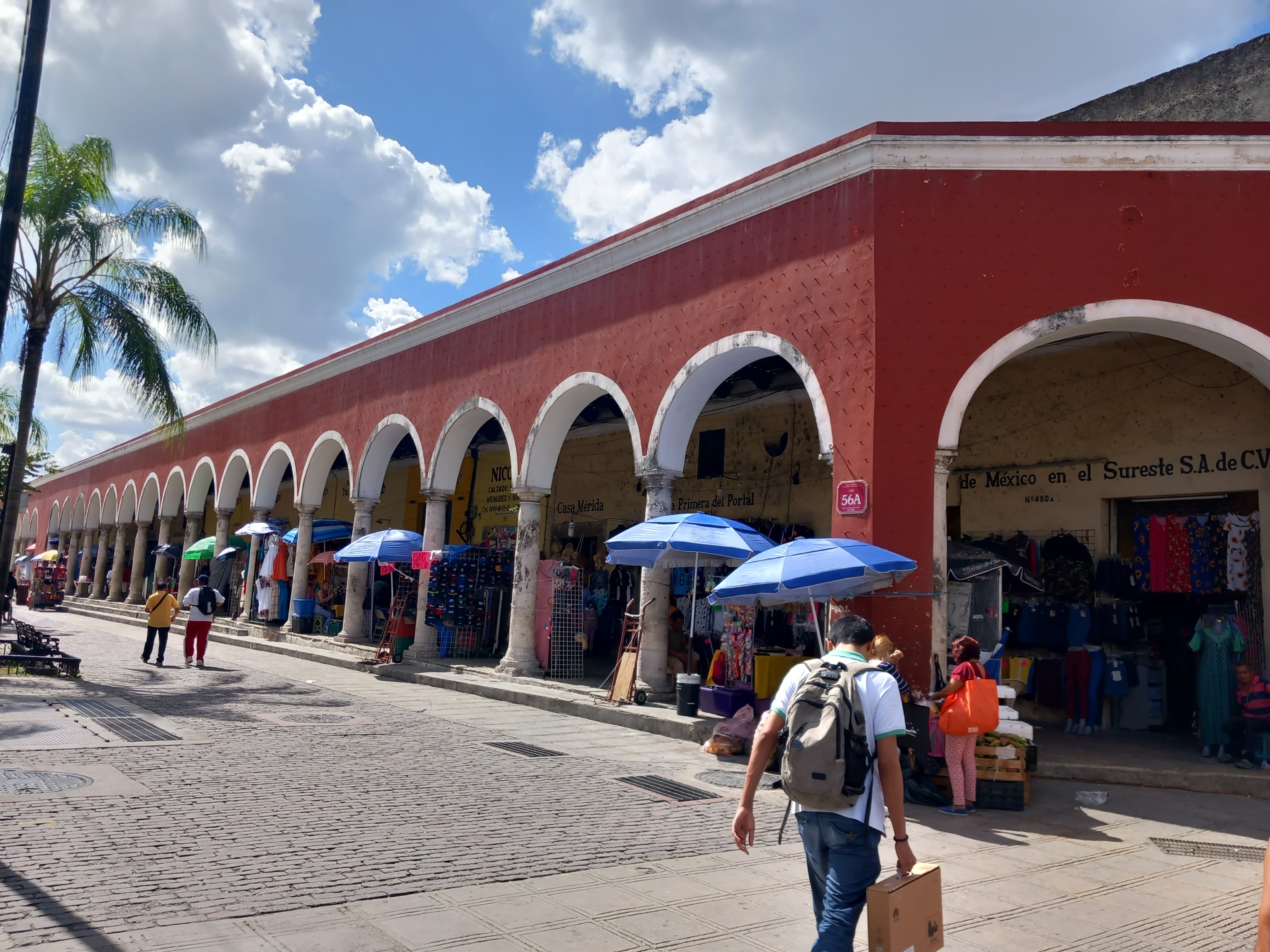
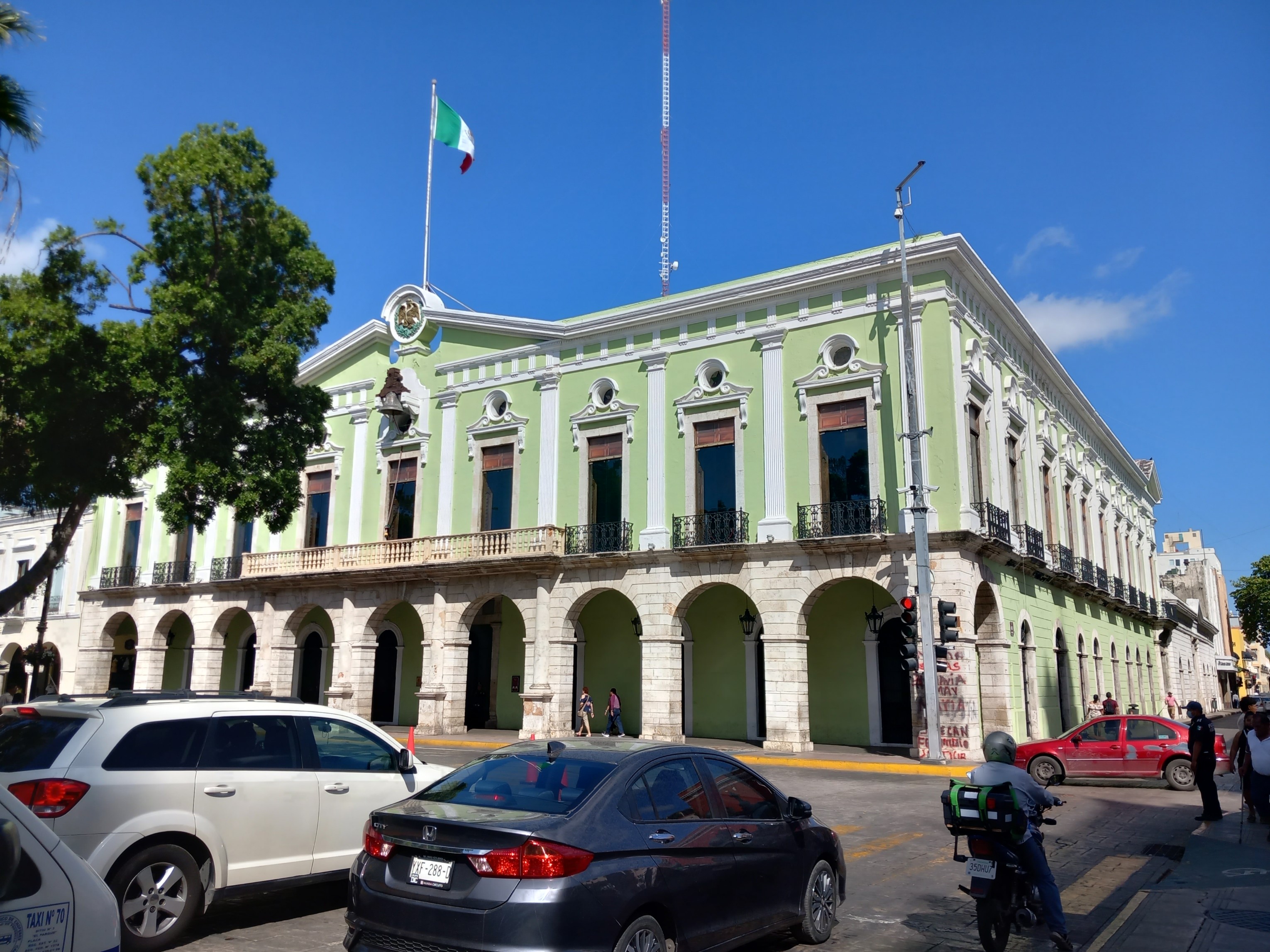
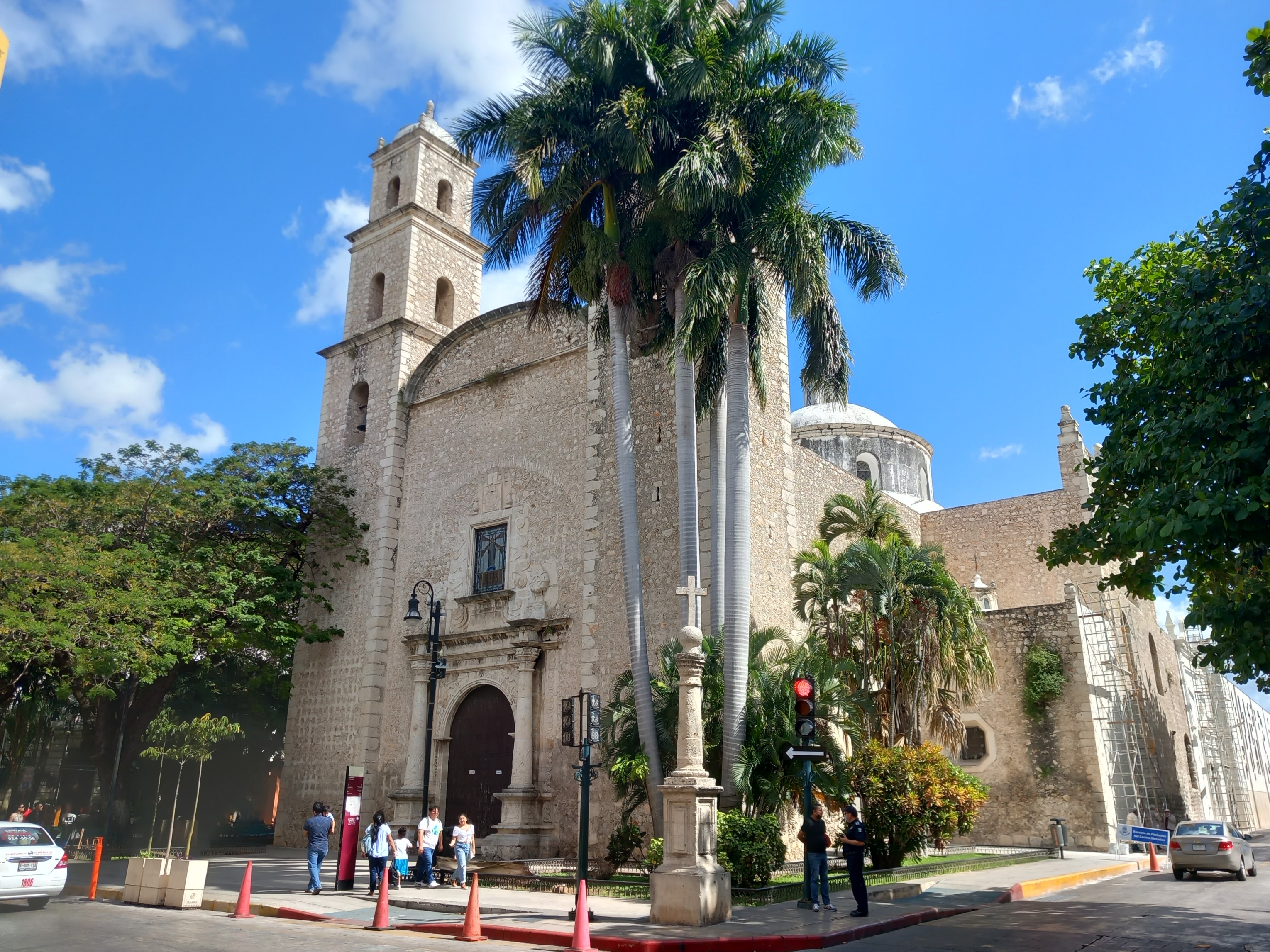
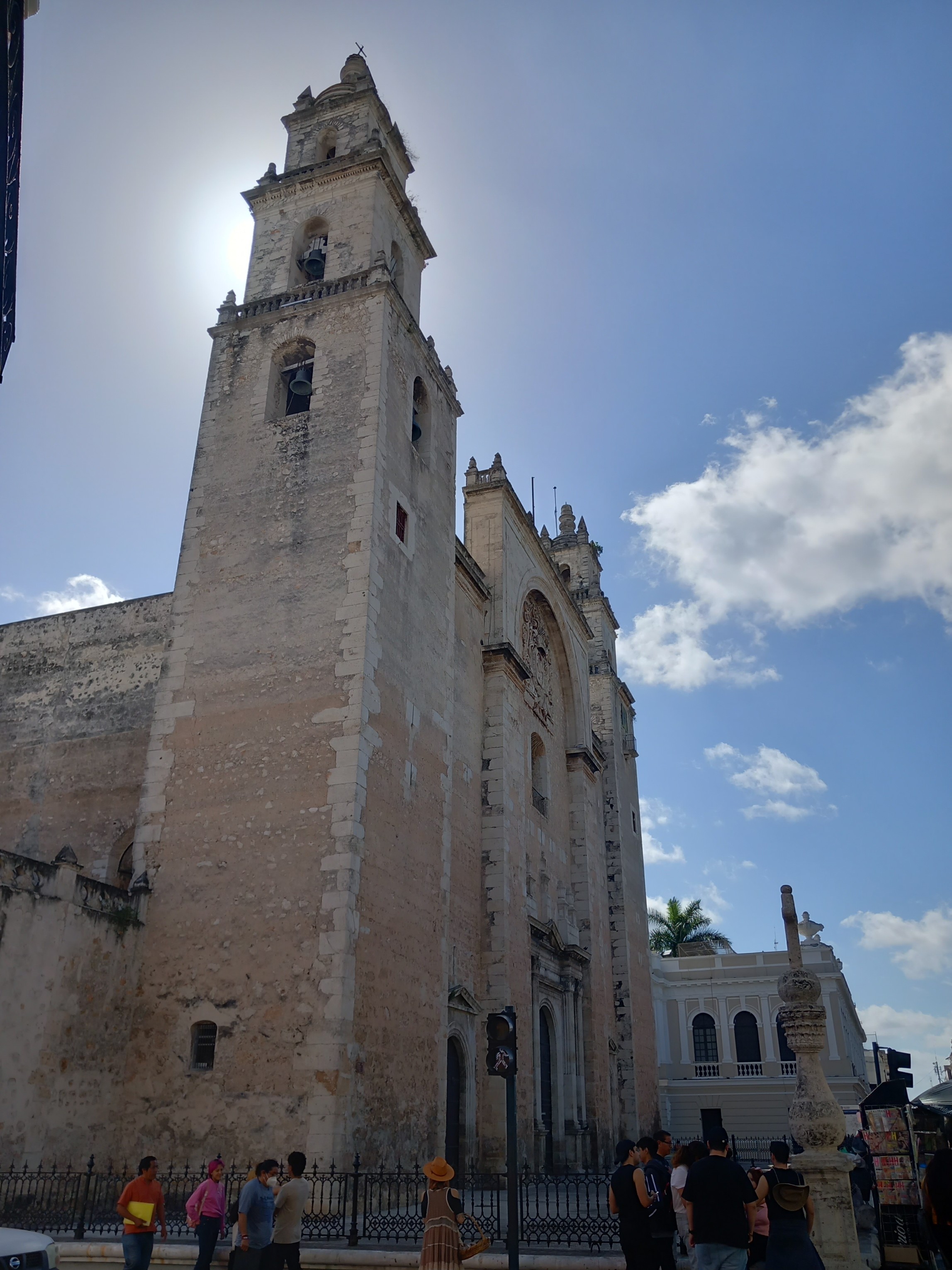
Not everyone enjoys the privilege of accommodation like we enjoy on a nightly basis.The bus queue for a bus to/from Uman and Merida. The long distance buses have a depot on the edge of town and the local buses have to make do with roadside pickups at key points in and around town.Various views around the city of 900,000 people which, interestingly, is not listed as a World Heritage site as it was in Campeche.We knew we were in a tourist area in Campeche with other non Latino visitors. In Merida the giveaway was the attempt to translate the menu into English with the spelling of water being a favourite.
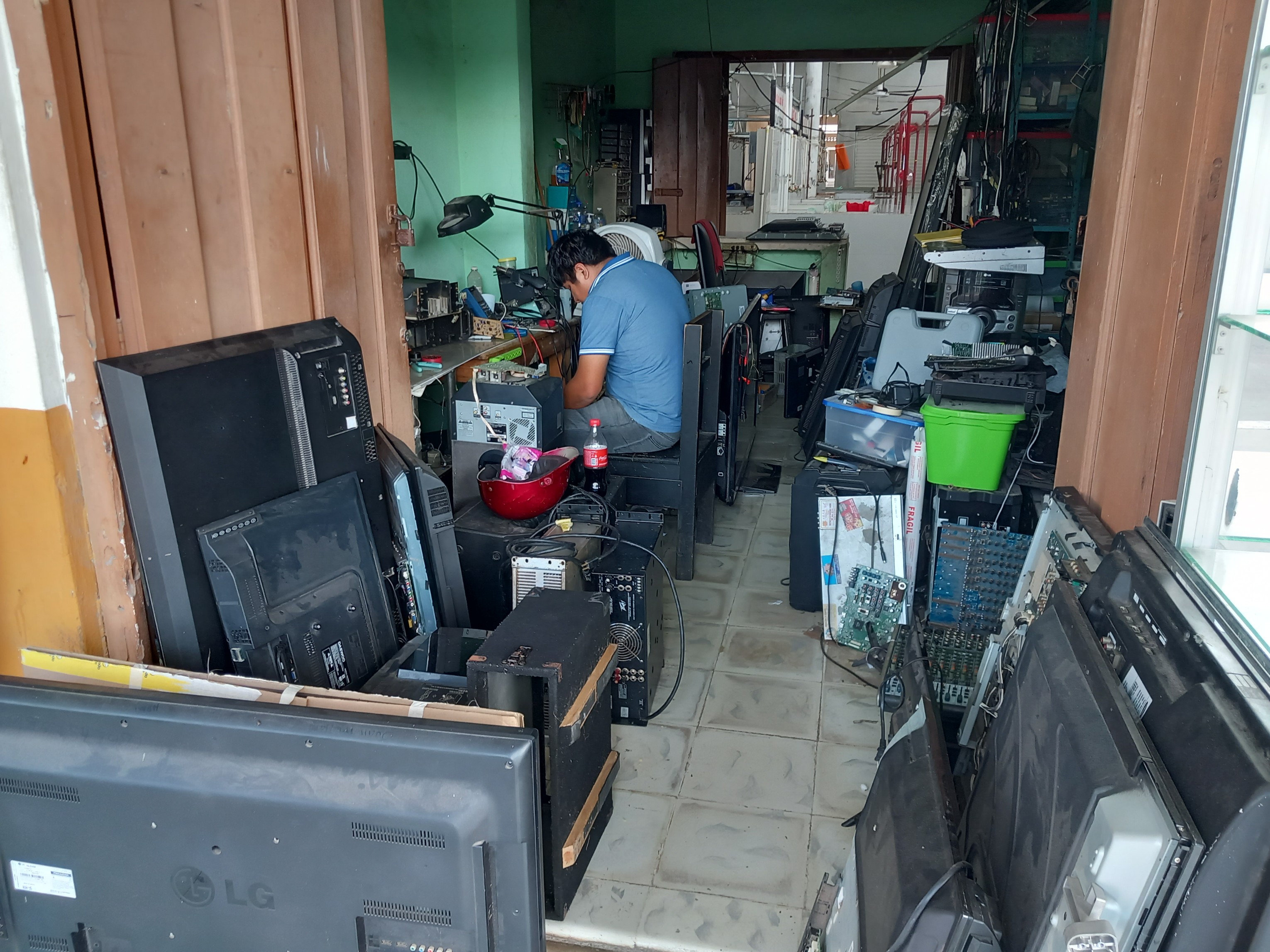
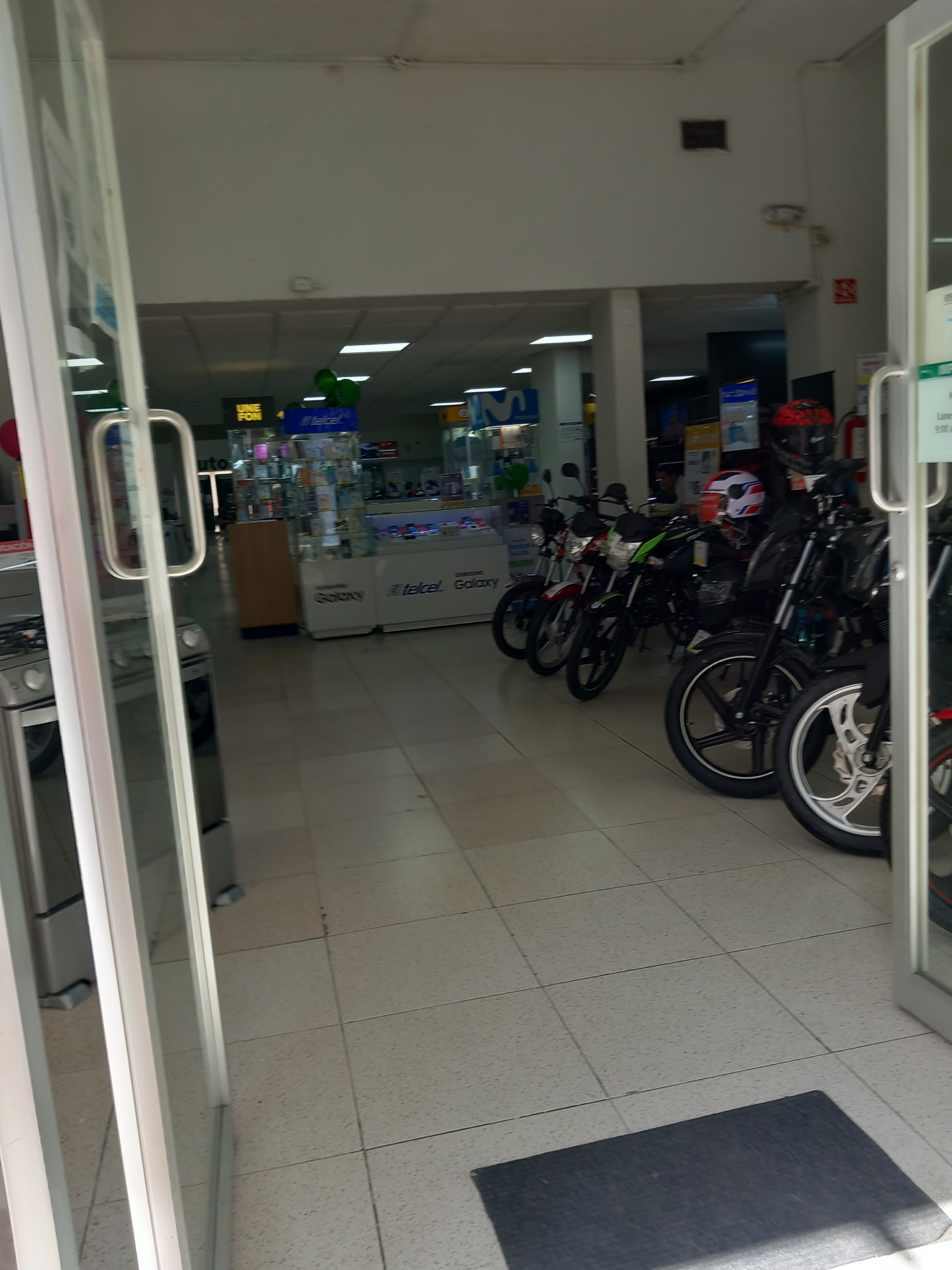
Although we were interested in what Merida had to offer compared to Campeche our main objective was a visit to the Post Office to send home 4 kg of kit which we were no longer using.We’ve made mention of this before; to reach the bank we have to pass the motorcycles, mobile phones, tv screens, washing machines, tumble dryers, fridge/freezers and the bank staff, together with ATM’s, are at the rear.
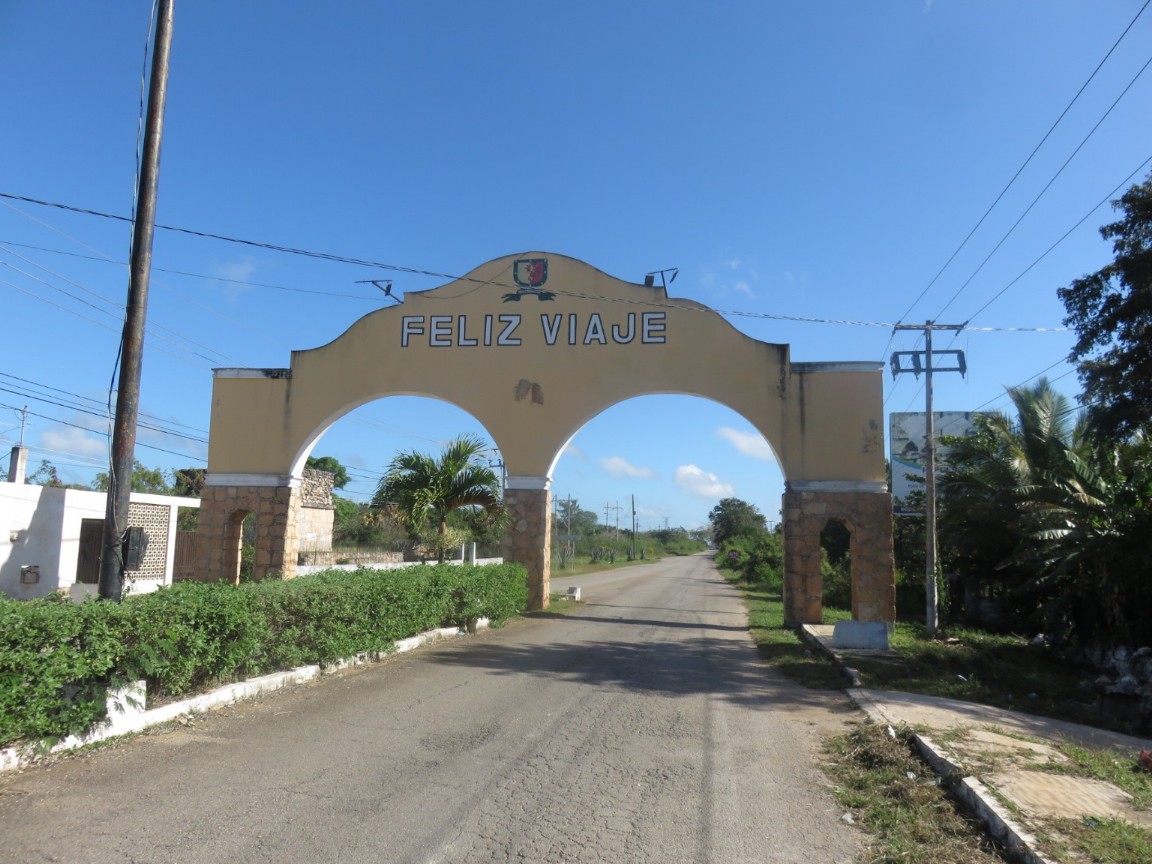
Translation: “Happy Travelling”. Its a phrase we hear daily shouted to us from people as we roll past.
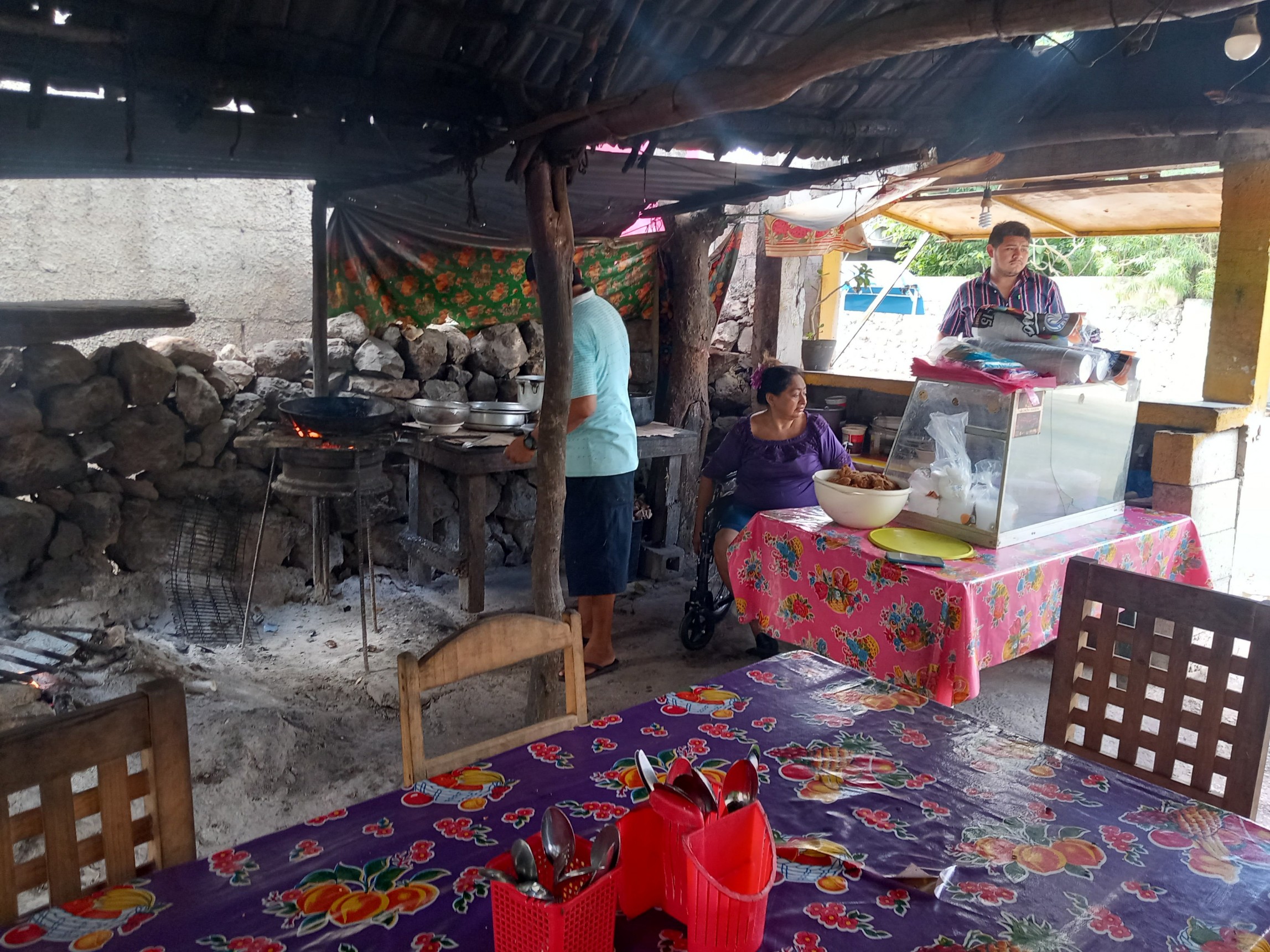
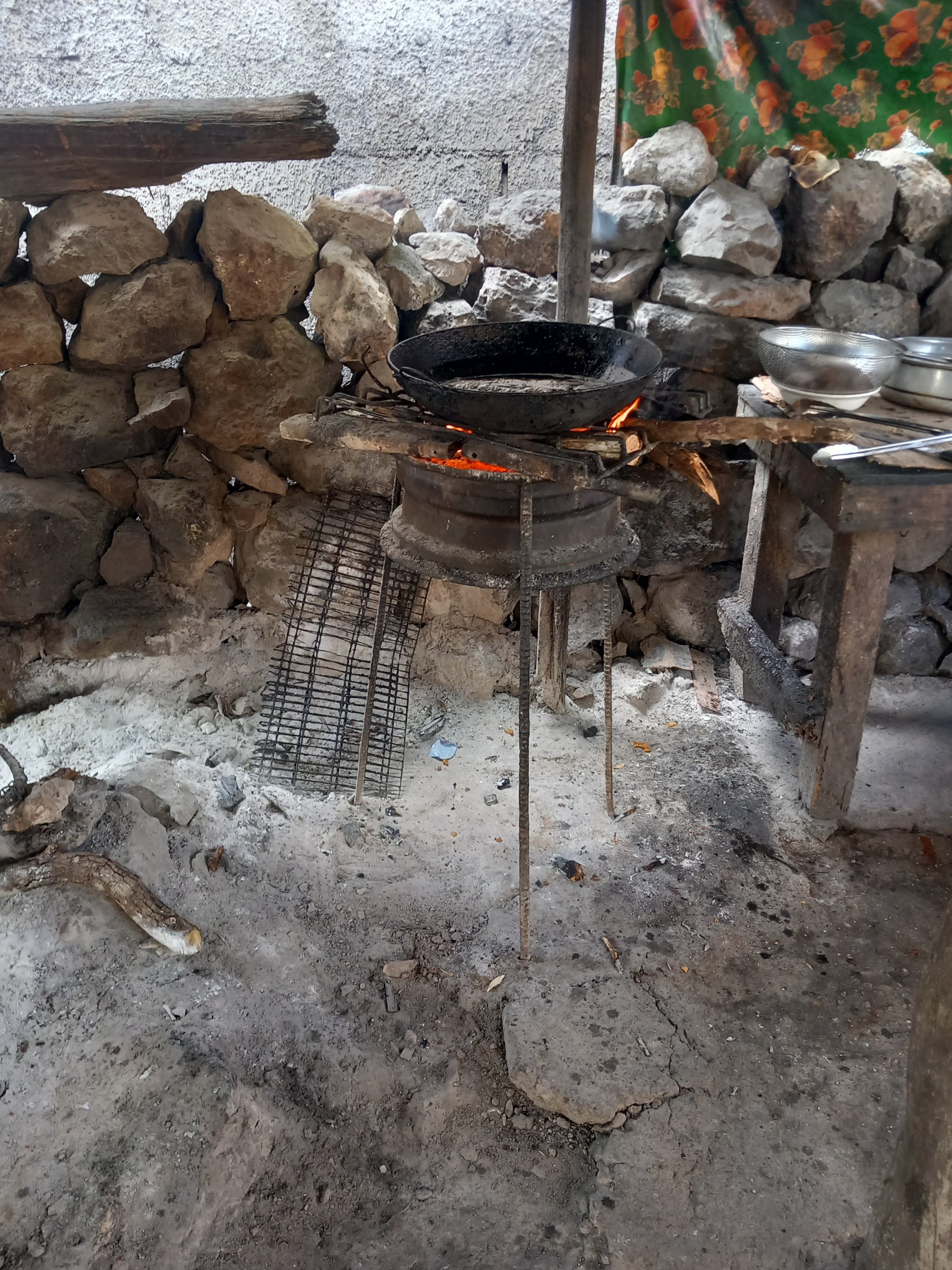
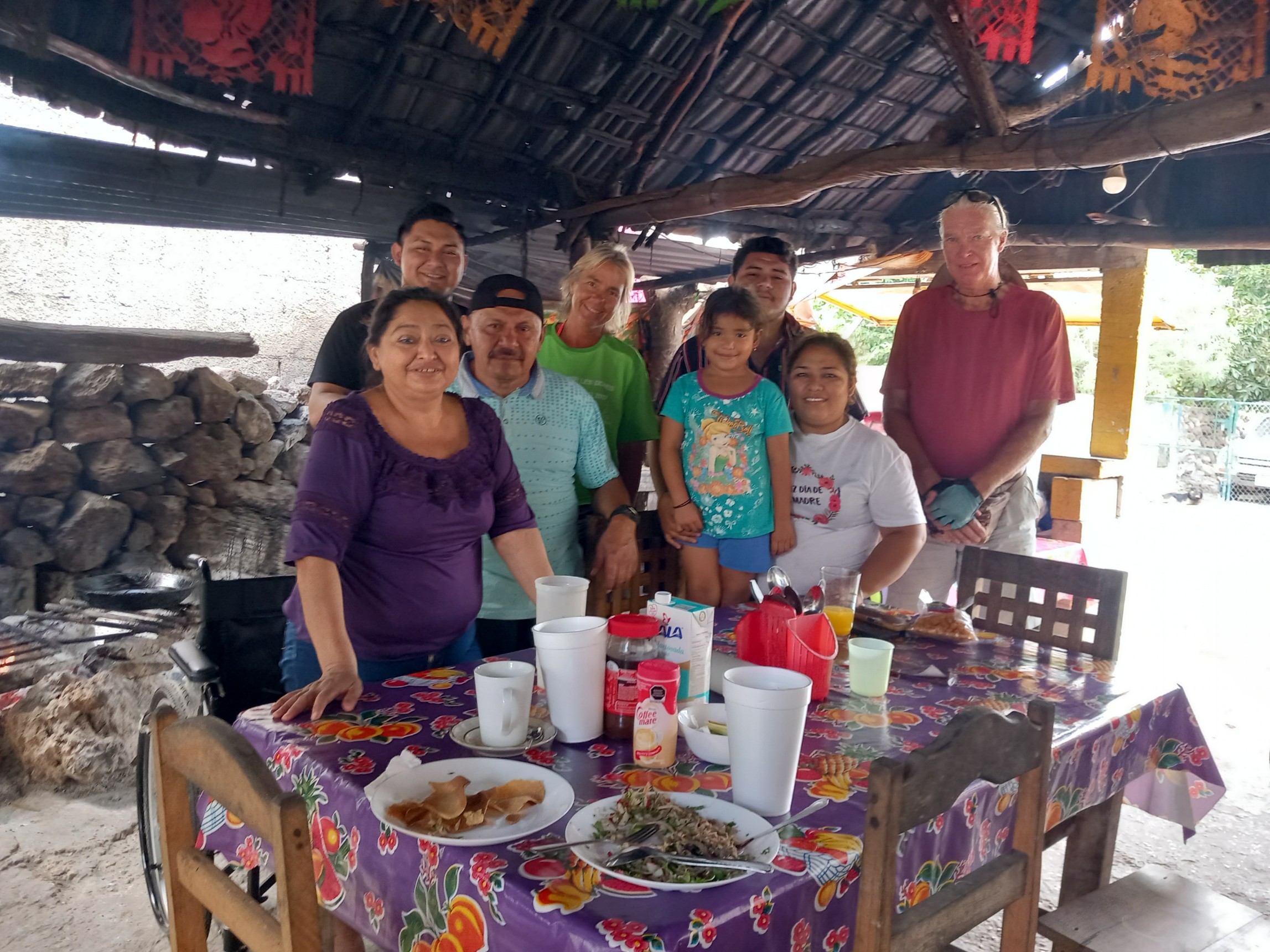
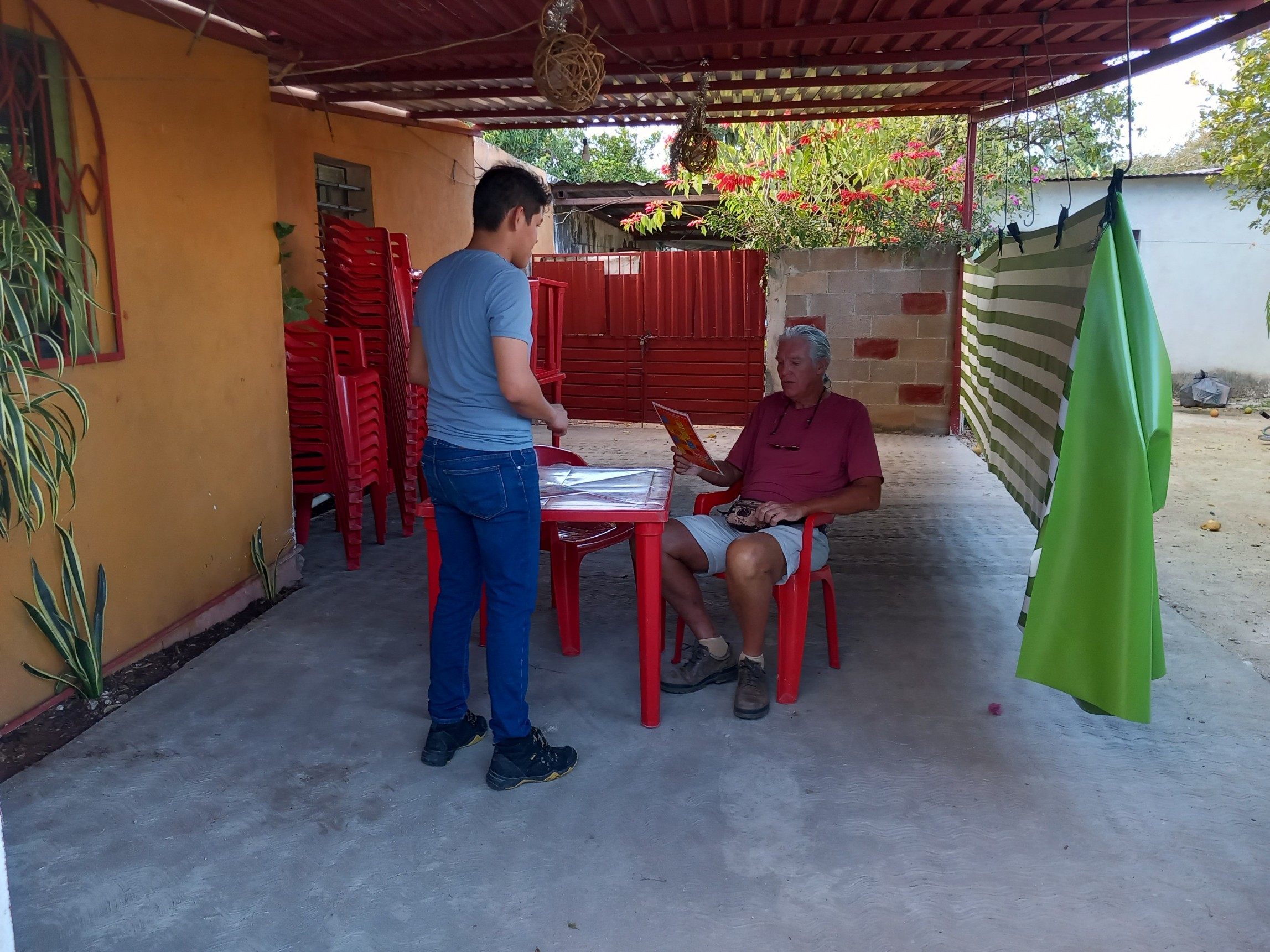
We had two breakfast stops today because we were so hungry, however, neither place sold hot coffee (tea is only an option in large cities with upmarket restaurants) because Mexicans prefer soft drinks. Maybe a reason why there is a high level of diabetes in this country. This rural restaurant had Nescafe Instant with water boiled in a saucepan over an open fire. The coffee wasn’t memorable, however, the experience will linger for a while. The whole family were interested in our travels and wanted to be included in the photo. So, we have Father, Mother, two sons, one daughter-in-law with a granddaughter.We ‘Early Birds’, as the Americans like to call people who prefer to eat between 5 and 7pm, often arrive as they are doing the preparation for their evening diners. This takeaway, realising we needed to sit and not take our food home rapidly opened the seated area with one table and chairs. The food was outstanding and plentiful.
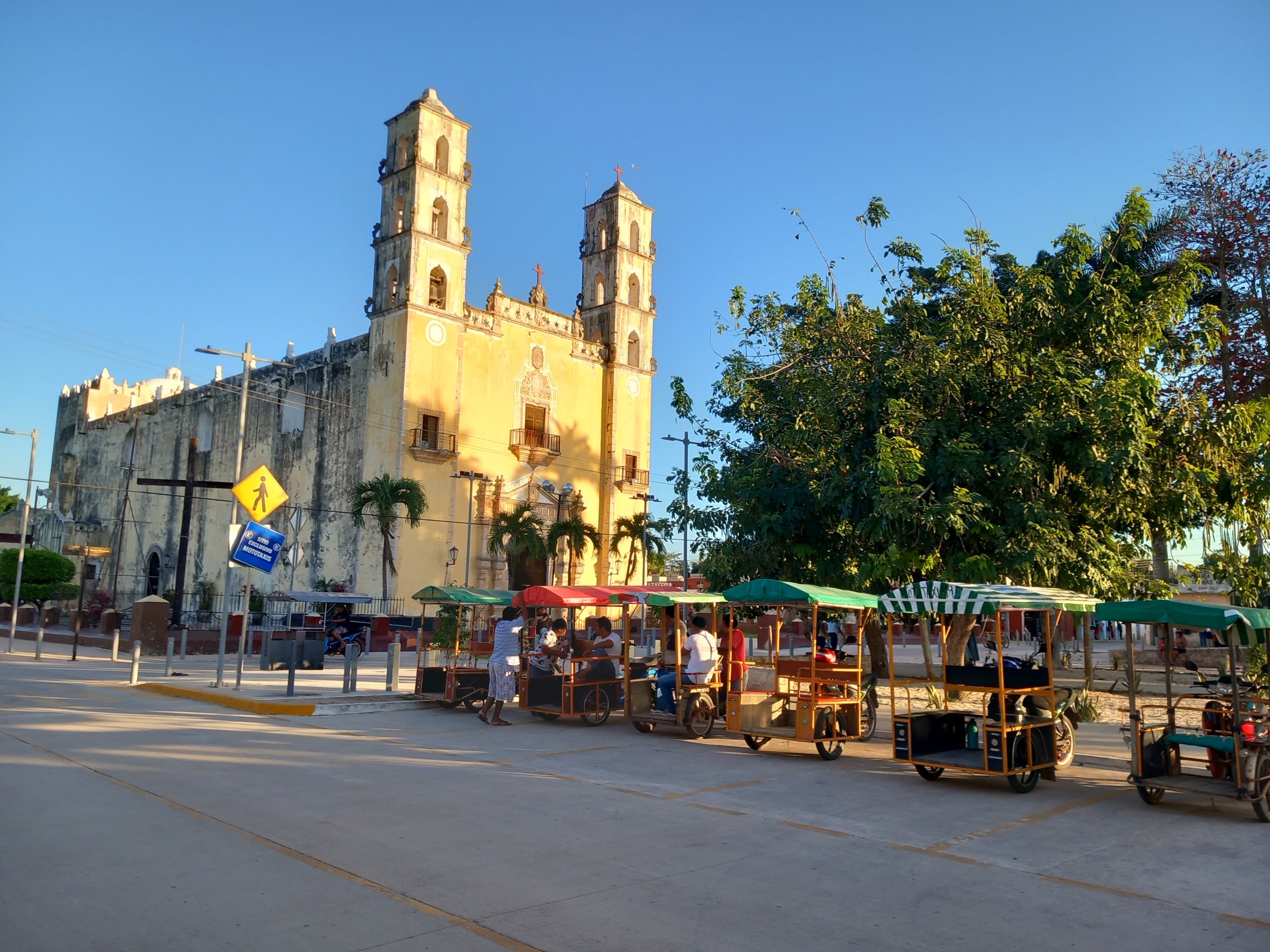
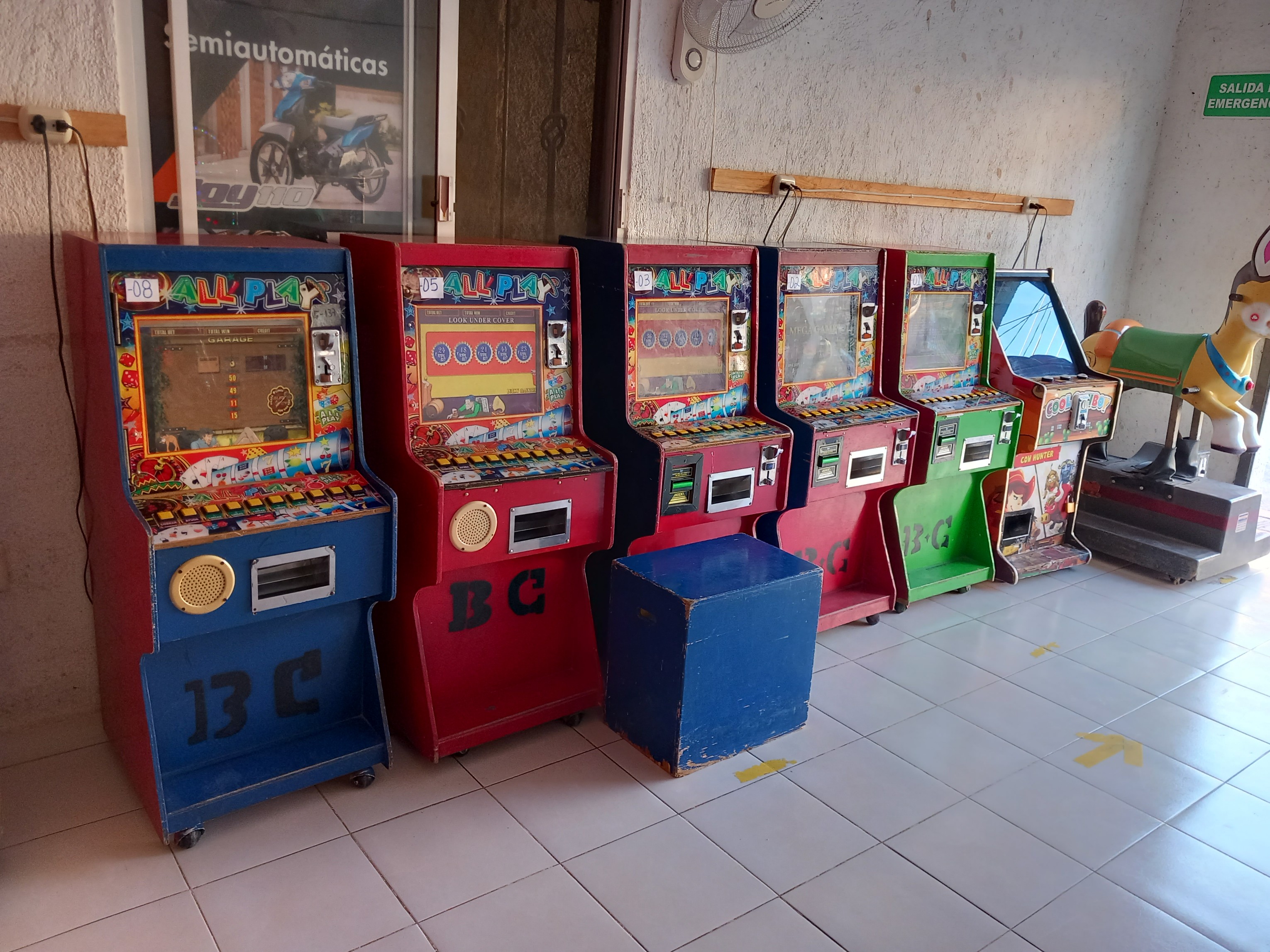
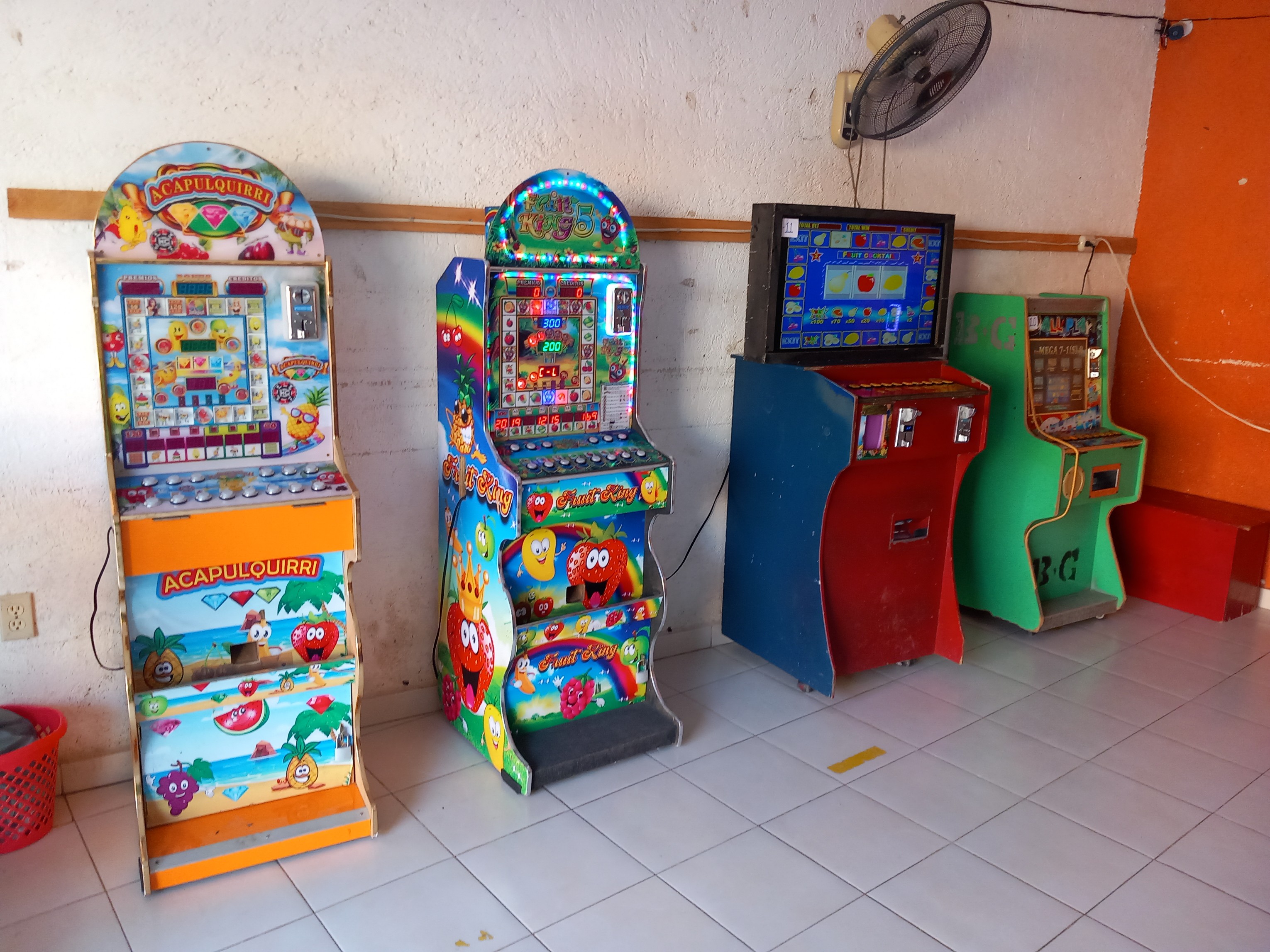
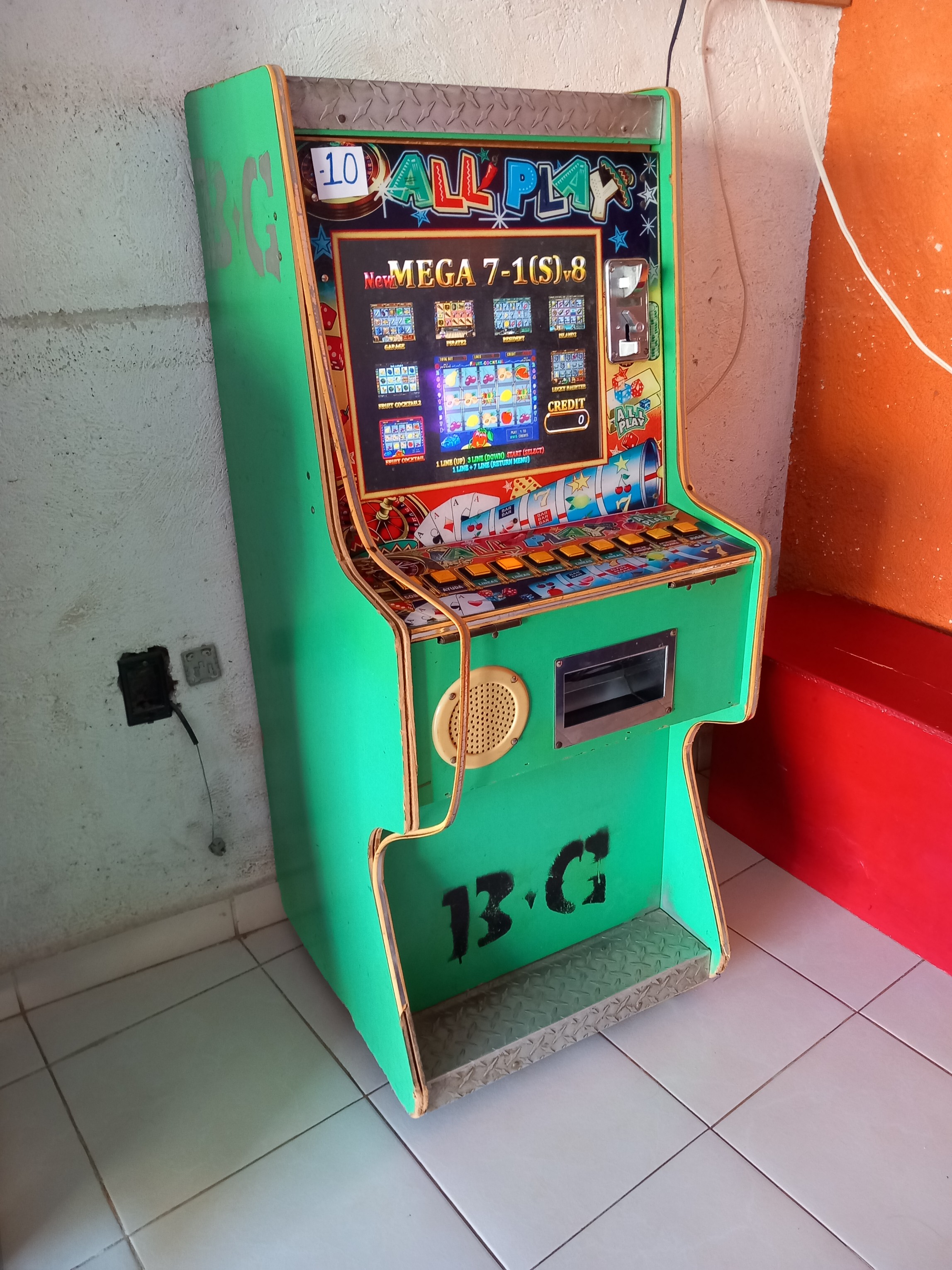
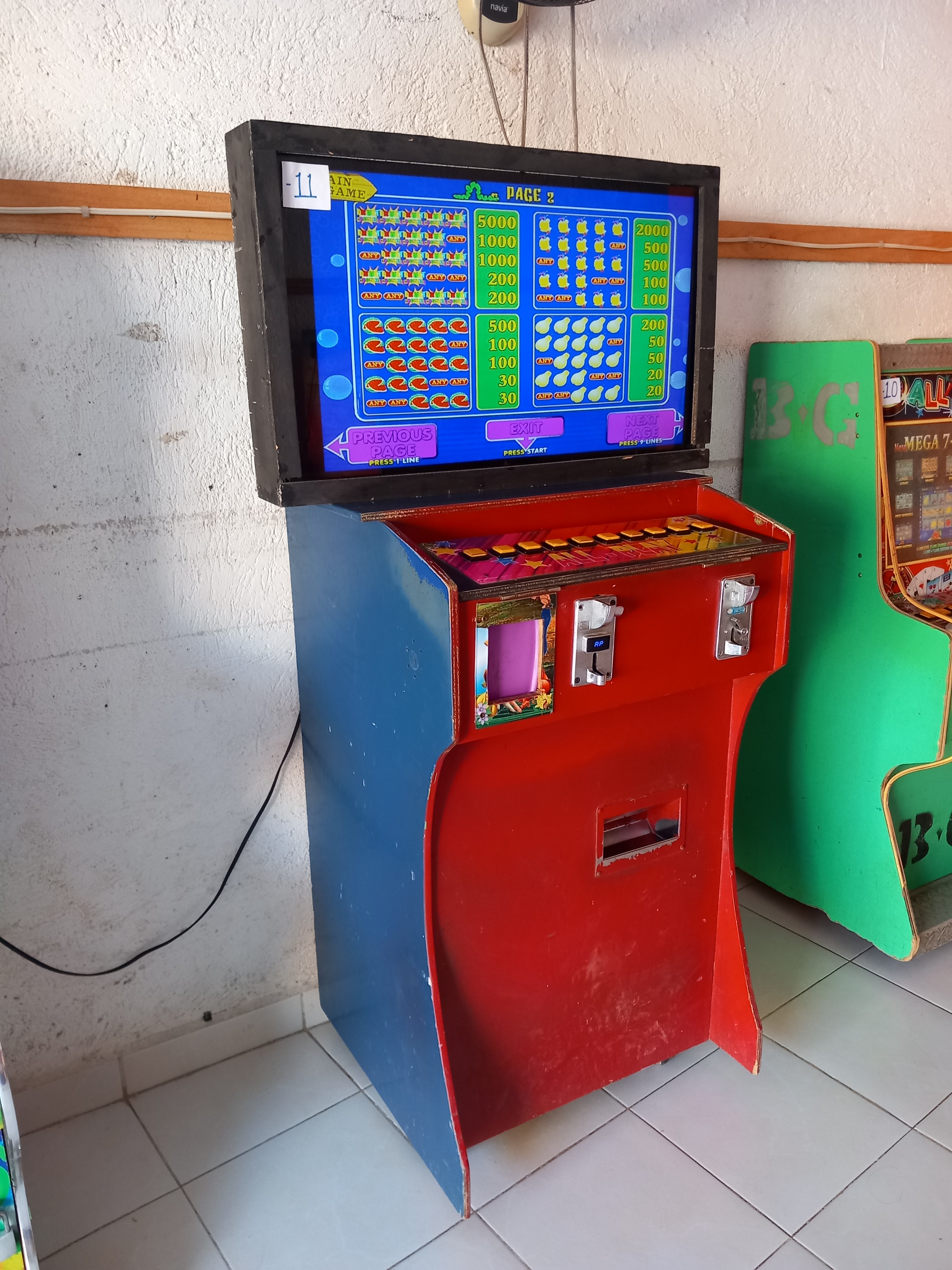
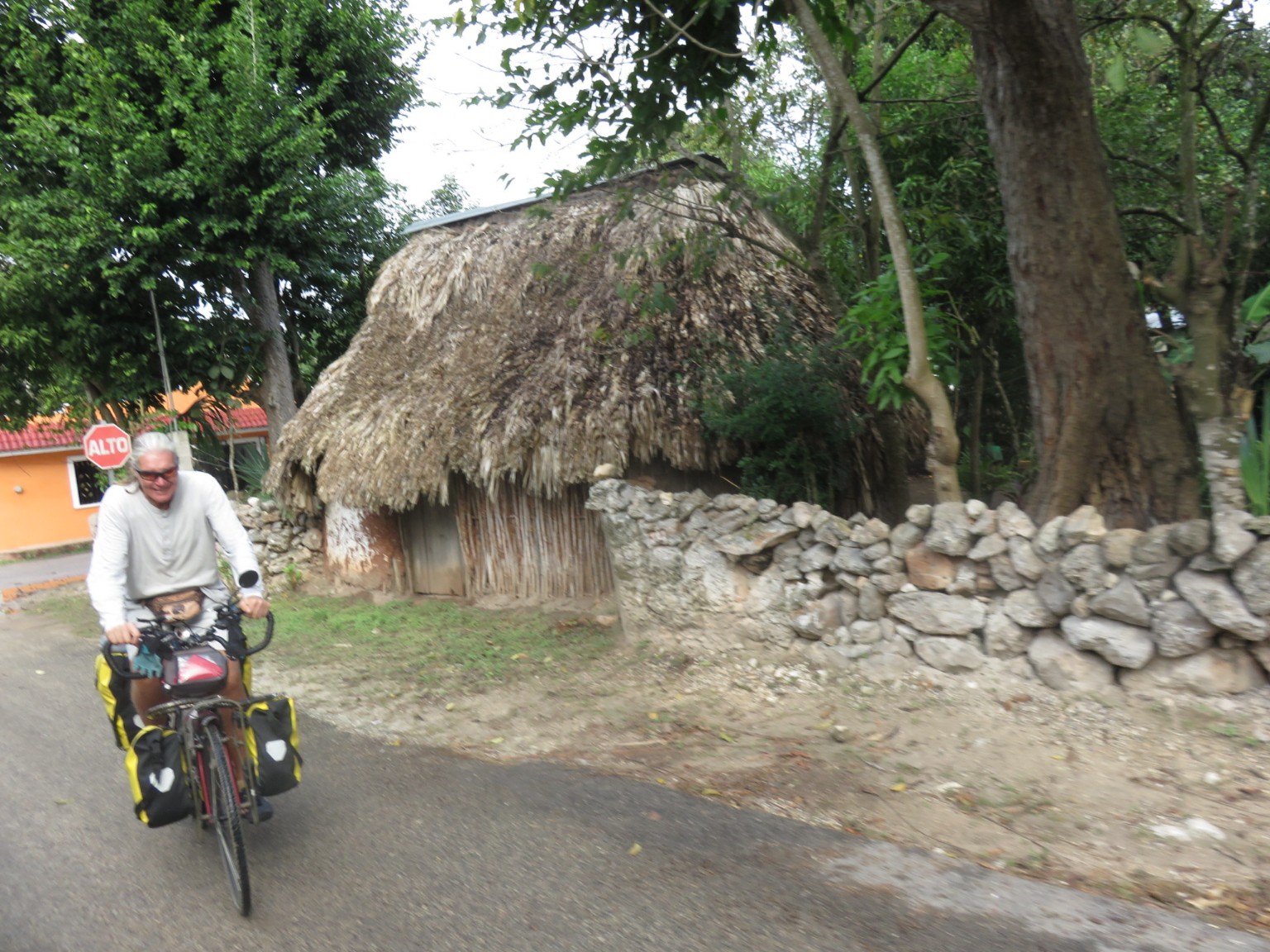
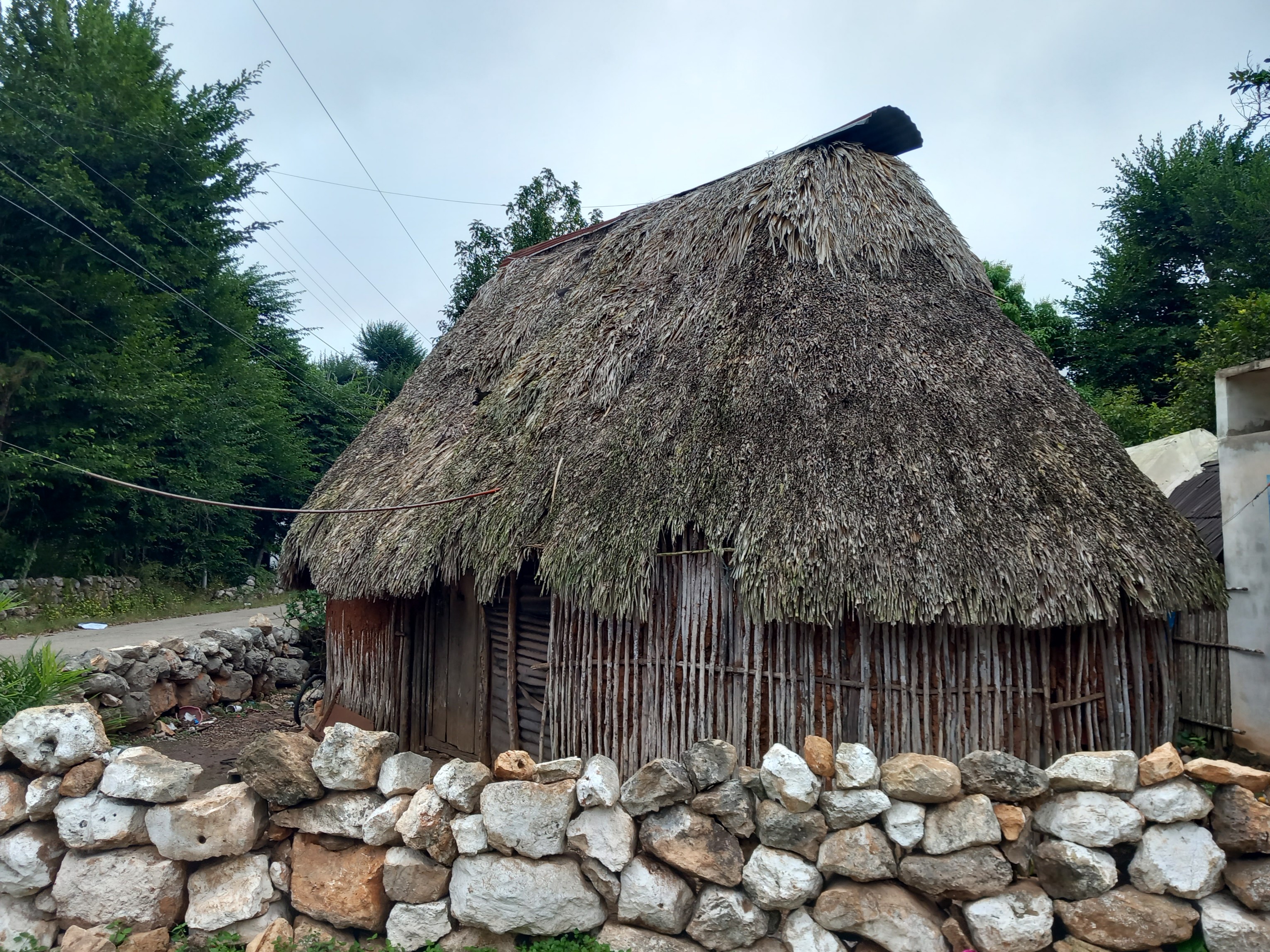
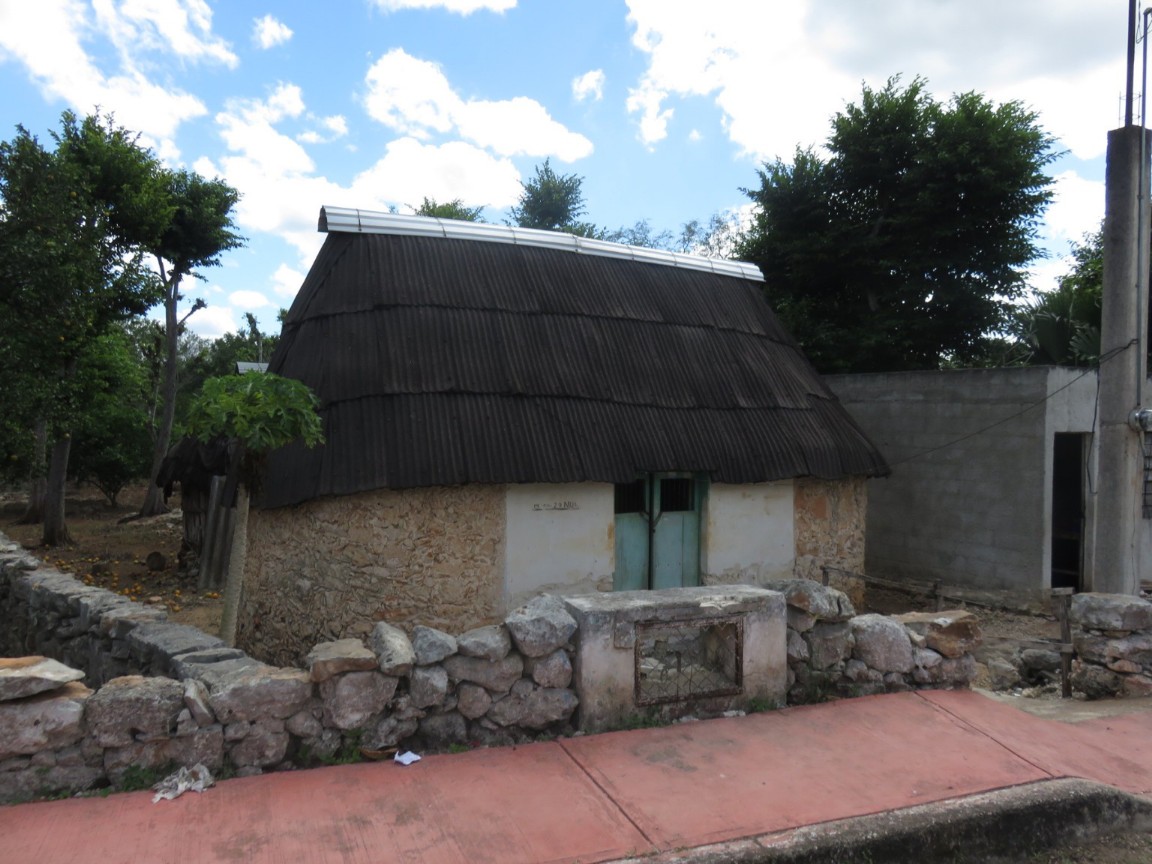
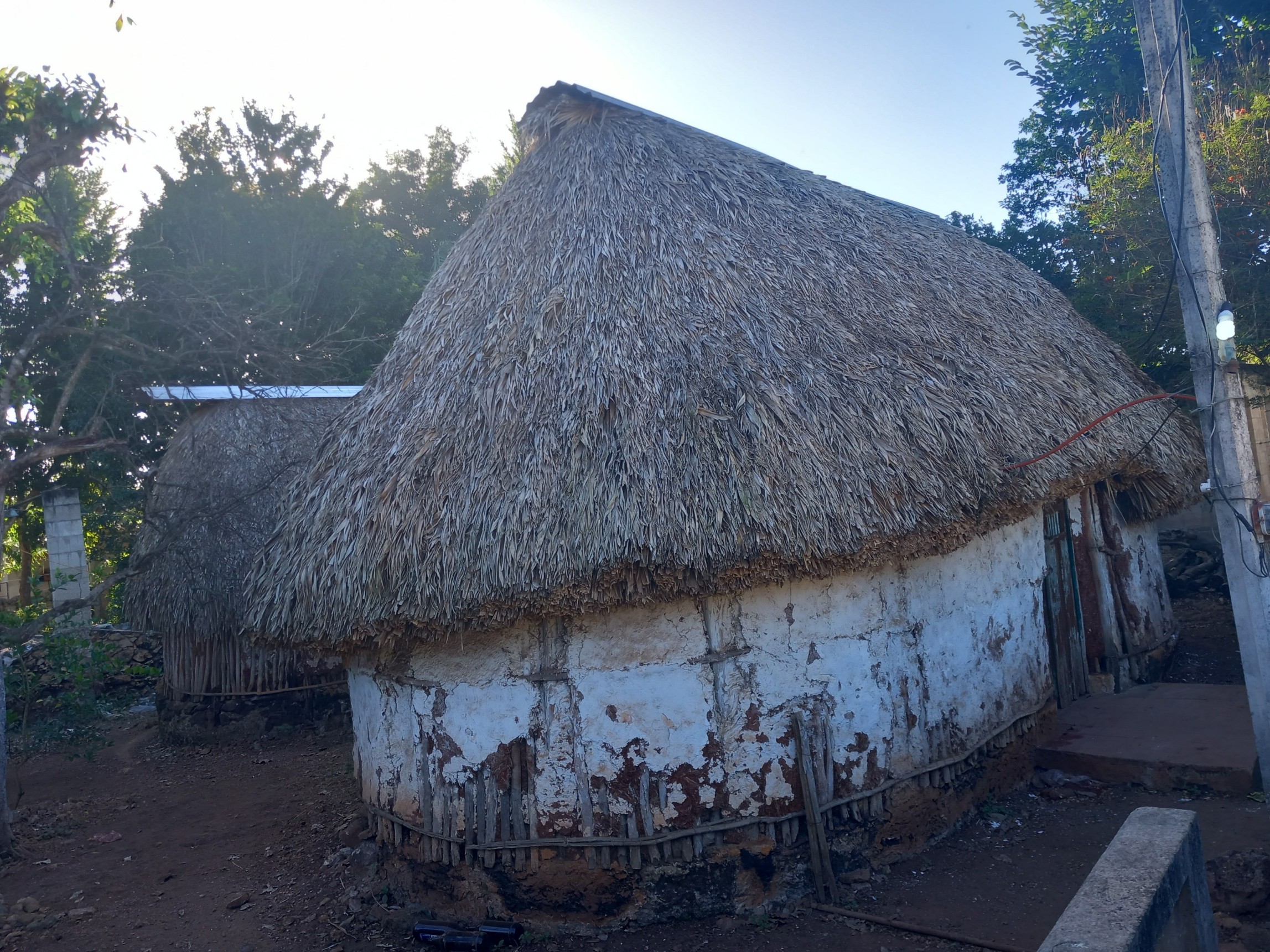
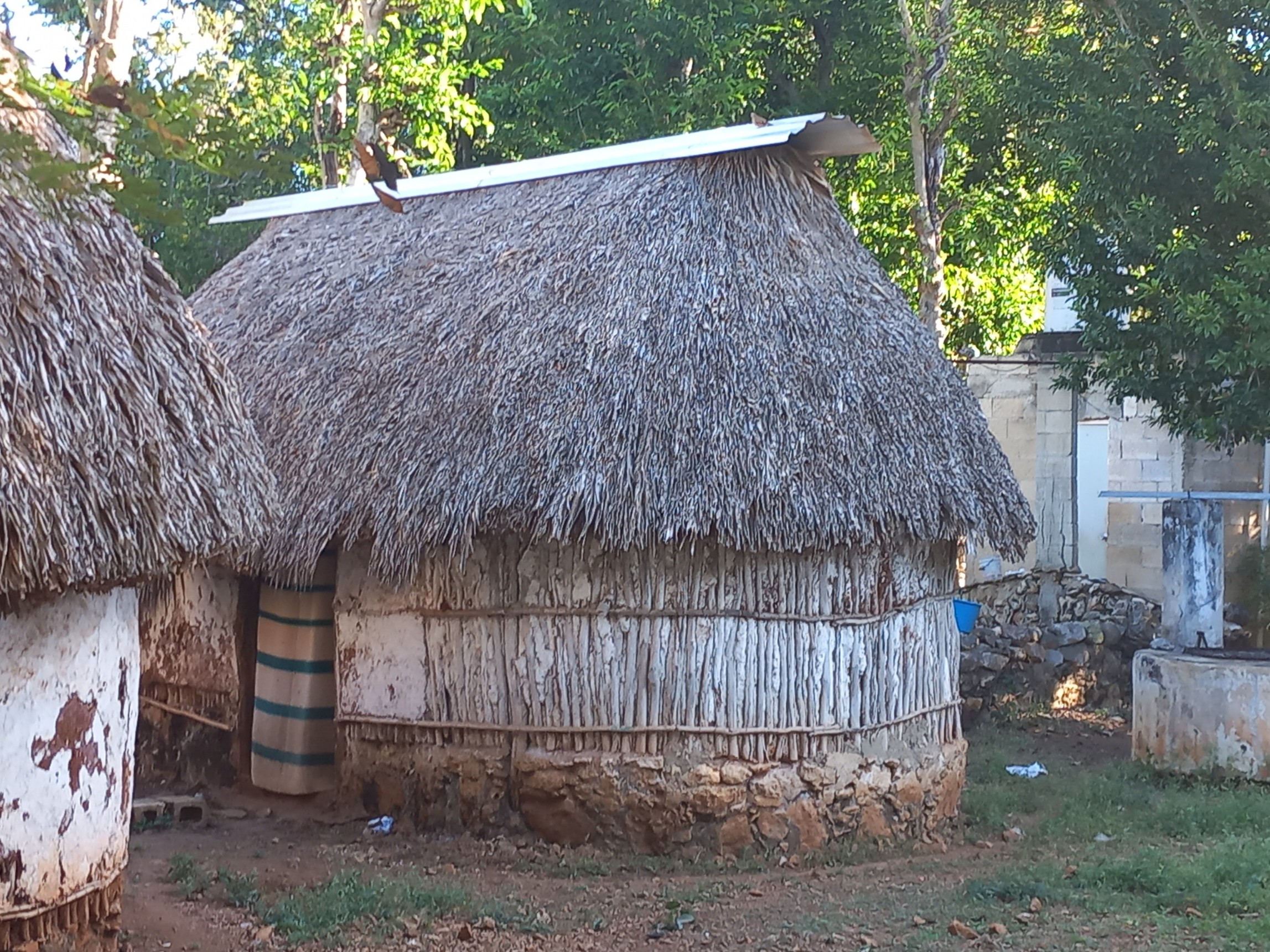
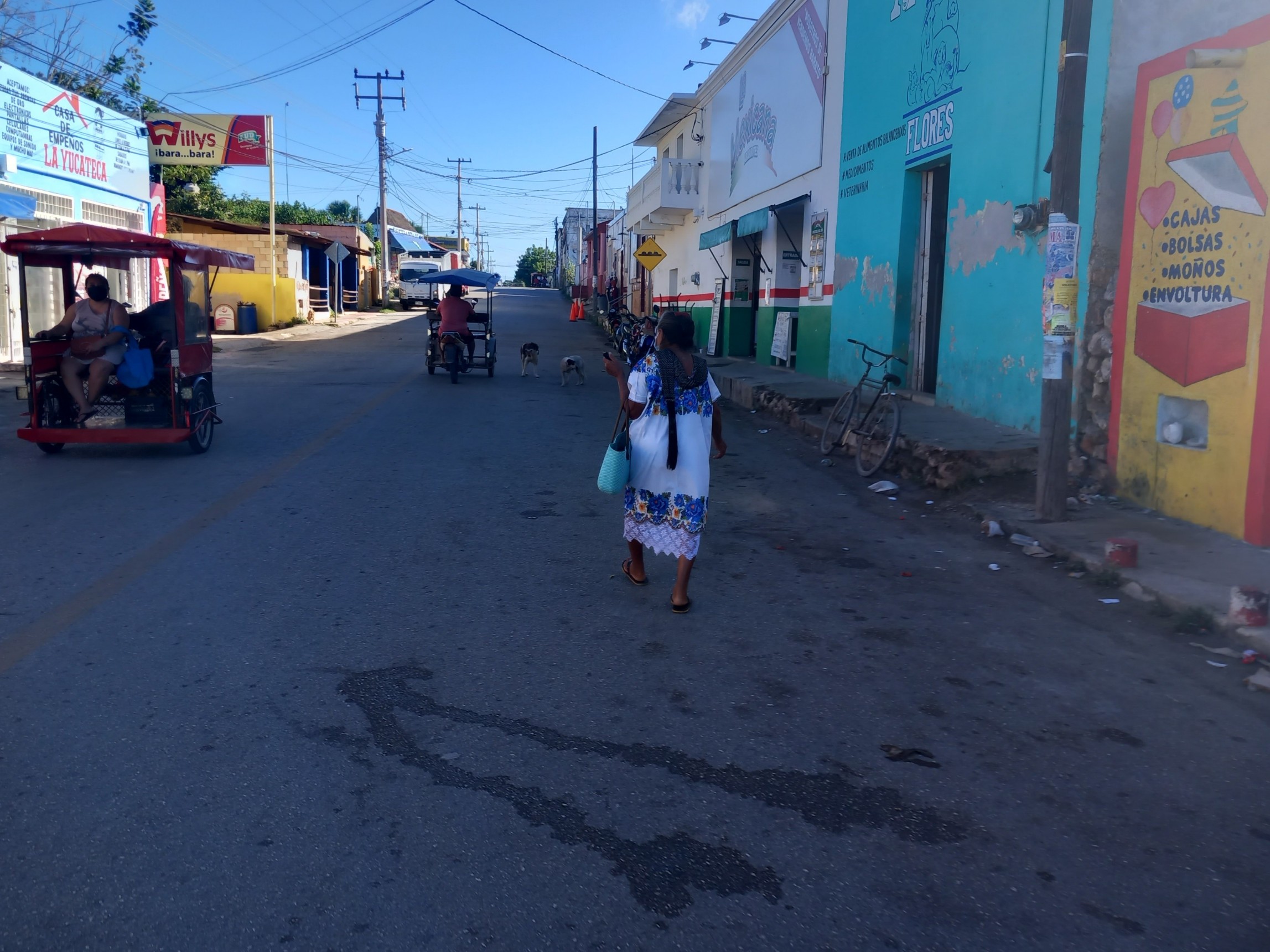
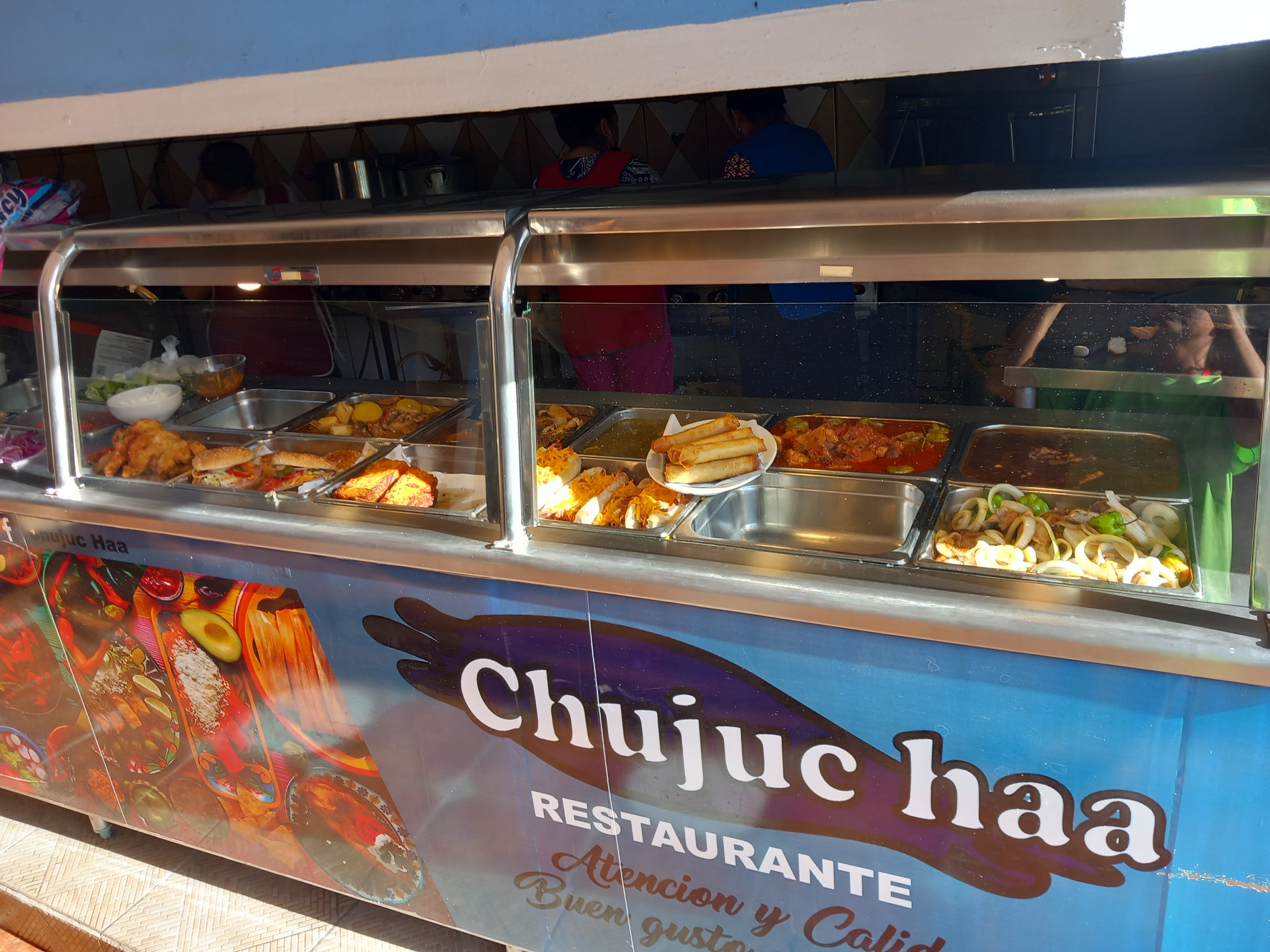
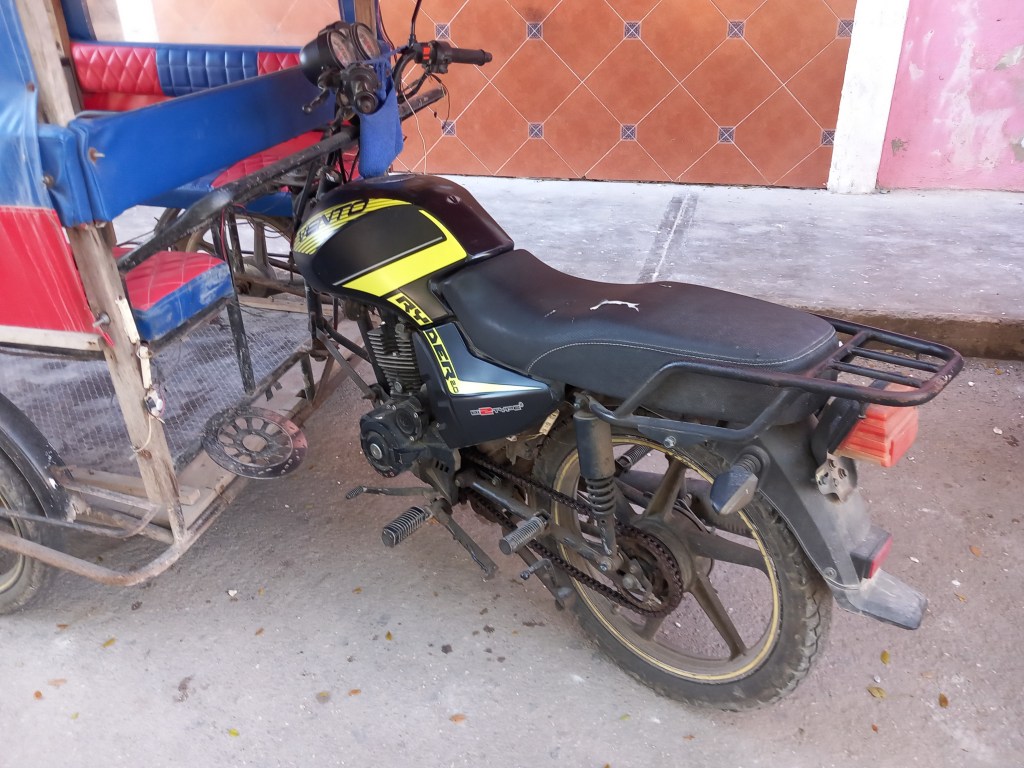
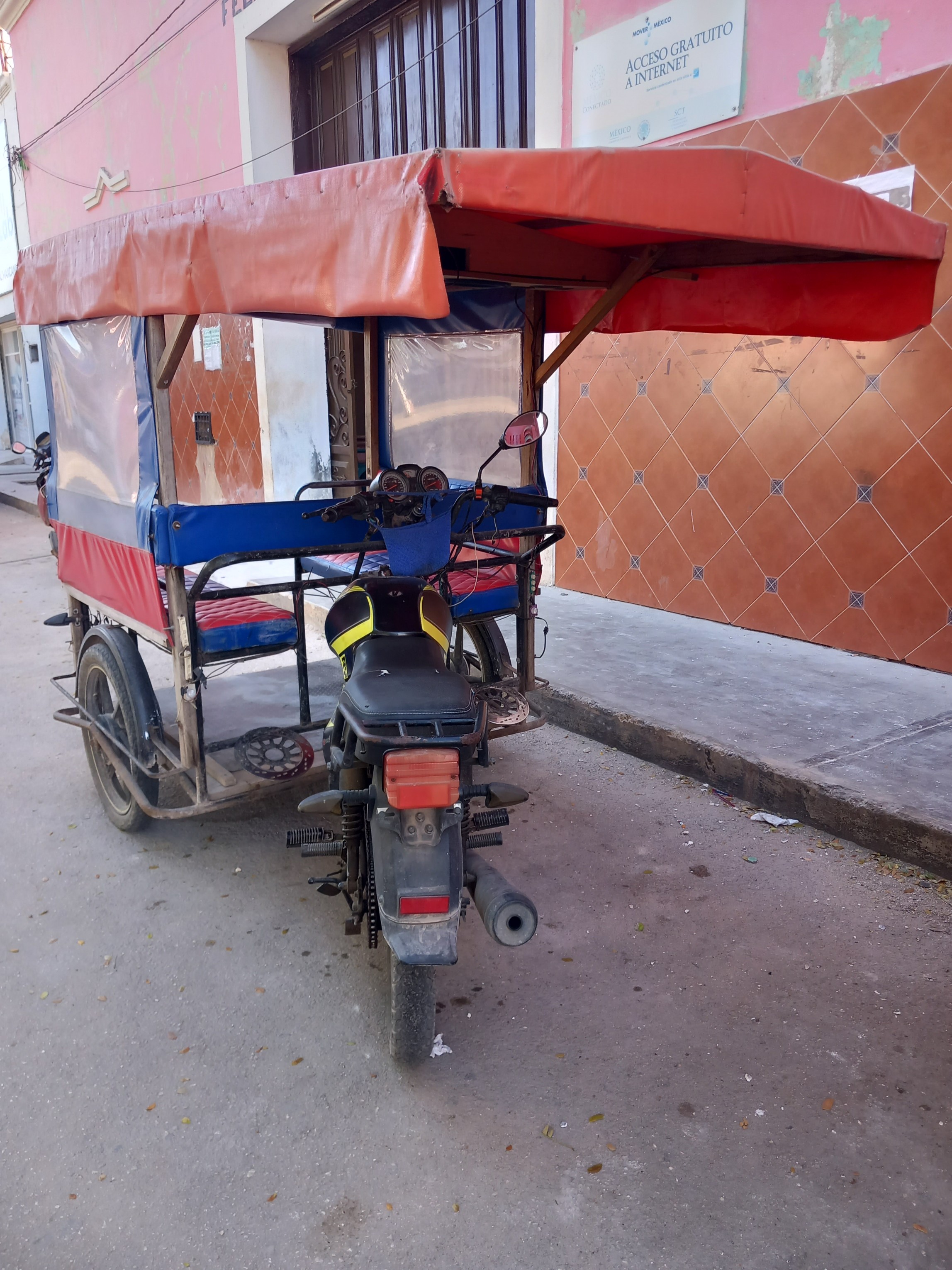
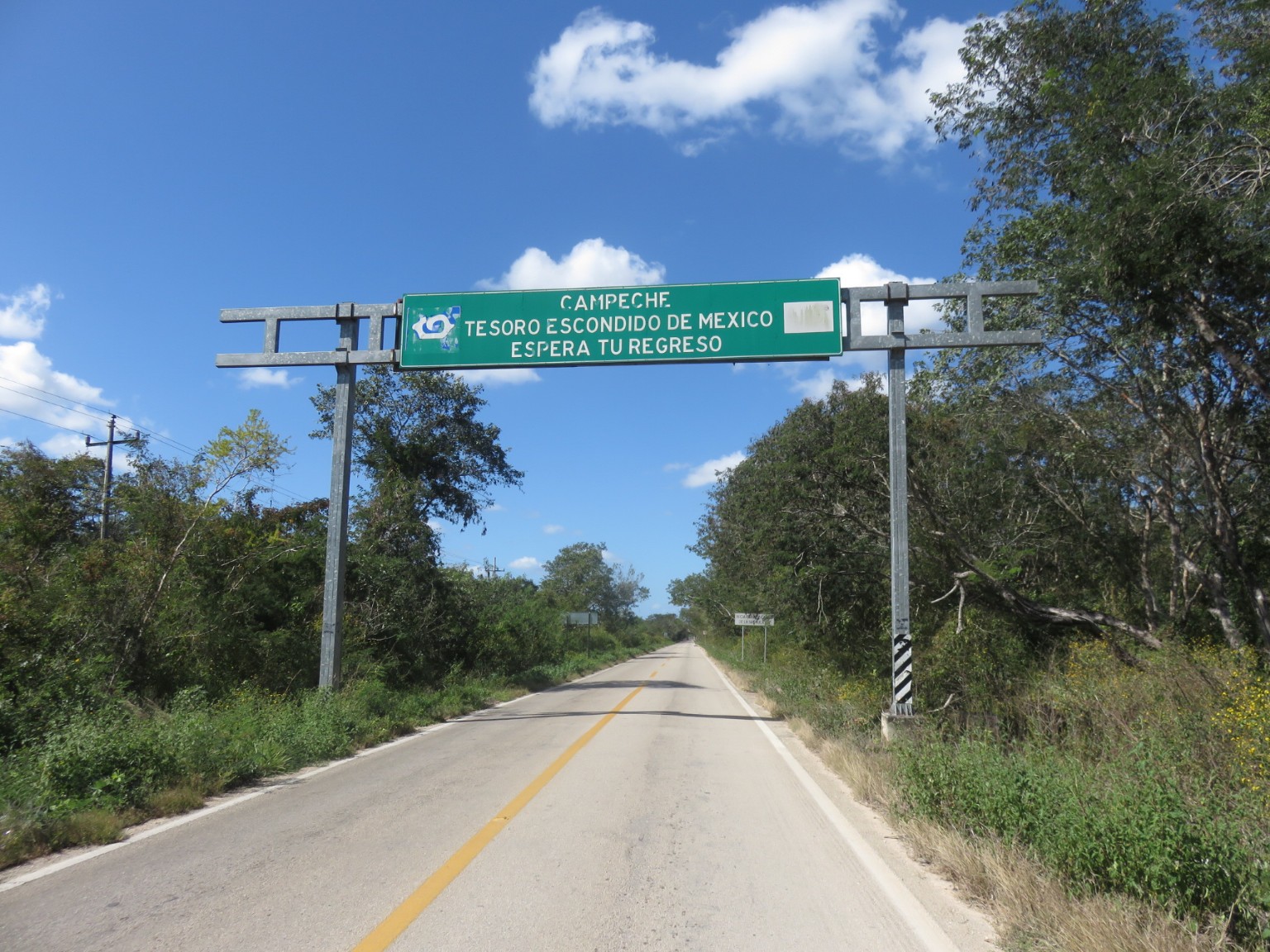
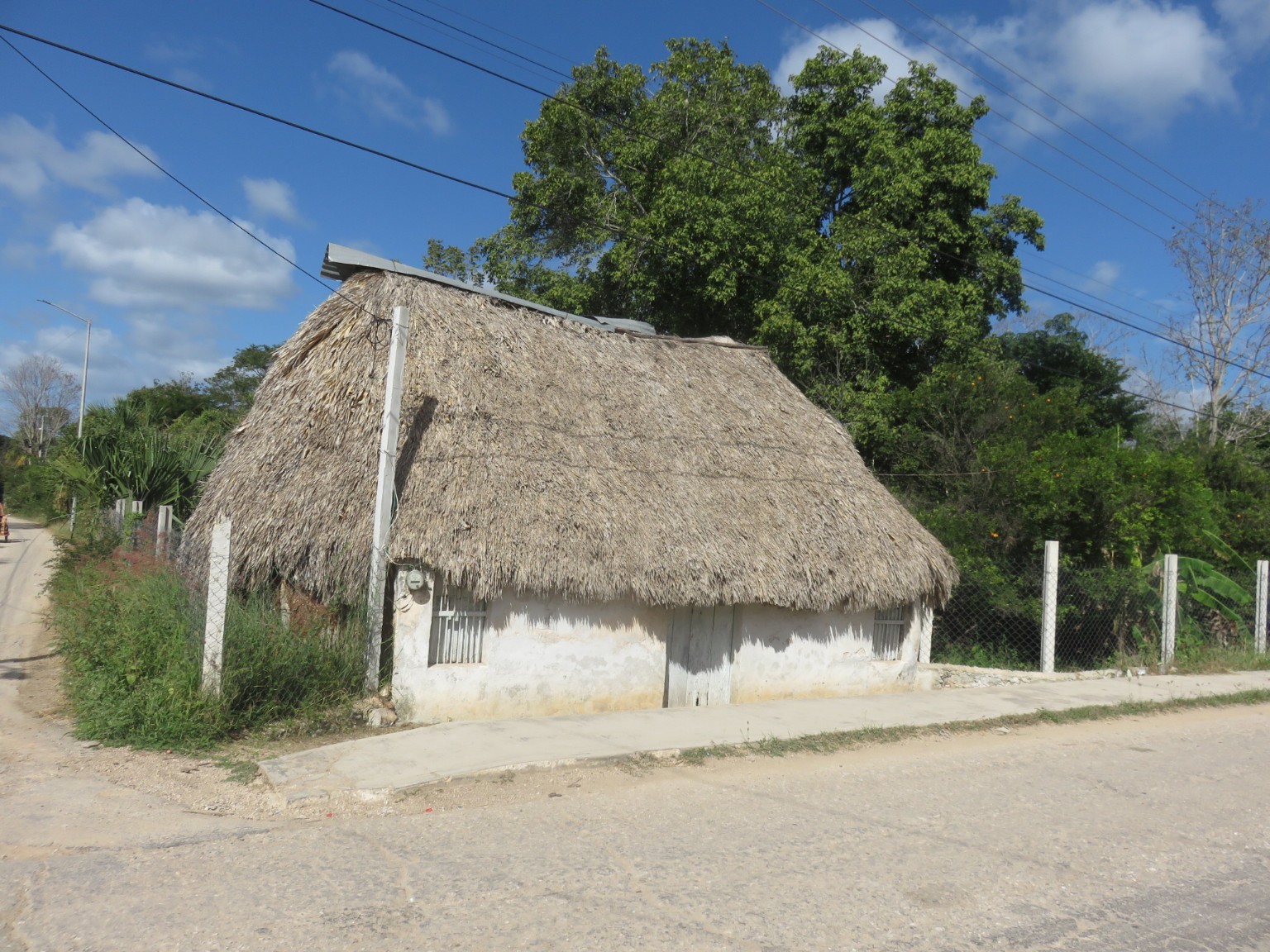
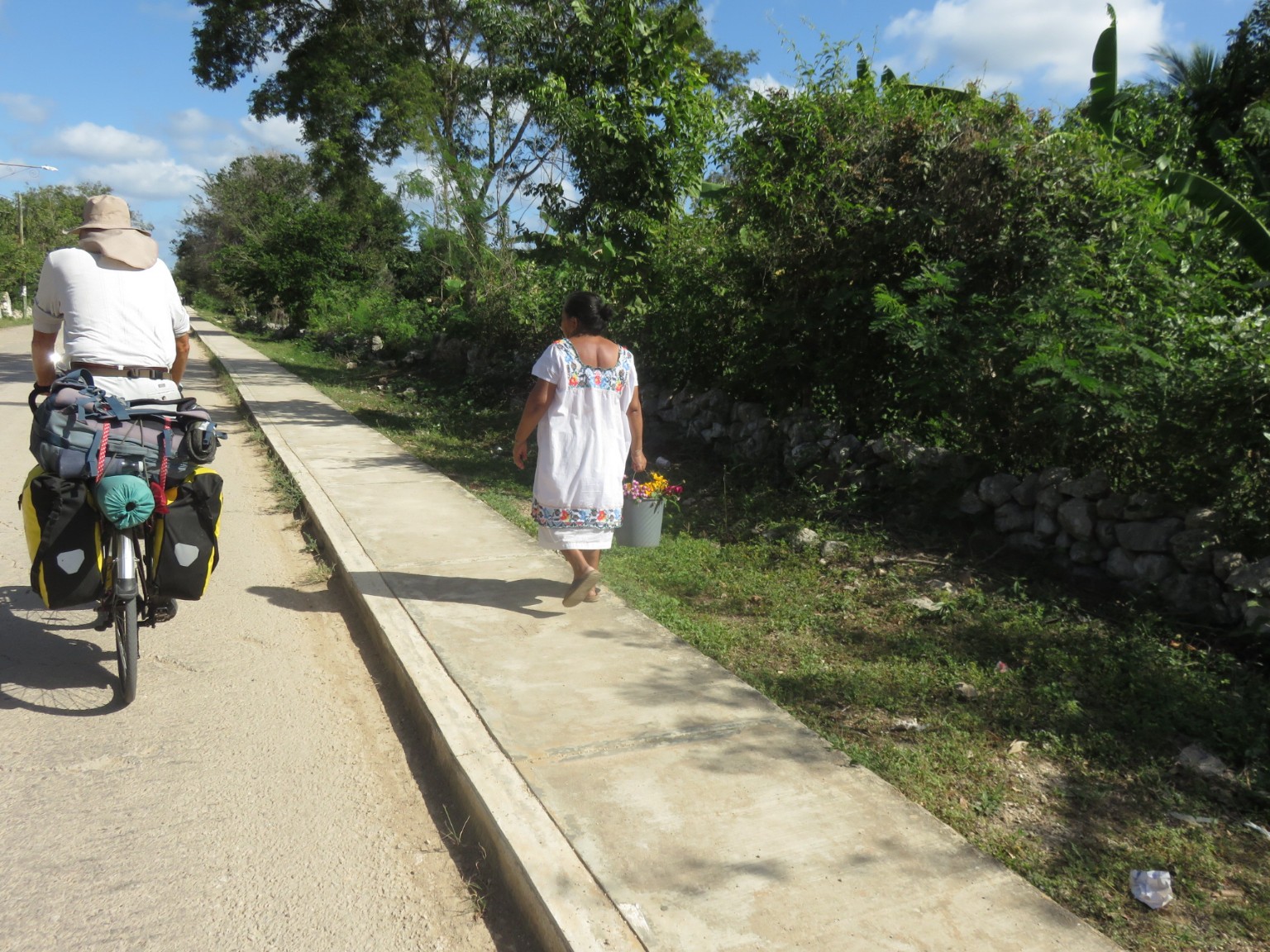
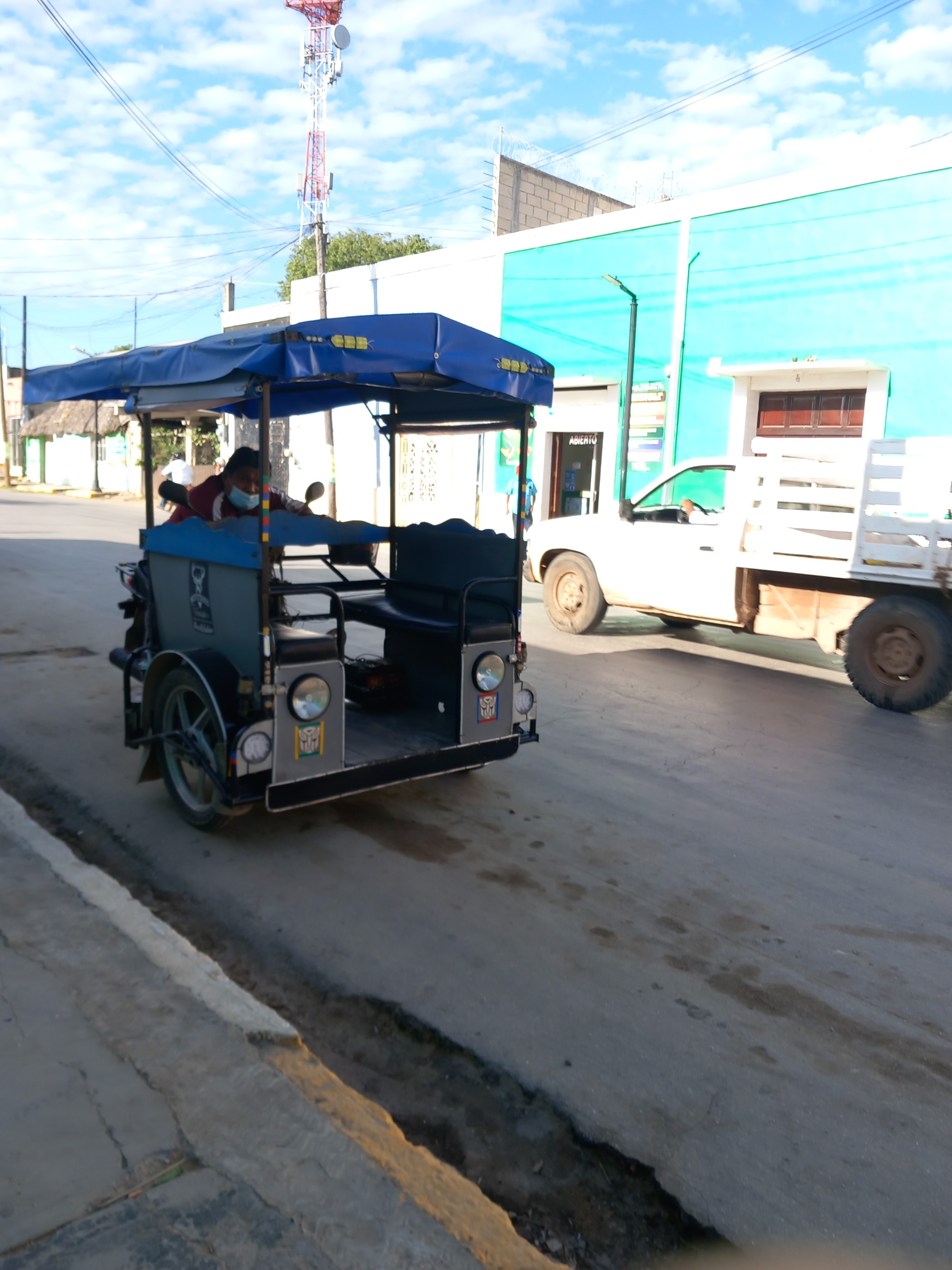
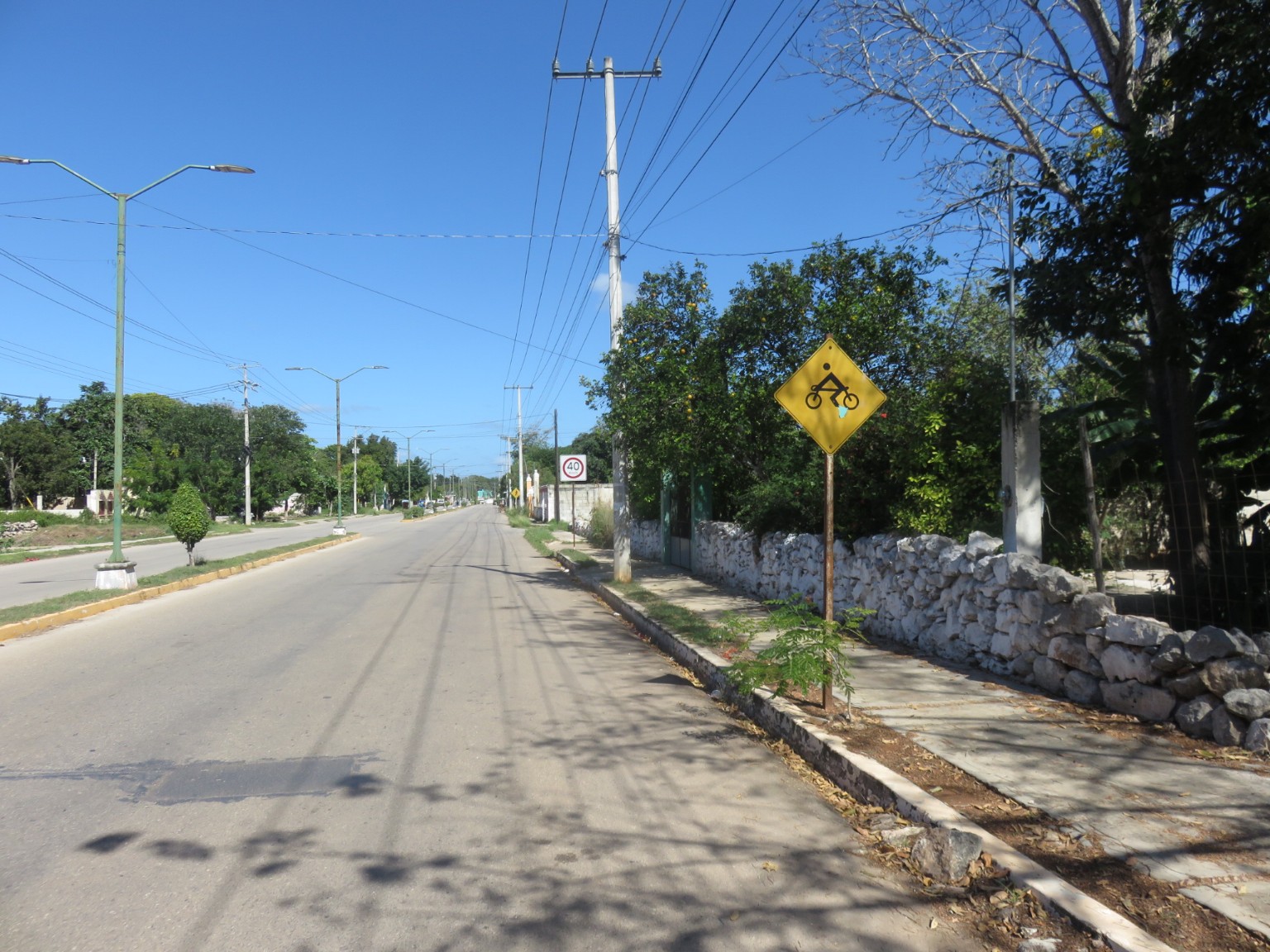
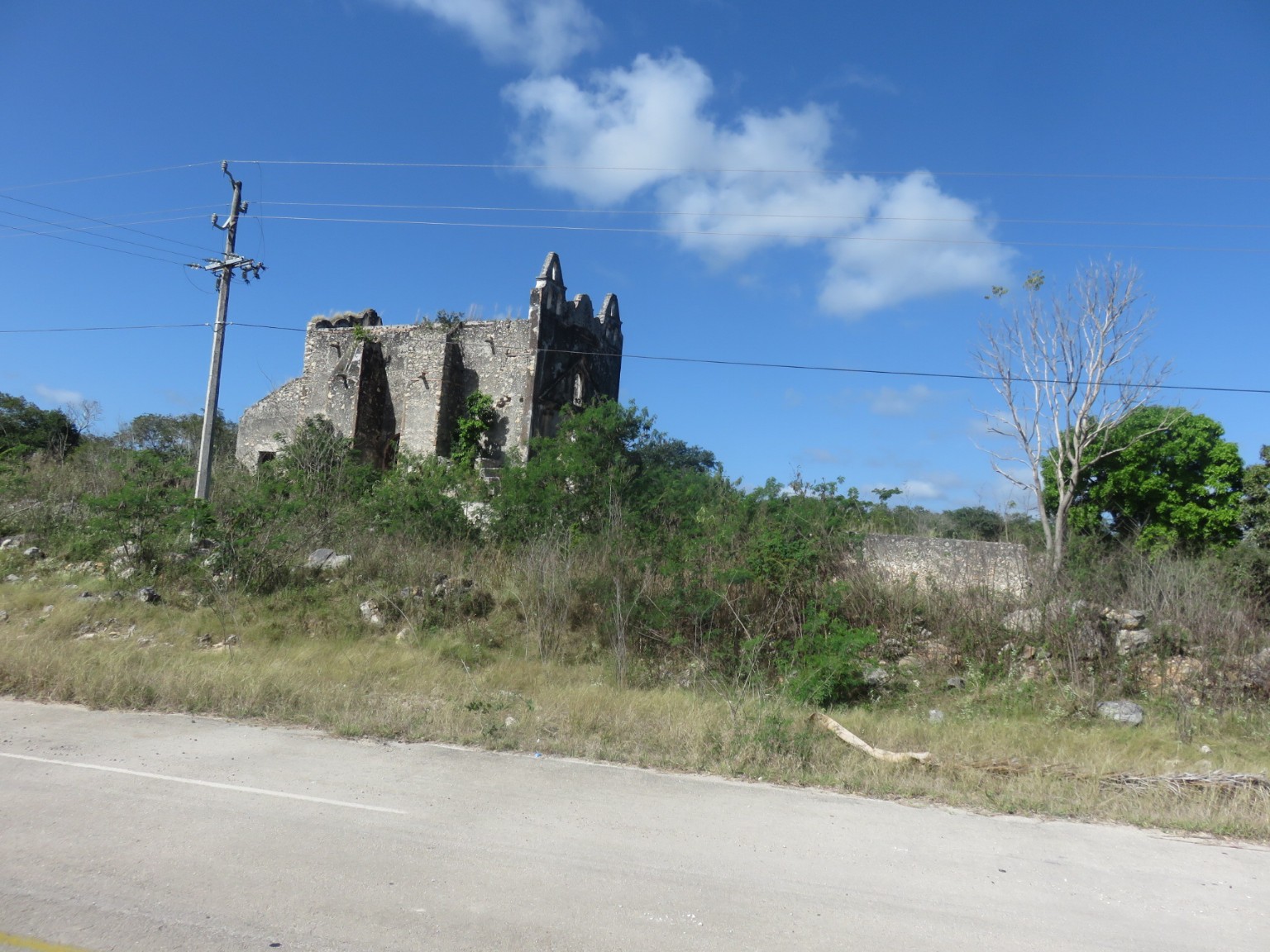
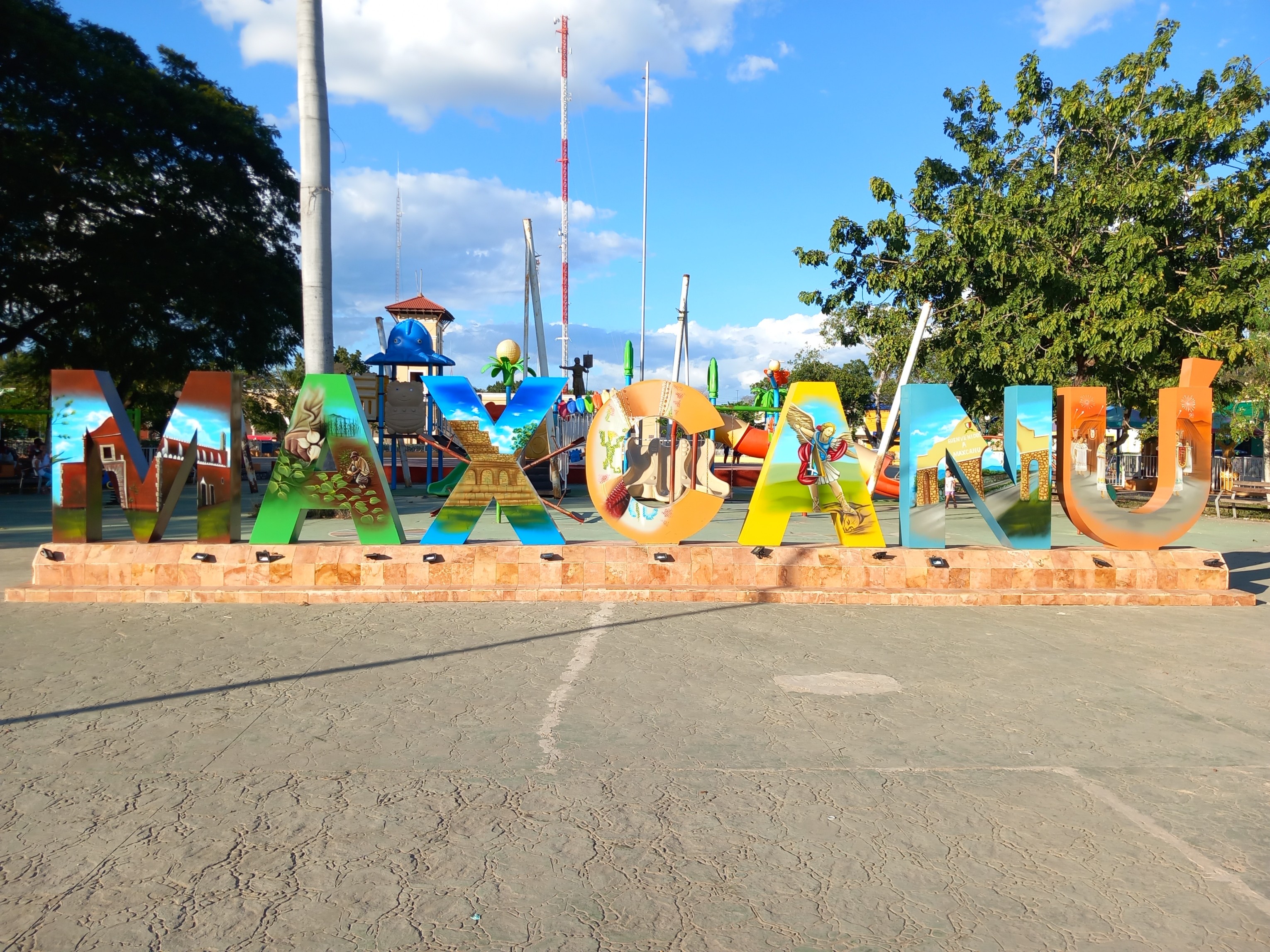
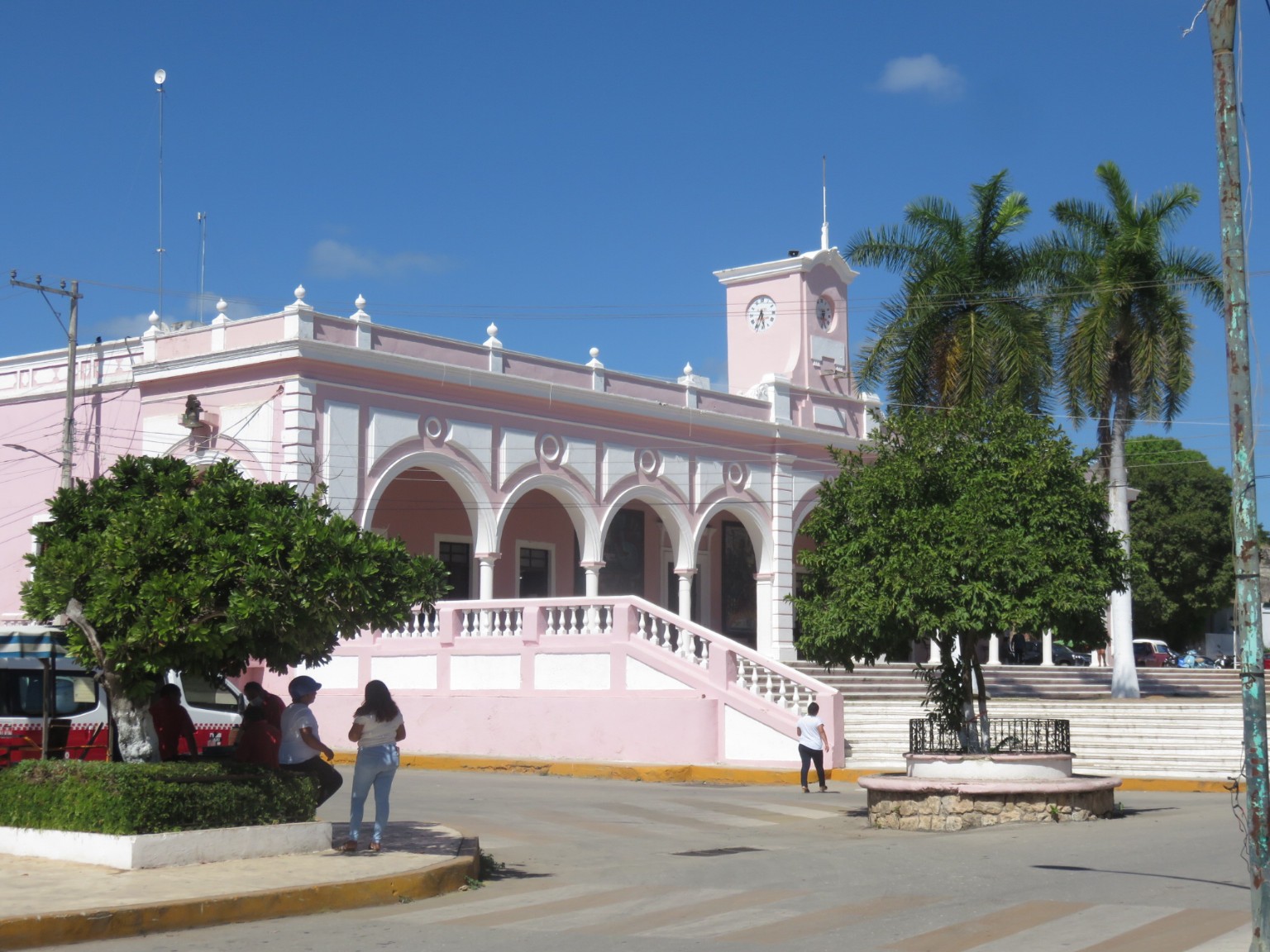
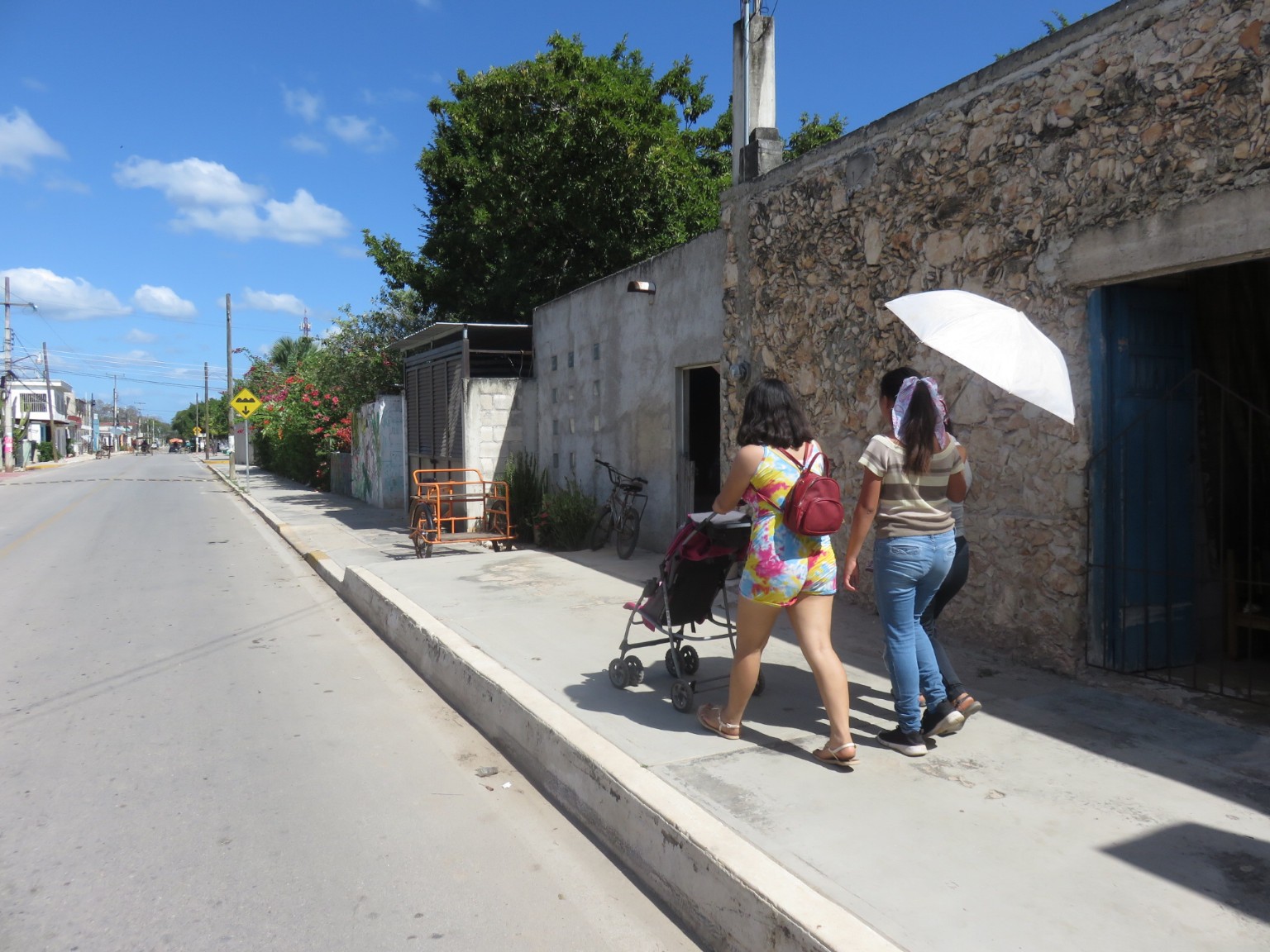
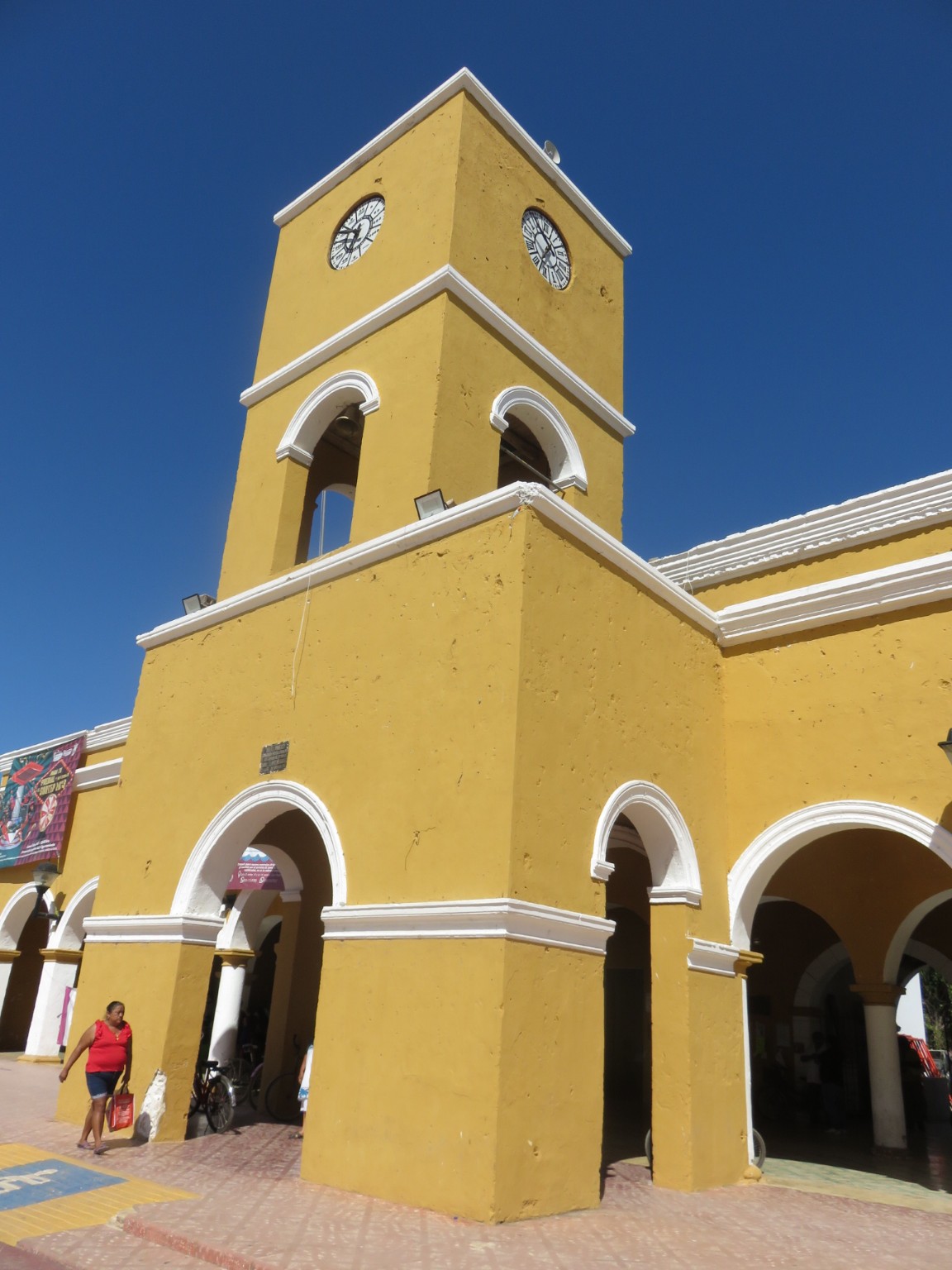
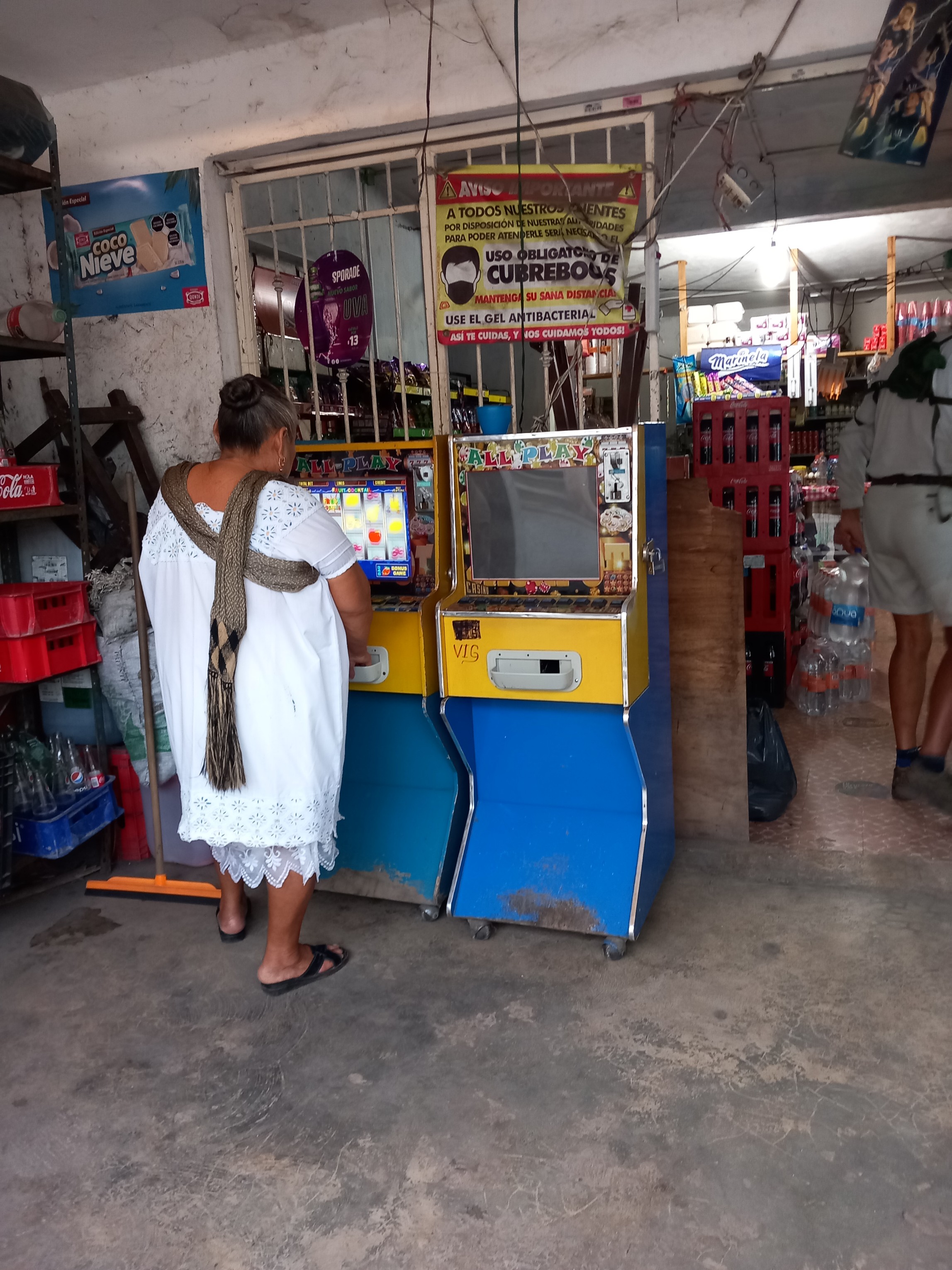
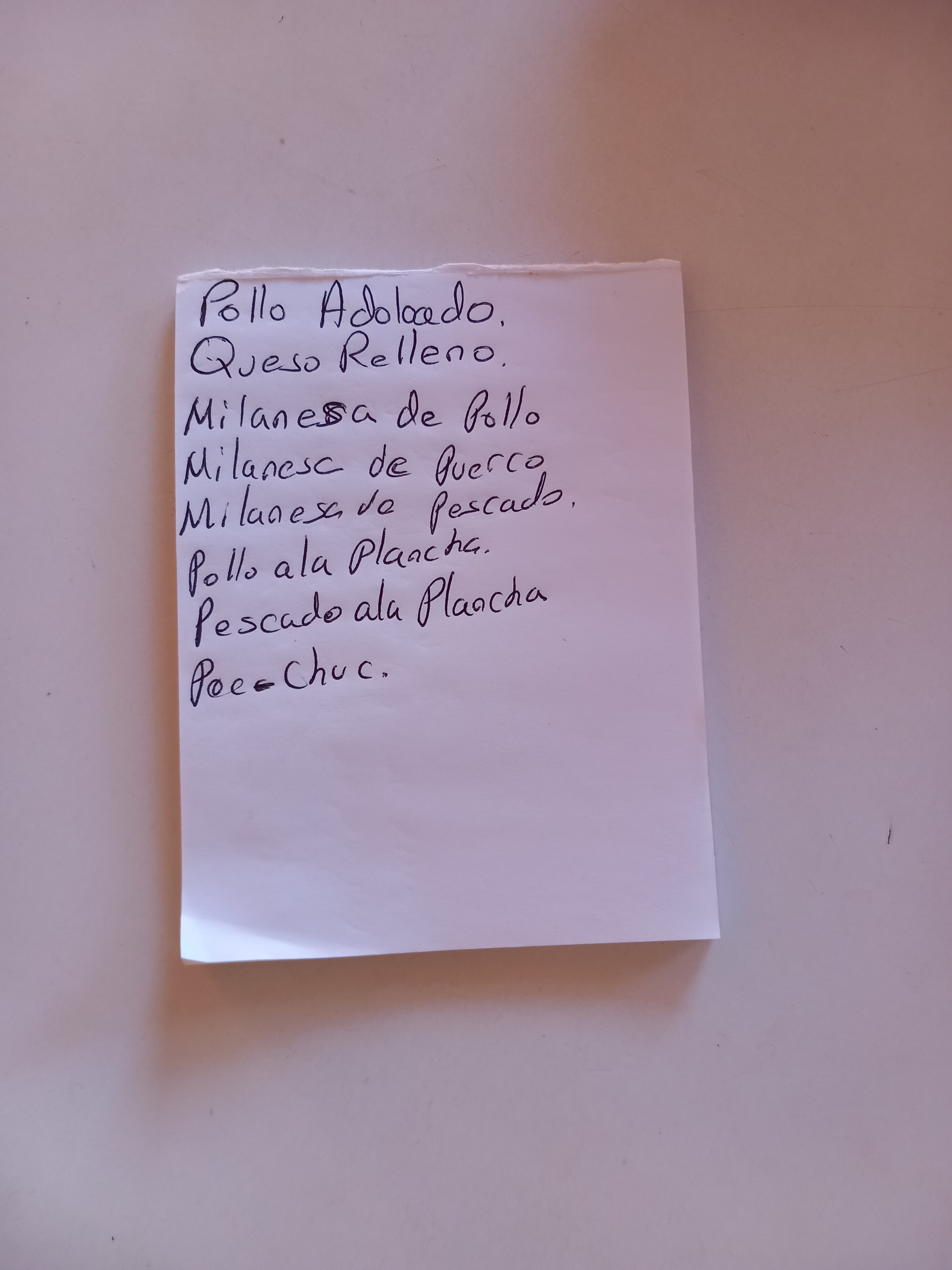
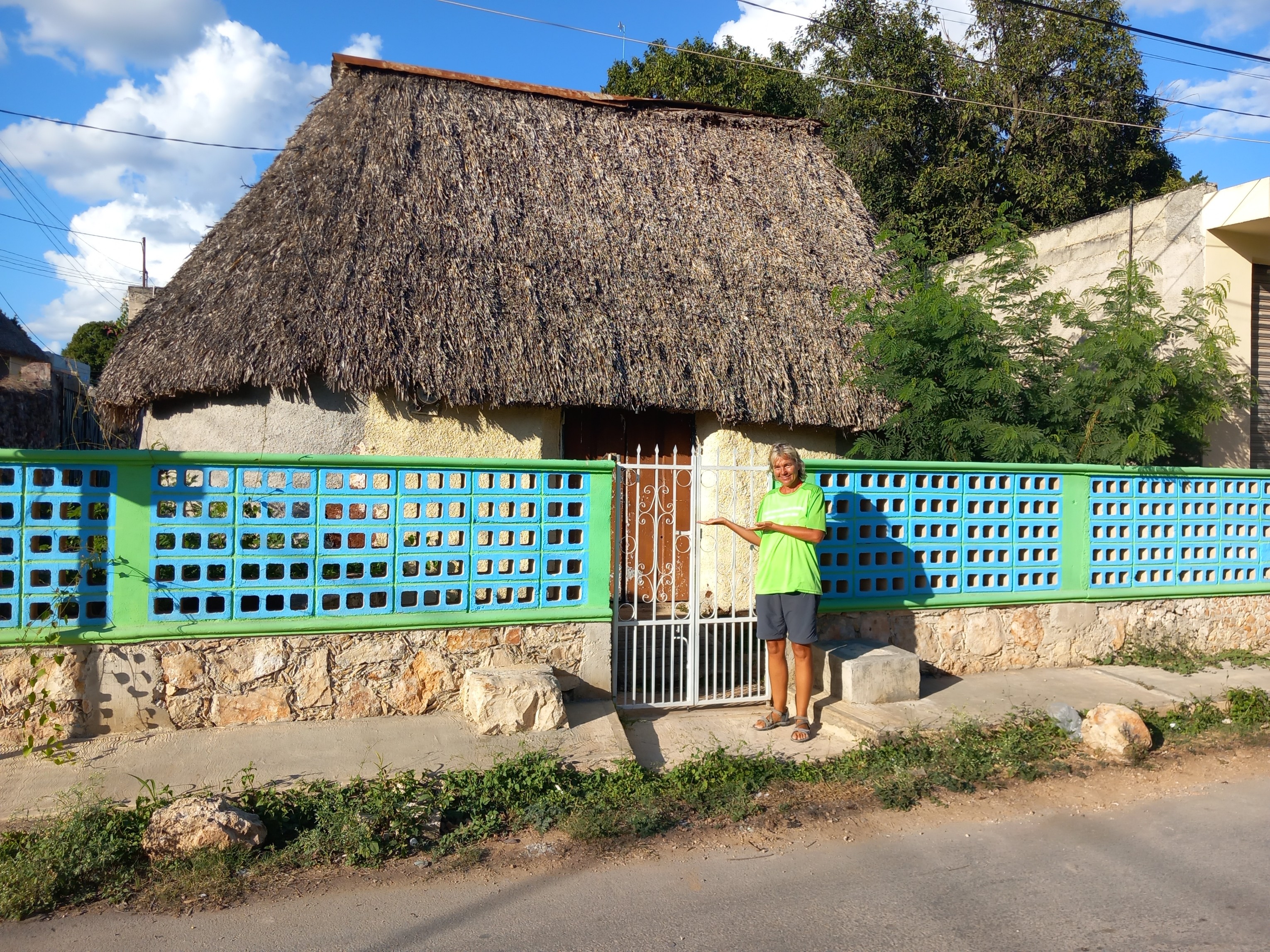
This was a little gem of a place we came across providing hot buffet food (what we would call a Carvery in England) where you order by pointing at what you would like an the waitress brings it to your table. We returned for breakfast and the food was as delicious as the night before. These three wheeled taxis are everywhere and very popular in towns and villages where there are not any buses for obvious reasons.Days and days of flat roads, however, not many signs like this one: “Campeche, hidden treasure of Mexico, awaits your return”.Olivia likes these type of Mayan houses so there may be a few for you to see in the coming posts. The thatch is waterproof and resilient to withstand many storms.Lady in a traditional Mayan dress.Headlights are a rare optional extra for these taxis which also operate at night.An infrequent warning sign for vehicles to look out for cyclists.We don’t think these are Mayan ruins but there are many of them.A village we passed through en route to Maxcanu.This is a one of the better preserved examples of Spanish Colonial architecture and the style is a regular feature in most towns and cities.We are always amused when we see the ladies using umbrellas against the blazing sun because we never see them being used in the rain – they always go indoors.We’re not aware of gambling being a part of Mayan culture traditionally although it seems to feature nowadays.We are used to waiters/waitresses reciting their options from memory although on this occasion they appeared embarrassed not to have a menu and hastily wrote one down.
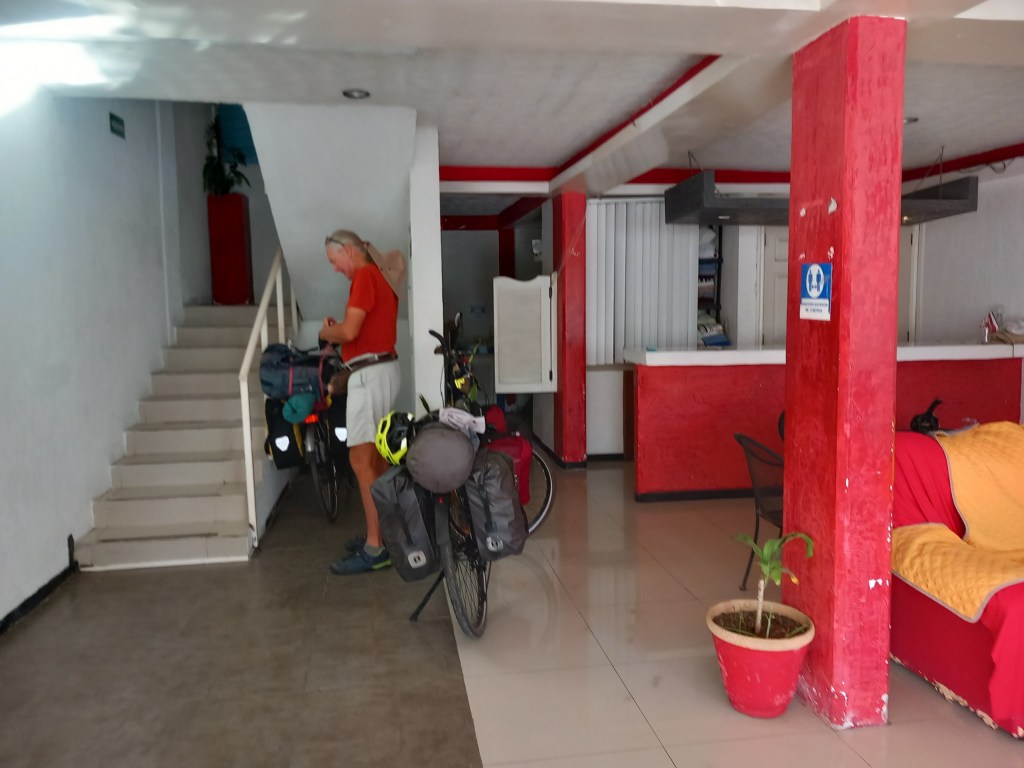
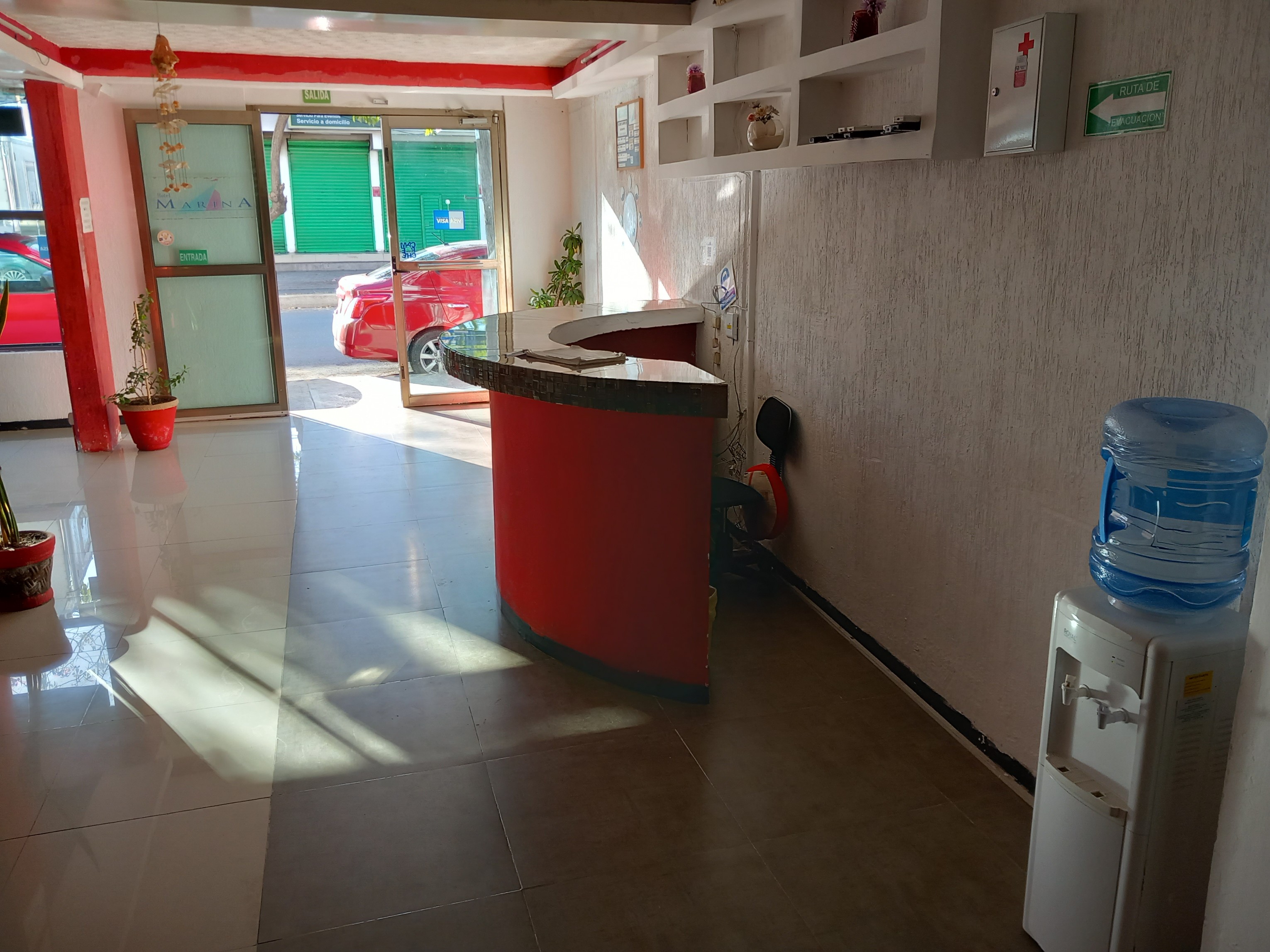
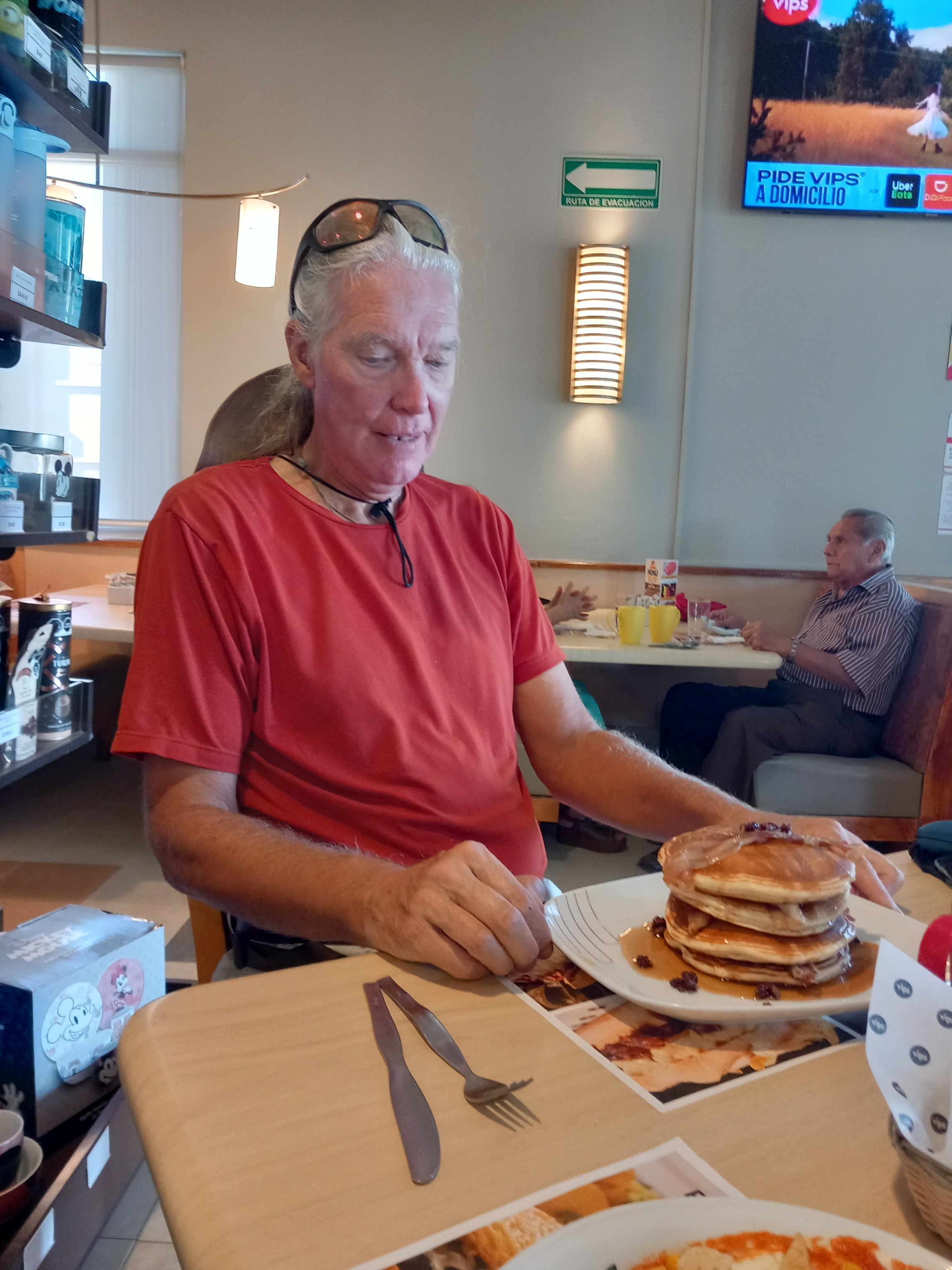
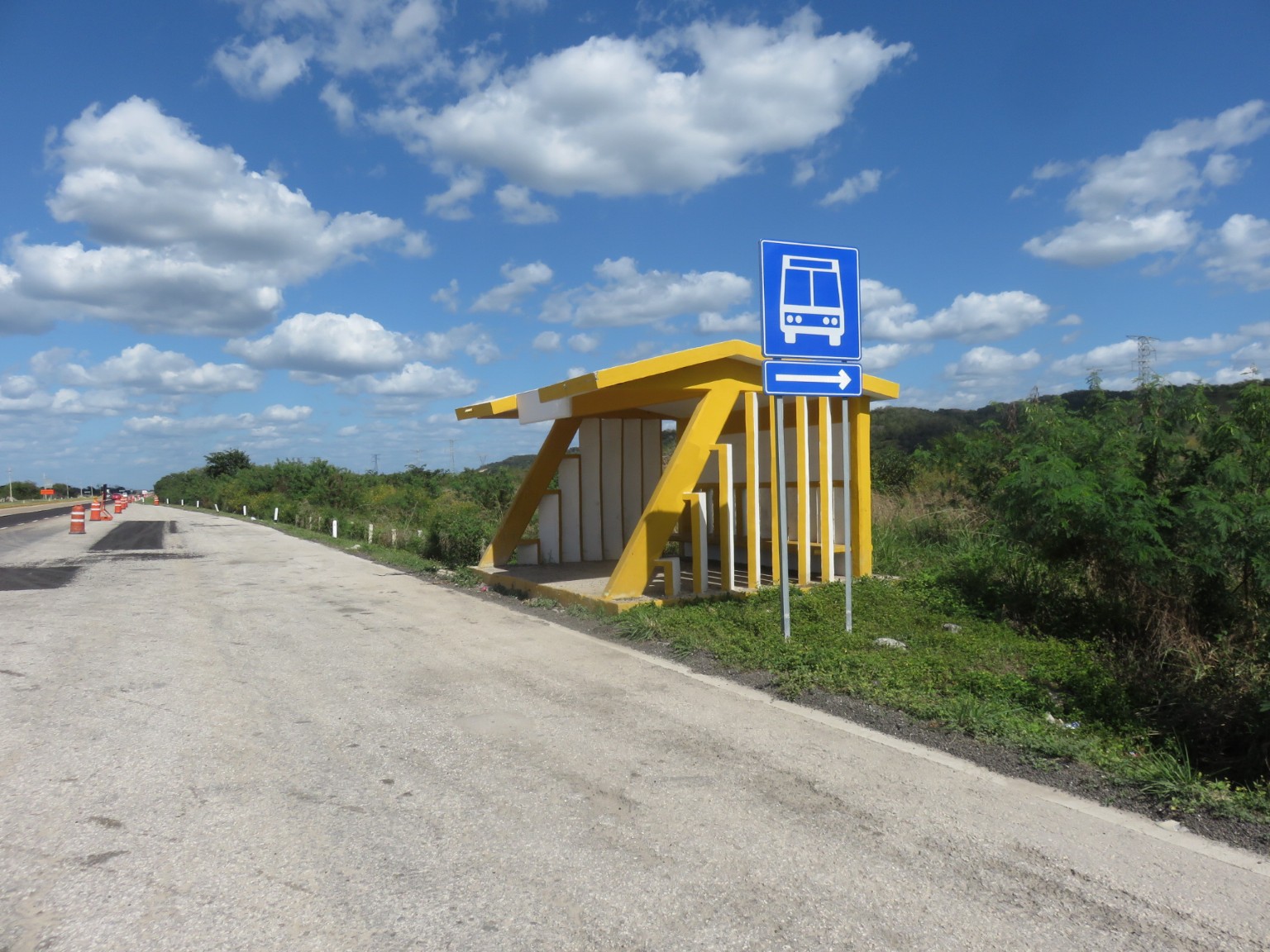
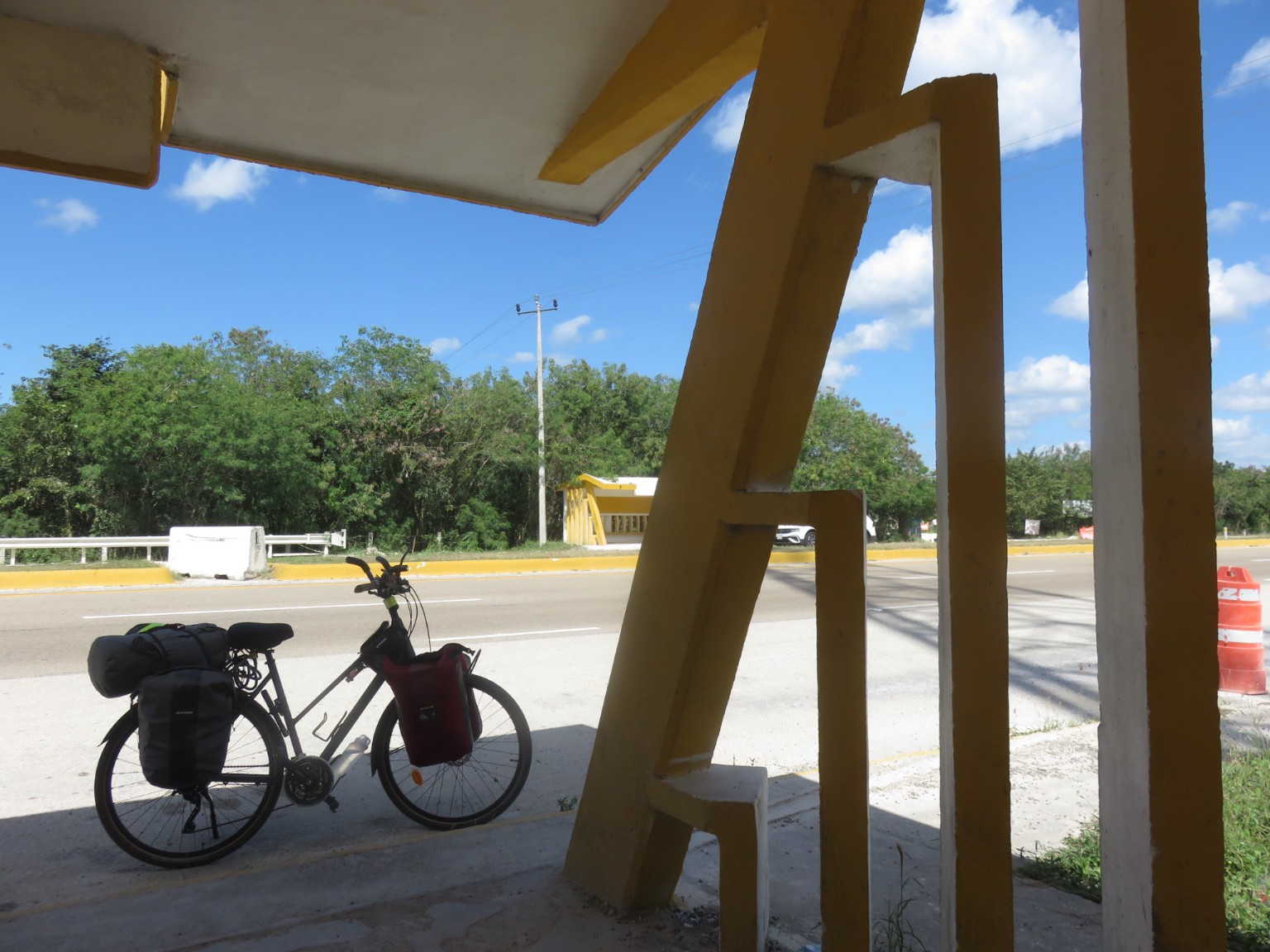
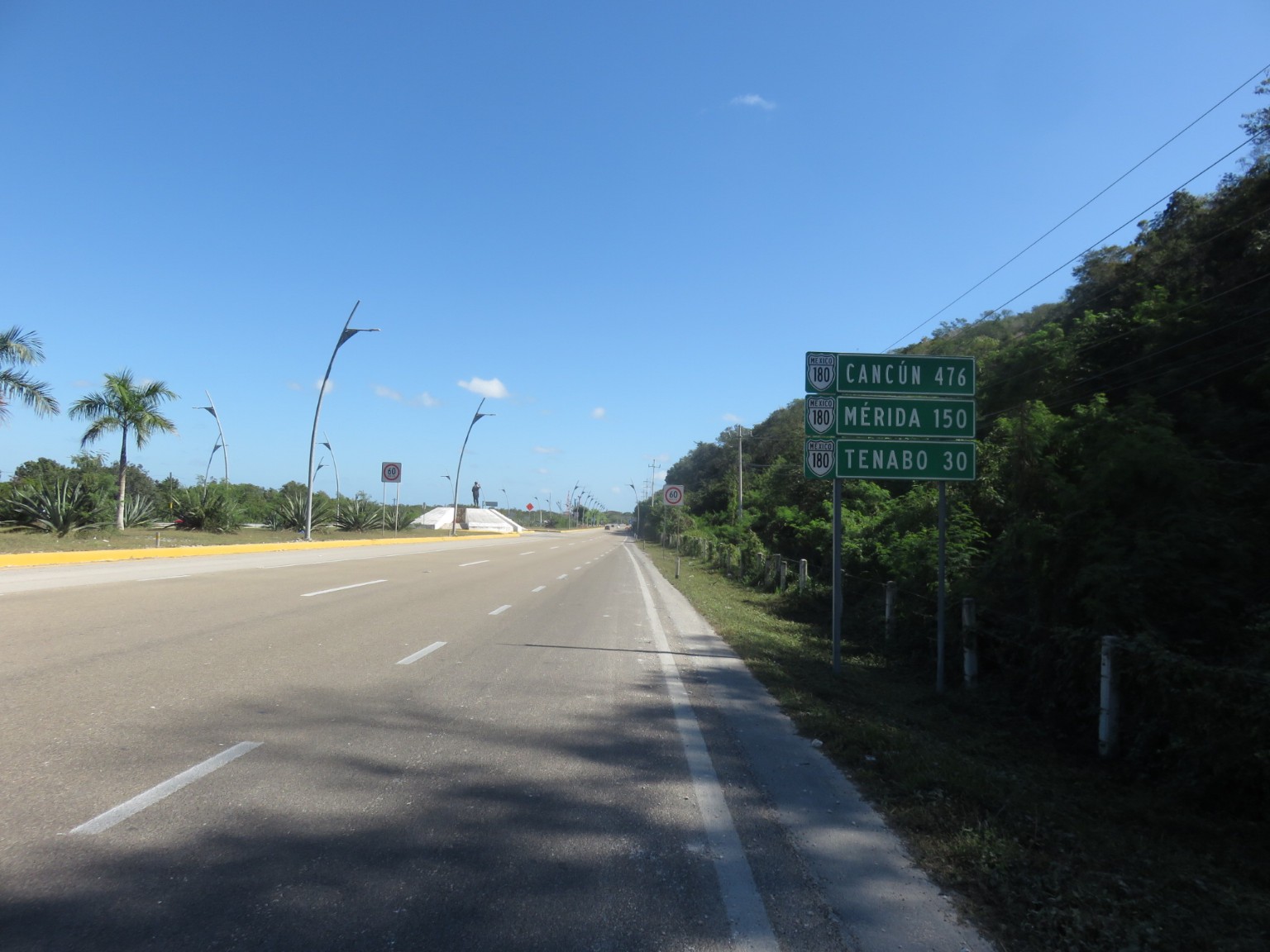
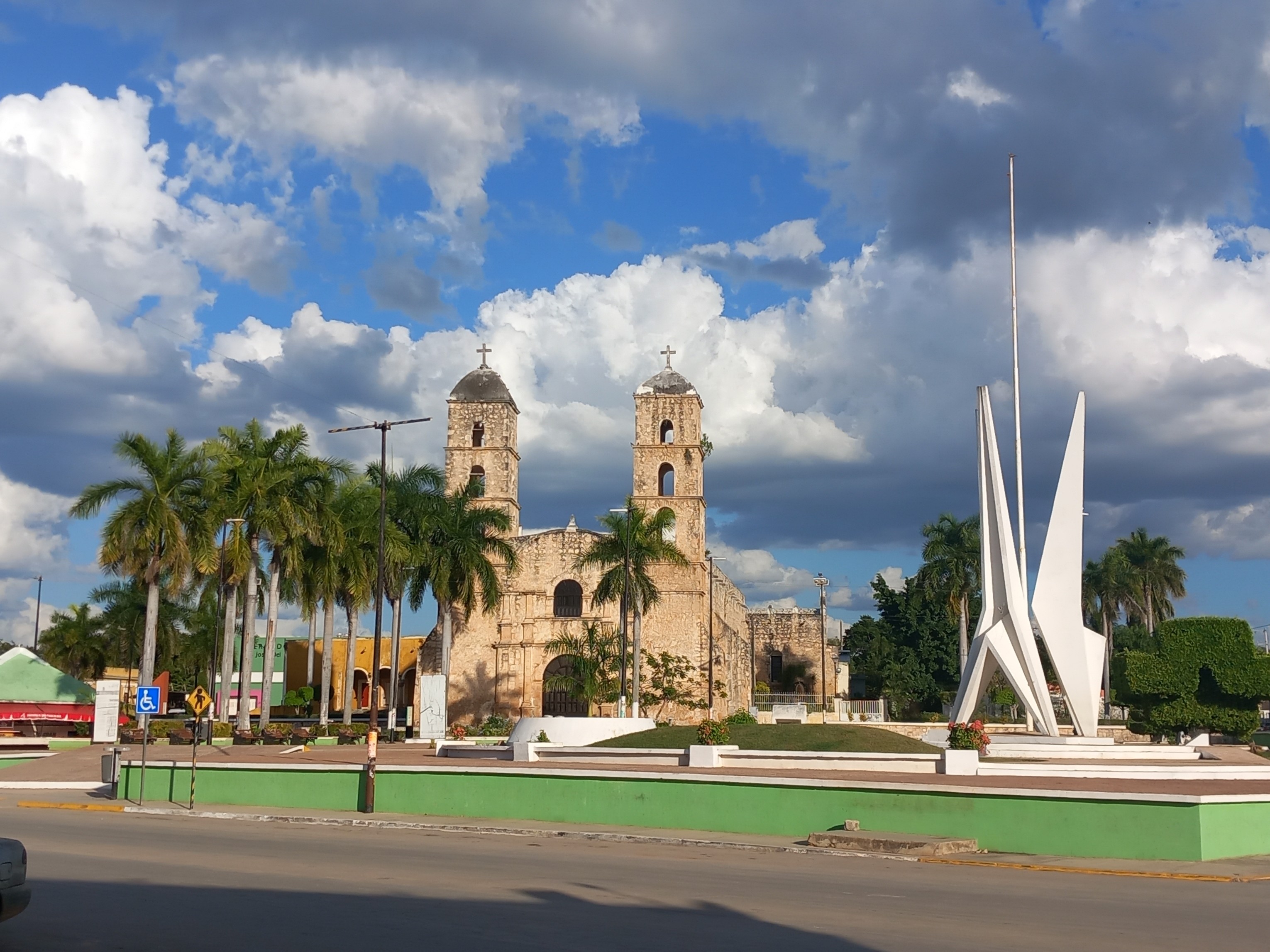
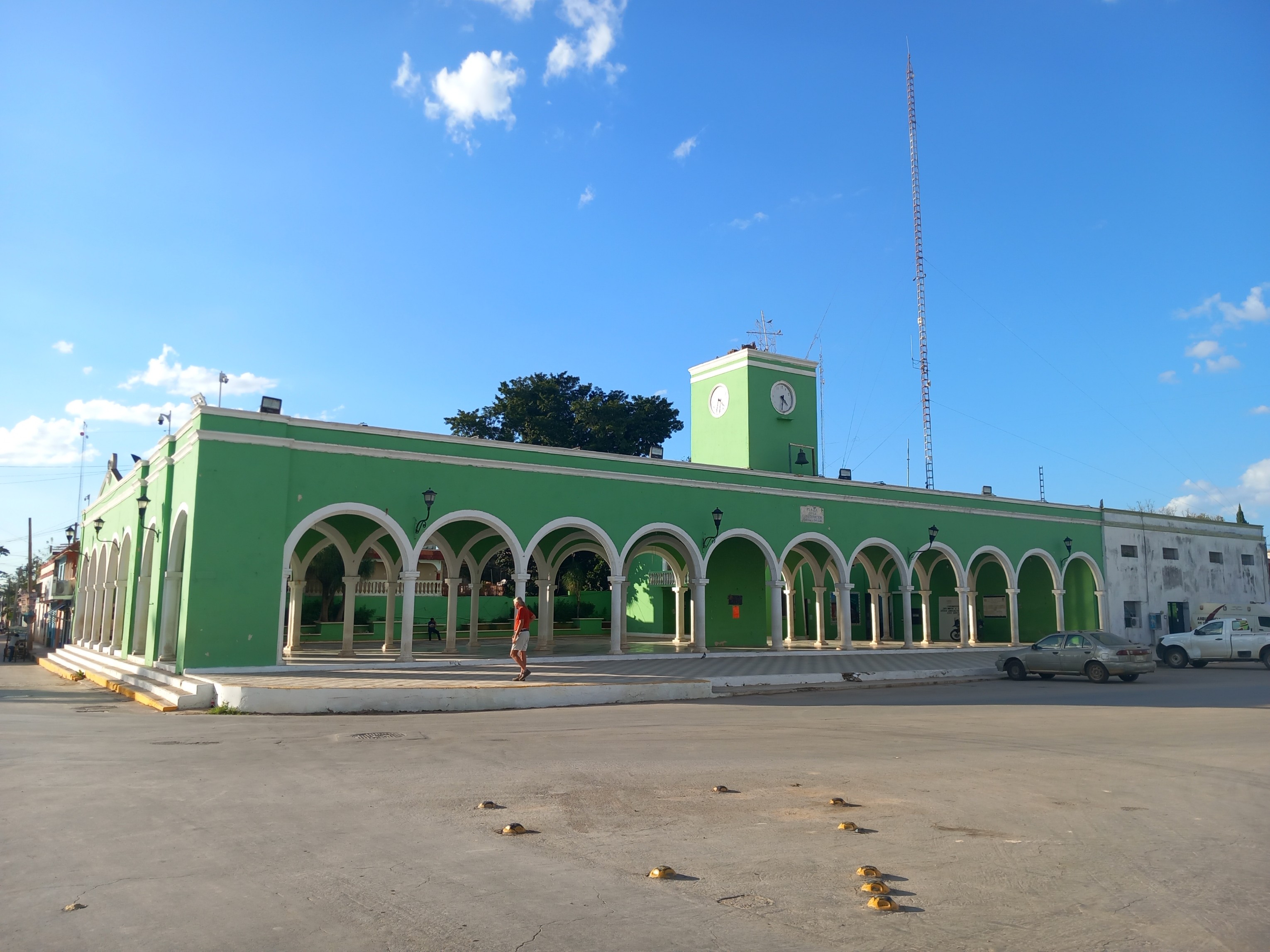
We are normally able to have the bikes in our room (that’s why we choose the ground floor, to roll them in and roll them out) except this hotel we were on the first floor so the bikes are chained to one another and also chained to the metal stairs next to the reception area.The focus on security is not because we do not trust the staff but the other guests and, in this case, easy access from outside when the reception desk is unattended.We departed Campeche on a quiet Sunday morning; it was so quiet the breakfast options were limited (the restaurant we had used for the previous two days is closed on Sundays) and we were left with this Mexican equivalent of such well know American chains as Denny’s and Dairy Queen.As you can see portion sizes are not an issue with unlimited coffee. It made a change from anything with tortillas and it was the last restaurant we saw open for 40 miles (60 kilometres).Today’s leg of our journey was largely dual carriageway, with little traffic and with little interest to report.We don’t have these Bus Stop options for water stops very often, however, when we do we always use them because they provide enough shade so that we have a break from the blazing sun.The centre of Hecelchakan.

 Mexico and Belize